Mining Metagenomic Libraries for Novel Biocatalysts: A Guide for Discovery and Application in Drug Development
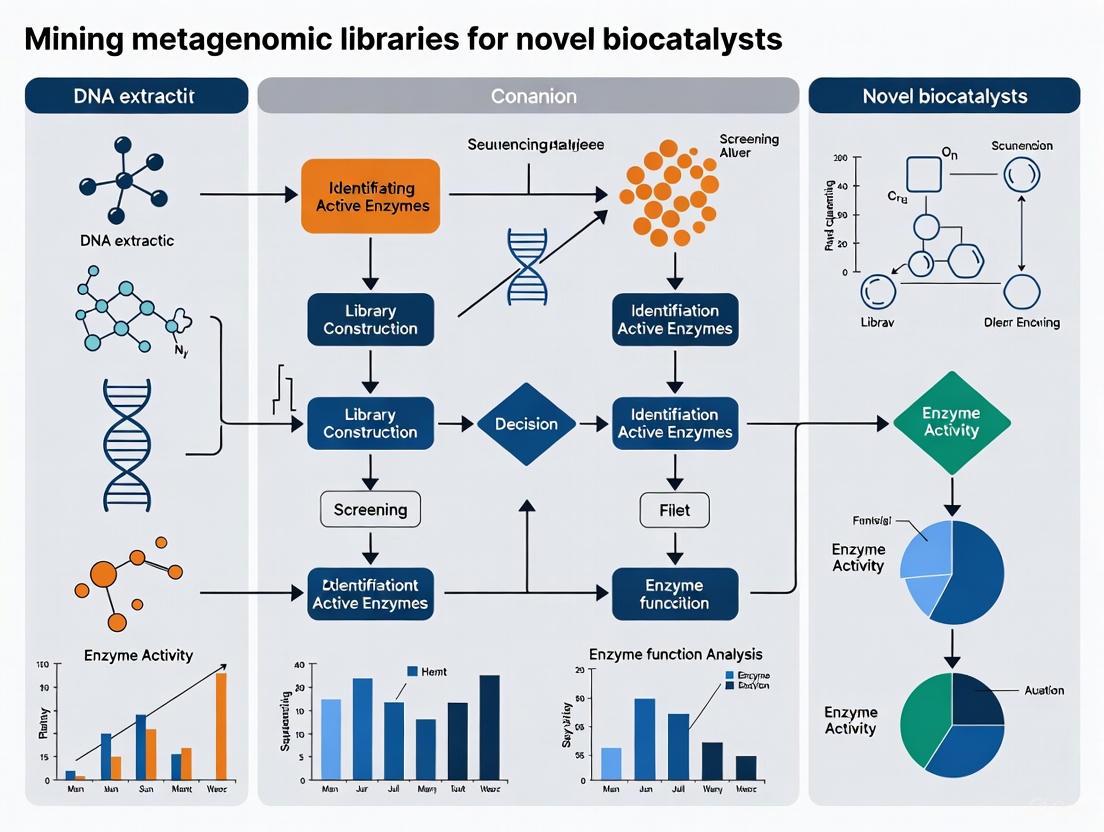
This article provides a comprehensive overview for researchers and drug development professionals on leveraging metagenomics to discover novel biocatalysts.
Mining Metagenomic Libraries for Novel Biocatalysts: A Guide for Discovery and Application in Drug Development
Abstract
This article provides a comprehensive overview for researchers and drug development professionals on leveraging metagenomics to discover novel biocatalysts. It covers the foundational rationale of accessing the vast metabolic potential of unculturable microorganisms, details current methodological approaches for functional and sequence-based screening, and offers practical troubleshooting for common technical challenges. The content further explores the validation of discovered enzymes and their comparative advantages, highlighting their direct application in creating sustainable processes for pharmaceutical synthesis, bioremediation, and the development of new antimicrobials like endolysins.
The Untapped Reservoir: Why Metagenomics is Revolutionizing Biocatalyst Discovery
The field of microbiology has long been constrained by a fundamental limitation: the inability to cultivate the vast majority of microbial life in laboratory settings. Current estimates indicate that more than 99% of prokaryotes in most environments cannot be cultured using standard laboratory techniques [1] [2] [3]. This phenomenon, often termed the "great plate count anomaly," represents a significant bottleneck in microbial research, leaving an immense reservoir of genetic and metabolic diversity—often referred to as "microbial dark matter"—largely unexplored [4] [5]. This limitation has profound implications for understanding global biogeochemical cycles, ecosystem functioning, and the discovery of novel bioactive compounds.
The challenge extends beyond academic curiosity. With the escalating threat of global antimicrobial resistance, there is an urgent need for new therapeutics with novel mechanisms of action, many of which are believed to reside within these uncultured microorganisms [5]. Furthermore, the overwhelming functional potential of uncultured microbes represents an untapped resource for biocatalysis, offering enzymes with unique properties suitable for industrial processes under mild and environmentally friendly conditions [6].
This whitepaper examines the innovative strategies developed to overcome the cultivation bottleneck, with a specific focus on accessing the genetic and metabolic potential of uncultured microorganisms for the discovery of novel biocatalysts. We explore both cultivation-dependent and independent approaches, their methodological frameworks, and their integration into a cohesive strategy for bioprospecting.
Understanding the Cultivation Challenge
The inability to culture most microorganisms stems from a complex interplay of factors that are difficult to replicate in artificial laboratory environments. These include:
- Fastidious Nutritional Requirements: Many uncultured microbes have highly specific nutrient needs that remain uncharacterized. Some rely on specific growth factors such as zincmethylphyrins, coproporphyrins, or short-chain fatty acids that are seldom included in standard media [5].
- Obligate Symbiotic Relationships: Numerous microorganisms exist in obligate symbiotic associations with other species, depending on metabolic byproducts or physical interactions that cannot be replicated in axenic culture [4] [5].
- Environmental Subtleties: Natural habitats feature complex physicochemical gradients (pH, temperature, oxygen availability, pressure) and spatial structures that are challenging to reproduce [5] [7].
- Microbial Social Dynamics: Both interspecies (symbiosis, competition, cross-feeding) and intraspecific interactions (quorum sensing, cooperation) profoundly affect microbial growth but are disrupted during isolation attempts [5].
- Low Abundance and Slow Growth: Many environmental microbes are adapted to low nutrient concentrations (oligotrophs) and grow slowly, making them susceptible to being outcompeted by fast-growing copiotrophs in enrichment cultures [4].
Table 1: Cultivation Success Rates Across Different Environments
| Environment | Estimated Species Richness | Cultivation Success Rate | Key Challenges |
|---|---|---|---|
| Soil | >3,000 species/gram | <1% | Hyper-diversity, unknown growth requirements |
| Sargasso Sea | ~300 species/sample | Low (61% assembly rate but limited by contaminants) | Low biomass, contamination |
| Acid Mine Drainage | ~6 dominant species | High (85% sequence assembly rate) | Low diversity enables better genomic recovery |
| Freshwater Lakes | Variable (40-72% of genera detected) | 12.6% viability via advanced methods | Oligotrophic adaptations, genome streamlining |
| Human Gut | Hundreds of species | Biased toward fast-growing copiotrophs | Anaerobic requirements, complex symbioses |
Advanced Cultivation Techniques
High-Throughput Dilution-to-Extinction Cultivation
Recent innovations in cultivation methodologies have begun to chip away at the microbial dark matter. Dilution-to-extinction cultivation in sterilized environmental water or defined artificial media has proven particularly successful for isolating abundant aquatic oligotrophs [4]. This approach involves serially diluting environmental samples to the point where individual wells contain approximately one cell, then incubating for extended periods (6-8 weeks) under conditions that mimic the native environment.
A landmark 2025 study applied this approach to samples from 14 Central European lakes using defined media that mimic natural conditions [4]. The research yielded 627 axenic strains, including representatives from 15 genera among the 30 most abundant freshwater bacteria. These cultures represented up to 72% of genera detected in the original samples and included many slowly growing, genome-streamlined oligotrophs that are notoriously underrepresented in public repositories [4].
Table 2: Key Research Reagents for Advanced Microbial Cultivation
| Reagent/Medium | Composition | Application | Key Function |
|---|---|---|---|
| Defined Media (med2/med3) | Carbohydrates, organic acids, catalase, vitamins in µM concentrations | Freshwater oligotroph isolation | Mimics natural carbon concentrations in lakes |
| MM-med Medium | Methanol, methylamine, vitamins | Methylotroph isolation | Selective for bacteria utilizing C1 compounds |
| PDMS Magnetic Capsules | Polydimethylsiloxane, iron oxide nanoparticles, controlled porosity | In situ cultivation | Semi-permeable membrane allows nutrient/waste exchange while containing cells |
| Diffusion Chambers | Semi-permeable membranes mounted between environmental samples | Uncultured soil bacteria | Allows chemical exchange with natural environment while containing cells |
| Continuous-Flow Cell Systems | Controlled nutrient delivery, waste removal | Fastidious microbes, syntrophic communities | Maintains chemical gradients and removes inhibitory metabolites |
In Situ Cultivation and Co-culture Approaches
Perhaps the most innovative cultivation strategies involve maintaining microorganisms in their natural environments while still enabling researchers to retrieve them. A groundbreaking 2025 approach uses tiny magnetic capsules to overcome the cultivation bottleneck [8]. Researchers created semipermeable, magnetic polydimethylsiloxane (PDMS) spheres that encapsulate microbial cells while allowing nutrients and waste products to diffuse freely.
The process involves flowing three liquids together to spontaneously form layered, semipermeable spheres at a rate of approximately 6,000 per minute [8]. These "nanoculture bubbles" contain culture medium encased in a layer of PDMS and iron oxide nanoparticles, allowing them to be retrieved from complex environments using magnets. This technology enables microbes to grow in their native soil or ocean water habitats while being contained for later collection, effectively eliminating the competition problem that plagues traditional methods.
Other innovative approaches include:
- Diffusion chambers: Devices with semi-permeable membranes that allow chemical exchange with the natural environment while containing the target microorganisms [5].
- Co-culture systems: Intentional cultivation of multiple species together to replicate essential microbial interactions [5].
- Microfluidic cultivation devices: Miniaturized systems that enable high-throughput cultivation under controlled conditions [5].
Figure 1: Integrated workflow combining advanced cultivation with metagenomic screening for biocatalyst discovery
Metagenomics: Bypassing Cultivation Entirely
Metagenomic Workflows and Methodologies
Metagenomics represents a paradigm shift in microbial studies, enabling researchers to access genetic information directly from environmental samples without the need for cultivation [1] [2]. The standard metagenomic workflow involves several key steps:
- Environmental Sampling: Careful collection of samples from diverse habitats, with attention to preserving nucleic acid integrity and representing in situ conditions.
- DNA Extraction: Liberation and purification of DNA from environmental samples, often complicated by co-purification of inhibitory substances like polyphenolic compounds [2].
- Library Construction: Cloning of environmental DNA (eDNA) into cultivable host organisms (typically Escherichia coli) to create metagenomic libraries [2] [3].
- Sequencing and Assembly: High-throughput sequencing followed by computational assembly of sequence reads into contigs or scaffolds, with varying success rates depending on community complexity [1].
The application of this approach ranges from simple communities like acid mine drainage biofilms (with only 3 bacterial and 3 archaeal lineages) to highly complex environments like agricultural soils (containing >3,000 species) [1]. The assembly success reflects this complexity, with 85% of sequence reads assembling into scaffolds in the simple acid mine community compared to less than 1% in Minnesota farm soil [1].
Screening Strategies for Biocatalyst Discovery
Metagenomic libraries can be screened for novel biocatalysts using two primary approaches: function-based screening and sequence-based screening [6] [3].
Function-based screening relies on heterologous expression of eDNA in a model host to yield a detectable phenotype. This approach includes:
- Direct activity assays: Libraries are plated on media containing substrates for enzymes of interest, with positive clones identified through zones of clearance or color changes [3].
- Reporter systems and complementation: Using engineered host strains that produce detectable signals when specific metabolic functions are present [3].
- Substrate-induced gene expression (SIGEX): This product-responsive reporter assay screens metagenomic libraries for enzyme-encoding genes [3].
Sequence-based screening utilizes known sequence homology to identify novel genes and includes:
- PCR amplification using degenerate primers designed from conserved regions of known enzyme families [3].
- Hybridization-based screening with probes targeting specific gene sequences.
- Bioinformatic mining of metagenomic sequencing data using tools like BLAST to identify genes of interest [6].
Figure 2: Metagenomic screening approaches for novel biocatalyst discovery
Computational Tools for Metagenomic Analysis
The computational analysis of metagenomic data presents significant challenges due to the volume and complexity of the data. Tools like METABOLIC (METabolic And BiogeOchemistry anaLyses In miCrobes) have been developed to profile metabolic and biogeochemical traits in microbial communities based on genomic data [9]. METABOLIC integrates annotations from multiple databases (KEGG, TIGRfam, Pfam), incorporates protein motif validation, and determines the presence or absence of metabolic pathways based on KEGG modules [9].
This software enables researchers to move beyond simple annotation to understanding community-scale metabolic networks, microbial interactions, and contributions to biogeochemical cycling—all critical for putting biocatalyst discovery in ecological context.
Success Stories and Applications
Novel Biocatalysts from Metagenomic Studies
Metagenomic approaches have yielded numerous industrially relevant enzymes with unique properties. Success stories include:
- Lipases and esterases with novel substrate specificities and stability under extreme conditions [6] [3].
- Glycosyl hydrolases for biomass degradation with high activity against recalcitrant substrates [3].
- Nitrilases for enantioselective production of carboxylic acid derivatives, important for pharmaceutical synthesis [2].
- Alkaline proteases with applications in detergents and waste processing [3].
The probability of uncovering novel sequences through metagenomics is significantly higher than from searches in cultivated microbes, as this approach accesses the immense diversity of uncultured microorganisms [2].
Natural Product Discovery
Beyond discrete enzymes, metagenomics has enabled the discovery of complete biosynthetic pathways for novel natural products. Notable examples include:
- Novel glycopeptide antibiotics related to vancomycin identified using degenerate primers for conserved oxidative coupling enzymes [3].
- Cyanobactins, ribosomally synthesized cyclic peptides with cytotoxic activities, discovered from uncultured cyanobacterial symbionts [3].
- Type II polyketides, including antimicrobial and anticancer agents, identified by targeting conserved ketosynthase genes [3].
- The anticancer agent ET-743 (trabectedin), whose biosynthetic cluster was recovered from uncultured tunicate bacterial symbionts [3].
Table 3: Representative Natural Products Discovered via Metagenomic Approaches
| Natural Product | Source Environment | Bioactivity | Discovery Method |
|---|---|---|---|
| Patellamide | Marine sponge symbionts | Cytotoxic | Metagenomic library construction and heterologous expression |
| Novel Glycopeptides | Soil | Antibacterial (anti-Gram-positive) | PCR targeting conserved OxyC sequences |
| ET-743 | Tunicate symbionts | Anticancer | Metagenomic library screening based on structural similarities |
| Trans-AT Polyketides | Marine environments | Various pharmacological activities | Phylogenetic targeting of trans-AT ketosynthase domains |
| Bisucaberin | Deep sea metagenome | Siderophore activity | Heterologous expression of biosynthetic gene cluster |
Integrated Approaches and Future Directions
The most powerful strategies for accessing uncultured microbes combine multiple complementary approaches. Integrated workflows that couple advanced cultivation techniques with metagenomic analysis provide the most comprehensive access to microbial dark matter [4] [5].
The proteogenomic approach demonstrates this integration powerfully. In the acid mine drainage biofilm study, researchers combined metagenomic sequencing with shotgun mass spectrometry of community proteins [1]. This enabled them to link peptide sequences to approximately 49% of the open reading frames from the dominant genomes and identify Cyt579, a novel acid-stable iron-oxidizing cytochrome that mediates the rate-limiting step in acid production [1].
Future directions in the field include:
- Single-cell genomics: Isolation and genomic analysis of individual microbial cells from complex environments, bypassing both cultivation and assembly challenges [3].
- CRISPR-based genome editing: Direct manipulation of uncultured organisms in their native environments [5].
- Synthetic biology: Reconstruction of complete biosynthetic pathways in heterologous hosts [5] [3].
- Machine learning approaches: Prediction of growth requirements and culture conditions based on genomic features [6].
- Microbial community engineering: Designing synthetic consortia that support the growth of fastidious uncultured organisms [5].
Advances in sequencing technologies, bioinformatics prediction tools, heterologous expression methods, and synthetic biology will continue to enhance our ability to access and utilize the genetic potential of uncultured microorganisms [3].
The "cultivation bottleneck" no longer represents an impenetrable barrier to exploring the microbial world. Through innovative cultivation strategies, metagenomic approaches, and integrated methodologies, researchers are progressively accessing the genetic and metabolic diversity of the previously uncultured 99% of microbes. These advances are transforming our understanding of microbial ecology and evolution while simultaneously opening up new frontiers for biocatalyst and natural product discovery.
As these technologies continue to mature and become more accessible, we can anticipate a new era of microbial research—one that fully embraces the complexity and diversity of the microbial world and harnesses this knowledge to address pressing challenges in medicine, industry, and environmental sustainability.
The term metagenome refers to the collective genetic content of all microorganisms found within a specific environmental sample [10]. This concept underpins the field of metagenomics, which involves the direct extraction, sequencing, and analysis of DNA from environmental sources like soil, seawater, or marine sediments, bypassing the need for laboratory cultivation of individual species [11] [12]. Traditional microbial cultivation methods can access less than 1% of the bacterial and archaeal species in a typical sample, leaving the vast majority of microbial diversity unexplored [11]. Metagenomics has revolutionized microbial ecology and evolutionary biology by providing unprecedented access to this previously hidden reservoir of genes, metabolic pathways, and functional capabilities [10] [11].
The application of metagenomics is particularly powerful for discovering novel biocatalysts—enzymes with potential uses in industrial chemistry, pharmaceuticals, and biofuels [13]. These enzymes, often derived from uncultured microorganisms, are exquisitely selective and catalyze reactions with unparalleled chiral and positional selectivities, offering 'green' solutions for chemical synthesis [13]. Marine environments, for instance, are a rich reservoir of highly diverse and unique biocatalysts, and metagenomics provides the key to unlocking this potential [12].
Methodological Approaches in Metagenomics
Sequencing Technologies and Workflow
Metagenomic studies rely on high-throughput DNA sequencing technologies to decode the genetic material within a sample. The field has moved from early clone library construction to advanced shotgun sequencing, where DNA is randomly sheared into fragments, sequenced, and then computationally reassembled into consensus sequences [10] [11]. The choice of sequencing technology involves trade-offs between read length, throughput, and cost.
- Short-Read Sequencing (Illumina): Provides high throughput and accuracy but generates shorter reads (typically 400-700 bp), which can complicate genome assembly [11].
- Long-Read Sequencing (PacBio, Oxford Nanopore): Generates significantly longer reads (thousands to millions of base pairs), simplifying the assembly process, particularly in repetitive genomic regions [11].
A critical consideration is sequencing depth—the number of times each base is read. Higher depth leads to greater resolution, more complete genomes, and a higher probability of discovering genes from low-abundance community members [11]. The following diagram illustrates the core workflow for generating and analyzing metagenomic data.
Bioinformatics and Data Analysis
The data generated from metagenomic sequencing is both enormous and complex, often representing fragments from thousands of species [11]. A primary bioinformatics challenge is binning, the process of assigning sequences to their taxonomic groups. This can be achieved through:
- Composition-based binning: Uses inherent sequence characteristics like GC content, codon usage, or tetranucleotide frequency to cluster sequences [10] [11].
- Similarity-based binning: Relies on comparing sequences to annotated references in databases, offering higher accuracy but requiring greater computational resources [10].
Sequences are assembled into Metagenome-Assembled Genomes (MAGs), which provide a genomic context for discovered genes and enable the deduction of metabolic pathways [10] [11]. Comparing metagenomes and MAGs over time allows researchers to track evolutionary changes, such as single-nucleotide variants (SNVs), and identify genomic targets of selection [10].
Mining Metagenomic Libraries for Novel Biocatalysts
Strategies for Biocatalyst Discovery
Three primary strategies are employed to discover novel enzymes from metagenomic libraries, each with distinct advantages and limitations [13].
Table 1: Strategies for Mining Biocatalysts from Metagenomic Libraries
| Strategy | Methodology | Key Advantage | Primary Limitation |
|---|---|---|---|
| Homology-Driven Screening [13] | Uses probes or degenerate primers to target genes with sequence similarity to known enzymes. | Straightforward if conserved motifs are known. | Artificially limits discovery to known enzyme classes; cannot find novel protein folds. |
| Activity-Based Screening [13] [12] | Clones are screened for expression of a desired enzymatic activity using high-throughput assays. | Guarantees discovery of active enzymes; can reveal entirely novel protein families. | Requires functional gene expression in a host (e.g., E. coli); development of assays can be complex. |
| Substrate-Induced Gene Expression (SIGEX) [13] | Selects for clones where catabolic gene expression is induced by a specific substrate, using fluorescence-activated cell sorting. | Highly efficient for finding catabolic pathways; automates screening. | Limited to substrate-inducible genes and promoters. |
Activity-based screening is considered a particularly "robust" strategy because it is not biased by prior sequence knowledge and directly confirms the desired catalytic function [13]. The process of constructing and screening a metagenomic library is detailed below.
Key Research Reagents and Materials
Successful mining of metagenomic libraries depends on a suite of specialized reagents and materials. The following table outlines essential components of the "scientist's toolkit" for this field.
Table 2: Essential Research Reagent Solutions for Metagenomic Library Mining
| Reagent / Material | Function / Application |
|---|---|
| Bacterial Artificial Chromosomes (BACs) [11] | Vectors for cloning large DNA fragments (often >100 kbp), helping to capture large gene clusters and operons. |
| Fluorescent Substrates [13] | Used in high-throughput activity-based screens; enzyme activity produces a detectable fluorescent signal. |
| Degenerate Primers [13] | Designed to target conserved enzyme regions; allow PCR amplification of related but unknown gene variants. |
| Expression Hosts (e.g., E. coli) [13] [12] | Heterologous host for expressing genes cloned from the metagenomic library. |
| Agar Plates with Indicator Substrates [13] | Solid media for initial activity screening (e.g., cellulose for cellulases); activity is visualized by zone of clearance. |
Metagenomics has fundamentally altered the approach to discovering microbial diversity and novel biocatalysts. By moving beyond the constraints of cultivation, it provides a direct path to the genetic wealth of entire microbial communities [10] [11]. Future progress will be driven by advancements in long-read sequencing technologies, which improve genome assembly from complex samples [11], and the integration of complementary 'omics' approaches. Metatranscriptomics and metaproteomics offer insights into the functional dynamics of microbial communities by revealing which genes are actively expressed and translated into proteins, thereby guiding the discovery of truly relevant biocatalysts under specific conditions [10].
In conclusion, the continuous mining of genomes and metagenomic libraries is an established and robust strategy for expanding the enzymatic repertoire required for biotechnological applications [13]. As the cost of sequencing continues to decline and bioinformatic tools become more powerful, metagenomics will undoubtedly remain a cornerstone technique for uncovering the next generation of novel biocatalysts from the vast, untapped resource of microbial genetic diversity.
The pursuit of superior enzyme traits represents a critical frontier in industrial biotechnology, driven by growing demands for biocatalysts that remain functional under process-specific extreme conditions. Enzymes sourced from conventional organisms often prove inadequate for industrial applications requiring thermostability, pH tolerance, halotolerance, or resistance to organic solvents. Extremophilic microorganisms thriving in hostile habitats—from deep-sea hydrothermal vents to polar ice sheets—have evolved sophisticated molecular adaptations that confer exceptional stability and specificity to their enzymatic machinery [14] [15]. This technical guide examines how mining the metagenomic libraries constructed from these extreme environments provides an unparalleled resource for discovering novel biocatalysts with pre-optimized industrial traits, framing this exploration within the broader thesis that uncultured microbial diversity represents the next frontier for biocatalyst development.
The fundamental challenge in industrial enzymology lies in the fact that natural enzymes are rarely optimized for anthropogenic applications. As a result, industrial processes frequently must accommodate suboptimal catalysts rather than utilizing ideal biocatalysts designed for specific process parameters [16]. Metagenomics bypasses the limitation of microbial unculturability—a significant constraint given that less than 1% of environmental microorganisms can be cultivated using standard methodologies [16]. By directly extracting and cloning environmental DNA, researchers can access the genetic resources of entire microbial communities without requiring laboratory cultivation of constituent organisms [13]. When applied to extreme environments, this approach enables researchers to tap into evolutionary solutions refined over billions of years of adaptation to conditions that mirror industrial requirements.
Key Enzyme Traits from Extreme Environments
Enzymes sourced from extremophiles exhibit specialized structural and functional adaptations that make them particularly valuable for industrial applications. The table below summarizes the key stability traits, their industrial relevance, and exemplary extremophile sources.
Table 1: Key Enzyme Traits from Extreme Environments and Their Industrial Applications
| Trait | Molecular Determinants | Industrial Applications | Extremophile Sources |
|---|---|---|---|
| Thermostability | Increased hydrophobic cores, ionic networks, dense packing, shortened surface loops [15] | Biofuel production, starch processing, sugar syrup manufacturing [16] | Methanopyrus kandleri (122°C), Pyrococcus yayanosii (deep-sea vents) [15] |
| pH Tolerance | Specialized surface charge distributions, buffer-like amino acid clusters, stable salt bridges [14] | Food processing, pharmaceutical synthesis, effluent treatment [16] | Acidophiles (pH ~0.5), Alkaliphiles (pH ~14) [15] |
| Halotolerance | Acidic surface residue enrichment, solvation shell maintenance, osmolytes production [14] | Food fermentation, wastewater treatment, biocatalysis in ionic liquids [14] | Halobacterium salinarum (4.5M NaCl) [15] |
| Solvent Resistance | Rigid hydrophobic cores, reduced solvent accessibility, enhanced substrate binding pockets [14] | Pharmaceutical synthesis, chemical production, biodiesel manufacturing [16] | Organic solvent-tolerant microbes [14] |
| Piezostability | Reduced cavity volumes, specific amino acid substitutions, enhanced subunit interactions [15] | High-pressure bioreactors, deep-sea bioprocessing, superfluid systems [15] | Obligate piezophiles from Mariana Trench (1100 bar) [15] |
The molecular insights underlying these stability traits provide a roadmap for rational enzyme engineering. Thermophilic enzymes frequently exhibit increased hydrophobic interactions within their cores, enhanced secondary structure stabilization through additional ion pairs and hydrogen bonds, and reduced entropy of unfolding through superior packing density [15]. Halotolerant enzymes often display acidic residue enrichment on their surfaces, maintaining hydration shells and functionality in low-water-activity environments [14]. Piezophilic enzymes typically feature reduced cavity volumes and specific amino acid substitutions that counteract pressure-induced denaturation [15]. Understanding these structural principles enables researchers to prioritize certain enzyme classes or phylogenetic groups during metagenomic screening campaigns.
Metagenomic Workflow for Enzyme Discovery
The process of discovering novel biocatalysts from extreme environments involves a systematic workflow from environmental sampling to enzyme characterization, with multiple decision points influencing the success rate of identification.
Figure 1: Metagenomic workflow for enzyme discovery from extreme environments, showing key stages and decision points that influence screening outcomes.
Experimental Protocols for Key Stages
Environmental Sample Collection and DNA Extraction
Protocol: Environmental Sampling from Extreme Habitats
- Sample Collection: Collect soil, sediment, or water samples using sterile equipment. For thermal features, use heat-tolerant sampling devices. Maintain in-situ conditions during transport using insulated containers [16] [13].
- Biomass Concentration: Filter aqueous samples through 0.22μm membranes or centrifugate at 4,000×g for 15 minutes. For solid samples, use differential centrifugation after suspension in appropriate buffers [17].
- DNA Extraction: Employ commercial DNA extraction kits with modifications for extreme environmental samples:
- Add enhanced mechanical lysis step using bead beating (Lysing Matrix E, MP Biomedicals) for 45 seconds at 6 m/s [17].
- Include additional enzymatic lysis with lysozyme (10 mg/mL, 37°C for 30 minutes) and proteinase K (0.1 mg/mL, 56°C for 60 minutes).
- Implement purification steps to remove humic acids and other PCR inhibitors using gel electrophoresis and column-based clean-up [17].
- DNA Quantification and Quality Assessment: Use fluorometric methods (e.g., Qubit dsDNA HS Assay) and confirm integrity via agarose gel electrophoresis. A260/A280 ratios should be 1.8-2.0 [17].
Metagenomic Library Construction
Protocol: Library Construction with Fosmid Vectors
- DNA Fragmentation: Perform partial digestion with Sau3AI to generate 30-40 kb fragments. Optimize enzyme concentration and incubation time to maximize target size range [16].
- Vector Preparation: Digest pCC1FOS or similar fosmid vector with BamHI. Dephosphorylate with calf intestinal alkaline phosphatase to prevent self-ligation [16].
- Ligation and Packaging: Ligate insert and vector DNA at 3:1 molar ratio using T4 DNA ligase (16°C, 16 hours). Package using MaxPlax Lambda Packaging Extracts following manufacturer's protocol [16].
- Host Transformation: Transduce EPI300-T1R E. coli cells with packaged library. Plate on LB agar with 12.5 μg/mL chloramphenicol. Incubate at 37°C for 18-24 hours [16].
- Library Quality Assessment: Pick random clones to verify insert size by fosmid isolation and restriction digestion. Sequence clone ends to confirm diversity. Aim for library sizes exceeding 10^9 clones to ensure adequate coverage of complex metagenomes [16] [13].
Activity-Based Screening
Protocol: Function-Based Screening for Hydrolases
- Replica Plating: Transfer library clones to indicator plates containing substrate of interest:
- High-Throughput Screening: For soluble products, use microtiter plate-based assays with fluorescent or chromogenic substrates (e.g., p-nitrophenyl derivatives for esterases) [18].
- Hit Verification: Isolate positive clones and reconfirm activity through secondary screening. Eliminate false positives through sequence verification of inserts [16] [13].
Molecular Adaptations of Extremophilic Enzymes
Extremophilic enzymes exhibit specialized structural adaptations that confer stability under harsh conditions. Understanding these molecular mechanisms provides valuable insights for both discovery and engineering efforts.
Figure 2: Molecular adaptation pathways of extremophilic enzymes, showing how specific structural modifications confer functional benefits under extreme conditions.
The molecular adaptations depicted above manifest through quantifiable structural parameters. Thermophilic enzymes typically display a higher arginine-to-lysine ratio, as arginine forms more stable salt bridges; increased proline content in loops to reduce unfolding entropy; and a higher fraction of hydrophobic residues participating in core formation [15]. Piezophilic enzymes exhibit distinctive adaptations including reduced cavity volumes (decreased by 15-25% compared to mesophilic counterparts), enhanced secondary structure stability through additional hydrogen bonding networks, and specific amino acid substitutions that favor compact folded states [15]. Halotolerant enzymes frequently show acidic residue enrichment on their surfaces (up to 25% increase in aspartic and glutamic acids), allowing for maintenance of hydration shells in low-water-activity environments through coordinated water molecules [14]. These molecular signatures provide bioinformatic handles for prioritizing candidate genes from metagenomic datasets.
The Scientist's Toolkit: Essential Research Reagents and Platforms
Successful mining of metagenomic libraries for novel biocatalysts requires specialized reagents, vectors, and analytical platforms. The following table details essential components of the extremophile enzyme discovery pipeline.
Table 2: Research Reagent Solutions for Metagenomic Enzyme Discovery
| Category | Specific Product/Platform | Application Notes | Key Features |
|---|---|---|---|
| DNA Extraction | MPure Bacterial DNA Kit (MP Biomedicals) with Lysing Matrix E | Enhanced lysis for difficult environmental samples | Includes mechanical and enzymatic lysis steps; effective for gram-positive bacteria [17] |
| Polymerase | Q5 Hot Start High-Fidelity 2× Master Mix (NEB) | Metagenomic library amplification and verification | High fidelity (280× Taq); reduced amplification bias [17] |
| Cloning Vectors | pCC1FOS Fosmid Vector | Large-insert metagenomic library construction | Copy number inducible; maintains 30-40 kb inserts [16] |
| Expression Hosts | EPI300-T1R E. coli Strain | Primary fosmid library host | High transformation efficiency; inducible copy number [16] |
| Alternative Hosts | Streptomyces lividans, Rhizobium leguminosarum | Expression of GC-rich or phylogenetically distant genes | Broader promoter recognition; specialized post-translational modifications [16] |
| Sequencing Platforms | PacBio Sequel II System | Full-length 16S rRNA gene sequencing and amplicon validation | Circular consensus sequencing; >99.9% single-molecule accuracy [19] |
| Screening Assays | p-Nitrophenyl substrate series (Sigma-Aldrich) | Hydrolase activity detection in high-throughput format | Chromogenic release (400-410 nm); quantifiable kinetic data [18] |
| Analytical Tools | Liquid Chromatography-Mass Spectrometry (LC-MS) | Detection of novel reaction products and pathways | Untargeted analysis; complex reaction mixture resolution [18] |
The selection of appropriate reagents and platforms significantly impacts screening outcomes. For example, the choice between fosmid and plasmid vectors determines insert size and consequently the complexity of enzymatic pathways that can be captured [16]. Small-insert libraries (8-10 kb) in plasmid vectors are optimal for single-gene expression, while large-insert fosmid libraries (30-40 kb) enable capture of complete operons and multi-enzyme pathways [16]. Similarly, the selection of expression hosts substantially influences the detectable fraction of metagenomic diversity; while E. coli remains the most common host, alternative hosts such as Streptomyces spp. or Rhizobium leguminosarum have demonstrated the ability to express genes refractory to expression in E. coli, expanding the discoverable enzyme space [16] [13].
Emerging Approaches and Future Directions
The field of metagenomic enzyme discovery is rapidly evolving through integration of computational and synthetic biology approaches. Artificial intelligence and machine learning algorithms are increasingly employed to predict enzyme function from sequence data, prioritizing candidates for experimental characterization [14]. Sequence-based mining of metagenomic data now leverages conserved catalytic residues and structural motifs to identify novel enzyme families, while activity-based screening continues to yield unexpected catalysts with no sequence homology to known enzymes [13].
Advanced screening methodologies are addressing the critical bottleneck in metagenomic analysis. Substrate-induced gene expression screening (SIGEX) uses fluorescence-activated cell sorting to identify clones harboring catabolic genes induced by target substrates [13]. Meanwhile, microfluidics-based screening platforms enable ultra-high-throughput analysis of enzyme activities at picoliter scales, dramatically increasing screening efficiency [18]. These technological advances, combined with the systematic exploration of Earth's most extreme environments, promise to unlock a wealth of novel biocatalysts with precisely tuned properties for industrial applications.
The integration of synthetic biology with metagenomic screening represents a particularly promising direction. Engineering host strains with enhanced capabilities for heterologous expression—through chromosome integration of rare tRNA genes, modification of secretion pathways, or implementation of broad-specificity transcriptional regulators—can significantly increase the hit rate from metagenomic libraries [16]. As these methodologies mature, mining the metagenomic resource for superior enzyme traits will increasingly yield biocatalysts with the stability, specificity, and activity required for transformative industrial applications.
The vast majority of the Earth's microbial diversity remains unexplored due to a fundamental limitation in microbiology: it is estimated that up to 99% of bacteria in the environment cannot be readily cultured in laboratory conditions [3] [20]. This uncultured microbial majority represents an immense reservoir of potentially useful biocatalysts and natural products that have never been characterized. Metagenomics provides a culture-independent solution to this problem by enabling researchers to access the genomic potential of entire microbial communities directly from environmental samples. This approach involves extracting environmental DNA (eDNA) directly from samples and cloning this genetic material into culturable host organisms for expression and screening [3]. The field has evolved substantially from its beginnings, driven by advances in sequencing technologies and bioinformatics, transforming into a mature technology for discovering novel enzymes and biosynthetic pathways with applications across chemical, pharmaceutical, and industrial sectors [21] [6].
The strategic importance of metagenomics in biocatalysis continues to grow as industries commit to more sustainable manufacturing processes. Biocatalysis offers significant advantages over traditional chemical methods, including reactions conducted in aqueous media under mild conditions, high regio- and enantio-selectivity, and reduced environmental footprint [6]. Metagenome mining has proven particularly valuable for rapidly expanding the toolkit of promiscuous enzymes needed for new transformations, often without requiring initial protein engineering steps. When engineering is necessary, metagenomic candidates frequently provide superior starting points compared to previously known enzymes, as they originate from natural selection pressures in native environments [6]. This review comprehensively examines the methodologies, discoveries, and industrial applications stemming from metagenomic explorations of natural product pathways, with particular focus on the workflow from environmental sample to commercially viable biocatalyst.
Methodological Approaches for Biocatalyst Discovery
Metagenomic Library Construction and Screening Strategies
The process of discovering novel biocatalysts through metagenomics follows a structured workflow that begins with environmental sampling and culminates in the identification of promising enzyme candidates. The initial critical step involves sample processing and DNA extraction from diverse environments, which can range from ordinary soils to extreme habitats like hot springs or deep-sea vents [6]. These extreme environments are particularly valuable sourcing locations, as they often yield enzymes with superior stability and activity under process conditions that would denature most conventional biocatalysts [6]. The extracted environmental DNA is then sequenced using next-generation sequencing platforms, with the resulting data processed through elaborate bioinformatics tools and software for analyzing large metagenomic datasets [6].
Two primary screening approaches have been established for interrogating metagenomic libraries: sequence-based screening and functional screening [3] [6]. Sequence-based screening relies on known sequences of target gene families, searching based on homology or conserved motifs. This method uses computational tools to identify hits from conserved regions of target proteins, narrowing the search for metagenomic enzymes [6]. In contrast, functional screening does not require prior sequence knowledge and directly tests for desired enzymatic activities, often leading to the discovery of more novel gene sequences in any given sample [6]. Functional screening can be further divided into several methodologies:
- Simple direct readout assays: Libraries are plated on media containing a substrate for an enzyme of interest, and clones producing the desired enzyme are identified by formation of a clear halo or color change [3].
- Reporter gene assays: These utilize product-induced gene expression (PIGEX) where the production of a metabolite of interest activates a promoter controlling a reporter gene, enabling fluorescence-activated cell sorting (FACS) of active clones [3].
- Complementation assays: These employ host strains with deletions in specific metabolic pathways, where the metagenomic DNA complements the mutation and allows growth on selective media [3].
The following diagram illustrates the core metagenomic workflow for biocatalyst discovery from environmental samples to enzyme identification:
Functional Metaproteomics as a Discovery Tool
A complementary approach to traditional metagenomic screening is functional metaproteomics, which combines activity-based screening with metagenome-based protein identification. This method enables the direct discovery of biocatalytic activity in the proteome of an environmental sample without the bias of sequence-based hypotheses. A demonstrated workflow involves separating proteins from an environmental sample using two-dimensional polyacrylamide gel electrophoresis, followed by an in-gel activity assay using fluorogenic substrates like para-methylumbelliferyl butyrate (pMUB) [20]. Lipolytic enzymes present in the gel hydrolyze pMUB and release a fluorescent dye detectable under ultraviolet light, identifying active protein spots that can be excised, tryptically digested, and analyzed by mass spectrometry [20].
The power of this approach lies in its connection to metagenomic data. A customized protein database created from sequenced metagenomic DNA from the same sample enables identification of the active enzymes through mass spectrometric analysis. This method proved successful in identifying novel esterases from oil-contaminated soil samples, including the discovery and subsequent heterologous expression of ML-005, a previously uncharacterized esterase with activity toward short- and medium-chain length esters [20]. The functional metaproteomics approach maintains the immediacy of activity-based screening while harnessing the phylogenetic diversity of environmental samples.
Experimental Protocols: Key Methodologies
Functional Screening Protocol for Hydrolase Discovery:
- Sample Preparation: Collect environmental samples (e.g., oil-contaminated soil) and extract proteins using appropriate extraction buffers. Maintain samples at 4°C throughout processing to prevent protein degradation [20].
- Electrophoresis Separation: Separate 600μg of protein sample by two-dimensional polyacrylamide gel electrophoresis. The first dimension separates proteins by isoelectric point, while the second dimension separates by molecular weight [20].
- In-Gel Activity Assay: After electrophoresis, refold proteins in the gel and incubate with fluorogenic substrate (e.g., 0.1mM para-methylumbelliferyl butyrate in 50mM Tris-HCl, pH 8.0). Detect active spots under ultraviolet light at 365nm [20].
- Protein Identification: Excise active protein spots, digest with trypsin, and analyze by mass spectrometry. Search fragmentation spectra against a customized metagenome database derived from the same environmental sample [20].
- Heterologous Expression: Synthesize DNA sequences coding for identified enzymes and clone into expression vectors (e.g., pET-based systems with T7-promoters). Express in suitable hosts like Escherichia coli BL21 and validate activity through enzyme assays with appropriate substrates [20].
Sequence-Based Screening Protocol:
- DNA Extraction and Sequencing: Extract high-molecular-weight DNA from environmental samples using standardized kits. Sequence using next-generation platforms (Illumina, PacBio) aiming for Phred scores >35 indicating base call accuracy >99.99% [20].
- Bioinformatic Analysis: Assemble raw sequencing data using software such as SPAdes. Annotate assembled metagenome using PROKKA, which identifies coding sequences and transfers annotations from hierarchical data sources [6].
- Homology Screening: Use BLAST searches with known enzyme sequences as queries to identify homologs in the metagenomic database. Focus on conserved catalytic motifs and domains characteristic of the enzyme family of interest [3] [6].
- Gene Cloning and Expression: Amplify candidate genes using PCR with designed primers and clone into expression vectors. Screen for activity in crude lysates or purified protein preparations [3].
Table 1: Key Research Reagent Solutions for Metagenomic Biocatalyst Discovery
| Reagent/Resource | Function/Application | Examples/Specifications |
|---|---|---|
| Fluorogenic Substrates | Detection of enzyme activity in functional screens | para-methylumbelliferyl butyrate (pMUB) for lipases/esterases [20] |
| Metagenomic Libraries | Source of novel genetic material for screening | Soil, marine, or extreme environment-derived DNA clones in bacterial hosts [3] |
| Expression Vectors | Heterologous production of candidate enzymes | pET vectors (T7 promoter), pBR322-based (tac promoter) with His-tags [20] |
| Host Strains | Expression of metagenomic DNA | Escherichia coli BL21 for protein production, specialized strains for pathway expression [20] |
| Bioinformatics Tools | Analysis of sequence data and identification of candidates | SPAdes (assembly), PROKKA (annotation), BLAST (homology searches) [6] [20] |
| Activity Assay Reagents | Validation and characterization of enzyme function | p-nitrophenyl esters with varying chain lengths for esterase/lipase characterization [20] |
Discovered Biocatalyst Classes and Their Industrial Applications
Metagenomic approaches have yielded numerous industrially valuable enzymes with diverse applications. Hydrolases represent one of the most successfully discovered classes, with lipases and esterases being particularly prominent. These enzymes catalyze the hydrolysis of ester bonds and have applications in detergents, food processing, and biofuel production. The metagenomically discovered esterase ML-005, identified through functional metaproteomics, demonstrates high activity toward short-chain (C4) and medium-chain (C8) esters, classifying it as an esterase with potential applications in flavor compound synthesis and bioconversions [20]. Other significant hydrolase discoveries include proteases with applications in the laundry industry, where alkaline proteases active under harsh detergent conditions have been identified through metagenomic mining of alkaline environments [3].
Glycosyl hydrolases including cellulases, amylases, and pectinases have been discovered from metagenomic libraries derived from various environments. For example, novel cellulase genes have been identified from metagenomic libraries of compost soils, with potential applications in biomass degradation for biofuel production [3]. Similarly, oxidoreductases such as laccases and peroxidases have been found through functional screening of soil metagenomic libraries, with applications in pulp bleaching, dye decolorization, and bioremediation [22]. The expansion of available enzyme classes through metagenomic mining continues to provide industrial biocatalysis with new tools for sustainable manufacturing processes.
Small Molecule Products from Biosynthetic Pathways
Beyond single enzymes, metagenomics provides access to complete biosynthetic pathways for valuable small molecules. Nonribosomal peptides and polyketides represent two major classes of bioactive compounds that have been successfully discovered through metagenomic approaches. These complex molecules are synthesized by modular enzyme complexes—nonribosomal peptide synthetases (NRPS) and polyketide synthases (PKS)—which have been targeted through homology-based screening of metagenomic libraries [3].
Several notable successes exemplify this approach:
Glycopeptide Antibiotics: Using degenerate primers based on OxyC, a conserved oxidative coupling enzyme found in vancomycin and teicoplanin-like glycopeptide gene clusters, researchers have identified and recovered multiple predicted glycopeptide-encoding gene clusters from soil metagenomic libraries [3]. This approach demonstrates how key conserved enzymes in biosynthetic pathways can serve as entry points for discovering new members of clinically relevant antibiotic families.
Cyanobactins: These ribosomally produced cyclic peptides, frequently displaying cytotoxic activities, have been discovered through metagenomic analysis of uncultured cyanobacterial symbionts associated with marine sponges. The biosynthetic gene clusters for cyanobactins like patellamide were cloned and heterologously expressed from metagenomic libraries, enabling production and characterization of these compounds without cultivating the original producer organisms [3].
Type II Polyketides: A structurally diverse collection of aromatic small molecules, including antimicrobial and anticancer agents (e.g., tetracycline and doxorubicin), arise from iterative Type II polyketide synthases. These pathways have been discovered through PCR screening for the conserved ketosynthase genes that form the minimal PKS required for polyketide chain assembly [3].
ET-743 Anticancer Agent: The biosynthetic cluster for the anticancer agent ET-743 was recovered from a metagenomic library of uncultured tunicate bacterial symbionts. This discovery was guided by parallels between ET-743 and other tetrahydroisoquinoline structures, leading researchers to hypothesize a bacterial origin encoded by a non-ribosomal peptide synthase system [3].
The following diagram illustrates the primary screening methodologies and their application in discovering different biocatalyst types:
Industrial Performance and Key Metrics
The translation of metagenomically discovered biocatalysts to industrial applications requires meeting specific performance metrics that determine economic viability. Industrial biocatalysis demands high space-time-yield (STY), typically exceeding 16 g L⁻¹ h⁻¹ for commercial processes, along with high substrate loadings (>160 g L⁻¹) and low catalyst consumption (<1 g L⁻¹) [21]. Through enzyme engineering and process optimization, metagenomically discovered enzymes can achieve these targets, as demonstrated by Codexis' development of a ketoreductase for pharmaceutical synthesis that progressed from an initial STY of 3.3 g L⁻¹ h⁻¹ to a final STY of 20 g L⁻¹ h⁻¹ [21].
The economic advantages of enzymatic processes often extend beyond the reaction itself to include downstream processing benefits. A notable example is the enzymatic synthesis of emollient esters (e.g., myristyl myristate) developed by Evonik, where an immobilized lipase operating at 60-80°C replaced a chemical process running at >180°C [21]. While the enzyme itself was relatively expensive, the milder operating conditions prevented formation of smelly and colored by-products, eliminating the need for costly deodorization and bleaching steps required in the chemical process [21]. This case highlights how considering the entire process rather than just the transformation step can make enzymatic routes economically attractive despite higher catalyst costs.
Table 2: Performance Metrics for Industrial Biocatalysis Applications
| Application | Key Performance Indicators | Achieved Metrics | Economic/Business Impact |
|---|---|---|---|
| Acrylamide Production | Space-time-yield (STY), Product titer | STY: >0.1 kg L⁻¹ h⁻¹, Product concentration: >500 g L⁻¹ [21] | Large-scale industrial process using nitrile hydratase from Rhodococcus rhodochrous J1 [21] |
| Pharmaceutical Synthesis (KRED) | Substrate loading, Catalyst loading, STY | Substrate: 160 g L⁻¹, Catalyst: 0.9 g L⁻¹, STY: 20 g L⁻¹ h⁻¹ [21] | Efficient production of chiral alcohols for APIs; meets commercial targets [21] |
| Emollient Ester Synthesis | Energy consumption, By-product formation, Downstream processing | Temperature: 60-80°C (vs. >180°C for chemical process), minimal by-products [21] | Eliminates need for deodorization and bleaching steps; overall cost savings despite enzyme cost [21] |
| Esterase ML-005 | Substrate specificity, Reaction validation | Activity toward C4 and C8 esters, no activity toward C16 esters [20] | Potential application in flavor compound synthesis and bioconversions [20] |
Future Perspectives and Emerging Technologies
The future of metagenomic biocatalyst discovery is being shaped by several emerging technologies that address current limitations and expand the scope of discoverable enzymes. Single-cell genomics represents a powerful complementary approach, where individual bacterial cells are isolated from complex microbial communities and subjected to multiple displacement amplification (MDA) to obtain sufficient genomic DNA for sequencing [3]. This method has been used successfully to isolate and sequence single cells of Lyngbya bouillonii from cyanobacterial filaments containing symbiotic bacteria, leading to the identification of novel secondary metabolite pathways [3]. The combination of single-cell genomics with metagenomic data provides a more comprehensive view of microbial community functional potential.
Advances in sequencing technologies and bioinformatics tools continue to accelerate the discovery process. The significant reduction in sequencing costs has transformed microbial ecology studies by simplifying genome elucidation and enabling more comprehensive metagenomic analyses [6]. However, the exploration of these data remains computationally demanding and typically requires expertise in bioinformatics tools for processing large sequence sets [6]. The emergence of machine learning and artificial intelligence approaches promises to further streamline enzyme discovery and engineering, though these methods still require substantial data collection to generate reliable models [6].
The Nagoya Protocol on "Access to Genetic Resources and the Fair and Equitable Sharing of Benefits Arising from their Utilization (ABS)" represents an important regulatory framework with significant implications for metagenomic biocatalyst discovery [6]. Implemented in 2014, this protocol aims to prevent biopiracy by ensuring fair and equitable benefits from the use of genetic resources between countries. However, grey areas remain regarding collaborative working and publishing information to online databases, particularly concerning whether regulations cover only physical organisms or also digital sequence information (DSI) [6]. Researchers engaged in metagenomic discovery must remain aware of these legal and ethical considerations when sourcing environmental samples from different geographical locations.
Future developments will likely focus on improving heterologous expression systems for more efficient screening of metagenomic libraries, developing better bioinformatic tools for predicting enzyme function from sequence data, and integrating metagenomic discovery with directed evolution to optimize identified catalysts for industrial applications. As these technologies mature, metagenomic mining will continue to expand the toolbox of available biocatalysts, driving innovation in sustainable industrial processes and pharmaceutical development.
From Sample to Sequence: Methodologies for Mining and Applying Novel Enzymes
The pursuit of novel biocatalysts from uncultured microorganisms is a cornerstone of modern biotechnology, supporting the development of new enzymes for applications in pharmaceutical synthesis, industrial biotechnology, and bio-based sustainable manufacturing [6] [16]. Metagenomics enables researchers to access the vast genetic reservoir of environmental microorganisms, over 99% of which resist standard laboratory cultivation techniques [23] [16]. This technical guide provides an in-depth overview of the critical workflow for constructing metagenomic libraries from environmental samples, framed within the context of mining for novel biocatalysts. We detail standardized methodologies for environmental sampling, nucleic acid isolation, and library construction, providing researchers with a robust framework for biocatalyst discovery.
Sample Collection and Processing
Strategic Sampling and Preservation
The initial sampling strategy must consider the ecological context of the desired biocatalytic activity. Samples from environments with high substrate exposure (e.g., soil contaminated with cooking oil for lipase discovery) often enrich for microorganisms possessing the target activity [20]. To ensure representative sampling of the microbial community:
- Sample Volume and Replication: Collect from multiple points within a sampling site and combine to create a composite sample. Gather 6-10 technical replicates to account for heterogeneity and serve as controls [24].
- Sterile Technique: Use sterile disposable tools or thoroughly sterilize equipment between samples to prevent cross-contamination [24].
- Immediate Processing: Process samples immediately after collection when possible. Alternatively, flash-freeze samples in liquid nitrogen and store at -80°C to preserve nucleic acid integrity [25]. Freeze-thaw cycles should be minimized as they can significantly reduce DNA yield [26].
Sample Pre-processing
Various pre-processing techniques can enhance DNA extraction efficiency and quality:
- Debris Removal: For soil and sediment samples, remove large particulate matter using a mesh sieve or coffee filter [24].
- Microbial Concentration: For aquatic samples, filter through membranes (e.g., 0.45 μm cellulose nitrate or 0.7-1.2 μm glass microfiber) to concentrate microbial biomass [24].
- Host DNA Depletion: When targeting microbial communities associated with host organisms (e.g., gut microbiomes), implement physical fractionation or selective lysis to minimize host DNA contamination [27].
Table 1: Common Filtration Methods for Liquid Samples
| Filter Material | Pore Size | Typical Application |
|---|---|---|
| Cellulose Nitrate | 0.45 μm | Capturing a wide range of microbes of various sizes [24] |
| Glass Microfiber (GF/F) | 0.7 μm | Target microbes of 0.6-0.8 μm; rapid flow rate [24] |
| Glass Microfiber | 1.2 μm | Samples with high concentrations of particulate/gelatinous substances [24] |
Metagenomic DNA Isolation
The primary goal of DNA extraction is to obtain high-molecular-weight (HMW), high-purity DNA that accurately represents the total microbial community. The choice of extraction method significantly impacts DNA yield, fragment length, and community representation [27].
Extraction Methodologies
Two principal approaches exist for environmental DNA extraction:
- Direct Lysis: Cells are lysed directly within the environmental matrix. This method typically yields higher DNA quantities but co-extracts humic substances and other enzymatic inhibitors, giving the DNA a brownish coloration [23] [27]. Direct lysis may also recover extracellular DNA.
- Indirect Lysis: Microbial cells are first separated from the environmental matrix (e.g., via centrifugation or filtration) before lysis. This method yields purer DNA with fewer contaminants but may underrepresent species that adhere strongly to particles [27].
Bead-beating is highly recommended for complete cell lysis, particularly for robust Gram-positive bacteria and spores, as it recovers more diverse microbial DNA compared to purely enzymatic or chemical lysis [24].
Technical Protocols
Direct Lysis Method (for soil samples) [23]:
- Mix 50 g of environmental sample with 135 ml of DNA extraction buffer (100 mM Tris-HCl [pH 8.0], 100 mM sodium EDTA, 100 mM sodium phosphate, 1.5 M NaCl, 1% CTAB).
- Add 1 ml of proteinase K (10 mg/ml) and incubate with shaking at 37°C for 30 min.
- Add 15 ml of 20% SDS and incubate at 65°C for 2 hours with gentle inversion every 20 min.
- Centrifuge and collect supernatant.
- Combine supernatants from multiple extraction cycles and mix with an equal volume of chloroform-isoamyl alcohol (24:1).
- Precipitate DNA from the aqueous phase with 0.6 volumes of isopropanol.
- Purify the crude DNA from co-extracted humic acids using commercial purification kits (e.g., Wizard Plus Minipreps DNA Purification System).
Critical Cleanup Techniques: Humic acid contamination can inhibit downstream enzymatic reactions. Effective purification methods include:
- Guanidinium Thiocyanate-Phenol-Chloroform extraction [24]
- Cetyltrimethylammonium Bromide (CTAB) extraction [24] [25]
- Commercial kits specifically designed for environmental samples (e.g., FastDNA SPIN Kit for Soil) [24]
DNA Quality Assessment and Quantification
Accurate quantification and quality assessment are essential for successful library construction:
- Spectrophotometry: Measure absorbance at A260/A280 and A230/A260 ratios. Ideal A260/A280 should exceed 1.7 for DNA, and A230/A260 indicates potential contamination from guanidine salts or other impurities [24].
- Fluorometric Quantitation: Use dye-based methods (e.g., Qubit) for more accurate DNA concentration measurements as they are less affected by contaminants [26].
- Fragment Analysis: Verify DNA integrity and fragment size using agarose gel electrophoresis (0.8%) or advanced systems (e.g., BioAnalyzer) [26] [25]. High-quality DNA should show a dominant band above 10-23 kb [26].
Table 2: DNA Extraction Kit Performance Comparison [26]
| Extraction Kit | Average DNA Yield | Key Characteristics | Best For |
|---|---|---|---|
| Mag-Bind Universal Metagenomics Kit (OM) | Higher | Higher mapping rates, more genes detected | Most sample types, especially when yield is critical |
| DNeasy PowerSoil Kit (QP) | Lower | Robust performance, widely used | Standard soil samples |
Library Construction and Quality Control
Library construction involves fragmenting the environmental DNA, attaching platform-specific adapters, and preparing the library for sequencing. The chosen strategy depends on the target of the biocatalyst discovery campaign [16].
Vector and Host Selection
- Small-insert libraries (plasmids, lambda phage): Ideal for screening single genes or small operons (inserts up to 8 kb). Most genes are under the control of vector promoters, facilitating heterologous expression in the host [23] [16].
- Large-insert libraries (fosmids, cosmids, BACs): Essential for capturing large biosynthetic gene clusters or multi-enzyme assemblies (inserts up to 40 kb). Fosmids use the F-plasmid origin and are maintained in E. coli with high stability [16].
Escherichia coli remains the predominant host for metagenomic library construction due to well-established genetic tools, high transformation efficiency, and extensive experience with heterologous expression [23] [16]. However, only ~40% of enzymatic activities may be detected in E. coli due to differences in gene expression and protein folding between prokaryotic taxa [16]. Alternative hosts such as Streptomyces spp., Rhizobium leguminosarum, and other Proteobacteria can expand the range of detectable activities [16].
Library Preparation Workflow
A standard library preparation workflow includes:
- DNA Fragmentation: Achieved mechanically (e.g., acoustic shearing) or enzymatically to create uniformly sized fragments. The shearing speed and duration can be adjusted to obtain the desired insert size [24].
- Size Selection: Perform sucrose density gradient centrifugation or use bead-based size selection to isolate fragments of the desired length (e.g., >2 kb) [23].
- Adapter Ligation: Use DNA ligase to attach platform-specific adapters containing barcodes for sample multiplexing.
- Library Amplification: Employ a proofreading polymerase for limited-cycle PCR to amplify the library, minimizing errors that could inflate diversity estimates [24]. The KAPA Hyper Prep Kit has demonstrated superior performance in detecting more genes compared to transposase-based methods [26].
- Quality Control: Assess the final library concentration via qPCR and fragment size distribution using a BioAnalyzer System [24].
Library Size and Input Considerations
- Library Size: For functional screening, create libraries with 10^3 to >10^5 clones to maximize diversity while maintaining practical screening capacity [28].
- DNA Input: While 250 ng is a common starting amount, studies show no significant difference in metagenomic profiling between 50 ng and 250 ng inputs for library preparation, enabling work with low-yield samples [26].
Research Reagent Solutions
Table 3: Essential Research Reagents for Metagenomic Library Construction
| Reagent/Kit | Function | Application Note |
|---|---|---|
| FastDNA SPIN Kit for Soil | DNA isolation from environmental samples | Effective removal of humic acids; includes lysing matrix tubes [24] |
| Mag-Bind Universal Metagenomics Kit | High-yield DNA extraction | Omega Bio-tek kit that outperforms others in yield and gene detection [26] |
| KAPA Hyper Prep Kit | High-throughput library construction | Produces libraries with higher detected gene numbers vs. transposase methods [26] |
| SurePRIME DNA Polymerase | "Hot-start" PCR amplification | High-fidelity polymerase suitable for contaminated templates [24] |
| pBluescript SK+ | Cloning vector for small-insert libraries | Used with E. coli DH5α for maintaining environmental DNA inserts [23] |
Workflow Visualization
The following diagram illustrates the complete experimental workflow from sample collection to biocatalyst discovery:
A robust workflow for environmental sampling, DNA extraction, and library construction is fundamental to successful biocatalyst discovery from metagenomic libraries. Methodological choices at each stage—from selecting an environment with high enzymatic potential to optimizing DNA extraction and library construction protocols—significantly impact the diversity and quality of the resulting biocatalyst collection. By implementing standardized, reproducible methods and employing appropriate quality controls, researchers can maximize their chances of discovering novel enzymes with valuable applications in biotechnology and drug development. The integration of synthetic biology approaches, alternative expression hosts, and functional screening methods will continue to expand our access to the vast catalytic potential of uncultured microorganisms.
The relentless pursuit of novel enzymes for industrial, therapeutic, and environmental applications has pushed the boundaries of traditional microbiology. Conventional cultivation methods fail to access the vast majority of microbial diversity, with over 99% of microorganisms in most environments remaining unculturable [13] [29]. This limitation has propelled metagenomics—the direct analysis of genetic material recovered from environmental samples—to the forefront of biocatalyst discovery. Within this field, two principal strategies have emerged: functional screening and sequence-based mining. These approaches represent fundamentally different philosophies in the hunt for novel enzymes, each with distinct advantages, limitations, and technological requirements. This guide provides a comprehensive technical comparison of these methodologies, framed within the context of mining metagenomic libraries for novel biocatalysts, to equip researchers with the knowledge needed to select and implement the optimal strategy for their specific research objectives.
The significance of this field is underscored by the immense biotechnological potential locked within uncultured microorganisms. A single gram of soil may contain up to 10^8 different biocatalysts, highlighting the vast inventory of biological functions accessible through metagenomic approaches [16]. Effectively mining this resource is crucial for developing greener industrial processes, novel therapeutic agents, and solutions for environmental sustainability.
Core Principles and Fundamental Differences
Functional Screening: Activity-Driven Discovery
Functional screening is a phenotype-based approach that identifies clones expressing desired enzymatic activities through direct biochemical assays. This method involves extracting environmental DNA, cloning it into a surrogate host (typically Escherichia coli), and screening the resulting metagenomic libraries for specific catalytic functions [30] [31]. The core strength of this approach lies in its ability to discover entirely novel enzymes without prior sequence knowledge, including those with no homology to known protein families [32] [13]. This makes it particularly valuable for exploring uncharted sequence space and identifying new structure-function relationships.
A key advantage of functional screening is that it provides direct confirmation of enzyme activity and can yield immediate insights into substrate specificity and kinetic parameters [33]. Furthermore, it identifies complete, functional genes rather than partial fragments, facilitating subsequent biochemical characterization [32]. However, this approach is often limited by biased gene expression in heterologous hosts, where genetic elements from environmental microbes may not be properly recognized by the host's transcriptional and translational machinery [30] [16]. Additionally, functional screening is typically labor-intensive, time-consuming, and low-throughput compared to sequence-based methods, often requiring the screening of thousands to hundreds of thousands of clones to identify rare activities [31].
Sequence-Based Mining: Homology-Driven Discovery
Sequence-based mining relies on the identification of candidate genes through their similarity to known sequences. This approach utilizes either hybridization with oligonucleotide probes or PCR amplification with degenerate primers designed from conserved regions of already characterized enzymes [30] [31]. With the advent of high-throughput sequencing technologies, this strategy has evolved to include in silico screening of metagenomic datasets using bioinformatic tools to identify genes of interest based on sequence homology [13] [31].
The principal advantage of sequence-based approaches is their high throughput and scalability; millions of sequences can be rapidly analyzed computationally once metagenomic data is generated [31]. This method is particularly effective for identifying novel variants of well-characterized enzyme families, expanding the functional diversity within known protein lineages. However, sequence-based mining is inherently limited by its dependence on existing sequence databases, making it unable to discover enzymes with entirely novel folds or catalytic mechanisms that share no significant sequence similarity with known proteins [13] [30]. Another significant limitation is that it identifies candidate genes based on sequence alone, requiring subsequent cloning and expression to confirm actual enzymatic activity [32].
Table 1: Core Characteristics Comparison
| Parameter | Functional Screening | Sequence-Based Mining |
|---|---|---|
| Basis of Discovery | Enzyme activity | Sequence homology |
| Dependence on Prior Knowledge | Low | High |
| Novelty of Discoveries | Novel folds & mechanisms | Novel variants of known families |
| Throughput | Low to medium | High to very high |
| Key Limitation | Host-dependent expression bias | Limited to known sequence space |
| Direct Activity Confirmation | Yes | No (requires expression) |
| Typical Hit Rate | ~0.26% (for various hydrolases) [33] | Varies by enzyme family |
Methodological Deep Dive: Experimental Protocols
Functional Screening Workflow
Library Construction
Functional screening begins with the extraction of high-quality environmental DNA from complex samples such as soil, compost, marine sediments, or animal guts [34] [29]. The DNA is then fragmented and cloned into suitable expression vectors. For individual genes or small operons, small-insert libraries (plasmids, λ-phage; inserts up to 8 kb) are preferred as they place cloned genes under the control of strong vector promoters [16]. For larger gene clusters or pathway mining, large-insert libraries (fosmids, cosmids; inserts up to 40 kb) are constructed [34] [32] [16]. The choice of vector and host significantly impacts screening success, with E. coli being the most common but not always optimal host for expressing genes from diverse phylogenetic origins [16].
High-Throughput Screening Assays
Advanced screening methodologies have dramatically improved the throughput and sensitivity of functional screens. Multiplexed assays using fluorogenic and chromogenic substrates enable simultaneous screening of thousands of clones for multiple activities [33]. For example, one developed platform can screen 12,160 clones for 14 different enzymatic activities in a total of 170,240 reactions, significantly accelerating the discovery process [33].
Solid media assays remain popular for their simplicity and scalability, where clones are plated on agar containing substrate indicators. For instance, esculin-containing media can identify β-glucosidase activity through the formation of dark halos around positive clones [34]. However, solution-based assays offer superior quantification and sensitivity, particularly when coupled with automated liquid handling systems [33].
Innovative methods continue to emerge, including functional metaproteomics that combines 2D gel electrophoresis with zymography to directly detect active enzymes from environmental samples, followed by identification via mass spectrometry and metagenome database mining [20]. This approach bypasses cloning biases and directly links activity to protein sequence.
Sequence-Based Mining Workflow
Metagenome Sequencing and Assembly
Sequence-based approaches begin with metagenomic DNA extraction, followed by high-throughput sequencing using platforms such as Illumina, PacBio, or Oxford Nanopore [34] [31]. The resulting sequences are assembled into contigs using tools like SPAdes, and open reading frames are predicted with programs such as Prodigal [20] [31]. For targeted sequencing of specific gene families, PCR amplification with degenerate primers designed from conserved regions remains a valuable approach [30].
In Silico Screening and Annotation
The predicted protein sequences are then searched against curated databases such as CAZy (for carbohydrate-active enzymes) or MEROPS (for proteases) using tools like BLAST, HMMER, or DIAMOND [34] [31]. Advanced machine learning approaches are increasingly being employed to predict enzyme function based on sequence-derived features, while structural modeling with tools like AlphaFold2 provides insights into catalytic mechanisms and substrate specificity [31]. Genomic context analysis, such as identifying genes located within polysaccharide utilization loci, can further support functional predictions [31].
The following diagram illustrates the core decision-making process for selecting between these two fundamental approaches:
Comparative Analysis: Performance and Applications
Efficiency and Success Rates
The efficiency of metagenomic screening methods varies considerably based on the target enzyme, source environment, and screening methodology. Functional screening typically yields lower hit rates but guarantees enzymatic activity. In a comprehensive screening of fosmid libraries from decomposing leaf litter, researchers identified 374 positive clones (0.26%) from 12,160 screened for various hydrolytic activities including cellulase, hemicellulose, chitin, starch, and protein degradation [33]. Similarly, screening of compost metagenomic libraries revealed abundant glycoside hydrolases, particularly GH5 and GH9 cellulases, and GH3 β-glucosidases, with many clones exhibiting β-glucosidase activity [34].
Sequence-based approaches can rapidly identify numerous candidate genes, but the proportion that yields functional enzymes upon expression is variable. One significant study noted that only about 40% of enzymatic activities may be detected by random cloning in E. coli due to expression biases [16]. This highlights a critical limitation of both approaches—the failure to adequately capture the full functional diversity present in environmental samples.
Applications and Representative Discoveries
Both methodologies have yielded significant biocatalyst discoveries with industrial and biotechnological relevance:
Functional Screening Successes:
- Novel glycosyltransferases identified through thin-layer chromatography screening of metagenomic libraries, capable of modifying flavonoids with potential pharmaceutical applications [32]
- Thermostable lipases and esterases from compost metagenomes with applications in detergents and biofuel production [34] [31]
- Novel β-glucosidases from fosmid libraries showing activity toward esculin, important for biomass degradation [34]
Sequence-Based Mining Successes:
- Novel carbohydrate-active enzymes identified through homology searching of rumen metagenomes, with potential for lignocellulosic biomass conversion [31]
- Diverse hydrolase families discovered through in silico mining of metagenomic datasets from various environments [29] [31]
- Previously uncharacterized esterases and lipases identified through machine learning approaches applied to metagenomic data [31]
Table 2: Technical Comparison for Implementation Planning
| Consideration | Functional Screening | Sequence-Based Mining |
|---|---|---|
| Initial Setup Cost | High (library construction, assay development) | Moderate to high (sequencing, computing) |
| Technical Expertise | Molecular biology, biochemistry, microbiology | Bioinformatics, computational biology |
| Time to Discovery | Weeks to months | Days to weeks (after sequencing) |
| Equipment Needs | Robotics for HTS, liquid handlers | High-performance computing |
| Optimal Host Systems | E. coli, Streptomyces, Rhizobium [16] | In silico (any sequenceable environment) |
| Key Reagents | Substrate libraries, expression vectors | Sequencing kits, database access |
Integrated Approaches and Future Directions
The dichotomy between functional and sequence-based approaches is increasingly blurring as researchers recognize the complementary strengths of both methods. Integrated strategies that combine high-throughput functional screening with subsequent sequencing of active clones have proven highly effective [33]. This hybrid approach provides direct biochemical confirmation of activity while enabling sequence analysis and homology-based expansion of discoveries.
Advanced screening methodologies continue to enhance both approaches. For functional screening, SIGEX (substrate-induced gene expression) and METREX (metabolite-regulated expression) enable more efficient identification of catabolic genes and communication factors [29]. For sequence-based mining, machine learning algorithms and structural prediction tools are increasingly able to infer function from sequence alone, though experimental validation remains essential [31].
The development of improved heterologous expression systems beyond E. coli addresses a critical bottleneck in both approaches. Using alternative hosts such as Streptomyces, Rhizobium, and other proteobacteria has successfully expressed genes that are recalcitrant in E. coli [16]. Synthetic biology approaches, including ribosome engineering and promoter engineering, further expand the expressible sequence space from metagenomic libraries [16].
The Scientist's Toolkit: Essential Research Reagents
Successful implementation of metagenomic mining strategies requires specific reagents and materials tailored to each approach:
Table 3: Essential Research Reagents for Metagenomic Biocatalyst Discovery
| Reagent/Material | Function | Application Context |
|---|---|---|
| Fosmid/Cosmid Vectors (e.g., pCC1FOS) | Large-insert library construction; stable maintenance of foreign DNA | Functional screening of gene clusters [34] [32] |
| Fluorogenic/Chromogenic Substrates (e.g., pNP-, MUB-derivatives) | Detection of enzyme activities through color/fluorescence change | High-throughput functional screening [33] [20] |
| Copy Control Induction Solution | Induction of fosmid copy number; enhances gene expression | Functional screening to increase detection sensitivity [34] [33] |
| Degenerate Primers | Amplification of target gene families based on conserved sequences | Sequence-based PCR screening [30] |
| Multiple Host Strains | Heterologous expression of diverse genes with different biases | Overcoming host-specific expression limitations [16] |
| CAZy & Specialty Databases | Reference databases for sequence annotation and analysis | In silico screening and functional prediction [34] [31] |
Functional screening and sequence-based mining represent complementary pillars of metagenomic biocatalyst discovery. Functional screening excels at discovering truly novel enzymes without precedent in sequence databases, while sequence-based approaches enable rapid exploration of known enzyme families across diverse environments. The choice between these strategies depends fundamentally on the research objectives: discovery of novel mechanistic paradigms versus expansion of known enzyme families.
As both methodologies continue to advance—with improvements in screening sensitivity, computational prediction, and heterologous expression—their integration promises to unlock the immense biotechnological potential residing in uncultured microorganisms. This synergistic approach, leveraging the immediate biochemical confirmation of functional screening with the scalable efficiency of sequence-based mining, represents the future of metagenomic biocatalyst discovery for pharmaceutical, industrial, and environmental applications.
The exploration of metagenomic libraries for novel biocatalysts represents a frontier in biotechnology, with significant implications for pharmaceutical development, industrial enzymology, and sustainable chemistry. However, conventional screening methods face substantial challenges in efficiently identifying valuable clones from the immense genetic diversity present in environmental samples. More than 99% of microorganisms in environmental samples cannot be cultured using conventional methods, creating a significant bottleneck in accessing nature's full biosynthetic potential [35] [36] [37]. This limitation has driven the development of sophisticated, high-throughput screening techniques that maximize the probability of discovering novel enzymes and bioactive compounds without the need for prior cultivation.
Activity-based screening approaches have emerged as powerful alternatives to sequence-based methods, as they directly detect desired functions rather than relying on genetic homology to known sequences [13]. This functional guarantee allows researchers to discover completely novel enzymes with unexpected sequences and mechanisms. Among these advanced techniques, Substrate-Induced Gene Expression Screening (SIGEX) and Metabolite-Regulated Expression (METREX) represent innovative approaches that link genetic expression to functional outputs, enabling efficient mining of metagenomic libraries for specific catalytic activities [29]. This technical guide examines the principles, methodologies, and applications of these advanced screening techniques within the broader context of metagenomic biocatalyst discovery.
Comparative Framework of Metagenomic Screening Approaches
Metagenomic screening employs distinct methodological philosophies, each with characteristic strengths and limitations. Understanding this broader landscape situates SIGEX and METREX within the researcher's toolbox.
Table 1: Core Metagenomic Screening Strategies
| Screening Approach | Fundamental Principle | Key Advantages | Primary Limitations |
|---|---|---|---|
| Function-Based Screening | Detection of clones expressing desired traits via enzymatic activity [35] [38] | Discovers completely novel genes without prior sequence knowledge; guarantees activity of identified clones [35] [13] | Requires functional expression in a heterologous host; low throughput; labor-intensive [35] [38] |
| Sequence-Based Screening | Identification of target genes via conserved DNA sequences (PCR/hybridization) [35] [13] | Bypasses expression challenges; utilizes available genomic data [35] [38] | Limited to known gene families; misses novel sequences with no homology [35] [13] |
| SIGEX (Substrate-Induced Gene Expression Screening) | Selection of clones with catabolic genes induced by substrates via GFP reporter and FACS [35] [36] | High-throughput & automated; uses natural substrates; identifies catabolic operons [35] [36] | Limited to inductibly expressed genes; requires cytoplasmic substrate access [35] [36] |
| METREX (Metabolite Regulated Expression) | Detection of clones producing quorum-sensing or bioactive compounds via reporter systems [29] | Identifies compounds eliciting biological responses; detects small molecule production [29] | Limited to specific reporter responses; complex implementation |
SIGEX: Substrate-Induced Gene Expression Screening
Principles and Mechanism of SIGEX
SIGEX is an advanced high-throughput screening method designed specifically for isolating catabolic genes from metagenomic libraries. This innovative approach leverages the natural regulatory logic of bacterial operons, where catabolic gene expression is typically induced by specific substrates or their metabolic intermediates [35] [36]. The method is particularly valuable for identifying genes involved in biodegradation pathways and novel enzyme systems that can be exploited for biocatalysis.
The fundamental innovation of SIGEX lies in its coupling of gene expression to a reporter system that enables automated sorting. The core principle involves operon-trap vectors where the cloning site is positioned between a promoter and a green fluorescent protein (GFP) reporter gene [35] [36]. When metagenomic DNA fragments containing promoter elements and associated catabolic genes are cloned in the correct orientation, and the appropriate substrate is present, expression of the catabolic operon also drives GFP expression. This generates a measurable fluorescent signal that facilitates detection and isolation of positive clones through fluorescence-activated cell sorting (FACS), enabling rapid screening of immense libraries [35] [36].
SIGEX Experimental Workflow and Protocol
The implementation of SIGEX follows a systematic, multi-stage protocol designed to maximize efficiency and specificity in clone identification:
Step 1: Library Construction using Operon-Trap Vectors Metagenomic DNA is extracted from environmental samples and fragmented. DNA fragments are cloned into the SIGEX-specific operon-trap vector (e.g., p18GFP), where the insertion site divides the lac promoter and the gfp structural gene [35] [36]. This strategic positioning ensures that only clones with metagenomic DNA containing promoter elements in the correct orientation can drive GFP expression when induced.
Step 2: Elimination of Constitutive Expressers The library is first incubated in the absence of the substrate of interest, with IPTG induction of the lac promoter. Clones that express GFP constitutively (self-ligated clones or those with constitutively active promoters) are removed using FACS, effectively reducing background signals in subsequent screening steps [35] [36].
Step 3: Substrate Induction and Positive Clone Selection The remaining library is exposed to the target substrate. Clones containing catabolic genes that are induced by this substrate will express both the catabolic enzymes and GFP. These fluorescent clones are isolated using FACS, which can process thousands of cells per second, making this an exceptionally high-throughput process [35] [36].
Step 4: Validation and Characterization Positive clones are cultured individually and their enzymatic activities are confirmed through biochemical assays. The inserted DNA is sequenced to identify the genes responsible for the observed activity, and further characterization can include substrate range determination, kinetic parameter analysis, and optimization of expression conditions [35].
Figure 1: The SIGEX Screening Workflow. This diagram illustrates the sequential steps from environmental sampling to final enzyme characterization, highlighting the critical positive and negative selection phases.
Applications and Performance of SIGEX
SIGEX has demonstrated significant utility in mining metagenomic libraries for novel biocatalysts. In a landmark application, researchers screened 152,000 clones from a groundwater metagenomic library and successfully isolated 33 clones induced by benzoate and two clones induced by naphthalene [35] [36]. This success rate of approximately 0.02% may seem low, but it represents a highly efficient process when considering the throughput of FACS compared to manual screening methods.
One notable discovery from SIGEX screening was the identification of Bzo71-8 P450, a novel cytochrome P450 enzyme with potential applications in oxidative biocatalysis [35] [36]. This demonstration underscores SIGEX's ability to identify previously uncharacterized enzymes that might have been missed by homology-based approaches. The method is particularly advantageous for industrial applications due to its economic viability and semi-automation potential, which significantly reduce labor and time requirements compared to conventional screening [35].
METREX: Metabolite-Regulated Expression Screening
Principles and Applications of METREX
While detailed technical protocols for METREX are less extensively documented in the available literature, the fundamental principle involves detecting clones that produce bioactive compounds or signaling molecules through specific reporter systems [29]. METREX is designed to identify metagenomic clones that synthesize small molecules capable of eliciting biological responses, making it particularly valuable for discovering natural products with pharmaceutical potential.
In the METREX system, metagenomic clones are cultured alongside reporter strains that exhibit a detectable response (often fluorescence) when exposed to target compounds such as quorum-sensing molecules, antibiotics, or other bioactive metabolites [29]. This approach effectively inverts the SIGEX logic—instead of detecting clones that respond to added substrates, METREX identifies clones that produce compounds that activate reporters. This makes METREX particularly powerful for discovering novel antimicrobial compounds, signaling molecules, and other metabolites with biological activity.
Research Reagent Solutions Toolkit
Table 2: Essential Research Reagents for SIGEX Implementation
| Reagent/Resource | Specification | Research Function |
|---|---|---|
| Operon-Trap Vector | p18GFP or similar with promoter-GFP system [35] [36] | Core plasmid for library construction; links metagenomic insert expression to reporter |
| Fluorescence-Activated Cell Sorter (FACS) | High-speed sorter with GFP detection capabilities [35] [36] | Enables high-throughput screening and isolation of positive clones based on fluorescence |
| Metagenomic DNA | High-molecular-weight DNA from environmental samples [38] [37] | Source of genetic material for library construction; should represent diverse microbiomes |
| Inducer Substrates | Target compounds of catabolic interest (e.g., benzoate, naphthalene) [35] [36] | Specific substrates used to induce expression of target catabolic genes in SIGEX |
| Heterologous Host | Typically E. coli strains with high transformation efficiency [35] [36] | Standardized host for library expression and propagation; must be FACS-compatible |
Technical Considerations and Implementation Challenges
Limitations of SIGEX and METREX
Despite their significant advantages, both SIGEX and METREX present specific technical challenges that researchers must consider during experimental design:
SIGEX Limitations:
- Gene Orientation Sensitivity: SIGEX can only detect genes cloned in the correct orientation relative to the GFP reporter, potentially missing valuable clones [35] [36].
- Transcription Terminator Vulnerability: The presence of transcription terminators between the catabolic genes and the GFP reporter can prevent detection of positive clones [35] [36].
- Substrate Permeability Requirements: Substrates must be able to cross the cell membrane to induce expression, excluding enzymes that act on large polymers unless their degradation products serve as inducers [35] [36].
- Constitutive Expression Blindness: Genes that are constitutively expressed rather than inducible will be eliminated during the negative selection phase [35].
METREX Limitations:
- The available literature provides limited technical details about METREX implementation, suggesting it may be a more specialized or less widely adopted technique compared to SIGEX [29].
Optimization Strategies for Enhanced Screening
Successful implementation of advanced screening techniques requires careful optimization of several parameters:
Library Design Considerations: For SIGEX, libraries with smaller insert sizes (5-10 kb) are generally more effective because they reduce the likelihood of containing transcription terminators that could block reporter expression [35]. However, this must be balanced against the need to capture complete operons, which may require larger inserts.
Host Selection: While E. coli remains the most common host for metagenomic expression, alternative hosts such as Pseudomonas putida or Streptomyces lividans may improve the expression of genes from phylogenetically distant microorganisms [37]. The choice of host can significantly impact the screenable diversity of a metagenomic library.
FACS Parameter Optimization: Setting appropriate gates for fluorescence detection is critical for minimizing false positives and negatives in SIGEX. Preliminary experiments with control strains are essential for establishing robust sorting parameters [35].
SIGEX and METREX represent significant advancements in activity-based screening methodologies that enhance our ability to mine the vast metabolic potential encoded in metagenomic libraries. By linking genetic elements to functional outputs through intelligent reporter systems, these techniques bridge the gap between sequence-based and function-based screening approaches. SIGEX, in particular, offers a streamlined, high-throughput pipeline for identifying substrate-inducible catabolic genes with applications in biocatalysis, bioremediation, and natural product discovery.
The continued development of such sophisticated screening methods is essential for advancing the field of metagenomic biocatalyst discovery. Future directions will likely involve the integration of these techniques with emerging technologies in microfluidics, single-cell analysis, and CRISPR-based reporting systems to further enhance throughput and specificity. Additionally, combining activity-based screening with sequencing-based metagenomics and structural bioinformatics creates a powerful multi-dimensional approach for enzyme discovery [38] [39]. As these methodologies mature and become more accessible, they will undoubtedly accelerate the discovery of novel biocatalysts from uncultured microorganisms, expanding the enzymatic toolbox available for industrial and pharmaceutical applications.
The escalating crisis of antimicrobial resistance and the demand for sustainable industrial manufacturing have catalyzed the search for novel biocatalysts. Metagenomic mining, which involves extracting and analyzing genetic material directly from environmental samples, has emerged as a powerful tool to access the vast enzymatic diversity of unculturable microorganisms. This whitepaper details successful case studies in the identification of three critical biocatalyst classes—transaminases, alcohol dehydrogenases (including ketoreductases), and antimicrobial endolysins—from metagenomic libraries. For each, we summarize discovery methodologies, key functional characteristics, and industrial applications. The integration of advanced ultra-high-throughput screening, sophisticated bioinformatics, and protein engineering is highlighted as a paradigm for accelerating the discovery of next-generation biocatalysts for therapeutic and synthetic applications.
Traditional methods for enzyme discovery rely on the cultivation of microorganisms, a process that overlooks more than 99% of microbial diversity. Metagenomics bypasses this limitation by allowing researchers to access the collective genome of entire microbial communities directly from environmental samples [40] [41]. This approach has revolutionized biocatalyst discovery, enabling the identification of novel enzymes with unparalleled functionalities, exceptional stability, and unique substrate specificities from diverse and often extreme habitats [42] [43]. The subsequent sections provide an in-depth technical exploration of this pipeline, from library construction to enzyme characterization, for three distinct and valuable enzyme classes.
Transaminases: Engineering Chiral Amines for Pharma
Discovery and Engineering Case Studies
Transaminases (TAms, EC 2.6.1.X) are pyridoxal-5'-phosphate (PLP)-dependent enzymes that catalyze the transfer of an amino group from a donor to a ketone or aldehyde acceptor, enabling the stereoselective synthesis of chiral amines—key building blocks in numerous pharmaceuticals [44].
Table 1: Metagenomically-Discovered Transaminases
| Source / Discovery Method | Key Features | Relevant Substrates/Products | Reference |
|---|---|---|---|
| Activity-Guided from Cultured Microbes (Historical Gold Standard) | |||
| Vibrio fluvialis (Vf-TAm) | (S)-selective; Used to establish two-site binding pocket architecture. | Synthesis of intermediates for levetiracetam, rivastigmine, and naftifine. | [44] |
| Arthrobacter sp. KNK168 (Arth-TAm) | First discovered (R)-selective ω-TAm. | Engineered for sitagliptin, suvorexant, and mexiletine synthesis. | [44] |
| Bacillus halotolerans (Oil field isolate) | Organic solvent tolerance (30% DMSO), acidophilic (optimum pH 5). | Activity demonstrated with 1-phenylethylamine (1-PEA). | [44] |
| Metagenomic Mining | |||
| Metagenomic libraries from diverse environments | Identification of TAms with activity toward bulky ketones and polyamines. | Broadened substrate scope for chiral amine synthesis. | [41] |
| Family-wide activity profiling | Discovery of class ω-TAms converting environmentally relevant polyamines. | Provides access to amines not easily targeted by traditional screens. | [41] |
Detailed Experimental Protocol: Metagenomic TAm Screening
A standard activity-based metagenomic screening protocol for TAms involves the following steps [44] [41]:
- Library Construction: Environmental DNA (e.g., from soil, marine sediments, or hot springs) is extracted, fragmented, and cloned into an expression vector (e.g., a plasmid). The plasmid library is then transformed into a suitable host, typically Escherichia coli.
- High-Throughput Screening:
- Colorimetric Assay: Clones are grown in microtiter plates and induced for protein expression. Cells are lysed, and the supernatant is incubated with the target prochiral ketone, an amine donor (e.g., isopropylamine), and PLP cofactor. The reaction is coupled to a detection system, such as the conversion of a paired substrate to a colored or fluorescent product.
- Solid-Phase Screening: An alternative method involves growing clones on agar plates containing the amine donor and a chromogenic agent. Colonies expressing active TAm form a colored halo due to local production of the detectable product.
- Hit Validation: Positive clones are isolated, and the plasmid is sequenced to identify the gene encoding the putative TAm. The gene is then subcloned into a fresh expression system for recombinant production and purification.
- Biochemical Characterization: The purified enzyme is tested for specific activity, enantioselectivity, thermostability, pH profile, and solvent tolerance. Substrate scope is determined against a panel of ketones and amine donors.
Alcohol Dehydrogenases & Ketoreductases: Accessing Chiral Alcohols
Discovery and Screening Innovations
Alcohol dehydrogenases (ADHs) and the related ketoreductases (KREDs, EC 1.1.1.x) catalyze the reversible reduction of ketones to chiral secondary alcohols, often with impeccable enantioselectivity. These enzymes are indispensable in the synthesis of chiral intermediates for pharmaceuticals and fine chemicals [42] [45].
Table 2: Discovery and Properties of KREDs and ADHs
| Enzyme / Discovery Method | Key Features | Co-factor Preference | Application / Note |
|---|---|---|---|
| Metagenomic Mining & Ultrahigh-Throughput Screening | |||
| Novel KREDs from soil metagenome [42] | Discovered via microdroplet-based fluorescence assay and FACS. | NADH/NADPH | Produces chiral alcohols with high enantioselectivity for pharma. |
| Novel Opine Dehydrogenases from Hot Spring Metagenome [43] | Unique substrate specificity for negatively charged polar amino acids; enhanced thermostability. | NADH/NADPH | Catalyzes reductive amination for chiral secondary amine synthesis. |
| Protein Engineering of Existing ADHs | |||
| Engineered Aryl Alcohol Oxidase [45] | Directed evolution for enhanced stability, activity, and expression level. | N/A (Oxidase) | Highly selective kinetic resolution of secondary benzylic alcohols. |
| ADHs from (Hyper)thermophiles [45] | e.g., from Pyrococcus, Thermus, Sulfolobus. | NADH/NADPH | Intrinsic thermostability for processes at elevated temperatures. |
Detailed Experimental Protocol: Ultrahigh-Throughput Screening for KREDs
The following protocol, adapted from a recent breakthrough, details a microfluidics and fluorescence-activated cell sorting (FACS)-based screening method for KRED discovery [42]:
- Assay Principle: A fluorogenic assay is employed. KRED activity catalyzes the oxidation of a secondary alcohol substrate into a ketone, which is coupled to the generation of a fluorescent signal.
- Emulsification: A metagenomic library expressed in E. coli is resuspended in media containing the fluorogenic alcohol substrate (e.g., 1 mM alcohol 3) and cofactor. The cell suspension is then encapsulated into water-in-oil (w/o) microdroplets, creating picoliter-volume reaction compartments with an average occupancy of less than one cell per droplet.
- Incubation and Reaction: The emulsion is incubated in an orbital shaker (e.g., 48 hours at 30°C) to allow for cell growth and enzyme expression. Active cells produce KREDs that convert the substrate, generating fluorescence within their droplet.
- Re-emulsification and Sorting: The w/o emulsion is re-encapsulated into a water-in-oil-in-water (w/o/w) double emulsion compatible with FACS. The droplets are analyzed and sorted using a flow cytometer.
- Hit Recovery and Validation: Droplets exceeding a pre-set fluorescence threshold are collected, and the encapsulated cells are plated on solid media. The identity of positive clones is confirmed by colony PCR and sequencing. The hit KRED genes are subcloned and expressed recombinantly for further biochemical characterization.
Cofactor Regeneration in Biocatalytic Oxidations
A critical aspect of implementing ADHs/KREDs industrially is efficient cofactor regeneration. The substrate-coupled approach uses the same ADH to oxidize a cheap sacrificial alcohol (e.g., isopropanol) to regenerate NAD(P)+ while reducing the target ketone to the chiral alcohol. A key advantage is that no second enzyme is needed. A primary disadvantage is the low thermodynamic driving force, often requiring an excess of the cosubstrate to shift the equilibrium [45].
Antimicrobial Endolysins: A Novel Weapon Against Resistance
Discovery and Engineering Against Gram-Negative Pathogens
Endolysins are bacteriophage-encoded peptidoglycan hydrolases that cleave the bacterial cell wall at the end of the phage lytic cycle. They are emerging as potent antimicrobial agents against multidrug-resistant bacteria [46] [40] [47].
Table 3: Metagenomically-Discovered and Engineered Endolysins
| Endolysin Source / Type | Key Features & Domain Architecture | Target Bacteria / Activity | Reference |
|---|---|---|---|
| Human Skin Phageome [46] | 968 endolysins identified; diverse domains (CHAP, Amidase, SH3). 37 novel antimicrobial peptides (AMPs) derived. | Targets skin pathogens like S. aureus; some AMPs show antifungal/antiviral properties. | [46] |
| Metagenomic Analysis of Diverse Ecosystems [40] | Source: biofilms, human microbiome, hot springs. Traits: thermostability, broad-spectrum activity, specificity. | Targets both Gram-positive and Gram-negative pathogens. | [40] |
| Engineered Endolysins (Artilysins) [48] | Fusion of endolysin with outer membrane-permeabilizing cationic antimicrobial peptides (AMPs). | Dramatically increased efficacy against Gram-negative bacteria (e.g., P. aeruginosa, A. baumannii). | [48] |
| SAR Endolysins [40] | Natural endolysins with N-terminal Signal-Anchor-Release (SAR) domains rich in glycine/alanine. | Innate ability to traverse the outer membrane of Gram-negative bacteria. | [40] |
Detailed Experimental Protocol: Mining Endolysins from Metagenomic Data
The in-silico discovery of endolysins from metagenomic assemblies follows a structured bioinformatics pipeline [46]:
- Sequence Acquisition and Assembly: Public databases like EMBL-EBI MGnify are queried for metagenomic projects (e.g., "human skin microbiome"). Raw sequencing reads from the European Nucleotide Archive (ENA) are downloaded and assembled into contigs.
- Viral Genome Prediction: The assembled contigs are analyzed with viral identification tools like CheckV to predict metagenome-assembled viral genomes (MVAGs). CheckV removes host contamination and estimates genome completeness.
- Genome Annotation and Clustering: The MVAGs are annotated using tools like Pharokka to identify coding sequences (CDSs), tRNAs, and other genetic features. Proteins from all genomes are classified into phage protein families ("phams") using PhaMMseqs. Phages are then clustered based on shared phams.
- Endolysin Identification: Annotated CDSs are screened for known peptidoglycan hydrolase domains (e.g., CHAP, Amidase2, Amidase3, SH3) using domain databases (e.g., InterProScan).
- Characterization and Peptide Prediction: The domain architecture of identified endolysins is analyzed. Specific regions, particularly from endolysins with SAR domains, can be investigated for potential derived antimicrobial peptides (AMPs). Molecular dynamics and docking studies can be used to predict the binding affinity and stability of these peptides to bacterial targets.
The Scientist's Toolkit: Essential Research Reagents and Methods
Table 4: Key Reagents and Tools for Metagenomic Biocatalyst Discovery
| Reagent / Tool Category | Specific Examples | Function in Workflow |
|---|---|---|
| Cloning & Expression | Plasmid vectors (e.g., pET28b), E. coli strains (e.g., BL21(DE3), DH5α), restriction enzymes (e.g., XbaI, HindIII), benzonase, lysozyme. | Library construction, recombinant protein expression, and cell lysis. |
| Screening Technologies | Microtiter plates, fluorogenic/colorimetric substrates (e.g., alcohol 3 [42]), microfluidic droplet generators, Fluorescence-Activated Cell Sorters (FACS). | High-throughput and ultrahigh-throughput activity-based screening of clone libraries. |
| Bioinformatics Software | CheckV, Pharokka, Prodigal, PhaMMseqs, ViPTree, InterProScan, AlphaFold. | Viral genome identification, gene annotation, genome clustering, functional domain prediction, and structure modeling. |
| Characterization Assays | HPLC/LC-MS systems, NMR spectroscopy, SDS-PAGE, ZY autoinduction medium, NAD+/NADP+ cofactors. | Biochemical characterization of hits, including substrate scope, enantioselectivity, and product identification. |
Workflow Visualization
The following diagram illustrates the integrated, high-level workflow for discovering and developing novel biocatalysts from metagenomic libraries, incorporating advanced screening and engineering steps.
Navigating Technical Challenges: Optimization Strategies for Robust Metagenomic Libraries
The pursuit of novel biocatalysts from uncultured environmental microbes is a cornerstone of modern biotechnology and drug development. Metagenomic sequencing offers a culture-independent path to this diversity, but its application to host-associated microbial communities is severely hampered by overwhelming background host DNA. This technical whitepaper explores the challenge of host DNA background in metagenomic libraries and details how advanced depletion techniques, specifically Zwitterionic Interface Self-Assemble Coating (ZISC) filtration, overcome this bottleneck. By enabling a greater than 10-fold increase in microbial sequencing depth, these methods are pivotal for unlocking the functional potential of microbiomes for biocatalyst discovery.
The Host DNA Challenge in Metagenomic Library Mining
Metagenomic next-generation sequencing (mNGS) is a powerful tool for characterizing the taxonomic and functional composition of microbial communities without the need for cultivation [49]. For researchers mining for novel biocatalysts, it provides direct access to the vast repertoire of microbial genes, including those encoding for enzymes with industrial and therapeutic applications.
However, a significant technical barrier exists when processing samples originating from within or on a host organism. Clinical and environmental samples like blood, sputum, and tissue biopsies contain a high proportion of human DNA. One study of respiratory samples found that untreated bronchoalveolar lavage (BAL) fluid and sputum contained 99.7% and 99.2% host reads, respectively [50]. This overabundance of host DNA means that the vast majority of sequencing resources and costs are spent on sequencing the host genome, resulting in a shallow effective depth for the microbial community and severely limiting the detection of rare taxa and low-abundance functional genes [49] [50]. Consequently, the sensitivity required to find novel biocatalysts, which may be encoded by genes from rare or low-abundance microbes, is drastically reduced.
Several strategies have been developed to deplete host DNA and enrich for microbial genetic material. These methods differ in their mechanism, efficiency, and impact on the representativeness of the microbial community.
The following table summarizes the core mechanisms and limitations of various host DNA depletion approaches:
Table 1: Comparison of Host DNA Depletion Techniques
| Method | Core Mechanism | Key Advantages | Key Limitations |
|---|---|---|---|
| ZISC Filtration [51] | Selective physical removal of intact nucleated host cells based on zwitterionic-bias surface. | >99% host cell removal; preserves microbial composition (R=0.90); high microbial read recovery. | Primarily targets cellular host DNA; may be less effective on samples with high extracellular DNA. |
| Benzonase / Nuclease Digestion [49] | Selective enzymatic degradation of extracellular DNA (both host and microbial). | Effectively removes extracellular DNA, enriching for DNA from live/intact cells. | Can degrade microbial DNA from lysed cells; may require optimization for different sample matrices. |
| Differential Lysis [51] | Selective chemical lysis of human cells followed by enzymatic digestion. | Targets both host cells and free DNA. | Can be labor-intensive; may impact the integrity of some sensitive microbial cells. |
| Antibody Depletion [49] | Immunocapture of methylated eukaryotic DNA. | Highly specific to host DNA. | Costly; efficiency may vary based on sample type and host DNA methylation. |
Among these, ZISC-based filtration has demonstrated significant performance. In a study on blood culture-positive sepsis samples, genomic DNA (gDNA) from filtered samples yielded an average of 9,351 microbial reads per million (RPM), compared to only 925 RPM in unfiltered samples—a more than tenfold increase (p = 0.041) [51]. This method effectively addresses one of the biggest limitations of mNGS: the overwhelming background of human DNA [51].
ZISC Filtration: Mechanism and Workflow
Core Technology
The Devin Host Depletion Filter, which utilizes ZISC technology, is designed to selectively remove nucleated host cells from whole blood samples while allowing bacteria, viruses, and other microorganisms to pass through unaltered [51]. The technology is inspired by the surface chemistry of cell membranes. The zwitterionic material creates a highly hydrated and bioinert surface that prevents non-specific adhesion of most biological substances [52].
Crucially, the surface is engineered with a specific charge bias (Zwitterionic-Bias). This bias allows the filter to capture white blood cells selectively while permitting red blood cells and microbes to pass through without rupture [52]. This process achieves >99% removal of white blood cells without affecting bacterial or viral passage, and the microbial composition remains highly consistent before and after filtration (correlation coefficient of 0.90) [51].
Detailed Experimental Protocol for Blood Samples
The following workflow is adapted from the peer-reviewed study that validated the ZISC filter for sepsis diagnostics [51]:
- Sample Collection: Collect fresh whole blood into appropriate anticoagulant tubes.
- Filtration Setup: Connect the Devin Host Depletion Filter to a sterile syringe.
- Sample Loading: Slowly pass the whole blood sample through the filter according to the manufacturer's instructions. The zwitterionic-bias membrane will capture white blood cells.
- Filtrate Collection: Collect the filtrate, which now contains microbes, viruses, and red blood cells, but is depleted of >99% of nucleated host cells.
- Microbial DNA Extraction: Proceed with standard genomic DNA (gDNA) extraction from the filtrate. The study highlights that using gDNA as input is critical for achieving high microbial read recovery.
- Metagenomic Sequencing: Construct libraries and perform shotgun metagenomic sequencing on the extracted DNA.
This workflow's effectiveness is underscored by its estimated limit of detection of 150 genome equivalents per milliliter, which meets the threshold for clinical utility [51].
Quantitative Performance Data
The application of host depletion techniques, particularly ZISC filtration, yields substantial quantitative improvements in mNGS performance. The table below consolidates key metrics from relevant studies, providing a clear comparison of the efficacy of different methods.
Table 2: Performance Metrics of Host Depletion Methods Across Sample Types
| Method | Sample Type | Host DNA Reduction | Microbial Read Increase | Impact on Microbial Richness |
|---|---|---|---|---|
| ZISC Filtration (gDNA) [51] | Whole Blood (Sepsis) | >99% host cells (WBCs) | 9,351 RPM (vs. 925 RPM in untreated; >10x increase) | Preserved composition (R=0.90); 100% pathogen detection in study. |
| MolYsis [50] | Sputum (CF Patients) | 69.6% decrease in host reads | ~100-fold increase in final microbial reads | Significant increase in observed species. |
| QIAamp [50] | Nasal Swabs | 75.4% decrease in host reads | 13-fold increase in final microbial reads | Increased non-viral microbial species richness. |
| HostZERO [50] | BAL (Critically Ill) | 18.3% decrease in host reads | ~10-fold increase in final microbial reads | Not statistically significant for BAL in study. |
| No Depletion (Untreated) [50] | BAL / Sputum | Baseline (99.7% / 99.2% host reads) | Baseline (0.3M / 0.6M final reads) | Severely underestimates diversity. |
The data demonstrates that while all methods improve microbial read recovery, ZISC filtration shows a particularly strong performance in blood samples. Furthermore, the increased effective sequencing depth directly translates to better detection sensitivity. Research on respiratory samples has shown that species richness saturation is typically achieved at 0.5–2 million microbial reads, a depth often unattainable without host depletion when starting with high-host-content samples [50].
The Scientist's Toolkit: Essential Reagents and Materials
Table 3: Key Research Reagent Solutions for ZISC-based Host Depletion
| Item | Function / Description | Role in Workflow |
|---|---|---|
| Devin Host Depletion Filter | A commercial ZISC-based filtration device with a zwitterionic-bias membrane. | Selectively removes nucleated host cells from liquid samples like whole blood. |
| Genomic DNA (gDNA) Extraction Kit | Standard kit for isolating high-molecular-weight DNA (e.g., phenol:chloroform-based or commercial column kits). | Used on the filtrate to isolate microbial gDNA for sequencing. Preferred over cfDNA for maximum yield [51]. |
| Broad-Range qPCR Assay | Quantitative PCR targeting conserved microbial genes (e.g., 16S rRNA) and human genes (e.g., β-actin). | Quantifies microbial load and human DNA depletion efficiency before and after filtration [50]. |
| Shotgun mNGS Library Prep Kit | Commercial kit for preparing next-generation sequencing libraries from complex, low-biomass DNA. | Enables metagenomic sequencing of the host-depleted sample. |
Implications for Biocatalyst Discovery
The primary implication of effective host depletion for biocatalyst discovery is the dramatic increase in the probability of discovering novel genes from low-abundance microbes. By reducing the host DNA background, researchers can sequence more samples to a sufficient depth cost-effectively, building more comprehensive and diverse metagenomic libraries.
The functional characterization of a microbiome—its capacity for novel enzymatic activity—is directly accessible through metagenomic data [49] [50]. Overcoming the host DNA barrier allows for a deeper and more accurate reconstruction of metabolic pathways and functional gene clusters present in the community. This is crucial for identifying genes encoding for industrially relevant biocatalysts, such as hydrolases, oxidoreductases, and transferases, from host-associated environments like the gut or soil rhizosphere, which are rich in microbial interactions but also contaminated with host genetic material.
In the pursuit of novel biocatalysts from metagenomic libraries, researchers often find that success or failure is determined long before sequencing begins—during the critical library preparation phase. The intricate process of mining microbial communities for enzymes like lipases, proteases, and cellulases depends fundamentally on high-quality sequencing libraries that accurately represent the immense diversity of uncultured microorganisms [29]. Unfortunately, common preparation failures—including low library yield, adapter dimer formation, and amplification bias—can severely compromise downstream analyses, misrepresenting the true functional potential of microbial communities and obscuring valuable biocatalytic elements.
This technical guide addresses these challenges within the specific context of metagenomic biocatalyst discovery. By integrating targeted troubleshooting approaches with robust experimental protocols, researchers can significantly improve library quality, thereby enhancing their ability to detect and characterize novel enzymatic functions from diverse environmental samples.
Understanding Common Sequencing Preparation Failures
Problem Categories and Failure Signals
Sequencing preparation failures typically manifest in a few recognizable patterns. The table below summarizes the primary problem categories, their typical failure signals, and common root causes relevant to metagenomic workflows [53].
| Problem Category | Typical Failure Signals | Common Root Causes |
|---|---|---|
| Sample Input / Quality | Low starting yield; smear in electropherogram; low library complexity | Degraded DNA; sample contaminants (phenol, salts); inaccurate quantification [53] |
| Fragmentation & Ligation | Unexpected fragment size; inefficient ligation; adapter-dimer peaks | Over-/under-shearing; improper buffer conditions; suboptimal adapter:insert ratio [53] |
| Amplification / PCR | Overamplification artifacts; bias; high duplicate rate | Too many PCR cycles; inefficient polymerase; primer exhaustion [53] |
| Purification & Cleanup | Incomplete removal of small fragments; sample loss; carryover of salts | Wrong bead ratio; bead over-drying; inefficient washing [53] |
The Metagenomics Context: Why Preparation Matters for Biocatalyst Discovery
Metagenomic approaches enable access to the genetic repertoire of the approximately 99% of microorganisms that remain unculturable under standard laboratory conditions [13] [29]. This access is crucial for biocatalyst discovery, as these uncultured microbes represent an extensive reservoir of novel enzymatic functions. However, the same complexity that makes metagenomics powerful also makes it vulnerable to preparation artifacts:
- Complexity Loss: Biocatalytic genes of interest may originate from low-abundance community members. Preparation biases that favor dominant populations can effectively erase these rare genetic signals [54].
- Functional Misrepresentation: Amplification bias during library prep can distort the apparent abundance of specific genes, leading to incorrect conclusions about which enzymatic functions are most environmentally relevant [55].
- Downstream Assembly Failures: Poor-quality libraries produce fragmented assemblies, making it difficult to recover complete genes or operons encoding complex biocatalytic pathways [54].
Troubleshooting Low Library Yield
Diagnosis and Root Causes
Low library yield presents as unexpectedly low final library concentration, often below 10-20% of predicted values [53]. Before diagnosing, verify the yield measurement using multiple quantification methods (e.g., Qubit vs. qPCR vs. BioAnalyzer), as different methods can provide conflicting readings due to varying detection principles [53].
The following diagram illustrates a systematic diagnostic workflow for low yield:
Solutions and Preventive Strategies
| Root Cause | Mechanism of Yield Loss | Corrective Action |
|---|---|---|
| Poor Input Quality | Enzyme inhibition from contaminants (phenol, salts, EDTA) | Re-purify input sample; ensure wash buffers are fresh; target high purity (260/230 > 1.8) [53] |
| Quantification Errors | Under-estimating input leads to suboptimal enzyme stoichiometry | Use fluorometric methods (Qubit) rather than UV absorbance; calibrate pipettes; use master mixes [53] |
| Fragmentation Issues | Over-/under-fragmentation reduces adapter ligation efficiency | Optimize fragmentation parameters; verify size distribution before proceeding [53] |
| Adapter Ligation | Poor ligase performance or incorrect molar ratios | Titrate adapter:insert ratios; ensure fresh ligase/buffer; maintain optimal temperature [53] |
| Purification Loss | Overly aggressive size selection removes desired fragments | Optimize bead:sample ratios; avoid bead over-drying; implement gentle handling [53] |
For metagenomic studies specifically, input DNA quality is paramount. Environmental samples often contain contaminants that inhibit enzymatic reactions. Implementing additional cleanup steps using clean columns or beads can significantly improve yields [53]. Additionally, when extracting DNA from complex matrices (e.g., soil, sediment, or fecal matter), consider incorporating pre-purification steps to remove humic acids, polysaccharides, and other common inhibitors.
Addressing Adapter Dimer Formation
Understanding the Adapter Dimer Problem
Adapter dimers occur when sequencing adapters ligate to each other instead of to target DNA fragments. These artifacts appear as a sharp peak at approximately 127 bp on a Bioanalyzer trace [56] and can dominate sequencing runs, drastically reducing usable data output. In metagenomic applications, this is particularly problematic as it wastes sequencing capacity on non-informative reads, reducing coverage of genuine microbial sequences.
The primary causes of adapter dimer formation include:
- Excess adapter concentration relative to insert DNA [56]
- Adapter self-ligation due to improper ligation setup [56]
- Inefficient purification after ligation, failing to remove unligated adapters [53]
Experimental Solutions for Adapter Dimer Reduction
Optimized Ligation Protocol: To minimize adapter dimers, modify standard ligation procedures as follows:
- Separate adapter addition: Do not add adapter to the ligation master mix. Instead, first add adaptor to the sample, mix thoroughly, then add ligase master mix and ligation enhancer [56].
- Temperature control: Maintain ligation incubation at 20°C or below, as higher temperatures can cause DNA ends to "breathe," reducing ligation efficiency [56].
- Adapter titration: Perform an adapter titration experiment to determine the optimal adapter concentration for your specific sample input, quality, and type. Re-titrate if the source of the sample input changes [56].
Post-Ligation Cleanup: If adapter dimers have formed, they can often be removed by repeating the bead cleanup using a 0.9× bead ratio [56]. This ratio preferentially binds longer fragments, allowing dimers to remain in the supernatant and be discarded.
Metagenomic-Specific Considerations: For metagenomic libraries with highly diverse fragment sizes, implement a more stringent size selection (e.g., using a gel cut or Pippin Prep system) to remove short fragments including potential dimers [56]. While this may result in somewhat lower overall yields, it significantly improves library quality and sequencing efficiency.
Overcoming Amplification Bias in Metagenomic Libraries
The Challenge of Amplification Bias in Diverse Communities
Amplification bias represents a particularly pernicious problem in metagenomic studies, as it can dramatically distort the representation of microbial community members and their genetic content. This bias manifests as overrepresentation of certain sequences and underrepresentation of others, ultimately leading to inaccurate biological conclusions about community structure and functional potential [53].
In biocatalyst mining, this is critical because valuable enzymatic genes may originate from rare community members whose sequences are effectively "lost" during biased amplification. Common causes include:
- Overcycling: Exceeding the optimal number of PCR cycles introduces size bias, duplicates, and flattening of distribution [53].
- Primer mismatches: Standard primers may not efficiently amplify target sequences from diverse, uncultured microorganisms [55].
- Template competition: More abundant sequences amplify more efficiently, progressively skewing representation through PCR cycles [55].
Advanced Protocols for Unbiased Amplification
Thermal-Bias PCR Protocol: Recent research has introduced "thermal-bias" PCR as a solution to amplification bias. This protocol uses only two non-degenerate primers in a single reaction by exploiting a large difference in annealing temperatures to isolate the targeting and amplification stages [55]. The method allows for proportional amplification of targets containing substantial mismatches in their primer binding sites and can generate deep sequencing libraries from mixed genome samples while maintaining the fractional representations of rare members [55].
Protocol Steps:
- Initial denaturation: 98°C for 30 seconds
- Targeting phase (5-10 cycles):
- Denature: 98°C for 10 seconds
- Anneal: Use a lower temperature (45-55°C) to allow priming despite mismatches
- Extend: 72°C for 30 seconds
- Amplification phase (15-20 cycles):
- Denature: 98°C for 10 seconds
- Anneal: Use higher temperature (65-72°C) specific to the primer sequence
- Extend: 72°C for 30 seconds
- Final extension: 72°C for 5 minutes
qPCR Monitoring for Library Preparation: While PCRs for sequencing libraries are typically not monitored with qPCR, implementing this step can provide valuable quality metrics. Global fitting of qPCR data reveals a dimensionless metric indicative of overall reaction quality, with lower ratios indicating higher quality reactions [55]. This approach can identify suboptimal amplification before proceeding to sequencing.
PCR Cycle Optimization: Amplification bias increases with cycle number. To minimize this:
- Start with the minimum PCR cycles necessary for adequate yield [56].
- Reduce cycle number if seeing signs of overamplification (high molecular weight fragments on Bioanalyzer) [56].
- For high-input DNA, consider using only a fraction of the ligated library as PCR input to enable fewer cycles [56].
Quality Control and Validation for Metagenomic Libraries
Essential QC Metrics and Tools
Robust quality control is non-negotiable for reliable metagenomic studies. The following table outlines key QC tools and their applications in assessing library preparation success:
| Tool/Approach | Primary Function | Metagenomic Application |
|---|---|---|
| Bioanalyzer/TapeStation | Fragment size distribution analysis | Identify adapter dimers (~127 bp peak); verify insert size [53] [56] |
| Qubit Fluorometry | Accurate DNA quantification | Measure library concentration without overestimating (vs. Nanodrop) [53] |
| qPCR-based Quantification | Amplifiable library measurement | Quantify adapter-ligated fragments specifically; more accurate than fluorometry [57] |
| PRINSEQ | Sequence quality control | Assess complexity, filter duplicates, trim low-quality bases [58] |
| QC-Chain | Contamination screening | Identify eukaryotic contaminants in microbial metagenomes [59] |
Metagenomic-Specific QC Considerations
For biocatalyst mining projects, additional QC considerations include:
- Complexity Assessment: Evaluate library complexity through k-mer analysis or duplicate read analysis. High-quality metagenomic libraries should exhibit high sequence complexity rather than overrepresentation of limited sequences [58].
- Contaminant Screening: Identify and remove sequences from potential contaminants, which for metagenomics typically include host DNA (e.g., human, plant, or animal depending on sample source) [59].
- Control Comparisons: Include positive controls (mock microbial communities) and negative controls (extraction blanks) to distinguish technical artifacts from true biological signals [53].
The Scientist's Toolkit: Essential Reagents and Solutions
Successful metagenomic library preparation relies on carefully selected reagents and materials. The following table details key solutions for optimizing preparation workflows:
| Reagent/Solution | Function | Application Notes |
|---|---|---|
| SPRI Beads | Size selection and purification | Optimize bead:sample ratio (0.6×-1.8×); avoid over-drying [53] [56] |
| Unique Dual Index (UDI) Adapters | Sample multiplexing | Reduce index hopping in highly multiplexed experiments [57] |
| DNA Repair Mix | Damage reversal | Crucial for challenging samples (e.g., FFPE, environmental) [56] |
| High-Fidelity Polymerase | PCR amplification | Minimize introduction of errors during amplification [55] |
| NEBNext FFPE DNA Repair Mix | Fix DNA damage | Specifically designed for formalin-fixed samples [56] |
| xGen NGS Normalase Technology | Enzymatic normalization | Streamlines library pooling without individual quantification [57] |
The success of metagenomic biocatalyst mining depends fundamentally on the quality and representativity of sequencing libraries. By addressing common preparation failures through systematic troubleshooting, optimized protocols, and rigorous quality control, researchers can significantly enhance their ability to discover novel enzymes from uncultured microbial diversity. The protocols and solutions presented here—particularly those addressing amplification bias in complex communities—provide a pathway to more accurate representation of microbial functional potential. As metagenomic approaches continue to evolve, integrating these robust preparation methods will remain essential for unlocking the full biocatalytic potential of Earth's microbial diversity.
The direct cloning and analysis of environmental DNA, known as metagenomics, has become a powerful tool for accessing the vast inventory of biological functions from uncultured microorganisms, often referred to as microbial dark matter [60]. This approach is central to discovering novel biocatalysts for industrial, agricultural, and therapeutic applications [16]. However, a significant bottleneck constrains the efficiency of this process: the biased and frequently low-level expression of heterologous genes in the model host organisms used for library construction [16]. It is estimated that standard random cloning in Escherichia coli detects only about 40% of potential enzymatic activities present in an environmental sample [16]. This failure to achieve functional expression means a substantial portion of genetic and biochemical diversity remains inaccessible. Overcoming this host compatibility issue is therefore not merely an optimization challenge but a fundamental prerequisite for unlocking the full biotechnological potential of metagenomic libraries. This guide details the primary constraints and synthesizes advanced synthetic biology strategies to ensure robust functional expression of captured genes.
Core Challenges in Functional Metagenomic Screening
The journey from an environmental sample to an identified novel biocatalyst is fraught with hurdles that can prevent successful expression. Understanding these challenges is the first step toward mitigating them.
- Genetic Incompatibility: Profound differences exist in gene expression machinery across prokaryotic taxa. Key elements include variations in promoter and ribosome-binding site (RBS) recognition, codon usage biases, and the presence of toxic gene products or essential cofactors not available in the host [16]. A gene from a distantly related bacterium may simply be unrecognized by the E. coli transcription or translation systems.
- Vector and Insert Limitations: The choice of cloning vector and insert size critically impacts the success of activity-based screening. Small-insert libraries (e.g., plasmid or lambda phage vectors, up to 8 kb) are suitable for single genes but often fail to capture large operons required for complex functions. Conversely, while large-insert libraries (e.g., fosmids or cosmids, up to 40 kb) can harbor operons, the cloned genes may not be under the control of a strong, host-recognized promoter, leading to poor expression levels [16].
- Inefficient Screening Methodologies: The sheer size of metagenomic libraries required to adequately sample complex environments makes low-throughput, plate-based assays a limiting factor. Furthermore, screening conditions (e.g., substrate choice, pH, temperature) may not be conducive to detecting all variants of an enzyme, leading to false negatives.
Strategic Solutions for Enhanced Functional Expression
Addressing the low success rate of functional screening requires a multi-faceted approach that leverages synthetic biology tools to optimize every step, from library construction to the final assay.
Advanced Library Construction and Cloning Strategies
Innovations at the cloning stage can dramatically increase the probability that a captured gene will be expressed.
- Optimized Start Codon and Promoter Design: A targeted cloning strategy that ensures all captured genes are preceded by a strong, host-compatible promoter and a consensus start codon (ATG) can significantly boost expression levels. A 2023 study demonstrated this by using a FatI restriction cloning method, which creates uniform, optimized 5' ends for cloned environmental DNA fragments, leading to high-level expression and efficient functional screening for enzymes like nitroreductases [61].
- Vector Engineering and Broad-Host-Range Systems: Relying solely on E. coli limits the discoverable enzyme space. Employing broad-host-range vectors allows for the screening of metagenomic libraries in phylogenetically diverse bacterial hosts, such as Streptomyces spp. or Rhizobium leguminosarum [16]. This approach can access activities that require host-specific folding machinery, cofactors, or post-translational modifications not present in E. coli. The table below summarizes key vector and host options.
Table 1: Metagenomic Library Vector and Host Systems for Improved Functional Expression
| Vector/Host System | Insert Size | Key Features | Ideal Use Cases |
|---|---|---|---|
| Plasmids | < 10 kb | High copy number; strong promoters for small-insert expression libraries [16]. | Single gene discovery (e.g., lipases, proteases). |
| Fosmids/Cosmids | ~40 kb | Single-copy or low-copy; stable maintenance of large inserts; uses F-plasmid origin in E. coli [16]. | Mining large operons and biosynthetic gene clusters. |
| Broad-Host-Range Vectors | Varies | Can replicate in multiple bacterial species [16]. | Screening in alternative hosts (e.g., Pseudomonas, Streptomyces). |
| E. coli (Standard) | N/A | Extensive genetic tools; high transformation efficiency [16]. | Default host for most library constructions. |
| Alternative Proteobacteria | N/A | Different internal milieu; can express genes toxic to E. coli [16]. | Accessing a wider range of activities from complex microbiomes. |
Synthetic Biology and Host Engineering
Engineering the host organism itself provides a powerful avenue for overcoming intrinsic cellular barriers to heterologous expression.
- Codon Optimization and tRNA Supplementation: Genes with a codon usage bias divergent from the host can be computationally redesigned and synthesized to employ preferred codons, enhancing translation efficiency and speed. For native metagenomic DNA, co-expressing plasmids encoding rare tRNAs can alleviate ribosomal stalling and increase the yield of full-length, functional protein.
- Chaperone Co-expression and Secretion Engineering: Misfolding and aggregation are common fates for heterologous proteins. Co-expressing chaperone systems (e.g., GroEL/GroES, DnaK/DnaJ/GrpE) can improve the solubility and correct folding of recombinant enzymes [16]. Furthermore, engineering efficient secretion signals can direct expressed proteins to the periplasm or extracellular medium, mitigating cytoplasmic toxicity and simplifying substrate access for enzymes like cellulases and lipases.
- Engineered Biosensor-Based Screening: Instead of relying on activity assays, biosensors can be deployed for high-throughput screening. These are genetically modified strains where the expression of a reporter gene (e.g., GFP) is linked to the presence of a desired compound or the activity of a target enzyme. This allows for the rapid screening of millions of clones using fluorescence-activated cell sorting (FACS) [60].
Computational and High-Throughput Methodologies
- Sequence-Based Screening and Machine Learning: While functional screening is invaluable, the plummeting cost of DNA sequencing makes sequence-based discovery a potent complementary approach. After sequencing a metagenomic library, homology searches, hidden Markov models, and machine learning algorithms can identify putative enzyme-encoding genes, which are then synthesized de novo in a host-optimized format, completely bypassing expression barriers in the initial host [60].
- Single-Cell Screening and Microfluidics: Advanced platforms now allow for high-throughput single-cell screening and sorting of metagenomic libraries [60]. By encapsulating library clones in microfluidic droplets with a fluorescent substrate, researchers can isolate cells expressing a desired enzymatic activity with remarkable speed and efficiency, overcoming the limitations of traditional plate-based methods.
Essential Research Reagent Solutions
The successful implementation of the above strategies relies on a toolkit of specialized reagents and materials.
Table 2: Key Research Reagent Solutions for Functional Metagenomics
| Reagent / Material | Function / Explanation |
|---|---|
| FatI Restriction Enzyme | Creates uniform, optimized 5' ends for cloned DNA fragments to ensure high-level expression in the host [61]. |
| Broad-Host-Range Cloning Vectors | Plasmids or fosmids with origins of replication that function in multiple bacterial species to expand the range of expressible genes [16]. |
| Rare tRNA Plasmids | Supplemental tRNAs for codons that are rare in the host organism, preventing translational stalling and improving protein yield. |
| Chaperone Plasmid Kits | Co-expression vectors for protein-folding machinery to enhance the solubility and correct folding of heterologous enzymes [16]. |
| Fluorescent Biosensor Strains | Engineered host strains that produce a detectable signal (e.g., fluorescence) in response to a target enzyme activity or product, enabling high-throughput screening. |
| Microfluidic Droplet Generators | Equipment for encapsulating single library clones in picoliter droplets with assay reagents, enabling ultra-high-throughput screening [60]. |
Integrated Experimental Protocol: A High-Expression Metagenomic Library Screen
This protocol outlines a streamlined workflow for constructing and screening a metagenomic library with enhanced expression, incorporating strategies from recent literature [61].
Objective: To identify novel nitroreductase enzymes from soil metagenomic DNA via functional selection.
Workflow Overview:
Step-by-Step Methodology:
- Metagenomic DNA Extraction and Size Selection: Isolate high-molecular-weight DNA from a soil sample using a commercial kit designed for environmental samples. Purify DNA fragments >10 kb by agarose gel electrophoresis and extraction to enrich for full-length genes.
- Vector Preparation and Targeted Digestion: Prepare an expression vector containing a strong, inducible promoter (e.g., Ptac or T7). In parallel, digest 2 µg of the size-selected metagenomic DNA with the FatI restriction enzyme, which cuts specifically at the CATG sequence, creating cohesive ends that position the start codon (ATG) correctly [61].
- Ligation and Transformation: Ligate the FatI-digested inserts into the prepared vector. Desalt the ligation mixture and transform it into a high-efficiency electrocompetent E. coli strain. A key consideration is the use of a host strain that is deficient in certain nucleases and proteases to enhance plasmid and protein stability.
- Functional Selection and Screening: Plate the transformation on LB agar containing a selective antibiotic and a prodrug, such as niclosamide or metronidazole (e.g., 0.5 µM niclosamide) [61]. Only clones expressing a nitroreductase enzyme capable of activating the prodrug into a toxic compound will grow. Incubate plates at 37°C for 24-48 hours.
- Hit Validation and Sequence Analysis: Pick surviving colonies and culture them in deep-well blocks. Isolate the plasmid DNA from these cultures and sequence the inserted DNA using primers flanking the cloning site. Bioinformatic analysis (e.g., BLAST, ORF finding) will identify the candidate nitroreductase gene responsible for the resistance phenotype.
- Biochemical Characterization: Subclone the identified gene into a standard protein expression vector for overproduction. Purify the recombinant enzyme using affinity chromatography and perform kinetic assays to determine its catalytic efficiency (kcat/Km), substrate specificity, and stability under process-relevant conditions.
The challenge of host compatibility in functional metagenomics is formidable but not insurmountable. As detailed in this guide, the synergistic implementation of optimized library construction, sophisticated host engineering, and cutting-edge screening technologies provides a robust framework for ensuring functional expression. The strategic application of these synthetic biology approaches—from start codon optimization and broad-host-range screening to biosensor-driven selection—systematically dismantles the barriers that have historically limited the discovery of novel biocatalysts. By adopting these integrated strategies, researchers can significantly increase the throughput and success rate of their metagenomic screens, thereby tapping into the immense, untapped potential of uncultured microbial diversity for drug development and industrial biotechnology.
Functional mis-annotation represents a critical bottleneck in bioinformatics, particularly for researchers mining metagenomic libraries for novel biocatalysts. The rapid expansion of genomic data has dramatically outpaced experimental validation, forcing reliance on computational annotation pipelines that frequently propagate errors. Within the specific context of biocatalyst discovery, these mis-annotations can misdirect research efforts, leading to false leads and wasted resources. When screening metagenomic libraries for industrially relevant enzymes, researchers often rely on sequence-based homology searches [3]. If the starting database contains errors, these are systematically transferred to new sequences, creating a cascade of misinformation that can persist in public databases for years [62]. This technical guide examines the sources, extent, and impacts of functional mis-annotation and provides a structured framework for identifying and correcting these errors to enhance the reliability of biocatalyst discovery pipelines.
The core of the problem lies in the annotation process itself. The majority of protein sequences in public databases have been annotated computationally via "annotation transfer" based on sequence similarity to previously annotated entries, rather than through experimental characterization [62] [63]. One analysis found that only 0.3% of entries in the UniProt/TrEMBL database have been manually reviewed and experimentally validated [63]. This heavy reliance on automated systems creates fertile ground for error propagation, especially when annotations are transferred between proteins with distant evolutionary relationships or different substrate specificities.
Quantifying the Problem: Prevalence and Impact of Mis-annotation
Documented Mis-annotation Rates Across Databases and Enzyme Classes
Extensive studies have quantified mis-annotation rates across major databases, revealing surprisingly high error levels. The manually curated Swiss-Prot database maintains notably high accuracy with error rates close to 0% for most families, but this represents only a tiny fraction of known sequences. In contrast, automated databases exhibit significantly higher mis-annotation rates [62].
Table 1: Documented Mis-annotation Rates in Public Databases
| Database | Type | Reported Mis-annotation Rate | Key Findings |
|---|---|---|---|
| Swiss-Prot | Manually curated | ~0% (for most families) | Gold standard for annotation accuracy |
| GenBank NR | Automated | 5% - 63% (avg. across superfamilies) | Mis-annotation increased from 1993-2005 |
| UniProt/TrEMBL | Automated | 5% - 63% (avg. across superfamilies) | Similar error levels to GenBank NR |
| KEGG | Secondary database | 5% - 63% (avg. across superfamilies) | Propagates errors from primary sources |
| BRENDA | Enzyme-specific | Up to 78% for specific classes (EC 1.1.3.15) | 18% of sequences lack similarity to characterized enzymes |
For researchers focused on enzyme discovery, the situation is particularly concerning. A 2021 investigation of the S-2-hydroxyacid oxidase enzyme class (EC 1.1.3.15) revealed that at least 78% of sequences in this class were misannotated [64] [63]. The researchers selected 122 representative sequences for experimental validation and found that the majority contained non-canonical protein domains and failed to catalyze their predicted reactions [63]. This mis-annotation problem extends across enzyme classes, with some families exhibiting error rates exceeding 80% in certain databases [62].
Impact on Metagenomic Biocatalyst Discovery
The consequences of functional mis-annotation are particularly severe for metagenomic studies aimed at discovering novel biocatalysts:
- Inefficient Resource Allocation: Precious time and resources are wasted pursuing false leads based on incorrect annotations. A 2018 analysis highlighted that erroneous annotations can mask sought-after enzymes and unknown enzyme classes, directly impeding discovery efforts [65].
- Compromised Pathway Engineering: In metabolic engineering, incorrect enzyme assignments lead to non-functional biosynthetic pathways. Researchers assembling pathways from metagenomic data require accurate functional predictions to ensure pathway viability [65].
- Misinterpretation of Metabolic Potential: When annotating metagenomes from complex environments, mis-annotation distorts our understanding of microbial community function and metabolic capabilities [3].
Systematic Flaws in Annotation Transfer
The primary mechanism driving mis-annotation is "overprediction" during homology-based annotation transfer. This occurs when:
- Insufficient Sequence Similarity: Annotations are transferred from well-characterized proteins to distant homologs that have diverged in function, despite limited sequence identity. One study established that 79% of misannotated sequences in EC 1.1.3.15 shared less than 25% sequence identity with correctly characterized homologs [63].
- Domain Architecture Ignored: Sequences are annotated based on limited local similarity without considering global domain organization. In EC 1.1.3.15, only 22.5% of sequences contained the canonical FMN-dependent dehydrogenase domain (PF01070), while the majority possessed divergent domains characteristic of different enzyme families [63].
- Error Propagation: Once an initial mis-annotation occurs, it is rapidly propagated to new sequences through automated pipelines, creating self-reinforcing error cycles [62].
Limitations of Current Computational Methods
Even advanced bioinformatics tools face inherent challenges in function prediction:
- Database Bias: Characterized sequence diversity is limited, with strong bias toward model organisms and eukaryotes. In EC 1.1.3.15, over 90% of annotated sequences were bacterial, but 14 of 17 characterized representatives were eukaryotic [63].
- Multi-domain Protein Complexity: Existing tools struggle with proteins containing multiple functional domains or those that catalyze atypical reactions [62].
- Inadequate Feature Recognition: Standard methods may miss subtle sequence features critical for function, such as specific active site residues or structural motifs [66].
Solutions and Best Practices: A Framework for Accurate Annotation
Computational Strategies for Improved Annotation
Table 2: Strategies for Mitigating and Identifying Mis-annotation
| Strategy | Implementation | Benefit |
|---|---|---|
| Multi-database Verification | Cross-check annotations across Swiss-Prot, TrEMBL, KEGG, and BRENDA | Identifies database-specific errors and inconsistencies |
| Domain Architecture Analysis | Use Pfam, InterPro to verify presence of canonical domains | Flags sequences with incompatible domain structures |
| Deep Learning Approaches | Implement tools like DeepECtransformer with transformer layers | Improves EC number prediction; identifies mis-annotated entries |
| Phylogenetic Profiling | Construct phylogenetic trees with experimentally characterized homologs | Reveals evolutionary relationships and functional divergence |
| Sequence Identity Thresholds | Apply conservative identity thresholds (>40-50%) for annotation transfer | Reduces overprediction to distant homologs |
Recent advances in deep learning offer promising avenues for improving annotation accuracy. The DeepECtransformer framework utilizes transformer layers to predict Enzyme Commission (EC) numbers from amino acid sequences, demonstrating superior performance compared to homology-based methods and even identifying mis-annotated entries in Swiss-Prot [66]. The model was shown to learn functionally important regions, such as active sites and cofactor binding sites, improving its predictive reliability [66].
The following workflow represents a recommended pipeline for detecting and addressing potential mis-annotations when analyzing enzymes from metagenomic libraries:
Experimental Validation Frameworks
Computational predictions require experimental validation, particularly for novel biocatalysts from metagenomic sources. High-throughput screening (HTS) platforms enable efficient functional characterization of putative enzyme candidates:
- Direct Activity Screening: Plate-based assays using chromogenic or fluorogenic substrates provide direct evidence of enzymatic function. The Amplex Red peroxide detection system was successfully used to validate oxidase activities [63].
- Substrate Profiling: Testing enzymes against diverse substrate panels reveals true catalytic specificity and identifies potential mis-annotations [64].
- Functional Metagenomics: Expression-based screening of metagenomic libraries in cultivable hosts (e.g., E. coli) allows discovery of novel enzymes without prior sequence knowledge [3].
Table 3: Key Research Reagents for Experimental Validation of Enzymatic Function
| Reagent / Method | Application | Utility in Mis-annotation Detection |
|---|---|---|
| Amplex Red Peroxide Detection | Oxidase activity screening | Validates predicted oxidase function; identified mis-annotations in EC 1.1.3.15 |
| Chromogenic Substrates | Hydrolase, protease, phosphatase assays | Direct visual detection of activity in plate-based screens |
| Heterologous Expression Systems | Protein production for characterization | Enables functional testing of metagenomic-derived enzymes |
| Chrome Azurol S (CAS) | Siderophore detection in functional metagenomics | Identifies clones producing metal-chelating compounds |
| Reporter Gene Assays | Product-induced gene expression screening | Detects enzyme activity without direct substrate measurement |
Future Directions: Toward Predictive Biocatalysis
The field of biocatalysis faces the persistent challenge of developing truly predictive capabilities for enzyme function from sequence alone [65]. Emerging technologies offer promising paths forward:
- Advanced Machine Learning: Integration of transformer-based architectures like DeepECtransformer with protein language models will improve prediction accuracy and enable identification of subtle functional motifs [66].
- High-Throughput Characterization: Automated platforms for expressing and assaying thousands of enzyme variants will generate training data for improved algorithms [64] [67].
- Structure-Function Mapping: Techniques like cryo-electron microscopy and XFEL crystallography may provide molecular movies of enzyme catalysis, revealing mechanistic insights for better predictions [65].
- Standardized Curation: Community-based efforts to manually review annotations in specific enzyme families will create reliable gold-standard datasets [62].
The following diagram illustrates the integrated computational and experimental approach needed to combat mis-annotation and advance metagenomic biocatalyst discovery:
Functional mis-annotation in public databases remains a significant challenge for researchers mining metagenomic libraries for novel biocatalysts. Quantitative studies reveal alarmingly high error rates in automated databases, with some enzyme classes exceeding 80% mis-annotation. These errors directly impact drug development and industrial biotechnology by misdirecting research efforts and compromising metabolic engineering projects. Addressing this problem requires integrated computational and experimental strategies, including multi-database verification, domain architecture analysis, deep learning validation, and high-throughput functional screening. As the field advances, improved predictive models combined with systematic experimental validation will gradually overcome the mis-annotation problem, enabling more efficient discovery of novel biocatalysts from the vast untapped resource of microbial metagenomes.
Benchmarking Success: Validating and Comparing Novel Metagenomic Biocatalysts
Establishing Enzyme Activity and Biochemical Characterization
The discovery and characterization of novel enzymes from metagenomic libraries represents a frontier in biocatalyst development for industrial and pharmaceutical applications. This technical guide provides a comprehensive framework for establishing enzyme activity and biochemical characterization, contextualized within the broader thesis of mining metagenomic libraries for novel biocatalysts. We detail experimental protocols for functional screening, kinetic analysis, and structural characterization, supplemented by structured data presentation and visualization workflows essential for researchers and drug development professionals. The methodologies outlined enable the transformation of genetic information from uncultured microorganisms into functionally characterized enzymes with potential biotechnological applications, addressing critical challenges in sustainable chemistry and bioremediation [13] [68].
Metagenomics enables researchers to access the vast metabolic potential of uncultured microorganisms, which constitute over 99% of microbial diversity in most environments. This approach bypasses the limitations of traditional cultivation methods by extracting total genomic DNA directly from environmental samples, constructing metagenomic libraries, and screening for enzymatic activities [13] [68]. The successful application of this strategy has yielded numerous novel biocatalysts, including PET-degrading enzymes from Streptomyces species [69] and thermostable α-amylases from Avena fatua [70], demonstrating the considerable potential of metagenomic mining for discovering enzymes with unique properties suited for industrial applications.
The rationale for focusing on metagenomic libraries stems from the unparalleled enzymatic diversity found in natural microbial communities. Enzymes derived from uncultured microorganisms often exhibit novel substrate specificities, enhanced stability, and unique catalytic mechanisms not found in enzymes from cultivated organisms [13]. These properties make them particularly valuable for pharmaceutical applications where specificity and efficiency are critical, and for industrial processes that require operation under extreme conditions of temperature, pH, or solvent exposure.
Metagenomic Library Construction and Screening Strategies
Library Construction Methodologies
The construction of metagenomic libraries begins with the careful extraction of high-molecular-weight DNA from environmental samples. Soil, marine sediments, and extreme environments represent particularly valuable sources due to their high microbial diversity and adaptation to challenging conditions. Following DNA extraction, fragments are typically cloned into suitable vectors (e.g., bacterial artificial chromosomes or cosmids) to maintain large inserts and transformed into host strains such as Escherichia coli [13]. Critical considerations include:
- DNA Extraction Quality: Methods must yield high-molecular-weight DNA representative of the microbial community while minimizing contamination.
- Vector Selection: Choice of vector impacts insert size, stability, and expression potential; broad-host-range vectors can enhance expression across diverse genetic backgrounds.
- Host Systems: E. coli remains the most common host, but alternative hosts such as Streptomyces or Pseudomonas may improve expression of certain classes of enzymes.
Screening Strategies for Enzyme Discovery
Three primary screening approaches facilitate the identification of novel enzymes from metagenomic libraries:
- Homology-Driven Screening: Utilizes conserved sequences or motifs from known enzymes to identify putative biocatalysts through hybridization or PCR with degenerate primers. While effective for discovering variants of known enzyme families, this approach may overlook entirely novel protein folds [13].
- Substrate-Induced Gene Expression Screening (SIGEX): Employes substrate-responsive genetic elements to identify clones expressing catabolic genes induced by specific substrates, often combined with fluorescence-activated cell sorting for high-throughput application [13].
- Activity-Based Screening: Directly assays for enzymatic activity using chromogenic/fluorogenic substrates, pH indicators, or production of detectable products. This function-driven approach can reveal proteins with completely novel sequences and catalytic mechanisms [13].
Experimental Protocol: Activity-Based Screening for Hydrolases
Principle: This protocol identifies esterases, lipases, and other hydrolases through the detection of hydrolysis products using chromogenic substrates.
Materials:
- Metagenomic library clones grown on appropriate agar medium
- 50 mM Tris-HCl buffer (pH 7.5)
- Substrate solution: 1 mM p-nitrophenyl ester (acetate, butyrate, or palmitate) in acetonitrile
- 10% (w/v) SDS solution to terminate reactions
Procedure:
- Transfer individual clones to 96-well microtiter plates containing 200 μL of growth medium per well.
- Incubate with shaking (200 rpm) at 30°C until cultures reach mid-log phase (OD600 ≈ 0.6).
- Induce enzyme expression with 0.1 mM IPTG and incubate for an additional 4 hours.
- Centrifuge plates at 3,000 × g for 10 minutes and discard supernatant.
- Resuspend cell pellets in 100 μL of Tris-HCl buffer.
- Add 10 μL of substrate solution to each well and incubate at 30°C for 30 minutes.
- Terminate reactions by adding 50 μL of 10% SDS solution.
- Measure absorbance at 405 nm using a microplate reader; positive clones exhibit yellow color from p-nitrophenol release.
- Confirm positive hits through secondary screening and sequence the insert DNA to identify candidate genes.
Biochemical Characterization of Novel Enzymes
Enzyme Purification and Quality Assessment
Comprehensive biochemical characterization requires homogeneous enzyme preparations. The purification scheme for a novel α-amylase from Avena fatua illustrates a typical approach, achieving a 16.5-fold increase in purity with specific activity of 90 U/mg through pH adjustment, lyophilization, PEG precipitation, and multiple chromatographic steps [70]. Purity and molecular weight should be verified by SDS-PAGE, while native PAGE assesses oligomeric status. For the Avena fatua α-amylase, SDS-PAGE confirmed a monomeric structure with molecular weight of approximately 29 kDa [70].
Kinetic Characterization
Determination of kinetic parameters provides crucial information about catalytic efficiency and substrate affinity. Table 1 summarizes kinetic parameters for two novel enzymes discovered through metagenomic and genomic approaches.
Table 1: Comparative Kinetic Parameters of Novel Biocatalysts
| Enzyme | Source | KM (mM) | Vmax (μmol/min/mg) | kcat (s⁻¹) | kcat/KM (mM⁻¹s⁻¹) |
|---|---|---|---|---|---|
| α-Amylase | Avena fatua | 0.5 | 119 | 335 | 670.0 |
| SsPETase | Streptomyces sp. | Substrate: PET | Specific activity under optimal conditions | Not specified | Not specified |
Experimental Protocol: Michaelis-Menten Kinetics
Principle: This protocol determines the kinetic parameters KM and Vmax by measuring initial reaction velocities at varying substrate concentrations.
Materials:
- Purified enzyme preparation
- Substrate stock solutions at varying concentrations
- Assay buffer appropriate for the enzyme
- Equipment for detecting product formation (spectrophotometer, fluorometer, etc.)
Procedure:
- Prepare substrate solutions spanning a concentration range from 0.2 to 5 times the estimated KM.
- Pre-incubate enzyme and substrate separately in a thermostatted water bath at the assay temperature for 5 minutes.
- Initiate reactions by mixing enzyme with substrate, ensuring precise timing.
- Measure initial velocity by monitoring product formation or substrate disappearance for the first 5-10% of the reaction.
- Repeat measurements at minimum in triplicate for each substrate concentration.
- Plot initial velocity versus substrate concentration and fit data to the Michaelis-Menten equation using nonlinear regression.
- Calculate kcat using the relationship: kcat = Vmax / [E], where [E] is the molar enzyme concentration.
Optimization of Reaction Conditions
Characterizing the effects of pH, temperature, and modifiers on enzyme activity provides critical information for potential applications. The optimal conditions for two novel enzymes are summarized in Table 2.
Table 2: Optimal Reaction Conditions for Novel Enzymes
| Enzyme | Optimal pH | pH Stability Range | Optimal Temperature | Thermal Stability | Activators | Inhibitors |
|---|---|---|---|---|---|---|
| SsPETase | Alkaline | Not specified | Elevated | Not specified | Not specified | Not specified |
| α-Amylase (Avena fatua) | Not specified | Not specified | Thermostable | Half-life: 90 days at 4°C (extended to 121 days with acetaminophen) | Co²⁺, Ca²⁺, Mg²⁺, Ni²⁺, NH₄⁺, NAD⁺, glycine, F1,6BP, phenylalanine | Mn²⁺, Li⁺, K⁺, NADH, ADP, ATP, citrate, urea |
Experimental Protocol: Temperature Optimum and Stability
Principle: This protocol determines the temperature optimum for enzyme activity and assesses thermal stability through residual activity measurements after incubation at different temperatures.
Materials:
- Purified enzyme
- Appropriate assay buffer and substrates
- Water baths or thermal cyclers for temperature control
- Spectrophotometer
Procedure for Temperature Optimum:
- Prepare enzyme and substrate solutions in appropriate buffer.
- Set up reaction mixtures at temperatures ranging from 20°C to 80°C in 5°C increments.
- Initiate reactions by adding enzyme to pre-equilibrated substrate solutions.
- Measure initial reaction velocities as described in the kinetics protocol.
- Plot relative activity versus temperature to determine the temperature optimum.
Procedure for Thermal Stability:
- Incubate enzyme solutions at temperatures of interest (e.g., 4°C, 25°C, 37°C, 50°C, 60°C).
- Remove aliquots at predetermined time intervals (0, 1, 2, 4, 8, 24 hours).
- Measure residual activity under standard assay conditions.
- Plot residual activity versus incubation time and calculate half-life at each temperature.
Structural Analysis and Bioinformatics
In Silico Structural Prediction
Advanced computational tools enable the prediction of enzyme structures from genetic sequences, providing insights into catalytic mechanisms and potential engineering targets. AlphaFold has been successfully employed to predict the three-dimensional structure of novel PET-degrading enzymes with high confidence (pTM score = 0.96) [69]. Structural comparisons with related enzymes identify key catalytic residues and unique structural features; for example, SsPETase contains a "wobbling tryptophan" near the active site that represents a promising target for enzyme engineering [69].
Molecular Dynamics Simulations
Molecular dynamics simulations reveal conformational changes and structural stability under different conditions. For SsPETase, simulations demonstrated a substrate-dependent conformational shift between compact (inactive) and open (active) states, providing crucial information about the enzyme's mechanism of action [69]. These computational approaches complement experimental data and guide rational enzyme engineering for enhanced properties.
Application Assessment and Industrial Relevance
Evaluating Potential Biotechnological Applications
Functional characterization of novel enzymes should include assessment of potential industrial applications. The α-amylase from Avena fatua demonstrated effectiveness in hydrolyzing raw corn and wheat starch (36.7% and 39.2% hydrolysis, respectively) and showed potential for apple juice clarification and detergent formulations [70]. Similarly, PET-degrading enzymes like SsPETase offer eco-friendly alternatives to conventional plastic recycling methods [69].
Experimental Protocol: Substrate Specificity Profiling
Principle: This protocol evaluates enzyme activity against a range of natural and synthetic substrates to determine substrate specificity.
Materials:
- Purified enzyme preparation
- Panel of potential substrates
- Appropriate detection reagents
- Spectrophotometer or HPLC system
Procedure:
- Prepare solutions of each substrate at identical molar concentrations.
- Set up reaction mixtures containing fixed enzyme concentration and different substrates.
- Measure initial reaction velocities under standardized conditions.
- Express activities as relative rates compared to the preferred substrate.
- Identify structural features of substrates that correlate with high activity.
The Scientist's Toolkit: Essential Research Reagents and Materials
Table 3: Essential Research Reagents for Enzyme Characterization
| Reagent/Material | Function in Research | Examples/Specifications |
|---|---|---|
| Chromatography Media | Enzyme purification | Ion-exchange (DEAE, CM), hydrophobic interaction, affinity, and size exclusion resins |
| Activity Assay Reagents | Detection and quantification of enzyme activity | Chromogenic/fluorogenic substrates (e.g., p-nitrophenol esters), coupled enzyme systems |
| Buffer Components | Maintain optimal pH for enzyme activity and stability | Tris, phosphate, HEPES, MES buffers at various pH values |
| Protein Standards | Molecular weight determination and quantification | SDS-PAGE standards (e.g., broad range), protein assay standards (BSA) |
| Metal Ions & Cofactors | Study of enzyme requirements and modulation | Co²⁺, Ca²⁺, Mg²⁺, Zn²⁺ solutions; NAD(P)H, ATP, other cofactors |
| Protease Inhibitors | Prevent proteolytic degradation during purification | PMSF, EDTA, protease inhibitor cocktails |
| Stability Additives | Enhance enzyme stability during storage | Glycerol, acetaminophen (shown to extend α-amylase half-life) [70] |
Workflow Visualization
Enzyme Discovery and Characterization Workflow
Metagenomic Screening Strategies Comparison
The systematic approach to establishing enzyme activity and biochemical characterization outlined in this guide provides researchers with a comprehensive framework for transforming genetic potential from metagenomic libraries into functionally characterized biocatalysts. By integrating advanced screening methodologies, detailed kinetic analyses, structural predictions, and application assessments, scientists can fully explore the catalytic diversity of uncultured microorganisms. These strategies continue to yield novel enzymes with unique properties suited for pharmaceutical development, industrial processes, and environmental applications, fulfilling the promise of metagenomic mining for expanding the repertoire of available biocatalysts. As screening technologies advance and computational methods improve, the pace of discovery will accelerate, providing unprecedented opportunities for biocatalyst development across diverse sectors.
The exploration of biocatalysts has evolved through distinct phases: the use of traditional enzymes from culturable microorganisms, the rational design and directed evolution of engineered enzymes, and most recently, the mining of metagenomic libraries for novel enzymatic functions. This whitepaper provides a comparative analysis of these approaches, focusing on their methodologies, functional outcomes, and applications in drug development and industrial biotechnology. Metagenomics enables direct access to the functional potential of the uncultivated microbial majority, which represents approximately 99% of microbial diversity, leading to the discovery of enzymes with novel folds, mechanisms, and exceptional stability. While traditional and engineered enzymes still dominate therapeutic applications, metagenomic mining is increasingly yielding unique biocatalysts for novel biotransformations, often outperforming engineered counterparts in harsh process conditions. This analysis integrates quantitative comparisons, detailed experimental protocols for metagenomic enzyme discovery, and visualization of key workflows to guide researchers in selecting appropriate strategies for biocatalyst development.
The field of biocatalysis has undergone a paradigm shift with the advent of culture-independent techniques, particularly metagenomics. Traditional enzyme discovery relied on isolating and cultivating microorganisms from environmental samples, a process that inherently limited discovery to the approximately 1% of microbes that are readily culturable in laboratory settings [29]. This left the vast majority of microbial diversity and their associated enzymatic functions unexplored. Enzyme engineering, including rational design and directed evolution, emerged to optimize the properties of these known enzymes, such as improving stability, altering substrate specificity, or enhancing catalytic efficiency [71]. While highly successful, engineering campaigns often require trace starting activity and can be hampered by the complex, interdependent nature of protein structures [6] [72].
The emergence of metagenomics has fundamentally altered this landscape. By allowing the direct extraction, cloning, and analysis of genetic material from environmental samples, metagenomics bypasses the cultivation bottleneck [73] [74]. This approach provides unprecedented access to the genomic content of the "uncultivated microbial majority," enabling the discovery of entirely novel enzymes from unknown microorganisms [6]. These metagenomic enzymes often originate from organisms adapted to extreme environments, leading to the frequent discovery of "extremozymes" with innate stability under high temperature, extreme pH, or high salinity conditions [73]. For researchers mining metagenomic libraries for novel biocatalysts, understanding the relative strengths and limitations of metagenomic enzymes compared to traditional and engineered counterparts is crucial for strategic planning in drug development and industrial process design.
Comparative Analysis of Enzyme Classes
The following tables provide a detailed comparison of the key characteristics, advantages, and limitations of traditional, engineered, and metagenomic enzymes.
Table 1: Source and Methodology Comparison
| Aspect | Traditional Enzymes | Engineered Enzymes | Metagenomic Enzymes |
|---|---|---|---|
| Source | Cultivable microorganisms (∼1% of diversity) [29] | Improved variants of traditional enzymes | Uncultivated microorganisms (∼99% of diversity) [29] |
| Discovery Method | Cultivation, activity screening | Rational design, directed evolution [71] | Functional & sequence-based screening of eDNA [73] |
| Key Technology | Fermentation & purification | Site-directed mutagenesis, PCR | Next-Generation Sequencing (NGS), cloning [29] |
| Genetic Access | Direct from isolate | Modification of known genes | Indirect from environmental DNA (eDNA) [73] |
| Theoretical Basis | Microbial physiology | Protein structure-function relationships | Microbial ecology & genomics |
Table 2: Functional and Application Potential
| Aspect | Traditional Enzymes | Engineered Enzymes | Metagenomic Enzymes |
|---|---|---|---|
| Novelty Scope | Limited to known families | Expands properties within known families | De novo discovery of new families & reactions [73] |
| Typical Stability | Native, often moderate | Can be enhanced for specific parameters | Often inherently high (e.g., thermostability) [6] |
| Development Timeline | Short | Medium to long (iterative cycles) | Medium (screening & characterization) |
| Primary Challenge | Limited novelty | Mullerian & Darwinian complexity [72] | Functional annotation & expression [73] [75] |
| Ideal Application | Well-established processes | Processes requiring specific optimized traits | Novel reactions, harsh conditions, new therapeutics [76] |
Table 3: Quantitative Data from Comparative Studies
| Parameter | Traditional Enzymes | Engineered Enzymes | Metagenomic Enzymes |
|---|---|---|---|
| Accessible Diversity | ~1% of total [29] | Based on known starting points | ~99% of total [29] |
| Success Rate (in screening) | High for known functions | Variable; depends on engineering strategy | Lower initial hit rate, but high novelty [6] |
| Representative Thermostability (T₅₀) | Often < 60°C | Can be engineered > 80°C | Frequently > 80°C from thermophiles [6] |
| Annotation Reliability | High | High | Challenging; many "hypothetical proteins" [73] |
Experimental Protocols for Metagenomic Enzyme Discovery
The discovery of enzymes from metagenomic libraries follows a structured workflow, from sample collection to functional characterization. The following diagram illustrates the two primary screening paths: sequence-based and function-based screening.
Metagenomic Enzyme Discovery Workflow
Sample Collection and DNA Extraction
Principle: The goal is to obtain high-quality, high-molecular-weight environmental DNA (eDNA) that represents the microbial community of interest [6]. Sampling from extreme environments (e.g., hot springs, deep-sea vents) often enriches for genes encoding stable enzymes.
Protocol:
- Sample Collection: Collect environmental sample (e.g., 1 g soil, 100 mL water) using sterile tools. For human microbiome studies, samples may include stool or swabs. Immediate freezing at -80°C or preservation in buffers like RNAlater is recommended.
- Cell Lysis: Use a combination of physical (e.g., bead beating), chemical (e.g., SDS), and enzymatic (e.g., lysozyme) methods to thoroughly lyse diverse microbial cells. Harsh methods may shear DNA, so optimization is required.
- DNA Extraction and Purification: Purify eDNA using standard phenol-chloroform extraction or commercial kits. Assess DNA quality and quantity via spectrophotometry (A260/A280) and gel electrophoresis.
Library Construction and Screening
Principle: The extracted eDNA is fragmented and cloned into a cultivable host (e.g., E. coli) to create a metagenomic library, which is then screened for desired activities [29].
Protocol:
- Library Construction: Partially digest eDNA with restriction enzymes or use mechanical shearing. Ligate fragments into an appropriate expression vector (e.g., fosmid, cosmid, or plasmid). Transform the ligation mixture into a competent heterologous host (E. coli is most common) to create a library of clones, each carrying a unique fragment of eDNA.
- A) Functional Screening:
- Plate library clones on solid medium containing a substrate for the target enzyme. For example, for lipases, use tributyrin agar to detect clear halos around active colonies [6].
- Alternatively, use chromogenic or fluorogenic substrates incorporated into the agar for high-throughput detection.
- For growth-based selection, use a host strain auxotrophic for a specific metabolite or one that can only survive if the cloned gene complements a missing function.
- B) Sequence-Based Screening:
- Design primers or probes based on conserved sequences of known enzyme families (e.g., amidases, glycosyl hydrolases).
- Screen the library via colony PCR using these degenerate primers or by hybridizing filters with labeled probes.
- Sequence positive clones to identify full-length genes.
Bioinformatics and Characterization
Principle: Identified gene sequences must be analyzed in silico before recombinant expression and biochemical characterization.
Protocol:
- Bioinformatic Analysis: Assemble sequencing reads into contigs. Use tools like BLAST for homology searches. Predict open reading frames (ORFs) and annotate gene function using databases (e.g., Pfam, CAZy). Perform phylogenetic analysis to assess novelty [73] [29].
- Heterologous Expression and Purification: Subclone the predicted ORF into a standard protein expression vector (e.g., pET system). Transform into an expression host (e.g., E. coli BL21) and induce protein expression with IPTG. Purify the recombinant protein using affinity chromatography (e.g., His-tag purification).
- Functional Characterization: Determine optimal pH, temperature, and salinity for activity. Measure kinetic parameters (Km, kcat). Assess stability under various conditions (e.g., thermostability, solvent tolerance).
The Scientist's Toolkit: Essential Research Reagents
The following table details key reagents, materials, and tools essential for conducting research in metagenomic enzyme discovery.
Table 4: Essential Research Reagents and Resources
| Reagent / Resource | Function / Application | Examples / Notes |
|---|---|---|
| Fosmid / Cosmid Vectors | Cloning large DNA inserts (30-45 kb) for metagenomic library construction; stable maintenance in host. | pCC1FOS, pWEB |
| Chromogenic/Fluorogenic Substrates | Detecting enzyme activity in functional screens; visual or fluorescent readout. | p-Nitrophenyl esters (lipases), MUG (β-glucosidases) |
| Heterologous Hosts | Expressing foreign genes from metagenomic libraries. | E. coli (most common), Bacillus subtilis, Pseudomonas putida |
| Bioinformatics Tools | Processing and analyzing sequencing data; gene prediction and annotation. | MetaSPAdes [77], MEGAHIT [77], Prokka, BLAST, Pfam |
| Stable Isotope Labeling (SIP) | Linking microbial identity to function in complex environments; enriching DNA from active microbes. | Using 13C-labeled substrates to trace carbon flow |
| Activity-Based Probes (ABPs) | Covalently binding active site of enzymes; labeling and identifying active enzymes in complex mixtures. | Probe design based on mechanism (e.g., serine hydrolases) |
The comparative analysis presented in this whitepaper demonstrates that metagenomic enzymes, traditional enzymes, and engineered enzymes are complementary rather than mutually exclusive tools in the biocatalysis arsenal. Metagenomic mining excels in accessing unprecedented novelty and stability from nature's vast, uncultured reservoir, making it indispensable for pioneering new therapeutic pathways and biocatalytic processes. Traditional enzymes offer a reliable and well-understood option for established applications, while enzyme engineering provides a powerful method for precision optimization of known scaffolds. For researchers in drug development, an integrated strategy that leverages the discovery power of metagenomics to identify novel, stable enzyme scaffolds, followed by the precision of enzyme engineering to fine-tune properties for specific industrial or therapeutic applications, represents the most robust path forward. This synergistic approach will accelerate the development of next-generation biocatalysts to address challenges in sustainable chemistry, pharmaceutical manufacturing, and combating antibiotic resistance.
The mining of metagenomic libraries presents an unprecedented opportunity to discover novel biocatalysts for pharmaceutical and industrial applications. However, the journey from identifying a gene of interest to deploying a robust industrial enzyme requires a rigorous evaluation framework centered on three core pillars: stability, specificity, and process compatibility. This guide provides a detailed technical roadmap for researchers and drug development professionals to assess these critical parameters, ensuring that newly discovered biocatalysts can transition from promising sequences to viable assets in manufacturing pipelines. By integrating advanced methodologies from protein engineering, high-throughput screening, and machine learning, this document outlines a systematic approach to de-risking biocatalyst development and accelerating the integration of metagenomic discoveries into sustainable processes.
Metagenomics enables direct access to the vast functional gene diversity of uncultivable microorganisms, often referred to as microbial dark matter, bypassing traditional culture-dependent methods [60]. This approach has revolutionized enzyme discovery, providing a treasure trove of novel biocatalysts for applications ranging from chiral synthesis in drug manufacturing to the biodegradation of environmental pollutants [60] [78]. However, natural enzymes are evolutionarily optimized for their native physiological roles and environments, not for the stringent demands of industrial bioreactors or chemical synthesis [79]. Consequently, a discovered enzyme with promising activity must undergo a rigorous, multi-faceted evaluation to determine its industrial fit. This process systematically assesses and often engineers the enzyme to meet specific benchmarks for stability under process conditions, specificity towards target substrates, and overall compatibility with existing manufacturing workflows. The following sections provide a detailed experimental roadmap for this critical evaluation phase.
Evaluating and Engineering Enzyme Stability
Enzyme stability is a multifaceted property encompassing thermal, pH, and solvent tolerance. It is a non-negotiable prerequisite for industrial application, directly influencing catalyst lifetime, process efficiency, and operational costs.
Key Stability Parameters and Quantitative Benchmarks
Industrial processes often operate under harsh conditions; understanding and quantifying an enzyme's resilience is the first step in evaluating its fit. Table 1 summarizes the core stability parameters, their industrial significance, and standard experimental assessment protocols.
Table 1: Key Enzymatic Stability Parameters and Assessment Methods
| Parameter | Industrial Significance | Common Experimental Methods | Target Benchmarks |
|---|---|---|---|
Thermostability (T_m, T_opt) |
Determines reaction temperature, impacts reaction rate, and reduces microbial contamination. | Thermofluor assays (DSF), Differential Scanning Calorimetry (DSC), activity assays at elevated temperatures [79]. | High T_opt (60-80°C+), long half-life (t_1/2) at process temperature. |
Thermal Inactivation Half-life (t_1/2) |
Defines operational lifespan and reusability potential under process conditions. | Incubate enzyme at target temperature, periodically sample and measure residual activity [79]. | >24 hours at process temperature is often desirable. |
| pH Stability | Ensures compatibility with process pH, which may not match the enzyme's natural environment. | Incubate enzyme across pH range, then measure residual activity under optimal conditions. | Stable across a broad pH range (e.g., pH 5-9) for several hours. |
| Organic Solvent Tolerance | Essential for reactions with hydrophobic substrates or in non-aqueous systems. | Incubate enzyme in water-solvent mixtures, measure residual activity or structural integrity. | High activity retention in >10% (v/v) solvent concentrations. |
The temperature dependence of enzyme activity is classically described by the Arrhenius equation, but modern interpretations like Macromolecular Rate Theory (MMRT) provide a more nuanced view. MMRT describes the rate constant k_cat as a function of the change in heat capacity (ΔC_p‡) between the enzyme-substrate complex and the transition state, explaining why reaction rates decline above an optimum temperature even before denaturation occurs [79]:
Where k_B is Boltzmann's constant, h is Planck's constant, T is temperature, R is the gas constant, and ΔH‡ and ΔS‡ are the enthalpy and entropy of activation, respectively [79].
Experimental Protocol: Determining Melting Temperature (T_m) via Differential Scanning Fluorimetry (DSF)
Principle: DSF (or thermofluor) is a high-throughput method that monitors the thermal denaturation of a protein by measuring the fluorescence of a dye that binds to hydrophobic regions exposed upon unfolding.
Materials:
- Purified enzyme sample: in a suitable buffer (>0.5 mg/mL).
- Fluorescent dye: e.g., SYPRO Orange.
- Real-time PCR instrument capable of performing a temperature ramp.
- Multi-well plates (96- or 384-well).
Procedure:
- Sample Preparation: Mix the purified enzyme with the fluorescent dye in a buffer without strong surfactants. A typical reaction volume is 20-50 µL.
- Temperature Ramp: Load the plate into the PCR instrument and run a temperature gradient from 25°C to 95°C with a gradual ramp rate (e.g., 1°C/min).
- Fluorescence Monitoring: Record the fluorescence intensity continuously throughout the temperature ramp.
- Data Analysis: Plot fluorescence intensity against temperature. The
T_mis determined as the inflection point of the sigmoidal unfolding curve, typically by fitting the data to a Boltzmann equation.
This protocol provides a rapid assessment of conformational stability, useful for initial screening and comparing engineered variants [79].
Assessing and Modifying Enzyme Specificity
Specificity defines an enzyme's precision in recognizing and transforming its intended substrate. While high specificity is crucial for producing enantiopure pharmaceuticals, controlled promiscuity can be valuable for cascades and processing non-natural substrates.
Kinetic Parameters and Specificity Determination
The gold standard for quantifying enzyme specificity is through steady-state kinetic analysis. The key parameters are defined in Table 2.
Table 2: Key Kinetic Parameters for Evaluating Enzyme Specificity and Efficiency
| Parameter | Definition | Industrial Interpretation | Common Determination Method |
|---|---|---|---|
k_cat (Turnover Number) |
Maximum number of substrate molecules converted to product per enzyme active site per unit time. | Measures intrinsic catalytic efficiency. A higher k_cat is desirable. |
Initial rate measurements under saturating [S]. |
K_M (Michaelis Constant) |
Substrate concentration at which the reaction rate is half of V_max. Inverse measure of affinity. |
Low K_M indicates high affinity, allows efficient catalysis at low [S]. |
Non-linear regression of Michaelis-Menten plot. |
k_cat/K_M (Specificity Constant) |
Second-order rate constant for enzyme and substrate interaction. | The ultimate measure of catalytic efficiency and specificity. Used to compare substrates. | Calculated from k_cat and K_M. |
Enantiomeric Ratio (E) |
Ratio of the specificity constants for two enantiomers, (k_cat/K_M)_fast / (k_cat/K_M)_slow. |
Critical for chiral synthesis. E > 20 is good, >100 is excellent for most applications. |
Kinetic analysis or conversion/yield of enantiomers. |
Experimental Protocol: High-Throughput Screening for Substrate Specificity
Principle: This protocol uses a plate-reader-based assay to rapidly profile an enzyme's activity against a library of potential substrates, identifying hits for more detailed kinetic analysis.
Materials:
- Enzyme library: Purified enzyme or cell lysate containing the expressed enzyme.
- Substrate library: Arrayed in a multi-well plate (e.g., 96-well).
- Detection reagents: pH indicators, coupled enzymes, or direct UV/Vis absorbance for product formation.
- Plate reader (e.g., spectrophotometer, fluorimeter).
Procedure:
- Assay Design: Configure the assay so that product formation generates a detectable signal (e.g., NADH production/consumption for oxidoreductases).
- Automated Liquid Handling: Use a liquid handler to dispense buffer, substrate solutions, and finally the enzyme solution to initiate the reaction simultaneously across the plate.
- Kinetic Reading: Immediately place the plate in the reader and monitor the signal change over time (e.g., 5-10 minutes).
- Data Processing: Calculate initial velocities from the linear portion of the kinetic curve. Normalize activities to a positive control to rank substrate preference.
This HTS approach, often integrated with machine learning to guide library design, is essential for efficiently navigating the vast sequence-function landscape of engineered enzymes [80] [78].
Ensuring Process Compatibility and Integration
A biocatalyst must function effectively within the broader chemical and physical context of the industrial process. This involves compatibility with reaction media, scalability, and integration with upstream and downstream operations.
Key Process Compatibility Factors
Solvent Systems: While aqueous buffers are common, many industrial substrates are hydrophobic, necessitating co-solvents or non-aqueous media. Enzyme stability in these systems is critical. Techniques like enzyme immobilization can enhance solvent tolerance and enable reusability [81] [79].
Cofactor Dependence: Many oxidoreductases and transferases require expensive cofactors (e.g., NADH, ATP). For economical processes, efficient cofactor recycling systems must be implemented, often using a second enzyme and a cheap sacrificial substrate (e.g., formate dehydrogenase with formate for NADH regeneration) [81].
Reaction Engineering: The move towards chemo-enzymatic cascades and continuous flow processes places additional demands on biocatalysts. Immobilized enzymes packed into flow reactors allow for precise control of residence time and catalyst reuse, significantly improving process intensity and economics [81].
The Scientist's Toolkit: Essential Research Reagents and Materials
Table 3: Key Reagents for Biocatalyst Discovery and Evaluation
| Reagent / Material | Function in Evaluation | Example Application |
|---|---|---|
| Metagenomic Library | Source of novel gene sequences encoding potential biocatalysts. | Functional screening for activities like lipolysis or amide bond hydrolysis [60]. |
| SYPRO Orange Dye | Fluorescent dye for protein stability assessment. | Determining melting temperature (T_m) via Differential Scanning Fluorimetry (DSF) [79]. |
| Immobilization Resins | Solid supports (e.g., epoxy-activated beads) for enzyme fixation. | Enhancing enzyme stability, solvent tolerance, and enabling reuse in batch or flow reactors [81]. |
| Cofactor Recycling Systems | Enzyme/substrate pairs for regenerating expensive cofactors. | Making NAD(P)H-dependent reactions economically viable on a large scale [81]. |
| High-Throughput Screening Assay Kits | Pre-configured assays for specific enzyme classes. | Rapidly profiling substrate specificity or enantioselectivity of thousands of variants [78]. |
Visualization of the Integrated Evaluation Workflow
The following diagram illustrates the integrated workflow for evaluating the industrial fit of a biocatalyst discovered from a metagenomic library, incorporating iterative engineering and machine learning cycles.
Diagram 1: Integrated Workflow for Evaluating Industrial Fit. The process begins with a metagenomic library and proceeds through discovery, screening, and detailed characterization. Performance data feeds into machine learning (ML) models, which guide subsequent protein engineering cycles to optimize stability, specificity, and process compatibility.
The systematic evaluation of stability, specificity, and process compatibility is the critical bridge connecting the discovery of a novel sequence in a metagenomic library to the deployment of a robust industrial biocatalyst. By employing the quantitative frameworks, experimental protocols, and high-throughput strategies outlined in this guide, researchers can de-risk the development pathway and make informed decisions on which candidates to advance. The integration of machine learning and automated screening with traditional enzymology is poised to further accelerate this process, unlocking the full potential of microbial dark matter for sustainable pharmaceutical synthesis and industrial biotechnology.
The escalating global antimicrobial resistance (AMR) crisis demands a paradigm shift in antibiotic discovery. With a fragile and innovation-starved clinical pipeline, the World Health Organization (WHO) has highlighted the urgent need for novel therapeutics. Metagenomics, the direct analysis of genetic material from environmental samples, has emerged as a powerful tool to access the vast untapped reservoir of microbial diversity for novel biocatalyst discovery. This whitepaper provides an in-depth technical guide for researchers on the contemporary drug discovery pipeline, with a specialized focus on validating the therapeutic potential of antimicrobials mined from metagenomic libraries. It details state-of-the-art methodologies—from functional and sequence-based screening to AI-driven mining—and outlines comprehensive experimental protocols for characterizing and confirming the efficacy of novel biocatalysts, such as enzymes and peptides, against priority bacterial pathogens.
The Contemporary Antimicrobial Pipeline: A Landscape in Peril
Recent analyses from the WHO paint a concerning picture of the global antibacterial development pipeline. The number of antibacterial agents in clinical development has decreased, from 97 in 2023 to just 90 in 2025 [82] [83]. This fragile pipeline is characterized by a critical lack of innovation; of the 90 agents in development, only 15 are considered innovative, and a mere 5 target WHO "critical" priority pathogens [82] [83]. The preclinical pipeline, while more active with 232 programs, is highly vulnerable as it is primarily advanced by small companies, underlining the ecosystem's volatility [82].
Table 1: The 2025 Clinical Antibacterial Pipeline (WHO Data)
| Pipeline Characteristic | 2017-2025 Cumulative | 2025 Status | Details and Gaps |
|---|---|---|---|
| New Approved Agents | 17 agents approved | N/A | Only 2 represent a new chemical class [83] |
| Agents in Clinical Trials | N/A | 90 agents | Down from 97 in 2023; includes 50 traditional & 40 non-traditional agents [82] |
| Innovative Agents | N/A | 15 agents | Only 5 target critical priority pathogens; data is insufficient to confirm absence of cross-resistance for 10 [82] [83] |
| Key Identified Gaps | N/A | N/A | Pediatric formulations, oral therapies for outpatient use, agents for Gram-negative pathogens [82] [83] |
This landscape underscores the necessity to explore unconventional sources and technologies for antibiotic discovery. Metagenomics enables researchers to bypass the limitation that over 99% of environmental microorganisms are unculturable, providing direct access to the genetic potential of entire microbial communities [29].
Mining Metagenomic Libraries for Novel Biocatalysts
Metagenomics involves the direct extraction of DNA from environmental samples (e.g., soil, marine water, human gut, extreme environments), followed by the construction of libraries in heterologous hosts (e.g., E. coli) for screening [29]. This approach can be divided into two principal strategies, both relevant to finding novel antimicrobials:
Functional Metagenomics
This strategy involves screening metagenomic libraries for expressed traits, such as enzymatic activity leading to bacterial cell lysis. A key application is the discovery of endolysins—bacteriophage-encoded enzymes that degrade the peptidoglycan layer of bacterial cell walls [76]. These enzymes represent a promising class of antimicrobial biocatalysts (enzybiotics).
Experimental Protocol: Functional Screening for Endolysins
- Library Construction: Isolate total environmental DNA and clone large fragments (>40 kb) into fosmid or BAC vectors. Transform into a suitable E. coli host.
- Activity-Based Screening: Plate library clones on agar containing a substrate or an induced agent for activity.
- For endolysins, a common method is the zymogram assay: Induce protein expression, perform cell lysis, and run the supernatants on a denaturing SDS-PAGE gel co-polymerized with purified peptidoglycan or heat-killed whole cells of the target bacterium. After renaturing the enzymes in the gel, stain with methylene blue. Clear zones against a blue background indicate peptidoglycan degradation activity [76].
- Hit Validation: Isolate plasmid DNA from positive clones and sequence to identify the open reading frame responsible for the activity.
Sequence-Based Metagenomics and AI-Driven Mining
This strategy involves high-throughput sequencing of metagenomic DNA and subsequent computational analysis to identify genes of interest based on homology or predictive models.
Deep Learning for Antimicrobial Peptide (AMP) Discovery: A landmark 2025 study showcased the power of AI by mining archaeal proteomes, a largely unexplored resource [84]. The research team used APEX 1.1, a deep learning model trained on known AMPs, to predict antimicrobial activity from encrypted peptides within archaeal protein sequences. From 233 archaeal proteomes, they identified 12,623 putative AMPs (termed archaeasins), demonstrating a significant enrichment over random expectation [84]. This computational approach allows for the targeted selection of candidates for synthesis and testing, dramatically increasing efficiency.
Diagram 1: Sequence-based and AI-driven mining workflow for novel antimicrobials.
Experimental Validation of Hit Candidates: From In Vitro to In Vivo
Once a candidate molecule (e.g., an endolysin or an archaeasin) is identified, a rigorous multi-stage validation protocol is essential to confirm its therapeutic potential.
In Vitro Characterization
Protocol 1: Determining Minimum Inhibitory Concentration (MIC)
- Purpose: To quantify the lowest concentration of an antimicrobial that prevents visible growth of a target bacterium.
- Method: Use a standardized broth microdilution method as per CLSI guidelines.
- Prepare a 2-fold serial dilution of the synthesized candidate antimicrobial in a suitable broth in a 96-well plate.
- Inoculate each well with a defined concentration of the bacterial pathogen (e.g., ~5 × 10^5 CFU/mL).
- Include growth control (no antimicrobial) and sterility control (no bacteria) wells.
- Incubate the plate at 35±2°C for 16-20 hours.
- The MIC is the lowest concentration of antimicrobial that completely inhibits visible growth [84].
Protocol 2: Secondary Structure Analysis via Circular Dichroism (CD) Spectroscopy
- Purpose: To investigate the structural properties of the antimicrobial peptide or protein, which are closely linked to its mechanism and stability.
- Method:
- Dissolve the purified peptide in different solvents mimicking various environments (e.g., water, 10 mM SDS micelles to simulate bacterial membranes, trifluoroethanol).
- Record CD spectra in the far-UV range (e.g., 190-250 nm).
- Analyze the spectra for characteristic signatures of α-helices (double minima at 208 and 222 nm), β-sheets (single minimum at ~218 nm), or random coil (minimum near 198 nm) [84].
Table 2: Key Research Reagent Solutions for Antimicrobial Validation
| Reagent / Material | Function / Application | Example & Notes |
|---|---|---|
| Cation-Adjusted Mueller-Hinton Broth (CAMHB) | Standardized medium for MIC assays | Essential for reproducible, clinically relevant susceptibility testing. |
| Sodium Dodecyl Sulfate (SDS) Micelles | Membrane-mimicking environment for CD spectroscopy | Used to assess peptide structural changes in a hydrophobic environment [84]. |
| Peptidoglycan from Target Bacteria | Substrate for endolysin activity assays | Used in zymogram assays or turbidity reduction assays to confirm enzymatic function [76]. |
| Outer Membrane Permeabilizers | Enhances activity of Gram-negative targeting enzymes | EDTA, citric acid, or polymyxin B nonapeptide can be used synergistically with endolysins to disrupt the outer membrane [76]. |
| Lipopolysaccharide (LPS) | For endotoxin testing and cytotoxicity assays | Critical for safety profiling before moving to in vivo models. |
In Vivo Efficacy Studies
Protocol 3: Preclinical Murine Infection Model
- Purpose: To evaluate the efficacy of the lead candidate in a living organism.
- Method (as exemplified by the archaeasin-73 study [84]):
- Infection: Induce a localized or systemic infection in mice (e.g., by intramuscular injection of Acinetobacter baumannii).
- Treatment: After a set time post-infection, administer the candidate therapeutic. Routes can include intraperitoneal (IP) or intravenous (IV) injection. A control group should receive a placebo (e.g., saline) or an established antibiotic (e.g., polymyxin B).
- Assessment: At the endpoint (e.g., 24 hours post-infection), euthanize the animals and harvest the target organs (e.g., spleen, liver) or infected tissue.
- Bacterial Load Quantification: Homogenize the tissues and perform serial dilutions, plating them on agar to enumerate the bacterial load (CFU/organ or CFU/g). A statistically significant reduction in bacterial load in the treatment group compared to the control confirms in vivo efficacy [84].
Diagram 2: Key experimental validation workflow from in vitro to in vivo.
Case Studies in Modern Antimicrobial Discovery
- Archaeasins discovered via Deep Learning: The application of APEX 1.1 to archaeal proteomes led to the identification of archaeasin-73. This candidate demonstrated a significant reduction in A. baumannii loads in a mouse infection model, with efficacy comparable to polymyxin B, validating both the molecule and the AI-driven discovery approach [84].
- Zosurabalpin – A New Class for CRAB: This novel antibiotic, now in Phase 3 trials, represents the first new class in over 50 years targeting carbapenem-resistant Acinetobacter baumannii (CRAB). It works by inhibiting the LptB2FGC complex, a novel mechanism that transports lipopolysaccharide to the outer membrane [85]. This highlights the importance of targeting new bacterial pathways.
- Endolysins against Biofilms: Metagenomically discovered endolysins show particular promise for targeting Gram-positive pathogens and disrupting biofilms, a major challenge in treating chronic infections. Their modular nature also allows for engineering to enhance activity or spectrum (e.g., creating Artilysins for Gram-negative targets) [76].
The path to reconstructing the antibiotic pipeline is fraught with economic and scientific challenges. However, the strategic mining of metagenomic libraries for novel biocatalysts, powered by functional screens and AI, offers a robust source of much-needed innovation. The subsequent rigorous, multi-faceted validation protocol—spanning biochemical characterization, mechanistic studies, and preclinical efficacy models—is paramount to translating these discoveries into the next generation of antimicrobial therapeutics. As the WHO data makes clear, sustaining this innovation requires continued investment and supportive policy frameworks to ensure these promising candidates can successfully navigate the fragile development pipeline and reach patients facing resistant infections.
Conclusion
Mining metagenomic libraries has fundamentally expanded the toolkit available for biocatalysis, providing direct access to a reservoir of enzymes with evolved properties like thermostability, novel substrate specificity, and high enantioselectivity that are often absent in traditional libraries. For biomedical and clinical research, this approach is paving the way for more sustainable pharmaceutical synthesis, the discovery of new enzyme classes for chiral chemistry, and the development of innovative anti-infectives such as endolysins to combat multidrug-resistant bacteria. Future progress will be driven by integrating advanced host-depletion technologies, sophisticated bioinformatics, and machine learning to efficiently navigate the vast and hidden sequence space, ultimately accelerating the translation of metagenomic discoveries into clinical and industrial realities.
References
- 1. Metagenomics for studying unculturable microorganisms [https://pmc.ncbi.nlm.nih.gov/articles/PMC1273625/]
- 2. Metagenomics – the key to the uncultured microbes [https://www.sciencedirect.com/science/article/abs/pii/S1369527404000967]
- 3. Biocatalysts and small molecule products from ... [https://www.sciencedirect.com/science/article/abs/pii/S1367593112000191]
- 4. Bringing the uncultivated microbial majority of freshwater ... [https://www.nature.com/articles/s41467-025-63266-9]
- 5. Mining Microbial Dark Matter: Advanced Cultivation ... [https://pmc.ncbi.nlm.nih.gov/articles/PMC12566907/]
- 6. The Impact of Metagenomics on Biocatalysis - PMC [https://pmc.ncbi.nlm.nih.gov/articles/PMC11497237/]
- 7. Distinct microbial structure and metabolic potential shaped ... [https://pubmed.ncbi.nlm.nih.gov/37393724/]
- 8. Tiny magnetic capsules help grow unculturable microbes [https://cen.acs.org/biological-chemistry/biotechnology/Tiny-magnetic-capsules-help-grow/103/web/2025/11]
- 9. METABOLIC: high-throughput profiling of microbial genomes ... [https://microbiomejournal.biomedcentral.com/articles/10.1186/s40168-021-01213-8]
- 10. Metagenome - an overview [https://www.sciencedirect.com/topics/immunology-and-microbiology/metagenome]
- 11. Metagenomics [https://en.wikipedia.org/wiki/Metagenomics]
- 12. Metagenomics-Guided Mining of Commercially Useful ... [https://pubmed.ncbi.nlm.nih.gov/27452163/]
- 13. Mining genomes and 'metagenomes' for novel catalysts [https://www.sciencedirect.com/science/article/abs/pii/S0958166905001382]
- 14. Enhancing stability of enzymes for industrial applications [https://pubmed.ncbi.nlm.nih.gov/41060484/]
- 15. Stability and adaptation of proteins, membranes and cells ... [https://www.sciencedirect.com/science/article/abs/pii/S0022283625005431]
- 16. Synthetic biology approaches to improve biocatalyst ... [https://pmc.ncbi.nlm.nih.gov/articles/PMC4321373/]
- 17. Optimization of high-throughput 16S rRNA gene amplicon ... [https://pmc.ncbi.nlm.nih.gov/articles/PMC10634443/]
- 18. Streamlining enzyme discovery and development through ... [https://www.sciencedirect.com/science/article/pii/S2667109325001836]
- 19. Evaluation of 16S rRNA gene sequencing for species and ... [https://www.nature.com/articles/s41467-019-13036-1]
- 20. Simple discovery of bacterial biocatalysts from environmental ... [https://microbiomejournal.biomedcentral.com/articles/10.1186/s40168-017-0247-9]
- 21. Biocatalysis: Enzymatic Synthesis for Industrial Applications [https://pmc.ncbi.nlm.nih.gov/articles/PMC7818486/]
- 22. Plant-derived enzymes as sustainable biocatalysts for ... [https://www.sciencedirect.com/science/article/pii/S0926669025008829]
- 23. Construction of Environmental DNA Libraries in Escherichia ... [https://pmc.ncbi.nlm.nih.gov/articles/PMC99718/]
- 24. Metagenomic DNA Isolation [https://www.mpbio.com/metagenomic-dna-isolation?srsltid=AfmBOoqD4sT5eSwBfkvpIrYXK81FXPFXDlfLB3sK2yrlxRYoHOYjwQbz]
- 25. Sequencing 101: DNA extraction — tips, kits, and protocols [https://www.pacb.com/blog/sequencing-101-dna-extraction/]
- 26. Comparative Analysis of Sample Extraction and Library ... [https://pmc.ncbi.nlm.nih.gov/articles/PMC7271268/]
- 27. Metagenomics - a guide from sampling to data analysis - PMC [https://pmc.ncbi.nlm.nih.gov/articles/PMC3351745/]
- 28. Enzyme Library Construction [https://www.creative-biogene.com/ai/enzyme-library-construction.html]
- 29. A brief account on enzyme mining using metagenomic ... [https://www.frontiersin.org/journals/systems-biology/articles/10.3389/fsysb.2022.1046230/full]
- 30. Functional metagenomics for enzyme discovery [https://www.sciencedirect.com/science/article/abs/pii/S0958166909001244]
- 31. Precision enzyme discovery through targeted mining of ... [https://link.springer.com/article/10.1007/s13659-023-00426-8]
- 32. Functional Screening of Metagenome and Genome ... [https://pmc.ncbi.nlm.nih.gov/articles/PMC3719526/]
- 33. Coupled high-throughput functional screening and next ... [https://pmc.ncbi.nlm.nih.gov/articles/PMC3779933/]
- 34. Functional and sequence-based metagenomics to uncover ... [https://pmc.ncbi.nlm.nih.gov/articles/PMC10390414/]
- 35. Screening for novel enzymes from metagenome and SIGEX ... [https://pmc.ncbi.nlm.nih.gov/articles/PMC1079935/]
- 36. Screening for novel enzymes from metagenome and SIGEX ... [https://microbialcellfactories.biomedcentral.com/articles/10.1186/1475-2859-4-8]
- 37. Strategies for Natural Products Discovery from Uncultured ... [https://www.mdpi.com/1420-3049/26/10/2977]
- 38. Precision enzyme discovery through targeted mining of ... [https://pmc.ncbi.nlm.nih.gov/articles/PMC10781932/]
- 39. Metagenomic mining and structure-function studies of a ... [https://www.nature.com/articles/s42003-022-03195-1]
- 40. The impact of metagenomic analysis on the discovery ... [https://link.springer.com/article/10.1007/s00253-025-13513-2]
- 41. Biocatalysis | Nature Reviews Methods Primers [https://www.nature.com/articles/s43586-021-00044-z]
- 42. A Microfluidics-Based Ultrahigh-Throughput Screening ... [https://pmc.ncbi.nlm.nih.gov/articles/PMC12489886/]
- 43. Discovery and biocatalytic characterization of opine ... [https://pmc.ncbi.nlm.nih.gov/articles/PMC10787698/]
- 44. Transaminases for industrial biocatalysis: novel enzyme ... [https://link.springer.com/article/10.1007/s00253-020-10585-0]
- 45. Biocatalytic Oxidation of Alcohols [https://www.mdpi.com/2073-4344/10/9/952]
- 46. Exploration of Human Skin Phageome to Reveal Endolysins ... [https://pmc.ncbi.nlm.nih.gov/articles/PMC12597775/]
- 47. The Unique Capability of Endolysin to Tackle Antibiotic ... [https://pmc.ncbi.nlm.nih.gov/articles/PMC11856723/]
- 48. Endolysins and membrane-active peptides: innovative ... [https://www.frontiersin.org/journals/microbiology/articles/10.3389/fmicb.2025.1603380/full]
- 49. Human and Extracellular DNA Depletion for Metagenomic ... [https://pmc.ncbi.nlm.nih.gov/articles/PMC6435281/]
- 50. Host DNA depletion on frozen human respiratory samples ... [https://www.nature.com/articles/s42003-024-07290-3]
- 51. Study Demonstrates Improved Sensitivity of mNGS Using ... [https://micronbrane.com/peer-reviewed-study-demonstrates-improved-sensitivity-of-mngs-using-host-depletion-filtration/]
- 52. Technology [https://puriblood.com/en/about/technology/]
- 53. How to Troubleshoot Sequencing Preparation Errors (NGS ... [https://www.cd-genomics.com/resource-sequencing-preparation-troubleshooting.html]
- 54. Overcoming challenges in metagenomic AMR surveillance ... [https://pmc.ncbi.nlm.nih.gov/articles/PMC12342191/]
- 55. Thermal-bias PCR: generation of amplicon libraries without ... [https://pmc.ncbi.nlm.nih.gov/articles/PMC12558157/]
- 56. Troubleshooting Guide for NEBNext® Ultra™ II and ... [https://www.neb.com/en-us/tools-and-resources/troubleshooting-guides/troubleshooting-guide-for-nebnext-ultra-ii-and-ultra-dna-library-prep-kits?srsltid=AfmBOoosiUdgpIXzZYHz8V89ljOtyoUX87Q6jyHBtJApjjxIAcvGKz3l]
- 57. Why library prep is essential to sequencing [https://www.idtdna.com/page/support-and-education/decoded-plus/why-library-prep-is-essential-to-sequencing/]
- 58. Quality control and preprocessing of metagenomic datasets [https://pmc.ncbi.nlm.nih.gov/articles/PMC3051327/]
- 59. Assessment of quality control approaches for metagenomic ... [https://www.nature.com/articles/srep06957]
- 60. Metagenomics and its impact on environmental ... [https://link.springer.com/article/10.1007/s00203-025-04588-6]
- 61. A metagenomic library cloning strategy that promotes high- ... [https://www.sciencedirect.com/science/article/pii/S2451945623003379]
- 62. Misannotation of Molecular Function in Enzyme Superfamilies [https://journals.plos.org/ploscompbiol/article?id=10.1371/journal.pcbi.1000605]
- 63. Experimental and computational investigation of enzyme ... [https://journals.plos.org/ploscompbiol/article?id=10.1371/journal.pcbi.1009446]
- 64. Experimental and computational investigation of enzyme ... [https://pmc.ncbi.nlm.nih.gov/articles/PMC8491902/]
- 65. On advances and challenges in biocatalysis [https://www.nature.com/articles/s41929-018-0157-7]
- 66. Functional annotation of enzyme-encoding genes using ... [https://www.nature.com/articles/s41467-023-43216-z]
- 67. Grand Challenges in Biocatalysis [https://www.frontiersin.org/journals/catalysis/articles/10.3389/fctls.2021.633893/full]
- 68. [Advances of Metagenomics in Discovering Novel ... [https://pubmed.ncbi.nlm.nih.gov/22803392/]
- 69. In silico structural analysis and biochemical ... [https://www.sciencedirect.com/science/article/pii/S2001037025004842]
- 70. Biochemical and thermodynamic characterization of a ... [https://pubmed.ncbi.nlm.nih.gov/40845552/]
- 71. Enzyme Engineering | Research Starters [https://www.ebsco.com/research-starters/biology/enzyme-engineering]
- 72. Engineering enzymes - PMC - PubMed Central - NIH [https://pmc.ncbi.nlm.nih.gov/articles/PMC4073794/]
- 73. A roadmap for metagenomic enzyme discovery - PMC [https://pmc.ncbi.nlm.nih.gov/articles/PMC8597712/]
- 74. Metagenomic applications in exploration and development ... [https://www.sciencedirect.com/science/article/pii/S1687157X23005607]
- 75. Metagenomic era for biocatalyst identification [https://www.sciencedirect.com/science/article/abs/pii/S0958166910001631]
- 76. The impact of metagenomic analysis on the discovery ... [https://pmc.ncbi.nlm.nih.gov/articles/PMC12103483/]
- 77. Genome-resolved metagenomics: a game changer for ... [https://www.nature.com/articles/s12276-024-01262-7]
- 78. Accelerating enzyme discovery and engineering with high ... [https://pubs.rsc.org/en/content/articlehtml/2025/np/d4np00031e]
- 79. Protein Engineering for Industrial Biocatalysis: Principles ... [https://www.mdpi.com/2073-4344/15/2/147]
- 80. Machine learning applied to biocatalysis research [https://www.nature.com/articles/s41467-025-64510-y]
- 81. Biocatalysis Comes of Age: Redefining Small Molecule API ... [https://www.pharmasalmanac.com/articles/biocatalysis-comes-of-age-redefining-small-molecule-api-synthesis]
- 82. WHO: Reviews of antibacterial therapeutics and ... [https://amr.solutions/2025/10/04/who-reviews-of-antibacterial-therapeutics-and-diagnostics/]
- 83. WHO releases new reports on new tests and treatments in ... [https://www.who.int/news/item/02-10-2025-who-releases-new-reports-on-new-tests-and-treatments-in-development-for-bacterial-infections]
- 84. Deep learning reveals antibiotics in the archaeal proteome [https://www.nature.com/articles/s41564-025-02061-0]
- 85. First antibiotic in 50 years to tackle superbug nears approval [https://www.labiotech.eu/trends-news/antibiotic-development-landscape/]