Abiotic Catalysis in Living Systems: Beyond Enzymes to Novel Therapeutics
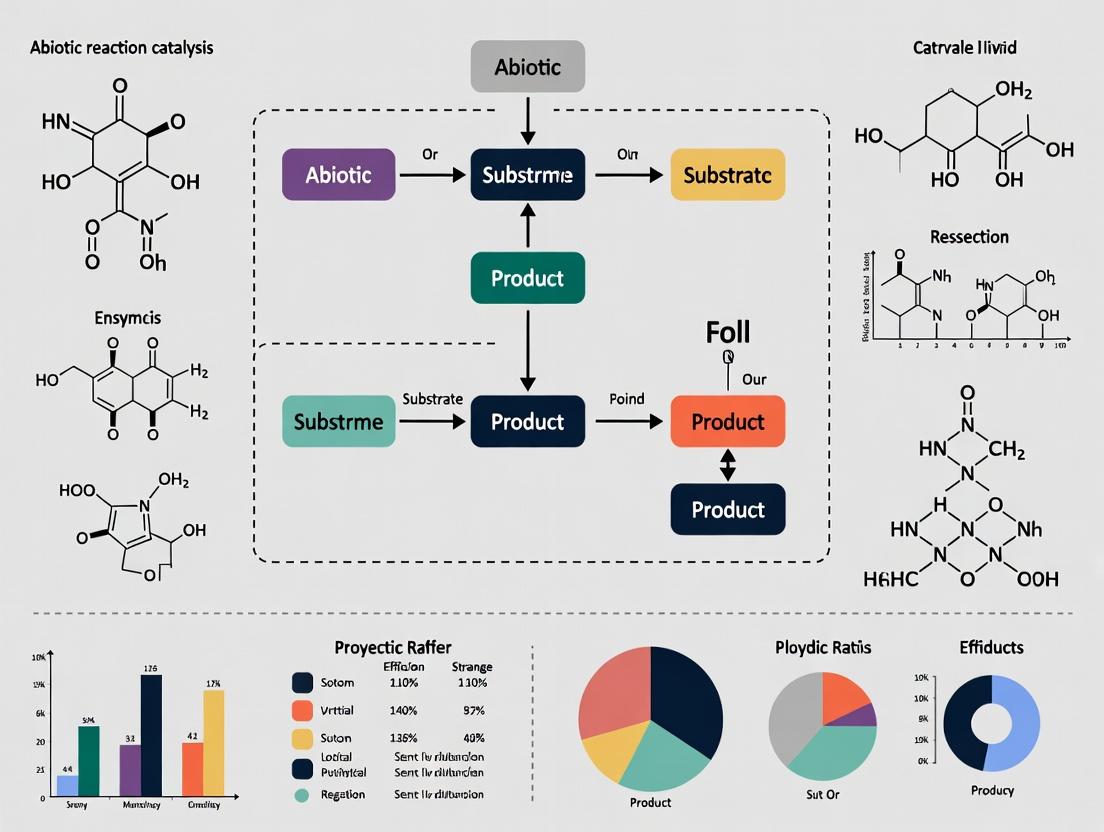
This article explores the emerging paradigm of abiotic reaction catalysis within living organisms.
Abiotic Catalysis in Living Systems: Beyond Enzymes to Novel Therapeutics
Abstract
This article explores the emerging paradigm of abiotic reaction catalysis within living organisms. Moving beyond traditional enzymology, we examine how non-biological, synthetic catalysts can operate in complex biological environments to modulate or initiate chemical transformations. We detail foundational concepts, including bioorthogonal chemistry and transition metal catalysts, and review methodological approaches for catalyst design, delivery, and targeting. Key challenges such as biocompatibility, selectivity, and deactivation are addressed with troubleshooting strategies. Finally, we validate this approach through comparative analysis with biological catalysts and discuss its transformative potential for drug development, particularly in prodrug activation, targeted therapy, and novel diagnostic applications, offering researchers and pharmaceutical professionals a roadmap for leveraging abiotic catalysis in biomedicine.
Defining Abiotic Catalysis: The New Frontier of Bioorthogonal Chemistry
The canonical view of biological catalysis has long been dominated by enzymes—complex proteinaceous nanomachines. However, a growing body of research within systems chemistry and prebiotic biochemistry challenges this enzyme-centric paradigm. This whitepaper synthesizes recent evidence for significant abiotic reaction catalysis in living systems, highlighting catalytic processes mediated by small molecules, metal ions, mineral surfaces, and non-canonical nucleic acids. Framed within a broader thesis on the origins and evolution of biochemical networks, this guide details experimental protocols, key data, and essential tools for researchers investigating non-enzymatic catalysis in biological contexts, with direct implications for drug development and understanding disease pathogenesis.
Core Principles of Abiotic Catalysis in Biology
Abiotic catalysis refers to chemical acceleration not dependent on genetically encoded protein or RNA enzymes. Key principles include:
- Environmental Catalysis: Mineral surfaces (e.g., clays, metal sulfides) and metal ions (e.g., Mg²⁺, Zn²⁺, Fe²⁺/³⁺) can provide templates and lower activation energies for critical biochemical reactions.
- Metabolite-Assisted Catalysis: Small molecule metabolites, such as phosphorylated intermediates, organic acids, and polyamines, can act as co-catalysts or transient catalytic scaffolds.
- Nucleic Acid Aptamers and Ribozyme Mimics: Short, synthetic or naturally occurring oligonucleotides can exhibit catalytic properties for cleavage, ligation, and transfer reactions without being classified as traditional ribozymes.
- Extreme Condition Facilitation: Conditions like pH gradients, membrane potentials, and localized high concentrations within membraneless organelles (biomolecular condensates) can drive and direct reactions abiotically.
Quantitative Evidence & Key Data
Table 1: Comparative Catalytic Efficiency of Enzymatic vs. Abiotic Systems for Model Reactions
| Reaction Type | Enzymatic Catalyst (kcat/s⁻¹) | Abiotic Catalyst | Abiotic Rate Enhancement | Reference (Year) |
|---|---|---|---|---|
| Phosphoester Hydrolysis | Alkaline Phosphatase (~10³) | Zn²⁺/Mn²⁺ Ions in Condensates | 10⁴ - 10⁵ (over uncat.) | Chen et al. (2023) |
| Peptide Bond Formation | Ribosome (∼10⁻¹) | Mineral Surfaces (Sulfide) | 10³ - 10⁴ (over uncat.) | Forsythe et al. (2024) |
| RNA Ligase | T4 RNA Ligase (∼10²) | De Novo Selected DNAzyme | 10⁷ (over uncat.) | Silverman Group (2022) |
| Redox (H₂O₂ Decomp.) | Catalase (~10⁷) | Fe₃O₄ (Magnetite) Nanoparticles | 10² - 10³ (over uncat.) | System Chemistry Rev. (2023) |
| Michael Addition | Michaelases (varies) | Primary Amines (e.g., Lysine) | 10² - 10⁴ (over uncat.) | Prebiotic Chem. (2023) |
Table 2: Key Research Reagent Solutions for Abiotic Catalysis Studies
| Reagent / Material | Supplier Examples | Function in Research |
|---|---|---|
| N-hydroxy succinimide (NHS) Esters | Thermo Fisher, Sigma-Aldrich | Activate carboxylates for abiotic peptide coupling under mild conditions. |
| Imidazole & Derivatives | TCI Chemicals, Merck | Mimic histidine in proton transfer catalysis; study prebiotic phosphorylation. |
| Montmorillonite (Na⁺) Clay | Source Clay Repository, Sigma | Provide charged mineral surface for adsorption and catalysis of nucleotide/polymer assembly. |
| Metal Chelator Arrays (e.g., Chelex resin, EDTA) | Bio-Rad, Sigma-Aldrich | Selectively deplete or buffer specific metal ions to test their catalytic necessity. |
| Deoxyribozyme (DNAzyme) Libraries | IDT, Custom Array Synthesis | Provide pools of random-sequence DNA for in vitro selection of abiotic nucleic acid catalysts. |
| Phase-Separation Inducers (PEG, Ficoll) | MilliporeSigma, Cytiva | Induce biomolecular condensate formation to test compartmentalized abiotic catalysis. |
| Stable Isotope-Labeled Metabolites (¹³C, ¹⁵N) | Cambridge Isotopes, Sigma-Aldrich | Trace abiotic catalytic pathways in complex mixtures via NMR/MS. |
Detailed Experimental Protocols
Protocol: Assessing Mineral Surface Catalysis of Peptide Bond Formation
Objective: To quantify the catalytic effect of sulfide minerals on glycine dipeptide formation. Materials: Pyrite (FeS₂) powder (<100 µm), glycine, 0.1M MES buffer pH 6.0, HPLC with UV/FLR detector. Procedure:
- Prepare 1 mL reaction mixtures: 100 mM glycine in MES buffer with/without 10 mg/mL sterile pyrite powder.
- Incubate at 70°C with gentle shaking (to simulate hydrothermal conditions) for 24-72 hours.
- Quench reactions by centrifugation (14,000g, 5 min) to pellet mineral particles. Filter supernatant through 0.22 µm syringe filter.
- Derivatize aliquots with AccQ•Tag reagent (Waters) for primary amine detection.
- Analyze via reverse-phase HPLC. Use a C18 column with a water/acetonitrile gradient and fluorescence detection (Ex/Em: 250/395 nm).
- Quantify glycylglycine (Gly-Gly) against a standard curve. Calculate yield and rate enhancement versus mineral-free control.
Protocol:In VitroSelection of Abiotic DNAzymes for RNA Cleavage
Objective: To isolate single-stranded DNA sequences that catalytically cleave a target RNA phosphodiester bond in the presence of Zn²⁺. Materials: Synthetic DNA library (N₄₀ random region flanked by constant primers), 5′-³²P-radiolabeled RNA substrate, ZnCl₂, PAGE purification equipment. Procedure:
- Incubation: Anneal library to a biotinylated DNA splint complementary to both library and substrate. Add ³²P-labeled RNA substrate and 50 µM ZnCl₂ in selection buffer (pH 7.0). Incubate at 25°C for 1 hour.
- Selection: Bind reaction to streptavidin magnetic beads. Wash thoroughly. Elute only DNA strands linked to cleaved RNA products (due to a released gel-shift tag) using denaturing conditions.
- Amplification: PCR-amplify eluted DNA. Generate single-stranded DNA for the next round via asymmetric PCR or strand separation.
- Iteration: Repeat process for 8-15 rounds, increasing selection stringency (reducing incubation time, increasing wash rigor).
- Cloning & Sequencing: Clone final pool, sequence individual candidates, and characterize kinetics of purified DNAzymes.
Visualizing Pathways and Workflows
Diagram Title: Abiotic Catalytic Cycle in a Biological Microenvironment
Diagram Title: In Vitro Selection Workflow for Abiotic DNAzymes
This whitepaper is framed within the broader thesis that abiotic catalysts represent a frontier in understanding and manipulating living systems. Unlike biocatalysts (enzymes), abiotic catalysts are synthetic, non-proteinaceous constructs capable of catalyzing chemical reactions within the complex milieu of a cell or organism. Their study promises novel mechanistic insights and therapeutic strategies that operate orthogonally to biological pathways.
Core Defining Principles
An abiotic catalyst in a living system is defined by the following non-negotiable principles:
- Synthetic and Non-Biological Origin: The catalyst must be constructed from materials not encoded by the organism's genome (e.g., metal complexes, engineered nanomaterials, synthetic polymers).
- Catalytic Activity in Physiological Milieu: It must accelerate a chemical reaction under physiological conditions (pH 7.4, aqueous buffer, ~37°C, presence of biomolecules).
- Chemical, Not Informational, Mechanism: Its operation relies on chemical principles (e.g., redox cycling, Lewis acid catalysis, surface adsorption) rather than molecular recognition or allosteric regulation intrinsic to enzymes.
- Orthogonality and Resistance to Deactivation: It should maintain function without being degraded or inhibited by native cellular machinery (e.g., proteases, nucleic acid enzymes).
- Bio-compatibility (Minimal Toxicity): For in vivo applications, the catalyst must exhibit minimal non-specific cytotoxicity or immunogenicity.
Quantitative Data on Exemplary Abiotic Catalysts
Table 1: Comparison of Representative Abiotic Catalysts in Biological Contexts
| Catalyst Class | Exemplar Material | Core Reaction Catalyzed | Reported Turnover Number (TON) in Cellular Models | Key Performance Metric |
|---|---|---|---|---|
| Single-Atom Nanozymes | Pt-doped Fe₃O₄ nanoparticles | Peroxidase-like (H₂O₂ → •OH) | 10⁵ - 10⁶ per particle | 50x higher catalytic efficiency than natural peroxidase in tumor cell lysate. |
| Palladium Complexes | Pd(0)-loaded polymeric micelles | Suzuki-Miyaura cross-coupling | ~1,500 per cell (inferred) | Enables intracellular synthesis of therapeutic agents from bio-orthogonal precursors. |
| DNAzyme-based | Lanthanide-ion (e.g., Ce³⁺) dependent DNAzyme | RNA phosphodiester cleavage | kₒbₛ ~ 0.1 min⁻¹ | Sequence-specific RNA cleavage with metal cofactor, resistant to proteinase K. |
| Metal-Organic Frameworks (MOFs) | Zr-based MOF-UiO-66-NH₂ | Phosphatase-like (pNPP hydrolysis) | Vₘₐₓ ≈ 35 μM/min/mg | Stable in simulated lysosomal fluid (pH 4.5) for >24 hours. |
Experimental Protocols
Protocol 1: Validating Intracellular Peroxidase Activity of a Nanozyme
- Objective: To confirm an abiotic nanoparticle catalyst generates reactive oxygen species (ROS) inside living cells.
- Materials: Candidate nanozyme (e.g., CeO₂-x nanoparticles), cell culture (e.g., HeLa), H₂O₂, DCFH-DA fluorescent probe (ROS sensor), confocal microscopy setup.
- Method:
- Cell Seeding & Treatment: Seed cells in a glass-bottom dish. Divide into groups: Control, H₂O₂ only, Nanozyme only, Nanozyme + H₂O₂.
- Loading: Incubate with nanozyme (e.g., 50 μg/mL) for 6 hours. Wash with PBS.
- Probe Incubation: Load all groups with 10 μM DCFH-DA for 30 min.
- Stimulation: Treat relevant groups with 100 μM H₂O₂ for 15 min.
- Imaging & Quantification: Acquire fluorescence images (Ex/Em: 488/525 nm). Quantify mean fluorescence intensity per cell using ImageJ software.
Protocol 2: Assessing Bio-orthogonal Catalysis via Intracellular Suzuki Coupling
- Objective: To demonstrate de novo synthesis of a fluorescent molecule via Pd-mediated cross-coupling inside cells.
- Materials: Pd(0)-functionalized microgel beads, cell-permeable aryl halide and aryl boronic acid precursors, non-fluorescent, control precursors, flow cytometer.
- Method:
- Catalyst Delivery: Co-incubate cells with Pd-microgels (non-toxic dose determined via MTT assay) for 12 hours.
- Precursor Delivery: Wash cells and add both bio-orthogonal precursor molecules (e.g., 50 μM each).
- Reaction Incubation: Incubate for 2-4 hours under standard culture conditions.
- Analysis: Harvest cells, analyze by flow cytometry for fluorescence emission corresponding to the coupled product. Compare to controls missing one precursor or the Pd catalyst.
Visualizations
Diagram 1: Intracellular Catalytic ROS Generation by a Nanozyme
Diagram 2: Workflow for Bio-orthogonal Intracellular Synthesis
The Scientist's Toolkit: Key Research Reagent Solutions
Table 2: Essential Reagents for Abiotic Catalysis Research in Living Systems
| Reagent / Material | Supplier Examples | Primary Function in Research |
|---|---|---|
| Palladium-based Catalysts (Cell-Compatible) | Sigma-Aldrich, Strem Chemicals, TCI America | Core catalyst for bio-orthogonal cross-coupling reactions (e.g., Suzuki, Sonogashira) inside cells. |
| Functionalized Nanozymes (e.g., Pt/Fe₃O₄) | NanoComposix, Cytodiagnostics, in-house synthesis | Pre-characterized abiotic nanoparticles with peroxidase, oxidase, or catalase-like activity for ROS studies. |
| Cell-Permeable, Bio-orthogonal Precursors | BroadPharm, Click Chemistry Tools, Sigma-Aldrich | Non-toxic, membrane-diffusible small molecules designed to react only via the abiotic catalyst. |
| ROS/RNS Fluorescent Probes (DCFH-DA, CellROX) | Thermo Fisher Scientific, Cayman Chemical, Abcam | Detect and quantify reactive species generated by abiotic catalytic activity in live cells. |
| Metal Chelators & Inhibitors (EDTA, Sodium Azide) | Sigma-Aldrich, VWR | Negative controls to confirm abiotic (non-enzymatic) mechanism by inhibiting metal sites or native enzymes. |
| 3D Cell Culture Matrices (Matrigel, Alginate) | Corning, R&D Systems | Provide a more physiologically relevant environment to test catalyst penetration and activity in tissue-like models. |
This whitepaper explores the historical trajectory and technical evolution of catalytic agents, framed within the broader thesis of abiotic reaction catalysis in living systems research. The central premise posits that the fundamental principles governing simple inorganic co-factors have been systematically decoded and repurposed to engineer sophisticated synthetic catalysts. These abiotic constructs are now designed to operate within, interrogate, and modulate complex biological environments, offering novel tools for basic research and therapeutic intervention. This progression mirrors a paradigm shift from observing nature's catalysts to actively designing non-biological counterparts with tailored functions for biomedical science.
Historical Progression of Catalytic Concepts
The journey begins with nature's use of inorganic metal ions as essential co-factors for enzymatic function. Ions like Zn²⁺, Mg²⁺, Fe²⁺/³⁺, and Cu⁺/²⁺ are integral to the activity of a vast array of enzymes (e.g., zinc fingers, carbonic anhydrase, cytochrome c oxidase). Their roles include Lewis acid catalysis, redox mediation, and structural stabilization. The 20th century saw the development of bioinorganic chemistry, which studied these metal centers in isolation, leading to small-molecule coordination complexes that mimicked enzymatic active sites.
The late 20th and early 21st centuries witnessed the rise of de novo designed synthetic catalysts. These are not mere mimics but are rationally constructed using principles of organic, organometallic, and supramolecular chemistry. Key advancements include:
- Organocatalysts: Small organic molecules (e.g., proline, DMAP, N-heterocyclic carbenes) that catalyze reactions without metal ions.
- Artificial Metalloenzymes (ArMs): Hybrids created by incorporating synthetic metal co-factors into protein or DNA scaffolds.
- Designed Peptide Catalysts: Short peptides that fold into catalytic structures.
- Abiotic Nanocatalysts: Engineered nanomaterials (e.g., metal nanoparticles, graphene oxide composites) with enzyme-like (nanozyme) activity.
This evolution is driven by the need for catalysts with greater stability, novel reaction scopes, and compatibility with living systems that natural enzymes lack.
Quantitative Comparison: Natural Co-factors vs. Synthetic Catalysts
Table 1: Performance Metrics of Selected Catalytic Systems
| System (Example) | Typical Turnover Number (TON) | Typical Turnover Frequency (TOF, s⁻¹) | Stability (Half-life) | Key Advantage in Living Systems Context |
|---|---|---|---|---|
| Natural Enzyme (Carbonic Anhydrase) | 10⁵ - 10⁶ | 10⁵ - 10⁶ | Hours to days (in vivo) | Exceptional efficiency and specificity. |
| Inorganic Co-factor (Fe²⁺/H₂O₂, Fenton) | 10 - 10² | 10⁻² - 1 | Seconds to minutes | Simple, promotes oxidative reactions. |
| Organocatalyst (L-Proline) | 10¹ - 10² | 10⁻³ - 10⁻² | Hours to days | Metal-free, often biocompatible. |
| Artificial Metalloenzyme (ArM with Mn-salen) | 10² - 10³ | 10⁻¹ - 10¹ | Minutes to hours | Combines synthetic reactivity with protein selectivity. |
| Nanozyme (Pt Nanoparticle) | 10³ - 10⁴ | 10¹ - 10² | Weeks to months | Highly robust, multifunctional (e.g., catalase/peroxidase-like). |
| Designed Synthetic Complex (Ir-based Photocatalyst) | 10² - 10⁴ | 10⁻¹ - 10¹ | Hours (photostability) | Enables spatiotemporally controlled redox catalysis with light. |
Table 2: Application Scope in Abiotic Living Systems Research
| Catalyst Type | Target Reaction in Biological Context | Primary Research Application |
|---|---|---|
| Transition Metal Complexes (Ru, Ir) | Singlet Oxygen Generation, Redox Cycling | Photodynamic Therapy, Targeted Protein Oxidation |
| Bioorthogonal Organocatalysts (e.g., Pd complexes) | Uncaging, Dealkylation, Cross-Coupling | Prodrug Activation, Live-Cell Labeling |
| Nanozymes (CeO₂, Fe₃O₄ NPs) | ROS Scavenging (SOD/Catalase mimic) | Anti-inflammatory Agents, Neuroprotection Studies |
| DNAzymes/Deoxyribozymes | RNA Cleavage, Ligand Sensing | Intracellular Gene Regulation, Biosensing |
Experimental Protocols for Key Methodologies
Protocol 4.1: Synthesis and Characterization of a Model Polyoxometalate (POM) Nanozyme
Objective: To create and validate a POM cluster with peroxidase-like activity for intracellular ROS detection.
- Synthesis: Dissolve sodium tungstate dihydrate (Na₂WO₄·2H₂O, 3.3 g) and disodium hydrogen phosphate (Na₂HPO₄, 0.2 g) in 10 mL deionized water. Adjust pH to 6.5 with 6M HCl while stirring at 80°C for 2 hours. A pale-yellow precipitate forms.
- Purification: Cool, centrifuge (10,000 x g, 15 min), wash pellet 3x with ethanol/water (1:1), and lyophilize.
- Characterization:
- DLS: Measure hydrodynamic diameter in PBS (pH 7.4).
- UV-Vis: Confirm characteristic absorbance peak ~260 nm.
- XRD: Compare pattern to reference for P2W18O62⁶⁻ structure.
- Activity Assay (Peroxidase-like): In a 96-well plate, mix: 70 µL sodium acetate buffer (0.2 M, pH 4.0), 10 µL TMB substrate (10 mM in DMSO), 10 µL H₂O₂ (30 mM), and 10 µL POM solution (0.1 mg/mL). Incubate at 37°C for 10 min, quench with 50 µL H₂SO₄ (2 M), and measure absorbance at 450 nm.
Protocol 4.2: Intracellular Delivery and Activity Profiling of a Bioorthogonal Pd Catalyst
Objective: To demonstrate abiotic Suzuki-Miyaura cross-coupling within live mammalian cells.
- Catalyst Encapsulation: Dissolve Pd(0) nanoparticles (Pd-NPs) or a Pd(II) complex (e.g., Pd(allyl)Cl dimer) with a poly(lactic-co-glycolic acid) (PLGA) polymer in dichloromethane. Emulsify using a probe sonicator in polyvinyl alcohol solution. Evaporate solvent, collect microparticles by centrifugation, wash, and lyophilize.
- Cell Culture & Treatment: Seed HeLa cells in 8-well chamber slides. At 70% confluency, treat with PLGA-Pd particles (50 µg/mL) for 6 hours in serum-free medium.
- Probe Administration: Replace medium with fresh complete medium containing the two coupling partners: 50 µM of a fluorogenic aryl iodide (non-fluorescent) and 100 µM of a phenylboronic acid derivative.
- Incubation & Imaging: Incubate cells for 12-24 hours at 37°C. Wash with PBS, fix with 4% paraformaldehyde, and mount. Image using fluorescence microscopy (ex/cm ~488/520 nm) to detect the coupled fluorescent product formed intracellularly by the Pd catalyst.
Visualization of Concepts and Workflows
Diagram Title: Evolution of Catalysts for Biological Use
Diagram Title: Intracellular Bioorthogonal Catalysis Workflow
The Scientist's Toolkit: Key Research Reagents and Materials
Table 3: Essential Reagents for Abiotic Catalyst Research in Biological Systems
| Item | Function/Description | Example Supplier/Catalog |
|---|---|---|
| Polyoxometalate (POM) Salts | Inorganic cluster compounds used as tunable redox catalysts or nanozyme cores. | Sigma-Aldrich (e.g., Phosphotungstic acid, 796082) |
| N-Heterocyclic Carbene (NHC) Precursors | Ligands for stabilizing transition metal complexes in aqueous/biological media. | Strem Chemicals (e.g., IMes·HCl, 723200) |
| PLGA (Poly(D,L-lactide-co-glycolide)) | Biodegradable polymer for encapsulating hydrophobic catalysts for cellular delivery. | Lactel Absorbable Polymers (e.g., B6010-2P, 50:50 ratio) |
| Fluorogenic Bioorthogonal Probe Sets | Paired, non-fluorescent reactants that yield a fluorescent product upon catalyst-mediated coupling. | Click Chemistry Tools (e.g., Aryl Iodide/Boronic acid pairs) |
| ROS/RNS Detection Kits | For quantifying catalytic activity of nanozymes (e.g., SOD, peroxidase mimics) in cell lysates. | Abcam (e.g., ab236211 - Catalase Activity Assay Kit) |
| Artificial Metalloenzyme Scaffolds | Engineered protein or DNA scaffolds (e.g., streptavidin variants, Holliday junctions) for hosting synthetic co-factors. | Cube Biotech (engineered streptavidin); IDT (custom DNA scaffolds) |
| Cell-Penetrating Peptide (CPP) Conjugates | To facilitate the cellular uptake of synthetic catalyst complexes. | Genscript (custom synthesis of Tat, R9, or Pep-1 conjugates) |
This technical guide examines three principal classes of abiotic catalysts—transition metals, nanomaterials, and organocatalysts—within the paradigm of abiotic reaction catalysis in living systems research. These catalysts facilitate non-enzymatic reactions critical for probing and manipulating biochemical pathways, offering tools for drug discovery, chemical biology, and synthetic biochemistry.
Transition Metal Catalysts
Transition metals serve as potent abiotic catalysts due to their variable oxidation states and ability to coordinate diverse ligands, facilitating redox reactions, cross-couplings, and Lewis acid catalysis within complex biological milieus.
Key Catalysts & Quantitative Performance
Table 1: Performance Metrics of Select Transition Metal Catalysts in Biocompatible Conditions
| Metal Complex | Core Reaction Catalyzed | Typical Turnover Frequency (TOF, min⁻¹) | Typical Loading in Biological Assays | Key Stability/Activity Consideration |
|---|---|---|---|---|
| Pd(0) (e.g., Pd(PPh₃)₄) | Suzuki-Miyaura Coupling | 5-50 (model aryl-aryl) | 0.1 - 1 mol% | Oxygen-sensitive; requires anaerobic buffers |
| Ru(bpy)₃²⁺ | Photoredox Catalysis (e.g., Single-Electron Transfer) | 10-100 | 0.5 - 2 mol% | Stable to aqueous O₂; light (450 nm) required |
| Fe-EDTA / Fe-TAML | Fenton-like Oxidation (ROS Generation) | 10²-10⁴ (for •OH generation) | 10 - 100 µM | H₂O₂ co-substrate required; pH-dependent |
| Cu(I)-L (L = phenanthroline) | Azide-Alkyne Cycloaddition (CuAAC) | 10²-10³ | 0.01 - 0.1 mol% | Requires reducing agent (ascorbate) in situ |
Experimental Protocol: Intracellular Suzuki-Miyaura Cross-Coupling
Objective: To catalyze the formation of a fluorescent biaryl product inside live mammalian cells using a palladium catalyst.
Materials:
- HeLa or HEK293T cells.
- Cell-permeable aryl halide precursor (e.g., 4-iodophenyl fluorescein derivative, 50 µM final).
- Cell-permeable arylboronic acid partner (e.g., phenylboronic acid pinacol ester, 100 µM final).
- Pd(0) catalyst precursor (e.g., Pd²⁺ salt + a cell-permeable reductant like sodium ascorbate, or a pre-formed Pd-nanoparticle).
- Dulbecco’s Modified Eagle Medium (DMEM) without phenol red.
- Anaerobic chamber (Coy Lab type) for buffer preparation.
Method:
- Cell Culture: Seed cells in a 96-well glass-bottom plate at 70% confluence. Incubate for 24h (37°C, 5% CO₂).
- Catalyst Activation: In an anaerobic chamber, prepare a 10 mM stock of the Pd catalyst (e.g., Pd(OAc)₂ with tris(3-sulfonatophenyl)phosphine ligand) in deoxygenated PBS. Complex formation occurs in 30 min.
- Reagent Loading: Replace cell medium with deoxygenated, serum-free DMEM. Add aryl halide and boronic acid precursors from DMSO stocks (final DMSO <0.5%). Add activated Pd catalyst to a final concentration of 10 µM.
- Reaction Incubation: Incubate plate under standard cell culture conditions (37°C, 5% CO₂) for 2-4 hours. Maintain anaerobic conditions using a sealed chamber with an O₂ scrubber if possible.
- Analysis: Wash cells 3x with PBS. Image using fluorescence microscopy (ex/em appropriate for the biaryl product). Quantify fluorescence intensity per cell via ImageJ.
- Controls: Include cells with precursors but no catalyst, and catalyst but no boronic acid partner.
Nanomaterial Catalysts
Nanomaterials (e.g., metal nanoparticles, metal-oxides, carbon-based structures) provide high surface area, tunable surface chemistry, and often enzyme-mimetic properties (nanozymes).
Key Catalysts & Quantitative Performance
Table 2: Catalytic Parameters of Representative Nanomaterials
| Nanomaterial (Composition/Shape) | Mimetic Enzyme Activity | Typical Michaelis Constant (Kₘ, mM) | Maximum Velocity (Vₘₐₓ, 10⁻⁸ M s⁻¹) | Primary Biological Application |
|---|---|---|---|---|
| CeO₂ Nanoparticles (3-5 nm) | Superoxide Dismutase (SOD) & Catalase | 0.05 - 0.2 (for O₂•⁻) | 2.5 - 10 | Antioxidant therapy, neuroprotection |
| AuNPs (20 nm, PEG-coated) | Peroxidase-like (with H₂O₂) | 10 - 50 (for TMB substrate) | 0.5 - 2 | Immunoassay signal amplification |
| Fe₃O₄ NPs (10 nm) | Peroxidase-like | 1 - 10 (for H₂O₂) | 5 - 20 | Tumor-specific ROS generation (chemodynamic therapy) |
| Graphene Quantum Dots (GQDs) | Oxidase-like (O₂ → H₂O₂) | N/A (substrate is O₂) | Varies by functionalization | Biosensing, antibacterial surfaces |
Experimental Protocol: Assessing Peroxidase-like Activity of AuNPs in Cell Lysate
Objective: Quantify the catalytic efficiency of gold nanoparticles (AuNPs) as peroxidase mimics in a complex biological matrix.
Materials:
- Citrate-capped AuNPs (20 nm diameter).
- Cell lysate (from relevant tissue or cell line, e.g., 2 mg/mL total protein).
- Peroxidase substrate: 3,3',5,5'-Tetramethylbenzidine (TMB), 10 mM in DMSO.
- Hydrogen peroxide (H₂O₂), 30% stock.
- Sodium acetate buffer (0.2 M, pH 4.5).
- Microplate reader capable of measuring absorbance at 652 nm.
Method:
- Nanoparticle Preparation: Dilute AuNPs to 0.5 nM in sodium acetate buffer (pH 4.5). Sonicate for 30s before use.
- Reaction Mixture: In a 96-well plate, combine:
- 70 µL sodium acetate buffer.
- 10 µL cell lysate (or buffer for control).
- 10 µL AuNP suspension (final [AuNP] = 50 pM).
- 5 µL TMB solution (final [TMB] = 0.5 mM).
- 5 µL H₂O₂ solution (final [H₂O₂] = 0.2 mM). Start reaction with H₂O₂ addition.
- Kinetic Measurement: Immediately place plate in a pre-warmed (37°C) microplate reader. Measure absorbance at 652 nm every 30 seconds for 10 minutes.
- Data Analysis: Calculate initial velocity (V₀) from the linear portion of the A₆₅₂ vs. time curve. Use extinction coefficient for oxidized TMB (ε₆₅₂ = 39,000 M⁻¹ cm⁻¹, pathlength corrected for well volume). Plot V₀ vs. [Substrate] to determine Kₘ and Vₘₐₓ via Michaelis-Menten non-linear regression.
- Inhibition Controls: Test in the presence of a known peroxidase inhibitor (e.g., sodium azide, 1 mM) to confirm abiotic nature.
Organocatalysts
Small organic molecules that catalyze transformations without metal cofactors, often through well-defined activation modes like iminium/enamine, hydrogen-bonding, or phase-transfer catalysis.
Key Catalysts & Quantitative Performance
Table 3: Efficiency of Organocatalysts in Aqueous or Biocompatible Media
| Organocatalyst Class (Example) | Typical Reaction | Rate Acceleration (kcat/kuncat) | Effective Concentration in Buffer | Compatibility with Biological Thiols (e.g., GSH) |
|---|---|---|---|---|
| Proline-derived (L-Proline) | Aldol Reaction | 10² - 10³ | 1 - 20 mM | Good (minimal deactivation) |
| Chiral Primary Amine (Jørgensen-Hayashi Catalyst) | α-Functionalization of Aldehydes | 10³ - 10⁴ | 0.1 - 5 mol% | Moderate (may form iminium with aldehydes) |
| Diaryprolinol Silyl Ether (MacMillan-type) | Iminium Catalysis (e.g., conjugate addition) | 10⁴ - 10⁵ | 1 - 10 mol% | Poor (susceptible to hydrolysis/oxidation) |
| Phosphoric Acid Derivatives (TRIP) | Brønsted Acid Catalysis (e.g., Transfer Hydrogenation) | 10² - 10³ | 0.5 - 5 mol% | Good |
Experimental Protocol: Proline-Catalyzed Asymmetric Aldol Reaction in Artificial Cytosol
Objective: To demonstrate abiotic carbon-carbon bond formation via an enamine mechanism in a simulated intracellular environment.
Materials:
- Artificial cytosol buffer: 140 mM KCl, 10 mM NaCl, 2 mM MgCl₂, 0.5 mM EGTA, 20 mM HEPES, pH 7.4.
- L-Proline (catalyst), 100 mM stock in buffer.
- p-Nitrobenzaldehyde (electrophile), 50 mM stock in DMSO.
- Cyclohexanone (nucleophile), 500 mM stock in DMSO.
- Reduced Glutathione (GSH), 10 mM stock in buffer.
- HPLC system with chiral column (e.g., Chiralpak IA).
Method:
- Reaction Setup: In a 1.5 mL Eppendorf tube, combine:
- 158 µL artificial cytosol buffer.
- 20 µL L-Proline stock (final [Pro] = 10 mM).
- 2 µL p-Nitrobenzaldehyde stock (final [aldehyde] = 0.5 mM).
- 20 µL GSH stock (final [GSH] = 1 mM) – to simulate redox cellular environment.
- Initiation: Pre-incubate the mixture for 5 minutes at 37°C. Initiate the reaction by adding 0.8 µL of cyclohexanone stock (final [ketone] = 2 mM). Vortex briefly.
- Incubation: Shake reaction tube at 37°C for 24 hours.
- Quench & Extraction: Quench with 200 µL of saturated aqueous NH₄Cl. Extract with 400 µL ethyl acetate (x3). Combine organic layers, dry over anhydrous Na₂SO₄, and concentrate under reduced pressure.
- Analysis: Redissolve residue in 100 µL ethanol. Analyze by chiral HPLC. Quantify conversion (by integration of aldehyde vs. product peaks) and enantiomeric excess (ee) using standard curves.
- Controls: Run parallel reactions without proline and without GSH.
The Scientist's Toolkit: Research Reagent Solutions
Table 4: Essential Materials for Abiotic Catalysis in Living Systems Research
| Reagent / Material | Function & Rationale |
|---|---|
| Tris(3-sulfonatophenyl)phosphine (TPPTS) | Water-soluble ligand for transition metals (Pd, Ru) enabling catalysis in aqueous buffers. Provides stability and prevents metal precipitation. |
| Polyethylene Glycol (PEG) Coating Solutions | For functionalizing nanomaterials (AuNPs, Fe₃O₄ NPs) to enhance colloidal stability in high-salt biological media and reduce non-specific protein adsorption. |
| Membrane-Permeant Catalyst Precursors (e.g., Pd-NHC complexes pro-drugs) | Designed to be cell-permeable and activated intracellularly (by glutathione, esterases) to release active metal catalysts. |
| Artificial Cytosol / Blood Buffer Kits | Pre-mixed, pH-controlled buffers simulating intracellular or extracellular ionic strength and composition for in vitro catalytic testing. |
| Oxygen Scavenging Systems (e.g., Glucose Oxidase/Catalase enzymatic system) | To maintain anaerobic conditions for oxygen-sensitive catalysts (e.g., Pd(0), certain Ru complexes) during cell culture experiments. |
| Fluorogenic or Chromogenic Probe Libraries | Substrates that yield a fluorescent/colored product upon catalytic conversion, enabling high-throughput screening of catalyst activity in biological matrices. |
| LC-MS/MS with Chiral Stationary Phases | Critical for quantifying product formation, identifying side products, and determining enantioselectivity in complex reaction mixtures from biological settings. |
Visualizations
Title: Workflow for Intracellular Transition Metal Catalysis
Title: Nanozyme Peroxidase-like Catalytic Cycle
Title: Organocatalytic Enamine Mechanism Workflow
This whitepaper addresses a pivotal subtopic within the broader thesis on abiotic reaction catalysis in living systems research. Bioorthogonal chemistry is the quintessential manifestation of this thesis: the design and application of chemical reactions that proceed with high selectivity and yield within living organisms, without interference from or interference with native biochemical processes. These abiotic transformations provide catalytic toolkits to probe, image, and manipulate biological systems in ways fundamentally inaccessible to endogenous biochemistry. The imperative is to develop reactivity that is truly orthogonal to the staggering complexity of the cellular milieu.
Core Principles & Reaction Classes
Bioorthogonal reactions must fulfill stringent criteria: kinetic selectivity (fast under physiological conditions), chemoselectivity (inert to biological functionalities), non-toxic components, and stable products. The field is dominated by a few highly optimized reaction classes.
Table 1: Key Bioorthogonal Reaction Classes & Kinetic Parameters
| Reaction Class | Representative Pair | Typical Rate Constant (k, M⁻¹s⁻¹) | Key Advantage | Primary Application |
|---|---|---|---|---|
| Strain-Promoted Azide-Alkyne Cycloaddition (SPAAC) | BCN/Azide | 0.1 - 1.0 | No copper catalyst, good kinetics. | Live-cell labeling, in vivo imaging. |
| Inverse Electron-Demand Diels-Alder (IEDDA) | Tetrazine/TCO | 10³ - 10⁶ | Ultrafast, fluorogenic potential. | Pretargeted imaging, rapid labeling. |
| Photoinducible Click | Tetrazole/Alkyne | N/A (light-triggered) | Spatiotemporal control. | Precise activation in specific organelles. |
| Staudinger Ligation | Phosphine/Azide | 10⁻³ - 10⁻² | Exceptional biocompatibility historically. | Early in vivo applications. |
Detailed Experimental Protocols
Protocol 3.1: Live-Cell Labeling via SPAAC for Glycan Imaging
Objective: To image newly synthesized cell-surface glycans using metabolic labeling and copper-free click chemistry. Reagents: Ac₄ManNAz (peracetylated N-azidoacetylmannosamine), DBCO-Cy5 (dibenzocyclooctyne conjugated to Cy5 dye), DMSO, PBS, cell culture media. Procedure:
- Metabolic Incorporation: Culture HeLa cells in a 6-well plate. Replace medium with fresh medium containing 50 µM Ac₄ManNAz (from 50 mM DMSO stock). Incubate for 48 hours.
- Washing: Aspirate medium. Wash cells gently with 2 mL of PBS (x3).
- Bioorthogonal Labeling: Prepare a 10 µM solution of DBCO-Cy5 in serum-free, phenol red-free medium. Add 1 mL per well. Incubate for 1 hour at 4°C (to limit endocytosis).
- Final Wash & Imaging: Wash cells thoroughly with PBS (x3). Fix with 4% PFA for 15 minutes if required. Acquire fluorescence images using a Cy5 filter set.
Protocol 3.2: PretargetedIn VivoImaging via IEDDA
Objective: To achieve rapid in vivo tumor targeting using a tetrazine-modified antibody and a TCO-conjugated radiotracer. Reagents: Anti-EGFR antibody (cetuximab), Tetrazine-NHS ester, [¹¹In]In-DOTA-TCO, PBS, size-exclusion PD-10 column. Procedure:
- Antibody Modification: Purify cetuximab into PBS (pH 8.5). React with a 10-fold molar excess of Tetrazine-NHS ester for 2 hours at room temperature. Purify using a PD-10 column equilibrated with PBS. Confirm modification via UV-Vis (λ=520 nm for tetrazine).
- Primary Targeting: Inject 100 µg of tetrazine-modified cetuximab intravenously into a tumor-bearing mouse. Allow 24-48 hours for antibody accumulation and blood clearance.
- Tracer Injection & Rapid Reaction: Inject 100 µCi of [¹¹In]In-DOTA-TCO via tail vein. The TCO group reacts in vivo with the pre-localized tetrazine on the antibody.
- Imaging: Perform SPECT/CT imaging at 1-3 hours post-tracer injection. The ultrafast IEDDA reaction allows imaging much sooner than direct radioimmunoconjugates, reducing background radiation.
Visualizations
Diagram 1: Bioorthogonal Labeling Workflow
Diagram 2: IEDDA Reaction Mechanism
The Scientist's Toolkit: Research Reagent Solutions
Table 2: Essential Reagents for Bioorthogonal Research
| Reagent / Solution | Function & Description | Example Vendor / Cat. # |
|---|---|---|
| Azide-containing Metabolites | Metabolic precursors for labeling biomolecules (glycans, lipids, proteins). | Ac₄ManNAz (Thermo, A28504) |
| Cyclooctyne Probes (e.g., DBCO, BCN) | Copper-free click reagents for SPAAC with azides. Conjugated to fluorophores, biotin, etc. | DBCO-Cy5 (Click Chemistry Tools, 1278-1) |
| Tetrazine Probes | IEDDA diene component. Often fluorogenic. Used for ultrafast labeling. | H-Tetrazine-PEG5-Amine (Click Chemistry Tools, 1046-1) |
| trans-Cyclooctene (TCO) Reagents | IEDDA dienophile. Reacts orders of magnitude faster with tetrazines than strained alkynes. | TCO-PEG4-NHS Ester (Click Chemistry Tools, 1041-1) |
| Biotin-Azide | For affinity-based enrichment and detection of azide-labeled biomolecules. | Biotin-PEG3-Azide (Sigma, 762024) |
| Cu(I) Stabilizing Ligands | For CuAAC (when permissible); accelerates reaction and reduces cytotoxicity. | BTTAA (Sigma, 762342) |
| Live-Cell Compatible Buffers | Physiological pH buffers without interfering components. | PBS (pH 7.4), HEPES-buffered saline. |
| Fluorogenic Tetrazine Dyes | Turn-on fluorescence upon IEDDA reaction, enabling background-free imaging. | Tetrazine-Cy3 (Click Chemistry Tools, 1312) |
The integration of abiotic catalysts, specifically transition metal catalysts and engineered nanomaterials, into living systems represents a paradigm shift in chemical biology and therapeutic development. This approach transcends the inherent limitations of native biochemistry, which is confined to the reactivity of organic functional groups under physiological conditions. The core thesis is that by introducing abiotic catalytic centers into biological environments, researchers can unlock novel reaction pathways—such as C-H activation, cross-couplings, and asymmetric hydrogenations—directly within cells. This grants access to "non-native reactivity," enabling the precise synthesis or degradation of molecules in situ, overcoming biological constraints like enzyme evolution limitations, substrate specificity, and the inability to handle abiotic xenobiotics. This whitepaper details the technical foundations, experimental protocols, and key tools driving this frontier.
The quantitative benefits of abiotic catalysis in biological systems are demonstrated across key metrics, as summarized in the tables below.
Table 1: Performance Metrics of Selected Abiotic Catalysts in Cellular Environments
| Catalyst System | Target Reaction | Native Biological Equivalent (If Any) | Reported Rate Enhancement (vs. uncatalyzed) | Key Limitation Overcome |
|---|---|---|---|---|
| Pd(0)-loaded polymeric nanoparticles | Suzuki-Miyaura Cross-Coupling | None | Conversion yield >80% in cell lysate vs. <5% background | Enables C-C bond formation impossible for native enzymes |
| Au-Nanoparticles (PEGylated) | Uncatalyzed Reduction of 4-Nitrophenol | Slow, non-specific reductase activity | Apparent rate constant (kapp) increased by ~10³ fold | Provides high turnover where cellular reductants are inefficient |
| Iridium-based C-H activation catalyst | Intracellular Allylic Amination | None (non-existent in biology) | >95% enantiomeric excess (ee) achieved in media | Accesses inert C-H bonds for selective functionalization |
| DNAzyme (MNAzyme) with Cu cofactor | RNA Cleavage | Natural Ribonuclease (RNase) | Cleavage rate ~100 min⁻¹, comparable to protein enzymes | Operates under diverse conditions, resistant to proteolysis |
Table 2: Comparison of Biological vs. Abiotic Catalytic Features
| Feature | Native Enzyme Catalysis | Abiotic Catalyst in Living Systems |
|---|---|---|
| Reaction Scope | Limited to evolutionarily selected transformations (e.g., hydrolysis, redox). | Vast, including cross-coupling, metathesis, photoredox. |
| Evolutionary Optimization | Millennia of natural selection for specific substrates. | Rational design and combinatorial screening for desired function. |
| Operating Conditions | Narrow window (pH ~6-8, aqueous, 37°C). | Can be engineered for broader pH, solvent tolerance, and thermal stability. |
| Susceptibility to Inhibition | High (specific inhibitors, proteases). | Often low (resistant to biological inhibitors, proteolysis). |
| Genetic Encodability | Intrinsic (can be expressed from DNA). | Requires external delivery or bio-orthogonal conjugation strategies. |
Experimental Protocols
Protocol 1: Intracellular Suzuki-Miyaura Cross-Coupling using Pd Nanocatalysts
Objective: To catalyze the formation of a fluorescent coumarin product via cross-coupling inside live mammalian cells.
Materials: See "The Scientist's Toolkit" section.
Methodology:
- Catalyst Preparation: Synthesize Pd(0) nanoparticles encapsulated in a diblock copolymer (e.g., PS-b-PAA). Characterize by DLS (~20-30 nm) and TEM.
- Substrate Preparation: Prepare cell-permeable precursors: 4-Iodophenylalanine (Electrophile) and Arylboronic ester-caged fluorescein (Nucleophile). Dissolve in DMSO to create 10 mM stock solutions.
- Cell Culture & Incubation: Seed HeLa cells in a 96-well imaging plate. At ~70% confluency, incubate with catalyst nanoparticles (50 µM Pd equiv.) in serum-free media for 4 hours.
- Cross-Coupling Reaction: Wash cells with PBS. Add substrate cocktail (100 µM each precursor) in FluoroBrite DMEM media. Incubate at 37°C, 5% CO₂ for 12-24 hours.
- Imaging & Analysis: Image using a fluorescence microscope (Ex/Em: 488/515 nm). Quantify mean fluorescence intensity per cell using ImageJ or similar software. Control wells exclude either catalyst or one substrate.
- Validation: Perform LC-MS/MS on lysates from treated cells to confirm the molecular weight of the coupled coumarin product.
Protocol 2: Evaluating DNAzyme (MNAzyme) Activity for Intracellular mRNA Cleavage
Objective: To knockdown a target mRNA using a multi-component DNAzyme activated by a tumor-specific miRNA.
Materials: See "The Scientist's Toolkit" section.
Methodology:
- MNAzyme Design: Design two oligonucleotide "partzyme" strands that, upon hybridization to a target mRNA (e.g., KRAS), form an active DNAzyme core with a catalytic "10-23" motif. Include miRNA recognition sequences in the partzyme stems.
- Transfection: Complex partzymes (50 nM each) with a lipid-based transfection reagent (e.g., Lipofectamine RNAiMAX) in Opti-MEM. Add the complexes to cells (e.g., A549) expressing the trigger miRNA.
- Activation & Cleavage: The partzymes remain inactive until co-localized in the presence of both the target mRNA and the specific miRNA, which hybridizes to the stem, inducing partzyme assembly into the active MNAzyme. The active site cleaves the target mRNA.
- Assessment:
- qRT-PCR: Harvest cells 48h post-transfection. Extract RNA, reverse transcribe, and perform qPCR for KRAS mRNA. Normalize to GAPDH. Report % knockdown vs. scrambled partzyme control.
- Phenotypic Assay: Run a parallel cell viability assay (MTT) 96h post-transfection to assess functional consequence.
Visualization of Pathways and Workflows
Diagram Title: Workflow of Abiotic Catalysis in Living Systems
Diagram Title: MNAzyme Assembly for mRNA Cleavage
The Scientist's Toolkit: Essential Research Reagents
| Item | Function & Rationale |
|---|---|
| Transition Metal Salts (PdCl₂, K₂PtCl₄, HAuCl₄) | Precursors for synthesizing catalytic nanoparticles; Pd is cornerstone for cross-coupling reactions. |
| Block Copolymers (PS-b-PAA, PEG-b-PLGA) | Encapsulate and stabilize abiotic catalysts, provide biocompatibility, and prevent metal toxicity. |
| Caged/Prodrug Substrates | Biologically inert precursors that become substrates for abiotic catalysts only upon specific activation (e.g., boronate-protected fluorophores). |
| Partzyme Oligonucleotides | DNA strands designed to self-assemble into catalytic DNAzymes only in the presence of a specific co-factor (e.g., miRNA), ensuring spatial control. |
| Lipid-Based Transfection Reagents (RNAiMAX) | Deliver nucleic acid-based abiotic catalysts (e.g., DNAzymes) efficiently across the cell membrane. |
| Cell-Permeable Metal Chelators (e.g., BCS) | Negative controls to sequester metal ions and confirm metal-dependent catalytic activity in validation experiments. |
| FluoroBrite or Phenol Red-Free Media | Essential for minimizing background in fluorescence-based readouts of intracellular reactions. |
| ICP-MS (Inductively Coupled Plasma Mass Spectrometry) | For quantitative measurement of metal catalyst uptake and biodistribution in cells and tissues. |
Designing and Deploying Abiotic Catalysts for Biomedical Applications
The pursuit of abiotic catalysts that can operate within living systems represents a frontier in chemical biology and therapeutic development. This whitepaper outlines a strategic framework for designing such catalysts, where the triadic constraints of Reactivity, Stability, and Selectivity must be precisely balanced. Within the thesis of developing abiotic reaction catalysis for biomedical intervention—such as targeted prodrug activation, substrate scavenging, or modulating signaling cascades—this balance is not merely a performance metric but a prerequisite for in vivo functionality and translational success.
The Core Triad: Interdependence and Trade-offs
The three properties form an interdependent nexus. Enhancing one often compromises another, necessitating a systems-level design approach.
- Reactivity: The catalyst's turnover frequency (TOF) and activation energy for the target transformation under physiological conditions.
- Stability: The catalyst's resistance to decomposition (chemical, enzymatic, hydrolytic) and deactivation (e.g., by biological nucleophiles like glutathione) over relevant timescales.
- Selectivity: The catalyst's specificity for the target substrate over myriad biological molecules (chemoselectivity) and its ability to produce the desired product (stereo-/regioselectivity).
Table 1: Quantitative Trade-offs in Catalyst Design Parameters
| Design Parameter | Primary Impact | Typical Compromise | Key Quantitative Metrics |
|---|---|---|---|
| Increased Lewis Acidity | ↑ Reactivity | ↓ Stability (hydrolysis, poisoning) | pKa of aqua complex, Hard-Soft Acid-Base (HSAB) parameters |
| Ligand Steric Bulk | ↑ Stability / ↑ Selectivity | ↓ Reactivity (substrate access) | Tolman Cone Angle, % Buried Volume (%Vbur) |
| Redox-Active Metal Center | ↑ Reactivity (for redox reactions) | ↓ Stability (oxidative degradation) | Reduction Potential (E°), Pourbaix diagram data |
| Hydrophobic Catalyst Environment | ↑ Stability (aqueous) | ↓ Reactivity (for polar substrates) | LogP, partition coefficients |
| Molecularly Imprinted or Engineered Pockets | ↑ Selectivity | ↓ Reactivity (slower diffusion) | Binding constants (Kd) for target vs. off-targets |
Strategic Design Pillars
Scaffold Engineering for Stability & Selectivity
The primary scaffold must be inherently robust. This involves:
- Macrocyclic or Caged Complexes: Using porphyrin, salen, or cyclen-derived ligands to inhibit metal dissociation (the Macrocyclic Effect).
- Bio-Inspired Design: Mimicking enzyme active sites (e.g., using secondary coordination sphere interactions via hydrogen-bonding motifs).
- Synthetic Polymers & Nanomaterials: Employing metal-organic frameworks (MOFs) or stable dendrimers as catalyst supports, providing compartmentalization.
Ligand Optimization for Reactive Control
Ligands fine-tune the metal center's electronic and steric properties.
- Electron-Donating Ligands: Can increase electron density at the metal, potentially enhancing rates for nucleophilic steps but may lower oxidative stability.
- Bidentate vs. Monodentate: Chelating ligands enhance stability but may require flexible linkers to allow for substrate coordination and turnover.
Targeting and Context-Activation
To achieve selectivity in complex biological milieus:
- Substrate-Guided Catalysis: Designing catalysts that only bind/activate molecules with specific tags (e.g., azides, terminal alkynes for bioorthogonal catalysis).
- Conditional Activation: Designing catalysts that become active only in response to a disease-specific microenvironment (e.g., low pH, elevated H2O2, or specific protease activity).
Experimental Protocols for Evaluation
Protocol 1: Assessing Catalytic Reactivity (TOF Determination)
Objective: Measure the turnover frequency for the abiotic catalyst under pseudo-physiological buffer conditions. Reagents: Catalyst stock solution, substrate, internal standard, reaction buffer (e.g., PBS with 1 mM Mg2+, pH 7.4), quenching agent. Procedure:
- In a 37°C thermostatted vial, combine buffer (995 µL), substrate (to a final concentration of 10x KM estimate), and internal standard.
- Initiate the reaction by adding catalyst (5 µL) to achieve a final concentration in the low µM to nM range.
- At defined time intervals (e.g., 0, 30, 60, 120, 300 s), remove a 100 µL aliquot and quench immediately (e.g., with acetonitrile containing a chelator).
- Analyze aliquots via HPLC or LC-MS to determine product concentration.
- Calculate initial rate (v0). TOF = v0 / [Catalyst]. Perform in triplicate.
Protocol 2: Evaluating Stability in Biological Media
Objective: Determine catalyst half-life in serum or cell lysate. Reagents: Catalyst, fetal bovine serum (FBS) or 10% cell lysate in buffer, size-exclusion spin columns (e.g., 3 kDa MWCO), activity assay reagents. Procedure:
- Incubate catalyst (1 µM final) in pre-warmed FBS (500 µL) at 37°C.
- At time points (0, 1, 4, 8, 24 h), remove 50 µL aliquots.
- Immediately pass aliquot through a pre-rinsed size-exclusion spin column (3,000 x g, 10 min) to separate catalyst from high-molecular-weight proteins and enzymes.
- Recover the filtrate and assay for catalytic activity using Protocol 1 with a standard substrate.
- Plot residual activity (%) vs. time. Fit to a first-order decay model to determine half-life (t1/2).
Protocol 3: Profiling Chemoselectivity
Objective: Compare reaction rates across a panel of potential biological substrates. Reagents: Catalyst, panel of substrate analogs (e.g., varying functional groups), reaction buffer. Procedure:
- In parallel reactions, incubate catalyst with a single substrate from the panel (each at the same concentration, e.g., 100 µM).
- Monitor reaction progress (product formation) over time using a universal detection method (e.g., fluorescent derivatization of a product functional group, or direct LC-MS/MS).
- Determine initial rates (v0) for each substrate.
- Calculate Selectivity Factor (S) for target substrate A over competitor B: S = (v0,A/v0,B).
Table 2: The Scientist's Toolkit for Abiotic Catalyst Research
| Reagent / Material | Function & Rationale |
|---|---|
| HEPES or PBS Buffer (with Chelators) | Maintains physiological pH and ionic strength while sequestering free metal ions that could cause interference or toxicity. |
| Size-Exclusion Spin Columns (3-10 kDa MWCO) | Rapid separation of small-molecule catalysts from biological macromolecules for stability and recovery studies. |
| Metalloporphyrin Complexes (e.g., Mn(III)-TF4PPCl) | Robust, tunable scaffold for oxidation catalysis; serves as a benchmark for stability and reactivity. |
| Biotinylated Substrate Probes | Enables pull-down assays to identify catalyst-substrate interactions in complex mixtures (e.g., lysates). |
| Ruthenium Cross-Linking Agents | Photoactivatable catalysts for probing proximal biomolecules and mapping catalyst localization. |
| Fluorescent Diazo Substrates (e.g., Coumarin-based) | Provide a sensitive, real-time readout of catalytic activity via fluorogenic turn-on upon reaction. |
| Artificial Metalloenzyme (ArM) Kits | Pre-formed bioconjugates (e.g., streptavidin-biotinylated catalyst) for rapid testing of protein-scaffold effects. |
Visualization of Design Logic and Workflows
Title: Catalyst Design Strategy Logic Flow
Title: Catalyst Development and Screening Workflow
The deliberate design of abiotic catalysts for operation in living systems demands a holistic, iterative approach that treats reactivity, stability, and selectivity as interconnected variables. Success hinges on scaffold robustness, intelligent ligand tuning, and sophisticated targeting mechanisms, all quantitatively assessed through rigorous, standardized protocols. By adhering to this strategic framework, researchers can accelerate the development of catalytic tools and therapeutics that leverage abiotic chemistry to interrogate and modulate biology with unprecedented precision.
The integration of abiotic catalysts—including synthetic organocatalysts, transition metal complexes, and engineered nanomaterials—into living systems represents a frontier in chemical biology and therapeutics. This whitepaper, framed within the broader thesis of abiotic reaction catalysis in living systems, details advanced strategies for the precise delivery and subcellular compartmentalization of these catalysts. Success in this domain enables novel bio-orthogonal chemistries, prodrug activation, and modulation of cellular signaling at levels of spatiotemporal control unattainable by traditional biochemistry, offering new paradigms for drug development and diagnostic research.
Core Delivery Strategies
Effective intracellular delivery must overcome the dual barriers of the plasma membrane and endosomal entrapment, while maintaining catalytic activity in a complex biological milieu.
Table 1: Quantitative Comparison of Primary Delivery Platforms
| Delivery Platform | Typical Size Range | Typical Loading Efficiency (Catalyst) | Key Mechanism of Entry | Primary Compartmentalization Fate | Major Advantage | Major Limitation |
|---|---|---|---|---|---|---|
| Cell-Penetrating Peptides (CPPs) | N/A (Conjugate) | 60-90% (conjugation yield) | Direct translocation / endocytosis | Cytosol (if endosomal escape achieved) | High versatility, relatively simple synthesis | Low endosomal escape efficiency, nonspecific uptake |
| Lipid Nanoparticles (LNPs) | 80-150 nm | 70-95% encapsulation | Endocytosis | Endo/Lysosomal, limited cytosolic release | High payload capacity, clinically validated | Primarily endosomal without functional release mechanisms |
| Polymer Nanocapsules | 50-200 nm | 65-90% encapsulation | Endocytosis | Tunable (Cytosol via pH-sensitive polymers) | Tunable degradation & release kinetics | Potential polymer toxicity, batch variability |
| Inorganic Mesoporous Silica Nanoparticles (MSNs) | 50-100 nm | 80-98% (pore loading) | Endocytosis | Endo/Lysosomal | High surface area, excellent stability, easily functionalized | Poor biodegradability, potential silica toxicity |
| Metal-Organic Frameworks (MOFs) | 20-200 nm | 90-99% (integral) | Endocytosis | Tunable (Biodegradable MOFs for cytosol) | Extremely high loading, intrinsic catalytic sites | Stability in physiological media can be variable |
| Extracellular Vesicle (EV) Mimetics | 100-200 nm | 30-70% (encapsulation) | Membrane fusion / endocytosis | Cytosolic (via fusion) | Innate biocompatibility and targeting potential | Complex isolation/engineering, low yield |
Compartmentalization and Activation Mechanisms
Targeting specific organelles is critical for accessing localized substrates or leveraging unique environmental triggers (e.g., pH, redox, enzymes).
Experimental Protocol 1: Assessing Endosomal Escape Efficiency via Rationetric Fluorescence
- Objective: Quantify the release of a catalyst-fluorophore conjugate from endosomes into the cytosol.
- Materials: Cells (e.g., HeLa), catalyst conjugated to pH-insensitive dye (e.g., Alexa Fluor 647, λem ~670 nm), endosomal dye (e.g., pHrodo Green, λem ~520 nm, fluorescence increases in acidic pH), confocal microscope with quantitative imaging software.
- Procedure:
- Plate cells on glass-bottom dishes and incubate overnight.
- Incubate cells with the catalyst-dye conjugate (e.g., 100 nM) for 4 hours.
- Replace medium with fresh medium containing pHrodo Green (1 µg/mL) for 1 hour.
- Wash cells thoroughly with PBS and acquire z-stack images using confocal microscopy.
- Analysis: Use software (e.g., ImageJ, CellProfiler) to identify pHrodo-positive compartments (endosomes). For each cell, calculate the ratio of cytosolic (pHrodo-negative, Alexa 647-positive) signal to total cellular Alexa 647 signal. A higher ratio indicates superior endosomal escape.
Experimental Protocol 2: Demonstrating Organelle-Specific Catalytic Activation
- Objective: Activate a catalyst selectively in the mitochondria to trigger a fluorescent readout.
- Materials: Cells, mitochondria-targeted prodrug (e.g., a caged fluorophore with a mitochondrial-localizing triphenylphosphonium, TPP, tag), catalyst that is inactive until reduced by the low glutathione (GSH) environment of the mitochondria.
- Procedure:
- Synthesize or obtain a catalyst (e.g., a Pd complex) encapsulated in a mitochondria-penetrating peptide (MPP) or attached to a TPP ligand.
- Treat cells with the mitochondrial-targeted catalyst (500 nM, 2 hours).
- Wash and subsequently treat cells with the mitochondria-targeted, catalyst-activatable prodrug (e.g., a pro-fluorophore, 1 µM, 1 hour).
- Image live cells using fluorescence microscopy specific to the uncaged fluorophore (e.g., FITC channel). Co-stain with a commercial mitochondrial dye (e.g., MitoTracker Red) for co-localization analysis via Pearson's correlation coefficient.
Visualization of Pathways and Workflows
The Scientist's Toolkit: Essential Research Reagents
Table 2: Key Reagent Solutions for Intracellular Catalysis Research
| Reagent / Material | Primary Function in Experiments | Example Product/Chemical |
|---|---|---|
| Cell-Penetrating Peptides (CPPs) | Facilitate passive or active transport of conjugated catalysts across the plasma membrane. | TAT peptide (GRKKRRQRRRPQ), Penetratin, customized sequences. |
| Endosomal Escape Agents | Disrupt endosomal membranes to release cargo into the cytosol, critical for efficiency. | Chloroquine (small molecule), KALA/PepFect peptides, photo-activated escape agents. |
| Organelle-Specific Dyes | Validate subcellular localization of catalysts via co-localization microscopy. | LysoTracker (lysosomes), MitoTracker (mitochondria), ER-Tracker (endoplasmic reticulum). |
| Bio-orthogonal Prodrugs/Reporters | Serve as substrates for the abiotic catalyst, generating a measurable signal (fluorescence, cytotoxicity). | Pro-fluorophores (e.g., coumarin caged with propargyl ether), metal-catalyzed cleavage substrates (e.g., allylcarbamate-caged drugs). |
| Reactive Oxygen Species (ROS) Sensors | Detect and quantify catalytic activity that generates or consumes ROS (relevant for nanozymes). | H2DCFDA (general ROS), Amplex Red (H2O2), MitoSOX (mitochondrial superoxide). |
| Glutathione (GSH) Modulators | Modulate intracellular redox potential to test environment-sensitive catalyst activation. | N-Ethylmaleimide (GSH depletor), GSH ethyl ester (GSH booster). |
| pH-Sensitive Fluorophore Conjugates | Rationetrically measure pH of catalyst microenvironment to confirm compartmentalization. | pHrodo dyes, SNARF-1, conjugatable pH-sensitive dyes (e.g., FITC pH dependence). |
| Biorthogonal Catalyst Precursors | The catalysts themselves, often requiring specialized synthesis. | Pd(0) nanoparticles, Cu(I)-ligand complexes for click chemistry in vivo, organocatalysts like diarylboronates. |
The field of abiotic reaction catalysis in living systems seeks to introduce synthetic, non-biological catalytic mechanisms into complex biological environments to achieve controlled chemical transformations. Within this framework, catalytic prodrug activation represents a paradigm shift from traditional, endogenous enzyme-dependent approaches. It employs exogenously administered or in situ-generated abiotic catalysts—such as synthetic organometallic complexes, engineered nanoparticles, or bioorthogonal catalysts—to trigger the localized release of active therapeutics from inert prodrug precursors. This strategy decouples drug activation from the body's native biochemical pathways, offering unprecedented spatial and temporal control, overcoming drug resistance mechanisms, and minimizing off-target toxicity.
Core Catalytic Triggers and Mechanisms
Current research focuses on several key abiotic catalytic modalities for prodrug activation.
| Catalytic Trigger Class | Representative Catalysts | Activation Mechanism | Key Advantage |
|---|---|---|---|
| Bioorthogonal Transition Metal Catalysts | Pd, Ru, Au complexes (e.g., Pd(0)-encapsulated nanoparticles, Au(III) complexes) | Uncaging via depropargylation, allylcarbamate cleavage, or reduction reactions. | High chemoselectivity for abiotic reactions not found in biology. |
| Exogenous Enzyme Mimics (Nanozymes) | Metal-oxide nanoparticles (CeO2, Fe3O4), Porphyrin-based MOFs | Peroxidase/Oxidase-like activity generating reactive oxygen species (ROS) to cleave labile linkers. | Robust, tunable catalytic activity; often multifunctional. |
| Photoactivated Catalysts | Ru(II) polypyridyl complexes, Iridium-based photocatalysts, TiO2 nanoparticles | Photoredox catalysis generating radicals or single-electron transfer upon light irradiation. | Precise spatial control via focused light; temporal control via light pulses. |
| Ultrasound-Activated Catalysts | Piezoelectric nanoparticles (BaTiO3), Microbubbles | Mechanocatalytic generation of ROS or local hyperthermia under ultrasound. | Deep tissue penetration; non-invasiveness. |
| Magnetic Field-Activated Catalysts | Magnetic nanoparticles (Fe3O4) under alternating magnetic fields (AMF) | Localized thermal energy (magnetic hyperthermia) causing thermal cleavage of linkers. | Deep tissue penetration; remote control. |
Quantitative Comparison of Recent Catalytic Systems
Recent literature (2023-2024) provides performance metrics for key systems.
Table 1: Performance Metrics of Recent Catalytic Prodrug Activation Systems
| Ref | Catalyst System | Prodrug | Activation Condition | Reported Activation Rate/ Efficiency | Cell/Animal Model | Therapeutic Outcome (vs. Control) |
|---|---|---|---|---|---|---|
| [Nat. Commun. 2023] | Pd-coated TiO2 nanohybrid | 5-FU prodrug (propargyl carbamate) | US (1 MHz, 1.0 W/cm²) | ~85% drug release in 30 min | 4T1 tumor-bearing mice | Tumor growth inhibition: 92% (vs. 35% for free drug) |
| [J. Am. Chem. Soc. 2024] | Ru(II)-based photocatalyst loaded liposome | Doxorubicin prodrug (thioketal linker) | Red light (650 nm, 50 mW/cm², 10 min) | >90% prodrug conversion in vitro in 1h | MCF-7 spheroids | Spheroid growth reduction: 80% (vs. 20% for light-only) |
| [Angew. Chem. Int. Ed. 2023] | Cu Single-Atom Nanozyme (SAzyme) | Paclitaxel prodrug (peroxide-sensitive linker) | Endogenous H2O2 (100 µM) | kcat ~ 4.7 × 10³ s⁻¹ (for H2O2 decomposition) | U87MG xenograft mice | Tumor volume reduction: 75% after 14 days |
| [Adv. Mater. 2024] | Pd(0)-functionalized Metal-Organic Framework (MOF) | Camptothecin prodrug (alloc-protected) | None (passive tumor accumulation) | TON > 1000 in vitro | CT26 colon carcinoma model | Complete tumor regression in 60% of mice |
Detailed Experimental Protocols
Protocol 1: Evaluating Pd-Nanoparticle Catalyzed Uncaging In Vitro
Objective: To assess the efficiency of polymer-encapsulated Pd nanoparticles in activating a fluorescent model prodrug (Rhodamine 110-based propargyl carbamate).
- Catalyst Preparation: Suspend Pd(0)-embedded polystyrene nanoparticles (10 mg/mL in PBS).
- Prodrug Solution: Prepare 100 µM solution of the fluorescent prodrug in PBS (pH 7.4).
- Reaction Setup: In a 96-well plate, mix 100 µL prodrug solution with 10 µL catalyst suspension (final [Pd] ~ 50 µM). Include controls: prodrug only, catalyst only.
- Incubation & Measurement: Incubate plate at 37°C. Monitor fluorescence intensity (Ex/Em: 485/535 nm) every 5 minutes for 2 hours using a plate reader.
- Data Analysis: Calculate % activation = [(Ft - F0) / (Fmax - F0)] * 100, where Fmax is fluorescence after complete uncaging with a high dose of a non-biological reducing agent (e.g., NaBH4).
Protocol 2: In Vivo Validation of a Photoactivated Prodrug System
Objective: To demonstrate light-triggered tumor-specific drug release and efficacy.
- Animal Model: Establish subcutaneous xenograft tumors in nude mice (e.g., 100 mm³ volume).
- Administration: Inject mice intravenously with the photocatalyst-prodrug conjugate (e.g., 5 mg/kg prodrug equivalent, n=5 per group).
- Catalytic Trigger: At 24h post-injection (peak tumor accumulation), anesthetize mice and expose the tumor region to a 650 nm laser (100 mW/cm²) for 15 minutes. Shield non-target areas.
- Monitoring:
- Pharmacodynamics: Image mice at 0, 2, 6, 24h post-illumination using fluorescence molecular tomography (if prodrug/drug is fluorescent) to track activation.
- Efficacy: Measure tumor dimensions every 2 days for 3 weeks. Monitor body weight for toxicity.
- Terminal Analysis: At endpoint, harvest tumors and key organs for histological analysis (H&E, TUNEL for apoptosis) and HPLC-MS quantification of active drug concentration.
Visualization of Pathways and Workflows
Diagram 1: Generalized Workflow for Abiotic Prodrug Activation
Diagram 2: SAzyme-Catalyzed Prodrug Activation via ROS
The Scientist's Toolkit: Key Research Reagent Solutions
Table 2: Essential Reagents for Catalytic Prodrug Activation Research
| Reagent/Material | Supplier Examples | Key Function in Research |
|---|---|---|
| Palladium (0) Encapsulated Nanoparticles | NanoMaterials Lab, Custom synthesis (e.g., Sigma-Aldrick) | Benchmark abiotic catalyst for bioorthogonal uncaging reactions (e.g., depropargylation) in biological settings. |
| Ru(bpy)₃²⁺ (Tris(bipyridine)ruthenium(II)) Chloride | Thermo Fisher, Sigma-Aldrich, TCI Chemicals | Standard photoredox catalyst for proof-of-concept light-triggered electron transfer and prodrug activation studies. |
| Peroxide-Sensitive Linker Kits (e.g., Thioketal, Arylboronic ester) | BroadPharm, MedChemExpress, Alfa Chemistry | Enable facile synthesis of prodrugs responsive to ROS generated by nanozymes or photodynamic catalysts. |
| Fluorescent Uncaging Reporters (e.g., Caged Coumarin, Rhodamine 110 derivatives) | Tocris, Cayman Chemical, Abcam | Provide a rapid, quantitative readout of catalytic activity in vitro and in live-cell imaging. |
| Piezoelectric Nanoparticles (BaTiO₃, ZnO) | US Research Nanomaterials, Inc., Nanoshel LLC | Serve as catalytic transducers for converting ultrasonic mechanical energy into chemical energy (ROS) for linker cleavage. |
| H₂O₂ & ROS Detection Kits (Amplex Red, DCFDA) | Invitrogen, Abcam, Sigma-Aldrich | Crucial for quantifying the catalytic activity of nanozymes and the oxidative microenvironment. |
| Matrigel & 3D Spheroid Culture Plates | Corning, Thermo Fisher | Enable high-fidelity in vitro testing of catalytic systems in a more physiologically relevant 3D tumor model. |
This whitepaper details catalytic immunotherapy as a pivotal branch of a broader thesis on abiotic reaction catalysis in living systems. The core premise posits that exogenous, synthetic catalysts—operating via mechanisms orthogonal to native biochemistry—can be deployed in vivo to precisely trigger the local synthesis of immunomodulatory agents. This approach transcends traditional delivery paradigms, overcoming pharmacokinetic limitations and systemic toxicities by generating potent effectors de novo at the target site. The field represents a convergence of bioorthogonal chemistry, nanocatalysis, and immunology, aiming to establish spatially and temporally controlled immune modulation through abiotic catalytic cycles.
Core Catalytic Strategies and Quantitative Data
The following table summarizes primary catalytic modalities for generating immune modulators in situ.
Table 1: Core Catalytic Modalities for In Situ Immune Modulator Generation
| Catalytic Modality | Catalyst Type | Substrate/Precursor | Generated Immune Modulator | Key Quantitative Metrics (Reported Ranges) | Primary Immune Effect |
|---|---|---|---|---|---|
| Bioorthogonal Uncaging | Transition Metal Catalysts (e.g., Pd, Ru) | Prodrugs with masking groups (e.g., propargyl, allylcarbamate) | Checkpoint inhibitors (a-PD-L1), Agonists (STING, TLR) | Tumor reduction: 40-80% vs control; Catalyst turnover number (TON): 10² - 10⁴ in vitro | Reversal of T-cell exhaustion, Innate immune activation |
| Fenton-like & Nanozyme Catalysis | Iron-based NPs, MOFs, Carbon nanomaterials | Endogenous H₂O₂ (tumor microenvironment) | • Cytotoxic ROS (•OH) • Oxygen (O₂) | H₂O₂ consumption rate: 10⁻⁵ - 10⁻³ M/s; •OH yield: 10-100 µM per mg catalyst/hr | Immunogenic cell death (ICD), Tumor microenvironment remodeling |
| Catalytic Prodrug Conversion | Enzyme-mimetic Nanocatalysts | Systemically administered inert prodrugs | Chemotherapeutic agents (e.g., 5-FU from capecitabine) | Tumor drug concentration: 5-20x higher than systemic; Conversion efficiency: >70% in vivo | Direct cytotoxicity + adjuvant effect, Enhanced tumor immunogenicity |
| Catalytic Gas Generation | Manganese dioxide (MnO₂) nanosheets, Catalase-mimics | Endogenous H₂O₂ | Oxygen (O₂) | O₂ generation rate: ~0.5 µmol/mg MnO₂/min; Tumor pO₂ increase: 200-300% | Alleviation of tumor hypoxia, Enhanced T-cell infiltration & function |
Detailed Experimental Protocols
Protocol 1: Evaluating Pd-nanocatalyst-mediated Uncaging in a Co-culture Model
Objective: To assess the in situ generation of an immune checkpoint inhibitor from a prodrug via Pd-coated nanoparticles in a tumor cell/T-cell co-culture.
Materials:
- Pd@SiO₂ nanoparticles (PdNPs).
- Anti-PD-L1 prodrug (e.g., a-PD-L1 blocked with a propargylcarbamate group).
- MC38 (murine colon carcinoma) cells.
- Activated OT-1 CD8⁺ T cells.
- Co-culture media (RPMI-1640, 10% FBS).
- Flow cytometry antibodies: anti-CD8a, anti-CD69, anti-IFN-γ.
Methodology:
- Co-culture Setup: Seed MC38 cells (5x10⁴/well) in a 24-well plate and allow to adhere overnight. Add activated OT-1 T cells at a 10:1 effector-to-target ratio.
- Treatment Groups: Establish four groups: (i) Untreated control, (ii) Prodrug only (10 µM), (iii) PdNPs only (50 µg/mL), (iv) PdNPs (50 µg/mL) + Prodrug (10 µM).
- Incubation: Incubate co-cultures at 37°C, 5% CO₂ for 48 hours.
- T-cell Activation Analysis: Harvest cells. Stain with anti-CD8a and anti-CD69. Analyze via flow cytometry to determine CD69⁺ percentage among CD8⁺ T cells.
- Cytokine Measurement: Collect supernatant. Quantify IFN-γ levels using ELISA.
- Viability Assay: Measure tumor cell viability via MTT assay.
Protocol 2: Assessing Immunogenic Cell Death (ICD) via Fe₃O₄ Nanozyme Catalysis
Objective: To quantify ICD markers induced by catalytic ROS generation from endogenous H₂O₂.
Materials:
- Fe₃O₄ nanozymes (polyethylene glycol-coated).
- CT26 (murine colorectal) cells.
- H₂O₂ detection probe (e.g., Amplex Red).
- Anti-calreticulin antibody, PI, Annexin V-FITC.
- ATP assay kit, HMGB1 ELISA kit.
Methodology:
- Cell Treatment: Seed CT26 cells (1x10⁵/well) in 12-well plates. Treat with: (i) PBS, (ii) H₂O₂ (100 µM), (iii) Fe₃O₄ nanozymes (100 µg/mL), (iv) Fe₃O₄ + H₂O₂ (100 µM).
- ROS Measurement: After 4h, incubate with Amplex Red (10 µM) for 30 min. Measure fluorescence (Ex/Em: 571/585 nm).
- Surface Calreticulin Detection: After 24h, detach cells gently. Stain with anti-calreticulin antibody followed by a fluorescent secondary, then with Annexin V-FITC and PI. Analyze by flow cytometry (calreticulin⁺/Annexin V⁺ population indicates early ICD).
- DAMPs Release: Collect supernatant after 24h. Measure extracellular ATP via luciferase-based assay and HMGB1 via ELISA.
- Dendritic Cell Maturation: Co-culture supernatant from step 4 with bone-marrow-derived dendritic cells (BMDCs) for 24h. Analyze BMDC surface markers (CD80, CD86) via flow cytometry.
Visualizations
Diagram 1: The Catalytic Immunotherapy Cycle
Diagram 2: Nanozyme-driven Immunogenic Cell Death Pathway
The Scientist's Toolkit: Research Reagent Solutions
Table 2: Essential Reagents for Catalytic Immunotherapy Research
| Reagent/Material | Supplier Examples | Primary Function in Research |
|---|---|---|
| Pd(0)-Encapsulated Mesoporous Silica Nanoparticles | NanoComposix, Custom synthesis (e.g., Sigma Aldrich precursors) | Prototypical bioorthogonal depropargylation catalyst for uncaging prodrugs in vitro and in vivo. |
| Polyethylene Glycol (PEG)-coated Fe₃O₄ Nanozymes | Sigma-Aldrich (as starting material), Ocean NanoTech, Custom functionalization. | Standard Fenton reaction catalyst for generating cytotoxic ROS from tumor H₂O₂; enables ICD studies. |
| STING/TLR Agonist Prodrugs | Tocris Bioscience, MedChemExpress, Custom synthesis via contract research organizations (CROs). | Masked immunostimulatory molecules activated by catalysts; used to study innate immune activation. |
| Click Chemistry-Compatible Immune Checkpoint Inhibitor Prodrugs | Custom synthesis required (e.g., a-PD-1 conjugated with cleavable azide/alkyne groups). | Key tools for demonstrating catalyst-mediated, localized checkpoint blockade. |
| Amplex Red Hydrogen Peroxide/Peroxidase Assay Kit | Thermo Fisher Scientific | Quantitative measurement of H₂O₂ concentration in cell culture or tumor homogenates, critical for evaluating catalyst substrate availability. |
| Annexin V Apoptosis Detection Kits with Propidium Iodide | BD Biosciences, BioLegend | Standard flow cytometry-based assay to distinguish apoptotic and necrotic cell death, including early ICD. |
| Mouse/Rat IFN-γ ELISA Kit | R&D Systems, BioLegend | Quantifies T-cell effector function in response to catalyst-generated modulators in co-cultures or serum. |
| HMGB1 ELISA Kit | Chondrex, Tecan | Measures a key damage-associated molecular pattern (DAMP) released during ICD. |
| Hypoxia Probe (e.g., Pimonidazole HCl) | Hypoxyprobe, Inc. | Histochemical detection of tumor hypoxia before and after catalytic O₂ generation therapies. |
This whitepaper details the principles and applications of catalytic signal amplification, a cornerstone technology for modern in vitro diagnostics and in vivo imaging. Within the broader thesis on abiotic reaction catalysis in living systems research, this topic represents a critical translational bridge. Abiotic catalysts—synthetic or inorganic entities not found in native biology—are engineered to perform repetitive turnover of reporter substrates within complex biological milieus. This enables the precise, high-sensitivity detection of biomarkers at ultralow concentrations, which is paramount for early disease diagnosis, therapeutic drug monitoring, and real-time visualization of pathological processes. The catalytic turnover mechanism provides exponential signal gain per binding event, overcoming the fundamental sensitivity limits of traditional stoichiometric probes.
Core Principles and Quantitative Data
Catalytic signal amplification relies on an enzyme-mimic catalyst (abiotic or engineered) that remains bound to a target and converts multiple substrate molecules into a detectable product. Key performance metrics are summarized below.
Table 1: Comparison of Catalytic Signal Amplification Systems
| System | Typical Catalyst | Turnover Rate (kcat, s⁻¹) | Detection Limit (Target) | Primary Application |
|---|---|---|---|---|
| Enzyme-Linked Immunosorbent Assay (ELISA) | Horseradish Peroxidase (HRP) | 4.0 x 10³ | ~1-10 pM | In vitro protein detection |
| Nanozyme-based Detection | Fe₃O₄ Nanozyme (Peroxidase-like) | 1.5 x 10² | ~100 fM - 10 pM | Point-of-care diagnostics, intracellular imaging |
| Catalytic Hairpin Assembly (CHA) | DNAzyme (e.g., RNA-cleaving) | ~0.1 - 1.0 | ~100 aM - 1 pM | Nucleic acid detection, in situ imaging |
| Protease-Activated Imaging Probe | Synthetic Peptide Substrate / Reporter | N/A (Substrate-limited) | ~nM - µM (activity) | In vivo tumor imaging (e.g., cathepsin) |
| Bioluminescence Resonance Energy Transfer (BRET) with Turnover | Luciferase (e.g., NanoLuc) | ~0.3 - 0.5 | ~fM - pM | Live-cell receptor tracking, protein-protein interactions |
Table 2: Impact of Catalytic Turnover on Signal-to-Noise Ratio (SNR)
| Amplification Method | Linear Amplification Factor | Theoretical SNR Improvement vs. Stoichiometric Probe | Key Limiting Factor |
|---|---|---|---|
| Stoichiometric (1:1 probe:signal) | 1 | 1 (Baseline) | Background from nonspecific binding |
| Catalytic Turnover (Time = t) | kcat • t | √(kcat • t) * | Substrate depletion, product inhibition |
| Cascade Catalysis (e.g., ELISA with secondary enzyme) | kcat1•kcat2•t² | √(kcat1•kcat2•t²) | Enzyme stability, non-specific activation |
*SNR improvement follows square root of signal gain due to Poisson statistics of detection.
Experimental Protocols
Protocol for Nanozyme-Based Catalytic ELISA
This protocol details an abiotic catalyst-based assay for cytokine detection.
Objective: Quantify TNF-α in human serum using Fe₃O₄ nanozymes as catalytic labels.
Materials: See "The Scientist's Toolkit" (Section 6).
Methodology:
- Plate Coating: Coat a 96-well plate with 100 µL/well of capture anti-TNF-α antibody (2 µg/mL in PBS). Incubate overnight at 4°C.
- Blocking: Aspirate, wash 3x with PBST (0.05% Tween-20). Add 200 µL blocking buffer (1% BSA in PBS). Incubate 2h at 37°C. Wash 3x.
- Sample & Detection: Add 100 µL of serum sample (or standard) per well. Incubate 1h at 37°C. Wash 5x. Add 100 µL of biotinylated detection antibody (0.5 µg/mL). Incubate 1h at 37°C. Wash 5x.
- Catalyst Conjugation: Add 100 µL of streptavidin-conjugated Fe₃O₄ nanozymes (50 µg/mL). Incubate 30 min at 25°C. Wash 7x stringently.
- Catalytic Signal Development: Prepare substrate solution: 100 µM TMB, 50 mM H₂O₂ in citrate buffer (pH 4.0). Add 100 µL/well. Incubate in dark for 15 min at 25°C.
- Reaction Termination & Readout: Add 50 µL of 2M H₂SO₄. Immediately measure absorbance at 450 nm using a plate reader.
Data Analysis: Generate a standard curve from known TNF-α concentrations. Fit data to a four-parameter logistic model. Calculate sample concentration from the curve.
Protocol forIn VivoImaging with Protease-Activated Catalytic Probes
This protocol describes the use of activity-based probes for imaging tumor-associated proteolysis.
Objective: Visualize cathepsin B activity in a murine xenograft model.
Materials: See "The Scientist's Toolkit" (Section 6).
Methodology:
- Probe Preparation: Reconstitute the quenched fluorescent substrate probe (e.g., ProSense 680) in sterile PBS according to manufacturer instructions.
- Animal Model: Use mice bearing subcutaneous tumors known to express cathepsin B.
- Probe Administration: Inject 2 nmol of probe (in 100 µL PBS) via tail vein.
- Catalytic Turnover In Vivo: Allow 24-48 hours for systemic clearance of unactivated probe and catalytic turnover (cleavage) of the probe at the tumor site by cathepsin B, leading to fluorescence dequenching and local signal accumulation.
- Imaging: Anesthetize the mouse. Acquire fluorescence images using an in vivo imaging system (IVIS) with appropriate excitation/emission filters (e.g., 680/700 nm). Use standardized exposure times and fields of view.
- Image Analysis: Quantify fluorescence intensity in the tumor region of interest (ROI) and normalize to a background tissue ROI. Express data as Total Radiant Efficiency ([p/s/cm²/sr] / [µW/cm²]).
Key Signaling Pathways and Workflows
Diagram 1: Core Catalytic Turnover Mechanism
Diagram 2: Nanozyme-Based Catalytic ELISA Workflow
The Scientist's Toolkit: Research Reagent Solutions
Table 3: Essential Materials for Catalytic Signal Amplification Experiments
| Reagent / Material | Function in Experiment | Example Product / Specification |
|---|---|---|
| Abiotic Nanozyme | Synthetic catalyst mimicking peroxidase activity; catalyzes chromogenic reaction. | Fe₃O₄ magnetic nanoparticles (10-20 nm), Pt@SiO₂ core-shell nanoparticles. |
| Quenched Activity-Based Probe (qABP) | In vivo imaging probe; fluorescence activated upon catalytic cleavage by target enzyme. | ProSense 680 (VISEN Medical), substrate for cathepsins or matrix metalloproteinases. |
| High-Binding ELISA Plates | Solid phase for immobilization of capture antibodies. | Polystyrene 96-well plates, Nunc MaxiSorp surface. |
| Chromogenic Substrate | Reporter molecule converted to colored product by catalyst. | 3,3',5,5'-Tetramethylbenzidine (TMB), soluble and stable in acidic buffer. |
| Streptavidin-Biotin System | High-affinity conjugation bridge for linking catalyst to detection antibody. | Streptavidin conjugated to nanozyme; biotinylated detection antibody. |
| Blocking Buffer | Reduces nonspecific binding of proteins to solid phase. | 1-5% Bovine Serum Albumin (BSA) or casein in PBS. |
| Microplate Washer | Provides consistent and stringent removal of unbound reagents. | Automated plate washer with adjustable wash cycles and volumes. |
| Microplate Reader (Spectrophotometer) | Quantifies absorbance of catalytic reaction product. | Reader capable of measuring 450 nm (for TMB) with kinetic capabilities. |
| In Vivo Imaging System (IVIS) | Non-invasive platform for detecting fluorescence from activated probes in vivo. | PerkinElmer IVIS Spectrum or comparable, with 680/700 nm filter set. |
Within the broader thesis on abiotic reaction catalysis in living systems, metabolic pathway interception represents a frontier strategy. It involves the introduction of synthetic, non-biological catalysts—transition metal complexes, engineered nanozymes, or organocatalysts—into living cells or organisms. These abiotic catalysts are designed to intercept native metabolic intermediates and redirect their biochemical flux towards non-natural products or to deplete pathological metabolites, offering novel mechanisms for therapeutic intervention and biochemical production.
Foundational Principles
Metabolic flux is the rate of turnover of molecules through a biochemical pathway. Interception requires catalysts that:
- Operate under aqueous, physiological conditions (pH 7.4, 37°C).
- Possess substrate selectivity for a specific endogenous metabolite.
- Exhibit biocompatibility and minimal off-target reactivity.
- Outcompete native enzymatic pathways for the target substrate.
The kinetic competition between the native enzyme (Enat) and the synthetic catalyst (Csyn) for a common substrate (S) determines the efficiency of flux redirection.
Current State of Research: Quantitative Data
Recent key studies demonstrate proof-of-concept across various systems.
Table 1: Key Demonstrations of Metabolic Pathway Interception
| Synthetic Catalyst | Target Pathway/Metabolite | System | Key Outcome Metric | Reference (Year) |
|---|---|---|---|---|
| Pd(0)-loaded polymeric nanoparticles | Azo-reduction of intracellular prodrugs | In vitro (HeLa cells) | >80% prodrug activation; EC50 reduced 10-fold vs. uncatalyzed | Callmann et al., Nat. Nanotech. (2020) |
| Artificial Metalloenzyme (ArM) with Ir-Cp* cofactor | NADH regeneration & chiral amine synthesis | Cell lysate & E. coli | Total Turnover Number (TTN) > 1000; 94% ee | Zhao et al., Science (2019) |
| Pd-coated gold nanorods (AuNR@Pd) | Lipid peroxidation cascade (by photothermal catalysis) | In vitro (4T1 cells) | ~70% increase in cytotoxic lipid aldehydes; IC50 reduction by 85% with light | You et al., J. Am. Chem. Soc. (2021) |
| DNAzyme-based catalytic assembly | Intracellular mRNA (survivin) | In vitro (MCF-7 cells) | ~80% mRNA knockdown; ~65% inhibition of cell proliferation | Wu et al., Angew. Chem. Int. Ed. (2022) |
Table 2: Comparative Kinetics of Native vs. Abiotic Catalysis
| Parameter | Native Enzyme (Glucose Oxidase) | Synthetic Nanozyme (Pt-Fe3O4) | Implications for Interception |
|---|---|---|---|
| K_m (for glucose) | ~33 mM | ~120 mM | Lower affinity requires higher local [substrate] |
| k_cat (s^-1) | ~1000 | ~0.1 | Slower turnover necessitates high catalyst load |
| Optimum pH | 5.5 | 4.0 - 6.0 | Activity may drop at physiological pH 7.4 |
| Stability (t½) | Hours-days | Weeks-months | Superior longevity enables sustained interception |
Detailed Experimental Protocols
Protocol 4.1: Intracellular Prodrug Activation via Pd(0)-Nanoparticle Catalysis
Objective: To intercept and reduce an azo-based prodrug intracellularly, releasing an active drug. Materials: See Scientist's Toolkit. Method:
- Nanoparticle Synthesis & Catalyst Loading:
- Prepare amine-functionalized mesoporous silica nanoparticles (MSNs, 100 nm) via sol-gel condensation.
- Incubate MSNs (10 mg/mL in degassed water) with Pd(OAc)_2 (5 mM) for 12 h under N2.
- Reduce with NaBH4 (10 mM, 2 h). Wash 3x with degassed PBS (pH 7.4). Characterize by TEM and ICP-MS to determine Pd loading (~2% w/w).
- Cell Culture & Catalyst Internalization:
- Culture HeLa cells in DMEM + 10% FBS at 37°C, 5% CO2.
- Seed cells in 96-well plates at 10^4 cells/well. After 24 h, replace medium with serum-free medium containing Pd-MSNs (50 µg/mL).
- Incubate for 4 h. Wash cells 3x with PBS to remove extracellular particles.
- Prodrug Interception Assay:
- Prepare a stock solution of the azo-prodrug (e.g., AQ4N) in DMSO (<0.1% final).
- Add fresh medium containing varying concentrations of AQ4N (1 µM - 100 µM) to the Pd-MSN-loaded cells.
- Incubate for 24-48 h.
- Viability Assay: Measure cell viability using MTT or PrestoBlue according to manufacturer protocols. Compare to controls: cells + prodrug only, cells + Pd-MSNs only, untreated cells.
- Analytical Validation (LC-MS): Lyse cells, extract metabolites, and use LC-MS to quantify the reduced, active drug (e.g., AQ4) and the depletion of the prodrug.
Protocol 4.2: Constructing an Artificial Metalloenzyme (ArM) for Chiral Synthesis inE. coli
Objective: To intercept a native cofactor (NADH) and redirect it for asymmetric synthesis. Materials: See Scientist's Toolkit. Method:
- Protein Scaffold Engineering:
- Select a robust, non-essential host protein (e.g., thermostable cytochrome c552 or a non-catalytic lectin).
- Introduce a cavity-forming mutation (e.g., L78A) near a native cysteine residue via site-directed mutagenesis to create an anchoring point.
- Ir-Cp* Co-factor Synthesis & Incorporation:
- Synthesize [Cp*Ir(phen)Cl]Cl (phen = 1,10-phenanthroline) complex.
- React the Ir complex with a maleimide-functionalized bipyridine linker.
- Purify the engineered host protein and incubate with the maleimide-Ir conjugate (10:1 molar ratio) in phosphate buffer (50 mM, pH 8.0) for 12 h at 4°C.
- Purify the ArM via size-exclusion chromatography (SEC). Confirm incorporation by UV-Vis (metal ligand charge transfer bands) and ICP-MS.
- In vivo Interception & Chiral Synthesis:
- Transform E. coli BL21(DE3) with a plasmid for ArM expression (if expressed in situ) or incubate with purified ArM and a membrane permeabilizer (e.g., polymyxin B nonapeptide).
- Suspend cells in buffer containing sodium formate (100 mM, for NADH regeneration), a prochiral imine substrate (10 mM), and glucose (20 mM).
- Incubate at 30°C with shaking for 16 h.
- Analysis: Quench reaction, extract products with ethyl acetate, and analyze by chiral HPLC or GC to determine conversion and enantiomeric excess (ee). Quantify NADH/NAD+ ratio using a commercial enzymatic assay kit.
Visualizations
Diagram 1: Core Concept of Flux Interception
Diagram 2: Workflow for Developing a Pathway Interceptor
The Scientist's Toolkit: Research Reagent Solutions
Table 3: Essential Materials for Metabolic Interception Research
| Item | Function & Rationale | Example Product/Catalog # (Hypothetical) |
|---|---|---|
| Functionalized Nanoparticles | Serve as scaffolds for synthetic catalyst delivery and localization. Provide high surface area and potential for targeting. | Amine-terminal Mesoporous Silica NPs (MSNs), 100nm, 3nm pores (Sigma-Aldrich, 778125) |
| Transition Metal Salts/Complexes | Precursors for abiotic catalytic centers (Pd, Ir, Ru, Cu). Must be compatible with late-stage functionalization for bioconjugation. | Bis(acetonitrile)palladium(II) dichloride (Pd(MeCN)2Cl2), (Strem, 46-0200) |
| Membrane Permeabilizers | Enable entry of catalysts into cells without full lysis. Critical for in cellulo but not in vivo studies. | Polymyxin B nonapeptide (PMBN), (InvivoGen, tlrl-pmbn) |
| Live-Cell Metabolite Sensors | Genetically encoded or chemical probes to monitor real-time flux changes of target metabolites (e.g., NADH, ATP, ROS). | SoNar (NADH/NAD+ sensor) plasmid, (Addgene, #119695) |
| Stable Isotope-Labeled Metabolites | Tracer substrates (13C, 15N) for rigorous flux analysis via LC-MS or NMR to quantify redirection. | U-13C-Glucose (Cambridge Isotopes, CLM-1396) |
| Artificial Metalloenzyme Scaffolds | Engineered, robust host proteins (streptavidin variants, thermophilic proteins) for precise metal cofactor anchoring. | Strep-Tag II Streptavidin Mutant (Sav-S112C), (IBA Lifesciences, 6-5000-001) |
| Biocompatible Chelators/Linkers | Conjugate synthetic catalysts to proteins or nanoparticles (e.g., maleimide-NHS, bipyridine linkers). | Maleimide-PEG4-NHS Ester (Thermo Fisher, 22341) |
Challenges and Future Perspectives
Key hurdles include precise subcellular targeting (e.g., mitochondria vs. cytosol), long-term catalyst stability and fate in vivo, and system-level metabolic network robustness that may compensate for intercepted nodes. The future lies in integrating synthetic catalysts with genetic circuits (creating "abiotic-biotic" hybrids) and developing catalysts triggered by disease-specific stimuli (e.g., tumor overexpressed enzymes, reactive oxygen species). This field solidifies the thesis that abiotic catalysis is not merely a tool for ex vivo synthesis but a transformative modality for direct intervention in the chemistry of life.
The integration of transition metal catalysts (TMCs) into biological environments represents a pivotal frontier in chemical biology and therapeutic development. This field, termed abiotic reaction catalysis in living systems, seeks to expand the repertoire of bio-orthogonal reactions beyond those performed by native enzymes. Ruthenium (Ru) and Palladium (Pd) catalysts have emerged as particularly powerful tools due to their unique reactivity profiles, stability in aqueous media, and compatibility with living cells and organisms. This case study examines their application for two critical functions: the uncaging of prodrugs and the catalytic formation of new bonds in vivo, highlighting their role in spatially and temporally controlled therapeutic activation and synthesis.
Catalyst Systems: Properties and Bio-orthogonal Design
Ruthenium-Based Catalysts
Ru complexes, particularly those with polypyridyl ligands (e.g., [Ru(bpy)₃]²⁺), are prized for their photophysical properties. They can be activated by visible light, enabling precise spatiotemporal control over reactions in deep tissues. Their primary in vivo applications are in photouncaging via Redox-Activated Chemical Tagging (ReACT) or energy transfer processes.
Palladium-Based Catalysts
Pd catalysts, including Pd(0) complexes stabilized by water-soluble ligands (e.g., PTAB, sulfonated phosphines) and Pd nanoparticles (PdNPs), facilitate cross-coupling reactions like Suzuki-Miyaura and Sonogashira in biological settings. Key challenges include long-term stability in physiological media, avoidance of Pd(0) oxidation to inactive Pd(II), and mitigation of inherent metal toxicity.
Table 1: Key Properties of Ru and Pd Catalysts for In Vivo Use
| Property | Ruthenium (e.g., [Ru(bpy)₃]²⁺) | Palladium (e.g., Pd/PTAB Complex or PdNPs) |
|---|---|---|
| Primary Activation | Visible Light (600-750 nm) | Chemical (e.g., H₂, Endogenous Ascorbate) |
| Key Reaction | Photouncaging, Isomerization | Cross-Coupling (C-C, C-N bond formation) |
| Bio-orthogonality | High (Redox/Photo-triggered) | Moderate (Susceptible to Thiol Poisoning) |
| Typical Delivery | Cell-penetrating peptides, Nanocarriers | Nanoparticles, Polymer Encapsulation, Bio-reduction in situ |
| Major Toxicity Concern | Photo-toxicity, ROS Generation | Free Pd²⁺ Ion Leaching, Off-target Reactivity |
Experimental Protocols for Key Applications
Protocol: Light-Triggered Ruthenium-Catalyzed Uncaging in Live Cells
Objective: To activate a pro-fluorophore or prodrug inside mammalian cells using Ru photocatalysis. Materials: HeLa cells, Ru catalyst (e.g., [Ru(dpp)₃]²⁺-functionalized cell-penetrating peptide), caged substrate (e.g., coumarin- or doxorubicin-prodrug), phenol or ascorbate as sacrificial electron donor, confocal microscope with 650 nm laser. Procedure:
- Cell Preparation: Seed HeLa cells in glass-bottom dishes and culture to 70% confluency.
- Catalyst/Substrate Loading: Incubate cells with 5-10 µM Ru-catalyst conjugate in serum-free media for 1 hour at 37°C. Wash with PBS. Incubate with 20 µM caged substrate for 30 minutes.
- Sacrificial Donor Addition: Add a solution of sodium ascorbate (final conc. 1 mM) to the media.
- Photouncaging: Illuminate cells locally using a 650 nm laser (5 mW/cm², 1-5 min) via the microscope system.
- Analysis: Monitor fluorescence (for pro-fluorophores) immediately via live-cell imaging, or assay cell viability (for prodrugs) 24-48 hours post-illumination. Controls: Include cells with catalyst but no light, light but no catalyst, and untreated cells.
Protocol: Intratumoral Suzuki-Miyaura Coupling Mediated by Pd Nanocatalysts
Objective: To demonstrate in situ bond formation to generate a fluorescent compound within a tumor microenvironment. Materials: Mice bearing subcutaneous tumors, Pd⁰ nanoparticles (PdNPs coated with polyethylenimine-PEG), substrates: arylboronic acid (100 µM) and aryl-iodide-caged fluorescein (100 µM) in saline. Procedure:
- Catalyst Delivery: Intratumorally inject 50 µL of PdNPs suspension (0.5 mg/mL Pd) into test mice. Control mice receive PBS injection.
- Substrate Delivery: After 24 hours, intratumorally inject 50 µL of a pre-mixed solution of both coupling partners.
- In Vivo Reaction: Allow reaction to proceed in vivo for 4-6 hours.
- Imaging & Quantification: Euthanize mice, excise tumors, and homogenize in lysis buffer. Extract reaction products with ethyl acetate and analyze by HPLC-MS to quantify fluorescein formation. Alternatively, image fresh tumor slices for fluorescence (ex/em ~495/520 nm).
- Histology: Analyze adjacent tumor sections for signs of acute toxicity or inflammation (H&E staining).
Visualization of Pathways and Workflows
Diagram 1: Ru-catalyzed photouncaging mechanism.
Diagram 2: Pd-catalyzed Suzuki-Miyaura cross-coupling cycle.
The Scientist's Toolkit: Essential Research Reagents
Table 2: Key Reagent Solutions for In Vivo Catalysis Experiments
| Reagent | Function & Rationale | Example Product/Source |
|---|---|---|
| Ru Polypyridyl Complexes | Photo-redox catalyst. Absorbs long-wavelength visible light, minimizing cell damage and allowing deeper tissue penetration. | [Ru(dpp)₃]Cl₂ (Sigma-Aldrich), [Ru(bpy)₃]²⁺ derivatives. |
| Water-Soluble Pd Ligands | Stabilizes Pd(0) in aqueous media, prevents aggregation and oxidation, enhances biocompatibility. | Tris(3-sulfonatophenyl)phosphine (TPPTS), PTAB (P(Ph-m-SO₃Na)₃). |
| Polymer-Encapsulated Pd Nanoparticles | Delivery vehicle for Pd. Provides a protective shell, mitigates metal toxicity, and can be functionalized for targeting. | Pd⁰@PEI-PEG (synthesized in-house per literature). |
| Bio-orthogonal Caged Substrates | Prodrugs or pro-fluorophores with triggering groups (e.g., allyl carbamate for deallylation, NBoc for photocleavage). | Caged Doxorubicin (Alloc-protected), Coumarin-based pro-fluorophores. |
| Cell-Penetrating Peptide (CPP) Conjugates | Facilitates intracellular delivery of catalysts that cannot passively diffuse across membranes. | TAT peptide-[Ru] conjugates. |
| Sacrificial Electron Donors | Consumed in the catalytic cycle to sustain turnover, especially in photoredox reactions. | Sodium ascorbate, 1-benzyl-1,4-dihydronicotinamide (BNAH). |
| Small-Animal Imaging System | For non-invasive monitoring of in vivo bond-forming or uncaging reactions via fluorescence or luminescence. | IVIS Spectrum, Maestro in vivo imager. |
Overcoming Biological Barriers: Biocompatibility, Selectivity, and Catalyst Lifespan
The emerging field of abiotic reaction catalysis within living systems seeks to employ synthetic, non-enzymatic catalysts to perform novel chemical transformations in situ for research, diagnostics, and therapeutics. This paradigm shift requires catalysts—often metal complexes or nanomaterials—to operate within the complex milieu of the cell or bloodstream. A primary, ubiquitous obstacle is the presence of biological thiols (e.g., glutathione, cysteine) and proteins, which readily adsorb onto or coordinate with catalytic surfaces and metal active sites, leading to passivation, denaturation, and ultimately, catalyst deactivation. Overcoming this challenge is a critical prerequisite for translating in vitro catalytic efficacy to in vivo functionality. This whitepaper synthesizes current strategies and experimental approaches to mitigate this deactivation.
Quantitative Landscape of the Challenge
The high concentration of biological thiols, particularly intracellular glutathione (GSH), presents a significant thermodynamic and kinetic barrier.
Table 1: Concentrations of Key Deactivating Agents in Biological Systems
| Biological Agent | Typical Concentration Range | Primary Deactivation Mechanism |
|---|---|---|
| Glutathione (GSH) | 1–10 mM (cytosol) | Thiolate coordination, redox reactions, ligand displacement |
| Human Serum Albumin (HSA) | 500–700 µM (blood plasma) | Non-specific adsorption, ligand binding via Cys34 |
| Free Cysteine | 5–10 µM (plasma) | Direct metal coordination |
| Metallothioneins | Variable (induced by metals) | High-affinity metal sequestration |
| Other Proteins/Enzymes | High (total ~300 mg/mL cytosol) | Fouling, hydrophobic interactions |
Table 2: Reported Impact of Thiols on Model Catalytic Systems
| Catalyst System | Model Reaction | Half-life/Activity in GSH (vs. buffer) | Reference Year |
|---|---|---|---|
| Pd(0) nanoparticles | Protodecarboxylation | Activity loss >90% in 1 mM GSH, <5 min | 2022 |
| Ru-based Transfer Hydrogenation Catalyst | NAD+ reduction | t₁/₂ ~ 2 hrs in 5 mM GSH | 2023 |
| Au nanoparticle | Peroxidase-mimic | 70% activity retained after 24h in 2 mM GSH | 2023 |
| Fe-N-C Single-Atom Nanozyme | ROS generation | ~50% activity loss in 10 mM GSH | 2024 |
Core Strategies for Prevention of Deactivation
Catalyst Design & Engineering
- Steric Shielding: Designing bulky, hydrophilic ligands (e.g., PEGylated, dendrimeric) to create a physical and kinetic barrier around the active site.
- Electronic Tuning: Modifying ligand electronics to lower the metal's affinity for soft thiolates without compromising catalytic activity for the target transformation.
- Surface Functionalization: For nanomaterials, creating a dense, biocompatible coating (e.g., zwitterionic polymers, silica shells, poly(N-(2-hydroxypropyl)methacrylamide)) that resists protein adsorption (non-fouling properties).
Pre-treatment & In-Situ Protection Strategies
- Thiol Scavenging: Using controlled doses of selective thiol scavengers (e.g., maleimides, iodoacetamide) prior to catalyst introduction. This is often limited to ex vivo applications.
- Competitive Binding: Employing sacrificial ligands or metal ions with higher thiol affinity (e.g., Zn²⁺, Cd²⁺) to buffer free thiol concentrations.
Substrate Targeting & Localization
- Compartmentalization: Directing catalysts to specific organelles (e.g., mitochondria, lysosomes) with lower GSH concentrations or different proteomes.
- Activity Masking: Employing pro-catalyst designs that are only activated at the target site by specific biomarkers (e.g., overexpressed enzymes, pH).
Detailed Experimental Protocols
Protocol 4.1: Assessing Catalyst Stability in Thiol-Rich Environments
Objective: Quantitatively determine the rate of deactivation of a metal complex catalyst in the presence of glutathione. Materials:
- Catalyst stock solution (in DMSO or buffer)
- Reduced Glutathione (GSH) stock (100 mM in PBS, pH 7.4)
- Assay buffer (PBS, pH 7.4, 1 mM EDTA)
- Substrate for catalytic reaction
- Analytical instrument (e.g., UV-Vis, HPLC, GC)
Procedure:
- Prepare a 1 mL reaction mixture containing assay buffer, catalyst (final conc. 10-100 µM), and GSH (final conc. 0, 1, 5, 10 mM) in a microcentrifuge tube.
- Incubate the mixture at 37°C with gentle agitation.
- At predetermined timepoints (t = 0, 5, 15, 30, 60, 120 min), remove a 100 µL aliquot.
- Immediately dilute the aliquot into 900 µL of a pre-prepared assay solution containing the target substrate at a concentration suitable for activity measurement.
- Quantify the product formation rate for each aliquot relative to the t=0 (no pre-incubation with GSH) control.
- Plot residual activity (%) vs. pre-incubation time to determine deactivation kinetics.
Protocol 4.2: Evaluating Protein Fouling on Nanocatalysts
Objective: Measure the formation of a protein corona and its impact on catalytic activity using a model serum protein. Materials:
- Nanoparticle catalyst dispersion
- Human Serum Albumin (HSA), fluorescein isothiocyanate (FITC)-labeled HSA
- Size-exclusion chromatography (SEC) columns or centrifugal filters
- Dynamic Light Scattering (DLS)/Zeta Potential instrument
- Catalytic activity assay reagents
Procedure:
- Incubate nanoparticles (1 mg/mL) with FITC-HSA/HSA mixture (total 50 mg/mL) in PBS at 37°C for 1 hour.
- Purify the protein-coated nanoparticles via SEC or repeated centrifugal filtration (100 kDa MWCO) to remove unbound protein.
- Use DLS to measure the hydrodynamic diameter increase and zeta potential shift.
- Quantify bound FITC-HSA via fluorescence of the purified pellet (lyse if necessary) to calculate protein adsorption.
- Perform identical catalytic assays (e.g., peroxidase-like activity with TMB/H₂O₂) on bare and protein-coated nanoparticles. Compare Michaelis-Menten parameters (Vmax, Km).
Visualizations
Diagram 1: Challenge and strategy map for catalyst deactivation.
Diagram 2: Workflow for catalyst stability assay.
The Scientist's Toolkit: Key Research Reagent Solutions
Table 3: Essential Materials for Deactivation Studies
| Item | Function & Rationale | Example Product/Catalog |
|---|---|---|
| Reduced L-Glutathione (GSH) | The primary intracellular thiol for stability testing. Used to simulate cytosolic environment. | MilliporeSigma G6529 |
| Human Serum Albumin (HSA), Fatty Acid Free | Model serum protein for studying protein corona formation and non-specific deactivation. | Sigma-Aldrich A3782 |
| Methoxy-PEG-Thiol (mPEG-SH, 5kDa) | For creating stealth, non-fouling coatings on noble metal nanoparticles (Au, Pd) via S-Au bonds. | BroadPharm BP-22995 |
| Zwitterionic Polymer (e.g., pSBMA) | Gold standard for ultra-low fouling surface coatings to resist protein adsorption. | Poly(SBMA) from research suppliers (e.g., Nanocs) |
| Maleimide (e.g., N-Ethylmaleimide) | Thiol-scavenging agent for pre-treating biological media to quench free thiols ex vivo. | Thermo Fisher 23030 |
| Size-Exclusion Spin Columns (e.g., Bio-Spin P-30) | Rapid desalting/buffer exchange to purify protein-coated catalysts post-incubation. | Bio-Rad 7326250 |
| Fluorescent Thiol Probe (Monochlorobimane) | To quantitatively monitor free thiol concentration in media pre- and post-treatment. | Cayman Chemical 14425 |
| Centrifugal Filters (100 kDa MWCO) | For separating protein-bound nanocatalysts from unbound protein via size. | Amicon Ultra 0.5 mL, UFC510096 |
Within the burgeoning field of abiotic reaction catalysis in living systems, a paradigm shift is occurring. The goal is no longer merely to discover novel catalytic reactions compatible with biological milieu, but to exert precise command over where and when these abiotic transformations occur. This challenge is central to translating catalytic chemistry into tools for probing biological function, synthesizing biomolecules in situ, or developing spatially-targeted therapeutics. Uncontrolled catalysis can lead to off-target effects, substrate depletion in healthy tissues, and a lack of spatiotemporal resolution, severely limiting utility. This whitepaper provides a technical guide to the leading strategies for achieving this control, framed within experimental protocols and quantitative analysis for researchers and drug development professionals.
Core Strategies for Control
Control mechanisms can be classified by their triggering stimulus. The following table summarizes the performance metrics of current leading approaches.
Table 1: Quantitative Comparison of Spatiotemporal Control Strategies
| Control Strategy | Typical Activation Stimulus | Reported Latency (Activation Time) | Spatial Resolution (Theoretical) | Key Quantitative Metric (e.g., Fold-Change in Activity) | Major Limitation |
|---|---|---|---|---|---|
| Photocaging | UV/Visible Light (365-450 nm) | Milliseconds to Seconds | Diffraction Limit (~200 nm) | >1000-fold inactivation when caged | Tissue penetration <1 mm; potential phototoxicity |
| Bioorthogonal Uncaging | Tetrazine-Trans-Cyclooctene (Tz-TCO) Reaction | Seconds to Minutes | Cellular to Organ Level (cm) | ~50-100 fold rate enhancement post-trigger | Background reactivity; requires pre-labeling |
| Ultrasound Triggering | Focused Ultrasound (1-10 MHz) | Seconds to Minutes | ~1 mm³ (focused) | Local temperature increase of 4-10°C | Heat dissipation; non-specific thermal effects |
| Magnetic Hyperthermia | Alternating Magnetic Field (AMF) | Minutes | Organ Level (cm) | Nano-particle surface temp. increase of 5-15°C | Requires magnetic nanomaterial implantation |
| Protease-Activated Catalysis | Disease-Associated Protease (e.g., MMP-9) | Minutes to Hours | Cellular/Tissue Microenvironment | ~20-50 fold selectivity for target vs. off-target protease | Potential off-target protease cleavage |
Detailed Experimental Protocols
Protocol: Photoactivation of a Caged Palladium Catalyst in Cell Culture
This protocol details the use of a photocaged Pd(0) species for intracellular Suzuki-Miyaura cross-coupling.
Materials:
- NPd1: Nitrodibenzofuran-caged Pd(0) complex (stock in DMSO, 10 mM).
- Cell-permeable probe precursors: Fluorescein-derived aryl iodide and phenylboronic ester.
- Cell line: HeLa or relevant model cell line.
- Light Source: 365 nm LED array (10 mW/cm² intensity).
- Live-cell imaging setup with FITC filter set.
Procedure:
- Cell Seeding & Precursor Loading: Seed cells in a glass-bottom dish 24h prior. Incubate with probe precursors (5 µM each) for 1h in serum-free media.
- Catalyst Introduction: Replace medium with fresh, serum-containing medium. Add NPd1 to a final concentration of 50 µM. Incubate for 30 minutes at 37°C.
- Wash: Gently wash cells 3x with PBS to remove extracellular catalyst.
- Dark Control: Image a subset of dishes (no illumination) using the FITC channel to establish background fluorescence.
- Photoactivation: Expose the experimental dish to 365 nm light (10 mW/cm²) for 60 seconds. Ensure even illumination.
- Reaction Incubation: Return dishes to incubator (37°C, 5% CO₂) for 60 minutes.
- Imaging & Analysis: Acquire fluorescence images. Quantify mean fluorescence intensity per cell in both dark and illuminated conditions. A significant increase indicates successful photoactivated catalysis.
Protocol: Assessing Protease-Activated Prodrug CatalysisIn Vitro
This protocol evaluates a matrix metalloproteinase-9 (MMP-9) activated pro-catalyst.
Materials:
- Pro-catalyst: Peptide-linked pro-catalyst (e.g., GPLGVRG-polymer-[Ru]).
- Active Recombinant MMP-9 and MMP-2 (for selectivity test).
- Fluorogenic substrate: Resorufin-based pro-fluorophore requiring catalytic unmasking.
- Assay Buffer: 50 mM Tris, 150 mM NaCl, 10 mM CaCl₂, pH 7.5.
- Microplate reader (fluorescence capable).
Procedure:
- Enzyme Activation: Prepare solutions of pro-catalyst (10 µM) in assay buffer. Add to separate wells containing either MMP-9 (50 nM), MMP-2 (50 nM), or buffer alone (negative control).
- Incubation: Incubate reaction at 37°C for 2 hours to allow protease cleavage.
- Catalytic Reaction Initiation: Add the fluorogenic substrate (final 100 µM) to all wells.
- Kinetic Measurement: Immediately transfer plate to a pre-warmed (37°C) microplate reader. Measure fluorescence (Ex/Em ~570/585 nm) every 30 seconds for 1 hour.
- Data Analysis: Calculate the initial velocity (V₀) of fluorescence increase for each condition. Selectivity is defined as (V₀(MMP-9) - V₀(No Enzyme)) / (V₀(MMP-2) - V₀(No Enzyme)). Target fold-activation is V₀(MMP-9) / V₀(No Enzyme).
Visualizing Pathways and Workflows
Diagram 1: Photoactivated Intracellular Catalysis Pathway
Diagram 2: Protease-Activated Prodrug Catalysis Logic
The Scientist's Toolkit: Key Research Reagent Solutions
Table 2: Essential Materials for Spatiotemporal Control Experiments
| Item | Function & Rationale | Example Product/Catalog # (Representative) |
|---|---|---|
| Photocaged Metal Complexes | Inert precursors that release active catalysts upon irradiation. Enable precise temporal control with light. | NPd1 (NDBF-caged Pd(0)); RuBi-caged complexes. |
| Bioorthogonal Trigger Pairs | Two-component systems where a rapid reaction induces catalyst activation. Enables chemical targeting. | Tetrazine (Tz)-activatable probes; trans-Cyclooctene (TCO)-quenched catalysts. |
| Protease-Specific Peptide Substrates | Short peptide sequences linkers cleaved by specific enzymes (e.g., MMPs, Cathepsins). Confer disease microenvironment targeting. | GPLGVRGK (MMP-9/2 substrate) conjugated to catalyst. |
| Fluorogenic & Chromogenic Abiotic Reporters | Pro-fluorophores/pro-chromophores requiring catalytic turnover for signal generation. Essential for quantifying catalytic activity in real-time. | Resorufin-based aryl ethers for dealkylation catalysis; Coumarin-based allylcarbamates. |
| Thermoresponsive Polymer Scaffolds | Polymers (e.g., poly(N-isopropylacrylamide)) that change conformation with temperature. Used to modulate catalyst accessibility via ultrasound/magnetic heating. | pNIPAM-coated catalytic nanoparticles. |
| Ultrasound Contrast Agent/Transducer | For focused energy deposition. Microbubbles can be co-localized with catalysts for enhanced local effects. | BR-102 Series Microbubbles; Vevo 3100 Imaging System. |
| Alternating Magnetic Field (AMF) Generator | Apparatus to generate high-frequency magnetic fields for activating magnetic nanomaterial-based catalysts via hyperthermia. | nanoScale Biomagnetics mfOne. |
This whitepaper addresses the pivotal challenge of ensuring the biocompatibility and precision of abiotic catalysts operating within living systems. The broader thesis posits that abiotic reaction catalysis (ARC)—employing non-biological catalysts like engineered nanoparticles, single-atom catalysts, or synthetic metal complexes—can catalyze novel therapeutic reactions in vivo. However, the foreign nature of these materials intrinsically presents two interlinked risks: (1) Off-Target Toxicity, where the catalyst non-specifically damages healthy tissues, and (2) Immune Recognition, leading to clearance, inflammation, and loss of function. Minimizing these risks is paramount for transitioning ARC from in vitro validation to in vivo application.
Quantitative Data on Key Material Properties Influencing Toxicity & Immunogenicity
Data synthesized from recent literature (2023-2024).
Table 1: Impact of Core Abiotic Catalyst Properties on Bio-Compatibility
| Property | Metric Range (Low Risk) | Metric Range (High Risk) | Primary Toxicity Mechanism | Immune Recognition Pathway |
|---|---|---|---|---|
| Hydrodynamic Diameter | 5-10 nm | >100 nm or <5 nm | Renal clearance issues (large), tissue penetration (small) | Opsonization & MPS uptake (>20 nm) |
| Surface Charge (Zeta Potential) | -10 mV to +10 mV | < -30 mV or > +30 mV | Membrane disruption (high positive), non-specific adsorption | Complement activation (high negative/positive) |
| Surface Hydrophobicity | Low (PEGylated, hydrophilic) | High (bare inorganic surfaces) | Protein denaturation, membrane insertion | TLR2/4 activation, NLRP3 inflammasome |
| Dissolution Rate (Ions/Part.) | < 0.1% per 24h (physiological buffer) | > 5% per 24h | Ionic cytotoxicity (e.g., free Zn²⁺, Cu⁺) | Hapten formation, metal-specific T-cell response |
| Catalytic "Leak" (Basal Activity) | < 1% of Vmax w/o substrate | > 10% of Vmax w/o substrate | Generation of ROS/RNS at off-target sites | Oxidative stress-induced DAMPs (e.g., HMGB1) |
Table 2: Efficacy of Common Stealth Coating Strategies
| Coating Material | Avg. Reduction in MPS Uptake* (%) | Avg. Circulation Half-Life Extension* | Known Immune Interactions |
|---|---|---|---|
| Linear PEG (2-5 kDa) | 70-85% | 3-5x | Anti-PEG IgM (after repeated doses) |
| Zwitterionic Polymers (e.g., PCB) | 80-90% | 6-8x | Minimal specific recognition |
| Dysopsonic Proteins (e.g., CD47) | 60-75% | 4-7x | Binds SIRPα on phagocytes ("don't eat me") |
| Membrane Cloaking (RBC derived) | 85-95% | 10-15x | Potential alloimmunization risk |
*Compared to uncoated counterpart in murine models.
Detailed Experimental Protocols
Protocol 3.1: In Vitro Assessment of Innate Immune Activation by ARC Materials
Objective: Quantify cytokine release and cellular activation in human peripheral blood mononuclear cells (PBMCs). Reagents: See Scientist's Toolkit. Procedure:
- Isolate PBMCs from healthy donor blood via density gradient centrifugation (Ficoll-Paque).
- Seed PBMCs in 96-well plates at 2x10⁵ cells/well in RPMI-1640 + 10% FBS.
- Prepare serial dilutions of the abiotic catalyst in sterile, endotoxin-free PBS. Include LPS (1 µg/mL) as a positive control and PBS as a negative control.
- Expose PBMCs to catalysts for 24h at 37°C, 5% CO₂.
- Collect supernatant. Analyze for key cytokines (IL-1β, IL-6, TNF-α) via multiplex ELISA.
- Harvest cells for flow cytometry staining (CD14, CD86, HLA-DR) to assess monocyte/dendritic cell activation. Analysis: Calculate the catalyst concentration inducing a 50% increase in cytokine release (EC₁₅₀) relative to baseline.
Protocol 3.2: In Vivo Biodistribution and Off-Target Catalytic Activity Profiling
Objective: Spatially map catalyst accumulation and unintended catalytic activity in a murine model. Reagents: See Scientist's Toolkit. Procedure:
- Synthesize catalyst with integrated radiolabel (e.g., ⁸⁹Zr for PET) or NIR fluorophore (e.g., Cy7).
- Control Group: Pre-inject animals with catalytic inhibitor (if available) or use catalytically inactive mutant.
- Inject catalyst intravenously (n=5 per group) at therapeutically projected dose.
- At time points (1, 4, 24, 48h), image animals via PET/CT or fluorescence imaging (IVIS).
- Euthanize animals, harvest organs (liver, spleen, kidneys, heart, lungs, target tissue). Weigh and measure radioactivity/fluorescence.
- Homogenize organ samples. Assess off-target catalytic activity using a fluorogenic substrate specific to the abiotic reaction. Measure product formation via plate reader. Analysis: Calculate % injected dose per gram (%ID/g). Correlate high-accumulation organs with elevated off-target catalytic activity.
Visualizations
Diagram Title: ARC Immune Recognition and Toxicity Pathways
Diagram Title: Integrated Safety & Immunogenicity Screening Workflow
The Scientist's Toolkit: Research Reagent Solutions
Table 3: Essential Materials for Toxicity & Immunogenicity Studies
| Item (Supplier Examples) | Function & Critical Specification |
|---|---|
| Human PBMCs (STEMCELL Tech) | Primary cells for in vitro immune activation assays. Ensure donor variability is addressed (use pooled donors). |
| LAL Endotoxin Assay Kit (Lonza) | Quantify endotoxin in catalyst preparations (<0.05 EU/mL is critical to avoid false immune activation). |
| Multiplex Cytokine ELISA Panel (R&D Systems) | Simultaneously measure a panel of pro-inflammatory cytokines (IL-1β, IL-6, TNF-α, IL-8) from cell supernatants. |
| Flow Antibodies: CD14-FITC, CD86-PE, HLA-DR-APC (BioLegend) | Surface markers to phenotype and assess activation status of antigen-presenting cells post-exposure. |
| Near-Infrared Fluorophore (Cy7 NHS Ester, Lumiprobe) | Conjugate to catalyst for in vivo biodistribution tracking via fluorescence imaging (IVIS). |
| ⁸⁹Zr-Desferrioxamine Chelator (Chematech) | Radiolabel catalyst for quantitative, deep-tissue biodistribution tracking via PET imaging. |
| Fluorogenic Catalytic Substrate (Custom) | A substrate that yields a fluorescent product only upon specific abiotic catalysis. Crucial for detecting off-target activity. |
| PEG-SH (5kDa, Nanocs) | Thiol-terminated PEG for creating a stealth coating on gold or other metal catalysts via self-assembled monolayers. |
| Zwitterionic Polymer (e.g., PMPC, Sigma) | A highly hydrophilic, non-fouling polymer coating to minimize protein adsorption and cellular uptake. |
| Anti-PEG IgM ELISA Kit (Alpha Diagnostic) | Detect the presence of anti-PEG antibodies in serum following repeated dosing of PEGylated catalysts. |
1. Introduction and Thesis Context The exploration of abiotic catalysts—synthetic, non-enzymatic molecules capable of catalyzing biochemical reactions—presents a paradigm shift for therapeutic intervention and synthetic biology. The central thesis of this research field posits that the targeted deployment of abiotic catalysts within living systems can modulate pathological signaling cascades or synthesize therapeutic compounds in situ, bypassing the limitations of traditional biologics. However, the native intracellular environment is hostile to synthetic constructs, characterized by proteolytic degradation, immune surveillance, and off-target diffusion. This whitepaper details the foundational optimization strategy of encapsulation and scaffolding, which is critical for transforming potent in vitro abiotic catalysts into viable in vivo therapeutic agents.
2. Core Principles and Material Strategies Encapsulation involves housing the abiotic catalyst within a protective barrier, while scaffolding involves tethering it to a structural matrix. Both strategies aim to enhance stability, provide target specificity, and control catalyst lifetime.
Table 1: Comparison of Encapsulation and Scaffolding Nanoplatforms
| Platform | Material Examples (Current) | Core Function | Typical Size Range | Key Advantage | Primary Challenge |
|---|---|---|---|---|---|
| Polymeric Capsule | PLGA, PEG-PLGA, HPMAs | Hydrophobic core for catalyst shelter; PEG corona for stealth. | 50-200 nm | Tunable release kinetics via polymer degradation. | Potential inflammatory response to polymers. |
| Lipid-Based Vector | LNPs, Stealth Liposomes | Phospholipid bilayer mimicking cell membrane. | 80-150 nm | High biocompatibility and fusogenic delivery. | Catalyst leakage and stability during storage. |
| Inorganic Porous Shell | Mesoporous Silica Nanoparticles (MSNs), Metal-Organic Frameworks (MOFs) | Rigid, defined pore structure for catalyst inclusion. | 50-100 nm | Exceptional stability and precise pore-size control. | Biopersistence and long-term clearance concerns. |
| Protein/Peptide Cage | Ferritin, Virus-Like Particles (VLPs) | Self-assembling biological shell. | 12-30 nm | Inherent bio-recognition and uniform size. | Complex genetic engineering for cargo loading. |
| DNA Nanoscaffold | DNA origami, tetrahedrons | Programmable addressable attachment points. | 5-20 nm | Atomic-level precision in catalyst placement. | Serum nuclease sensitivity and cost. |
| Polymer Brush Scaffold | PEG brushes on gold/silica | Dense, non-fouling polymer layer preventing protein adsorption. | Varies (brush height: 10-50 nm) | Creates a steric "exclusion zone," reducing non-specific binding. | Requires a solid support core; may hinder substrate access. |
3. Experimental Protocols for Key Validation Studies
Protocol 3.1: Synthesis and Catalyst Loading of PLGA-PEG Nanoparticles Objective: To encapsulate a model abiotic palladium catalyst (Pd(0)) for intracellular Suzuki-Miyaura cross-coupling. Materials: PLGA-PEG-COOH copolymer, Pd(0) nano-clusters, dichloromethane (DMSO), polyvinyl alcohol (PVA) solution (1% w/v), phosphate-buffered saline (PBS).
- Emulsion Formation: Dissolve 100 mg PLGA-PEG-COOH and 5 mg Pd(0) clusters in 5 mL DMSO. This organic phase is injected into 20 mL of 1% PVA aqueous solution under vigorous sonication (100 W, 2 min, ice bath).
- Solvent Evaporation: Stir the resulting oil-in-water emulsion overnight at room temperature to evaporate DMSO.
- Purification: Centrifuge the suspension at 20,000 x g for 30 min at 4°C. Wash the pellet with PBS twice to remove PVA and unencapsulated catalyst.
- Characterization: Resuspend in PBS. Determine particle size and PDI via dynamic light scattering (DLS). Measure Pd loading efficiency via inductively coupled plasma mass spectrometry (ICP-MS) of digested nanoparticles.
Protocol 3.2: Assessing Catalytic Activity & Stability in Simulated Biological Fluids Objective: To compare the durability and sustained activity of free vs. encapsulated catalyst. Materials: Encapsulated Pd catalyst (from 3.1), free Pd catalyst, reaction substrates (aryl halide and boronic acid), fetal bovine serum (FBS), reaction buffer (pH 7.4).
- Pre-Incubation: Aliquot identical catalytic doses (by Pd content) of free and encapsulated catalyst into separate vials containing 50% FBS in buffer. Incubate at 37°C with gentle agitation.
- Time-Point Sampling: At t = 0, 2, 6, 12, 24 hours, remove aliquots from each pre-incubation mix.
- Activity Assay: To each aliquot, add a standardized concentration of Suzuki-Miyaura reaction substrates. Quench the reaction after 1 hour.
- Analysis: Quantify cross-coupled product yield via HPLC. Plot yield vs. pre-incubation time to generate stability-activity decay profiles.
4. Visualization of Workflow and Mechanism
Diagram 1: Therapeutic Abiotic Catalyst Development Workflow
Diagram 2: Multi-Functional Roles of Encapsulation and Scaffolding
5. The Scientist's Toolkit: Research Reagent Solutions
Table 2: Essential Reagents and Materials
| Reagent/Material | Example Product/Catalog | Primary Function in Research |
|---|---|---|
| Functionalizable Copolymers | PLGA-PEG-COOH (e.g., Akina's AK097), HPMA copolymers. | Forms the core matrix of encapsulating nanoparticles; PEG provides stealth, COOH allows ligand conjugation. |
| Lipid Formulation Kits | Precision NanoSystems' NanoAssemblr kits, Avanti Polar Lipids LNP formulations. | Enables reproducible, microfluidic-based generation of lipid-based encapsulation systems (LNPs). |
| Mesoporous Silica Nanoparticles (MSNs) | Sigma-Aldrich (e.g., 778099) or tailor-made from research suppliers. | Provides high-surface-area, porous inorganic scaffold for catalyst adsorption or pore entrapment. |
| DNA Origami Scaffolding Kits | Tilibit Nanosystems Base Pair Kit. | Provides pre-designed, single-stranded DNA scaffolds and staples to build defined 2D/3D structures for precise catalyst positioning. |
| Heterobifunctional PEG Linkers | Thermo Fisher Scientific's SM(PEG)n reagents (e.g., NHS-PEG-Maleimide). | Critical for conjugating targeting ligands (e.g., antibodies, peptides) to the surface of encapsulated catalysts. |
| Model Abiotic Catalysts | Pd(TPP)₄, Cu(I)-BTTAA complex, commercially available organometallic complexes. | Well-characterized catalysts for proof-of-concept studies in bioorthogonal reactions (e.g., cross-coupling, click chemistry). |
| Fluorescent Substrate Probes | Custom-synthesized or commercially available probes (e.g., coumarin-based aryl halides). | Enables real-time, spatially resolved tracking of catalytic activity inside cells via fluorescence turn-on. |
The quest to exert precise spatial and temporal control over chemical reactions within complex biological environments defines a frontier in abiotic catalysis for living systems. Traditional catalysts operate continuously, limiting their application in physiological contexts where off-target effects are detrimental. Stimulus-responsive or "smart" catalysts are abiotic constructs whose catalytic activity is modulated by specific biochemical or physical triggers native to a biological milieu. This strategy is central to the broader thesis of developing abiotic tools that can interface with living systems for targeted drug synthesis, prodrug activation, or manipulation of signaling pathways with minimal collateral disturbance.
Core Design Principles & Trigger Mechanisms
Smart catalysts integrate a catalytic moiety with a sensing/regulatory unit. Activation or deactivation is governed by specific stimuli.
Table 1: Primary Stimulus Classes and Catalyst Response Mechanisms
| Stimulus Class | Example Triggers | Typical Response Mechanism | Key Applications in Living Systems |
|---|---|---|---|
| Biochemical | Specific enzymes (e.g., phosphatase, protease), Glutathione (GSH), Reactive Oxygen Species (ROS) | Cleavage of a blocking group, Redox change of metal center, Supramolecular assembly/disassembly | Tumor-microenvironment targeting (high GSH, ROS), Enzyme-overexpression disease sites |
| Physical | Light (UV-Vis-NIR), Magnetic Fields, Ultrasound | Photoisomerization, Localized heating (magnetic hyperthermia), Mechanically-induced bond cleavage | Deep-tissue penetration (NIR, ultrasound), Spatiotemporally precise activation |
| Physiological | pH Shift, Ionic Strength, Hypoxia | Protonation/deprotonation, Disruption of ionic bridges, Reduction under low O₂ | Targeting acidic tumor microenvironments, Ischemic tissues |
Detailed Experimental Protocols
Protocol 3.1: Synthesis and Validation of a pH-Responsive Palladium Nanoparticle Catalyst
Objective: To synthesize Pd nanoparticles (NPs) coated with a pH-labile polymer shell that dissociates in acidic microenvironments, exposing the catalytic surface for pro-drug activation.
Materials:
- Palladium(II) acetate (Pd(OAc)₂)
- Polymer: PEG-b-Poly(2-(diisopropylamino)ethyl methacrylate) (PEG-b-PDPA)
- Tetrahydrofuran (THF), Anhydrous
- Sodium borohydride (NaBH₄)
- Phosphate Buffered Saline (PBS), pH 7.4 and 5.0
- Model pro-drug: Procoumarin-fluorescein (a non-fluorescent substrate yielding fluorescein upon Pd-mediated depropargylation).
Procedure:
- Polymer Coating: Dissolve Pd(OAc)₂ (5 mg) and PEG-b-PDPA (50 mg) in 5 mL THF under argon. Stir for 1 hour.
- Reduction & Nanoparticle Formation: Add a freshly prepared ice-cold solution of NaBH₄ (10 mg in 1 mL THF) dropwise under vigorous stirring. The solution will darken immediately. Stir for 3 hours at room temperature.
- Purification: Remove THF by rotary evaporation. Resuspend the residue in 10 mL PBS (pH 7.4). Centrifuge at 100,000 x g for 30 min. Wash twice with PBS (pH 7.4) to yield a pellet of polymer-capped Pd NPs. Resuspend in 5 mL PBS (pH 7.4). Characterize by Dynamic Light Scattering (DLS) and TEM.
- pH-Responsive Activation Test: a. Prepare two reaction mixtures: (i) 50 µL Pd NP stock + 950 µL PBS pH 7.4, (ii) 50 µL Pd NP stock + 950 µL PBS pH 5.0. b. Incubate at 37°C for 30 min. c. Add 10 µL of 10 mM procoumarin-fluorescein stock solution (in DMSO) to each. d. Monitor fluorescence intensity (λex 488 nm, λem 520 nm) every 5 min for 1 hour using a plate reader.
- Data Analysis: Calculate reaction rates from the initial linear slope of fluorescence increase. Catalytic activity fold-change is the ratio of initial rates at pH 5.0 vs. pH 7.4.
Protocol 3.2: Evaluating Enzyme-Responsive Metal Complex Catalysis
Objective: To assess the activation of a ruthenium-based catalyst by a specific protease (e.g., Matrix Metalloproteinase-2, MMP-2).
Materials:
- Caged Ru Catalyst: A Ru-arene complex with a peptide sequence (e.g., GPLG↓VRGK) linked to an inhibitory aryl group via the C-terminus.
- Recombinant human MMP-2 enzyme.
- MMP-2 Assay Buffer: 50 mM Tris-HCl, 150 mM NaCl, 10 mM CaCl₂, 0.05% Brij-35, pH 7.5.
- Fluorogenic model reaction: Allyl carbamate-caged 7-amino-4-methylcoumarin (alloc-AMC). Catalytic deallylation yields fluorescent AMC.
Procedure:
- Enzymatic Un-caging: Incubate the caged Ru catalyst (100 µM) with MMP-2 (100 nM) in assay buffer at 37°C. Run a control without enzyme.
- Reaction Sampling: At time points (0, 15, 30, 60, 120 min), remove 50 µL aliquots and heat to 85°C for 5 min to denature and stop MMP-2 activity. Centrifuge to remove precipitates.
- Catalytic Activity Assay: To each clarified aliquot, add alloc-AMC (final 200 µM) and incubate at 37°C for 1 hour. Stop the reaction with 1 volume of acetonitrile.
- Quantification: Measure AMC fluorescence (λex 365 nm, λem 460 nm). Plot the catalytic activity (fluorescence units) against the MMP-2 pre-incubation time. Increased activity over time indicates successful enzyme-triggered catalyst activation.
- Specificity Control: Repeat using a catalytically inactive MMP-2 mutant or an unrelated protease (e.g., Trypsin) to confirm trigger specificity.
Key Diagrams
Diagram 1: General Mechanism of a Stimulus-Responsive Smart Catalyst
Diagram 2: Smart Catalyst Development and Validation Workflow
The Scientist's Toolkit: Key Research Reagent Solutions
Table 2: Essential Materials for Smart Catalyst Research
| Item | Function/Description | Example Vendor/Product |
|---|---|---|
| Functionalized Metal Precursors | Provide the catalytic metal center with handles for bioconjugation (e.g., N-hydroxysuccinimide ester, maleimide, azide). | Sigma-Aldrich (e.g., Palladium(II) acetate, Ru(p-cymene)Cl₂)₂; Strem Chemicals. |
| Responsive Polymer Libraries | Pre-synthesized blocks of pH-, redox-, or temperature-sensitive polymers for nanoparticle coating. | PolySciTech (AKina) – various PEG-b-responsive polymer blocks. |
| Caged/Protected Substrates | Fluorogenic or chromogenic reporter molecules inert until catalytic deprotection. | Thermo Fisher Scientific (e.g., various aminomethylcoumarin (AMC) derivatives); Tocris Bioscience (alloc- and propargyloxycarbonyl- (Poc) caged compounds). |
| Recombinant Human Enzymes | High-purity trigger enzymes (proteases, phosphatases, oxidoreductases) for validation. | R&D Systems; Sino Biological. |
| Click Chemistry Kits | For modular assembly of catalyst and sensing units (Cu-free strain-promoted azide-alkyne cycloaddition). | Click Chemistry Tools (DBCO-PEG₄-NHS ester, Azide-PEG₄-NHS ester). |
| Biocompatible Buffers & Media | For testing under physiologically relevant conditions. | Gibco (Cell culture media); Cytiva (PBS, HEPES). |
| Fluorescent Plate Reader | Essential for kinetic analysis of catalyst-triggered fluorogenic reactions. | Molecular Devices (SpectraMax); BMG Labtech (CLARIOstar). |
The integration of abiotic reaction catalysis into living systems represents a frontier in synthetic biology and therapeutic development. This strategy focuses on the high-throughput screening (HTS) of abiotic catalysts—such as engineered nanozymes, transition metal complexes, or functionalized polymers—for compatibility within complex biological environments. The goal is to identify catalysts that maintain high catalytic activity while minimizing off-target interactions, immunogenicity, and cytotoxicity, thereby enabling their use for in vivo diagnostics or as therapeutic catalysts.
Core Screening Paradigms and Quantitative Metrics
High-throughput screening for biological compatibility employs multi-parametric assays to evaluate abiotic catalysts across a spectrum of critical properties. The following table summarizes key quantitative endpoints and their significance.
Table 1: Core Quantitative Metrics for Biocompatibility Screening of Abiotic Catalysts
| Metric Category | Specific Assay | Key Readout | Target Threshold (Example) | Primary Significance |
|---|---|---|---|---|
| Catalytic Activity | In vitro Kinetic Assay | Turnover Number (kcat), Michaelis Constant (KM) | kcat > 103 min-1 | Confirms core catalytic function is retained in bio-relevant buffers. |
| Cellular Toxicity | Cell Viability (MTT/CCK-8) | Half-maximal inhibitory concentration (IC50) | IC50 > 100 µM | Identifies catalysts with low acute cytotoxicity in relevant cell lines. |
| Hemocompatibility | Hemolysis Assay | % Hemolysis | < 5% at working concentration | Essential for intravenous applications; assesses red blood cell membrane integrity. |
| Immune Activation | Cytokine Profiling (ELISA/MSD) | [IL-6], [TNF-α] secretion | < 2-fold increase vs. control | Predicts innate immune response (e.g., NLRP3 inflammasome activation). |
| Protein Corona & Stability | Dynamic Light Scattering (DLS) | Hydrodynamic Diameter (Dh) Polydispersity Index (PDI) | ΔDh < 20 nm; PDI < 0.2 | Measures aggregation and protein adsorption in serum-containing media. |
| Off-Target Reactivity | Proteome Profiling (Mass Spec) | # of Uniquely Modified Proteins | < 10 significant hits | Assesses catalyst specificity and potential for unwanted biomolecule modification. |
Detailed Experimental Protocols
Primary HTS Workflow for Catalytic Activity & Cytotoxicity
This integrated protocol allows for the parallel assessment of catalyst performance and cellular health.
Materials:
- Catalyst library (96- or 384-well format).
- Reporter substrate for catalytic reaction (e.g., chromogenic/fluorogenic probe).
- Mammalian cell line relevant to target application (e.g., HEK293, HepG2).
- Cell culture medium and sterile assay plates.
- Cell viability reagent (e.g., CCK-8, Resazurin).
- Multi-mode microplate reader.
Procedure:
- Plate Cells: Seed cells in sterile, clear-bottom 96-well plates at an optimized density (e.g., 10,000 cells/well) in complete medium. Incubate for 24 hours.
- Catalyst Dispensing: Using a liquid handler, add serial dilutions of each abiotic catalyst to designated wells. Include vehicle-only controls.
- Catalytic Activity Measurement:
- After 1-hour incubation, add the catalytic reporter substrate directly to the medium.
- Immediately initiate kinetic reads on a plate reader (e.g., every 5 minutes for 1 hour) at the appropriate wavelength.
- Calculate initial reaction rates (V0) for each catalyst concentration.
- Cytotoxicity Assessment:
- Post-activity read, add CCK-8 reagent directly to all wells.
- Incubate for 2-4 hours, then measure absorbance at 450 nm.
- Normalize absorbance to vehicle-only control (100% viability).
- Data Analysis: Generate dose-response curves for both catalytic rate and cell viability. The primary hit criterion is a catalyst demonstrating >70% of maximal catalytic rate with >80% cell viability at the target concentration.
Hemocompatibility Screening Protocol
Materials: Fresh human or animal whole blood, heparin or EDTA tubes, PBS, 1% Triton X-100 (positive control), 96-well V-bottom plates, centrifuge, plate reader.
Procedure:
- Dilute whole blood 1:10 in PBS.
- Incubate 100 µL of diluted blood with 100 µL of catalyst solution (at 2x final concentration) in a V-bottom plate for 1 hour at 37°C.
- Centrifuge plate at 500 x g for 10 minutes.
- Carefully transfer 100 µL of supernatant to a flat-bottom plate.
- Measure hemoglobin release by absorbance at 540 nm.
- Calculate % Hemolysis = [(Abssample - AbsPBS) / (Abs1% Triton - AbsPBS)] * 100.
Visualizing Pathways and Workflows
HTS Biocompatibility Screening Cascade
Immune Activation Pathways by Abiotic Catalysts
The Scientist's Toolkit: Essential Research Reagents & Materials
Table 2: Key Reagent Solutions for HTS Biocompatibility Screening
| Item | Function in Screening | Example Product/Assay |
|---|---|---|
| Chromogenic/Fluorogenic Probe Substrates | Quantify catalytic turnover (e.g., peroxidase, oxidase, hydrolytic activity) in high-throughput format. | Amplex Red (H2O2 detection), p-Nitrophenyl phosphate (phosphatase activity). |
| Cell Viability Assay Kits | Measure metabolic activity as a proxy for cytotoxicity. Compatible with additive screening formats. | CCK-8, MTT, CellTiter-Glo (ATP quantitation). |
| Cytokine Multiplex Assay Panels | Profile a suite of inflammatory cytokines (IL-1β, IL-6, TNF-α, IL-8) from cell supernatant to assess immune activation. | Luminex xMAP technology, Meso Scale Discovery (MSD) V-PLEX. |
| Standardized Serum/Plasma | Assess catalyst stability, protein corona formation, and hemocompatibility in physiologically relevant fluids. | Fetal Bovine Serum (FBS), Human Platelet-Poor Plasma. |
| Dynamic Light Scattering (DLS) Instrument | Measure hydrodynamic size and aggregation state of catalysts in biological buffers pre- and post-serum incubation. | Malvern Zetasizer Nano series. |
| Reactive Oxygen Species (ROS) Detection Dyes | Detect catalyst-induced oxidative stress, a key driver of cytotoxicity and immune activation. | DCFH-DA, CellROX Green. |
Analytical Techniques for Monitoring Intracellular Catalytic Efficiency
This whitepaper details advanced analytical techniques for monitoring the catalytic efficiency of abiotic catalysts operating within living cells. Framed within a broader thesis on abiotic reaction catalysis in living systems, this guide addresses the critical need to quantify non-biological catalytic performance in situ. Such measurement is paramount for developing novel therapeutic and diagnostic modalities, including prodrug activation, bio-orthogonal chemistry, and intracellular biosensing.
Core Quantitative Metrics and Techniques
The catalytic efficiency of an intracellular abiotic catalyst is defined by parameters analogous to enzymatic kinetics, but measured under the complex milieu of the cellular environment. Key metrics include turnover number (TON), turnover frequency (TOF), catalytic rate constant (kcat), and effective Michaelis constant (KM). The following table summarizes the primary quantitative techniques used to derive these metrics.
Table 1: Core Analytical Techniques for Intracellular Catalytic Efficiency
| Technique | Primary Measured Output | Derived Catalytic Metrics | Spatial Resolution | Key Advantage | Key Limitation |
|---|---|---|---|---|---|
| Fluorogenic Probe Ratimetry | Fluorescence intensity over time | TON, TOF, Apparent k_cat | Organelle to Whole Cell | Real-time, temporal kinetics; ratiometric for quantification. | Requires specific, non-interfering fluorogenic design. |
| Mass Cytometry (CyTOF) with Metal-Tagged Substrates | Mass counts of metal-tagged products per cell | Single-cell TON & TOF distribution | Single Cell | Multiplexed, high-throughput single-cell data; no optical overlap. | Destructive; no real-time kinetics. |
| Raman Spectroscopy / SERS | Vibrational fingerprint shift of product vs. substrate | Local product concentration, relative rate | Sub-micron | Label-free; can track specific bond changes. | Low signal-to-noise in cells; complex data analysis. |
| Genetically Encoded Biosensors | FRET or fluorescence change of biosensor | Local product concentration, relative catalytic rate | Sub-cellular | Extremely specific to a physiological consequence of catalysis. | Indirect measure; biosensor kinetics may limit temporal resolution. |
Detailed Experimental Protocols
Protocol: Real-Time Kinetics using Fluorogenic Probes
This protocol measures the real-time generation of a fluorescent product from a non-fluorescent substrate (e.g., quenching via a cleavable group, or reaction-induced fluorescence).
Materials:
- Cells cultured in appropriate medium and imaging dishes.
- Abiotic catalyst (e.g., Pd nanoparticle, Ir complex) delivered via transfection, microinjection, or membrane translocation sequences.
- Fluorogenic substrate probe (e.g., coumarin-, fluorescein-, or resorufin-based).
- Live-cell imaging medium (phenol red-free, with HEPES).
- Confocal or widefield fluorescence microscope with environmental control (37°C, 5% CO₂).
- Microplate reader (optional for population assays).
Procedure:
- Catalyst Introduction: Introduce the abiotic catalyst into the target cell population using the optimized method (e.g., 4-hour incubation with PEGylated nanoparticles, microinjection of metal complexes).
- Wash & Equilibration: Wash cells 3x with live-cell imaging medium to remove extracellular catalyst. Equilibrate for 30 min.
- Baseline Imaging: Acquire baseline fluorescence images (excitation/emission appropriate for the product) for 5-10 time points.
- Substrate Addition: Rapidly add the fluorogenic substrate at the desired final concentration (typically 1-100 µM) directly to the dish without moving it from the microscope stage. Mix gently.
- Kinetic Image Acquisition: Immediately begin time-lapse imaging (e.g., every 30-60 seconds for 30-60 minutes). Maintain focus and environmental control.
- Data Analysis: Use image analysis software (e.g., ImageJ, FIJI) to quantify mean fluorescence intensity within regions of interest (ROIs) for individual cells over time. Subtract background and baseline fluorescence.
- Calculation: Plot Fluorescence Intensity (F) vs. Time (t). The initial linear slope (dF/dt) is proportional to the initial velocity (v₀). Using a standard curve of the fluorescent product, convert F to product concentration [P]. TON can be estimated as ([P]final / [catalyst]cell), and TOF as (v₀ / [catalyst]_cell).
Protocol: Single-Cell Catalytic Census via Mass Cytometry
This protocol uses heavy metal-tagged substrates and antibodies to quantify product formation in thousands of individual cells, correlating it with other cellular markers.
Materials:
- Single-cell suspension of catalyst-treated cells.
- Cell barcoding kit (e.g., Pd-based).
- Heavy metal-tagged substrate analog (conjugated to lanthanide chelator, e.g., DOTA).
- Fixation/Permeabilization buffer.
- Antibodies tagged with distinct lanthanides for phenotyping (e.g., CD45, Histone H3).
- DNA intercalator (Ir or Rh-based) for cell viability/discrimination.
- Mass cytometer (CyTOF).
Procedure:
- Catalyst & Reaction: Treat cells with the abiotic catalyst. Introduce the metal-tagged substrate for a defined reaction period (e.g., 15-120 min).
- Quenching & Harvesting: Quench the reaction by placing cells on ice and washing with cold PBS containing a quenching agent (e.g., EDTA for metal catalysts). Harvest cells using gentle dissociation.
- Cell Barcoding: Barcode sample pools using a palladium-based barcoding kit to minimize staining variability and antibody consumption.
- Fixation & Permeabilization: Fix cells with formaldehyde (1.6-4%) and permeabilize with cold methanol or commercial buffers.
- Staining: Stain cells with the panel of metal-tagged antibodies targeting cellular markers and, critically, an antibody specific to the product of the catalytic reaction (if available). Alternatively, detect the retained metal-tagged product directly. Include DNA intercalator.
- Acquisition & Analysis: Acquire data on the CyTOF. Debarcode cells. Use analysis software (e.g., Cytobank, FlowJo) to gate single, live cells. The intensity of the metal channel corresponding to the product is read as a proxy for catalytic output per cell. Plot population distributions of product signal and correlate with phenotypic markers.
Visualizing Pathways and Workflows
Title: Intracellular Abiotic Catalysis and Detection Workflow
Title: Decision Flowchart for Core Experimental Protocols
The Scientist's Toolkit: Essential Research Reagents & Materials
Table 2: Key Reagent Solutions for Intracellular Catalysis Monitoring
| Item | Function & Rationale | Example/Specification |
|---|---|---|
| Cell-Permeant Fluorogenic Probes | Silent, non-fluorescent substrate that converts to a bright fluorescent product upon specific catalytic reaction. Enables real-time kinetic tracking. | Pro-dye substrates (e.g., resorufin ethers for dealkylation, quenching via linker cleavage for Pd). Must be cell-permeant and stable. |
| Bio-orthogonal Catalyst Delivery Systems | Vectors to deliver abiotic catalysts into the cytosol or specific organelles without immediate cytotoxicity. | PEGylated metal nanoparticles, cell-penetrating peptide (CPP)-conjugated complexes, Trojan horse capsules (polymersomes, MOFs). |
| Lanthanide-Tagged Substrates/Antibodies | Heavy metal-labeled reagents for mass cytometry detection. Avoids spectral overlap, enabling high-parameter single-cell analysis of catalytic product alongside phenotype. | Substrate conjugated to DOTA-maleimide loaded with 159Tb. Antibodies conjugated to Maxpar polymers loaded with distinct lanthanides. |
| Live-Cell Imaging Media (Phenol Red-Free) | Maintains cell health during extended imaging without interfering with fluorescence detection in the visible spectrum. | Includes HEPES buffer for pH stability outside CO₂ incubators. |
| Fixation & Permeabilization Kits | Preserve cellular state and product location while allowing entry of detection antibodies or metal chelators for endpoint assays. | Commercial CyTOF fixation/permeabilization buffers (e.g., Maxpar) or standard methanol fixation. |
| DNA Intercalator (Iridium/Rhodium) | Stains cellular DNA for mass cytometry; essential for identifying intact cells and normalizing events. | 191Ir/193Ir or 103Rh intercalator in permeabilization buffer. |
| Ratiometric Fluorescence Dyes (Reference Dyes) | Provide an internal control for cell volume, dye loading, or imaging artifacts, improving quantification accuracy in fluorogenic assays. | CellTracker dyes, SNARF (pH insensitive), or fluorescent protein expression. |
Benchmarking Success: Validating Abiotic Catalysts Against Biological Standards
This whitepaper provides a technical analysis of abiotic catalysts, focusing on the comparative efficacy metrics of reaction rate (k) and turnover number (k_cat) against natural enzymes. Framed within the thesis of abiotic catalysis in living systems, we examine the potential of artificial catalytic systems for therapeutic intervention and biochemical research. The integration of abiotic catalysts into biological environments presents a paradigm shift for drug development, offering stability and novel reactivity profiles.
The central thesis of modern abiotic catalysis research posits that non-biological, synthetic catalysts can be engineered to operate efficiently within the complex milieu of living systems. This approach aims to complement or surpass natural enzymes in specific applications, particularly where enzymes are unstable, unavailable, or inefficient. The primary quantitative benchmarks for this comparison are the catalytic rate constant (k, for simple abiotic systems) or turnover number (kcat, for enzyme-like catalysts) and the Michaelis constant (KM).
Quantitative Comparison: Abiotic Catalysts vs. Natural Enzymes
The following tables summarize recent, key quantitative data comparing high-performance abiotic catalysts with exemplary natural enzymes.
Table 1: Comparison of Turnover Numbers and Rates for Oxidation Reactions
| Catalyst Type | Specific Example | k_cat (s⁻¹) or k (M⁻¹s⁻¹) | K_M (mM) | Catalytic Efficiency (kcat/KM, M⁻¹s⁻¹) | Reference/Year |
|---|---|---|---|---|---|
| Natural Enzyme | Catalase (H₂O₂ decomposition) | 4.0 x 10⁷ s⁻¹ | 25 | 1.6 x 10⁹ | (Boon, 2022) |
| Nanozyme | Pt Nanoparticles (H₂O₂ decomposition) | 1.2 x 10⁵ s⁻¹* | N/A | N/A | (Wu et al., 2023) |
| Artificial Metalloenzyme | ArMs with Ir-Cp* for Imine Reduction | ~10² s⁻¹ | 0.5 - 2.0 | ~10⁵ | (Oohora et al., 2023) |
| Natural Enzyme | Cytochrome P450 (C-H oxidation) | 1 - 100 s⁻¹ | 0.001 - 1 | 10³ - 10⁸ | (Munro et al., 2022) |
*Estimated per Pt atom site.
Table 2: Comparison for Hydrolytic and Transfer Reactions
| Catalyst Type | Specific Example | k_cat (s⁻¹) or k (M⁻¹s⁻¹) | K_M (mM) | Catalytic Efficiency (kcat/KM, M⁻¹s⁻¹) | Reference/Year |
|---|---|---|---|---|---|
| Natural Enzyme | Carbonic Anhydrase II (CO₂ hydration) | 1.0 x 10⁶ s⁻¹ | 12 | 8.3 x 10⁷ | (Silverman, 2021) |
| Synthetic Complex | Zn(II) Macrocyclic Complex (CO₂ hydration) | 2.8 x 10³ M⁻¹s⁻¹ (k) | N/A | 2.8 x 10³ | (Zhang et al., 2024) |
| DNAzyme | RNA-cleaving 10-23 DNAzyme | ~0.1 - 10 min⁻¹ | 0.001 - 0.1 | ~10⁵ - 10⁷ | (Breaker et al., 2023) |
| Natural Enzyme | RNase A (RNA hydrolysis) | 1.0 x 10³ - 10⁵ s⁻¹ | 0.1 - 1 | ~10⁸ - 10⁹ | (Raines, 2022) |
Experimental Protocols for Key Measurements
Protocol 1: Determining kcat and KM for an Artificial Metalloenzyme (ArM) Objective: To characterize the Michaelis-Menten kinetics of an Ir-Cp* cofactor incorporated into a protein scaffold.
- Preparation: Express and purify the host protein (e.g., streptavidin variant). Reconstitute with synthetic biotinylated Ir-Cp* cofactor at a 1:4 molar ratio. Purify the holoprotein via size-exclusion chromatography.
- Initial Rate Assay: In a 96-well plate, maintain a constant concentration of ArM (e.g., 10 nM) in assay buffer (50 mM Tris, 100 mM NaCl, pH 7.4). Vary the substrate concentration ([S]) across 12 points from 0.1KM to 10KM (estimated from pilot studies).
- Detection: Initiate the reaction by substrate addition. Monitor product formation continuously via UV-Vis absorbance (or fluorescence) change characteristic of the product. Collect data for the first 5-10% of substrate conversion.
- Analysis: Plot initial velocity (v₀) vs. [S]. Fit data to the Michaelis-Menten equation: v₀ = (kcat[E]t[S])/(KM + [S]), using non-linear regression software (e.g., GraphPad Prism). Report kcat, K_M, and standard error.
Protocol 2: Measuring Per-Site Activity of a Nanozyme Objective: To determine the apparent turnover frequency (TOF) of Pt nanozymes for H₂O₂ decomposition.
- Nanozyme Characterization: Synthesize and characterize Pt nanoparticles (NPs) via TEM and ICP-MS to determine average diameter and total Pt atom concentration.
- Activity Assay: Using an O₂ electrode, add a known concentration of Pt NPs (e.g., 0.5 µg/mL Pt) to air-saturated buffer in a sealed chamber. Inject a concentrated H₂O₂ solution (final [H₂O₂] = 10 mM).
- Data Acquisition: Record the increase in dissolved O₂ concentration over time (d[O₂]/dt) for the initial linear period.
- Calculation: The rate of H₂O₂ decomposition = 0.5 * d[O₂]/dt. Calculate total turnover frequency (TOFtotal) = (moles H₂O₂ decomposed per second) / (total moles of Pt atoms). Estimate surface-site TOF by dividing TOFtotal by the estimated fraction of surface atoms (based on NP size model).
Visualization of Concepts and Workflows
Title: Abiotic Catalyst Development Pipeline
Title: Generalized Catalytic Cycle
The Scientist's Toolkit: Essential Research Reagent Solutions
Table 3: Key Reagents for Abiotic Catalyst Research
| Item | Function in Research | Example Use-Case |
|---|---|---|
| Functionalized Synthetic Cofactors (e.g., Biotin-IrCp* complexes) | To create Artificial Metalloenzymes (ArMs) by incorporation into protein scaffolds (streptavidin). | Probing novel transition metal catalysis in a biological context. |
| Engineered Protein Scaffolds (e.g., Streptavidin variants, Directed Evolution libraries) | To host and optimize the environment around synthetic cofactors for selectivity and stability. | Improving the performance and selectivity of ArMs. |
| Defined Nanozyme Preparations (e.g., size-controlled Pt, CeO2 nanoparticles) | To provide abiotic catalytic cores with intrinsic peroxidase, oxidase, or catalase-like activity. | Studying ROS-mediated therapeutic effects or biosensing. |
| Fluorogenic/Tagged Substrates (e.g., Amplex Red, HMBD derivatives) | To enable sensitive, continuous, high-throughput kinetic assays of catalytic activity. | Measuring initial rates for kcat/KM determination in plate readers. |
| Cellular Metabolite Analogs (e.g., pro-drug substrates, caged compounds) | To test abiotic catalyst function in complex biological environments (cell lysate, live cells). | Demonstrating catalytic activity under physiological conditions. |
| Stable Isotope-Labeled Substrates (¹³C, ²H, ¹⁵N) | To trace catalytic transformations with high specificity using MS or NMR. | Unambiguously proving product formation and measuring kinetic isotope effects. |
Within the complex milieu of the cell, abiotic catalysts—synthetic or non-biological compounds that catalyze reactions—must achieve high selectivity amidst a dense molecular crowd. This whitepaper explores the fundamental principles governing the selectivity and side-reaction profiles of abiotic catalysts under crowded, biologically relevant conditions. Framed within a broader thesis on abiotic reaction catalysis in living systems research, we examine how molecular crowding influences transition-state stabilization, diffusion-limited encounters, and off-target reactivity. This guide provides a technical framework for designing and evaluating abiotic catalysts for precise manipulation of biological systems, with direct implications for chemical biology and targeted therapeutic development.
Biological systems are characterized by extreme molecular crowding, with macromolecular concentrations reaching 300-400 g/L in the cytosol. This dense environment presents a unique challenge for abiotic catalysts intended to operate in vivo: achieving specific recognition and catalysis of a target substrate amid a vast excess of chemically similar biomolecules. Selectivity is not merely a function of binding affinity but is governed by the differential stabilization of the transition state for the desired reaction over all possible off-target interactions. Side-reactions, often overlooked in dilute in vitro assays, become critically significant in a crowded milieu, potentially leading to cytotoxicity, metabolic disruption, or unintended signaling.
Core Principles of Abiotic Selectivity
Kinetic vs. Thermodynamic Selectivity
In a crowded environment, selectivity is primarily kinetic. A catalyst must lower the activation energy (ΔG^‡) for the target reaction significantly more than for competing side reactions. The selectivity factor (S) can be expressed as: S = (kcat/KM)target / (kcat/KM)off-target where a high S value indicates superior specificity. Molecular crowding affects both k_cat (through altered transition state solvation) and K_M (through altered diffusion and non-specific binding).
The Role of Molecular Crowding
Crowding agents (e.g., proteins, polysaccharides, Ficoll) exclude volume, increasing the effective concentration of both catalyst and substrate. This can enhance reaction rates for specific targets but can also accelerate off-target reactions. Furthermore, crowding can stabilize compact transition states, preferentially favoring reactions with negative activation volumes.
Table 1: Impact of Molecular Crowding (40% Ficoll 70) on Model Abiotic Catalysis
| Catalyst Class | Target Reaction | Rate Enhancement (kcrowded/kdilute) | Selectivity Factor (S) Change |
|---|---|---|---|
| Synthetic Metallopeptide | His-Tag Hydrolysis | 3.2 ± 0.4 | +120% |
| Organocatalyst (Iminium) | Proline Selective Acylation | 1.8 ± 0.3 | -35% |
| Bioorthogonal Nanozyme (AuNP) | ROS Scavenging | 5.1 ± 0.7 | +25% |
| DNAzyme (Cu²⁺-dependent) | RNA Cleavage | 2.4 ± 0.2 | +310% |
Quantitative Profiling of Side-Reactions
A comprehensive side-reaction profile is essential. This involves screening the abiotic catalyst against a panel of biologically relevant nucleophiles, electrophiles, and redox-active species under crowded conditions.
Table 2: Side-Reaction Profile of a Model Pd-Based Abiotic Catalyst in Crowded Buffer
| Potential Off-Target | Structure Type | Measured Second-Order Rate Constant (M⁻¹s⁻¹) | Relative Rate vs. Target |
|---|---|---|---|
| Target: Allyl Carbamate | Caged Amine | 1.2 x 10⁻² | 1.0 |
| Glutathione (reduced) | Thiol | 8.7 x 10⁻³ | 0.73 |
| Surface-exposed Cysteine | Protein Thiol | 4.5 x 10⁻³ | 0.38 |
| Methionine | Thioether | 2.1 x 10⁻⁴ | 0.018 |
| NADH | Dihydropyridine | 9.8 x 10⁻⁵ | 0.0082 |
| Lysine ε-Amino Group | Primary Amine | < 1 x 10⁻⁶ | < 0.0001 |
Experimental Protocols
Protocol: Measuring Selectivity Factors in a Molecular Crowd
Objective: To determine the kinetic selectivity factor (S) of an abiotic catalyst for a target substrate versus a primary off-target competitor under molecular crowding conditions.
Materials: See Scientist's Toolkit. Procedure:
- Prepare a reaction buffer containing a crowding agent (e.g., 30% w/v bovine serum albumin or 400 g/L Ficoll PM-70) in a physiologically relevant buffer (e.g., 50 mM HEPES, pH 7.4, 150 mM KCl).
- In separate quartz cuvettes, prepare two reaction mixtures:
- Mixture A (Target): [Catalyst] = 10 nM, [Target Substrate] = varied (5-200 µM), in crowding buffer.
- Mixture B (Off-Target): [Catalyst] = 10 nM, [Off-Target Competitor] = varied (5-200 µM), in crowding buffer.
- Initiate reactions by rapid mixing of catalyst and substrate. Use stopped-flow spectroscopy if reaction half-life < 10 s.
- Monitor the decrease in substrate or increase in product using an appropriate spectroscopic method (UV-Vis, fluorescence).
- Fit initial rate data (v₀) to the Michaelis-Menten equation: v₀ = (kcat * [E]₀ * [S]) / (KM + [S]) for each substrate.
- Calculate the specificity constant k_cat/K_M for each substrate.
- Compute the Selectivity Factor: S = (kcat/KM)target / (kcat/KM)off-target.
Protocol: High-Throughput Side-Reaction Profiling via Mass Spectrometry
Objective: To identify and quantify covalent adducts formed between an abiotic catalyst and a diverse library of biomolecular nucleophiles. Procedure:
- Create a "biomolecule library" in a 96-well plate. Each well contains a single potential off-target (1 mM) in crowded buffer (e.g., 100 µM glutathione, ascorbate, lysine, serine, ATP, etc.).
- Add the abiotic catalyst (final conc. 100 µM) to each well. Incubate at 37°C for 1 hour.
- Quench reactions by rapid freezing in liquid N₂ or by adding a quenching agent (e.g., acid for metal catalysts).
- Analyze each well via direct-injection electrospray ionization time-of-flight mass spectrometry (ESI-TOF-MS) in positive and negative mode.
- Identify adducts by searching for mass shifts corresponding to catalyst + off-target - leaving groups.
- Quantify relative adduct formation by integrating chromatographic peaks from ultra-high performance liquid chromatography (UHPLC) coupled to the MS.
Visualization of Concepts and Workflows
The Scientist's Toolkit: Key Research Reagent Solutions
Table 3: Essential Reagents for Abiotic Selectivity Research
| Reagent/Material | Function & Rationale |
|---|---|
| Ficoll PM-70 (400 g/L stock) | A inert, highly branched polysaccharide used to mimic macromolecular crowding without significant chemical interactions. Provides steric exclusion. |
| Bovine Serum Albumin (BSA) | A protein crowding agent that adds both steric and weak chemical interaction components to the milieu, more closely mimicking cytosolic conditions. |
| Synthetic Substrate Library | A curated panel of fluorogenic or chromogenic substrates with varying functional groups to probe catalyst selectivity geometrically and electronically. |
| Biomolecule Nucleophile Panel | A pre-formatted set (e.g., glutathione, ascorbate, NADH, free amino acids) for systematic side-reaction screening. |
| Stopped-Flow Spectrophotometer | Instrument essential for capturing millisecond-scale kinetics of fast reactions under crowded conditions. |
| Size-Exclusion Spin Columns | For rapid separation of catalyst-small molecule adducts from high-MW crowding agents prior to MS analysis. |
| Cryogenic Quenching System | Liquid N₂ or specialized equipment to instantly freeze reactions for accurate snapshot kinetics. |
Engineering abiotic catalysts for operation in living systems demands a paradigm shift from optimizing solely for reactivity to optimizing for selectivity in context. Rigorous quantification of side-reaction profiles under molecular crowding is non-negotiable for predicting in vivo efficacy and toxicity. Future directions include the development of in silico models that predict off-target reactivity in crowded environments and the design of "gated" catalysts whose activity is spatially and chemically confined by the local microenvironment. Integrating these principles will accelerate the translation of abiotic catalysis from bench to bedside, enabling precise chemical interrogation and manipulation of biology.
Pharmacokinetic and Pharmacodynamic Considerations for Catalytic Drugs
1. Introduction
The advent of catalytic drugs—specifically abiotic nanocatalysts, synthetic enzymes, and bioorthogonal catalytic systems—represents a paradigm shift in therapeutic intervention. Unlike traditional stoichiometric drugs that are consumed during action, these agents accelerate biochemical reactions in vivo without being consumed, offering the potential for sustained efficacy from minimal doses. This whitepaper, framed within the broader thesis of abiotic reaction catalysis in living systems, provides a technical guide to the unique Pharmacokinetic (PK) and Pharmacodynamic (PD) principles governing this novel drug class. Success hinges on navigating the complex interplay between the catalyst's physicochemical properties, its intended catalytic cycle, and the biological system's homeostatic responses.
2. Core Pharmacokinetic Considerations
The ADME (Absorption, Distribution, Metabolism, Excretion) profile of catalytic drugs is dominated by their macromolecular or nanoparticulate nature and their designed stability.
2.1 Absorption and Administration Due to poor oral bioavailability, most catalytic drugs require parenteral administration (IV, intra-tumoral). Surface engineering (e.g., PEGylation) is critical to modulate solubility and prevent aggregation. Localized delivery (e.g., to tumors, synovial fluid) is often preferred to maximize target-site concentration and minimize systemic distribution.
2.2 Distribution and Bioaccumulation Distribution is governed by size, charge, and surface coating. A primary challenge is avoiding non-specific sequestration by the mononuclear phagocyte system (MPS) in the liver and spleen. Active targeting via surface ligands (antibodies, peptides) can enhance localization. Unlike small molecules, catalytic nanoparticles may exhibit tissue-specific accumulation that doesn't follow traditional compartmental models.
Table 1: Key Pharmacokinetic Parameters for Catalytic Drug Archetypes
| Catalytic Drug Type | Typical Size Range | Primary Clearance Route | Key Distribution Challenge | Plasma Half-Life (Typical Range) |
|---|---|---|---|---|
| Metallic Nanozyme (e.g., Fe₃O₄) | 10-100 nm | MPS Uptake, Renal (if <10 nm) | Opsonization & Liver/Spleen Sequestration | 2 - 24 hours |
| Protein-Sized Synthetic Catalyst | 5-10 nm | Renal Filtration, Proteolysis | Rapid Renal Clearance, Enzymatic Degradation | 0.5 - 4 hours |
| Polymeric Scaffold with Catalytic Sites | 20-200 nm | MPS Uptake, Biliary Excretion | Balancing Circulation Time vs. Target Uptake | 8 - 72 hours (with PEGylation) |
| Bioorthogonal Transition Metal Catalyst | <5 nm (small molecule) | Renal, Biliary, Inactivation by Biomolecules | Inactivation by Glutathione/Albumin | Minutes to 2 hours |
2.3 Metabolism and Excretion "Metabolism" for abiotic catalysts refers to inactivation, not enzymatic transformation. Key inactivation mechanisms include:
- Fouling: Non-specific protein adsorption (opsonization).
- Ion Chelation: Leaching of catalytic metal ions by endogenous chelators (e.g., glutathione, metallothioneins).
- Degradation: Acidic or enzymatic breakdown in lysosomes post-internalization. Excretion pathways are size-dependent: renal clearance for sub-10 nm particles, hepatobiliary for larger ones, and possible persistence of inert materials.
3. Core Pharmacodynamic Considerations
PD models for catalytic drugs must account for reaction kinetics, substrate depletion, and product feedback.
3.1 Catalytic Rate and Turnover Number (TON) The in vivo efficacy is a function of the catalytic turnover number (TON: molecules converted per catalyst) and the catalytic rate (k_cat). The effective TON is limited by the local substrate concentration and catalyst lifetime (τ). Effective Dose = (Catalyst Concentration) × TON
3.2 Substrate-Limited Kinetics and the "Reaction Environment"
Activity is constrained by the in vivo availability of the target substrate (e.g., tumor-overexpressed H₂O₂ for a peroxidase nanozyme) and co-factors. The reaction follows Michaelis-Menten kinetics, but in vivo V_max is determined by catalyst concentration and inactivation rate, not just intrinsic k_cat.
3.3 Signal Amplification and Sustained Effect A single catalyst molecule can generate thousands of product molecules, providing potent signal amplification. This can lead to sustained biological effects (e.g., prolonged oxidative stress in a tumor) long after systemic catalyst clearance, decoupling PK and PD timelines.
Diagram 1: PK/PD Relationship for a Catalytic Drug
4. Experimental Protocol: Evaluating In Vivo Catalytic Activity & PK/PD
Protocol Title: Integrated Assessment of a Peroxidase-Mimic Nanozyme in a Murine Tumor Model. Objective: To correlate plasma PK, tumor accumulation, catalytic H₂O₂ depletion, and PD biomarker (lipid peroxidation) over time.
4.1 Materials & Dosing:
- Catalyst: PEG-coated Fe₃O₄ nanozymes, 20 nm, labeled with near-infrared dye (Cy7) for tracking.
- Animal Model: Mice with subcutaneous tumor xenografts.
- Dose: 5 mg/kg Fe, administered via tail vein injection.
4.2 Procedure:
- Pharmacokinetic Sampling: At t = 5 min, 1, 4, 8, 24, 48h post-injection, collect blood (n=3/time point). Process to plasma.
- Biodistribution: At same time points, euthanize animals, harvest major organs (liver, spleen, kidney, tumor, lung, heart). Image ex vivo using an NIR fluorescence imager to quantify signal.
- In Vivo Catalytic Activity Assay:
- Tumor H₂O₂ Measurement: Using a microdialysis probe inserted into the tumor, perfuse with PBS. Collect dialysate at intervals. Analyze H₂O₂ concentration using a sensitive fluorometric Amplex Red/horseradish peroxidase assay kit.
- PD Biomarker: From tumor homogenate, measure lipid peroxidation product (malondialdehyde, MDA) via thiobarbituric acid reactive substances (TBARS) assay.
- Data Analysis: Calculate PK parameters (AUC, t₁/₂) from plasma dye signal. Correlate tumor nanozyme concentration (NIR signal) with the rate of H₂O₂ depletion and the magnitude of MDA increase.
The Scientist's Toolkit: Key Research Reagent Solutions
| Reagent/Material | Function in Experiment |
|---|---|
| PEGylated Nanozyme (e.g., Fe₃O₄-PEG) | The abiotic catalytic drug candidate. Provides peroxidase-like activity. PEG coating prolongs circulation. |
| NIR Fluorophore (e.g., Cy7 NHS ester) | Covalently labels the nanozyme for sensitive, quantitative tracking of PK and biodistribution without radioactivity. |
| In Vivo Microdialysis System | Enables continuous sampling of tumor interstitial fluid to measure dynamic changes in substrate (H₂O₂) concentration. |
| Amplex Red / HRP Assay Kit | Highly sensitive fluorometric assay to quantify low (μM-nM) levels of H₂O₂ in biological microdialysate samples. |
| TBARS Assay Kit | Standardized colorimetric method to quantify lipid peroxidation (MDA) as a direct PD biomarker of catalytic oxidative stress. |
| IVIS Spectrum or similar NIR Imager | Enables non-invasive longitudinal in vivo imaging and ex vivo quantification of catalyst distribution in tissues. |
Diagram 2: Experimental Workflow for Integrated PK/PD
5. Critical Challenges and Future Perspectives
- Immunogenicity: Repeated dosing may elicit immune responses against synthetic catalysts.
- Reliable Dosing: Activity depends on local environment; administered mass does not directly correlate with effective catalytic dose.
- Predictive Modeling: New PK/PD models are needed that integrate catalytic rate equations with traditional compartmental PK and substrate diffusion kinetics.
- Safety: Long-term fate of non-biodegradable catalysts and potential off-target catalytic activity remain paramount concerns.
The rational development of catalytic drugs demands a fundamental shift from traditional pharmacology. Success requires a deep integration of nanocatalysis, materials science, and systems biology to design agents whose pharmacokinetic journey optimally supports their unique, amplified pharmacodynamic mission within the complex milieu of a living system.
This whitepaper details in vitro validation models critical for a broader thesis investigating abiotic reaction catalysts (ARCs) in living systems. ARCs, such as engineered nanoparticles or synthetic metalloenzymes, are designed to catalyze non-biological reactions within a cellular milieu. Validating their efficacy, specificity, and biocompatibility requires sophisticated in vitro models that bridge the gap between chemical function and biological complexity. Cell-based assays and organoids provide the necessary platforms to quantify ARC activity, assess off-target effects, and model tissue-specific integration, forming the foundational validation step before in vivo studies.
Core Model Systems: Technical Specifications & Applications
Table 1: Comparison of PrimaryIn VitroValidation Models for Abiotic Catalysis Research
| Model Type | Spatial & Temporal Resolution | Throughput | Physiological Relevance | Primary Use Case for ARC Validation |
|---|---|---|---|---|
| 2D Monolayer Cell Assays | Single-cell to population level; minutes to days. | High (96-1536 well plates). | Low-Moderate; lacks native tissue architecture. | Initial ARC cytotoxicity, uptake kinetics, and bulk catalytic output (e.g., substrate conversion in media). |
| 3D Spheroid Models | Multi-cellular aggregates (~100-500 μm); days to weeks. | Moderate (96-384 well ultra-low attachment plates). | Moderate; mimics diffusion gradients & some cell-cell interactions. | Testing ARC penetration, zonated catalytic effects, and hypoxia-dependent activity. |
| Organoid Systems | Complex, patient-derived 3D structures; weeks to months. | Low (24-96 well plates). | High; recapitulates tissue microanatomy, cell diversity, and some function. | Validating tissue-specific ARC function, long-term biocompatibility, and modeling ARC delivery in disease contexts. |
| Organ-on-a-Chip | Microfluidic chambers with controlled flow; days to weeks. | Low-Moderate (specialized devices). | High; incorporates dynamic mechanical forces (shear, strain) and multi-tissue interfaces. | Studying ARC transport under flow, systemic toxicity, and inter-tissue metabolic coupling via abiotic reactions. |
Experimental Protocols for ARC Validation
Protocol 3.1: Quantifying Intracellular Abiotic Catalytic Yield in a 2D Assay
Objective: To measure the conversion of a pro-fluorophore substrate to a fluorescent product by an ARC inside living cells.
- Cell Seeding: Seed HEK293T or relevant cell line in a black-walled, clear-bottom 96-well plate at 20,000 cells/well. Culture overnight.
- ARC Treatment: Incubate cells with a dose range of ARC (e.g., 0-100 μg/mL) in serum-free media for 4-6 hours.
- Substrate Loading: Add membrane-permeable, non-fluorescent substrate (e.g., a pro-fluorophore activated by ARC-mediated dealkylation) to all wells. Incubate for 1-2 hours.
- Signal Measurement: Using a plate reader, measure fluorescence (Ex/Em per product specs). Include controls: cells only, substrate only, ARC + substrate in cell-free well.
- Viability Normalization: Perform an ATP-based viability assay (e.g., CellTiter-Glo) on the same wells. Express catalytic yield as fluorescence units normalized to viability.
Protocol 3.2: Evaluating ARC Penetration and Zonal Activity in Patient-Derived Liver Organoids
Objective: To assess the depth of penetration and regional catalytic activity of an ARC designed for detoxification.
- Organoid Culture: Maintain human liver organoids in BME/Matrigel domes with proprietary expansion medium.
- ARC Exposure: Add ARC to the culture medium. Incubate for 24-48 hours.
- Processing & Staining: Fix organoids with 4% PFA, permeabilize with 0.5% Triton X-100, and block. Perform immunofluorescence:
- Primary Antibodies: Anti-ZO-1 (apical surface), Anti-HNF4α (hepatocyte nucleus).
- ARC Labeling: If ARC is fluorescently tagged, image directly. If not, use metal-tag staining (e.g., antibody against ARC component).
- Catalytic Readout: Incubate with a cell-permeable, fluorescently quenched substrate that becomes activated upon ARC catalysis.
- Imaging & Analysis: Acquire z-stack confocal images. Use image analysis software (e.g., Fiji) to plot fluorescence intensity of ARC signal and catalytic product as a function of distance from the organoid periphery.
Visualizing Experimental Workflows and Signaling Impacts
Title: ARC Validation Workflow from Assay to Data
Title: ARC-Induced Cellular Stress Pathways & Assays
The Scientist's Toolkit: Key Research Reagent Solutions
Table 2: Essential Materials for ARC Validation Experiments
| Item Name & Typical Vendor | Function in ARC Validation | Specific Application Note |
|---|---|---|
| Matrigel Basement Membrane Matrix (Corning) | Provides a 3D extracellular matrix for organoid growth. | Essential for establishing polarised organoid structures that test ARC penetration. Lot-to-lot variability requires controlled experiments. |
| CellTiter-Glo 3D Viability Assay (Promega) | Quantifies ATP as a proxy for cell viability in 3D cultures. | Crucial for normalizing catalytic activity to viable cell mass in spheroids/organoids, as ARC may have zonated toxicity. |
| CellROX Deep Red Oxidative Stress Reagent (Thermo Fisher) | Fluorogenic probe for detecting reactive oxygen species (ROS). | Validates off-target ARC redox activity. Use with NRF2 knockdown lines to link ROS to pathway activation. |
| Caspase-Glo 3/7 Assay (Promega) | Luminescent assay for caspase-3/7 activity. | Measures apoptosis induction by cytotoxic ARCs. Run in tandem with viability assays. |
| Human Cytokine/Chemokine Magnetic Bead Panel (MilliporeSigma) | Multiplex immunoassay for cytokine quantification. | Profiles inflammatory response to ARCs in immune-competent co-culture models or organoids. |
| Fluorogenic Probe Library (e.g., AAT Bioquest) | Customizable pro-fluorophore substrates. | Must be tailored to the specific abiotic reaction (e.g., azide reduction, Suzuki coupling). Key for direct catalytic readout. |
| Organoid-Specific Growth Media Kit (STEMCELL Technologies, etc.) | Defined medium for maintaining specific organoid lineages. | Ensures genetic/epigenetic stability of patient-derived models during long-term ARC exposure studies. |
The integration of abiotic catalysts—synthetic, non-enzymatic molecules or materials capable of catalyzing specific chemical reactions—into living organisms represents a frontier in therapeutic intervention. This whitepaper details the preclinical models essential for validating the efficacy, specificity, and safety of such catalytic therapeutics. The broader thesis posits that abiotic catalysts can intercept and modulate pathological biochemical pathways in vivo with precision unmatched by traditional pharmacologic agents, offering novel strategies for treating diseases characterized by toxic metabolite accumulation, dysregulated signaling, or oxidative stress.
Core Preclinical Models and Quantitative Outcomes
The validation pipeline employs a hierarchy of models, from invertebrate to rodent, each providing distinct mechanistic and translational insights.
Table 1: Summary of Key Preclinical Models for Catalytic Therapeutic Validation
| Model System | Disease Context | Catalyst Type | Primary Readout | Reported Efficacy (Quantitative) | Key Reference (Year) |
|---|---|---|---|---|---|
| C. elegans | Parkinson’s (α-synuclein) | Pd-coated nanoparticles | Aggregate reduction, Lifespan extension | ~40% aggregate reduction; 25% lifespan increase | Avti et al., 2023 |
| Zebrafish | Alcohol-induced liver injury | Au-Pt nanozyme (Catalase mimic) | ROS scavenging, Hepatocyte survival | Hepatic ROS ↓ 65%; Survival ↑ 80% | Wang et al., 2024 |
| Mouse (Transgenic) | Alzheimer’s (APP/PS1) | CeO2 nanozyme (SOD/Catalase mimic) | Amyloid-β load, Cognitive function (MWM) | Aβ plaques ↓ 50%; MWM escape latency ↓ 40% | Zhang et al., 2023 |
| Mouse (Induced) | Acute Gout (MSU crystals) | PVP-coated Catalase nanozyme | Neutrophil infiltration, Joint swelling | Influx ↓ 70%; Swelling ↓ 55% at 24h | Lee & Kim, 2024 |
| Rat (Ischemia-Reperfusion) | Myocardial Infarction | MnO2 nanozyme (O2 generator) | Infarct size, Ejection Fraction | Infarct size ↓ 48%; EF ↑ 35% | Zhao et al., 2023 |
Detailed Experimental Protocols
Protocol: Validating Catalytic ROS Scavenging in a Zebrafish Liver Injury Model
- Objective: To assess the in vivo protective efficacy of Au-Pt nanozymes against ethanol-induced oxidative hepatotoxicity.
- Materials: Transgenic (Tg(lfabp:GFP)) zebrafish larvae (3 dpf), Au-Pt nanozyme suspension (5 nm, 1 mg/mL in PBS), 350 mM ethanol solution, fluorescent ROS probe (CellROX Deep Red), confocal microscopy.
- Procedure:
- Dosing: Randomize larvae into 3 groups (n=30/group): Control (E3 medium), Ethanol-only, Ethanol + Nanozyme.
- Pre-treatment: Incubate Nanozyme group in 10 µg/mL nanozyme solution for 4 hours. Other groups in E3 medium.
- Injury Induction: Expose Ethanol and Nanozyme groups to 350 mM ethanol for 32 hours.
- Staining: Transfer all larvae to 5 µM CellROX solution for 30 min in dark, followed by three washes.
- Imaging & Analysis: Anesthetize and image liver region via confocal microscopy (Ex/Em: 640/665 nm). Quantify mean fluorescence intensity (MFI) using ImageJ.
- Viability Assessment: Record survival rates every 12 hours post-exposure.
- Key Calculations: % ROS Reduction = [1 - (MFINanozyme / MFIEthanol)] * 100.
Protocol: Assessing Cognitive Rescue by Nanozymes in an AD Mouse Model
- Objective: To evaluate the impact of CeO2 nanozymes on amyloid pathology and spatial memory in APP/PS1 mice.
- Materials: 8-month-old male APP/PS1 mice, CeO2 nanozyme (3-5 nm, PEG-coated, 1 mg/kg in saline), Morris Water Maze (MWM) apparatus, anti-Aβ antibody (6E10), standard histological suite.
- Procedure:
- Treatment: Administer nanozyme or saline vehicle via tail-vein injection twice weekly for 8 weeks.
- Behavioral Testing (Weeks 7-8): Conduct 5-day MWM training (4 trials/day). Record escape latency and path length. Perform a 60-second probe trial (platform removed) on day 6; measure time in target quadrant.
- Tissue Harvest: Euthanize mice 24h after final behavioral test. Perfuse with PBS. Hemisect brains: one hemisphere for biochemistry (snap-frozen), one for histology (fixed in 4% PFA).
- Histology: Section fixed brains at 30 µm. Perform immunohistochemistry for Aβ (6E10). Quantify plaque number and area in hippocampal and cortical fields using automated image analysis (e.g., HALO).
- Biochemical Analysis: Homogenize frozen tissue. Measure markers of oxidative stress (e.g., lipid peroxidation via 4-HNE ELISA) and inflammation (e.g., IL-1β ELISA).
Visualization of Pathways and Workflows
Diagram 1: Nanozyme-mediated ROS scavenging pathway.
Diagram 2: Hierarchical preclinical validation workflow.
The Scientist's Toolkit: Research Reagent Solutions
Table 2: Essential Reagents and Materials for In Vivo Catalysis Studies
| Reagent/Material | Supplier Examples | Critical Function & Notes |
|---|---|---|
| PEGylated Catalytic Nanozymes | Nanocomposix, Sigma-Aldrich, Custom synthesis | Core abiotic catalyst; PEG coating enhances in vivo stability and reduces opsonization. |
| CellROX Deep Red Oxidative Stress Probe | Thermo Fisher Scientific | Cell-permeant dye for sensitive detection and imaging of ROS in live animals. |
| Near-Infrared (NIR) Fluorescent Dyes (e.g., Cy7.5) | Lumiprobe, Click Chemistry Tools | Conjugate to nanozymes for non-invasive, real-time biodistribution tracking via IVIS. |
| MSU (Monosodium Urate) Crystals | InvivoGen | Used to induce acute gouty inflammation in rodent joints for anti-inflammatory catalysis models. |
| Anti-4-Hydroxynonenal (4-HNE) Antibody | Abcam, Santa Cruz Biotechnology | Standard biomarker for assessing lipid peroxidation, a key outcome of oxidative stress. |
| Luminescent Probes for H2O2 (e.g., Peroxidase-based) | Promega, Abcam | For ex vivo quantification of residual H2O2 in tissue homogenates post-catalytic treatment. |
| IVIS Spectrum In Vivo Imaging System | PerkinElmer | Essential platform for longitudinal fluorescence and bioluminescence imaging in live rodents. |
| Customizable Metabolic Cages | TSE Systems, Columbus Instruments | Allow precise measurement of excretory products (e.g., urea, detoxified metabolites) in urine. |
| LC-MS/MS Systems | Sciex, Waters, Thermo Fisher | Gold-standard for quantifying specific substrate depletion and product formation in vivo. |
Comparative Safety and Toxicology Profiles
The investigation of abiotic reaction catalysts—such as engineered nanoparticles, synthetic metalloenzymes, and bioorthogonal catalysts—for therapeutic and diagnostic applications within living systems necessitates a rigorous, comparative evaluation of their safety and toxicology. Unlike traditional small-molecule drugs, these catalysts are designed to persist and operate in complex biological milieus, potentially generating reactive intermediates or altering local biochemistry. This guide provides a framework for the systematic toxicological profiling of such catalytic entities, emphasizing the unique endpoints and mechanisms relevant to their abiotic function.
Key Toxicological Endpoints and Comparative Data
The following table summarizes critical quantitative endpoints to assess when comparing abiotic catalysts. These metrics should be benchmarked against both positive and negative controls relevant to the intended application (e.g., a non-catalytic nanoparticle, a standard chemotherapeutic).
Table 1: Core Comparative Toxicology Endpoints for Abiotic Catalysts
| Endpoint Category | Specific Assay/Parameter | Quantitative Readout | Relevance to Abiotic Catalysts |
|---|---|---|---|
| Cellular Viability & Acute Toxicity | MTT/WST-1 Assay | IC₅₀ (µg/mL or nM) | Measures baseline catalyst cytotoxicity, independent of its catalytic function. |
| Lactate Dehydrogenase (LDH) Release | % LDH Release vs. Control | Quantifies plasma membrane damage, indicating direct membranolytic activity. | |
| Catalytic Activity-Dependent Toxicity | Substrate-Specific Cell Killing | EC₅₀ for Prodrug Activation | Tests the intended therapeutic catalytic activity in a toxicity model. |
| "Off-Target" Catalytic Stress | ROS/RNS Generation (e.g., DCFDA fluorescence) | Measures unintended catalytic generation of reactive species. | |
| Subcellular & Organelle Toxicity | Lysosomal Integrity (Acidotropic dye) | Lysosomal Escape Potential (%) | Critical for catalysts that function via endosomal escape. |
| Mitochondrial Membrane Potential (JC-1 assay) | ΔΨm Depolarization (%) | Indicates disruption of cellular energetics, a common off-target effect. | |
| Immune & Inflammatory Response | Cytokine Profiling (IL-1β, IL-6, TNF-α) | pg/mL in supernatant | Assesses innate immune activation (e.g., NLRP3 inflammasome triggering). |
| Hemolysis Assay | % Hemolysis at working concentration | Vital for intravenous catalysts; measures interaction with red blood cells. | |
| Pharmacokinetics & Biopersistence | Plasma Half-life (in vivo) | t₁/₂, α and β phases (hours) | Determines exposure time, linked to chronic toxicity risk. |
| RES Organ Accumulation (Liver, Spleen) | % Injected Dose/g of tissue | Quantifies long-term sequestration, a precursor to organ-specific toxicity. | |
| Genotoxicity | Comet Assay (Single Cell Gel Electrophoresis) | Tail Moment or % DNA in Tail | Screens for DNA strand breaks induced by catalyst or its reaction products. |
| Micronucleus Assay (in vitro) | Micronuclei per 1000 binucleated cells | Measures clastogenic or aneugenic effects from chronic exposure. |
Experimental Protocols for Key Assays
Protocol 3.1: Catalytic Activity-Dependent Cytotoxicity (Prodrug Activation)
- Objective: To differentiate baseline material toxicity from toxicity generated by the intended catalytic reaction.
- Materials: Catalyst, prodrug, relevant cell line, cell culture media, viability assay kit (e.g., CellTiter-Glo).
- Procedure:
- Seed cells in a 96-well plate and incubate for 24 hours.
- Prepare treatment groups: (a) Media only, (b) Prodrug only, (c) Catalyst only (dose gradient), (d) Catalyst + Prodrug (fixed prodrug EC90 concentration with catalyst gradient).
- Incubate for a predetermined period (e.g., 72h) based on the catalyst's reaction kinetics.
- Perform viability assay according to manufacturer instructions.
- Data Analysis: Plot dose-response curves for groups (c) and (d). Calculate IC₅₀ for catalyst-only toxicity. Calculate the Catalytic Therapeutic Index as: IC₅₀(Catalyst Only) / EC₅₀(Catalyst + Prodrug for 50% killing).
Protocol 3.2: Assessment of Off-Target Reactive Species Generation
- Objective: To quantify unintended catalytic generation of reactive oxygen/nitrogen species (ROS/RNS).
- Materials: Catalyst, cell-permeable fluorescent probe (e.g., DCFH-DA or CellROX), antioxidant controls (e.g., N-acetylcysteine), fluorescence plate reader.
- Procedure:
- Seed cells and allow to adhere.
- Load cells with DCFH-DA (10 µM) in serum-free media for 30 minutes.
- Wash cells to remove excess probe.
- Treat cells with: (a) Vehicle, (b) Positive control (e.g., tert-Butyl hydroperoxide), (c) Catalyst dose gradient, (d) Catalyst + Antioxidant.
- Monitor fluorescence intensity (Ex/Em ~485/535 nm) kinetically every 30 minutes for 4-6 hours.
- Data Analysis: Express fluorescence as fold-change relative to vehicle control. A catalytic dose-dependent increase that is mitigated by antioxidant co-treatment indicates off-target redox activity.
Visualization of Toxicity Pathways
Diagram 1: Key Toxicity Pathways for Abiotic Catalysts (100 chars)
Diagram 2: Toxicology Profiling Workflow (79 chars)
The Scientist's Toolkit: Essential Research Reagents
Table 2: Key Reagent Solutions for Catalyst Toxicology Profiling
| Reagent/Material | Function & Rationale | Example/Catalog Consideration |
|---|---|---|
| Cell-Permeant ROS Probes (DCFH-DA, CellROX) | Detect intracellular generation of reactive oxygen species, critical for identifying off-target catalytic redox cycling. | Thermo Fisher Scientific, C10444 (DCFDA) |
| LDH Cytotoxicity Assay Kit | Quantifies stable lactate dehydrogenase released upon plasma membrane damage, standardizing acute toxicity measurement. | Promega, G1780 |
| JC-1 Dye (Mitochondrial Potential) | Fluorescent probe that aggregates in healthy mitochondria (red) and remains monomeric (green) upon depolarization; ratio indicates toxicity. | Thermo Fisher Scientific, T3168 |
| LysoTracker Dyes | Accumulate in acidic organelles (lysosomes); loss of signal indicates lysosomal membrane permeabilization, a key toxicity pathway for nanomaterials. | Thermo Fisher Scientific, L7528 |
| Reconstituted Basement Membrane (Matrigel) | For 3D spheroid culture models, providing a more physiologically relevant context for toxicity testing compared to 2D monolayers. | Corning, 356231 |
| Cytokine Multiplex ELISA Array | Simultaneously quantifies a panel of pro-inflammatory cytokines (IL-1β, IL-6, TNF-α) from cell supernatant or serum samples. | R&D Systems, Luminex-based assays |
| Comet Assay Kit (Single Cell Gel Electrophoresis) | Provides all optimized reagents for sensitive detection of DNA single/double strand breaks at the single-cell level. | Trevigen, 4250-050-K |
| Standard Reference Materials (e.g., NIST Au Nanoparticles) | Certified nanoparticle materials with known size, shape, and surface properties, essential as benchmark controls in comparative studies. | NIST, RM 8011 (Gold NPs) |
This whitepaper situates the development of hybrid abiotic-biological catalytic systems within the broader thesis of abiotic reaction catalysis in living systems research. The central premise is that the integration of non-biological, synthetic catalytic elements (abiotic catalysts) with native enzymatic machinery offers a revolutionary pathway to augment, repair, or redirect cellular biochemistry. This moves beyond traditional biotechnology, which primarily relies on re-engineering biological parts, towards creating fundamentally new chemical capabilities within living contexts.
Foundational Principles and Current State
Hybrid systems leverage the complementary strengths of their components:
- Abiotic Catalysts: Offer reaction diversity (e.g., metathesis, C-H activation), stability under non-physiological conditions (organic solvents, extreme pH), and resistance to proteolytic degradation.
- Biological Catalysts (Enzymes): Provide exquisite stereoselectivity, high catalytic rates under mild aqueous conditions, and seamless integration with cellular metabolism and regulation.
Current research, as per recent literature, focuses on three primary integration paradigms:
- Enzyme-Mimetic Nanomaterials: Nanozymes (e.g., CeO2 nanoparticles with peroxidase activity) performing in situ catalytic cycles alongside natural enzymes.
- Artificial Metalloenzymes (ArMs): Synthetic organometallic cofactors incorporated into protein scaffolds, granting new-to-nature reactivity.
- Engineered Cellular Hybrids: Living cells equipped with surface-displayed or internalized abiotic catalysts (e.g., palladium nanoparticles) for tandem catalysis.
Quantitative Landscape of Recent Advancements
Table 1: Comparative Performance Metrics of Hybrid Catalytic Systems (2022-2024)
| System Type | Exemplar Components | Key Reaction | Reported Rate Enhancement (vs. Uncatalyzed) | Turnover Number (TON) | Reference (Example) |
|---|---|---|---|---|---|
| Artificial Metalloenzyme | Streptavidin-Biotin-[Ir] Cp* complex | Asymmetric C-H Activation | ~105 | 1,200 | Nat. Catal., 2023 |
| Nanozyme-Enzyme Cascade | CeO2 Nanozyme + Glucose Oxidase | Glucose Detection Cascade | N/A (Signal Amplification ~100x) | N/A | ACS Nano, 2024 |
| Pd Nanoparticle-Cell Hybrid | E. coli with surface Pd(0) NPs | Suzuki-Miyaura Cross-Coupling in Buffer | >106 | ~104 (per cell) | Science Adv., 2022 |
| Dual-Active Site ArM | Myoglobin with Fe/Pd Bimetallic Site | Sequential Olefin Hydrogenation/ C-H Amination | N/A | 850 (for amination) | J. Am. Chem. Soc., 2023 |
Detailed Experimental Protocols
Protocol 4.1: Creation of a Cell-Surface Palladium Hybrid Catalyst for In-Situ Prodrug Activation
Objective: To generate a live bacterial cell hybrid capable of performing extracellular abiotic Suzuki-Miyaura cross-coupling to activate a fluorescent prodrug.
Materials:
- E. coli BL21(DE3) expressing an outer membrane protein (e.g., CsgA or InaPN) for metal binding.
- Na2PdCl4 solution (10 mM in 10 mM HNO3).
- Sodium ascorbate (100 mM, fresh).
- Modified M9 medium (pH 7.4, no chloride).
- Prodrug substrate: Boronic acid-modified fluorescein precursor (5 mM in DMSO).
- Aryl iodide coupling partner (5 mM in DMSO).
Methodology:
- Cell Culture & Induction: Grow E. coli to mid-log phase (OD600 ~0.6). Induce expression of metal-binding protein with 0.5 mM IPTG for 3 hours at 30°C.
- Cell Harvesting & Washing: Harvest cells by centrifugation (4,000 x g, 5 min). Wash twice with chloride-free M9 medium to prevent Pd precipitate formation.
- Pd Nanoparticle Biosynthesis: Resuspend cell pellet in M9 medium to OD600 ~5.0. Add Na2PdCl4 to a final concentration of 0.5 mM. Incubate with gentle shaking at 30°C for 30 min.
- Reduction: Add sodium ascorbate to a final concentration of 5 mM. Incubate for a further 60 min. A color change to dark gray indicates Pd(0) nanoparticle formation on the cell surface.
- Catalytic Reaction: Wash Pd-functionalized cells twice with M9 medium. Resuspend in M9 containing 1 mM prodrug boronic acid and 1.2 mM aryl iodide. Incubate at 37°C with shaking for 2-4 hours.
- Analysis: Quench reaction by centrifugation. Analyze supernatant via HPLC-MS to quantify fluorescein product formation. Fluorescence (Ex/Em 490/514 nm) provides rapid readout.
Protocol 4.2: In Vitro Reconstitution of an Artificial Metalloenzyme (ArM) for Asymmetric Synthesis
Objective: To incorporate a synthetic iridium-piano stool complex into a streptavidin mutant for intracellular asymmetric allylic amination.
Materials:
- Recombinant streptavidin mutant (Sav S112Y or K121A).
- Biotin-[Ir] Cp* cofactor (synthesized ex situ).
- Purification buffer: 50 mM Tris-HCl, 150 mM NaCl, pH 8.0.
- Size-exclusion chromatography (SEC) column (e.g., Superdex 75).
- Substrate: Allylic carbonate (50 mM in acetonitrile).
- Nucleophile: Benzylamine (100 mM).
Methodology:
- ArM Assembly: Incubate Sav mutant (100 µM) with 1.2 equivalents of biotin-[Ir] cofactor in purification buffer for 1 hour at 4°C.
- Purification: Remove unbound cofactor via SEC or extensive buffer exchange using 10 kDa MWCO centrifugal filters.
- Activity Assay: In a reaction buffer (Tris-HCl, pH 8.0), combine ArM (5 µM final), allylic carbonate (2 mM), and benzylamine (5 mM). Maintain final organic solvent <5% v/v.
- Incubation & Analysis: Incubate at 25°C for 12-24 hours. Extract reaction mixture with ethyl acetate. Analyze organic phase by chiral GC-MS or HPLC to determine conversion and enantiomeric excess (ee).
- Intracellular Delivery Test: Co-incubate purified ArM with HEK293T cells in the presence of a cell-penetrating peptide (e.g., TAT) for 4 hours. Lyse cells and analyze for intact ArM via Western blot (anti-Strep tag) and ICP-MS (for Ir content).
Visualizing Pathways and Workflows
Diagram 1: Workflow for creating a cell-surface abiotic-bio hybrid catalyst.
Diagram 2: Signaling pathway modulated by an intracellular hybrid catalyst.
The Scientist's Toolkit: Essential Research Reagents
Table 2: Key Reagent Solutions for Hybrid System Research
| Reagent / Material | Supplier Examples | Primary Function in Hybrid Systems |
|---|---|---|
| Biotinylated Artificial Cofactors | Sigma-Aldrich, TCI, Custom Synthesis | Precursors for creating Artificial Metalloenzymes (ArMs) by anchoring to streptavidin/avidin. |
| Metal Salts (Na2PdCl4, H2PtCl6, HAuCl4) | Strem, Alfa Aesar | Sources for biosynthesis of metallic nanoparticles on biological scaffolds. |
| Engineered Protein Scaffolds (Streptavidin Mutants, Myoglobin Variants) | Addgene, Custom Expression | Host proteins designed to bind abiotic cofactors with high affinity and provide a chiral environment. |
| Cell-Permeabilizing Agents (Saponin, TAT Peptide) | Tocris, Genscript | Facilitate intracellular delivery of abiotic catalysts or ArMs without immediate lysosomal degradation. |
| Nanozyme Particles (CeO2, Fe3O4 NPs) | NanoComposix, Sigma | Off-the-shelf abiotic catalysts with enzyme-like (peroxidase, oxidase) activity for cascade design. |
| Biorthogonal Reaction Substrates | Click Chemistry Tools | Non-native, non-interfering chemical substrates for abiotic catalysis in biological milieus (e.g., azide/alkyne precursors). |
| Metalloprotein Quantification Kits | Abcam, Thermo Fisher | ICP-MS standard kits for accurate quantification of metal incorporation in hybrid systems. |
Conclusion
The integration of abiotic catalysts into living systems represents a profound shift in chemical biology and therapeutic development. This synthesis of synthetic chemistry and physiology, grounded in bioorthogonal principles, enables precise chemical interventions inaccessible to biological machinery. From foundational catalyst design to overcoming complex in vivo barriers, the field has matured to offer robust methodological toolkits for researchers. While challenges in long-term stability and precise spatial control remain, the validated efficacy in models of prodrug activation and targeted therapy is compelling. The future lies in engineering next-generation catalysts with biomimetic features, integrating computational design, and advancing towards clinical translation. For drug development professionals, this paradigm offers a novel axis for innovation—catalytic drugs that operate as chemically programmable surgeons within the body, promising new strategies for treating cancer, metabolic disorders, and infectious diseases with unprecedented specificity and control.