Advanced Strategies for Improving Heterologous Enzyme Expression: A Comprehensive Guide for Researchers
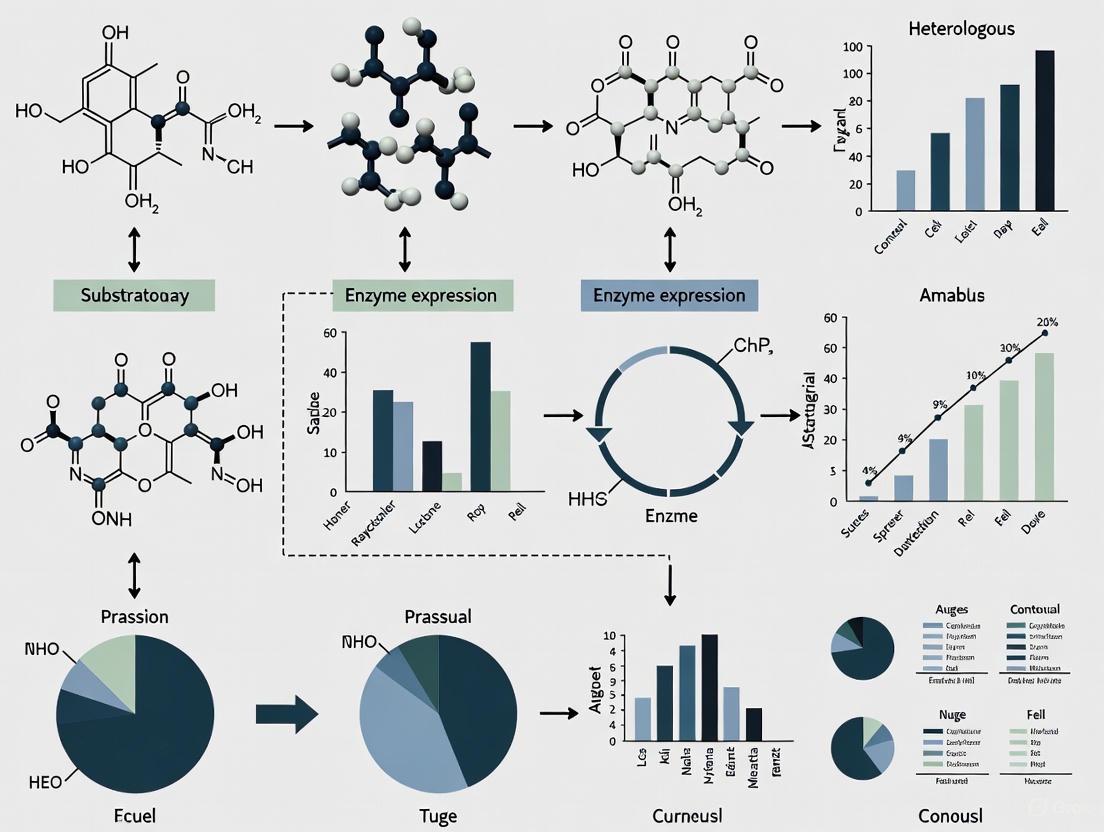
This article provides a systematic review of contemporary strategies for enhancing heterologous enzyme expression, addressing critical challenges from foundational concepts to advanced optimization.
Advanced Strategies for Improving Heterologous Enzyme Expression: A Comprehensive Guide for Researchers
Abstract
This article provides a systematic review of contemporary strategies for enhancing heterologous enzyme expression, addressing critical challenges from foundational concepts to advanced optimization. It explores host system selection spanning prokaryotic and eukaryotic platforms, genetic engineering techniques including CRISPR/Cas9 and codon optimization, and secretory pathway engineering. The content covers practical troubleshooting methodologies for common expression failures and outlines rigorous validation frameworks for comparing system performance. Designed for researchers, scientists, and drug development professionals, this resource integrates the latest advances in synthetic biology, multi-omics approaches, and machine learning to enable successful recombinant enzyme production for biomedical and industrial applications.
Understanding Heterologous Expression Systems and Core Challenges
Defining Heterologous Enzyme Expression and Its Biomedical Significance
Heterologous enzyme expression refers to the production of a target enzyme in a host organism that does not naturally synthesize it. This is achieved through recombinant DNA technology, where the gene encoding the enzyme of interest is transferred into a suitable microbial host such as bacteria, yeast, or filamentous fungi. In biomedical contexts, this technology enables the large-scale production of therapeutic enzymes, diagnostic proteins, and vaccine components that would otherwise be difficult or expensive to obtain from their native sources [1] [2].
The global market for biopharmaceutical proteins is approaching $400 billion annually, while the industrial enzyme sector was valued at approximately $7.1 billion in 2023 and is projected to surpass $11 billion by 2028. This growth is driven by increasing demand in food processing, biofuels, and pharmaceutical manufacturing [1]. Microbial expression systems provide scalable and versatile platforms for producing recombinant proteins, offering advantages in yield, cost-efficiency, and environmental sustainability compared to conventional methods [3].
Key Host Systems for Heterologous Enzyme Expression
Different host organisms offer distinct advantages and limitations for heterologous enzyme production. The table below summarizes the key characteristics of commonly used expression systems.
Table 1: Comparison of Major Heterologous Expression Systems
| Host System | Advantages | Limitations | Biomedical Applications |
|---|---|---|---|
| E. coli | Rapid growth, easy genetic manipulation, high scalability [1] | Limited post-translational modifications, protein misfolding [1] | Non-glycosylated therapeutic proteins, research enzymes [4] |
| S. cerevisiae | GRAS status, eukaryotic PTMs, protein secretion, well-established tools [5] | Hyperglycosylation, metabolic burden [6] [5] | Vaccine production, therapeutic hormones, industrial enzymes [5] |
| K. phaffii | High protein secretion, controlled glycosylation, strong promoters [6] | More complex culture requirements than S. cerevisiae | High-yield enzyme production (e.g., glucose oxidase) [6] |
| Aspergillus spp. | Exceptional protein secretion, GRAS status, extensive PTMs [1] [7] | High background endogenous proteins, proteolytic degradation [1] | Industrial enzymes, therapeutic proteins, organic acids [7] |
Troubleshooting Common Expression Problems
Low or No Expression
Problem: The target enzyme shows minimal or no detectable expression in the host system.
Solutions:
- Verify construct integrity: Sequence the entire expression cassette to confirm the absence of unintended stop codons or mutations [8].
- Enhance transcription: Use strong, inducible promoters (e.g., PAOX1 in K. phaffii, Tet-on in A. niger) to drive gene expression [1] [6].
- Optimize codon usage: Replace rare codons with host-preferred counterparts to improve translation efficiency [5]. For E. coli, use strains supplemented with rare tRNAs (e.g., Rosetta) [8] [4].
- Increase gene copy number: Integrate multiple copies of the expression cassette into the host genome [6] [5].
Protein Insolubility and Misfolding
Problem: The expressed enzyme forms inclusion bodies or aggregates rather than functional soluble protein.
Solutions:
- Reduce expression rate: Lower induction temperature (15-20°C) or decrease inducer concentration to slow protein synthesis and facilitate proper folding [8] [4].
- Co-express chaperones: Co-produce folding helper proteins (e.g., GroEL, DnaK, ClpB) to assist proper protein folding [8] [4].
- Use fusion tags: Fuse target enzymes with solubility-enhancing partners like maltose-binding protein (MBP) or thioredoxin [8] [4].
- Employ specialized strains: For disulfide bond-containing proteins, use E. coli SHuffle strains with oxidative cytoplasm and disulfide bond isomerase (DsbC) [4].
Inefficient Secretion
Problem: The enzyme fails to secrete efficiently into the culture supernatant, remaining intracellular.
Solutions:
- Signal peptide optimization: Screen or engineer optimal signal peptides for the specific target enzyme. Replace native signal peptides with validated alternatives (e.g., Ost1-αMF in K. phaffii) [6] [9].
- Engineer secretion pathways: Overexpress key components of the secretory machinery, such as COPI vesicle trafficking components (e.g., Cvc2 in A. niger), which enhanced pectate lyase production by 18% [1].
- Reduce extracellular proteolysis: Disrupt major extracellular protease genes (e.g., PepA in A. niger) to minimize target protein degradation [1].
Incorrect Post-Translational Modifications
Problem: The enzyme exhibits improper glycosylation or other PTMs affecting activity or stability.
Solutions:
- Humanize glycosylation patterns: Engineer yeast strains to produce human-like N-glycans by eliminating hypermannosylation and introducing human glycosylation enzymes [5].
- Select appropriate hosts: Use eukaryotic hosts (yeast, filamentous fungi) for enzymes requiring eukaryotic-specific modifications [1] [7].
Table 2: Troubleshooting Guide for Common Heterologous Expression Problems
| Problem | Potential Causes | Diagnostic Methods | Solution Strategies |
|---|---|---|---|
| Low/No Expression | Poor transcription, rare codons, mRNA instability | Northern blot, qPCR, sequencing | Stronger promoters, codon optimization, increase gene copies [8] [5] |
| Protein Insolubility | Rapid expression, insufficient chaperones, missing PTMs | SDS-PAGE solubility assay, centrifugation | Lower temperature, fusion tags, chaperone co-expression [8] [4] |
| Inefficient Secretion | Incompatible signal peptide, secretion bottlenecks | Intracellular vs extracellular activity assays | Signal peptide screening, vesicle trafficking engineering [1] [9] |
| Reduced Enzyme Activity | Incorrect folding, improper PTMs, inactive aggregates | Specific activity assays, Western blot | Glycoengineering, disulfide bond enhancing strains [4] [5] |
Experimental Protocols for Optimization
Signal Peptide Screening Protocol
Objective: Identify optimal signal peptides for efficient enzyme secretion.
Methodology:
- Library Construction: Create a diverse library of signal peptide variants through error-prone PCR or synthetic design [9].
- Reporter Fusion: Fuse signal peptide variants to a reporter protein (e.g., Gaussia luciferase) for rapid secretion screening [9].
- High-Throughput Screening: Express library in 96-well format and measure reporter activity in supernatants using luminometry [9].
- Validation: Transfer best-performing signal peptides to full-length enzyme constructs and quantify expression yields [9].
This approach identified a signal peptide variant that provided a 13.9-fold improvement in unspecific peroxygenase (UPO) expression in S. cerevisiae compared to the wild-type signal sequence [9].
Multi-Copy Integration in Aspergillus niger
Objective: Achieve high-level enzyme expression through genomic integration of multiple gene copies.
Methodology:
- Chassis Strain Engineering: Start with industrial A. niger strain AnN1 containing 20 copies of glucoamylase gene [1].
- CRISPR/Cas9-Mediated Deletion: Delete 13 glucoamylase gene copies to create low-background strain AnN2 with 61% reduced extracellular protein [1].
- Target Gene Integration: Integrate heterologous enzyme genes into the vacated high-expression loci using CRISPR/Cas9 with homologous recombination [1].
- Screening and Validation: Select transformants and quantify enzyme expression in shake-flask cultures (48-72 hours) [1].
This platform successfully expressed diverse proteins including glucose oxidase (AnGoxM), thermostable pectate lyase (MtPlyA), bacterial triose phosphate isomerase (TPI), and medicinal protein LZ8, with yields ranging from 110.8 to 416.8 mg/L in 50 mL shake-flasks [1].
Combinatorial Optimization in Komagataella phaffii
Objective: Maximize enzyme production through coordinated genetic enhancements.
Methodology:
- Strain Construction: Clone target enzyme (e.g., glucose oxidase from A. cristatus) into expression vector [6].
- Promoter Enhancement: Replace standard promoter with strengthened variant (PAOXM) [6].
- Signal peptide Engineering: Substitute native signal peptide with optimized sequence (Ost1-αMF) [6].
- Gene Dosage Optimization: Integrate multiple copies of expression cassette (3 copies for cGOD) [6].
- Secretory Pathway Engineering: Co-express key secretory components (e.g., chaperones, vesicle trafficking regulators) [6].
This combined approach increased extracellular glucose oxidase activity to 967 U/mL in shake flasks and 11,655 U/mL in 15L bioreactor cultivation [6].
Research Reagent Solutions
Table 3: Essential Research Reagents for Heterologous Enzyme Expression
| Reagent/Category | Specific Examples | Function and Application |
|---|---|---|
| Expression Hosts | E. coli BL21(DE3), S. cerevisiae INVSc1, K. phaffii X33, A. niger AnN2 | Provide cellular machinery for transcription, translation, and protein processing [1] [6] [4] |
| Expression Vectors | pESC-TRP (S. cerevisiae), pPICZ (K. phaffii), pCI (mammalian) | Carry expression cassettes with promoters, selectable markers, and integration sites [6] [10] [9] |
| Specialized Strains | SHuffle (E. coli), Lemo21(DE3) (E. coli), R24 (HEK293T with calreticulin knockdown) | Enable disulfide bond formation, toxic protein expression, or difficult receptor surface localization [10] [4] |
| Signal Peptides | α-mating factor (S. cerevisiae), Ost1-αMF (K. phaffii), native and evolved variants | Direct protein secretion through recognition by signal recognition particle [6] [9] |
| Promoters | PAOX1 (K. phaffii), PGAP (K. phaffii), PgpdA (A. niger), Tet-on (A. niger) | Regulate transcription initiation strength and inducibility [1] [6] [7] |
| Selection Markers | Antibiotic resistance (bacteria), auxotrophic markers (yeast/fungi), puromycin (mammalian) | Enable selection and maintenance of expression constructs in host cells [1] [10] |
Frequently Asked Questions (FAQs)
Q1: What is the first step when encountering complete failure of heterologous expression?
A: Begin by thoroughly verifying your expression construct through complete sequencing of the expression cassette. Unexpected mutations, incorrect coding sequences, or regulatory element defects are common causes of failure. Additionally, employ sensitive detection methods beyond SDS-PAGE/Coomassie staining, such as Western blotting or enzymatic activity assays, as your protein might be expressed at low but detectable levels [8].
Q2: How can I improve secretion of heterologous enzymes in fungal systems?
A: Implement a multi-pronged approach: (1) Screen multiple signal peptides using high-throughput methods like Gaussia luciferase fusions; (2) Engineer the secretory pathway by overexpressing key components such as COPI vesicle trafficking proteins; (3) Reduce extracellular proteolysis by disrupting major protease genes; (4) Optimize cultivation conditions including pH control and feeding strategies [1] [6] [9].
Q3: What strategies are most effective for expressing disulfide bond-rich enzymes?
A: For prokaryotic expression, use specialized strains like SHuffle E. coli that promote disulfide bond formation in the cytoplasm through a more oxidizing environment and co-expression of disulfide bond isomerase DsbC. For eukaryotic expression, leverage the natural secretory pathway in yeast or filamentous fungi where oxidative folding occurs naturally in the endoplasmic reticulum [4].
Q4: How can I address codon bias issues in heterologous expression?
A: Two primary approaches exist: (1) Use host strains supplemented with rare tRNAs (e.g., Rosetta for E. coli); (2) Perform comprehensive codon optimization of the entire coding sequence, replacing rare codons with host-preferred alternatives while considering factors beyond simple frequency, including mRNA secondary structure and translational pausing [8] [4] [5].
Q5: What are the key advantages of Aspergillus systems for industrial enzyme production?
A: Aspergillus species, particularly A. niger, offer exceptional protein secretion capacity (up to 30 g/L for native enzymes), GRAS status, strong synthetic biology tools including CRISPR/Cas9, and the ability to perform eukaryotic post-translational modifications. Recent engineering of chassis strains with reduced background protein secretion further enhances their utility for heterologous enzyme production [1] [7].
Workflow and Pathway Diagrams
Platform Comparison: Key Characteristics of Prokaryotic and Eukaryotic Expression Systems
Table 1: Systematic Comparison of Common Heterologous Protein Expression Platforms
| Feature | E. coli (Prokaryotic) | Yeast (e.g., S. cerevisiae, P. pastoris) | Filamentous Fungi (e.g., Aspergillus niger) |
|---|---|---|---|
| General Advantages | Rapid growth, high yield, easy genetic manipulation, low cost [11] [12] | Eukaryotic PTMs, GRAS status, high-density fermentation, good secretion [11] [5] | Extremely high secretion capacity, GRAS status, robust industrial fermentation [11] [13] |
| Key Limitations | Lack of complex PTMs, formation of inclusion bodies, endotoxin production [11] [12] | Hyper-glycosylation (high mannose), lower secretion than fungi, Crabtree effect (S. cerevisiae) [11] [5] | Complex morphology, dense cell walls, high native protease activity [11] [13] |
| Post-Translational Modifications | Limited to none; no glycosylation, disulfide bond formation can be error-prone [11] | N- and O-glycosylation (differs from mammalian), disulfide bond formation, phosphorylation [11] [5] | Glycosylation, disulfide bond formation, but may have fungal-type glycosylation patterns [11] |
| Typical Protein Localization | Intracellular (often as insoluble inclusion bodies), periplasmic, or rarely extracellular [12] | Primarily secreted to the extracellular medium, intracellular [5] | Highly efficient secretion to the extracellular medium [13] |
| Ideal Protein Types | Non-glycosylated proteins, enzymes for industrial use, antibody fragments [12] | Glycosylated proteins, complex eukaryotic proteins, vaccines, therapeutic hormones [11] [5] | Industrial enzymes (e.g., cellulases, amylases), high-volume protein production [13] [12] |
Frequently Asked Questions (FAQs) and Troubleshooting Guides
FAQ 1: How do I decide between a prokaryotic and eukaryotic system for my therapeutic enzyme?
The choice hinges primarily on your protein's structural complexity and intended application.
- Choose E. coli if: Your protein is simple, does not require glycosylation for stability or function, and is intended for non-injectable uses (due to potential endotoxin contamination) [11] [12]. It is the fastest and most cost-effective option for research and industrial production of such proteins.
- Choose a Yeast System if: Your protein requires eukaryotic folding, disulfide bond formation, or glycosylation, but mammalian-system cost is prohibitive. Yeasts like P. pastoris offer high-density cultivation and efficient secretion [11] [5]. They are well-suited for vaccines and some therapeutic proteins, though glycosylation must be carefully evaluated.
- Choose Filamentous Fungi like A. niger if: Your primary goal is the high-volume, low-cost production of an industrial enzyme. These systems excel at secreting vast amounts of protein into the culture broth, simplifying downstream processing [13] [12].
FAQ 2: I see no protein expression in my host. What are the first steps to diagnose the problem?
Follow this systematic troubleshooting workflow to identify the issue.
Troubleshooting workflow for failed heterologous protein expression.
Detailed Troubleshooting Steps:
- Verify the DNA Construct: Always sequence the entire expression cassette (promoter, gene, terminator) in your vector to ensure no base-pair errors, accidental stop codons, or mutations have been introduced [8].
- Check Transcription Levels: Use sensitive methods like RT-qPCR to confirm that mRNA is being produced from your construct. A lack of mRNA points to a problem with the promoter or transcription initiation [14].
- Confirm Translation and Protein Location:
- Assay: Use a Western blot instead of relying solely on SDS-PAGE with Coomassie staining, as it is far more sensitive and specific [8].
- Location: Perform cell fractionation. After lysing the cells, centrifuge the lysate. The supernatant contains soluble protein, while the pellet contains insoluble aggregates (inclusion bodies). The presence of your protein in the pellet indicates a folding problem [8].
- Address Insoluble Expression: If your protein is in inclusion bodies, you can either:
- Refold the protein in vitro after denaturing and purifying the aggregates.
- Promote soluble expression in vivo by slowing down the production rate. Lower the growth temperature (e.g., to 25-30°C) or reduce the concentration of the inducer (e.g., IPTG) [8]. This gives the cellular machinery more time to fold the protein correctly.
- Optimize the System:
- Try a Different Promoter: Secondary structures in the mRNA can hinder translation; switching promoters can resolve this [8].
- Co-express Chaperones: Overexpress host chaperone proteins (e.g., GroEL/GroES in E. coli) to assist with the folding of complex heterologous proteins [8].
- Fix Codon Usage: Check the codon adaptation index (CAI) of your gene. Replace codons that are rare in your expression host with more frequent synonyms, either via whole-gene synthesis or by using host strains engineered to supply rare tRNAs (e.g., E. coli Rosetta strains) [14] [8] [5].
FAQ 3: My protein is expressed but is inactive. What could be wrong?
Inactive protein often points to problems with folding or post-translational modifications.
- Misfolding and Inclusion Bodies: This is the most common cause in E. coli. Follow the steps in FAQ 2 to check for and mitigate insoluble expression [8] [12].
- Lack of Essential PTMs: If your enzyme requires specific glycosylation, disulfide bonds, or phosphorylation for activity, a prokaryotic host like E. coli will be incapable of producing the active form. In this case, switching to a eukaryotic host (yeast, fungi) is necessary [11].
- Incorrect Disulfide Bond Formation: In E. coli, use engineered strains like Origami that enhance disulfide bond formation in the cytoplasm by mutations in the thioredoxin and glutathione reductase pathways [8].
- Protein Truncation: For large, multi-domain proteins like cellulases, proteolytic cleavage can occur in the linker regions between domains, leading to loss of function. Using protease-deficient host strains and checking the full-length integrity of your protein on a Western blot can diagnose this issue [12].
Advanced Methodologies for Enhanced Expression
Experimental Protocol: Codon Optimization and Evaluation
Codon optimization is a critical first step to ensure efficient translation. The following protocol, adapted from studies on polyketide synthase expression, provides a robust methodology [14].
Objective: To design, synthesize, and evaluate codon-optimized gene variants for improved heterologous protein expression.
Materials:
- DNA Synthesis Services or site-directed mutagenesis kit for gene synthesis.
- Expression Vectors suitable for your target host (E. coli, yeast, etc.).
- Host Strains: Standard expression strain (e.g., E. coli BL21) and specialized strains if needed (e.g., Rosetta for rare tRNAs).
- Equipment: PCR machine, gel electrophoresis, Western blot apparatus, and spectrophotometer.
Methodology:
- Codon Variant Design: Use computational tools to generate several codon-optimized versions of your target gene. Key strategies include:
- Use Best Codon (UBC): Replaces all codons with the single most frequent codon for each amino acid in the host.
- Match Codon Usage (MCU): Designs a sequence where the frequency of codons matches the overall codon usage table of the host.
- Codon Harmonization (HRCA): Attempts to match the codon usage frequency of the native host of the gene with that of the expression host, potentially preserving natural translation kinetics [14].
- Gene Synthesis and Cloning: Synthesize the native and optimized gene variants and clone them into your expression vector, ensuring all other elements (promoter, RBS, terminator) are identical.
- Host Transformation: Transform the constructs into your selected expression host.
- Expression Analysis:
- Transcript Level: Use RT-qPCR to measure mRNA levels. This confirms that optimization did not negatively impact transcription.
- Protein Level: Use SDS-PAGE and quantitative Western blotting to compare protein expression yields between variants.
- Functional Assay: Perform an enzyme activity assay to confirm the optimized protein is not only expressed but also functional [14].
Advanced Strategy: Combinatorial Optimization of Expression Elements
For multi-gene pathways or to fine-tune expression without a priori knowledge, combinatorial methods are highly effective. The GEMbLeR (Gene Expression Modification by LoxPsym-Cre Recombination) system in yeast is a state-of-the-art example [15].
Principle: This technology uses the Cre recombinase to shuffle predefined promoter and terminator modules that are flanked by orthogonal LoxPsym sites and integrated at the genomic locus of each pathway gene.
Workflow:
- Strain Construction: Replace the native promoter and terminator of your target gene(s) with a "GEM" module containing multiple different promoter/terminator sequences separated by LoxPsym sites.
- Library Generation: Induce the expression of Cre recombinase in the population. This causes stochastic inversion, excision, and duplication events within the GEM modules, creating a vast library of strains where each member has a unique combination of promoter and terminator strengths for the target genes.
- High-Throughput Screening: Screen this library for your desired phenotype, such as high production of a fluorescent reporter or a valuable compound like astaxanthin. A single round of GEMbLeR has been shown to more than double production titers [15].
The Scientist's Toolkit: Essential Research Reagents and Solutions
Table 2: Key Reagents for Troubleshooting Heterologous Expression
| Reagent / Tool | Function | Example Use Case |
|---|---|---|
| Specialized Host Strains | Engineered to overcome specific expression hurdles. | E. coli Rosetta: Supplies rare tRNAs for codons poorly represented in E. coli [8]. E. coli Origami: Promotes disulfide bond formation in the cytoplasm [8]. |
| Chaperone Plasmid Kits | Co-expression of folding assistants to improve solubility. | Takara's Chaperone Plasmid Set; co-expression of GroEL/GroES to prevent aggregation of complex proteins [8]. |
| Fusion Tags | Enhance solubility and simplify purification. | MBP (Maltose-Binding Protein), Trx (Thioredoxin); fused to the N- or C-terminus of target proteins to drive soluble expression [8]. |
| Codon Optimization Software | In silico design of optimized gene sequences for a chosen host. | BaseBuddy: A free online tool that offers customizable codon optimization with up-to-date usage tables [14]. DNA Chisel: An open-source Python toolkit for flexible codon optimization strategies [14]. |
| Alternative Inducers | Fine-tune expression kinetics to reduce metabolic burden. | Molecula's Inducer: An IPTG alternative reported to allow for slower, more controlled induction, potentially improving folding [8]. |
Quantitative Data on Production Bottlenecks
The table below summarizes key bottlenecks and their quantitative impact on recombinant protein production, as identified in recent studies.
| Bottleneck Category | Specific Factor | Quantitative Impact / Correlation | Experimental System | Source |
|---|---|---|---|---|
| Transcriptional / mRNA | Transgene mRNA Abundance | Explains <1% of variance in secretion titer [16] | CHO cells expressing 2135 human secretome proteins [16] | [16] |
| Protein-Specific Features | Molecular Weight (MW) | Ranked as the most important predictor in ML models [16] | CHO cells; analysis of 218 protein features [16] | [16] |
| Protein-Specific Features | Cysteine Composition & Disulfide Bonds | Among top 10 most important predictors in all models [16] | CHO cells; analysis of 218 protein features [16] | [16] |
| Protein-Specific Features | N-linked Glycosylation | A key predictor of secretion variability [16] | CHO cells; analysis of 218 protein features [16] | [16] |
| Host Cell Physiology | Ubiquitin-Proteasome & ER-Associated Degradation (ERAD) | Pathway enriched in low-producing cells [16] | RNA-Seq of 95 CHO cultures [16] | [16] |
| Host Cell Physiology | Lipid Metabolism & Oxidative Stress Response | Pathways upregulated in high-producing cells [16] | RNA-Seq of 95 CHO cultures [16] | [16] |
| Secretion Pathway | Vesicle Trafficking (COPI component Cvc2) | Overexpression enhanced pectate lyase (MtPlyA) production by 18% [1] | Aspergillus niger chassis strain [1] | [1] |
| Overall Model | Combination of 218 Protein Features | Account for ~15% of secretion variability [16] | Machine learning analysis on CHO cell data [16] | [16] |
Essential Experimental Protocols
Protocol 1: Combinatorial Strategy for Enhancing GOD Expression inKomagataella phaffii
This protocol outlines a multi-pronged approach that significantly boosted glucose oxidase (GOD) production [6].
- Gene Identification and Cloning: Identify the gene of interest (e.g., the cGOD gene from Aspergillus cristatus). Clone the gene into an expression vector for K. phaffii [6].
- Expression Cassette Optimization:
- Promoter Enhancement: Replace the standard alcohol oxidase promoter (PAOX1) with a stronger, modified version (PAOXM).
- Signal Peptide Engineering: Substitute the native signal peptide with a more efficient one (e.g., the Ost1 pre-region fused to the α-mating factor pro-region).
- Gene Copy Number Amplification: Generate strains with multiple integrated copies of the optimized expression cassette [6].
- Secretory Pathway Engineering: Co-express key components of the secretory pathway, such as the translation factor eIF4G and the transcription factor HAC1, to alleviate endoplasmic reticulum (ER) stress and enhance protein folding capacity [6].
- Bioreactor Scale-Up:
- Shake Flask Culture: Initially cultivate the engineered strain in shake flasks to assess expression. The described protocol achieved 967 U/mL of extracellular cGOD activity at this stage.
- High-Density Fermentation: Transfer the production to a controlled fed-batch fermenter (e.g., 15 L scale). Under optimized conditions, the protocol achieved a final enzyme activity of 11,655 U/mL [6].
Protocol 2: Construction of a High-YieldingAspergillus nigerChassis Strain
This protocol uses CRISPR/Cas9 to create a cleaner genetic background for heterologous protein expression in the filamentous fungus A. niger [1].
- Parent Strain Selection: Start with an industrial production strain (e.g., AnN1) with a known, robust secretion machinery [1].
- CRISPR/Cas9-Mediated Gene Deletion:
- Targeting High-Copy Native Genes: Design gRNAs to target and delete multiple copies of a highly expressed native gene (e.g., 13 out of 20 copies of the TeGlaA glucoamylase gene). This reduces background protein secretion.
- Protease Gene Disruption: Simultaneously disrupt a gene encoding a major extracellular protease (PepA) to minimize degradation of the heterologous protein [1].
- Validation of Chassis Strain (AnN2): Characterize the resulting strain. The protocol reported a 61% reduction in total extracellular protein and significantly reduced glucoamylase activity, confirming a cleaner background [1].
- Site-Specific Gene Integration: Integrate the target heterologous gene (e.g., a glucose oxidase AnGoxM or a pectate lyase MtPlyA) into the high-expression loci previously occupied by the deleted native genes. This yielded target protein levels ranging from 110.8 to 416.8 mg/L in shake-flask cultures [1].
Frequently Asked Questions (FAQs)
Q1: My recombinant protein is being expressed in E. coli but is entirely insoluble. What are my primary strategies to improve solubility?
- A1: Insolubility often leads to inclusion body formation. You can:
- Reduce Expression Temperature: Lower the induction temperature (e.g., to 25-30°C) to slow down protein synthesis and favor correct folding [17].
- Use Fusion Tags: Utilize tags like Maltose-Binding Protein (MBP) or Thioredoxin (Trx) that enhance solubility [17].
- Switch Expression Systems: If the protein requires complex folding or post-translational modifications, consider switching to a eukaryotic system like yeast or mammalian cells [17].
- Employ Solubility-Enhancing Strains: Use engineered E. coli strains that express molecular chaperones (e.g., GroEL/GroES, DnaK/DnaJ) to assist with folding [18].
Q2: I have confirmed high mRNA levels for my transgene, but the final protein titer is still low. What could be the issue?
- A2: This is a common bottleneck. Recent research in CHO cells shows that mRNA abundance can explain less than 1% of the variation in secreted protein titer, indicating post-transcriptional limitations [16]. Your issue likely lies in:
- Inefficient Secretion: The protein may be misfolded, leading to degradation via the ER-associated degradation (ERAD) pathway. This pathway is often enriched in low-producing cells [16].
- Protein-Specific Features: Intrinsic properties of your protein, such as high molecular weight, high cysteine content (requiring disulfide bonds), or complex glycosylation patterns, can severely limit secretion efficiency [16].
- Host Cell Physiology: Engineering the host to upregulate beneficial pathways like lipid metabolism and oxidative stress response has been correlated with high production [16].
Q3: How can I choose the best signal peptide for secreting my recombinant protein in a bacterial system?
- A3: There is no universal signal peptide. The optimal choice depends on the target protein and the bacterial host [19]. The most effective approach is empirical screening:
- Library Screening: Screen a diverse library of signal peptides (e.g., both Sec and Tat pathway-specific peptides) fused to your protein of interest [19].
- Bioinformatic Prediction: Use prediction tools like SignalP or Phobius to identify potential native signal peptides or to guide library design [19].
- Optimization: The signal peptide can be further optimized via site-directed or random mutagenesis to improve its performance in your specific context [19].
Q4: My purified recombinant protein is unstable and loses activity quickly. How can I improve its stability?
- A4: Protein instability can be addressed by:
- Optimizing Storage Conditions: Store the protein at low temperatures (-80°C) in stabilizing buffers. Add stabilizing agents like glycerol, sucrose, or certain salts. Always include protease inhibitors in lysis and storage buffers to prevent degradation [17].
- Controlling pH and Ionic Strength: The buffer's pH and salt concentration can profoundly impact stability. Test a range of conditions to find the optimal one [17].
- Utilizing Fusion Proteins: Certain tags, besides aiding purification, can also enhance the stability of the fused protein [17].
The Scientist's Toolkit: Key Research Reagents & Materials
The table below lists essential tools and reagents used in the featured experiments for optimizing recombinant protein production.
| Reagent / Material | Function / Explanation | Example Use Case |
|---|---|---|
| CRISPR/Cas9 System | A genome editing tool that allows for precise deletion or insertion of genes. | Engineering chassis strains by deleting native protease genes or integrating heterologous genes into high-expression loci [1]. |
| Signal Peptide Library | A collection of different Sec- or Tat-specific signal peptides for empirical testing. | Screening for the most efficient signal peptide to secrete a specific target protein in a chosen bacterial host [19]. |
| Chaperone Co-expression Plasmids | Plasmids encoding protein-folding assistants like GroEL/GroES or DnaK/DnaJ. | Improving the solubility and correct folding of recombinant proteins expressed in E. coli [18]. |
| Secretory Pathway Factors (e.g., HAC1, eIF4G) | Genes involved in the unfolded protein response (UPR) and vesicle trafficking. | Co-expression to expand ER folding capacity and enhance secretion efficiency in eukaryotic hosts like yeast [6]. |
| Affinity Purification Tags (His-tag, GST-tag) | Short amino acid sequences fused to the protein for purification using chromatography. | Enabling one-step purification of the recombinant protein from complex cell lysates [17]. |
Pathway and Workflow Visualizations
Protein Secretory Pathway in Eukaryotic Cells
Experimental Workflow for Strain Improvement
Frequently Asked Questions (FAQs)
Q1: My target protein is not expressing, or the yield is very low. What could be the general causes? Low or absent expression is a common hurdle in heterologous expression. The causes can be broadly categorized into issues with the host cell's genetic machinery and problems related to the inherent properties of the target protein itself. Genetic instability of the plasmid or target gene can prevent expression, while the toxicity of the protein to the host, such as the formation of toxic oligomers or disruption of membrane integrity, can inhibit cell growth and protein production [20] [21]. Furthermore, improper protein folding and aggregation into insoluble inclusion bodies is a frequent cause of low yield of functional protein [22].
Q2: What specific genetic mutations can cause protein aggregation and toxicity?
Recent research has identified specific genetic mutations that lead to the production of toxic, aggregation-prone proteins. For instance, a novel genetic mutation in the CASP8 gene, characterized by a GGGAGA repeat expansion, was found to produce toxic proteins with long chains of glycine and arginine (polyGR) [23]. These toxic proteins were present in over 50% of the Alzheimer's disease brains studied and are distinct from the well-known amyloid-beta and tau pathologies. Carriers of this mutation have a 2.2-fold increased risk of developing late-onset Alzheimer's [23].
Q3: How can I optimize membrane protein production in a yeast expression system? Membrane proteins are notoriously difficult to produce. A key strategy is the careful titration of the promoter strength. A 2025 study demonstrated that using very low concentrations of the inducer galactose (e.g., 0.003% for UCP1, 300 times lower than usual) in the S. cerevisiae GAL10 promoter system dramatically increased the solubilization efficiency of recombinant membrane proteins from yeast membranes [24]. This approach reduces the metabolic burden and toxicity associated with overexpression, suppressing the formation of aggregates and facilitating subsequent purification steps [24].
Q4: How does general cellular stress contribute to expression failure? Cellular stress can exacerbate the production of toxic proteins. Studies on repeat expansion disorders, which share features with protein aggregation diseases, have shown that various types of stress can increase the production of aberrant proteins [23]. Furthermore, when a cell's quality control systems, like the proteasome or chaperone networks, are overwhelmed by misfolded or aggregated proteins, it leads to a failure in maintaining protein homeostasis, further compounding expression problems and potentially leading to cell death [20].
Troubleshooting Guides
Guide 1: Addressing Low Solubility of Recombinant Membrane Proteins
Problem: The target membrane protein is expressed but is largely insoluble and cannot be effectively extracted from the membrane fraction for purification.
Solution: Implement a promoter titration strategy to fine-tune expression levels, preventing overload and aggregation.
Experimental Protocol (Based on Yeast Expression System) [24]:
- Vector and Host: Use an expression plasmid with a galactose-inducible promoter (e.g., GAL10-CYC1) and a compatible Saccharomyces cerevisiae strain.
- Culture and Induction:
- Grow the culture in a suitable medium (e.g., S-lactate medium) to the desired OD~600~.
- Instead of using a standard, high concentration of galactose (e.g., 1-2%), test a range of very low concentrations (e.g., from 0.001% to 0.05%).
- Induce expression for a defined period (e.g., 4-16 hours).
- Membrane Preparation and Solubilization:
- Harvest cells and isolate the crude mitochondrial/membrane fraction.
- Solubilize the membrane proteins using a mild detergent (e.g., DDM, LMNG) at a defined detergent-to-protein ratio (e.g., 10:1 w:w).
- Centrifuge to separate the solubilized fraction (supernatant) from the insoluble pellet.
- Analysis: Analyze both fractions by SDS-PAGE and immunoblotting to determine the proportion of the target protein that has been successfully solubilized.
Expected Outcome: The following table summarizes the quantitative improvements in solubilization efficiency achievable through promoter titration, as demonstrated for the mitochondrial uncoupling protein UCP1 [24]:
Table 1: Effect of Galactose Induction Concentration on UCP1 Solubilization
| Galactose Concentration | UCP1 Production Level | Solubilization Efficiency with DDM | Key Observation |
|---|---|---|---|
| 1% (Standard) | High | ~3% | Protein forms aggregates; poor extraction. |
| 0.05% | High | Enhanced (vs. 1%) | Improved extraction with multiple detergents. |
| 0.003% (Optimal) | Moderate | 70% (Maximum threshold) | Optimal for homogenous, active protein purification. |
Guide 2: Mitigating Cellular Toxicity from Protein Aggregates
Problem: Expression of the target protein causes severe cellular toxicity, leading to poor cell growth or death, resulting in no yield.
Solution: Utilize fusion tags that enhance secretion and consider the specific toxic mechanisms of protein aggregates.
Experimental Protocol (Secretion Expression in E. coli) [21]:
- Construct Design: Fuse the gene of your target protein (e.g., a lipolytic enzyme) to a mediator protein known to facilitate secretion, such as the fast-folding fluorescent protein mScarlet3. The fusion can be at either the N- or C-terminus.
- Transformation and Expression:
- Transform the construct into an appropriate E. coli host (e.g., BL21(DE3)).
- Grow the culture and induce with a low concentration of IPTG (e.g., 0.5 mM) at a lower temperature (e.g., 18°C) for an extended period (e.g., 24 h).
- Protein Recovery: Collect the culture medium (extracellular fraction) and the cell pellet separately. Analyze both to confirm secretion of the fusion protein.
- Mechanism Insight: Understand that toxicity often comes from soluble oligomers or "protofibrils" rather than mature fibrils [20]. These prefibrillar aggregates can disrupt cell membranes, inactivate essential proteins, and overwhelm the cellular quality control systems [20]. Secretion bypasses intracellular accumulation and its associated toxicity.
Expected Outcome: The fusion strategy can significantly reduce intracellular toxicity by directing the protein out of the cell. For example, the mScarlet3-LipHu6 fusion achieved a specific activity of 669,151.75 U/mmol, successfully mitigating the toxicity associated with intracellular production [21].
Pathway and Workflow Visualizations
Signaling Pathway of DNA Bridge-Induced Genetic Instability
The following diagram illustrates the molecular mechanism by which persistent DNA bridges during cell division lead to genetic instability, a process relevant to understanding cellular stress responses during recombinant expression.
Diagram: DNA Bridge Resolution Pathways
Experimental Workflow for Optimizing Membrane Protein Expression
This workflow outlines the step-by-step protocol for using promoter titration to achieve high yields of soluble, functional membrane proteins.
Diagram: Membrane Protein Optimization Workflow
The Scientist's Toolkit: Research Reagent Solutions
Table 2: Essential Reagents and Materials for Heterologous Expression Optimization
| Reagent/Material | Function/Application | Example Use Case |
|---|---|---|
| S. cerevisiae GAL10-CYC Promoter | A strong, inducible promoter system for controlled protein expression in yeast. | Titrating expression levels of membrane proteins like UCP1 to maximize solubilization yield [24]. |
| mScarlet3 Fluorescent Protein | A fast-folding, monomeric red fluorescent protein used as a fusion tag to mediate secretion. | Facilitating the secretion of toxic proteins (e.g., lipase LipHu6) in E. coli to reduce intracellular toxicity and simplify purification [21]. |
| Mild Detergents (DDM, LMNG) | Amphipathic molecules used to solubilize and extract membrane proteins from lipid bilayers while preserving their native structure. | Solubilizing functional mitochondrial uncoupling protein (UCP1) from yeast membranes for purification and reconstitution [24]. |
| Micro-HEP Platform | A microbial heterologous expression platform using engineered E. coli and Streptomyces for efficient expression of biosynthetic gene clusters (BGCs). | Heterologous production of natural products like xiamenmycin and griseorhodins by integrating multiple copies of their BGCs into a optimized chassis strain [25]. |
| Redα/Redβ/Redγ Recombineering System | A λ phage-derived system that enables highly efficient genetic modifications in E. coli using short homology arms. | Cloning and modifying large biosynthetic gene clusters (BGCs) within the Micro-HEP platform prior to conjugative transfer [25]. |
Recent Advances in Synthetic Biology and Genetic Tool Development
Troubleshooting Guides and FAQs for Heterologous Enzyme Expression
Troubleshooting Common Experimental Issues
This section addresses frequent challenges in heterologous enzyme expression experiments, offering targeted solutions to improve your research outcomes.
Table 1: Troubleshooting Cloning and Transformation Issues
| Problem | Possible Cause | Recommended Solution |
|---|---|---|
| Few or no transformants [26] | Cells are not viable | Transform an uncut plasmid to check viability; use high-efficiency commercially available competent cells if needed. [26] |
| DNA fragment is toxic to cells | Incubate plates at a lower temperature (25–30°C); use a strain with tighter transcriptional control (e.g., NEB 5-alpha F´ Iq). [26] | |
| Construct is too large | Use competent cell strains designed for large constructs (e.g., NEB 10-beta); for very large constructs (>10 kb), use electroporation. [26] | |
| Inefficient ligation | Ensure one fragment has a 5´ phosphate; vary vector-to-insert molar ratio (1:1 to 1:10); use fresh ligation buffer (ATP degrades); clean up DNA to remove contaminants. [26] | |
| Colonies contain the wrong construct [26] | Recombination of the plasmid | Use a recA– strain such as NEB 5-alpha or NEB 10-beta. [26] |
| Internal restriction site present | Analyze the insert sequence for internal recognition sites using a tool like NEBcutter. [26] | |
| DNA fragment is toxic | Incubate at lower temperatures; use a tightly controlled expression strain. [26] | |
| No PCR product or low yield [27] | Poor template integrity/quantity | Evaluate template integrity by gel; increase template amount; use a polymerase with high sensitivity. [27] |
| Complex targets (GC-rich) | Use a polymerase with high processivity; add PCR co-solvents (e.g., DMSO); increase denaturation time/temperature. [27] | |
| Suboptimal primer design/annealing | Review primer design for specificity; optimize annealing temperature in 1–2°C increments. [27] | |
| Non-specific PCR amplification [27] | Excess DNA template/polymerase | Lower the quantity of input DNA; review and decrease the amount of polymerase used. [27] |
| Low annealing temperature | Increase the annealing temperature; use a hot-start DNA polymerase to improve specificity. [27] | |
| Excess Mg2+ concentration | Review and lower the Mg2+ concentration to prevent nonspecific products. [27] |
Table 2: Troubleshooting Protein Expression Issues
| Problem | Possible Cause | Recommended Solution |
|---|---|---|
| Low expression yield [28] | Inefficient translation or protein folding | Optimize codon usage to match the host organism; use strategic host strain engineering (e.g., E. coli, B. subtilis, P. pastoris). [28] |
| Metabolic burden on host cells | Engineer host metabolism to reduce burden; use inducible promoters for tighter control. [28] | |
| Suboptimal experimental design | Utilize AI tools like CRISPR-GPT to analyze data, predict pitfalls, and optimize design. [29] | |
| Enzyme inactivity [28] | Improper folding or inclusion body formation | Explore different host systems (e.g., P. pastoris for eukaryotic proteins); use molecular chaperones to aid folding. [28] |
| Lack of essential post-translational modifications | Choose a host system compatible with the enzyme's native requirements (e.g., yeast for glycosylation). [28] |
Frequently Asked Questions (FAQs)
Q1: What recent advances can help me design better heterologous expression experiments? A1: Artificial intelligence is now a powerful co-pilot for experimental design. Tools like CRISPR-GPT can help you generate designs, analyze data, and troubleshoot flaws by leveraging years of published scientific data. It can predict off-target effects and suggest robust experimental approaches, significantly flattening the learning curve, especially for complex systems [29]. Furthermore, new precision gene-editing tools like MIT's engineered prime editors (vPE) drastically reduce errors during genetic modifications, which is crucial for creating stable production strains [30].
Q2: How can I control the expression of my gene of interest with high precision? A2: Beyond traditional inducible promoters, new "gene-switch" technologies offer refined control. The recently developed Cyclone system allows you to turn a target gene on or off using the non-toxic antiviral drug acyclovir. This tool is highly versatile, can dial activity from 0% to over 300% of normal levels, and leaves RNA and protein products intact, making it ideal for both research and future therapeutic applications [31].
Q3: What are the key molecular strategies for optimizing heterologous enzyme production? A3: Successful optimization often involves a multi-faceted approach [28]:
- Transcriptional Regulation: Use synthetic promoters and engineering transcription factors to boost mRNA levels.
- Codon Optimization: Tailor the gene's codon usage to your specific host organism (e.g., E. coli, P. pastoris) for efficient translation.
- Host Strain Engineering: Genetically modify the host to improve protein folding, reduce metabolic burden, and eliminate protease activity.
- In silico Design: Use computational tools for rational design before moving to the lab.
Q4: My cloning efficiency is low. What are the critical controls I should run? A4: Running the right controls is essential for diagnosing the problem [26]:
- Uncut vector: Checks cell viability and transformation efficiency.
- Cut vector: Determines background from undigested plasmid (should be <1% of control #1).
- Vector-only ligation: Should yield few colonies, confirming the vector cannot re-ligate.
- Single-enzyme digest & re-ligation: The ends should be compatible and re-ligate efficiently, resulting in many colonies.
Experimental Protocols for Advanced Genetic Engineering
Protocol 1: Utilizing an AI Assistant for CRISPR Experiment Design
This protocol outlines how to use AI tools, such as CRISPR-GPT, to plan gene-editing experiments for metabolic engineering in heterologous hosts [29].
- Initiate Conversation: Access the AI agent through its text interface.
- Define Goal: Provide your experimental objective (e.g., "I plan to knockout gene X in E. coli to improve precursor flux for L-ASNase production").
- Input Context: Include relevant information such as the host organism, target gene sequence, and desired outcome.
- Receive Design: The AI will generate a step-by-step experimental plan, suggesting guide RNAs, Cas9 variants, and donor DNA templates if needed.
- Troubleshoot: The AI will highlight potential problems encountered in similar past experiments and suggest optimizations for efficiency and specificity.
- Execute and Validate: Follow the designed protocol and validate edits via sequencing and functional assays.
Protocol 2: Implementing High-Fidelity Prime Editing with vPE
This protocol uses the vPE system for introducing precise, low-error mutations to optimize enzyme sequences in heterologous hosts [30].
- Design Prime Editing Guide RNA (pegRNA): Design the pegRNA to contain the desired edit and a primer binding site.
- Assemble vPE Complex: The vPE system uses a mutated Cas9 protein (with high-fidelity mutations) complexed with the pegRNA and an engineered reverse transcriptase.
- Deliver to Cells: Deliver the vPE machinery into your host cells (e.g., via electroporation or transfection).
- Editing Reaction: The vPE system nicks the target DNA strand and uses the pegRNA as a template for reverse transcription, writing the new sequence into the genome.
- Validate Editing: Screen clones and sequence the target locus to confirm the precise edit and assess the low off-target rate.
The workflow for this advanced gene-editing protocol is summarized below.
The Scientist's Toolkit: Key Research Reagent Solutions
Table 3: Essential Reagents and Kits for Synthetic Biology Workflows
| Item | Function/Benefit | Example Use Case |
|---|---|---|
| High-Fidelity DNA Polymerase [27] | Reduces errors during PCR amplification, crucial for downstream cloning and sequencing. | Amplifying enzyme genes for cloning with high sequence fidelity. |
| Hot-Start DNA Polymerase [27] | Prevents non-specific amplification and primer-dimer formation by requiring heat activation. | Improving specificity and yield in PCR for gene construction. |
| Monarch Spin PCR & DNA Cleanup Kit [26] | Purifies DNA to remove contaminants like salts, EDTA, or enzymes that inhibit downstream steps. | Cleaning up restriction digests or ligation reactions before transformation. |
| Competent E. coli Strains [26] | Specialized strains for different needs: recA- (reduce recombination), McrA-/McrBC- (for methylated DNA), high-efficiency (for large constructs). | Stable propagation of plasmids containing toxic genes or large inserts. |
| T4 DNA Ligase [26] | Joins DNA fragments by catalyzing phosphodiester bond formation. | Ligation of inserts into plasmid vectors during clone construction. |
| BioXp System / Gibson Assembly [32] | Automated synthetic biology workstation and related method for seamless DNA assembly. | Rapid assembly of multiple DNA fragments, such as metabolic pathways, without reliance on restriction sites. |
Genetic Engineering and Host System Optimization Techniques
Promoter Engineering and Transcriptial Regulation Strategies
Foundational Concepts: Promoters and Transcriptional Regulation
What are the core components of a promoter, and how do they influence gene expression?
Promoters are DNA sequences located upstream of gene coding regions that control both the initiation and intensity of transcription. In eukaryotic systems like Saccharomyces cerevisiae, promoters consist of two primary components:
Regulatory Components: These include upstream activating sequences (UAS) or upstream repressing sequences (URS), typically located 100-1400 bp upstream of the core promoter. These regions contain transcription factor binding sites (TFBS) that activate or inhibit transcription by binding specific transcription factors (TFs). Changes in the number and location of these regulatory components significantly affect gene expression levels [33].
Core Components: This is the minimal region required to initiate transcription, determining both the direction and start site of transcription. Approximately 20% of S. cerevisiae core promoters contain a TATA box located 40-120 bp upstream of the transcription start site (TSS). The TATA box serves as the binding site for TATA-binding protein (TBP), representing the first step for RNA polymerase II to initiate transcription. The sequence around the TSS, sometimes called the initiator (INR), also plays a prominent role in transcription initiation, particularly for promoters lacking a TATA box [33].
How do transcription factors regulate gene expression?
Transcription factors (TFs) are proteins that control gene expression by binding to specific DNA sequences (TFBS) and regulating transcriptional activity. Most TFs contain at least two core structural domains:
DNA Binding Domain (DBD): Responsible for specifically recognizing and binding to TFBS, often containing structural motifs like helix-turn-helix (HTH), helix-loop-helix, zinc finger, or leucine zipper [34].
Effector Domain (ED): Serves as the regulatory domain involved in signal sensing, capable of binding various intracellular metabolites (CoA, NADPH, pyruvate, etc.) or responding to external environmental changes (pH, temperature, light, dissolved gases) [34].
TFs regulate transcription through several mechanisms. Activating TFs may recruit RNA polymerase to promoters or improve the spatial conformational adaptation of promoter DNA to RNA polymerase. Repressing TFs may block RNA polymerase access or recruit repressive complexes. The binding or dissociation of TFs to DNA is often triggered by specific effector molecules or environmental signals [34].
Troubleshooting Guides for Common Experimental Challenges
Problem: Low Heterologous Protein Expression
Potential Causes and Solutions:
Table: Strategies to Enhance Heterologous Protein Expression
| Problem Area | Potential Solution | Specific Approach | Expected Outcome |
|---|---|---|---|
| Transcription Level | Promoter Engineering | Use strong constitutive promoters (pTDH3, pPGK1, pADH1 in yeast; T7, tac in E. coli) or inducible systems | Increase transcription initiation and mRNA yield [33] [35] |
| Increase Gene Copy Number | Use high-copy number plasmids (YEp in yeast) or genomic integration at multiple loci | Higher gene dosage and potentially increased expression [5] | |
| Translation Level | Codon Optimization | Replace rare codons with host-preferred synonyms; optimize GC content; avoid base repeats | Improved translation efficiency and accuracy [5] |
| tRNA Supplementation | Use expression strains supplemented with rare tRNAs | Overcome codon bias in heterologous genes [36] | |
| Protein Stability | Fusion Tags | Utilize solubility-enhancing tags (maltose-binding protein, glutathione-S-transferase) | Improved folding characteristics and reduced proteolysis [35] [36] |
| Compartment Targeting | Target proteins to periplasm (E. coli) or use secretory pathways (yeast) | Enhanced disulfide bond formation and reduced degradation [35] |
Experimental Protocol: Codon Optimization
- Analyze the codon adaptation index (CAI) of your heterologous gene using online tools
- Identify rare codons (those with frequency <10% in your host organism)
- Replace rare codons with preferred synonyms while maintaining amino acid sequence
- Avoid creating secondary mRNA structures that might impede translation
- Synthesize the optimized gene and clone into your expression vector
- Validate expression compared to non-optimized control [5]
Problem: Metabolic Burden and Cellular Toxicity
Potential Causes and Solutions:
Table: Strategies to Reduce Metabolic Burden
| Strategy | Methodology | Applicable Hosts | Considerations |
|---|---|---|---|
| Inducible Systems | Use regulated promoters (e.g., tetR, PBAD, alcohol-oxidase) | All microbial hosts | Timing and concentration of inducer critical [37] |
| Dynamic Regulation | Implement feedback-regulated systems | Yeast, E. coli, methylotrophs | Requires understanding of metabolic pathways [34] |
| Genomic Integration | Replace plasmid-based systems with chromosomal integration | Yeast, specialized bacteria | Lower copy number but improved stability [5] |
| Pathway Balancing | Use promoters of different strengths for various pathway genes | All engineered hosts | Requires systematic optimization [33] |
Experimental Protocol: Dynamic Regulation Using TF-Based Systems
- Identify a transcription factor responsive to your metabolic of interest
- Characterize the TF binding sites and regulated promoters
- Engineer synthetic promoters containing relevant TFBS
- Construct circuits where toxic pathway expression is downregulated by metabolic sensors
- Validate dynamic control in bioreactor studies [34]
Problem: Inefficient Protein Secretion
Potential Causes and Solutions:
- Signal Sequence Issues: Test different native and heterologous signal sequences (e.g., α-mating factor in yeast, PelB or OmpA in E. coli)
- Secretory Pathway Capacity: Co-express chaperones (BiP, PDI in eukaryotes; Skp, FkpA in bacteria) to assist folding
- Proteolytic Degradation: Use protease-deficient strains (e.g., BL21 for E. coli; S. cerevisiae pep4 mutant)
- Cellular Stress: Reduce expression temperature (15-25°C) to slow processes and improve folding [5] [36]
Experimental Protocol: Signal Sequence Screening
- Clone your target gene with 3-5 different signal sequences
- Transform into appropriate host strain
- Conduct small-scale expression cultures
- Measure protein levels in both cell lysate and culture supernatant
- Select the most efficient signal sequence for scale-up [5]
Advanced Engineering Strategies
Promoter Engineering Techniques
Table: Promoter Engineering Strategies for Enhanced Expression
| Strategy | Methodology | Advantages | Limitations |
|---|---|---|---|
| Hybrid Promoters | Combine regulatory elements from different natural promoters | Create novel expression characteristics | May require extensive screening [33] |
| Mutation Libraries | Error-prone PCR or synthetic promoter generation | Generate promoters with varied strengths | High-throughput screening needed [37] |
| TFBS Engineering | Modify type, number, or arrangement of TFBS | Fine-tune regulation patterns | Requires detailed TF characterization [34] |
| Synthetic Systems | Implement orthogonal regulatory circuits | Reduce host interference | Increased genetic complexity [38] |
Host-Specific Considerations
Different expression hosts present unique advantages and challenges for heterologous protein expression:
S. cerevisiae:
- Advantages: GRAS status, eukaryotic protein processing, well-characterized genetics
- Strong constitutive promoters: pTDH3, pPGK1, pADH1, pTEF1 [33] [5]
- Inducible systems: GAL1/10 (galactose), MET25 (methionine), CUP1 (copper)
E. coli:
- Advantages: Rapid growth, high yields, extensive toolkit
- Strong promoters: T7, tac, trc, araBAD [35]
- Optimization strategies: Codon usage, fusion tags, compartment targeting [39] [35]
Methylotrophic Yeasts (P. pastoris):
- Advantages: Strong inducible promoters, high density cultivation
- Key promoters: PAOX1 (methanol-inducible), PGAP (constitutive) [37]
Filamentous Fungi (T. reesei):
- Advantages: Exceptional protein secretion capacity
- Engineered promoters: Pcbh1 with repressor replacement [38]
Research Reagent Solutions
Table: Essential Research Reagents for Promoter Engineering
| Reagent Category | Specific Examples | Function/Application |
|---|---|---|
| Expression Vectors | pET (E. coli), pRS (yeast), pPIC (P. pastoris) | Backbone for gene expression with selectable markers [35] |
| Promoter Libraries | Constitutive and inducible promoter sets | Screening optimal expression conditions [33] [37] |
| Transcription Factor Tools | TF expression plasmids, reporter constructs | Characterizing TF-DNA interactions [34] |
| Codon Optimization Services | Gene synthesis with host-specific codon bias | Improving translation efficiency [5] |
| Protease-Deficient Strains | E. coli BL21, S. cerevisiae pep4Δ | Reducing target protein degradation [36] |
| Chaperone Plasmids | GroEL/S, DnaK/DnaJ, BiP/PDI co-expression | Enhancing proper protein folding [35] |
| Secretion Enhancers | Signal sequence libraries, secretory pathway components | Improving protein translocation [5] |
Visual Guide: Promoter Engineering Workflow
Promoter Engineering Decision Workflow
Visual Guide: Transcription Factor Mechanism
Transcription Factor Regulatory Mechanism
Frequently Asked Questions (FAQs)
Q1: How do I choose between constitutive and inducible promoters for my application?
The choice depends on your specific needs. Use constitutive promoters (pGAP, pTEF1, pTDH3) when continuous expression is desired and the protein isn't toxic to the host. Choose inducible systems (GAL, AOX, tet) when:
- The expressed protein is toxic to the host
- You need to separate growth and production phases
- You require precise temporal control over expression [33] [37]
Q2: What are the most effective strategies for optimizing promoter strength?
Systematic approaches work best:
- Start with native promoter characterization
- Create hybrid promoters by combining strong UAS elements with core promoters
- Use mutagenesis (error-prone PCR) to generate variant libraries
- Implement high-throughput screening (FACS, microtiter plates)
- Validate top performers in bioreactor conditions [33] [37]
Q3: How can I reduce metabolic burden in high-expression systems?
- Use genomic integration instead of high-copy plasmids
- Implement dynamic regulation that ties expression to growth phase
- Balance pathway expression using promoters of different strengths
- Optimize induction timing and concentration
- Use nutrient-limited feeding strategies in fermentation [34] [5]
Q4: What host system is most suitable for complex eukaryotic proteins?
S. cerevisiae often works well for complex eukaryotic proteins because it provides:
- Eukaryotic protein folding machinery
- Post-translational modifications
- Secretion capability
- GRAS status for therapeutic applications For proteins requiring specific glycosylation patterns, consider engineered yeast strains with humanized glycosylation pathways [5].
Q5: How can I troubleshoot poor protein secretion?
Systematically address potential bottlenecks:
- Verify signal sequence functionality with positive controls
- Assess endoplasmic reticulum capacity (unfolded protein response)
- Monitor protein degradation in culture supernatant
- Optimize cultivation conditions (temperature, pH, feeding)
- Co-express foldases and chaperones [5] [36]
Codon optimization is an essential technique in synthetic biology and biopharmaceutical production that enhances recombinant protein expression by fine-tuning genetic sequences. This process aligns the codon usage of a target gene with the preferred codons of a specific host organism, leveraging the degeneracy of the genetic code where multiple synonymous codons can encode the same amino acid [40] [41]. The primary goal is to enhance translational efficiency and achieve higher protein yields, which is crucial for producing enzymes, therapeutic proteins, and other valuable biologics [40] [42].
Different organisms exhibit distinct codon usage preferences, meaning they may favor specific codons for the same amino acid. When a gene from one organism is introduced into another, mismatched codon usage can lead to inefficient translation, reduced expression levels, or non-functional proteins [41]. By strategically modifying the nucleotide sequence to replace rare or less-favored codons with those preferred by the host, researchers can significantly improve protein production outcomes [40] [41].
Frequently Asked Questions (FAQs) & Troubleshooting
FAQ 1: How do I choose the right codon optimization tool for my host organism?
The selection of an appropriate optimization tool depends heavily on your specific host organism and the protein you wish to express. Different tools employ varying algorithms and optimization strategies, which can produce divergent results [40].
- Consider Host-Specific Bias: Tools like JCat, OPTIMIZER, ATGme, and GeneOptimizer demonstrate strong alignment with genome-wide and highly expressed gene-level codon usage in common hosts like E. coli, S. cerevisiae, and CHO cells [40].
- Multi-Parameter Approach: Avoid tools that rely on a single metric like CAI. Instead, select tools that integrate multiple parameters, including Codon Adaptation Index (CAI), GC content, mRNA secondary structure stability (ΔG), and codon-pair bias (CPB) [40].
- Experimental Validation: Computational predictions don't always translate to experimental success. Tools like TISIGNER and IDT employ different optimization strategies that may work better for specific protein classes [40].
Troubleshooting Tip: If you experience low protein yields with one optimization tool, try generating sequences with alternative tools that use different algorithmic approaches and compare expression outcomes empirically.
FAQ 2: My codon-optimized gene shows high CAI but low protein expression. What could be wrong?
A high CAI indicates good alignment with host codon preference but doesn't guarantee successful expression. Several other factors could be limiting your protein production [40] [42].
- Check mRNA Secondary Structure: Overly stable secondary structures, especially near the 5' end, can impede ribosome binding and translation initiation. Use tools like RNAFold to calculate minimum folding energy (ΔG) [40].
- Review GC Content: Extremely high or low GC content can adversely affect mRNA stability and translation. Optimal ranges vary by organism (e.g., increased GC enhances stability in E. coli, while A/T-rich codons minimize secondary structure in S. cerevisiae) [40].
- Investigate Protein Folding: Too-rapid translation driven by exclusively using optimal codons may prevent proper protein folding, leading to aggregation and insolubility. Consider introducing strategic "slow" codons that can facilitate co-translational folding [42].
- Verify Actual tRNA Abundance: The "rare codon" assumption may be flawed, as wobble pairing and tRNA modifications enable a single tRNA to recognize multiple codons. The number of tRNA genes doesn't necessarily correlate directly with functional tRNA levels [42].
Troubleshooting Tip: Use a tool like RiboDecode that incorporates ribosome profiling data (Ribo-seq) to predict translation levels more accurately, as it considers cellular context beyond simple codon frequency [43].
FAQ 3: How can I address protein insolubility issues related to codon optimization?
Protein insolubility often results from improper folding, which can be exacerbated by non-optimal translation kinetics [8] [42].
- Slow Down Translation: Reduce growth temperature or inducer concentration to decrease the rate of protein synthesis, allowing the cellular folding machinery to keep up [8].
- Employ Chaperone Co-Expression: Co-express molecular chaperones (e.g., using Takara's Chaperone Plasmid Set) or heat-shock the culture before induction to enhance folding capacity [8].
- Utilize Fusion Tags: Fuse your target protein to highly soluble partners like maltose-binding protein or thioredoxin to improve solubility. Test both N and C-terminal fusions [8].
- Consider Codon Harmonization: Instead of maximizing codon optimality throughout the entire sequence, preserve the natural translation rhythm of the original organism, which may include strategically placed slower-translating regions important for proper folding [42].
Troubleshooting Tip: After lysis, centrifuge to separate soluble and insoluble fractions. Re-suspend the pellet in fresh buffer to the same volume as the supernatant to accurately determine what proportion of your protein is insoluble [8].
FAQ 4: What advanced strategies can I use for difficult-to-express proteins?
When standard optimization approaches fail, consider these advanced strategies:
- Deep Learning Approaches: Newer frameworks like RiboDecode use deep learning trained on ribosome profiling data to explore a vast sequence space beyond what rule-based algorithms can access, often yielding superior results [43].
- Codon Language Models: Models like CaLM (codon adaptation language model) leverage information in cDNA sequences that is lost when considering only amino acid sequences, providing stronger signals for predicting expression success [44].
- Host Engineering: Switch to specialized expression strains like E. coli Rosetta (supplements rare tRNAs) or SHuffle (enhances disulfide bond formation) [8] [45].
- Alternative Expression Systems: If repeated optimization in microbial systems fails, consider switching to eukaryotic hosts like Pichia pastoris, insect cells, or mammalian cell lines that may provide better folding environments for complex proteins [8] [46].
Troubleshooting Tip: Always verify your DNA construct by sequencing the entire expression cassette to ensure no unintended mutations have been introduced during the optimization and synthesis process [8].
Codon Optimization Tools and Parameters
Comparison of Widely Used Codon Optimization Tools
Table 1: Features of selected codon optimization tools and key parameters they incorporate
| Tool Name | Key Optimization Strategy | CAI | GC Content | mRNA Structure | Codon Pair Bias | Host Organisms |
|---|---|---|---|---|---|---|
| JCat | Mimics host codon bias | ✓ | ✓ | [ ] | ✓ | E. coli, yeast, more |
| OPTIMIZER | Proportional codon usage | ✓ | ✓ | [ ] | [ ] | Multiple species |
| ATGme | Multi-parameter optimization | ✓ | ✓ | ✓ | ✓ | E. coli, CHO, more |
| GeneOptimizer | Iterative algorithm | ✓ | ✓ | ✓ | ✓ | Multiple species |
| TISIGNER | Alternative strategy | ✓ | [ ] | ✓ | [ ] | Specialized focus |
| IDT Tool | Commercial algorithm | ✓ | ✓ | ✓ | [ ] | Multiple species |
| RiboDecode | Deep learning/Ribo-seq | (implicit) | (implicit) | ✓ | (implicit) | Human, mammalian |
Key Parameters in Codon Optimization
Table 2: Essential parameters to consider in codon optimization and their impact on protein expression
| Parameter | Description | Optimal Range/Considerations | Impact on Expression |
|---|---|---|---|
| Codon Adaptation Index (CAI) | Measures similarity of codon usage to highly expressed host genes | 0.8-1.0 (higher indicates better alignment) | Primary indicator of translational efficiency |
| GC Content | Percentage of guanine and cytosine nucleotides in sequence | Varies by host: ~50-60% for E. coli, moderate for CHO cells | Affects mRNA stability and secondary structure |
| mRNA Secondary Structure (ΔG) | Stability of RNA folding measured by Gibbs free energy | Less stable 5' end facilitates ribosome binding | Critical for translation initiation efficiency |
| Codon Pair Bias (CPB) | Non-random pairing preference of adjacent codons | Matches host genome patterns | Influences translational accuracy and efficiency |
| tRNA Abundance | Cellular availability of corresponding tRNAs | Should match codon frequency | Determines translation elongation rate |
| Rare Codon Frequency | Occurrence of infrequently used codons | Minimize but not eliminate entirely | May cause ribosome stalling and truncation |
Experimental Protocols
Protocol: Evaluating Codon Optimization Effectiveness
Purpose: To systematically assess the impact of different codon optimization algorithms on protein expression levels.
Materials:
- DNA synthesis services or gene fragments with varied optimization approaches
- Appropriate expression host (e.g., E. coli SHuffle for disulfide-rich proteins)
- Expression vector with strong promoter (e.g., pET, pBAD series)
- Western blot equipment or activity assay reagents
- RNA structure prediction tools (RNAFold, UNAFold)
Procedure:
- Sequence Design: Generate 3-5 variant sequences of your target gene using different optimization tools (e.g., JCat, OPTIMIZER, and a deep learning approach like RiboDecode).
- Parameter Calculation: For each variant, compute key parameters including CAI, GC content, and minimum folding energy (MFE) using computational tools.
- Gene Synthesis and Cloning: Synthesize the variants and clone into your expression vector, maintaining identical promoter and terminator regions.
- Small-Scale Expression: Transform expression host and induce protein expression in small cultures (5-10 mL).
- Analysis:
- Measure cell density (OD600) before and after induction
- Lyse cells and separate soluble/insoluble fractions
- Analyze total expression by SDS-PAGE with Coomassie staining
- Quantify functional protein by activity assay or western blot
- Correlation Analysis: Compare expression outcomes with computational parameters to identify which metrics best predict success.
Troubleshooting: If all variants show poor expression, consider testing different expression hosts (e.g., switching from E. coli to yeast) or adding solubility tags to your target protein.
Protocol: Troubleshooting Low Protein Yields
Purpose: To systematically identify and address causes of low protein expression from codon-optimized genes.
Materials:
- Sequencing primers for expression cassette verification
- Centrifuge for soluble/insoluble fractionation
- Specialized expression strains (e.g., Rosetta, Origami)
- Chaperone plasmid sets
- Fusion tag vectors (MBP, GST, Trx)
Procedure:
- Verify Construct Integrity:
- Sequence the entire expression cassette
- Confirm correct ribosomal binding site and start codon
- Check for unintended mutations introduced during synthesis
Assess Protein Localization:
- Perform small-scale culture and induction
- Lyse cells and separate soluble/insoluble fractions by centrifugation
- Analyze both fractions by SDS-PAGE
Optimize Expression Conditions:
- Test different induction temperatures (18-37°C)
- Titrate inducer concentration (0.01-1 mM IPTG)
- Vary induction time (2-16 hours)
Enhance Folding Capacity:
- Co-express chaperone proteins (GroEL/GroES, DnaK/DnaJ)
- Use strains engineered for disulfide bond formation (SHuffle, Origami)
- Add fusion tags to improve solubility
Validate mRNA Levels:
- Extract mRNA and quantify transcript levels by RT-qPCR
- Compare with protein levels to distinguish translational vs. transcriptional issues
Interpretation: If mRNA is present but protein is not detected, the issue is likely translational or related to rapid degradation. If protein is insoluble, focus on folding enhancement strategies.
Workflow Visualization
Codon Optimization and Troubleshooting Workflow
The Scientist's Toolkit: Essential Research Reagents
Table 3: Key reagents and resources for codon optimization experiments
| Reagent/Resource | Function/Application | Example Products/Sources |
|---|---|---|
| Specialized Expression Strains | Supplement rare tRNAs or enhance folding | E. coli Rosetta, SHuffle, Origami |
| Chaperone Plasmid Sets | Co-express folding chaperones | Takara Chaperone Plasmid Set |
| Fusion Tag Vectors | Improve solubility and purification | MBP, GST, Trx fusion systems |
| Gene Synthesis Services | Obtain codon-optimized sequences | IDT, Genewiz, Twist Bioscience |
| Codon Optimization Tools | Computational sequence design | JCat, OPTIMIZER, RiboDecode, IDT Tool |
| mRNA Structure Prediction | Analyze secondary structure impact | RNAFold, UNAFold, RNAstructure |
| Ribosome Profiling Data | Translation efficiency insights | Ribo-seq datasets (GEO repository) |
| Codon Language Models | Advanced sequence representation | CaLM (Codon Adaptation Language Model) |
Signal Peptide Engineering for Enhanced Secretion Efficiency
Troubleshooting Guides and FAQs
Frequently Asked Questions
Q1: I am using a standard signal peptide, but my recombinant protein is not secreting. What could be the primary reason? The most common reason is that the native signal sequence is not optimally recognized by the expression host you are using [47]. Signal peptide performance is highly context-dependent, meaning a peptide that works well for one protein or in one host may be inefficient for another [48] [49]. Other reasons can include an overwhelmed host cell trafficking machinery leading to intracellular aggregation, or the presence of competing intracellular targeting sequences in your protein [47].
Q2: Beyond the signal peptide itself, what other sequence elements should I check to improve secretion? Research shows that the amino acids immediately downstream of the signal peptide cleavage site, specifically at the +1 and +2 positions of the mature protein, significantly influence secretion efficiency [50]. The presence of certain "undesirable" residues like cysteine, proline, tyrosine, or glutamine at the +1 position can be detrimental. Replacing these with small, neutral amino acids like alanine can often restore efficient expression [50].
Q3: Is there a way to predict the best signal peptide for my protein of interest in silico? While fully reliable in silico prediction of optimal signal peptide-protein pairings is not yet possible, powerful tools exist to guide experimental design [48] [51]. The deep learning model SignalP 6.0 can predict the presence of signal peptides and their cleavage sites, and has been used in high-throughput pipelines to screen millions of SP variants by predicting their translocation efficiency and cleavage accuracy [48] [52] [53]. Furthermore, you can use databases like SPSED (Signal Peptide Secretion Efficiency Database) to find secretion data for your protein or similar proteins [49].
Q4: My protein is toxic to the host cell. How can signal peptide engineering help? Toxicity often results from uncontrolled basal expression before induction [54]. Employing an expression system with tight regulatory control is crucial. For E. coli T7 systems, using hosts that co-express T7 lysozyme (e.g., lysY or pLysS strains) can inhibit basal T7 RNA polymerase activity [54]. Furthermore, using a tunable expression system (e.g., based on the PrhaBAD promoter) allows you to fine-tune expression levels to stay within the host's tolerance limit, preventing cell death and improving the yield of soluble protein [54].
Troubleshooting Common Experimental Issues
| Problem | Potential Causes | Recommended Solutions |
|---|---|---|
| Low/No Secretion | SP not recognized by host; Unfavorable mature protein N-terminus; Overwhelmed secretion machinery [47] [50] | Screen alternative SPs; Optimize +1/+2 residues; Lower expression temperature; Use a richer medium [47] [54] [50] |
| High Basal Expression | Leaky promoter; Insufficient repressor protein [54] | Use host strains with lacIq allele for higher LacI repressor production; For T7 systems, use lysY or pLysS strains [54] |
| Protein Aggregation/Inclusion Bodies | Over-expression; Rapid protein synthesis; Misfolding [54] | Reduce induction level (tune with L-rhamnose); Lower growth temperature (15-20°C); Fuse protein to a solubility tag (e.g., MBP) [54] |
| Proteolytic Degradation | Host proteases degrading target protein [54] | Use protease-deficient host strains (e.g., lacking OmpT and Lon); Add protease inhibitors to lysis buffer [54] |
| Incorrect Disulfide Bonds | Reducing cytoplasm prevents bond formation [54] | Use engineered strains like SHuffle that promote disulfide bond formation in the cytoplasm; Target protein to periplasm [54] |
Experimental Protocols and Data
Protocol 1: High-Throughput Screening of Signal Peptide Libraries Using a Gaussia Luciferase Reporter
This protocol enables the identification of improved signal peptides (SPs) for heterologous expression in Saccharomyces cerevisiae [9].
- Construct Design: Clone your gene of interest (e.g., the first folded domain of your target enzyme), fused C-terminally to the luciferase from Gaussia princeps (GLuc), into a yeast expression vector (e.g., pESC-TRP) [9].
- Library Generation: Subject the region encoding the native signal peptide to random mutagenesis via error-prone PCR. Clone the resulting mutant SP library upstream of the target-GLuc fusion construct [9].
- Expression Screening:
- Transform the library into S. cerevisiae (e.g., strain INVSc1) and plate on selective medium [9].
- Pick colonies into deep-well plates containing induction medium (e.g., with galactose) and grow while shaking [9].
- After a suitable induction period (e.g., 24 hours), collect the culture supernatants [9].
- Transfer supernatants to a 96-well plate and add GLuc assay reagents, including the substrate coelenterazine. Measure luminescence immediately on a luminometer (emission at 475 nm) [9].
- Validation: Isolate clones showing the highest luminescence. Sequence their SP region. Re-clone the best-performing SPs upstream of the full-length target enzyme (without the GLuc tag) for final expression level validation [9].
Protocol 2: A Computational Pipeline for Signal Peptide Optimization in CHO Cells
This methodology uses deep learning to screen millions of SP variants in silico before wet-lab validation, dramatically reducing experimental burden [48].
- Library Curation: Create a vast virtual SP library. This can include:
- In Silico Screening: Process the entire library through the deep learning model SignalP 6.0. Rank the SP variants based on two predicted scores:
- Candidate Selection: Select the top 30-50 highest-ranking SP candidates for synthesis [48].
- Experimental Validation: Clone the selected SPs upstream of your target therapeutic protein (e.g., Human Serum Albumin) in a CHO cell expression vector. Test the constructs in transient and stable transfection experiments to measure the fold-increase in protein yield compared to the native SP [48].
Performance of Engineered Signal Peptides
The table below summarizes quantitative results from recent studies on signal peptide engineering, demonstrating the potential for significant yield improvement.
| Target Protein | Expression Host | Engineered Signal Peptide | Key Change(s) | Fold-Improvement vs. Wild-Type | Citation |
|---|---|---|---|---|---|
| AaeUPO | S. cerevisiae | Evolved mutant (PaDa-I) | F12Y/A14V/R15G/A21D in SP | 13.9-fold | [9] |
| Human Serum Albumin (HSA) | CHO Cells | H5_CXL14 | Novel SP from computational pipeline | 2.89-fold (stable expression) | [48] |
| Human Serum Albumin (HSA) | CHO Cells | M1_MATN2 | Novel SP from computational pipeline | 1.93-fold (transient expression) | [48] |
| Secreted Alkaline Phosphatase (SEAP) | HEK293 Cells | "Secrecon" | Computationally-designed sequence + optimal +1 Ala | Significant (data not shown) | [50] |
The Scientist's Toolkit
| Tool Name | Type | Function | Key Feature |
|---|---|---|---|
| SignalP 6.0 | Software | Predicts SP presence, type, and cleavage site [52] [53] | Uses deep neural networks for high-accuracy prediction across life domains [52] |
| SPSED | Database | Provides experimental data on SP secretion efficiency for specific proteins [49] | Allows biologists to select well-performing SPs based on empirical data [49] |
| pESC-TRP | Plasmid | Yeast E. coli shuttle vector for heterologous expression [9] | Contains galactose-inducible promoter and tryptophan auxotrophic selection [9] |
| SHuffle E. coli | Host Strain | Engineered for cytoplasmic disulfide bond formation [54] | Constitutively expresses disulfide bond isomerase (DsbC) in the cytoplasm [54] |
| Lemo21(DE3) | Host Strain | E. coli strain for tunable expression of toxic proteins [54] | T7 lysozyme expression is regulated by L-rhamnose for precise control of basal expression [54] |
| SP Toolbox for B. subtilis | SP Library | A library of 74 native B. subtilis SPs in an exchangeable vector [51] | Facilitates high-throughput experimental screening for optimal SP-POI pairing [51] |
Visualization of Concepts and Workflows
Signal Peptide Structure and Pathways
High-Throughput SP Screening Workflow
CRISPR/Cas9-Mediated Genome Editing for Chassis Strain Development
Troubleshooting Guide: Common CRISPR/Cas9 Editing Problems
Problem 1: Off-Target Effects
Unintended cuts at sites with high sequence similarity to your guide RNA can lead to unwanted mutations and compromised experimental results [55] [56].
Solutions:
- Design Highly Specific gRNAs: Use online design tools with algorithms that predict potential off-target sites across the entire genome. Select guide sequences with minimal homology to other genomic regions [55] [56].
- Utilize High-Fidelity Cas9 Variants: Engineered Cas9 proteins with improved specificity significantly reduce off-target cleavage while maintaining high on-target activity [56].
- Employ Paired Nicking Strategies (Cas9n): Use the Cas9 nickase mutant (D10A) with two offset sgRNAs to create single-strand breaks on each DNA strand. This requires both guides to bind in close proximity for a double-strand break, dramatically increasing specificity [57].
- Leverage Diverse Cas9 Orthologs: Naturally occurring Cas9 proteins from other bacterial species recognize different Protospacer Adjacent Motif (PAM) sequences, expanding targetable genomic space and potentially reducing off-target risks [58].
Problem 2: Low Editing Efficiency
Insufficient modification at the target site can stall research progress and limit experimental applications [56].
Solutions:
- Verify gRNA Design and Target Site Accessibility: Ensure your gRNA targets a unique genomic sequence with optimal length (typically 20 nucleotides). Chromatin accessibility and epigenetic factors can influence efficiency, so consider these during target selection [56] [59].
- Optimize Delivery Methods: Different cell types require tailored delivery approaches. Test multiple methods such as electroporation, lipofection, or viral vectors (lentivirus, AAV) to identify the most effective option for your specific chassis strain [60] [59].
- Enhance Component Expression: Confirm that promoters driving Cas9 and gRNA expression are suitable for your host organism. Codon-optimize the Cas9 gene for your chassis strain and verify the quality and concentration of nucleic acids to prevent degradation [56].
- Address Cell Cycle Dependencies: For Homology-Directed Repair (HDR), time your experiment to target cells during S and G2 phases when HDR is active. Consider using cell cycle synchronization for critical applications [59].
Problem 3: Mosaicism in Edited Populations
A mixture of edited and unedited cells within the same population creates heterogeneity that complicates phenotypic analysis [56].
Solutions:
- Optimize Delivery Timing: Deliver CRISPR components at a developmental stage when all target cells are accessible. For embryonic editing, earlier delivery often reduces mosaicism [56].
- Utilize Inducible Systems: Inducible Cas9 expression allows controlled timing of editing events, potentially creating more uniform outcomes across cell populations [56].
- Employ Single-Cell Cloning: Isolate fully edited clones through limiting dilution or fluorescence-activated cell sorting (FACS). Expand these clones to establish uniformly edited cell lines [56] [59].
Problem 4: Cell Toxicity and Low Viability
High concentrations of CRISPR components can trigger cell death, reducing survival rates and experimental success [56].
Solutions:
- Titrate Component Concentrations: Start with lower doses of Cas9-gRNA complexes and gradually increase to identify the optimal balance between editing efficiency and cell viability [56].
- Utilize Nuclear Localization Signals (NLS): Ensure efficient Cas9 nuclear import by incorporating appropriate NLS tags, enhancing targeting efficiency while potentially reducing required concentrations [56].
- Consider Alternative Delivery Methods: Viral vectors or ribonucleoprotein (RNP) complexes may cause less toxicity than plasmid transfection in certain cell types [60].
Problem 5: Inability to Detect Successful Edits
Failure to confirm intended modifications can result from insensitive detection methods or insufficient editing rates [56].
Solutions:
- Implement Robust Genotyping Methods: Use a combination of techniques to verify edits:
- T7 Endonuclease I or Surveyor Assays: Detect mismatches in heteroduplex DNA caused by small insertions/deletions [56].
- Sanger Sequencing with Deconvolution Software: Sequence PCR amplicons and use tools like TIDE or ICE analysis to quantify editing efficiency [55].
- Next-Generation Sequencing: For comprehensive characterization, especially in pooled screens, use targeted amplicon sequencing [55].
- Include Appropriate Controls: Always include negative controls (non-targeting gRNA) and positive controls (validated effective gRNA) to benchmark system performance and distinguish background noise [56].
Experimental Protocol: Developing an Aspergillus niger Chassis Strain
This protocol details the creation of a chassis strain optimized for heterologous protein expression, based on a successful implementation in the industrial glucoamylase-producing strain Aspergillus niger AnN1 [1].
Step 1: Strain Background and Genetic Modification Strategy
Objective: Reduce background endogenous protein secretion and create "space" for heterologous protein integration by deleting multiple copies of the native glucoamylase gene (TeGlaA) and disrupting a major extracellular protease (PepA) [1].
Materials:
- Industrial A. niger strain AnN1 (with 20 copies of TeGlaA) [1]
- CRISPR/Cas9 system with marker recycling capability [1]
- Donor DNA for PepA disruption [1]
- Modular donor plasmid with homologous arms (native AAmy promoter and AnGlaA terminator) [1]
Step 2: CRISPR/Cas9-Mediated Multi-Copy Gene Deletion
Procedure:
- Design gRNAs targeting conserved regions of the tandemly integrated TeGlaA genes.
- Co-transform the chassis strain with:
- Cas9 expression vector
- gRNA expression cassette
- Donor DNA template for precise deletion
- Apply marker recycling to sequentially delete 13 of the 20 TeGlaA gene copies [1].
- Simultaneously disrupt the PepA gene encoding the major extracellular protease [1].
- Validate modifications through PCR and sequencing.
Step 3: Characterization of the Engineered Chassis Strain (AnN2)
Analysis:
- Measure extracellular protein concentration (61% reduction in AnN2 vs AnN1) [1]
- Assess glucoamylase activity (significantly reduced in AnN2) [1]
- Confirm retention of transcriptionally active integration loci [1]
Step 4: Integration and Expression of Heterologous Proteins
Procedure:
- Select target proteins representing diverse functional classes and phylogenetic origins:
- Homologous glucose oxidase (AnGoxM)
- Thermostable pectate lyase (MtPlyA)
- Bacterial triose phosphate isomerase (TPI)
- Medicinal protein Lingzhi-8 (LZ8) [1]
- Integrate genes into high-expression loci previously occupied by TeGlaA copies.
- Cultivate recombinant strains in 50 mL shake-flasks for 48-72 hours [1].
- Harvest culture supernatant and measure protein yields and enzyme activities.
Step 5: Enhancement of Protein Secretion (Optional)
Procedure:
- Overexpress Cvc2, a COPI vesicle trafficking component [1].
- Assess its impact on target protein production (18% enhancement in MtPlyA production observed) [1].
Workflow Diagram: Chassis Strain Development
Quantitative Results: Heterologous Protein Expression in Engineered Chassis Strain
Table 1: Protein yields and enzyme activities achieved with the engineered A. niger AnN2 chassis strain in 50 mL shake-flask cultivations [1]
| Protein Expressed | Origin | Yield (mg/L) | Enzyme Activity | Incubation Period |
|---|---|---|---|---|
| Glucose oxidase (AnGoxM) | Aspergillus niger (homologous) | Not specified | ~1276-1328 U/mL | 48 hours |
| Pectate lyase (MtPlyA) | Myceliophthora thermophila | Not specified | ~1627-2105 U/mL | 48 hours |
| Triose phosphate isomerase (TPI) | Bacterial | Not specified | ~1751-1906 U/mg | 48 hours |
| Lingzhi-8 (LZ8) | Ganoderma lucidum (medicinal) | Not specified | Bioactive protein | 48-72 hours |
| All target proteins | Diverse origins | 110.8-416.8 | All successfully secreted | 48-72 hours |
Table 2: Performance comparison between parental and engineered chassis strains [1]
| Parameter | Parental Strain (AnN1) | Engineered Chassis (AnN2) | Improvement |
|---|---|---|---|
| Extracellular protein background | Baseline | 61% reduction | Significant reduction |
| Glucoamylase activity | High production strain | Significantly reduced | Clean background |
| TeGlaA gene copies | 20 copies | 7 copies | 13 copies deleted |
| Heterologous protein yields | Not applicable | 110.8-416.8 mg/L | Successful production |
| Secretion enhancement | Baseline | 18% with Cvc2 overexpression | Improved trafficking |
Specificity Optimization Strategy
Research Reagent Solutions
Table 3: Essential reagents and tools for CRISPR/Cas9-mediated chassis strain development
| Reagent/Tool | Function | Application Examples | Key Features |
|---|---|---|---|
| High-Fidelity Cas9 Variants | Engineered nucleases with reduced off-target activity | Chassis strain engineering where specificity is critical | Maintains high on-target efficiency while minimizing off-target cleavage [56] |
| Cas9 Nickase (D10A Mutant) | Creates single-strand breaks rather than double-strand breaks | Paired nicking strategies for enhanced specificity | Requires two offset sgRNAs for double-strand break, increasing targeting precision [57] |
| Diverse Cas9 Orthologs | Natural Cas9 proteins with different PAM requirements | Expanding targetable genomic space; exploiting unique biochemical properties | Recognize various PAM sequences (T-rich, A-rich, C-rich beyond standard NGG) [58] |
| Modular Donor Plasmid System | Template for homologous recombination with homologous arms | Integration of heterologous genes into specific genomic loci | Contains native promoters/terminators as homologous arms for efficient integration [1] |
| Lipid Nanoparticles (LNPs) | Non-viral delivery of CRISPR components | In vivo delivery; situations where viral vectors are problematic | Biocompatible; potential for redosing; natural liver affinity [61] |
| Adeno-Associated Viruses (AAVs) | Viral vector for efficient delivery | Hard-to-transfect cells; in vivo applications | High transduction efficiency; tropism for specific cell types [60] |
Frequently Asked Questions (FAQs)
What are the key advantages of using CRISPR/Cas9 for chassis strain development compared to traditional methods?
CRISPR/Cas9 offers several distinct advantages for chassis strain development:
- Precision: Enables targeted modifications at specific genomic loci without random mutations [62].
- Efficiency: Higher editing efficiency compared to ZFNs and TALENs, with the ability to modify multiple genes simultaneously (multiplexing) [57].
- Versatility: Can be used for various modifications including gene knockouts, knock-ins, and transcriptional regulation in diverse organisms [59].
- Time Savings: Genetic modifications can be achieved within 1-2 weeks, with modified clonal cell lines derived in 2-3 weeks [57].
How can I validate CRISPR editing efficiency and specificity in my chassis strain?
Employ a multi-tiered validation approach:
- Primary Validation: Use T7 Endonuclease I or Surveyor assays to detect mismatches in heteroduplex DNA [56].
- Sequence Confirmation: Perform Sanger sequencing of target loci, using deconvolution software like TIDE or ICE analysis to quantify editing efficiency [55].
- Off-Target Assessment: Employ targeted deep sequencing of computationally predicted off-target sites [55].
- Functional Validation: For chassis strains, verify reduced background protein secretion and successful heterologous protein production as functional readouts [1].
What strategies can enhance homologous recombination (HDR) efficiency for precise gene integration?
Several approaches can improve HDR rates:
- Cell Cycle Synchronization: HDR occurs primarily during S and G2 phases, so targeting these phases enhances efficiency [59].
- NHEJ Inhibition: Chemical inhibition of key NHEJ pathway components can favor HDR over error-prone repair [59].
- Optimized Donor Design: Use single-stranded DNA oligonucleotides (ssODNs) with sufficiently long homology arms (typically 30-90 nt) [57].
- Dual sgRNA Strategy: Create defined genomic deletions with two sgRNAs, then integrate heterologous genes into these cleared loci [1].
How can I address the challenge of low protein secretion in engineered chassis strains?
- Secretory Pathway Engineering: Overexpress vesicle trafficking components like COPI subunit Cvc2, which enhanced pectate lyase production by 18% in A. niger [1].
- Protease Disruption: Delete major extracellular protease genes (e.g., PepA in A. niger) to reduce target protein degradation [1].
- Signal Peptide Optimization: Test different native and heterologous signal peptides for optimal secretion of specific target proteins.
- Morphological Engineering: Regulate hyphal morphology to enhance secretion tip capacity, as demonstrated in A. niger hyperbranching mutants [1].
What are the key considerations when moving from laboratory-scale to industrial applications?
- Genetic Stability: Ensure engineered modifications remain stable over multiple generations in industrial fermentation conditions.
- Regulatory Compliance: Address GRAS (Generally Recognized As Safe) status requirements for industrial enzyme production [1].
- Scalability: Verify that laboratory-scale performance (e.g., 50 mL shake-flask yields) translates to large-scale bioreactor systems.
- Economic Viability: Assess whether protein yields (e.g., 110-416 mg/L for diverse proteins) meet commercial thresholds for the target application [1].
Vesicular Trafficking and Secretory Pathway Engineering (COPII, COPI)
Troubleshooting Guide: Common Issues in Vesicular Trafficking Experiments
This section addresses specific experimental challenges related to the COPII and COPI systems within the context of optimizing heterologous enzyme expression.
Table 1: Troubleshooting COPI and COPII Vesicular Trafficking
| Observed Problem | Potential Cause | Recommended Solution | Underlying Mechanism |
|---|---|---|---|
| Low cargo recruitment to COPII vesicles | Non-optimal or missing ER export motifs on the heterologous enzyme. | Engineer a strong di-acidic ((D/E)X(D/E)) or dibasic motif (e.g., RKXX) into the cargo protein sequence [63] [64]. | COPII coat subunit Sec24p directly recognizes these motifs to selectively package cargo into nascent vesicles [63]. |
| Accumulation of cargo in the ER; failure to reach Golgi | Dysfunctional COPII coat assembly; Sar1 GTPase not properly activated. | Verify the function of the Sar1 GEF, Sec12, and ensure proper GTP levels. Overexpression of active, GTP-locked Sar1 mutant can test the system but may disrupt transport fidelity [64]. | Sar1-GTP initiates COPII coat formation. Without this, pre-budding complexes fail to assemble, preventing vesicle budding from the ER [63] [64]. |
| Formation of COPI tubules instead of vesicles | Imbalance of lipid enzymatic activities on Golgi membranes. | Use specific inhibitors like CI-976 to target LPAAT-γ activity, or enhance LPAAT-γ expression to promote vesicle fission [65]. | LPAAT-γ promotes vesicle fission, while cPLA2-α inhibits it, inducing tubules. An imbalance shifts transport carrier morphology [65]. |
| Inhibition of retrograde Golgi-to-ER transport | Disruption of the COPI coatomer complex or Arf1 function. | Use Brefeldin A (BFA) to inhibit Arf1 activation, but note it is a broad disruptor. For specificity, use siRNA against COPI subunits (e.g., α-COP, β'-COP) or ArfGAP1 [65] [66] [64]. | COPI binding to dilysine (KKXX) motifs on cargo and Arf1-GTP recruitment are essential for retrograde carrier formation [66] [64]. |
| General vesicle budding failure | Inefficient membrane scission. | For COPI, ensure PLD2 and BARS activity are present. For clathrin-coated vesicles, verify dynamin function [65] [63]. | Distinct protein machinery mediates the final scission event: PLD2/BARS for COPI, dynamin for clathrin, and Sar1/Sec23 itself may be sufficient for COPII [65] [63]. |
Frequently Asked Questions (FAQs)
Q1: What is the fundamental functional difference between COPII and COPI coats?
A: COPII and COPI coats define the direction of transport in the early secretory pathway. COPII is responsible for anterograde transport—the forward movement of newly synthesized proteins and lipids from the Endoplasmic Reticulum (ER) to the ER-Golgi Intermediate Compartment and Golgi apparatus [67] [68]. In contrast, COPI is primarily involved in retrograde transport—the recycling of proteins from the Golgi back to the ER, as well as within Golgi compartments [66]. This retrograde function is crucial for retrieving escaped ER-resident proteins (via KDEL receptors) and recycling vesicle machinery like v-SNAREs [66].
Q2: How does cargo selection work for COPI-coated vesicles?
A: Cargo selection for COPI vesicles relies on specific sorting motifs present in the cytosolic tails of transmembrane proteins. The primary motifs are the dilysine motifs, KKXX or KXKXX [66]. These motifs are directly recognized by specific subunits of the COPI coatomer complex, namely α-COP and β'-COP [66]. This interaction ensures that proteins meant to reside in the ER are efficiently packaged into COPI carriers and shipped back from the Golgi.
Q3: Our heterologous enzyme is successfully secreted, but the yield is low. How can vesicular trafficking be engineered to improve this?
A: Low secretion yield can be addressed by engineering both the cargo and the trafficking machinery:
- Enhance ER Export: As noted in Table 1, engineering optimal COPII-recognition motifs (e.g., di-acidic) into your enzyme can dramatically improve its efficiency of recruitment into transport vesicles, increasing the flux out of the ER [64].
- Modulate Lipid Metabolism: The COPI system shows that the balance between vesicular and tubular transport is regulated by lipids. To promote efficient forward transport, you could engineer cells to overexpress LPAAT-γ or inhibit cPLA2-α, which biases the system towards vesicle formation over tubule formation [65].
- Increase Expression of Trafficking Machinery: Overexpressing key COPII components (e.g., Sec24 isoform that best recognizes your cargo) or limiting COPI retrieval (e.g., knockdown of specific coatomer subunits) can shift the equilibrium toward secretion, though this requires careful optimization to avoid cellular toxicity [65].
Q4: Can problems in vesicular trafficking lead to disease, and why is this relevant for drug development?
A: Yes, defects in vesicular trafficking are directly linked to human diseases, now classified as "coatopathies" [67] [69]. For instance, mutations in COPI subunits are associated with microcephaly and developmental disorders, while COPII mutations are linked to SEC24B encephalopathy and Parkinson's disease [69]. Furthermore, disrupted trafficking is a hallmark of neurodegenerative diseases like Alzheimer's and Parkinson's [67] [69]. For drug development, this highlights that the secretory pathway is not just a background process but a critical determinant of protein homeostasis. Understanding and engineering this pathway is essential for producing complex biotherapeutics and for developing drugs that target trafficking defects in various diseases.
Key Experimental Protocols & Workflows
Protocol: Visualizing Cargo Recruitment to COPII Vesicles using the RUSH System
The RUSH (Retention Using Selective Hooks) system is a powerful method to synchronize and visualize the export of cargo proteins from the ER, allowing for the precise study of COPII recruitment [70].
Workflow:
- Plasmid Construction: Clone your gene of interest (e.g., a heterologous enzyme) into a RUSH vector. The construct must have an N-terminal Streptavidin-Binding Peptide (SBP) tag and a fluorescent protein (e.g., GFP) at either terminus. The "hook" is a Streptavidin-KDEL fusion protein, which retains the SBP-tagged cargo in the ER.
- Cell Transfection and Seeding: Transfect the constructed plasmid into appropriate cells (e.g., HeLa or HEK293). Seed transfected cells onto poly-L-lysine-coated coverslips in a multi-well plate for imaging.
- Transport Synchronization: To initiate synchronous transport, replace the culture medium with a pre-warmed medium containing a high concentration of D-biotin (e.g., 40 µM). Biotin binds to streptavidin with high affinity, disrupting the SBP-streptavidin interaction and releasing the cargo from the ER hook. To block new protein synthesis and focus on the synchronized wave of cargo, add Cycloheximide (CHX, e.g., 400 µg/mL) to the medium.
- Confocal Microscopy Imaging: At specific time points after biotin addition (e.g., 0, 5, 15, 30, 60 minutes), fix the cells with 4% Paraformaldehyde. For co-visualization of COPII vesicles, immunostain with an antibody against a COPII component like Sec24D or co-express a fluorescently tagged Sec24D (e.g., DsRed-Sec24D). Image using a confocal microscope.
- Quantification: Use image analysis software (e.g., Fiji/ImageJ) to quantify the co-localization between your cargo (GFP) and the COPII marker (Sec24D) at the ER exit sites over time. This provides a quantitative measure of COPII recruitment efficiency [70].
Visualizing COPII Recruitment via RUSH
Core Mechanism of COPI in Vesicle vs. Tubule Formation
The COPI coat initiates the formation of transport carriers from the Golgi, but the final morphology of these carriers is determined by a lipid-regulated switch.
COPI Carrier Fate Determination
The Scientist's Toolkit: Key Reagents and Materials
Table 2: Essential Research Reagents for Vesicular Trafficking Studies
| Reagent | Function/Description | Example Use in Experiments |
|---|---|---|
| Brefeldin A (BFA) | A fungal metabolite that inhibits Arf1 activation by certain GEFs, causing disassembly of the COPI coat and Golgi collapse into the ER. | Used to acutely disrupt COPI-dependent retrograde transport and study ER-Golgi structure [64]. |
| CI-976 | A pharmacological inhibitor that targets Lysophosphatidic Acid Acyltransferase gamma (LPAAT-γ) activity. | Used to inhibit COPI vesicle fission, leading to the formation of COPI tubules instead of vesicles [65]. |
| RUSH System Plasmids | A set of plasmids enabling synchronized protein trafficking from the ER via a reversible hook-and-release mechanism. | Used to visually track and quantify the kinetics of cargo (e.g., a heterologous enzyme) recruitment to COPII vesicles and subsequent Golgi transport [70]. |
| siRNA / shRNA (vs. COPI subunits) | Small interfering RNAs or short hairpin RNAs designed to knock down the expression of specific COPI subunits (e.g., α-COP, β'-COP). | Used to specifically inhibit COPI function and assess its role in retrograde transport and Golgi maintenance without the broader effects of BFA [65] [66]. |
| Recombinant cPLA2-α | The purified cytosolic phospholipase A2 type α enzyme. | When added to in vitro vesicle formation assays, it inhibits COPI vesicle fission and induces the formation of COPI tubules [65]. |
| Anti-Coatomer Antibodies | Antibodies targeting components of the COPI coatomer complex. | Used in reconstitution systems to block COPI bud formation, or microinjected into cells to disrupt Golgi ribbon architecture and inhibit intra-Golgi transport [65]. |
Chaperone Co-expression for Proper Protein Folding
For researchers in heterologous enzyme expression, achieving high yields of soluble, functional protein is a common and significant hurdle. The cellular environment of production hosts like E. coli is often inefficient for folding foreign proteins, leading to aggregation, inclusion body formation, and loss of function [71]. A powerful strategy to overcome this is the co-expression of molecular chaperones. These proteins are essential components of the cellular proteostasis network, actively guiding nascent polypeptides toward their correct three-dimensional structures, preventing off-pathway aggregation, and rescuing misfolded proteins [72] [73]. This technical support center article provides a practical guide to using chaperone co-expression, offering troubleshooting advice and detailed protocols to optimize the production of your target enzyme.
Troubleshooting FAQs
1. My recombinant protein is mostly insoluble. Which chaperones should I try first?
For proteins that aggregate in the cytoplasm, a systematic approach is recommended. Start with a broad screen of different chaperone systems to identify the most effective one for your specific protein [71].
- Initial Strategy: Co-express plasmids containing combinations of the major cytosolic chaperone systems. A strong first choice is a system like pG-KJE8, which overexpresses DnaK/DnaJ/GrpE (Hsp70 system) and GroEL/ES (chaperonins) simultaneously [71]. This provides both initial folding assistance and later-stage folding in an isolated chamber.
- Alternative Systems: If the above fails, test individual systems. The pKJE7 plasmid (DnaK/DnaJ/GrpE) is particularly effective for facilitating the folding of multi-domain proteins [74] [75]. The pTf16 plasmid (Trigger Factor) is a ribosome-associated chaperone ideal for assisting with the co-translational folding of nascent chains [71] [75].
- Process Optimization: Lowering the induction temperature to 15–20°C can significantly improve solubility by slowing down protein synthesis and allowing more time for proper folding [76].
2. How do I choose a host strain for tight control of chaperone and target protein expression?
Uncontrolled basal expression of either the chaperones or your target protein can lead to host cell toxicity and poor yields.
- Problem: The common BL21(DE3) strain often has high basal levels of T7 RNA polymerase, leading to premature protein expression [76].
- Solution: Use strains that provide tighter control. T7 Express lysY strains co-express a variant of T7 lysozyme, a natural inhibitor of T7 RNA polymerase, which drastically reduces basal expression [76]. For extremely toxic proteins, consider Lemo21(DE3), a tunable strain where expression is inversely proportional to L-rhamnose concentration [76].
3. My enzyme requires disulfide bonds for activity. How can chaperones help?
The cytoplasm of standard E. coli strains is a reducing environment, inhibiting the formation of essential disulfide bonds.
- Specialized Strains: Use SHuffle strains, which are engineered to have an oxidizing cytoplasm and also express the disulfide bond isomerase DsbC in the cytoplasm. This allows for correct formation and isomerization of disulfide bonds in the same compartment where folding occurs [76].
- Chaperone Synergy: In these strains, cytoplasmic chaperones like DnaKJ and GroEL/ES can work in concert with the disulfide bond machinery to promote the folding of complex eukaryotic enzymes [76].
Chaperone System Performance Data
The table below summarizes quantitative data on the performance of different chaperone systems in enhancing the soluble yield and function of a recombinant antibody fragment (scFv) in E. coli [71].
| Chaperone System | Key Components | Effect on Soluble Yield | Functional Performance |
|---|---|---|---|
| pTf16 | Trigger Factor | Improved soluble yield to 19.65% (vs. 14.20% in control) | Superior specificity & broader detection range [71] |
| pKJE7 | DnaK, DnaJ, GrpE | Not specified | Highest sensitivity (lowest IC₅₀) [71] |
| pG-KJE8 | DnaK/DnaJ/GrpE + GroEL/ES | Not specified | Intermediate performance in specificity and sensitivity [71] |
| Control | None | Baseline soluble yield: 14.20% | Baseline performance [71] |
Experimental Protocols
Protocol 1: Screening a Chaperone Library in S. cerevisiae
This protocol uses a mating-based strategy to efficiently identify chaperones that improve the production of a heterologous small molecule [74].
- Library and Query Strain Preparation: Obtain or construct an arrayed library of haploid S. cerevisiae strains (e.g., MATa), each overexpressing one or two endogenous cytosolic chaperones (e.g., from HSP40, HSP70, HSP90 families). Construct an isogenic haploid query strain (MATα) containing the heterologous pathway or enzyme gene(s) of interest [74].
- Mating: Use a replica-pinning tool to systematically mix the arrayed library strains with the query strain on solid YPG media containing galactose as a carbon source. Incubate to allow mating [74].
- Diploid Selection: Transfer the arrayed colonies to a solid medium (e.g., SC-Ura + Gal + G418) that selects for heterozygous diploid cells. These diploids now contain both the chaperone gene(s) and the pathway of interest [74].
- Production Screening: Transfer the array of diploid strains to a production medium. Assess the impact of each chaperone on product yield using a relevant assay (e.g., fluorescence, HPLC, enzymatic activity). The best-performing chaperone combinations, such as Ydj1 (Hsp40) and Ssa1 (Hsp70), can increase yields by over 80% [74].
Protocol 2: Co-expression in E. coli for scFv Solubility
This protocol details the use of commercial chaperone plasmids to improve the soluble yield of a single-chain variable fragment (scFv) in E. coli [71].
- Strain and Plasmid Preparation: Transform E. coli BL21(DE3) competent cells with one of five molecular chaperone plasmids: pG-KJE8, pGro7, pKJE7, pG-Tf2, or pTf16 (Takara). Select and cultivate these host strains. Subsequently, transform the expression plasmid (e.g., pET30a-ABA-scFv) into each chaperone-containing host [71].
- Cultivation and Induction: Inoculate 10 μL of each expression strain into 10 mL of LB liquid medium containing the appropriate antibiotics (e.g., 60 μg/L kanamycin) and chaperone-inducing agents (e.g., arabinose or tetracycline, as specified for the plasmid). Induce protein expression with 1 mM IPTG and grow cultures at 28°C [71].
- Analysis: Quantify the concentration of soluble scFv using an indirect ELISA with an anti-His tag antibody. Confirm protein identity by SDS-PAGE and Western blot. For functional characterization, perform a competitive ELISA to determine the IC50 and cross-reactivity [71].
Key Signaling Pathways and Workflows
Chaperone Cooperation in Cytosolic Folding
This diagram illustrates the collaborative roles of major chaperone systems in assisting the co-translational folding of a nascent protein in the cytosol.
Experimental Workflow for Chaperone Screening
This diagram outlines the high-throughput "Arrest Peptide Profiling" (AP Profiling) method used to study co-translational folding and chaperone interactions in live cells [77].
The Scientist's Toolkit
| Research Reagent / Tool | Function / Application |
|---|---|
| Chaperone Plasmid Sets (e.g., Takara) | Commercial plasmids (pG-KJE8, pKJE7, pTf16) for co-expressing defined chaperone combinations in E. coli [71]. |
| SHuffle E. coli Strains | Engineered for cytoplasmic disulfide bond formation; essential for expressing enzymes requiring correct S-S bonds [76]. |
| T7 Express lysY Strains | Provide tight control over basal protein expression, crucial for expressing toxic proteins [76]. |
| Lemo21(DE3) Competent E. coli | A tunable expression host where L-rhamnose concentration controls toxicity, allowing fine-tuning of expression levels [76]. |
| Arrest Peptide (AP) Profiling | A high-throughput method to resolve co-translational folding pathways and chaperone interactions in vivo at codon resolution [77]. |
| Limited Proteolysis Mass Spectrometry (LiP-MS) | A structural proteomics method to identify proteins that are structurally perturbed in chaperone knockout strains [75]. |
Multi-copy Integration Strategies and Gene Dosage Optimization
FAQs: Core Concepts and Strategic Choices
Q1: What are the primary biological strategies for achieving multi-copy gene integration in microbial hosts?
Several core strategies are employed to increase gene dosage in microbial chassis:
- Utilizing Genomic Repetitive Sequences: Targeting natural repetitive sequences in the host genome, such as the δ-sites (over 300 copies) and rDNA (approximately 200 copies) in Saccharomyces cerevisiae, allows for simultaneous, high-efficiency integration of expression cassettes into multiple loci [78].
- Employing Defective Selection Markers: Using attenuated auxotrophic markers, like the
leu2-dallele, forces the host to integrate multiple copies of a vector to compensate for poor transcription and recover prototrophy. This enables the isolation of multicopy clones in a single transformation step without requiring high-cost antibiotics [79]. - In Vitro Concatemer Construction: Assembling multiple copies of a gene expression cassette in vitro before integration into the host genome. For example, a concatemer of four copies of the bovine chymosin (BtChy) gene was constructed and integrated into Kluyveromyces lactis, resulting in a significant 52.5-fold increase in enzyme activity [80].
- CRISPR-Cas Mediated Iterative Integration: Advanced gene-editing systems like CRISPR-Cas9 can be used for rapid, iterative multi-copy integration. Systems like IMIGE (Iterative Multi-copy Integration by Gene Editing) combine Cas9-sgRNA with homologous recombination to streamline the process, enabling significant yield improvements within a short timeframe [78].
Q2: What are the key advantages of using a defective auxotrophic marker like leu2-d over antibiotic resistance markers for multi-copy screening?
The leu2-d system offers several distinct advantages [79]:
- Cost-Effectiveness: It eliminates the need for expensive antibiotics for selection.
- Direct Phenotypic Link: There is often a direct correlation between colony size on selective media and the integrated copy number, simplifying initial screening.
- Genetic Stability: Clones obtained through this method are often genetically stable.
- Avoids False Positives: It circumvents issues of native host resistance to antibiotics that can lead to false-positive clones.
Q3: Beyond copy number, what other genetic elements are critical for optimizing the expression of a heterologous enzyme?
Gene dosage is only one part of the optimization puzzle. Other genetic elements require simultaneous engineering for maximum yield [81]:
- Promoter Strength and Type: Selecting strong, constitutive (e.g., PTDH3, PGAP) or inducible (e.g., PAOX1 in K. phaffii, PGAL1 in S. cerevisiae) promoters is fundamental for controlling transcription levels [80] [81].
- Codon Optimization: Tailoring the gene's codon usage to match the host's preference is crucial for efficient translation. Different optimization algorithms (e.g., "use best codon," "harmonize relative codon adaptiveness") can lead to vastly different protein expression levels [14].
- Signal Peptides: For secreted enzymes, choosing an efficient signal peptide (e.g., the invertase signal peptide in K. lactis, the α-factor leader in S. cerevisiae) is essential for directing the protein through the secretory pathway [80] [81].
- Terminators: Effective transcription terminators ensure proper mRNA processing and stability, contributing to higher yields [81].
Troubleshooting Guide: Common Experimental Issues
| Problem | Possible Cause | Recommended Solution |
|---|---|---|
| Few or no transformants | Toxic gene product inhibiting host cell growth [82] [83]. | • Use tightly regulated, inducible promoters.• Lower incubation temperature (25-30°C).• Use specialized host strains (e.g., NEB-5-alpha F´ Iq) for toxic genes. |
| Low transformation efficiency, especially with large constructs [82]. | • Use electrocompetent cells with high transformation efficiency for large DNA fragments.• For chemical transformation, ensure heat-shock protocol is precisely followed. | |
| High background of empty vectors | Incomplete digestion of the vector or inefficient dephosphorylation [82] [83]. | • Gel-purify the digested vector to remove uncut plasmid.• Ensure alkaline phosphatase is completely inactivated or removed post-treatment. |
| Incorrect construct or mutations | Recombination of the plasmid in the host [82] [83]. | • Use recombination-deficient strains (e.g., recA- such as NEB 5-alpha or NEB Stable).• For unstable inserts (repeats), use strains like Stbl2 E. coli. |
| Errors introduced during PCR amplification [83]. | • Use high-fidelity DNA polymerases (e.g., Q5 High-Fidelity DNA Polymerase).• Gel-purify the correct PCR fragment before cloning. | |
| Low protein yield despite high copy number | Codon bias; rare codons in the heterologous gene causing translational inefficiency [14] [35]. | • Redesign the gene sequence using host-specific codon optimization tools.• Co-express genes for rare tRNAs if available for your host. |
| Bottlenecks in protein folding, secretion, or metabolic burden [13]. | • Co-express molecular chaperones to aid folding.• Optimize signal peptides for secretion [80].• Engineer central carbon metabolism (e.g., glycolysis) to enhance precursor supply [13]. |
Quantitative Data: Multi-copy Integration Performance
The table below summarizes performance data from recent studies employing different multi-copy strategies.
| Host Organism | Integrated Gene | Strategy | Copy Number / Details | Yield Improvement | Key Experimental Condition |
|---|---|---|---|---|---|
| Saccharomyces cerevisiae [78] | Ergothioneine (EGT1/2) & Cordycepin (CNS1/2) biosynthetic genes | CRISPR/Cas9-based IMIGE (targeting δ and rDNA sites) | Not specified (iterative screening) | 407.39% (ergothioneine) and 222.13% (cordycepin) increase vs. episomal expression | Screening completed in 5.5-6 days; Titers: 105.31 mg/L & 62.01 mg/L |
| Kluyveromyces lactis [80] | Bovine Chymosin (BtChy) | In vitro concatemer + promoter (PTDH3) & signal peptide screening | Four-copy concatemer | 52.5-fold increase in activity (42,000 SU/mL) vs. wild-type gene | High-density cultivation in a 5-L bioreactor |
| Komagataella phaffii [79] | Enhanced Green Fluorescent Protein (EGFP) | Defective auxotrophic marker (leu2-d) |
Up to 20 copies | Linear correlation observed between copy number and EGFP production | Integration using leu2-d marker without antibiotic selection |
Experimental Protocol: Key Methodologies
Protocol 1: Iterative Multi-copy Integration using CRISPR/Cas9 (IMIGE)
This protocol is adapted from the IMIGE system developed for S. cerevisiae [78].
1. Vector and Donor DNA Construction
- Cas9-sgRNA Vector: Use a plasmid expressing Cas9 and sgRNAs designed to target repetitive genomic sequences (δ-sites or rDNA).
- Donor DNA Assembly: Amplify the target gene expression cassettes (e.g., EGT1&2, CNS1&2) and a nutritional marker (e.g., MET17) with homology arms. Co-transform a mixture of the Cas9-sgRNA vector and the donor DNA fragments into a competent yeast host via electroporation.
2. Iterative Transformation and Screening
- After transformation, plate cells onto solid auxotrophic media lacking the specific amino acid.
- Once 5–10 transformant colonies appear, pool all colonies from the plate by scraping into sterile saline.
- Use this pooled culture as the host for the next round of transformation.
- Repeat this iterative process to accumulate multiple copies of the integrated gene.
3. High-Throughput Clone Selection
- Inoculate positive clones from iterative screening into a 96-well plate containing liquid drop-out medium.
- Incubate statically. Visually identify strains with higher cell density at the bottom of the wells, as this phenotype correlates with higher gene copy number.
4. Validation and Fermentation
- Validate copy number by quantitative PCR (qPCR) using a reference gene (e.g., ACT1).
- Assess genetic stability by passaging the engineered strain in non-selective medium and re-checking copy number.
- For production, perform shake-flask fermentation using appropriate inducible conditions (e.g., galactose induction for GAL promoters).
Protocol 2: Multi-copy Integration via a Defective Auxotrophic Marker (leu2-d)
This protocol is adapted for achieving multi-copy integration in Komagataella phaffii [79].
1. Host Strain Preparation
- Use a K. phaffii host that is auxotrophic for leucine (e.g., strain M12 with a disrupted LEU2 gene).
2. Vector Construction and Linearization
- Clone your gene of interest (e.g., EGFP) and the defective
leu2-dmarker from S. cerevisiae into an expression vector with a strong promoter (e.g., PAOX1). - Linearize the plasmid to facilitate genomic integration.
3. Transformation and Primary Screening
- Transform the linearized vector into the auxotrophic K. phaffii host.
- Plate transformants onto minimal medium (MD) that lacks leucine. Critical: Use a buffered medium (pH 6.0) to ensure reliable leucine prototrophy recovery.
- Visually screen for transformants. Larger colony size often indicates a higher copy number of the integrated
leu2-dmarker and the associated gene of interest.
4. Copy Number Verification and Characterization
- Isolate genomic DNA from selected clones.
- Determine the precise vector copy number (VCN) using quantitative PCR (qPCR) or droplet digital PCR (ddPCR), normalizing to a single-copy genomic reference gene.
- Correlate copy number with protein production levels (e.g., via fluorescence measurement for EGFP or activity assays for enzymes).
Visual Workflows
Multi-copy Integration Strategy Workflow
Troubleshooting Logic Flow
The Scientist's Toolkit: Research Reagent Solutions
| Reagent / Tool | Function / Application | Example Hosts | Key Considerations |
|---|---|---|---|
| CRISPR-Cas9 System [78] | Enables precise, iterative multi-copy integration into repetitive genomic sites (δ, rDNA). | S. cerevisiae, A. niger, K. phaffii | Requires design of specific sgRNAs; efficiency depends on host homologous recombination capability. |
Defective leu2-d Marker [79] |
Attenuated selection marker that forces multi-copy integration for host to recover prototrophy. | K. phaffii, S. cerevisiae | Requires a leucine-auxotrophic host strain; medium must be carefully formulated (e.g., buffered pH). |
| Codon Optimization Tools [14] | Algorithms to redesign gene sequences for optimal tRNA availability and translation efficiency in the host. | All heterologous hosts | Different strategies (e.g., "use best codon", "harmonize") yield different results; must be host-specific. |
| Strong Constitutive Promoters [80] [81] | Drives high levels of transcription continuously. PTDH3 (GAP), PGK1, TEF1. | K. lactis, S. cerevisiae | Can cause metabolic burden; ideal for pathways requiring constant, high-level expression. |
| Strong Inducible Promoters [78] [81] | Allows external control over transcription timing, useful for toxic genes. PAOX1, PGAL1/10. | K. phaffii, S. cerevisiae | Requires a specific inducer (methanol, galactose); crucial for decoupling growth and production phases. |
| Signal Peptides [80] [81] | Directs the recombinant protein for secretion into the culture medium, simplifying purification. Invertase signal, α-factor. | K. lactis, S. cerevisiae | Efficiency is protein-dependent; screening different peptides is often necessary for optimal secretion. |
| recA- Competent Cells [82] [83] | E. coli strains deficient in recombination, used for stable propagation of plasmids with repetitive or unstable inserts. | E. coli (cloning host) | Essential for storing and amplifying multi-copy plasmids or those with direct repeats before yeast transformation. |
Solving Expression Failures and Enhancing Yield
In heterologous enzyme expression research, encountering problems is inevitable. A systematic diagnostic framework is essential for efficiently identifying and resolving issues that arise from gene construction to protein solubility and functionality. This technical support center provides targeted troubleshooting guides and FAQs, framed within the broader thesis of improving heterologous expression outcomes. The strategies herein are designed to help researchers, scientists, and drug development professionals quickly pinpoint failure points in their experiments, from verifying genetic constructs to analyzing the solubility of the final expressed product, thereby accelerating the research and development pipeline.
FAQs: Core Concepts in Heterologous Expression
Q1: What defines a "heterologous protein" and why is its expression challenging? Heterologous expression involves producing a protein in a host organism that does not naturally produce it. The primary challenges include ensuring the host can correctly fold the protein, form necessary disulfide bonds, and perform essential post-translational modifications (PTMs) such as glycosylation, which are often critical for the protein's activity and stability [84].
Q2: Why is S. cerevisiae a preferred host for heterologous enzyme expression? Saccharomyces cerevisiae (S. cerevisiae) is a GRAS (Generally Recognized As Safe) microorganism with a clear genetic background, making it suitable for pharmaceutical and food-related protein production. It possesses sophisticated eukaryotic machinery for proper protein folding and PTMs and can be engineered to secrete proteins into the extracellular environment, simplifying downstream purification [5].
Q3: What are the most common types of problems encountered during expression? Common problems span the entire workflow which includes, but is not limited to, low mRNA transcription, inefficient translation due to codon bias, protein misfolding, inadequate secretion, and poor solubility of the final expressed protein [5].
Troubleshooting Guide: From Construct to Soluble Protein
Diagnostic Framework for Common Expression Problems
The following table outlines a diagnostic framework for common problem areas, their potential causes, and recommended corrective actions.
Table 1: Diagnostic Framework for Heterologous Expression Problems
| Problem Area | Specific Symptoms | Potential Root Causes | Diagnostic & Corrective Actions |
|---|---|---|---|
| Construct Verification | No protein product detected; PCR amplification fails. | Incorrect sequence; Vector incompatibility; Promoter/terminator weakness. | Sequence Verification: Re-sequence the cloned gene. Vector Check: Confirm replication origin and selection markers in the plasmid [5]. |
| Transcription & Translation | Low mRNA levels; No protein production. | Weak promoter; Incorrect terminator; Rare codons hindering translation. | Promoter Engineering: Use strong, inducible promoters (e.g., GAL1, ADH2). Codon Optimization: Replace rare host codons with preferred synonyms [5]. |
| Protein Folding & Secretion | Protein aggregates (inclusion bodies); Low extracellular yield. | Misfolding; Lack of chaperones; Inefficient secretion signal. | Secretion Engineering: Fuse protein to a strong secretion signal (e.g., α-factor pre-pro leader). Strain Engineering: Co-express molecular chaperones like BiP [5]. |
| Solubility Analysis | Precipitation; Low activity; Unstable protein. | Poor intrinsic solubility; Incorrect buffer/pH; Missing co-factors. | Solubility Screening: Test different buffers, pH, and salts. Use of Fusion Tags: Utilize tags like MBP or GST to enhance solubility [85]. |
Advanced Solubility Analysis Techniques
Accurate solubility measurement is critical for characterizing expressed enzymes, especially for polymorphic compounds where solvent-mediated phase transformations can occur [86]. The following table compares two key methodologies.
Table 2: Comparison of Thermodynamic Solubility Measurement Methods
| Method | Key Principle | Typical Duration | Key Advantages | Key Limitations |
|---|---|---|---|---|
| Shake-Flask (SF) | Compound is dissolved in solvent until thermodynamic equilibrium is reached, followed by chemical analysis (e.g., HPLC-UV) [87]. | ~3 days | Considered the "gold standard"; direct measurement. | Requires multiple analytical techniques; time-consuming; compound-specific calibration [87]. |
| Single Particle Analysis (SPA) | Optical imaging of single particles dissolving in solvent, measuring dissolution rate to calculate solubility [87]. | <3 hours | Rapid; requires only one physical technique; no sampling or calibration needed. | Challenging for very large or fast-dissolving particles; potential error for very low/high-density compounds [87]. |
Experimental Protocols for Key Diagnostic Procedures
Protocol: Polythermal Method for Solubility Measurement
This protocol is suited for determining the solubility of polymorphic compounds while circumventing solvent-mediated phase transformations [86].
- Preparation: Prepare a suspension with a known composition of your solute (e.g., the expressed enzyme or compound) in the solvent of choice within a sealed glass vial.
- Heating & Agitation: Agitate the suspension at a constant rate (e.g., 700 rpm) while heating at a controlled rate (e.g., 0.3 K/min) from a low to a high temperature (e.g., 278.15 K to 333.15 K).
- Detection: Monitor the suspension's turbidity (light transmission) in real-time. The point of maximum transmission, where the last solid particle dissolves, is recorded as the saturation temperature for that specific composition.
- Calculation: The mole fraction solubility (xi) is calculated using the masses and molecular weights of the solute and solvent: xi = (msolute/Msolute) / ( (msolute/Msolute) + (msolvent/Msolvent) ) [86].
- Validation: Repeat the measurement at different heating rates (e.g., 0.1 K/min) to validate that dissolution kinetics are negligible and quasi-equilibrium is maintained.
Protocol: Codon Optimization for Enhanced Expression
This is an in silico strategy to overcome translational inefficiencies.
- Sequence Analysis: Input the native gene sequence of your enzyme into a codon optimization tool.
- Parameter Setting: Set the optimization parameters for S. cerevisiae. This typically involves replacing rare codons with those that are frequently used by the host.
- Further Refinements: The optimization process should also adjust parameters like GC content, avoid base repeats, and remove cryptic regulatory sites [5].
- Gene Synthesis: The optimized DNA sequence is synthesized de novo and cloned into your expression vector.
- Validation: Express the codon-optimized gene and compare the protein yield and activity to the native sequence.
Workflow Visualization
The Scientist's Toolkit: Research Reagent Solutions
Table 3: Essential Reagents and Materials for Heterologous Expression Experiments
| Reagent/Material | Function/Application | Example Use-Case |
|---|---|---|
| Expression Vectors (YEp, YCp, YIp) | Plasmids for hosting the target gene; vary in copy number and stability [5]. | YEp vectors for high-copy number expression; YIp for stable genomic integration. |
| Strong Inducible Promoters | DNA sequences that control the initiation of transcription of the target gene. | GAL1 promoter for tight, glucose-repressed, galactose-induced expression in S. cerevisiae. |
| Secretion Signals | Peptide sequences fused to the target protein to direct its transport out of the cell. | α-factor pre-pro leader from S. cerevisiae to guide secretion of heterologous proteins. |
| Molecular Chaperones | Proteins that assist in the folding, assembly, and transport of other proteins. | Co-expression of BiP or Hsp70 to reduce aggregation and improve folding of complex enzymes. |
| Solubility Tags | Proteins fused to the target to enhance its solubility, later removed if needed. | Maltose-binding protein (MBP) or GST-tag used to solubilize recalcitrant proteins. |
| Simulated Gastrointestinal Media | Buffers that mimic the pH and composition of stomach or intestinal fluids. | Testing solubility and stability of orally administered drug compounds during development [85]. |
# Core Concepts: Why Inclusion Bodies Form and How to Counteract Them
What are inclusion bodies? Inclusion bodies (IBs) are nuclear, cytoplasmic, or periplasmic aggregates of mostly proteins that form during recombinant protein expression. They are often considered a major hurdle in producing soluble, functional proteins [88].
Why do inclusion bodies form? Protein inclusion body formation in E. coli results from an unbalanced equilibrium among the protein's proper folding, aggregation, and degradation. Key factors driving this imbalance include [88]:
- High Expression Rates: When the rate of recombinant protein expression exceeds the host cell's ability to manage folding, the target protein misfolds and aggregates.
- Lack of Post-Translational Modifications: E. coli lacks machinery for certain eukaryotic modifications (e.g., specific glycosylation), which can be critical for proper folding [39].
- Protein Properties: Proteins with high molecular weight, multiple domains, contiguous hydrophobic residues, or low-complexity regions are more prone to aggregation [88].
- Environmental Conditions: Culture conditions like temperature and pH significantly impact aggregation [88].
# Troubleshooting Guides & FAQs
FAQ: What are my first steps if my protein is forming inclusion bodies?
Your initial approach should focus on the two most straightforward and effective strategies: modulating the expression temperature and using solubility-enhancing fusion tags. These methods are often successful in shifting the balance from aggregation toward soluble expression.
FAQ: Does lowering the temperature always work?
While not universal, lowering the incubation temperature is a highly effective first-line strategy. The success rate for soluble expression in E. coli is typically 40-60%. For other systems, like Saccharomyces cerevisiae, cultivation at a sub-physiological temperature (e.g., 20°C) has also proven successful in increasing the yield of assembled, functional proteins compared to standard temperatures (30°C) [89].
FAQ: Which fusion tag should I choose?
No single tag works for all proteins, but some are more successful than others. A comparative study ranked popular tags for increasing soluble expression as follows [90]: SUMO ~ NusA > Ub ~ GST ~ MBP ~ TRX For enhancing total expression, the ranking was: TRX > SUMO ~ NusA > Ub ~ MBP ~ GST The SUMO tag offers the additional advantage of being cleavable by SUMO protease, which recognizes the tag's tertiary structure, providing high cleavage specificity [90].
# Strategy 1: Temperature Modulation
Mechanism of Action
Lowering the temperature during induction mitigates inclusion body formation through several mechanisms:
- Reduces Translation Rate: Slower synthesis allows the cellular folding machinery to manage the protein load more effectively.
- Enhances Folding Efficiency: A slower pace provides more time for proper folding before hydrophobic regions can interact and cause aggregation [39].
- Stabilizes Weakly Stable Proteins: Cold temperatures can stabilize the native state of proteins that are only marginally stable at 37°C.
The workflow below outlines the experimental process for optimizing expression temperature.
Detailed Experimental Protocol
Title: Optimizing Soluble Protein Expression via Low-Temperature Induction in E. coli
Objective: To enhance the yield of soluble, functional recombinant protein by inducing expression at sub-37°C temperatures.
Materials:
- E. coli expression strain (e.g., BL21(DE3) derivatives)
- Expression vector with inducible promoter (e.g., pET with T7/lac promoter)
- Luria-Bertani (LB) broth with appropriate antibiotics
- Isopropyl β-D-1-thiogalactopyranoside (IPTG)
- Baffled shaker flasks
- Incubator shakers with temperature control
Method:
- Transformation: Transform the expression vector into a compatible E. coli host strain and select on antibiotic plates.
- Starter Culture: Inoculate a single colony into a small volume of LB medium with antibiotic. Grow overnight at 37°C with shaking.
- Main Culture: Dilute the overnight culture 1:100 into a fresh, pre-warmed medium in a baffled shaker flask (increases aeration and yield). Grow at 37°C with vigorous shaking (200-250 rpm) until the OD600 reaches ~0.6 to 0.9 [39].
- Temperature Shift & Induction:
- For temperatures below 25°C, cool the culture by placing the flask on ice for 15-20 minutes or until the desired temperature is reached.
- Add IPTG to the recommended concentration (often 0.1 - 1.0 mM).
- Transfer the culture to an incubator shaker set at the test temperature.
- Expression: Continue incubation with shaking for an extended period, typically 12-24 hours (or overnight), at the test temperature [39].
- Harvest: Centrifuge the culture to pellet the cells. The cell pellet can be processed immediately or stored at -20°C or -80°C.
- Analysis: Lyse the cells and analyze the soluble (supernatant) and insoluble (pellet) fractions via SDS-PAGE and Western blotting to assess solubility.
Data-Driven Temperature Optimization
Table 1: Effect of Induction Temperature on Protein Solubility
| Protein Type | Host System | Tested Temperatures | Optimal Temperature | Key Outcome | Source |
|---|---|---|---|---|---|
| Consensus Protocol | E. coli | 37°C, 18°C | 18°C | Facilitates production of soluble protein | [39] |
| LTB-EDIII2 Fusion | S. cerevisiae | 30°C, 20°C | 20°C | Greater accumulation of assembled, functional protein | [89] |
| LTB-VP1 Fusion (Difficult-to-express) | S. cerevisiae | 30°C, 20°C | 20°C | Dramatic increase in assembled expression | [89] |
| General Recombinant Proteins | E. coli | 37°C, 25°C, 15-18°C | 15-18°C | Slows translation, favors proper folding | [39] |
# Strategy 2: Fusion Tags
Mechanism of Action
Fusion tags are peptides or proteins genetically fused to your protein of interest. They enhance solubility by:
- Acting as Solubilizing Agents: Large, highly soluble fusion partners can prevent aggregation by keeping the target protein in solution.
- Improving Folding: Some tags may interact with the host's chaperone systems or directly assist in the folding pathway.
- Facilitating Purification: Most tags also allow for easy affinity-based purification of the fusion protein.
The following diagram illustrates the decision-making process for selecting and using a fusion tag.
Detailed Experimental Protocol
Title: Enhancing Solubility Using N-Terminal Fusion Tags
Objective: To increase the soluble yield of a target protein by fusing it to a solubility-enhancing tag and subsequently removing the tag if necessary.
Materials:
- Expression vector with desired fusion tag (e.g., pET-MBP, pET-SUMO)
- Restriction enzymes or reagents for cloning (e.g., Gibson Assembly)
- Competent E. coli cells
- Affinity resin matching the tag (e.g., Amylose resin for MBP, Ni-NTA for His-tags)
- Protease for tag removal (e.g., TEV protease, SUMO protease)
Method:
- Cloning: Subclone the gene of interest into the chosen fusion tag vector, ensuring it is in-frame with the tag sequence. Many modern vectors include a protease cleavage site between the tag and the target gene [39].
- Expression Screening: Transform the construct into an expression host. Follow a standard expression protocol, incorporating temperature modulation (e.g., induction at 18°C). Test for soluble expression via SDS-PAGE.
- Purification:
- Lyse the cells and clarify the lysate by centrifugation.
- Pass the soluble lysate over the appropriate affinity column.
- Wash the column extensively with a suitable buffer to remove non-specifically bound proteins.
- Elute the fused protein using a competitive ligand (e.g., maltose for MBP) or imidazole for His-tags, or via a change in pH.
- Tag Cleavage (If required):
- Dialyze the eluted protein into a cleavage-compatible buffer.
- Incubate with the specific protease (e.g., His-tagged TEV protease) at the recommended temperature and time (often overnight at 4°C).
- Polishing:
- To remove the protease and cleaved tag, pass the cleavage mixture back over the original affinity column. The target protein will flow through, while the tag and the His-tagged protease will bind.
- Further purification by size-exclusion chromatography may be used to isolate the target protein.
Fusion Tag Comparison
Table 2: Comparison of Common Fusion Tags for Solubility Enhancement
| Fusion Tag | Size | Key Features | Pros | Cons | Protease for Removal |
|---|---|---|---|---|---|
| SUMO | ~100 aa | Structure recognized by protease | High solubility enhancement, precise cleavage | Requires affinity tag for purification | SUMO Protease (Ulp1) |
| MBP (Maltose-Binding Protein) | ~40 kDa | Large, highly soluble tag | Excellent solubilizer, own affinity purification | Large size may affect protein function/structure | Factor Xa, Enterokinase |
| GST (Glutathione S-Transferase) | ~26 kDa | Dimerizes, affinity purification | Good solubilizer, easy purification | Dimerization can be undesirable | Thrombin, PreScission |
| NusA | ~55 kDa | Large, highly soluble tag | One of the most effective solubilizing tags | Very large size | Factor Xa, Enterokinase |
| Trx (Thioredoxin) | ~12 kDa | Small, soluble tag | Small size, enhances disulfide bond formation | Moderate solubilization capacity | Enterokinase |
# The Scientist's Toolkit: Essential Research Reagents
Table 3: Key Reagent Solutions for Overcoming Inclusion Bodies
| Reagent / Material | Function / Application | Example Use Case |
|---|---|---|
| BL21(DE3) Derivatives | Engineered E. coli expression hosts deficient in proteases (lon/ompT) to minimize protein degradation [39]. | General workhorse for T7 promoter-based expression. |
| pET Vectors | A family of expression plasmids utilizing the strong, IPTG-inducible T7 promoter for high-level expression [39]. | Standard for high-yield protein production in E. coli. |
| SUMOstar Tag/Protease | A modified solubility tag and its highly specific protease for clean tag removal in prokaryotic and eukaryotic systems [90]. | Ideal for difficult-to-express proteins requiring tag removal. |
| TEV Protease | Highly specific tobacco etch virus protease; a common choice for cleaving fusion proteins without leaving extra residues [90]. | Removing tags from proteins where a native N-terminus is critical. |
| Chaperone Plasmid Kits | Vectors for co-expressing molecular chaperones (e.g., GroEL/GroES, DnaK/DnaJ) to assist with protein folding in vivo. | Co-expression when proteins require folding assistance. |
| n-Lauroylsarcosine (NLS) | Mild, non-denaturing detergent used for solubilizing IBs that contain folded protein [91]. | Initial gentle extraction of proteins from inclusion bodies. |
Addressing Codon Usage Bias and mRNA Secondary Structure Issues
Troubleshooting Guides
Common Problems and Solutions in Heterologous Enzyme Expression
| Problem Symptom | Potential Cause | Diagnostic Experiment | Recommended Solution |
|---|---|---|---|
| Low protein yield despite high mRNA levels | Suboptimal codon usage slowing translation elongation or causing ribosome stalling [92] [93] | Calculate the Codon Adaptation Index (CAI) of your gene sequence against the host organism [92]. | Redesign the gene sequence using codon optimization tools (e.g., RiboDecode, LinearDesign) to match host tRNA abundance [43] [94]. |
| Protein misfolding or loss of function | Altered translation kinetics disrupting co-translational folding pathways [93] [95] | Check for clusters of rare codons at critical structural domains. Use ribosome profiling if available. | Implement "codon harmonization," mimicking the original organism's codon usage pattern rather than just maximizing usage frequency [95]. |
| Inconsistent expression between different hosts | Differing tRNA pools and translation machinery between expression systems [84] [93] | Compare the tRNA adaptation index (tAI) of your gene for each host. | Re-optimize the codon sequence specifically for the new host organism; a one-size-fits-all approach may fail [84]. |
| mRNA instability and rapid degradation | Weak secondary structure making mRNA susceptible to nucleases [96] [94] | Predict the minimum free energy (MFE) of your mRNA's secondary structure in silico. | Use algorithms like LinearDesign to redesign the coding sequence for enhanced structural stability without altering the protein sequence [96] [94]. |
| Low expression in high-throughput screening | Non-optimal codon usage for the specific cellular context or stress condition [43] | Correlate expression with ribosome profiling (Ribo-seq) data from your specific cell line or condition. | Employ context-aware optimization tools like RiboDecode that can learn from Ribo-seq data to tailor sequences for specific environments [43]. |
Advanced Diagnostic Table: Quantitative Metrics for Sequence Analysis
Use the following table to quantitatively diagnose issues with your gene sequence before moving to costly experimental stages.
| Metric | Description | Optimal Range (General Guidance) | Calculation Tool / Formula |
|---|---|---|---|
| Codon Adaptation Index (CAI) [93] | Measures the similarity of codon usage to a reference set of highly expressed genes. | >0.8 indicates strong adaptation; <0.7 may cause issues [93]. | CAI = (∏ w_i)^(1/L), where w_i is the relative adaptiveness of each codon. |
| Effective Number of Codons (Nc) [95] | Quantifies codon bias from an equality perspective. Range: 20 (extreme bias) to 61 (no bias). | 35-55 for genes under moderate translational selection [95]. | Calculated from codon frequencies. Available in software like CodonW. |
| Frequency of Optimal Codons (Fop) [95] | The fraction of codons defined as "optimal" in a gene. | Higher is better; varies significantly by organism. | Fop = Number of optimal codons / Total number of codons |
| Minimum Free Energy (MFE) [96] | The calculated stability of the most probable mRNA secondary structure. | More negative (lower) values indicate a more stable secondary structure [96]. | Predicted by RNAfold, LinearFold, or integrated into LinearDesign [96] [97]. |
| GC Content | Percentage of guanine and cytosine nucleotides in the sequence. | Varies by host; extreme values (very high or low) can be detrimental [93]. | (G + C) / (A + T + G + C) * 100% |
Frequently Asked Questions (FAQs)
General Concepts
Q1: What is codon usage bias, and why is it a problem for heterologous expression?
Codon usage bias refers to the non-random preference for certain synonymous codons—different codons that encode the same amino acid—across the genes of an organism [92] [93]. This becomes a problem in heterologous expression because the tRNA pool of your expression host (e.g., E. coli, P. pastoris) is adapted to its own codon preferences. If your foreign gene is rich in codons that are rare in the host, the corresponding tRNAs may be in low supply, leading to slow translation, ribosome stalling, premature termination, and reduced protein yield and quality [84] [95].
Q2: How does mRNA secondary structure affect my protein expression levels?
The secondary structure of mRNA (the folding of the single-stranded molecule onto itself) is a major determinant of its stability and translatability. A stable secondary structure, particularly in the 5' end, can inhibit the initiation of translation by blocking ribosome binding and scanning [95]. Furthermore, mRNA with low structural stability is more prone to degradation by nucleases, reducing its half-life and the window for protein production [96] [94]. Therefore, optimizing the mRNA sequence for a stable but non-inhibitory structure is crucial.
Experimental Design
Q3: What is the difference between traditional codon optimization and the newer "mRNA folding algorithms"?
Traditional codon optimization primarily focuses on replacing rare codons with the most frequent synonymous codons from a lookup table, often using metrics like the Codon Adaptation Index (CAI) [93] [95]. While helpful, this approach largely ignores mRNA secondary structure.
Newer mRNA folding algorithms, such as LinearDesign and RiboDecode, represent a paradigm shift. They simultaneously optimize for both codon usage and mRNA structural stability by exploring a vast space of synonymous sequences to find one that minimizes the free energy of folding (for stability) while maintaining high codon optimality [96] [94]. These methods have demonstrated dramatic improvements in protein expression and vaccine immunogenicity in vivo compared to codon optimization alone [43] [96].
Q4: When should I consider using a context-aware optimization tool like RiboDecode?
You should consider RiboDecode or similar advanced tools when:
- Working with specific cellular environments: If your expression system uses a specialized cell line (e.g., a specific cancer cell for therapeutic protein production) or is under unique stress conditions, as codon optimization can be context-dependent [43].
- Expressing complex proteins: For proteins prone to misfolding, where translation kinetics are critical for proper co-translational folding [43] [93].
- Using modified mRNA: When working with modified nucleotides (e.g., m1Ψ in therapeutics), as the optimization rules may differ from unmodified mRNA [43].
Technical Solutions
Q5: My codon-optimized gene is still not expressing well. What else should I check?
Beyond the codon sequence itself, you should investigate:
- Codon Pair Bias: The frequency with which two consecutive codons are used can also impact translation efficiency [95].
- mRNA Stability Elements: Check for the presence of instability motifs in the 3' UTR and consider adding stabilizing sequences.
- Promoter and 5' UTR Strength: Ensure your transcriptional controls and ribosome binding sites are strong and well-matched to your host.
- Host Engineering: In some cases, co-expressing rare tRNAs (e.g., using BL21-CodonPlus strains for E. coli) or translation factors can alleviate bottlenecks. A study on xylanase expression in P. pastoris showed that co-expressing a translation factor increased yield significantly [98].
The Scientist's Toolkit: Research Reagent Solutions
| Item | Function in Addressing Codon/Structure Issues |
|---|---|
| Codon-Optimized Gene Fragments | Synthetic DNA fragments ordered from a vendor with a nucleotide sequence already optimized for your expression host. The foundation of the project. |
| tRNA Supplementation Strains | Engineered host strains (e.g., E. coli BL21 DE3 pRARE) that contain extra plasmids encoding rare tRNAs. Helps resolve issues without the need for full sequence re-synthesis. |
| Ribosome Profiling (Ribo-seq) Kit | A specialized kit to capture and sequence ribosome-protected mRNA fragments. Provides a snapshot of in vivo translation, allowing you to directly identify regions of ribosome stalling on your mRNA [43]. |
| In Vitro Transcription Kit | For synthesizing mRNA in vitro to test the stability and translation efficiency of different sequence designs before moving to a cellular system. |
| RNA Secondary Structure Probing Reagents | Chemicals like DMS or SHAPE reagents that modify single-stranded RNA regions. Used to experimentally map the secondary structure of your mRNA in vitro or in vivo. |
Experimental Workflow & Algorithm Diagrams
Diagram 1: mRNA Sequence Optimization Workflow
Diagram 2: LinearDesign Algorithm Structure
Managing Protein Toxicity Through Inducible Systems and Host Engineering
Key Concepts and Performance Data
The controlled expression of proteins, especially those toxic to the host organism, is a fundamental challenge in molecular biology and biotechnology. Inducible systems provide a powerful solution by allowing precise temporal control over gene expression, thereby minimizing the metabolic burden and cytotoxic effects that can hamper cell growth and reduce protein yield.
Table 1: Performance Characteristics of Common Inducible Systems in E. coli
| System Name | Inducer | Key Features | Reported Fold Induction | Best Use Cases |
|---|---|---|---|---|
| pTet2R2* (Cross-species) | Anhydrotetracycline (aTc) | Low leakage, broad dynamic range, functions in multiple bacterial species [99]. | High (Specific data not provided) | Broad-host-range protein expression and metabolic pathway control [99]. |
| pBAD | L-Arabinose | Very low basal expression, tight regulation, "all-or-none" induction profile can be an issue [100]. | Similar to ptac [100] | Expression of moderately toxic proteins and membrane proteins [100]. |
| ptac | IPTG | Hybrid promoter, strong activity, requires host expressing LacI repressor [100]. | >10-fold vs. wild-type plac [100] | General-purpose high-level expression. |
| T7 System (e.g., in BL21(DE3)) | IPTG | Very high expression levels, but often suffers from high basal expression [101]. | High (varies) | High-yield expression of non-toxic proteins. |
Frequently Asked Questions (FAQs)
Q1: My protein is toxic to E. coli. What is the first thing I should check in my construct? Before optimizing expression conditions, always check the construct by sequencing the entire expression cassette. A lack of expression could simply result from a stray stop codon or a mutation introduced during cloning. Furthermore, verify that your gene of interest is in the correct frame with the upstream and downstream regulatory elements [8].
Q2: I see a band on my SDS-PAGE gel after induction, but my protein is inactive. What could be wrong? A visible band on a gel does not guarantee functional protein. The band could represent insoluble, non-functional protein aggregates known as inclusion bodies. To check this, lyse the cells and centrifuge the sample at high speed. The supernatant contains the soluble fraction, while the pellet contains the insoluble fraction. Re-suspend the pellet in buffer and analyze both fractions by SDS-PAGE. If your protein is primarily in the pellet, it is not folding properly [8].
Q3: How can I reduce the high basal (leaky) expression from my T7 promoter system? High basal expression from the T7 system in strains like BL21(DE3) is a common problem. The most effective strategy is to use hosts that co-express T7 lysozyme, a natural inhibitor of T7 RNA Polymerase. This can be achieved by using strains containing the pLysS or pLysE plasmids, or LysY host strains. Additionally, adding 1% glucose to the growth medium can decrease basal expression from the lacUV5 promoter controlling the T7 RNAP gene [101].
Q4: My protein is expressed but is insoluble. What strategies can I try to improve solubility?
- Slow things down: Lower the growth temperature (e.g., to 15–20°C) and/or reduce the inducer concentration to slow down the rate of protein synthesis, allowing the cellular folding machinery to keep up [8] [101].
- Use a solubility tag: Fuse your protein to a highly soluble partner like Maltose-Binding Protein (MBP) or thioredoxin. These tags can dramatically improve the solubility of their fusion partners and also facilitate purification [8] [101].
- Co-express chaperones: Co-express molecular chaperones like GroEL/S or DnaK/DnaJ, which can assist in the proper folding of the target protein [8].
Troubleshooting Guides
Problem: No or Low Protein Expression
| Possible Cause | Recommended Solution |
|---|---|
| Construct issues (mutations, wrong frame) | Sequence the expression cassette to verify the sequence and reading frame [102]. |
| Promoter incompatibility | Try a different promoter. Secondary structures between the 5' UTR and the coding sequence can prevent efficient translation [8]. |
| Rare codon usage | Check the codon adaptation index (CAI) of your gene. Use a host strain that supplies extra copies of rare tRNAs (e.g., Rosetta strains) or consider whole-gene synthesis with codon optimization for your host [8] [102]. |
| Protein Toxicity | Use a tightly regulated system with minimal leakiness, such as the pBAD promoter or a multi-layer control strategy [100] [103]. |
Problem: High Basal (Leaky) Expression
| Possible Cause | Recommended Solution |
|---|---|
| Insufficient repressor levels | Use a host strain with enhanced repressor production (e.g., carrying the lacIq allele for lac-based systems) [101]. |
| T7 system leakage | Switch to a pLysS or LysY strain to express T7 lysozyme, which inhibits T7 RNA polymerase [101]. |
| Promoter leakiness | Consider engineering the promoter for tighter control or use a different, more stringent inducible system like pBAD [100]. |
Problem: Protein Insolubility (Inclusion Body Formation)
| Possible Cause | Recommended Solution |
|---|---|
| Overly robust/rapid expression | Lower the induction temperature (to 15-30°C) and reduce the inducer concentration [8] [101]. |
| Lack of proper folding aids | Co-express chaperone proteins [8]. Use strains like SHuffle designed for cytoplasmic disulfide bond formation if your protein requires them [101]. |
| Intrinsically low solubility | Fuse the protein to a solubility tag like MBP [101]. |
Advanced Methodologies
Multi-Layer Control Strategy for Highly Toxic Proteins
For genes that are notoriously toxic and impossible to clone with standard systems, a multi-layer control strategy that regulates expression at multiple levels is required. The following diagram and protocol outline this approach.
Diagram 1: A multi-layer control strategy for cloning toxic genes, combining replicational, transcriptional, and translational regulation [103].
Experimental Protocol: Cloning a Toxic Gene Using a Multi-Control System [103]
Principle: This method combines three layers of control to minimize leaky expression, enabling the cloning of genes encoding highly toxic proteins in E. coli.
Materials:
- Low-copy-number cloning vector with a tightly regulated promoter (e.g., pBAD).
- A theophylline-inducible riboswitch cassette.
- A host strain for cloning that reduces plasmid copy number (e.g., CopyCutter EPI400).
- The toxic gene of interest, codon-optimized if necessary.
- Antibiotics, L-arabinose, theophylline.
Procedure:
- Vector Construction: Clone your toxic gene of interest downstream of a riboswitch (e.g., the theophylline riboswitch) in a low-copy-number plasmid containing a tightly regulated promoter like PBAD or PfdeA.
- Transformation: Transform the constructed plasmid into a specialized E. coli host strain that actively maintains a low plasmid copy number.
- Selection and Growth: Plate the transformation on media containing the appropriate antibiotic and grow at 37°C. The combination of low plasmid copy number, repressed promoter (e.g., no arabinose for pBAD), and inactive riboswitch (no theophylline) ensures no toxic protein is expressed, allowing colonies to form.
- Controlled Expression Test: To induce expression for small-scale production or testing, grow a culture and add both inducers: L-arabinose (to activate transcription from PBAD) and theophylline (to activate translation via the riboswitch).
Optimizing an Inducible Promoter Using a Toxin-Based Selection System (TECS)
The Toxin Expression Control Strategy (TECS) is a simple and efficient method to optimize inducible promoters for lower leakage and higher induction ratios.
Experimental Protocol: Promoter Optimization Using TECS [100]
Principle: The conditional toxin sacB from Bacillus subtilis is placed under the control of the promoter to be optimized. In the presence of sucrose, SacB produces levans, which are toxic to E. coli. Only cells with promoters that have sufficiently low leakage (i.e., do not express sacB without the inducer) will survive on sucrose-containing media.
Materials:
- Plasmid with the promoter of interest driving the sacB gene.
- E. coli DH5α or similar strain.
- LB medium with and without chloramphenicol.
- LB agar plates with 5% (w/v) sucrose.
Procedure:
- Library Creation: Create a library of mutant promoters (e.g., via error-prone PCR or site-saturation mutagenesis) cloned upstream of the sacB gene in your plasmid.
- First Selection (No Inducer): Transform the promoter-sacB library into E. coli and plate on LB agar containing chloramphenicol and 5% sucrose. Incubate at 37°C. Only cells with minimal promoter leakage (i.e., no SacB expression) will survive.
- Second Selection (With Inducer): Patch the surviving colonies onto two new plates: one with inducer (to confirm the promoter is still functional) and one without inducer but with sucrose (to reconfirm low leakage).
- Characterization: Isolate plasmids from clones that grow only in the presence of the inducer and characterize their leakage and induction levels using a reporter gene like GFP.
The Scientist's Toolkit: Essential Research Reagents
Table 2: Key Reagents for Managing Protein Toxicity in E. coli
| Reagent / Tool | Function | Example Products / Strains |
|---|---|---|
| Tightly Regulated Promoters | Minimizes basal expression before induction. | pBAD (arabinose-inducible), Ptet (tetracycline-inducible) [100] [99]. |
| T7 Expression Strains with Lysozyme | Controls basal T7 RNA polymerase activity. | BL21(DE3)pLysS, T7 Express LysY [101]. |
| Rare tRNA Supplying Strains | Prevents stalling and misincorporation during translation of genes with non-optimal codons. | Rosetta, BL21 CodonPlus [8] [102]. |
| Solubility Enhancement Tags | Improves solubility and folding of the target protein. | MBP (Maltose-Binding Protein), Thioredoxin, SUMO [8] [101]. |
| Chaperone Plasmid Sets | Co-expression of folding assistants to improve yield of soluble, active protein. | Takara's Chaperone Plasmid Set [8]. |
| Specialized Strains for Disulfide Bonds | Enables formation of correct disulfide bonds in the cytoplasm. | SHuffle T7 Express [101]. |
| Low-Copy Number Vectors/Strains | Reduces gene dosage to mitigate toxicity during cloning. | pBAD vectors, CopyCutter EPI400 strain [103]. |
| Riboswitches | Provides an additional layer of translational control. | Theophylline-responsive riboswitch [103]. |
Protease-Deficient Strains for Reducing Target Protein Degradation
The degradation of valuable recombinant proteins by a host organism's native proteases is a major hurdle in biotechnological research and industrial production. When expressing heterologous enzymes or therapeutic proteins, endogenous proteases can significantly reduce yield and quality, compromising experimental results and process efficiency. The use of protease-deficient strains is a foundational strategy to mitigate this issue. This guide provides troubleshooting and methodological support for researchers employing this critical approach to improve heterologous enzyme expression.
FAQs: Core Concepts for Researchers
Q1: Why does my recombinant protein show multiple lower molecular weight bands on a Western blot? This is a classic symptom of proteolytic degradation. Your target protein is being partially cleaved by host proteases after or during synthesis. Protease-deficient strains are the primary solution, as they reduce the activity of these specific enzymes [104].
Q2: I am using a protease-deficient strain, but my protein yield is still low. What other factors should I consider? While protease-deficient strains are crucial, they address only one aspect of heterologous expression. You should also investigate:
- Codon Optimization: The presence of "rare" codons in your gene for the expression host can cause translational stalling. Use codon-optimized gene synthesis or host strains supplemented with rare tRNAs [105] [104].
- Expression Conditions: High expression rates can lead to aggregation. Reduce the induction temperature (e.g., to 15-25°C) and lower the inducer concentration to slow down transcription and translation, facilitating proper folding [105].
- Protein Solubility: Use fusion tags like MBP, GST, or SUMO to improve solubility and folding. Co-expression of molecular chaperones like GroEL/GroES can also aid in proper folding and reduce aggregation [104].
Q3: How do I choose between E. coli, yeast, and Bacillus subtilis as a protease-deficient host? The choice depends on your protein's properties and final application. The table below summarizes key characteristics and common protease targets for each host system.
Table 1: Comparison of Common Protease-Deficient Expression Hosts
| Host System | Key Protease Deletions | Best For | Advantages & Notes |
|---|---|---|---|
| E. coli | OmpT, DegP, Lon, Protease III (ptr) [106] [107] | Rapid, high-yield intracellular production; disulfide-bonded proteins (in specialized strains) | Extensive genetic tools; cost-effective; well-characterized protease mutants like BL21(DE3) [104]. |
| Yeast (e.g., K. lactis, S. cerevisiae, P. pastoris) | Yps1, Yps7, Pep4, Bar1, Prb1 [108] [109] [110] | Secretory production; proteins requiring eukaryotic folding and basic glycosylation | Eukaryotic secretion pathway; generally recognized as safe (GRAS); can improve yield and quality of secreted proteins [108] [110]. |
| Bacillus subtilis | Multiple extracellular proteases (e.g., 9 protease-deficient mutants) [111] [109] [105] | High-level secretory production; proteins requiring extracellular maturation | Strong secretory capability; non-pathogenic; extracellular proteases can sometimes be harnessed for pro-protein maturation [111]. |
Q4: Can deleting proteases negatively impact the host strain's health? Yes, this is a critical consideration. Proteases are involved in essential cellular functions. For example:
- In E. coli, some ptr (Protease III) mutants also lack adjacent rec genes, leading to poor growth and genetic instability. Engineered strains that lack Protease III but maintain RecBCD function are preferable [107].
- In Kluyveromyces lactis, a Δyps1 mutant showed a longer lag phase and slower growth compared to the wild-type, despite significantly improving recombinant protein yield and quality [108]. It is essential to select well-characterized, commercially available strains where these growth defects have been minimized.
Troubleshooting Guides
Problem: Low Yield of a Secreted Protein in Yeast
Symptoms: Low total protein concentration in the culture supernatant; detection of proteolytic fragments.
Potential Causes and Solutions:
Degradation by Secreted and Cell-Wall Associated Proteases:
- Solution: Use yeast strains with deletions in yapsin proteases (e.g., K. lactis Δyps1), which are GPI-anchored to the plasma membrane/cell wall and can shed into the medium [108]. For P. pastoris or Ogataea minuta, consider strains deficient in proteases like Prb1 [110].
- Protocol - Assessing Secreted Protease Activity:
- Grow your yeast strain in standard secretion medium (e.g., YPGal for K. lactis) to saturation [108].
- Prepare Spent Culture Medium (SCM) by clearing cells via centrifugation (4000 g for 10 min).
- Concentrate the SCM using an ultrafiltration device (e.g., 10 kDa cutoff).
- Incubate your purified, intact target protein with the concentrated SCM at the host's growth temperature (e.g., 30°C).
- Analyze samples over time by SDS-PAGE. Degradation in the SCM from the wild-type strain, but not from a protease-deficient mutant, confirms the issue is with extracellular proteases.
Inefficient Secretion Leading to Intracellular Degradation:
- Solution: Ensure your secretion signal is efficient. Co-express endoplasmic reticulum (ER) chaperones (e.g., Pdi1, Ero1, Kar2) to improve folding and export from the ER, thereby reducing residence time in compartments containing proteases [110].
Problem: Rapid Loss of Protein Activity in an E. coli Cell-Free Expression System
Symptoms: Protein is synthesized but activity decreases rapidly during the reaction or upon storage.
Potential Causes and Solutions:
- Cause: Degradation by proteases present in the E. coli cell extract.
- Solution: Prepare or purchase cell-free extracts from protease-deficient E. coli strains.
- Protocol - Using Protease-Deficient Extracts in Cell-Free Synthesis:
- Strain Selection: Use extracts from E. coli mutants lacking key proteases such as DegP, OmpT, and Lon [106].
- Reaction Setup: Perform standard cell-free transcription/translation reactions, using the protease-deficient extract, to synthesize your target protein (e.g., single-chain Fv or Phospholipase D) with a radiolabeled or fluorescent amino acid for detection.
- Analysis: Analyze the synthesized proteins over time by SDS-PAGE and autoradiography/fluorescence. Compared to a control with a standard extract, the protease-deficient system should show a marked reduction in degradation products and improved stability of the full-length protein [106].
Experimental Protocols
Detailed Protocol: Construction of a Protease-Deficient Yeast Strain via Marker Recycling
This method, adapted from a study in Kluyveromyces lactis, allows for the sequential deletion of multiple protease genes without accumulating antibiotic resistance markers [108].
Principle: A selectable marker (e.g., the Aspergillus nidulans amdS gene conferring growth on acetamide) is flanked by direct DNA repeats. After transforming the disruption fragment into the host, the marker can be excised via homologous recombination between the repeats, allowing for its reuse in subsequent deletions.
Diagram 1: Protease Gene Deletion Workflow
Materials:
- Yeast Strain: Your chosen expression host (e.g., K. lactis GG799).
- Template Plasmid: pCT468 or similar, containing the amdS marker flanked by direct repeats.
- Primers: KO1-KO6 primers designed for your target protease gene (e.g., YPS1), with ~80-125 bp homology arms.
- Media: YPGal, YPGlu, YPGly; Nitrogen-free yeast carbon base (YCB) with acetamide as nitrogen source; YCB with fluoroacetamide for counter-selection.
Procedure:
- Amplify Disruption Fragment Halves: Perform two separate PCRs using plasmid pCT468 as a template. Use primers KO1/KO2 to generate the "left" amplicon and KO3/KO4 to generate the "right" amplicon [108].
- Knitting PCR: Combine the "left" and "right" amplicons as templates in a new PCR reaction with the outer primers KO5 and KO6. These primers contain additional homology to the chromosomal target, resulting in a final disruption fragment with long homology arms (160-250 bp each end) [108].
- Transformation and Selection: Transform the knitted PCR product into your yeast host. Select for integrants by plating onto YCB medium with acetamide as the sole nitrogen source. Correct integration at the target locus replaces the endogenous gene with the amdS cassette.
- Marker Excision (Out-Recombination): Patch positive colonies onto YCB medium containing fluoroacetamide. Fluoroacetamide is toxic to cells expressing amdS, so only cells that have excised the marker via intrachromosomal recombination between the direct repeats will survive.
- Verification: Verify the gene deletion and marker excision by whole-cell PCR using diagnostic primers that flank the integration site and bind within the deleted gene.
Detailed Protocol: Evaluating Protease-Deficient Strains for Protein Production
This protocol outlines a comparative experiment to quantify the improvement in protein yield and quality when using protease-deficient strains.
Materials:
- Isogenic wild-type and protease-deficient strains.
- Expression vector containing your gene of interest (e.g., Gaussia princeps luciferase, human interferon Hy3) [108].
- Standard fermentation equipment (shake flasks or bioreactors).
- SDS-PAGE and Western blot apparatus.
- Equipment for activity assay (e.g., luminometer for luciferase).
Procedure:
- Strain Transformation: Transform your expression vector into both the wild-type and protease-deficient host strains.
- Parallel Cultivation: Inoculate parallel cultures (e.g., in YPGal medium for K. lactis) and grow under optimal conditions for protein expression (e.g., 30°C) [108].
- Sample Collection: Harvest cells and culture supernatant at various time points during the fermentation.
- Analysis:
- Total Yield: Measure the total protein concentration in the cell lysate or culture supernatant.
- Quality/Integrity: Analyze samples by SDS-PAGE and Western blot using a target-specific antibody. Look for a reduction in lower molecular weight bands (degradation products) and an increase in the full-length protein band in the protease-deficient strain.
- Functional Activity: Perform an activity assay specific to your target protein (e.g., luciferase activity, interferon bioassay). Compare the total activity recovered from the mutant versus the wild-type strain.
Table 2: Key Reagents for Protease-Deficient Strain Engineering and Evaluation
| Reagent / Tool | Function / Explanation | Example(s) |
|---|---|---|
| amdS Marker System | A dominant, recyclable selection marker for yeast. Allows for sequential gene deletions without antibiotic resistance markers. | pCT468 plasmid [108] |
| Protease-Deficient E. coli Strains | Commercial strains genetically engineered to lack specific proteases, reducing target protein degradation. | BL21(DE3), Rosetta(DE3), SF120 (OmpT-, DegP-, Prt-) [106] [107] [104] |
| Fusion Tags | Peptides or proteins fused to the target to improve solubility, facilitate purification, and sometimes enhance stability. | MBP, GST, SUMO [105] [104] |
| Molecular Chaperones | Host proteins that assist in the proper folding of other proteins. Co-expression can prevent aggregation and misfolding. | GroEL/GroES, DnaK/DnaJ/GrpE (in E. coli); Pdi1, Ero1, Kar2 (in yeast ER) [110] [104] |
| Fluoroacetamide | A toxic analog of acetamide used for counter-selection in yeast genetics to select for cells that have lost the amdS marker. | Used in media for marker excision [108] |
Diagram 2: Troubleshooting Protein Degradation
Frequently Asked Questions (FAQs)
Q1: What are the main advantages of using a two-stage fermentation strategy for heterologous protein production?
A1: Two-stage fermentation strategies decouple cell growth from product synthesis, which is particularly valuable when the target product inhibits growth or when metabolic pathways compete for essential precursors. This separation allows for optimal conditions in each phase: a growth phase for maximizing biomass accumulation, followed by a production phase where conditions are shifted to trigger high-level expression of the heterologous protein. This approach minimizes metabolic burden during rapid growth and can significantly enhance final product titers [112]. For example, in E. coli, a temperature shift from 30°C to 42°C was used to activate a heterologous pathway after biomass accumulation, resulting in a 3.8-fold increase in ethanol productivity [112].
Q2: My heterologous protein is expressed but remains insoluble or inactive. What dynamic control strategies can help improve proper folding?
A2: Insolubility often results from overly rapid expression that overwhelms the host's folding machinery. Dynamic control strategies can mitigate this:
- Slow Induction: Lowering the induction temperature or reducing the concentration of chemical inducers like IPTG can slow down transcription and translation, giving chaperone systems more time to fold the protein correctly [8].
- Chaperone Co-expression: Engineered circuits can dynamically co-express chaperone proteins alongside your target protein. This can be achieved by pre-induction stress (e.g., brief heat shock or ethanol treatment) or by using specialized plasmid sets that overexpress specific chaperones like GroEL/ES [8].
- Use of Fusion Partners: Fusing your protein to highly soluble partners like maltose-binding protein (MBP) or thioredoxin can improve solubility and yield of functional protein [8].
Q3: How can I dynamically control competing metabolic pathways to redirect flux toward my desired product?
A3: Dynamic regulation allows for autonomous or triggered repression of competing pathways.
- Quorum-Sensing Systems: These systems can be designed to repress a native gene once the cell culture reaches a specific density, automatically redirecting resources [112].
- Optogenetic Control: For example, in S. cerevisiae, a blue-light-inducible system was used to repress the competing gene pdc during the production phase for isobutanol synthesis, leading to a 1.6-fold titer increase [112].
- Metabolite-Responsive Biosensors: Circuits can be built where the accumulation of an intermediate or the product itself triggers the downregulation of a competing pathway, creating a self-regulating system [113].
Troubleshooting Guides
Problem: Low Final Product Titer Despite High Cell Density
Potential Causes and Solutions:
| Potential Cause | Diagnostic Check | Solution and Strategy | Relevant Hosts |
|---|---|---|---|
| Metabolic Burden / Unbalanced Pathway Expression | Analyze growth curve after induction; check for stalled growth. | Implement two-stage dynamic control. Use a chemical (aTC, IPTG), physical (temperature shift to 42°C), or nutritional (galactose for GAL promoters) inducer to delay heterologous pathway expression until after high biomass is achieved [112]. | E. coli, S. cerevisiae |
| Proteolytic Degradation of Product | Use Western blot to detect protein fragments; compare intracellular vs. extracellular protein integrity. | Use protease-deficient host strains (e.g., prb1 mutant in Ogataea minuta [110]). Optimize fermentation parameters like pH and temperature to minimize protease activity [110]. | Yeasts, Filamentous Fungi |
| Insufficient Precursor or Cofactor Supply | Perform metabolomics or use biosensors to monitor key precursors like acetyl-CoA or malonyl-CoA. | Engineer dynamic flux control. Overexpress key nodes (e.g., phosphofructokinase in glycolysis [13]). Use biosensor-driven circuits to autonomously regulate precursor synthesis pathways [113]. | E. coli, S. cerevisiae, Y. lipolytica |
| Inefficient Secretion | Measure intracellular vs. extracellular protein concentration. | Engineer the secretory pathway. Overexpress vesicle trafficking components (e.g., COPI component Cvc2, which boosted pectate lyase production by 18% in A. niger [114]). Optimize signal peptides [114]. | A. niger, S. cerevisiae |
Problem: Host Cell Growth Inhibition During Production
Potential Causes and Solutions:
| Potential Cause | Diagnostic Check | Solution and Strategy | Relevant Example |
|---|---|---|---|
| Toxicity of Product or Pathway Intermediates | Monitor correlation between product accumulation and growth rate reduction. | Implement an autonomous dynamic regulation circuit. Use a biosensor that detects the toxic compound to delay expression of the pathway until the culture is dense, or to trigger its export/degradation [112]. | Production of toxic compounds like some secondary metabolites [112]. |
| Resource Competition with Essential Metabolism | Compare transcriptomic data between growth and production phases. | Dynamically repress competing pathways. Use a metabolite-responsive promoter to downregulate a native pathway that competes for acetyl-CoA or NADPH once a trigger metabolite is detected [113]. | Engineering Y. lipolytica for nutraceuticals [113]. |
The table below summarizes key performance metrics from recent studies employing two-stage and dynamic control strategies.
Table: Performance Metrics of Advanced Fermentation Strategies
| Host Organism | Target Product | Optimization Strategy | Control Inducer | Final Titer / Yield | Key Performance Improvement |
|---|---|---|---|---|---|
| E. coli [112] | Ethanol | Two-stage dynamic control, temperature-shift | Temperature (30°C → 42°C) | Not Specified | 3.8-fold increase in productivity |
| S. cerevisiae [112] | Isobutanol | Two-stage dynamic control, optogenetics | Blue Light (Repression) | Not Specified | 1.6-fold increase in titer |
| Ogataea minuta [110] | Human Serum Albumin (HSA) | Two-stage process & protease knockout | Methanol (AOX1 promoter) | ~7.5 g/L (at 21 days) | Successful industrial scale-up to 4500 L |
| Aspergillus niger [114] | Pectate Lyase (MtPlyA) | Chassis engineering & secretory pathway (Cvc2 overexpression) | N/A (Constitutive) | ~1627 - 2106 U/mL (in 48h) | 18% production boost from trafficking engineering |
| E. coli [115] | Naringenin | Step-wise pathway optimization & host engineering | IPTG | 765.9 mg/L | Highest de novo titer in E. coli reported |
| A. niger [114] | Various Heterologous Proteins | Multi-copy integration in high-expression loci | N/A (Constitutive) | 110.8 - 416.8 mg/L (in shake-flask) | Rapid production (48-72 hours) of diverse proteins |
Experimental Protocols
Protocol 1: Implementing a Two-Stage Temperature Shift Fermentation in E. coli
This protocol is adapted from studies on dynamic metabolic control for decoupling growth and production phases [112].
1. Materials
- Strain: E. coli strain harboring the heterologous pathway under the control of a temperature-sensitive promoter (e.g., λ PR/PL).
- Media: Appropriate rich or defined medium with required antibiotics.
- Equipment: Shake flask or bioreactor with precise temperature control.
2. Procedure
- Stage 1 - Growth Phase:
- Inoculate the main culture and incubate at the permissive temperature (e.g., 30°C) with vigorous shaking.
- Monitor cell growth (OD600) periodically.
- Continue incubation until the culture reaches the mid- to late-exponential phase (e.g., OD600 ≈ 0.6-0.8).
- Stage 2 - Production Phase:
- Rapidly shift the culture temperature to the inductive temperature (e.g., 42°C).
- Continue incubation for the desired production period (typically 12-48 hours).
- Harvest:
- Harvest cells or culture supernatant by centrifugation for downstream analysis and purification.
3. Critical Notes
- The exact OD600 for induction and the duration of the production phase require optimization for each specific pathway and host.
- A non-induced control maintained at the permissive temperature should be run in parallel to confirm the dynamic control's effectiveness.
Protocol 2: CRISPR-Cas9-Mediated Construction of a Low-Background Chassis in Aspergillus niger
This protocol is based on the development of a high-efficiency expression platform in A. niger [114].
1. Materials
- Strain: Industrial A. niger strain (e.g., AnN1).
- Plasmids: CRISPR-Cas9 plasmid expressing gRNAs targeting endogenous protease genes (e.g., pepA) and multiple copies of a native high-expression gene (e.g., TeGlaA).
- Reagents: Protoplast transformation reagents (lytic enzymes, PEG solution), selection antibiotics.
2. Procedure
- Step 1 - gRNA Design: Design gRNAs with high efficiency and specificity for deleting 13 out of 20 copies of the TeGlaA gene and for disrupting the pepA gene.
- Step 2 - Plasmid Construction: Clone the designed gRNA sequences into the CRISPR-Cas9 plasmid.
- Step 3 - Fungal Transformation: Transform the CRISPR plasmid into A. niger protoplasts using standard PEG-mediated transformation.
- Step 4 - Screening and Selection: Screen for transformants on selective media. Confirm gene edits via PCR and sequencing.
- Step 5 - Phenotypic Validation: Validate the engineered chassis strain (e.g., AnN2) by measuring reduced extracellular protein background and glucoamylase activity compared to the parent strain.
3. Critical Notes
- Efficiency can be improved by using a recyclable marker system to enable sequential genetic modifications.
- Always sequence the edited genomic loci to confirm the intended deletions and rule off-target effects.
Pathway and Workflow Diagrams
Two-Stage Fermentation Logic
Dynamic Metabolic Control Circuit
The Scientist's Toolkit
Table: Key Research Reagent Solutions for Fermentation Optimization
| Category | Reagent / Tool | Function in Optimization | Example Application |
|---|---|---|---|
| Induction Systems | IPTG / aTC | Chemical inducers for precise, two-stage temporal control of gene expression. | Inducing heterologous pathways in E. coli [112]. |
| Galactose | Sugar used to induce the strong, glucose-repressed GAL promoters in S. cerevisiae. | Decoupling growth (on glucose) from production (on galactose) [112]. | |
| Genetic Tools | CRISPR-Cas9 Systems | For precise genome editing (e.g., gene knockouts, multi-copy integration). | Creating protease-deficient strains, engineering chassis, and inserting genes into high-expression loci [13] [114]. |
| Synthetic Promoters & Biosensors | Engineered genetic parts that respond to intracellular metabolites for autonomous dynamic control. | Creating feedback loops to regulate flux and avoid toxicity [113]. | |
| Chaperone Plasmids | Takara's Chaperone Plasmid Set | Co-expression of chaperone proteins (e.g., GroEL/ES) to assist with proper protein folding. | Improving solubility and yield of aggregation-prone heterologous proteins [8]. |
| Specialized Host Strains | Protease-deficient strains (e.g., prb1Δ) | Minimize degradation of the target heterologous protein. | Production of human serum albumin in Ogataea minuta [110]. |
| Strains for disulfide bond formation (e.g., E. coli Origami) | Enhance formation of correct disulfide bonds in the cytoplasm. | Production of disulfide-rich eukaryotic proteins in E. coli [8]. |
Metabolic Engineering for Enhanced Precursor Availability and Energy Supply
Troubleshooting Guide: FAQs for Researchers
This technical support center addresses common challenges in metabolic engineering, specifically within research focused on improving heterologous enzyme expression. The guidance is framed around a core thesis: successful pathway engineering requires an integrated, multi-level approach that simultaneously addresses the transcriptome, translatome, proteome, and reactome to overcome bottlenecks in precursor and energy supply [116].
FAQ 1: How Can I Overcome Limited Precursor Supply for My Heterologous Pathway?
The Core Issue: A heterologous pathway often competes with the host's native metabolism for central carbon metabolites, leading to insufficient precursor supply and low product yields [117].
Troubleshooting Steps:
- Identify Key Precursors and Map Competition: Determine the primary precursor (e.g., acetyl-CoA for isoprenoids) and identify native pathways that consume it. Genome-scale metabolic models can be used to predict major competing reactions [118].
- Enhance Precursor Synthesis:
- Overexpress rate-limiting enzymes in the precursor supply pathway. For example, in E. coli for D-pantothenic acid production, the pentose phosphate pathway was modulated to improve precursor availability [119].
- Introduce heterologous enzymes with superior catalytic properties or that bypass native regulation [46] [117].
- Attenuate competing pathways. Deletion of genes involved in byproduct formation (e.g., acetate, lactate) can redirect carbon flux toward your target precursor [119] [117].
- Dynamic Regulation: Implement dynamic controls to decouple growth from production. For instance, downregulating a key TCA cycle enzyme (e.g., isocitrate synthase) after the growth phase can redirect carbon from biomass formation to product synthesis [119].
Experimental Protocol: Modulating a Competing Pathway
- Objective: To increase acetyl-CoA availability for isoprenoid biosynthesis in E. coli by reducing acetate formation.
- Method:
- Use CRISPR-Cas9 to delete the
pta(phosphotransacetylase) andackA(acetate kinase) genes, which are responsible for converting acetyl-CoA to acetate. - Transform the engineered strain with a plasmid containing your heterologous isoprenoid pathway.
- In a controlled bioreactor, compare the engineered strain against the wild-type parent.
- Use CRISPR-Cas9 to delete the
- Metrics: Measure product titer, acetate formation (via HPLC), and growth rate (OD600). Success is indicated by reduced acetate and increased product yield [119] [117].
FAQ 2: What Strategies Exist to Solve Inadequate Energy and Cofactor Supply?
The Core Issue: Heterologous pathways often impose a high demand for ATP and redox cofactors (NADPH, NADH). An imbalance can halt production and stress the host [119] [117].
Troubleshooting Steps:
- Engineer Cofactor Regeneration:
- Overexpress transhydrogenases to alter the balance between NADH and NADPH.
- Replace cofactor specificity of key enzymes to better match the host's natural cofactor pool [117].
- Introduce heterologous, energy-efficient pathways. Substituting a NADPH-dependent pathway with a ATP-dependent one can be beneficial if the host has high ATP availability [118].
- Improve ATP Recycling: Install an ADP/AMP recovery system. Overexpression of adenylate kinase can convert 2 ADP to 1 ATP and 1 AMP, helping to maintain a high energy charge [119].
- Enhance Electron Transport Chain Efficiency: In aerobic fermentations, engineering the electron transport chain can improve the coupling of substrate oxidation to ATP generation.
Experimental Protocol: Implementing an ATP Recycling System
- Objective: To enhance ATP availability for an ATP-dependent pantothenate synthase in E. coli.
- Method:
- Clone the adenylate kinase gene (
adk) under a strong, constitutive promoter on an expression plasmid. - Transform this plasmid into your production strain.
- Cultivate the engineered and control strains in defined medium.
- Clone the adenylate kinase gene (
- Metrics: Quantify intracellular ATP/ADP/AMP levels using a luciferase-based assay or LC-MS. Correlate with the specific production rate of your target compound [119].
FAQ 3: Why is My Heterologous Enzyme Not Functional or Poorly Expressed?
The Core Issue: Simply introducing a gene into a new host does not guarantee functional enzyme production. Bottlenecks can occur at the level of transcription, translation, or post-translational folding [116] [5].
Troubleshooting Steps:
- Optimize Transcriptional and Translational Control:
- Promoter Engineering: Use a library of well-characterized promoters (constitutive or inducible) to tune expression strength and avoid metabolic burden [46] [116].
- RBS and Codon Optimization: Redesign the Ribosome Binding Site (RBS) and use host-optimized codons to maximize translation efficiency and protein folding. Consider bicistronic designs to avoid mRNA secondary structures that inhibit translation [116].
- Address Protein Folding and Stability:
- Subcellular Localization: Target pathway enzymes to specific organelles (e.g., mitochondria or cytoplasm) to create favorable microenvironments and pool intermediates [118].
Experimental Protocol: A Multi-Level Expression Optimization Workflow
- Objective: To achieve high-level functional expression of a heterologous cytochrome P450 enzyme in S. cerevisiae.
- Method:
- Design: Synthesize the P450 gene with codon optimization for yeast. Clone it into vectors with promoters of varying strengths (e.g.,
PGK1,GPD,GAL1). - Build: Create a strain library with these constructs.
- Test: Screen for P450 activity using a fluorescent or colorimetric substrate assay. For the best performers, measure protein levels via Western blot.
- Learn: If high protein but low activity is observed, co-express the cytochrome P450 reductase and molecular chaperones in the next engineering cycle [116] [5].
- Design: Synthesize the P450 gene with codon optimization for yeast. Clone it into vectors with promoters of varying strengths (e.g.,
FAQ 4: How Can I Reduce the Metabolic Burden and Toxicity Caused by My Pathway?
The Core Issue: High-level expression of heterologous enzymes and the accumulation of pathway intermediates or products can be toxic to the host, slowing growth and limiting production [118].
Troubleshooting Steps:
- Dynamic Pathway Regulation: Instead of constitutive expression, use inducible promoters or quorum-sensing systems to activate the heterologous pathway only after a sufficient cell density is reached [119].
- Product Sequestration and Efflux:
- Engineer efflux pumps or modulate membrane permeability to enhance product secretion, reducing intracellular toxicity [119].
- Use protein scaffolds or bacterial microcompartments to encapsulate pathway enzymes, which can increase flux, reduce intermediate toxicity, and prevent crosstalk with native metabolism [121].
- Host Selection and Evolution:
The table below summarizes the performance improvements achieved by various metabolic engineering strategies, as reported in recent literature.
Table 1: Quantitative Impact of Metabolic Engineering Strategies
| Engineering Strategy | Host Organism | Target Product | Key Intervention | Reported Outcome | Citation |
|---|---|---|---|---|---|
| Precursor & Cofactor Engineering | E. coli | D-Pantothenic Acid (D-PA) | Deletion of byproduct pathways; heterologous methylene-THF module; ATP recycling. | 98.6 g/L titer; 0.44 g/g glucose yield. | [119] |
| Enzyme & Pathway Engineering | E. coli | Isoprenoids | Introduction of heterologous mevalonate pathway; MEP pathway optimization. | ~3-fold yield improvement (strain-dependent). | [117] |
| Host & Tolerance Engineering | S. cerevisiae | Lycopene | Lipid engineering combined with systematic metabolic engineering. | High-yield production (specific yield not quantified in excerpt). | [117] |
| Advanced Biofuel Production | Engineered Clostridium spp. | Butanol | Multimodular metabolic engineering for biofuel synthesis. | 3-fold increase in butanol yield. | [120] |
| Substrate Utilization | S. cerevisiae | Ethanol | Engineering pentose (xylose) utilization pathways. | ~85% conversion of xylose to ethanol. | [120] |
Visualizing the Multi-Level Engineering Workflow
The following diagram illustrates the integrated, multi-level framework for troubleshooting and optimizing heterologous pathways, from gene to functional product.
Multi-Level Troubleshooting Workflow
Research Reagent Solutions
This table lists key reagents and tools essential for implementing the strategies discussed in this guide.
Table 2: Essential Research Reagents and Tools
| Reagent/Tool | Function | Example Application |
|---|---|---|
| Genome-Scale Metabolic Models | In silico prediction of metabolic flux and identification of bottlenecks. | Used to simulate the impact of gene knockouts on precursor availability [118]. |
| CRISPR-Cas9 System | Precise genome editing for gene knockouts, knock-ins, and multiplexed engineering. | Deleting competing acetate formation genes (poxB, pta-ackA) in E. coli [119] [120]. |
| Modular Cloning Toolkits | Standardized assembly of genetic parts (promoters, RBS, genes) for rapid pathway construction. | Assembling heterologous biosynthetic pathways with varied transcriptional control [46] [116]. |
| Adenylate Kinase (adk) Plasmid | Overexpression construct to enhance ATP recycling from ADP/AMP pools. | Bolstering ATP supply for ATP-dependent synthetases in production pathways [119]. |
| Chaperone Co-expression Plasmids | Overexpress GroEL/GroES or other chaperones to improve folding of heterologous enzymes. | Increasing soluble, active yield of difficult-to-express enzymes like cytochrome P450s [116]. |
Evaluating Expression Success and System Performance
Within the broader context of strategies for improving heterologous enzyme expression research, analytical verification of the final product is paramount. Heterologous expression is a powerful technique for producing enzymes and toxins that are difficult to obtain from their natural sources, offering solutions for yield, homogeneity, and avoidance of cross-contamination [84]. However, the success of this expression is contingent upon confirming that the recombinant protein is not only present but also correctly folded and functionally active. This technical support center provides detailed protocols and troubleshooting guides for the key analytical methods used in this verification process, from initial detection with Western blot to functional confirmation via enzyme activity assays. These methods collectively form the foundation for ensuring that heterologously expressed proteins are of high quality for downstream applications in drug development, biotechnology, and basic research.
Frequently Asked Questions (FAQs)
Q1: Why is it necessary to use both Western blot and an activity assay to verify heterologous expression? A: Western blot and activity assays provide complementary information. A Western blot confirms the presence and approximate size of the target protein, ensuring that the gene has been transcribed and translated. An enzyme activity assay confirms that the protein is not only present but has also folded into its correct, functional three-dimensional structure [84]. For enzymes, this functional confirmation is the ultimate goal of expression.
Q2: My enzyme activity is low, even though my Western blot shows strong expression. What are the likely causes? A: This is a common problem in heterologous expression and often points to issues with protein folding or post-translational modifications. The host system (e.g., bacteria, yeast) may lack the specific chaperones or enzymes required for the proper folding or modification (e.g., disulfide bond formation, glycosylation) of your protein of interest, leading to the production of insoluble aggregates or inactive protein [84].
Q3: What is the difference between a direct and an indirect activity assay? A: Direct assays measure the modification of a substrate or interaction with a reagent without any intermediate steps; signal is generated directly (e.g., EnzChek Protease Assays). Indirect assays require one or more additional chemical or enzymatic reactions to generate a detectable signal after the initial enzyme reaction (e.g., Z’LYTE Activity Assays, Amplex Red Assays) [122]. The choice depends on the enzyme and the available detection instrumentation.
Q4: My Western blot shows multiple bands. What does this mean? A: Multiple bands can indicate several issues:
- Proteolytic Degradation: The protein may be getting cleaved by proteases. This can be mitigated by using protease inhibitors and working at lower temperatures.
- Incomplete Folding or Aggregation: Different folding states or aggregates may run at different molecular weights.
- Post-Translational Modifications: Different glycosylation or phosphorylation states can cause shifts in apparent molecular weight.
- Non-Specific Antibody Binding: The primary or secondary antibody may be binding to other proteins in the sample.
Troubleshooting Guides
Western Blot Troubleshooting
| Problem | Possible Cause | Solution |
|---|---|---|
| High Background | Non-specific antibody binding | Optimize antibody dilution; include a blocking step with BSA or non-fat milk; wash membrane more thoroughly. |
| No or Weak Signal | Low protein expression or transfer inefficiency | Verify expression with a different antibody if possible; use Ponceau S staining to confirm successful transfer; optimize protein loading concentration. |
| Multiple Bands | Proteolysis, non-specific binding, or PTMs | Add protease inhibitors; ensure samples are kept on ice; use a more specific antibody. |
| Smearing | Protein degradation or overloading | Prepare fresh samples with inhibitors; titrate down the amount of loaded protein. |
Best Practice for Quantification: For quantitative Western blotting, Total Protein Normalization (TPN) is now considered the gold standard over Housekeeping Protein (HKP) normalization. HKP expression can vary with cell type, experimental conditions, and pathology, leading to inaccurate results. TPN normalizes the target protein signal to the total protein in the lane, providing a larger dynamic range and more accurate quantitation [123].
Enzyme Activity Assay Troubleshooting
| Problem | Possible Cause | Solution |
|---|---|---|
| Low or No Activity | Protein misfolding, incorrect assay conditions | Verify folding (e.g., with chromatography); optimize buffer, pH, and co-factors using a systematic approach like Design of Experiments (DoE) [124]. |
| High Background Signal | Contaminated reagents or sample autofluorescence | Use fresh, high-purity reagents; run a no-enzyme control; for fluorescence, switch to a luminescence or Time-Resolved FRET (TR-FRET) assay [122]. |
| Poor Signal-to-Noise | Substrate or enzyme concentration is suboptimal | Perform a substrate/enzyme titration to determine the ( K_m ) and optimal working concentrations. |
| Inconsistent Results | Improper sample storage or handling | Avoid repeated freeze-thaw cycles; store enzymes in single-use aliquots; follow storage guidelines on the Certificate of Analysis [122]. |
Optimization Strategy: The Design of Experiments (DoE) approach is a powerful and efficient method for optimizing multiple assay variables (e.g., buffer pH, ion concentration, substrate concentration) simultaneously, rather than the traditional and slower one-factor-at-a-time approach [124].
Key Experimental Protocols
Protocol: Quantitative Western Blot with Total Protein Normalization
This protocol ensures accurate quantification of heterologously expressed protein levels.
- Sample Preparation: Lyse cells and determine protein concentration. Prepare samples in Laemmli buffer.
- Gel Electrophoresis: Load equal amounts of total protein (e.g., 20-30 µg) per lane on an SDS-PAGE gel alongside a molecular weight marker.
- Transfer: Transfer proteins from the gel to a PVDF or nitrocellulose membrane using wet or semi-dry transfer systems.
- Total Protein Labeling (Normalization): Immediately after transfer, label the membrane with a fluorescent total protein stain (e.g., No-Stain Protein Labeling Reagent). Do not let the membrane dry.
- Imaging: Image the membrane using a compatible imaging system to capture the total protein signal for each lane. This is your normalization image.
- Blocking: Block the membrane with a suitable blocking agent (e.g., 5% BSA in TBST) for 1 hour at room temperature.
- Primary Antibody Incubation: Incubate with primary antibody diluted in blocking buffer overnight at 4°C.
- Washing: Wash the membrane 3-4 times for 5 minutes each with TBST.
- Secondary Antibody Incubation: Incubate with a fluorescently-labeled secondary antibody for 1 hour at room temperature, protected from light.
- Washing: Repeat the washing step as above.
- Target Detection Imaging: Image the membrane again using the appropriate channel to detect the signal from your target protein.
- Quantification: Use software to quantify the signal intensity of both the target protein band and the total protein in the corresponding lane. Express the target protein level as a ratio of the target signal to the total protein signal [123].
Protocol: Optimizing an Enzyme Activity Assay Using a DoE Approach
This protocol provides a framework for rapidly identifying optimal assay conditions.
- Preliminary Scouting: Use literature and preliminary experiments to define a plausible range for key factors (e.g., pH, substrate concentration, enzyme concentration, ionic strength).
- Fractional Factorial Design: Set up a screening design (e.g., a Plackett-Burman or fractional factorial design) to test the impact of each factor. This reduces the number of experiments needed to identify the most influential variables.
- Experiment Execution: Run the assay according to the experimental design matrix, measuring the reaction rate (e.g., change in absorbance or fluorescence per minute) as your output (response).
- Data Analysis: Use statistical software to analyze the results. Identify which factors have a statistically significant effect on enzyme activity.
- Response Surface Methodology (RSM): For the significant factors, design a second experiment (e.g., a Central Composite Design) to model the response surface. This helps find the optimal levels for each factor and understand their interactions.
- Verification: Run the assay under the predicted optimal conditions to verify the model's accuracy [124].
The following diagram illustrates the logical workflow for this optimization strategy.
Workflow: From Heterologous Expression to Functional Verification
A successful verification process involves a series of methodical steps, from confirming the presence of the protein to ensuring its full functional capacity. The diagram below outlines this critical pathway.
The Scientist's Toolkit: Essential Research Reagents
The following table details key materials and reagents required for the experiments described in this guide.
| Item | Function | Example & Notes |
|---|---|---|
| Fluorescent Total Protein Stain | Labels all protein on a blot for accurate normalization in quantitative Western blot. | No-Stain Protein Labeling Reagent; superior to traditional stains like Coomassie for blot-based normalization [123]. |
| Fluorogenic or Chromogenic Substrate | Enzyme substrate that produces a measurable signal (fluorescence or color) upon cleavage or modification. | Amplex Red (for H₂O₂ detection), EnzChek (for protease detection). Choice depends on detection mode and instrument [122]. |
| Activity Assay Positive Control | A known active enzyme sample used to validate the activity assay setup. | Commercially available purified enzyme. Essential for troubleshooting and confirming the assay is working. |
| Protease Inhibitor Cocktail | Prevents proteolytic degradation of the target protein during sample preparation. | Sold as ready-to-use mixes. Critical for maintaining protein integrity in cell lysates. |
| Mammalian, Bacterial, or Yeast Expression System | Host organism for heterologous expression. | Choice depends on the PTMs required by the target protein (e.g., E. coli for simple proteins, yeast/insect cells for glycosylation) [84] [125]. |
Defining Your Key Quantitative Metrics
For researchers in heterologous enzyme expression, accurately measuring success is paramount. The following three metrics form the cornerstone of any rigorous experimental analysis, providing a comprehensive view of your system's performance from the bench to potential industrial application.
Yield: This metric quantifies the total amount of functional protein produced per unit volume of culture. It is the primary indicator of the efficiency of your expression system. Yield is typically reported as mass per volume (e.g., mg/L) [1] [115]. For context, recent high-yield platforms in engineered Aspergillus niger have reported yields for various heterologous enzymes ranging from 110.8 to 416.8 mg/L in small-scale cultures [1]. In E. coli, de novo production of naringenin has been reported at 765.9 mg/L, one of the highest titers recorded for this compound [115].
Specific Activity: This measures the biological potency of your purified enzyme, defined as the amount of substrate converted per unit of protein per unit of time (e.g., μmol·min⁻¹·mg⁻¹). It is a critical indicator of correct protein folding, presence of essential co-factors, and overall functional quality [126]. For example, heterologously expressed glucose oxidase (AnGoxM) and a thermostable pectate lyase (MtPlyA) showed activities of ~1276 U/mL and ~1627 - 2105 U/mL, respectively, confirming the production of highly active enzymes [1].
Scalability: This assesses the ability of your process to maintain or improve yield and specific activity when moving from small-scale (e.g., shake flasks) to large-scale (e.g., bioreactors) systems. It is not a single number but a measure of process robustness, often evaluated by comparing volumetric productivity and growth rates across scales. Successful scale-up is demonstrated in studies where shake-flask production (e.g., 485 mg/L) is successfully translated to fed-batch reactors (e.g., 585 mg/L) [115].
Experimental Protocols for Metric Quantification
Protocol: Determining Protein Yield
This protocol outlines a standard method for quantifying total heterologous protein yield.
- Culture & Harvest: Grow your expression culture under optimized conditions (e.g., in a shake flask or bioreactor). Harvest cells at the peak of protein production, typically 48-72 hours post-induction for many fungal and bacterial systems [1].
- Cell Lysis: Pellet cells via centrifugation. For intracellular proteins, resuspend the pellet in an appropriate lysis buffer and lyse cells using sonication or enzymatic methods. For secreted proteins, proceed to step 3, as the protein is in the culture supernatant [8].
- Clarification: Centrifuge the lysate or culture broth at high speed to remove cell debris. The resulting supernatant contains your soluble protein.
- Purification: Pass the clarified supernatant through an affinity chromatography column (e.g., His-tag, Strep-tag) to isolate the target protein [126].
- Quantification: Measure the concentration of the purified protein using a spectrophotometric method (e.g., absorbance at 280 nm) or a colorimetric assay (e.g., Bradford assay). Calculate the total mass of protein obtained and divide by the culture volume to determine the yield in mg/L [1].
Protocol: Measuring Specific Activity
This protocol follows yield determination to assess the functionality of the purified enzyme.
- Prepare Reaction Mixture: Set up a reaction buffer containing the appropriate substrate for your enzyme. The buffer conditions (pH, temperature, salt concentration) should be optimized for the specific enzyme.
- Initiate Reaction: Add a known amount of your purified enzyme (from Protocol 2.1) to the reaction mixture.
- Monitor Reaction: Measure the rate of substrate consumption or product formation. This can be done spectrophotometrically, fluorometrically, or via other analytical methods (e.g., HPLC). The measurement must be time-resolved.
- Calculate Activity: Plot the change in signal over time. The slope of the linear portion of this curve represents the reaction rate. Specific activity is calculated as: (Reaction Rate) / (Total Protein Mass in the Reaction). Units are typically μmol of substrate converted per minute per mg of protein [126].
Troubleshooting Low Yield and Activity
FAQ: What are the most common causes of low protein yield?
Low yield can stem from issues at various stages of expression and secretion.
- Transcriptional Bottlenecks: Weak promoter strength, inefficient codon usage, or mRNA secondary structures can limit mRNA production [127] [5].
- Translational Inefficiency: The presence of rare codons in the heterologous gene can cause ribosomal stalling and premature termination [8] [128].
- Protein Misfolding and Degradation: Incorrect folding can lead to aggregation into inclusion bodies or degradation by cellular proteases [129] [84].
- Cellular Toxicity: High-level expression of the foreign protein can burden the host cell, impairing growth and viability [129].
- Inefficient Secretion: For secreted proteins, bottlenecks in the secretory pathway (ER processing, vesicular transport) can trap the protein intracellularly [1] [5].
FAQ: My protein expresses but has low specific activity. Why?
Low specific activity indicates the protein is produced but is not functionally optimal.
- Improper Folding: The protein may be misfolded, leading to an inactive conformation. This is a common cause of low activity [8].
- Missing Post-Translational Modifications (PTMs): The host may lack the machinery to add essential PTMs like glycosylation, disulfide bonds, or co-factors required for activity [84] [5].
- Incorrect Disulfide Bond Formation: The absence of a properly oxidizing environment or disulfide isomerases can lead to non-native disulfide pairing [129] [84].
- Lack of Essential Cofactors: The enzyme may require a specific metal ion or organic cofactor (e.g., Fe-S clusters) that is not adequately synthesized or incorporated in the host [126].
FAQ: How can I improve the solubility of my recombinant protein?
- Reduce Expression Temperature: Lowering the growth temperature (e.g., to 15-25°C) after induction slows down translation, allowing more time for proper folding [129].
- Use Solubility-Enhancing Tags: Fuse your protein to a tag like Maltose-Binding Protein (MBP) or thioredoxin, which can improve solubility and proper folding [129] [5].
- Co-express Molecular Chaperones: Overexpression of host chaperone systems (e.g., GroEL/GroES, DnaK/DnaJ) can assist in the folding of the heterologous protein [129].
- Switch the Host Strain: Use specialized expression strains like E. coli SHuffle, which promotes disulfide bond formation in the cytoplasm, aiding the folding of complex proteins [129].
Quantitative Benchmarks and System Selection
The table below summarizes recent high-performance benchmarks from the literature across different host systems, providing tangible targets for your research.
Table 1: Recent Benchmark Yields in Heterologous Protein & Metabolite Production
| Host System | Product | Yield | Key Optimization Strategy | Citation |
|---|---|---|---|---|
| Aspergillus niger (AnN2 chassis) | Various Enzymes (e.g., MtPlyA, AnGoxM) | 110.8 - 416.8 mg/L | Deletion of background protease & endogenous genes; use of high-expression loci [1]. | |
| Escherichia coli (M-PAR-121) | Naringenin | 765.9 mg/L | Step-wise pathway optimization using best-in-class enzymes from different sources in a tyrosine-overproducing strain [115]. | |
| Escherichia coli (BL21(DE3) ΔiscR) | [FeFe] Hydrogenases (HydA1, CpI) | 8 - 30 mg/L | Improved anaerobic maturation with iron/cysteine supplementation; use of a strain engineered for Fe-S cluster protein accumulation [126]. |
This workflow diagram illustrates the logical progression from problem identification to solution implementation in a heterologous expression project.
The Scientist's Toolkit: Essential Research Reagents
This table lists key reagents and tools frequently used to overcome common challenges in heterologous enzyme expression.
Table 2: Key Reagent Solutions for Heterologous Expression
| Reagent / Tool | Function | Application Example |
|---|---|---|
| Codon-Optimized Gene Synthesis | Replaces rare codons with host-preferred synonyms to maximize translation efficiency [127] [128]. | Standard first step for any heterologous gene to be expressed in a non-native host. |
| Specialized E. coli Strains | Address specific issues like disulfide bond formation, rare tRNAs, or toxic protein expression. | - SHuffle T7: For cytoplasmic disulfide bond formation [129].- Rosetta 2: Supplies tRNAs for rare codons [8].- Origami B: Enhances disulfide bond formation in the cytoplasm [8]. |
| Chaperone Plasmid Kits | Co-overexpress molecular chaperones (e.g., GroEL/GroES) to assist with protein folding and reduce aggregation [129]. | Used when a protein is expressed predominantly in the insoluble fraction. |
| Solubility-Enhancing Tags | Tags like MBP (Maltose-Binding Protein) are fused to the target protein to improve its solubility and proper folding [129]. | Used for proteins prone to aggregation; can be cleaved off after purification. |
| Tunable Expression Systems | Promoters (e.g., rhamnose-inducible) that allow fine-control over expression levels to balance yield and cell health [129]. | Critical for expressing proteins that are toxic to the host cell. |
| Protease-Deficient Strains | Host strains (e.g., lacking OmpT and Lon proteases) minimize degradation of the recombinant protein during production and cell lysis [129]. | Used when protein degradation is suspected, as evidenced by smeared bands on a Western blot. |
Selecting the optimal host for heterologous enzyme production is a critical first step in research and industrial applications. The choice directly influences yield, solubility, correct folding, and the biological activity of the final product. This guide provides a comparative analysis of four common systems—E. coli, S. cerevisiae, P. pastoris, and A. niger—framed within the context of improving heterologous enzyme expression. The content is structured as a technical support center, offering troubleshooting guides, FAQs, and detailed protocols to address specific experimental challenges.
Host System Comparison
Table 1: Key Characteristics of Common Expression Hosts [130] [131] [132]
| Feature | E. coli | S. cerevisiae | P. pastoris | A. niger |
|---|---|---|---|---|
| Expression Speed | Very Fast (2-3 weeks) [131] | Moderate [132] | Moderate to Fast [133] | Slow [132] |
| Cost | Low [131] [132] | Low to Medium [131] | Medium [131] | Medium [132] |
| Post-Translational Modifications | None (eukaryotic PTMs absent) [130] [132] | Basic glycosylation (high mannose), disulfide bonds [109] | Human-like glycosylation possible, disulfide bonds [130] [133] | Complex glycosylation, extensive PTMs [132] |
| Typical Yield | High (but often as inclusion bodies) [131] | Variable [109] | Very High (g/L scale) [130] [133] | Very High (native enzymes) [133] |
| Secretion Efficiency | Low (can target to periplasm) [132] | Moderate [109] | High [130] [133] | Very High (native secretome) [133] |
| Solubility & Folding | Prone to aggregation and misfolding [134] [132] | Good for eukaryotic proteins [109] | Good for complex eukaryotic proteins [133] | Good for complex proteins [133] |
| Genetic Tools | Extensive, well-established [130] [132] | Extensive, well-established [130] [109] | Well-developed [130] [133] | Available, but more complex than yeasts [133] |
| Primary Application | Non-glycosylated proteins, research proteins [131] [132] | Food & pharmaceutical proteins, biocatalysis [130] [109] | Industrial enzymes, therapeutic proteins [130] [133] | Industrial enzymes, organic acids [133] |
The following decision pathway can help narrow down the optimal host system based on protein characteristics and research goals.
Figure 1: Host Selection Decision Pathway
Troubleshooting Guides & FAQs
General Troubleshooting for Low or No Expression
Problem: The recombinant protein is not expressed or the yield is very low.
FAQ: I've confirmed my construct by sequencing, but I see no protein band on SDS-PAGE. What should I do?
- Answer: A lack of a visible band on a Coomassie-stained gel does not necessarily mean no expression. This technique has relatively low sensitivity [8].
- Protocol 1: Sensitive Protein Detection
- Western Blot: Use an antibody specific to your protein or an epitope tag (e.g., V5, myc, 6xHis, FLAG) to detect even low expression levels [8] [135].
- Activity Assay: If the enzyme has a known activity, perform a functional assay. Activity confirms not just presence, but also correct folding [8].
- Sample Preparation: After cell lysis, centrifuge at maximum speed. Analyze both the supernatant (soluble fraction) and the resuspended pellet (insoluble fraction) separately [8].
FAQ: My protein is expressed but is entirely in the insoluble fraction as inclusion bodies. How can I recover active enzyme?
- Answer: This is a common issue, especially in E. coli and for complex proteins. Several strategies can help [8] [134].
- Protocol 2: Overcoming Insolubility
- Slow Down Expression: Reduce the growth temperature (e.g., to 15–25°C) or lower the inducer concentration (e.g., IPTG) to slow down translation and allow for proper folding [8] [134].
- Use Chaperones: Co-express molecular chaperones (e.g., GroEL-GroES, DnaK-DnaJ-GrpE). Commercial plasmid sets are available for this purpose. Alternatively, heat shock the culture (42°C) or add ethanol (~3%) before induction to stimulate the host's native chaperone systems [8] [134].
- Fusion Tags: Fuse your protein to a solubility-enhancing tag like Maltose-Binding Protein (MBP) or thioredoxin (Trx). These can drive soluble expression and can often be cleaved off later using a specific protease site [8] [134] [135].
- Codon Optimization: Check the codon usage of your gene. If it contains codons that are rare in your expression host, it can cause stalling and misfolding. Use gene synthesis to optimize the sequence for your host or switch to a host strain that supplies tRNAs for rare codons (e.g., Rosetta strains for E. coli) [8] [134].
Host-Specific Troubleshooting
TroubleshootingE. coliExpression
Problem: High basal expression (leaky expression) in uninduced cultures, leading to toxicity or plasmid instability.
- FAQ: My protein is toxic to the E. coli host. How can I control expression more tightly?
- Answer: Tight control of the promoter is essential for toxic proteins [134].
- Protocol 3: Controlling Basal Expression in E. coli
- Use lacIq Strains: Ensure your expression strain carries the lacIq allele, which increases the production of the Lac repressor protein, providing tighter control of lac-based promoters [134].
- T7 System Solutions: For T7-based systems (e.g., in BL21(DE3)), use strains that co-express T7 lysozyme (e.g., from pLysS plasmid or lysY genotype), a natural inhibitor of T7 RNA polymerase. This significantly reduces basal expression [134].
- Tunable Systems: For highly toxic proteins, consider a tunable system like the Lemo21(DE3) strain, where the expression level of the toxic protein can be finely controlled by varying the concentration of L-rhamnose [134].
Problem: The protein requires disulfide bonds for activity, but it is inactive when produced in the cytoplasm.
- FAQ: How can I produce a protein with multiple disulfide bonds in E. coli?
- Answer: The E. coli cytoplasm is a reducing environment, inhibiting disulfide bond formation. You must target the protein to an oxidizing compartment or modify the cytoplasm [134] [132].
- Protocol 4: Promoting Disulfide Bond Formation
- Periplasmic Secretion: Add an N-terminal signal sequence (e.g., pelB, ompA) to your construct to direct the protein to the oxidative environment of the periplasm, where disulfide bond formation naturally occurs [132].
- Use Specialized Strains: Use strains like SHuffle, which are engineered to allow disulfide bond formation in the cytoplasm by having a mutated reducing pathway and expressing the disulfide bond isomerase DsbC in the cytoplasm [134].
Troubleshooting Yeast Expression (S. cerevisiae&P. pastoris)
Problem: Low secretion titers in yeast systems.
- FAQ: My protein is secreted in P. pastoris or S. cerevisiae, but the yield is low. What strategies can I use to improve this?
- Answer: The protein may be getting degraded, retained in the endoplasmic reticulum, or the secretion signal may be inefficient [109] [133].
- Protocol 5: Enhancing Secretion in Yeasts
- Use Protease-Deficient Strains: In P. pastoris, use strains like SMD1168 which are deficient in vacuolar peptidase A (Pep4), reducing proteolytic degradation of your secreted protein [133].
- Signal Peptide Optimization: Test different native or heterologous signal peptides (e.g., the S. cerevisiae α-mating factor pre-pro leader) to find the most efficient one for your specific protein [109] [133].
- Codon Optimization: Optimize the gene sequence for the yeast host's codon usage bias. This can dramatically increase mRNA stability and translation efficiency, leading to higher protein yields [133].
Problem: Hyperglycosylation in S. cerevisiae.
- FAQ: My protein produced in S. cerevisiae is hyperglycosylated, which affects its activity and is immunogenic. How can I address this?
- Answer: S. cerevisiae adds long, high-mannose glycan chains, which are not human-like [130] [109].
- Protocol 6: Humanizing Glycosylation in Yeast
- Glyco-engineering: Use engineered yeast strains (e.g., P. pastoris) where the glycosylation pathway has been modified to produce human-like, complex N-glycans without excessive mannose [109].
- Switch Hosts: P. pastoris naturally produces shorter mannan chains than S. cerevisiae and is a more amenable platform for humanized glycosylation pathway engineering [130] [109].
Advanced Engineering Strategies
For researchers aiming to maximize yields and functionality, advanced metabolic and protein engineering strategies are employed. The following diagram outlines a systematic engineering workflow.
Figure 2: Advanced Engineering Workflow
Table 2: Research Reagent Solutions for Heterologous Expression
| Reagent / Tool | Function | Example Hosts |
|---|---|---|
| pMAL Vectors | Protein fusion and purification system using Maltose-Binding Protein (MBP) tag to improve solubility [134]. | E. coli |
| Chaperone Plasmid Sets | Kits for co-expressing specific chaperone proteins (e.g., GroEL/GroES) to assist with proper protein folding [8]. | E. coli |
| SHuffle Strains | Engineered E. coli strains that promote disulfide bond formation in the cytoplasm [134]. | E. coli |
| Rosetta Strains | E. coli strains designed to enhance the expression of eukaryotic proteins that contain codons rarely used in bacteria [8] [134]. | E. coli |
| Protease-Deficient Strains | Strains (e.g., SMD1168) with knocked-out protease genes to minimize recombinant protein degradation [133]. | P. pastoris |
| CRISPR/Cas9 Systems | Toolkits for precise and efficient genome editing, enabling the knockout of genes or integration of expression cassettes [109]. | S. cerevisiae, P. pastoris |
| Methanol-Inducible Promoters | Tightly regulated, strong promoters (e.g., AOX1) for high-level expression in P. pastoris [130] [133]. | P. pastoris |
| Epitope Tags (6xHis, FLAG, etc.) | Short amino acid sequences fused to the protein to facilitate detection and purification [135]. | All |
Heterologous expression of complex enzymes is a cornerstone of modern biotechnology, enabling the production of proteins for applications ranging from therapeutic drug development to industrial biofuel production. However, achieving high yields of functional enzymes remains a significant challenge. This technical support center article, framed within the broader thesis of optimizing heterologous expression systems, provides detailed case studies and troubleshooting guides to help researchers overcome common experimental hurdles. The following sections dissect successful strategies for expressing industrially relevant enzymes, summarize key quantitative data for comparison, and provide actionable protocols and FAQs.
Case Study: Glucose Oxidase inKomagataella phaffii
Experimental Objectives and Strategic Rationale
Glucose oxidase (GOD) is a high-value industrial enzyme used in food processing, biosensors, and wine quality enhancement [6]. The objective of this study was to identify a novel GOD from Aspergillus cristatus (cGOD) and achieve unprecedented high-level expression in the yeast Komagataella phaffii (formerly Pichia pastoris). The rational strategy involved a multi-pronged engineering approach targeting transcription, translation, and the cellular secretion machinery to overcome typical yield limitations [6].
Detailed Experimental Protocol
- Gene Identification and Vector Construction: The cGOD gene was identified by mining databases using the A. niger GOD sequence as a query. The coding sequence was optimized and cloned into a K. phaffii integration vector.
- Strain Engineering and Screening:
- Promoter and Signal Peptide Optimization: The native promoter was replaced with a strong, methanol-inducible promoter (
PAOXM), and the original signal peptide was substituted with a hybridpreOst1-αMFsequence for enhanced secretion [6]. - Gene Copy Number Amplification: A multi-copy integration strategy was employed, resulting in a final production strain (3G3) harboring three copies of the cGOD expression cassette [6].
- Secretory Pathway Engineering: Twelve key components of the protein secretion pathway (e.g., chaperones, vesicle trafficking regulators) were systematically co-expressed. The translation factor
eIF4Gwas identified as particularly beneficial [6].
- Promoter and Signal Peptide Optimization: The native promoter was replaced with a strong, methanol-inducible promoter (
- Expression and Analysis:
- Shake Flask Culture: Engineered strains were cultured in buffered complex medium with glycerol, followed by induction with methanol. Extracellular enzyme activity was monitored.
- High-Density Fermentation: The lead strain was scaled up to a 15 L fed-batch bioreactor. The process involved a glycerol batch phase, a glycerol fed-batch phase for cell mass accumulation, and a methanol fed-batch phase for induction, with dissolved oxygen and temperature tightly controlled [6].
- Activity Assay: GOD activity was determined by measuring the production of hydrogen peroxide during the oxidation of β-D-glucose.
The combinatorial engineering strategy led to a dramatic increase in extracellular cGOD production.
Table 1: Quantitative Outcomes of cGOD Expression in K. phaffii
| Engineering Step / Condition | Enzyme Activity (U/mL) | Fold Improvement |
|---|---|---|
| Initial construct in shake flask | Not specified (Baseline) | - |
| After promoter, signal peptide, and 3-copy integration in shake flask | 967.23 U/mL | >100x (inferred) |
| Final 3G3 strain in 15 L bioreactor | 11,655 U/mL | >1,000x (inferred) |
This yield of 11,655 U/mL in the bioreactor significantly surpassed previously reported levels for GOD, establishing a new benchmark [6]. The experimental workflow for this successful case is outlined below.
Case Study: A Modular Platform inAspergillus niger
Experimental Objectives and Strategic Rationale
Aspergillus niger is an industrial workhorse for enzyme production, but its utility for heterologous proteins is often hampered by high background secretion and inefficient folding [114]. This study aimed to develop a robust, generic expression platform by genetically engineering a high-producing industrial glucoamylase strain. The core strategy was to eliminate background protein secretion and create "clean" genomic loci for efficient target gene integration [114].
Detailed Experimental Protocol
- Chassis Strain Construction:
- The industrial host strain AnN1, which contained ~20 copies of a heterologous glucoamylase gene (
TeGlaA), was used as the starting point. - Using CRISPR/Cas9-assisted gene editing, 13 of the 20
TeGlaAcopies were deleted to drastically reduce background protein secretion. - The major extracellular protease gene
PepAwas disrupted to minimize degradation of the target heterologous protein. - This resulted in the engineered chassis strain, AnN2 [114].
- The industrial host strain AnN1, which contained ~20 copies of a heterologous glucoamylase gene (
- Platform Validation with Diverse Proteins:
- Expression cassettes for four different proteins—a glucose oxidase (
AnGoxM), a thermostable pectate lyase (MtPlyA), a bacterial triose phosphate isomerase (TPI), and a medicinal protein (LZ8)—were integrated into the high-expression loci previously occupied byTeGlaAin the AnN2 strain [114]. - The native
AAmypromoter andAnGlaAterminator were used in the donor DNA plasmids for CRISPR/Cas9-mediated integration.
- Expression cassettes for four different proteins—a glucose oxidase (
- Secretory Pathway Enhancement:
- The COPI vesicle component
Cvc2was overexpressed in a strain producingMtPlyAto test if enhancing vesicular trafficking could further boost yields [114].
- The COPI vesicle component
The engineered platform strain AnN2 successfully expressed and secreted all four target proteins at high levels within 48-72 hours in shake flask cultures.
Table 2: Heterologous Protein Yields in Engineered A. niger Platform
| Target Protein | Protein Type / Origin | Yield (mg/L) | Enzyme Activity |
|---|---|---|---|
| AnGoxM | Homologous Glucose Oxidase / Fungal | 416.8 mg/L | ~1276 - 1328 U/mL |
| MtPlyA | Thermostable Pectate Lyase / Fungal | Not specified | ~1627 - 2106 U/mL |
| TPI | Triose Phosphate Isomerase / Bacterial | 110.8 mg/L | ~1751 - 1907 U/mg |
| LZ8 | Medicinal Protein / Fungal | 124.3 mg/L | Not applicable |
| MtPlyA + Cvc2 | With secretory pathway enhancement | Not specified | Increased by 18% |
This case demonstrates the creation of a versatile and efficient platform capable of producing a wide range of functional proteins from diverse origins [114].
The Scientist's Toolkit: Key Research Reagent Solutions
Successful heterologous expression relies on a suite of specialized reagents and genetic tools. The table below catalogs essential items derived from the case studies and broader literature.
Table 3: Essential Reagents and Tools for Heterologous Enzyme Expression
| Reagent / Tool | Function and Application | Examples / Notes |
|---|---|---|
| Specialized Host Strains | Engineered to address specific issues like protease deficiency, disulfide bond formation, or tight regulation of expression. | E. coli BL21(DE3) pLysS for toxic proteins [136]; SHuffle T7 for disulfide bond formation [136]; K. phaffii X33 [6]. |
| Optimized Signal Peptides | Directs the secretion of the recombinant protein into the extracellular culture medium, simplifying downstream purification. | Hybrid preOst1-αMF signal for secretion in yeast [6]; native MBP signal for periplasmic localization in E. coli [136]. |
| Strong/Inducible Promoters | Controls the timing and level of transcription of the heterologous gene, preventing host toxicity and maximizing yield. | Methanol-inducible PAOX1/PAOXM in K. phaffii [6]; T7/lac system in E. coli [136]. |
| Chaperone Plasmid Sets | Co-expression of chaperones assists in the proper folding of complex proteins, reducing aggregation and inclusion body formation. | Kits for over-expressing GroEL/GroES, DnaK/DnaJ/GrpE, etc. [8]. |
| CRISPR/Cas9 Systems | Enables precise genomic editing for creating chassis strains, knocking out proteases, or integrating expression cassettes. | Used for multi-copy gene deletion and protease (PepA) disruption in A. niger [114]. |
| Solubility Enhancement Tags | Fusion partners that improve the solubility and stability of the target protein during expression. | Maltose-Binding Protein (MBP) [136], superfolder GFP (sfGFP) mutants [21]. |
Troubleshooting Guide and FAQs
Frequently Asked Questions
Q1: My protein is expressed but forms inclusion bodies. What can I do to obtain soluble, functional protein?
- Lower Expression Temperature & Reduce Inducer Concentration: Slowing down the rate of protein synthesis allows the cellular folding machinery to keep pace. Try inducing at 15-20°C with a lower IPTG concentration (e.g., 0.1 mM) [136] [8].
- Use Solubility-Enhancing Fusion Tags: Fuse your target protein to tags like Maltose-Binding Protein (MBP) or thioredoxin. These tags can act as chaperones, promoting correct folding [136] [8].
- Co-express Molecular Chaperones: Co-transform with plasmids expressing chaperone systems like GroEL/GroES or DnaK/DnaJ/GrpE, which can directly assist in the folding of the target protein [8].
- Try a Different Host Strain: For proteins requiring disulfide bonds, use engineered strains like SHuffle E. coli, which provide an oxidizing cytoplasm conducive to bond formation [136].
Q2: I observe high "leaky" expression (basal levels) before induction, which is toxic to my host cells. How can I achieve tighter regulation?
- Enhance Repressor Production: Use host strains that carry the
lacIqgene, which increases the production of the Lac repressor protein, leading to tighter control of the lac-based promoters [136]. - Employ Strains with T7 Lysozyme: For T7 RNA polymerase-based systems (e.g., in BL21(DE3)), use strains that also contain pLysS or the
lysYgene. T7 lysozyme inhibits T7 RNA polymerase, suppressing basal expression [136]. - Add Glucose to Growth Medium: For DE3 strains, adding 1% glucose to the medium can decrease basal expression from the lacUV5 promoter that controls T7 RNA polymerase [136].
- Switch to a Tunable System: For highly toxic proteins, consider using a tightly regulated, tunable system like the rhamnose-inducible promoter (PrhaBAD), which allows fine-control over expression levels [136].
Q3: I get no or very low expression of my target gene. What are the primary causes to investigate?
- Verify Your DNA Construct: Always sequence the entire expression cassette to ensure there are no unintended mutations, frameshifts, or stop codons [8].
- Check Codon Usage: The heterologous gene may contain codons that are rare in your expression host, causing translational stalling. Use gene synthesis to optimize the codon usage or switch to a host strain that supplies tRNAs for rare codons (e.g., Rosetta strains for E. coli) [8] [109].
- Assay with a Sensitive Method: Do not rely solely on SDS-PAGE with Coomassie staining. Use Western blotting or a functional activity assay, which are more sensitive for detecting low expression levels [8].
- Optimize the 5' Untranslated Region (UTR): Secondary structures in the mRNA around the Ribosome Binding Site (RBS) can inhibit translation. Alter the sequence to more closely match the ideal RBS (AGGAGGU) and reduce secondary structure [136].
Troubleshooting Logic Flowchart
The following diagram provides a logical workflow for diagnosing and addressing the most common problems in heterologous protein expression.
Success Rate Evaluation Across Different Systems and Strategies
Producing heterologous enzymes efficiently is a cornerstone of modern biotechnology, with applications ranging from therapeutic protein synthesis to industrial biocatalysis. However, researchers frequently encounter significant bottlenecks, including low expression yields, improper protein folding, and host cell metabolic burden, which can severely compromise experimental success. The strategic selection of an expression system and the implementation of robust engineering strategies are therefore critical for achieving high-level production of functional enzymes. This guide provides a technical support framework, evaluating the success rates of different systems and strategies through quantitative data and proven experimental protocols, to help you troubleshoot common issues and optimize your heterologous enzyme expression experiments.
Expression System Selection and Performance Evaluation
Choosing the Right Expression System
The first critical step in any heterologous expression experiment is selecting an appropriate host organism. The decision should be guided by the intrinsic properties of your target protein and the requirements of your downstream application [132].
Key Decision Factors:
- Protein Origin and Complexity: For simple prokaryotic proteins or straightforward eukaryotic proteins, E. coli is often the first choice due to its ease of use and cost-effectiveness. For proteins requiring complex post-translational modifications (e.g., specific glycosylation patterns), eukaryotic hosts such as yeast, insect, or mammalian cells are necessary [132] [137].
- Post-Translational Modifications: If your protein requires glycosylation, disulfide bond formation, or other eukaryotic-specific modifications, a microbial eukaryotic system like yeast presents a balanced compromise between cost and functionality [5] [137].
- Localization: Determine if the protein will be expressed intracellularly, directed to the periplasm (in bacteria), or secreted into the extracellular medium. Secretion simplifies purification but requires a compatible signal peptide [132] [5].
A general decision scheme can be followed to narrow down the optimal system [132]:
- Is the target protein of prokaryotic origin? → If yes, E. coli is the default choice.
- If eukaryotic, is glycosylation required for function? → If no, E. coli can be considered. If yes, proceed to yeast or other higher systems.
- Is the protein a membrane protein? → For larger IMPs (e.g., GPCRs), insect or mammalian cells are generally preferred.
- Are complex, mammalian-type glycosylation patterns essential? → Mammalian cells are required.
Quantitative Performance Across Host Systems
Different host systems offer varying levels of performance for heterologous protein production. The following table summarizes the demonstrated yields and key characteristics of several commonly used and emerging systems, providing a basis for comparing their potential success rates.
Table 1: Performance and Characteristics of Different Expression Systems
| Host System | Reported Yield for Model Proteins | Key Advantages | Key Limitations / Challenges |
|---|---|---|---|
| Aspergillus niger (Engineered chassis AnN2) | 110 - 416 mg/L (for diverse proteins in shake-flasks) [1] | High secretion capacity; GRAS status; strong native promoters [1] | High background of endogenous proteins; requires extensive engineering [1] |
| Saccharomyces cerevisiae | Up to 49.3% (w/w) of its own protein content [5] | GRAS status; robust genetic tools; eukaryotic PTMs [5] | Hyper-mannosylation; metabolic burden [138] [5] |
| Pichia pastoris | Widely used for industrial enzymes & pharmaceuticals [139] | High-density fermentation; efficient secretion; low host protein background [139] | Optimization of culture conditions is critical [139] |
| Ogataea minuta | ~7.5 g/L (Human Serum Albumin in bioreactor) [110] | Useful for industrial-scale manufacturing [110] | Requires protease-deficient and other engineered strains [110] |
| Escherichia coli | One of the most commonly used systems [132] | Rapid growth; low cost; extensive toolkit [132] [137] | Lack of complex PTMs; risk of inclusion body formation [132] [137] |
Troubleshooting Common Experimental Issues
This section addresses specific, high-frequency problems encountered in heterologous expression experiments, providing actionable solutions and methodologies.
FAQ 1: My protein yields are consistently low, despite using a strong promoter. What are the key engineering strategies to boost production?
Low yields can stem from transcriptional, translational, or post-translational inefficiencies. A multi-faceted engineering approach is often required.
Solution: Implement a combined strategy focusing on hyperexpression, secretion, and metabolic engineering.
Construct a Protein Hyperexpression System:
- Codon Optimization: Replace rare codons in the target gene with host-preferred synonyms to improve translational speed and accuracy. Note: While conventional optimization boosts expression for many genes (e.g., a 3.3-fold increase for Talaromyces emersonii glucoamylase in S. cerevisiae [5]), it can sometimes fail due to effects on cotranslational folding. Advanced algorithms now consider codon context and ribosome speed [5].
- Increase Gene Copy Number: Use multi-copy plasmids or integrate multiple gene copies into the host genome. For S. cerevisiae, Episomal Plasmids (YEp) can be employed for this purpose [5].
- Engineer Transcription: Utilize strong, inducible promoters (e.g., AOX1 in P. pastoris, GAL1 in S. cerevisiae) and optimize terminators to enhance mRNA stability and levels [5].
Engineer the Protein Secretion Pathway: Inefficient secretion is a major bottleneck, especially in eukaryotic systems.
- Signal Peptide Screening: Test different native and heterologous signal peptides (e.g., α-mating factor in yeast) to find the most efficient one for your target protein [5].
- Modulate Vesicular Trafficking: Overexpression of vesicle trafficking components can significantly enhance secretion. For example, overexpression of the COPI component Cvc2 in Aspergillus niger boosted production of a pectate lyase (MtPlyA) by 18% [1].
- Reduce Proteolysis: Disrupt genes encoding major extracellular proteases (e.g., PepA in A. niger [1] or PRB1 in O. minuta [110]) to minimize degradation of your target protein.
Apply Systems Metabolic Engineering:
- Reduce Metabolic Burden: High-level protein production consumes cellular resources, leading to burden that reduces host fitness and final titers [138]. This can be mitigated by using genomic integration over plasmid-based expression and engineering central metabolism to replenish key precursors and energy cofactors (e.g., enhancing the NADPH pool) [138] [5].
Diagram: A multi-pronged engineering workflow to overcome low protein yields.
FAQ 2: I suspect my expressed protein is being degraded. How can I confirm and prevent this?
Extracellular proteolytic degradation is a common issue that leads to low yields, truncated proteins, or heterogeneous products.
Solution: Confirm and mitigate protease activity through genetic and process engineering.
Confirmation Protocol:
- SDS-PAGE and Western Blotting: Analyze the culture supernatant by SDS-PAGE (coomassie staining) and Western blot. The presence of multiple lower-molecular-weight bands, or a smear, in addition to the expected full-length band, is a strong indicator of proteolytic degradation.
- Protease Inhibitor Assay: Add a broad-spectrum protease inhibitor cocktail to the culture sample immediately after collection. If the intensity of the full-length band on Western blot increases significantly compared to an untreated sample, it confirms protease activity.
Prevention Strategies:
- Use Protease-Deficient Strains: This is the most effective long-term solution. Genetically disrupt the genes for major extracellular proteases. For example:
- Optimize Fermentation Conditions:
- Shorten Fermentation Time: Reduce the time the protein spends in the extracellular medium by harvesting earlier.
- Lower Cultivation Temperature: Shifting to a lower temperature (e.g., from 30°C to 20-25°C) can slow down both cell metabolism and protease activity.
- pH Control: Some proteases have optimal pH activity. Adjusting the culture pH away from the optimum of the host's major proteases can minimize degradation [110].
FAQ 3: How can I rapidly screen a library of enzyme variants to find one with improved properties?
Traditional screening methods are low-throughput and become a bottleneck in enzyme engineering projects.
Solution: Employ Droplet-based High-Throughput Screening (DHTS).
- Protocol Overview: DHTS uses pico-to-nanoliter water-in-oil emulsion droplets as independent microreactors, enabling the screening of up to 10^8 variants per hour [140] [141].
- Library Generation: Create a diverse library of enzyme variants via random mutagenesis or directed evolution.
- Droplet Generation and Encapsulation: Use a microfluidic device to co-encapsulate single cells (or lysates) expressing the enzyme variants, a substrate, and any necessary reagents into individual droplets.
- Incubation: Allow the enzymatic reaction to proceed within the droplets.
- Signal Detection: As droplets flow in a single file through a detection region, a signal is measured. The most common signals are:
- Sorting: Based on the detected signal (e.g., high fluorescence for active enzymes), an electric field is applied to deflect droplets containing the desired variants into a collection tube for recovery and regrowth.
Table 2: Key Reagent Solutions for DHTS [141]
| Reagent / Material | Function in the Protocol |
|---|---|
| Microfluidic Device | Core platform for generating monodisperse droplets and manipulating them. |
| Fluorogenic/Optical Substrate | A substrate that yields a fluorescent or colored product upon enzyme action, generating a detectable signal within the droplet. |
| Surfactant | Stabilizes the water-in-oil emulsion, preventing droplet coalescence and ensuring compartmentalization. |
| Carrier Oil | The continuous phase in which the aqueous droplets are formed and transported. |
| Lysis Reagent | If using whole cells, a lysis agent (e.g., lysozyme for bacteria) is co-encapsulated to release the enzyme for contact with the substrate. |
Essential Research Reagent Solutions
A successful heterologous expression project relies on a toolkit of well-characterized biological reagents and genetic tools. The table below details key solutions referenced in the strategies above.
Table 3: Key Research Reagent Solutions for Heterologous Expression
| Reagent / Tool | Function and Application | Examples / Notes |
|---|---|---|
| CRISPR/Cas9 System | Enables precise gene knock-outs (e.g., proteases), gene disruptions, and targeted integration of expression cassettes. | Used in A. niger to delete 13 copies of the native glucoamylase gene and disrupt PepA [1]. |
| Expression Vectors | Plasmids designed for stable or transient expression in the host. | S. cerevisiae: Episomal (YEp), Centromeric (YCp), Integration (YIp) plasmids [5]. P. pastoris: Vectors with strong inducible promoters like AOX1 [139]. |
| Signal Peptides | Peptide sequences fused to the N-terminus of the target protein to direct its secretion through the secretory pathway. | α-mating factor (S. cerevisiae), native GlaA signal (A. niger), OmpA (E. coli periplasm) [132] [5]. |
| Chaperone Plasmids | Co-expression of chaperones assists in the proper folding of complex proteins, reducing aggregation and increasing soluble yield. | Co-overexpression of Pdi1, Ero1, and Kar2 in O. minuta enhanced production of Human Serum Albumin [110]. |
| Protease-Deficient Strains | Host strains with genetic knock-outs of one or more proteases to minimize degradation of the target heterologous protein. | A. niger ΔpepA [1], O. minuta Δprb1 [110]. Commercial protease-deficient E. coli and P. pastoris strains are available. |
Achieving high success rates in heterologous enzyme expression requires a systematic and strategic approach. There is no universal solution; the optimal path depends on a careful evaluation of the target protein's characteristics against the strengths and weaknesses of available host systems. As evidenced by the data and protocols herein, success is increasingly engineered by combining hyperexpression constructs with secretion pathway optimization and burden mitigation. By leveraging advanced tools like CRISPR for strain engineering and DHTS for enzyme variant screening, researchers can systematically overcome the classic bottlenecks of low yield, degradation, and inadequate functionality. This integrated methodology, moving from selective system adoption to comprehensive host engineering, provides a robust framework for advancing heterologous enzyme expression from a challenging experiment to a reliable and scalable production process.
Multi-omics Integration for Comprehensive System Validation
Multi-omics integration combines data from various biological layers—genomics, transcriptomics, proteomics, and metabolomics—to provide a comprehensive understanding of biological systems [142]. In heterologous enzyme expression research, this approach is invaluable for identifying bottlenecks, optimizing expression systems, and validating system-wide changes resulting from genetic engineering.
For researchers working with heterologous hosts like Aspergillus niger or E. coli, multi-omics integration helps unravel the complex relationships between genetic modifications and their functional outcomes across different molecular layers [13] [143]. This enables moving beyond trial-and-error approaches to data-driven optimization of expression systems, ultimately improving protein yield and functionality.
Frequently Asked Questions (FAQs)
Q1: Why should I consider multi-omics integration instead of focusing on a single omics layer?
Integrating multiple omics layers provides a more holistic understanding of biological processes than any single layer alone. Each omics layer offers distinct information: transcriptomics reveals gene expression levels, proteomics provides insights into protein abundance and function, and metabolomics captures the end products of cellular processes [142]. In heterologous expression systems, this integration helps identify how genetic changes translate into functional outcomes, allowing researchers to pinpoint exactly where bottlenecks occur—whether at transcriptional, translational, or post-translational levels [13] [144].
Q2: What are the primary technical challenges in multi-omics integration?
The main challenges include:
- Data heterogeneity: Each omics platform produces data in different formats, scales, and with varying noise levels [142] [145]
- Missing data points: Particularly in metabolomics and proteomics, technical limitations can prevent confident identification of all features [145]
- High dimensionality: The large number of features compared to samples can lead to overfitting in statistical models [142]
- Biological variability: Factors like growth rate, medium composition, and sampling time can introduce significant noise [143]
- ID conversion difficulties: Mapping identifiers across different omics databases is complex due to inconsistent nomenclature [145]
Q3: How do I design an effective multi-omics study for heterologous expression optimization?
Effective multi-omics study design requires:
- Clear scientific question: Define specific bottlenecks to address (e.g., low secretion, improper folding) [145]
- Minimized variation: Control for biological and technical variability through standardized protocols [146]
- Adequate sample size: Ensure sufficient statistical power, considering the multiple testing burden [145]
- Proper controls: Include appropriate reference samples across all omics layers
- Temporal considerations: Account for different half-lives of molecules (mRNA minutes vs. proteins hours) [144]
Q4: What normalization approaches work best for multi-omics data integration?
Different omics layers require specific normalization methods:
- Metabolomics: Log transformation or total ion current normalization to stabilize variance [142]
- Transcriptomics: Quantile normalization to ensure consistent expression distributions across samples [142]
- Proteomics: Similar to metabolomics, variance-stabilizing transformations are often needed [142]
- Cross-omics scaling: Z-score normalization or other scaling methods to standardize data to a common scale [142]
Q5: How can I resolve discrepancies between different omics layers?
When transcript, protein, and metabolite levels don't align:
- Verify data quality and processing pipelines for each omics layer [142]
- Consider biological explanations like post-transcriptional regulation, translation efficiency, protein turnover rates, and feedback inhibition [142] [144]
- Use pathway analysis to identify whether discrepancies occur in specific biological processes [142]
- Examine time-course data to account for delays between transcription and metabolic outcomes [144]
Troubleshooting Common Multi-omics Integration Issues
Problem 1: Poor Data Integration Due to Technical Variation
Symptoms: Batch effects dominate biological signals in integrated analysis; poor reproducibility between technical replicates.
Solutions:
- Implement batch correction algorithms before integration [146]
- Include quality control samples throughout data generation
- Use randomized sample processing orders to avoid confounding technical and biological effects
- Apply harmonization techniques like conditional variational autoencoders for cross-platform data [146]
Problem 2: Insufficient Statistical Power
Symptoms: Inability to detect significant cross-omics relationships; high false discovery rates.
Solutions:
- Use tools like MultiPower for sample size estimation before study initiation [145]
- Increase biological replicates rather than technical replicates
- Apply dimensionality reduction techniques before integration
- Utilize multi-omics specific statistical methods that account for multiple testing across omics layers
Problem 3: Difficulty Interpreting Biologically Meaningful Relationships
Symptoms: Statistically significant findings without clear biological relevance; inability to translate results to experimental optimization.
Solutions:
- Incorporate prior knowledge from pathway databases (KEGG, Reactome, MetaCyc) [142]
- Use supervised integration methods focused on specific biological questions
- Validate predictions with targeted experiments on key nodes
- Implement network-based analysis to identify regulatory hubs [13]
Multi-omics Data Processing Workflows
The following diagram illustrates a standardized workflow for multi-omics data processing and integration in heterologous expression studies:
Multi-omics Data Processing Workflow
Quantitative Data Standards and Reference Values
Table 1: Sample Size Recommendations for Multi-omics Studies
| Study Type | Minimum Sample Size | Recommended Sample Size | Key Considerations |
|---|---|---|---|
| Pilot feasibility study | 6-8 per group | 12-15 per group | Focus on technical variability assessment |
| Host engineering optimization | 10-12 per condition | 20-30 per condition | Account for multiple genetic backgrounds |
| Bioprocess scale-up | 15-20 time points | 30+ time points | Include multiple biological and process replicates |
| Cross-species comparison | 8-10 per species | 15-20 per species | Balance phylogenetic diversity with depth |
Table 2: Data Quality Metrics for Multi-omics Integration
| Omics Layer | Quality Metric | Acceptance Threshold | Tools for Assessment |
|---|---|---|---|
| Genomics | Mapping rate | >90% | FastQC, MultiQC |
| Transcriptomics | rRNA contamination | <5% | RSeQC, Picard Tools |
| Proteomics | Protein FDR | <1% | MaxQuant, Proteome Discoverer |
| Metabolomics | Peak intensity CV | <15% in QCs | XCMS, Progenesis QI |
| Multi-omics | Batch effect magnitude | P-value >0.05 in PCA | Combat, SVA, RBE |
Essential Research Reagents and Tools
Table 3: Key Research Reagent Solutions for Multi-omics Studies
| Reagent/Tool Category | Specific Examples | Function in Multi-omics Studies |
|---|---|---|
| DNA/RNA Stabilization | RNAlater, DNA/RNA Shield | Preserves nucleic acid integrity during multi-omics sampling |
| Protein Preservation | Protease inhibitor cocktails, Halt buffers | Maintains protein integrity and post-translational modifications |
| Metabolite Quenching | Cold methanol, acetonitrile | Rapidly halts metabolism for accurate metabolomic snapshots |
| Multi-omics Kits | AllPrep, Norgen kits | Simultaneous extraction of DNA, RNA, and protein from single sample |
| Quality Assessment | Bioanalyzer, Qubit, Nanodrop | Quantifies and qualifies extracted molecules before sequencing |
| Reference Materials | SIRM, NIST SRM | Provides quality control and cross-laboratory standardization |
| Integration Software | mixOmics, INTEGRATE | Computational tools for data integration and analysis [146] |
Advanced Integration Methodologies
Multi-omics Integration Strategies Diagram
Multi-omics Integration Approaches
Experimental Protocols for Key Multi-omics Applications
Protocol 1: Integrated Analysis of Heterologous Protein Expression in Aspergillus niger
Purpose: Identify bottlenecks in heterologous protein production pathways using multi-omics integration.
Step-by-Step Methodology:
- Strain cultivation: Grow A. niger control and expression strains in triplicate in optimized media [13]
- Multi-omics sampling: Collect samples at multiple time points during growth and protein production phases
- Transcriptomics: Extract RNA using kit-based methods, prepare libraries with poly-A selection, sequence with 50M reads per sample
- Proteomics: Perform protein extraction, tryptic digestion, TMT labeling, and LC-MS/MS analysis
- Metabolomics: Quench metabolism with cold methanol, extract intracellular metabolites, analyze with HILIC/RP-LC-MS
- Data processing: Use established pipelines for each omics type (STAR for RNA-seq, MaxQuant for proteomics, XCMS for metabolomics)
- Integration: Apply MOFA+ for unsupervised integration or DIABLO for supervised analysis targeting protein yield
Troubleshooting Tips:
- If integration reveals inconsistent patterns between transcript and protein levels, examine ribosomal profiling data or protein turnover rates
- When metabolic bottlenecks are identified, complement with flux analysis to confirm metabolic limitations
Protocol 2: Cross-Species Multi-omics for Chassis Optimization
Purpose: Compare heterologous expression across different host systems (bacterial, fungal, mammalian) to identify optimal chassis features.
Step-by-Step Methodology:
- Strain selection: Choose representative hosts (E. coli, A. niger, S. cerevisiae, mammalian cells) expressing the same recombinant enzyme [147] [25]
- Standardized cultivation: Grow under optimal conditions for each host while maintaining equivalent production goals
- Multi-omics profiling: Apply consistent omics technologies across all systems with appropriate platform-specific adaptations
- Data normalization: Use platform-specific then cross-system normalization to enable comparison
- Pathway mapping: Map all data to KEGG pathways to identify conserved and system-specific bottlenecks
- Network analysis: Construct gene regulatory networks for each system and compare topology
Expected Outcomes: Identification of host-specific limitations and universal bottlenecks in heterologous expression pathways.
Validation Frameworks for Multi-omics Findings
Effective validation of multi-omics discoveries requires orthogonal approaches:
Genetic Validation:
- CRISPR-Cas mediated gene editing to perturb identified key nodes [13]
- Overexpression or knockout of predicted bottleneck genes
- Assessment of impact on protein expression and host fitness
Biochemical Validation:
- Enzyme activity assays for metabolic predictions
- Protein-protein interaction studies (Y2H, Co-IP) for network predictions
- Subcellular localization to verify spatial organization
Physiological Validation:
- Fermentation performance under predicted optimal conditions
- Stress tolerance assays for fitness predictions
- Time-course analyses to verify dynamic predictions
Emerging Technologies and Future Directions
The field of multi-omics integration is rapidly evolving with several promising developments:
Single-cell Multi-omics: Technologies like SCENIC+ and CITE-seq now enable multi-omics profiling at single-cell resolution, revealing heterogeneity in microbial populations during heterologous expression [148].
Spatial Multi-omics: Spatial transcriptomics and proteomics methods help contextualize molecular data within structural organization, particularly relevant for fungal hosts with complex hyphal structures [148].
Machine Learning Enhancement: Advanced algorithms including deep learning and transfer learning are improving our ability to integrate diverse omics data and predict optimal engineering strategies [13] [145].
Real-time Multi-omics: Integration of online sensors and bioreactor monitoring with multi-omics sampling enables dynamic models of heterologous expression processes [13].
As these technologies mature, they will further enhance our ability to comprehensively validate and optimize heterologous expression systems through multi-omics integration.
Machine Learning Approaches for Expression Outcome Prediction
Troubleshooting Guide: Common Experimental Challenges
Q1: My model's performance is poor and does not generalize to unseen data. What could be wrong?
This is a common issue often stemming from data quality, model architecture, or training procedures.
Potential Cause: Data Quality Issues
- Solution: Perform thorough data cleaning and validation. This includes handling missing values through imputation, removing duplicates and outliers, and applying normalization or standardization techniques [149]. Always inspect your datasets visually before training.
Potential Cause: Overfitting
- Solution: The model learns the training data too well, including its noise, and fails on new data. To address this:
- Use cross-validation techniques to get a better estimate of model performance [149].
- Apply regularization methods (L1 or L2) to penalize complex models [149].
- Collect more training data if possible [149].
- For neural networks, use dropout to prevent co-adaptation of neurons [149].
- Simplify the model architecture if it is overly complex for the data [149].
- Solution: The model learns the training data too well, including its noise, and fails on new data. To address this:
Potential Cause: Underfitting
- Solution: The model is too simple to capture the underlying patterns in the data.
Potential Cause: Incorrect Feature Selection
- Solution: Irrelevant or redundant features can degrade model performance.
- Perform feature importance analysis to select the most informative features [149].
- Apply dimensionality reduction techniques like PCA (Principal Component Analysis) or LDA (Linear Discriminant Analysis) [149].
- Eliminate highly correlated variables [149].
- Incorporate domain knowledge to guide the feature engineering process [149].
- Solution: Irrelevant or redundant features can degrade model performance.
Q2: I am trying to reproduce a published result, but my model's performance is significantly worse. How can I debug this?
This problem can be particularly challenging and requires a systematic debugging strategy [150].
- Debugging Strategy:
- Start Simple: Begin with a simple model architecture that is easy to implement and debug. For sequence data, start with a single-layer LSTM; for other data, a fully-connected network with one hidden layer is a good starting point [150]. Use sensible hyperparameter defaults and normalize your inputs [150].
- Implement and Debug:
- Get the model to run: Use a debugger to step through model creation, checking for incorrect tensor shapes and data types, which are common sources of silent failures [150].
- Overfit a single batch: Try to drive the training error on a single, small batch of data arbitrarily close to zero. This heuristic can catch a large number of bugs.
- If the error goes up, check for a flipped sign in your loss function or gradient [150].
- If the error explodes, this is usually a numerical issue or the result of a learning rate that is too high [150].
- If the error oscillates, lower the learning rate and inspect your data for incorrectly shuffled labels [150].
- If the error plateaus, increase the learning rate, remove regularization, and inspect the loss function and data pipeline [150].
- Compare to a Known Result: The most reliable method is to compare your implementation line-by-line with an official model implementation on a similar dataset [150].
Q3: My dataset has a severe class imbalance, leading to biased predictions. How can I fix this?
- Solution:
- Use SMOTE (Synthetic Minority Oversampling Technique) to generate synthetic samples for the minority class [149].
- Apply class weights to make the model penalize errors on the minority class more heavily [149].
- If possible, collect more data from the minority classes [149].
- Avoid using accuracy as your evaluation metric. Instead, use metrics like Precision-Recall curves, F1-Score, or ROC-AUC which are more informative for imbalanced datasets [149].
Q4: I suspect information from the test set is leaking into the training process, inflating my performance metrics. How do I prevent this?
- Solution:
- Separate your data properly: Ensure your training, validation, and test sets are split before any preprocessing or feature engineering [149].
- Avoid preprocessing before splitting: Never perform scaling or encoding on the entire dataset before splitting it, as this uses global statistics from all data (including the test set) to influence the training process [149].
- Verify features: Ensure that your input features do not contain any information that directly reveals the target variable [149].
- Use pipelines: Implement pipelines that bundle all preprocessing and model training steps to ensure consistent transformations are applied only to the training data during cross-validation [149].
Key Experimental Protocols
Protocol 1: Building a Predictive Model for Protein Solubility
This protocol outlines the steps for constructing a machine learning model to predict soluble protein expression outcomes, a critical bottleneck in biotechnology [151].
1. Problem Framing & Data Collection
- Objective: Frame the problem as a classification (soluble/insoluble) or regression (solubility level) task.
- Data Requirement: The primary bottleneck in the field is the lack of large, high-fidelity datasets [151]. As per the literature, the community should strive to generate an openly available, large-scale protein expression dataset that spans different host organisms and uses a standardized experimental approach [151]. This data would provide the foundation for training robust predictive models.
2. Feature Engineering
- Sequence-Based Features: Extract features from protein sequences, such as amino acid composition, physicochemical properties, and predicted secondary structure.
- Contextual Features: Include features related to the experimental context, such as expression host organism, temperature, and induction conditions.
3. Model Selection & Training
- Start Simple: Begin with a simple model architecture, such as Logistic Regression (for classification) or a simple Fully Connected Neural Network, to establish a baseline [150].
- Advanced Models: Progress to more complex models like LSTMs for sequence data or Tree-based models (e.g., XGBoost) for tabular data.
- Validation: Use k-fold cross-validation to robustly estimate model performance and avoid overfitting [149].
4. Hyperparameter Optimization
- Methods: Utilize systematic search methods like Grid Search or Random Search [149]. For more efficiency, especially with complex models, consider Bayesian Optimization frameworks like Optuna [149].
- Tracking: Use tools like MLflow or Weights & Biases to track experiments and results [149].
5. Model Evaluation & Interpretation
- Metrics:
- Explainability: Employ tools like SHAP or LIME to interpret model predictions and gain biological insights, moving away from "black-box" models [149].
Protocol 2: LLM-Integrated Workflow for Experimental Design
This protocol leverages Large Language Models (LLMs) to automate and enhance the construction of machine learning workflows for expression prediction [152].
1. Task Specification
- Input: Provide the LLM with a detailed task specification, including the dataset description (e.g., features and target variable) and the task objective (e.g., "predict solubility with R2 metric") [152].
2. LLM-Driven Pipeline Construction
- The LLM, acting as an automated agent, can then generate or suggest components for the ML pipeline [152]. This can include:
- Data Preprocessing: Suggesting normalization methods or handling missing data.
- Feature Engineering: Generating human-readable and explainable features based on its understanding of the domain [152].
- Model Selection: Recommending appropriate models based on the task and data type.
- Hyperparameter Optimization: Leveraging historical data and domain knowledge to predict optimal configurations, reducing trial-and-error [152].
3. Workflow Evaluation
- The LLM can assist in evaluating the constructed workflow, interpreting results, and suggesting iterative improvements [152].
Visual Workflows
ML-Guided Protein Expression Workflow
LLM-Augmented ML Workflow
Research Reagent Solutions
The following table details key reagents and computational tools used in heterologous enzyme expression research and the corresponding machine learning approaches.
| Item/Tool | Function in Experiment | Application in ML Model |
|---|---|---|
| S. cerevisiae Host | A common microbial host for heterologous protein production with sophisticated eukaryotic structures for proper protein folding and post-translational modifications [109]. | A key categorical feature (e.g., host organism) in the model training data. Dataset standardization across hosts is critical for model generalizability [151]. |
| CRISPR/Cas9 System | An efficient gene-editing tool for genome editing in host organisms like S. cerevisiae, used to construct optimized chassis strains [109]. | Can be used to generate high-quality genetic data for training models. ML can, in turn, help design better gRNA targets for CRISPR editing [109]. |
| Promoter Libraries | Engineered genetic parts to control the expression level of the heterologous gene, a factor influencing solubility and yield [109]. | Expression level from different promoters can be a quantitative feature in the model. ML has been used to construct novel promoters with desired strengths [109]. |
| Metabolic Models | Genome-scale models that predict S. cerevisiae behavior under various conditions, guiding systems metabolic engineering [109]. | Provides a source of features (e.g., flux rates of metabolic pathways) that can be used to train predictive models of protein expression outcomes [109]. |
| SHAP/LIME | N/A (Model interpretation tools) | Post-modeling analysis. Used for model explainability to interpret predictions and identify which sequence or experimental features (e.g., codon usage, promoter strength) most influence the predicted solubility outcome [149]. |
| MLflow | N/A (Experiment tracking tool) | Workflow management. Tracks ML experiments, logs parameters, metrics, and models to manage the iterative process of model building and hyperparameter optimization [149]. |
Conclusion
Effective heterologous enzyme expression requires an integrated approach combining strategic host selection, precise genetic engineering, and systematic process optimization. Key takeaways include the critical importance of codon optimization balanced with translational kinetics, the transformative potential of CRISPR-based chassis development, and the necessity of secretory pathway engineering for complex eukaryotic enzymes. Future directions point toward intelligent fermentation systems with real-time monitoring, machine learning-driven expression prediction, and the development of more sophisticated eukaryotic hosts capable of human-like post-translational modifications. These advances will significantly impact biomedical research by enabling production of previously inaccessible therapeutic enzymes and accelerating drug development pipelines. The continued convergence of synthetic biology, multi-omics technologies, and automated screening platforms promises to transform heterologous expression from an empirical art to a predictive science.
References
- 1. Development of an efficient heterologous protein ... [https://pmc.ncbi.nlm.nih.gov/articles/PMC12236015/]
- 2. Heterologous Expression - an overview [https://www.sciencedirect.com/topics/medicine-and-dentistry/heterologous-expression]
- 3. Engineering Genetic Elements for Microbial Protein ... [https://www.sciencedirect.com/science/article/pii/S2405805X2500170X]
- 4. Avoid Common Obstacles in Protein Expression [https://www.neb.com/en/tools-and-resources/feature-articles/bypassing-common-obstacles-in-protein-expression?srsltid=AfmBOorNfJhaJNc4yj2kmm9sMkjBKKUjsK_3ZZlIv_RuWEGvL39EupgX]
- 5. Engineering strategies for enhanced heterologous protein ... [https://microbialcellfactories.biomedcentral.com/articles/10.1186/s12934-024-02299-z]
- 6. Combined strategies to improve the heterologous ... [https://www.sciencedirect.com/science/article/abs/pii/S1369703X2500230X]
- 7. Recent Advances in Heterologous Protein Expression and ... [https://www.mdpi.com/2309-608X/11/7/534]
- 8. Solved: Heterologous Gene Expression Problems [https://bitesizebio.com/10285/heterologous-gene-expression-problems/]
- 9. Identification of improved signal peptides for heterologous ... [https://www.nature.com/articles/s41598-025-09669-6]
- 10. A protocol for heterologous expression and functional ... [https://pmc.ncbi.nlm.nih.gov/articles/PMC4556117/]
- 11. Non-Mammalian Eukaryotic Expression Systems Yeast ... [https://pmc.ncbi.nlm.nih.gov/articles/PMC9692369/]
- 12. Challenges and advances in the heterologous expression of ... [https://pmc.ncbi.nlm.nih.gov/articles/PMC4212100/]
- 13. Multidimensional strategies for efficient heterologous ... [https://www.sciencedirect.com/science/article/abs/pii/S0734975025001764]
- 14. Maximizing Heterologous Expression of Engineered Type I ... [https://pmc.ncbi.nlm.nih.gov/articles/PMC10661030/]
- 15. Combinatorial optimization of gene expression through ... [https://www.nature.com/articles/s41467-024-44997-7]
- 16. Deciphering the determinants of recombinant protein ... [https://pmc.ncbi.nlm.nih.gov/articles/PMC12541331/]
- 17. Troubleshooting Guide for Common Recombinant Protein ... [https://synapse.patsnap.com/article/troubleshooting-guide-for-common-recombinant-protein-problems]
- 18. Advancing recombinant protein production by bacteria [https://www.sciencedirect.com/science/article/pii/S2590262825000735]
- 19. Signal peptides for recombinant protein secretion in bacterial ... [https://microbialcellfactories.biomedcentral.com/articles/10.1186/s12934-018-0901-3]
- 20. Cellular responses to denatured and aggregated proteins [https://pubmed.ncbi.nlm.nih.gov/16533927/]
- 21. Establishing a Novel E. coli Heterologous Secretion ... [https://pmc.ncbi.nlm.nih.gov/articles/PMC12191403/]
- 22. Aggregation and Cellular Toxicity of Pathogenic or Non- ... [https://www.nature.com/articles/s41598-020-62062-3]
- 23. Researchers discover genetic mutation linked to toxic ... [https://www.news-medical.net/news/20250213/Researchers-discover-genetic-mutation-linked-to-toxic-protein-buildup-in-Alzheimers.aspx]
- 24. Fine‐tuning the yeast GAL10 promoter and growth ... [https://pmc.ncbi.nlm.nih.gov/articles/PMC12012841/]
- 25. A highly efficient heterologous expression platform to facilitate ... [https://microbialcellfactories.biomedcentral.com/articles/10.1186/s12934-025-02722-z]
- 26. Troubleshooting Guide for Cloning [https://www.neb.com/en-us/tools-and-resources/troubleshooting-guides/troubleshooting-guide-for-cloning?srsltid=AfmBOoqki-ofVu75liQxWVB6Rc2sbXt8Y6k19vlHH2i9IAGib2UBkpz-]
- 27. PCR Troubleshooting Guide | Thermo Fisher Scientific - US [https://www.thermofisher.com/us/en/home/life-science/cloning/cloning-learning-center/invitrogen-school-of-molecular-biology/pcr-education/pcr-reagents-enzymes/pcr-troubleshooting.html]
- 28. Current state of molecular and metabolic strategies for the... [https://pmc.ncbi.nlm.nih.gov/articles/PMC10323146/]
- 29. AI-powered CRISPR could lead to faster gene therapies ... [https://med.stanford.edu/news/all-news/2025/09/ai-crispr-gene-therapy.html]
- 30. MIT's new precision gene editing tool could transform ... [https://www.sciencedaily.com/releases/2025/10/251010091553.htm]
- 31. Researchers Unveil a Powerful New Gene-Switch Tool [https://news.weill.cornell.edu/news/2025/11/researchers-unveil-a-powerful-new-gene-switch-tool]
- 32. Support [https://telesisbio.com/support/]
- 33. Natural promoters and promoter engineering strategies for ... [https://pmc.ncbi.nlm.nih.gov/articles/PMC9936215/]
- 34. Mechanisms and biotechnological applications of transcription ... [https://pmc.ncbi.nlm.nih.gov/articles/PMC10482752/]
- 35. Strategies for optimizing heterologous protein expression ... [https://www.sciencedirect.com/science/article/abs/pii/S0167779997011554]
- 36. Tips for Optimizing Protein Expression and Purification [https://www.rockland.com/resources/tips-for-optimizing-protein-expression-and-purification/?srsltid=AfmBOoqUT_OXe0DOWGTU9GG9trrsI0fdE1vw95CEjHvpnF6NSxBry4I1]
- 37. Transcription regulation strategies in methylotrophs: progress ... [https://bioresourcesbioprocessing.springeropen.com/articles/10.1186/s40643-022-00614-3]
- 38. Promoter regulation and genetic engineering strategies for ... [https://www.sciencedirect.com/science/article/pii/S0944501322000519]
- 39. Strategies to Optimize Protein Expression in E. coli - PMC [https://pmc.ncbi.nlm.nih.gov/articles/PMC7162232/]
- 40. Comparative Analysis of Codon Optimization Tools [https://pmc.ncbi.nlm.nih.gov/articles/PMC12010093/]
- 41. Codon Optimization: Understanding the Basics | IDT [https://www.idtdna.com/page/support-and-education/decoded-plus/codon-optimization-the-basics-explained/]
- 42. A critical analysis of codon optimization in human ... [https://pmc.ncbi.nlm.nih.gov/articles/PMC4253638/]
- 43. Deep generative optimization of mRNA codon sequences ... [https://www.nature.com/articles/s41467-025-64894-x]
- 44. Codon language embeddings provide strong signals for ... [https://www.nature.com/articles/s42256-024-00791-0]
- 45. Expression of Difficult Proteins [https://www.neb.com/en-us/applications/protein-expression/expression-of-difficult-proteins?srsltid=AfmBOoqUFvOUAxndx1bemolxuHtaXknAjIVMpkn_IUfo28YyLRUfKezc]
- 46. Heterologous Metabolic Pathways: Strategies for Optimal ... [https://pmc.ncbi.nlm.nih.gov/articles/PMC7385092/]
- 47. Troubleshooting Recombinant Protein Secretion - Proteos, Inc [https://www.proteos.com/troubleshooting-recombinant-protein-secretion]
- 48. Engineering enhanced signal peptides: a high-throughput ... [https://www.sciencedirect.com/science/article/pii/S1871678425001037]
- 49. SPSED: A Signal Peptide Secretion Efficiency Database [https://www.frontiersin.org/journals/bioengineering-and-biotechnology/articles/10.3389/fbioe.2021.819789/full]
- 50. Overcoming the Refractory Expression of Secreted ... [https://pmc.ncbi.nlm.nih.gov/articles/PMC4873207/]
- 51. A novel signal peptide toolbox for optimized heterologous ... [https://pubmed.ncbi.nlm.nih.gov/40854669/]
- 52. SignalP 5.0 - DTU Health Tech - Bioinformatic Services [https://services.healthtech.dtu.dk/services/SignalP-5.0/]
- 53. Signal Peptides: From Molecular Mechanisms to Applications ... [https://pmc.ncbi.nlm.nih.gov/articles/PMC12190922/]
- 54. Avoid Common Obstacles in Protein Expression [https://www.neb.com/en-us/tools-and-resources/feature-articles/bypassing-common-obstacles-in-protein-expression?srsltid=AfmBOopBMe6O1OdaL8_zXkyNqBoVaJBJbROsyT_VBgs5-GbrPMKkm_Mf]
- 55. Methods for Optimizing CRISPR-Cas9 Genome Editing ... [https://pmc.ncbi.nlm.nih.gov/articles/PMC4976696/]
- 56. Troubleshooting Guide for Common CRISPR-Cas9 Editing ... [https://synapse.patsnap.com/article/troubleshooting-guide-for-common-crispr-cas9-editing-problems]
- 57. Genome engineering using the CRISPR-Cas9 system - PMC [https://pmc.ncbi.nlm.nih.gov/articles/PMC3969860/]
- 58. A catalogue of biochemically diverse CRISPR-Cas9 ... [https://www.nature.com/articles/s41467-020-19344-1]
- 59. Resources for the design of CRISPR gene editing experiments [https://genomebiology.biomedcentral.com/articles/10.1186/s13059-015-0823-x]
- 60. Challenges and Opportunities in the Application of CRISPR ... [https://pmc.ncbi.nlm.nih.gov/articles/PMC12503735/]
- 61. CRISPR Clinical Trials: A 2025 Update [https://innovativegenomics.org/news/crispr-clinical-trials-2025/]
- 62. Advances in CRISPR/Cas9-driven strategies for microbial ... [https://www.sciencedirect.com/science/article/abs/pii/S2212429225007291]
- 63. Vesicle trafficking and vesicle fusion: mechanisms, biological ... [https://pmc.ncbi.nlm.nih.gov/articles/PMC9492833/]
- 64. COPI-coated Vesicle - an overview [https://www.sciencedirect.com/topics/medicine-and-dentistry/copi-coated-vesicle]
- 65. COPI acts in both vesicular and tubular transport - PMC [https://pmc.ncbi.nlm.nih.gov/articles/PMC3149785/]
- 66. COPI [https://en.wikipedia.org/wiki/COPI]
- 67. Vesicular trafficking and cell-cell communication in ... [https://www.frontiersin.org/journals/cell-and-developmental-biology/articles/10.3389/fcell.2025.1600034/full]
- 68. COPII-coated Vesicle - an overview [https://www.sciencedirect.com/topics/medicine-and-dentistry/copii-coated-vesicle]
- 69. Vesicular trafficking and cell-cell communication in ... - PMC [https://pmc.ncbi.nlm.nih.gov/articles/PMC12183288/]
- 70. Protocol to visualize and quantify the COPII concentration ... [https://pmc.ncbi.nlm.nih.gov/articles/PMC10951583/]
- 71. Molecular chaperone effects on recombinant yield and ... [https://www.frontiersin.org/journals/bioengineering-and-biotechnology/articles/10.3389/fbioe.2025.1643833/full]
- 72. Catalyzing Protein Folding by Chaperones - PMC [https://pmc.ncbi.nlm.nih.gov/articles/PMC12562196/]
- 73. Navigating the landscape of protein folding and proteostasis [https://pmc.ncbi.nlm.nih.gov/articles/PMC12550075/]
- 74. Chaperone overexpression boosts heterologous small ... [https://pmc.ncbi.nlm.nih.gov/articles/PMC12087235/]
- 75. Chaperone dependency during biogenesis does not ... [https://link.springer.com/article/10.1038/s44320-025-00166-6]
- 76. Avoid Common Obstacles in Protein Expression [https://www.neb.com/en-us/tools-and-resources/feature-articles/bypassing-common-obstacles-in-protein-expression?srsltid=AfmBOop1yGflSsG3HUAykuxKGh-nAhAFUryjEavm7m8PPtJOgIIMOwc_]
- 77. Arrest Peptide Profiling resolves co-translational folding ... [https://www.nature.com/articles/s41467-025-61398-6]
- 78. CRISPR/Cas9-based iterative multi - copy for improved... integration [https://pmc.ncbi.nlm.nih.gov/articles/PMC11946509/]
- 79. Multicopy plasmid integration in Komagataella phaffii mediated by... [https://link.springer.com/article/10.1186/s12934-017-0715-8]
- 80. Multiple strategies were adopted to optimize the enzymatic ... [https://www.frontiersin.org/journals/microbiology/articles/10.3389/fmicb.2025.1605229/full]
- 81. Engineering genetic elements for microbial protein ... [https://pmc.ncbi.nlm.nih.gov/articles/PMC12629926/]
- 82. Troubleshooting Guide for Cloning [https://www.neb.com/en-us/tools-and-resources/troubleshooting-guides/troubleshooting-guide-for-cloning?srsltid=AfmBOooUQSNlPTUbQMy20_Sc_77inarvJ5v6uGuZhdMU4vY3qbOdnvc_]
- 83. Cloning Troubleshooting Guide [https://www.thermofisher.com/us/en/home/life-science/cloning/cloning-learning-center/invitrogen-school-of-molecular-biology/molecular-cloning/cloning/cloning-troubleshooting-guide.html]
- 84. Strategies for Heterologous Expression, Synthesis, and ... [https://pmc.ncbi.nlm.nih.gov/articles/PMC8811309/]
- 85. Solubility Analysis [https://www.solutions.bocsci.com/solubility-analysis.htm]
- 86. Accurate Measurement, and Validation of Solubility Data [https://pmc.ncbi.nlm.nih.gov/articles/PMC7453630/]
- 87. Thermodynamic solubility measurement without chemical ... [https://www.sciencedirect.com/science/article/pii/S0378517324001248]
- 88. Challenges Associated With the Formation of Recombinant ... [https://www.frontiersin.org/journals/bioengineering-and-biotechnology/articles/10.3389/fbioe.2021.630551/full]
- 89. Improving expression and assembly of difficult-to-express ... [https://microbialcellfactories.biomedcentral.com/articles/10.1186/s12934-023-02065-7]
- 90. Fusion Tags for Protein Expression and Purification [https://www.biopharminternational.com/view/fusion-tags-protein-expression-and-purification]
- 91. Time to consider ruling out inclusion bodies denaturing ... [https://www.nature.com/articles/s41598-024-77899-1]
- 92. Codon usage bias - PMC - PubMed Central - NIH [https://pmc.ncbi.nlm.nih.gov/articles/PMC8613526/]
- 93. the causes and consequences of codon bias [https://www.nature.com/articles/nrg2899]
- 94. Algorithm for optimized mRNA design improves stability and ... [https://pmc.ncbi.nlm.nih.gov/articles/PMC10499610/]
- 95. Codon usage bias [https://en.wikipedia.org/wiki/Codon_usage_bias]
- 96. Algorithm for optimized mRNA design improves stability ... [https://www.nature.com/articles/s41586-023-06127-z]
- 97. Deep generalizable prediction of RNA secondary structure ... [https://www.nature.com/articles/s41467-025-60048-1]
- 98. Combined strategies for improving the heterologous ... [https://www.sciencedirect.com/science/article/pii/S2405805X24000462]
- 99. A cross-species inducible system for enhanced protein ... [https://pmc.ncbi.nlm.nih.gov/articles/PMC11724366/]
- 100. TECS: a toxin expression control strategy as a tool for ... [https://microbialcellfactories.biomedcentral.com/articles/10.1186/s12934-018-0891-1]
- 101. Avoid Common Obstacles in Protein Expression [https://www.neb.com/en-us/tools-and-resources/feature-articles/bypassing-common-obstacles-in-protein-expression?srsltid=AfmBOopJRXQOsBz0rrRFkVIC7eJ-KRKu53F4guSzTOyVaImKLmV2JDM7]
- 102. Troubleshooting: Protein Expression [https://www.goldbio.com/blogs/articles/troubleshooting-protein-expression?srsltid=AfmBOoom2FVhbcmtVfKXl7siX0S01msDmPArCZN-MEQTqsQrkrcKvEJQ]
- 103. A Multi-Layer-Controlled Strategy for Cloning and ... [https://www.mdpi.com/2072-6651/15/8/508]
- 104. Aragen's Solutions for Mitigating Challenges in ... [https://www.aragen.com/article/aragens-solutions-for-mitigating-challenges-in-recombinant-protein-production/]
- 105. Tips for Optimizing Protein Expression and Purification [https://www.rockland.com/resources/tips-for-optimizing-protein-expression-and-purification/?srsltid=AfmBOorfwKsCXqp_11uVWpObZ5lcJkvtJ_t6IZeM7lyl1t7fQYflDD5z]
- 106. Reduction of protein degradation by use of protease ... [https://www.sciencedirect.com/science/article/pii/S138917230280007X]
- 107. US5264365A - Protease-deficient bacterial strains for ... [https://patents.google.com/patent/US5264365A/en]
- 108. A set of aspartyl protease-deficient strains for improved ... [https://pmc.ncbi.nlm.nih.gov/articles/PMC3041862/]
- 109. Engineering strategies for enhanced heterologous protein ... [https://pmc.ncbi.nlm.nih.gov/articles/PMC10801990/]
- 110. Optimization of heterologous protein production process ... [https://www.sciencedirect.com/science/article/abs/pii/S1389172325002208]
- 111. Heterologous production of active form of beta-lytic protease ... [https://microbialcellfactories.biomedcentral.com/articles/10.1186/s12934-021-01724-x]
- 112. Dynamic Metabolic Control: From the Perspective of ... [https://www.sciepublish.com/article/pii/63]
- 113. Yarrowia lipolytica as a promising cell factory for microbial ... [https://www.frontiersin.org/journals/bioengineering-and-biotechnology/articles/10.3389/fbioe.2025.1673169/full]
- 114. Development of an efficient heterologous protein expression ... [https://microbialcellfactories.biomedcentral.com/articles/10.1186/s12934-025-02786-x]
- 115. Step-by-step optimization of a heterologous pathway for de ... [https://pmc.ncbi.nlm.nih.gov/articles/PMC11316701/]
- 116. The Need for Integrated Approaches in Metabolic ... [https://pmc.ncbi.nlm.nih.gov/articles/PMC5088530/]
- 117. Metabolic engineering strategies to overcome precursor ... [https://www.sciencedirect.com/science/article/abs/pii/S0958166920300938]
- 118. A review of metabolic and enzymatic engineering ... [https://pmc.ncbi.nlm.nih.gov/articles/PMC4212277/]
- 119. Heterologous integration-assisted metabolic engineering ... [https://www.sciencedirect.com/science/article/abs/pii/S1096717625001223]
- 120. Synthetic biology and metabolic engineering paving the way ... [https://pubs.rsc.org/en/content/articlehtml/2025/ya/d5ya00118h]
- 121. Metabolic Engineering | Vol 91, Pages 1-492 (September ... [https://www.sciencedirect.com/journal/metabolic-engineering/vol/91/suppl/C]
- 122. Protein and Enzyme Activity Assays Support—Getting Started [https://www.thermofisher.com/us/en/home/technical-resources/technical-reference-library/protein-assays-analysis-support-center/protein-enzyme-activity-assays-support/protein-enzyme-activity-assays-support-getting-started.html]
- 123. 2024 Guide to Quantitative Western Blot Publication [https://www.thermofisher.com/blog/life-in-the-lab/2023-guide-to-quantitative-western-blot-publication/]
- 124. A General Guide for the Optimization of Enzyme Assay ... [https://www.sciencedirect.com/science/article/pii/S247255522206779X]
- 125. Heterologous Expression - an overview [https://www.sciencedirect.com/topics/agricultural-and-biological-sciences/heterologous-expression]
- 126. High-Yield Expression of Heterologous [FeFe] Hydrogenases ... [https://journals.plos.org/plosone/article?id=10.1371/journal.pone.0015491]
- 127. Optimizing protein expression in heterologous system [https://www.sciencedirect.com/science/article/abs/pii/S2214540021000505]
- 128. Design of typical genes for heterologous gene expression [https://www.nature.com/articles/s41598-022-13089-1]
- 129. Avoid Common Obstacles in Protein Expression [https://www.neb.com/en-us/tools-and-resources/feature-articles/bypassing-common-obstacles-in-protein-expression?srsltid=AfmBOooCP2j3onafMqkr39MnuJIw7xau_pDrWJ75FSvTTVGqaUSb_ccP]
- 130. Comparison of Yeasts as Hosts for Recombinant Protein ... [https://pmc.ncbi.nlm.nih.gov/articles/PMC6027275/]
- 131. Protein Expression Host Systems | Selection Guide ... [https://www.betalifesci.com/pages/protein-expression-host-selection?srsltid=AfmBOoqakHtd4vIgPmUsUFPv110DHX7i73exd7mbF5-X6xI-glb7rTYK]
- 132. A concise guide to choosing suitable gene expression ... [https://pmc.ncbi.nlm.nih.gov/articles/PMC10643540/]
- 133. Expression of enzymes for the usage in food and feed ... [https://www.sciencedirect.com/science/article/abs/pii/S0168165615000504]
- 134. Avoid Common Obstacles in Protein Expression [https://www.neb.com/en-us/tools-and-resources/feature-articles/bypassing-common-obstacles-in-protein-expression?srsltid=AfmBOooni_8dJuYr1z0EZc8Yveg4rw-SDK_5gR6q8tfG0ESg6ibyqKjb]
- 135. Protein Expression Overview [https://www.thermofisher.com/us/en/home/life-science/protein-biology/protein-biology-learning-center/protein-biology-resource-library/protein-expression-handbook/pex-handbook-overview-protein-expression.html]
- 136. Avoid Common Obstacles in Protein Expression [https://www.neb.com/en-us/tools-and-resources/feature-articles/bypassing-common-obstacles-in-protein-expression?srsltid=AfmBOopHQ5FpXknSY2CCzmM9cQ94sBSXC4Su1s_sDcj51TtnJFie-IR2]
- 137. Heterologous expression [https://en.wikipedia.org/wiki/Heterologous_expression]
- 138. Burden Imposed by Heterologous Protein Production in ... [https://pmc.ncbi.nlm.nih.gov/articles/PMC10512257/]
- 139. Recent Developments in Heterologous Expression of ... [https://www.mdpi.com/2673-8007/5/1/22]
- 140. High-throughput screening technologies for enzyme ... [https://pubmed.ncbi.nlm.nih.gov/28624724/]
- 141. Advanced strategies in high-throughput droplet screening ... [https://www.sciencedirect.com/science/article/abs/pii/S0956566323009144]
- 142. Multi-omics Data Analysis FAQ [https://www.metwarebio.com/multi-omics-data-analysis-faq/]
- 143. Multi-omics integration accurately predicts cellular state in ... [https://www.nature.com/articles/ncomms13090]
- 144. Multi-omics data integration considerations and study ... [https://pmc.ncbi.nlm.nih.gov/articles/PMC8058243/]
- 145. Chapter 2 — Designing a Multiomics Study [https://www.metabolon.com/multiomics-guide/designing-a-multiomics-study/]
- 146. Ten quick tips for avoiding pitfalls in multi-omics data ... [https://pmc.ncbi.nlm.nih.gov/articles/PMC10325053/]
- 147. Factors involved in heterologous expression of proteins in ... [https://pmc.ncbi.nlm.nih.gov/articles/PMC10148705/]
- 148. A Guide to Multi-omics Integration Strategies [https://frontlinegenomics.com/a-guide-to-multi-omics-integration-strategies/]
- 149. Top 10 Troubleshooting Common ML Errors [https://www.developerindian.com/articles/top-10-troubleshooting-common-ml-errors]
- 150. Lecture 7: Troubleshooting Deep Neural Networks [https://fullstackdeeplearning.com/spring2021/lecture-7/]
- 151. Can protein expression be 'solved'? [https://www.sciencedirect.com/science/article/pii/S0167779925001660]
- 152. Large Language Models for Constructing and Optimizing ... [https://arxiv.org/html/2411.10478v1]