Benchmarking Biocatalysts: A Performance Analysis of Artificial Metalloenzymes vs. Natural Enzymes
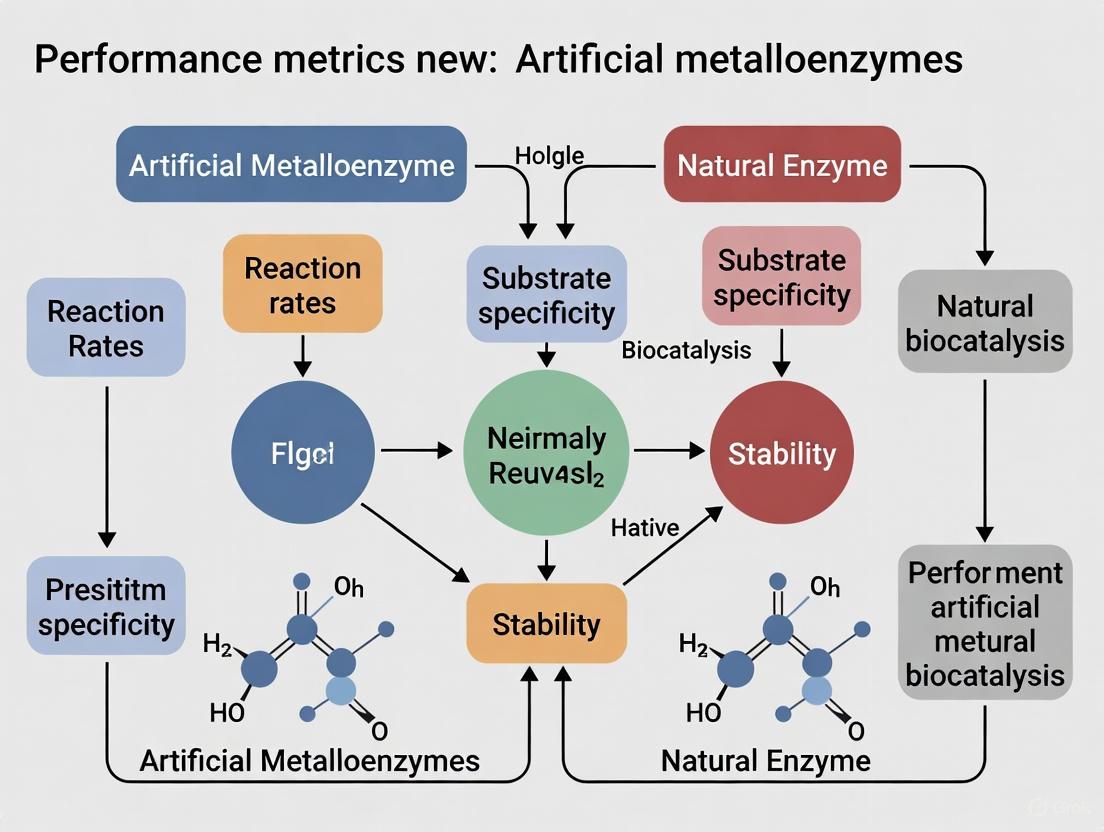
This article provides a comprehensive analysis of the performance metrics used to evaluate artificial metalloenzymes (ArMs) against their natural counterparts.
Benchmarking Biocatalysts: A Performance Analysis of Artificial Metalloenzymes vs. Natural Enzymes
Abstract
This article provides a comprehensive analysis of the performance metrics used to evaluate artificial metalloenzymes (ArMs) against their natural counterparts. Tailored for researchers, scientists, and drug development professionals, we explore the foundational principles of designing ArMs with metal clusters and abiotic cofactors to catalyze non-native reactions. The scope covers advanced methodologies for their creation, including computational design, directed evolution, and novel intracellular assembly strategies. We delve into the critical challenges of optimizing catalytic activity, turnover, and stability in complex biological environments. Finally, the article presents a rigorous comparative framework, using kinetic parameters and real-world application data, to validate the performance and potential of ArMs in expanding the toolbox of industrial biocatalysis and therapeutic development.
Artificial vs. Natural: Redefining the Catalytic Landscape
The field of biocatalysis is undergoing a transformative expansion, moving beyond the boundaries of natural enzymatic processes to embrace abiotic transformations engineered by human design. This evolution spans a functional spectrum from sophisticated natural electron transfer systems to entirely synthetic catalytic capabilities that nature never evolved. At the heart of this revolution lie artificial metalloenzymes (ArMs)—hybrid catalysts that combine the versatile reactivity of synthetic metal complexes with the precise, selective environment of protein scaffolds [1] [2]. These constructs represent a convergence of synthetic chemistry and biology, creating catalysts that perform reactions previously inaccessible to biological systems while operating under conditions that challenge natural enzymes.
The significance of ArMs extends across multiple domains of applied science. In pharmaceutical development, they enable novel synthetic routes to chiral building blocks and complex molecular architectures [3] [4]. In industrial biotechnology, they offer sustainable alternatives to traditional chemical processes through improved selectivity and reduced waste generation [5]. For environmental applications, ArMs show promise in pollutant degradation and biomass valorization [2]. The systematic comparison of these artificial systems against their natural counterparts provides critical insights into their current capabilities, limitations, and future potential, establishing performance benchmarks that guide ongoing research and development efforts across academia and industry.
Performance Metrics: Comparative Analysis
Quantitative evaluation of catalytic systems requires multiple performance dimensions, including efficiency, stability, selectivity, and operational range. The data reveal a complex landscape where natural enzymes and ArMs each demonstrate distinct advantages depending on the application context and performance criteria.
Table 1: Comparative Performance Metrics of Natural Enzymes and Artificial Metalloenzymes
| Performance Metric | Natural Metalloenzymes | Artificial Metalloenzymes (ArMs) |
|---|---|---|
| Catalytic Efficiency | High under physiological conditions (TON often >10⁵) [5] | Variable; advanced systems achieve TON ≥1,000 [1] |
| Reaction Scope | Limited to biologically relevant transformations | Expanded to abiotic reactions (e.g., olefin metathesis, C-H activation) [1] [4] |
| Temperature Stability | Moderate (typically <45°C) | Enhanced (de novo designs with T₅₀ >98°C) [1] |
| pH Tolerance | Narrow (usually pH 6-8) | Broad (e.g., operational from pH 2.6 to 8.0) [1] |
| Substrate Specificity | Highly specific through evolutionary optimization | Tunable via protein engineering and cofactor design [5] [3] |
| Stereoselectivity | Excellent for natural substrates | Engineerable; examples with enantiomeric ratios up to 81:19 demonstrated [4] |
| Solvent Compatibility | Limited to aqueous environments | Function in aqueous-organic mixtures and complex media [1] [6] |
Table 2: Quantitative Performance Data for Representative Artificial Metalloenzymes
| ArM System | Reaction Type | Turnover Number (TON) | Enantioselectivity | Stability Features |
|---|---|---|---|---|
| Artificial Metathase (dnTRP_18) | Ring-closing metathesis | ≥1,000 [1] | Not specified | T₅₀ >98°C; pH 2.6-8.0 [1] |
| Dual-Cofactor ArM (Streptavidin) | Michael addition | Improved via optimization [3] | Enantiodivergent synthesis achievable [3] | Retains independent site activity [3] |
| Atroposelective ArM | Ring-closing metathesis | Low yield [4] | 81:19 enantiomeric ratio [4] | Functions in aqueous environment [4] |
| Multicofactor MMBQ–NiRd | Hydrogen evolution | Electrocatalysis observed [6] | Not applicable | Stable in various solvents [6] |
The performance differentials illustrated in the tables highlight the complementary strengths of natural and artificial systems. Natural enzymes achieve remarkable catalytic proficiency for their evolved functions, with rate accelerations up to 10²⁰ compared to uncatalyzed reactions [5]. Their exquisite specificity and efficiency under physiological conditions remain unparalleled for natural biochemical transformations. However, this optimized performance comes with limitations in environmental robustness and reaction scope.
Artificial metalloenzymes address these limitations by offering substantially expanded operational ranges, particularly regarding temperature and pH stability. The de novo-designed scaffolds demonstrate exceptional thermal resilience, with one artificial metathase retaining structure at temperatures exceeding 98°C [1]. This stability advantage enables applications in industrial processes where elevated temperatures improve reaction kinetics or substrate solubility. Furthermore, ArMs successfully catalyze reactions absent from nature's repertoire, including olefin metathesis, C-H activation, and atroposelective transformations [1] [4]. While their catalytic efficiencies typically lag behind natural enzymes for comparable reactions, the most advanced ArM systems now achieve turnover numbers exceeding 1,000—sufficient for practical applications in chemical synthesis [1].
Experimental Protocols and Methodologies
De Novo Design and Directed Evolution of Artificial Metathases
The development of high-performance ArMs follows rigorous experimental workflows that integrate computational design with laboratory optimization. A representative protocol for creating an artificial metathase involves a multi-stage process combining structure-based design, genetic optimization, and activity screening [1].
Computational Design Phase: The process initiates with the selection of a hyper-stable de novo-designed protein scaffold, specifically closed alpha-helical toroidal repeat proteins (dnTRPs) [1]. Using the RifGen/RifDock software suite, researchers enumerate interacting amino acid rotamers around a customized Hoveyda-Grubbs catalyst (Ru1) containing a polar sulfamide group to guide docking. The docked structures undergo further sequence optimization via Rosetta FastDesign to refine hydrophobic contacts and stabilize key hydrogen-bonding residues. Design models are evaluated using computational metrics describing protein-cofactor interface quality and binding pocket pre-organization, typically yielding 20-30 candidate designs for experimental testing [1].
Expression and Purification: Selected dnTRP designs featuring N-terminal hexa-histidine tags and TEV protease cleavage sequences are expressed in E. coli. Following expression, solubility is assessed using SDS-PAGE, with successfully expressed designs purified via nickel-affinity chromatography. For the artificial metathase study, 17 of 21 initial designs expressed solubly and were purified for functional characterization [1].
Binding Affinity Optimization: Initial binding affinity between the protein scaffold and metal cofactor is quantified using tryptophan fluorescence-quenching assays. For the leading dnTRP_18 scaffold, this revealed a KD of 1.95 ± 0.31 μM at pH 4.2 [1]. To improve affinity, researchers systematically mutated positions F43 and F116 to tryptophan, increasing hydrophobicity around the binding site. This strategy yielded nearly tenfold higher affinity (KD = 0.16-0.26 μM), ensuring near-quantitative binding at low micromolar concentrations [1].
Directed Evolution in Cellular Environments: For engineering improved catalytic performance, researchers establish screening conditions using E. coli cell-free extracts at pH 4.2, supplemented with bis(glycinato)copper(II) [Cu(Gly)₂] to partially oxidize glutathione that would otherwise inhibit catalysis [1]. This approach enables directed evolution campaigns where ArM variants are screened for enhanced ring-closing metathesis activity, yielding variants with ≥12-fold improved catalytic performance compared to initial designs [1].
Multicofactor ArM Assembly and Characterization
The construction of multifunctional ArMs with synergistic cofactors requires specialized protocols for incorporating distinct metal centers while maintaining their individual functionalities [3] [6].
Scaffold Selection and Modification: Researchers employ robust protein scaffolds like nickel-substituted rubredoxin (NiRd) or streptavidin that tolerate multiple modifications without structural compromise [6]. For the MMBQ-NiRd system, a novel chelating thioether linker is synthesized to connect a synthetic bimetallic macrocyclic biquinazoline (MMBQ) complex to a surface cysteine residue on the rubredoxin scaffold [6]. This strategy enables covalent attachment while preserving the redox activity of both metal sites.
Orthogonal Cofactor Incorporation: In dual-cofactor systems for synergistic catalysis, researchers anchor a biotinylated nickel-based cofactor and a peptide cofactor within neighboring subunits of homotetrameric streptavidin [3]. The assembly utilizes high-throughput solid-phase peptide synthesis to optimize the peptide cofactor sequence, followed by chemo-genetic optimization of the protein scaffold to enhance cofactor cooperation and catalytic performance.
Functional Validation: Comprehensive characterization validates successful assembly and functionality. Native mass spectrometry and size-exclusion chromatography confirm 1:1 stoichiometry in cofactor-protein complexes [1]. X-ray absorption spectroscopy (XAS) verifies that metal center geometries remain unperturbed after incorporation into the artificial enzyme [6]. Electrochemical methods and kinetic assays demonstrate retained or enhanced catalytic activity at each site, with the switchability of the system confirmed using catalytically inert metal centers as controls [6].
Figure 1: Integrated Workflow for Artificial Metalloenzyme Development
The Scientist's Toolkit: Essential Research Reagents and Materials
Successful development and implementation of artificial metalloenzymes requires specialized reagents and materials that enable precise scaffolding, cofactor incorporation, and functional analysis. The following toolkit summarizes critical components referenced in recent advanced ArM studies.
Table 3: Essential Research Reagents for Artificial Metalloenzyme Development
| Reagent/Material | Specification/Function | Application Examples |
|---|---|---|
| Protein Scaffolds | de novo-designed dnTRP; streptavidin; rubredoxin variants [1] [3] [6] | Provides stable, engineerable environment for metal cofactors |
| Metal Cofactors | Hoveyda-Grubbs catalyst derivatives; biotinylated metal complexes; macrocyclic biquinazoline (MMBQ) complexes [1] [3] [6] | Imparts novel catalytic activity not found in nature |
| Binding Affinity Reagents | Tryptophan fluorescence-quenching assays; isothermal titration calorimetry; native mass spectrometry [1] | Quantifies protein-cofactor interaction strength |
| Cellular Screening Supplements | Bis(glycinato)copper(II) [Cu(Gly)₂] to mitigate glutathione interference [1] | Enables directed evolution in cellular environments |
| Linker Chemistry | Chelating thioether linkers; maleimide-functionalized connectors; bioorthogonal labeling handles [7] [6] | Enables covalent attachment of synthetic cofactors |
| Phase Separation Inducers | HaloTag-SNAPTag (HS) fusion proteins with crosslinkers [7] | Creates protective LLPS compartments for enhanced ArM stability |
The selection of appropriate protein scaffolds represents a critical decision point in ArM development. De novo-designed scaffolds offer advantages in stability and customizability, with dnTRPs demonstrating exceptional thermal resilience (T₅₀ >98°C) and tolerance to extreme pH conditions [1]. Alternatively, evolved scaffolds like streptavidin provide well-characterized binding pockets for biotinylated cofactors and straightforward genetic manipulation for directed evolution campaigns [3]. For multicofactor systems, rubredoxin variants offer robustness and the ability to retain fold and activity despite extensive modification [6].
Synthetic cofactor design must balance catalytic competency with compatibility to the biological environment. Successful implementations include Hoveyda-Grubbs catalysts modified with polar sulfamide groups to improve aqueous solubility and facilitate supramolecular interactions with the protein scaffold [1]. Similarly, biotinylated metal complexes leverage the exceptionally strong biotin-streptavidin interaction (KD ~10⁻¹⁴⁻¹⁵ M) for stable incorporation within the protein architecture [3] [4]. For advanced multicofactor systems, macrocyclic biquinazoline complexes provide defined metal binding sites with tunable redox properties that can be orthogonally attached to protein scaffolds [6].
Figure 2: Comparative Performance Attributes and Future Directions
The functional spectrum from natural electron transfer to abiotic synthesis continues to expand through innovations in artificial metalloenzyme design and engineering. Current research directions focus on developing systems with increased complexity and capability, particularly through multicofactor designs that enable synergistic and tandem catalysis [3] [6]. The integration of artificial intelligence and machine learning approaches promises to accelerate the optimization process, with recent demonstrations showing 14-fold higher hit rates in engineering campaigns compared to random mutagenesis [4]. Additionally, strategies for compartmentalization, such as liquid-liquid phase separation creating protective "artificial sanctuaries" within cells, address longstanding challenges in maintaining ArM stability and activity in biological environments [7].
As the field progresses, the distinction between natural and artificial catalytic systems continues to blur. The development of ArMs that function efficiently in living cells and integrate with natural metabolic pathways represents the next frontier, potentially enabling entirely new biochemical capabilities in engineered organisms [4]. Through continued refinement of design principles and engineering methodologies, artificial metalloenzymes are poised to substantially expand the toolbox available for chemical synthesis, biomedical applications, and sustainable technologies, ultimately bridging the functional spectrum between biology's elegant catalysts and chemistry's synthetic versatility.
The field of artificial metalloenzymes (ArMs) represents a pioneering frontier in biocatalysis, aiming to combine the versatile reactivity of synthetic transition-metal catalysts with the exceptional selectivity and biocompatibility of protein scaffolds. While natural metalloenzymes rely on a limited set of metal ions and cofactors to perform essential biological transformations, ArMs dramatically expand the catalytic repertoire by incorporating abiological metal complexes capable of catalyzing reactions entirely new to nature. This expansion is not merely a substitution of metals but a fundamental reimagining of enzymatic function, enabling synthetic chemists and biologists to create catalysts for reactions previously confined to small-molecule catalysis in organic solvents.
The strategic replacement of native cofactors with abiotic metal complexes allows researchers to exploit existing protein architecture—including sophisticated second coordination sphere effects, chiral environments, and substrate channeling—while introducing reactivities unknown in natural biological systems. This guide objectively compares the performance of various ArM designs against their natural counterparts and free cofactors, providing researchers with a structured analysis of quantitative performance metrics, detailed experimental protocols, and essential toolkits for developing next-generation biocatalysts.
Performance Comparison: Artificial vs. Natural Systems
The catalytic performance of ArMs has seen remarkable advancements, with some systems now rivaling the efficiency of natural enzymes. The tables below provide a comparative analysis of key performance metrics across different ArM classes and their natural counterparts.
Table 1: Performance Metrics of Representative Artificial Metalloenzymes
| ArM System | Reaction Catalyzed | Turnover Number (TON) | Turnover Frequency (TOF) | Enantiomeric Excess (ee) | Reference |
|---|---|---|---|---|---|
| Artificial Metathase (Ru1·dnTRP) | Ring-closing metathesis | ≥1,000 | Not specified | Not specified | [1] |
| Ir(Me)-CYP119-Max | C–H carbene insertion | 35,000 | 2550 h⁻¹ | 98% | [8] |
| Dual-cofactor ArM (Ni/Peptide) | Michael addition | Not specified | Not specified | High (enantiodivergent) | [3] |
| Fe(Me)-PIX-mOCR-Myo H93A, H64V | C–H carbene insertion | Not specified | 0.73 min⁻¹ | Not specified | [8] |
Table 2: Comparison of Kinetic Parameters Between Artificial and Natural Enzymes
| Enzyme System | kcat (min⁻¹) | KM (mM) | kcat/KM (min⁻¹ mM⁻¹) | Catalytic Efficiency Relative to WT |
|---|---|---|---|---|
| Ir(Me)-CYP119 WT | <0.23 | >5 | <0.046 | 1x |
| Ir(Me)-CYP119 C317G | 0.22 | 3.1 | 0.071 | ~1.5x |
| Ir(Me)-CYP119 T213G, C317G | 4.8 | 0.40 | 12 | ~260x |
| Ir(Me)-CYP119-Max (Quadruple Mutant) | 45.8 | 0.17 | 269 | >4,000x |
| Native P450-BM3 (with lauric acid) | Not specified | 0.298 | Not specified | Not specified |
| Median Natural Enzyme (Biosynthetic) | 312 | 0.13 | Not specified | Not specified |
Table 3: Cofactor Diversity in Artificial Metalloenzymes
| Metal Cofactor | Anchoring Strategy | Host Protein/Scaffold | Key Application | Reference |
|---|---|---|---|---|
| Hoveyda-Grubbs Ru catalyst (Ru1) | Supramolecular | de novo-designed TRP (dnTRP) | Olefin metathesis | [1] |
| Iridium-porphyrin (Ir(Me)-MPIX) | Metal substitution | CYP119 P450 enzyme | Carbene C–H insertion | [8] [9] |
| Nickel-based + peptide cofactors | Biotin-streptavidin | Streptavidin tetramer | Synergistic Michael addition | [3] |
| Nickel-substituted rubredoxin + MMBQ complex | Covalent attachment | Rubredoxin (Rd) | Multicofactor redox catalysis | [6] |
| Palladium(II) complexes | Peptide coordination | Miniprotein (brHis2) | Depropargylation in mammalian cells | [9] |
| Ruthenium photocatalyst | Hydrophobic intercalation | Riboflavin-binding protein | Photocatalysis | [9] |
The data reveal that through sophisticated engineering approaches, particularly directed evolution, ArMs can achieve catalytic efficiencies surpassing their wild-type counterparts by several orders of magnitude. The most optimized systems now demonstrate kinetic parameters (kcat of 45.8 min⁻¹ and KM of 0.17 mM for CYP119-Max) that approach those of natural enzymes involved in secondary metabolism [8]. Notably, the substrate binding affinity (KM) of evolved ArMs can exceed that of some natural P450 enzymes for their native substrates, highlighting the remarkable potential of protein engineering to create high-performance abiotic catalysts.
Experimental Protocols and Methodologies
De Novo Design and Directed Evolution of Artificial Metathases
The development of an artificial metathase for cytoplasmic olefin metathesis exemplifies a integrated approach combining computational design with laboratory evolution [1].
Key Experimental Steps:
Computational Scaffold Design: Using the RifGen/RifDock suite, researchers enumerated interacting amino acid rotamers around a tailored Hoveyda-Grubbs catalyst (Ru1) featuring a polar sulfamide group to guide docking. De novo-designed closed alpha-helical toroidal repeat proteins (dnTRPs) were selected as scaffolds for their hyper-stability and engineerability [1].
Protein Sequence Optimization: Docked structures containing the Ru1 cofactor and key interacting residues underwent further optimization with Rosetta FastDesign to refine hydrophobic contacts and stabilize H-bonding interactions, yielding 21 initial designs [1].
Expression and Purification: Designs featuring N-terminal hexa-histidine tags and TEV protease cleavage sequences were expressed in E. coli, with 17 of 21 showing soluble expression. Purification utilized nickel-affinity chromatography [1].
Initial Activity Screening: Purified dnTRPs were treated with Ru1 (0.05 equiv. versus protein) and diallylsulfonamide substrate (5,000 equiv. versus Ru1) at pH 4.2 for 18 hours. Turnover numbers (TONs) were calculated to identify lead candidates, with dnTRP_18 achieving a TON of 194±6 versus 40±4 for free Ru1 [1].
Affinity Optimization: Binding affinity was improved via point mutations (F43W, F116W) based on computational models, reducing KD from 1.95 μM to ≤0.26 μM as measured by tryptophan fluorescence quenching [1].
Directed Evolution in Cell-Free Extracts: A high-throughput screening system was established using E. coli cell-free extracts at pH 4.2, supplemented with 5 mM bis(glycinato)copper(II) to partially oxidize and mitigate glutathione interference. This platform enabled rapid screening of variants, resulting in a ≥12-fold optimization of catalytic performance from initial designs [1].
Creation of Multicofactor Artificial Metalloenzymes
The construction of dual-cofactor ArMs represents a significant advancement toward emulating the complexity of natural metalloenzymes that often employ multiple metal centers [3] [6].
Key Experimental Steps:
Scaffold and Cofactor Selection: The homotetrameric streptavidin was used as a scaffold in one approach, leveraging its structural stability and defined binding pockets [3]. In another system, nickel-substituted rubredoxin (NiRd) served as both a structural and functional scaffold [6].
Orthogonal Cofactor Incorporation: A biotinylated nickel-based cofactor and a peptide cofactor were simultaneously incorporated into neighboring subunits of streptavidin, creating a synergistic catalytic system for asymmetric Michael additions [3]. For the MMBQ-NiRd system, a synthetic bimetallic macrocyclic biquinazoline complex (MMBQ) was covalently attached to NiRd using a novel chelating thioether linker [6].
Linker Synthesis and Conjugation: The thioether linker (4-(2,5-dioxo-2,5-dihydro-1H-pyrrol-1-yl)-N,N-bis(2-(ethylthio)ethyl)butanamide) was synthesized through a multi-step organic procedure and characterized by NMR and mass spectrometry. Conjugation to rubredoxin involved reducing potential intermolecular disulfide bonds with dithiothreitol before linker attachment [6].
Activity Validation: Independent redox activity of each metal site was confirmed through electrochemical studies. The system's switchability was demonstrated using catalytically inert metal centers (ZnRd or CuMBQ) to selectively deactivate one site while maintaining the other's function [6].
Visualization of Workflows and Relationships
Artificial Metathase Development Workflow
Multicofactor ArM Assembly Strategy
The Scientist's Toolkit: Essential Research Reagents
Table 4: Key Research Reagents for Artificial Metalloenzyme Development
| Reagent/Category | Function/Application | Specific Examples |
|---|---|---|
| Protein Scaffolds | Provides chiral environment, secondary coordination sphere, and cofactor encapsulation | de novo-designed TRP (dnTRP) [1], CYP119 [8], Streptavidin [3], Rubredoxin [6] |
| Metal Cofactors | Imparts abiological reactivity and expands catalytic repertoire | Hoveyda-Grubbs Ru catalysts [1], Iridium-porphyrins [8], Nickel-biotin complexes [3], Macrocyclic biquinazoline complexes [6] |
| Anchoring Systems | Enables precise, stable incorporation of cofactors into protein scaffolds | Supramolecular interactions [1], Biotin-streptavidin technology [3], Covalent attachment via thioether linkers [6], Dative binding [9] |
| Computational Tools | Facilitates protein design, cofactor docking, and binding site optimization | RifGen/RifDock suite [1], Rosetta FastDesign [1] |
| Directed Evolution Platforms | Optimizes catalytic performance, selectivity, and compatibility | Cell-free extract screening [1], High-throughput solid-phase peptide synthesis [3] |
| Analytical & Characterization Methods | Validates ArM assembly, binding affinity, and catalytic performance | Tryptophan fluorescence quenching (binding affinity) [1], Native mass spectrometry [1], X-ray absorption spectroscopy [6] |
The strategic expansion beyond native metal ions and complexes through artificial metalloenzymes has fundamentally transformed the landscape of biocatalysis. Quantitative comparisons reveal that sophisticated ArM designs now achieve catalytic efficiencies rivaling those of natural enzymes while performing entirely new-to-nature transformations. The integration of computational design with directed evolution has proven particularly powerful, enabling the development of systems like the artificial metathase and engineered Ir-CYP119 that exhibit remarkable turnover numbers and stereoselectivities.
The emerging frontier of multicofactor ArMs promises to further narrow the performance gap with natural systems by enabling complex tandem catalysis and electron transfer networks reminiscent of native metalloenzyme complexes. As anchoring strategies become more sophisticated and screening methodologies more efficient, the deliberate incorporation of diverse abiotic cofactors into protein scaffolds will continue to push the boundaries of synthetic biology, pharmaceutical development, and green chemistry—effectively blurring the distinction between natural enzymatic prowess and human chemical ingenuity.
Artificial metalloenzymes (ArMs) represent a powerful hybrid approach to catalysis, combining the versatile reactivity of synthetic metal complexes with the superior selectivity and biocompatibility of protein scaffolds. The primary goal in designing ArMs is to create "best-of-both-worlds" catalysts that perform abiotic reactions—transformations not found in nature—with the efficiency and selectivity characteristic of natural enzymes [10]. This field has evolved significantly from early work involving transition metals adsorbed on silk fibers to sophisticated modern strategies leveraging recombinant protein expression, computational design, and directed evolution [10]. The drive to develop ArMs stems from the need for more sustainable catalytic processes and the limitation of natural enzymes, which predominantly rely on a restricted set of biologically relevant metals for a finite repertoire of reactions [11]. By incorporating abiotic metal cofactors, researchers can dramatically expand the reaction space accessible to biological systems, enabling transformations such as olefin metathesis, transfer hydrogenation, and asymmetric C–H activation that are rare or non-existent in natural metabolism [1] [10].
A critical challenge in ArM development lies in selecting suitable protein scaffolds that can bind abiotic cofactors while maintaining catalytic activity in complex biological media [1]. This comparison guide examines three fundamental design strategies—rational design, de novo scaffolds, and cofactor incorporation—by analyzing their performance against key metrics relevant to pharmaceutical and synthetic biology applications. We present quantitative experimental data to objectively compare these approaches and provide detailed methodologies for their implementation.
Performance Comparison of Design Strategies
The table below summarizes the performance characteristics of the three primary ArM design strategies, based on recent experimental findings.
Table 1: Performance Comparison of Artificial Metalloenzyme Design Strategies
| Design Strategy | Representative Example | Catalytic Performance (TON/TOF) | Enantioselectivity (% ee) | Stability & Biocompatibility | Key Advantages | Key Limitations |
|---|---|---|---|---|---|---|
| Rational Design | MIF-based tri-zinc hydrolase [12] | Not specified | Not specified | Maintains native tautomerase activity | Preserves protein's intrinsic functions; enables multifunctional catalysts | Limited to natural protein geometries; trade-off between native and new functions |
| De Novo Scaffolds | dnTRP-based metathase [1] | TON ≥1,000 (RCM) | Not applicable for RCM | Hyper-stable (T50 >98°C); functional in cytoplasm | Customizable binding pockets; exceptional thermal stability | Requires sophisticated computational design expertise |
| Cofactor Incorporation | Sav-based ATHase [10] | Not specified | 96% ee (S)-salsolidine | Moderate (inhibited by glutathione) | Rapid optimization; modular assembly | Cofactor decomposition in cellular environments |
| Dual-Cofactor Systems | Sav-based Michael addition [3] | Not specified | Enantiodivergent (both enantiomers accessible) | Not specified | Synergistic catalysis; enantiodivergent synthesis | Challenging assembly of multiple cofactors |
| Multicofactor Systems | MMBQ–NiRd hydrogenase mimic [6] | Not specified | Not applicable | Retains fold after extensive modification | Independent redox-active sites; potential for tandem catalysis | Complex characterization of multiple active sites |
Table 2: Quantitative Performance Metrics for Selected Artificial Metalloenzymes
| ArM System | Reaction Type | Turnover Number (TON) | Enantioselectivity | Binding Affinity (KD) | Reference |
|---|---|---|---|---|---|
| Ru1·dnTRP_R0 | Ring-closing metathesis | ≥1,000 | Not applicable | 0.16 ± 0.04 μM | [1] |
| Free Ru1 cofactor | Ring-closing metathesis | 40 ± 4 | Not applicable | Not applicable | [1] |
| Evolved Ru1·dnTRP | Ring-closing metathesis | ≥12-fold improvement over parent | Not applicable | Not specified | [1] |
| Cp*Ir·hCA II variant | Transfer hydrogenation | 59 TON at 4°C | 96% ee (S) | 50-fold increase vs. wild-type | [10] |
Experimental Protocols and Methodologies
De Novo Design of an Artificial Metathase
The creation of an artificial metathase for ring-closing metathesis (RCM) in E. coli cytoplasm exemplifies the integration of computational design and directed evolution [1].
Experimental Workflow:
- Cofactor Design: A Hoveyda–Grubbs catalyst derivative (Ru1) was synthesized with a polar sulfamide group to improve aqueous solubility and facilitate supramolecular interactions with the protein scaffold.
- Computational Scaffold Design: The RifGen/RifDock suite was used to enumerate interacting amino acid rotamers around Ru1, which were docked into cavities of de novo-designed closed alpha-helical toroidal repeat proteins (dnTRPs).
- Sequence Optimization: Docked structures underwent protein sequence optimization using Rosetta FastDesign to refine hydrophobic contacts and stabilize key hydrogen-bonding residues.
- Expression and Screening: 21 designed dnTRPs were expressed in E. coli, purified, and screened for RCM activity using diallylsulfonamide substrate (5,000 equivalents versus Ru1).
- Affinity Optimization: Binding affinity was enhanced nearly tenfold (KD = 0.16-0.26 μM) by mutating positions F43 and F116 to tryptophan to increase hydrophobicity around the Ru1 binding site.
- Directed Evolution: The ArM was optimized through iterative rounds of mutagenesis and screening in cell-free extracts at pH 4.2 supplemented with bis(glycinato)copper(II) to oxidize interfering glutathione.
This protocol yielded an artificial metathase with a turnover number ≥1,000, representing a ≥12-fold improvement over the free cofactor and a ≥25-fold improvement over earlier generations of the ArM [1].
Diagram 1: Artificial Metalloenzyme Design Workflow. This flowchart outlines the general experimental pathway for creating ArMs, highlighting key decision points at the scaffold selection and assembly strategy stages.
Construction of Dual-Cofactor ArMs for Synergistic Catalysis
The development of ArMs with multiple cofactors enables complex synergistic catalysis but presents significant assembly challenges [3] [6].
Experimental Protocol:
- Scaffold Selection: Homotetrameric streptavidin or nickel-substituted rubredoxin (NiRd) were used as scaffolds for their stability and well-characterized modification sites.
- Orthogonal Cofactor Incorporation:
- A biotinylated nickel-based cofactor was anchored to streptavidin via supramolecular interactions
- A peptide cofactor was incorporated into neighboring subunits
- Alternatively, a synthetic bimetallic macrocyclic biquinazoline (MMBQ) complex was attached to NiRd using a chelating thioether linker
- Activity Screening: The dual-cofactor ArMs were screened for Michael addition activity or electrochemical hydrogen evolution
- Chemo-genetic Optimization: High-throughput solid-phase peptide synthesis and mutagenesis were employed to optimize cooperative interactions between cofactors
- Mechanistic Studies: Crystallography and computational analysis revealed the molecular basis of synergistic mechanisms and the role of key mutations in stabilizing cofactor geometry
This approach yielded ArMs capable of enantiodivergent synthesis, producing both enantiomers of chiral building blocks through subtle modifications to the dual-cofactor system [3].
Compartmentalization Strategy for Enhanced Cellular Performance
The ArMAS-LLPS (Artificial Metalloenzymes in Artificial Sanctuaries through Liquid-Liquid Phase Separation) protocol addresses challenges of intracellular ArM stability and efficiency [7].
Methodological Details:
- Scaffold Engineering: A HaloTag-SNAPTag (HS) fusion protein was expressed in E. coli BL21(DE3) as the ArM scaffold
- Phase Separation Induction: LLPS was initiated using ligand-crosslinkers (TTA-Cl3 or Tris-Cl3) to form membraneless protein condensates
- Cofactor Anchoring: Site-specific, bioorthogonal conjugation with synthetic metal cofactors was performed using HaloTag alkyl chloride chemistry
- Characterization: Fluorescence recovery after photobleaching (FRAP) confirmed liquid-like properties of phase-separated compartments
- Activity Assessment: Catalytic performance was evaluated for abiotic transformations (e.g., olefin metathesis) both in vitro and in living cells
This compartmentalization strategy created protective catalytic microenvironments that significantly enhanced ArM stability and turnover number by shielding metal cofactors from cellular nucleophiles like glutathione [7].
Diagram 2: Cellular Compartmentalization Strategy for Enhanced ArM Performance. This workflow illustrates the ArMAS-LLPS approach for creating protective sanctuaries within cells that shield artificial metalloenzymes from deactivating cellular components.
The Scientist's Toolkit: Essential Research Reagents
Table 3: Key Research Reagents for Artificial Metalloenzyme Construction
| Reagent/Category | Function/Purpose | Specific Examples |
|---|---|---|
| Protein Scaffolds | Provides 3D environment for catalysis | Streptavidin, carbonic anhydrase, de novo dnTRP, LmrR, MIF cytokine [1] [3] [12] |
| Metal Cofactors | Imparts abiotic catalytic activity | Hoveyda-Grubbs Ru complexes, Cp*Ir piano-stool complexes, Ni-biquinazoline complexes, synthetic multinuclear Zn complexes [1] [13] [12] |
| Anchoring Systems | Links cofactor to protein scaffold | Biotin-streptavidin, arylsulfonamides, HaloTag alkyl chloride conjugation, dative His/Met/Cys binding [7] [10] |
| Computational Tools | Protein design and optimization | Rosetta, RifGen/RifDock, quantum-chemical calculations [1] [14] |
| Directed Evolution Components | ArM optimization | Cell-free extracts, bis(glycinato)copper(II) for glutathione oxidation, fluorescence-activated cell sorting [1] [11] |
| Phase Separation Inducers | Intracellular compartment formation | TTA-Cl3, Tris-Cl3, HaloTag-SNAPTag fusion proteins [7] |
The strategic design of artificial metalloenzymes has progressed remarkably, with each approach offering distinct advantages for specific applications. De novo-designed scaffolds provide the highest degree of customization and exceptional stability, making them ideal for creating ArMs with no natural counterparts. Rational design leveraging existing protein scaffolds benefits from well-characterized structures and can preserve valuable native functions. Cofactor incorporation strategies offer modularity and rapid optimization, particularly when using high-affinity anchoring systems like biotin-streptavidin.
The integration of these approaches represents the most promising future direction. Combining de novo design with directed evolution, or incorporating multiple cofactors within a single scaffold, will enable increasingly complex abiotic transformations in biological environments. Furthermore, compartmentalization strategies like ArMAS-LLPS address critical challenges of cofactor stability and activity in cellular environments, paving the way for therapeutic and synthetic biology applications [7]. As computational protein design continues to advance, the creation of bespoke ArMs for specific industrial and pharmaceutical applications will become increasingly feasible, potentially rivaling the performance of natural enzymes for both natural and abiotic reactions.
The field of enzyme engineering is increasingly focused on the development of artificial metalloenzymes (ArMs), which combine the versatility of synthetic metal catalysts with the precision of biological protein scaffolds. For researchers and drug development professionals, evaluating the success of these hybrid catalysts requires a standardized set of Key Performance Indicators (KPIs) that enable direct comparison with natural enzyme performance. Traditional homogeneous catalysts are typically assessed based on activity and selectivity, while natural enzymes are valued for their extraordinary efficiency and specificity under mild conditions. ArMs, which occupy a unique space between these domains, must be evaluated using a unified framework that captures their performance as both chemical catalysts and biological entities.
Natural enzymes represent a high-performance benchmark, possessing active sites that are highly evolved for fast rates and high selectivities [15]. For instance, natural enzymes like carbonic anhydrase can achieve remarkable turnover frequencies of 600,000 s⁻¹, while others such as tyrosinase operate at a more modest 1 s⁻¹ [16]. This broad performance spectrum complicates direct comparison and highlights the need for context-specific evaluation. The emerging class of ArMs aims to catalyze non-biological reactions—transformations inaccessible to natural enzymes—while maintaining the favorable characteristics of biocatalysts, including operation in water under mild conditions and high stereoselectivity [17]. This review establishes a standardized framework of KPIs centered on turnover, efficiency, and stability to objectively compare ArMs against natural enzymes and traditional catalysts, providing researchers with critical tools for assessing the state of the field.
Core Performance Metrics: Definitions and Significance
Turnover Frequency and Turnover Number
Turnover Frequency (TOF), typically expressed in units of h⁻¹ or s⁻¹, represents the number of substrate molecules converted to product per active site per unit time. This metric directly captures the intrinsic activity of a catalyst without consideration of concentration effects. In practical terms, TOF enables researchers to compare catalytic efficiency across different enzyme architectures and reaction conditions.
Turnover Number (TON) defines the total number of catalytic cycles that an enzyme completes before becoming deactivated. This cumulative metric reflects the operational lifespan of a catalyst and directly impacts process economics, particularly in industrial applications where catalyst replacement costs contribute significantly to overall production expenses. TON is a dimensionless value that represents the total productivity of a catalyst system over its functional lifetime [17].
The distinction between these metrics is crucial: TOF measures how fast a catalyst operates, while TON measures how long it remains active. Both must be considered when evaluating the practical utility of artificial metalloenzymes for specific applications.
Enantiomeric Excess (ee)
Enantiomeric Excess (ee) quantifies the stereoselectivity of a catalyst in producing one enantiomer over another in asymmetric synthesis. Expressed as a percentage, it measures the purity of the chiral product and is particularly valuable in pharmaceutical applications where stereochemistry directly influences biological activity. For ArMs, achieving high enantioselectivity demonstrates the effectiveness of the protein scaffold in creating a chiral environment around the synthetic metal cofactor [15] [18].
Thermodynamic Efficiency
Thermodynamic Efficiency describes how effectively enzymes utilize energy by operating near thermodynamic equilibrium. Natural selection appears to drive enzymes toward optimal utilization of cellular resources, with evolutionary pressure favoring enzymes that achieve high catalytic rates while minimizing energy dissipation [19]. This KPI is particularly relevant when assessing ArMs for metabolic engineering applications where energy efficiency directly impacts cellular viability and function.
Table 1: Key Performance Indicators for Artificial and Natural Enzymes
| KPI | Definition | Significance | Ideal Range (Natural Enzymes) |
|---|---|---|---|
| Turnover Frequency (TOF) | Substrate molecules converted per active site per unit time (h⁻¹ or s⁻¹) | Measures catalytic speed | 1–600,000 s⁻¹ [16] |
| Turnover Number (TON) | Total catalytic cycles before deactivation | Measures catalyst lifespan | Up to millions of cycles |
| Enantiomeric Excess (ee) | Percentage excess of one enantiomer over another in asymmetric synthesis | Quantifies stereoselectivity | >99% for pharmaceutical applications |
| Thermodynamic Efficiency | Ratio of catalytic rate to energy input | Measures energy utilization | Near thermodynamic optimum [19] |
Performance Benchmarking: Artificial vs. Natural Enzymes
The Performance Gap and Recent Breakthroughs
Historically, ArMs have suffered from a significant performance gap compared to natural enzymes. Early generations of ArMs typically demonstrated TOF values orders of magnitude lower than their natural counterparts, limiting their practical utility. This performance disparity stemmed from challenges in optimizing the second coordination sphere around the synthetic metal cofactor and achieving efficient substrate channeling within the protein scaffold.
A transformative advancement came from Hartwig and colleagues, who developed an iridium-containing ArM based on a cytochrome P450 scaffold (CYP119) that achieved unprecedented performance metrics [15] [18]. This artificial metalloenzyme demonstrated a TOF of 2,550 h⁻¹ for carbene insertion into C–H bonds—a non-biological reaction—with enantioselectivity up to 98% ee and a TON of 35,000 [15]. While this TOF remains below those of the most efficient natural enzymes, it represents a 1,000-fold improvement over previous ArMs and begins to approach the catalytic efficiency of many natural biological catalysts [18].
Table 2: Performance Comparison of Representative Enzymes
| Enzyme Type | Catalyst | Reaction | TOF | TON | ee (%) |
|---|---|---|---|---|---|
| Natural Enzyme | Carbonic anhydrase | CO₂ hydration | 600,000 s⁻¹ | N/R | N/A [16] |
| Natural Enzyme | Catalase | Hydrogen peroxide decomposition | 93,000 s⁻¹ | N/R | N/A [16] |
| Natural Enzyme | Chymotrypsin | Peptide hydrolysis | 100 s⁻¹ | N/R | N/A [16] |
| Artificial Metalloenzyme | Ir(Me)-PIX CYP119-Max | Carbene C–H insertion | 2,550 h⁻¹ | 35,000 | 98 [15] [18] |
| Artificial Metalloenzyme | βLG-Ru complex | Transfer hydrogenation | N/R | 44 | 82 [17] |
Stability Considerations
Stability represents a critical KPI for both natural and artificial enzymes, particularly for industrial applications. Thermal stability, pH tolerance, and operational longevity under process conditions directly influence implementation feasibility and cost-effectiveness. The Hartwig group addressed stability concerns by selecting CYP119—a thermophilic cytochrome P450 enzyme—as their scaffold, thereby ensuring that engineered variants would maintain structural integrity under demanding reaction conditions [18]. This strategic choice highlights the importance of considering stability early in the ArM design process.
Experimental Protocols for KPI Determination
Standardized Enzyme Assays
Quantifying enzyme KPIs requires rigorous experimental protocols that generate reproducible, comparable data. Enzyme assays are laboratory procedures that measure reaction rates by tracking changes in substrate or product concentration over time [20].
Spectrophotometric assays monitor absorbance changes as reactants convert to products, allowing continuous rate measurement. For metalloenzymes with colored cofactors, this method is particularly straightforward. Radiometric assays incorporate radioactivity measurements for extremely sensitive detection of product formation, while mass spectrometric approaches track stable isotope incorporation or release [20].
For the benchmark Ir-PIX CYP119 system, researchers employed directed evolution—an iterative process of mutagenesis and selection—to optimize performance [15] [18]. This process involved:
- Library Creation: Generating CYP119 variants via mutagenesis
- Metal Substitution: Replacing native iron with iridium porphyrin
- High-Throughput Screening: Identifying improved variants based on activity and selectivity
- Characterization: Precisely measuring TOF, TON, and ee for leading candidates
Progress-Curve Analysis
For accurate kinetic parameter determination, researchers typically measure the initial rate of reaction (v₀) across a range of substrate concentrations. The resulting data is fit to the Michaelis-Menten equation to determine Vmax and KM, from which kcat (equivalent to TOF) can be derived [20]:
[ v0 = \frac{V{\max} [S]}{K_M + [S]} ]
where ( V{\max} = k{cat} [E]_{tot} )
For reactions where the initial rate is too fast to measure accurately, progress-curve analysis can be employed, which fits the complete reaction time course to a nonlinear rate equation [20].
Diagram 1: Directed Evolution Workflow for ArM Development. This optimization cycle illustrates the iterative process of creating high-performance artificial metalloenzymes, with KPI measurement as the critical evaluation step.
The Scientist's Toolkit: Essential Research Reagents and Methods
Successful development and evaluation of artificial metalloenzymes requires specialized reagents and methodologies. The following toolkit outlines critical components for researchers in this field.
Table 3: Essential Research Reagent Solutions for ArM Development
| Reagent/Method | Function | Specific Examples | Application Notes |
|---|---|---|---|
| Protein Scaffolds | Provides secondary coordination sphere and chiral environment | CYP119 (thermostable), Streptavidin, β-lactoglobulin [18] [17] | Thermostable scaffolds enhance operational stability |
| Metal Cofactors | Catalytic center for non-biological transformations | Iridium porphyrin, Ruthenium complexes, Iron substitutes [15] [21] | Cofactor replacement enables new reactivities |
| Anchoring Methods | Incorporates metal cofactor into protein scaffold | Covalent anchoring, Supramolecular interactions, Cofactor replacement, Dative anchoring [17] | Method selection impacts cofactor stability and flexibility |
| Directed Evolution Platforms | Optimizes ArM performance through iterative selection | Error-prone PCR, Site-saturation mutagenesis, Gene shuffling [18] | Requires high-throughput screening assays |
| Analytical Techniques | Quantifies KPI values | HPLC for ee determination, Spectrophotometric assays for TOF, MS monitoring of isotope labeling [20] | Multiple methods often needed for comprehensive characterization |
Architectural Considerations in ArM Design
The architecture of artificial metalloenzymes significantly influences their performance metrics. Two primary design strategies dominate the field: directed evolution of existing metalloenzymes and protein refolding with integrated metal complexes.
The directed evolution approach, exemplified by the Ir-PIX CYP119 system, begins with a natural metalloenzyme scaffold and replaces the native metal cofactor before undertaking iterative optimization of the protein structure [18]. This method leverages nature's evolutionary optimization of the protein fold while introducing novel reactivity through metal substitution.
An alternative approach involves complete protein refolding in the presence of metal complexes. This method, recently advanced by Li and colleagues, denatures the protein to expose reactive sites throughout the structure—not just on the surface—then introduces metal complexes before refolding the protein into its functional conformation [21]. This strategy allows more extensive integration of the synthetic catalyst within the protein matrix, potentially creating better-defined active sites and enhancing stability.
Diagram 2: ArM Architecture Showing Critical Interactions. This schematic illustrates how the protein scaffold creates a specialized environment around the synthetic metal cofactor, influencing substrate binding, transition state stabilization, and product release—all factors that directly impact KPIs.
The standardized KPIs outlined in this review—turnover frequency, turnover number, enantiomeric excess, and thermodynamic efficiency—provide a critical framework for evaluating advances in artificial metalloenzyme research. While significant progress has been made in developing ArMs that approach the catalytic efficiency of natural enzymes, performance gaps remain, particularly in matching the extraordinary TOF values of enzymes like carbonic anhydrase.
Future directions in the field will likely focus on several key areas: (1) developing more sophisticated computational models to predict ArM performance before experimental implementation [19], (2) creating novel anchoring strategies that better integrate metal cofactors into protein scaffolds, and (3) expanding the reaction scope of ArMs to include more challenging chemical transformations. Additionally, as applications move toward intracellular and in vivo catalysis [17], new KPIs related to biocompatibility and cellular functionality may need to be incorporated into the evaluation framework.
For researchers and drug development professionals, these performance metrics provide not only assessment tools but also design targets for the next generation of artificial metalloenzymes. By systematically measuring, reporting, and optimizing these KPIs, the scientific community can accelerate the development of hybrid catalysts that combine the best features of chemical and biological catalysis, ultimately enabling sustainable manufacturing processes and novel therapeutic strategies.
Engineering Next-Generation Biocatalysts: Design and Assembly
Computational and De Novo Design of Protein Scaffolds and Binding Pockets
The field of computational protein design has been revolutionized by the advent of sophisticated artificial intelligence (AI) and machine learning (ML) tools. These technologies enable researchers to move beyond the constraints of naturally occurring protein structures and create entirely novel de novo proteins with tailored functions. A primary focus of this field is the design of specific protein scaffolds and binding pockets, which are critical for applications ranging from therapeutic antibody development to the creation of artificial metalloenzymes (ArMs). These designed proteins can be engineered for superior properties, such as extreme stability, the ability to bind non-native metal cofactors, or the precise targeting of disease-relevant epitopes [22] [23] [1]. This guide objectively compares the performance of leading computational design strategies, providing a detailed analysis of their methodologies, experimental validations, and key performance metrics.
Comparative Analysis of Design Strategies and Performance
The following section compares three dominant computational strategies for designing protein scaffolds and binding pockets: RFdiffusion-based antibody design, hydrogen-bond optimization for stability, and de novo design of artificial metalloenzymes.
The table below summarizes the core methodologies, experimental validation techniques, and key performance outcomes for each design strategy.
| Design Strategy | Core Methodology | Experimental Validation | Key Performance Metrics & Outcomes |
|---|---|---|---|
| RFdiffusion for Antibody Design [22] | - Fine-tuned RFdiffusion network conditioned on a fixed antibody framework.- ProteinMPNN for CDR loop sequence design.- Fine-tuned RoseTTAFold2 for structure validation and filtering. | - Yeast surface display screening.- Surface plasmon resonance (SPR) for affinity measurement.- Cryo-electron microscopy (cryo-EM) for structural confirmation. | - Generated epitope-specific VHHs and scFvs.- Initial designs: tens to hundreds of nanomolar Kd.- After affinity maturation: single-digit nanomolar Kd.- Cryo-EM confirmed atomic-level accuracy of designed CDR loops. |
| Hydrogen-Bond Optimization for Superstable Proteins [23] | - AI-guided structure/sequence design to maximize H-bonds in β-sheets.- All-atom molecular dynamics (MD) simulations for in silico validation. | - Single-molecule force spectroscopy (e.g., AFM).- Thermal stability assays. | - Achieved unfolding forces >1,000 pN (~400% stronger than natural titin).- Retained structural integrity at 150 °C.- Formation of thermally stable hydrogels. |
| De Novo Design of Artificial Metathase [1] | - RifGen/RifDock suite for docking a synthetic cofactor into de novo-designed helical toroidal repeat proteins (dnTRPs).- Rosetta FastDesign for sequence optimization. | - Catalytic activity screening in cell-free extracts and E. coli cytoplasm.- Tryptophan fluorescence quenching for binding affinity (KD).- Directed evolution for optimization. | - High cofactor affinity: KD ≤ 0.2 μM.- High turnover number: TON ≥ 1,000 for ring-closing metathesis.- Functional catalysis in complex cellular environments (cytoplasm of E. coli). |
Detailed Experimental Protocols for Key Results
This protocol outlines the creation of an artificial metalloenzyme for olefin metathesis, a non-biological reaction, within a living cell.
A. Cofactor and Scaffold Design:
- A Hoveyda-Grubbs olefin metathesis catalyst was chemically synthesized with a polar sulfamide group to guide computational design and improve aqueous solubility.
- The RifGen/RifDock software suite was used to enumerate amino acid rotamers around the cofactor and dock it into the cavities of hyper-stable, de novo-designed closed alpha-helical toroidal repeat proteins (dnTRPs).
- Rosetta FastDesign was used to optimize the protein sequence, refining hydrophobic contacts and stabilizing key hydrogen-bonding residues with the cofactor.
B. Expression, Purification, and Initial Screening:
- 21 designed dnTRP genes were expressed in E. coli. 17 were successfully purified via nickel-affinity chromatography.
- Purified proteins were complexed with the ruthenium cofactor (Ru1) to form artificial metathases (Ru1·dnTRP).
- Initial catalytic performance was screened by measuring the Turnover Number (TON) for the ring-closing metathesis of a diallylsulfonamide substrate.
C. Binding Affinity Measurement:
- Binding affinity (KD) between the lead scaffold (dnTRP_18) and Ru1 was determined using a tryptophan fluorescence-quenching assay.
- To improve affinity, residues F43 and F116 were mutated to tryptophan, resulting in a tenfold higher affinity (dnTRP_R0, KD ~0.2 µM).
D. Directed Evolution in Cellular Environments:
- A high-throughput screening system was established using E. coli cell-free extracts (CFE) at pH 4.2, supplemented with bis(glycinato)copper(II) to mitigate catalyst deactivation by glutathione.
- Libraries of dnTRP_R0 variants were created and screened for enhanced TON in CFE.
- This process yielded evolved artificial metathase variants with a ≥12-fold improvement in catalytic performance, demonstrating high activity in the complex cytoplasm of E. coli.
This protocol describes the de novo generation of antibodies targeting specific epitopes, without reliance on immunization or existing antibody sequences.
A. Model Fine-Tuning and Conditioning:
- The RFdiffusion network was fine-tuned on a dataset of antibody-antigen complex structures.
- During inference, the structure and sequence of the antibody's framework region were provided as a fixed conditioning input via the model's template track. A one-hot encoded "hotspot" feature specified the target epitope.
- The model then generated novel structures for the Complementarity-Determining Region (CDR) loops and sampled the rigid-body docking orientation of the antibody to the target.
B. Sequence Design and In Silico Filtering:
- ProteinMPNN was used to design sequences for the generated CDR loop backbones.
- A separate, fine-tuned RoseTTAFold2 network was used to re-predict the structure of the designed antibody-antigen complexes. Designs where the prediction closely matched the original model ("self-consistent") were selected for experimental testing.
C. Experimental Screening and Validation:
- Designed sequences for single-domain antibodies (VHHs) and single-chain variable fragments (scFvs) were synthesized and screened for binding using yeast surface display.
- Binding hits were characterized using Surface Plasmon Resonance (SPR) to determine affinity (Kd).
- The binding pose and atomic accuracy of the designs were confirmed using cryo-Electron Microscopy (cryo-EM).
The workflow for this protocol is illustrated below.
The Scientist's Toolkit: Key Research Reagents and Solutions
The following table details essential computational tools and experimental reagents that form the foundation of modern computational protein design pipelines.
| Tool / Reagent | Function in Protein Design | Relevance in Featured Studies |
|---|---|---|
| RFdiffusion [22] | Generative AI model for creating novel protein backbone structures and protein-protein interfaces. | Fine-tuned for de novo design of antibody CDR loops and their docking to target antigens. |
| ProteinMPNN [22] [24] | Machine learning-based protein sequence design tool that works with given protein backbones. | Used to design sequences for computationally generated CDR loops and nanoparticle interfaces. |
| AlphaFold2 / RoseTTAFold [22] [24] | Highly accurate protein structure prediction tools. | Used for in silico validation of designs (self-consistency) and to predict structures of oligomeric building blocks. |
| Rosetta [22] [1] | Suite of algorithms for biomolecular structure prediction, design, and refinement. | Used for protein-cofactor docking (RifDock), sequence design (FastDesign), and energy calculations (ddG). |
| De Novo-Designed Scaffolds (dnTRPs) [1] | Hyper-stable, de novo-designed protein scaffolds with engineered binding pockets. | Served as a tunable host for a synthetic ruthenium cofactor in the creation of an artificial metathase. |
| Therapeutic Antibody Frameworks [22] | Stable, humanized antibody framework sequences (e.g., h-NbBcII10FGLA for VHHs). | Provided as a fixed conditioning input to RFdiffusion, ensuring designs have desirable biophysical properties. |
| Directed Evolution Platforms [1] | Laboratory techniques for engineering improved proteins through iterative rounds of mutagenesis and screening. | Used to optimize the catalytic performance (TON) of the artificial metathase in cell-like conditions. |
The comparative data presented in this guide underscores a pivotal trend in the broader thesis of performance metrics for artificial metalloenzymes (ArMs) versus natural enzymes. While natural enzymes set a high benchmark for catalytic efficiency and specificity, computational design now enables the creation of de novo protein scaffolds that excel in areas where natural proteins may be limited.
The featured artificial metathase [1] highlights this balance. It achieves a remarkable milestone by performing an abiological reaction (ring-closing metathesis) with high efficiency (TON ≥ 1,000) within the demanding environment of a living cell. While its TON may not yet rival those of the most efficient natural enzymes for their native reactions, its value lies in executing a reaction outside the repertoire of natural biology with robust performance. Furthermore, computationally designed proteins are demonstrating superior mechanical stability [23] and atomic-level targeting accuracy [22], properties that are often difficult to engineer into natural scaffolds. The integration of powerful computational design with directed evolution is creating a powerful feedback loop, pushing the boundaries of what is possible with protein-based catalysts and opening new frontiers in synthetic biology and drug development.
The field of artificial metalloenzymes (ArMs) has emerged as a disruptive approach to expand the catalytic repertoire of biocatalysis. These hybrid catalysts combine the versatility of synthetic metal cofactors with the exceptional selectivity and evolvability of protein scaffolds. A critical determinant in the successful design of ArMs is the anchoring strategy used to incorporate an abiotic metal cofactor within a host protein. The choice of anchoring mechanism—covalent, dative, or supramolecular—directly influences the stability, catalytic performance, and practical applicability of the resulting ArM. This guide provides an objective comparison of these three fundamental anchoring strategies, framing their performance within the broader context of developing robust alternatives to natural enzymes for research and drug development applications. Unlike natural enzymes, which rely on evolutionarily optimized native metal binding pockets, ArMs require deliberate engineering to create precisely defined microenvironments for abiotic reactions, making the anchoring strategy a cornerstone of ArM development [5].
Comparative Analysis of Anchoring Strategies
The selection of an anchoring strategy dictates the rigidity of cofactor placement, the strength of the protein-cofactor linkage, and the susceptibility to environmental factors. The table below provides a systematic performance comparison of covalent, dative, and supramolecular anchoring strategies, synthesizing experimental data from recent ArM development studies.
Table 1: Performance Comparison of Cofactor Anchoring Strategies in Artificial Metalloenzymes
| Performance Metric | Covalent Anchoring | Dative Anchoring | Supramolecular Anchoring |
|---|---|---|---|
| Binding Affinity (KD) | Very High (Irreversible) [25] | Variable (Moderate to High) [1] | Moderate (e.g., 0.16 - 1.95 µM) [1] |
| Experimental Turnover Number (TON) | >350 (Imine Reduction) [25] | Not Explicitly Reported | ≥1,000 (Olefin Metathesis) [1] |
| Stereoselectivity (enantiomeric excess) | Up to 97% ee [25] | Information Missing | Information Missing |
| Rigidity of Cofactor Placement | High [25] | Moderate [26] | Tunable [1] |
| Stability in Complex Media | High [25] | Solvent-Polarity Dependent [26] | Moderate [1] |
| Susceptibility to Displacement | Very Low [25] | Moderate [26] | Moderate to High [1] |
| Key Advantage | Firm localization for precise stereocontrol [25] | Potential for bond stabilization in polar environments [26] | Reversibility and ease of assembly [1] |
| Primary Limitation | Requires specific, often non-native, functional groups on protein and cofactor [25] | Bond strength and length can be sensitive to the environment [26] | Weaker binding can limit performance in crowded cellular environments [1] |
Experimental Protocols and Workflows
A detailed understanding of the experimental procedures for implementing each anchoring strategy is crucial for researchers aiming to develop or utilize ArMs. The protocols below outline key methodologies cited in recent literature.
Protocol for Dual Covalent Anchoring in hCAII
This protocol, adapted from the development of an artificial transfer hydrogenase, details the creation of a dually anchored iridium cofactor within human carbonic anhydrase II (hCAII), leading to high enantioselectivity [25].
Protein Design and Expression:
- Site-Directed Mutagenesis: Introduce a cysteine residue at a strategic position in the vestibule of hCAII (e.g., E69C or I91C) using standard molecular biology techniques. The goal is to position the cysteine for a nucleophilic attack on the synthetic cofactor.
- Protein Expression and Purification: Express the hCAII variant in E. coli and purify using affinity chromatography (e.g., nickel-affinity if a His-tag is present) followed by buffer exchange.
Cofactor Synthesis:
- Synthesize the arylsulfonamide-iridium picolinamide cofactor (e.g., Cofactor 2) in a two-step procedure from commercial starting materials. The cofactor must contain an arylsulfonamide for primary anchoring to the enzyme's zinc ion and an electrophilic moiety (e.g., a nitro group on the picolinamide) for the covalent reaction with the engineered cysteine [25].
ArM Assembly via Dual Anchoring:
- Incubation: Incubate the purified hCAII variant (0.1 mM) with the synthetic cofactor (0.1 mM) for 6-16 hours in carbonate buffer (50 mM, pH 9.4). The high pH facilitates the nucleophilic aromatic substitution (SNAr) reaction between the cysteine thiolate and the electrophilic group on the cofactor.
- Purification: Remove unbound cofactor and exchange the buffer (e.g., to 25 mM Tris-HCl, pH 7.4) using ultrafiltration.
Validation and Characterization:
- Crystallography: Confirm the dual anchoring (arylsulfonamide-Zn²⁺ and cysteine-picolinamide linkage) via X-ray crystallography.
- Catalytic Assay: Assess ArM performance by adding substrate (e.g., 2 mM harmaline) and a hydride source (1 M sodium formate) in MOPS buffer (pH 7.4). Analyze conversion and enantiomeric excess (ee) using chiral HPLC or GC.
Protocol for Supramolecular Anchoring in De Novo Proteins
This protocol describes the creation of an artificial metathase by incorporating a Hoveyda-Grubbs catalyst into a de novo-designed protein via supramolecular interactions, achieving high turnover in cytoplasmic conditions [1].
Cofactor and Protein Design:
- Cofactor Design (
Ru1): Design a Hoveyda-Grubbs catalyst derivative with a polar sulfamide group to guide supramolecular interactions (e.g., hydrogen bonding) with the host protein and improve aqueous solubility. - Computational Protein Design: Use computational suites (e.g., RifGen/RifDock, Rosetta FastDesign) to design a hyper-stable de novo protein scaffold (e.g., dnTRP) with a pocket complementary to the
Ru1cofactor. The design should feature hydrophobic patches to interact with the cofactor's mesityl groups and residues for H-bonding with the sulfamide group [1].
- Cofactor Design (
Protein Expression and Purification:
- Express the designed dnTRP proteins in E. coli and purify from the soluble fraction using nickel-affinity chromatography.
ArM Assembly and Screening:
- Initial Screening: Assemble ArMs by treating purified dnTRPs with a sub-stoichiometric amount of
Ru1(e.g., 0.05 equivalents). Screen for catalytic activity in a ring-closing metathesis (RCM) reaction using a model substrate (e.g., diallylsulfonamide, 5000 equiv. versus Ru1) at pH 4.2. - Affinity Optimization: For the best-performing design, improve binding affinity by mutating residues near the binding site to tryptophan (e.g., F43W, F116W). Quantify the dissociation constant (KD) using a tryptophan fluorescence-quenching assay.
- Initial Screening: Assemble ArMs by treating purified dnTRPs with a sub-stoichiometric amount of
Whole-Cell Biocatalysis:
- Directed Evolution: Create a library of the optimized dnTRP variant and use directed evolution in E. coli cell-free extracts (CFE) supplemented with additives like Cu(Gly)2 to mitigate glutathione interference. Screen for variants with enhanced TON.
- In-cellulo Performance: Express the evolved ArM in the cytoplasm of E. coli and assess its metathesis activity in this complex biological environment.
Key Considerations for Dative Bond Anchoring
While specific protocols for dative anchoring were less detailed in the results, its unique properties are critical for ArM design. Dative bonds, where both electrons in a covalent bond come from a single donor atom (e.g., N, O, P in a ligand) to a metal acceptor, are a common feature in natural metalloenzymes and many ArMs [27] [28]. A key consideration is the documented sensitivity of dative bonds to solvent polarity. Studies on model systems like Me3N-BH3 have shown that the stability of the dative bond can increase significantly with increasing solvent polarity, as the bond's combined ionic-covalent character is stabilized in polar environments [26]. This must be factored into the experimental design, particularly for reactions in aqueous media or mixed solvents. The bond length and strength can be modulated by the environment, which can be either a tuning parameter or a source of instability if not controlled [26].
Workflow Visualization
The development of high-performance ArMs, regardless of the anchoring strategy, typically follows an iterative design-evolution cycle. The diagram below illustrates this generalized workflow, integrating computational and experimental stages.
ArM Design and Evolution Workflow
The Scientist's Toolkit: Essential Research Reagents
The table below lists key reagents and materials essential for the development and analysis of ArMs using the different anchoring strategies.
Table 2: Essential Reagents for Artificial Metalloenzyme Research
| Reagent/Material | Function in ArM Research | Example Use Case |
|---|---|---|
| De Novo Designed Proteins (e.g., dnTRP) | Hyper-stable, tunable protein scaffolds with pre-defined binding pockets. | Supramolecular anchoring of Hoveyda-Grubbs catalysts for metathesis [1]. |
| Engineered hCAII Variants | Robust host protein with a deep, hydrophobic vestibule and strong native affinity for arylsulfonamides. | Dual covalent anchoring of iridium pianostool complexes for transfer hydrogenation [25]. |
| Hoveyda-Grubbs Catalyst Derivative (Ru1) | Synthetic metathesis cofactor engineered with polar groups for supramolecular interactions. | Assembly of artificial metathases for catalysis in cellular cytoplasm [1]. |
| Iridium Cp* Picolinamide Cofactor | Synthetic cofactor for transfer hydrogenation reactions, can be modified with anchoring groups. | Creating artificial transfer hydrogenases via covalent or supramolecular strategies [25]. |
| Cell-Free Extract (CFE) Screening System | Complex but controlled environment mimicking intracellular conditions for activity screening. | Directed evolution of ArMs to improve TON and biocompatibility [1]. |
| Cu(Gly)₂ (Bis(glycinato)copper(II)) | Additive used in screening assays to mitigate interference from cellular metabolites like glutathione. | Enabling high-throughput screening of ArM activity in cell lysates [1]. |
Intracellular Assembly and Sanctuary Formation via Liquid-Liquid Phase Separation
The organization of cellular contents has traditionally been attributed to membrane-bound organelles such as the nucleus and mitochondria. However, cell biology is undergoing a revolution with the recognition that cells also utilize membrane-less compartments, known as biomolecular condensates, which form through a process called liquid-liquid phase separation (LLPS) [29]. This process allows a homogeneous solution of biomolecules to spontaneously separate into two distinct liquid phases: a dense phase (the condensate) and a dilute phase [29]. These condensates facilitate the organization of specific biochemical reactions by concentrating proteins and nucleic acids into dynamic, liquid-like cellular sanctuaries without the need for surrounding membranes [30] [29].
The formation and regulation of these condensates are driven by multivalent interactions between macromolecules. Proteins that undergo LLPS often contain modular domains or intrinsically disordered regions (IDRs) that feature multiple interaction sites, or "stickers," separated by "spacers" [29]. This "stickers-and-spacers" model enables the formation of complex, dynamic networks that concentrate molecules to drive crucial cellular processes, including immune signaling, stress response, and transcriptional control [30] [31].
Table 1: Key Characteristics of Biomolecular Condensates Formed via LLPS
| Property | Description | Functional Significance |
|---|---|---|
| Liquid-like Behavior | Round droplets that undergo fusion and fission [30] | Enables dynamic reorganization and material exchange [30] |
| Material Exchange | Fluorescence Recovery After Photobleaching (FRAP) [30] [29] | Indicates fluidity and dynamic exchange with the surrounding environment [30] |
| Surface Tension | Collective intermolecular forces minimizing surface area [29] | Promotes spherical droplet shapes [29] |
| Multivalency | Multiple interaction sites on a single molecule [29] | Drives the assembly of the condensate network [29] |
Experimental Methods for Studying LLPS
Investigating liquid-liquid phase separation requires a combination of in vitro, in vivo, and computational techniques to confirm the formation of liquid-like condensates and characterize their biophysical properties.
Core Experimental Techniques
Several well-established methods form the foundation of LLPS research.
Fluorescence Recovery After Photobleaching (FRAP) is a cornerstone technique for assessing condensate fluidity. In FRAP, a specific region within a condensate is photobleached with a high-intensity laser, eliminating the fluorescence. Researchers then monitor the rate at which fluorescent molecules from outside the bleached area diffuse back into it [30] [29]. A rapid recovery of fluorescence indicates high mobility and liquid-like character, whereas slow or minimal recovery suggests a more solid or gel-like state [30]. It is important to note that different components within a single droplet (e.g., proteins vs. RNAs) can exhibit vastly different mobilities [29].
Pendant Drop Tensiometry is used to measure the surface tension of condensates, a defining liquid property. This method involves analyzing the shape of a droplet hanging from a needle; the droplet's profile is determined by the balance between surface tension (which promotes a spherical shape) and gravitational forces (which cause stretching) [32]. By analyzing the droplet's shape, the surface tension can be quantitatively calculated [32].
Droplet Fusion Assays provide indirect measurement of surface tension by observing the kinetics of coalescence. When two droplets fuse, they rapidly flow into one another to form a single, spherical droplet. The timescale of this relaxation process is related to the ratio of the droplet's viscosity to its surface tension (inverse capillary velocity). By filming fusion events and measuring the relaxation time for droplets of different sizes, researchers can determine this ratio [29].
Advanced and Emerging Techniques
Recent technological advances have enabled more sophisticated analysis of LLPS in complex environments.
Single-Particle Tracking (SPT) using probes like Quantum Dots (QDs) allows researchers to spatiotemporally quantify diffusion dynamics within living cells [31]. This method involves loading QDs into the cell cytosol and tracking their individual trajectories. By calculating parameters like mean square displacement (MSD), researchers can determine diffusion coefficients and motion types [31]. This technique has revealed that intracellular diffusion and active transport are significantly reduced following LLPS, due to increased molecular crowding and spatial heterogeneity caused by the formation of condensates [31].
Right Angle Prism Imaging is a specialized microscopy technique that provides accurate profiling of condensates resting on a surface. It avoids imaging artifacts along the optical axis, allowing for precise measurement of the droplet's contact angle, which provides insights into its wetting behavior and physicochemical properties [29].
Table 2: Summary of Key Experimental Methods in LLPS Research
| Method | Key Measured Parameter(s) | Typical Experimental Context |
|---|---|---|
| FRAP | Diffusion coefficient, mobile/immobile fraction [30] [29] | In vivo and in vitro |
| Single-Particle Tracking (SPT) | Mean square displacement (MSD), diffusion coefficient, anomalous diffusion exponent [31] | In vivo |
| Droplet Fusion Assays | Inverse capillary velocity (viscosity/surface tension) [29] | Primarily in vitro |
| Pendant Drop Tensiometry | Surface tension [32] | In vitro |
| Right Angle Prism Imaging | Contact angle, wetting behavior [29] | In vitro |
Visualization of LLPS Concepts and Workflows
Cellular LLPS Triggers and Outcomes
This diagram illustrates the primary pathways leading to the formation of biomolecular condensates via LLPS and the subsequent physical changes within the cell. Key triggers include environmental stress and immune receptor activation [30] [31]. These signals promote multivalent interactions between proteins and/or RNAs, driving phase separation and the creation of condensates like stress granules [29]. The emergence of these condensates increases molecular crowding and spatial heterogeneity, which in turn reduces global intracellular diffusion and active transport [31].
The Scientist's Toolkit: Essential Research Reagents
Successful investigation of LLPS relies on a specific set of reagents and tools. The following table details key solutions used in the featured experiments.
Table 3: Essential Research Reagents for LLPS Studies
| Research Reagent | Function in LLPS Research | Example Application |
|---|---|---|
| U2OS cells expressing EGFP-G3BP1 | A common cell line model for visualizing stress granule dynamics in live cells [31]. | Serves as an experimental system for inducing and monitoring SG formation via fluorescence microscopy [31]. |
| Sodium Arsenite (NaAsO₂) | A chemical stressor that induces oxidative stress, leading to translational arrest and SG assembly [31]. | Used to experimentally trigger the formation of stress granules in cell cultures [31]. |
| Quantum Dots (QDs) | Fluorescent nanoprobes for single-particle tracking to quantify intracellular diffusion dynamics [31]. | Loaded into the cytoplasm to measure changes in diffusion coefficients and mobility before and after condensate formation [31]. |
| Dextran Solutions | Polymers used to create molecular crowding conditions in vitro and as diffusion probes in vivo [31]. | Mimics the crowded intracellular environment in test tube experiments; different sizes (e.g., 70-kD) used to probe diffusion in cells [31]. |
Connecting LLPS to Enzyme Engineering and Therapeutic Development
The principles of intracellular assembly via LLPS provide a foundational context for evaluating the performance of advanced biocatalysts, including artificial metalloenzymes (ArMs). A critical performance metric for any enzyme, natural or artificial, is its catalytic efficiency, defined by the ratio ( k{cat} / KM ) [8]. A high ( k{cat} ) indicates a fast reaction rate, while a low ( KM ) reflects strong substrate binding affinity [8].
Artificial metalloenzymes are created by incorporating synthetic metal cofactors or abiotic transition metals into protein scaffolds, repurposing them for "new-to-nature" reactions [33]. A landmark study engineered an ArM based on the cytochrome P450 enzyme (CYP119) by substituting its native iron with iridium (Ir(Me)-CYP119) [8]. Through directed evolution, a quadruple mutant dubbed CYP119-Max was developed, which demonstrated kinetic parameters rivaling those of natural enzymes involved in secondary metabolism [8].
Table 4: Performance Metrics: Artificial vs. Natural Enzymes
| Enzyme / System | Reaction Catalyzed | ( k_{cat} ) (min⁻¹) | ( K_M ) (mM) | Catalytic Efficiency ( k{cat}/KM ) (min⁻¹ mM⁻¹) |
|---|---|---|---|---|
| Ir(Me)-CYP119 (WT) | Intramolecular C–H insertion [8] | Low | >5 | Very Low |
| Ir(Me)-CYP119-Max (Evolved) | Intramolecular C–H insertion [8] | 45.8 | 0.17 | 269 |
| P450-BM3 (Natural Enzyme) | Lauric acid hydroxylation [8] | - | 0.298 | - |
| Free Ir-Porphyrin Cofactor | Intramolecular C–H insertion [8] | - | - | (TOF = 0.93 min⁻¹ at 0.15 mM) |
The data show that the evolved ArM, CYP119-Max, achieves a significantly higher catalytic efficiency than its wild-type predecessor. Its substrate binding affinity (( K_M = 0.17 ) mM) is also stronger than that of some natural P450s for their native substrates, highlighting the success of engineering strategies in creating powerful artificial biocatalysts [8].
ArM Development and Testing Workflow
The potential of ArMs extends beyond test tubes. Researchers are increasingly designing them to function in biological environments. For instance, dirhodium-based ArMs have been constructed in the periplasm of E. coli using a streptavidin scaffold and shown to remain catalytically active for multiple turnovers [33]. Another innovative approach created a copper-based ArM directly on the surface of human HEK cells using the wild-type A2A adenosine receptor as a scaffold, successfully catalyzing an enantioselective Diels-Alder reaction [33]. These advances demonstrate a growing synergy between the fields of LLPS—which organizes cellular chemistry—and ArM design—which expands its functional repertoire, together paving the way for novel biotechnological and therapeutic applications.
Machine Learning and Cell-Free Systems for High-Throughput Enzyme Engineering
The engineering of enzymes, the powerful biocatalysts central to sustainable chemistry and drug development, is undergoing a revolutionary transformation. Traditional methods, such as directed evolution, are constrained by low-throughput screening techniques that explore only a narrow fraction of the possible design space, limiting efficient optimization [34]. The integration of machine learning (ML) for predictive design with cell-free systems for rapid experimental testing is creating a powerful, high-throughput alternative. This approach is accelerating the optimization of natural enzymes and is equally pivotal for the emerging field of artificial metalloenzymes (ArMs)—hybrid catalysts that combine synthetic metal cofactors with protein scaffolds to perform non-natural, "abiological" reactions [1] [11]. Evaluating the performance of these novel ArMs against their natural counterparts requires a rigorous analysis of distinct performance metrics. This guide provides a comparative overview of the experimental workflows, performance data, and essential toolkits that underpin this integrated approach, offering researchers a framework for the accelerated development of next-generation biocatalysts.
Comparative Workflows: DBTL vs. LDBT
The classic synthetic biology mantra of Design-Build-Test-Learn (DBTL) is being reshaped by the capabilities of machine learning and cell-free platforms.
The Traditional DBTL Cycle
The conventional DBTL cycle involves iteratively designing enzyme variants, building DNA constructs, testing them in vivo or in vitro, and learning from the data to inform the next design round. While systematic, the Build and Test phases, which often rely on cloning and cellular transformation, can create bottlenecks [35].
The Emerging LDBT Paradigm
A paradigm shift is proposed: the LDBT cycle, where Learning precedes Design [35]. In this model, pre-trained machine learning models (e.g., protein language models like ESM [36] [35] or structure-based tools like ProteinMPNN [35]) are used for zero-shot or few-shot prediction of functional sequences. This learning-guided design is then rapidly built and tested, often in a single cycle, moving synthetic biology closer to a "Design-Build-Work" model. Cell-free systems are a critical enabler of this shift by drastically accelerating the Build and Test phases.
The following diagram illustrates the key stages and components of the ML-guided, cell-free engineering workflow, highlighting the accelerated LDBT pathway.
Performance Metrics: Artificial Metalloenzymes vs. Natural Enzymes
The performance evaluation of artificial metalloenzymes (ArMs) differs from that of natural enzymes, as they are engineered for distinct reactions and face unique challenges, particularly operating within complex cellular environments. The table below summarizes key performance metrics and comparative data.
Table 1: Performance Metrics for Artificial Metalloenzymes vs. Engineered Natural Enzymes
| Metric | Artificial Metalloenzyme (ArM) Example | Engineered Natural Enzyme Example | Context & Significance |
|---|---|---|---|
| Catalytic Efficiency (Turnover Number) | TON ≥1,000 for ring-closing metathesis [1] | 1.6- to 42-fold improved activity for amide synthetases [37] | ArMs enable new-to-nature reactions (e.g., metathesis), while natural enzymes are optimized for existing biochemical activity. |
| Binding Affinity (KD) | KD ≤ 0.2 μM for cofactor-protein scaffold [1] | Not typically a design parameter for natural enzymes. | Critical for ArM assembly; measures strength of synthetic cofactor anchoring to protein scaffold. |
| Stability in Complex Media | Maintained activity in E. coli cytoplasm; enhanced stability via compartmentalization (ArMAS-LLPS) [1] [7] | Optimized for thermostability, solvent tolerance in purified or cell-free systems [37] [38] | A key challenge for ArMs is inactivation by cellular components (e.g., glutathione). |
| Whole-Cell Biocompatibility | Active in cytoplasm of E. coli [1] [7] | Typically assessed in cell-free systems or in vivo for pathway engineering. | Demonstrates the potential for ArMs to perform abiotic catalysis in living systems. |
| Fold Improvement | ≥12-fold improvement via directed evolution [1] | Up to 42-fold activity increase from parent enzyme [37] | Measures the success of engineering campaigns for both ArMs and natural enzymes. |
Experimental Protocols for High-Throughput Engineering
The following sections detail the core methodologies enabling the accelerated engineering of both natural enzymes and ArMs.
ML-Guided Cell-Free Engineering of Natural Enzymes
This protocol, adapted from a study engineering amide synthetases, integrates machine learning with cell-free expression for rapid enzyme optimization [37].
Initial Dataset Generation:
- Design: Select residues around the enzyme's active site (e.g., within 10 Å) for saturation mutagenesis.
- Build: Use cell-free DNA assembly. Perform PCR with mismatched primers to introduce mutations, digest the parent plasmid with DpnI, perform Gibson assembly, and then amplify linear DNA expression templates (LETs). This avoids cloning and can create thousands of sequence-defined variants in a day.
- Test: Express mutant proteins directly from LETs using a cell-free gene expression (CFE) system. Perform functional assays under desired conditions (e.g., high substrate concentration, low enzyme loading) to measure sequence-function relationships for thousands of variants.
Machine Learning Model Training & Prediction:
- Learn: Use the collected sequence-function data (e.g., from 1,216 enzyme variants assayed in ~11,000 reactions) to train supervised ML models, such as augmented ridge regression models.
- Design (Round 2): Use the trained models to predict higher-order mutants with enhanced activity for specific chemical transformations.
Validation: Build and test the ML-predicted variants using the cell-free platform to confirm performance improvements (e.g., 1.6- to 42-fold increased activity) [37].
De Novo Design and Evolution of Artificial Metalloenzymes
This protocol outlines the creation and optimization of an ArM for olefin metathesis in living cells [1].
Computational Scaffold Design:
- Design: Select a hyper-stable, de novo-designed protein scaffold (e.g., a closed alpha-helical toroidal repeat protein, dnTRP). Using computational suites like RifGen/RifDock, design a binding pocket with complementary hydrophobic and H-bond interactions for a tailored synthetic cofactor (e.g., a Hoveyda-Grubbs catalyst derivative with a polar sulfamide group).
Binding Affinity Optimization:
- Build & Test: Express and purify the designed protein scaffolds. Identify top candidates via a binding affinity assay (e.g., tryptophan fluorescence quenching). Improve affinity by mutating residues near the binding site to tryptophan (e.g., F43W, F116W), achieving sub-micromolar KD [1].
Directed Evolution in Cell-Like Environments:
- Test: Develop a screening method in E. coli cell-free extracts (CFE), optimizing conditions like pH and adding additives like Cu(Gly)2 to mitigate inhibitor interference (e.g., glutathione).
- Learn & Iterate: Use directed evolution, screening libraries of scaffold mutants in the CFE system. Iterate until catalytic performance (e.g., TON) is significantly enhanced (e.g., ≥12-fold improvement) [1].
Intracellular Compartmentalization for ArMs (ArMAS-LLPS)
This advanced protocol enhances ArM performance inside living cells by creating protective sanctuaries [7].
- Scaffold Expression: Engineer E. coli to express a self-labeling fusion protein scaffold (e.g., HaloTag-SNAPTag, HS).
- Induction of Phase Separation: Induce liquid-liquid phase separation (LLPS) inside the cells by adding a minor crosslinker, leading to the formation of membraneless protein condensates that act as artificial sanctuaries.
- ArM Assembly In Cellulo: Anchor the synthetic metal cofactor bioorthogonally to the HaloTag moiety within the phase-separated condensates, forming the active ArM.
- Activity Assay: Perform whole-cell catalysis to evaluate the enhanced stability and turnover number of the compartmentalized ArM compared to its cytosolic counterpart [7].
The Scientist's Toolkit: Essential Research Reagents and Solutions
Successful implementation of the aforementioned protocols relies on a specific set of reagents and tools. The following table catalogues key solutions used in these advanced enzyme engineering workflows.
Table 2: Key Research Reagent Solutions for High-Throughput Enzyme Engineering
| Reagent / Solution | Function / Application | Example Use Case |
|---|---|---|
| Linear DNA Expression Templates (LETs) | DNA templates for direct protein expression in cell-free systems, bypassing cloning. | Rapid synthesis and testing of thousands of enzyme variants [37]. |
| Cell-Free Protein Synthesis (CFPS) System | In vitro transcription-translation machinery for rapid protein production. | High-throughput expression of enzyme libraries from LETs; optimization of protein yields [37] [39]. |
| HaloTag-SNAPTag (HS) Fusion Protein | A dual-tag scaffold for orthogonal, bioorthogonal conjugation of synthetic cofactors. | Serving as the protein scaffold for assembling artificial metalloenzymes inside cells [7]. |
| TTA-Cl3 / Tris-Cl3 | Ligand-crosslinkers used to induce liquid-liquid phase separation (LLPS) of scaffold proteins. | Creating intracellular membraneless compartments (sanctuaries) for ArMs [7]. |
| Bis(glycinato)copper(II) [Cu(Gly)2] | Additive to partially oxidize and mitigate interfering metabolites in cell lysates. | Enabling screening of ArMs in E. coli cell-free extracts by reducing glutathione interference [1]. |
| Rhodamine-labeled Benzylguanine (Rho-BG) | Fluorescent probe for labeling SNAPTag fusion proteins. | Visualizing the formation and dynamics of LLPS sanctuaries inside cells [7]. |
The integration of machine learning and cell-free systems represents a superior framework for enzyme engineering, significantly accelerating the development cycle for both natural and artificial biocatalysts. As the field moves from the iterative DBTL cycle to the more predictive LDBT paradigm, the ability to generate megascale data and build highly accurate models will only improve. For artificial metalloenzymes, which perform challenging abiotic chemistry, innovations like intracellular compartmentalization (ArMAS-LLPS) are solving critical stability issues, paving the way for their broader application in synthetic biology and therapeutic development. This comparative guide highlights that while the performance metrics and specific challenges may differ between natural enzymes and ArMs, the underlying high-throughput, data-driven engineering philosophy remains the key to unlocking their full potential.
Overcoming Limitations: Enhancing Activity and Stability In Vivo
Addressing Cofactor Instability and Inhibition in Complex Cellular Milieus
The integration of artificial metalloenzymes (ArMs) into complex cellular environments represents a frontier in expanding the catalytic repertoire of living systems for synthetic biology and therapeutic applications. A significant barrier to their practical application lies in the inherent instability of both natural cofactors and synthetic metal complexes within the complex cellular milieu [7]. The cytoplasmic environment presents multiple challenges, including the presence of nucleophiles like glutathione, proteases, and off-target binding, which can degrade or inactivate sensitive catalytic components [1]. Furthermore, standard biochemical assay conditions often fail to replicate intracellular physicochemical conditions—including macromolecular crowding, viscosity, ionic composition, and redox potential—leading to significant discrepancies between purified enzyme performance and actual activity in cellulo [40]. This guide objectively compares performance metrics for various strategies aimed at stabilizing cofactors and ArMs, providing researchers with experimental data and methodologies to advance the field of abiological catalysis within living systems.
Performance Comparison of Stabilization Strategies
Quantitative Analysis of Artificial Metalloenzyme Systems
Table 1: Performance metrics of advanced artificial metalloenzymes in abiological reactions.
| ArM System | Protein Scaffold | Metal Cofactor | Reaction | Turnover Number (TON) | Turnover Frequency (TOF) | Enantiomeric Excess (ee) |
|---|---|---|---|---|---|---|
| Ir-PIX CYP119-Max [8] [18] | Engineered cytochrome P450 (CYP119) | Iridium porphyrin | Carbene C–H insertion | 35,000 | 2,550 h⁻¹ (43 min⁻¹) | Up to 98% |
| Artificial Metathase [1] | De novo-designed protein (dnTRP) | Ruthenium (Hoveyda-Grubbs) | Ring-closing metathesis | ≥1,000 | Not specified | Not applicable |
| ArMAS-LLPS System [7] | HaloTag-SNAPTag fusion | Variable | Olefin metathesis | Significantly enhanced vs. non-compartmentalized | Significantly enhanced vs. non-compartmentalized | Not specified |
Buffer System Performance on Cofactor Stability
Table 2: Long-term stability of NADH in different buffer systems at pH 8.5 [41].
| Buffer System | Temperature | Degradation Rate | Remaining After 43 Days | Key Stability Findings |
|---|---|---|---|---|
| Tris (50 mM) | 19°C | 4 µM/day | >90% | Optimal for long-term stability |
| Tris (50 mM) | 25°C | 11 µM/day | 75% | Mild temperature increase significantly impacts stability |
| HEPES (50 mM) | 19°C | 18 µM/day | Not specified | 4.5x faster degradation than Tris at 19°C |
| HEPES (50 mM) | 25°C | 51 µM/day | Not specified | Degradation accelerates with temperature |
| Sodium Phosphate (50 mM) | 19°C | 23 µM/day | Not specified | 5.8x faster degradation than Tris at 19°C |
| Sodium Phosphate (50 mM) | 25°C | 34 µM/day | Not specified | Highest degradation rate at elevated temperature |
Intracellular vs. Standard Buffer Conditions
Table 3: Discrepancies between biochemical and cellular assay conditions [40].
| Parameter | Standard Biochemical Assay (e.g., PBS) | Intracellular Environment | Impact on Kd and Activity |
|---|---|---|---|
| Cation Composition | High Na+ (157 mM), Low K+ (4.5 mM) | High K+ (140-150 mM), Low Na+ (~14 mM) | Kd values can differ by up to 20-fold or more |
| Macromolecular Crowding | Minimal | High (30-60% water content) | Alters binding equilibria and enzyme kinetics |
| Viscosity | Low | High (cytoplasmic viscosity) | Affects diffusion and molecular interactions |
| Redox Environment | Oxidizing | Reducing (high glutathione) | Affects disulfide bonds and metal cofactor stability |
Experimental Protocols for Assessing Cofactor Stability and ArM Performance
Protocol 1: Assessing Nicotinamide Cofactor Stability in Buffer Systems
Objective: To quantitatively evaluate the long-term stability of NAD+ and NADH in different aqueous buffer systems for cell-free biocatalysis applications [41].
Materials:
- NADH or NAD+ (2 mM final concentration)
- Buffer systems: Tris, HEPES, Sodium Phosphate (50 mM, pH 8.5)
- UV-Visible spectrophotometer
- Temperature-controlled incubator or water bath (19°C and 25°C)
Methodology:
- Prepare 2 mM solutions of NADH in each buffer system (50 mM, pH 8.5)
- Aliquot samples and store at controlled temperatures (19°C and 25°C)
- Measure absorbance at 340 nm (for NADH) and 260 nm (for NAD+) at regular intervals over 43 days
- Calculate degradation rates from absorbance changes using extinction coefficients (ε340 = 6220 M⁻¹cm⁻¹ for NADH)
- For biological activity validation, perform enzymatic assays using NAD(H)-dependent enzymes (e.g., dehydrogenases) at selected time points
Key Parameters:
- Monitor the degradation of the dihydropyridine ring of NADH via 340 nm absorbance
- Note that NAD+ quantification is complicated by degradation products also absorbing at 260 nm
- The optimal pH for balancing NAD+ and NADH stability is approximately 8.5
Protocol 2: Evaluating Artificial Metalloenzyme Performance in Cellulo
Objective: To assess the catalytic activity and stability of ArMs within cellular environments using the ArMAS-LLPS (Liquid-Liquid Phase Separation) strategy [7].
Materials:
- E. coli BL21(DE3) expressing HaloTag-SNAPTag (HS) fusion protein
- Synthetic metal cofactors (e.g., TTA-Cl3, Tris-Cl3)
- Crosslinkers for LLPS induction (e.g., benzylguanine-functionalized molecules)
- Substrates for catalytic reactions (e.g., diallylsulfonamide for RCM)
- Confocal microscope for FRAP analysis
- Analytical instruments (HPLC, GC-MS) for product quantification
Methodology:
- Protein Expression: Transform E. coli with pET-21d-HS plasmid and induce expression with IPTG
- LLPS Induction: Treat cells with crosslinkers to initiate formation of phase-separated protein condensates
- ArM Assembly: Incubate with metal cofactors for site-specific conjugation via HaloTag
- FRAP Validation: Confirm liquid-like properties of condensates using Fluorescence Recovery After Photobleaching
- Activity Assay: Incubate whole cells with substrate and quantify product formation over time
- Stability Assessment: Compare TON and TOF of compartmentalized vs. non-compartmentalized ArMs
Key Parameters:
- Measure kinetic parameters (kcat, KM) for ArM activity
- Quantify enhancement in turnover numbers due to compartmentalization
- Assess protection from cellular nucleophiles (e.g., glutathione)
Protocol 3: Measuring Discrepancies Between Biochemical and Cellular Assays
Objective: To characterize differences in inhibitor potency and enzyme activity between purified biochemical assays and cellular systems [40] [42].
Materials:
- Purified enzyme target
- Relevant cell line expressing target enzyme
- Inhibitors/complexes of interest
- Standard biochemical assay reagents (PBS, etc.)
- Cytoplasm-mimicking buffer (high K+, crowding agents, adjusted ionic strength)
Methodology:
- Biochemical Assay: Determine IC50/Ki values of inhibitors against purified enzyme in standard buffer (e.g., PBS)
- Physicochemical Mimicry: Repeat assay in cytoplasm-mimicking buffer (adjusted K+/Na+ ratio, macromolecular crowding agents like Ficoll or PEG)
- Cellular Assay: Measure inhibitor potency in cell-based assays (e.g., whole-cell activity or binding assays)
- Data Analysis: Compare IC50/Ki values across the three conditions and calculate fold-differences
- Correlation Assessment: Evaluate whether improvements in biochemical-cellular correlation are achieved with cytoplasm-mimicking buffers
Key Parameters:
- Quantify fold-differences in Kd/IC50 between assay conditions
- Identify specific physicochemical parameters causing largest discrepancies
- Optimize cytoplasm-mimicking buffer composition for specific enzyme classes
The Scientist's Toolkit: Essential Research Reagents
Table 4: Key reagents and materials for studying cofactor stability and ArM performance.
| Reagent/Material | Function/Application | Examples/Specifications |
|---|---|---|
| Tris Buffer | Optimal for NAD(H) stability at pH ~8.5 | 50 mM, pH 8.5 for long-term cofactor storage [41] |
| Cytoplasm-Mimicking Buffer | Biochemical assays under intracellular conditions | High K+ (140 mM), crowding agents, adjusted ionic strength [40] |
| HEPES Buffer | Alternative buffer for NAD(H) studies | Higher NADH degradation vs. Tris [41] |
| Macromolecular Crowding Agents | Simulate intracellular crowding | Ficoll, PEG; increase solution viscosity and affect Kd [40] |
| HaloTag-SNAPTag Fusion System | Scaffold for ArM assembly and LLPS formation | Enables bioorthogonal cofactor anchoring and compartmentalization [7] |
| Crosslinkers (e.g., TTA-Cl3) | Induce liquid-liquid phase separation | Benzylguanine-functionalized for SNAPTag conjugation [7] |
| Thermophilic Enzyme Scaffolds | Enhanced stability for ArM design | CYP119 (Tm = 69°C) [8] |
| Glutathione (GSH) | Simulate intracellular reducing environment | Test cofactor stability against nucleophiles [1] |
| Metal Cofactors | Abiological catalytic centers | Ir(Me)-PIX for carbene insertion; Ru-based for metathesis [8] [1] |
Pathway and Workflow Visualizations
Cofactor Degradation and Stability Optimization Pathways
Cofactor Stability Pathways - This diagram illustrates the degradation pathways for NADH and NAD+ cofactors and the corresponding stabilization strategies to mitigate these processes in cell-free biocatalysis systems.
ArMAS-LLPS Experimental Workflow
ArMAS-LLPS Workflow - Experimental workflow for creating and testing artificial metalloenzymes within liquid-liquid phase-separated sanctuaries in living cells, demonstrating enhanced stability and catalytic activity.
Biochemical vs. Cellular Assay Discrepancy Analysis
Assay Discrepancy Analysis - This diagram outlines the factors contributing to performance gaps between standard biochemical assays and cellular systems, highlighting how cytoplasm-mimicking buffers can bridge this divide.
Addressing cofactor instability and inhibition in complex cellular environments requires a multifaceted approach that combines advanced buffer formulation, innovative protein engineering, and intracellular compartmentalization strategies. The experimental data presented in this comparison guide demonstrates that Tris buffer at pH 8.5 provides superior stability for nicotinamide cofactors, while cytoplasm-mimicking assay conditions yield more physiologically relevant activity data for both natural enzymes and artificial metalloenzymes. The emergence of strategies like ArMAS-LLPS represents a significant advancement in creating protected microenvironments within cells, enabling artificial metalloenzymes to achieve catalytic performance metrics that begin to rival those of natural enzymes. As these stabilization technologies continue to evolve, researchers and drug development professionals will be better equipped to deploy artificial metalloenzymes for sophisticated synthetic biology and therapeutic applications, ultimately bridging the gap between in vitro potential and in cellulo performance.
In the fields of synthetic biology and biocatalysis, directed evolution has emerged as a preeminent methodology for optimizing enzyme performance, particularly for enhancing catalytic efficiency ((k{cat}/KM)) and turnover number ((k{cat})) [1]. These parameters are fundamental for understanding cellular metabolism, physiology, and resource allocation, as (k{cat}) represents the maximal rate at which an enzyme converts substrates to products [43]. For artificial metalloenzymes (ArMs)—hybrid catalysts that incorporate synthetic metal cofactors into protein scaffolds—achieving performance comparable to natural enzymes remains a substantial challenge. This guide provides an objective comparison of performance metrics between artificially engineered and natural enzymes, focusing on the experimental approaches and outcomes of directed evolution campaigns aimed at optimizing turnover and efficiency.
The drive to optimize these catalysts is motivated by their expanding applications in biomedical and industrial contexts. The global enzyme market was valued at approximately USD 7.1 billion in 2023 and is projected to reach USD 10.2 billion by 2028 [5]. ArMs promise to significantly contribute to this growth by enabling abiotic transformations not found in nature, though their practical application is often limited by unsatisfactory stability and inefficient intracellular assembly [7].
Performance Benchmarking: Artificial vs. Natural Enzymes
Catalytic Efficiency and Turnover Number Comparisons
Natural enzymes are exceptionally versatile, selective, and highly efficient catalysts, often with catalytic efficiencies ((k{cat}/KM)) reaching (10^5) M(^{-1})s(^{-1}) and turnover numbers ((k_{cat})) around 10 s(^{-1}) [44]. These parameters represent a performance benchmark for engineered systems. The following table compares representative examples of artificial enzymes against typical natural enzyme performance:
Table 1: Performance Comparison of Natural and Artificially Engineered Enzymes
| Enzyme Type | Catalytic Reaction | (k_{cat}) (s(^{-1})) | (k{cat}/KM) (M(^{-1})s(^{-1})) | Optimization Method |
|---|---|---|---|---|
| Natural Enzymes (Median Values) | Various | ~10 | ~(10^5) | Natural evolution [44] |
| Computational Kemp Eliminase Designs | Kemp elimination | 0.006-0.7 | 1-420 | Computational design [44] |
| Evolved Kemp Eliminases | Kemp elimination | ≥30 | ≥(10^5) | Laboratory evolution [44] |
| Artificial Metathase (Ru1·dnTRP_R0) | Ring-closing metathesis | - | - | Directed evolution [1] |
| Turnover Number (TON) ≥1,000 | ||||
| Dual-Cofactor ArMs | Michael addition | - | - | Chemo-genetic optimization [3] |
Key Performance Limitations and Advantages
Artificial metalloenzymes face several challenges that impact their catalytic parameters. A primary limitation is the modest compatibility of many synthetic cofactors with complex whole-cell environments, where nucleophilic cell metabolites such as glutathione can cause inactivation [1]. Furthermore, ArMs assembled through anchoring synthetic organometallic complexes into proteins often feature suboptimal protein environments surrounding the cofactor, which substantially influences catalytic performance [1].
Despite these limitations, ArMs offer unique advantages. Engineered stability allows them to function under extreme pH, temperature, and solvent conditions that often denature natural enzymes [5]. Recent innovations include the creation of protective microenvironments through liquid-liquid phase separation (LLPS), which significantly enhances intracellular ArM stability and catalytic turnover [7]. Additionally, the creation of dual-cofactor systems enables synergistic catalysis previously unavailable in natural enzymes [3].
Experimental Protocols for Directed Evolution
Workflow for Artificial Metathase Evolution
Directed evolution follows an iterative process of creating genetic diversity and screening for improved variants. The following diagram illustrates the complete workflow for evolving an artificial metathase, from initial design to optimized catalyst:
Directed Evolution Workflow for Artificial Metathase
Phase 1: De Novo Design of Host Proteins
The process begins with synergistic computational design of both the abiotic cofactor and a de novo protein host. For an artificial metathase, researchers designed a Hoveyda-Grubbs catalyst derivative (Ru1) containing a polar sulfamide group to enable hydrogen bonding with the protein scaffold [1]. Using the RifGen/RifDock suite, they enumerated interacting amino acid rotamers around the cofactor and docked these complexes into cavities of de novo-designed closed alpha-helical toroidal repeat proteins (dnTRPs), selected for their high thermostability ((T_{50} > 98°C)) and engineerability [1].
Phase 2: Initial Characterization and Binding Optimization
Initial activity screening tests cofactor-protein complexes against prototype substrates. For the Ru1·dnTRP system, this involved treating purified dnTRPs with Ru1 (0.05 equivalents versus dnTRP) in the presence of diallylsulfonamide substrate (5,000 equivalents versus Ru1) as a prototypical ring-closing metathesis (RCM) substrate [1]. Binding affinity is quantified using tryptophan fluorescence-quenching assays, with initial values typically in the low micromolar range (e.g., (KD = 1.95 ± 0.31 μM) for dnTRP18). This can be improved through point mutations (e.g., F43W or F116W) that increase hydrophobicity around the binding site, yielding nearly tenfold higher affinity ((K_D = 0.16-0.26 μM)) [1].
Phase 3: Directed Evolution and Screening
Genetic diversification creates mutant libraries, which are screened using conditions tailored to the catalytic system. For the artificial metathase, screening in E. coli cell-free extracts (CFE) at pH 4.2 supplemented with bis(glycinato)copper(II) [Cu(Gly)₂] (5 mM) partially oxidizes glutathione present in cell lysates, enabling accurate assessment of RCM activity [1]. This approach facilitated the identification of variants with substantially optimized catalytic performance (≥12-fold improvement in turnover number) [1].
Alternative Optimization Strategy: Computational Design Pipeline
For non-metalloenzymes, fully computational workflows can design efficient enzymes without extensive laboratory evolution. The following diagram illustrates this alternative approach for designing Kemp eliminases:
Computational Enzyme Design Pipeline
This workflow employs combinatorial assembly of backbone fragments from natural proteins, followed by PROSS (Protein Repair One Stop Shop) design calculations to stabilize the designed conformation [44]. Geometric matching positions the catalytic constellation (theozyme) in each structure, optimizing the remainder of the active site using Rosetta atomistic calculations [44]. Following initial experimental testing, the FuncLib method optimizes active-site positions by restricting amino acid mutations to those likely to appear in the natural diversity of homologous proteins [44]. This approach has produced Kemp eliminases with remarkable catalytic efficiency (12,700 M(^{-1})s(^{-1})) and high thermal stability (>85°C), surpassing previous computational designs by two orders of magnitude without requiring mutant-library screening [44].
The Scientist's Toolkit: Research Reagent Solutions
Successful directed evolution relies on specialized reagents and methodologies. The following table details essential solutions for creating and optimizing artificial metalloenzymes:
Table 2: Essential Research Reagents for Artificial Metalloenzyme Engineering
| Reagent/Category | Function/Application | Specific Examples |
|---|---|---|
| Scaffold Systems | Provides protein framework for cofactor incorporation | De novo-designed TRPs (dnTRP) [1], Streptavidin variants [3], HaloTag-SNAPTag (HS) fusion [7] |
| Metal Cofactors | Enables abiotic catalysis | Hoveyda-Grubbs catalyst derivatives (Ru1) [1], Biotinylated nickel complexes [3], Iridium-based cofactors [1] |
| Assembly Methodologies | Anchors cofactors within scaffolds | Supramolecular interactions [1], Biotin-streptavidin technology [3], Covalent conjugation via HaloTag [7] |
| Stabilization Technologies | Enhances intracellular stability and activity | Liquid-liquid phase separation (LLPS) [7], Crosslinking-initiated condensates [7] |
| Screening Additives | Enables activity assessment in complex media | Cu(Gly)₂ to oxidize glutathione in cell lysates [1] |
Directed evolution remains a powerful strategy for optimizing the catalytic efficiency and turnover numbers of artificial metalloenzymes, though recent advances in computational design have created alternative pathways to high-performance catalysts. The experimental protocols detailed herein enable researchers to systematically improve ArM performance, sometimes achieving turnover numbers (TON ≥1,000) and catalytic efficiencies rivaling natural enzymes [1]. The choice between extensive directed evolution campaigns and sophisticated computational design depends on available resources, the complexity of the target reaction, and the desired catalytic parameters.
As the field advances, the integration of machine learning approaches for predicting turnover numbers [43] and the development of protective cellular sanctuaries for metal cofactors [7] promise to further accelerate the creation of artificial enzymes with tailor-made catalytic properties. These innovations will expand the scope of abiotic transformations possible in biological environments, opening new avenues for pharmaceutical synthesis and biocatalytic manufacturing.
The application of artificial metalloenzymes (ArMs) in living systems represents a frontier in biocatalysis, offering the potential to perform non-natural chemical transformations within cellular environments. However, a critical barrier impedes their widespread adoption: the inherent incompatibility between synthetic metal cofactors and the complex milieu of cellular metabolites. Inside cells, nucleophilic species such as glutathione (GSH) readily deactivate precious metal catalysts, while reactive oxygen species generated as byproducts of catalysis can damage both the artificial enzymes and native cellular components [1] [10]. This comparison guide examines and evaluates three principal strategies researchers have developed to shield catalysts from these cellular metabolites, enabling efficient abiotic catalysis within living systems. The performance of these shielding strategies is objectively analyzed based on experimental data, providing researchers and drug development professionals with a clear framework for selecting appropriate biocompatibility engineering approaches for their specific applications.
Shielding Strategy Performance Comparison
The table below summarizes the core shielding strategies, their mechanisms, and quantitative performance metrics based on recent experimental findings.
Table 1: Performance Comparison of Catalyst Shielding Strategies
| Shielding Strategy | Mechanism of Protection | Experimental Model | Key Performance Metrics | Reported Limitations |
|---|---|---|---|---|
| Protein Scaffold Design [1] | De novo designed hyper-stable protein provides hydrophobic pocket, physically separating catalyst from aqueous cellular environment. | E. coli cytoplasm for olefin metathesis. | - Turnover Number (TON): ≥1,000 (a ≥12-fold improvement post-evolution)- Binding affinity (KD): ≤0.2 μM | Requires extensive design and evolution; activity can be pH-dependent. |
| Liquid-Liquid Phase Separation (LLPS) [7] | Protein condensates form membraneless organelles that act as protective sanctuaries, segregating catalysts from the cytoplasm. | E. coli using HaloTag-SNAPTag (HS) fusion scaffolds. | Significantly enhanced intracellular catalytic activity and stability for abiotic transformations. | Relies on scaffold engineering and induction of phase separation. |
| Small Molecule Protectants [10] | Chemical additives like [Cu(gly)2] oxidize and deplete intracellular thiols (e.g., GSH), reducing catalyst poisoning. | ArMs in cell-free extracts and periplasm for transfer hydrogenation. | Enabled directed evolution in CFE; improved TON in thiol-rich environments. | Does not provide physical shielding; may disrupt cellular redox state. |
Detailed Experimental Protocols for Key Strategies
Directed Evolution of a De Novo Designed Artificial Metathase
Objective: To improve the catalytic performance and biocompatibility of an artificial metathase (Ru1·dnTRP) for ring-closing metathesis in the cytoplasm of E. coli [1].
Workflow Summary: The process involves generating design models, screening for initial activity, improving cofactor binding, and using directed evolution in a specialized cell-free system for final optimization.
Detailed Methodology:
De Novo Scaffold Design and Screening:
- Design: Using the Ru1 Hoveyda-Grubbs catalyst with a polar sulfamide group as a guide, computational design (RifGen/RifDock, Rosetta FastDesign) was employed to create 21 de novo-designed closed alpha-helical toroidal repeat proteins (dnTRPs) with tailored binding pockets [1].
- Expression and Purification: The dnTRPs were expressed in E. coli BL21(DE3). Cells were lysed, and proteins were purified from the soluble fraction using nickel-affinity chromatography [1].
- Activity Screening: Purified dnTRPs were treated with 0.05 equivalents of Ru1 cofactor and incubated with the diallylsulfonamide substrate (5,000 equivalents vs. Ru1) in pH 4.2 buffer for 18 hours. Turnover numbers (TONs) were quantified to identify lead scaffolds (e.g., dnTRP_18) [1].
Cofactor Binding Affinity Optimization:
- Rational Mutagenesis: To enhance the hydrophobic contacts with the Ru1 cofactor, single-point mutations (F43W and F116W) were introduced into the lead scaffold dnTRP_18 [1].
- Affinity Measurement: The binding affinity (KD) of Ru1 for the wild-type and mutant proteins was determined using a tryptophan fluorescence-quenching assay. The mutants dnTRP18F43W and dnTRP18F116W (collectively dnTRP_R0) showed a nearly tenfold higher affinity (KD ~0.2 μM) compared to the wild-type [1].
Directed Evolution in Cell-Free Extracts (CFE):
- CFE Preparation: E. coli cell-free extracts were prepared at pH 4.2 to match the optimal affinity profile of Ru1·dnTRP_R0. The extracts were supplemented with 5 mM bis(glycinato)copper(II) [Cu(Gly)₂] to oxidize and mitigate the inhibitory effects of glutathione [1].
- Evolution Campaign: A directed evolution campaign was performed using the Ru1·dnTRP_R0 complex in the engineered CFE. Iterative rounds of mutation and high-throughput screening for improved ring-closing metathesis activity were conducted, ultimately yielding a variant with a ≥12-fold improvement in TON (≥1,000) compared to the initial construct [1].
Intracellular Shielding via Liquid-Liquid Phase Separation (LLPS)
Objective: To create intracellular artificial sanctuaries that protect artificial metalloenzymes (ArMs) from deactivation and enhance their stability and activity [7].
Workflow Summary: This protocol involves engineering a self-labeling fusion protein, inducing it to form protective condensates inside cells, and then assembling the functional ArMs within these sanctuaries.
Detailed Methodology:
Scaffold Expression and LLPS Induction:
- Genetic Construction: The gene for the HaloTag-SNAPTag (HS) self-labeling fusion protein was cloned into a pET-21d plasmid and transformed into E. coli BL21(DE3) cells. Protein expression was induced with IPTG [7].
- Formation of Sanctuaries: Membraneless organelles were formed intracellularly by inducing liquid-liquid phase separation of the expressed HS protein. This was achieved using a ligand-crosslinker (e.g., TTA-Cl3) or a crosslinker without metal-coordinating function (e.g., Tris-Cl3) [7].
ArM Assembly and Evaluation:
- Cofactor Anchoring: The HaloTag domain of the HS scaffold enabled bioorthogonal covalent conjugation with alkyl chloride–modified metal cofactors. This facilitated the efficient formation of ArMs specifically within the protective LLPS condensates [7].
- Functional Assessment: The catalytic activity and stability of the ArMs assembled within the artificial sanctuaries (ArMAS) were evaluated and compared to controls without compartmentalization. Performance was tested both in vitro and in vivo through whole-cell catalysis assays, demonstrating significantly enhanced activity and stability for the compartmentalized ArMs [7].
The Scientist's Toolkit: Essential Research Reagents
The following table catalogues key reagents and their functions essential for implementing the described shielding strategies, as derived from the experimental protocols.
Table 2: Key Research Reagent Solutions for Biocompatibility Engineering
| Reagent / Material | Function in Experiment | Application Context |
|---|---|---|
| HaloTag-SNAPTag (HS) Fusion Protein [7] | Self-labeling protein scaffold that undergoes LLPS and enables site-specific, bioorthogonal conjugation with synthetic metal cofactors. | Creating protective intracellular sanctuaries for ArMs. |
| Bis(glycinato)copper(II) [Cu(Gly)₂] [1] [10] | Small molecule additive that oxidizes glutathione (GSH), mitigating thiol-induced catalyst poisoning in complex biological mixtures. | Enabling directed evolution and activity screening in cell-free extracts and periplasmic space. |
| Ru1 Cofactor [1] | A Hoveyda-Grubbs type olefin metathesis catalyst functionalized with a polar sulfamide group to guide supramolecular interactions with the protein scaffold. | Serving as the abiotic metal cofactor for artificial metathases. |
| TTA-Cl3 / Tris-Cl3 [7] | Crosslinking molecules used to initiate liquid-liquid phase separation of the HS scaffold protein inside cells. | Inducing formation of membraneless organelle sanctuaries. |
| De Novo Designed dnTRP Scaffold [1] | A hyper-stable, computationally designed protein scaffold providing a pre-organized hydrophobic pocket for supramolecular cofactor binding. | Hosting and protecting metal cofactors via protein shell encapsulation. |
The strategic engineering of catalyst biocompatibility is a decisive factor for the successful application of artificial metalloenzymes in living systems. As the data demonstrates, no single solution is universally superior; the choice of strategy depends on the specific application requirements. De novo protein design offers a high-performance, integrated solution but demands significant investment in computational design and evolution. The LLPS-based sanctuary strategy provides a versatile and protective cellular compartment, ideal for whole-cell catalysis. In contrast, the use of small molecule protectants like [Cu(gly)₂] presents a straightforward, low-cost method to enable activity in hostile environments like CFE, though it may lack the robustness of physical shielding. For researchers, this comparison underscores that shielding is not an afterthought but a core component of ArM design, directly dictating catalytic turnover, stability, and ultimately, the feasibility of performing abiological chemistry within the intricate environment of the cell.
Improving Binding Affinity and Scaffold-Rigidity for Robust Performance
The pursuit of artificial catalysts that rival or surpass the efficiency of natural enzymes represents a frontier in chemical biology and synthetic chemistry. For researchers and drug development professionals, the performance of these systems is quantified through a precise set of performance metrics: catalytic efficiency (kcat/KM), turnover number (TON), enantioselectivity (% ee), and operational stability under physiological conditions. Natural enzymes benefit from millennia of evolution, resulting in finely tuned active sites and dynamic protein scaffolds that optimally position substrates and transition states. In contrast, artificial metalloenzymes (ArMs) are hybrid catalysts constructed by incorporating synthetic metal cofactors—ranging from simple metal ions to sophisticated organometallic complexes—within protein or other biological scaffolds. Their performance is critically dependent on two engineered parameters: the binding affinity between the cofactor and its host scaffold, and the structural rigidity of the resulting assembly, which work in concert to ensure robust, reproducible catalysis, especially in complex milieus like living cells [17] [1].
This guide provides a comparative analysis of the strategies and outcomes in engineering these parameters, offering a objective overview of the experimental data and methodologies driving the field forward.
Performance Comparison: Artificial Metalloenzymes vs. Natural Enzymes
The table below summarizes key performance metrics from recent literature, comparing natural enzymes to ArMs engineered for specific abiotic transformations.
Table 1: Comparative Performance Metrics of Natural Enzymes and Artificial Metalloenzymes
| Catalyst System | Reaction Catalyzed | Turnover Number (TON) | Enantioselectivity (% ee) | Key Performance-Limiting Factor |
|---|---|---|---|---|
| Natural Enzyme (Typical) | Various Native Reactions | ≥ 10⁶ | Often >99% (if applicable) | Limited substrate scope for non-natural reactions [17] |
| Sav-based ArM (Transfer Hydrogenation) | Imine Reduction | ~43 | ~13% (R) | Moderate cofactor affinity and scaffold rigidity [17] |
| De novo dnTRP_18 (Olefin Metathesis) | Ring-Closing Metathesis | 194 ± 6 | N/A | Cofactor binding affinity (KD = 1.95 μM) [1] |
| Evolved Ru1·dnTRP_R0 (Olefin Metathesis) | Ring-Closing Metathesis | ≥ 1,000 | N/A | Optimized affinity (KD ≤ 0.2 μM) and scaffold shielding [1] |
| FeBMb (Nitric Oxide Reduction) | 2 NO → N₂O | > 1,000 | N/A | Precisely tuned second coordination sphere [45] |
Detailed Experimental Protocols for Key Studies
Directed Evolution of a De Novo Artificial Metathase
A 2025 study detailed the creation of an artificial metathase for ring-closing metathesis (RCM) in E. coli's cytoplasm, a challenging environment due to nucleophilic metabolites like glutathione [1].
Experimental Workflow:
- De Novo Scaffold Design: The hyper-stable alpha-helical toroidal repeat protein (dnTRP) was computationally designed de novo using the Rosetta suite. The design process specifically targeted a hydrophobic pocket to host a modified Hoveyda-Grubbs catalyst (Ru1) and incorporated polar residues to form hydrogen bonds with the cofactor's sulfamide group [1].
- Cofactor Binding Affinity Measurement: The binding affinity (
K_D) between the designed dnTRP18 scaffold and the Ru1 cofactor was quantified using a tryptophan fluorescence quenching assay. The initialK_Dwas determined to be 1.95 ± 0.31 μM. To improve this, residues F43 and F116 were mutated to tryptophan, increasing hydrophobicity at the binding site and resulting in a nearly tenfold higher affinity (K_Dof 0.16 - 0.26 μM) for the optimized variant (dnTRPR0) [1]. - Directed Evolution in Cell-Free Extract: A screening platform using E. coli cell-free extracts (CFE) was established. The CFE was acidified to pH 4.2 to optimize cofactor affinity and supplemented with 5 mM bis(glycinato)copper(II) [Cu(Gly)₂] to oxidize and neutralize inhibitory glutathione. This setup allowed for high-throughput screening of mutant libraries, leading to the identification of variants with significantly enhanced performance [1].
- Activity Assay: Catalytic performance was evaluated by incubating the ArM (0.05 equiv. Ru1 relative to protein) with the substrate diallylsulfonamide (5,000 equiv. relative to Ru1). The TON was calculated based on the yield of the cyclized product, with the evolved ArM achieving TONs ≥ 1,000 [1].
ArM Assembly via Liquid-Liquid Phase Separation
To address intracellular cofactor instability, a novel strategy named "artificial metalloenzymes in artificial sanctuaries (ArMAS) through liquid-liquid phase separation (LLPS)" was developed [7].
Experimental Workflow:
- Scaffold Expression: A self-labeling fusion protein, HaloTag-SNAPTag (HS), is expressed in E. coli BL21(DE3). HaloTag enables bioorthogonal covalent anchoring of metal cofactors, while SNAPTag is used for attachment of crosslinkers or fluorescent probes [7].
- Induction of LLPS: Membraneless, liquid-like condensates of the HS scaffold protein are formed inside the cells by adding a cell-permeable ligand-crosslinker (Tris-Cl3). This creates segregated sanctuaries with a concentrated protein environment [7].
- Intracellular ArM Assembly: The pre-formed condensates are treated with a ruthenium olefin metathesis cofactor functionalized with an alkyl chloride ligand. The cofactor diffuses into the condensates and covalently anchors to the HaloTag domain, forming the active ArM within the protective sanctuary [7].
- Validation and Activity Testing: The fluid nature of the condensates is confirmed by fluorescence recovery after photobleaching (FRAP). The enhanced catalytic performance is then tested in whole-cell catalysis, demonstrating significantly improved TON and stability for reactions like olefin metathesis compared to ArMs dispersed in the cytoplasm [7].
Figure 1: The ArMAS-LLPS strategy creates protective sanctuaries for ArMs inside cells.
Strategic Approaches to Enhance Performance
The experimental data underscores several validated strategies for optimizing ArM performance.
Engineering High-Affinity Cofactor Binding
Strong cofactor binding is a prerequisite for preventing metal leaching and maintaining structural integrity during catalysis.
- Supramolecular Anchoring: The biotin-streptavidin (Sav) interaction remains a widely used and robust platform due to its ultra-high affinity (
K_D~ 10⁻¹⁵ M). This allows for reliable incorporation of biotinylated metal cofactors and easy screening of Sav mutants to fine-tune the active site [17] [45]. - De Novo Binding Site Design: As demonstrated with the dnTRP scaffold, computational design can create entirely new protein folds with pre-organized pockets for a specific cofactor. The binding affinity can be further enhanced by rational point mutations (e.g., F43W/F116W in dnTRP) that improve hydrophobic contacts [1].
- Covalent Anchoring: Self-labeling protein tags like HaloTag form irreversible covalent bonds with chloroalkane-functionalized cofactors. This method ensures stable and stoichiometric cofactor incorporation, which is particularly valuable in the reducing environment of the cytoplasm [7].
- Genetic Incorporation of Unnatural Amino Acids: This advanced technique allows for the direct, site-specific incorporation of metal-chelating amino acids (e.g., bipyridylalanine) into a protein scaffold during expression. This enables the creation of metal sites with picomolar affinity and atomic-level precision [45].
Optimizing Scaffold Rigidity and Microenvironment
The protein scaffold does more than just bind the cofactor; it provides a tailored microenvironment that influences reactivity and selectivity.
- Second Coordination Sphere Engineering: Beyond the primary metal-coordinating ligands, the scaffold's residues create a sophisticated network of hydrogen bonds, electrostatic interactions, and hydrophobic pockets. For instance, introducing a tyrosine residue near a designed copper center in myoglobin was sufficient to impart oxygen reduction activity by facilitating proton transfer [45].
- Shielding from Cytotoxic Agents: A rigid, well-packed scaffold physically protects the metal cofactor from inactivation by cellular nucleophiles like glutathione (GSH). The dramatic (≥12-fold) improvement in TON for the evolved dnTRP_R0, compared to the free cofactor in cell lysate, is a direct result of such shielding [1].
- Liquid-Liquid Phase Separation (LLPS): The ArMAS-LLPS strategy takes compartmentalization a step further. By creating concentrated, phase-separated sanctuaries, the scaffold proteins themselves form a protective matrix that enhances the local concentration of the ArM and reduces its exposure to the hostile cytoplasmic environment [7].
Figure 2: Strategic pillars for high-performance ArM design.
The Scientist's Toolkit: Essential Research Reagents
The following table lists key reagents and their functions as used in the cited experimental protocols.
Table 2: Key Research Reagents for ArM Construction and Evaluation
| Reagent / Tool | Function in ArM Development | Example Use Case |
|---|---|---|
| Streptavidin (Sav) & Biotinylated Cofactor | High-affinity supramolecular anchoring platform for facile ArM assembly. | Incorporation of Ir/Rh pianostool complexes for transfer hydrogenation [17] [45]. |
| HaloTag Protein & Chloroalkane Ligands | Bioorthogonal covalent anchoring system for stable cofactor incorporation. | Intracellular assembly of ruthenium metathases within LLPS sanctuaries [7]. |
| De novo Designed Protein (dnTRP) | Hyper-stable, computationally designed scaffold with customizable binding pockets. | Host for a designed Hoveyda-Grubbs catalyst for intracellular RCM [1]. |
| Unnatural Amino Acids (e.g., BpyAla) | Genetically encodable, strong chelators for creating high-affinity metal sites. | Design of metalloenzyme active sites with picomolar metal affinity [45]. |
| Bis(glycinato)copper(II) [Cu(Gly)₂] | Additive to oxidize and neutralize glutathione in cell lysates. | Enables screening of metathase activity in E. coli cell-free extracts [1]. |
| Ligand-Crosslinker (Tris-Cl3) | A small molecule that induces phase separation of self-labeling fusion proteins. | Formation of intracellular HS protein condensates for the ArMAS strategy [7]. |
Performance Benchmarks: Quantitative Metrics and Real-World Efficacy
In enzymology, the parameters ( k{cat} ), ( KM ), and the specificity constant ( k{cat}/KM ) serve as the fundamental quantitative metrics for evaluating catalytic performance. The turnover number (( k{cat} )) represents the maximum number of substrate molecules converted to product per enzyme active site per unit time, reflecting the intrinsic speed of the catalytic step. The Michaelis constant (( KM )) indicates the substrate concentration at which the reaction rate reaches half of its maximum value, serving as an inverse measure of enzyme-substrate affinity. The specificity constant (( k{cat}/KM )) combines these parameters into a single value that represents the enzyme's overall catalytic efficiency, encompassing both substrate binding and chemical conversion [46].
These kinetic parameters provide critical insights for both natural enzyme characterization and the emerging field of artificial metalloenzyme (ArM) design. While natural enzymes have evolved over millennia to achieve remarkable catalytic proficiencies, artificial metalloenzymes combine protein scaffolds with synthetic metal cofactors to catalyze "new-to-nature" reactions not found in biological systems. This comparative analysis examines the experimental and computational approaches for determining these essential kinetic parameters across both natural and artificial enzymatic systems, providing researchers with a framework for evaluating catalytic performance across this expanding landscape [1] [11].
Experimental Methodologies for Kinetic Parameter Determination
Ultra-High-Throughput Approaches for Natural Enzymes
Traditional enzyme kinetics relies on monitoring reaction rates under varying substrate concentrations, typically using spectrophotometric or chromatographic methods. While accurate, these approaches are limited in throughput, making comprehensive substrate profiling challenging. Recent advancements have addressed this bottleneck through innovative platforms like DOMEK (mRNA-display-based one-shot measurement of enzymatic kinetics), which enables quantitative determination of ( k{cat}/KM ) values for hundreds of thousands of enzymatic substrates simultaneously [46].
The DOMEK methodology employs mRNA display to create genetically encoded peptide libraries exceeding 10^12 unique sequences. By designing enzymatic time courses in an mRNA display format and applying yield quantification and correction strategies with next-generation sequencing data analysis, researchers can accurately quantify specificity constants without compartmentalizing individual reactions. This approach has been successfully benchmarked by measuring ( k{cat}/KM ) values for approximately 286,000 peptide substrates of a dehydroamino acid reductase, demonstrating throughput unattainable by conventional instrumentation-based methods [46].
Specialized Approaches for Artificial Metalloenzymes
Kinetic characterization of artificial metalloenzymes presents unique challenges due to the incorporation of synthetic metal cofactors and the frequent need to operate in complex biological environments. Researchers have developed specialized methodologies to address these challenges, including whole-cell biocatalysis systems where ArMs perform abiotic transformations within living cells [1] [7].
A notable example involves the development of an artificial metathase for ring-closing metathesis in E. coli cytoplasm. Kinetic analysis of this system required careful optimization of cellular conditions, including pH adjustment and supplementation with copper compounds to mitigate glutathione interference. Through directed evolution, researchers achieved substantial improvements in turnover number (TON ≥1,000), demonstrating the potential for optimizing ArM kinetics to practical levels for synthetic applications [1].
Another innovative approach, termed ArMAS-LLPS (artificial metalloenzymes in artificial sanctuaries through liquid-liquid phase separation), creates protective intracellular compartments that enhance ArM stability and catalytic efficiency. This method facilitates more reliable kinetic measurements in whole-cell systems by providing a controlled microenvironment that shields metal cofactors from cellular nucleophiles while allowing substrate and product diffusion [7].
Table 1: Comparison of Kinetic Parameter Determination Methods
| Method | Throughput | Key Applications | Technical Requirements | Key Advantages |
|---|---|---|---|---|
| DOMEK | Ultra-high (~300,000 substrates) | Natural enzyme substrate profiling | mRNA display, NGS | Unparalleled throughput, no custom equipment |
| Whole-cell ArM Catalysis | Medium | Artificial metalloenzymes | Engineered bacterial strains, synthetic cofactors | Biocompatibility, studies in cellular context |
| Directed Evolution | Medium | Optimization of natural and artificial enzymes | High-throughput screening, library generation | Practical optimization of ( k{cat} ) and ( KM ) |
| ArMAS-LLPS | Medium | Artificial metalloenzymes in cells | Phase-separating proteins, bioorthogonal labeling | Enhanced stability, protected catalytic environment |
Computational Prediction of Kinetic Parameters
The experimental determination of enzyme kinetic parameters remains resource-intensive, driving the development of computational prediction tools. Recent advances in machine learning have produced several frameworks capable of predicting ( k{cat} ) and ( KM ) values from sequence and structural information, offering valuable resources for both natural and artificial enzyme engineering [47] [48].
CatPred represents a comprehensive deep learning framework that predicts in vitro enzyme kinetic parameters, including ( k{cat} ), ( KM ), and inhibition constants (( Ki )). This approach utilizes diverse feature representations, including pretrained protein language models and three-dimensional structural features, to enable robust predictions with uncertainty quantification. CatPred addresses key challenges such as performance evaluation on enzyme sequences dissimilar to training data and provides benchmark datasets with extensive coverage (~23,000, 41,000, and 12,000 data points for ( k{cat} ), ( KM ), and ( Ki ) respectively) [48].
RealKcat offers another advanced machine learning platform specifically designed to address the limitation of existing models in capturing mutation effects on catalytically essential residues. Trained on 27,176 experimentally verified entries from manually curated literature, RealKcat achieves >85% test accuracy by framing kinetics prediction as a classification problem, clustering ( k{cat} ) and ( KM ) values by orders of magnitude. This approach demonstrates exceptional sensitivity to mutation-induced variability, correctly predicting complete loss of activity upon deletion of catalytic residues—a capability lacking in previous models [47].
These computational tools are particularly valuable for artificial metalloenzyme design, where they can guide scaffold selection and optimization before embarking on resource-intensive experimental characterization. By providing reasonable initial estimates of kinetic parameters, these models help prioritize the most promising ArM designs for experimental validation [48].
Comparative Analysis of Natural and Artificial Enzymes
Performance Metrics and Limitations
Direct comparison of natural enzymes and artificial metalloenzymes reveals distinct performance characteristics and limitations. Natural enzymes typically exhibit high catalytic efficiencies, with ( k{cat}/KM ) values often approaching the diffusion limit (10^8-10^9 M^{-1}s^{-1}) for their evolved biological substrates. In contrast, first-generation artificial metalloenzymes generally display more modest catalytic parameters, though directed evolution campaigns have demonstrated substantial improvements [1] [49].
For example, artificial metalloenzymes based on the LmrR scaffold and containing non-canonical amino acids have been engineered for Friedel-Crafts alkylation reactions, achieving excellent enantioselectivities (up to 95% ee) through iterative optimization. Kinetic analysis of an artificial copper-dependent Michaelase revealed that increased catalytic efficiency in evolved variants resulted from improvements in both apparent ( KM ) for substrates and a notable threefold increase in apparent ( k{cat} ) [49].
A significant limitation for many ArMs is cofactor compatibility with cellular environments. The catalytic performance of ArMs in whole-cell systems is often constrained by the susceptibility of synthetic metal cofactors to inactivation by cellular nucleophiles like glutathione. Strategies to address this limitation include protein scaffold engineering to better shield metal centers and compartmentalization approaches like ArMAS-LLPS that create protective microenvironments [1] [7].
Applications and Strategic Selection
The choice between natural enzymes and artificial metalloenzymes depends fundamentally on the target reaction. Natural enzymes remain unsurpassed for their native reactions and closely related transformations, offering exceptional catalytic efficiency and selectivity honed by evolution. However, artificial metalloenzymes provide access to reaction space beyond nature's repertoire, including olefin metathesis, cyclopropanation, and other valuable transformations not catalyzed by natural enzymes [1] [49].
For pharmaceutical applications, both systems offer distinct advantages. Natural enzymes provide exquisite selectivity for biotransformations of complex natural products, while artificial metalloenzymes enable asymmetric synthesis of non-natural chiral building blocks through abiotic reactions. The expanding toolbox of ArMs incorporating non-canonical amino acids with specialized catalytic properties further broadens their applicability in synthetic chemistry and drug development [49].
Table 2: Strategic Selection Guide for Enzyme Systems
| Application Context | Recommended System | Rationale | Key Kinetic Considerations |
|---|---|---|---|
| Native Biotransformations | Natural enzymes | Evolved for maximum efficiency | High ( k{cat}/KM ), substrate-specific optimization |
| New-to-Nature Reactions | Artificial metalloenzymes | Unique reaction capabilities | Moderate initial efficiency, improvable via directed evolution |
| Industrial Biocatalysis | Engineered natural enzymes or ArMs | Balance of efficiency and reaction scope | High ( k_{cat} ), thermal stability, solvent tolerance |
| Whole-Cell Catalysis | Compatible ArMs or engineered pathways | Cellular integration requirements | Cofactor stability, cellular compatibility, substrate uptake |
Experimental Protocols for Kinetic Characterization
Protocol 1: DOMEK for High-Throughput ( k{cat}/KM ) Determination
The DOMEK protocol enables ultra-high-throughput measurement of specificity constants for hundreds of thousands of substrates [46]:
Library Preparation: Generate an mRNA-display peptide library with >10^12 unique sequences, where each peptide is covalently linked to its encoding mRNA through puromycin.
Enzymatic Reaction: Incubate the library with the target enzyme under single-turnover conditions, ensuring substrate concentration remains below ( KM ) to directly determine ( k{cat}/K_M ).
Reaction Quenching: At appropriate time points, quench the reaction to prevent further substrate conversion.
Product Separation: Isolate modified substrates from unreacted substrates using techniques like affinity capture or electrophoretic mobility shifts.
Sequencing and Analysis: Recover and sequence the mRNA tags associated with both substrate pools. Calculate conversion rates for each substrate based on enrichment in the product pool.
Kinetic Parameter Calculation: Determine ( k{cat}/KM ) for each substrate by fitting the time-dependent conversion data to the appropriate kinetic model, incorporating corrections for background and sampling efficiency.
Protocol 2: Characterization of Artificial Metathase Activity
This protocol details the kinetic characterization of an artificial metathase for ring-closing metathesis in cellular environments [1]:
Protein Expression and Purification: Express the de novo-designed protein scaffold (dnTRP) in E. coli BL21(DE3) and purify via nickel-affinity chromatography using an N-terminal hexa-histidine tag.
Cofactor Incorporation: Reconstitute the apoprotein with synthetic Hoveyda-Grubbs catalyst derivative (Ru1) at sub-stoichiometric ratios (0.05 equivalents relative to protein) to ensure complete binding.
Activity Screening: Assess RCM activity using diallylsulfonamide (5,000 equivalents relative to Ru1) as substrate in aqueous buffer (pH 4.2) for 18 hours.
Product Quantification: Analyze reaction mixtures by HPLC or LC-MS to quantify cyclic product formation and calculate turnover numbers.
Binding Affinity Determination: Measure cofactor-protein binding affinity using tryptophan fluorescence quenching assays, fitting data to appropriate binding models to determine ( K_D ).
Whole-Cell Activity Assay: For intracellular activity assessment, induce ArM expression in E. coli, permeabilize cells if necessary, and monitor metabolite formation under optimized conditions including copper-glycine supplementation to mitigate glutathione interference.
Visualization of Workflows and Relationships
The following diagrams illustrate key experimental workflows and logical relationships in kinetic parameter determination for both natural and artificial enzymes.
Kinetic Parameter Determination Workflow
The Scientist's Toolkit: Essential Research Reagents and Materials
Table 3: Key Research Reagents and Materials for Kinetic Studies
| Reagent/Material | Function/Application | Example Use Case |
|---|---|---|
| mRNA Display Libraries | Ultra-high-throughput substrate profiling | DOMEK protocol for natural enzyme specificity constant determination [46] |
| HaloTag-SNAPTag Fusion Proteins | Scaffold for artificial metalloenzyme assembly | ArMAS-LLPS system for intracellular artificial metalloenzymes [7] |
| Non-canonical Amino Acids | Incorporation of novel catalytic functionalities | Artificial enzymes with 3-aminotyrosine for Friedel-Crafts alkylation [49] |
| Hoveyda-Grubbs Catalyst Derivatives | Synthetic cofactors for metathesis reactions | Artificial metathase for ring-closing metathesis in E. coli [1] |
| Liquid-Liquid Phase Separation Inducers | Formation of protective intracellular compartments | Creating artificial sanctuaries for enhanced ArM stability [7] |
| Cu(Gly)₂ Supplement | Mitigation of glutathione interference | Enhancing ArM activity in cellular environments [1] |
The comparative analysis of kinetic parameters between natural enzymes and artificial metalloenzymes reveals a complementary relationship driven by distinct design philosophies and application targets. Natural enzymes represent optimized solutions for specific biological transformations, exhibiting exceptional catalytic efficiencies refined through evolutionary processes. In contrast, artificial metalloenzymes provide programmable platforms for abiotic chemistry, with kinetic parameters that can be systematically improved through directed evolution and scaffold engineering.
The ongoing development of advanced characterization methodologies—from ultra-high-throughput experimental platforms like DOMEK to predictive machine learning frameworks like CatPred and RealKcat—is accelerating progress in both fields. For researchers pursuing enzyme engineering for pharmaceutical applications, the strategic selection between natural and artificial systems should be guided by target reaction requirements, with natural enzymes preferred for native transformations and artificial metalloenzymes selected for new-to-nature chemistry. As both approaches continue to mature, the boundary between natural and artificial catalysis continues to blur, promising an expanding toolbox for synthetic and pharmaceutical applications.
The field of enzyme engineering is progressively shifting beyond the boundaries of biology to create catalysts for reactions not found in nature, known as abiotic reactions. Among these, olefin metathesis—a reaction honored with the 2005 Nobel Prize in Chemistry—stands out for its power in forming carbon-carbon double bonds. This case study objectively compares the performance metrics of various artificial metalloenzymes (ArMs) designed for such abiotic transformations against the high-performance benchmarks set by natural enzymes. Natural enzymes are renowned for their exceptional catalytic efficiency, often achieving turnover frequencies (TOFs) of 1,000 to 10,000 hour⁻¹ and catalytic efficiencies (kcat/KM) exceeding 10⁶ M⁻¹s⁻¹ for their native reactions. The central question is whether ArMs, which incorporate synthetic metal cofactors into protein scaffolds, can approach or even rival these native kinetics while performing non-native chemistry like olefin metathesis in biologically relevant environments. The following analysis, based on recent experimental data, reveals that through sophisticated design strategies, certain ArMs are beginning to close this performance gap.
Performance Metrics Comparison: Artificial vs. Natural Enzymes
The catalytic performance of an enzyme is typically quantified by its Turnover Number (TON), the total number of substrate molecules converted per catalytic site; its Turnover Frequency (TOF), the number of turnovers per unit time; and its Catalytic Efficiency (kcat/KM), which reflects the enzyme's affinity for its substrate and its maximum catalytic rate. The table below summarizes these key metrics for a selection of leading artificial metalloenzymes and provides context with representative natural enzymes.
Table 1: Comparative Catalytic Performance of Artificial and Natural Enzymes
| Catalyst System | Reaction Type | Turnover Number (TON) | Turnover Frequency (TOF) | Catalytic Efficiency (kcat/KM) | Key Reference |
|---|---|---|---|---|---|
| Artificial Metathase (Ru1·dnTRP) | Ring-Closing Metathesis | ≥ 1,000 | Not Specified | Not Specified | [1] |
| Ir(Me)-CYP119-Max (ArM) | Carbene C–H Insertion | 35,000 | 43 min⁻¹ (2,580 hour⁻¹) | 269 min⁻¹ mM⁻¹ | [8] |
| Cytokine-based Designer Zn Enzyme (ArM) | Hydrolysis | Not Specified | Performance rated as "highest class" | Not Specified | [12] |
| FeCl₃ (Homogeneous Catalyst) | Carbonyl-Olefin Metathesis | Not Applicable | Saturation kinetics observed | Not Specified | [50] |
| Median Natural Enzymes (Biosynthesis) | Native Biological Reactions | Typically very high | 312 min⁻¹ (18,720 hour⁻¹) | ~10⁶ - 10⁸ M⁻¹s⁻¹ | [8] |
The data shows that while the TON of the optimized Ir-P450 ArM (35,000) is impressive for an abiotic reaction, its TOF and catalytic efficiency, though vastly improved, still lag behind the median values for natural enzymes catalyzing their native reactions [8]. This highlights the exceptional optimization of natural enzymes through evolution. The artificial metathase achieves a TON of over 1,000, which represents a significant leap for olefin metathesis in complex biological environments like the cytoplasm of E. coli [1]. These quantitative metrics are the ultimate validation of the sophisticated design and engineering strategies employed to create these ArMs.
Experimental Protocols for ArM Development and Assessment
The achievement of high catalytic turnover in ArMs is not accidental; it is the result of meticulous design, assembly, and optimization. The following protocols detail the key methodologies used to create and evaluate the high-performing ArMs discussed in this guide.
De Novo Design and Supramolecular Anchoring of an Artificial Metathase
This protocol outlines the creation of an ArM for ring-closing metathesis (RCM) from the ground up, as described in Nature Catalysis [1].
- 1. Cofactor Design: A Hoveyda-Grubbs type ruthenium metathesis catalyst (Ru1) was chemically synthesized with a key modification: the incorporation of a polar sulfamide group. This group was intended to guide the computational design by forming hydrogen bonds with the protein scaffold and to improve the cofactor's solubility in aqueous media [1].
- 2. Computational Scaffold Design: The RifGen/RifDock suite of programs was used to enumerate interacting amino acid rotamers around the Ru1 cofactor. These ligand-residue complexes were docked into the cavities of de novo-designed closed alpha-helical toroidal repeat proteins (dnTRP), chosen for their hyper-stability and engineerability. The docked structures underwent further sequence optimization using Rosetta FastDesign to refine hydrophobic contacts and stabilize key hydrogen-bonding residues [1].
- 3. Protein Expression and Purification: The designed dnTRP genes, featuring an N-terminal hexa-histidine tag, were expressed in E. coli BL21(DE3). The cells were lysed, and the proteins were purified from the soluble fraction using nickel-affinity chromatography [1].
- 4. Affinity Measurement via Directed Evolution: The binding affinity between the protein scaffold and the Ru1 cofactor was optimized. A tryptophan fluorescence-quenching assay was first used to determine the initial binding affinity (KD = 1.95 ± 0.31 μM for dnTRP_18). To improve affinity, residues F43 and F116 were mutated to tryptophan, leveraging hydrophobic interactions to achieve a sub-micromolar KD (≤ 0.2 μM) [1].
- 5. Activity Screening in Cell-Free Extracts (CFE): To mimic the intracellular environment for directed evolution, screening was performed in E. coli CFE adjusted to pH 4.2. The CFE was supplemented with 5 mM bis(glycinato)copper(II) [Cu(Gly)₂] to partially oxidize and deplete the cellular antioxidant glutathione (GSH), which can deactivate the ruthenium cofactor. This step was critical for achieving high TONs (197 ± 7) during screening [1].
Directed Evolution of an Iridium-Based Artificial Metalloenzyme
This protocol, derived from a landmark Science paper, details how laboratory evolution was used to boost the performance of an ArM to near-native levels [8].
- 1. Metal Substitution: The native iron heme (Fe-PIX) in a thermostable cytochrome P450 enzyme (CYP119 from Sulfolobus solfataricus) was replaced with an iridium-methyl porphyrin [Ir(Me)-PIX] to create the abiological active site.
- 2. Site-Saturation Mutagenesis Library Construction: A directed evolution strategy was employed, targeting residues near the active site (e.g., L69, A209, T213, V254). To maintain a hydrophobic active site, mutations were restricted to hydrophobic and uncharged amino acids (V, A, G, F, Y, S, T). Initial libraries, such as one containing 24 double mutants, were generated via site-directed mutagenesis [8].
- 3. High-Throughput Screening for Activity and Selectivity: Variants from the mutant libraries were screened for their activity in a model reaction (intramolecular carbene C–H insertion of diazoester 1 to form dihydrobenzofuran 2). Screening assessed both the initial TOF and the enantiomeric excess (ee) of the product. This process identified a double mutant (C317G/T213G) with an 80-fold higher activity than the starting point [8].
- 4. Kinetic Characterization of Hits: Promising variants were expressed and purified for detailed kinetic analysis. Michaelis-Menten parameters (kcat and KM) were determined for the carbene insertion reaction. This quantitative analysis revealed that successive mutations (leading to the quadruple mutant C317G/T213G/L69V/V254L, or CYP119-Max) progressively improved both the substrate binding affinity (lower KM) and the maximum catalytic rate (higher kcat), resulting in a >4,000-fold increase in catalytic efficiency (kcat/KM) compared to the wild-type ArM [8].
Workflow Visualization for Artificial Metathase Engineering
The following diagram illustrates the integrated computational and experimental pipeline for developing a high-performance artificial metathase, as detailed in the protocols.
Diagram: Integrated Pipeline for Artificial Metathase Development. This workflow shows the convergence of computational design and experimental evolution to create ArMs for abiotic catalysis.
The Scientist's Toolkit: Essential Reagents for ArM Research
The development and application of artificial metalloenzymes rely on a specific set of reagents and tools. The table below catalogs key solutions used in the featured case studies.
Table 2: Essential Research Reagent Solutions for ArM Engineering
| Reagent / Solution | Function & Application | Example Use Case |
|---|---|---|
| Hoveyda-Grubbs Cofactor (Ru1) | Synthetic metathesis catalyst; redesigned with sulfamide group for H-bonding and solubility. | Supramolecular anchoring in de novo dnTRP scaffold for RCM [1]. |
| de novo dnTRP Scaffold | Hyper-stable, computationally designed protein scaffold providing a tailored binding pocket. | Host protein for Ru1, engineered for high affinity and shielding in cytoplasm [1]. |
| Ir(Me)-PIX Cofactor | Abiological iridium-porphyrin complex that replaces native heme in P450 enzymes. | Creates ArM for abiological carbene C–H insertion reactions [8]. |
| Bis(glycinato)copper(II) [Cu(Gly)₂] | Additive used in screening assays to oxidize and deplete glutathione in cell lysates. | Protects ruthenium cofactor from inactivation during screening in cell-free extracts [1]. |
| HaloTag-SNAPTag (HS) Fusion Protein | Self-labeling fusion protein scaffold for bioorthogonal cofactor anchoring and phase separation. | Used in ArMAS-LLPS strategy to create protective sanctuaries for ArMs inside cells [7]. |
| Liquid-Liquid Phase Separation (LLPS) Inducers | Crosslinking molecules (e.g., TTA-Cl3) to initiate formation of membraneless organelles. | Creates intracellular "sanctuaries" to concentrate and protect ArMs, boosting stability and TON [7]. |
This comparison guide demonstrates that the catalytic performance of artificial metalloenzymes for abiotic reactions is no longer merely nominal. Through strategies like de novo design, directed evolution, and intracellular compartmentalization, ArMs can now achieve turnover numbers and frequencies that begin to approach the realm of natural enzymes, all while performing chemistry inaccessible to biology. The quantitative data presented shows that TONs ≥1,000 for olefin metathesis in living cells and catalytic efficiencies rivaling those of natural enzymes for carbene insertions are now a reality [1] [8].
The future of this field lies in further bridging the performance gap while expanding the scope of abiotic reactions. This will likely involve more sophisticated computational protein design, the integration of artificial intelligence to predict optimal mutations and scaffolds, and the engineering of not just the enzyme but its cellular microenvironment for enhanced protection and substrate channeling [5] [7]. As these tools mature, the line between natural and artificial catalysis will continue to blur, paving the way for the industrial and therapeutic application of these powerful hybrid catalysts.
In the evolving landscape of biocatalysis, the comparison between natural enzymes and their non-natural counterparts represents a frontier of scientific inquiry with profound implications for pharmaceutical development, industrial manufacturing, and synthetic biology. Natural enzymes, refined through billions of years of evolution, exhibit exceptional catalytic efficiency and stereoselectivity under physiological conditions. However, their application in industrial processes is often limited by narrow substrate scope, instability under harsh conditions, and limited catalytic versatility. In response, researchers have developed increasingly sophisticated artificial metalloenzymes (ArMs) and synzymes (synthetic enzymes) designed to overcome these limitations while maintaining high selectivity profiles. This comparison guide objectively evaluates the performance of these catalytic systems through the critical lenses of substrate scope and selectivity, providing researchers with a structured analysis of their respective capabilities based on current experimental data. By framing this comparison within the context of performance metrics for artificial metalloenzymes versus natural enzymes research, we aim to provide drug development professionals and scientists with a practical reference for selecting appropriate biocatalytic strategies for their specific applications.
The fundamental distinction between these systems lies in their design philosophy and structural composition. Natural enzymes are protein-based catalysts that operate through precisely defined active sites evolved for specific biochemical transformations. In contrast, artificial systems incorporate non-biological elements—particularly metal cofactors—within protein scaffolds or synthetic frameworks to create catalysts with novel functionalities. As we will demonstrate through experimental data and comparative analysis, each approach offers distinct advantages and limitations that make them suitable for different applications within the biocatalysis landscape.
Performance Comparison: Substrate Scope and Selectivity Profiles
Table 1: Comparative Performance Metrics of Natural Enzymes and Artificial Catalytic Systems
| Performance Metric | Natural Enzymes | Artificial Metalloenzymes (ArMs) | Synzymes (Synthetic Enzymes) |
|---|---|---|---|
| Substrate Scope | Evolved for natural substrates; often exhibits promiscuity [51] | Engineered for diverse non-natural transformations [9] | Tunable for specific applications via design [5] |
| Enantioselectivity | Typically high for native reactions (>99% ee common) | Can achieve high enantioselectivity (up to 96:4 er) through scaffold optimization [52] | Tunable stereoselectivity via molecular design [5] |
| Chemoselectivity | Controlled by active site geometry and electronic environment | Emerging control via protein microenvironment [52] [9] | Programmable through scaffold engineering [5] |
| Structural Flexibility | Flexible active sites with conformational dynamics [52] | Tunable through scaffold selection and engineering [9] | Highly tunable framework structures [5] [53] |
| Environmental Stability | Limited to physiological conditions [5] | Improved stability through robust protein scaffolds | High stability across extreme pH, temperature, and solvents [5] |
| Typical Binding Affinity (KD) | Low μM to nM range | mM range (e.g., 7.2 mM for GkOYE-G7) [52] | Varies with design; often mM range [5] |
| Catalytic Efficiency (kcat/KM) | 106-108 M-1s-1 for optimal substrates | Varies widely; can approach natural enzyme efficiency | Typically lower than natural enzymes but improving [5] |
Table 2: Experimental Selectivity Data for Representative Systems
| Catalytic System | Reaction Type | Substrate Variety | Reported Selectivity | Key Determinants of Selectivity |
|---|---|---|---|---|
| GkOYE-G7 (Natural Photoenzyme) | C-alkylation of nitroalkanes with α-halo carbonyl compounds | Diverse nitroalkanes; limited α-halo carbonyls [52] | 96:4 enantiomeric ratio [52] | Reaction barrier differences; conical intersection positioning [52] |
| GluER-T36A (Engineered ERED) | Photoenzymatic radical cyclization of α-chloroamides | Multiple cyclization modes (5-endo-trig, 5-exo-trig, 6-exo-trig) [54] | Variable enantioinduction based on substrate-mutant pairing [54] | Active site residue flexibility; electronic properties of substrate [54] |
| MIF-based Designer Zn Enzyme | Hydrolysis with maintained tautomerase activity | Engineered for non-natural substrates while maintaining native function [12] | High chemoselectivity with retained intrinsic catalytic activity [12] | Multinuclear metal center; preservation of native protein function [12] |
| Heterotrimeric Artificial Metalloenzyme | Biomimetic catalysis | Expanded scope through non-symmetrical design [53] | Improved over homotrimeric counterparts [53] | Non-symmetrical three-stranded structure creating diverse binding environments [53] |
Experimental Protocols and Methodologies
Computational Analysis of Natural Photoenzyme Selectivity
The molecular basis of selectivity in natural photoenzymes has been elucidated through sophisticated computational approaches. For the flavin-dependent "ene"-reductase GkOYE-G7, researchers employed multiscale multireference quantum mechanics/molecular mechanics (QM/MM) modeling combined with bias-exchange metadynamics to unravel the origins of its triple selectivity control (chemo-, enantio-, and substrate selectivity). The protocol encompassed several critical phases [52]:
Enhanced Sampling Molecular Dynamics: Researchers performed bias-exchange metadynamics simulations using collective variables tracking substrate positions relative to the active site (8 biased replicas × 500 ns, triplicate, 12 μs total) at 300 K and 1 bar to explore substrate binding preferences.
Binding Free Energy Calculations: The binding free energy profile of the nitronate substrate was calculated, revealing a shallow binding well with the lowest binding free energy of -6.8 kcal/mol corresponding to a KD of 7.2 mM.
Catalytically Competent Pose Filtering: Bound conformations were filtered to select only those with both substrates positioned near FMN in geometries with π-stacking electronic interactions.
Constant pH Molecular Dynamics (CpHMD): Simulations (100 ns each) with Y28 as a titratable residue confirmed its protonation state at experimental pH 9.0, validating the coordination triad model with R308 and R336'.
Reaction Mechanism Elucidation: High-level multireference QM/MM calculations mapped the photochemical reaction mechanism, identifying that stereochemical outcomes derive from reaction barrier differences rather than binding preferences.
This comprehensive computational workflow demonstrated that selectivity control in natural photoenzymes emerges from reaction-level mechanisms rather than traditional "lock-and-key" binding preferences, with chemoselectivity controlled by early-appearing conical intersections that channel the reaction before competing pathways activate [52].
Data-Driven Engineering of Non-Natural Biocatalytic Selectivity
A complementary approach to understanding and engineering selectivity in non-natural transformations employs statistical modeling to relate structural features to reaction outcomes. The following workflow was developed for exploring the selectivity of "ene"-reductase GluER-T36A in non-native enantioselective photoenzymatic radical cyclization reactions [54]:
Diagram 1: Data-Driven Enzyme Engineering Workflow
Focused Training Set Design: Created diversity in both substrate characteristics (varied cyclization modes, electronic properties, alkene substitution patterns) and enzyme mutations (five active site residues mutated to W, F, D, L, or A), resulting in 50 substrate/enzyme data points [54].
Conformational Sampling: Employed two complementary approaches:
- Accelerated Molecular Dynamics (aMD): Enhanced sampling method that artificially lowers kinetic barriers to sample more conformational states without lengthening simulation time.
- Induced Fit Docking (IFD): MM-based docking protocol that approximates ligand docking poses and concomitant repositioning of nearby enzyme residues.
Descriptor Extraction: Computed electronic (e.g., NBO charges), steric (e.g., Sterimol values), and dynamic descriptors (e.g., Dynamic Surface Area) for both ligands and individual active site residues.
Statistical Modeling: Regressed descriptors against experimentally determined enantioselectivity (expressed as ΔΔG‡) using forward-stepwise multivariate linear regression (MLR), resulting in models with training R² = 0.82 and validation R² = 0.73 for the aMD approach [54].
This data-driven strategy successfully identified key structural parameters controlling enantioselectivity, enabling prediction of out-of-sample substrate/mutant combinations and providing molecular-level insights into the origins of selective biocatalysis.
Rational Design of Artificial Multinuclear Metalloenzymes
The creation of artificial metalloenzymes with abiological metal centers represents a sophisticated approach to expanding substrate scope beyond natural transformations. A recent breakthrough involved grafting a synthetic trinuclear zinc complex into a human cytokine macrophage migration inhibitory factor (MIF) scaffold using the following experimental protocol [12]:
Scaffold Selection: Chose MIF due to its trimeric structure with an internal pore suitable for transplantation of trinuclear synthetic zinc complexes, rigid secondary structure, and multiple intrinsic functions as a cytokine, tautomerase, and nuclease.
Computational Metal Center Design:
- Defined the z-axis along the vertical axis of the MIF pore.
- Systematically rotated three zinc ions from the crystal structure of the synthetic complex in the x-y plane in 2° increments and translated along the z-axis in 0.5 Å increments.
- Cataloged distances between Zn ions and Cα atoms (L1, L2, L3) across 1281 geometric configurations.
- Filtered for triplets where all Zn-Cα distances fell within the biomimetic range (6.0-6.7 Å) with maximum pairwise distance difference < 0.2 Å.
Histidine Placement: Selected histidine as the sole ligand for each zinc ion (consistent with the three nitrogen coordination in the synthetic complex) and identified eight unique sets of Cα combinations for mutation.
Functional Validation: Verified both the novel hydrolytic activity (extrinsic function) and retained tautomerase activity (intrinsic function) of the resulting designer tri-zinc enzyme.
This rational design approach successfully created a functional multinuclear metal center within a natural protein scaffold while preserving the protein's intrinsic biological functions—a significant advancement toward synthetic biological tools for self-adaptive regulation of life phenomena [12].
The Scientist's Toolkit: Essential Research Reagents and Solutions
Table 3: Key Research Reagents and Computational Tools for Biocatalysis Studies
| Reagent/Tool Category | Specific Examples | Function/Application | Representative Use Cases |
|---|---|---|---|
| Computational Modeling Software | Multireference QM/MM, Bias-Exchange Metadynamics, Accelerated MD | Unraveling reaction mechanisms and selectivity origins [52] [54] | Mapping conical intersections in photoenzymes; simulating enzyme conformational dynamics [52] |
| Machine Learning Frameworks | EZSpecificity (Graph Neural Network), Multivariate Linear Regression | Predicting substrate specificity and enantioselectivity [51] [54] | Accurate identification of reactive substrates (91.7% accuracy for halogenases) [51] |
| Protein Scaffolds | Macrophage Migration Inhibitory Factor (MIF), Cytochrome P450 119, "Ene"-reductases | Providing defined microenvironments for metal cofactors or novel reactions [9] [12] | Grafting trinuclear zinc centers; hosting iridium-porphyrin complexes for carbene transfer [9] [12] |
| Metal Cofactors | Ir(Me)-MPIX, [Ru(bpy)2dppz]2+, Synthetic Trinuclear Zinc Complexes | Enabling non-natural reaction mechanisms not found in biology [9] [12] | Carbene C–H insertion; photoredox catalysis; multifunctional hydrolysis [9] [12] |
| Molecular Descriptors | NBO Charges, Sterimol Parameters, Dynamic Surface Area | Quantifying electronic, steric, and dynamic properties for QSAR [54] | Relating substrate flexibility and residue dynamics to enantioselectivity in statistical models [54] |
Visualization of Selectivity Determination Pathways
The determination of substrate specificity and selectivity in both natural and artificial enzymes involves complex relationships between structural features and catalytic outcomes. The following diagram illustrates the key factors influencing selectivity across different enzyme systems:
Diagram 2: Selectivity Determination Pathways
The comparative analysis of substrate scope and selectivity in natural and non-natural enzymatic transformations reveals a complementary relationship between these catalytic systems rather than a competitive one. Natural enzymes continue to offer unparalleled efficiency and selectivity for their evolved functions, while artificial systems provide expanding capabilities for non-natural transformations under non-physiological conditions. The integration of computational design, machine learning prediction, and sophisticated structural characterization is rapidly closing the performance gap between natural and artificial systems.
Future advancements in this field will likely focus on several key areas: (1) the development of more sophisticated multinuclear metal centers that mimic the complexity of natural enzymatic active sites; (2) the application of explainable machine learning models that not only predict selectivity but also provide mechanistic insights; and (3) the creation of adaptive designer enzymes that maintain biological functions while acquiring novel catalytic capabilities. As these technologies mature, the boundary between natural and artificial enzymatic function will continue to blur, enabling unprecedented control over chemical transformations for pharmaceutical and industrial applications.
For researchers and drug development professionals, the selection between natural enzymes, artificial metalloenzymes, and synzymes should be guided by specific application requirements. Natural enzymes remain the optimal choice for processes that can be conducted under physiological conditions with existing metabolic pathways. Artificial metalloenzymes offer the greatest potential for expanding reaction scope while maintaining some biological compatibility, while synzymes provide the highest stability and customization for industrial applications under harsh conditions. As design capabilities advance, this decision framework will continue to evolve, offering increasingly sophisticated solutions for catalytic challenges across the chemical and pharmaceutical sciences.
The pursuit of sustainable and efficient industrial biocatalysis has intensified the focus on enzyme performance under non-physiological conditions. For researchers and drug development professionals, selecting the right catalytic platform necessitates a clear understanding of how natural enzymes, artificial metalloenzymes (ArMs), and synthetic enzymes (synzymes) perform under industrial and whole-cell pressures. This guide provides a data-driven comparison of these biocatalysts, focusing on stability, catalytic efficiency, and experimental methodologies critical for applications ranging from pharmaceutical synthesis to environmental remediation. Performance is evaluated against key industrial stressors including thermal denaturation, organic solvent exposure, pH fluctuations, and the complex intracellular environment of whole-cell systems. The integration of directed evolution and computational design has dramatically accelerated the development of robust ArMs, with some systems now achieving catalytic efficiencies rivaling natural enzymes for non-biological reactions [18] [1]. Furthermore, innovative stabilization strategies such as liquid-liquid phase separation (LLPS) are creating protected artificial sanctuaries within cells, significantly enhancing the functional lifetime of abiotic catalysts in vivo [7]. The following sections provide a detailed, evidence-based comparison to inform catalyst selection and development.
Table 1: Comparative Performance of Biocatalysts under Industrial and Whole-Cell Conditions
| Performance Metric | Natural Enzymes | Artificial Metalloenzymes (ArMs) | Synzymes (Synthetic Enzymes) |
|---|---|---|---|
| Thermostability (Half-life) | Variable; often denatures >60-80°C [55] | High (e.g., de novo designs with T50 >98°C) [1] | Very High (Engineered for extreme temperatures) [5] |
| pH Tolerance | Moderate (typically narrow, physiological range) | Broad (e.g., active from pH 2.6 to 8.0) [1] | Very Broad (Wide operational range) [5] |
| Solvent/Shear Resistance | Generally low [55] | Moderate to High [18] | Very High (Inherently robust frameworks) [5] |
| Catalytic Efficiency (TON) | High for natural reactions | Moderate to Very High (e.g., Up to 35,000 for carbene insertion; ≥1,000 for metathesis) [18] [1] | Variable; can be comparable or superior in non-native conditions [5] |
| Stereoselectivity (ee) | Excellent for native substrates | Excellent (e.g., up to 98% ee) [18] | Tunable, high specificity via design [5] |
| Functional Lifespan (Total Turnovers) | High for native reactions | High (e.g., 35,000 cycles for an Ir-based ArM) [18] | Data limited; designed for reusability and longevity [5] |
| Stability in Whole-Cell Milieu | Naturally evolved, but can be hindered by host metabolism [36] | Moderate; limited by cofactor toxicity/sensitivity (e.g., to glutathione) [1] | Promising; high stability in complex media [5] |
Experimental Protocols for Stability and Performance Assessment
Protocol 1: Assessing Thermostability via T50 Analysis
Objective: To determine the temperature at which 50% of the enzyme population becomes denatured, providing a key metric for industrial processes involving elevated temperatures [1].
Methodology:
- Purification: Express and purify the biocatalyst (e.g., a de novo-designed ArM) using affinity chromatography (e.g., Ni-NTA for his-tagged proteins) [1].
- Incubation: Aliquot the purified protein into low-binding tubes. Incubate each aliquot at a specific temperature (e.g., from 40°C to 100°C) for a fixed duration (30 minutes).
- Cooling & Clarification: Rapidly cool samples on ice. Centrifuge at high speed (e.g., 14,000 × g) to remove any precipitated aggregates.
- Analysis: Quantify the soluble, folded protein remaining in the supernatant using a standard method like SDS-PAGE densitometry or a Bradford assay.
- Data Fitting: Plot the percentage of soluble protein versus temperature and fit a sigmoidal curve to determine the T50 value.
Protocol 2: Evaluating Catalytic Performance in Cell-Free Extract (CFE)
Objective: To benchmark the activity and stability of a biocatalyst in an environment that mimics the complexity and inhibitors of the cytoplasm, without the barrier of cell permeability [1].
Methodology:
- Lysate Preparation: Lyse E. coli cells (e.g., BL21(DE3)) expressing the scaffold protein. Clarify the lysate by centrifugation to obtain the soluble CFE.
- pH Adjustment: Adjust the CFE to the optimal pH for the ArM (e.g., pH 4.2 for a metathase) [1].
- Cofactor Addition: Add the synthetic metal cofactor (e.g., Ru1 catalyst for metathesis) to the CFE and incubate to form the active ArM.
- Reaction Initiation: Spike in the substrate (e.g., diallylsulfonamide) and any necessary additives (e.g., Cu(Gly)₂ to mitigate glutathione interference).
- Product Quantification: After incubation, quench the reaction and analyze the product formation using techniques like GC-MS or HPLC. Calculate the Turnover Number (TON) as (mol product) / (mol catalyst).
Protocol 3: Intracellular Stability and Activity via ArMAS-LLPS
Objective: To enhance and measure the in-cell stability and activity of an ArM by compartmentalizing it within protective, phase-separated sanctuaries [7].
Methodology:
- Scaffold Expression: Transform E. coli with a plasmid encoding a self-labeling fusion protein scaffold (e.g., HaloTag-SNAPTag, HS).
- Condensate Formation: Induce the expression of the HS protein and initiate Liquid-Liquid Phase Separation (LLPS) by adding a cell-permeable, minor crosslinker (e.g., TTA-Cl3).
- ArM Assembly: Treat the cells with a cell-permeable synthetic metal cofactor. The cofactor binds bio-orthogonally to the HaloTag within the condensates.
- Validation: Use Fluorescence Recovery After Photobleaching (FRAP) to confirm the liquid-like properties of the condensates.
- Whole-Cell Catalysis: Wash the cells and resuspend in buffer with the substrate. Monitor product formation in the extracellular medium or in cell lysates to determine intracellular TON.
The Scientist's Toolkit: Essential Research Reagents and Solutions
Table 2: Key Reagents for Constructing and Testing ArMs in Cellular Environments
| Reagent / Material | Function / Application | Example Use Case |
|---|---|---|
| HaloTag-SNAPTag (HS) Fusion Protein | Self-labeling protein scaffold for bioorthogonal cofactor anchoring and LLPS [7]. | Core scaffold in the ArMAS-LLPS protocol for creating intracellular catalytic sanctuaries. |
| Ru1 Cofactor (Polar Hoveyda-Grubbs Derivative) | Synthetic organometallic catalyst for olefin metathesis; designed with polar groups for aqueous solubility and protein interaction [1]. | Key abiotic cofactor for assembling artificial metathases in de novo designed proteins (e.g., dnTRP_18). |
| Iridium-Porphyrin Cofactor (Ir(Me)MPIX) | Synthetic cofactor for carbene transfer reactions (e.g., insertion, cyclopropanation) [18] [1]. | Anchored in protein scaffolds (e.g., CYP119) to create ArMs for non-natural C-H activation. |
| TTA-Cl3 / Tris-Cl3 Crosslinkers | Small, cell-permeable molecules used to initiate controlled LLPS of scaffold proteins inside living cells [7]. | Inducing formation of protective membraneless organelles in E. coli for the ArMAS-LLPS strategy. |
| Bis(glycinato)copper(II) (Cu(Gly)₂) | Oxidizing agent used in CFE assays to mitigate the inhibitory effects of cytoplasmic glutathione (GSH) on metal cofactors [1]. | Improving the observed TON of ArMs in cell lysates by partially oxidizing competing thiols. |
| De Novo-Designed Protein (dnTRP) | Hyper-stable, synthetic protein scaffold with a pre-organized hydrophobic pocket for supramolecular cofactor binding [1]. | Host protein for Ru1, providing a stable and engineerable framework for artificial metathases. |
Visualizing Key Workflows and Stabilization Mechanisms
Workflow for Directed Evolution of Artificial Metathases
Directed Evolution Workflow for ArMs
Intracellular Stabilization via the ArMAS-LLPS Strategy
ArMAS-LLPS Intracellular Stabilization
The experimental data and protocols presented in this guide underscore a significant evolution in biocatalyst engineering. While natural enzymes remain unparalleled for their native reactions, ArMs have convincingly demonstrated their capacity to catalyze abiotic transformations with high efficiency and stereoselectivity, even in challenging environments. The integration of de novo protein design with directed evolution represents a particularly powerful paradigm, creating hyper-stable scaffolds that can be optimized for industrial and whole-cell applications [1]. Furthermore, the development of innovative stabilization strategies like ArMAS-LLPS directly addresses the historical limitation of cofactor instability in vivo, opening new frontiers for performing non-natural chemistry within living cells [7].
Looking forward, the field is poised for transformative growth driven by AI-assisted enzyme design and high-throughput screening technologies [5] [55]. The use of computational filters and composite metrics, as demonstrated in the development of the COMPSS framework, is already improving the experimental success rate of generated enzyme sequences [36]. For researchers in drug development and industrial biotechnology, the ability to reliably design and deploy robust, task-specific biocatalysts—whether natural, artificial, or a hybrid—will be a critical factor in developing more sustainable and efficient synthetic processes.
Conclusion
The comparative analysis affirms that artificial metalloenzymes are rapidly closing the performance gap with natural enzymes, achieving impressive turnover numbers and catalytic efficiencies for challenging abiotic reactions. The integration of computational design, machine learning, and innovative assembly strategies like LLPS has been pivotal in optimizing their activity and in vivo stability. While challenges in predictability and universal scaffold design remain, the successful engineering of ArMs for applications such as olefin metathesis and pharmaceutical synthesis within living cells marks a pronounced leap forward. The future of ArMs is bright, pointing toward their significant potential to transform drug discovery and industrial biocatalysis by enabling a vast expansion of bio-orthogonal chemistry in biological systems, ultimately creating a new paradigm for sustainable and selective manufacturing.
References
- 1. De novo design and evolution of an artificial metathase for ... [https://www.nature.com/articles/s41929-025-01436-0]
- 2. Natural, Designed and Engineered Metalloenzymes [https://www.mdpi.com/1422-0067/24/18/14255]
- 3. Construction of dual-cofactor artificial metalloenzymes for ... [https://www.nature.com/articles/s44160-025-00940-2]
- 4. Engineering Artificial Metalloenzymes for Biocatalysis and ... [https://www.twistbioscience.com/resources/publication/engineering-artificial-metalloenzymes-biocatalysis-and-xenobiology]
- 5. Synzymes: The Future of Modern Enzyme Engineering - PMC [https://pmc.ncbi.nlm.nih.gov/articles/PMC12568871/]
- 6. A semisynthetic, multicofactor artificial metalloenzyme ... [https://link.springer.com/article/10.1007/s00775-025-02095-z]
- 7. Artificial Metalloenzymes in Artificial Sanctuaries Through ... [https://pmc.ncbi.nlm.nih.gov/articles/PMC12514139/]
- 8. An artificial metalloenzyme with the kinetics of native ... [https://pmc.ncbi.nlm.nih.gov/articles/PMC11864347/]
- 9. Recent advances in the design and optimization of artificial ... [https://www.sciencedirect.com/science/article/abs/pii/S136759312400084X]
- 10. Artificial Metalloenzymes: Challenges and Opportunities - PMC [https://pmc.ncbi.nlm.nih.gov/articles/PMC6661864/]
- 11. Creation and optimization of artificial metalloenzymes [https://www.sciencedirect.com/science/article/pii/S2451929424003504]
- 12. A cytokine-based designer enzyme with an abiological ... [https://www.nature.com/articles/s41467-025-61909-5]
- 13. Accessing iridium Cp* as a cofactor for artificial ... [https://www.sciencedirect.com/science/article/pii/S0162013424003453]
- 14. Recent advances in de novo designed metallopeptides as ... [https://www.sciencedirect.com/science/article/abs/pii/S1367593125000183]
- 15. An artificial metalloenzyme with the kinetics of native enzymes [https://pubmed.ncbi.nlm.nih.gov/27846500/]
- 16. Enzymes: principles and biotechnological applications - PMC [https://pmc.ncbi.nlm.nih.gov/articles/PMC4692135/]
- 17. Artificial Metalloenzymes: From Selective Chemical ... [https://pmc.ncbi.nlm.nih.gov/articles/PMC7411666/]
- 18. Artificial metalloenzyme is most efficient ever - C&EN [https://cen.acs.org/articles/94/i40/Artificial-metalloenzyme-efficient-ever.html]
- 19. Optimal enzyme utilization suggests that concentrations ... [https://www.nature.com/articles/s41467-023-38159-4]
- 20. Enzyme kinetics [https://en.wikipedia.org/wiki/Enzyme_kinetics]
- 21. Artificial metalloenzymes enabled by combining proteins ... [https://www.sciencedirect.com/science/article/abs/pii/S1872206724601506]
- 22. Atomically accurate de novo design of antibodies with ... [https://www.nature.com/articles/s41586-025-09721-5]
- 23. Computational design of superstable proteins through ... [https://www.nature.com/articles/s41557-025-01998-3]
- 24. From sequence to scaffold: Computational design of protein ... [https://pmc.ncbi.nlm.nih.gov/articles/PMC12626006/]
- 25. A Dual Anchoring Strategy for the Directed Evolution of ... [https://pmc.ncbi.nlm.nih.gov/articles/PMC8620556/]
- 26. The stability of covalent dative bond significantly increases ... [https://www.nature.com/articles/s41467-022-29806-3]
- 27. Dative Covalent Bonding (AQA A Level Chemistry) [https://www.savemyexams.com/a-level/chemistry/aqa/17/revision-notes/1-physical-chemistry/1-4-types-of-bonding-and-properties/1-4-4-dative-covalent-bonding/]
- 28. What Are Coordinate Bonds? Dative Covalent Bonding in ... [https://crazyforchem.com/blog/what-are-coordinate-bonds/]
- 29. Phase Separation [https://animationlab.utah.edu/phase-separation]
- 30. Phase separation in immune signaling - PMC [https://pmc.ncbi.nlm.nih.gov/articles/PMC9674404/]
- 31. Interplay Between Intracellular Transport Dynamics and ... [https://pmc.ncbi.nlm.nih.gov/articles/PMC11109639/]
- 32. Current methods for studying intracellular liquid ... [https://www.sciencedirect.com/science/article/abs/pii/S1063582321000120]
- 33. Unlocking the therapeutic potential of artificial ... [https://pmc.ncbi.nlm.nih.gov/articles/PMC7167364/]
- 34. AI Speeds Up Enzyme : Supercharging... | Medium Engineering [https://medium.com/@Marcoplentyofroom/ai-speeds-up-enzyme-engineering-supercharging-biocatalysis-c938340ddfbd]
- 35. combining machine learning and rapid cell-free testing [https://www.nature.com/articles/s41467-025-65281-2]
- 36. Computational scoring and experimental evaluation of ... [https://www.nature.com/articles/s41587-024-02214-2]
- 37. Accelerated enzyme by engineering - machine guided... learning [https://www.nature.com/articles/s41467-024-55399-0?error=cookies_not_supported&code=98d788ac-91fb-4c64-878d-65e5efa0a569]
- 38. Enzyme Engineering: Performance Optimization, Novel ... [https://pmc.ncbi.nlm.nih.gov/articles/PMC11639928/]
- 39. An AI-driven workflow for the accelerated optimization of ... [https://pmc.ncbi.nlm.nih.gov/articles/PMC12529354/]
- 40. Comparative Analysis of Biochemical and Cellular Assay ... [https://pmc.ncbi.nlm.nih.gov/articles/PMC12429910/]
- 41. Long-Term Stability of Nicotinamide Cofactors in Common ... [https://www.mdpi.com/1420-3049/29/22/5453]
- 42. Assessment of Enzyme Inhibition: A Review with Examples ... [https://pmc.ncbi.nlm.nih.gov/articles/PMC6152246/]
- 43. Turnover number predictions for kinetically ... [https://www.nature.com/articles/s41467-023-39840-4]
- 44. Complete computational design of high-efficiency Kemp ... [https://pmc.ncbi.nlm.nih.gov/articles/PMC12310539/]
- 45. Metalloenzyme Design and Engineering through Strategic ... [https://pmc.ncbi.nlm.nih.gov/articles/PMC4008701/]
- 46. Measuring kcat/KM values for over 200000 enzymatic ... [https://www.sciencedirect.com/science/article/abs/pii/S2451929425003286]
- 47. Robust Prediction of Enzyme Variant Kinetics with RealKcat [https://pmc.ncbi.nlm.nih.gov/articles/PMC11844551/]
- 48. CatPred: a comprehensive framework for deep learning in ... [https://www.nature.com/articles/s41467-025-57215-9]
- 49. Roelfes group - Artificial enzymes [https://sites.google.com/rug.nl/roelfesgroup/publications/artificial-enzymes]
- 50. Catalyzed Carbonyl-Olefin Metathesis Reaction - PMC [https://pmc.ncbi.nlm.nih.gov/articles/PMC6171748/]
- 51. Enzyme specificity prediction using cross-attention graph ... [https://www.nature.com/articles/s41586-025-09697-2]
- 52. Molecular Origins of Simultaneous Chemo‑, Enantio‑, and ... [https://pmc.ncbi.nlm.nih.gov/articles/PMC12616699/]
- 53. Artificial enzyme catalytic capabilities improved, say ... [https://www.drugtargetreview.com/news/57121/artificial-enzyme-catalytic-capabilities-improved-say-researchers/]
- 54. Using Data Science for Mechanistic Insights and Selectivity ... [https://pmc.ncbi.nlm.nih.gov/articles/PMC10602048/]
- 55. Enhancing stability of enzymes for industrial applications [https://pubmed.ncbi.nlm.nih.gov/41060484/]