Beyond Yield and Cost: How LCA is Revolutionizing Pharmaceutical API Synthesis Route Selection for Sustainable Drug Development
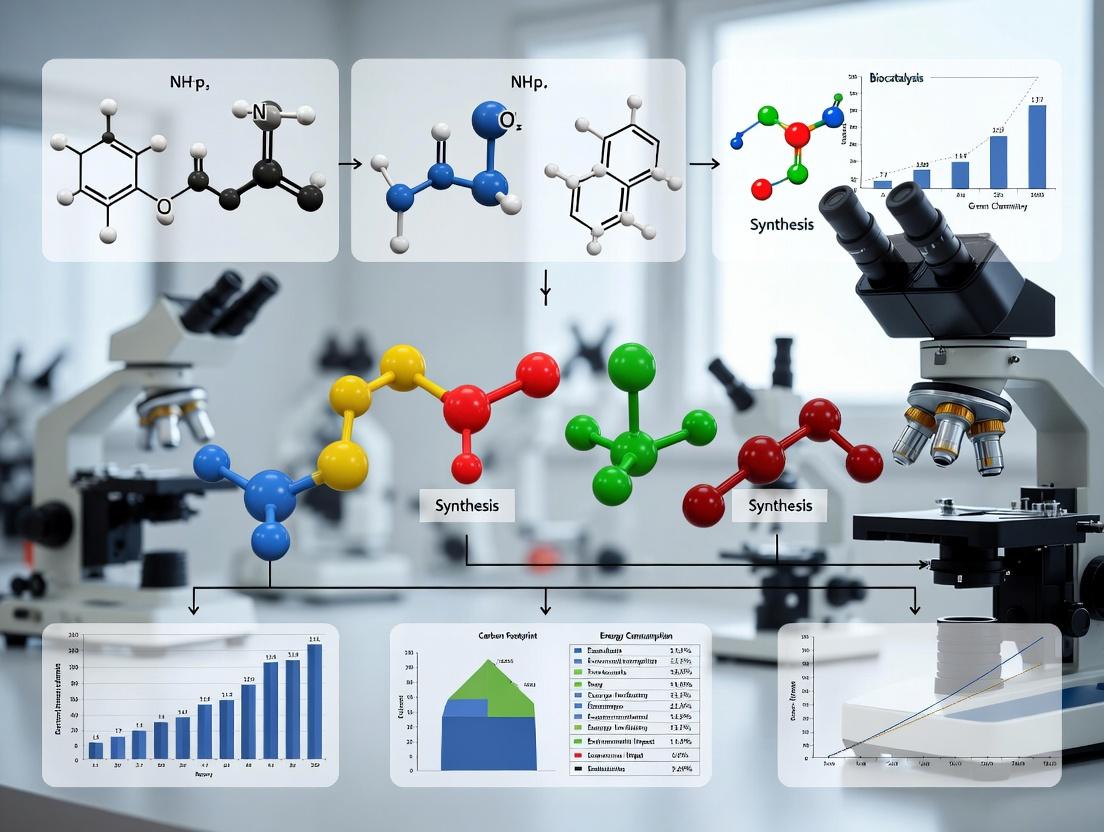
This article provides a comprehensive guide to the application of Life Cycle Assessment (LCA) in selecting optimal synthesis routes for Active Pharmaceutical Ingredients (APIs).
Beyond Yield and Cost: How LCA is Revolutionizing Pharmaceutical API Synthesis Route Selection for Sustainable Drug Development
Abstract
This article provides a comprehensive guide to the application of Life Cycle Assessment (LCA) in selecting optimal synthesis routes for Active Pharmaceutical Ingredients (APIs). Tailored for researchers and drug development professionals, we explore the foundational principles of LCA, its specific methodological application in API development, strategies for troubleshooting and optimizing environmental performance, and its role in validating and comparing routes for regulatory and sustainability goals. The article synthesizes current best practices, tools, and real-world applications to empower scientists in making data-driven, environmentally conscious decisions early in the drug development pipeline.
What is LCA in Pharma? Core Concepts and Drivers for Greener API Synthesis
Life Cycle Assessment (LCA) is a systematic, standardized methodology (ISO 14040/14044) for quantifying the potential environmental impacts associated with all stages of a product's life. In pharmaceutical Active Pharmaceutical Ingredient (API) synthesis route selection, applying LCA enables researchers to compare the environmental footprint of alternative synthetic pathways, guiding the development of greener, more sustainable processes.
Two fundamental system boundaries define the scope of an LCA study:
- Cradle-to-Gate: Assesses impacts from raw material extraction ("cradle") up to the factory "gate," where the final API is produced. It excludes the product's use phase and end-of-life. This is the most common scope for comparing API synthesis routes during early development.
- Cradle-to-Grave: Encompasses the full life cycle from raw material extraction, through manufacturing and product use, to final disposal or recycling ("grave"). For pharmaceuticals, this includes formulation, packaging, distribution, patient use (including potential environmental release of APIs), and waste management.
Comparative Analysis: Cradle-to-Gate vs. Cradle-to-Grave
Table 1: Comparison of LCA Scopes for Pharmaceutical API Development
| Aspect | Cradle-to-Gate LCA | Cradle-to-Grave LCA |
|---|---|---|
| System Boundary | Resource extraction → API manufacturing (at plant gate). | Resource extraction → API manufacturing → formulation → packaging → distribution → use → end-of-life. |
| Primary Use in API Research | Comparison of chemical synthesis routes, solvent selection, and process optimization. | Holistic sustainability assessment of the final drug product; required for Environmental Product Declarations (EPDs). |
| Key Impact Categories | Global Warming Potential (GWP), Cumulative Energy Demand (CED), Eutrophication, Acidification, Resource Depletion. | All cradle-to-gate categories plus impacts from packaging waste, transport logistics, API release into waterways, and incineration/landfill emissions. |
| Data Requirements | Process chemistry data (yields, stoichiometry), energy & solvent use in pilot/lab scale, upstream supplier data. | Adds complex data on formulation, patient compliance, excretion rates, wastewater treatment efficacy, and post-consumer waste flows. |
| Typical Outcome Metric | kg CO₂-eq per kg of API (Carbon Footprint of API). | kg CO₂-eq per defined daily dose or per full treatment course. |
| Advantage | Actionable for chemists: Directly informs greener route design. Feasible with lab-scale data. | Comprehensive: Identifies impact hotspots beyond manufacturing (e.g., metered-dose inhaler propellants). |
| Limitation | Misses downstream liabilities (e.g., disposal of oncologic APIs). | Highly uncertain due to modeling patient behavior and long-term ecotoxicity of API metabolites. |
Application Notes for API Route Selection
Note 3.1: Selecting the Appropriate LCA Scope
- Use Cradle-to-Gate for internal route scouting and process chemistry decisions. It provides a direct, chemical-focused environmental metric.
- Use Cradle-to-Grave when assessing a complete drug product for corporate sustainability reporting, regulatory submissions (increasingly relevant), or when comparing different drug delivery formats (e.g., injectable vs. oral solid dose).
Note 3.2: Critical Data Sources for Pharma-Specific LCA
- Upstream Data: Use industry-specific databases (e.g.,
ecoinventwith pharmaceutical process datasets) for reagents and solvents. - Energy Modeling: Model reactor energy use based on reaction calorimetry and downstream processing (distillation, chromatography) simulations.
- Waste Modeling: Account for solvent recovery and the fate of heavy metal catalysts (e.g., Pd, Pt) using stoichiometry and literature-derived recovery rates.
- Use Phase Modeling (Cradle-to-Grave): Utilize pharmacokinetic data (excretion rates) coupled with models predicting API removal in wastewater treatment plants (e.g., USEtox model).
Experimental Protocol for a Cradle-to-Gate LCA of an API Synthesis Route
Protocol Title: Comparative Cradle-to-Gate Life Cycle Assessment of Two Proposed API Synthesis Routes (A and B).
Objective: To quantify and compare the environmental impacts of two synthetic routes for API X at the laboratory process development stage.
4.1. Goal and Scope Definition
- Functional Unit: 1 kilogram of purified API X (≥99.0% purity by HPLC).
- System Boundary: Cradle-to-Gate (from extraction of raw materials to the point of obtaining dried API in a container).
- Impact Categories: Global Warming Potential (GWP100), Cumulative Energy Demand (CED), Water Consumption, and Process Mass Intensity (PMI).
4.2. Life Cycle Inventory (LCI) Data Collection Protocol
- Step 1: Process Flow Diagram Creation.
- Create a detailed block flow diagram for each synthetic route, including all reaction steps, work-ups, isolations, and purification stages.
- Step 2: Material Inventory.
- For each step, record masses of all input materials (reagents, catalysts, solvents) and output materials (product, by-products, waste).
- Perform material balance for each step to account for all atoms.
- Step 3: Energy Consumption Measurement.
- In the lab, measure or calculate energy for key unit operations:
- Heating/Cooling: Use reactor thermostats and reaction time to estimate kWh.
- Stirring: Record power consumption of overhead stirrers.
- Distillation/Solvent Evaporation: Record duration and heating mantle power rating.
- Lyophilization/Spray Drying: Record cycle time and equipment power rating.
- In the lab, measure or calculate energy for key unit operations:
- Step 4: Solvent Recovery Modeling.
- Determine percentage recovery for each solvent (e.g., 80% for Dichloromethane, 95% for Ethanol) based on lab procedures.
- Allocate impacts: virgin solvent production for the unrecovered fraction.
4.3. Data Analysis and Impact Assessment Protocol
- Step 1: Database Linking.
- Link each inventory item (e.g., 1 kg Acetonitrile, 1 kWh grid electricity) to its corresponding life cycle profile in a commercial LCA database (e.g., ecoinvent, GaBi).
- Step 2: Impact Calculation.
- Use LCA software (e.g., SimaPro, openLCA) to calculate total impacts per functional unit for each route.
- Step 3: Contribution Analysis.
- Identify which process steps or materials contribute >60% to each impact category.
4.4. Interpretation and Reporting
- Compare results in a tabular format (see Table 2).
- Perform sensitivity analysis on key parameters (e.g., solvent recovery rate, source of electricity).
- Conclude with the environmentally preferable route and identify key hotspots for green chemistry improvement.
Table 2: Example LCA Results for Two API Synthesis Routes (Hypothetical Data)
| Impact Category | Unit | Route A (Traditional) | Route B (Greener Alternative) | Reduction |
|---|---|---|---|---|
| Global Warming Potential | kg CO₂-eq/kg API | 450 | 220 | 51% |
| Cumulative Energy Demand | MJ/kg API | 8,500 | 4,100 | 52% |
| Process Mass Intensity (PMI) | kg total input/kg API | 120 | 65 | 46% |
| Water Consumption | m³/kg API | 12 | 5 | 58% |
| Key Hotspot Identified | - | High GWP from frequent use of CH₂Cl₂ in extraction. | High energy use in final low-temperature crystallization. | - |
Visualizations
Title: System Boundaries of Cradle-to-Gate and Cradle-to-Grave LCA
Title: Workflow for Conducting a Cradle-to-Gate LCA on API Routes
The Scientist's Toolkit: Key Research Reagent Solutions for LCA Data Generation
Table 3: Essential Tools for Lab-Scale LCA Data Collection in API Synthesis
| Item / Solution | Function in LCA Context | Key Consideration for Pharma |
|---|---|---|
| Reaction Calorimeter | Measures heat flow (enthalpy) of a reaction to accurately model energy requirements for scale-up. | Critical for assessing energy hotspots in exothermic or cryogenic reactions common in API synthesis. |
| Process Mass Spectrometry | Real-time monitoring of reaction off-gases to quantify volatile by-products for complete mass balance. | Enables accurate tracking of greenhouse gas emissions (e.g., CO₂, CH₄) from decomposition reactions. |
| Solvent Recovery System | Lab-scale distillation or membrane systems to determine practical solvent recovery rates. | Recovery rate data is a major sensitivity factor in LCA results for solvent-intensive processes. |
| Electronic Lab Notebook (ELN) | Centralized, structured data capture of all material masses, volumes, and reaction conditions. | Ensures LCA inventory is based on complete, auditable primary data rather than estimates. |
| LCA Software & Database | Tools like SimaPro or openLCA with databases (ecoinvent) to convert inventory data into impact scores. | Must contain pharma-relevant datasets for specialized reagents, solvents, and bioprocessing materials. |
| Green Chemistry Metrics Calculators | Automated calculation of Process Mass Intensity (PMI), E-factor, and Atom Economy from reaction tables. | Provides rapid, preliminary environmental indicators that correlate with full LCA results. |
Why LCA Now? Regulatory Pressure (e.g., EU Green Deal, AMA), Investor ESG Demands, and Corporate Sustainability Goals.
The imperative to integrate Life Cycle Assessment (LCA) into pharmaceutical Active Pharmaceutical Ingredient (API) synthesis route selection is no longer solely an academic pursuit. It is now driven by a powerful convergence of regulatory mandates, financial stakeholder pressures, and intrinsic corporate objectives. Within the thesis context of optimizing API synthesis for sustainability, this application note details the external catalysts compelling researchers to adopt LCA methodologies immediately.
Table 1: Key Drivers for LCA Adoption in Pharma API Development
| Driving Force | Specific Initiative / Demand | Key Metric / Target | Impact on API Route Selection Research |
|---|---|---|---|
| Regulatory Pressure | EU Green Deal (Chemicals Strategy for Sustainability) | -50% environmental impact from chemical production; "Safe and Sustainable by Design" (SSbD) framework. | Mandates early-stage assessment of environmental footprint, toxicity, and resource use for novel synthesis routes. |
| U.S. FDA (AMA - Advanced Manufacturing Assessment) | Encouragement of continuous manufacturing & greener chemistry to enhance efficiency and reduce waste. | Prioritizes routes with lower Process Mass Intensity (PMI), enabling continuous flow over batch processing. | |
| Investor ESG Demands | ESG (Environmental, Social, Governance) Reporting & Disclosure | SASB, GRI, TCFD frameworks; Net-Zero portfolio commitments (e.g., Net Zero Asset Managers initiative). | Requires quantifiable data on carbon emissions (Scope 1 & 3), water usage, and waste generation for capital allocation. |
| Corporate Sustainability Goals | Science-Based Targets (SBTi), Carbon Neutrality pledges, Circular Economy goals. | Internal mandates to reduce overall corporate carbon footprint, pushing R&D to select lowest-impact synthesis pathways. |
Application Note: Integrating LCA into Early-Stage Route Scouting
Objective: To provide a comparative LCA of two proposed synthetic routes for a novel small-molecule API (Compound X) at the laboratory scouting stage, aligning data collection with external reporting requirements.
3.1. Protocol for Tiered LCA Data Collection
- Phase 1: Screening LCA (Conceptual Stage)
- Method: Use simplified metrics: Process Mass Intensity (PMI), E-Factor (Total Waste per kg API), and Estimated Cumulative Energy Demand (CED) based on solvent and reagent proxies.
- Data Source: Theoretical material balances from proposed reaction schemes; solvent recovery estimates; literature energy data for unit operations (e.g., distillation, chromatography).
- Output: Rapid identification of the most burdensome steps (e.g., use of toxic halogenated solvents, high-energy cryogenic conditions, metal catalysts).
- Phase 2: Detailed Gate-to-Gate LCA (Process Development Stage)
- Method: Conduct a detailed inventory analysis for the preferred route(s) using process simulation software (e.g., SuperPro Designer, SimaPro) and LCA databases (e.g., Ecoinvent, GaBi).
- Data Source: Measured laboratory data on yields, solvent volumes, energy consumption of equipment (hotplate stirrers, rotary evaporators). Include upstream production impacts of key reagents.
- Impact Assessment: Calculate specific impacts: Global Warming Potential (GWP, kg CO2-eq), Water Consumption (L), and ReCiPe or EF 3.0 midpoint indicators.
- Output: A report suitable for internal sustainability decision-making and preliminary ESG disclosure.
3.2. Experimental Protocol: Measuring Key Inventory Data for LCA
Title: Laboratory-Scale Energy and Material Inventory Protocol for Route A.
Materials: Synthesis glassware, balances, solvent bottles, rotary evaporator with power meter, heating mantle with thermostat, Compound X intermediates.
Procedure:
- Material Weighing: Precisely record masses (mg) of all starting materials, reagents, and catalysts added to the reaction vessel.
- Solvent Measurement: Precisely record volumes (mL) of all solvents used for reaction, extraction, washing, and chromatography.
- Energy Monitoring: a. Connect the rotary evaporator and heating mantle to a calibrated plug-in power meter. b. Record the power (W) and total active time (hr) for each unit operation (reaction heating, solvent evaporation, etc.). c. Calculate energy consumption: Energy (kWh) = Power (kW) × Time (hr).
- Output Quantification: After isolation and drying, record the final mass (mg) and purity (% by HPLC) of the API or intermediate.
- Waste Stream Cataloging: Collect and estimate the composition (solvents, aqueous salts, organics) and mass of all waste streams.
Title: Tiered LCA Workflow for API Route Selection
The Scientist's Toolkit: Essential Reagents & Solutions for Sustainable Route Development
Table 2: Research Reagent Solutions for Greener API Synthesis LCA
| Item / Reagent Category | Example(s) | Function in Route Selection & LCA |
|---|---|---|
| Bio-Derived / Green Solvents | Cyrene (dihydrolevoglucosenone), 2-MeTHF, cyclopentyl methyl ether (CPME) | Replace problematic solvents (DMF, NMP, chlorinated) to reduce toxicity and environmental impact scores in LCA. |
| Catalytic Reagents | Immobilized enzymes, heterogeneous metal catalysts (Pd/C, polymer-supported reagents) | Enable lower temperature reactions, reduce E-factor by minimizing metal waste, and facilitate catalyst recovery/reuse. |
| Atom-Economical Reagents | Olefin metathesis catalysts, flow chemistry reagents for photoredox/electrochemistry | Improve reaction efficiency (higher yield, lower PMI), reducing raw material consumption and waste. |
| LCA Software & Database Access | Licenses for SimaPro, Gabi; access to Ecoinvent, USDA LCA Commons | Provide critical background data on energy grids, reagent production impacts, and waste treatment for accurate modeling. |
| Process Analytical Technology (PAT) | Inline FTIR, HPLC, ReactIR probes | Enable real-time monitoring for optimization, crucial for collecting precise inventory data for LCA. |
Title: How Drivers Converge on LCA in API Development
Within the broader thesis on applying Life Cycle Assessment (LCA) to pharmaceutical Active Pharmaceutical Ingredient (API) synthesis route selection, this document provides detailed application notes and protocols for four key environmental metrics. These metrics enable researchers to quantify and compare the environmental performance of synthetic routes, guiding the development of more sustainable pharmaceutical processes.
Key Metrics Defined & Quantitative Benchmarks
The following table summarizes core quantitative data and benchmarks for the four key LCA metrics in pharmaceutical API synthesis.
Table 1: Key LCA Metrics for API Synthesis: Definitions, Calculation, and Benchmarks
| Metric | Full Name & Definition | Standard Calculation Formula | Typical Range in Pharma API Synthesis | Industry Benchmark (Desirable Target) |
|---|---|---|---|---|
| GWP | Global Warming Potential (Carbon Footprint): Total greenhouse gases emitted, expressed as kg CO₂-equivalent, across the life cycle. | Σ (Mass of emissioni × GWP factori) | 100 - 1000 kg CO₂-eq/kg API | < 200 kg CO₂-eq/kg API |
| CED | Cumulative Energy Demand: Total direct and indirect energy consumption from renewable and non-renewable resources, expressed in MJ. | Σ (Amount of energy carrierj × CED factorj) | 500 - 5,000 MJ/kg API | < 1,000 MJ/kg API |
| E-Factor | Environmental Factor: Mass ratio of total waste produced to mass of final API product. | (Total mass of inputs - Mass of API) / Mass of API | 25 - 100+ kg waste/kg API | < 50 (Bulk Chem), < 25 (API) |
| Water Usage | Total Water Consumption: Volume of direct and indirect (embodied) freshwater used, in liters. | Σ (Volume of process water + embodied water in inputs) | 1,000 - 10,000 L/kg API | < 5,000 L/kg API |
Experimental Protocols for Data Acquisition
Protocol 3.1: Primary Data Collection for Gate-to-Gate LCA
Objective: To collect primary mass and energy flow data from laboratory or pilot-scale synthesis for the calculation of gate-to-gate LCA metrics.
Materials:
- Reaction setup (flasks, reactors, etc.)
- Analytical balances (high precision)
- Utility meters (for electricity, chilled water) or calibrated power meters
- Solvent recovery apparatus
- Lab notebook or electronic data capture system.
Procedure:
- Mass Inventory: a. Precisely weigh all raw materials, reagents, catalysts, and solvents before reaction. b. Record all outputs: isolated product (API), isolated by-products, recovered solvents, and all solid/liquid waste streams. Weigh each stream. c. Account for process aids (filter aids, chromatography media) and packaging.
- Energy Inventory: a. For lab-scale, use a plug-in energy meter to record electricity consumption of all equipment (stirrers, heaters, pumps, HVAC for fume hood). b. For heating/cooling fluids, estimate energy using Q = m·cp·ΔT, where m is mass of fluid, cp is specific heat capacity, and ΔT is temperature change. c. Record reaction time, heating/cooling durations, and distillation times.
- Water Inventory: a. Directly measure volume of process water used for extraction, washing, crystallization, and cleaning. b. Record volume of cooling water if not in a closed loop. Estimate from flow rate and time.
- Data Compilation: Compile all data into a structured inventory table (Inputs/Outputs, Mass, Energy Association) for one functional unit (e.g., per kg of purified API).
Protocol 3.2: Scaling and Secondary Data Integration for Cradle-to-Gate Assessment
Objective: To scale laboratory data and integrate upstream (cradle-to-gate) data using LCA databases to calculate full GWP, CED, and embodied water.
Materials:
- Primary inventory data from Protocol 3.1.
- Access to LCA database software (e.g., GaBi, SimaPro) or sources like Ecoinvent, USDA LCA Commons.
- Relevant emission factors (e.g., IPCC GWP factors, EU Mix electricity CED factors).
Procedure:
- Scale-Up Modeling: a. Scale mass flows linearly to a defined functional unit (e.g., 1 kg API). b. For energy, apply scale-up exponents (e.g., 0.6-0.8 rule for agitator power) or use process simulation software for major equipment.
- Upstream Data Integration: a. For each material input (solvent, reagent), source the appropriate cradle-to-gate dataset from an LCA database. Use the closest proxy if exact match is unavailable. b. Multiply the mass of each input by its dataset values for GWP (kg CO₂-eq/kg), CED (MJ/kg), and water use (L/kg).
- Direct Energy & Emissions Calculation: a. Convert direct energy use (electricity, natural gas) using regionalized emission and CED factors. b. Estimate direct fugitive emissions (e.g., solvent loss to air) from mass balance.
- Calculation: Sum the scaled and upstream contributions for each metric per functional unit. GWP_total = Σ(Mass_input × GWP_factor_input) + Σ(Energy_kWh × GWP_factor_electricity) CED_total = Σ(Mass_input × CED_factor_input) + Σ(Energy_kWh × CED_factor_energy) Water_total = Σ(Mass_input × Water_factor_input) + Direct Process Water
Visualization of LCA Workflow for API Route Selection
Title: LCA Workflow for API Route Selection
The Scientist's Toolkit: Research Reagent Solutions
Table 2: Essential Tools and Materials for LCA Data Collection in API Synthesis
| Item | Function in LCA Context |
|---|---|
| High-Precision Analytical Balance | Accurate measurement of all mass inputs and outputs is fundamental for material balance and E-factor calculation. |
| Plug-in Energy/Power Meter | Enables direct measurement of electricity consumption of individual lab equipment (hotplate, stirrer, HPLC) for primary energy data. |
| Process Mass Spectrometer/Gas Meter | For quantifying volatile organic compound (VOC) emissions and gas consumption/release, critical for accurate GWP accounting. |
| Solvent Recovery System (e.g., Distillation) | Allows measurement of solvent recycle mass, reducing waste stream and improving E-factor. Key for closed-loop modeling. |
| LCA Software & Database Access (e.g., SimaPro, GaBi) | Provides critical secondary data (upstream emissions, energy demands) for materials and utilities to calculate GWP, CED, and water. |
| Electronic Lab Notebook (ELN) with Structured Templates | Ensures consistent, complete, and auditable data recording for all material and energy flows during experimentation. |
| Green Chemistry Solvent Guide | Reference to select solvents with lower cradle-to-gate environmental impacts (lower GWP, CED, toxicity) during route design. |
1. Introduction and Scope Definition Framework In the Life Cycle Assessment (LCA) of Active Pharmaceutical Ingredient (API) synthesis, the system boundary explicitly defines the unit processes to be included in the study. This definition is the most critical methodological determinant, directly influencing the comparability and conclusiveness of route selection research. Ambiguous or inconsistent boundaries render comparisons between synthetic routes invalid.
2. Application Notes: Boundary Decisions in Pharmaceutical API LCA
- "Cradle-to-Gate" is Standard for Route Selection: The assessment typically starts at the extraction or cultivation of raw materials ("cradle") and ends at the production of the purified API at the factory "gate." This excludes formulation, packaging, distribution, use, and end-of-life phases, which are often irrelevant to early-stage chemical route selection.
- Inclusion of Ancillary Materials: Solvents, reagents, catalysts, and purification materials (e.g., silica gel) must be included. Their production and often their waste treatment (e.g., solvent recovery or incineration) contribute significantly to the total environmental footprint.
- Energy Model and Source: The environmental impact of energy use (heating, cooling, electricity) must be modeled based on the specific geographic context of the proposed manufacturing location (e.g., US vs. EU grid mix).
- Infrastructure Capital Goods: The construction of reactors, facilities, and other capital equipment is typically excluded due to negligible contributions per kg of API, as supported by recent sensitivity analyses.
- Multifunctionality and By-products: A key challenge in complex syntheses. System expansion or allocation (mass, economic) must be applied consistently when a process yields multiple marketable products (e.g., a valuable chiral intermediate).
3. Quantitative Data on Impact Contributors Table 1: Typical Contribution of Process Elements to Total Carbon Footprint in API Synthesis (Cradle-to-Gate)
| Process Element | Contribution Range (% of total kg CO₂-eq/kg API) | Notes & Key Drivers |
|---|---|---|
| Raw Materials (Starting Molecules) | 20 - 60% | Complexity of synthesis, petrochemical vs. bio-based origin. |
| Solvent Use & Recovery | 25 - 50% | Volume, recycling rate, and incineration emissions. Chlorinated solvents are high-impact. |
| Reagents & Catalysts | 10 - 30% | Stoichiometry, metal catalyst sourcing and fate (e.g., precious metals). |
| Energy for Reaction Operations | 5 - 25% | Reaction time, temperature, pressure, and local energy grid carbon intensity. |
| Purification & Waste Treatment | 5 - 20% | Chromatography solvents, process water treatment, solid waste disposal. |
4. Experimental Protocol: Defining and Applying System Boundaries for API Route LCA
Protocol Title: Systematic Boundary Definition and Inventory Compilation for Comparative API Synthesis Route LCA
Objective: To establish a reproducible, consistent system boundary for the environmental assessment of two or more proposed API synthetic routes (Routes A, B, etc.).
Materials (Research Reagent Solutions): Table 2: Essential Research Toolkit for API LCA
| Item | Function in LCA Study |
|---|---|
| Process Flow Diagrams (PFDs) | Detailed chemical engineering diagrams for each synthetic route, including all inputs and outputs. |
| Life Cycle Inventory (LCI) Database | Commercial (e.g., Ecoinvent, GaBi) or public (USLCI, Agribalyse) database for background data (solvent production, energy mixes). |
| LCA Software | SimaPro, OpenLCA, or GaBi to model the system and calculate impacts. |
| Reagent & Solvent Mass Balance | Precise kg of each material input per kg of final API output (the functional unit). |
| Energy Calculation Tools | Models or simulations (e.g., Aspen Plus) to estimate heating, cooling, and electrical demands per unit operation. |
| Allocation Procedure | Pre-defined rule set (e.g., mass allocation at the point of reaction) for handling co-products. |
Procedure:
- Define Functional Unit: Establish as "the production of 1.0 kilogram of [API Name], with a purity of ≥ 99.5%, at the plant storage vessel."
- Draw System Diagram: For each route, create a detailed diagram including all unit operations, material flows, and energy flows. Clearly mark the system boundary.
- Compile Foreground Data: For each unit operation within the boundary, collect:
- Mass of all chemical inputs (starting materials, reagents, solvents).
- Mass of all outputs (API, intermediates, by-products, waste to treatment).
- Estimated energy requirements (kWh of electricity, MJ of steam).
- Select Background Data: Source LCI data for all foreground inputs from a consistent database, applying the appropriate regional energy grid model.
- Address Multifunctionality: Identify any co-product. Apply the chosen allocation method (e.g., system expansion by subtracting the impacts of producing the co-product by a conventional method).
- Exclude Capital Goods: Document the decision to exclude manufacturing infrastructure.
- Perform Calculation: Input the bounded system data into LCA software to calculate lifecycle impact indicators (e.g., Global Warming Potential, Cumulative Energy Demand).
- Sensitivity Analysis: Test the influence of key boundary decisions (e.g., solvent recycling rate, allocation method) on the final comparative result.
5. Visualization of the System Boundary Definition Workflow
Title: API LCA System Boundary Definition Workflow
Title: Cradle-to-Gate System Boundary for API LCA
The selection of an optimal synthetic route for an Active Pharmaceutical Ingredient (API) is a critical decision in drug development. While Green Chemistry provides 12 qualitative principles for designing environmentally benign syntheses, Life Cycle Assessment (LCA) offers a quantitative, systems-level evaluation of environmental impacts. This application note provides protocols to translate Green Chemistry metrics into robust, inventory-ready data for LCA, enabling direct comparison of API routes within a pharmaceutical research thesis.
Application Notes: From Principle to Parameter
Note 1: Atom Economy & Reaction Mass Efficiency to Inventory Flow
- Principle: Prevent waste (Green Chemistry Principle #1).
- Green Metrics: Atom Economy (AE), Reaction Mass Efficiency (RME).
- LCA Bridge: These metrics define the mass balance of the reaction core. Low AE/RME signals high material consumption, directly informing the 'materials acquisition' and 'waste generation' flows of the LCA inventory.
- Data Protocol: Calculate for each synthetic step and for the overall linear sequence.
- Atom Economy (%) = (MW of Desired Product / Σ MW of All Reactants) x 100
- Reaction Mass Efficiency (%) = (Mass of Product / Σ Mass of All Input Reagents) x 100
Note 2: Solvent & Energy Intensity to Impact Assessment
- Principle: Use safer solvents & auxiliaries (#5), Design for energy efficiency (#6).
- Green Metrics: Process Mass Intensity (PMI), Solvent Intensity, Energy requirements.
- LCA Bridge: PMI, especially the solvent contribution, is a primary data input for inventory analysis. Energy use (heating, cooling, mixing) is translated into kWh inputs. These flows drive impact categories like climate change, resource use, and ecotoxicity.
- Data Protocol:
- Process Mass Intensity (PMI) = Total mass of materials input (kg) / Mass of product (kg)
- Solvent Intensity = Total mass of solvents (kg) / Mass of product (kg)
- Record energy consumption per unit operation (e.g., kJ/mol for reflux, kWh for drying).
Note 3: Hazard & Safety to Human Health Impact
- Principle: Use less hazardous chemical syntheses (#3), Safer chemistry for accident prevention (#12).
- Green Metrics: Safety/hazard scores (e.g., using reagent GHS classifications).
- LCA Bridge: Reagent and intermediate hazards (carcinogenicity, flammability) inform the 'human toxicity, non-cancer' and 'human toxicity, cancer' impact assessment methods within LCA, bridging occupational and environmental risk.
Table 1: Comparative Green Metrics and LCA Inventory Data for Route A (Traditional) vs. Route B (Green-Optimized)
| Metric / Data Point | Route A: Friedel-Crafts Alkylation | Route B: Catalytic Hydrogenation | Data Source for LCA Inventory |
|---|---|---|---|
| Total Steps | 5 | 3 | System Boundary Definition |
| Overall Atom Economy | 42% | 85% | Reaction Stoichiometry |
| Overall Process Mass Intensity (PMI) | 120 kg/kg API | 45 kg/kg API | Total Mass Balance |
| Solvent Intensity | 85 kg/kg API | 32 kg/kg API | Solvent Recovery Model |
| Key Hazardous Reagents | AlCl₃ (corrosive), SOCl₂ (toxic) | Pd/C (catalyst), H₂ (flammable) | EHS Database / SDS |
| Estimated Energy Demand | 850 kWh/kg API (high T, long reflux) | 320 kWh/kg API (moderate P, RT) | Lab/Modeled Energy Data |
| Primary Waste Streams | Acidic metal sludge, halogenated organics | Aqueous ethanol, spent catalyst | Waste Treatment Model |
Experimental Protocols for Generating LCA-Ready Data
Protocol 1: Standardized Mass Balance and PMI Determination Objective: To generate consistent, comparable mass inventory data for LCA from laboratory-scale reactions. Materials: See Scientist's Toolkit. Method:
- Conduct synthesis at minimum 1.0 mmol product scale.
- Precisely weigh (Analytical Balance) all input materials: reagents, catalysts, solvents.
- Isolate and dry final product. Record exact yield.
- Account for all output masses: product, isolated side-products, aqueous layer, organic mother liquor, solid residues (e.g., used silica gel).
- Calculate step PMI and overall PMI. Report as
PMI (total),PMI (solvents),PMI (reagents). - Sample and label waste streams for composition analysis if required.
Protocol 2: Solvent Recovery Efficiency Assessment Objective: To quantify the potential for solvent recycling, a key circularity parameter in LCA. Method:
- After reaction work-up, combine all organic mother liquors from a single step.
- Using Rotary Evaporator, perform a standardized distillation protocol to recover solvent.
- Analyze recovered solvent purity via GC-MS or Refractometer against a fresh standard.
- Weigh the mass of solvent recovered at acceptable purity (>95%).
- Calculate: Solvent Recovery Efficiency (%) = (Mass of solvent recovered / Total solvent mass used) x 100.
- This recovered mass fraction is modeled as a credit (negative input) in the LCA.
Visualization: The Integration Workflow
Diagram 1: Framework for Bridging Green Chemistry to LCA (80 chars)
The Scientist's Toolkit: Essential Research Reagents & Materials
Table 2: Key Materials for Generating LCA-Ready Green Chemistry Data
| Item / Solution | Function in Protocol | Critical Specification / Note |
|---|---|---|
| Analytical Balance | Precise mass measurement of all inputs and outputs. | Sensitivity ≤ 0.1 mg. Calibration certified. |
| Solvent Selection Guide | Guides choice aligned with Green Chemistry Principle #5. | e.g., CHEM21 or GSK solvent sustainability guide. |
| Life Cycle Inventory Database | Provides background data for upstream materials (e.g., solvent production). | e.g., Ecoinvent, GaBi, USLCI. Required for full LCA. |
| Process Mass Intensity Calculator | Standardized spreadsheet for calculating AE, RME, PMI. | Custom or ACS GCI Pharmaceutical Roundtable template. |
| Gas Chromatograph-Mass Spectrometer | Analyzes purity of recovered solvents or reaction mixtures. | Enables accurate waste stream characterization. |
| Rotary Evaporator | Standardized solvent removal and recovery. | Enables measurement of solvent recovery efficiency. |
| Safety Data Sheet Database | Source for GHS classifications of reagents for hazard assessment. | Informs human toxicity potential in LCA. |
A Step-by-Step Guide: Implementing LCA for API Route Scouting and Selection
In Life Cycle Assessment (LCA) research for Active Pharmaceutical Ingredient (API) synthesis route selection, the initial and most critical step is the rigorous definition of the goal and scope. This phase establishes the study's purpose, system boundaries, and the functional unit—a quantifiable measure of the system's performance that serves as the basis for all subsequent comparisons. For API projects, the functional unit is typically mass-based (e.g., 1 kg of API of a specified purity), but must also encapsulate the essential therapeutic function. This application note provides a detailed protocol for defining this cornerstone element within pharmaceutical LCA research.
Core Principles and Current Data
A well-defined functional unit ensures that different synthetic routes are compared on an equivalent basis. Recent analyses highlight that the choice of functional unit directly influences the environmental profile outcomes of API manufacturing.
Table 1: Common Functional Unit Definitions in API LCA Research
| Functional Unit Type | Example | Key Consideration | Impact on Route Comparison |
|---|---|---|---|
| Mass-Based | 1 kg of API (≥99.5% purity) | Standard for cradle-to-gate assessments. Must specify purity, salt form, and polymorph. | Directly compares resource efficiency per mass output. |
| Therapy-Based | Amount of API for one full treatment course (e.g., 10 g for a 5-day regimen) | Links production to clinical utility. Requires dosage and efficacy data. | Shifts focus to patient outcome efficiency, may favor more potent APIs. |
| Batch-Based | Output of one manufacturing campaign (e.g., 50 kg batch) | Accounts for scale-up realities and batch cleanup cycles. | Highlights operational efficiency and scale dependencies. |
Recent literature (2023-2024) emphasizes a trend towards multi-functional unit analyses to capture different decision contexts, from process chemistry optimization to therapeutic environmental impact.
Protocol: Defining the Functional Unit for API Route LCA
Title: Protocol for Functional Unit Definition in API Synthesis LCA
Objective: To establish a robust, reproducible, and clinically relevant functional unit for comparing the environmental impacts of alternative API synthesis routes.
Materials & Reagents:
- API candidate specifications (target structure, purity requirements, salt form)
- Preclinical/clinical dosage data (mg/kg, regimen duration)
- Process chemistry route descriptions (lab-scale and proposed pilot-scale)
- Relevant pharmacopeia standards (e.g., USP, Ph. Eur.)
Procedure:
- Articulate Study Goal: Clearly state whether the LCA supports (a) internal green chemistry route selection, (b) environmental product declarations, or (c) comparison to competitor compounds.
- Define Primary Function: The primary function is the production of the API. Document secondary functions (e.g., production of specific co-products).
- Select Functional Unit Basis:
- For process development comparisons, select a mass-based unit (Step 3.1).
- For therapeutic area assessments, select a therapy-based unit (Step 3.2).
- Step 3.1 – Specify Mass-Based Unit: a. Set reference mass (e.g., 1.000 kg). b. Specify minimum purity (e.g., 99.7% w/w). c. Define physical form (e.g., crystalline, non-hygroscopic, specific polymorph Form I). d. Document packaging state (e.g., bulk, unpackaged powder in intermediate bulk container).
- Step 3.2 – Specify Therapy-Based Unit: a. Obtain average patient dosage (e.g., 100 mg API/day). b. Obtain standard treatment duration (e.g., 14 days). c. Calculate functional unit: (Daily Dosage) × (Treatment Duration). Example: (0.1 g/day) × (14 days) = 1.4 g of API per full treatment course. d. Incorporate clinical efficacy factors if available (e.g., factor in bioavailability).
- Set Reference Flow: Clearly link the functional unit to the product system. For 1 kg of API, the reference flow is the exact output of the synthesis and purification system required to deliver 1 kg meeting all specifications.
- Document and Validate: Record all assumptions and specifications. Validate the functional unit with stakeholders (chemists, pharmacologists, EHS professionals) to ensure relevance.
Visualizing the Functional Unit Definition Workflow
Title: Decision Tree for API Functional Unit Selection
The Scientist's Toolkit: Key Research Reagents & Materials
Table 2: Essential Toolkit for Functional Unit Definition in API LCA
| Item | Function in Protocol | Notes/Specification |
|---|---|---|
| API Reference Standard | Provides benchmark for purity (>99.5%) and form specification (polymorph). | Must be fully characterized (NMR, HPLC, XRD). |
| Pharmacopeia Monograph | Defines regulatory quality standards for the API, informing purity requirements. | e.g., USP-NF, European Pharmacopoeia. |
| Clinical Trial Protocol | Source for dosage and treatment regimen data to construct therapy-based units. | Use final protocol from most advanced phase. |
| Process Flow Diagrams (PFDs) | Define system boundaries and reference flows for mass-based unit calculation. | Must include all inputs/outputs from reaction to isolation. |
| LCA Software (e.g., SimaPro, GaBi) | Platform to model systems based on the defined functional unit. | Ensures consistency in inventory compilation. |
Application Notes
Life Cycle Inventory (LCI) in pharmaceutical API synthesis is the quantitative foundation of any Life Cycle Assessment (LCA). For route selection research, constructing a robust LCI model involves meticulously cataloging all material and energy inputs and outputs for each synthetic route from raw material extraction to the final Active Pharmaceutical Ingredient (API). This phase directly impacts the accuracy of subsequent environmental impact assessments (e.g., carbon footprint, water use). Modern approaches advocate for a tiered methodology, combining rigorous primary data collection from laboratory or pilot-scale experiments with high-quality secondary data from commercial databases (e.g., Ecoinvent, Sphera) for upstream materials and energy supply chains. Key challenges include defining appropriate functional units (e.g., 1 kg of API at 99.5% purity), accounting for solvent recovery, and accurately allocating burdens for multi-product processes. The LCI must be transparent, reproducible, and designed for comparative analysis between alternative synthetic pathways.
Table 1: Comparative LCI Data for Two Hypothetical API Synthesis Routes (per 1 kg API)
| Inventory Flow | Route A (Classical) | Route B (Green Chemistry) | Data Source / Protocol |
|---|---|---|---|
| Material Inputs | |||
| Starting Material X (kg) | 8.5 | 3.2 | Lab Batch Record |
| Catalyst Pd(OAc)₂ (g) | 120 | 15 | Lab Batch Record |
| Solvent Dichloromethane (kg) | 150 | 0 | Pilot Plant Log |
| Solvent Ethanol (kg) | 0 | 45 | Pilot Plant Log |
| Water for Injection (L) | 1200 | 800 | Mass Balance |
| Energy Inputs | |||
| Electricity (kWh) | 850 | 520 | Metered Data |
| Steam (MJ) | 2500 | 1800 | Utility Log |
| Chilled Water (MJ) | 750 | 400 | Utility Log |
| Outputs (to Treatment) | |||
| Hazardous Organic Waste (kg) | 142 | 38 | Waste Manifest |
| Aqueous Waste (kg) | 1150 | 780 | Effluent Report |
| Solid Waste (kg) | 12.5 | 4.1 | Mass Balance |
Experimental Protocols
Protocol 1: Laboratory-Scale Material Flow Accounting for LCI
Objective: To accurately measure all material inputs and outputs for a single batch of a candidate API synthesis route at the laboratory scale. Materials: Reaction apparatus, analytical balance (±0.001g), solvents, reagents, waste containers, lab notebook. Procedure:
- Tare Weights: Record the empty weight of all input reagent containers and reaction vessels.
- Input Measurement: For each reaction step, weigh all added materials (reagents, catalysts, solvents) directly into the reaction vessel using the analytical balance. Record the exact mass.
- Output Measurement: Upon reaction completion, isolate and weigh the crude product, all by-products, and spent solvents separately.
- Analysis: Determine product yield and purity via HPLC or NMR. Calculate masses of impurities and unreacted starting materials.
- Waste Stream Characterization: Segregate waste into categories (halogenated solvent, heavy metal, aqueous). Weigh each stream.
- Data Aggregation: Compile all mass data into a spreadsheet, normalized to the target mass of pure API (functional unit).
Protocol 2: Energy Profiling for Unit Operations
Objective: To measure direct energy consumption (heating, cooling, stirring) for key unit operations (reaction, distillation, drying). Materials: Jacketed reaction vessel, temperature probe, power meter (e.g., Kilowatt meter), data logger, chiller/heater. Procedure:
- Instrumentation: Connect the heating/cooling circulation system and the reaction vessel stirrer motor through the power meter.
- Baseline Measurement: Record power draw (kW) for all equipment at idle state.
- Operational Monitoring: Initiate the unit operation (e.g., heat from 25°C to 80°C, hold for 2 hours, cool to 25°C). Use the data logger to record instantaneous power draw at 1-minute intervals.
- Integration: Calculate total energy consumption (kWh) by integrating power over the operational time. Subtract any applicable baseline idle energy.
- Scale-Up Consideration: Document equipment specifications (vessel volume, insulation, motor power) to inform scale-up energy modeling.
Protocol 3: Solvent Recovery Efficiency Determination
Objective: To quantify the mass of solvent recoverable via distillation for LCI credit. Materials: Distillation apparatus, rotary evaporator, collection flasks, analytical balance. Procedure:
- Initial Mass: Weigh the total mass of the spent solvent mixture to be recovered.
- Distillation: Perform standard distillation or rotary evaporation under optimized conditions (temperature, pressure). Collect the condensate.
- Quantification: Weigh the collected solvent fraction. Analyze purity via GC-MS.
- Calculation: Determine recovery efficiency: (Mass of pure recovered solvent / Theoretical maximum recoverable mass) x 100%. The recoverable mass is entered as a negative input in the LCI.
Visualization
Diagram Title: LCI Modeling Workflow for API Route Selection
Diagram Title: Simplified Energy & Utility Flow for API Synthesis
The Scientist's Toolkit
Table 2: Essential Research Reagents & Tools for LCI Data Generation
| Item | Function in LCI Development | Example/Note |
|---|---|---|
| High-Precision Analytical Balance | Accurately measures mass inputs/outputs of reagents, products, and waste. Foundation of mass balance. | Sartorius Cubis II, ±0.001g readability. |
| Power Meter / Data Logger | Measures real-time energy consumption (kWh) of stirrers, heaters, chillers, and other lab equipment. | HOBO UX120-018 Plug Load Logger. |
| Process Mass Spectrometer (Gas Analysis) | Quantifies gaseous emissions (e.g., CO2, vented solvents) from reactions for complete emission inventory. | Pfeiffer Vacuum OmniStar. |
| Solvent Recovery System | Enables experimental determination of solvent recycling efficiency (e.g., rotary evaporator, short-path distillation). | Büchi Rotavapor R-300. |
| Laboratory Information Management System (LIMS) | Electronically captures and manages experimental data (weights, yields, conditions) for auditable LCI data trails. | Benchling, LABTrack. |
| LCA Software Database | Provides secondary background data for upstream materials (solvents, chemicals) and energy grids. | Ecoinvent, Sphera LCA databases. |
| Statistical Analysis Software | Performs uncertainty analysis and data quality assessment on collected LCI datasets. | R, Python (with pandas), SimaPro. |
Application Notes for Life Cycle Assessment (LCA) in Pharmaceutical API Synthesis Route Selection
Accurate and reliable data sourcing is the cornerstone of a defensible Life Cycle Assessment (LCA) for comparing Active Pharmaceutical Ingredient (API) synthesis routes. This document outlines a tiered data sourcing strategy, prioritizing primary data while pragmatically integrating secondary sources to build a complete life cycle inventory (LCI).
1. Tiered Data Sourcing Strategy
A three-tiered approach ensures scientific rigor while acknowledging practical constraints in pharmaceutical R&D.
- Tier 1: Primary Laboratory Data: The most reliable source for core chemical transformations.
- Tier 2: Process Simulation: Extrapolates laboratory data to industrial-scale unit operations.
- Tier 3: Commercial Databases: Provides background data for upstream materials, energy, and utilities.
Table 1: Data Source Hierarchy and Application in API Route LCA
| Data Tier | Data Source | Key Parameters for API Synthesis | Primary Use in LCA | Uncertainty Level |
|---|---|---|---|---|
| Tier 1 (Highest Fidelity) | Laboratory Experiments | Solvent masses, reagent masses, catalyst loading, reaction yield, energy input for heating/cooling/stirring, identified by-products. | Core process inventory for the reaction step. Mass & energy balances. | Low (if properly measured) |
| Tier 2 (Scaled Model) | Aspen Plus / ChemCAD Simulation | Utility demands (steam, chilled water, electricity), equipment sizing, distillation column efficiencies, solvent recovery rates, fugitive emissions. | Scaling lab data to kg-scale pilot or ton-scale commercial production. |
Medium |
| Tier 3 (Background) | Ecoinvent, Sphera GaBi, USDA LCA Commons | Production of bulk solvents, reagents, catalysts, plastics, packaging materials, grid electricity, waste treatment. | Upstream (cradle-to-gate) and downstream (waste treatment) inventory. | Medium to High |
2. Experimental Protocols for Generating Tier 1 Laboratory Data
Protocol 2.1: Material Balance Experiment for a Reaction Step Objective: To obtain precise input-output mass data for a single chemical reaction in an API synthesis. Materials: (See Scientist's Toolkit below). Procedure:
- Tare all reaction vessels, addition funnels, and storage flasks.
- Accurately weigh all reactants, catalysts, and solvents before addition.
- Charge materials to the reactor under inert atmosphere if required. Record initial total mass.
- Conduct the reaction according to the synthetic procedure, monitoring temperature and time.
- Upon completion, transfer the crude mixture to a tared vessel. Weigh.
- Take a precise aliquot (e.g., 1.00 mL) of the homogeneous crude mixture. Dilute in a known mass of a deuterated solvent for quantitative NMR (qNMR) using an internal standard (e.g., 1,3,5-trimethoxybenzene) to determine product yield and key impurity concentrations.
- Perform workup and isolation (extraction, distillation, crystallization). Weigh all isolated fractions: product, side-products, aqueous waste streams, organic waste streams.
- Calculate atom economy, reaction mass efficiency, and overall mass balance closure. Aim for closure >95%.
Protocol 2.2: In-situ Energy Profiling of a Reaction Objective: To measure direct electrical energy consumption of laboratory glassware. Materials: Jacketed reaction vessel, circulating thermostatic bath, overhead stirrer, plug-in power meter (e.g., Kill A Watt). Procedure:
- Connect the thermostatic bath and overhead stirrer motor to the power meter, which is connected to the mains.
- Zero the power meter reading.
- Conduct the reaction, including the heating/cooling phases and sustained stirring at reaction temperature.
- Record the total kWh consumed at the end of the experiment.
- Normalize energy consumption per kg of product formed.
3. Protocol for Integrating Data Sources via Process Simulation (Tier 2)
Protocol 3.1: Scaling Laboratory Data using Aspen Plus V12 Objective: To generate scaled-up mass and energy flows for LCI. Procedure:
- Base Case Definition: Create a flowsheet in Aspen Plus representing the laboratory procedure. Use
NRTLorUNIQUACproperty methods for pharmaceutical solvent systems. - Input Lab Data: Enter measured component masses, reaction stoichiometry, and yields from Protocol 2.1 as the basis.
- Define Unit Operations: Model key separation steps (e.g.,
RadFracfor distillation,Decanterfor liquid-liquid separation). Use laboratory-reported relative volatilities or liquid-liquid equilibrium data. - Specify Operating Conditions: Set pressures and temperatures based on lab data. For distillations, specify reflux ratios and recovery targets.
- Incorporate Realistic Efficiencies: Adjust heater/chiller efficiencies and column stage efficiencies to industrial norms (e.g., 85-95%).
- Run Sensitivity Analysis: Vary key parameters (solvent recovery rate, reflux ratio) to establish a range of likely utility consumptions (kg steam/kg API, kWh/kg API).
- Export Results: Extract the total mass and energy stream report for the simulated scale. These values replace generic database data for the core chemical process steps.
4. Scientist's Toolkit: Essential Research Reagents & Materials
Table 2: Key Materials for LCA Data Generation in API Synthesis
| Item | Function in Data Sourcing |
|---|---|
| Analytical Balance (±0.1 mg) | Precisely measures mass inputs of valuable reagents, catalysts, and products for accurate mass balances. |
| Quantitative NMR (qNMR) Standards (e.g., 1,3,5-Trimethoxybenzene, Maleic Acid) | Enables direct quantification of product yield and impurity concentrations in crude reaction mixtures without separation. |
| Plug-in Power Meter | Measures direct electrical energy consumption of lab equipment (stirrers, baths, pumps) for primary energy data. |
| Jacketed Reaction Vessel & Circulating Thermostat | Provides controlled heating/cooling and allows for accurate energy profiling of reactions. |
| Process Simulation Software (Aspen Plus, ChemCAD, SuperPro Designer) | Scales laboratory data, models solvent recovery, and calculates utility demands for credible LCI. |
| Commercial LCA Database (Ecoinvent, Sphera GaBi) | Supplies vetted background data for upstream materials production, energy generation, and end-of-life processing. |
5. Workflow Visualization
LCA Data Sourcing and Integration Workflow
Data Source Integration for a Unit Process
Within the broader thesis on applying Life Cycle Assessment (LCA) to pharmaceutical Active Pharmaceutical Ingredient (API) synthesis route selection, the Life Cycle Impact Assessment (LCIA) phase is critical. This step translates the life cycle inventory (LCI) data—mass and energy flows—into potential environmental impacts. For pharmaceutical research, selecting impact categories that reflect the unique environmental burdens of complex, multi-step chemical synthesis is essential for meaningful route comparison and sustainability-driven decision-making.
Core Environmental Impact Categories for Pharmaceutical API Synthesis
Based on current research and guidance from the European Commission’s Product Environmental Footprint (PEF) and pharmaceutical LCA literature, the following impact categories are most relevant.
Table 1: Recommended LCIA Impact Categories for Pharma API Route Assessment
| Impact Category | Indicator / Unit | Primary Drivers in Pharma API Synthesis | Relevance to Pharma |
|---|---|---|---|
| Global Warming | kg CO₂-equivalent | Energy consumption (fossil-based), solvent production, waste incineration, high-GWP fugitive gases. | High energy intensity of reactions, purification, and sterile operations. |
| Resource Use, Fossils | MJ, surplus cost | Depletion of fossil fuels (oil, gas) for energy and as chemical feedstocks. | Many solvents and intermediates are petrochemical derivatives. |
| Water Use | m³ water-equivalent | Direct water use for cooling, extraction, purification; indirect use in supply chain. | High water demand in downstream processing and cleaning-in-place (CIP). |
| Human Toxicity, non-cancer | Comparative Toxic Unit (CTUₕ) | Emissions of toxic substances to air, water, and soil across the life cycle. | Handling and potential emissions of hazardous reagents/intermediates. |
| Ecotoxicity (Freshwater) | CTUₑ | Emission of ecotoxic substances, particularly to water. | Potential aquatic toxicity of API metabolites, solvents, and catalysts. |
| Land Use | Pt, species.yr | Agricultural land for biomass-based feedstocks; transformation for infrastructure. | Growing relevance for bio-based or fermentation-derived APIs. |
| Acidification | mol H⁺-equivalent | Emissions of SOₓ, NOₓ, NH₃ from energy generation and chemical processes. | Linked to combustion of fuels for steam and power on-site. |
| Eutrophication (Freshwater) | kg P-equivalent | Emissions of phosphorus, nitrogen to water bodies. | Wastewater effluent from API manufacturing plants. |
| Ozone Depletion | kg CFC-11-equivalent | Emissions of ozone-depleting substances (historically certain solvents). | Legacy concern; modern solvents are largely ODS-free. |
| Particulate Matter | disease incidence | Emissions of PM2.5, PM10, SOₓ, NOₓ, NH₃. | Combustion processes from onsite boilers and offsite energy. |
Protocol: Implementing LCIA for API Route Comparison
This protocol details the methodology for conducting the LCIA within an API route selection study.
Experimental Protocol: LCIA Calculation and Analysis Workflow
Title: LCIA Workflow for API Route Selection
Objective: To transform LCI data into characterized impact scores across selected categories for multiple API synthesis routes, enabling comparative environmental profiling.
Materials & Software:
- LCI data for each synthesis route (mass/energy flows per kg API).
- LCIA methodology database (e.g., EF 3.1, ReCiPe 2016).
- LCA software (e.g., OpenLCA, SimaPro, GaBi).
- Spreadsheet software (e.g., Microsoft Excel, Google Sheets).
Procedure:
- LCI Data Preparation: Ensure LCI data for each candidate route is complete, normalized to a common functional unit (e.g., 1 kg of ≥99.5% pure API at plant gate).
- Methodology Selection: In the LCA software, select a comprehensive, mid-point oriented LCIA method (e.g., EF 3.1 or ReCiPe Midpoint (H)). This embeds the necessary characterization factors.
- Impact Category Selection: From the chosen method, enable the categories listed in Table 1. Disable irrelevant categories (e.g., ionizing radiation, if not applicable).
- Characterization: Run the LCIA calculation. The software multiplies each LCI flow (e.g., 1 kg dichloromethane emitted to air) by its category-specific characterization factor (CF) (e.g., CTUₕ for human toxicity) and sums the results per category.
- Results Compilation: Export the characterized results for each route and impact category into a spreadsheet.
- Normalization (Optional): For a broader perspective, normalize results using a reference system (e.g., per capita EU emissions). This shows the relative magnitude of each impact.
- Contribution Analysis: For the dominant impact categories (e.g., Global Warming), drill down to identify the top 3-5 contributing processes or substances (e.g., acetonitrile production, coal-based electricity, methane emissions).
- Uncertainty/Sensitivity Analysis: Vary key parameters (e.g., solvent recycling rate, grid electricity mix) to test the robustness of the route ranking.
Deliverables:
- A table of characterized impact scores per route (see Table 2 example).
- Contribution analysis diagrams for key impacts.
- A summary report highlighting the environmentally preferable route and its trade-offs.
Table 2: Example LCIA Results for Two Hypothetical API Synthesis Routes (per kg API)
| Impact Category | Unit | Route A (Classical) | Route B (Greener) | Notes |
|---|---|---|---|---|
| Global Warming | kg CO₂-eq | 450 | 280 | B benefits from catalytic step reducing energy. |
| Resource Use, Fossils | MJ | 5800 | 4200 | B uses less petrochemical solvent. |
| Water Use | m³ eq | 12 | 8 | B has fewer aqueous workups. |
| Human Toxicity | CTUₕ | 1.2E-04 | 6.5E-05 | B eliminates a toxic heavy metal catalyst. |
| Freshwater Ecotoxicity | CTUₑ | 850 | 500 | Linked to reduced toxic emissions. |
Visualization: Key Relationships in Pharmaceutical LCIA
Title: Pharmaceutical LCIA Flow for Route Selection
The Scientist's Toolkit: Research Reagents & Solutions for LCA/LCIA Studies
Table 3: Essential Tools for Conducting Pharmaceutical LCA/LCIA
| Tool / Resource | Function in API Route LCA | Example / Provider |
|---|---|---|
| LCA Software | Core platform for modeling life cycle inventory and impact assessment. | OpenLCA (open-source), SimaPro, GaBi. |
| LCI Databases | Provide background data on energy, chemicals, materials, and waste treatment. | Ecoinvent, EF database, USLCI. |
| LCIA Methodologies | Provide the set of impact categories and characterization factors. | EF 3.1 (EU PEF), ReCiPe 2016, USEtox (for toxicity). |
| Pharmaceutical Process Data | Primary data on reaction yields, solvent use, and energy for specific routes. | Lab/pilot plant records, process simulation (Aspen Plus). |
| Green Chemistry Guides | Frameworks to identify environmental hotspots and alternative chemistry. | ACS GCI Pharmaceutical Roundtable tools, CHEM21 metrics guide. |
| Chemical Property Databases | Assess hazards, toxicity, and fate of chemicals for interpretation. | PubChem, EPA CompTox Chemicals Dashboard. |
| Uncertainty Analysis Tool | Quantify uncertainty in LCI data and its propagation to LCIA results. | Monte Carlo simulation (built into LCA software). |
This application note details a critical phase in a broader thesis on Life Cycle Assessment (LCA) application for pharmaceutical Active Pharmaceutical Ingredient (API) synthesis route selection. The objective of Step 4 is to transform complex, multi-criteria LCA inventory data into actionable, comparative visualizations. This enables researchers, process chemists, and sustainability officers in drug development to make informed decisions by clearly interpreting environmental trade-offs between different synthetic pathways.
Core Visualization Strategy for Route Comparison
Effective visualization must communicate both midpoint environmental impacts (e.g., climate change, water use) and endpoint damage categories (e.g., human health, ecosystem quality). The strategy integrates normalized, weighted, and single-score analyses for holistic comparison.
Data Aggregation and Normalization Protocol
Objective: To convert disparate LCA impact category results into comparable units. Protocol:
- Compile Inventory Data: For each candidate synthesis route (Routes A, B, C), compile characterized results from LCA software (e.g., SimaPro, openLCA) for all relevant impact categories (TRACI 2.1, ReCiPe 2016).
- Select Normalization Set: Apply normalization factors from a reference database (e.g., ReCiPe 2016 Global annual average per person) to transform impact scores into dimensionless "normalized scores."
- Calculation: For each route i and impact category j:
Normalized Score_ij = Characterized Result_ij / Normalization Factor_j - Aggregate into Comparative Table:
Table 1: Normalized Impact Scores for API Synthesis Routes (Person Equivalent/year per kg API)
| Impact Category | Route A (Linear) | Route B (Convergent) | Route C (Biocatalytic) | Dominant Contributor (Typical) |
|---|---|---|---|---|
| Climate Change | 8.7E-03 | 5.2E-03 | 2.1E-03 | Energy consumption, solvent production |
| Freshwater Ecotoxicity | 1.4E-02 | 9.8E-03 | 3.5E-03 | Metal catalysts, solvent waste |
| Water Consumption | 6.5E-02 | 4.1E-02 | 1.8E-02 | Cooling, extraction processes |
| Fossil Resource Scarcity | 1.1E-02 | 6.7E-03 | 2.9E-03 | Petroleum-derived solvents & reagents |
| Human Carcinogenic Toxicity | 5.3E-04 | 7.1E-04 | 1.2E-04 | Halogenated solvent handling |
Weighting and Single-Score Calculation Protocol
Objective: To aggregate normalized impacts into a single score for high-level decision support, reflecting stakeholder or corporate priorities. Protocol:
- Select Weighting Set: Apply a recognized weighting set (e.g., ReCiPe Hierist Perspective, custom weights from panel). Document source.
- Calculate Single Score: For each route i:
Single Score_i = Σ (Normalized Score_ij * Weight_j) for all categories j - Present Results:
Table 2: Weighted Single-Score Comparison (ReCiPe H/A weighting)
| Synthesis Route | Single Score (Points/kg API) | Key Driver(s) of Impact |
|---|---|---|
| Route A (Linear) | 1.45 | High energy use, chlorinated solvents |
| Route B (Convergent) | 0.92 | Improved atom economy, but PMI remains high |
| Route C (Biocatalytic) | 0.38 | Low-temperature aqueous processing |
Title: LCA Decision Logic for Route Selection
Visualization Tools and Techniques
Standardized Comparative Diagrams
Radar Plot Protocol:
- Software: Use Python (matplotlib, plotly), R (ggplot2), or Excel.
- Data Input: Use normalized scores from Table 1.
- Plotting: Plot each route as a separate series on axes representing each impact category. Ensure all axes are scaled identically.
- Interpretation: The route with the smallest polygon area generally has the lowest aggregate impact, but trade-offs (shape spikes) must be analyzed.
Title: LCA Visualization Creation Workflow
Contribution Analysis Visualization Protocol
Objective: To identify "hotspots" within a given route. Protocol:
- Disaggregate Data: Break down the characterized result for a key impact (e.g., climate change) by process unit (e.g., solvent production, reaction energy, waste treatment).
- Create Sankey or Stacked Bar Chart: Illustrate flow of impact contribution from input materials to endpoint.
- Software: Use
plotly(Sankey) ormatplotlib(stacked bar).
The Scientist's Toolkit: Research Reagent Solutions
Table 3: Essential Tools for LCA Interpretation in API Route Selection
| Item/Category | Example Product/Solution | Function in Interpretation |
|---|---|---|
| LCA Software | SimaPro, openLCA, GaBi | Core platform for impact calculation, normalization, and weighting. |
| Life Cycle Inventory (LCI) Database | Ecoinvent, USLCI, Sphera | Provides background data on chemicals, energy, and materials. |
| Data Analysis & Scripting | Python (Pandas, NumPy), R | For parsing, aggregating, and statistically analyzing LCA results. |
| Visualization Libraries | Matplotlib, Seaborn, Plotly (Python); ggplot2 (R) | Creates publication-quality comparative charts (radar, bar, Sankey). |
| Interactive Dashboard Tool | Plotly Dash, R Shiny | Enables creation of dynamic tools for stakeholder decision support. |
| Pharma-Specific LCI Data | ACS GCI Pharmaceutical Roundtable tools | Provides validated data for common API synthesis solvents and processes. |
| Uncertainty Analysis Tool | Monte Carlo simulation (built-in or custom) | Quantifies uncertainty in comparisons to support robust conclusions. |
Application Notes for Life Cycle Assessment in Pharmaceutical API Synthesis
Life Cycle Assessment (LCA) is a critical methodology for evaluating the environmental impacts associated with all stages of a product's life, from raw material extraction to end-of-life disposal. In the context of pharmaceutical Active Pharmaceutical Ingredient (API) synthesis, LCA provides a quantitative framework to compare alternative synthetic routes, solvents, and processes, enabling greener and more sustainable drug development. The selection of an appropriate software tool is fundamental to conducting a robust, reliable, and compliant assessment.
Gabi (by Sphera) is a comprehensive, industry-focused LCA software suite. It is characterized by its extensive, high-quality commercial databases (e.g., GaBi Databases, ecoinvent) and powerful modeling capabilities. For pharmaceutical research, its strength lies in detailed process chain modeling, which is essential for mapping complex, multi-step API syntheses. Its integrated compliance modules help address regulations like the EU's Environmental Footprint and REACH.
SimaPro (by PRé Sustainability) is a leading LCA software known for its robust scientific foundation and flexibility. It is widely used in academic and research settings. SimaPro offers access to multiple databases (ecoinvent, Agri-Footprint, USLCI) and supports a wide array of impact assessment methods (ReCiPe, EF Method, IPCC). Its transparency and detailed reporting functions are valuable for thesis research requiring rigorous methodological documentation.
OpenLCA (by GreenDelta) is a powerful open-source LCA software. Its primary advantage is the absence of license fees, making it highly accessible for academic research. It supports numerous databases and calculation methods via plugins. The open-source nature allows for deep customization, which is beneficial for integrating novel impact categories or specialized pharmaceutical data. However, it may require a higher initial investment in terms of user expertise and data sourcing.
Specialized Pharma Plugins & Databases: These are critical for accurate pharmaceutical LCA. Tools often integrate with or utilize dedicated resources:
- ACS GCI Pharmaceutical Roundtable Toolkits & Data: Provide solvent guides, process mass intensity (PMI) calculators, and LCI data for common pharmaceutical reagents and unit operations.
- Eco-invent's "Chemicals, Organic" and "Chemicals, Inorganic" datasets: Offer background life cycle inventory data for basic chemicals.
- Custom API Synthesis Plugins: Some tools or consultancies offer specialized plugins that embed green chemistry principles, such as calculating Process Mass Intensity (PMI), E-Factor, and enabling direct comparison of route options based on environmental and cost criteria.
The integration of these tools into API route selection research allows for a systematic, data-driven comparison of environmental hotspots (e.g., energy-intensive cryogenic reactions, high GWP solvent use, metal catalyst burdens) across different synthetic pathways, moving green chemistry from a qualitative to a quantitative discipline.
Quantitative Comparison of LCA Software Features
Table 1: Comparative Analysis of LCA Software Tools for Pharmaceutical API Research
| Feature / Capability | Gabi | SimaPro | OpenLCA | Pharma-Specific Plugins (e.g., ACS GCI) |
|---|---|---|---|---|
| Licensing Model | Commercial, annual fee | Commercial, annual fee | Open Source (free) | Varies (often free for research) |
| Core Pharmaceutical Data | Integrated GaBi databases, ecoinvent | ecoinvent, Agri-Footprint, USLCI | Compatible with ecoinvent, NEEDs, others | Specialized LCI data for solvents, reagents, unit ops |
| Key Impact Methods | CML, ReCiPe, EF 3.0, TRACI | ReCiPe, EF 3.0, IPCC, CML, USEtox | ReCiPe, EF, CML, IMPACT World+ | Often focused on PMI, E-Factor, waste metrics |
| API Route Modeling | Advanced process chain modeling | Hierarchical project structure | Graphical/modeling framework | Dedicated route comparison dashboards |
| Strength for Thesis Research | Industry-standard data quality, compliance | Methodological flexibility, academic acceptance | Cost-free, fully customizable | Direct relevance to green chemistry metrics |
| Primary Limitation | High cost, steeper learning curve | Cost can be high for individuals | Requires user to build/secure databases | Often limited in scope to foreground processes |
Table 2: Typical Environmental Impact Results for Different API Synthesis Steps (Illustrative Data)
| Synthesis Step / Unit Operation | Common Solvent/Reagent | Global Warming Potential (kg CO2-eq/kg API) * | Water Consumption (L/kg API) * | PMI (kg total input/kg API) |
|---|---|---|---|---|
| Catalytic Hydrogenation | Ethanol, Pd/C catalyst | 15 - 25 | 50 - 200 | 5 - 15 |
| Cryogenic Reaction (-78°C) | THF, n-BuLi | 80 - 150 | 100 - 300 | 30 - 60 |
| Classical Amide Coupling | DCM, DCC, DMAP | 40 - 70 | 80 - 150 | 20 - 40 |
| Biocatalytic Step | Buffer, enzyme | 5 - 15 | 150 - 400 | 3 - 10 |
| Crystallization & Isolation | Heptane, Isopropanol | 10 - 20 | 200 - 500 | 10 - 25 |
Note: Values are illustrative ranges synthesized from literature and tool databases, highlighting relative differences. Actual values are highly dependent on specific chemistry, scale, and energy source.
Experimental Protocol for Comparative LCA of API Synthesis Routes
Protocol Title: Life Cycle Assessment of Two Alternative Synthetic Routes to Candidate API XYZ-123.
1. Goal and Scope Definition:
- Objective: To determine the environmentally preferable route between a traditional linear synthesis (Route A) and a novel convergent synthesis (Route B) for XYZ-123 at a conceptual 100 kg batch scale.
- Functional Unit: 1 kilogram of purified XYZ-123 API (>99.0% purity by HPLC), packaged for shipment to formulation.
- System Boundary: "Cradle-to-Gate" including raw material production, energy generation, solvent/reagent manufacturing, and all on-site chemical processes up to the final API isolation. Use phase and disposal are excluded.
2. Life Cycle Inventory (LCI) Compilation:
- Data Sources:
- Foreground System: Collect mass and energy balances from laboratory notebooks (Route A & B). Measure solvent recovery rates from pilot experiments. Record electricity and steam consumption for unit operations (e.g., distillation, drying).
- Background System: Use integrated databases within the selected LCA software (e.g., ecoinvent 3.9 in SimaPro/OpenLCA). Select region-specific datasets (e.g., US-EI, Europe) for electricity and key chemicals.
- Modeling in Software:
- Create a new project in the LCA software.
- For each synthesis step (e.g., reaction, work-up, purification), create a process. Input the exact quantities of all inputs (materials, energy) and outputs (product, waste streams).
- Link processes sequentially to build the complete process tree for each route.
- Model waste solvent treatment (e.g., incineration with energy recovery) as a separate process based on facility data.
3. Life Cycle Impact Assessment (LCIA):
- Apply the Environmental Footprint (EF) 3.0 method (or ReCiPe 2016 Midpoint (H)) to calculate impacts.
- Impact Categories: Mandatory categories include Global Warming Potential (GWP), Water Use, Resource Use (minerals/metals), Acidification, and Eutrophication. Add the USEtox model to assess potential human and ecotoxicological impacts from API-related chemical emissions.
4. Interpretation & Sensitivity Analysis:
- Compare the total impact scores per functional unit for Route A and Route B across all categories.
- Identify Hotspots: Use software contribution analysis to pinpoint the most damaging processes (e.g., Step 3 metal catalyst production, Step 5 energy for low-temperature cooling).
- Sensitivity Check: Vary key parameters (±20%) to test robustness: solvent recovery efficiency, source of electricity grid (national vs. renewable), and catalyst loading.
Visualizations of Workflows and Relationships
Title: Comparative LCA Workflow for API Route Selection
Title: Data Integration in Pharmaceutical LCA Tools
The Scientist's Toolkit: Essential Research Reagents & Solutions
Table 3: Key Research Reagent Solutions for Pharmaceutical LCA Studies
| Item / Reagent Solution | Function in LCA Research | Example/Specification |
|---|---|---|
| Process Mass Intensity (PMI) Calculator | To calculate the total mass of materials used per unit mass of API, a key green chemistry metric for route efficiency. | ACS GCI PMI Calculator; custom Excel template summing all input masses. |
| Solvent Selection Guide (SSG) | To rank solvents based on environmental, health, and safety (EHS) criteria for substitution in route design. | ACS GCI Pharmaceutical Roundtable Solvent Selection Guide. |
| Life Cycle Inventory (LCI) Database | Provides pre-calculated environmental burden data for background processes (e.g., producing 1 kg of acetonitrile). | ecoinvent database, GaBi professional database, US Life Cycle Inventory (USLCI). |
| USEtox Model & Factors | The scientific consensus model for characterizing human and ecotoxicological impacts in LCIA, crucial for API emissions. | Integrated within LCA software or available as a standalone set of characterization factors. |
| High-Quality Lab/Pilot Data | Accurate mass and energy balances from actual experiments form the foundation of reliable foreground system modeling. | Measured yields, stoichiometry, solvent volumes, heating/cooling energy, distillation times. |
| Chemical Inventory Software | To track and manage chemical usage data in the lab, which can be directly exported for LCI compilation. | Tools like ChemInventory, integrated ELN (Electronic Lab Notebook) systems. |
Optimizing Your Route: Identifying and Mitigating Environmental Hotspots in API Synthesis
Within the broader thesis on applying Life Cycle Assessment (LCA) to pharmaceutical Active Pharmaceutical Ingredient (API) synthesis route selection, hotspot analysis is the critical, granular investigative step. It moves beyond overall environmental metrics to identify the precise unit operations and chemical reactions within a synthetic route that are responsible for the largest environmental burdens. This application note provides detailed protocols for conducting such an analysis, focusing on energy-intensive steps and waste-generating reactions, thereby enabling medicinal and process chemists to make data-driven decisions for greener route design.
Core Principles of Hotspot Analysis in API Synthesis
The analysis is founded on the principle of pareto analysis, where 80% of the environmental impact (e.g., cumulative energy demand, process mass intensity) often originates from 20% of the process steps. Key foci are:
- Energy-Intensive Steps: Unit operations requiring prolonged heating, cooling, high-pressure conditions, or extensive drying (e.g., distillation, lyophilization, long reaction times at extreme temperatures).
- Waste-Generating Reactions: Steps with low atom economy, high E-factor, or that require large excesses of reagents, hazardous auxiliaries, or complex purification sequences generating significant solvent and solid waste.
Data Acquisition Protocol
Objective: To gather high-resolution mass and energy flow data for each discrete step in an API synthetic route.
Protocol:
- Process Deconstruction: Break down the proposed or existing synthetic route into discrete unit operations (e.g., reaction, extraction, distillation, crystallization, filtration, drying).
- Material Inventory: For each step, itemize all input masses (substrates, reagents, catalysts, solvents) and output masses (product, by-products, spent solvents, solid wastes). Obtain data from laboratory experiment notebooks, pilot plant reports, or simulated process models (e.g., using ChemCAD, SuperPro Designer).
- Energy Measurement/Estimation:
- Laboratory Scale: Use inline power meters (e.g., for hotplate stirrers, chillers) or calorimetry. For standard glassware, reference energy consumption values for magnetic stirring, reflux, etc., can be used.
- Pilot/Industrial Scale: Collect data from Distributed Control System (DCS) logs on steam, cooling water, electricity, and refrigerant consumption for each equipment unit.
- Theoretical Estimation: Where direct data is absent, use engineering equations to estimate heating/cooling loads based on solvent volumes, heat capacities, and temperature differentials.
Table 1: Example Data Inventory for a Hypothetical API Step (Amide Coupling)
| Parameter | Input | Output | Notes |
|---|---|---|---|
| Step | Amide coupling via acyl chloride | ||
| Materials In (kg) | |||
| - Carboxylic Acid | 1.00 | ||
| - Thionyl Chloride (2.5 eq) | 1.19 | Excess reagent | |
| - Amine (1.1 eq) | 0.65 | ||
| - Dichloromethane (DCM) | 15.00 | Solvent | |
| - 5% NaOH Solution | 10.00 | For work-up | |
| Materials Out (kg) | |||
| - API Intermediate | 1.45 | Theoretical yield 1.50 kg | |
| - Spent DCM (to recovery) | 14.50 | 0.5 kg loss | |
| - Aqueous Waste (HCl, NaCl, etc.) | 12.29 | Calculated | |
| Energy (kW·h) | |||
| - Reflux at 40°C, 8h | 4.8 | Measured | |
| - Solvent Distillation | 3.2 | Estimated |
Experimental & Calculation Protocols for Impact Allocation
Protocol 4.1: Calculating Step-Specific Process Mass Intensity (PMI)
- Formula: Step PMI = (Total mass of inputs to the step) / (Mass of product produced in the step).
- Application: Calculate for each step using data from Table 1. The step with the highest PMI is a primary waste-generation hotspot.
- Example: For Table 1, Total Inputs = 1.00 + 1.19 + 0.65 + 15.00 + 10.00 = 27.84 kg. Product = 1.45 kg. Step PMI = 19.2 kg/kg.
Protocol 4.2: Quantifying Step-Level Energy Demand
- Direct Summation: Aggregate all measured/estimated energy inputs (electricity, steam) for a single unit operation.
- Cumulative Energy Demand (CED) Modeling: Convert all energy flows to a primary energy equivalent (MJ) using relevant emission factors. Use LCA databases (e.g., ecoinvent) for background processes.
- Identification: Rank steps by primary energy demand per kg of intermediate produced.
Table 2: Hotspot Identification from Calculated Metrics
| Synthetic Step | Step PMI (kg/kg) | Relative PMI (%) | Energy Demand (MJ/kg) | Relative Energy (%) | Identified Hotspot? |
|---|---|---|---|---|---|
| 1. Nitration | 8.5 | 15 | 25 | 10 | No |
| 2. Reduction | 5.2 | 9 | 15 | 6 | No |
| 3. Acylation (This Work) | 19.2 | 34 | 120 | 48 | Yes (Waste & Energy) |
| 4. Purification | 12.1 | 21 | 85 | 34 | Yes (Energy) |
| 5. Final Salt Form | 11.5 | 20 | 25 | 10 | No |
| Route Total/Avg | 56.5 | 100 | 250 | 100 |
The Scientist's Toolkit: Research Reagent Solutions & Essential Materials
Table 3: Key Tools for Hotspot Analysis
| Item | Function in Hotspot Analysis |
|---|---|
| Reaction Calorimeter (e.g., ChemiSens, Mettler Toledo RC1) | Measures heat flow of a reaction in real-time, directly identifying exothermic/endothermic character and cooling/heating energy requirements. |
| Automated Lab Reactors (e.g., EasyMax, OptiMax) | Provides precise control and logging of temperature, stirring power, and reagent addition rates, enabling consistent energy data collection. |
| Process Mass Spectrometry (e.g., Mettler Toledo iC) | Tracks reaction progress and solvent vapors in real-time, aiding in understanding volatiles loss (waste) and reaction efficiency. |
| LCA Software Database (e.g., Sphera, SimaPro, ecoinvent) | Provides life cycle inventory data to convert raw material and energy consumption into environmental impact indicators. |
| Process Modeling Software (e.g., CHEMCAD, Aspen Plus) | Allows simulation and energy optimization of unit operations before pilot-scale experimentation. |
| Solvent Selection Guides (e.g., ACS GCI, Pfizer) | Guides the replacement of hazardous, high-PMI solvents (DCM, DMF) with greener alternatives, directly targeting waste hotspots. |
Visualization of the Hotspot Analysis Workflow
Title: Workflow for Hotspot Analysis in API Route Selection
Visualization of Reaction Impact Contributors
Title: Key Contributors to Reaction Step Environmental Impact
Within the strategic research on Life Cycle Assessment (LCA) application for pharmaceutical Active Pharmaceutical Ingredient (API) synthesis route selection, solvent choice and management are pivotal. Solvents constitute a dominant portion of mass utilization in API manufacturing, directly impacting environmental, health, safety (EHS), and economic outcomes. This Application Note provides a structured framework for using LCA to quantitatively compare solvent alternatives and recovery strategies, enabling data-driven decisions in green chemistry and process development.
Core LCA Methodology Framework
Goal and Scope Definition: The assessment aims to compare the life cycle environmental impacts of different solvent options (e.g., methanol, acetonitrile, ethyl acetate, 2-methyltetrahydrofuran) and operational strategies (once-through use vs. on-site recovery vs. contracted recycling) for a specified reaction and work-up step in API synthesis. The system boundary is cradle-to-gate, encompassing solvent production, transportation, in-plant use, and waste management.
Life Cycle Inventory (LCI) Data Protocol:
- Define Functional Unit: 1 kg of isolated API intermediate post-reaction and work-up.
- Inventory Data Collection:
- Solvent Production: Use commercial LCA databases (e.g., ecoinvent, GaBi). For novel bio-based solvents, use data from peer-reviewed process simulations or literature.
- In-Plant Use: Precisely measure: solvent mass per functional unit (including repeats for extraction/washes), reaction energy input, and distillation/recovery energy (for recovery scenarios). Energy sources (grid electricity, natural gas) must be specified.
- Waste Management: Model incineration, wastewater treatment, or recycling credit based on solvent properties and local infrastructure.
Impact Assessment: Utilize the ReCiPe 2016 Midpoint (H) method, focusing on key impact categories for pharmaceutical manufacturing: Global Warming Potential (GWP), Freshwater Ecotoxicity, Human Carcinogenic Toxicity, Water Consumption, and Fossil Resource Scarcity.
Comparative LCA Case Study: Solvent Alternatives for API Crystallization
Scenario: Crystallization of a hypothetical intermediate (Compound X). Compare four solvent options with and without on-site distillation recovery (85% efficiency).
Table 1: Life Cycle Inventory Data per kg of Compound X
| Solvent | Mass Used (kg) | Production GWP (kg CO₂-eq/kg) | Recovery Energy (MJ/kg recovered) | Waste Treatment |
|---|---|---|---|---|
| Methanol (MeOH) | 15 | 1.45 | 8.5 | Incineration |
| Acetonitrile (MeCN) | 12 | 5.2 | 10.1 | Incineration |
| Ethyl Acetate (EtOAc) | 18 | 2.8 | 7.8 | Incineration |
| 2-MeTHF | 20 | 3.5 (bio-based) | 9.2 | Incineration |
Table 2: LCA Results (ReCiPe 2016) - GWP per kg Compound X
| Scenario | MeOH | MeCN | EtOAc | 2-MeTHF |
|---|---|---|---|---|
| Once-Through | 28.1 kg CO₂-eq | 67.8 kg CO₂-eq | 53.9 kg CO₂-eq | 72.1 kg CO₂-eq |
| With Recovery | 12.4 kg CO₂-eq | 18.9 kg CO₂-eq | 19.5 kg CO₂-eq | 22.0 kg CO₂-eq |
| % Reduction | 56% | 72% | 64% | 69% |
Interpretation: Recovery drastically reduces GWP for all solvents. MeOH shows the lowest GWP with recovery, while bio-based 2-MeTHF's impact is dominated by processing energy. MeCN has a high production impact.
Table 3: Cross-Media Impact Trade-offs (With Recovery)
| Impact Category | Unit | Best Performing Solvent | Worst Performing Solvent |
|---|---|---|---|
| Freshwater Ecotoxicity | kg 1,4-DCB | 2-MeTHF | MeCN |
| Human Carcinogenic Toxicity | kg 1,4-DCB | EtOAc | MeCN |
| Water Consumption | m³ | MeOH | 2-MeTHF |
Interpretation: No single solvent is best across all categories. MeCN performs poorly in toxicity categories. 2-MeTHF, while bio-based, has higher water consumption.
Experimental Protocol for Generating Key LCA Input Data
Protocol 1: Laboratory-Scale Solvent Recovery Efficiency & Energy Measurement
- Objective: Determine recovery yield and energy demand for small-scale solvent distillation.
- Materials: Rotary evaporator with energy meter, vacuum pump, thermocouple, collection flasks, 1L of spent solvent mixture.
- Procedure:
- Record initial mass of spent solvent mixture.
- Set up rotary evaporator with a controlled bath temperature (T_bath = solvent boiling point + 10°C).
- Connect a kilowatt-hour (kWh) meter to the evaporator.
- Begin rotation and apply vacuum to achieve gentle reflux. Record start time and initial kWh reading.
- Distil until condensate flow ceases. Record final kWh reading.
- Weigh the collected distillate. Analyze purity via GC-MS.
- Calculate: Recovery Yield (%) = (Mass of distillate / Initial solvent mass) x 100. Calculate Specific Energy Demand (MJ/kg) = [(ΔkWh) * 3.6] / Mass of distillate.
Protocol 2: Measuring Solvent Usage in a Bench-Scale Reaction & Work-up
- Objective: Accurately measure total solvent consumption per mass of product for LCI.
- Materials: Reaction glassware, separatory funnel, Buchner funnel, filtration setup, analytical balance.
- Procedure:
- Perform the reaction according to the synthetic protocol.
- Record all solvent inputs separately: Reaction solvent, quenching volume, extraction solvent (x number of washes), wash solvents during filtration, recrystallization solvent.
- After isolating and drying the final product, record its mass.
- Sum all solvent masses used. Calculate Solvent Mass Intensity (SMI) = Total solvent mass (g) / Product mass (g). This is the key LCI input.
Decision Workflow and Strategic Integration
Title: LCA-Driven Solvent Selection Workflow for API Synthesis
The Scientist's Toolkit: Key Research Reagent Solutions
Table 4: Essential Tools for Solvent LCA Studies
| Item / Solution | Function in LCA Study |
|---|---|
| LCA Software (e.g., SimaPro, openLCA) | Core platform for modeling life cycle inventories, applying impact assessment methods, and performing sensitivity analyses. |
| Professional LCI Database (e.g., ecoinvent) | Source of high-quality, background data for solvent production, energy generation, and waste treatment processes. |
| Process Mass Spectrometry (MS) or GC-MS | Analyzes composition of spent solvent streams and purity of recovered solvent, critical for modeling recycling efficiency. |
| Laboratory Energy Meter | Precisely measures electricity consumption of recovery equipment (rotovaps, distillation units) for primary energy data. |
| Green Chemistry Solvent Selection Guides (e.g., ACS GCI, CHEM21) | Provides initial EHS and regulatory screening data to narrow down candidate solvents before LCA. |
| Thermogravimetric Analysis (TGA) | Assesses thermal stability of solvents and mixtures, informing safe and efficient recovery process design. |
This application note is situated within a broader thesis on utilizing Life Cycle Assessment (LCA) as a decisive tool in the selection and optimization of synthetic routes for Active Pharmaceutical Ingredient (API) manufacturing. The core objective is to demonstrate how early-stage, LCA-informed choices of catalysts and reagents can lead to significant reductions in Process Mass Intensity (PMI), a key green chemistry metric defined as the total mass of materials used per unit mass of product. Lowering PMI directly correlates with reduced environmental footprint, cost, and waste. This case study focuses on a model Suzuki-Miyaura cross-coupling reaction, a ubiquitous transformation in API synthesis.
LCA-Guided Comparative Analysis
A preliminary cradle-to-gate LCA was conducted for two alternative synthetic approaches to the biaryl intermediate Methyl 4'-methyl-[1,1'-biphenyl]-2-carboxylate. The assessment considered resource consumption, energy use, and waste generation associated with the production of all inputs.
Table 1: LCA-Informed Comparison of Catalytic Systems
| Parameter | Route A: Pd(PPh₃)₄ / K₃PO₄ | Route B: SPhos Pd G3 / K₂CO₃ | Reduction in Route B |
|---|---|---|---|
| Catalyst Loading (mol%) | 2.0% | 0.5% | 75% |
| Solvent Volume (L/kg API) | 80 (Toluene) | 15 (2-MeTHF) | 81% |
| Base Equivalents | 3.0 eq | 2.0 eq | 33% |
| Theoretical PMI | 87 | 32 | 63% |
| Estimated Process E-Factor | 86 | 31 | 64% |
| LCA Impact Score (ReCiPe) | 145 points | 52 points | 64% |
Note: LCA Impact Score is a single-score midpoint indicator using the ReCiPe 2016 methodology, considering climate change, resource use, and toxicity. SPhos Pd G3 is a pre-ligated, air-stable palladacycle catalyst. 2-MeTHF is derived from renewable resources and offers superior recyclability.
Experimental Protocols
Protocol 3.1: General Procedure for LCA-Informed Suzuki-Miyaura Coupling (Route B - Optimized)
Title: Synthesis of Methyl 4'-methyl-[1,1'-biphenyl]-2-carboxylate using SPhos Pd G3.
Principle: This protocol employs a low-loading, highly active catalyst (SPhos Pd G3) and a greener solvent (2-MeTHF) to minimize PMI and environmental impact, as identified by prior LCA screening.
Materials:
- Methyl 2-iodobenzoate (1.0 equiv, 262 mg, 1.0 mmol)
- 4-Methylphenylboronic acid (1.2 equiv, 163 mg, 1.2 mmol)
- SPhos Pd G3 catalyst (0.5 mol%, 4.1 mg)
- Potassium carbonate (K₂CO₃, 2.0 equiv, 276 mg, 2.0 mmol)
- 2-Methyltetrahydrofuran (2-MeTHF, 3.0 mL)
- Deionized water (1.5 mL)
- Nitrogen/vacuum manifold
Procedure:
- In a 10 mL microwave vial equipped with a magnetic stir bar, charge methyl 2-iodobenzoate (262 mg) and 4-methylphenylboronic acid (163 mg).
- Add potassium carbonate (276 mg) to the vial.
- In a separate vial, dissolve the SPhos Pd G3 catalyst (4.1 mg) in 1.0 mL of 2-MeTHF and briefly sonicate if needed. Transfer this solution to the reaction vial.
- Add the remaining 2-MeTHF (2.0 mL) and water (1.5 mL) to the reaction vial. The biphasic mixture is acceptable.
- Seal the vial with a Teflon-lined cap. Purge the headspace with nitrogen for 2 minutes via inlet/outlet needles.
- Heat the reaction mixture at 70°C with vigorous stirring (800 rpm) for 18 hours.
- Cool the reaction mixture to room temperature. Add water (5 mL) and transfer the mixture to a separatory funnel.
- Extract the aqueous layer with fresh 2-MeTHF (2 x 5 mL). Combine the organic layers.
- Wash the combined organic layers with brine (5 mL), dry over anhydrous magnesium sulfate, filter, and concentrate under reduced pressure.
- Purify the crude product by flash chromatography (silica gel, gradient 0-10% EtOAc in hexanes) to yield the title compound as a white solid (typical yield: 92%, 210 mg).
- PMI Calculation: Record masses of all input materials (reagents, solvent, purification solvents). PMI = (Total mass inputs in kg) / (Mass of isolated product in kg).
Protocol 3.2: Protocol for Catalyst Recovery and Recyclability Assessment
Title: Assessment of 2-MeTHF and Catalyst Recyclability.
Procedure:
- After the extraction in Step 8 of Protocol 3.1, save the combined organic phase.
- Distill the 2-MeTHF under reduced pressure (40°C, 150 mbar) to recover approximately 80-85% of the solvent.
- Analyze the distilled solvent by ¹H NMR for purity. It can be directly reused in a subsequent coupling reaction.
- The residual aqueous phase from the reaction workup can be acidified and treated to recover palladium via standard metal scavenging protocols (e.g., using silica-functionalized thiols), closing the material loop.
Diagrams
LCA-Informed Route Selection Workflow
Process Mass Intensity (PMI) System Boundary
The Scientist's Toolkit: Key Research Reagent Solutions
Table 2: Essential Materials for LCA-Optimized Cross-Coupling
| Item | Function & Rationale | Example/Specification |
|---|---|---|
| Pre-ligated Pd Catalysts | Provide reliable, high activity at low loadings, reducing Pd waste and improving yield. Essential for low PMI. | SPhos Pd G3, XPhos Pd G2. Use 0.1-0.5 mol%. |
| Green Dipolar Aprotic Solvents | Replace traditional, problematic solvents (e.g., DMAc, NMP) with bio-derived or safer alternatives. | 2-MeTHF (from renewables), Cyrene (dihydrolevoglucosenone). |
| Sustainable Bases | Effective bases with lower environmental footprint in production and waste treatment. | K₂CO₃, Cs₂CO₃ (despite cost, often lower loading needed). |
| Heterogeneous Catalysts/Cartridges | Enable continuous flow processing and easy catalyst recovery, driving PMI towards ideal. | Immobilized Pd on carbon or metal oxides, packed-bed reactors. |
| LCI/LCA Database Software | To quantify environmental impacts of chemical inputs and processes during route design. | Ecoinvent, Sphera GaBi, ACS GCI Pharmaceutical Roundtable tool. |
| Metal Scavenging Agents | Recover precious metals from waste streams, reducing environmental release and closing material loops. | Silica- or polymer-bound thiols, thioureas, or ionic liquids. |
Application Notes: Integrating LCA into Pharmaceutical Route Scouting
Context: Within pharmaceutical API synthesis research, early route selection is a critical determinant of eventual commercial environmental footprint. The core challenge is extrapolating lab-scale data to predict impacts at pilot (1-100 kg) and commercial (100-10,000 kg) scales with high fidelity. This requires a hybrid approach combining process simulation, predictive modeling, and targeted experimental validation.
Key Data Challenges & Scaling Factors: The table below summarizes primary scaling factors and their impact on Life Cycle Inventory (LCI) data, which feeds into Life Cycle Assessment (LCA).
Table 1: Key Scaling Factors and Their Impact on Environmental Inventory Data
| Scaling Factor | Lab Scale (1-100g) | Pilot Scale (1-100 kg) | Commercial Scale (>100 kg) | Primary Impact on LCA Inventory |
|---|---|---|---|---|
| Solvent Recovery Efficiency | 0-20% | 50-85% | 90-98% | Solvent waste volume, raw material demand |
| Catalyst Loading & Reuse | Single-use, high loading | Limited reuse possible | Dedicated recovery systems | Heavy metal/ precious metal emissions, cost |
| Reaction Mass Intensity (RMI) | Often high (>100) | Optimized (50-100) | Highly optimized (<50) | Mass of all inputs per kg API (key metric) |
| Energy for Mixing/Heat Transfer | Negligible | Significant (agitation, cooling) | Major utility demand | Electricity/steam consumption |
| Process Mass Intensity (PMI) | Very high | Moderate | Target: Low | Total mass in / mass API out (includes water) |
| Wastewater Organic Load | Highly variable, concentrated | Managed, treated | Continuous treatment required | Water eutrophication, toxicity potentials |
Predictive Modeling Workflow: The following diagram outlines the systematic approach for scaling environmental impact predictions from lab data.
Diagram Title: LCA Scaling Prediction Workflow
Experimental Protocols for Scaling Data Generation
Protocol 2.1: Determinination of Solvent Recovery Efficiency at Multi-Gram Scale
Objective: To generate reliable solvent recovery data for LCI by simulating pilot-scale distillation in a laboratory setup.
Materials: See Scientist's Toolkit below. Procedure:
- Charge: Load a 500 mL round-bottom flask with 300 mL of the reaction mother liquor (or simulated post-reaction mixture containing product, byproducts, and primary solvent).
- Distillation Setup: Assemble short-path distillation apparatus with a fractional distillation column (e.g., Vigreux). Connect to a programmable heating mantle and chilled condenser.
- Fraction Collection: Set receiving flask on a digital balance interfaced for continuous data logging. Collect fractions based on temperature and mass cut points.
- Analysis: Analyze each fraction by GC-MS to determine solvent purity. Quantify the mass of recovered solvent meeting purity specs (>99% for reuse).
- Calculation: Calculate recovery efficiency: (Mass of solvent in pure fractions / Total theoretical solvent mass charged) * 100%. Perform in triplicate.
- Data for LCA: Record energy input (kWh from mantle power log) and output mass of recoverable solvent, heavy ends waste, and aqueous waste.
Protocol 2.2: Measuring Cumulative Mass Intensity Across Synthetic Steps
Objective: To accurately measure the Process Mass Intensity (PMI) for a multi-step API synthesis at lab scale, incorporating purification losses.
Procedure:
- Material Tracking: For each synthetic step (e.g., Step A: Nitration), record the exact masses of all input materials: starting material, reagents, solvents, catalysts.
- Isolation & Drying: Upon reaction completion, isolate the intermediate via standard work-up. Dry the product to constant weight in a vacuum oven.
- Mass Balance: Record the mass of the dried intermediate. Calculate the Step PMI = (Total mass of inputs in kg) / (Mass of dried intermediate in kg).
- Iterate: Repeat steps 1-3 for each subsequent step (Step B: Reduction, Step C: Coupling, etc.).
- Cumulative PMI: Calculate the cumulative PMI up to the final API. For step n, Cumulative PMI_n = (Sum of all input masses from Step 1 to n) / (Mass of intermediate/n from Step n). This accounts for yield losses at each stage.
- Scalar Application: Apply scaling factors from Table 1 (e.g., improved solvent recovery) to lab-scale cumulative PMI to forecast pilot and commercial PMI.
The Scientist's Toolkit: Key Research Reagent Solutions
Table 2: Essential Materials for Scaling & LCA Data Generation
| Item/Category | Example Product/Specification | Primary Function in Scaling Studies |
|---|---|---|
| Process Mass Intensity (PMI) Kits | AM Technology's PMI Calculator Kit | Provides standardized templates and software for consistent tracking of all material inputs and wastes across synthetic steps. |
| Green Chemistry Solvent Selection Guides | ACS GCI Pharmaceutical Roundtable Solvent Guide | Informs solvent choice based on environmental, health, and safety (EHS) scores and predicted recovery efficiency at scale. |
| Lab-Scale Short-Path Distillation Systems | Buchi GlasUmar, Kugelrohr systems | Simulates pilot-scale solvent recovery for generating reliable LCI data on energy use and recovery yields. |
| Automated Reaction Calorimeters | ChemiSens CPA202, Mettler Toledo RC1 | Measures heat flow to determine thermal energy demands and safe scaling parameters for exothermic reactions. |
| Sustainability/LCA Software | Sphera GaBi, thinkstep, or openLCA | Platform for building process models, scaling inventory data, and calculating life cycle impact assessment (LCIA) results. |
| High-Throughput Experimentation (HTE) Platforms | Unchained Labs, Chemspeed systems | Rapidly generates kinetic and yield data under varied conditions to identify optimal, lower-impact routes early. |
Scaling Impact: From Molecule to Manufacturing
The logical relationship between chemical system complexity, data requirements, and modeling tools is shown below.
Diagram Title: Data Flow from Lab to Systems LCA
Within Life Cycle Assessment (LCA) research for pharmaceutical Active Pharmaceutical Ingredient (API) route selection, early-stage data is inherently sparse and uncertain. Process parameters, solvent recovery rates, and catalyst lifetimes are often based on laboratory-scale experiments or literature analogues. This application note details a standardized protocol for using sensitivity analysis and scenario modeling to quantify this uncertainty, providing robust decision-support for identifying environmentally preferable synthesis routes despite data gaps. This methodology is integral to a thesis positing that probabilistic LCA, rather than deterministic point estimates, is essential for credible sustainability guidance in early-phase drug development.
Core Methodological Framework
Protocol: Global Sensitivity Analysis (Morris Method)
Objective: To identify which input parameters (e.g., yield, energy consumption, solvent volume) have the greatest influence on LCA impact category variance (e.g., Global Warming Potential, Cumulative Energy Demand).
Materials & Workflow:
- Define Input Parameters & Ranges: For each unit operation in the candidate routes A and B, list uncertain parameters. Assign a plausible range (low, high) based on experimental data, literature, or expert judgment.
- Generate Trajectories: Using the Morris sampling algorithm, generate
rtrajectories (r= 20-50), each varying one parameter at a time across itspdiscrete levels. - Execute LCA Model: Run the LCA model for each sampled parameter set.
- Calculate Elementary Effects (
EE_i): For each parameteri, calculate the elementary effect:EE_i = [f(X1,..., Xi+Δ,..., Xk) - f(X)] / Δ, whereΔis the variation step. - Compute Sensitivity Metrics:
μ*: The mean of the absolute elementary effects, indicating the parameter's overall influence.σ: The standard deviation of the elementary effects, indicating parameter interactions or non-linear effects.
- Visualization & Ranking: Plot
μ*vs.σ. Parameters in the top-right quadrant are highly influential and interactive, requiring prioritized data refinement.
Protocol: Scenario Modeling for Discrete Uncertainties
Objective: To evaluate the performance of synthesis routes under distinct, plausible future states (scenarios) for key binary or categorical uncertainties.
Materials & Workflow:
- Define Critical Uncertainties: Identify discrete decisions or states (e.g., "Solvent is incinerated" vs. "Solvent is recycled at 90% efficiency"; "Catalyst is single-use" vs. "Catalyst is recovered").
- Construct Scenario Matrix: Combine uncertainties into coherent, plausible scenarios (e.g., "Best-case circularity," "Worst-case linear model," "Likely baseline").
- Model Each Scenario: Execute a full LCA for each candidate route under each defined scenario.
- Perform Comparative Analysis: Rank route performance within each scenario. Identify "robust" routes that perform acceptably well across all scenarios and "brittle" routes that are optimal only under specific conditions.
Data Presentation & Results Interpretation
Table 1: Input Parameter Ranges for Two Candidate API Routes (Example)
| Parameter | Unit | Route A (Low-High) | Route A Basis | Route B (Low-High) | Route B Basis |
|---|---|---|---|---|---|
| Step 1 Yield | % | 65 - 85 | Lab notebook range | 70 - 90 | Literature analogues |
| Pd Catalyst Loading | mol% | 0.5 - 2.0 | Supplier specification | 0.1 - 0.5 | Patent example |
| THF Recovery | % | 50 - 85 | Pilot plant estimate | 90 - 95 | Established process |
| Chiral Auxiliary Recycle | Cycles | 1 (virgin) - 5 | Novel methodology | N/A | Not used |
| Crystallization Energy | kWh/kg API | 15 - 40 | Scale-up factor | 10 - 25 | Different solvent |
Table 2: Sensitivity Analysis Results (Top Parameters for GWP - Route A)
| Rank | Parameter | μ* (kg CO₂-eq) |
σ |
Influence Category |
|---|---|---|---|---|
| 1 | Step 1 Yield | 42.5 | 12.1 | High Influence, Interactive |
| 2 | THF Recovery Rate | 38.7 | 5.2 | High Influence, Linear |
| 3 | Pd Catalyst Loading | 22.1 | 18.5 | Interactive/Uncertain |
| 4 | Crystallization Energy | 8.4 | 1.9 | Moderate Influence |
| 5 | Chiral Auxiliary Recycle | 15.5 | 3.1 | High Influence, Linear |
Table 3: Scenario Modeling Outcomes for Total CED (GJ/kg API)
| Scenario Description | Route A Result | Route B Result | Preferred Route |
|---|---|---|---|
| Baseline (Typical Operations) | 4.8 | 3.9 | B |
| Circular (Max Solvent/Catalyst Recovery) | 3.1 | 3.5 | A |
| Linear (No Recovery, Grid Energy) | 6.2 | 5.0 | B |
| Green Chemistry (Renewable Energy, Bio-Solvents) | 2.8 | 3.2 | A |
Visualizations
Title: Uncertainty Analysis Workflow for LCA
Title: Scenario Construction from Critical Uncertainties
The Scientist's Toolkit: Research Reagent & Software Solutions
| Item Name/ Category | Function in Uncertainty-Aware LCA | Example/Note |
|---|---|---|
| Brightway2 LCA Framework | Open-source Python platform for building, managing, and calculating LCA models. Essential for automated parameter sampling. | Enables scripting of Morris and Monte Carlo simulations. |
| PRé Sustainability SimaPro | Commercial LCA software with advanced parameter and scenario management features. | Useful for creating parameterized models and running built-in uncertainty analyses. |
| SALib (Python Library) | Sensitivity Analysis Library. Contains implementations of Morris, Sobol, and other global sensitivity methods. | Directly integrates with Brightway2 for calculating μ* and σ. |
| Ecoinvent Database | Background LCI database providing industry-average data with uncertainty distributions (SD, min/max). | Provides prior distributions for upstream materials and energy processes. |
| Chemical Process Simulation Software (Aspen Plus, SuperPro Designer) | Generates scaled-up mass and energy balances from lab data, including sensitivity on yields and utilities. | Key source for defining realistic parameter ranges for unit operations. |
| Jupyter Notebooks | Interactive computational environment for documenting the analysis, combining code, visualizations, and narrative. | Ensures reproducibility and transparency of the entire uncertainty analysis protocol. |
Benchmarking and Proving Value: LCA for Route Validation, Comparison, and Communication
Application Notes
This protocol provides a structured framework for applying Life Cycle Assessment (LCA) to compare the environmental performance of two distinct synthesis routes for a pharmaceutical Active Pharmaceutical Ingredient (API). The objective is to quantify the potential "Green Premium" (increased environmental burden) or "Green Savings" (decreased burden) associated with a novel route compared to a conventional benchmark. This analysis is critical for informed decision-making in sustainable pharmaceutical process development.
The methodology is based on the ISO 14040/14044 standards, adapted for API synthesis. It follows a four-phase approach: Goal and Scope Definition, Life Cycle Inventory (LCI) Analysis, Life Cycle Impact Assessment (LCIA), and Interpretation.
Goal and Scope Definition
- Goal: To compare the cradle-to-gate environmental impacts of Synthesis Route A (conventional) and Synthesis Route B (novel, e.g., biocatalytic) for the production of 1 kg of API X.
- Scope:
- System Boundary: Cradle-to-gate, including raw material extraction, synthesis, purification, and waste treatment up to the final API isolated in the manufacturing facility. Packaging and distribution are excluded.
- Functional Unit: 1 kg of purified API X (assay ≥99.0% purity).
- Impact Categories: Global Warming Potential (GWP), Cumulative Energy Demand (CED), ReCiPe Midpoint (H) for water consumption, acidification, and human toxicity.
Life Cycle Inventory (LCI) Data Collection Protocol
Accurate, route-specific mass and energy balances are paramount.
Experimental Protocol: Material Intensity Profiling
- Process Flow Diagram (PFD) Development: Draft detailed PFDs for each route, specifying all unit operations (reaction, extraction, distillation, crystallization, filtration, drying).
- Batch Sheet Analysis: For each route, compile all batch manufacturing records for at least three representative production campaigns.
- Mass Balance Closure: For each unit operation, quantify inputs (masses of reactants, solvents, catalysts) and outputs (product, intermediates, by-products, wastes). Use analytical data (HPLC, NMR) to confirm yields and purities.
- Energy Measurement: Install sub-meters on key equipment (reactors, distillation columns, dryers) to record direct electrical and thermal energy consumption per batch. For heating/cooling utilities, log the flow rates and inlet/outlet temperatures.
- Solvent Recovery Analysis: Determine the recovery efficiency (by mass) for each solvent. The unrecovered fraction is allocated to waste treatment.
- Waste Stream Characterization: Quantify and categorize all waste streams (aqueous, organic, solid) for appropriate end-of-life treatment modeling (incineration, wastewater treatment, landfill).
Life Cycle Impact Assessment (LCIA) Calculation Protocol
- Database Selection: Link inventory data to background databases (e.g., Ecoinvent, GaBi) using LCA software (e.g., SimaPro, openLCA).
- Allocation: For multi-output processes (e.g., solvent recovery), apply mass-based allocation.
- Impact Calculation: Select the agreed impact assessment method (e.g., ReCiPe 2016 Midpoint (H)) and calculate the characterized results for each impact category per functional unit.
- Normalization & Weighting (Optional): For a single score, apply normalization factors and a weighting set (e.g., EF 3.1).
Diagram: LCA Workflow for API Route Comparison
Comparative Results & Data Presentation
The following tables summarize hypothetical but representative quantitative outcomes from a comparative LCA study.
Table 1: Key Life Cycle Inventory Data per 1 kg API
| Inventory Item | Unit | Synthesis Route A (Conventional) | Synthesis Route B (Novel Biocatalytic) |
|---|---|---|---|
| Total Material Input | kg | 48.2 | 22.5 |
| Key Solvent (DMF) | kg | 15.0 | 0.0 |
| Key Solvent (2-MeTHF) | kg | 0.0 | 5.5 |
| Total Energy Demand | kWh | 185 | 95 |
| Process Water | L | 1200 | 450 |
| E-factor (Total Waste) | kg waste/kg API | 47.2 | 21.5 |
Table 2: Life Cycle Impact Assessment Results per 1 kg API
| Impact Category | Unit | Route A | Route B | % Change (B vs A) |
|---|---|---|---|---|
| Global Warming (GWP100) | kg CO₂-eq | 285.5 | 112.3 | -60.7% (Savings) |
| Cumulative Energy Demand | MJ-eq | 2450 | 1350 | -44.9% (Savings) |
| Water Consumption | m³-eq | 4.8 | 2.1 | -56.3% (Savings) |
| Process Mass Intensity (PMI) | kg/kg API | 49.2 | 23.5 | -52.2% (Savings) |
The Scientist's Toolkit: Key Research Reagent Solutions
| Item | Function in LCA Context | Example/Note |
|---|---|---|
| Process Modeling Software | Creates detailed mass/energy balances from experimental data. | Aspen Plus, SuperPro Designer, COMSOL. |
| LCA Software & Database | Performs impact calculations using inventory data and background databases. | SimaPro (with Ecoinvent), GaBi, openLCA. |
| Analytical Standards | Quantifies yield and purity for accurate mass balance closure. | Certified reference materials (CRMs) of API and key intermediates. |
| Solvent Recovery System | Enables experimental determination of recovery rates for LCI. | Rotary evaporator, short-path distillation, molecular sieves. |
| Energy Data Logger | Measures direct energy consumption of lab/pilot-scale equipment. | Plug-load meters, thermal flow sensors, data acquisition systems. |
| Green Chemistry Metrics Guide | Provides standardized equations for E-factor, PMI, etc. | ACS GCI Pharmaceutical Roundtable metrics toolkit. |
Diagram: Impact Hotspot Analysis Logic
Within pharmaceutical API synthesis route selection, Life Cycle Assessment (LCA) provides a robust, systematic framework to quantify and validate environmental sustainability—or "greenness"—claims. As regulatory bodies like the U.S. Food and Drug Administration (FDA) and the European Medicines Agency (EMA) increasingly emphasize environmental risk assessments and green chemistry principles, integrating LCA into regulatory and publication dossiers offers a data-driven path to substantiate environmental claims. This application note details protocols for conducting an API route comparison LCA suitable for supporting such claims.
LCA Workflow for API Route Selection
A cradle-to-gate LCA, encompassing raw material extraction through to the synthesis of the purified API at the manufacturing plant gate, is typically most relevant for route selection and regulatory submissions.
Diagram Title: Phased LCA workflow for API route selection
Key Quantitative Metrics & Data Presentation
The following impact categories are critical for comparing API synthesis routes. Data should be presented per kilogram of API produced.
Table 1: Core LCA Impact Indicators for API Route Comparison
| Impact Category | Indicator Unit | Relevance to Pharma "Greenness" | Typical Benchmark Range* |
|---|---|---|---|
| Cumulative Energy Demand (CED) | MJ (Megajoules) | Proxy for resource intensity & cost. | 10,000 - 100,000 MJ/kg API |
| Global Warming Potential (GWP100) | kg CO₂ equivalent | Carbon footprint; linked to climate goals. | 100 - 500 kg CO₂e/kg API |
| Process Mass Intensity (PMI) | kg total input/kg API | Direct measure of material efficiency (ACS GCI metric). | 50 - 400 kg/kg API |
| Water Consumption | m³ | Stress on local water resources. | 1 - 100 m³/kg API |
| Acidification Potential | kg SO₂ equivalent | Air pollution impact. | 1 - 20 kg SO₂e/kg API |
*Benchmarks are illustrative and vary widely by compound complexity. Primary data is essential for valid comparison.
Detailed Experimental & Data Collection Protocols
Protocol 1: Primary Inventory Data Collection for a Synthesis Step
- Objective: To collect accurate mass and energy flow data for a single chemical reaction step (e.g., a coupling, oxidation, or reduction).
- Materials: See "The Scientist's Toolkit" below.
- Methodology:
- Reaction Setup: Conduct the reaction at the defined scale (e.g., 1-10g) using standard laboratory glassware.
- Mass Tracking: Precisely weigh (using analytical balance, ±0.001g) all input materials: starting material, reagents, solvents, catalysts.
- Product Isolation: Follow the work-up procedure (quench, extraction, filtration). Weigh all intermediate streams: crude product, aqueous waste layer, solid filter cake.
- Purification: Perform purification (e.g., column chromatography, recrystallization). Weigh the purified product and all waste streams (eluents, mother liquors).
- Energy Measurement: Use a watt-meter to measure electricity consumed by key equipment (stirrer hotplate, rotary evaporator, vacuum pump) over the precise operating time. For heating/cooling, record temperature setpoints, durations, and bath volumes.
- Data Recording: Record all masses, volumes, energy readings, and associated operational parameters in a structured electronic lab notebook (ELN).
Protocol 2: Modeling & Scaling for Gate-to-Gate Inventory
- Objective: To scale laboratory data to a hypothetical industrial batch and model waste treatment processes.
- Methodology:
- Yield Scaling: Scale all input and output masses linearly based on the yield of the purified intermediate/product.
- Solvent Recovery: Apply a conservative recovery factor (e.g., 80-90% for distillation) to primary solvents. The non-recovered fraction is directed to waste treatment.
- Waste Treatment Modeling: Assign downstream processes to waste streams using LCA database modules (e.g., ecoinvent):
- Organic Solvent Waste: Model as sent to "incineration with energy recovery."
- Aqueous Waste: Model as sent to "wastewater treatment."
- Solid/Hazardous Waste: Model as sent to "hazardous waste incineration."
- Energy Scaling: Scale equipment energy use based on vessel volume and duty factors. Use engineering models (e.g., for heating, use Q=mcΔT/η, assuming η efficiency).
The Scientist's Toolkit: Essential Research Reagents & Materials
Table 2: Key Resources for Conducting Pharma-Focused LCA
| Item/Category | Function in LCA for API Synthesis |
|---|---|
| Analytical Balance (±0.001g) | Precisely measures mass inputs and outputs for material flow accounting. |
| Watt-meter / Energy Logger | Directly measures electrical energy consumption of lab equipment. |
| Structured ELN Software | Critical for consistent, auditable data collection per Protocol 1. |
| LCA Software (e.g., SimaPro, GaBi, openLCA) | Platform for building process models, managing inventory data, and performing impact calculations. |
| Pharma-Focused LCA Database (e.g., ecoinvent, Sphera) | Provides background data on chemicals, energy grids, and waste treatment processes. |
| ACS GCI PMI Calculator | Industry-standard tool for calculating Process Mass Intensity, a key simplified metric. |
| Guidance Documents (EMA Environmental Risk, ICH Q3C, ICH Q3D) | Inform regulatory boundaries and priorities for hazard considerations. |
Pathway for Regulatory and Publication Support
Diagram Title: LCA data flow to regulatory and publication claims
Application in Submissions:
- Common Technical Document (CTD) Integration: Summarize LCA results in Module 2.4 (Expert Reports) and Module 3.2.S.7 (Environmental Risk Assessment). Highlight comparative PMI, waste reduction, and inherently safer process design.
- Substantiating Green Chemistry Claims: Use LCA data to quantitatively support principles such as waste prevention, atom economy, and energy efficiency as defined by the ACS Green Chemistry Institute.
- Responding to Queries: A robust LCA provides ready data to address specific regulatory questions on environmental impact.
Conclusion A rigorously conducted LCA, following standardized protocols and generating transparent quantitative data, transforms subjective "green" assertions into validated scientific claims. This approach is indispensable for credible publications and is becoming a strategic asset in regulatory submissions to the FDA, EMA, and other agencies, aligning drug development with broader sustainability imperatives.
Integrating LCA with Techno-Economic Analysis (TEA) for Holistic Decision-Making
The selection of an optimal synthesis route for an Active Pharmaceutical Ingredient (API) is a critical, multi-faceted challenge in drug development. Traditional methods often evaluate routes based solely on yield, cost, or purity. A holistic decision-making framework requires the concurrent application of Life Cycle Assessment (LCA) and Techno-Economic Analysis (TEA). LCA quantifies environmental impacts across the entire life cycle (from raw material extraction to API disposal), while TEA evaluates the economic viability, including capital and operating expenses. Integrating these tools allows researchers to identify routes that are both economically sustainable and environmentally benign, avoiding sub-optimization where cost savings come at an excessive environmental penalty. This application note provides protocols for conducting and integrating LCA and TEA within pharmaceutical API synthesis research.
Foundational Principles and Data Requirements
2.1 Goal and Scope Definition (Common to LCA & TEA) A harmonized goal and scope is essential for integrated analysis.
- Functional Unit: 1 kilogram of API (e.g., 1 kg of >99.5% purity Drug Substance X).
- System Boundaries: Cradle-to-gate analysis is typical, encompassing raw material production, solvent and reagent manufacturing, energy generation, chemical synthesis steps (reaction, workup, purification), and waste treatment. TEA boundaries must align precisely.
- Impact Categories & Economic Metrics: Key performance indicators (KPIs) must be defined.
Table 1: Core KPIs for Integrated LCA-TEA of API Synthesis
| Category | Key Performance Indicators (KPIs) | Unit |
|---|---|---|
| Environmental (LCA) | Global Warming Potential (GWP) | kg CO₂-eq / kg API |
| Cumulative Energy Demand (CED) | MJ / kg API | |
| Water Consumption | m³ / kg API | |
| Reagent/Solvent E-Factor* | kg waste / kg API | |
| Economic (TEA) | Cost of Goods Sold (COGS) | USD / kg API |
| Capital Expenditure (CAPEX) | USD | |
| Operating Expenditure (OPEX) | USD / year | |
| Net Present Value (NPV) | USD |
*Process Mass Intensity (PMI) is a related, commonly used metric in Green Chemistry (Total mass in / mass API out).
2.2 Data Collection Protocol Primary, process-specific data is paramount for accuracy.
- TEA Data: Collect mass balances, utility consumption (steam, chilled water, electricity), equipment lists and sizes, labor requirements, raw material costs, and waste disposal costs from laboratory or pilot-scale experiments.
- LCA Data: Use the same mass and energy balances. Foreground data (your process) is combined with background LCA databases (e.g., Ecoinvent, GaBi) to model the environmental impact of producing purchased inputs (reagents, solvents, electricity grid mix).
Experimental & Computational Protocols
3.1 Protocol for Parallel LCA and TEA Modeling
A. Process Simulation & Scaling
- Define Synthesis Route: Detail all steps for Route A and Route B (e.g., Grignard vs. Suzuki coupling).
- Develop Process Flow Diagram (PFD): Create a detailed PFD for each route, specifying all inputs/outputs per unit operation.
- Scale-Up Modeling: Use chemical process simulation software (e.g., Aspen Plus, SuperPro Designer) or spreadsheet models to scale laboratory data to a defined production capacity (e.g., 100 kg/batch). Estimate equipment sizes and utility demands.
B. Techno-Economic Analysis (TEA) Protocol
- Capital Cost Estimation (CAPEX): Use scaling laws (e.g., six-tenths factor rule) or vendor quotes based on equipment list from Step A3. Include installation, piping, and indirect costs (typically a factor of installed equipment cost).
- Operating Cost Estimation (OPEX):
- Variable Costs: Calculate from mass balance: Raw Material Cost = Σ(mass * price). Calculate waste disposal cost.
- Fixed Costs: Estimate labor, maintenance, overheads as percentages of CAPEX.
- COGS Calculation: COGS = (Annual OPEX) / (Annual API Production). Conduct sensitivity analysis on key cost drivers (e.g., catalyst price, yield).
C. Life Cycle Assessment (LCA) Protocol
- Life Cycle Inventory (LCI): Compile an inventory of all material/energy flows from the scaled model (Step A3). Link each flow to a corresponding unit process in an LCA database.
- Life Cycle Impact Assessment (LCIA): Select an impact assessment method (e.g., ReCiPe 2016). Calculate characterization results for each impact category (GWP, CED, etc.).
- Interpretation: Identify environmental hotspots (e.g., energy-intensive distillation, use of halogenated solvents).
3.2 Protocol for Integrated Decision-Making
- Normalization: Express LCA and TEA results for competing routes relative to a baseline route.
- Trade-off Analysis: Use a trade-off matrix to visualize conflicts (e.g., Route A has lower COGS but higher GWP).
- Multi-Criteria Decision Analysis (MCDA): Apply a weighting scheme (based on corporate or sustainability goals) to the KPIs to calculate a single sustainability score. Note: Weighting is a value-choice and must be transparent.
Diagram 1: Integrated LCA-TEA Workflow for API Route Selection
Application Example: Case Study Data
Comparison of two hypothetical routes for a late-stage API intermediate.
Table 2: Comparative LCA-TEA Results for Two Synthesis Routes
| Key Performance Indicator | Route A (Classical) | Route B (Green Catalytic) | Data Source / Assumptions |
|---|---|---|---|
| Yield (Final Step) | 68% | 85% | Lab journal EXP-2023-045 |
| Process Mass Intensity (PMI) | 120 kg/kg | 45 kg/kg | Calculated from mass balance |
| GWP (kg CO₂-eq/kg API) | 215 | 95 | SimaPro v9.3, Ecoinvent 3.8 |
| CED (MJ/kg API) | 2850 | 1250 | SimaPro v9.3, Ecoinvent 3.8 |
| CAPEX (Est.) | $4.2M | $5.1M | Scale-up from 10L pilot (6/10ths rule) |
| COGS (USD/kg API) | $12,500 | $8,200 | Raw material costs from vendor quotes (2024) |
Diagram 2: LCA-TEA Trade-off Matrix
The Scientist's Toolkit: Research Reagent Solutions
Table 3: Essential Materials and Tools for LCA-TEA Research
| Item / Solution | Function in LCA-TEA Research | Example Product/Software |
|---|---|---|
| Process Simulation Software | Models mass/energy balances, equipment sizing, and scale-up for robust LCI and OPEX data. | Aspen Plus, SuperPro Designer, ChemCAD |
| LCA Database & Software | Provides background environmental data for raw materials, energy, and waste treatment. | Ecoinvent Database, GaBi Database, SimaPro, OpenLCA |
| TEA Modeling Toolkit | Spreadsheet or specialized software for discounted cash flow analysis, CAPEX/OPEX calculation. | Microsoft Excel (with custom models), Crystal Ball (@Risk) for Monte Carlo, TEA-specific software. |
| Green Chemistry Solvent Guide | Informs solvent selection to reduce E-factor and environmental impact. | ACS GCI Pharmaceutical Solvent Selection Guide, CHEM21 Selection Guide. |
| Chemical Cost Catalog | Source for up-to-date raw material pricing for OPEX calculation. | Sigma-Aldrich (bulk quotes), Alibaba B2B, ICIS pricing reports. |
| Laboratory Data Management (ELN) | Critical for capturing accurate, primary experimental data on yields, masses, and energy use. | Benchling, LabArchives, SciNote. |
The integration of LCA and TEA provides a powerful, quantitative framework for moving beyond single-objective decision-making in API route selection. By implementing the detailed protocols for data collection, parallel modeling, and integrated analysis outlined herein, researchers and process chemists can systematically identify synthesis routes that offer the optimal balance of economic performance and environmental sustainability, thereby delivering value aligned with the broader objectives of modern pharmaceutical development.
Application Notes
Life Cycle Assessment (LCA) is a critical methodology for evaluating the environmental impacts of chemical processes. Within the context of pharmaceutical Active Pharmaceutical Ingredient (API) synthesis route selection, the choice between continuous flow and traditional batch processing presents a significant strategic decision. This document provides application notes for employing LCA to quantitatively compare these two paradigms, guiding researchers toward more sustainable process development.
The fundamental principle is that continuous flow chemistry often offers advantages in mass and heat transfer, leading to reduced reaction times, improved yields, lower solvent and reagent consumption, and enhanced safety through the handling of smaller reactive inventories. However, these process benefits must be weighed against potential increases in equipment complexity, material of construction impacts, and energy demands for continuous operation. A cradle-to-gate LCA, focusing from resource extraction to the final API at the manufacturing plant gate, is recommended for this comparative analysis.
Key impact categories for the pharmaceutical industry include Global Warming Potential (GWP), Cumulative Energy Demand (CED), Eutrophication Potential, and particularly for API synthesis, the Environmental Impact Factor (E Factor), which measures waste generated per unit of product. Recent studies indicate that continuous processing can reduce the E Factor significantly by minimizing solvent use and enabling highly efficient multi-step telescoped syntheses without intermediate isolation.
Quantitative Data Comparison
Table 1: Comparative Environmental Metrics for API Synthesis (Hypothetical Model Compound)
| Metric | Batch Processing | Continuous Flow Processing | Data Source / Notes |
|---|---|---|---|
| Overall E Factor (kg waste/kg API) | 50 - 100 | 5 - 25 | Industry averages; Flow shows high variability based on optimization. |
| Solvent Intensity (L/kg API) | 100 - 250 | 15 - 100 | Major opportunity area for flow. |
| Reaction Yield Improvement | Baseline | +5% to +25% | Due to superior control. |
| Energy Demand (MJ/kg API) | Varies widely | Often 10-30% lower | Highly dependent on heating/cooling needs and pump energy. |
| Process Mass Intensity (PMI) | High | Typically 25-60% lower | PMI = total mass in / mass API out. |
| Space-Time Yield (kg m⁻³ h⁻¹) | Low | 10-100x higher | Key driver for reduced capital footprint. |
Table 2: LCA Impact Category Comparison (Representative Values)
| Impact Category (per kg API) | Batch Processing | Continuous Flow | Potential Reduction |
|---|---|---|---|
| Global Warming Potential (kg CO₂ eq) | 150 - 500 | 80 - 300 | ~20-50% |
| Cumulative Energy Demand (MJ) | 1000 - 3000 | 700 - 2000 | ~20-40% |
| Water Consumption (L) | 1000 - 5000 | 500 - 2500 | ~30-60% |
| Human Toxicity Potential | Higher | Lower | Difficult to quantify; linked to solvent exposure risk. |
Experimental Protocols
Protocol 1: System Boundary Definition and Goal & Scope for API Route LCA
Objective: To define the consistent system boundaries for a comparative LCA of batch versus continuous flow synthesis routes for a target API molecule.
Materials:
- Process flow diagrams (PFDs) for both batch and flow synthesis routes.
- Inventory data on all input materials (reagents, solvents, catalysts).
- Energy consumption profiles for major unit operations (reactors, distillation, pumps, etc.).
- LCA software (e.g., OpenLCA, SimaPro) or calculation spreadsheet.
Procedure:
- Goal Definition: State the objective as "To compare the environmental impacts of two proposed synthetic routes for API [X], identifying hotspots and opportunities for improvement."
- Functional Unit: Define as "the production of 1 kilogram of [API X] with a purity of ≥99.5%, ready for formulation."
- System Boundary: Establish a cradle-to-gate boundary. Include:
- Raw material extraction and production of all chemical inputs.
- Energy generation for process use.
- Capital equipment (infrastructure) is typically excluded due to complexity, but noted as a limitation.
- Transportation of materials to the production site.
- Waste treatment (including solvent recovery).
- Exclude patient use and end-of-life disposal.
- Allocation: If multi-output processes are involved (e.g., co-products), use mass or economic allocation based on standard practice (ISO 14044).
- Impact Categories: Select categories relevant to green chemistry: Global Warming Potential (GWP100), CED, E Factor, PMI, and possibly others like acidification potential.
Protocol 2: Inventory Analysis (LCI) Data Collection for a Continuous Flow Reaction Step
Objective: To collect primary life cycle inventory data for a single continuous flow reaction, to be compared with an equivalent batch step.
Materials:
- Continuous flow reactor system (e.g., tube reactor, microreactor, pump system).
- Analytical equipment (HPLC, GC, NMR) for conversion/yield analysis.
- Solvent recovery system (e.g., distillation setup).
- Precision balances and flow meters.
Procedure:
- Process Operation: Operate the continuous flow system at steady-state conditions (temperature, pressure, flow rates) until consistent output quality is achieved (monitor by HPLC).
- Material Input Measurement: Precisely measure the total mass of each reagent and solvent fed into the system over a fixed time period (e.g., 4 hours of steady-state production).
- Product Output Measurement: Collect and weigh the total output stream over the same period. Isolate and dry the product to determine the net mass of pure API produced.
- Energy Consumption: Use power meters to record total electricity consumption of the system (pumps, heaters, controls). For heating/cooling fluids, note the type and flow rate.
- Waste Stream Characterization: Collect all waste streams (aqueous, organic, solid). Quantify mass and analyze for solvent and reagent content to inform treatment/disposal impacts.
- Data Normalization: Normalize all input (materials, energy) and output (product, waste) data to the functional unit (e.g., per 1 kg of API produced).
- Data Calculation: Calculate direct metrics:
- Step E Factor = (Total mass waste from step) / (Mass product from step)
- PMI for step = (Total mass input to step) / (Mass product from step)
- Energy Intensity = (Total energy consumed in step) / (Mass product from step)
Protocol 3: Life Cycle Impact Assessment (LCIA) and Interpretation
Objective: To translate inventory data into environmental impact scores and perform a comparative analysis.
Materials:
- Completed LCI data for both batch and flow scenarios.
- Background LCA database (e.g., Ecoinvent, GaBi).
- LCA software or impact assessment calculation matrices.
Procedure:
- Classification & Characterization: Map each inventory flow (e.g., 1 kg of acetonitrile, 5 kWh of electricity) to its associated environmental impacts using selected LCIA methods (e.g., ReCiPe 2016, TRACI).
- Calculate Impact Scores: For each impact category (GWP, CED, etc.), sum the contributions from all flows to generate a total score per functional unit for the batch and flow routes. Formula for a category: Σ (Inventory flow_i * Characterization factor_ij) = Impact score_j
- Normalization & Weighting (Optional): Normalize scores against a reference (e.g., annual per capita impact) to understand relative magnitude. Apply scientific or stakeholder-derived weighting to aggregate scores if a single score is desired.
- Comparative Analysis: Create a table or bar chart comparing impact scores side-by-side. Calculate percentage difference:
((Batch - Flow) / Batch) * 100. - Hotspot Identification: Identify which process steps or material inputs contribute most (>70%) to the total impact in each scenario. This is often visualized via a contribution analysis.
- Sensitivity Analysis: Test the robustness of conclusions by varying key parameters (e.g., solvent recycling rate, grid electricity carbon intensity, reaction yield).
- Conclusion & Reporting: State clear conclusions on which process is preferable from an LCA perspective, list major assumptions, and recommend areas for further process greenification.
Visualizations
LCA Workflow for API Process Comparison
Batch vs Flow Process Schematic
The Scientist's Toolkit: Key Research Reagent Solutions & Materials
Table 3: Essential Materials for LCA Comparative Studies in API Synthesis
| Item | Function in Research | Relevance to LCA Comparison |
|---|---|---|
| Continuous Flow Reactor System (e.g., peristaltic/piston pumps, PFA/tubing reactor, temperature controller) | Enables experimentation with continuous processing parameters (residence time, T, P). | Primary equipment for generating flow chemistry LCI data. Material of construction (PFA vs steel) affects inventory. |
| Process Analytical Technology (PAT) (e.g., In-line IR, UV, Raman probes) | Provides real-time reaction monitoring for yield/conversion without sampling. | Critical for ensuring steady-state data quality and optimizing conditions to minimize waste (lower E Factor). |
| Solvent Recycling System (e.g., short-path distillation, spin chromatography) | Allows for the recovery and reuse of solvents from process streams. | Directly reduces solvent-related environmental impacts in the LCI. Recycling rate is a key sensitivity parameter. |
| LCA Software & Databases (e.g., OpenLCA with Ecoinvent database) | Provides background LCIA data for common chemicals, solvents, and energy sources. | Essential for converting mass/energy inventories into impact category scores (GWP, CED). Ensures methodological consistency. |
| High-Performance Liquid Chromatography (HPLC) | Standard for quantifying API purity, reaction conversion, and impurity profiles. | Provides the essential yield data that drives the mass balance calculations at the heart of the LCI. |
| Green Chemistry Solvent Guide (e.g., ACS GCI Pharmaceutical Roundtable solvent guide) | Ranks solvents by health, safety, and environmental criteria. | Informs solvent selection during route design to minimize inherent LCA impacts before experimentation begins. |
| Energy Data Loggers (Precision power meters, thermal flow meters) | Measures electricity consumption of equipment and thermal energy flows. | Provides primary data for the energy use component of the LCI, a major differentiator between batch and flow. |
The selection of synthetic routes for active pharmaceutical ingredient (API) manufacturing is a critical determinant of overall sustainability. Within a broader thesis on the application of Life Cycle Assessment (LCA) to pharmaceutical route selection, this article provides detailed Application Notes and Protocols to quantitatively compare biocatalytic and chemocatalytic pathways. LCA moves beyond simple yield metrics to evaluate environmental impacts across the entire life cycle, from raw material extraction to waste processing. The protocols herein are designed to generate comparable LCA data, enabling researchers to make sustainability-driven decisions in drug development.
Application Notes
Note 1: Defining System Boundaries for Comparative LCA
A consistent cradle-to-gate boundary is essential for a fair comparison. The system must include:
- Raw material production (including agricultural inputs for biocatalysis or mining for metal catalysts).
- Energy generation for all process steps.
- Catalyst synthesis and immobilization.
- All solvent and reagent manufacturing.
- Waste treatment (including biological waste inactivation and heavy metal recovery).
Critical Parameter: Functional Unit. All analyses must be normalized to 1 kg of specified API (≥99.5% purity). This aligns the study with the primary function of the synthesis route.
Note 2: Key Impact Categories for Pharmaceutical Synthesis
LCA impact assessment should prioritize categories relevant to fine chemical production. The following table summarizes critical categories and their relevance:
Table 1: Priority LCA Impact Categories for Route Comparison
| Impact Category | Relevance to Chemocatalysis | Relevance to Biocatalysis | Typical Assessment Method |
|---|---|---|---|
| Global Warming Potential (GWP) | High energy use, fossil-derived reagents. | Lower process temps, but potential for high fermentation load. | IPCC GWP100a factors. |
| Process Mass Intensity (PMI) | Often high due to stoichiometric reagents, heavy metals. | Can be lower; enzymatic steps often in aqueous buffer. | Total mass input / mass API. |
| Freshwater Ecotoxicity | Significant concern from metal catalysts (Pd, Pt) and solvent leakage. | Lower, but concerns from antibiotics in fermentation or extraction solvents. | USEtox model. |
| Abiotic Resource Depletion | High for precious/rare metal catalysts (e.g., Pd, Rh). | Low for enzyme metals, but relevant for phosphate sources. | CML or ReCiPe method. |
| Land Use | Typically low. | Can be significant if biomass feedstocks are used for enzyme production. | Soil Organic Matter loss potential. |
Note 3: Data Collection Protocols for Inventory Analysis
Primary data is paramount. The following protocols standardize data acquisition for input into LCA software (e.g., SimaPro, GaBi).
Protocol 3.1: Material and Energy Inventory for Bench-Scale Reactions
Objective: To collect precise mass and energy flow data from a representative laboratory synthesis. Materials: As per "The Scientist's Toolkit" below. Procedure:
- Tare Weights: Record the mass of all empty reaction vessels, separation funnels, and collection flasks.
- Input Logging: For each addition (solvent, substrate, catalyst, reagent), record:
- Mass of container + material.
- Mass of empty container after addition.
- Purity and source of material.
- Energy Monitoring: For each step (heating, cooling, stirring, mixing, centrifugation, lyophilization):
- Connect equipment to a calibrated power meter (e.g., WattsUp Pro).
- Record total energy consumed (kWh) over the precise duration of the step.
- Output Quantification:
- Product: Accurately weigh the final, dried API. Confirm purity via HPLC.
- Waste Streams: Separately collect and weigh all waste streams: aqueous layer, organic layer, solid filter cake, chromatography fractions.
- Sample Analysis: Take representative samples (10-50 mL/mg) of each waste stream for later compositional analysis (e.g., ICP-MS for metals, HPLC for organics).
- Documentation: Record all data in a standardized electronic lab notebook (ELN) template linked to the broader LCA thesis database.
Protocol 3.2: Scaling Assumptions and Model Adjustment
Objective: To extrapolate lab data to a hypothetical industrial scale for a fair LCA. Procedure:
- Solvent Recovery: Assume industrial-scale multi-effect distillation for organic solvents. Apply a recovery rate of 90% for primary reaction solvents and 70% for work-up solvents. Adjust fresh solvent demand accordingly.
- Catalyst Recycling: For heterogeneous chemocatalysts, assume 95% recovery and reuse over 10 cycles. For immobilized enzymes, assume 80% activity retention over 5 cycles. Adjust catalyst mass per kg API.
- Energy Efficiency: Scale reaction heating/cooling energy using geometric scaling factors (k-value) for jacketed reactor vessels. Assume industrial chilled water (7°C) and steam (150°C) as utilities.
- Waste Treatment: Model waste streams using standard treatment datasets (e.g., incineration for organic waste, wastewater treatment for aqueous streams, specialized hazardous waste treatment for heavy metals).
Visualizations
Title: LCA Workflow for Route Comparison
Title: Cradle-to-Gate System Boundary
The Scientist's Toolkit
Table 2: Key Research Reagent Solutions & Materials for LCA-Informed Synthesis
| Item | Function in Protocol | Example/Catalog # (for illustrative purposes) |
|---|---|---|
| Calibrated Precision Balances | Accurate mass measurement of all inputs and outputs for inventory. | METTLER TOLEDO XP6, ±0.001 mg readability. |
| Power Meter / Data Logger | Measurement of energy consumption of stirrers, heaters, chillers, etc. | WattsUp? Pro, records kWh, V, A, power factor. |
| HPLC System with PDA/ELSD | Verification of API purity and analysis of waste stream composition. | Agilent 1260 Infinity II with Quaternary Pump. |
| ICP-MS System | Quantification of trace metal catalysts in product and waste streams. | Thermo Scientific iCAP RQ. |
| Laboratory Reactor Station | Controlled parallel synthesis for comparing routes under identical conditions. | AM Technology Reactor-Ready SR-1000. |
| Electronic Lab Notebook (ELN) | Structured data capture for integration with LCA database. | IDBS Polar, Benchling, or custom template. |
| LCA Software | Modeling, inventory database, and impact assessment calculation. | SimaPro, openLCA, or GaBi. |
| Immobilized Enzyme Kit | Standardized biocatalyst for benchmarking against chemocatalysts. | Sigma-Aldrich Immobilized Lipase B (CAL-B) on acrylic resin. |
| Heterogeneous Metal Catalyst | Standardized chemocatalyst for benchmarking. | Johnson Matthey 5% Pd/C (moist). |
| Solvent Recycling System | Bench-scale simulation of industrial solvent recovery. | BÜCHI Rotavapor R-300 with Recirculating Chiller. |
In pharmaceutical API synthesis route selection research, Life Cycle Assessment (LCA) provides a quantitative framework for evaluating the environmental and economic impacts of different synthetic pathways. Effective communication of these complex results is critical. This document details protocols for creating Internal Stakeholder Reports for project teams and management, and for aligning data with External Sustainability Reporting Frameworks for public disclosure and investor relations.
Protocol: Generating the Internal Stakeholder Report
The internal report must translate LCA inventory data into actionable business intelligence for route selection.
Experimental Protocol: LCA Inventory Analysis for Route Comparison
- Objective: To generate and normalize comparative impact data for ≥2 proposed API synthesis routes.
- Methodology:
- Goal & Scope Definition: Define functional unit (e.g., 1 kg of API at 99.5% purity), system boundaries (cradle-to-gate), and impact categories.
- Life Cycle Inventory (LCI): Compile material/energy inputs and emissions/outputs for each process step using primary pilot data and secondary database sources (e.g., Ecoinvent, USDA LCA Digital Commons).
- Impact Assessment: Calculate category indicators using a standardized method (e.g., EF 3.1, TRACI 2.1).
- Normalization & Weighting: Normalize results to a reference (e.g., global per capita impacts) and apply stakeholder-defined weighting to prioritize key categories (e.g., climate change, water use, cost).
- Key Output: A normalized, weighted comparative scorecard for decision-making.
Data Presentation: Internal Comparative Scorecard
Table 1: Normalized & Weighted Impact Scorecard for API Route Selection (Hypothetical Data for Compound X)
| Impact Category (Weight) | Route A (Classical Synthesis) | Route B (New Catalytic Route) | Preferred Route | Notes |
|---|---|---|---|---|
| Global Warming [kg CO₂-eq] (30%) | 1.00 (Baseline) | 0.45 | B | 55% reduction due to fewer steps. |
| Water Consumption [m³] (25%) | 1.00 | 0.80 | B | 20% reduction; solvent choice critical. |
| Resource Use, Fossils [MJ] (20%) | 1.00 | 1.10 | A | Higher energy for catalyst production. |
| Process Mass Intensity [kg/kg API] (25%) | 1.00 | 0.60 | B | 40% reduction in total material use. |
| Weighted Overall Score | 1.000 | 0.705 | B | New route shows 29.5% lower aggregate impact. |
The Scientist's Toolkit: Research Reagent Solutions for LCA Data Acquisition
Table 2: Essential Tools for LCA Data Generation in API Synthesis
| Item | Function in LCA for Route Selection |
|---|---|
| Process Mass Intensity (PMI) Tracker | Software/template to log masses of all input materials per kg API for each route, forming the core LCI. |
| Solvent Selection Guide (e.g., CHEM21, GSK) | Framework to classify solvents by environmental, health, and safety impact, guiding substitution. |
| Energy Monitoring Equipment | Sub-metering on pilot reactors to collect precise heating, cooling, and electricity consumption data. |
| LCA Database Subscription (e.g., Ecoinvent) | Source of secondary impact data for upstream chemicals, materials, and energy grids. |
| LCA Software (e.g., SimaPro, openLCA) | Platform to model processes, perform impact calculations, and generate comparative results. |
Visualization: Internal Decision-Making Workflow
Diagram 1: Internal LCA Decision Workflow (76 chars)
Protocol: Aligning with External Sustainability Frameworks
External reporting requires mapping internal LCA data to standardized, sector-relevant disclosure requirements.
Experimental Protocol: Data Mapping to GRI and SASB Standards
- Objective: To translate cradle-to-gate LCA results into disclosures compliant with the Global Reporting Initiative (GRI) and the Sustainability Accounting Standards Board (SASB) for the Biotechnology & Pharmaceuticals sector.
- Methodology:
- Framework Scoping: Identify relevant disclosures: GRI 305 (Emissions) and SASB RT-BP-140a.1 (Environmental Impact of R&D).
- Data Aggregation & Allocation: Aggregate LCA emissions (e.g., GHG, waste) to the organizational level for the reporting period. Allocate impacts from shared facilities (e.g., pilot plants) using a rational basis (e.g., mass of API produced).
- Metric Calculation: Calculate framework-specific metrics.
- For GRI 305: Calculate total Scope 1 & 2 emissions from the API synthesis operations.
- For SASB RT-BP-140a.1: Calculate the percentage of API processes assessed for environmental criteria and the associated key impact metrics (e.g., PMI, solvent recovery rate).
- Assurance Readiness: Document all data sources, assumptions, and calculation methods for potential third-party assurance.
Data Presentation: External Disclosure Metrics
Table 3: Example External Disclosure Metrics Derived from Route Selection LCA
| Reporting Framework | Specific Standard / Metric | Data Source (Internal LCA) | Example Disclosed Value (Annual) |
|---|---|---|---|
| GRI | GRI 305-1: Direct (Scope 1) GHG Emissions | LCA fuel & process emissions from pilot plants | 125 t CO₂-eq |
| GRI | GRI 305-2: Energy Indirect (Scope 2) GHG Emissions | LCA electricity/steam consumption data | 320 t CO₂-eq |
| SASB (Biotech/Pharma) | RT-BP-140a.1: % of API processes assessed for environmental criteria | Internal R&D portfolio LCA screening | 85% (by project count) |
| SASB (Biotech/Pharma) | RT-BP-140a.1: Avg. Process Mass Intensity (PMI) of assessed routes | Aggregated PMI from internal scorecards (Table 1) | 145 kg/kg API |
Visualization: Data Flow from LCA to External Reporting
Diagram 2: LCA to External Reporting Data Flow (72 chars)
Integrated Application Notes
Note on Temporal Boundaries
Internal reports for route selection use prospective LCA based on pilot-scale data and process simulation. External reports require retrospective data aggregated from actual operations over the previous fiscal year. Maintain clear metadata on temporal boundaries to prevent conflation.
Note on Uncertainty Communication
Internally, present uncertainty ranges (e.g., via Monte Carlo results) for key impact scores to inform risk-aware decisions. Externally, qualify disclosed data with statements on methodological limitations and primary data coverage as per reporting framework guidelines.
Note on Intellectual Property (IP)
Internal reports contain highly sensitive process data. Use abstracted or normalized values (as in Table 1) when referencing LCA results in external frameworks to protect IP while demonstrating commitment to sustainable R&D.
Conclusion
The integration of Life Cycle Assessment into API synthesis route selection represents a paradigm shift from cost and yield-centric decision-making to a holistic, sustainability-focused approach. As demonstrated across foundational principles, methodological application, troubleshooting, and validation, LCA provides the rigorous, quantitative backbone needed to identify environmental hotspots, optimize processes, and validate greener alternatives. For biomedical and clinical research, the implications are profound: embedding LCA early in development can de-risk future regulatory hurdles, align with global sustainability mandates, and ultimately contribute to a more environmentally sustainable pharmaceutical industry. Future directions will involve tighter integration of LCA with AI-driven route prediction, standardized industry-wide datasets, and the development of simplified LCA tools accessible to medicinal chemists, ensuring that environmental stewardship becomes an intrinsic part of drug design from the very first molecule.