Breaking Through the Bottleneck: Advanced Strategies to Overcome Mass Transfer Limitations in Flow Biocatalysis
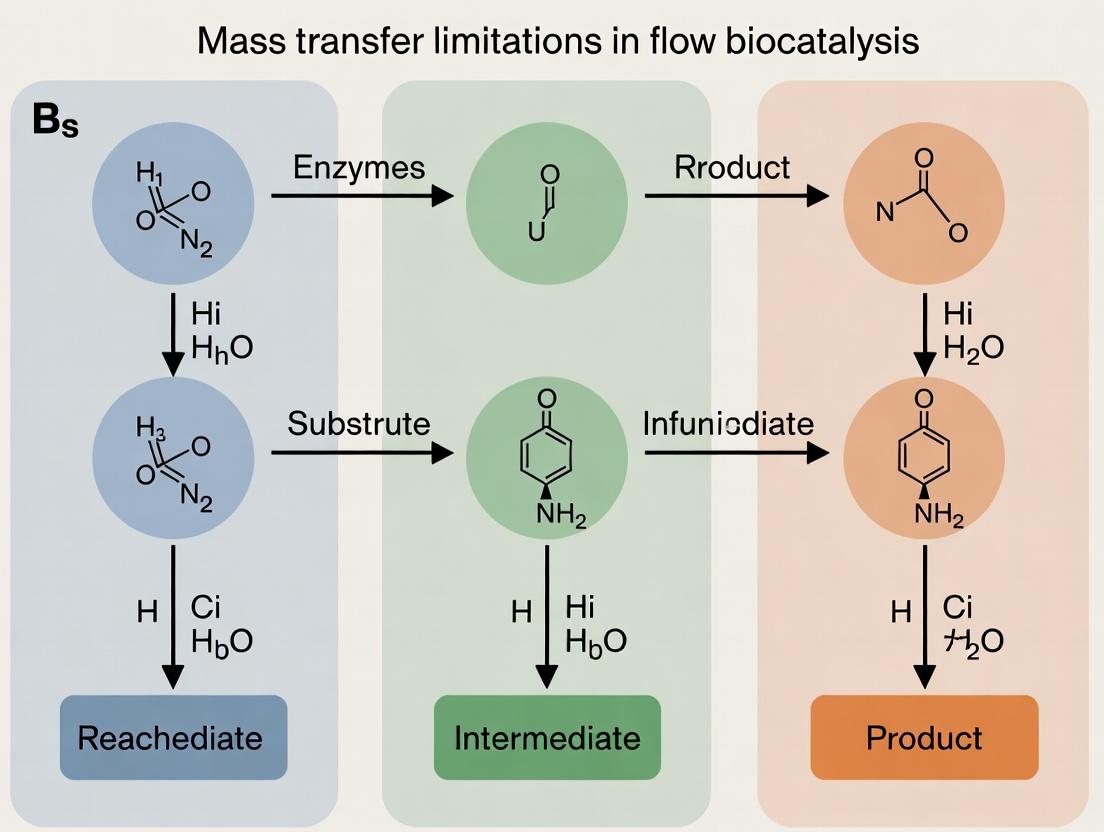
This article provides a comprehensive guide for researchers and process engineers on addressing the critical challenge of mass transfer in continuous flow biocatalysis.
Breaking Through the Bottleneck: Advanced Strategies to Overcome Mass Transfer Limitations in Flow Biocatalysis
Abstract
This article provides a comprehensive guide for researchers and process engineers on addressing the critical challenge of mass transfer in continuous flow biocatalysis. We explore the foundational principles of internal and external mass transfer limitations in immobilized enzyme reactors (IMERs). The core covers methodological innovations in reactor design, carrier engineering, and process intensification. Practical troubleshooting and optimization frameworks are detailed, followed by validation techniques and comparative analyses of different reactor configurations. This guide equips professionals with the knowledge to design more efficient, scalable, and productive biocatalytic flow processes for pharmaceutical synthesis and beyond.
Understanding the Bottleneck: The Fundamentals of Mass Transfer in Flow Biocatalysis
Technical Support Center
Troubleshooting Guides & FAQs
Q1: How can I experimentally determine if my system is limited by external (film) diffusion or internal (pore) diffusion? A: Perform a diagnostic experiment by varying the linear flow velocity (or agitation speed in a batch system) while keeping the catalyst loading constant. Measure the observed reaction rate.
- Interpretation: If the observed rate increases with increased flow/agitation, external mass transfer is limiting. If the rate remains constant, external limitations are negligible, and internal diffusion or kinetics may be controlling.
Q2: My conversion plateaus at a value below theoretical yield, even with excess substrate. Is this a mass transfer issue? A: Yes, this is a classic sign of severe mass transfer limitations. The substrate cannot reach all active sites within the catalyst particle before reacting, creating concentration gradients. To diagnose further:
- Grind the immobilized enzyme particles to reduce particle size.
- Re-run the reaction under identical conditions.
- Interpretation: A significant increase in conversion or rate indicates internal diffusion limitations. A small or no increase suggests the limitation may be external or that the enzyme itself has been deactivated during immobilization.
Q3: The Weisz modulus calculation suggests strong pore diffusion limitations. What are my primary strategies to mitigate this? A: Your goal is to reduce the characteristic diffusion path length.
- Use smaller support particles. This is the most direct method.
- Increase pore diameter of the carrier material (e.g., switch from a microporous to a mesoporous support).
- Employ a non-porous or superficially porous carrier where the enzyme is only attached to the outer surface.
- Reduce enzyme loading to create a thinner active layer.
Q4: How do I choose between a porous and non-porous support to balance activity and stability? A: This is a key trade-off.
- Porous Supports: Offer high surface area and enzyme loading, leading to high volumetric activity. They also provide a protective microenvironment, often enhancing stability. However, they are prone to internal diffusion limitations.
- Non-porous Supports: Eliminate internal diffusion, providing kinetically superior performance (higher effectiveness factor). Enzyme loading and thus volumetric activity is lower, and the enzyme may be less protected.
Table 1: Diagnostic Tests for Mass Transfer Limitations
| Test | Method | Observation Indicating Limitation |
|---|---|---|
| Flow Rate Variation | Vary linear flow velocity in a packed-bed reactor. | Observed reaction rate changes with flow velocity. |
| Particle Size Variation | Run reactions with identical catalyst but different particle diameters (d_p). | Observed rate per unit mass changes with d_p. |
| Damköhler Number (Da II) | Calculate Da II = (Observed Rate) / (Maximum Diffusion Rate). | Da II >> 1 indicates strong external limitation. |
| Weisz Modulus (Φ) | Calculate Φ = (Observed Rate * (dp/2)^2) / (Deff * C_s). | Φ > ~0.3 indicates significant internal limitation. |
Q5: Can you provide a standard protocol for measuring the effectiveness factor (η)? A: Protocol: Determination of Effectiveness Factor for an Immobilized Enzyme Principle: Compare the activity of the immobilized enzyme to the activity of an equivalent amount of free enzyme under conditions where neither system is mass transfer limited.
- Free Enzyme Activity:
- Prepare a solution of native, free enzyme at a known concentration.
- In a well-mixed batch reactor (e.g., stirred vial), add substrate at a concentration >> Km.
- Measure the initial reaction rate (Vfree). Ensure the system is well-agitated to prevent diffusion limitations.
- Immobilized Enzyme Activity:
- Use the immobilized enzyme preparation.
- Use an amount containing the exact same quantity of enzyme (based on protein assay of the immobilized preparation).
- Under identical reaction conditions (pH, T, [S]), measure the initial reaction rate (V_immob). For this measurement, ensure the system is agitated vigorously or flow is high enough to eliminate external diffusion.
- Calculation:
- Effectiveness Factor, η = Vimmob / Vfree.
- η ≈ 1: No internal diffusion limitation.
- η < 1: Internal diffusion is limiting (or enzyme was inactivated during immobilization).
- η > 1: Possible artifacts (e.g., partitioning effects, different microenvironments).
The Scientist's Toolkit: Research Reagent Solutions
Table 2: Key Materials for Investigating Mass Transfer
| Item | Function & Rationale |
|---|---|
| Mesoporous Silica (e.g., SBA-15, MCM-41) | High-surface-area support with tunable, uniform pore diameters (2-50 nm) ideal for studying pore diffusion effects. |
| Non-porous Glass or Magnetic Beads | Solid supports for creating catalysts without internal diffusion, used as a baseline to isolate external film effects. |
| Enzyme with Colorimetric Assay (e.g., Horseradish Peroxidase, Alkaline Phosphatase) | Enables direct visualization of substrate penetration and reaction zones within a particle via microscopy. |
| Fluorescently-Tagged Dextrans of Varying Sizes | Used as inert tracer molecules to probe effective diffusivity (D_eff) within catalyst pores via FRAP or other techniques. |
| Plug-Flow Reactor (PFR) System with HPLC/UPLC | Provides precise control over residence time and flow velocity, essential for generating robust kinetic and mass transfer data. |
| Rotating Disk Reactor (RDR) | Excellent experimental setup where hydrodynamics are well-defined, simplifying the analysis of external mass transfer coefficients. |
Visualization: Experimental Workflow & Conceptual Diagrams
Diagram 1: Diagnostic Flowchart for Mass Transfer Limitations (76 chars)
Diagram 2: Internal vs. External Mass Transfer Concepts (75 chars)
Diagram 3: Effectiveness Factor Experiment Workflow (67 chars)
Topic: Key Parameters: The Role of the Damköhler, Sherwood, and Péclet Numbers in Diagnosing Limitations.
Welcome to the Flow Biocatalysis Technical Support Center. This resource is designed to help researchers diagnose and address mass transfer limitations—a critical hurdle in scaling up continuous bioprocesses. Effective troubleshooting requires understanding the dimensionless numbers that govern reaction and transport rates.
FAQs & Troubleshooting Guides
Q1: My immobilized enzyme reactor shows high substrate conversion at low flow rates, but conversion plummets when I scale up the flow rate. What is the likely cause and how can I diagnose it?
A: This is a classic symptom of external mass transfer limitation. At higher flow rates, the contact time between the bulk fluid and the catalyst surface decreases. If the transport of substrate to the catalyst (governed by fluid dynamics) becomes slower than the enzyme's intrinsic reaction rate, conversion drops.
- Diagnostic Tool: Calculate the Damköhler Number II (DaII).
- Formula: DaII = (Reaction Rate) / (External Mass Transfer Rate) ≈ (Vmax / (KM+Cbulk)) / (kL * a)
- Interpretation: DaII >> 1 indicates the reaction is much faster than mass transfer. The system is mass transfer limited. DaII << 1 indicates the system is reaction rate limited.
Q2: I've optimized my flow reactor's mixing, but my catalyst's effectiveness factor still appears low. What could be happening inside the catalyst particle?
A: The issue likely involves internal mass transfer (pore diffusion) limitation. Substrate molecules cannot diffuse fast enough into the porous support to reach all immobilized enzyme sites. The reaction only occurs in a thin shell near the particle's surface.
- Diagnostic Tool: Calculate the Effectiveness Factor (η) & Thiele Modulus (φ).
- Protocol: Conduct experiments with progressively smaller catalyst particle sizes while keeping enzyme loading constant. Measure the observed reaction rate.
- Interpretation: If the observed rate increases significantly with smaller particle size, internal diffusion is limiting. The Thiele Modulus (φ) relates the reaction rate to the diffusion rate inside the particle. A high φ leads to a low effectiveness factor η (η = observed rate / intrinsic rate).
Q3: How do I know if my reactor is operating in an ideal plug flow regime, or if axial dispersion is distorting my results?
A: Axial dispersion (back-mixing) can broaden residence time distribution, reducing the effective reactant concentration and mimicking poor conversion. This is critical for precise kinetic studies.
- Diagnostic Tool: Calculate the Péclet Number (Pe) for axial dispersion.
- Formula: Pe = (u * L) / Dax, where u=linear velocity, L=reactor length, Dax=axial dispersion coefficient.
- Experimental Protocol (Tracer Test):
- Under operating conditions, inject a sharp pulse of a non-reactive tracer (e.g., dye, salt) at the reactor inlet.
- Measure the tracer concentration over time at the outlet (C(t) curve).
- Calculate the mean residence time (τ) and variance (σ²) of the C(t) curve.
- Determine Dax using the closed-closed vessel dispersion model: σ²/τ² = 2(Dax/(uL)) - 2(Dax/(uL))²(1 - exp(-uL/Dax))
- Interpretation: Pe > 50 indicates near-ideal plug flow. Pe < 10 signifies significant axial dispersion.
Q4: My system involves a liquid-liquid biphasic reaction. How do I diagnose if interphase mass transfer is the bottleneck?
A: In multiphase systems, transport across the phase boundary is often the slowest step.
- Diagnostic Tool: Analyze the relative magnitudes of the Damköhler (Da) and Sherwood (Sh) numbers.
- Sherwood Number (Sh): Represents the ratio of convective mass transfer to diffusive mass transfer. Sh = (kL * dp) / D, where kL is the mass transfer coefficient, dp is droplet/particle diameter, D is diffusivity.
- Integrated Protocol:
- Vary the agitation speed or static mixer geometry to change droplet size (affects interfacial area, a) and kL.
- Measure the overall conversion rate at each condition.
- If the rate increases strongly with increased agitation, the process is mass transfer limited (Da > Sh). If the rate plateaus, the intrinsic reaction kinetics become limiting (Da < Sh).
Table 1: Key Parameters for Diagnosing Limitations in Flow Biocatalysis
| Number | Symbol | Interpretation | Typical Formula | What a High Value Indicates |
|---|---|---|---|---|
| Damköhler I | DaI | Reaction rate vs. Convective transport | (τ * k) or (τ * Vmax/KM) | Reaction is fast relative to flow. Residence time is key. |
| Damköhler II | DaII | Reaction rate vs. External mass transfer | (Intrinsic Rate) / (kL * a * C) | Reaction is faster than transport to surface. External MT limited. |
| Thiele Modulus | φ | Reaction rate vs. Internal diffusion rate | L * √(Vmax/(KM*Deff)) | Severe pore diffusion gradients. Internal MT limited. |
| Sherwood | Sh | Convective vs. Diffusive mass transfer | (kL * L) / D | Convective transport dominates. High external MT coefficient. |
| Péclet (Axial) | Pe | Convective flow vs. Axial dispersion | (u * L) / Dax | Flow dominates dispersion. Near-ideal plug flow. |
The Scientist's Toolkit: Research Reagent Solutions
Table 2: Essential Materials for Mass Transfer Experiments
| Item | Function / Rationale |
|---|---|
| Controlled-Pore Glass or Polymer Beads | Well-defined porosity and particle size for studying internal diffusion. |
| Non-reactive Tracers (e.g., Blue Dextran, NaCl) | For residence time distribution (RTD) studies to determine Pe and diagnose flow non-idealities. |
| Fluorescent Dyes (e.g., Fluorescein) | Visualize flow patterns and mixing in micro/milli-fluidic reactors. |
| Static Mixer Elements | Enhance radial mixing and interphase contact without moving parts. |
| Online UV/Vis or FTIR Flow Cell | Real-time monitoring of substrate/product concentration for accurate kinetic data. |
| Particle Size Analyzer | Characterize catalyst support particles and emulsion droplets. |
| Pressure Transducers | Monitor bed compaction and clogging in packed-bed reactors. |
Diagnostic Workflow Diagrams
Diagnosing Mass Transfer Limitations
Mass Transfer Resistances in Series
Technical Support Center: Troubleshooting Mass Transfer Limitations in Flow Biocatalysis
Troubleshooting Guides
Issue 1: Observed Reaction Rate is Significantly Lower Than Theoretical Enzyme Activity
- Symptoms: Low product yield despite high enzyme loading. Rate does not scale linearly with catalyst amount.
- Diagnosis: Strong indicator of internal diffusion limitations (pore diffusion). Substrate cannot reach all immobilized enzyme active sites fast enough.
- Solution Steps:
- Test Flow Rate Dependency: Increase volumetric flow rate. If observed reaction rate increases, external film diffusion is co-limiting.
- Reduce Particle Size: If possible, use a smaller support particle size (e.g., <100 μm) to shorten diffusion path lengths.
- Increase Substrate Concentration: Operate at higher inlet [S] to increase the concentration gradient driving diffusion.
- Re-evaluate Support Matrix: Consider a macroporous or hydrogel-based support with higher effective diffusivity.
Issue 2: Apparent Enzyme Inactivation or Rapid Loss of Activity
- Symptoms: Initial high activity drops sharply and then stabilizes at a lower level.
- Diagnosis: Likely not true inactivation. Initial phase consumes substrate readily available at pore mouths. Stabilized rate represents the diffusion-limited steady state.
- Solution Steps:
- Perform a Thiele Modulus Analysis: Estimate the effectiveness factor (η). If η << 1, diffusion is severely limiting.
- Profile Axial Concentration: Measure substrate concentration along the reactor length. A very steep initial drop confirms mass transfer limitation.
- Switch to a Recirculation Mode: Recirculate substrate to distinguish between diffusion and deactivation.
Issue 3: Poor Stereoselectivity or Altered Product Ratio
- Symptoms: Product enantiomeric excess (e.e.) or product ratio differs from batch or free enzyme experiments.
- Diagnosis: Differential diffusion rates for substrates or intermediates in multi-step reactions can distort local concentrations at the enzyme active site.
- Solution Steps:
- Vary Space Velocity: Change the contact time (e.g., LHSV). If selectivity changes with flow rate, mass transfer is influencing kinetics.
- Use a Finer Support: Minimize intra-particle gradients to match bulk conditions at the enzyme site.
- Model Competitive Diffusion: Use a model incorporating diffusion constants for all relevant species.
Frequently Asked Questions (FAQs)
Q1: How can I experimentally determine if my system is diffusion-limited? A: Conduct the "Flow Rate Variation Test." Measure the reaction outcome (e.g., conversion) at a constant catalyst mass but increasing volumetric flow rates. If the conversion increases with flow rate, you have external film diffusion limitations. If conversion remains unchanged after a certain point, external limitations are minimized, but internal (pore) diffusion may still be present. A subsequent test with different catalyst particle sizes can diagnose internal diffusion.
Q2: What is the Effectiveness Factor (η), and how do I estimate it?
A: The Effectiveness Factor is the ratio of the observed reaction rate to the rate that would occur if all enzyme were exposed to the bulk substrate concentration. It quantifies the penalty due to diffusion. A simple experimental estimation is:
η = (Observed reaction rate per unit mass of catalyst) / (Reaction rate per unit mass of catalyst under non-diffusion-limited conditions).
To get the denominator, use a very small, finely ground catalyst sample or the free enzyme at the same bulk conditions.
Q3: My enzyme is immobilized on large, dense beads. What are my options to improve accessibility? A: You have several strategic options:
- Physical Modification: Crush or mill the beads to smaller particles, then pack them in a column (may increase pressure drop).
- Chemical Modification: Consider re-immobilization on a superficially porous or fibrous support with shorter diffusion paths.
- Process Modification: Operate in a recirculating batch stirred-tank mode with the beads to reduce external film thickness, though this may not solve internal pore diffusion.
Q4: Does increasing enzyme loading on a support always improve performance? A: No, and it can be counterproductive. Beyond a certain point, increasing enzyme loading crowds active sites primarily near the pore entrance, leaving inner regions of the pore underutilized. This increases the catalyst cost without a proportional rate increase and can even lower the observed activity per unit mass of catalyst due to exacerbated diffusion limitations.
Q5: Are there computational methods to model and predict these limitations? A: Yes. The standard approach is to use a Pore Diffusion Model with Michaelis-Menten Kinetics. This involves solving a second-order ordinary differential equation derived from a mass balance within the catalyst particle (often spherical geometry). Key dimensionless numbers are:
- Thiele Modulus (φ): Compares reaction rate to diffusion rate.
- Observervation Modulus (Φ): Used with the Weisz-Prater Criterion for experimental diagnosis in porous catalysts.
Table 1: Diagnostic Tests for Mass Transfer Limitations
| Test | Method | Indication of Limitation | Typical Data Outcome |
|---|---|---|---|
| Flow Rate Test | Vary flow rate at constant catalyst mass. | External Film Diffusion | Conversion increases with flow rate. |
| Particle Size Test | Compare activity with different particle sizes. | Internal Pore Diffusion | Specific activity (rate/mass) increases as particle size decreases. |
| Weisz-Prater Criterion | Calculate Φ = (robs * R²) / (Deff * C_s). | Internal Pore Diffusion | If Φ >> 1, severe pore diffusion limitations exist. |
| Activation Energy | Measure Ea apparent from Arrhenius plot. | Internal Pore Diffusion | Eaapparent ≈ ½ Eaintrinsic for severe diffusion limits. |
Table 2: Impact of Support Geometry on Mass Transfer Parameters
| Support Type | Avg. Pore Diameter (nm) | Typical Particle Size (μm) | Relative Effective Diffusivity (Deff/Dbulk) | Common Use Case |
|---|---|---|---|---|
| Microporous Resin | 5-20 | 100-300 | 0.1 - 0.3 | High surface area for adsorption. |
| Mesoporous Silica | 10-50 | 50-200 | 0.3 - 0.6 | Controlled immobilization. |
| Macroporous Polymer | 100-1000 | 200-500 | 0.5 - 0.9 | Biomolecule separation, flow catalysis. |
| Agarose Gel | N/A (gel matrix) | 50-150 | 0.4 - 0.8 | Protein immobilization. |
| Superficially Porous | 30 (shell) | 20-50 | ~0.8 (in shell) | High-efficiency flow reactors. |
Experimental Protocols
Protocol 1: Determining the External Film Diffusion Coefficient (k_L)
- Objective: Quantify mass transfer resistance across the liquid film surrounding catalyst particles.
- Materials: Packed-bed reactor, catalyst particles, substrate solution, HPLC/UV analyzer.
- Method:
- Pack a column with a known mass (mcat) and particle diameter (dp) of immobilized catalyst.
- Prepare a substrate solution at concentration [S]in.
- At a constant temperature, run the substrate through the column at varying flow rates (F1, F2,... Fn), ensuring very low single-pass conversion (<10%).
- Measure outlet substrate concentration [S]out for each flow rate.
- The observed rate robs = F * ([S]in - [S]out) / mcat.
- Plot
r_obs vs. F^(1/2)(or use the Wilson-Geankoplis correlation for packed beds). The mass transfer coefficient k_L can be derived from the slope of the initial linear region where film diffusion is rate-limiting.
Protocol 2: Estimating the Effectiveness Factor (η) via Particle Size Variation
- Objective: Experimentally approximate the internal effectiveness factor.
- Materials: Immobilized enzyme on a crushable support (e.g., silica), sieve set, stirred-tank batch reactor.
- Method:
- Take a batch of immobilized catalyst and carefully crush it.
- Sieve it into at least three distinct, narrow particle size ranges (e.g., >200μm, 75-150μm, <45μm).
- In a well-mixed batch reactor (ensuring no external diffusion limits), measure the initial reaction rate (vobs) for each particle size fraction using the same catalyst mass and bulk conditions.
- The smallest particle size fraction gives the rate closest to the diffusion-free rate (vintrinsic). Thus:
η ≈ v_obs (for a given size) / v_obs (for the smallest size).
Visualizations
Diagram 1: Mass Transfer Layers in Immobilized Biocatalyst
Diagram 2: Diagnostic Workflow for Mass Transfer Limitations
The Scientist's Toolkit: Research Reagent Solutions
Table 3: Essential Materials for Investigating Pore Diffusion
| Item | Function & Rationale |
|---|---|
| Controlled-Pore Glass (CPG) or Silica | Ideal model support with tunable, well-defined pore size for systematic diffusion studies. |
| Epoxy-Activated Agarose Beads | Hydrophilic, macroporous gel. Low non-specific binding and maintains enzyme hydration, allowing study of diffusion in aqueous pores. |
| Fluorescently-Tagged Dextrans | Tracers of varying molecular weights to empirically measure effective diffusivity (D_eff) within porous supports via confocal microscopy. |
| Inert Tracer (e.g., Acetone, D2O) | Used in pulse-response experiments to determine external film mass transfer coefficients (k_L) and axial dispersion in packed-bed reactors. |
| Enzyme with Chromogenic Substrate | (e.g., Alkaline Phosphatase with pNPP). Allows visual/spectroscopic tracking of reaction front penetration into a catalyst particle. |
| Magnetic Stirred-Tank Microreactor | Enables precise control of shear and film thickness to eliminate external diffusion, isolating internal pore effects. |
| Size-Exclusion HPLC Column | To measure changes in enzyme leaching and confirm immobilization stability under different flow conditions that stress pore structure. |
Technical Support Center: Troubleshooting Mass Transfer in Flow Biocatalysis
This support center addresses common experimental challenges related to boundary layer formation and substrate delivery in flow biocatalysis reactors, within the broader thesis context of overcoming mass transfer limitations.
FAQs & Troubleshooting Guides
Q1: My observed reaction rate is significantly lower than the intrinsic kinetic rate predicted by enzyme assays. What is the most likely cause? A: This discrepancy strongly indicates a mass transfer limitation. A thick boundary layer at the catalyst surface (often an immobilized enzyme) is preventing substrate from reaching the active sites at a sufficient rate. The observed rate is the effective rate, limited by diffusion through this stagnant fluid layer, not the intrinsic catalytic rate.
Q2: How can I experimentally determine if my system is limited by bulk fluid flow or boundary layer diffusion? A: Perform a residence time analysis at varying flow rates. Measure conversion at a constant catalyst bed length while systematically increasing the volumetric flow rate.
- Observation & Diagnosis: If conversion increases with increased flow rate, your system is experiencing external mass transfer limitations (boundary layer is too thick). If conversion remains constant, the limitation is likely internal (pore diffusion) or kinetic.
Q3: My conversion plateaus despite increasing catalyst loading. What should I check? A: This is a classic sign of mass transfer control. Adding more catalyst does not improve the rate of substrate delivery through the boundary layer. Focus on enhancing fluid dynamics:
- Verify your flow regime by calculating the Reynolds number (Re). Aim for higher Re to reduce boundary layer thickness.
- Check for channeling or poor packing in packed-bed reactors, which creates uneven flow paths and dead zones.
- Consider switching to a reactor geometry with better mixing (e.g., a stirred tank or a reactor with static mixers) if homogeneous catalyst distribution is critical.
Q4: What are the key reactor parameters to optimize for minimizing boundary layer effects? A: Focus on parameters that increase turbulence or interfacial area. Key parameters are summarized in Table 1.
Table 1: Key Reactor Parameters for Optimizing Substrate Delivery
| Parameter | Target Effect | Typical Optimization Action |
|---|---|---|
| Fluid Velocity | Increase shear, reduce boundary layer thickness. | Increase flow rate. Monitor pressure drop. |
| Reactor Geometry | Enhance mixing and interfacial surface area. | Use smaller diameter channels (microreactors), packed beds with small beads, or add static mixers. |
| Substrate Diffusivity (D) | Increase rate of diffusion through boundary layer. | Adjust solvent composition, increase temperature (if enzyme stability allows). |
| Catalyst Surface Morphology | Increase active surface area per volume. | Use porous supports with high surface area, or nanostructured catalysts. |
Experimental Protocols
Protocol 1: Diagnosing External Mass Transfer Limitations
Objective: To determine if the boundary layer is the rate-limiting step. Materials: Flow reactor system, immobilized catalyst, substrate solution, analytical equipment (e.g., HPLC, spectrophotometer). Method:
- Set up your flow reactor with a fixed mass/volume of immobilized catalyst.
- Prepare a substrate solution at a concentration well below Km (to ensure first-order kinetics relative to substrate).
- Run the experiment at a minimum of five different volumetric flow rates (Q), spanning at least an order of magnitude, while keeping temperature, substrate concentration, and catalyst amount constant.
- For each flow rate, allow the system to reach steady state, then measure the substrate concentration at the outlet ([S]out).
- Calculate conversion: X = (1 - [S]out/[S]in) * 100%.
- Plot conversion (X%) versus flow rate (Q) or space-time. Interpretation: A rising curve that plateaus at higher flow rates indicates that external mass transfer is limiting at low flow rates. A flat line from the lowest flow rate suggests limitations are elsewhere (internal diffusion or kinetics).
Protocol 2: Characterizing Flow Regime and Boundary Layer
Objective: To quantify the fluid dynamics in your reactor channel. Materials: Reactor specifications (channel diameter/characteristic length), fluid properties (density, viscosity), flow rate data. Method:
- Calculate the Reynolds Number (Re) for your system:
- For tubular reactors: Re = (ρ * v * d) / μ where ρ = fluid density (kg/m³), v = linear velocity (m/s), d = tube diameter (m), μ = dynamic viscosity (Pa·s).
- For packed beds: Re = (ρ * v * dp) / (μ * (1 - ε)) where dp = particle diameter (m), ε = bed porosity.
- Classify your flow regime:
- Re < ~2100 (tube) / ~10 (packed bed): Laminar Flow (Pronounced boundary layer, diffusion-dominated).
- Re > ~4000 (tube) / ~200 (packed bed): Turbulent Flow (Thin boundary layer, enhanced mixing).
- Intermediate values: Transitional Flow. Interpretation: Operating in the laminar regime almost guarantees significant boundary layer resistance. Aim for transitional or turbulent regimes to improve substrate delivery.
The Scientist's Toolkit: Research Reagent Solutions
Table 2: Essential Materials for Investigating Boundary Layer Effects
| Item | Function in Experiment |
|---|---|
| Immobilized Enzyme/Catalyst (e.g., on resin beads) | Provides the reactive surface where the boundary layer forms; model heterogeneous catalyst. |
| Peristaltic or Syringe Pump (Precision < ±1%) | Delivers precise, adjustable flow rates critical for residence time and Re analysis. |
| Microreactor or Packed-Bed Reactor Chip | Provides defined geometry for calculating fluid dynamic parameters (Re, shear). |
| In-line Pressure Sensor/Transducer | Monitors pressure drop, indicating flow resistance and potential channeling. |
| Tracer Dye (e.g., Food dye, fluorescent dye) | Visualizes flow patterns, dead zones, and mixing efficiency via residence time distribution studies. |
| Computational Fluid Dynamics (CFD) Software (e.g., COMSOL, ANSYS Fluent) | Models velocity profiles, shear stress, and concentration gradients at the catalyst surface theoretically. |
Visualization: Experimental & Conceptual Diagrams
Title: Troubleshooting Workflow for Mass Transfer Limitations
Title: Fluid Dynamics Dictates Substrate Concentration at Catalyst Surface
Troubleshooting Guide & FAQs
Q1: We increased the flow rate in our packed-bed enzyme reactor to boost throughput, but observed a drastic drop in product conversion yield. What went wrong? A1: You are likely experiencing the kinetic-convective trade-off. Increasing flow rate reduces the residence time of the substrate within the reactor. If the contact time becomes shorter than the time required for the enzymatic reaction to reach the desired conversion (kinetic limitation), yield drops. This is a classic sign of mass transfer limitation shifting from external to internal or kinetic control. Verify by calculating the Damköhler number (Da); if Da >> 1, kinetics are too slow relative to convection.
Q2: How can I diagnose if my flow biocatalysis system is limited by external mass transfer (film diffusion) versus internal mass transfer (pore diffusion)? A2: Perform a diagnostic experiment varying catalyst particle size at a constant residence time.
- Observation A: Conversion changes significantly with particle size → Internal (pore) diffusion limitation is significant.
- Observation B: Conversion changes little with particle size but increases with increased mixing/turbulence (Reynolds number) → External (film) diffusion limitation is dominant. A controlled protocol is provided below.
Q3: Our immobilized enzyme catalyst shows high activity in batch tests but poor performance in continuous flow. What are the first parameters to check? A3: First, check for channeling and poor packing in your reactor column, which reduces effective contact. Second, calculate the Carberry number (Ca) or Mears' criterion to assess external mass transfer. Key parameters to measure are the observed reaction rate and the bulk substrate concentration. If the observed rate is much lower than the intrinsic kinetic rate, mass transfer is limiting.
Q4: What is the simplest experimental method to measure the intrinsic kinetics of my immobilized enzyme without mass transfer artifacts? A4: Use a recirculation batch reactor with a very high recirculation flow rate through a small bed of catalyst, ensuring the bulk concentration is uniform and film resistance is minimized. Alternatively, use finely crushed catalyst particles at high agitation speeds to eliminate diffusional gradients before measuring initial rates.
Diagnostic Experimental Protocols
Protocol 1: Diagnosing Mass Transfer Limitations
Objective: To distinguish between kinetic control, external mass transfer control, and internal mass transfer control in a packed-bed flow reactor.
Materials: See "Research Reagent Solutions" table.
Method:
- Baseline Kinetic Rate: Crush a sample of your immobilized catalyst to a fine powder (e.g., < 100 µm) to eliminate internal diffusion. Perform a batch assay under vigorous stirring to determine the intrinsic reaction rate (V_kinetic).
- Flow Experiment - Varying Particle Size: Pack three separate reactor columns with your catalyst at three distinct particle diameter ranges (e.g., 100-200 µm, 300-450 µm, 500-700 µm). Maintain the same bed volume and enzyme loading.
- Procedure: For each column, run the substrate solution at a series of increasing flow rates (F1, F2, F3...Fn). At each steady state, measure the outlet substrate concentration to calculate conversion.
- Data Analysis: Plot conversion vs. residence time (or space velocity) for each particle size. Also, plot the observed reaction rate per particle size against the inverse particle diameter (1/dp).
Interpretation:
- Lines coincide: Kinetics control.
- Lines diverge, with smaller particles giving higher conversion: Internal diffusion influences.
- Conversion increases with increased flow rate (Re) for a given particle size: External diffusion influences.
Protocol 2: Determining the Effectiveness Factor (η)
Objective: Quantify the loss of catalyst efficiency due to internal mass transfer.
Method:
- Using data from Protocol 1, calculate the observed reaction rate (V_obs) for each catalyst particle size under a defined set of conditions (e.g., at a fixed, low conversion to ensure differential reactor behavior).
- The Effectiveness Factor (η) is calculated as: η = Vobs / Vkinetic.
- Plot η versus particle size. A decline in η with increasing particle size confirms internal diffusion limitations.
Data Presentation
Table 1: Impact of Flow Rate & Particle Size on Observed Conversion
| Particle Size (µm) | Flow Rate (mL/min) | Residence Time (min) | Observed Conversion (%) | Calculated Da (Damköhler) | Estimated Effectiveness Factor (η) |
|---|---|---|---|---|---|
| 150 | 0.5 | 10 | 95 | 2.1 | 0.98 |
| 150 | 2.0 | 2.5 | 48 | 0.5 | 0.95 |
| 450 | 0.5 | 10 | 78 | 1.8 | 0.62 |
| 450 | 2.0 | 2.5 | 22 | 0.45 | 0.58 |
Table 2: Key Dimensionless Numbers for Diagnosing Mass Transfer
| Number | Formula | Interpretation | Threshold for Limitation |
|---|---|---|---|
| Damköhler (Da_I) | (Reaction Rate)/(Convective Mass Transfer Rate) | Kinetic vs. Convective Trade-off | Da > 0.1 suggests significant kinetic limitation relative to flow. |
| Carberry Number (Ca) | (Observed Rate)/(Max External Mass Transfer Rate) | External Diffusion | Ca > 0.05 suggests external limitation. |
| Thiele Modulus (φ) | (Intrinsic Reaction Rate)/(Internal Diffusion Rate) | Internal Diffusion | φ > 1 indicates strong internal diffusion limitation (η < 1). |
| Effectiveness Factor (η) | (Observed Rate)/(Intrinsic Kinetic Rate) | Catalyst Utilization | η = 1: No limitation. η << 1: Severe diffusion limitation. |
Mandatory Visualizations
The Scientist's Toolkit: Research Reagent Solutions
Table 3: Essential Materials for Flow Biocatalysis Mass Transfer Studies
| Item | Function & Rationale |
|---|---|
| Controlled-Pore Glass (CPG) or Agarose Beads | Standard supports for enzyme immobilization. Well-defined pore size and particle diameter distributions are critical for systematic diffusion studies. |
| Enzyme (e.g., Candida antarctica Lipase B) | A model, robust, and well-characterized enzyme often used in immobilization and flow biocatalysis research. |
| Glutaraldehyde or Epoxy-Activated Resins | Common crosslinkers for covalent enzyme immobilization onto solid supports, creating stable packed beds. |
| HPLC System with UV/RI Detector | For accurate, quantitative analysis of substrate and product concentrations in effluent streams to determine conversion and yield. |
| Particle Size Analyzer | To precisely characterize the diameter of catalyst particles before packing, a key variable in mass transfer analysis. |
| Laboratory-Scale Packed-Bed Reactor (PBR) System | Includes HPLC pumps for precise flow control, a column holder, and pressure sensors. Enables variation of residence time (τ). |
| Microporous Filter Frits (2-10 µm) | Placed at reactor inlet/outlet to contain catalyst particles while allowing fluid flow, preventing column clogging. |
| Buffer Solutions (e.g., Phosphate, Tris) | To maintain optimal pH for enzyme activity and stability during long-term flow experiments. |
Engineering Solutions: Methodologies to Enhance Mass Transfer in Biocatalytic Reactors
Technical Support Center: Troubleshooting Mass Transfer in Flow Biocatalysis
This support center addresses common experimental challenges in advanced reactor systems, framed within the thesis of overcoming mass transfer limitations to enhance reaction rates, selectivity, and yield in continuous-flow biocatalysis.
Troubleshooting Guides
Issue 1: Low Observed Reaction Rate in Packed Bed Reactor (PBR)
- Problem: The measured reaction rate is significantly lower than the intrinsic kinetic rate of the immobilized enzyme/catalyst.
- Diagnosis: This is a classic symptom of external (film) or internal (pore) mass transfer limitations. The substrate cannot reach the active sites fast enough.
- Step-by-Step Resolution:
- Vary Flow Rate: Increase the volumetric flow rate while keeping catalyst mass constant. If the observed rate increases, external mass transfer is limiting.
- Reduce Particle Size: If possible, use smaller catalyst/bead particles. If the rate improves, internal mass transfer is limiting.
- Calculate Damköhler Numbers: Compare the characteristic time of reaction to the characteristic time for diffusion. A Damköhler number >> 1 indicates strong mass transfer limitation.
- Solution: Optimize flow rate to reduce film thickness and/or switch to smaller diameter, more porous supports to minimize pore diffusion path lengths.
Issue 2: Channeling and High Pressure Drop in Monolithic Reactor
- Problem: Uneven flow distribution (channeling) and a rapidly increasing pressure drop.
- Diagnosis: Blockage of monolithic channels or non-uniform cell density, leading to preferential flow paths.
- Step-by-Step Resolution:
- Inspect Feed: Use in-line filters (<10 µm) to prevent particulate matter from entering the reactor.
- Perform Flow Distribution Test: Use a dye or non-reactive tracer to visualize flow maldistribution.
- Back-Flush: If blockage occurs, implement a regular cleaning-in-place (CIP) cycle with reverse flow if compatible with catalyst.
- Solution: Ensure feed streams are thoroughly filtered. Select a monolith with a uniform structure and appropriate channel density (cells per square inch, CPSI) for your fluid viscosity and catalyst layer.
Issue 3: Poor Temperature Control in Microchannel Reactor
- Problem: Unexpected hotspots or temperature gradients along the reactor length, affecting enzyme stability and product consistency.
- Diagnosis: Inefficient heat exchange due to microchannel design, insufficient coolant flow, or highly exothermic/endothermic reactions.
- Step-by-Step Resolution:
- Map Temperature: Use embedded micro-thermocouples or IR imaging to identify hotspots.
- Check Coolant Flow: Ensure cooling fluid flow rate is sufficient and its inlet temperature is stable.
- Review Design: Consider a reactor with enhanced heat exchange architecture (e.g., staggered herringbone mixers, interdigitated cooling channels).
- Solution: Implement a dedicated, high-precision temperature control system for both reactant and coolant streams. Consider operating in a segmented flow regime to enhance internal heat/mass transfer.
Issue 4: Inconsistent Thin Film & Scaling in Spinning Disk Reactor (SDR)
- Problem: Wavy, uneven liquid film leading to variable residence times and difficulty in scaling up results.
- Diagnosis: Instability due to incorrect disk rotational speed, wetting issues, or non-optimal fluid properties.
- Step-by-Step Resolution:
- Characterize Film: Use high-speed imaging to visualize film stability and wave formation.
- Optimize Rotation: Systematically vary rotational speed (RPM) to find the range that produces a smooth, laminar film for your fluid's viscosity and flow rate.
- Modify Surface: Improve wettability through disk surface chemistry (hydrophilic/hydrophobic coatings) or physical texturing.
- Solution: Maintain a constant ratio of centrifugal to viscous forces (Ekman number) and inertial to viscous forces (Reynolds number) when scaling from lab to pilot SDR units.
Frequently Asked Questions (FAQs)
Q1: How do I choose between a packed bed and a monolithic reactor for my immobilized enzyme? A: The choice hinges on pressure drop and catalyst loading. Packed beds offer very high catalyst loading but suffer from high pressure drop and potential channeling. Monoliths provide very low pressure drop and excellent flow distribution but lower catalyst load per unit volume. Use a packed bed for slow reactions where high catalyst load is critical. Choose a monolith for fast reactions or where system pressure is a constraint.
Q2: What is the key advantage of microchannel reactors for biocatalysis? A: Their unparalleled surface-area-to-volume ratio (often >10,000 m²/m³) minimizes the diffusion path length, virtually eliminating internal mass transfer limitations. This allows for precise reaction control and often results in significantly higher space-time yields compared to conventional reactors.
Q3: My enzyme deactivates quickly in a continuous flow system. What can I do? A: This is a stability issue often exacerbated by mass transfer. First, ensure your reactor choice (e.g., microchannel, SDR) minimizes thermal gradients causing denaturation. Second, consider advanced immobilization techniques (e.g., multi-point covalent attachment on supports like EziG beads) to enhance rigidity. Third, for SDRs and microchannels, the drastically reduced residence time itself can improve stability by limiting exposure time to process conditions.
Q4: How do I scale up a process from a microchannel to pilot production? A: Scale-up is achieved through numbering-up (parallel operation of identical units) rather than scaling the channel size. This preserves the critical mass and heat transfer characteristics. The key is ensuring absolutely uniform flow distribution to all parallel units, which requires carefully designed manifolds.
Comparative Reactor Performance Data
Table 1: Key Mass Transfer and Operational Parameters of Advanced Reactors
| Reactor Type | Typical Specific Surface Area (m²/m³) | Pressure Drop | Catalyst Loading | Key Advantage | Primary Limitation |
|---|---|---|---|---|---|
| Packed Bed (PBR) | 500 - 2,000 | Very High | Very High | High catalyst load, simple design | High pressure drop, channeling risk |
| Monolithic Reactor | 200 - 1,000 | Very Low | Low - Medium | Ultra-low pressure drop, excellent flow distribution | Lower catalyst load per volume |
| Microchannel Reactor | 10,000 - 50,000 | Low | Low | Extreme heat/mass transfer, precise control | Susceptible to clogging, numbering-up complexity |
| Spinning Disk (SDR) | 100 - 5,000 (film dependent) | Very Low | Very Low (surface) | Intense mixing, high gas-liquid transfer, handles viscous fluids | Complex mechanical design, surface area limited |
Table 2: Experimental Protocol for Diagnosing Mass Transfer Limitations
| Step | Action | Measurement | Diagnostic Outcome |
|---|---|---|---|
| 1 | Run reaction at varying flow rates, constant catalyst mass. | Observed Reaction Rate | Rate increases with flow => External limitation suspected. |
| 2 | Run reaction with different catalyst particle sizes. | Observed Reaction Rate | Rate increases with smaller particles => Internal limitation suspected. |
| 3 | Calculate Weisz-Prater modulus (Φ) for internal diffusion. | Φ = (Observed Rate * Particle Radius²) / (Diffusivity * Substrate Conc.) | Φ << 1 => No internal limitation. Φ >> 1 => Strong internal limitation. |
| 4 | Calculate Carberry number (Ca) for external diffusion. | Ca = (Observed Rate) / (Mass Transfer Coeff. * Substrate Conc.) | Ca << 1 => No external limitation. Ca >> 1 => Strong external limitation. |
Experimental Protocol: Tracer Test for Flow Distribution
Objective: To quantify the residence time distribution (RTD) and identify flow maldistribution (channeling) or dead zones in a packed bed or monolithic reactor.
Materials: Reactor system, inert tracer (e.g., acetone, NaCl solution, non-absorbing dye), conductivity/UV-Vis detector, data acquisition system.
Methodology:
- Set up the reactor with process fluid flowing at the desired operating velocity.
- At time t=0, introduce a sharp pulse or a step change of tracer into the inlet stream.
- Continuously measure the tracer concentration at the reactor outlet using an appropriate detector.
- Record the concentration (C) vs. time (t) data.
- For a pulse input, calculate the mean residence time (τ) and variance (σ²) of the E(t) curve.
- Compare the experimental RTD curve to the ideal curve (Piston Flow or Continuous Stirred-Tank Reactor models). A early peak indicates channeling; a long tail indicates dead zones or stagnant regions.
Visualizations
Diagram Title: Reactor Selection Logic for Enhanced Mass Transfer
Diagram Title: Pathway of Substrate to Active Site Showing Limitations
The Scientist's Toolkit: Key Research Reagent Solutions
Table 3: Essential Materials for Flow Biocatalysis Reactor Studies
| Item | Function & Rationale | Example/Note |
|---|---|---|
| EziG Immobilization Beads | Robust, controlled porosity carriers for enzyme immobilization. Minimize pore diffusion limitations and enzyme leaching. | Various types (EziG OPAL) for hydrophobic interaction, metal affinity, or covalent binding. |
| CYTIVA HiTrap Columns | Ready-to-use, small-scale packed beds for rapid screening of immobilized enzyme performance under flow. | Can be connected to syringe or HPLC pumps. |
| Corning Advanced-Flow Reactors | Lab-scale microchannel reactors with high surface-to-volume ratio and integrated heat exchange. | G1 or G4 chips for process screening and optimization. |
| Non-porous Silica or Polymer Beads | Supports for studying reactions without internal diffusion limitations (only film diffusion). | Crucial for decoupling internal/external mass transfer effects. |
| Fluorescent or UV Tracer Dyes | For conducting Residence Time Distribution (RTD) tests to diagnose flow maldistribution. | e.g., Rhodamine B, Blue Dextran (non-reactive). |
| In-line UV/Vis or Conductivity Detector | For real-time monitoring of reactant/product or tracer concentration in flow systems. | Enables kinetic and RTD data acquisition. |
| Precision Syringe/HPLC Pumps | To deliver precise, pulseless flow rates essential for reproducibility in microreactors. | |
| Immobilization Kit (e.g., for epoxy, amino) | Standardized chemistry for covalent enzyme attachment to various supports. | Ensures consistent immobilization protocols. |
Technical Support Center: Troubleshooting & FAQs
Q1: Our immobilized enzyme column shows a rapid drop in catalytic efficiency at higher flow rates. What is the primary cause and how can we diagnose it? A: This is a classic symptom of external mass transfer limitation. The convective flow rate exceeds the rate of diffusion of substrate to the active sites on the carrier surface.
- Diagnostic Protocol: Perform an Eadie-Hofstee plot analysis at varying flow rates. Keep substrate concentration constant and vary flow rate (F). Plot Reaction Rate (v) against v/F. A horizontal line indicates reaction-limited kinetics, while a line with a significant positive slope indicates flow rate-dependent mass transfer limitations.
- Solution: Engineer supports with a more open, macroporous surface morphology (e.g., larger surface ridges, fibrils) to reduce the thickness of the stagnant fluid boundary layer.
Q2: How do we determine if internal diffusion (pore diffusion) is limiting our process? A: Internal diffusion is suspected when increasing enzyme loading does not yield a proportional increase in activity, or when grinding the carrier particles significantly increases observed activity.
- Diagnostic Protocol: The Weisz-Prater Criterion (Φ).
- Measure the observed reaction rate per particle (robs).
- Measure the effective diffusivity (De) of your substrate within the carrier (or use literature values for similar matrices).
- Determine the substrate concentration at the particle surface ([S]s).
- Calculate for a spherical particle: Φ = (robs * Rp²) / (De * [S]s), where Rp is the particle radius.
- Interpretation: If Φ << 1, no pore diffusion limitation. If Φ >> 1, severe pore diffusion limitation.
Q3: Our selected porous glass carrier shows high enzyme binding but very low activity retention. What might be wrong? A: This indicates potential non-productive binding and conformational denaturation of the enzyme, often due to unfavorable surface chemistry despite good morphology.
- Troubleshooting Steps:
- Check Surface Hydrophobicity: Highly hydrophobic surfaces can unfold proteins. Use a carrier with a more hydrophilic surface or modify it with polyethylene glycol (PEG) spacers.
- Assess Binding Density: Excessively high local enzyme density on the pore walls can lead to crowding and steric hindrance. Reduce the immobilization time or enzyme concentration during loading.
- Test a Model Carrier: Immobilize the same enzyme on a non-porous analog of your material (e.g., non-porous glass beads). If activity retention is high, the issue is definitively related to pore confinement/diffusion, not just surface chemistry.
Q4: When comparing different commercial porous polymers, how do we quantitatively evaluate which has the superior morphology for our substrate? A: A systematic characterization of key physical parameters is required. The data should be summarized and compared as below:
Table 1: Quantitative Comparison of Porous Carrier Morphology
| Parameter | Carrier A (Polyacrylate) | Carrier B (Polystyrene) | Carrier C (Agarose) | Ideal Target for 150 kDa Substrate |
|---|---|---|---|---|
| Average Pore Diameter (nm) | 30 | 100 | 45 | > 50 nm |
| BET Surface Area (m²/g) | 380 | 120 | 65 | High (>100 m²/g) |
| Total Pore Volume (cm³/g) | 1.1 | 0.8 | 0.3 | > 0.6 cm³/g |
| Particle Size (μm) | 150-200 | 100-150 | 200-300 | 100-200 μm |
| *Effective Diffusivity (De/D₀) | 0.05 | 0.32 | 0.18 | Closer to 1.0 |
De/D₀: Ratio of effective diffusivity inside the pore to free solution diffusivity. Measured via FRAP or inverse size-exclusion chromatography.
- Experimental Protocol for De/D₀ Estimation (Inverse Size-Exclusion Chromatography):
- Pack a small column with the porous carrier.
- Inject a series of well-characterized molecular probes (e.g., sugars, dextrans, proteins) of known Stokes radius (Rs).
- Measure the elution volume (Ve) for each probe.
- Calculate the distribution coefficient: Kd = (Ve - V₀) / (Vt - V₀), where V₀ is interstitial volume and Vt is total volume.
- Plot Kd vs. Rs. The curve shows the accessibility of pores to molecules of different sizes. A higher Kd for your target substrate size indicates less diffusional restriction.
Q5: What are the key steps to functionalize a porous silica support for optimal enzyme immobilization and diffusion? A: The goal is to add functional groups while minimizing pore blockage.
Protocol: Silica Carrier Functionalization with Aminopropyl Groups
- Pre-drying: Activate silica (e.g., 100Å pore, 40-63 μm particles) by heating at 150°C under vacuum for 12-24 hours to remove adsorbed water.
- Anhydrous Reaction: Under inert atmosphere (N₂ or Ar), suspend dried silica in anhydrous toluene.
- Silane Addition: Add (3-aminopropyl)triethoxysilane (APTES) at a 10:1 (v/v) toluene:silane ratio. Use 5-10 mmol APTES per gram of silica.
- Reflux: Stir and reflux the mixture at 110°C for 16-24 hours.
- Washing: Cool, filter the solid, and wash sequentially with toluene, methanol, and diethyl ether to remove unreacted silane.
- Curing: Dry the aminated silica under vacuum. For maximum stability, cure at 110°C for 1-2 hours.
- Characterization: Confirm functionalization by elemental analysis (N% increase) or FT-IR (appearance of N-H stretches).
The Scientist's Toolkit: Research Reagent Solutions
Table 2: Essential Materials for Porous Support Engineering & Analysis
| Item | Function & Rationale |
|---|---|
| Controlled-Pore Glass (CPG) | Benchmark rigid support. Inorganic, highly stable, with precisely defined pore diameters. Used for fundamental diffusion studies and harsh condition applications. |
| Agarose-based Beads (e.g., Sepharose) | Classical soft gel matrix. Highly hydrophilic, easily functionalized, and biocompatible. Excellent for lab-scale proof-of-concept to minimize enzyme denaturation. |
| Functionalized Polymethacrylate (e.g., ReliZyme) | Engineered polymer support. Offers a balance of mechanical stability and tunable surface chemistry (amino, epoxy, etc.) for covalent immobilization. |
| Aminopropyltriethoxysilane (APTES) | Key coupling agent. Silanes like APTES are used to introduce primary amine groups onto silica-based supports for subsequent enzyme attachment. |
| Glutaraldehyde (25% solution) | Crosslinker. Used as a homobifunctional crosslinker to covalently attach amine-containing enzymes to aminated supports. |
| Fluorescein Isothiocyanate (FITC)-Dextran Probes | Diffusion tracers. A series of these labeled polysaccharides of defined molecular weights are used in fluorescence microscopy or FRAP to visualize and quantify pore accessibility. |
| Size Exclusion Standards | Pore characterization. A kit of proteins or polymers with narrow molecular weight distributions (e.g., thyroglobulin, BSA, ribonuclease A) is essential for inverse SEC to measure effective diffusivity. |
Experimental Workflow & Conceptual Diagrams
Workflow for Diagnosing and Solving Diffusion Limitations
Conceptual Diagram of External vs Internal Diffusion Limitations
Technical Support Center: Troubleshooting for Diffusion Pathway Experiments
This support center addresses common experimental challenges in fabricating and characterizing nanostructured, hierarchically porous materials for flow biocatalysis, with the goal of overcoming mass transfer limitations.
Frequently Asked Questions (FAQs)
Q1: During the synthesis of hierarchical silica monoliths via sol-gel phase separation, my material cracks upon drying. How can I prevent this? A: Cracking is typically due to capillary stresses during evaporative drying. Implement a controlled aging step (e.g., 24-48 hours at 60°C in the mother liquor) to strengthen the gel network. Subsequently, use a solvent exchange protocol: gradually replace water with a low-surface-tension solvent like ethanol, then hexane, prior to ambient pressure drying. For critical applications, consider supercritical CO₂ drying.
Q2: The macropore size distribution in my polymer foam templates is inconsistent, leading to variable enzyme loading. How do I improve uniformity? A: Inconsistent pore size often stems from unstable gas bubble formation during the foaming process. Ensure precise control of the blowing agent (e.g., azodicarbonamide) concentration and particle size. Use a two-step temperature program: first, a homogeneous melt at a temperature below the blowing agent's decomposition point; second, a rapid increase to the precise decomposition temperature to initiate simultaneous nucleation. Mechanical mixing speed must be optimized and kept constant.
Q3: After immobilizing my enzyme, the observed activity in the flow reactor is far lower than expected based on batch tests. What are the primary causes? A: This indicates persistent internal diffusion limitations or improper immobilization. First, verify that your hierarchical pore network is truly interconnected. Use mercury intrusion porosimetry (MIP) data to confirm a bimodal distribution with connecting "throats." Second, check your immobilization chemistry: a too-dense functionalization layer (e.g., excessive silane coupling agent) can block mesopores. Reduce silane concentration during surface activation. See Table 1 for quantitative diagnostics.
Q4: My mesoporous thin film, intended for a coated-wall microreactor, shows poor adhesion and delaminates under flow. How can adhesion be improved? A: Delamination is a failure of the interfacial bond. Prior to coating, rigorously clean and functionalize the substrate (e.g., glass, silicon). For silica-based films, treat the substrate with a piranha solution (Caution: Highly oxidative), followed by a primer like (3-glycidyloxypropyl)trimethoxysilane (GPTMS). This creates covalent epoxy linkages. Ensure the thermal expansion coefficients of the film and substrate are matched by adjusting the sol composition.
Troubleshooting Guides
Issue: Low Apparent Turnover Number in Packed-Bed Bioreactor
Symptoms: Calculated enzyme efficiency is low, pressure drop is higher than modeled. Diagnostic Steps:
- Measure Pressure Drop vs. Flow Rate: Plot ΔP vs. linear velocity. A sharper-than-expected increase suggests pore clogging or compression of soft scaffolds.
- Perform a Thiele Modulus Analysis: Calculate the effectiveness factor (η). If η << 1, severe diffusion limitations are present.
- Post-mortem Analysis: Remove a spent monolith, section it, and stain for protein. A concentration gradient from the exterior to the interior visually confirms diffusion limits.
Solutions:
- If scaffolds are soft, increase cross-linking density or switch to a composite material (e.g., silica-reinforced polymer).
- If pore clogging is evident, increase the average macropore diameter (>5 μm) while maintaining surface area via mesopores.
- Redesign the hierarchy: Ensure the macroporous network is truly continuous. Refer to Protocol 1 for an improved synthesis.
Issue: Enzyme Leaching from Mesoporous Support
Symptoms: Activity declines continuously over time in a flow system, not as a sharp initial drop. Diagnostic Steps:
- Assay Effluent: Continuously collect and assay the reactor effluent for protein content and activity.
- Vary Ionic Strength: A sudden increase in buffer ionic strength often accelerates leaching if binding is electrostatic.
- Check Coupling Chemistry: Verify the stability of your chosen covalent linkage (e.g., amide bonds from EDC/NHS chemistry are stable, while Schiff bases may require reduction with NaBH₄).
Solutions:
- For covalent immobilization, ensure all steps (activation, washing, coupling, quenching) are performed under optimal pH and with sufficient reaction time.
- For affinity-based immobilization (e.g., His-tag on Ni-NTA), incorporate a cross-linking step after adsorption, such as with glutaraldehyde vapor.
- Consider a pore size slightly closer to the enzyme's hydrodynamic diameter to provide physical confinement.
Data Presentation
Table 1: Quantitative Impact of Pore Architecture on Immobilized Enzyme Performance
| Material Architecture | Avg. Macropore Size (μm) | Avg. Mesopore Size (nm) | BET Surface Area (m²/g) | Immobilized Enzyme Load (mg/g) | Apparent Activity Retention (%) | Estimated Effectiveness Factor (η) |
|---|---|---|---|---|---|---|
| Non-porous Beads | N/A | N/A | <5 | 10 | 15 | 0.05 - 0.2 |
| Mesoporous Only (e.g., SBA-15) | N/A | 8 | 650 | 180 | 40 | 0.3 - 0.5 |
| Hierarchical Silica Monolith | 5 | 10 | 320 | 150 | 85 | 0.7 - 0.9 |
| Polymer Foam w/ Meso-coating | 50 | 15 | 200 | 120 | 90 | >0.9 |
Data synthesized from recent literature (2023-2024) on immobilized glucose oxidase and lipase systems. Activity retention is relative to free enzyme in batch. The effectiveness factor (η) is a calculated ratio of observed reaction rate to the rate without diffusion limitation.
Experimental Protocols
Protocol 1: Synthesis of Hierarchically Porous Silica Monoliths for Flow Biocatalysis This method combines spinodal decomposition (macropores) and surfactant templating (mesopores).
Reagents: Tetraethyl orthosilicate (TEOS), Poly(ethylene oxide) (PEO, Mw=10,000), Cetyltrimethylammonium bromide (CTAB), Nitric Acid, Water.
Procedure:
- Prehydrolysis: Stir a mixture of 4.0 g TEOS, 0.5 g 0.01M HNO₃, and 1.0 g H₂O at 0°C for 90 min.
- Macropore Template Addition: To the clear sol, add 2.0 g of a 10 wt% aqueous PEO solution. Stir for 5 min.
- Mesopore Template Addition: Add 0.5 g of a 10 wt% CTAB solution. Stir for a further 10 min.
- Casting & Gelation: Pour the sol into a sealed polypropylene mold. Incubate at 40°C for 24 hours to induce phase separation and gelation.
- Aging: Keep the wet gel in the mold at 80°C for an additional 24 hours.
- Solvent Exchange & Drying: Immerse the gel in ethanol for 48 hours, refreshing the ethanol 3 times. Dry under ambient conditions.
- Calcination: Heat in a muffle furnace with a ramp rate of 1°C/min to 550°C, hold for 6 hours to remove PEO and CTAB, creating the hierarchical pore network.
Protocol 2: Immobilization of His-Tagged Enzyme on Ni-NTA Functionalized Hierarchical Monolith This protocol assumes a pre-synthesized, calcined silica monolith from Protocol 1.
Reagents: (3-Aminopropyl)triethoxysilane (APTES), Glutaraldehyde (25%), NiSO₄, Nα,Nα-Bis(carboxymethyl)-L-lysine (NTA), His-tagged enzyme, Phosphate Buffered Saline (PBS, pH 7.4).
Procedure:
- Amination: Under nitrogen, reflux the monolith in a 5% (v/v) solution of APTES in toluene for 12 hours. Cool, wash with toluene and ethanol, dry at 80°C.
- NTA Loading: React the aminated monolith with a 50mM NTA solution (pH adjusted to 7.0 with NaOH) in the presence of 100mM EDC for 4 hours at room temperature. Wash thoroughly with water.
- Nickel Charging: Incubate the NTA-monolith in a 100mM NiSO₄ solution for 1 hour. Wash with water to remove uncomplexed Ni²⁺.
- Enzyme Immobilization: Circulate a 0.5-1.0 mg/mL solution of your His-tagged enzyme in PBS (pH 7.4) through the monolith in a flow loop for 2 hours at 4°C.
- Cross-linking (Optional, for stability): Expose the enzyme-loaded monolith to glutaraldehyde vapor in a desiccator for 30 minutes.
- Washing: Flush the monolith extensively with PBS containing 10mM imidazole to remove weakly adsorbed enzyme. Store at 4°C in PBS.
Mandatory Visualization
Title: Workflow for Optimizing Hierarchical Porosity
Title: Mass Transfer Pathways in a Hierarchical Support
The Scientist's Toolkit: Research Reagent Solutions
Table 2: Essential Materials for Hierarchical Porosity Experiments
| Item | Function & Rationale |
|---|---|
| Tetraethyl Orthosilicate (TEOS) | The most common silica precursor for sol-gel synthesis. Provides controllable hydrolysis and condensation rates for tailoring meso- and macro-structure. |
| Pluronic P123 (EO₂₀PO₇₀EO₂₀) | A triblock copolymer surfactant used as a mesopore template (e.g., for SBA-15). Creates ordered, tunable mesopores (5-15 nm). |
| Cetyltrimethylammonium Bromide (CTAB) | A cationic surfactant used as a co-template for mesopores in conjunction with macro-phase separation agents. |
| Polyethylene Oxide (PEO, Mw=10k-100k) | A polymer inducer of spinodal decomposition. Concentration and molecular weight control the macropore size and connectivity. |
| (3-Aminopropyl)triethoxysilane (APTES) | A key silane coupling agent for functionalizing silica surfaces. Introduces primary amine groups for subsequent enzyme covalent attachment or further modification (e.g., for NTA). |
| 1-Ethyl-3-(3-dimethylaminopropyl)carbodiimide (EDC) | A zero-length crosslinker for carbodiimide chemistry. Activates carboxyl groups for covalent coupling to amines on enzymes or supports. |
| Nα,Nα-Bis(carboxymethyl)-L-lysine (NTA) | A chelating ligand for immobilizing His-tagged enzymes via complexation with Ni²⁺ ions. Provides oriented, reversible binding. |
| Glutaraldehyde (25% Solution) | A homobifunctional crosslinker. Used for vapor-phase stabilization of adsorbed enzymes or creating amine-amine linkages between support and enzyme. |
Process Intensification via Ultrasound, Microwaves, and Pulsed Flow
Technical Support Center
Welcome to the Technical Support Center for flow biocatalysis process intensification. This guide addresses common practical issues encountered when implementing ultrasound, microwave, and pulsed flow techniques to overcome mass transfer limitations.
Troubleshooting Guides & FAQs
Ultrasound-Assisted Flow Biocatalysis
Q1: My enzyme activity decreases rapidly when using in-line ultrasound. What could be causing this? A: This is likely due to cavitation-induced shear and localized heating. To troubleshoot:
- Verify Power Density: Reduce the ultrasound amplitude/power density. Operate at the minimum effective power (typically 10-50 W/cm² for enzymatic systems). Use pulsed ultrasound modes (e.g., 1 sec ON, 5 sec OFF) to reduce total energy input.
- Check Temperature Control: Ensure your flow cell is equipped with an efficient cooling jacket. Monitor temperature directly at the sonication zone with a thermocouple. Maintain temperature within the enzyme's optimal range.
- Assess Cavitation Intensity: Introduce a chemical dosimeter (e.g., potassium iodide oxidation test) to quantify reactive radical generation. High KI oxidation rates indicate harsh conditions unsuitable for sensitive biocatalysts.
Q2: I am not observing the expected improvement in substrate conversion with ultrasound. A: The issue may be incorrect reactor configuration or sub-optimal coupling.
- Flow-Ultrasound Coupling: Ensure the ultrasound probe is positioned perpendicular to and directly opposing the flow direction to maximize turbulent mixing. Verify the probe tip is fully immersed and positioned at the center of the flow channel.
- Check for Channeling: Use a dye tracer to visualize flow patterns. Ultrasound should eliminate stagnant zones. If channeling persists, consider adding static mixer elements upstream of the sonotrode.
- Substrate Characterization: Confirm your limiting substrate is a solid or highly viscous liquid. Ultrasound primarily benefits heterogeneous or diffusion-limited systems.
Experimental Protocol: Determining Optimal Ultrasonic Parameters for Immobilized Enzyme Cartridges
- Objective: To enhance intraparticle mass transfer in a packed-bed enzyme reactor without degrading enzyme activity.
- Materials: Peristaltic pump, packed-bed reactor (PBR) with immobilized enzyme (e.g., CALB on resin), ultrasonic flow cell with temperature control, HPLC for analysis.
- Method:
- Set up the PBR in a flow loop with the ultrasonic cell placed immediately before the PBR inlet.
- Pump substrate solution at a fixed flow rate (e.g., 0.5 mL/min).
- Run the system without ultrasound to establish a baseline conversion (
C_baseline). - Apply ultrasound at a low amplitude (20% of max). Sample effluent every 5 minutes for 30 minutes for analysis (
C_us). - Calculate Enhancement Factor (EF) = (Cus / Cbaseline) and Activity Retention (AR) = (Initial Activity at t=30 min / Initial Activity at t=0 min).
- Incrementally increase amplitude (e.g., 40%, 60%) and repeat Step 4-5.
- Plot EF and AR vs. Amplitude. The optimal point is the highest EF with AR > 90%.
Table 1: Typical Ultrasound Parameter Optimization Results
| Amplitude (%) | Power Density (W/cm²) | Enhancement Factor (EF) | Activity Retention after 6h (AR%) | Recommended Use |
|---|---|---|---|---|
| 20 | ~15 | 1.2 | 98 | Mild mixing, sensitive enzymes |
| 40 | ~30 | 1.8 | 95 | Optimal for most immobilized systems |
| 60 | ~45 | 2.1 | 70 | Aggressive for particle deagglomeration |
| 80 | ~60 | 2.3 | <50 | Not recommended for biocatalysis |
Microwave-Assisted Flow Biocatalysis
Q3: I observe hot spots and inconsistent product yield in my microwave flow reactor. A: This indicates non-uniform electromagnetic field distribution or inadequate mixing.
- Verify Reactor Geometry: Use a reactor made of microwave-transparent material (e.g., quartz, PTFE, PEEK) with a diameter less than half the wavelength of the microwave (typically < 2 cm for 2.45 GHz). This ensures a more uniform field.
- Implement Dynamic Flow: Increase flow rate to enhance radial mixing and reduce residence time in the cavity. Incorporate a coiled or zig-zag reactor geometry within the cavity to improve fluid distribution.
- Use Passive Susceptors: For low-absorbing reaction mixtures, consider adding a small volume of microwave-absorbing inert particles (e.g., silicon carbide) as a fixed bed to evenly convert microwave energy to heat.
Q4: How do I accurately measure the temperature inside a microwave flow cell? A: Direct in-situ measurement is critical. Avoid external IR sensors.
- Use Fiber-Optic Probe: Insert a calibrated fiber-optic temperature probe (e.g., Luxtron, OpSens) directly into the flow stream within the microwave cavity. This is the gold standard.
- Calibrate with Reference Reaction: Perform a known temperature-sensitive chemical reaction (e.g., the hydrolysis of acetic anhydride) to correlate observed reaction rate with the set microwave power, creating an effective temperature calibration curve.
Pulsed Flow Intensification
Q5: My pulsed flow system causes excessive back-pressure and reactor bed compaction. A: The pulse amplitude or frequency is too high for your reactor packing.
- Optimize Pulse Profile: Reduce the pulse stroke volume or pressure. Switch from a square-wave pulse to a sawtooth or sinusoidal waveform to create a gentler acceleration/deceleration of fluid.
- Adjust Packing: If using a packed bed, ensure particles are rigid and size-monodisperse. Consider using a larger particle size or a monolithic solid support to reduce pressure drop.
- Install a Dampener: Place a small gas-filled bladder or a flexible diaphragm dampener between the pulsation generator and the reactor inlet to absorb pressure spikes.
Q6: How do I quantify the mass transfer enhancement from pulsed flow? A: Use a well-established physical or chemical test system.
- Protocol: Dissolution Rate Test.
- Prepare a flow cell packed with a solid organic acid (e.g., benzoic acid) pellets.
- Pump deionized water at a constant baseline flow rate (Q). Measure the concentration of dissolved acid in the effluent via conductivity until steady-state (
C_ss_constant). - Introduce pulsation at a defined frequency (f) and amplitude (A). Measure the new steady-state concentration (
C_ss_pulsed). - Calculate the Mass Transfer Coefficient (K_L) enhancement:
K_L_pulsed / K_L_constant ≈ C_ss_pulsed / C_ss_constant.
Table 2: Comparison of Process Intensification Techniques
| Technique | Primary Mechanism | Key Operational Parameter | Typical Enhancement Factor (K_L) | Best Suited For |
|---|---|---|---|---|
| Ultrasound | Acoustic cavitation, micro-mixing | Amplitude, Frequency, Pulse Duty Cycle | 1.5 - 3.0 | Solid-liquid suspensions, viscous fluids, fouling prevention |
| Microwave | Selective, volumetric heating | Power, Field Mode, Flow Geometry | N/A (Temperature-driven) | Reactions with high activation energy, selective heating |
| Pulsed Flow | Periodic velocity perturbation, boundary layer renewal | Frequency, Amplitude, Waveform | 1.3 - 2.5 | Packed-bed reactors, membrane systems, laminar flow regimes |
The Scientist's Toolkit: Research Reagent & Equipment Solutions
| Item | Function & Rationale |
|---|---|
| Immobilized Enzyme Cartridge (e.g., Novozym 435) | Benchmarked heterogeneous biocatalyst for testing mass transfer limitations in packed-bed configurations. |
| Silicon Carbide (SiC) Microparticles | Chemically inert, strong microwave absorber. Used as a susceptor to ensure uniform heating in low-absorbency reaction mixtures. |
| Fiber-Optic Temperature Sensor (e.g., FOT-Lab Kit) | Provides accurate, real-time in-situ temperature measurement inside microwave and ultrasound fields without interference. |
| Potassium Iodide (KI) Dosimetry Solution | Quantitative chemical method to measure cavitation intensity in ultrasonic setups via tri-iodide formation (UV-Vis at 355 nm). |
| Perfluorocarbon Droplets (e.g., Perfluorohexane) | Cavitation nuclei for ultrasound; stabilize bubble formation, allowing efficient cavitation at lower, more bio-compatible amplitudes. |
| Piezoelectric Flow Sensor | Measures instantaneous flow rates to characterize and calibrate pulsed flow waveforms (frequency, amplitude, shape). |
| Static Mixer (Helical Element, PEEK) | Enhances radial mixing before/after intensification zones to ensure uniform treatment of all fluid elements. |
Visualizations
Mass Transfer Intensification Pathways
Troubleshooting & Optimization Workflow
Technical Support Center: Troubleshooting Enhanced Mass Transfer in Flow Biocatalysis
Introduction: This support center is framed within a thesis addressing mass transfer limitations in flow biocatalysis for API synthesis. The guides below provide solutions to common experimental challenges.
Frequently Asked Questions (FAQs)
Q1: Our continuous-flow biocatalytic reaction shows significantly lower yield than batch kinetics predict. What is the most likely cause? A1: This discrepancy strongly indicates a mass transfer limitation, likely gas-liquid (e.g., O₂, H₂) or substrate-enzyme transfer. In flow systems, insufficient interfacial area or mixing can restrict substrate delivery to the immobilized enzyme. First, verify your system's Damköhler number (Da) >> 1, confirming kinetics are not limiting. Increase turbulence via static mixer designs or reduce channel diameter to enhance radial mixing.
Q2: How can I experimentally diagnose whether a limitation is due to external (film) or internal (pore) diffusion in a packed-bed enzyme reactor (PBER)? A2: Perform a series of experiments varying the catalyst particle size while keeping the enzyme loading per unit volume constant. If the observed reaction rate increases with decreased particle size, internal diffusion is limiting. If the rate remains unchanged, the limitation is likely external. Complementary, varying the flow rate (changing linear velocity) primarily affects external diffusion.
Q3: We observe channeling and hot spots in our packed bed reactor, leading to unstable product quality. How can this be resolved? A3: Channeling indicates poor bed packing and flow distribution. Implement a high-precision slurry packing method. Integrate flow distributors (e.g., conical headers with frits) at the inlet and outlet. Consider switching to a monolithic or segmented flow (slug flow) design, which provides superior radial mass transfer and predictable residence time distribution.
Q4: What is the most effective way to enhance oxygen mass transfer for an oxidase enzyme in a tubular flow reactor? A4: Implement a gas-liquid segmented (Taylor) flow regime. This creates recirculating vortices within the liquid slugs, drastically increasing the gas-liquid interfacial area and reducing the film thickness. Use a T-junction mixer with controlled gas/liquid flow rates. An alternative is a membrane reactor with a gas-permeable membrane (e.g., PTFE, PDMS) for continuous, bubble-free O₂ supplementation.
Q5: Our immobilized enzyme loses activity rapidly in the flow reactor, though it is stable in batch. What are the potential mass transfer-related causes? A5: Localized overheating (hot spots) due to poor heat and mass transfer can denature enzymes. Exothermic reactions require efficient heat exchange—consider microchannel reactors with integrated cooling. Alternatively, substrate or product inhibition can be exacerbated in flow if high local concentrations develop at the catalyst surface. Dilution or stepwise feeding may be necessary.
Experimental Protocols
Protocol 1: Determining the Dominant Mass Transfer Regime via the Damköhler Number (Da) Objective: To distinguish between kinetic and mass transfer-limited regimes. Method: 1. Measure the intrinsic kinetic rate (rkinetic) in a well-mixed batch system with the enzyme in free, unconstrained form. 2. Measure the observed rate (robserved) in your flow reactor system with immobilized enzyme. 3. Calculate Da = robserved / rkinetic. 4. Interpret: Da << 1 indicates a reaction-limited system. Da >> 1 indicates a mass transfer-limited system.
Protocol 2: Establishing Gas-Liquid Segmented (Taylor) Flow Objective: To achieve high gas-liquid mass transfer coefficients for aerobic or hydrogenation biocatalysis. Method: 1. Use a PEEK or stainless steel T-junction. Introduce the liquid aqueous phase (containing substrate) via one inlet and the gas phase (O₂, H₂, etc.) via the perpendicular inlet. 2. Use syringe or HPLC pumps for precise liquid control. Use a mass flow controller (MFC) for the gas. 3. Start with a 1:1 to 2:1 gas-to-liquid volume ratio. Adjust to achieve uniform, stable slug formation. Visualize in a transparent capillary section. 4. The reactor coil downstream should be sized to provide the required residence time. Segmented flow is maintained in coils with internal diameters typically < 2 mm.
Protocol 3: Assessing Internal Diffusion in Immobilized Beads Objective: To quantify the effectiveness factor (η) of a porous catalyst bead. Method: 1. Immobilize the enzyme on two different batches of support beads with significantly different diameters (e.g., 100 μm and 500 μm) but identical surface chemistry and pore structure. 2. Pack separate, identical PBERs with each bead size. 3. Run the reaction under identical conditions (flow rate, concentration, temperature). 4. Calculate the effectiveness factor: η = (Observed rate with beads) / (Rate if all enzyme were surface-exposed). Approximate the latter by using very small (< 50 μm) beads or free enzyme data. A lower η for larger beads confirms internal diffusion limitations.
Table 1: Mass Transfer Coefficients (kLa) for Different Reactor Configurations in Biocatalytic Oxidations
| Reactor Configuration | Typical kLa (h⁻¹) | Key Design Feature | Suitability for API Synthesis |
|---|---|---|---|
| Stirred-Tank Batch | 10 - 100 | Impeller speed, sparging | Low-throughput screening |
| Packed Bed (Trickle) | 20 - 150 | Cocurrent gas-liquid downflow | Established but prone to channeling |
| Gas-Liquid Segmented Flow | 200 - 1000+ | Taylor bubble generation | High-intensity oxidation/redox |
| Membrane Reactor (Hollow Fiber) | 50 - 300 | Gas-permeable fibers | Bubble-free, shear-sensitive enzymes |
| Oscillatory Baffled Flow | 100 - 500 | Oscillating piston + baffles | Handling of viscous or multiphase streams |
Table 2: Troubleshooting Guide: Symptoms, Causes, and Solutions
| Symptom | Likely Mass Transfer Cause | Diagnostic Experiment | Design Solution |
|---|---|---|---|
| Low yield vs. batch kinetics | High Da number: External or internal diffusion | Vary flow rate (external) or particle size (internal) | Increase mixing (e.g., segmented flow) or use smaller catalyst particles. |
| Unstable output, fluctuating conversion | Flow maldistribution, channeling | Tracer study (RTD analysis) | Improve bed packing; add flow distributors; switch to monolithic reactor. |
| Rapid catalyst deactivation | Hot spots or local inhibition | Measure temperature gradient along bed; test step feeding. | Improve heat exchange (microchannel); implement substrate feed staging. |
| Gas-limited reaction plateau | Low gas-liquid kLa | Measure dissolved O₂/H₂ along reactor length | Implement segmented flow or membrane aeration. |
Visualizations
Title: Decision Tree for Mass Transfer Limitation Diagnosis
Title: Segmented Flow Reactor Workflow for High kLa
The Scientist's Toolkit: Research Reagent Solutions
| Item | Function & Relevance to Enhanced Mass Transfer |
|---|---|
| Immobilized Enzyme on Controlled-Pore Glass (CPG) | Provides a rigid, non-compressible support with defined pore size (e.g., 100Å, 500Å) to study and minimize internal diffusion limitations in packed beds. |
| Polydimethylsiloxane (PDMS) Tubing | Gas-permeable tubing used to construct membrane reactors for bubble-free, continuous gas (O₂) supplementation, enhancing gas-liquid transfer. |
| Static Mixer Elements (e.g., Kenics) | Inserts for tubular reactors that promote radial mixing and disrupt laminar flow, reducing external diffusion barriers. |
| Fluorescent Tracer Dye (e.g., Rhodamine B) | Used in Residence Time Distribution (RTD) studies to diagnose flow maldistribution (channeling) in packed bed reactors. |
| Precision Syringe Pumps (Dual or Quad) | Essential for maintaining precise, pulseless flow rates of liquid phases, crucial for establishing stable segmented flow regimes. |
| Mass Flow Controller (MFC) | Precisely controls and measures gas flow rates for reproducible formation of gas-liquid segmented flow. |
| Dissolved Oxygen (DO) Probe (Flow-through cell) | In-line monitoring of dissolved O₂ concentration to directly quantify gas-liquid mass transfer performance (kLa) in real-time. |
| Micron-sized Enzyme Carriers (<50 μm) | Ultra-small particle supports used to approximate intrinsic kinetics by virtually eliminating internal pore diffusion limitations. |
Diagnosing and Solving Flow Biocatalysis Problems: A Practical Optimization Guide
Troubleshooting Guides & FAQs
Q1: During a continuous flow biocatalysis run, we observe a sharp drop in product yield despite fresh enzyme. Is this a kinetic or mass transfer issue? A: This is often a sign of external mass transfer limitation (EMTL) becoming dominant. A diagnostic protocol is to vary the linear flow velocity while keeping the residence time constant (by adjusting reactor length). If the conversion increases with higher velocity, EMTL is likely. If conversion remains unchanged, the limitation is internal or kinetic.
Q2: How can I distinguish between film diffusion (external) and pore diffusion (internal) limitations for my immobilized enzyme cartridge? A: Perform the Weisz-Prater Criterion experiment. Grind a portion of your immobilized catalyst to eliminate particle size effects and compare the reaction rates of the whole beads vs. powder under identical conditions. A significantly higher rate with powder indicates internal mass transfer limitation (IMTL).
Q3: Our enzyme is losing activity faster than expected in flow. How do we test if this is due to inhibition or mass transfer? A: Implement a Damköhler Number (Da) Analysis. Measure the initial reaction rate at two different catalyst particle sizes. Calculate Da II = (Observed Rate) / (Maximum Diffusion Rate). If Da II >> 1 for larger particles, pore diffusion is limiting, which can exacerbate inhibition profiles. A separate batch kinetic study with dissolved enzyme will isolate inhibition effects.
Q4: What is a definitive test to confirm that our system is operating in a reaction-limited regime? A: Conduct an Arrhenius Diagnostic. Run the flow reactor at different temperatures (e.g., 4°C, 20°C, 37°C) and plot ln(rate) vs. 1/T. An apparent activation energy (Ea) below 10-15 kJ/mol suggests mass transfer control. A value typical for enzyme kinetics (~40-80 kJ/mol) confirms kinetic control.
Experimental Protocols
Protocol 1: Varying Flow Velocity at Constant Residence Time (for EMTL)
Objective: To diagnose external film diffusion limitations. Method:
- Set up your packed-bed flow bioreactor.
- Choose a fixed residence time (τ), e.g., 5 minutes.
- Run experiment A: Calculate volumetric flow rate (Q) for your fixed bed volume (V) to achieve τ (τ = V/Q).
- Measure steady-state substrate conversion (%).
- Run experiment B: Increase linear velocity by 2x (by increasing Q and simultaneously increasing reactor length/pathway to maintain the same τ).
- Measure the new steady-state conversion.
- Interpretation: A significant increase in conversion with higher linear velocity indicates external mass transfer is limiting.
Protocol 2: Weisz-Prater Criterion Experiment (for IMTL)
Objective: To diagnose internal pore diffusion limitations. Method:
- Prepare two identical samples of your substrate solution.
- Sample 1: Use your standard immobilized enzyme beads/particles. Place them in a stirred batch reactor or flow cartridge.
- Sample 2: Gently grind a portion of the immobilized enzyme to a fine powder using a mortar and pestle under cold buffer. Use this powder as the catalyst.
- Measure the initial reaction rate (e.g., mmol/s) for both systems under identical conditions of substrate concentration, pH, temperature, and mixing.
- Calculate the effectiveness factor, η = (Rate observed with whole particles) / (Rate observed with powder).
- Interpretation: An η significantly less than 1.0 (e.g., <0.8) confirms internal mass transfer limitations.
Protocol 3: Damköhler Number (Da II) Diagnostic
Objective: Quantify the severity of internal mass transfer limitations. Method:
- Determine the observed reaction rate per particle (robs) from a flow experiment.
- Estimate the maximum diffusion rate through the particle: rdiff = (Deff * Cs) / (R²), where Deff is the effective substrate diffusivity in the carrier (m²/s), Cs is substrate concentration at the surface (mol/m³), and R is the particle radius (m).
- Calculate Da II = (robs * R²) / (Deff * Cs).
- Interpretation: Da II >> 1 indicates strong pore diffusion limitation. Da II << 1 indicates kinetic control. Da II ≈ 1 indicates mixed control.
Table 1: Key Diagnostic Experiments and Interpretation
| Experiment | Parameter Varied | Observation Indicating MT Limitation | Type of Limitation Identified |
|---|---|---|---|
| Flow Velocity | Linear velocity (at constant τ) | Conversion increases with velocity | External (Film Diffusion) |
| Particle Size | Catalyst particle radius (at constant [E]) | Rate increases with smaller particles | Internal (Pore Diffusion) |
| Arrhenius Plot | Temperature | Apparent Ea < 15 kJ/mol | Mass Transfer (General) |
| Weisz-Prater | Particle size (whole vs. powder) | η = Rate(whole)/Rate(powder) < 0.8 | Internal (Pore Diffusion) |
Table 2: Ranges for Key Diagnostic Numbers
| Dimensionless Number | Formula | Kinetic Control | Mass Transfer Control | Primary Diagnosis |
|---|---|---|---|---|
| Damköhler II (Da) | (Observed reaction rate) / (Diffusion rate) | Da << 1 | Da >> 1 | Internal (Pore) Diffusion |
| Effectiveness Factor (η) | (Actual rate with particle) / (Rate without diffusion) | η ≈ 1 | η < 1 (can be <<1) | Internal (Pore) Diffusion |
| Apparent Activation Energy (Ea) | Slope of ln(rate) vs. 1/T plot | ~40-80 kJ/mol | < 15 kJ/mol | General MT vs. Kinetic |
Diagnostic Workflow Diagram
Title: Decision Tree for Diagnosing Mass Transfer Limitations
The Scientist's Toolkit: Research Reagent Solutions
Table 3: Essential Materials for Diagnostic Experiments
| Item | Function / Rationale | Example/Notes |
|---|---|---|
| Modular Flow Reactor System | Allows independent variation of flow velocity, path length, and catalyst bed geometry. Essential for Protocol 1. | Vapourtec R-Series, Chemtrix Labtrix, or custom PEEK/SS assemblies. |
| Immobilized Enzyme on Controlled-Pore Glass (CPG) | Model catalyst with uniform, known pore sizes for systematic IMTL studies. | Enzyme (e.g., CALB) immobilized on CPG of defined pore diameter (e.g., 100Å, 300Å). |
| Mortar and Pestle (Cooled) | For gently grinding immobilized catalysts to a fine powder without denaturing the enzyme for the Weisz-Prater test. | Pre-chill with liquid N₂. |
| Online HPLC/UPLC with Auto-sampler | For precise, high-frequency measurement of substrate and product concentration to determine initial rates and conversion. | Enables accurate Da and η calculation. |
| Stirred-Tank Batch Reactor (Micro-scale) | Provides a well-mixed, gradient-free environment for measuring intrinsic enzyme kinetics (powdered catalyst or free enzyme). | Used as a control to establish kinetic baseline. |
| Thermostatic Chamber/Cryostat | For maintaining precise temperature control during Arrhenius plot experiments (±0.1°C). | Required for meaningful Ea determination. |
| Fluorescent Tracer Dye (e.g., Fluorescein) | To visualize flow patterns and identify dead volumes or channeling in packed beds that can mimic MT effects. | Used in residence time distribution (RTD) studies. |
Technical Support & Troubleshooting Center
Context: This support center addresses common experimental challenges in optimizing solid supports for flow biocatalysis, specifically aimed at overcoming mass transfer limitations to enhance reaction efficiency and enzyme stability.
Frequently Asked Questions (FAQs)
Q1: During enzyme immobilization, I observe a significant drop in apparent activity (>50%). Is this a mass transfer or an enzyme denaturation issue? A: A sharp activity drop is often indicative of diffusion limitations. To diagnose:
- Perform a Weisz-Prater modulus (Φ) analysis: Calculate Φ = (Observed Reaction Rate) / (Maximum Diffusion Rate). If Φ >> 1, internal diffusion is limiting.
- Vary particle size: Run the reaction with identical catalysts of different diameters (e.g., 50 µm vs. 200 µm). If specific activity increases with smaller particles, internal mass transfer is a key issue.
- Check functionalization: Run a Bradford assay on the immobilization supernatant. High residual protein suggests poor coupling chemistry, not necessarily denaturation.
Q2: My immobilized enzyme shows excellent initial conversion but rapid deactivation in a packed-bed flow reactor. What could be the cause? A: Rapid deactivation in flow often points to channeling or shear-induced leaching.
- Troubleshooting Steps:
- Inspect particle size distribution: Use laser diffraction. A broad distribution leads to poor packing and channeling.
- Check pore diameter vs. enzyme size: Ensure pore diameter is at least 5-10x the hydrodynamic diameter of the enzyme to prevent steric hindrance and unstable binding.
- Verify surface functionalization density: Excessive multipoint covalent binding can distort the enzyme's active site, while too little causes leaching. Titrate the coupling agent (e.g., glutaraldehyde concentration).
Q3: How do I choose between mesoporous (e.g., 10 nm) and macroporous (e.g., 100 nm) carriers for a large enzyme complex? A: The choice balances surface area and accessibility. Use this decision guide:
| Parameter | Mesoporous (2-50 nm) | Macroporous (>50 nm) |
|---|---|---|
| Surface Area | Very High (≥ 500 m²/g) | Moderate to Low (10-200 m²/g) |
| Enzyme Size Limit | ≤ 1/5th of pore diameter | ≤ 1/3rd of pore diameter |
| Best For | Small enzymes, high load needs | Large enzymes/multi-enzyme complexes, viscous substrates |
| Mass Transfer | Can be limited by pore diffusion | Primarily governed by film diffusion |
| Typical Material | SBA-15, MCM-41 | Controlled-pore glass, polymer resins |
Protocol: To test suitability, incubate the carrier with the enzyme in batch mode for 24h, wash thoroughly, and measure both carrier-bound activity and perform SEM/confocal microscopy to confirm internal vs. superficial loading.
Q4: My surface modification (e.g., amination) is inconsistent between batches. How can I standardize it? A: Inconsistent functionalization undermines reproducibility. Implement these controls:
- Quantitative Analysis: Use elemental analysis (CHN) for amine groups or conductometric titration for carboxyl groups. Target a specific functional group density (e.g., 500 µmol/g).
- Protocol Standardization:
- Carrier: 1.0 g of silica particles (100 µm, 10 nm pores).
- Amination Reagent: 10% (v/v) (3-Aminopropyl)triethoxysilane (APTES) in anhydrous toluene.
- Procedure: Dry particles at 120°C for 2h. Suspend in reagent solution under argon. React at 80°C with reflux for 16h. Wash sequentially with toluene, methanol, and diethyl ether. Dry under vacuum.
- Validation: Confirm density via acid orange II dye binding assay.
The Scientist's Toolkit: Research Reagent Solutions
| Item | Function & Relevance to Optimization |
|---|---|
| Controlled-Pore Glass (CPG) | Inorganic carrier with rigid, defined pore structure; ideal for studying pure pore size effects without polymer swelling. |
| (3-Aminopropyl)triethoxysilane (APTES) | Standard silane coupling agent for introducing primary amine groups onto hydroxylated surfaces (e.g., silica, glass). |
| Glutaraldehyde (25% solution) | Homobifunctional crosslinker for amine-amine conjugation, used to activate aminated carriers for enzyme coupling. |
| N-Hydroxysuccinimide (NHS) / 1-Ethyl-3-(3-dimethylaminopropyl)carbodiimide (EDC) | Zero-length crosslinker system for activating carboxyl groups to form stable amide bonds with enzyme amines. |
| Polyethylene glycol (PEG) spacers (e.g., NHS-PEG-NHS) | Heterobifunctional spacers to distance immobilized enzyme from carrier surface, reducing steric hindrance. |
| Bradford Reagent / BCA Assay Kit | For quantifying total protein concentration in solution before/after immobilization to calculate binding efficiency. |
| Fluorescent Dye (e.g., FITC) | Conjugate to enzyme or carrier to visualize distribution and penetration depth via confocal microscopy. |
Diagnostic & Optimization Workflows
Diagram Title: Troubleshooting Mass Transfer Limitations in Flow Biocatalysis
Diagram Title: Common Surface Functionalization Pathways for Enzyme Immobilization
Troubleshooting Guides & FAQs
Q1: My flow biocatalysis experiment shows a significant drop in product yield at higher flow rates, contrary to the expectation of reduced residence time. What could be the issue?
A: This is a classic symptom of a mass transfer limitation. At high linear flow velocities, the reaction becomes diffusion-limited because the substrate cannot reach the enzyme's active site fast enough before the fluid exits the reactor.
- Diagnosis: Calculate the Damköhler number (Da II) for your system. If Da II >> 1, the system is mass transfer limited.
- Solution: Improve internal diffusion by using a solid support with larger pores or a smaller particle size. Alternatively, enhance mixing within the reactor by incorporating static mixer elements or switching to a packed bed reactor with higher tortuosity.
Q2: How do I differentiate between external (film) and internal (pore) diffusion limitations in my packed bed enzyme reactor?
A: Perform a diagnostic experiment varying catalyst particle size at a constant residence time.
- Protocol:
- Prepare three batches of your immobilized enzyme catalyst with distinct, controlled particle size ranges (e.g., 100-150 μm, 200-250 μm, 350-400 μm).
- Pack separate, identical reactors with each catalyst batch to the same bed volume.
- Run your reaction at the same volumetric flow rate (constant residence time) and temperature.
- Measure the conversion for each reactor.
- Interpretation: If conversion increases significantly as particle size decreases, internal diffusion is a major limitation. If conversion remains largely unchanged, external film diffusion or kinetic limitations are dominant.
Q3: Excessive backpressure is causing my tubing connections to fail. What strategies can I use to manage backpressure without compromising the reaction?
A: High backpressure often stems from high flow rates through densely packed, small-particle reactors.
- Primary Strategy: Install a dedicated back-pressure regulator (BPR) downstream of the reactor. This allows independent control of system pressure and flow rate.
- Alternative/Complementary Solutions:
- Reactor Dilution: Dilute the catalyst bed with inert, larger-sized particles (e.g., glass beads) to maintain bed geometry while reducing flow resistance.
- Column Packing: Ensure uniform packing to avoid channeling, which can create local high-pressure points. Use a slurry packing method for consistency.
- Temperature Adjustment: Moderately increasing temperature can reduce fluid viscosity, lowering pressure drop.
Q4: I suspect my reaction is mixing-limited upon reagent introduction. How can I optimize the mixing T-junction or Y-mixer before the reactor?
A: Inefficient mixing leads to broad residence time distributions and inconsistent product quality.
- Protocol for Mixing Evaluation: Use a visual dye test or an instantaneous quenching reaction to assess mixing efficiency.
- Set up your flow system with the mixer in question.
- Introduce two streams: one with a colored dye (e.g., phenolphthalein in base) and the other with a quenching agent (e.g., acid).
- Observe the downstream fluid for striations or incomplete color change at different flow rates.
- Optimization Table:
| Mixer Type | Recommended Flow Ratio | Key Parameter to Tune | Ideal for |
|---|---|---|---|
| T-Junction | 1:1 to 1:3 | Internal diameter of all arms | Simple, low-pressure applications |
| Y-Mixer | 1:1 | Convergence angle (typically 60°) | Low to medium viscosity fluids |
| Staggered Herringbone Micromixer | 1:1 to 1:10 | Number of mixing units | Highly efficient diffusion-based mixing |
Q5: How should I systematically tune temperature for an exothermic enzymatic reaction in flow to avoid enzyme denaturation hotspots?
A: Temperature control is critical for enzyme stability and reaction kinetics.
- Methodology:
- Characterize Stability: First, run a residence time distribution (RTD) test with a non-reactive tracer at your target flow rate to identify any potential channeling or stagnant zones that could become hotspots.
- Gradual Ramping: Start the reaction at a temperature 10-15°C below the enzyme's known optimal temperature.
- Stepwise Increase: Incrementally increase the temperature by 2-5°C increments, allowing the system to reach steady-state (typically 3-5 residence times) at each step before measuring conversion and selectivity.
- Monitor Pressure: A sudden increase in backpressure can indicate protein aggregation/denaturation clogging the bed.
- Control Setup: Always use a jacketed reactor or place the column in a thermostatted oven/block for uniform heating. Avoid simple heating tape.
Experimental Protocols
Protocol 1: Determining the Optimal Flow Rate for Kinetic Control
Objective: To identify the flow rate range where the reaction is under kinetic control (minimally affected by mass transfer).
- System Setup: Assemble flow system with packed bed reactor (PBR), upstream pump(s), downstream BPR, and collection.
- Immobilization: Immobilize enzyme onto chosen support using standard covalent or affinity methods. Pack slurry into reactor column.
- Equilibration: Equilibrate the reactor with reaction buffer at a low flow rate (e.g., 0.1 mL/min) for 10 column volumes.
- Flow Rate Series: Prepare a single, standardized substrate feed solution. Run the reaction at a fixed temperature, sequentially increasing the flow rate (e.g., 0.1, 0.25, 0.5, 1.0, 2.0 mL/min). Collect effluent at steady-state for each point.
- Analysis: Quantify substrate and product concentration for each sample via HPLC or UV-Vis.
- Calculation: Plot Conversion (%) vs. Residence Time (min).
- Interpretation: The plateau region at longer residence times (lower flow rates) indicates the regime where conversion is kinetically controlled. The point where conversion begins to drop sharply with decreasing residence time marks the onset of mass transfer limitations.
Protocol 2: Backpressure Profiling of a Reactor Bed
Objective: To characterize the pressure-flow relationship for a specific catalyst packing.
- Setup: Connect the packed reactor directly to the pump outlet. Install a high-precision pressure transducer immediately upstream of the reactor inlet.
- Procedure: With a pure solvent (e.g., buffer), systematically increase the volumetric flow rate in increments. Allow pressure to stabilize at each step for 1-2 minutes.
- Data Recording: Record the stable pressure reading at each flow rate.
- Analysis: Plot Pressure (bar) vs. Flow Rate (mL/min). This profile is unique to your reactor packing and essential for predicting system behavior during reactive runs.
Data Presentation
Table 1: Impact of Process Parameters on Mass Transfer and Reaction Performance
| Parameter | Increase Leads To... | Primary Effect on Mass Transfer | Potential Negative Effect | Mitigation Strategy |
|---|---|---|---|---|
| Flow Rate | Shorter Residence Time, Higher Shear | Reduces external film thickness (improves film MT) | Increases internal diffusion limitation; Raises backpressure | Use smaller catalyst particles; Employ a BPR. |
| Mixing Intensity | Sharper Residence Time Distribution | Enhances macroscopic uniformity, improving bulk-to-surface transfer | Can cause shear-induced enzyme deactivation | Optimize mixer geometry; Use gentle static mixers. |
| Temperature | Higher Reaction Rate Constant | Increases diffusion coefficient (improves both film & pore MT) | Can accelerate enzyme deactivation; May reduce substrate solubility | Use precise, uniform heating; Conduct stability scan. |
| Backpressure | Higher Fluid Density, Potential for Cavitation | Minimal direct effect. Can improve gas solubility in gas-liquid systems. | Mechanical failure; Altered enzyme conformation; Safety risk | Use a BPR set below system/material limits. |
Table 2: Research Reagent Solutions & Essential Materials
| Item | Function/Application | Example (Supplier) |
|---|---|---|
| Immobilized Enzyme Kit | Provides pre-immobilized, stable enzyme on various supports (e.g., epoxy, agarose) for rapid reactor packing. | EziG (EnginZyme), Immobead (Sigma-Aldrich) |
| Static Mixer Chips | Low-dead-volume, disposable inserts to ensure efficient laminar mixing prior to the reactor. | Slug Flow Mixer (Syrris), T-Mixer (Dolomite) |
| Back-Pressure Regulator (BPR) | Precisely controls system pressure independent of flow rate, preventing outgassing and ensuring consistent residence time. | Equilibar Z Series, Zaiput Flow Technologies BPR |
| Inert Packing Material | Spacers to dilute catalyst beds for better flow dynamics or to fill empty reactor volumes. | Acid-washed glass beads (Sigma-Aldrich), Silicon Carbide (VFT) |
| Process Analytical Technology (PAT) | In-line monitoring of reaction progress (e.g., conversion, intermediates) for real-time parameter tuning. | FlowIR (Mettler Toledo), FlowNMR (Magritek) |
Diagrams
Title: Flow Biocatalysis Mass Transfer Diagnosis Tree
Title: Process Parameter Optimization Workflow
Technical Support Center
Troubleshooting Guides & FAQs
Q1: During site-specific immobilization via His-Tag/Ni-NTA, my enzyme activity recovery is consistently below 20%. What could be wrong?
- A: This is a common mass transfer issue compounded by improper surface chemistry. First, verify the support's ligand density using the colorimetric imidazole assay (see Protocol 1). A density >50 µmol/g can cause overcrowding and steric hindrance. Reduce the ligand density to 20-30 µmol/g. Second, ensure you are using a spacer arm (e.g., 6-12 carbon atoms) between the matrix and the Ni-NTA to improve accessibility. Third, check the orientation: if the His-tag is placed near the active site, binding can block it. Re-engineer the tag to the opposite terminus.
Q2: My co-immobilized enzyme cascade shows poor overall yield compared to the free enzymes. The second enzyme's rate seems especially low.
- A: This points to a suboptimal inter-enzyme distance and channeling inefficiency. When enzymes are too close, intermediate product buildup can cause inhibition; too far, and diffusion loss occurs. Re-design your colocalization strategy:
- For Scaffold-based colocalization: Adjust the molar ratio of binding tags (e.g., SpyTag/SpyCatcher vs. SnoopTag/SnoopCatcher) to control relative positioning.
- For DNA-directed assembly: Increase the length of the duplex DNA linker from 10-20 base pairs to 40-60 bp to create optimal spacing for this specific enzyme pair (see Table 1).
- Measure local intermediate concentration using a fluorescent probe specific to the intermediate.
Q3: I observe significant enzyme leaching from my solid support in a continuous flow reactor after 24 hours, despite covalent binding.
- A: Leaching in flow is often due to unstable linkage or support erosion. Troubleshoot stepwise:
- Check coupling chemistry: For amine coupling, ensure the pH during reaction was at least 0.5-1.0 pH units above the enzyme's pI to ensure proper nucleophilic attack. Re-calculate using Table 2.
- Verify wash steps: Perform a stringent wash with 1 M NaCl and 0.1% detergent (e.g., Tween-20) before starting the flow experiment to remove loosely bound protein.
- Assess flow shear stress: Reduce the linear flow velocity. If leaching persists, switch to a more stable chemistry, such as epoxy-based coupling, which forms multiple ether linkages.
Q4: When using a glycan-based orientation method, my binding efficiency is high, but specific activity is low. Is this a mass transfer limit?
- A: Likely yes, but it's a specific intraparticle diffusion limitation. Glycan-directed immobilization often places enzymes uniformly deep within porous matrices. The large enzyme molecules can clog micropores, creating long diffusion paths for the substrate.
- Solution: Use a macro-mesoporous support (e.g., pore size > 100 nm). Characterize your support with BET analysis. Switch to a non-porous or superficially porous particle to minimize internal diffusion, especially for enzymes > 50 kDa.
Data Presentation
Table 1: Impact of Inter-Enzyme Distance on Cascade Efficiency (Glucose Oxidase-Horseradish Peroxidase Model)
| Colocalization Method | Avg. Distance (nm) | Intermediate Transfer Efficiency (%) | Overall Yield (Relative) |
|---|---|---|---|
| Random Co-Immobilization | Variable (5-100) | 42 | 1.00 |
| DNA Origami (10 bp linker) | ~3.4 | 68 | 1.85 |
| DNA Origami (40 bp linker) | ~13.6 | 91 | 2.41 |
| DNA Origami (80 bp linker) | ~27.2 | 76 | 1.98 |
| Fusion Protein (No linker) | < 5 | 55 | 1.65 |
Table 2: Recommended Coupling pH for Common Support Chemistries
| Support Chemistry | Target Enzyme Group | Optimal Coupling pH | Key Consideration for Mass Transfer |
|---|---|---|---|
| NHS-Ester (Amine) | Lysine (ε-amino) | Enzyme pI + 0.8 | High density can block pores; use lower ligand density. |
| Epoxy | Amine, Thiol, Hydroxyl | 8.5 - 9.5 (for amines) | Longer coupling time (24-48h) but very stable; less leaching in flow. |
| Maleimide | Thiol (Cysteine) | 6.5 - 7.5 | Site-specific; ensures oriented binding, improving active site access. |
| Aldehyde (Schiff Base) | Amine | 7.0 - 8.0 | Requires reduction with NaBH4 to stabilize; can reduce activity. |
Experimental Protocols
Protocol 1: Colorimetric Determination of Ni-NTA Ligand Density on Solid Support Principle: Imidazole displaces Ni²⁺ from NTA, forming a colored complex with Pyrocatechol Violet (PV). Steps:
- Weigh 5.0 mg of dry Ni-NTA support into a microtube.
- Add 500 µL of 50 mM EDTA (pH 8.0). Rotate for 1 hour to completely chelate and remove all Ni²⁺.
- Centrifuge, collect the supernatant containing Ni²⁺-EDTA.
- Prepare a standard curve of NiSO4 in 50 mM EDTA (0, 10, 20, 40, 80 nmol in 500 µL).
- To 500 µL of sample or standard, add 250 µL of 1 M HEPES (pH 7.0) and 250 µL of 0.1% (w/v) Pyrocatechol Violet solution.
- Vortex and measure absorbance at 620 nm.
- Calculate ligand density:
(Ni²⁺ from sample in nmol) / (support weight in g) = density (µmol/g).
Protocol 2: Co-Immobilization via Orthogonal Click Chemistry (CuAAC & SPAAC) Objective: Achieve controlled ratio and orientation of two enzymes on an azide-functionalized polymer. Materials: Enzyme A (DBCO-modified), Enzyme B (Alkyne-modified), Azide-functionalized macroporous beads, CuSO₄, TBTA ligand, Sodium Ascorbate. Steps:
- Enzyme Modification: Label Enzyme A with DBCO-NHS ester and Enzyme B with Alkyne-NHS ester per supplier instructions. Purify via gel filtration.
- Sequential Immobilization: Incubate 5 mg of azide-beads with 2 nmol of Enzyme A (DBCO) in PBS, pH 7.4, for 2 hours at 4°C. This strain-promoted (SPAAC) reaction is copper-free.
- Wash: Wash beads thoroughly with PBS to remove unbound Enzyme A.
- Second Coupling: Resuspend beads in PBS containing 2 nmol of Enzyme B (Alkyne). Add catalytic Cu(I) mix: 100 µM CuSO₄, 500 µM TBTA, 1 mM Sodium Ascorbate.
- React: Rotate for 1 hour at room temperature.
- Quench & Wash: Add 10 mM EDTA to quench. Wash sequentially with PBS, 1 M NaCl, and storage buffer.
- Analysis: Measure protein loading via Bradford assay on supernatant/wash and activity of each step.
Diagrams
Title: Site-Specific vs. Random Immobilization Outcomes
Title: Multi-Enzyme Colocalization & Intermediate Channeling
The Scientist's Toolkit: Research Reagent Solutions
| Item / Reagent | Primary Function in Advanced Immobilization |
|---|---|
| NHS-Activated Agarose | Common matrix for random, amine-based covalent immobilization. High density of reactive groups. |
| Epoxy-Activated Methacrylate | Macroporous support forming stable multi-point attachments. Ideal for flow reactors due to low leaching. |
| Maleimide-PEG-Silica | Provides a hydrophilic spacer arm and enables thiol-specific, oriented coupling on inorganic supports. |
| Ni-NTA Superflow Cartridge | Pre-packed for His-tag immobilization in flow systems. Allows precise control of residence time for binding. |
| SNAP-Capture Magnetic Beads | Enables rapid, covalent, and site-specific immobilization of SNAP-tag fusion proteins via benzyldguanine linker. |
| DNA Origami Tile (DOT) Kits | Scaffolds with programmed attachment points for precise, nanoscale colocalization of multiple enzymes. |
| Orthogonal Conjugation Kits (e.g., DBCO, Azide, Tetrazine) | For chemoselective, sequential immobilization of different enzymes without cross-reactivity. |
| Micro/Meso Porous Carbon (e.g., Starbons) | Tunable surface chemistry and pore size to minimize intraparticle diffusion limitations. |
| Enzyme Activity Gel Kits | To visualize and confirm active enzyme loading and positioning on the support after immobilization. |
| Flow Reactor (Packed Bed, 1 mL) | Small-scale system to test immobilized enzyme performance under continuous flow and assess mass transfer. |
Preventing and Mitigating Fouling, Channeling, and Pressure Drop Issues
Troubleshooting Guides
Q: What are the initial symptoms of reactor bed fouling in a continuous flow biocatalysis system? A: The primary symptoms are a steady, often exponential, increase in system backpressure at a constant flow rate, accompanied by a decline in catalytic conversion efficiency. Visible inspection may reveal discoloration or aggregation on the carrier matrix.
Q: How can I distinguish between fouling and channeling based on experimental data? A: Monitor both pressure and conversion. Fouling typically shows a correlated increase in pressure drop and decrease in conversion. Channeling often presents with a sudden or erratic drop in conversion while the pressure drop may remain stable or even decrease due to reduced flow resistance in the formed channels.
Q: What immediate steps should I take when facing a rapid pressure spike? A: 1. Immediately reduce the flow rate to lower the pressure burden. 2. Switch to a wash buffer (e.g., high ionic strength, or containing mild detergent) to attempt in-situ cleaning. 3. If pressure does not normalize, isolate and bypass the reactor to prevent pump damage. 4. Plan for a column unpacking and repacking or cleaning procedure.
Q: What are the common causes of microchanneling in packed-bed enzymatic reactors? A: The primary causes are: imperfect or uneven slurry packing of the immobilized enzyme carrier; formation of gas bubbles within the bed; shrinkage or swelling of the support matrix due to solvent changes; and the creation of fine particulate matter from carrier abrasion or cell lysate debris, which then migrates and re-settles.
Frequently Asked Questions (FAQs)
Q: How often should I expect to replace or regenerate my immobilized enzyme cartridge? A: Lifespan is highly variable. Monitor performance as shown in the table below. A >30% loss of initial activity or a >50% increase in baseline pressure drop typically indicates the need for regeneration or replacement.
Q: Can I use an inline filter to prevent fouling? A: Yes, but with caution. A pre-column filter (e.g., 0.5-5 µm) can remove particulates from the feed stream. However, it adds dead volume, may adsorb substrate/product, and itself can become a fouling point, requiring regular monitoring and replacement.
Q: What buffer additives are effective in mitigating biofouling from cell lysates? A: Proven additives include:
- Protease Inhibitors: Prevent enzyme degradation and reduce sticky peptide fragments.
- DNAse I: Degrades viscous genomic DNA.
- Non-ionic surfactants (e.g., Tween-20): Reduce non-specific adsorption (use below critical micelle concentration).
- Glycerol or Sorbitol: Stabilize enzyme conformation and reduce aggregation.
Q: What is the best practice for packing a lab-scale column to avoid channeling? A: Use a consistent slurry packing method with a packing buffer matching your reaction buffer's ionic strength and pH. Pack at a high, constant flow rate (2-5x operational rate). Use upward flow if possible. Tap the column gently to settle beds and always use a top frit. Condition with several column volumes of running buffer before use.
Table 1: Common Foulants and Their Mitigation Strategies in Flow Biocatalysis
| Foulant Type | Typical Source | Primary Effect | Mitigation Strategy | Expected Efficacy |
|---|---|---|---|---|
| Particulate | Cell lysate, precipitated substrate | Physical clogging, channel initiation | Pre-filtration (0.2-1 µm), centrifugation | High (70-90% reduction) |
| Macromolecular | DNA, host cell proteins, lipids | Increased viscosity, surface adsorption | Additives (DNAse, surfactants), wash with urea | Medium-High |
| Proteinaceous | Denatured enzyme, aggregates | Irreversible binding, reduced active sites | Optimize immobilization, add stabilizers | Medium |
| Inorganic Scale | Buffer salts (phosphates) | Precipitation in pores, bridging | Use alternative buffers, incorporate chelators (EDTA) | High |
Table 2: Diagnostic Parameters for Pressure-Related Issues
| Parameter | Normal Range | Fouling Indicator | Channeling Indicator | Measurement Method |
|---|---|---|---|---|
| Normalized Pressure Drop | 1.0 (baseline) | Steady increase >1.5 | Erratic, may decrease | Inline pressure sensor |
| Conversion Efficiency | 95-100% (initial) | Steady decline | Sudden/erratic drop | HPLC/UV analytics |
| Residence Time Distribution | Narrow peak | Peak broadening | Tailing or multiple peaks | Tracer pulse test |
| Flow Profile (Visual) | Uniform bed | Discoloration front | Visible cracks/channels | Transparent reactor body |
Experimental Protocols
Protocol 1: Diagnostic Tracer Test for Channeling and Fouling Objective: To assess flow homogeneity and identify dead zones or channels within a packed-bed bioreactor. Materials: Packed reactor, peristaltic or HPLC pump, UV-Vis spectrophotometer with flow cell, tracer (e.g., 0.1% acetone or unreacted substrate), running buffer. Method:
- Equilibrate the reactor with running buffer at standard operational flow rate.
- Prepare a sharp pulse injection of tracer (e.g., 1-2% of bed volume).
- Switch the inlet to running buffer immediately after the pulse.
- Continuously monitor the effluent at a wavelength specific to the tracer using the in-line flow cell.
- Record the absorbance versus time to generate a residence time distribution (RTD) curve. Analysis: A symmetrical, narrow peak indicates good flow distribution. Peak tailing suggests stagnant zones or fouling (diffusion limitation). A double peak or a very early peak is a clear indicator of channeling.
Protocol 2: In-Situ Cleaning and Regeneration of a Fouled Immobilized Enzyme Reactor Objective: To restore reactor performance (pressure drop and activity) without unpacking the bed. Materials: Peristaltic pump, wash solutions, buffer reservoir. Method:
- Reverse Flow Wash: Disconnect the reactor and reconnect it in reverse flow orientation. This dislodges loosely bound particulates at the top frit.
- Chemical Wash Sequence: Pump the following solutions through the reactor at 50% of normal flow rate (in reverse or forward direction), monitoring pressure. Use 5-10 bed volumes (BV) each:
- Wash 1: High ionic strength buffer (e.g., 1 M NaCl).
- Wash 2: Chelating solution (e.g., 50 mM EDTA, pH 8.0).
- Wash 3: Mild detergent (e.g., 0.1% v/v Tween-20 in buffer).
- Wash 4: Hydrophobic wash (e.g., 20% v/v ethanol or isopropanol in water). [Note: Confirm solvent compatibility with your enzyme].
- Equilibration: Flush thoroughly with 10-15 BV of standard reaction buffer in the forward direction.
- Activity Assay: Perform a standard activity test under baseline conditions and compare to initial performance.
Visualization: Experimental Workflow for Diagnosis
Title: Troubleshooting Workflow for Flow Reactor Issues
The Scientist's Toolkit
Table 3: Essential Research Reagent Solutions for Fouling Mitigation
| Item | Function & Rationale | Example Product/Chemical |
|---|---|---|
| Pre-column Filter | Removes particulate foulants from feed stream before they enter the reactor bed. | Inline syringe filter (e.g., PEEK, 0.5µm) |
| DNAse I (Lyophilized) | Degrades high molecular weight genomic DNA from cell lysates, reducing viscosity and gel-like fouling. | Bovine Pancreas DNAse I |
| Protease Inhibitor Cocktail | Prevents proteolytic degradation of the immobilized enzyme and reduces peptide fragment debris. | EDTA-free cocktail for broad specificity |
| Non-ionic Surfactant | Coats surfaces to minimize non-specific protein adsorption and reduces hydrophobic interactions. | Tween-20, Triton X-100 |
| Chaotropic Wash Solution | Disrupts hydrogen bonding and hydrophobic interactions for removal of strongly adsorbed proteins. | 2-4 M Urea or Guanidine HCl |
| Chelating Agent | Binds divalent cations (Ca2+, Mg2+) to prevent salt-bridge formation and inorganic scaling. | Ethylenediaminetetraacetic Acid (EDTA) |
| Tracer Compound | Inert, detectable molecule used for Residence Time Distribution (RTD) analysis to diagnose flow patterns. | Acetone, Sodium Nitrite, unreacted substrate |
Benchmarking Performance: Validating and Comparing Mass Transfer Solutions
Troubleshooting Guides & FAQs
Q1: My calculated effective reaction rate is significantly lower than the batch kinetic rate. What could be the cause? A: This is a classic symptom of mass transfer limitation. The substrate is not reaching the enzyme's active site fast enough. Key troubleshooting steps:
- Increase Flow Rate: Temporarily increase the volumetric flow rate to reduce the external film diffusion layer.
- Reduce Particle Size: If using immobilized enzymes on beads, use a smaller support particle size to reduce intraparticle diffusion distance.
- Verify Catalyst Packing: Ensure your reactor bed is uniformly packed to prevent channeling, which creates uneven flow and stagnant zones.
Q2: My space-time yield (STY) drops over time despite fresh substrate. How do I diagnose this? A: A declining STY suggests a loss of catalytic activity or accessibility.
- Check for Leaching: Assay the effluent for enzyme protein or activity to determine if the enzyme is detaching from the support.
- Test for Inhibition: Run a batch test with sampled catalyst to distinguish between inhibition (reversible) and inactivation (irreversible).
- Inspect for Fouling/Clogging: Visually inspect the reactor inlet and bed. A pressure increase often accompanies physical fouling, which blocks substrate access.
Q3: How can I differentiate between intrinsic enzyme inactivation and mass-transfer-limited productivity loss? A: Perform a Damköhler Number (Da) analysis.
- Stop the flow and incubate the reactor with recirculating, saturated substrate buffer.
- Measure the initial rate in this "batch-on-tube" mode.
- Compare this rate to the initial effective rate during flow operation.
- If both rates are similar and low → Intrinsic inactivation.
- If the batch-on-tube rate is high but the flow rate was low → Mass transfer limitation.
Experimental Protocols
Protocol 1: Determining the Observed (Effective) Reaction Rate in a Packed-Bed Reactor (PBR) Objective: To calculate the effective reaction rate (r_eff) under continuous flow conditions. Methodology:
- Pack the reactor column of known volume (V_cat) with your immobilized biocatalyst.
- Pump substrate solution at a defined, constant volumetric flow rate (F).
- Operate until steady-state conversion is reached (effluent concentration stabilizes).
- Sample the effluent and analyze substrate (S) or product (P) concentration ([P]_out).
- Calculate conversion: X = ([S]in - [S]out)/[S]_in.
- Calculate reff:
r_eff = (F * [S]_in * X) / V_cat. Units: (mol s⁻¹ mcat⁻³).
Protocol 2: Measuring Space-Time Yield (STY) for Process Comparison Objective: To evaluate the product output efficiency of the reactor system. Methodology:
- From the steady-state operation in Protocol 1, use the product concentration ([P]_out).
- Calculate STY:
STY = (F * [P]_out) / V_reactor. Units: (kg m_reactor⁻³ day⁻¹). - Note: V_reactor is the total reactor volume, not just catalyst volume.
Protocol 3: Assessing Catalyst Productivity (Total Turnover Number, TTN) Objective: To determine the operational lifetime and total output of the catalyst. Methodology:
- Run the continuous flow reactor at steady conditions for a prolonged period (t).
- Integrate the total product formed: Total Product = ∫ (F * [P]_out) dt.
- Determine the total moles of active enzyme (E_total) loaded into the reactor.
- Calculate TTN:
TTN = Total Product (mol) / E_total (mol). Unit: (mol product / mol active enzyme).
Data Presentation
Table 1: Diagnostic Values for Damköhler Number (Da II) in Flow Biocatalysis
| Da II Range | Interpretation | Implication for Metric (r_eff, STY) | Recommended Action |
|---|---|---|---|
| Da << 1 | Reaction-limited regime | Metrics reflect intrinsic kinetics. Optimal for study. | Focus on enzyme engineering. |
| Da ≈ 1 | Mixed regime | Metrics are coupled (kinetics & transfer). | Data interpretation is complex. |
| Da >> 1 | Diffusion-limited regime | Metrics are artificially low, misleading. | Increase flow, reduce particle size, improve catalyst design. |
Table 2: Comparison of Performance Metrics Under Different Limiting Regimes
| Condition / Metric | Effective Reaction Rate (r_eff) | Space-Time Yield (STY) | Catalyst Productivity (TTN) |
|---|---|---|---|
| Ideal (No Mass Transfer) | High (kinetic limit) | High | High (limited by intrinsic stability) |
| Pore Diffusion Limited | Low | Low | May be high or low (if stability is unaffected) |
| Film Diffusion Limited | Low | Low | Variable |
| Enzyme Inactivation | Declines over time | Declines over time | Low (catalyst dies) |
Diagrams
The Scientist's Toolkit: Research Reagent Solutions
| Item | Function in Flow Biocatalysis |
|---|---|
| Immobilized Enzyme Carrier (e.g., controlled-pore glass, polymer resin) | Provides solid support for enzyme attachment, creating a fixed-bed catalyst. Particle size controls pressure drop and diffusion length. |
| Packed-Bed Reactor Column (e.g., HPLC-type, Omnifit) | Houses the immobilized catalyst. Material (e.g., glass, PEEK) must be chemically compatible with reaction. |
| Precision Syringe or HPLC Pump | Delivers substrate solution at a constant, precise volumetric flow rate (F), critical for metric calculation. |
| In-line Pressure Sensor | Monitors reactor pressure drop; a sudden increase indicates clogging/fouling, affecting STY. |
| Fraction Collector or Automated Sampler | Allows for time-resolved collection of effluent for steady-state and stability (TTN) analysis. |
| Analytical Standard (Pure Product) | Essential for calibrating HPLC/UV-Vis to accurately determine [P]out and [S]out for all metrics. |
| Activity Assay Kit (for specific enzyme) | Used to measure potential enzyme leaching into effluent or to test sampled catalyst activity. |
Technical Support Center
Troubleshooting Guides
Issue 1: Reduced Conversion in Packed Bed Reactor (PBR)
- Problem: A sudden or gradual drop in product yield is observed.
- Diagnosis & Solution Flowchart:
Title: PBR Conversion Drop Troubleshooting
Issue 2: Flow Instability and Bubble Formation in Microfluidic Reactor
- Problem: Unstable flow rates, droplet formation, or bubbles disrupt residence time and reaction.
- Diagnosis & Solution:
Title: Microfluidic Flow Instability Causes & Actions
Frequently Asked Questions (FAQs)
Q1: How do I choose between a Packed Bed Reactor (PBR) and a Microfluidic Reactor for my immobilized enzyme? A: The choice hinges on your primary research goal relative to mass transfer.
- Use a PBR when you need high catalyst loading, process scalability, and are studying kinetic limitations under well-established mass transfer conditions. It excels at steady-state, long-term operation.
- Use a Microfluidic Reactor when your goal is to eliminate or quantify mass transfer limitations, achieve precise mixing, require ultra-low reagent volumes, or need rapid screening of reaction conditions (e.g., temperature, pH gradients). Its high surface-area-to-volume ratio minimizes internal diffusion.
Q2: Our PBR shows good initial conversion, but it decays rapidly. Is this due to enzyme inactivation or leaching? A: To isolate the cause, perform this sequential protocol: 1. Stop the flow and allow the reactor to sit at reaction temperature for 2-3 residence times. 2. Restart the flow with fresh substrate. If initial conversion is restored, the issue is likely thermal or operational inactivation during flow. 3. If conversion remains low, bypass the reactor and analyze the effluent for enzyme activity (e.g., using a colorimetric assay in a well plate). Detectable activity indicates leaching. 4. If no activity is in the effluent, remove a sample of beads to test for residual on-bead activity. Low activity confirms irreversible inactivation or fouling.
Q3: In microfluidic reactors, how can I accurately determine if my system is operating in a mass transfer-limited or kinetically limited regime? A: Perform a Damköhler (Da) number analysis by varying the flow rate (residence time). 1. Protocol: Keep catalyst density and substrate concentration constant. Run the reaction at decreasing flow rates (increasing residence time, τ). 2. Data Analysis: Plot observed conversion (X) vs. τ. 3. Interpretation: If X increases linearly with τ at low conversions, the reaction is kinetically limited. If X is high and changes little with increasing τ, you are in a mass transfer-limited regime. The goal for intrinsic kinetic studies is to operate where Da < 1.
Table 1: Comparative Reactor Characteristics for Flow Biocatalysis
| Parameter | Packed Bed Reactor (PBR) | Microfluidic (Continuous Flow) Reactor |
|---|---|---|
| Typical Channel/Catalyst Size | 50 - 500 μm beads | 100 - 1000 μm |
| Surface-to-Volume Ratio (m²/m³) | 10³ - 10⁴ | 10⁴ - 10⁵ |
| Pressure Drop | High (scales with bed height) | Low to Moderate |
| Residence Time Distribution | Broad (approximates PFR) | Very Narrow (ideal PFR) |
| Mixing Efficiency | Limited (axial dispersion) | Very High (laminar diffusion) |
| Catalyst Loading Capacity | Very High | Low |
| Ease of Scaling | Straightforward (scale-out) | Challenging (numbering-up) |
| Optimal Research Use Case | Long-term stability, process development | Kinetic studies, parameter screening, mass transfer analysis |
Table 2: Model Reaction Performance Data (Theoretical Example: Enzymatic Ester Hydrolysis)
| Condition | Reactor Type | Space Velocity (h⁻¹) | Conversion (%) | Observed Turnover Frequency (s⁻¹) | Notes |
|---|---|---|---|---|---|
| Kinetic Regime (Low Da) | PBR | 2 | 25 | 1.05 | Reaction rate limiting |
| Microfluidic | 2 | 26 | 1.09 | Reaction rate limiting | |
| Transition Zone | PBR | 20 | 78 | 6.5 | Mixed control |
| Microfluidic | 20 | 92 | 7.7 | Less diffusion limitation | |
| Mass Transfer-Limited (High Da) | PBR | 100 | 85 | 8.9 | Internal diffusion dominant |
| Microfluidic | 100 | 95 | 9.9 | External film diffusion dominant |
Experimental Protocols
Protocol A: Measuring External Mass Transfer Coefficient (kₗ) in a Microfluidic Packed Bed
- Objective: Quantify the film mass transfer resistance.
- Method: Use a non-porous catalytic material (e.g., wall-immobilized enzyme) or an irreversible first-order reaction with a solid catalyst.
- Steps:
- Vary the linear flow velocity (u) over a wide range by changing the volumetric flow rate.
- For each velocity, measure the substrate conversion (X).
- Calculate the observed rate constant (k_obs).
- Plot the inverse of kobs (1/kobs) against u raised to a negative power (e.g., u^-0.5) as per correlation (e.g., Wilson-Geankoplis). The slope is related to 1/kₗ.
Protocol B: Assessing Internal Diffusion in PBR Beads
- Objective: Determine the effectiveness factor (η) of immobilized enzymes.
- Method: Compare rates from crushed and intact beads.
- Steps:
- Perform the standard reaction with intact beads in the PBR. Measure the reaction rate (robs).
- Carefully remove a known mass of beads, crush them thoroughly to eliminate particle size diffusion gradients.
- Suspend the crushed beads in a well-mixed batch reactor with the same substrate concentration and temperature.
- Measure the initial reaction rate (rintrinsic). This approximates the rate without internal diffusion.
- Calculate Effectiveness Factor: η = robs / rintrinsic. An η << 1 indicates severe internal diffusion limitations.
The Scientist's Toolkit
Table 3: Key Research Reagent Solutions & Materials
| Item | Function in Flow Biocatalysis Research |
|---|---|
| Functionalized Silica or Polymer Beads (e.g., epoxy, amine-coated) | Solid support for covalent enzyme immobilization in PBRs. Provides high surface area and controlled porosity. |
| PDMS or Glass Microfluidic Chips | Fabrication base for custom microreactors. Glass offers better solvent/ pressure resistance; PDMS allows rapid prototyping. |
| Syringe Pumps (Precision PPS) | Provide precise, pulseless fluid delivery for both reactor types. Critical for accurate residence time control. |
| In-line Back Pressure Regulator (BPR) | Maintains system pressure above solvent vapor pressure to prevent bubble formation, especially in microfluidics. |
| Enzyme Activity Assay Kit (e.g., colorimetric) | For quantifying enzyme leaching from supports and measuring residual activity on beads. |
| Static Mixer Elements | Integrated before PBR inlet to ensure homogeneous feed temperature and composition. |
| 0.5 μm In-line Filters | Placed before reactor inlet to protect packed beds or microchannels from particulate clogging. |
| UV/Vis or MALS Flow Cell Detector | For real-time, in-line monitoring of product formation or particle leaching. |
Technical Support Center: Troubleshooting CFD for Flow Biocatalysis Systems
This support center addresses common challenges researchers face when using Computational Fluid Dynamics (CFD) to model and overcome mass transfer limitations in flow biocatalysis reactors, such as packed-bed or enzyme-immobilized microfluidic devices.
Frequently Asked Questions (FAQs)
Q1: My CFD simulation of a packed-bed enzyme reactor shows unexpected, severe pressure drops that don't match my initial bench-scale experiments. What could be causing this discrepancy? A: This is often due to an oversimplified representation of the packed-bed porosity and particle geometry.
- Troubleshooting Steps:
- Verify Porosity: Measure the actual bed porosity experimentally. The default value in many CFD packages (e.g., 0.4) may not match your specific packing.
- Check Particle Model: Are you modeling the bed as a porous medium or as discrete particles? For accurate pressure drop, a Discrete Element Method (DEM) coupled with CFD may be necessary for detailed analysis.
- Refine Mesh: The mesh around the packed-bed region must be sufficiently fine to resolve the interstitial flow. Use a mesh independence study.
- Model Selection: Ensure you are using an appropriate turbulence or laminar flow model. The Darcy-Forchheimer coefficients for the porous zone must be calibrated.
Q2: The species transport simulation predicts much slower substrate conversion (reaction rate) than observed in my bioreactor. How can I improve the kinetic model coupling in my CFD software? A: The issue likely lies in the interface between fluid dynamics and reaction kinetics.
- Troubleshooting Steps:
- Validate Kinetic Constants: Re-examine the Michaelis-Menten (
Km,Vmax) or other kinetic parameters used. Ensure they were derived under conditions relevant to your flow system (e.g., similar shear stress). - Mass Transfer Coupling: Confirm that your model accounts for both convection (bulk flow) and diffusion (substrate to enzyme surface). You may need to implement a user-defined function (UDF) to couple external film diffusion with surface reaction.
- Boundary Condition: On catalyst surfaces, the boundary condition should be a "species flux" equal to the reaction rate, not a zero-concentration default.
- Validate Kinetic Constants: Re-examine the Michaelis-Menten (
Q3: When simulating a multi-channel microfluidic biocatalytic chip, I get unstable or non-converging solutions. What are the primary stability controls to adjust? A: Instability in microfluidic simulations often stems from high velocity gradients and coupled physics.
- Troubleshooting Steps:
- Under-Relaxation Factors: Reduce the under-relaxation factors for pressure, momentum, and species equations incrementally (e.g., start with 0.3, 0.5, 0.5).
- Solver Settings: For transient simulations, use a sufficiently small time step. For steady-state, try a "First Order" discretization scheme to achieve initial convergence, then switch to "Second Order Upwind."
- Initialization: Provide a good initial guess for velocity and pressure fields, possibly from a simplified, coarsely meshed model.
Q4: How can I use CFD to quantitatively compare the mass transfer (kLa) performance of different proposed bioreactor designs (e.g., staggered herringbone vs. straight channel) before fabrication?
A: CFD can directly calculate the concentration field to derive the volumetric mass transfer coefficient.
- Methodology:
- Model Setup: Simulate the flow of your liquid phase with a dissolved species (e.g., oxygen) entering at a set concentration.
- Boundary Condition: Define a channel wall or catalyst bed surface where the species is consumed at a known or maximum possible rate (a sink boundary).
- Post-Processing: Monitor the species concentration drop along the channel length. The
kLacan be estimated by fitting the concentration decay data to a mass balance equation:dC/dt = kLa * (C* - C). - Comparison: Compare the
kLavalues and the spatial uniformity of concentration across designs.
Key Quantitative Data in Flow Biocatalysis CFD
Table 1: Typical CFD-Derived Parameters for Biocatalytic Reactor Design Comparison
| Reactor Geometry | Simulated Pressure Drop (kPa) | Predicted Volumetric Mass Transfer Coefficient, kLa (s⁻¹) |
Substrate Conversion Efficiency (%) | Mixing Index (0-1) |
|---|---|---|---|---|
| Straight Microchannel | 5 - 15 | 0.01 - 0.05 | 40-70 | 0.5 (Poor) |
| Staggered Herringbone Mixer | 20 - 60 | 0.1 - 0.3 | 75-95 | 0.95 (Excellent) |
| Packed-Bed Reactor | 50 - 200 | 0.05 - 0.2 | 80-98* | N/A |
| Single-Channel Immobilized Wall Reactor | 1 - 10 | 0.005 - 0.02 | 20-50 | 0.6 (Moderate) |
*Conversion in packed beds is often reaction-limited, not mass transfer-limited, if designed well.
Experimental Protocol: Validating CFD Predictions for a Microfluidic Biocatalytic Chip
Objective: To experimentally verify the CFD-predicted substrate concentration profile and conversion in a serpentine microchannel with an immobilized enzyme patch.
Materials: PDMS microchip, syringe pumps, substrate solution, spectrophotometer or inline HPLC, pressure sensor.
Method:
- CFD Simulation: Model your 3D chip geometry. Define the enzyme-immobilized wall patch as a reactive boundary with Michaelis-Menten kinetics. Solve for the steady-state substrate concentration field.
- Fabrication & Setup: Fabricate the chip via soft lithography. Immobilize the enzyme (e.g., glucose oxidase) on the specified patch using NHS/EDC chemistry. Connect inlet to a precision syringe pump and outlet to a fraction collector or inline analyzer.
- Experimental Run: Pump substrate at the simulated flow rate (e.g., 10 µL/min). Allow system to reach steady-state (∼5 residence times).
- Data Collection:
- Spatial Validation: Use off-line analysis of collected fractions from multiple outlet ports along the channel (if available) to measure concentration.
- Overall Conversion: Measure inlet and outlet bulk concentration.
- Pressure: Record pressure drop.
- Validation: Compare the experimental concentration profile and pressure drop with the CFD-predicted values. Calibrate the model's kinetic or mass transfer parameters if discrepancy >15%.
Workflow Diagram: CFD-Enhanced Biocatalyst Development
Diagram Title: CFD-Driven Development Cycle for Flow Biocatalysis
The Scientist's Toolkit: Key Research Reagent Solutions
Table 2: Essential Materials for CFD-Supported Flow Biocatalysis Experiments
| Item | Function in Context |
|---|---|
| Enzyme Immobilization Kit (e.g., NHS/EDC Activated Agarose) | Provides a controlled method to immobilize biocatalysts on reactor surfaces or beads, defining the reactive boundary condition in CFD. |
| Precision Syringe Pumps | Deliver substrate solution at a constant, CFD-specified flow rate (µL/min to mL/min), critical for matching simulated flow conditions. |
| Inline UV/Vis Spectrophotometer | Enables real-time monitoring of product formation or substrate depletion at the reactor outlet for model validation. |
| Micro-Pressure Sensors | Measure pressure drop across the reactor (e.g., packed bed) to calibrate the momentum loss parameters in the CFD porous media model. |
| CFD Software (e.g., ANSYS Fluent, COMSOL, OpenFOAM) | Solves the governing Navier-Stokes and species transport equations to predict flow fields, concentration gradients, and reaction outcomes. |
| 3D Printer or Soft Lithography Setup | Allows rapid prototyping of proposed reactor geometries (e.g., microfluidic chips) from the CAD models used in CFD simulation. |
| Tracer Dyes (e.g., Fluorescein) | Used in flow visualization experiments to qualitatively validate simulated flow patterns (e.g., mixing efficiency) in transparent reactors. |
Troubleshooting Guide & FAQs for Flow Biocatalysis
FAQ 1: Why does my reaction conversion drop significantly when moving from a lab-scale packed-bed reactor (PBR) to a pilot-scale system, even with constant space velocity (WHSV/LHSV)?
- Answer: This is a classic symptom of increased mass transfer limitations upon scale-up. While space velocity is kept constant, the increase in reactor diameter often leads to poorer flow distribution and increased axial dispersion. More critically, the characteristic diffusion path length for substrates to reach the immobilized enzyme/catalyst within a pellet or bead increases if pellet size is not rigorously controlled. This leads to internal diffusion limitations, reducing overall catalyst effectiveness.
- Protocol: Diagnosing Internal Diffusion Limitations (Weisz-Prater Criterion):
- Run the reaction at lab scale with two different catalyst particle sizes (e.g., 100 µm and 300 µm) but identical catalyst loading (mg enzyme per g support).
- Maintain identical temperature, pressure, and substrate concentration.
- Measure the observed reaction rate (robs) for each particle size.
- Calculate the Weisz-Prater modulus: Φ = (robs * Rp²) / (De * Cs), where Rp is particle radius, De is effective diffusivity of substrate in the catalyst particle, and Cs is substrate concentration at the particle surface.
- If Φ << 1, no internal diffusion limitations. If Φ >> 1, severe limitations are present. A significant drop in observed rate with increased particle size confirms the issue.
FAQ 2: How can I improve oxygen mass transfer in my scaled-up aerobic biocatalytic oxidation?
- Answer: Oxygen solubility and transfer rate (OTR) become major bottlenecks. Simply increasing agitation or flow rate is often insufficient. Solutions require enhancing the gas-liquid interfacial area and the overall volumetric mass transfer coefficient (kLa).
- Protocol: Determining kLa at Pilot Scale:
- Use the dynamic gassing-out method. Equilibrate your bioreactor or tubular reactor with nitrogen to deplete oxygen.
- Switch the gas supply to air or your specified O2 mix and start monitoring dissolved oxygen (DO) with a sterilized probe over time.
- Record the increase in DO (% saturation) as a function of time.
- Plot ln(1 - DO). The slope of the linear region is the kLa (s⁻¹ or h⁻¹).
- Compare this kLa value to the estimated oxygen uptake rate (OUR) of your biocatalyst: OTR = kLa * (C* - CL), where C* is saturated DO concentration and CL is the operating DO level. OTR must exceed OUR.
FAQ 3: My enzyme leaching increases at pilot scale, causing unstable performance. What are the root causes and solutions?
- Answer: Higher shear forces from larger pumps or pressure fluctuations, longer run times, and minor differences in surface chemistry of support materials between batches can exacerbate leaching. This points to scale-up of the immobilization process itself.
- Protocol: Leaching Stress Test for Immobilized Enzymes:
- Subject your immobilized catalyst (from both lab and pilot batches) to accelerated stress conditions in a recirculation loop.
- Parameters: Cyclic pressure swings (e.g., 2-10 bar over 1-minute cycles), high liquid shear (e.g., by pumping through a narrow orifice), and extended operation (e.g., 100 hours).
- Periodically sample the effluent and assay for protein content (Bradford assay) and/or free enzyme activity.
- A successful pilot-scale catalyst should show a leaching profile (µg protein leached/g catalyst/day) comparable to the lab-scale reference material under these stress tests.
Table 1: Comparison of Mass Transfer Parameters Lab vs. Pilot Scale
| Parameter | Lab Scale (1 cm diameter PBR) | Pilot Scale (10 cm diameter PBR) | Scaling Impact & Solution |
|---|---|---|---|
| Superficial Velocity | 0.1 cm/s | 1 cm/s (to maintain LHSV) | Higher, but may still be in laminar flow regime (Re~10). Consider static mixers. |
| Particle Size (dp) | 100 µm | 300 µm (if uncontrolled) | Critical Issue. Increases diffusion path. Maintain ≤ 150 µm on scale-up. |
| kLa for O₂ (h⁻¹) | 120 | 40 | Significant drop. Requires dedicated gas-liquid mixer (e.g., venturi, membrane). |
| Pressure Drop (ΔP) | 0.2 bar | 5 bar (if dp constant) | Increases linearly with length, inversely with dp³. Manage with pump selection. |
| Catalyst Effectiveness Factor (η) | ~0.95 | ~0.65 (with larger dp) | Direct measure of internal diffusion limitation. Target η > 0.85. |
Table 2: Research Reagent Solutions Toolkit
| Item | Function in Flow Biocatalysis Scale-Up |
|---|---|
| Controlled-Pore Glass (CPG) or Agarose Beads | Robust, inert support for enzyme immobilization with definable pore size to manage internal mass transfer. |
| EziG or similar Functionalized Carriers | Ready-to-use carriers with engineered surface chemistry (e.g., epoxy, metal chelate) for stable, oriented enzyme immobilization. |
| Static Mixer Elements (e.g., Sulzer SMX) | Integrated into tubular reactors to enhance radial mixing, improving gas-liquid and solid-liquid mass transfer. |
| Inline Dissolved Oxygen Probe (e.g., Hamilton VisiFerm) | Essential for real-time monitoring of OTR and kLa during process scale-up and operation. |
| HPLC with Automated Sampler | For high-frequency, automated analysis of conversion and selectivity to gather robust kinetic data. |
| Syringe/Piston Pumps (Lab) vs. Diaphragm Pumps (Pilot) | Provide pulse-free flow to minimize shear and pressure fluctuations that can damage biocatalysts. |
Experimental Workflow Diagrams
Scale-Up Translation Workflow for Mass Transfer
Hierarchy of Mass Transfer Resistances in Immobilized Catalysts
Technical Support Center: Troubleshooting Flow Biocatalysis Systems
Context: This support content is designed for researchers working to overcome mass transfer limitations in flow biocatalysis, a critical hurdle in developing scalable and sustainable bioprocesses for pharmaceutical manufacturing.
Frequently Asked Questions (FAQs)
Q1: Our immobilized enzyme reactor shows a rapid 40% drop in conversion yield within the first 24 hours. What is the primary cause and how can we mitigate it? A: This is typically a mass transfer limitation, not intrinsic enzyme deactivation. First, calculate the observed reaction rate and compare it to the intrinsic kinetic rate from batch experiments. If the observed rate is significantly lower, you are likely facing external film diffusion limitations. Mitigation Protocol: 1) Increase superficial flow velocity to reduce the boundary layer thickness, but note this increases pump energy costs. 2) Consider switching to a packed bed with smaller, more porous carrier particles (e.g., from 500µm to 200µm) to increase surface area, balancing against increased pressure drop.
Q2: How do we choose between a packed-bed reactor (PBR) and a continuous stirred-tank reactor (CSTR) for our whole-cell biocatalysis process from an economic standpoint? A: The choice hinges on reaction kinetics, catalyst cost, and mass transfer efficiency. Use the following decision table, derived from recent techno-economic analyses:
Table 1: Reactor Selection Cost-Benefit Analysis
| Parameter | Packed-Bed Reactor (PBR) | Continuous Stirred-Tank Reactor (CSTR) | Recommendation |
|---|---|---|---|
| Catalyst Cost | High (Immobilized enzyme) | Low to Medium (Free enzyme/cells) | High-cost catalyst favors PBR for re-use. |
| Reaction Kinetics | Inhibited by product | Not inhibited | Product inhibition favors CSTR. |
| Mass Transfer Limit | External film diffusion | Internal diffusion (for pellets) | PBR offers higher surface area/volume. |
| Operational Cost | High pressure drop (pumping) | High mixing energy | Scale-dependent; model both. |
| Typical Space-Time Yield | 120-150 g·L⁻¹·day⁻¹ | 80-100 g·L⁻¹·day⁻¹ | PBR generally superior. |
Q3: We observe channeling and hot spots in our tubular flow reactor, leading to inconsistent product quality. How can this be resolved? A: Channeling indicates poor flow distribution, often due to irregular packing or biofilm formation. Troubleshooting Guide: 1) Repack the column using a slurry method to ensure uniform density. 2) Incorporate flow distributors at the inlet. 3) Monitor axial temperature profiles with infrared thermography; hot spots >2°C above average suggest localized runaway reactions. Implement a protocol for periodic back-flushing with a mild buffer (e.g., 50 mM phosphate, pH 7.0) to disrupt early biofilm formation.
Q4: What is the most sustainable and cost-effective method for enzyme immobilization in a flow setting? A: Covalent attachment to functionalized silica or agarose supports, while having higher upfront material costs, provides the best long-term economic return due to superior stability and reusability. See the comparative data below:
Table 2: Immobilization Method Economic & Performance Summary
| Method | Binding Chemistry | Relative Material Cost | Typical Reuse Cycles | Activity Retention at Cycle 10 | Recommended For |
|---|---|---|---|---|---|
| Covalent | Epoxy, NHS-ester | High | 50-100 | 85-90% | High-value pharmaceuticals |
| Affinity | His-tag / Ni-NTA | Very High | 10-20 | 70% | Lab-scale screening |
| Adsorption | Hydrophobic/Ionic | Low | 5-15 | <50% | Low-cost bulk chemicals |
| Encapsulation | Alginate/Silica Gel | Medium | 20-40 | 60-75% | Whole-cell catalysts |
Detailed Experimental Protocols
Protocol 1: Determining the Dominant Mass Transfer Limitation Objective: Diagnose whether external film diffusion or internal pore diffusion is the rate-limiting step. Methodology:
- Vary Flow Rate at Constant Catalyst Mass: Run the reaction at linear velocities of 1, 2, 5, and 10 cm/min. Plot conversion vs. flow rate. If conversion increases significantly with velocity, external diffusion is limiting.
- Vary Catalyst Particle Size: If external diffusion is ruled out, repeat the experiment with crushed catalyst sieved to different particle diameters (e.g., 100µm, 200µm, 500µm). Keep the total catalyst mass constant. If conversion increases with smaller particle size, internal diffusion is limiting.
- Calculate the Effectiveness Factor (η): η = (Observed reaction rate in PBR) / (Rate from crushed catalyst in well-mixed batch). An η < 0.9 indicates significant mass transfer limitations.
Protocol 2: Lifecycle Cost-Benefit Analysis for a Pilot-Scale Reactor Objective: Quantify the economic and sustainability impact of implementing a high-efficiency mass transfer solution (e.g., 3D-printed static mixer reactor vs. standard PBR). Methodology:
- Define System Boundaries: Cradle-to-gate analysis covering catalyst production, reactor operation (2 years), and waste treatment.
- Collect Primary Data:
- Capital Costs: Reactor fabrication, instrumentation.
- Operational Costs: Pumping energy (calculate from pressure drop ΔP), catalyst replacement, buffer consumption.
- Performance Data: Space-time yield (STY), enzyme productivity (kg product/kg enzyme).
- Environmental Metrics: E-factor (kg waste/kg product), energy intensity (kJ/g product).
- Model and Compare: Use the data to populate a comparative model. The advanced mixer may show a 50% higher STY and 30% lower E-factor, justifying a 20% higher capital cost over a 2-year period.
Visualizations
Title: Mass Transfer Limitation Diagnostic Workflow
Title: Techno-Economic Analysis (TEA) Model for Reactor Selection
The Scientist's Toolkit: Key Research Reagent Solutions
Table 3: Essential Materials for Advanced Flow Biocatalysis Research
| Item | Function in Addressing Mass Transfer | Example Product/Specification |
|---|---|---|
| Functionalized Carrier Beads | Provides high surface area for enzyme immobilization; pore size controls internal diffusion. | Cytiva HiTrap NHS-activated HP (for covalent coupling); Purolite Lifetech ECR (epoxy macroporous resin). |
| Static Mixer Inserts | Enhances radial mixing in tubular reactors, disrupting the laminar flow boundary layer. | 3D-printed Koflo BKM or SMX style mixers in biocompatible resin. |
| Inline FTIR/UV Flow Cell | Real-time monitoring of substrate and product concentrations to calculate instantaneous conversion. | Ziath ReactIR or Ocean Insight FLAME-S-VIS-NIR with flow cell. |
| Pressure Transducer | Critical for monitoring pressure drop (ΔP) across packed beds, indicating clogging or channeling. | Cole-Parmer T-68000-02 (0-100 psi range, biocompatible wetted parts). |
| Enzyme with Engineered Tags | Allows for oriented, site-specific immobilization via affinity, maximizing active site accessibility. | His-tagged Carbonyl Reductase (for NADPH recycling systems). |
| Computational Fluid Dynamics (CFD) Software | Models fluid flow, concentration gradients, and shear stress to predict mass transfer coefficients (kLa). | ANSYS Fluent or open-source OpenFOAM. |
Conclusion
Overcoming mass transfer limitations is not merely an incremental improvement but a fundamental requirement for unlocking the full potential of flow biocatalysis in industrial applications, especially pharmaceutical manufacturing. This synthesis demonstrates that effective solutions lie at the intersection of multidisciplinary engineering: rational reactor design, advanced material science for carriers, and smart process control. By moving from diagnosing limitations (Intent 1) to implementing tailored methodologies (Intent 2), systematically troubleshooting (Intent 3), and rigorously validating outcomes (Intent 4), researchers can develop processes with significantly higher volumetric productivity, catalyst longevity, and operational stability. The future direction points toward the integration of AI-driven design of porous supports and hybrid chemo-enzymatic systems where precise mass transfer control is paramount. For biomedical research, these advancements promise more efficient and sustainable routes to complex drug molecules, enabling faster process development and more adaptable manufacturing platforms for next-generation therapeutics.