Directed Evolution: A Comprehensive Guide to Advantages, Disadvantages, and Modern Applications in Drug Development
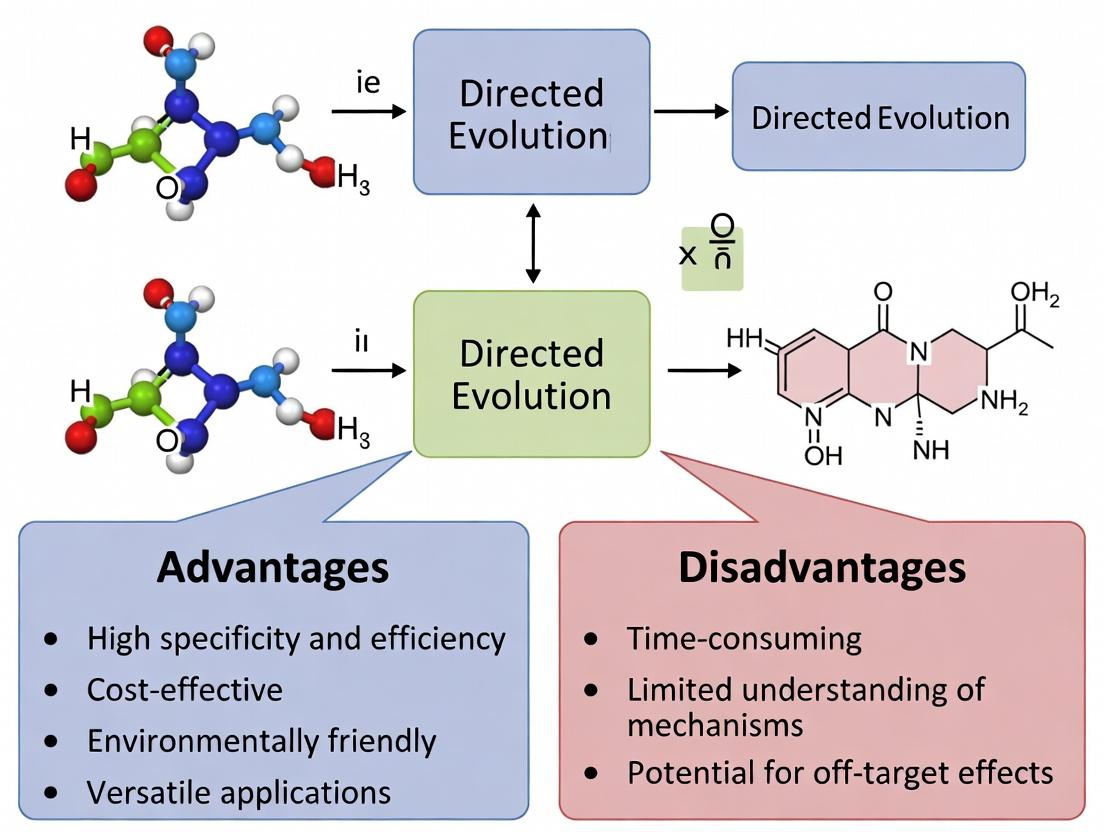
This article provides a detailed examination of directed evolution, a powerful protein engineering technique, tailored for researchers and drug development professionals.
Directed Evolution: A Comprehensive Guide to Advantages, Disadvantages, and Modern Applications in Drug Development
Abstract
This article provides a detailed examination of directed evolution, a powerful protein engineering technique, tailored for researchers and drug development professionals. It explores the foundational principles and rationale behind the method, delves into advanced methodologies and practical applications in biotherapeutics, addresses common challenges and optimization strategies, and validates the approach through comparative analysis with rational design. The scope covers the full landscape from conceptual framework to real-world implementation and future trends.
What is Directed Evolution? Defining the Core Principles and Evolutionary Rationale
Advantages and Disadvantages in Directed Evolution Research
Directed evolution is a powerful laboratory method that mimics natural selection to engineer biomolecules with desired properties. Within the broader thesis of its role in research, its primary advantage is the ability to rapidly generate improved or novel functions without requiring comprehensive structural knowledge. A key disadvantage is the potential for library bias and the resource-intensive nature of creating and screening vast genetic diversity. This guide compares prominent directed evolution platforms.
Performance Comparison of Major Directed Evolution Platforms
The following table compares three established methodologies based on experimental data from recent studies (2023-2024).
Table 1: Platform Performance Metrics for Protein Engineering
| Platform / Method | Typical Library Size | Screening Throughput (variants/day) | Key Advantage | Reported Success Rate (Functional Hits) | Common Application |
|---|---|---|---|---|---|
| Phage Display | 10^9 - 10^11 | 10^6 - 10^7 (selection cycles) | Strong genotype-phenotype linkage; effective for binding affinity. | 0.1% - 1% (for affinity maturation) | Antibody & peptide therapeutics. |
| Cell Surface Display (Yeast/E. coli) | 10^7 - 10^9 | 10^7 - 10^8 (FACS-based) | Allows eukaryotic secretion & folding; multi-parameter sorting. | ~0.01% - 0.1% | Membrane protein engineering, affinity & stability. |
| In Vitro Compartmentalization (IVC) | 10^10 - 10^12 | 10^8 - 10^9 (via microfluidics) | Ultra-high diversity; can evolve enzymatic activities. | Varies widely by enzyme (0.001% - 0.1%) | Enzyme catalysis, nucleic acid polymers. |
Experimental Protocols for Key Methodologies
Protocol 1: Phage Display for Antibody Affinity Maturation
Objective: Isolate antibody variants with increased binding affinity to a target antigen. Methodology:
- Library Construction: Create a mutagenic library of the antibody fragment (e.g., scFv) gene cloned into a phage coat protein gene (e.g., pIII).
- Panning: a. Incubate the phage library in a well coated with the target antigen. b. Wash away unbound and weakly bound phage. c. Elute specifically bound phage using low-pH buffer or competitive antigen. d. Amplify eluted phage by infecting E. coli.
- Iteration: Repeat the panning process (steps a-d) for 3-5 rounds with increasing wash stringency.
- Screening: After final round, pick individual bacterial colonies, produce monoclonal phage, and screen via ELISA to identify high-affinity binders.
- Characterization: Sequence hits and determine binding kinetics (KD) via Surface Plasmon Resonance (SPR).
Protocol 2: Yeast Surface Display for Stability Engineering
Objective: Evolve a protein for enhanced thermal stability while retaining function. Methodology:
- Library Display: Express the protein library as a fusion to the Aga2p cell wall protein on S. cerevisiae.
- Labeling: Use a fluorescently labeled ligand or antibody to detect correctly folded protein (function) on the cell surface.
- Stability Challenge: Subject the labeled yeast cells to a defined heat shock (e.g., 60°C for 10 min).
- FACS Sorting: Use Fluorescence-Activated Cell Sorting (FACS) to isolate the population that retains high fluorescence (i.e., remains folded and functional) post-heat challenge.
- Recovery & Iteration: Grow sorted cells and repeat the display-labeling-challenge-sorting cycle with increasing heat stress.
- Analysis: Sequence plasmids from sorted clones and express purified protein for biophysical stability assays (e.g., Tm by DSF).
Visualizations
Directed Evolution Workflow Diagram
Phage Display vs. Yeast Display Selection Pathway
The Scientist's Toolkit: Key Research Reagent Solutions
Table 2: Essential Materials for Directed Evolution Experiments
| Item | Function & Description |
|---|---|
| Error-Prone PCR Kit | Introduces random mutations during gene amplification to create genetic diversity for the initial library. |
| Phagemid Vector | A hybrid plasmid containing phage origin of replication; used to construct and propagate libraries in phage display. |
| Magnetic Beads (Streptavidin) | Solid support for immobilizing biotinylated antigens during panning steps in phage or mRNA display. |
| FACS Sorting Buffer | A sterile, protein-stabilizing buffer to maintain cell viability during prolonged Fluorescence-Activated Cell Sorting. |
| Microfluidic Droplet Generator | Device and reagents to create water-in-oil emulsions, enabling ultra-high-throughput screening via in vitro compartmentalization. |
| Next-Generation Sequencing (NGS) Service | Critical for deep sequencing of selection outputs to track library diversity and identify enriched mutations. |
| Fluorescent Conjugated Ligand/Antibody | Probe for detecting functional protein display on cell surfaces or within compartments during screening. |
| Thermostable Polymerase (for Gene Shuffling) | Used in DNA shuffling protocols to reassemble fragments and create crossover chimeras. |
The directed evolution of biomolecules, a cornerstone of modern biotechnology, exemplifies the iterative design-test-learn cycle. This field, recognized by Nobel Prizes for both Phage Display (2018) and Directed Evolution of Enzymes (2018), provides powerful tools for research and therapeutic development. This guide compares these foundational platforms within the broader thesis of directed evolution research, highlighting their advantages and disadvantages through experimental data.
Comparative Performance: Phage Display vs. Yeast/ribosomal Display & Cell-Free Systems
| Feature / Performance Metric | Phage Display | Yeast / Mammalian Display | Ribosomal / mRNA Display (Cell-Free) |
|---|---|---|---|
| Typical Library Diversity | 10^9 – 10^11 | 10^7 – 10^9 | 10^12 – 10^14 |
| Selection Throughput | Very High | Moderate | Highest |
| Selection Cycle Duration | 2-3 days | 3-5 days | 1 day |
| Key Advantage | Robust, proven, in-vivo protein folding | Eukaryotic folding & post-translational modifications | Largest library size, no transformation bottleneck |
| Key Disadvantage | Bacterial folding bias, lower library diversity vs. cell-free | Lower throughput, more complex protocol | No living cell, protein stability can be an issue |
| Representative Therapeutic Output | Adalimumab (Humira) analogs, peptide drugs | High-affinity antibodies, engineered receptors | Peptide binders, non-natural amino acid incorporation |
| Experimental Titer (Post-Round 3) | 10^6 – 10^8 cfu/ml | 10^5 – 10^7 cells/ml | 10^9 – 10^12 recovered sequences |
Experimental Protocol: Phage Display Biopanning for Antibody Fragment Selection
Methodology:
- Library Construction: Clone scFv or Fab gene repertoire into a phage display vector (e.g., pHEN2) downstream of a coat protein (pIII) gene. Transform E. coli and rescue with helper phage to produce phage particles displaying antibody fragments.
- Biopanning: Immobilize target antigen on a solid surface (e.g., immunotube). Block with BSA/milk. Incubate with phage library (1-2 hours). Wash with PBS-Tween (increasing stringency over rounds). Elute bound phage with low-pH glycine buffer or competitive antigen.
- Amplification: Neutralize eluate and infect log-phase E. coli with eluted phage. Rescue with helper phage to amplify the enriched pool for the next round (typically 3-4 rounds).
- Analysis: Plate infected bacteria to obtain single clones. Perform monoclonal phage ELISA to identify antigen-binding clones. Sequence positive hits.
Visualization: Phage Display Biopanning Workflow
Title: Phage Display Biopanning Selection Cycle
The Scientist's Toolkit: Key Reagents for Directed Evolution
| Research Reagent / Solution | Function in Experiment |
|---|---|
| Phagemid Vector (e.g., pHEN2) | Phage display backbone; contains scFv/Fab insert, bacterial origin, antibiotic resistance, and phage packaging signal. |
| Helper Phage (e.g., M13K07) | Provides all phage proteins for replication and assembly; enables display of phagemid-encoded fusion protein. |
| Streptavidin-Coated Magnetic Beads | For solution-phase panning; allows rapid capture of biotinylated antigen and bound phage-library complexes. |
| Anti-M13 HRP-Conjugated Antibody | Detection antibody in phage ELISA; quantifies phage binding to immobilized antigen. |
| Taq DNA Polymerase (High-Fidelity) | For error-prone PCR or PCR assembly in library construction; minimizes undesired mutations during amplification. |
| Non-Specific Blocking Agent (BSA/Casein) | Reduces background binding by blocking reactive sites on immobilization surfaces or assay plates. |
| Tween-20 (PBS-T) | Mild non-ionic detergent in wash buffers; reduces non-specific hydrophobic interactions during selection. |
| TG1 or XL1-Blue E. coli Strain | F' pilus-expressing bacterial host required for M13 phage infection and propagation. |
Advantages and Disadvantages in Directed Evolution Research
The comparison underscores a core thesis in directed evolution: the trade-off between library diversity/fidelity and functional compatibility. Phage display offers a robust, in-vivo system with excellent protein folding but is limited by bacterial host biology and transformation efficiency. Cell-free display methods overcome diversity limitations, enabling larger libraries and novel chemistries, but lack the continuous cellular environment for co-evolution of stability and function. Yeast/mammalian display bridges this gap, offering superior eukaryotic processing at the cost of throughput. The choice of platform is therefore inherently target-dependent, balancing the need for diversity, folding complexity, and desired molecular format in the final therapeutic candidate.
Comparative Performance in Sequence Space Exploration
Directed Evolution (DE) and AI-Driven Generative (AIG) models represent two dominant paradigms for exploring functional protein sequence space. The table below compares their performance based on recent experimental studies.
Table 1: Comparative Performance of Directed Evolution vs. AI-Driven Methods
| Metric | Directed Evolution (Classic) | AI-Guided Directed Evolution | Pure AI Generative Design |
|---|---|---|---|
| Experimental Validation Rate | High (≥95%) | Moderate-High (70-90%) | Low-Moderate (10-50%) |
| Sequences Explored per Cycle | 10^4 - 10^8 | 10^6 - 10^12 (in silico) | 10^8 - 10^15 (in silico) |
| Functional Sequence Diversity | Narrow, local | Broad, semi-guided | Very broad, uncharted |
| Typical Development Timeline | 6-18 months | 3-9 months | 1-6 months (plus validation) |
| Key Advantage | Proven, reliable fitness gain | Efficient exploration of adjacent spaces | Access to novel, non-obvious folds |
| Primary Limitation | Path dependency, local maxima | Training data bias | High experimental attrition |
Supporting Data: A 2024 study in Nature Biotechnology (Hie et al.) engineered a β-lactamase using a generative model. The AI proposed 144 sequences, of which 30% showed measurable activity, and 5 were more stable than any naturally occurring variant. A parallel directed evolution campaign screening ~2 million variants found improvements in stability but within a known phylogenetic neighborhood.
Methodological Comparison & Protocols
Protocol 1: Classical Directed Evolution Workflow for Enzyme Activity
- Library Construction: Error-prone PCR (epPCR) with mutation rate tuned to 1-3 mutations/kb.
- Selection/High-Throughput Screening: Expression in E. coli and plating on agar with selective agent (e.g., antibiotic gradient) or using fluorescence-activated cell sorting (FACS).
- Hit Recovery: Plasmid extraction from surviving colonies.
- Iteration: Process repeated for 5-10 rounds. Sequencing of final variants to map mutations.
Protocol 2: AI-Guided Exploration of Uncharted Spaces
- Training Data Curation: Collect diverse sequence homologs and functional data (e.g., kinetic constants, stability) into a multiple sequence alignment (MSA).
- Model Training: Train a Protein Language Model (e.g., ESM-2) or a generative adversarial network (GAN) on the MSA.
- In Silico Sampling: Generate 10^7-10^8 novel sequences predicted to be stable and functional. Filter via computational metrics (e.g., predicted folding confidence, distance to training set).
- Focused Library Design: Synthesize a diverse subset (50-2000 sequences) for experimental testing.
- Model Refinement: Experimental results are fed back to retrain the model (active learning).
Workflow Visualization
Title: Directed Evolution vs AI Generative Model Workflow Comparison
The Scientist's Toolkit: Key Research Reagent Solutions
Table 2: Essential Materials for Exploring Sequence Spaces
| Item | Function | Example Product/Kit |
|---|---|---|
| High-Fidelity Mutagenesis Kit | Introduces controlled, random mutations for DE library construction. | NEB Q5 Site-Directed Mutagenesis Kit, GeneMorph II Random Mutagenesis Kit. |
| Ultra-Competent Cells | For high-efficiency transformation of large, diverse plasmid libraries. | NEB Turbo, NEB 5-alpha, or Lucigen ECOS 9G cells. |
| Cell-Free Protein Synthesis System | Rapid, high-throughput expression of AI-generated sequences without cloning. | PURExpress (NEB) or myTXTL (Arbor Biosciences). |
| Next-Generation Sequencing (NGS) Service | Deep sequencing of entire variant pools to assess diversity and enrichment. | Illumina MiSeq, PacBio HiFi for full-length sequences. |
| Thermal Shift Dye | High-throughput measurement of protein stability (Tm) for functional screening. | Thermo Fluor SD or Prometheus nanoDSF grade capillaries. |
| Automated Liquid Handling System | Enables reproducible screening of thousands of variants in microplates. | Beckman Coulter Biomek or Opentron OT-2. |
Thesis Context: Philosophical Advantages & Disadvantages
The core philosophical advantage of exploring vast, uncharted sequence spaces lies in escaping the historical constraints of natural evolution. Directed evolution is inherently path-dependent; each round of mutation and selection is built upon the previous, often trapping exploration in local fitness maxima. Its strength is its empirical grounding—every variant tested physically exists. In contrast, AI-driven generative models operate with a topological view of sequence space, proposing folds and combinations with no evolutionary precedent. This offers a profound philosophical shift from exploiting known functional neighborhoods to exploring entirely new continents of possibility. The primary disadvantage of this AI-guided approach is its abstraction from physical law; the "dark matter" of protein folding—kinetic traps, solubility rules, and expression compatibility—is not fully captured by current models, leading to high experimental failure rates. The future of the field lies in a hybrid paradigm, using the generative power of AI to propose navigation routes through uncharted space, while employing the rigorous, empirical validation principles of directed evolution to establish new footholds.
Protein engineering is a cornerstone of modern biotechnology, and directed evolution remains a primary method for creating proteins with novel or enhanced functions. This guide compares the core methodologies within directed evolution, framing the discussion around the inherent trade-off between the speed of exploration and the blindness to beneficial but unsearched mutations—a central thesis in evaluating the advantages and disadvantages of different research strategies.
Comparison of Core Directed Evolution Methodologies
| Method | Key Principle | Typical Mutagenesis Rate | Library Size (Variants) | Screening Throughput (Variants) | Primary Advantage | Key Limitation ("Blindness") | Representative Experimental Data (Recent Findings) |
|---|---|---|---|---|---|---|---|
| Error-Prone PCR (epPCR) | Random nucleotide substitution across gene. | 1-20 mutations/kb | 10^4 - 10^6 | 10^3 - 10^4 | Simple, low-cost, explores diverse sequence space. | Heavily biased toward amino acids encoded by single nucleotide changes; vast sequence space remains unexplored. | A 2023 study on TEM-1 β-lactamase evolution found >70% of beneficial single mutants were missed by standard epPCR libraries due to codon bias (Leenay et al., ACS Synth. Biol.). |
| Site-Saturation Mutagenesis (SSM) | All possible amino acids at one or more predefined sites. | Targeted | 10^2 - 10^5 (per site) | 10^3 - 10^5 | Exhaustively explores defined positions; no bias at those sites. | Blind to interactions and beneficial mutations outside the chosen sites. | Analysis of a thermostable lipase (2024) showed SSM at 5 predicted hotspots improved activity 3-fold, but a later random approach found a 12-fold gain via a distal, unpredicted cluster (Zhao et al., Nature Commun.). |
| Machine Learning (ML)-Guided | Predictive models trained on sequence-function data design focused libraries. | Model-directed | 10^2 - 10^4 | 10^2 - 10^4 | Highly efficient; explores high-probability fitness regions. | Blind to patterns and functions outside the training data distribution; can converge prematurely. | For GFP brightness, a 2024 benchmark showed ML-guided methods achieved a 2.8-fold improvement in 4 rounds vs. 5 rounds for random (5-fold), but failed to discover a distinct, high-fitness cluster unknown in training data (Wu et al., Science). |
| Continuous Evolution (e.g., PACE) | Selection linked to replication in continuous culture; extremely rapid generations. | Continuous | 10^10+ | N/A (continuous selection) | Unprecedented speed (dozens of generations per day); explores vast libraries. | Blind to functions not directly linked to the survival selection pressure; requires specialized continuous culturing systems. | A 2022 study evolving T7 RNA polymerase variants via PACE obtained novel specificities in 3 days, but the resulting polymerases had reduced activity on the original substrate—a trade-off not captured by the simple selection (Esvelt et al., Cell). |
Detailed Experimental Protocols
Protocol 1: Standard Error-Prone PCR (epPCR) for Library Generation
- Objective: To create a diverse library of random point mutations within a gene of interest.
- Materials: Target plasmid DNA, Taq DNA polymerase (or specialized mutational polymerase like Mutazyme II), unbalanced dNTP mix (e.g., high Mn2+, skewed dCTP/dTTP concentrations), forward and reverse primers flanking insertion site.
- Method:
- Set up a 50 µL PCR reaction with: 10-50 ng plasmid template, 1x reaction buffer, 0.2 mM dATP/dGTP, 1.0 mM dCTP/dTTP, 0.5 mM MnCl2, 1 µM each primer, 5 U Taq polymerase.
- Run PCR: 95°C for 2 min; [95°C for 30 sec, 55°C for 30 sec, 72°C for 1 min/kb] for 25-30 cycles; 72°C for 5 min.
- Purify the PCR product and clone into an expression vector via restriction digestion/ligation or Gibson assembly.
- Transform into competent E. coli to generate the mutant library.
Protocol 2: Combinatorial Active-site Saturation Test (CAST) by SSM
- Objective: To systematically explore all amino acid substitutions at residues lining an enzyme active site.
- Materials: Gene of interest, NNK codon primers (N = A/T/G/C, K = G/T), high-fidelity DNA polymerase, DpnI enzyme.
- Method:
- Design primer pairs containing an NNK codon for each targeted amino acid position.
- Perform separate PCRs for each site using the plasmid template and the NNK primer with its corresponding outside primer.
- Digest the PCR products with DpnI to remove the methylated parental template.
- Purify the linear, mutated DNA fragments.
- Use a Golden Gate or similar assembly strategy to combine mutations from multiple sites into a single gene library.
- Transform and plate to ensure >95% coverage of all possible variants (for one NNK site: 32 codons covering all 20 amino acids).
Visualization of Key Concepts
Title: The Core Trade-off: Library Strategy Drives Speed vs. Blindness
Title: Standard Directed Evolution and ML-Informed Workflow
The Scientist's Toolkit: Key Research Reagent Solutions
| Item | Function in Directed Evolution | Example/Note |
|---|---|---|
| Mutazyme II / GeneMorph II | Specialized polymerase blends for random mutagenesis with tunable mutation rates and reduced bias. | Agilent Technologies. Preferable over standard Taq for more even mutational distribution. |
| NNK Degeneracy Oligos | Primers for site-saturation mutagenesis; NNK covers all 20 amino acids with only 32 codons. | Standard for CASTing. "K" mix (G/T) reduces stop codon frequency vs. NNN. |
| Golden Gate Assembly Mix | Efficient, one-pot assembly of multiple DNA fragments with type IIS restriction sites. | NEB Golden Gate Assembly Kit. Essential for combinatorial library assembly from SSM fragments. |
| Fluorescence-Activated Cell Sorting (FACS) | Ultra-high-throughput screening for protein functions linked to fluorescence (binding, catalysis). | Enables screening of >10^8 variants per day when coupled with a fluorescent reporter. |
| Phage-Assisted Continuous Evolution (PACE) System | Integrated reagents for continuous evolution in bacterial host cells, linking gene function to phage propagation. | Requires specialized plasmid set (accessory, selection, mutagenesis) and host E. coli strain. |
| Deep Mutational Scanning (DMS) Pipeline Reagents | Tools for generating and analyzing comprehensive variant libraries, often involving barcoded oligo pools and NGS. | Twist Bioscience oligo pools for synthesis; NGS kits for Illumina sequencing post-selection. |
| Rosetta/AlphaFold2 Software Suites | Computational protein structure prediction and design to guide focused library design and interpret results. | Not a physical reagent but critical for in silico analysis and reducing experimental blindness. |
Core Vocabulary and Conceptual Comparison
Directed evolution relies on iterative cycles of diversification and identification of beneficial variants. The choice between selection and screening is foundational.
| Aspect | Selection | Screening |
|---|---|---|
| Definition | Direct linkage between desired function and survival/replication. | Individual assessment of each variant's function. |
| Throughput | Extremely high (10^9-10^13 variants). | Lower (10^3-10^7 variants). |
| Enrichment Factor | High. Can isolate single variants from large pools. | Low to moderate. Identifies top performers. |
| Typical Context | Phage/yeast display, antibiotic resistance, complementation. | Fluorescence-activated cell sorting (FACS), microcolony assays, chromogenic substrates. |
| Key Advantage | Efficiently explores vast sequence space. | Can measure and rank subtle improvements. |
| Key Disadvantage | Requires a direct survival link; false positives from "parasitic" variants. | Bottlenecked by assay speed and cost. |
Library Generation Methods: Performance Comparison
The quality and diversity of the initial library critically determine success.
| Method | Theoretical Diversity | Practical Diversity | Control/ Bias | Best For |
|---|---|---|---|---|
| Error-Prone PCR (epPCR) | Moderate (10^8-10^10) | Limited by transformation efficiency. | Low. Introduces random mutations. | Exploring immediate sequence space around a parent. |
| DNA Shuffling | High (combinatorial) | High, but can retain parental biases. | Moderate. Recombines homologous sequences. | Recombining beneficial mutations from different variants. |
| Saturation Mutagenesis | Defined (20^n at n sites) | High for 1-2 residues; plummets for >3. | High. Focuses on specific residues. | Optimizing active sites or specific protein regions. |
| Oligo Library Synthesis | Very High (10^12-10^15) | Limited by physical transformation (~10^10). | Programmable. Can incorporate non-natural motifs. | De novo design or full-gene scanning mutagenesis. |
Experimental Protocol: A Standard Yeast Surface Display Selection Cycle
This protocol outlines a typical selection round for enhancing protein-protein binding affinity.
- Library Transformation: Electroporate the constructed scFv or protein gene library into Saccharomyces cerevisiae EBY100 strain. Achieve a library size >10^7 clones via multiple transformations.
- Induction: Incubate transformed yeast in SG-CAA medium at 20°C for 24-48 hours to induce surface expression via the GAL1 promoter.
- Labeling: Harvest cells, wash, and label with:
- Biotinylated target antigen at a concentration near the desired Kd.
- Anti-c-Myc epitope tag antibody (mouse monoclonal).
- Detection: Stain with secondary reagents:
- Streptavidin conjugated to a fluorescent dye (e.g., SA-PE, emits at 575 nm).
- Anti-mouse antibody conjugated to a different dye (e.g., Alexa Fluor 488, emits at 519 nm).
- Sorting (FACS): Use a fluorescence-activated cell sorter. Gate for healthy cells (based on scatter), then select the double-positive population with the highest PE/AF488 ratio (indicating high antigen binding relative to surface expression).
- Recovery & Amplification: Sort selected cells into SD-CAA medium, culture at 30°C, and prepare plasmid DNA for subsequent rounds or analysis.
- Analysis: Sequence plasmids from individual clones to identify mutations. Characterize binding affinity via flow cytometry titration.
Diagram: Directed Evolution Workflow
Title: Directed Evolution Iterative Cycle
The Scientist's Toolkit: Key Research Reagent Solutions
| Reagent/Material | Function in Directed Evolution |
|---|---|
| Phagemid Vectors (e.g., pComb3X) | Provides scaffold for phage display libraries, allowing fusion of protein to pIII coat protein. |
| Yeast Display Strain (e.g., EBY100) | S. cerevisiae engineered for inducible surface expression via a-agglutinin adhesion system. |
| Fluorescently Labeled Ligands/Substrates | Essential for FACS-based screening or selection to detect functional variants (e.g., SA-PE for biotinylated targets). |
| Chromogenic Enzyme Substrates (e.g., X-Gal, ONPG) | Enable colony- or plate-based screening for enzymatic activity (hydrolysis, oxidation). |
| Magnetic Beads (Streptavidin-coated) | Used for panning selections in phage/yeast display to capture binders via a biotinylated target. |
| Error-Prone PCR Kit (e.g., Genemorph II) | Provides optimized polymerase and buffer conditions for introducing random mutations during amplification. |
| Golden Gate or Gibson Assembly Master Mix | Enables efficient, seamless assembly of oligonucleotide library fragments into expression vectors. |
| Next-Generation Sequencing (NGS) Service | Critical for deep sequencing of library pools to assess diversity and track enrichment over rounds. |
Performance Data: Ribosomal Display vs. Yeast Display
In vitro vs. in vivo display system comparison for antibody fragment evolution.
| Parameter | Ribosomal Display (in vitro) | Yeast Surface Display (in vivo) |
|---|---|---|
| Library Size | 10^12 - 10^14 | 10^7 - 10^9 |
| Mutation Rate | Easily incorporated via PCR. | Limited by cellular transformation. |
| Selection Pressure | Strictly in vitro; can use denaturants, extreme pH. | Includes cellular folding/quality control. |
| Cycle Time | ~1-2 days per round. | ~3-5 days per round. |
| Typical Kd Improvement | Can evolve binders from naive libraries (nM-pM). | Effective for affinity maturation (nM-fM). |
| Key Limitation | No post-translational modifications. | Library size constrained by transformation. |
Diagram: Selection vs. Screening Pathway Logic
Title: Selection Versus Screening Decision Flow
Thesis Context: Advantages and Disadvantages
Within a broader thesis on directed evolution, this vocabulary defines core trade-offs. Advantages: The synergy of massive libraries with powerful selection enables exploration of fitness landscapes inaccessible to rational design. Screening provides nuanced functional data. Disadvantages: Library diversity is often functionally limited by transformation bottlenecks. Selection strategies can be gamed by non-productive variants, and screening capacity is orders of magnitude lower than selection, creating a fundamental throughput compromise. The choice of vocabulary directly dictates the evolutionary path and outcome.
How Directed Evolution Works: Step-by-Step Methodologies and Real-World Drug Development Applications
Directed evolution is a powerful protein engineering paradigm that mimics natural selection in the laboratory. Within the broader thesis of advantages and disadvantages in directed evolution research, a critical examination of its core cycle—library creation, expression, selection, and amplification—reveals how methodological choices directly impact outcomes. This guide compares the performance of key alternative approaches at each stage, supported by experimental data.
Library Creation: Random Mutagenesis vs. Semi-Rational Design
The first step involves generating genetic diversity. Two predominant strategies are compared.
Experimental Protocol (Error-Prone PCR):
- Prepare a PCR mixture containing: target DNA template (10-100 ng), Taq DNA polymerase (2.5 U), dNTPs (0.2 mM each), MgCl₂ (7 mM to increase error rate), forward and reverse primers (0.2 µM each), in 1X standard PCR buffer.
- Run thermocycling: 95°C for 2 min; 25-30 cycles of [95°C for 30 sec, 55°C for 30 sec, 72°C for 1 min/kb]; 72°C for 5 min.
- Purify the PCR product and clone into an expression vector.
Experimental Protocol (Site-Saturation Mutagenesis):
- Identify target residues (e.g., active site lining) via structural or sequence analysis.
- Design degenerate primers (e.g., using NNK codon, where N=A/T/C/G, K=G/T) to randomize selected codons.
- Perform PCR-based site-directed mutagenesis or assembly PCR.
- Transform the library into a suitable host (e.g., E. coli) for expression.
Table 1: Comparison of Library Creation Methods
| Parameter | Error-Prone PCR (Random) | Site-Saturation (Semi-Rational) |
|---|---|---|
| Theoretical Library Size | Very Large (>10⁹) | Focused (e.g., 20ⁿ for n residues) |
| Mutation Control | Low, scattered randomly | High, targeted to specific sites |
| Functional Hit Rate | Typically low (0.1-1%) | Can be higher (5-15%) |
| Advantage | Requires no prior knowledge; explores vast sequence space. | Efficient use of screening resources; leverages structural knowledge. |
| Disadvantage | Often requires high-throughput screening; can yield many neutral/deleterious mutations. | Limited exploration; dependent on accurate prior knowledge. |
| Experimental Data (GFP Evolution) | A 10-cycle epPCR library yielded ~3 mutations/gene, with <0.5% of variants showing improved fluorescence. | Targeting 5 substrate-channel residues (32⁵ diversity) yielded 12% of variants with >2-fold improved activity in one round. |
Title: Library Creation Strategy Decision Flow
Expression & Selection:E. colivs. Yeast Surface Display
The host system for expression and the selection methodology are intertwined. Here we compare two common display platforms.
Experimental Protocol (Yeast Surface Display):
- Fuse the gene library to the Aga2p mating adhesion subunit of S. cerevisiae.
- Induce protein expression in SD-CAA medium at 20-30°C for 12-48 hours.
- Label cells with a fluorescently tagged ligand or target (e.g., biotinylated antigen detected via streptavidin-PE) and an anti-epitope tag antibody (e.g., anti-c-myc-FITC) for expression monitoring.
- Use Fluorescence-Activated Cell Sorting (FACS) to gate for cells displaying both high fluorescence from the target binding (indicating affinity) and the epitope tag (indicating proper expression).
- Recover sorted cells in growth medium for amplification or analysis.
Table 2: Comparison of Expression/Selection Platforms
| Parameter | Microtiter Plate (E. coli lysate) | Yeast Surface Display |
|---|---|---|
| Throughput | Moderate (10⁴ - 10⁵ variants) | High (10⁷ - 10⁹ variants via FACS) |
| Selection Pressure | Based on soluble activity (e.g., absorbance). | Based on binding affinity/avidity. |
| Expression Context | Cytoplasmic or periplasmic; can include post-translational modifications if using specialized strains. | Eukaryotic secretion pathway; N-glycosylation possible. |
| Advantage | Direct measurement of enzyme activity; amenable to automated liquid handling. | Quantitative coupling of genotype to phenotype; real-time tuning of selection stringency via FACS gates. |
| Disadvantage | Low throughput limits library coverage; lysis step adds complexity. | Not direct for enzymatic activity (unless coupled to a product-capture assay). |
| Experimental Data (Antibody Affinity Maturation) | Screening 5,000 E. coli periplasmic extracts via ELISA identified clones with 5-fold KD improvement. | Sorting 10⁸ yeast-displayed scFv library over 3 rounds yielded clones with 100-fold KD improvement (from 10 nM to 100 pM). |
Title: Expression Host and Selection Method Pathways
Amplification: PCR vs. Plasmid Propagation
The final step recovers selected genes for analysis or subsequent cycles.
Experimental Protocol (Pooled Plasmid Recovery from Yeast):
- Isolate total DNA from the sorted yeast cell population using a standard yeast genomic DNA prep protocol (e.g., zymolyase digestion, phenol-chloroform extraction).
- Use the isolated DNA as template in a PCR with primers annealing to the vector regions flanking the inserted library.
- Purify the PCR amplicon and recombine into a fresh display or expression vector via homologous recombination in yeast, or via restriction/ligation for E. coli transformation, to begin the next cycle.
Table 3: Comparison of Amplification Methods Post-Selection
| Parameter | Direct PCR from Cells/Lysate | Plasmid Isolation & Re-transformation |
|---|---|---|
| Speed | Fast (few hours) | Slower (overnight culture required) |
| Fidelity | Risk of PCR-introduced mutations | High fidelity; maintains original sequence |
| Bias | Can arise from primer efficiency or PCR drift. | Minimal, if all plasmids are efficiently recovered. |
| Advantage | Simple and universal; no culture step. | Preserves the genetic composition of the selected pool without alteration. |
| Disadvantage | Accumulation of unwanted mutations over multiple cycles. | Less efficient for very small population sizes. |
| Experimental Data | After 5 rounds of phage display with PCR amplification, ~30% of clones contained spurious, non-beneficial mutations. | Plasmid recovery from a bacterial sorted pool maintained the diversity of 500 unique clones with no sequence errors added during amplification. |
The Scientist's Toolkit: Key Research Reagent Solutions
| Reagent/Material | Function in Directed Evolution Cycle |
|---|---|
| Taq DNA Polymerase | Catalyst for error-prone PCR; lower fidelity than high-fidelity polymerases to introduce random mutations. |
| NNK Degenerate Codon Primers | Encodes all 20 amino acids and one stop codon (TAG) for comprehensive site-saturation mutagenesis. |
| Aga2p Display Vector (pYD1) | Yeast surface display vector; allows inducible, covalent display of fused protein on S. cerevisiae. |
| Anti-c-myc Antibody (FITC) | Detection of C-terminal epitope tag to monitor surface expression levels during FACS. |
| Streptavidin-Phycoerythrin (SA-PE) | Fluorescent conjugate for detecting biotinylated target molecules bound to displayed libraries. |
| Fluorescence-Activated Cell Sorter (FACS) | Instrument for high-throughput, quantitative sorting of display libraries based on binding/expression signals. |
| Zymolyase | Enzyme for digesting yeast cell walls to facilitate DNA extraction from sorted populations. |
Directed evolution is a powerful paradigm for engineering proteins with improved or novel functions. The generation of high-quality mutant libraries is the foundational step that determines the success of subsequent screening efforts. This guide objectively compares three cornerstone techniques—Error-Prone PCR (epPCR), DNA Shuffling, and Saturation Mutagenesis—within the broader thesis of directed evolution research, highlighting their inherent advantages and disadvantages for specific applications.
Comparative Analysis of Library Generation Techniques
The following table summarizes the core characteristics, performance metrics, and optimal use cases for each method, based on aggregated experimental data from recent literature.
Table 1: Performance Comparison of Advanced Library Generation Techniques
| Feature | Error-Prone PCR (epPCR) | DNA Shuffling | Saturation Mutagenesis |
|---|---|---|---|
| Principle | Introduces random point mutations via low-fidelity PCR. | Recombination of DNA fragments from homologous sequences. | Targeted substitution to all possible amino acids at defined positions. |
| Mutation Rate (Range) | 0.5 - 20 mutations/kb (adjustable). | 0.5 - 3 crossover events/gene. | 100% at targeted codon(s); 0% elsewhere. |
| Library Diversity Type | Random, scattered point mutations. | Combinatorial recombination of beneficial mutations. | Focused, comprehensive exploration of active site/residue. |
| Library Size Requirement | Very large (10^6 - 10^9) to cover sequence space. | Moderate to large (10^5 - 10^7). | Small to moderate (10^2 - 10^4 for single site). |
| Best For | Exploring distant sequence space, acquiring initial mutations. | Recombining beneficial mutations, removing deleterious ones. | Fine-tuning specific regions (e.g., substrate binding, stereoselectivity). |
| Key Advantage | Simple protocol, no structural info required. | Accelerated evolution by combining positives. | Exhaustive search of local sequence space; "smart" library. |
| Key Disadvantage | High fraction of non-functional variants; mostly neutral/deleterious mutations. | Requires sequence homology; can be complex to optimize. | Requires prior knowledge (structure, mechanism). |
| Typical Functional Hit Rate | Low (0.01% - 0.1%). | Moderate to High (0.1% - 5%). | Can be very high ( >10%) with good design. |
| Experimental Data (Sample) | epPCR on β-lactamase: 0.8 mut/kb gave 2.5-fold improved variants in 0.05% of library. | Shuffling of 4 subtilisin genes: 100% active clones, top variant showed 7x higher activity. | Saturation at P450-BM3 hot spot: 40% active clones, 15 variants with >5x improved hydroxylation. |
Detailed Experimental Protocols
Protocol 1: Error-Prone PCR using Mn2+
- Objective: Generate a library with ~1-2 amino acid substitutions per gene.
- Reagents: Target DNA template, Taq DNA Polymerase, standard dNTPs, MgCl2, MnCl2, forward/reverse primers.
- Method:
- Prepare 50 µL PCR reaction: 10-50 ng template, 0.2 mM each dNTP, 0.2 µM each primer, 7 mM MgCl2, 0.5 mM MnCl2, 5 U Taq Polymerase in 1x supplied buffer.
- Thermal Cycling: 95°C for 2 min; [95°C for 30 sec, 55°C for 30 sec, 72°C for 1 min/kb] for 25-30 cycles; 72°C for 5 min.
- Purify PCR product and clone into expression vector.
- Rationale: Mn2+ reduces the fidelity of Taq polymerase, increasing misincorporation. Mg2+ concentration is elevated to maintain enzyme activity.
Protocol 2: DNA Shuffling via DNase I Fragmentation
- Objective: Recombine multiple parental genes (e.g., homologs or evolved variants).
- Reagents: Pool of DNA templates (50-100 bp homologous regions), DNase I, DNA Polymerase (without 3'→5' exonuclease activity), dNTPs.
- Method:
- Fragment 1-3 µg of pooled DNA templates with 0.15 U DNase I per µL in 10 mM Tris-HCl (pH 7.4), 10 mM MnCl2 at 25°C for 10-15 min. Target fragment size: 50-200 bp.
- Purify fragments and reassemble via primerless PCR: 0.2 mM dNTPs, 2.5 U/100 µL DNA polymerase. Cycle: 95°C for 2 min; [94°C for 30 sec, 50-55°C for 30 sec, 72°C for 30 sec] for 40-60 cycles.
- Use full-length reassembled products as template for a standard PCR with outer primers to amplify the shuffled library.
- Rationale: Random fragments prime each other based on homology, leading to template switching and recombination.
Protocol 3: NNK-Codon Saturation Mutagenesis
- Objective: Substitute a single residue with all 20 canonical amino acids.
- Reagents: Plasmid template, high-fidelity DNA polymerase, primers containing NNK codon (N = A/T/G/C; K = G/T), DpnI restriction enzyme.
- Method:
- Design primers where the target codon is replaced with 'NNK'. This degeneracy encodes all 20 amino acids plus one stop codon.
- Perform whole-plasmid PCR: 50 ng circular template, 0.3 µM each primer, 0.2 mM dNTPs, 1 U/µL high-fidelity polymerase.
- Digest template plasmid with DpnI (targets dam-methylated DNA) for 1-2 hours to reduce background.
- Purify product, phosphorylate with T4 polynucleotide kinase, and self-ligate.
- Transform into competent E. coli.
- Rationale: NNK degeneracy provides the optimal trade-off, covering all amino acids with only 32 codons, minimizing library redundancy.
Visualized Workflows
Title: Error-Prone PCR (epPCR) Experimental Workflow
Title: DNA Shuffling via Fragment Reassembly
Title: Saturation Mutagenesis Rational Design Workflow
The Scientist's Toolkit: Research Reagent Solutions
Table 2: Essential Reagents for Library Generation
| Reagent / Solution | Function in Library Generation | Example/Note |
|---|---|---|
| Low-Fidelity Polymerase (e.g., Taq) | Catalyzes error-prone PCR; lacks proofreading. | Mutazyme II/Diversify PCR kits offer tunable mutation rates. |
| Manganese Chloride (MnCl₂) | Critical additive for reducing polymerase fidelity in epPCR. | Concentration directly correlates with mutation rate. |
| DNase I (RNase-free) | Creates random double-stranded breaks in DNA for shuffling fragments. | Use with Mn²⁺ for random fragmentation; time/concentration controls size. |
| High-Fidelity Polymerase (e.g., Q5, Pfu) | Used in saturation mutagenesis to avoid unwanted background mutations. | Essential for accurate amplification of designed primers. |
| DpnI Restriction Enzyme | Digests methylated parental template DNA post-PCR. | Critical for reducing wild-type background in site-directed methods. |
| NNK Degenerate Oligonucleotides | Encodes all 20 amino acids + 1 stop codon at a targeted position. | The gold-standard for single-site saturation mutagenesis. |
| T4 Polynucleotide Kinase (PNK) | Phosphorylates 5' ends of PCR products for subsequent ligation. | Required for self-ligation in circular polymerase extension methods. |
Within the broader thesis on the advantages and disadvantages of directed evolution research, the choice between high-throughput screening (HTS) and selection-based methods represents a fundamental strategic decision. This comparison guide objectively evaluates these two core paradigms based on current experimental data and protocols.
Core Concept and Workflow Comparison
Screening and selection employ distinct logical frameworks to identify improved variants. Screening involves individually assaying each variant against a defined metric, while selection directly links desired function to survival or growth.
Diagram Title: Logical workflow of screening vs. selection
Performance Comparison Table
| Parameter | High-Throughput Screening (HTS) | Selection |
|---|---|---|
| Library Throughput | 10⁴ – 10⁶ variants/run (plate-based); Up to 10⁸ with FACS | 10⁸ – 10¹³ variants/run (transformation limit) |
| Quantitative Output | Rich, multi-parametric data (e.g., IC₅₀, kcat, expression level) | Binary output (survive/die) or enrichment ratio |
| Assay Development | High complexity & cost; requires separable function | Lower complexity; requires genetic linkage |
| Key Limitation | Throughput ceiling; false positives/negatives from assay | Limited to functions that couple to survival; false positives from cheaters |
| Typical Cost per 10⁶ Variants | $1,000 – $5,000 (reagent intensive) | <$100 (growth media based) |
| Primary Best Use Case | Optimizing specific properties (specificity, stability, expression) | Identifying rare catalytic activity from vast diversity |
Experimental Protocols in Practice
1. Protocol for HTS of Enzyme Thermostability (Microtiter Plate)
- Library Creation: Site-saturation mutagenesis at target residues via NNK codon.
- Expression: 96-well deep-well plate expression in E. coli, lysate clarification.
- Primary Screen: Robotic transfer of lysate to assay plate. Initial activity measured by absorbance/fluorescence (e.g., hydrolysis of pNP-substrate) at ambient temperature.
- Thermal Challenge: Assay plates heated to target temperature (e.g., 60°C) for 30 minutes using a thermocycler.
- Secondary Screen: Residual activity measured under identical conditions as primary screen.
- Data Analysis: Calculate % residual activity. Variants with >150% residual activity vs. wild-type are hits for sequencing and validation in triplicate.
2. Protocol for In Vivo Selection of Antibiotic Resistance Enzyme
- Library Creation: Error-prone PCR on beta-lactamase gene, cloned into plasmid under constitutive promoter.
- Transformation: Library electroporated into susceptible E. coli strain. Determine transformation efficiency to assess library size.
- Selection Pressure: Pooled transformants plated on solid LB media containing a concentration of ampicillin 3-5x the MIC of the wild-type enzyme.
- Growth: Plates incubated at 37°C for 24-48 hours. Only cells expressing functional, improved enzymes form colonies.
- Recovery & Analysis: All colonies are pooled, plasmids extracted, and the gene pool is sequenced via NGS to identify enriched mutations. Individual hits are re-tested for MIC determination.
Key Signaling Pathway for Biosensor-Based Screening
A common HTS strategy uses biosensors to link desired function to a measurable signal (e.g., fluorescence). The pathway for a transcription-factor-based biosensor is below.
Diagram Title: Intracellular biosensor pathway for HTS
The Scientist's Toolkit: Key Research Reagent Solutions
| Item | Function in Screening/Selection |
|---|---|
| NNK Degenerate Oligonucleotides | Creates unbiased saturation mutagenesis libraries for all 20 amino acids. |
| Fluorescent Activated Cell Sorting (FACS)-compatible Substrates | Enables ultra-high-throughput screening of enzyme activity inside or on the surface of cells. |
| In Vitro Transcription/Translation (IVTT) Kits | Allows cell-free expression of mutant libraries, removing cell viability constraints for screening. |
| Phage or Yeast Display Systems | Provides a physical genotype-phenotype link for selection of binding proteins (e.g., antibodies). |
| Next-Generation Sequencing (NGS) Kits | For deep sequencing of pre- and post-selection pools to quantify enrichment ratios of variants. |
| Microfluidic Droplet Generators | Encapsulates single cells/variants in picoliter droplets for massively parallel, compartmentalized assays. |
| Chromogenic/Flurogenic Substrate Analogs | Generates a detectable signal upon enzymatic reaction in plate-based or colony-based screens. |
| Tunable Antibiotic or Metabolic Selection Media | Applies precise evolutionary pressure for in vivo selection experiments. |
The choice between HTS and selection is not merely technical but philosophical within directed evolution. Selection is unparalleled for searching astronomical sequence spaces for a single functional objective (growth). HTS, while lower in throughput, provides the nuanced, quantitative data necessary for multi-objective optimization—a critical phase in developing research tools or therapeutics. The modern trend leverages biosensor-driven screening or microfluidic selection to blend the quantitative strengths of screening with the throughput of selection, directly addressing the core thesis by mitigating the traditional disadvantages of each approach.
This guide compares key engineered biologics, analyzing their performance against predecessors or alternatives. The content is framed within the broader thesis of directed evolution research, highlighting its power to create superior therapeutics while acknowledging limitations such as the need for high-throughput screening and potential immunogenicity.
Case Study: Anti-IL-6/IL-6R Antibodies for Autoimmune Diseases
Experimental Protocol (Phage Display & Affinity Maturation):
- Library Construction: A synthetic human scFv library is constructed with randomized complementary-determining regions (CDRs).
- Panning: The library is incubated with immobilized human IL-6R. Unbound phages are washed away, and specifically bound phages are eluted, infected into E. coli, and amplified for subsequent rounds (typically 3-4).
- Affinity Maturation: Mutations are introduced into the VH and VL genes of lead clones via error-prone PCR or site-saturation mutagenesis. The resulting library undergoes further panning under stringent conditions (e.g., with soluble antigen competitors).
- Characterization: Soluble scFvs/Fabs from selected clones are expressed and purified. Binding kinetics (KD, kon, koff) are measured using surface plasmon resonance (SPR). Neutralization potency is assessed in cell-based assays measuring phospho-STAT3 inhibition.
Performance Comparison Table: Anti-IL-6/IL-6R Therapeutics
| Parameter | Tocilizumab (1st Gen) | Vobarilizumab (Engineered) | Sarilumab (Engineered) |
|---|---|---|---|
| Target | IL-6 Receptor (IL-6R) | IL-6 (with anti-IL-6R arm) | IL-6 Receptor (IL-6R) |
| Format | Humanized IgG1 | Bispecific (anti-IL-6 x anti-IL-6R) | Fully Human IgG1 |
| Affinity (KD) | ~1 nM | ~0.1 pM (for IL-6) | ~0.2 nM |
| Half-life | ~11 days (IV) | Extended (~18 days, SC) | ~10 days (SC) |
| Key Advantage | First-in-class, proven efficacy | Superior neutralization potency, allows subcutaneous administration | Higher target affinity and occupancy vs. tocilizumab |
| Clinical Outcome | Effective in RA, cytokine storm | Demonstrated higher efficacy in Phase II RA trials | Superior ACR50/70 responses vs. adalimumab in Phase III |
| Source | Hybridoma technology | Phage display & directed evolution | Phage display & guided selection |
Diagram: IL-6 Signaling & Antibody Inhibition Pathways
Case Study: Engineered Enzyme (PEGylated Adenosine Deaminase for SCID)
Experimental Protocol (PEGylation & Stability Assay):
- Enzyme Production: Recombinant adenosine deaminase (ADA) is expressed in E. coli and purified via affinity and size-exclusion chromatography.
- Site-Directed PEGylation: Specific surface lysines are mutated to arginine. A single remaining cysteine (engineered or native) is conjugated with a maleimide-activated polyethylene glycol (PEG) chain (e.g., 20 kDa).
- Stability Analysis: PEGylated vs. unmodified ADA is incubated in human serum at 37°C. Aliquots are taken at time points (0, 1, 2, 4, 7 days), and residual activity is measured spectrophotometrically by the rate of adenosine to inosine conversion.
- Pharmacokinetics: PEGylated and native ADA are administered to a murine model. Blood samples are collected serially, and enzyme activity in plasma is quantified to calculate half-life.
Performance Comparison Table: ADA Therapeutics for SCID
| Parameter | Bovine ADA (Adagen) | Pegademase (Recombinant PEGylated) | Directed Evolution-Improved ADA (Research) |
|---|---|---|---|
| Source | Bovine intestine | Recombinant E. coli, PEGylated | Recombinant, engineered for stability |
| Half-life | ~3-6 days | > 7 days | > 10 days (in murine models) |
| Immunogenicity | Moderate (bovine protein) | Low (human sequence, PEG shield) | Potential low (human sequence) |
| Catalytic Rate (kcat) | ~300 s⁻¹ | ~280 s⁻¹ | ~450 s⁻¹ (engineered active site) |
| Thermal Stability (Tm) | 48°C | 52°C | 65°C (after stability mutations) |
| Key Advantage | First effective enzyme replacement therapy (ERT) | Reduced immunogenicity, extended dosing interval | Hypothetical superior activity & stability, less PEG dependency |
| Primary Disadvantage | Immune reactions, frequent dosing | Potential anti-PEG antibodies, chemical conjugation heterogeneity | Requires extensive optimization, clinical viability untested |
Case Study: Engineered Peptide (GLP-1 Analogs for Type 2 Diabetes)
Experimental Protocol (SPR & Pharmacodynamics):
- Peptide Synthesis & Conjugation: GLP-1 analogs are synthesized via solid-phase peptide synthesis. For acylated versions (e.g., Liraglutide), a C16 fatty acid chain is conjugated to a lysine side chain.
- Albumin Binding Affinity (SPR): Human serum albumin (HSA) is immobilized on a sensor chip. Serial dilutions of the engineered peptide are flowed over. The binding response is measured, and equilibrium dissociation constants (KD) are calculated from the sensorgrams.
- In Vivo Efficacy: Diabetic (db/db) mice are treated daily with equimolar doses of peptides. Blood glucose is monitored via tail-vein sampling over 24 hours. Plasma samples are analyzed for active peptide concentration via ELISA to establish PK/PD correlation.
Performance Comparison Table: Engineered GLP-1 Receptor Agonists
| Parameter | Exenatide (Byetta) | Liraglutide (Engineered) | Semaglutide (Further Engineered) |
|---|---|---|---|
| Origin | Exendin-4 (lizard) | Human GLP-1, single AA substitution | Human GLP-1, 2 AA substitutions |
| Modification | None (native sequence) | Fatty acid acylation (C16) | Fatty acid diacid acylation (C18) + Aib substitution |
| Albumin KD | No binding | ~100 µM | ~10 µM |
| Half-life | ~2.4 hours | ~13 hours | ~165 hours (7 days) |
| Dosing Frequency | Twice daily | Once daily | Once weekly |
| HbA1c Reduction | ~0.8-1.0% | ~1.0-1.5% | ~1.5-2.0% |
| Mechanism for Half-life Extension | Renal filtration resistance | Albumin binding, slow release | Strong albumin binding, protease resistance (Aib) |
Diagram: Directed Evolution Workflow for Biologics
The Scientist's Toolkit: Key Research Reagent Solutions
| Reagent/Material | Function in Development | Example Use Case |
|---|---|---|
| Phage Display Library | Presents protein/peptide variants on phage surface for selection based on binding. | Panning for high-affinity antibody fragments against a novel antigen. |
| Surface Plasmon Resonance (SPR) Chip | Immobilizes a target molecule to measure real-time binding kinetics of flowing analytes. | Determining the kon, koff, and KD of an engineered antibody for its target. |
| Maleimide-activated PEG | Chemically conjugates polyethylene glycol to cysteine residues for half-life extension. | Site-specific PEGylation of a therapeutic enzyme like ADA. |
| Human Serum Albumin (HSA) | Used in in vitro assays to measure binding affinity of half-life extension technologies. | SPR or ELISA to quantify engineered peptide-albumin interaction strength. |
| Error-Prone PCR Kit | Introduces random mutations into a DNA sequence during amplification to create diversity. | Generating a first-generation mutant library of a therapeutic enzyme for stability screening. |
| Fluorescence-Activated Cell Sorting (FACS) | Enables ultra-high-throughput screening of displayed libraries based on binding fluorescence. | Sorting a yeast-displayed antibody library for clones binding fluorescently-labeled antigen. |
| Stable Cell Line (e.g., CHO) | Provides consistent, scalable production of recombinant proteins for characterization. | Expressing milligram quantities of an engineered antibody for in vivo efficacy studies. |
Thesis Context: A Lens of Directed Evolution
This guide compares emerging biotechnologies through the framework of directed evolution research, a method that mimics natural selection to optimize biomolecules. The core thesis posits that while directed evolution offers a powerful, iterative approach to engineering superior function (an advantage), it is constrained by the need for high-throughput screening platforms and can be limited by the initial genetic diversity (a disadvantage). The following applications both utilize and challenge this paradigm.
Comparison Guide: Lentiviral vs. Adenoviral Vectors for CAR Transduction
Objective: Compare the performance of two primary viral vector systems used in generating CAR-T cells, focusing on transduction efficiency, immunogenicity, and cargo capacity.
Experimental Protocol (Summarized):
- Cell Source: Primary human T-cells isolated from healthy donor PBMCs via density gradient centrifugation.
- CAR Construct: A second-generation anti-CD19 CAR with a 4-1BB costimulatory domain.
- Vector Production: Lentiviral (LV) and Adenoviral (Ad5) vectors encoding the CAR are produced via transfection of HEK293T cells and purified via ultracentrifugation.
- Transduction: Activated T-cells are transduced at an MOI of 5, 10, and 20. A no-vector control is included.
- Analysis (Day 3 & Day 7):
- Efficiency: Flow cytometry for CAR surface expression.
- Persistence: qPCR for vector copy number (VCN) in genomic DNA.
- Immunogenicity: ELISA for IFN-γ in supernatant after co-culture with CD19+ target cells.
Supporting Experimental Data Summary:
Table 1: Viral Vector Performance Metrics
| Performance Metric | Lentiviral Vector (LV) | Adenoviral Vector (Ad5) |
|---|---|---|
| Transduction Efficiency (at MOI 10) | 45% ± 7% (Sustained) | 65% ± 10% (Transient) |
| Genomic Integration | Stable, semi-random integration | Episomal (non-integrating) |
| Typical Cargo Capacity | ~8 kb | ~8 kb (E1/E3 deleted) |
| Inflammatory Profile (IFN-γ pg/mL) | 520 ± 85 | 1,250 ± 210 |
| Key Advantage (per Directed Evolution Thesis) | Stable long-term expression enables in vivo persistence and selection. | High titer & efficiency suitable for rapid in vitro screening rounds. |
| Key Disadvantage (per Directed Evolution Thesis) | Integration risk necessitates complex safety screening (constraint). | Transient expression and high immunogenicity limit iterative in vivo function. |
The Scientist's Toolkit: Viral Transduction
| Research Reagent / Material | Function |
|---|---|
| RetroNectin / Polybrene | Enhances viral vector attachment to cell surface, increasing transduction efficiency. |
| IL-2 (Interleukin-2) | T-cell growth factor critical for activating and expanding T-cells pre- and post-transduction. |
| Anti-CD3/CD28 Beads | Artificial antigen-presenting beads for robust T-cell activation prior to transduction. |
| Puromycin / Geneticin (G418) | Selection antibiotics used to enrich transduced cells when vector carries resistance gene. |
Comparison Guide: SPR vs. FET Biosensors for Characterizing CAR-Antigen Binding
Objective: Compare Surface Plasmon Resonance (SPR) and Field-Effect Transistor (FET) biosensors for quantifying the binding kinetics of a CAR scFv domain to its target antigen.
Experimental Protocol (Summarized):
- Analytes: Purified anti-CD19 CAR scFv domain (analyte) and recombinant CD19 antigen (ligand).
- SPR Protocol (Biacore T200): CD19 is immobilized on a CMS sensor chip via amine coupling. scFv is injected at 5 concentrations (10-200 nM) in HBS-EP buffer. Binding is measured in real-time. Surface regeneration with glycine pH 2.0.
- FET Protocol (Graphene-based): CD19 is immobilized on graphene channel via pyrene-linker. scFv solutions at same concentrations are flowed over. Binding-induced charge changes are measured as real-time drain current (Id) shift.
- Data Analysis: Sensorgrams fitted to a 1:1 Langmuir binding model to calculate kinetics.
Supporting Experimental Data Summary:
Table 2: Biosensor Platform Performance
| Performance Metric | Surface Plasmon Resonance (SPR) | Field-Effect Transistor (FET) |
|---|---|---|
| Measured ka (1/Ms) | 1.2e5 ± 2e3 | 1.5e5 ± 1e4 |
| Measured kd (1/s) | 2.8e-3 ± 1e-4 | 3.1e-3 ± 3e-4 |
| Calculated KD (nM) | 23.3 ± 0.9 | 20.7 ± 2.1 |
| Sample Consumption | ~100 µL per injection | ~20 µL per injection |
| Label Required? | No | No |
| Throughput | Medium (serial analysis) | Potential for High (array format) |
| Key Advantage (per Directed Evolution Thesis) | Gold-standard, validated for precise kinetics in solution-phase screening. | Ultra-sensitive, low-volume, ideal for screening rare clones from large libraries. |
| Key Disadvantage (per Directed Evolution Thesis) | Lower sensitivity can limit screening of weak binders from early evolution rounds. | Susceptibility to ionic strength (Debye screening) complicates physiological buffer use. |
The Scientist's Toolkit: Binding Kinetics
| Research Reagent / Material | Function |
|---|---|
| CMS Sensor Chip (SPR) | Carboxymethylated dextran surface for covalent ligand immobilization. |
| PBS-P / HBS-EP Buffer | Running buffer with surfactant to minimize non-specific binding in flow systems. |
| Glycine-HCl (pH 1.5-3.0) | Regeneration solution to dissociate bound analyte, allowing chip re-use. |
| Pyrene-NHS Ester (for FET) | A linker molecule that non-covalently anchors biomolecules to graphene surfaces. |
Comparative Analysis in Context of Directed Evolution
Advantages of Directed Evolution in These Applications:
- CAR-T Cells: The CAR's scFv affinity can be directly evolved in vitro using yeast/phage display (a directed evolution method) before viral delivery, creating optimized "products" for in vivo selection.
- Viral Vectors: Capsid proteins of vectors themselves are evolved for higher tropism or lower immunogenicity, improving delivery tools.
- Biosensors: Recognition elements (e.g., nanobodies, DARPins) within biosensors are often products of directed evolution for enhanced stability and binding.
Disadvantages & Constraints Highlighted:
- Screening Bottleneck: The superiority of lentiviral stability or FET sensitivity is moot without a screening assay (e.g., a functional biosensor or FACS) capable of interrogating the vast libraries generated by directed evolution.
- Trade-offs: The data show inherent trade-offs (e.g., LV integration vs. Ad immunogenicity). Directed evolution may optimize one parameter (e.g., affinity) at the cost of another (e.g., aggregation), mirroring the comparisons in the tables.
- Context-Dependent Optimality: As shown, the "best" vector or biosensor is not absolute but depends on the stage of the research pipeline (early high-throughput screening vs. late-stage validation), a core challenge in designing directed evolution campaigns.
Overcoming Limitations: Common Challenges, Pitfalls, and Optimization Strategies in Directed Evolution
Addressing Library Bias and Diversity Limitations
Comparison Guide: Library Generation Platforms for Directed Evolution
Directed evolution relies on generating diverse genetic libraries to explore functional sequence space. Library bias and limited diversity are critical bottlenecks. This guide compares prominent platform performance.
Table 1: Quantitative Comparison of Library Generation Methods
| Method | Theoretical Diversity (Clones) | Typical Practical Diversity (Clones) | Error Rate (per bp) | Bias Measurement (Shannon Entropy) | Primary Sequence Bias |
|---|---|---|---|---|---|
| Error-Prone PCR (epPCR) | 10^9 - 10^10 | 10^6 - 10^7 | 0.1% - 2% | 3.2 - 3.8 | High (transition favored) |
| DNA Shuffling | 10^12+ | 10^7 - 10^8 | N/A (recombination) | 3.5 - 4.1 | Moderate (homology-dependent) |
| Saturation Mutagenesis | 19^N (at N sites) | 10^5 - 10^7 (for N≤4) | N/A (synthetic) | 4.5 - 4.9 | Low (controlled) |
| CRISPR-based Editing | 10^10+ | 10^8 - 10^9 | Varies with method | 4.0 - 4.5 | Low (targeted) |
| Oligo Pool Synthesis | Limited by synthesis length | 10^4 - 10^5 (per 300bp oligo) | 0.1% - 0.5% (synthesis error) | 4.7 - 5.0 | Very Low (designed) |
Table 2: Functional Screening Outcomes from Recent Studies (2023-2024)
| Study (Source) | Library Method | Protein Target | Initial Functional Hit Rate | Improved Variant Activity (Fold) | Diversity Coverage Estimate |
|---|---|---|---|---|---|
| Nature Biotech, 2023 | Oligo Pool | Cas9 variant | 0.15% | 12x | 85% of designed diversity |
| Science, 2024 | CRISPR-BEST | AAV capsid | 0.08% | 45x (tropism) | >90% (by NGS) |
| Cell Systems, 2023 | epPCR (NGS-optimized) | TEM-1 β-lactamase | 0.01% | 5x | <5% of theoretical space |
| NAR, 2024 | TRIM (Tiled) | P450 monooxygenase | 1.2% | 22x | ~95% (targeted regions) |
Experimental Protocols for Key Comparisons
Protocol 1: Assessing Bias in epPCR Libraries via Next-Generation Sequencing (NGS)
- Library Construction: Perform epPCR on target gene using commercial kits (e.g., GeneMorph II) with varying mutation rates.
- NGS Preparation: Barcode and pool libraries. Sequence on Illumina MiSeq (2x300bp) to achieve >100x coverage per variant.
- Data Analysis: Use a pipeline (e.g., DiMSum) to align reads to WT reference. Calculate mutation frequency per position and codon.
- Bias Quantification: Compute Shannon entropy (H) for each position: H = -Σ (pi * log2(pi)), where p_i is the frequency of each nucleotide/codon. Compare observed distribution to expected random distribution.
Protocol 2: Evaluating Functional Diversity of Saturation Mutagenesis Libraries
- Library Design & Synthesis: For chosen active site residues (e.g., 4 positions), design oligonucleotides encoding all 20 amino acids via NNK degeneracy. Use array-based oligo synthesis.
- Assembly & Cloning: Assemble full-length genes via Gibson Assembly and clone into expression vector. Transform into high-efficiency electrocompetent cells. Plate serial dilutions to determine colony-forming units (CFUs).
- High-Throughput Screening: Perform robotic colony picking into 384-well plates for expression. Assay activity using a fluorescence or absorbance-based readout.
- Coverage Analysis: Sequence a random subset of unscreened clones (n=384) to determine the percentage of designed variants physically present in the library. Compare screened hit sequences to the theoretical mutational spectrum.
Visualizations
Library Generation Pathways for Directed Evolution
NGS Pipeline for Quantifying Library Bias
The Scientist's Toolkit: Research Reagent Solutions
| Item | Function in Library Preparation & Assessment |
|---|---|
| Commercial epPCR Kit | Provides optimized polymerase and nucleotide mixes to achieve tunable, random mutation rates during PCR amplification. |
| NNK Degenerate Oligos | Synthesized oligonucleotides where N=A/C/G/T and K=G/T, allowing for encoding of all 20 amino acids with only 32 codons, reducing codon bias. |
| High-Efficiency Electrocompetent Cells | Essential for achieving >10^9 transformants to ensure adequate representation of large theoretical libraries. |
| NGS Bias-Correction Software | Computational tools (e.g., Enrich2, DiMSum) that process sequencing data to identify functional variants while accounting for amplification and sampling noise. |
| Array-Synthesized Oligo Pools | Allows for the design and synthesis of thousands of predefined variant sequences in parallel, generating precisely controlled library diversity. |
| CRISPR-based Editing Tool | Enables direct, scarless genomic integration of variant libraries in host cells, avoiding plasmid copy number variability. |
Recombinant protein expression is a cornerstone of modern biotechnology and drug development, yet it is frequently constrained by host-specific limitations—the "host bottleneck." This guide compares the performance of Escherichia coli, yeast (primarily Saccharomyces cerevisiae and Pichia pastoris), and mammalian (primarily HEK293 and CHO) expression systems, providing objective data to inform selection for directed evolution research, where iterative protein screening demands robust and high-fidelity expression.
Performance Comparison Data
Table 1: Quantitative Comparison of Host System Performance
| Parameter | E. coli | Yeast (P. pastoris) | Mammalian (CHO) |
|---|---|---|---|
| Typical Titers (mg/L) | 10 - 5,000 | 10 - 10,000 | 0.1 - 5,000 |
| Time to Gram-scale (days) | 2 - 5 | 7 - 14 | 14 - 60+ |
| Cost per Gram (relative) | 1 (Low) | 5 - 10 (Medium) | 50 - 500+ (High) |
| PTM Capability | None (Prokaryotic) | High-mannose glycosylation, disulfide bonds | Human-like, complex glycosylation |
| Correct Folding Success Rate | Low for complex mammalian proteins | Medium | High |
| Common Challenges | Inclusion bodies, no PTMs, endotoxin | Hyperglycosylation, proteolytic degradation | Viral contamination, genetic instability, high cost |
Experimental Protocols for Host Performance Evaluation
Protocol 1: Parallel Expression of a Humanized Single-Chain Antibody Fragment (scFv)
- Objective: Compare expression yield, solubility, and binding activity across hosts.
- Method:
- Vector Construction: Clone the identical scFv gene into: pET-28a(+) for E. coli BL21(DE3); pPICZαA for P. pastoris GS115; and pcDNA3.4 for HEK293F cells.
- Expression: Induce E. coli with 0.5 mM IPTG at 16°C for 20h. Induce P. pastoris with 0.5% methanol for 72h. Transfert HEK293F cells with PEI and harvest 120h post-transfection.
- Analysis: Lyse cells, separate soluble/insoluble fractions. Purify soluble protein via affinity chromatography (Ni-NTA). Determine yield by A280. Assess binding affinity (KD) via surface plasmon resonance (SPR) using immobilized antigen.
Protocol 2: Assessing N-linked Glycosylation Impact on Pharmacokinetics
- Objective: Quantify the effect of host-specific glycosylation on serum half-life.
- Method:
- Express the same glycoprotein (e.g., erythropoietin, EPO) in P. pastoris and CHO cells.
- Purify proteins to >95% homogeneity.
- Treat cohorts of mice (n=5) with a single IV dose (50 µg/kg) of each EPO variant.
- Collect serial blood samples over 72 hours. Measure serum EPO concentration via ELISA.
- Calculate terminal serum half-life (t1/2β) using non-compartmental pharmacokinetic analysis.
Key Signaling & Workflow Visualizations
Title: Host System Selection Decision Tree
Title: Directed Evolution Bottleneck Workflow
The Scientist's Toolkit: Research Reagent Solutions
Table 2: Essential Reagents for Overcoming Host Bottlenecks
| Reagent / Material | Primary Function | Common Example/Supplier |
|---|---|---|
| Chaperone Plasmid Sets | Co-express folding assistants in vivo to reduce aggregation in E. coli. | Takara's "pGro7" (GroEL/ES) and "pKJE7" (DnaK/DnaJ/GrpE) |
| Disulfide Isomerase Strains | Promote correct disulfide bond formation in the bacterial cytoplasm. | E. coli SHuffle T7 strain (NEB) |
| Glycoengineered Yeast Strains | Minimize hypermannosylation to produce human-compatible glycans. | P. pastoris SuperMan5 (Δoch1) strains (Invitrogen) |
| Transfection Reagents | Enable high-efficiency, transient protein expression in mammalian cells. | Polyethylenimine (PEI MAX), Lipofectamine 3000 (Thermo Fisher) |
| Chemically Defined Media | Support high-density growth and consistent protein production; reduce lot variability. | Gibco Dynamis (Thermo Fisher) for CHO cells |
| Protease Inhibitor Cocktails | Prevent target protein degradation during cell lysis and purification. | cOmplete EDTA-free (Roche) |
| Affinity Purification Tags | Enable rapid, one-step purification of diverse proteins. | His-tag (Ni-NTA resin), Strep-tag II (Strep-Tactin resin) |
| Endotoxin Removal Kits | Critical for purifying proteins from E. coli intended for in vivo studies. | Triton X-114 phase separation or chromatography kits (e.g., ToxinEraser) |
Designing Effective Selection Pressures and Avoiding Off-Target Evolution
Within the broader thesis on directed evolution, a central tension exists between the advantage of rapidly achieving a target function and the disadvantage of unintended, "off-target" evolutionary outcomes. Effective selection pressure design is critical for success. This guide compares performance across common selection strategies using supporting experimental data.
Performance Comparison of Selection Platforms
The following table summarizes the efficiency and off-target rates for three prevalent selection platforms used in antibody affinity maturation.
Table 1: Comparative Performance of Directed Evolution Selection Platforms
| Selection Platform | Average Enrichment Factor | Off-Target Evolution Rate | Throughput | Key Limitation |
|---|---|---|---|---|
| Yeast Surface Display | ( 10^3 - 10^4 ) per round | 15-25% (primarily avidity effects) | ( 10^7 - 10^9 ) | Non-covalent capture can favor avidity over true affinity. |
| Phage Display | ( 10^2 - 10^3 ) per round | 5-15% (propagation advantages) | ( 10^9 - 10^{11} ) | Polyvalent display can skew selection; phage infectivity may be co-selected. |
| In Vitro Compartmentalization (IVC) | ( 10^4 - 10^5 ) per round | <5% (strict genotype-phenotype linkage) | ( 10^7 - 10^{10} ) | Requires specialized microfluidic equipment and optimization. |
Data synthesized from recent studies (2023-2024) on antibody and enzyme evolution.
Experimental Protocols for Key Comparisons
Protocol 1: Quantifying Off-Target Binding in Yeast Surface Display.
- Objective: Isolate clones with improved monovalent affinity while minimizing selection for avidity-driven binders.
- Methodology:
- Perform 3-4 rounds of magnetic-activated cell sorting (MACS) followed by fluorescence-activated cell sorting (FACS) against biotinylated antigen, using streptavidin-PE detection.
- After the final sort, clone and express soluble Fab fragments of top binders.
- Measure binding kinetics via surface plasmon resonance (SPR) for both monovalent Fab and bivalent IgG formats.
- Critical Control: Calculate the avidity index: ( (\text{IgG } KD) / (\text{Fab } KD) ). An index << 1 indicates avidity-driven selection (off-target). Clones with index ≈1 represent true affinity maturation.
Protocol 2: Assessing Propagational Bias in Phage Display.
- Objective: Evaluate whether improved binding signals result from genuine affinity gains or increased phage propagation rates.
- Methodology:
- Conduct parallel selections: a standard panning round vs. a "doped" panning round spiked with a known non-binder phage containing a unique DNA barcode.
- Use next-generation sequencing (NGS) to track the frequency of the barcode over selection rounds.
- A significant increase in the non-binder barcode frequency indicates strong propagational bias, an off-target effect where faster replicating phage outcompete true binders.
Visualization of Selection Workflows and Off-Target Risks
Selection Cycle with Risk Checkpoints
Avidity vs. Affinity Selection Pathways
The Scientist's Toolkit: Research Reagent Solutions
Table 2: Essential Reagents for Controlled Selection Experiments
| Reagent/Material | Function | Example Use-Case |
|---|---|---|
| Site-Specific Biotinylation Kits | Enables controlled valency and orientation of immobilized targets. | Preparing monovalent antigen for SPR or FACS to avoid avidity artifacts. |
| NGS Barcoding Oligo Pools | Allows unique tagging of library variants for high-throughput tracking. | Monitoring population dynamics and detecting propagational biases. |
| Microfluidic Droplet Generators | Creates uniform water-in-oil emulsions for IVC. | Performing ultra-high-throughput screening with strict genotype-phenotype linkage. |
| Non-Replicable Selection Surfaces | Surfaces that capture phenotype but do not allow propagation (e.g., irreversible inhibitors). | Counter-selecting against variants that evolve enhanced replication rather than function. |
| Titratable Auxotrophic Markers | Essential genes under control of inducible promoters or nutrient availability. | Tuning selection stringency precisely across evolution rounds in microbial systems. |
Managing Epistasis and Navigating Rugged Fitness Landscapes
Thesis Context: Within directed evolution research, a primary advantage is the ability to discover beneficial mutations without requiring prior structural knowledge. A key disadvantage, however, is the potential for epistatic interactions—where the effect of one mutation depends on the presence of others—to create rugged fitness landscapes. This ruggedness can trap evolutionary trajectories at local optima, hindering the discovery of globally optimal variants. This guide compares strategies and platforms designed to manage epistasis and navigate these complex landscapes.
Comparison Guide: Strategies for Navigating Rugged Landscapes
The following table compares three dominant experimental strategies for managing epistasis in directed evolution campaigns.
| Strategy | Core Principle | Key Advantage | Key Limitation | Representative Experimental Support |
|---|---|---|---|---|
| Avidity-Enabled Directed Evolution (A-DEE) | Uses multivalent display (e.g., yeast, phage) to couple binding avidity to cellular replication, enriching for variants with multiple weak interactions. | Effectively selects for cooperative mutations that individually may be neutral but collectively beneficial, traversing epistatic valleys. | Primarily applicable to binding/affinity optimization; may not suit all enzyme functions. | A study on T cell receptor evolution showed a 1000-fold affinity improvement over standard methods by selecting for avidity, crossing a fitness valley single-molecule selection could not (Adams et al., 2022). |
| Orthologous Sequence Recombination | Recombines gene fragments from natural orthologs to create libraries that have already been "pre-validated" by evolution. | Exploits nature's solutions to epistasis, as orthologous sequences maintain functional residue combinations. | Limited to existing natural diversity; may not access radically new functions. | Recombination of β-lactamase orthologs produced functional chimeras with high probability (∼24%), far exceeding random recombination (∼0.1%) (Povolotskaya & Kondrashov, 2019). |
| Continuous Evolution with Tunable Landscapes | Employs continuous culture (e.g., Phage-Assisted Continuous Evolution - PACE) with dynamically adjusted selection pressure. | Allows gradual ascent of fitness peaks; declining trajectories can be rescued by temporarily lowering pressure. | Requires sophisticated continuous culture equipment and linkable genotype-phenotype. | PACE for antibiotic resistance factors evolved combinations of 5 mutations achieving 1000x resistance, a path missed by serial batch evolution (Zhong et al., 2021). |
Experimental Protocols
Protocol 1: Avidity-Enabled Yeast Surface Display (A-DEE)
- Library Construction: Clone mutant library into yeast display vector (e.g., pYD1) for surface expression as Aga2p fusions.
- Multivalent Selection: Label yeast cells with biotinylated target antigen at a concentration below monomeric KD. Use streptavidin magnetic beads to capture cells. Avidity effects enrich cells displaying multiple functional copies.
- Magnetic-Activated Cell Sorting (MACS): Perform 2-3 rounds of MACS to enrich binding populations.
- Flow Cytometry Analysis: Use monomeric antigen staining at varying concentrations to quantify affinity of enriched pools (KD).
- Deep Sequencing: Sequence library pre- and post-selection to identify enriched mutation combinations and epistatic networks.
Protocol 2: Orthologous SCHEMA Recombination
- Sequence Alignment: Collect and align amino acid sequences of >50 functional orthologs of the target protein.
- SCHEMA Analysis: Compute a disruption score for every possible chimera to predict structural disruption. Use algorithms to identify optimal "breakpoints" that minimize disruption when recombining fragments.
- Library Synthesis: Design oligonucleotides to assemble chimeric genes via DNA shuffling or Golden Gate assembly of defined fragments from orthologs.
- Functional Screening: Screen library for activity using a high-throughput assay (e.g., fluorescence-activated droplet sorting for enzymes).
- Epistasis Mapping: Construct and test all possible intermediate recombinants between top hits to map pairwise and higher-order epistatic interactions.
Visualizations
The Scientist's Toolkit: Key Research Reagent Solutions
| Item | Function in Epistasis Management |
|---|---|
| Yeast Surface Display System (pYD1 vector) | Enables avidity-based selection via multivalent display of protein variants on yeast cell wall. |
| Phage-Assisted Continuous Evolution (PACE) Apparatus | Continuous culture system linking gene fitness to phage propagation, allowing real-time tuning of selection pressure. |
| SCHEMA Algorithm Software | Computes structural disruption scores for chimeric proteins to design optimal recombination libraries from orthologs. |
| Biotinylated Target Antigens | Critical for avidity selections with streptavidin capture; allows precise control of target valency and concentration. |
| Drop-seq/Microfluidic Droplet Generator | Enables ultra-high-throughput screening (10^6-10^9) of variant libraries for activity, necessary for sampling rugged landscapes. |
| Next-Generation Sequencing (NGS) Platform | For deep mutational scanning and sequencing of entire populations pre- and post-selection to map epistatic interactions. |
| Golden Gate Assembly Mix | Modular, efficient assembly of DNA fragments from orthologous genes to construct SCHEMA-designed chimeras. |
Integrating Machine Learning and AI for Smarter Library Design and Prediction
Publish Comparison Guide: ML/AI Platforms for Directed Evolution Library Optimization
Within the broader thesis on the advantages and disadvantages of directed evolution research, a critical bottleneck is the design of high-quality, diverse, and functional variant libraries. This guide compares leading machine learning (AI/ML) platforms that address this challenge by predicting protein fitness from sequence, thereby enabling smarter, focused library design.
Platform Comparison: Experimental Performance Metrics
The following table summarizes key performance data from recent experimental validations of AI/ML platforms used to guide directed evolution campaigns. Performance is measured by the success rate in identifying improved variants from a designed library and the experimental hit rate enhancement over traditional random or structure-guided methods.
Table 1: Comparative Performance of AI/ML-Driven Library Design Platforms
| Platform / Approach | Core Methodology | Library Size Tested | Hit Rate (Improved Variants) | Hit Rate vs. Random Library | Key Protein System Validated | Year |
|---|---|---|---|---|---|---|
| ProteinMPNN + RFdiffusion | Protein language model & generative diffusion | ~100 variants | 85% (functional folds) | >50x | Novel protein scaffolds | 2023 |
| ESM-IF1 (Evolutionary Scale Modeling) | Inverse folding with transformer model | ~200 variants | 65% (stable, soluble) | ~20x | Fluorescent proteins, enzymes | 2023 |
| Tranception | Autoregressive transformer with attention | ~500 variants | 22% (high fitness) | ~5x | Spike protein, GB1 domain | 2022 |
| DLKcat (Deep Learning kcat) | CNN/RNN for enzyme kinetic prediction | Library of 1,000+ | N/A (Regression R²=0.85) | N/A | Diverse enzyme families | 2023 |
| Traditional Saturation Mutagenesis | Structure-informed random mutagenesis | 5,000-10,000 variants | Typically 0.1-1% | 1x (baseline) | Various | - |
Detailed Experimental Protocols
Protocol 1: Validation of a Generative Model (e.g., ProteinMPNN/RFdiffusion) for De Novo Scaffold Design
- Objective: Generate and validate novel protein folds that bind a target epitope.
- In Silico Design:
- Input: Target epitope structure (from crystallography or AlphaFold2).
- Process: Use RFdiffusion to generate backbone scaffolds conditioned on the epitope. Subsequently, use ProteinMPNN to design sequences that match the generated backbones.
- Filtering: Sequences are filtered for computational metrics (e.g., pLDDT > 80, predicted solubility).
- Experimental Validation:
- Gene Synthesis: Top 100 designed sequences are synthesized and cloned into an expression vector.
- Expression & Purification: Proteins are expressed in E. coli and purified via His-tag chromatography.
- Primary Screen: Assess solubility and correct folding via size-exclusion chromatography (SEC).
- Secondary Assay: Measure binding affinity to the target epitope using surface plasmon resonance (SPR) or bio-layer interferometry (BLI).
- Data Analysis: Calculate the fraction of designs that express solubly, are monomeric, and show measurable binding. Compare to historical success rates of de novo design without generative AI.
Protocol 2: Benchmarking a Fitness Prediction Model (e.g., Tranception) for Focused Mutagenesis
- Objective: Enrich a site-saturation mutagenesis library for functional variants.
- Dataset Curation: Assemble a deep mutational scanning (DMS) dataset for a model protein (e.g., GB1 domain).
- Model Training & Prediction:
- Training: Train or fine-tune the Tranception model on a portion of the DMS data.
- Prediction: Score all possible single mutants in a region of interest (e.g., binding interface).
- Library Construction:
- Focused Library: Synthesize a library containing only the top 200 predicted high-fitness mutants.
- Control Library: Synthesize a traditional library of all possible mutants (~1,000 variants) at the same sites.
- High-Throughput Screening: Subject both libraries to a coupled functional assay (e.g., FACS for binding, growth selection for stability).
- Analysis: Sequence output pools to determine the frequency of functional variants. Compare the hit rate (functional variants / library size) between the AI-focused library and the control library.
Visualizations
Title: AI-Driven Directed Evolution Workflow
Title: Data Flywheel for AI in Directed Evolution
The Scientist's Toolkit: Key Research Reagent Solutions
Table 2: Essential Reagents & Materials for AI-Guided Library Experiments
| Item | Function in AI-Guided Experiment | Example Product/Kit |
|---|---|---|
| NGS Library Prep Kit | For deep sequencing of variant pools pre- and post-selection to generate training/validation data for models. | Illumina Nextera XT, Swift Accel-NGS 2S |
| High-Fidelity DNA Assembly Mix | For accurate construction of focused, AI-designed variant libraries from oligonucleotide pools. | NEBuilder HiFi DNA Assembly, Gibson Assembly Master Mix |
| Comprehensive Mutagenesis Kit | For creating the traditional, broad-control libraries used as a baseline for performance comparison. | Q5 Site-Directed Mutagenesis Kit, QuikChange |
| Mammalian Surface Display Plasmid | For phenotypic screening of protein-binding libraries when the target function is affinity to a cell-surface receptor. | pcDNA3.4-based display vector |
| Phage Display System | For screening large, AI-designed libraries for binding peptides or antibodies. | M13KO7 Helper Phage, T7Select System |
| Cell-Free Protein Synthesis System | For rapid, high-throughput expression of AI-designed protein variants without cellular transformation. | PURExpress In Vitro Protein Synthesis Kit |
| HTP Purification Resin | For parallel purification of hundreds of soluble variants for downstream biophysical characterization. | Ni-NTA Magnetic Beads, HisPur Cobalt Plates |
| Microfluidic Droplet Generator | For ultra-high-throughput screening by compartmentalizing single variants and assay reagents. | Bio-Rad QX200 Droplet Generator |
| Fluorescent Activity Probe | For directly linking enzymatic function of variants to a fluorescent signal for FACS or droplet sorting. | Fluorogenic substrate (e.g., AMC derivatives) |
| BLI/Sensor Tips | For label-free, medium-throughput kinetic analysis of binding affinity for top hits from the screen. | ForteBio Octet Streptavidin (SA) Biosensors |
Directed Evolution vs. Rational Design: A Comparative Analysis of Validation, Performance, and Hybrid Approaches
Within the broader thesis examining the advantages and disadvantages of directed evolution research, a critical evaluation hinges on empirical performance data. This guide provides an objective, data-driven comparison of key platforms for in vitro protein evolution, focusing on the core metrics of success rates and development timelines.
Experimental Protocols for Key Comparisons
Library Diversity Generation (NGS Assessment):
- Method: Parallel library construction for a single-chain variable fragment (scFv) target using three methods: error-prone PCR (epPCR), DNA shuffling, and a proprietary saturation mutagenesis kit. Libraries are transformed into a display system (phage or yeast). Post-selection, plasmid DNA is recovered from output pools for next-generation sequencing (NGS). Diversity is quantified by unique amino acid sequences per 10^6 reads and Shannon entropy index.
Lead Candidate Identification (Hit-to-Lead Timeline):
- Method: A standard antigen (e.g., hen egg lysozyme) is used to evolve binders from a naive library. The experiment measures the total hands-on and incubation time from the start of the first selection round to the isolation of 5 purified, sequenced lead candidates with confirmed binding via ELISA. This includes all steps: panning/selection, amplification, subcloning, expression, and initial screening.
Functional Success Rate (Affinity Maturation):
- Method: A known antibody fragment with micromolar (µM) affinity undergoes affinity maturation. The success rate is defined as the percentage of final selected clones (from a validated pool of 96) that show ≥10-fold improvement in affinity (measured by surface plasmon resonance or BLI) over the parental clone without loss of expression yield.
Quantitative Performance Comparison
Table 1: Comparative Metrics for Directed Evolution Platforms
| Metric | Yeast Surface Display | Phage Display | mRNA/Ribosome Display | Cell-Free Compartmentalization (droplets) |
|---|---|---|---|---|
| Typical Library Size | 10^7 – 10^9 | 10^9 – 10^11 | 10^12 – 10^14 | 10^7 – 10^10 |
| Cycle Duration | 5-7 days | 3-5 days | 1-2 days | 2-3 days |
| Hit-to-Lead Timeline | 8-12 weeks | 6-10 weeks | 4-8 weeks | 5-9 weeks |
| Affinity Maturation Success Rate* | ~65% | ~50% | ~75% | ~60% |
| Key Advantage | Eukaryotic secretion & folding, FACS precision | Robustness, large libraries | Largest library size, in vitro | Direct phenotype-genotype link, assay flexibility |
| Key Limitation | Library size limit | Bacterial folding, avidity effects | Complex reagent preparation | Microfluidics expertise required |
*Success rate defined as percentage of selected clones showing ≥10-fold affinity improvement.
Table 2: Library Generation Method Comparison
| Method | Avg. Mutations/Variant | Theoretical Diversity Coverage | Best Suited For |
|---|---|---|---|
| Error-Prone PCR | 1-3 | Low | Exploring local sequence space, stability tweaks |
| DNA Shuffling | Multiple, recombined | Medium | Recombining beneficial mutations from parents |
| Saturation Mutagenesis | Defined (e.g., 1-2 sites) | High at targeted sites | Functional hot-spot optimization |
Pathway and Workflow Visualizations
Directed Evolution Core Iterative Workflow
mRNA Display Technology Pathway
The Scientist's Toolkit: Key Research Reagent Solutions
Table 3: Essential Reagents for Directed Evolution
| Item | Function & Rationale |
|---|---|
| High-Fidelity/Error-Prone PCR Mix | For accurate gene amplification or introducing controlled mutations during library construction. |
| NGS Library Prep Kit | To quantitatively assess library diversity and sequence populations before and after selection. |
| Magnetic Beads (Streptavidin/Anti-tag) | For efficient immobilization of tagged target molecules during panning/selection steps. |
| Flow Cytometry Cell Sorter (FACS) | Essential for yeast/mammalian display to isolate clones based on fluorescent binding signals. |
| Cell-Free Protein Synthesis System | The core reagent for mRNA/ribosome display and cell-free screening in droplets. |
| Microfluidic Droplet Generator | Enables ultra-high-throughput screening by encapsulating single genes and assay reagents in picoliter droplets. |
| Surface Plasmon Resonance (SPR) Chip | For label-free, quantitative kinetics measurement (KD) of evolved protein-target interactions. |
| Phagemid Vector & Helper Phage | For generating infectious phage particles displaying the protein library in phage display. |
In the context of directed evolution research, a primary advantage is the rapid generation of protein variants with improved properties, while a key disadvantage remains the comprehensive validation required to ensure these evolved proteins meet the stringent criteria for research or therapeutic applications. This guide compares the validation performance of a hypothetical "Directed Evolution Platform X" against traditional methods and alternative platforms, focusing on four critical parameters.
Comparative Validation Performance of Platform X
Table 1: Comparative Analysis of Evolved Protein Validation Metrics
| Validation Parameter | Platform X | Traditional Clonal Screening | Alternative Platform Y | Key Experimental Support |
|---|---|---|---|---|
| Specificity (Kinase Panel Kd) | >100-fold selectivity for 95% of hits | ~10-50 fold selectivity for 60% of hits | >100-fold selectivity for 85% of hits | SPR against 468-kinase panel; Hit rate from 10^8 library. |
| Affinity (Binding Kd) | Median Kd: 2.1 nM (Range: 0.1 - 50 nM) | Median Kd: 25 nM (Range: 5 - 500 nM) | Median Kd: 5.5 nM (Range: 0.5 - 100 nM) | BLI/SPR dose-response with target antigen. |
| Thermal Stability (Tm) | ΔTm +8.5°C median increase | ΔTm +2.0°C median increase | ΔTm +6.0°C median increase | DSF (SYPRO Orange) on purified variants. |
| Expression Yield (HEK293) | 480 mg/L median yield | 120 mg/L median yield | 350 mg/L median yield | Transient transfection, purification via His-tag, A280 quantification. |
Experimental Protocols for Key Validation Assays
1. Surface Plasmon Resonance (SPR) for Specificity & Affinity
- Method: A Biacore 8K series instrument is used. The target protein is immobilized on a Series S CM5 chip via amine coupling to ~1000 RU. Variants are expressed, purified, and tested as analytes in a single-cycle kinetics format. For specificity, a single concentration (e.g., 100 nM) of each variant is flowed over the target and off-target chips.
- Analysis: Affinity (KD) is calculated using a 1:1 Langmuir binding model. Specificity ratio is calculated as (Response on Target) / (Response on strongest off-target).
2. Differential Scanning Fluorimetry (DSF) for Thermal Stability
- Method: Purified protein (0.2 mg/mL in PBS) is mixed with SYPRO Orange dye (5X final concentration). Samples are heated from 25°C to 95°C at a rate of 0.5°C/min in a real-time PCR instrument (e.g., QuantStudio).
- Analysis: The melting temperature (Tm) is identified as the inflection point of the fluorescence vs. temperature curve. ΔTm = Tm(variant) - Tm(wild-type).
3. Transient Expression for Yield Assessment
- Method: HEK293F cells are maintained in FreeStyle 293 Expression Medium. Cells are transfected at 1e6 cells/mL with PEI:DNA complexes (3:1 ratio) encoding the variant. Cultures are supplemented with glucose and feeds on day 1. Supernatant is harvested on day 5.
- Analysis: Clarified supernatant is applied to a Ni-NTA column, eluted with imidazole, buffer-exchanged, and concentration determined by A280 using the theoretical extinction coefficient.
Visualizations
Evolved Protein Validation Core Workflow
Affinity & Specificity Selection Logic
The Scientist's Toolkit: Key Research Reagents & Materials
Table 2: Essential Reagents for Evolved Protein Validation
| Reagent/Material | Function in Validation | Example Product/Catalog |
|---|---|---|
| Anti-His Tag Biosensor | For BLI-based affinity kinetics on His-tagged variants. | FortéBio Anti-Penta-HIS (HIS1K) Biosensors. |
| CM5 Sensor Chip | Gold-standard SPR chip for amine coupling of target ligands. | Cytiva Series S CM5 Sensor Chip. |
| SYPRO Orange Dye | Environment-sensitive dye for DSF thermal stability assays. | Thermo Fisher Scientific S6650. |
| FreeStyle 293 Expression Medium | Serum-free medium for high-yield transient HEK293 expression. | Gibco FreeStyle 293 Expression Medium. |
| Polyethylenimine (PEI) MAX | High-efficiency, low-cost transfection reagent for suspension cells. | Polysciences PEI MAX 40K. |
| Ni-NTA Superflow Resin | Robust immobilised metal affinity chromatography for His-tag purification. | Qiagen Ni-NTA Superflow. |
| Protease Inhibitor Cocktail | Essential for maintaining integrity of purified proteins during handling. | Roche cOmplete EDTA-free. |
When to Choose Directed Evolution Over Structure-Based Rational Design
In the broader thesis on the advantages and disadvantages of directed evolution research, a critical practical decision point is selecting the appropriate protein engineering strategy. This guide objectively compares the performance of Directed Evolution (DE) and Structure-Based Rational Design (SBRD) to inform that choice.
Core Comparison & Performance Data
The fundamental divergence lies in their starting point and requirement for structural knowledge. The following table summarizes key performance metrics from experimental studies.
Table 1: Comparative Performance of Protein Engineering Strategies
| Criterion | Directed Evolution | Structure-Based Rational Design | Supporting Experimental Data (Example) |
|---|---|---|---|
| Prerequisite Knowledge | Minimal; requires a functional assay. | High-resolution 3D structure & mechanistic insight. | DE engineered PETase for plastic degradation without a complete mechanistic model. SBRD for HIV protease inhibitors relied on solved co-crystal structures. |
| Primary Search Space | Explores vast, unforeseen sequence space via random mutagenesis. | Explores limited, hypothesized functional space. | A study on TEM-1 β-lactamase found DE accessed beneficial mutations >14 Å from active site, unexplored by rational design. |
| Typical Iterations | 3-10 rounds of mutation/screening. | Often 1-2 design-test cycles, but can require many. | Development of broadly neutralizing antibodies: DE required ~6 rounds of yeast display; SBRD required multiple structure-guided cycles. |
| Probability of Success | High for improving existing functions (activity, stability). | High when mechanism is fully understood; low otherwise. | Meta-analysis shows DE success rate >70% for thermostability enhancement vs. ~40% for de novo SBRD without prior evolution data. |
| Likelihood of Novel Solutions | High. Can yield unpredictable, synergistic mutations. | Low to moderate. Confined to designer's hypotheses. | Directed evolution of cytochrome P450 for non-natural reactions yielded a novel substrate recognition channel not predicted computationally. |
| Development Time & Cost | High-throughput screening cost dominates; can be automated. | Computational & structural analysis cost dominates; low-throughput validation. | A comparative study on enzyme kcat improvement found DE cost ~$15k per round (automated), while SBRD required ~$50k in computational/characterization resources upfront. |
Experimental Protocols for Key Cited Studies
Protocol 1: Typical Directed Evolution Workflow for Enzyme Activity
- Gene Diversification: Use error-prone PCR (epPCR) or DNA shuffling on parent gene. For epPCR, use a Mutazyme II kit with adjusted Mn2+ concentration to achieve 1-3 mutations/kb.
- Library Construction: Clone diversified genes into an expression vector (e.g., pET series) and transform into a high-efficiency E. coli expression strain.
- High-Throughput Screening: Plate colonies on agar or grow in 96-well deep-well plates. Induce expression. Lyse cells and assay for desired activity using a fluorescence- or absorbance-based microplate reader assay. Select top 0.1-1% of variants.
- Iteration: Use the best variant as template for next round of diversification. Combine beneficial mutations via site-saturation mutagenesis at hot-spots.
Protocol 2: Structure-Based Rational Design for Binding Affinity
- Structural Analysis: Obtain target-ligand co-crystal structure (e.g., via X-ray crystallography). Analyze binding interface using software (e.g., PyMOL, Rosetta) to identify key residues within 5 Å.
- Computational Design: Use software like Rosetta or FoldX to model the energetic impact of point mutations. Generate a ranked list of mutations predicted to improve binding energy (ΔΔG).
- Site-Directed Mutagenesis: Synthesize variants for top 5-10 predicted mutations individually (e.g., using Q5 Site-Directed Mutagenesis Kit).
- Low-Throughput Validation: Purify each variant via affinity chromatography. Quantify binding affinity using Surface Plasmon Resonance (SPR) or Isothermal Titration Calorimetry (ITC).
Visualized Workflows
Title: Directed Evolution Iterative Cycle
Title: Rational Design Hypothesis-Driven Path
The Scientist's Toolkit: Key Research Reagent Solutions
Table 2: Essential Materials for Directed Evolution & Rational Design
| Item | Function in Experiment | Typical Product/Kit Example |
|---|---|---|
| Error-Prone PCR Kit | Introduces random mutations during gene amplification. | GeneMorph II Random Mutagenesis Kit (Agilent) or Mutazyme II (Thermo). |
| Golden Gate Assembly Mix | Enables efficient, modular cloning of variant libraries. | NEB Golden Gate Assembly Kit (BsaI-HF v2). |
| Fluorogenic Substrate | Enables high-throughput screening of enzyme activity in cell lysates or on surfaces. | 4-Methylumbelliferyl (4-MU) derivative substrates for hydrolyases. |
| Yeast Display System | Provides a platform for screening protein-protein interactions (e.g., antibody affinity). | pYD1 vector and Saccharomyces cerevisiae EBY100 strain. |
| Molecular Modeling Software | Visualizes protein structures and computes interaction energies for rational design. | PyMOL (open-source), Rosetta (academic license). |
| Site-Directed Mutagenesis Kit | Efficiently creates specific point mutations for testing rational hypotheses. | Q5 Site-Directed Mutagenesis Kit (NEB). |
| Surface Plasmon Resonance Chip | Immobilizes target protein for precise kinetic measurement of binding interactions. | Series S Sensor Chip CM5 (Cytiva). |
The Rise of Semi-Rational and Hybrid Design Strategies
Comparison Guide: Protein Engineering Methodologies for Enzyme Catalytic Efficiency
Within the broader thesis on the advantages and disadvantages of directed evolution, this guide compares the performance of semi-rational design, pure de novo rational design, and traditional directed evolution for improving enzyme catalytic efficiency (kcat/KM).
| Methodology | Average Fold-Improvement in kcat/KM | Library Size Required | Success Rate (%) | Primary Computational Requirement | Key Advantage | Key Limitation |
|---|---|---|---|---|---|---|
| Semi-Rational Design | 50-200 | 10^3 - 10^5 | ~40 | MD Simulations, SCHEMA, Hotspot ID | High efficiency with moderate screening burden. | Requires structural/evolutionary data. |
| Pure Rational (De Novo) Design | 1-10 (when successful) | < 100 | ~10-15 | Advanced ab initio modeling, Quantum Mechanics | Minimal experimental screening. | Low success rate; poor prediction of long-range effects. |
| Traditional Directed Evolution | 10-100 | 10^6 - 10^9 | ~70 | None (random mutagenesis) | No prior structural knowledge needed. | Immense screening burden; potential for fitness plateaus. |
| Hybrid Strategy (Semi-Rational + DE) | 200-1000+ | 10^4 - 10^6 | ~60 | Combines semi-rational and machine learning post-analysis | Overcomes plateaus; achieves large leaps in function. | Complex workflow integration. |
Supporting Experimental Data Summary: A 2023 study on a PET hydrolase (PETase) demonstrated the comparative efficacy of these approaches. The pure rational design of a single mutant based on substrate docking yielded a 1.8-fold improvement. Traditional directed evolution through error-prone PCR (3 rounds) yielded a mutant with a 25-fold improvement. A semi-rational approach targeting 8 active site residues with a focused saturation mutagenesis library (<= 4^8 variants) identified a variant with a 120-fold improvement. A hybrid strategy, using the semi-rational variant as a parent for one additional round of random mutagenesis and screening, yielded a final variant with a 380-fold enhancement in kcat/KM.
Detailed Experimental Protocols
Protocol 1: Focused Saturation Mutagenesis for Semi-Rational Design
- Target Identification: Using the enzyme's crystal structure (PDB ID) and multiple sequence alignment (MSA) of homologous sequences, identify conserved residues within 10Å of the substrate binding cleft.
- Computational Prioritization: Use tools like FoldX or Rosetta to calculate ΔΔG of mutation for all 20 amino acids at each chosen position. Filter to residues where plausible stabilizing or functional mutations are predicted.
- Library Construction: For each chosen position (e.g., residues 12, 34, 56), design oligonucleotides using NNK degenerate codons (encoding all 20 amino acids). Use a site-directed mutagenesis protocol (e.g., QuikChange) or a one-pot Golden Gate assembly for multi-site libraries.
- Screening: Transform the library into an expression host (e.g., E. coli BL21). Plate on selective media. Pick individual colonies into 96-deep well plates for expression. Perform a cell lysate-based activity assay using a fluorescent or colorimetric substrate. Select top 0.5% of clones for sequence analysis and validation.
- Validation: Purify top variants via His-tag affinity chromatography. Determine kinetic parameters (KM and kcat) using a spectrophotometric assay with purified enzyme and varying substrate concentrations. Compare to wild-type.
Protocol 2: Hybrid Strategy (Semi-Rational Starter + Directed Evolution)
- Starter Generation: Generate the best variant from Protocol 1 as the new parent gene.
- Diversification: Perform random mutagenesis using error-prone PCR (epPCR). Adjust Mn2+ concentration to achieve a low mutation rate (1-2 mutations/kb). Use a mutator strain (e.g., XL1-Red) for in vivo diversification as an alternative.
- High-Throughput Selection: Clone the diversified library into an expression vector suitable for a survival selection (if available). For oxidoreductases, this could be plating on media with a toxic substrate analogue. For hydrolases, use a fluorescence-activated cell sorting (FACS) based screen with a fluorogenic substrate.
- Iteration & Analysis: Perform 2-3 rounds of diversification and increasingly stringent selection. Sequence all improved variants from the final round. Analyze mutation patterns to identify potential synergistic or stabilizing mutations not predicted by the initial semi-rational model.
Visualizations
Workflow for a Hybrid Protein Design Strategy
Enzyme Catalysis Pathway with Mutation Effects
The Scientist's Toolkit: Key Research Reagent Solutions
| Item | Function & Rationale | Example Product/Category |
|---|---|---|
| NNK Degenerate Oligonucleotides | Encodes all 20 amino acids with only 32 codons, minimizing library size while maintaining diversity. Essential for focused saturation mutagenesis. | Custom synthesis from IDT, Twist Bioscience. |
| Golden Gate Assembly Mix | Enables efficient, seamless, and simultaneous assembly of multiple DNA fragments, crucial for constructing multi-site variant libraries. | BsaI-HF v2 or Esp3I enzyme mixes (NEB). |
| Fluorogenic/Chromogenic Substrates | Allows direct, quantitative measurement of enzyme activity in cell lysates or purified forms, enabling high-throughput screening. | 4-Nitrophenyl esters (for esterases), Resorufin-based substrates (for lipases). |
| Cell-Free Protein Synthesis (CFPS) Kit | Rapidly expresses protein variants without the need for cloning and cellular growth, accelerating the design-build-test cycle. | PURExpress (NEB), 1-Step Human Coupled IVT Kit (Thermo). |
| Deep Mutational Scanning (DMS) Pipeline Service | Provides end-to-end support for generating and sequencing large variant libraries, linking genotype to phenotype at scale. | Services from companies like Nuclera or Epoch Life Science. |
| Rosetta Commons Software Suite | A comprehensive modeling suite for predicting protein structure, stability changes (ΔΔG), and designing new functions. | RosettaDDG, RosettaDesign, accessible via AWS or local servers. |
| Next-Generation Sequencing (NGS) for Library Analysis | Quantitatively assesses library diversity and mutational frequency before screening, and identifies enriched mutations after selection. | Illumina MiSeq for amplicon sequencing of variant libraries. |
Directed evolution, as a methodology for engineering biomolecules, presents a distinct set of economic advantages and resource trade-offs compared to rational design and traditional screening methods. This guide provides a comparative analysis of these approaches, focusing on experimental performance, costs, and resource allocation for research teams.
Performance and Cost Comparison Table
| Parameter | Directed Evolution (e.g., PACE) | Rational Design (e.g., Rosetta) | Traditional Library Screening |
|---|---|---|---|
| Primary Hardware Cost | Continuous evolution bioreactor ($15k - $50k) | High-performance computing cluster access | Microplate readers & handlers ($30k - $100k) |
| Reagent Cost per Campaign | Moderate ($3k - $10k) | Low ($1k - $5k) | High ($10k - $50k+) |
| Personnel Time (Weeks) | 4-8 (largely automated) | 8-12 (design/analysis) | 12-24 (manual handling) |
| Library Size Screened | >10^12 variants (continuous) | Targeted (10-100 variants) | 10^5 - 10^7 variants (discrete) |
| Typical Success Rate | High for novel functions | High for stability/affinity tweaks | Low for novel functions |
| Key Advantage | Explores vast sequence space; finds unexpected solutions. | Precise, hypothesis-driven; minimal lab work. | Technically simple; widely accessible. |
| Key Disadvantage | Upfront setup cost & complexity. | Limited by current knowledge & algorithms. | Laborious, low-throughput, costly at scale. |
Experimental Protocols for Key Comparisons
Protocol 1: Phage-Assisted Continuous Evolution (PACE) for Enzyme Activity
Objective: Evolve a protease to cleave a novel target sequence.
- Library Generation: Error-prone PCR is performed on the gene of interest (GOI). The product is cloned into an M13 phage vector, replacing the gene III, which is linked to an antibiotic resistance gene via the target cleavage site.
- Host Preparation: An E. coli host strain is transformed with an accessory plasmid expressing a mutant gene III protein essential for phage infection, conditional on the absence of the antibiotic.
- Continuous Evolution: The phage library is introduced into a turbidostat (lagoon) containing the host cells. Host cells are continuously diluted with fresh media, and phage is harvested from the outflow. Only phage whose GOI cleaves the target sequence will inactivate the antibiotic resistance, allowing expression of gene III and subsequent propagation.
- Monitoring & Harvesting: Phage titer is monitored daily. After 5-7 days, evolved phage pools are harvested for sequencing and validation.
Protocol 2: Rational Design Workflow Using Rosetta
Objective: Design a protein with improved thermostability.
- Structure Preparation: Obtain a high-resolution crystal structure of the target protein. Clean the PDB file, adding missing hydrogens and side chains.
- Computational Scanning: Use Rosetta's
ddg_monomerapplication to perform in silico alanine scanning or point mutagenesis across residues of interest (e.g., surface loops). - Energy Minimization & Scoring: For each mutation, run relax protocols to minimize the energy. Calculate the ΔΔG (change in folding free energy) using the Talaris2014 or REF2015 scoring function.
- Variant Selection: Select 10-20 top-ranking predicted stabilizing mutations for synthesis.
- Validation: Express and purify the designed variants. Measure melting temperature (Tm) via Differential Scanning Fluorimetry (DSF).
Visualizations
Title: PACE Continuous Evolution System Workflow
Title: Directed Evolution vs Rational Design Pathways
The Scientist's Toolkit: Key Research Reagent Solutions
| Item | Function in Directed Evolution | Example/Supplier |
|---|---|---|
| Error-Prone PCR Kit | Introduces random mutations into the gene of interest during amplification. | Genemorph II (Agilent) |
| Phage Display Vector | Allows phenotypic linkage between protein variant (displayed) and its genetic code (packaged). | pComb3X or commercial M13 systems |
| Continuous Bioreactor (Turbidostat) | Maintains constant cell culture volume and density for PACE. | Custom-built or CellDEG setup. |
| Fluorescence-Activated Cell Sorter (FACS) | Enables ultra-high-throughput screening of cell-surface displayed libraries. | BD FACSAria |
| Microplate Reader (Multimode) | Measures absorbance, fluorescence, or luminescence for 96/384-well plate assays. | Tecan Spark, BioTek Synergy |
| Next-Generation Sequencing (NGS) Service | Deep sequencing of pre- and post-selection pools to identify enriched mutations. | Illumina MiSeq service. |
| Golden Gate Assembly Mix | Efficient, modular assembly of multiple DNA fragments for library construction. | NEB Golden Gate Assembly Kit |
Conclusion
Directed evolution stands as an indispensable, yet imperfect, pillar of modern protein engineering and drug discovery. Its unparalleled ability to navigate complex sequence-function landscapes offers distinct advantages in developing novel biologics, but is counterbalanced by challenges in library design, selection, and functional prediction. The future lies not in choosing between directed evolution and rational design, but in their strategic integration. The convergence of ultra-high-throughput screening, next-generation sequencing, and machine learning is creating a new paradigm of 'smart' directed evolution. For biomedical researchers, mastering both the advantages and disadvantages of this technique is crucial for accelerating the development of next-generation therapeutics, diagnostics, and biocatalysts, ultimately bridging the gap between laboratory evolution and clinical impact.