Directed Evolution in Enzyme Engineering: Methodologies, Applications, and AI-Driven Future
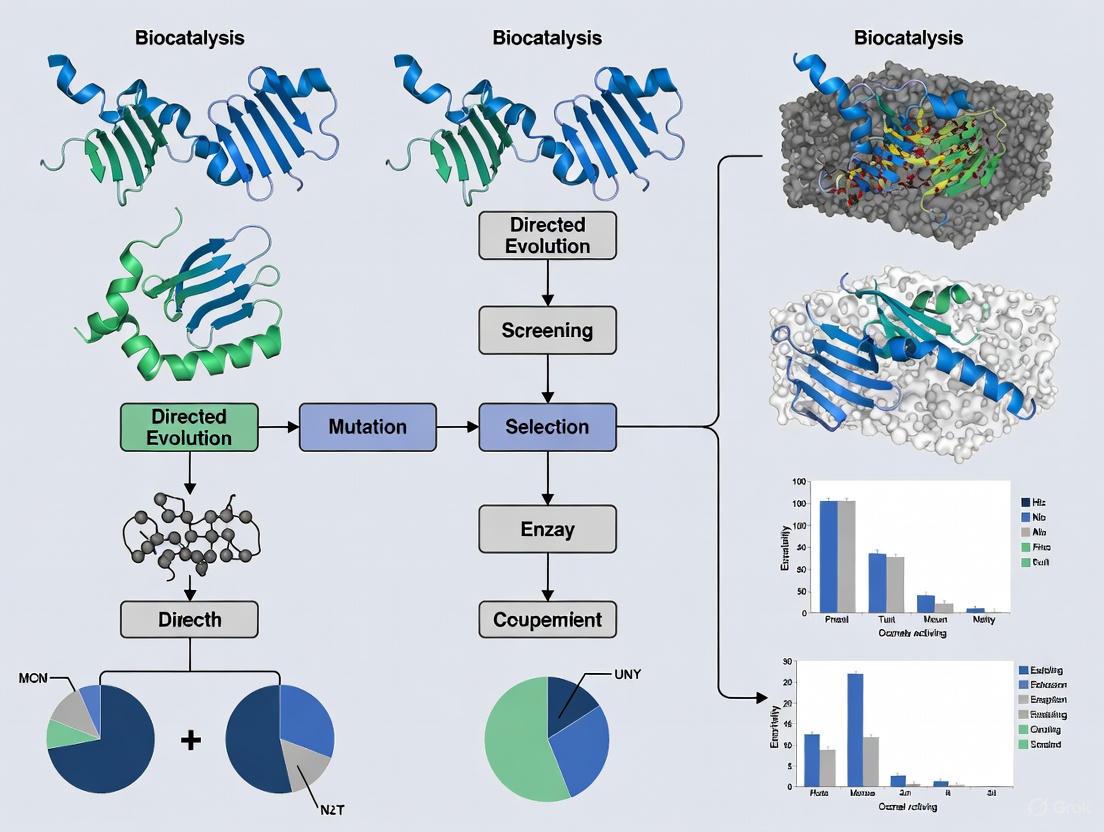
Directed evolution stands as a cornerstone of modern protein engineering, enabling the rapid development of tailored biocatalysts without requiring exhaustive prior knowledge of protein structure.
Directed Evolution in Enzyme Engineering: Methodologies, Applications, and AI-Driven Future
Abstract
Directed evolution stands as a cornerstone of modern protein engineering, enabling the rapid development of tailored biocatalysts without requiring exhaustive prior knowledge of protein structure. This article provides a comprehensive overview for researchers and drug development professionals, covering the foundational principles of directed evolution and its powerful imitation of natural selection. It delves into contemporary methodologies, from classical error-prone PCR to advanced continuous evolution systems like MutaT7 and PACE, highlighting their applications in creating enzymes with enhanced stability, specificity, and novel functions. The content further addresses critical troubleshooting aspects and optimization strategies, including the integration of machine learning and high-throughput screening to navigate complex fitness landscapes. Finally, it examines validation techniques and comparative analyses of different platforms, offering a synthesized perspective on future directions where automation and computational design are poised to revolutionize biocatalyst development for biomedical and industrial applications.
The Principles and Power of Directed Evolution: Harnessing Natural Selection in the Laboratory
Directed evolution is a powerful protein engineering tool that mimics the process of natural evolution in a controlled laboratory setting to optimize biomolecules for human-defined applications. Since the first in vitro evolution experiments by Sol Spiegelman in the 1960s, the methodology has developed into a sophisticated approach for generating enzymes, antibodies, and other proteins with improved or novel functions [1]. This process operates on the fundamental principle of exploring protein fitness landscapes—conceptual mappings of amino acid sequences to functional efficacy—to identify variants with enhanced properties [2] [3]. For researchers in enzyme engineering and drug development, directed evolution provides a practical pathway to optimize complex phenotypes without requiring complete understanding of underlying sequence-structure-function relationships.
Core Principles and Methodological Framework
The directed evolution workflow consists of two complementary steps repeated iteratively: genetic diversification (creating a library of variants) and phenotype selection or screening (identifying improved variants) [1]. This process can be conceptualized as an adaptive walk across a protein fitness landscape, where each cycle of mutation and selection moves the population toward higher fitness peaks [3].
The Directed Evolution Cycle
The fundamental steps include:
- Library Generation: Introducing genetic diversity into a parent sequence
- Expression: Producing the encoded protein variants
- Screening/Selection: Assessing function to isolate improved variants
- Amplification: Using improved variants as templates for subsequent cycles
This iterative process continues until the desired functionality is achieved, allowing researchers to accumulate beneficial mutations while filtering out deleterious changes.
Key Techniques and Methodologies
Genetic Diversification Strategies
Multiple molecular biology techniques exist for creating genetic diversity, each with distinct advantages and applications:
Table 1: Genetic Diversification Techniques in Directed Evolution
| Technique | Purpose | Key Advantages | Key Limitations | Application Examples |
|---|---|---|---|---|
| Error-prone PCR | Insertion of point mutations across whole sequence | Easy to perform; No prior knowledge of key positions required | Reduced sampling of mutagenesis space; Mutagenesis bias | Subtilisin E; Glycolyl-CoA carboxylase [1] |
| DNA Shuffling | Random sequence recombination | Recombination advantages; Can combine beneficial mutations | High homology between parental sequences required | Thymidine kinase; Non-canonical esterase [1] |
| RAISE | Insertion of random short insertions and deletions | Enables random indels across sequence | Indels limited to few nucleotides; Frameshifts introduced | β-Lactamase [1] |
| Site-Saturation Mutagenesis | Focused mutagenesis of specific positions | In-depth exploration of chosen positions; Enables smart library design | Only a few positions mutated; Libraries can become very large | Widely applied to enzyme evolution [1] |
| Orthogonal Replication Systems | In vivo random mutagenesis | Mutagenesis restricted to target sequence | Mutation frequency relatively low; Target size limitations | β-Lactamase; Dihydrofolate reductase [1] |
| TRINS | Insertion of random tandem repeats | Mimics duplications in natural evolution | Frameshifts introduced | β-Lactamase [1] |
Screening and Selection Platforms
Identifying improved variants from libraries requires robust screening or selection methods:
Table 2: Screening and Selection Methods in Directed Evolution
| Method | Principle | Throughput | Key Applications |
|---|---|---|---|
| Colorimetric/Fluorimetric Analysis | Detection of spectral changes in colonies/cultures | Moderate | Variants with altered spectral properties; Fluorescent proteins [1] |
| FACS-Based Methods | Fluorescence-activated cell sorting | High throughput | Properties linked to fluorescence changes; Sortase; Cre recombinase [1] |
| Display Techniques (Phage, Yeast) | Physical linkage of genotype to phenotype | High throughput | Biomolecules with binding properties; Antibodies; Binding proteins [1] |
| Plate-Based Automated Assays | Automated enzymatic activity measurements | Moderate | Broad enzyme applications; Lipase; Laccase [1] |
| MS-Based Methods | Mass spectrometric detection of substrates/products | High throughput | Does not rely on specific properties; Fatty acid synthase; Cytochrome P411 [1] |
| QUEST | Substrate/ligand-based selection | High throughput | Scytalone dehydratase; Arabinose isomerase [1] |
Advanced Methodologies and Recent Innovations
Machine Learning-Enhanced Directed Evolution
Traditional directed evolution faces limitations from epistasis (non-additive effects of mutations), which can trap experiments at local fitness optima. Active Learning-assisted Directed Evolution (ALDE) addresses this challenge by integrating machine learning with experimental workflows [2]. ALDE employs iterative cycles of data collection, model training, and variant prioritization using uncertainty quantification to navigate complex fitness landscapes more efficiently than greedy hill-climbing approaches. In one application, ALDE optimized five epistatic residues in a protoglobin active site for a non-native cyclopropanation reaction, improving product yield from 12% to 93% in just three rounds while exploring only ~0.01% of the design space [2].
Continuous Evolution Systems
Recent advances have enabled continuous directed evolution platforms that operate without discrete rounds of mutagenesis and selection. The OrthoRep system in yeast and PACE (Phage-Assisted Continuous Evolution) in bacteria allow for continuous protein evolution under constant selection pressure [4]. These systems utilize orthogonal DNA polymerases with elevated error rates or mutagenesis plasmids tunably expressed via chemical inducers to achieve hypermutation of target genes [5] [4].
Inducible Directed Evolution (IDE) for Complex Phenotypes
Inducible Directed Evolution (IDE) enables evolution of large DNA sequences (up to 85kb) by combining an intracellular mutagenesis plasmid with P1 phage transfer [5]. The mutagenesis plasmid contains a tunable operon (danQ926, dam, seqA, emrR, ugi, and cda1) that, when induced, represses DNA repair mechanisms, leading to higher mutation rates specifically in the pathway of interest [5].
Automated and Autonomous Laboratories
The integration of robotics and artificial intelligence has enabled the development of fully automated laboratories for programmable protein evolution. The iAutoEvoLab platform combines automated liquid handling, high-throughput screening, and machine learning-guided experimental design to enable continuous, scalable protein evolution with minimal human intervention [4]. Such systems can operate autonomously for extended periods (approximately one month) and have successfully evolved functional proteins from inactive precursors, including a T7 RNA polymerase fusion protein with mRNA capping properties [4].
Detailed Experimental Protocols
Active Learning-Assisted Directed Evolution (ALDE) Protocol
Application: Optimizing epistatic residues in enzyme active sites where traditional directed evolution fails due to rugged fitness landscapes [2].
Materials:
- Parental gene or plasmid
- PCR reagents for site-saturation mutagenesis
- Expression system (e.g., E. coli)
- Activity assay reagents
- Computational resources for machine learning
Procedure:
Define Combinatorial Design Space: Select k residues for simultaneous mutagenesis (20^k possible variants).
Initial Library Construction and Screening:
- Perform simultaneous mutagenesis at all k positions using NNK degenerate codons
- Screen an initial random library (typically hundreds of variants)
- Quantitatively measure fitness for each screened variant
Machine Learning Iteration Cycle:
- Train a supervised ML model on collected sequence-fitness data
- Apply acquisition function to rank all sequences in design space
- Select top N variants for subsequent experimental screening
- Repeat for multiple rounds (typically 3-5 cycles)
Validation: Characterize top-performing variants in detail
Technical Notes: Choice of protein sequence encoding, model type, and acquisition function significantly impacts ALDE performance. Frequentist uncertainty quantification often outperforms Bayesian approaches in high-dimensional settings [2].
Inducible Directed Evolution (IDE) Protocol for Large Pathways
Application: Evolving complex phenotypes encoded by multigene pathways (up to 85kb) while avoiding genomic hitchhiker mutations [5].
Materials:
- P1 phagemid (PM) backbone
- Mutagenesis plasmid (MP) with mutagenic operon
- E. coli diversification strain
- Chemical inducers (e.g., anhydrotetracycline hydrochloride)
- LB broth with appropriate antibiotics
- Electroporation equipment
Procedure:
Phagemid Construction:
- Clone pathway of interest into P1 phagemid backbone
- Transform into diversification strain containing MP
Mutagenesis Induction:
- Grow diversification strain to mid-log phase
- Add chemical inducer to express mutagenic operon
- Incubate for desired mutation rate (typically 1-3 days)
Phage Production and Infection:
- Induce P1 lytic cycle to package mutagenized phagemid
- Harvest phage particles by filtration and chloroform treatment
- Infect fresh screening/selection strain with phage lysate
Screening and Selection:
- Plate infected cells and screen for improved phenotypes
- Israte improved variants for characterization or further cycles
Technical Notes: IDE decouples mutagenesis from screening, avoids inefficient transformation steps, and prevents off-target genomic mutations. The mutation rate can be tuned by inducer concentration and induction time [5].
The Scientist's Toolkit: Essential Research Reagents
Table 3: Essential Research Reagents for Directed Evolution
| Reagent/Category | Function | Examples & Specifications |
|---|---|---|
| Mutagenesis Plasmids | Enable targeted hypermutation | OrthoRep systems; IDE MP with danQ926, dam, seqA, emrR, ugi, cda1 operon [5] [4] |
| Phage Vectors | DNA shuttling between cells | P1 phage (85-100kb capacity); M13 phage (<5kb capacity) [5] |
| Degenerate Codons | Creating diverse mutant libraries | NNK codons (32 codons, all 20 amino acids); NNG/C; tailored reduced-code sets [2] |
| Error-Prone PCR Reagents | Introducing random point mutations | Mutazyme II; Taq polymerase with unbalanced dNTPs; Mn²⁺-supplemented buffers [1] |
| High-Fidelity PCR Systems | Library construction without additional mutations | Q5 Hot Start High-Fidelity Master Mix; Phusion DNA Polymerase [5] |
| Chemical Inducers | Tunable control of mutagenesis rates | Anhydrotetracycline hydrochloride; L-Arabinose; IPTG [5] |
| Selection Agents | Applying evolutionary pressure | Antibiotics; Toxic substrate analogs; Essential nutrient limitation [3] |
| Flow Cytometry Reagents | High-throughput screening | Fluorogenic substrates; Antibody conjugates; Viability dyes [1] |
Critical Experimental Considerations
Library Design and Coverage
Effective directed evolution requires careful consideration of library size and diversity. For traditional methods, library coverage should significantly exceed the theoretical diversity to ensure representation of all variants. However, with smart library design and ML assistance, efficient exploration of sequence space is possible with dramatically reduced screening efforts [2]. Next-generation sequencing coverage requirements differ from genomic studies, with relatively lower coverage sufficient for identifying significantly enriched mutants [3].
Selection Parameter Optimization
Selection conditions profoundly impact directed evolution outcomes. Factors including cofactor concentration, substrate availability, reaction time, and temperature create evolutionary pressures that shape outcomes [3]. Implementing Design of Experiments (DoE) approaches to screen and benchmark selection parameters using small pilot libraries can optimize conditions before committing to large-scale experiments [3].
Balancing Exploration and Exploitation
The fundamental trade-off in directed evolution involves balancing exploration of novel sequence space with exploitation of known beneficial mutations. Active learning approaches address this through acquisition functions that explicitly manage this balance, while traditional methods typically rely on greedy exploitation with occasional exploration through recombination [2].
Directed evolution has matured from simple random mutagenesis screens to sophisticated, computationally enhanced platforms that efficiently navigate protein fitness landscapes. By mimicking Darwinian principles on accelerated timescales, these methods enable the optimization of complex biomolecular functions that challenge rational design approaches. The integration of machine learning, continuous evolution systems, and automated laboratories represents the current state of the art, offering unprecedented capabilities for enzyme engineering and therapeutic development. As these methodologies continue to advance, they expand the scope of addressable research questions and practical applications in biotechnology and medicine.
The journey from Spiegelman's pioneering RNA evolution experiments to today's sophisticated protein engineering represents a fundamental paradigm shift in biotechnology. Spiegelman's work in the 1960s demonstrated that molecular evolution could be directed in a test tube, using Qβ replicase to evolve RNA molecules optimized for replication [6]. This foundational concept laid the groundwork for the modern discipline of directed evolution, which has since matured into a transformative protein engineering technology that harnesses the principles of Darwinian evolution—iterative cycles of genetic diversification and selection—within a laboratory setting [6]. The profound impact of this approach was formally recognized with the 2018 Nobel Prize in Chemistry awarded to Frances H. Arnold for establishing directed evolution as a cornerstone of modern biotechnology and industrial biocatalysis [6].
This evolution from simple nucleic acid systems to complex protein engineering reflects a strategic transition from exploring basic evolutionary principles to addressing pressing industrial and therapeutic challenges. Where Spiegelman's work asked whether evolution could be simplified and accelerated in a test tube, modern protein engineering answers with sophisticated solutions for enzyme optimization, therapeutic protein development, and sustainable biocatalysis—advances made possible by integrating cutting-edge computational tools, high-throughput screening, and artificial intelligence with the foundational principles of molecular evolution [6] [7].
The Directed Evolution Cycle: Methodology and Workflow
Core Principles of Laboratory Evolution
At its core, directed evolution functions as a two-part iterative engine that drives a protein population toward a desired functional goal by intentionally accelerating mutation rates and applying user-defined selection pressures [6]. This process compresses geological timescales of natural evolution into weeks or months through intentional acceleration of mutation rates coupled with unambiguous, user-defined selection pressure [6]. The success of any directed evolution campaign hinges on two critical factors: the quality and diversity of the initial library and the power of the screening method used to identify improved variants from a population dominated by neutral or deleterious mutations [6].
dot Evolutionary Cycle Diagram
Diagram 1: The iterative directed evolution cycle for protein engineering.
Methodologies for Generating Genetic Diversity
The creation of diverse gene variant libraries defines the boundaries of explorable sequence space and directly constrains potential evolutionary outcomes [6]. Several methods have been developed to introduce genetic variation, each with distinct advantages and biases that shape evolutionary trajectories [6].
Random Mutagenesis Techniques:
- Error-Prone PCR (epPCR): A modified PCR protocol that intentionally reduces DNA polymerase fidelity through polymerase selection, dNTP imbalance, and manganese ion addition, typically yielding 1–5 base mutations per kilobase [6].
- Limitations: Not truly random due to DNA polymerase bias favoring transition mutations over transversions, potentially restricting accessible sequence space [6].
Recombination-Based Methods:
- DNA Shuffling (Sexual PCR): Homologous genes are fragmented using DNaseI and reassembled through primerless PCR, resulting in crossovers that create chimeric genes with novel mutation combinations [6].
- Family Shuffling: Applies DNA shuffling to homologous genes from different species, accessing nature's standing variation to significantly accelerate functional improvement compared to single-gene approaches [6].
Focused and Semi-Rational Approaches:
- Site-Saturation Mutagenesis: Comprehensively explores all 19 possible amino acid substitutions at targeted positions, enabling deep interrogation of residue roles identified from prior rounds or structural models [6].
- Strategic Combination: Sequential application of methods (epPCR → DNA shuffling → saturation mutagenesis) ensures thorough exploration of promising fitness landscape regions while minimizing evolutionary dead ends [6].
Advanced Continuous Evolution Systems
Recent technological advances have established continuous evolution platforms that significantly accelerate protein engineering campaigns:
- EcORep (E.coli Orthogonal Replicon): Utilizes a special DNA replicon in E. coli with high mutation rates, enabling continuous mutagenesis and enrichment of variants with improved activity over time [8].
- PACE (Phage-assisted Continuous Evolution): Links enzyme function directly to bacteriophage propagation, where only phages carrying active recombinases can reproduce, creating continuous evolution pressure [8].
Quantitative Landscape of Modern Protein Engineering
Market Growth and Economic Impact
The protein engineering market has experienced substantial growth, demonstrating the field's expanding commercial and therapeutic significance.
Table 1: Protein Engineering Market Size and Projections
| Market Segment | 2024 Market Value | Projected 2033/2034 Value | CAGR | Key Drivers |
|---|---|---|---|---|
| Global Protein Engineering Market [9] | USD 3.6 Billion | USD 8.2 Billion (2033) | 9.5% (2025-2033) | AI-driven automation, therapeutic protein demand |
| Protein Design & Engineering Market [10] | USD 6.4 Billion | USD 25.1 Billion (2034) | 15.0% (2025-2034) | Chronic disease prevalence, recombinant DNA technology |
| Protein Engineering in Biotechnology [11] | USD 3.52 Million (2023) | USD 10.10 Million (2032) | 16.25% (2019-2033) | Precision medicine, sustainable biotechnology |
Technology and Application Segmentation
The protein engineering landscape encompasses diverse technologies and applications, with rational design and monoclonal antibodies currently dominating their respective segments.
Table 2: Protein Engineering Market Segmentation (2024)
| Segmentation Basis | Dominant Segment | Market Share | Key Applications |
|---|---|---|---|
| Technology [9] | Rational Protein Design | Largest share | Computational modeling, AI-driven protein optimization, antibody engineering |
| Protein Type [9] | Monoclonal Antibodies | 24.5% | Targeted cancer therapies, autoimmune disease treatment |
| Product & Services [9] | Instruments | 53.2% | Protein characterization, structural analysis, high-throughput screening |
| End User [9] | Pharmaceutical & Biotechnology Companies | 45.3% | Therapeutic protein development, biologics manufacturing |
The Scientist's Toolkit: Essential Research Reagents and Solutions
Successful directed evolution campaigns require specialized reagents and systems to enable library creation, host expression, and functional screening.
Table 3: Essential Research Reagents for Directed Evolution
| Reagent/Solution | Function | Application Example |
|---|---|---|
| Error-Prone PCR Kit | Introduces random mutations throughout gene sequence | Creating initial diversity libraries from parent gene [6] |
| DNase I | Fragments genes for DNA shuffling protocols | Recombination-based mutagenesis for combining beneficial mutations [6] |
| Saturation Mutagenesis Kit | Systematically explores all amino acid possibilities at targeted positions | Deep interrogation of key residues identified in preliminary screens [6] |
| Bridge RNA (bRNA) | Guides recombination by binding genomic target and donor DNA | Precise gene replacement in bridge recombinase systems [8] |
| Specialized Expression Vectors | Enables protein expression in host systems (E. coli, S. cerevisiae, P. pastoris) | Heterologous protein expression with appropriate post-translational modifications [12] |
| Fluorescent/Colorimetric Substrates | Enables high-throughput screening of enzyme activity | Microtiter plate-based screening of variant libraries [6] |
| Phage Display System | Links genotype to phenotype for selection-based screening | Continuous evolution platforms like PACE [8] |
Integrated Computational-Experimental Workflows
Physics-Based Modeling in Enzyme Engineering
Molecular modeling techniques have become indispensable complements to experimental directed evolution, particularly for addressing enzyme properties difficult to optimize through screening alone [7]. Molecular mechanics (MM) and quantum mechanics (QM) methods can theoretically measure experimentally-relevant functions for arbitrary systems with atom-resolved structures, regardless of enzyme origin or preferred operational conditions [7].
Key applications include:
- Electrostatic pre-organization: Engineering electric fields to stabilize transition states and enhance catalytic efficiency [7]
- Substrate access engineering: Modifying tunnel architectures to control reactant diffusion and product release [7]
- pH optimum modulation: Altering surface charge distributions to shift enzymatic activity to non-biological conditions [7]
Machine Learning-Enhanced Evolution
Machine learning now accelerates directed evolution by predicting sequence-function relationships, enabling more intelligent library design and reducing experimental screening burdens [7] [12]. Deep mutational learning (DML) approaches explore thousands of sequence variations in silico to identify promising candidates before experimental validation [8].
dot Computational-Experimental Integration
Diagram 2: Integrated computational-experimental workflow for modern protein engineering.
Application Notes: Practical Implementation for Enzyme Engineering
Case Study: Co-evolution of β-Glucosidase Activity and Acid Tolerance
Background: Lignocellulose degradation for biofuel production requires enzymes tolerant to inhibitory compounds like formic acid generated during biomass pretreatment. Wild-type Penicillium oxalicum 16 β-glucosidase (16BGL) shows excellent thermostability but suffers significant inhibition at 15 mg/mL formic acid [12].
Challenge: Simultaneously enhance enzymatic activity and organic acid tolerance without prior structural knowledge.
Solution: Implementation of a novel SEP (Segmental Error-prone PCR) and DDS (Directed DNA Shuffling) approach:
- Gene Segmentation: 16bgl divided into 400-500 bp segments with 20-30 bp overlapping regions
- Parallel Mutagenesis: Each segment subjected to independent error-prone PCR
- Directed Recombination: Mutated segments assembled via overlap extension PCR using S. cerevisiae homologous recombination
- Screening: Variants screened for both hydrolysis activity and formic acid tolerance
Results: This approach generated variants with significantly improved performance compared to traditional methods, demonstrating robust enhancement of multiple functionalities simultaneously [12].
Protocol: Segmental Error-Prone PCR with Directed DNA Shuffling
Materials:
- Target gene (16bgl or gene of interest) divided into segments with overlapping regions
- Error-prone PCR reagents: Taq polymerase (non-proofreading), unbalanced dNTPs, Mn²⁺
- S. cerevisiae strain with high recombination efficiency (e.g., BY4741)
- Expression vector with constitutive promoter (e.g., pYAT22 with TEF1 promoter)
- Screening substrates (pNPG for β-glucosidase, formic acid for tolerance selection)
Procedure:
Segment Amplification:
- Perform separate error-prone PCR reactions for each gene segment
- Use Mn²⁺ concentration of 0.2-0.5 mM to control mutation rate (target: 1-3 mutations/segment)
- Verify fragment size and yield by agarose gel electrophoresis
Library Assembly:
- Combine purified mutated segments with linearized expression vector
- Transform into S. cerevisiae using lithium acetate method
- Exploit yeast homologous recombination for in vivo assembly
- Plate on appropriate selective medium and incubate 48-72 hours
Dual-Activity Screening:
- Pick individual colonies into 96-well deep plates containing growth medium
- Culture with shaking for 48-72 hours at 30°C
- Transfer supernatant to assay plates containing both activity substrate and inhibitory compound
- Identify clones showing improved activity under inhibitory conditions
Validation and Iteration:
- Sequence improved variants to identify beneficial mutations
- Use best performers as templates for subsequent evolution rounds
- Combine beneficial mutations through additional shuffling cycles
Technical Notes:
- SEP ensures even mutation distribution across entire gene sequence
- DDS minimizes reverse mutations common in traditional DNA shuffling
- S. cerevisiae expression enables proper folding and post-translational modifications for eukaryotic enzymes
- Dual-parameter screening essential for co-evolution of multiple traits [12]
Future Perspectives and Emerging Applications
The field of protein engineering continues to evolve with several emerging trends shaping its future trajectory:
- AI-Driven Protein Design: Machine learning algorithms now predict protein structure and function with increasing accuracy, enabling de novo design of proteins with customized properties [7] [11]
- Therapeutic Enzyme Engineering: Development of enzymes for gene therapy applications, including bridge recombinases for precise gene replacement strategies to treat genetic disorders like Alpha-1 Antitrypsin Deficiency [8]
- Sustainable Biocatalysis: Engineering enzymes for green chemistry applications, including biomass conversion, biodegradation of environmental pollutants, and sustainable manufacturing processes [7] [11]
- Microfluidic High-Throughput Screening: Emerging platforms enabling ultra-high-throughput screening of protein variant libraries, dramatically accelerating the evolution cycle [11]
The transition from Spiegelman's simple RNA evolution systems to today's integrated computational-experimental protein engineering platforms represents remarkable progress in our ability to harness evolutionary principles for biotechnology. Where early work demonstrated the fundamental feasibility of test-tube evolution, modern approaches now deliver customized protein solutions addressing critical challenges in therapeutics, industrial catalysis, and sustainability. As computational power grows and our understanding of sequence-structure-function relationships deepens, protein engineering continues to expand its capabilities, promising increasingly sophisticated biological designs for the future.
Directed evolution stands as a cornerstone methodology in enzyme engineering, enabling researchers to mimic natural selection in laboratory settings to tailor biocatalysts for industrial, therapeutic, and research applications. This approach relies on the recursive application of a core cycle comprising mutagenesis, selection, and amplification to navigate the vast sequence space of proteins and identify variants with enhanced properties. The efficiency of this process is critically dependent on the ability to generate diverse variant libraries and to couple their functional performance to a high-throughput screen or selectable output. This application note details established and emerging protocols for implementing this core cycle, providing a framework for the directed evolution of enzymes, with a specific focus on challenging targets such as hydrocarbon-producing enzymes. The content is structured to serve as a practical guide for researchers and drug development professionals engaged in advancing biocatalyst design.
The design of a directed evolution campaign requires careful consideration of library size, mutation rates, and the probability of discovering improved variants. The table below summarizes key quantitative parameters from recent studies.
Table 1: Key Quantitative Parameters in Directed Evolution Campaigns
| Parameter | Representative Value or Range | Context and Impact |
|---|---|---|
| Beneficial Mutation Rate | ~1% of all single-site mutations [13] | Highlights the challenge of library design; the vast majority of mutations are neutral or deleterious. |
| Theoretical Library Size | 5,757 single amino acid substitutions (for a 303-residue enzyme) [13] | The total possible diversity for a single enzyme scaffold, underscoring the need for smart library design. |
| Filtered Library Size | ~30% of all possible single-site mutations (approx. 1,800 variants) [13] | Example of using computational stability predictions (ΔΔG < -0.5 REU) to reduce screening burden without losing beneficial mutations. |
| Coverage in Oligo Pools | >50% of targeted mutations [13] | Acceptable coverage level when using complex gene libraries synthesized from oligo pools. |
| Catalytic Improvement | >450-fold activity increase in 5 rounds [13] | Demonstrates the potential for rapid optimization using computationally guided evolution. |
| Catalytic Efficiency (kcat/Km) | 1.7 × 10⁵ M⁻¹ s⁻¹ (for an evolved Kemp eliminase) [13] | Example of a high-efficiency enzyme achievable through directed evolution. |
Experimental Protocols for the Core Cycle
Mutagenesis and Library Construction
Objective: To generate a comprehensive yet tractable library of gene variants encoding the target enzyme.
Protocol 1: Saturation Mutagenesis with PALS-C Cloning [14]
This protocol is ideal for introducing small-sized variants (e.g., single amino acid substitutions) across a gene of interest to create an allelic series.
- Library Design: Define the target residues for saturation mutagenesis. This can be all residues in the gene, a subset based on structural data (e.g., within 6 Å of the active site), or residues predicted by bioinformatic tools.
- Oligonucleotide Synthesis: Synthesize a pool of oligonucleotides designed to introduce the desired mutations during the cloning process.
- PALS-C Cloning: Utilize the Programmed Allelic Series with Common procedures (PALS-C) cloning method to introduce the variant oligonucleotide pool into a plasmid containing the gene of interest.
- Transformation: Transform the resulting variant plasmid pool into a competent E. coli strain for propagation. The transformed cells constitute the variant library ready for selection.
Protocol 2: Segmental Error-prone PCR (SEP) and Directed DNA Shuffling (DDS) [12]
This method combines random mutagenesis with homologous recombination to evolve large genes and incorporate multiple beneficial mutations.
- Gene Segmentation: Divide the target gene into several overlapping segments.
- Error-prone PCR: Perform error-prone PCR on each segment separately to introduce random mutations within each segment.
- Directed DNA Shuffling (DDS): Mix the mutated segments with a linearized plasmid vector containing homologous ends. Co-transform this mixture into S. cerevisiae, which leverages its high homologous recombination efficiency to assemble the full-length, shuffled gene variant into the vector in vivo.
- Plasmid Recovery: Isolve the plasmid library from the yeast pool and transform into E. coli for amplification and storage.
Selection and Screening
Objective: To identify variant enzymes with the desired functional enhancement from the mutant library.
Protocol 3: Functional Signaling and FACS [14]
This protocol is applicable when enzyme function can be coupled to a fluorescent signal.
- Cell Line Preparation: Establish a cell line platform that expresses the target enzyme in a manner where its activity induces a measurable fluorescent signal (e.g., via a coupled signaling pathway).
- Library Delivery: Deliver the variant plasmid pool into the engineered cell line using an efficient method like nucleofection.
- Fluorescence-Activated Cell Sorting (FACS): After an appropriate incubation period, analyze and sort the cell population using FACS. Cells exhibiting fluorescence intensity above a predetermined threshold (indicating high enzyme activity) are collected.
- Variant Recovery: Isolate plasmids from the sorted cell population for sequence analysis and amplification.
Protocol 4: Growth-Coupled Continuous Evolution [4]
This method links enzyme function directly to host cell survival, enabling autonomous evolution over many generations.
- Genetic Circuit Engineering: Engineer the host organism (e.g., yeast or bacteria) so that the desired enzyme activity is essential for growth or provides a strong selective advantage. This can be achieved using orthogonal replication systems (e.g., OrthoRep) or synthetic genetic circuits (e.g., NIMPLY logic).
- Library Introduction: Introduce the mutant library into the engineered host.
- Continuous Culture: Propagate the culture over an extended period under selective conditions. Variants with improved function will outcompete others and dominate the population.
- Variant Isolation: Periodically sample the culture and isolate the dominant genotypes for characterization.
Amplification and Analysis
Objective: To propagate selected hits and quantitatively characterize their improved properties.
Protocol 5: Next-Generation Sequencing and Functional Score Generation [14]
- Amplification: Use the plasmid population recovered from the selection step to transform E. coli for bulk amplification or to generate clonal isolates.
- Next-Generation Sequencing (NGS): Subject the amplified plasmid pool to NGS to determine the full sequence diversity and enrichment of specific variants.
- Functional Scoring: Analyze the NGS data (from pre-selection and post-selection libraries) to calculate an enrichment score for each variant. This score serves as a quantitative metric of functional performance.
- Hit Validation: Clonally isolate top-ranked variants and characterize their biochemical properties (e.g., kcat, Km, thermostability) using standard enzymatic assays to confirm improvement.
Diagram 1: Core directed evolution cycle workflow.
Research Reagent Solutions
A successful directed evolution project relies on a toolkit of specialized reagents and platforms. The following table catalogues essential solutions referenced in the protocols.
Table 2: Key Research Reagent Solutions for Directed Evolution
| Reagent / Solution | Function / Application | Protocol / Context |
|---|---|---|
| PALS-C Cloning System | Introduces small-sized genetic variants into a gene of interest in a programmable manner. | Saturation Mutagenesis [14] |
| OrthoRep System | An orthogonal DNA polymerase-plasmid pair in yeast that enables continuous in vivo mutagenesis and evolution. | Continuous & Automated Evolution [4] |
| NIMPLY Genetic Circuit | A synthetic genetic circuit that can implement a NOT logic function, useful for selecting against unwanted activities and enhancing selectivity. | Selection for Specificity [4] |
| Computational Stability Filter (e.g., Rosetta ΔΔG) | Predicts changes in protein folding free energy upon mutation to filter out destabilizing variants prior to library construction. | Library Design [13] |
| Fluorescence-Activated Cell Sorter (FACS) | Enables high-throughput, function-based sorting of single cells from large variant libraries (>10⁶ cells). | High-Throughput Screening [14] |
| HotSpot Wizard | A bioinformatic tool that analyzes sequence, structure, and evolutionary data to identify residues for mutagenesis. | Semi-Rational Library Design [13] |
The core cycle of mutagenesis, selection, and amplification provides a robust and powerful framework for engineering novel enzymes. The protocols detailed herein, ranging from targeted saturation mutagenesis to fully automated continuous evolution platforms, offer researchers a suite of tools to address diverse enzyme engineering challenges. The integration of computational design and filtering at the library construction stage, coupled with highly sensitive screening or selection methods, dramatically accelerates the evolution of desired enzymatic functions. As these methodologies continue to mature, they will undoubtedly expand the scope of directed evolution, enabling the creation of bespoke biocatalysts for an ever-widening array of applications in biotechnology and medicine.
In the field of enzyme engineering, the development of biocatalysts tailored for industrial applications, therapeutic development, and sustainable technologies relies on two powerful, yet philosophically distinct methodologies: rational design and directed evolution [15] [16]. Rational design represents a knowledge-based approach where scientists, like architects, use detailed understanding of protein structure and function to implement specific, predictive changes [15] [17]. In contrast, directed evolution mimics natural selection in laboratory settings, employing iterative rounds of random mutagenesis and screening to discover improved enzyme variants without requiring prior mechanistic knowledge [1] [18]. The 2018 Nobel Prize in Chemistry awarded for the directed evolution of enzymes underscores the transformative impact of these technologies [6]. This analysis examines the advantages, limitations, and practical applications of both approaches within enzyme engineering research, providing structured comparisons and detailed protocols to guide methodological selection and implementation.
Core Principles and Methodological Comparison
Fundamental Philosophies and Technical Execution
Rational design operates on the principle that detailed knowledge of enzyme structure, mechanism, and sequence-structure-function relationships enables precise, targeted improvements. This approach requires high-quality structural data (from X-ray crystallography or NMR) or reliable computational models (from AlphaFold or Rosetta), combined with molecular modeling and dynamics simulations to predict the effects of mutations before experimental validation [17] [19]. Key techniques include site-directed mutagenesis for specific amino acid substitutions and structure-based computational design algorithms that calculate optimal mutations to enhance properties like stability or substrate specificity [17] [20].
Directed evolution, conversely, embraces a "test-and-learn" philosophy that harnesses Darwinian principles of mutation and selection without requiring exhaustive prior structural knowledge [18] [6]. This methodology involves creating genetic diversity through random mutagenesis or recombination, followed by high-throughput screening or selection to identify improved variants, which then serve as templates for subsequent evolution rounds [1] [6]. The power of directed evolution lies in its ability to explore vast sequence spaces and identify beneficial mutations that would be difficult to predict computationally, including cooperative effects between distant residues [18] [20].
Comparative Analysis of Advantages and Limitations
Table 1: Comprehensive comparison of rational design and directed evolution approaches
| Aspect | Rational Design | Directed Evolution |
|---|---|---|
| Knowledge Requirements | Requires detailed 3D structural information, mechanistic understanding, and computational modeling [15] [17] | Requires no prior structural knowledge; operates effectively with sequence information alone [15] [6] |
| Methodological Approach | Targeted, specific mutations based on structural and functional hypotheses [17] [19] | Random mutagenesis and screening/selection without predefined mutation targets [1] [18] |
| Library Size | Small, focused libraries (often < 100 variants) [17] [20] | Very large libraries (10⁴–10¹⁴ variants) requiring high-throughput handling [1] [6] |
| Time Investment | Less time-consuming for initial designs; reduced screening burden [15] [19] | Time-intensive iterative cycles; extensive screening/selection requirements [15] [17] |
| Resource Requirements | Specialized computational resources and structural biology expertise [17] [20] | High-throughput screening infrastructure and specialized assays [1] [6] |
| Risk of Failure | High if structural models are inaccurate or mechanism is incompletely understood [16] [17] | Lower; empirical screening identifies functional variants despite knowledge gaps [15] [18] |
| Discovery Potential | Limited to predictable improvements based on existing knowledge [15] [20] | High potential for discovering novel, non-intuitive solutions and functional combinations [18] [6] |
| Optimal Application Scenarios | Well-characterized enzymes, specific property enhancements (e.g., single residue changes) [17] [19] | Poorly characterized systems, complex multi-property optimization, novel function creation [15] [21] |
Integrated Experimental Protocols
Rational Design Workflow Protocol
Step 1: Structural and Sequence Analysis
- Obtain high-resolution protein structure through X-ray crystallography or NMR, or generate a reliable homology model using AlphaFold2 or Rosetta [17] [21]
- Perform multiple sequence alignment with homologous enzymes to identify evolutionarily conserved and variable regions [17] [20]
- Analyze active site architecture, substrate binding pockets, and protein flexibility through B-factor analysis [17]
Step 2: Computational Modeling and In Silico Design
- Identify target residues for mutation based on structural analysis (e.g., substrate channel residues for altering specificity, surface residues for improving stability) [17] [20]
- Use molecular dynamics simulations to predict the structural impact of proposed mutations and calculate binding energies for substrate-enzyme complexes [20]
- Generate a focused library of 10-50 rationally designed variants using site-directed mutagenesis primers [17]
Step 3: Experimental Validation
- Express and purify designed variants using standard protein expression systems (E. coli, yeast, or HEK293 cells) [1]
- Characterize enzyme activity, specificity, and stability using appropriate biochemical assays [17]
- For successful designs, determine crystal structures to verify computational predictions and guide further optimization [17]
Directed Evolution Workflow Protocol
Step 1: Diversity Generation
- Random Mutagenesis: Use error-prone PCR (epPCR) with Mn²⁺ and nucleotide imbalances to achieve 1-5 mutations per kilobase [1] [6]. Optimize mutation rate to balance diversity and protein functionality.
- Recombination Methods: Implement DNA shuffling or StEP (Staggered Extension Process) to recombine beneficial mutations from multiple parent sequences [18] [6]. This approach is particularly valuable after initial rounds of evolution.
- Saturation Mutagenesis: For semi-rational approaches, target specific residues identified as "hotspots" through previous evolution rounds or structural analysis [1] [20].
Step 2: Library Screening and Selection
- Selection Methods: Develop growth-coupled selection systems where desired enzyme activity confers survival advantage [1] [21]. For hydrocarbon-producing enzymes, this may involve linking production to detectable metabolites or resistance markers.
- High-Throughput Screening: Implement microtiter plate-based assays (96- or 384-well) with colorimetric or fluorometric readouts [1] [6]. For intracellular enzymes, use FACS (Fluorescence-Activated Cell Sorting) with fluorescent substrates or products [1].
- Quality Control: Sequence top-performing variants to identify beneficial mutations and eliminate duplicates before subsequent evolution rounds [6].
Step 3: Iterative Optimization
- Use best-performing variants from each round as templates for subsequent diversification [18] [6]
- Gradually increase selection pressure (e.g., higher temperature, altered pH, stricter substrate specificity) over multiple generations [6]
- Typically require 3-8 evolution rounds to achieve significant improvements [18]
- After final round, characterize top variants kinetically and structurally to understand molecular basis of improvements [1]
The Scientist's Toolkit: Essential Research Reagents and Solutions
Table 2: Key research reagents and solutions for enzyme engineering approaches
| Reagent/Solution | Function/Application | Directed Evolution | Rational Design |
|---|---|---|---|
| Error-Prone PCR Kit | Introduces random mutations during gene amplification | Essential [1] [6] | Not typically used |
| Site-Directed Mutagenesis Kit | Creates specific, targeted point mutations | Used in later stages for combination | Essential [17] [19] |
| Phusion or Taq Polymerase | DNA amplification; Taq used for epPCR due to lower fidelity | Essential [6] | Standard PCR |
| Mn²⁺ and Unbalanced dNTPs | Critical components for reducing fidelity in error-prone PCR | Essential [6] | Not used |
| DNase I | Fragments DNA for recombination in DNA shuffling | Essential for recombination [18] | Not used |
| Microtiter Plates (96/384-well) | High-throughput screening of variant libraries | Essential [1] [6] | Limited use |
| Fluorescent Substrates/Reporters | Enable high-throughput screening via FACS or plate readers | Essential [1] [6] | For validation |
| E. coli Expression Strains | Standard host for protein variant expression | Standard [1] | Standard [17] |
| Chromatography Systems | Protein purification for biochemical characterization | For validation [1] | Essential [17] |
| Crystallization Screens | Obtaining structural data for computational design | Occasionally for analysis | Essential [17] |
Emerging Trends and Integrated Approaches
Semi-Rational Design: Bridging the Methodological Divide
The distinction between rational design and directed evolution has blurred with the emergence of semi-rational approaches that leverage the strengths of both methodologies [20] [21]. These integrated strategies use computational and bioinformatic analyses to identify promising target regions or residues, then employ focused randomization at these sites to create smaller, higher-quality libraries [20]. Key semi-rational techniques include:
- CASTing (Combinatorial Active Site Saturation Test): Systematically targets residues around the active site with saturation mutagenesis to alter substrate specificity and enantioselectivity [17] [20]
- Structure-Guided Consensus Approach: Identifies evolutionarily conserved residues through multiple sequence alignments and reverts non-consensus amino acids to consensus to enhance thermostability [17]
- SCHEMA Structure-Guided Recombination: Computational algorithm that estimates disruption caused by recombining amino acid residues in chimeric proteins, enabling shuffling of sequences with low similarity [17]
- B-Factor Iterative Test (B-Fit): Targets positions with high flexibility (high B-factors) in crystal structures for saturation mutagenesis to improve stability [17]
The Impact of Computational Advances
Recent breakthroughs in computational structural biology have significantly influenced both rational and evolutionary approaches [16] [21]. AlphaFold and RoseTTAFold have dramatically improved access to reliable protein structure predictions, reducing dependence on experimental crystallography for rational design [21]. Machine learning algorithms now analyze high-throughput screening data to identify patterns and predict beneficial mutations, accelerating the directed evolution cycle [16] [20]. Autonomous protein engineering platforms like SAMPLE (Self-driving Autonomous Machines for Protein Landscape Exploration) combine AI-driven protein design with robotic experimentation systems, creating closed-loop optimization platforms that continuously learn from experimental results [19].
Both directed evolution and rational design represent powerful, complementary approaches in the enzyme engineering toolkit. Directed evolution excels at navigating complex fitness landscapes without requiring detailed structural knowledge, often discovering non-intuitive solutions [18] [6]. Rational design offers precision and efficiency for well-characterized systems where structure-function relationships are sufficiently understood [17] [19]. The future of enzyme engineering lies in the continued integration of these approaches, leveraging computational advances, machine learning, and high-throughput automation to create increasingly sophisticated biocatalysts for pharmaceutical applications, sustainable energy production, and industrial biotechnology [16] [20] [21]. Researchers should select their approach based on the specific enzyme system, available structural information, and desired properties, while remaining open to hybrid strategies that maximize the benefits of both methodologies.
Directed evolution stands as one of the most powerful tools in modern protein engineering, enabling researchers to tailor enzymes for specific applications in biotechnology, therapeutics, and sustainable chemistry [22] [1]. This process mimics natural evolution in laboratory settings through iterative rounds of genetic diversification and artificial selection or screening to discover proteins with enhanced or entirely new functions [22]. The conceptual framework that underpins our understanding of how proteins adapt during directed evolution is the fitness landscape—a multidimensional representation of the relationship between protein sequence and functional fitness [22] [23].
First introduced by Sewall Wright in 1932, fitness landscapes provide a powerful metaphor for visualizing evolution as a navigational challenge across a topographic surface [23] [24]. In this representation, each point on the landscape corresponds to a specific protein sequence, with elevation representing its fitness value—how well the protein performs the desired function under defined conditions [22]. Evolutionary optimization then becomes a process of "uphill climbing" across this landscape, with the goal of reaching the highest peaks corresponding to sequences with optimal function [25]. While the original concept visualized genotypic space as a hypercube with fitness as height, modern interpretations recognize three distinct characterizations: genotype-to-fitness landscapes, allele frequency-to-fitness landscapes, and phenotype-to-fitness landscapes [23].
The true power of the fitness landscape concept lies in its ability to rationalize the strategic challenges of directed evolution. The sequence space for even a modest-sized protein is astronomically large—for a 100-amino acid protein, there are 20¹⁰⁰ (∼10¹³⁰) possible sequences, far more than the number of atoms in the universe [22]. Fitness landscapes provide a conceptual framework for developing efficient search strategies to navigate this vast space, helping researchers understand why some evolutionary paths succeed while others lead to dead ends [22] [25].
Theoretical Framework: Characterizing Landscape Topography
Landscape Ruggedness and Evolutionary Trajectories
The structure of a fitness landscape profoundly influences the efficiency and outcome of directed evolution campaigns [22]. Landscapes vary considerably in their topography, which can be envisioned along a spectrum from smooth, single-peaked "Fujiyama" landscapes to highly rugged, multi-peaked "Badlands" landscapes [22]. Smooth landscapes feature gradual, incremental fitness changes between neighboring sequences, offering many accessible uphill paths that enable relatively straightforward optimization through the accumulation of small, beneficial mutations [22] [25]. In contrast, rugged landscapes contain numerous local fitness optima separated by valleys of lower fitness, creating evolutionary traps where populations can become stranded on suboptimal peaks [22] [23].
The ruggedness of a landscape is primarily determined by the prevalence of epistatic interactions—situations where the effect of one mutation depends on the presence of other mutations in the sequence [22]. When epistasis is minimal, landscapes tend to be smooth and easily navigable. However, when strong epistatic interactions occur, the landscape becomes rugged, and evolutionary trajectories may require temporarily deleterious mutations or multiple simultaneous changes to escape local optima and access higher fitness regions [22] [25]. Empirical studies of evolutionary pathways have demonstrated that many directed evolution campaigns successfully navigate these landscapes through simple adaptive walks involving sequential beneficial mutations, often without requiring complex epistatic jumps [25].
High-Dimensional Considerations and Visualization Challenges
While the terrestrial landscape analogy provides intuitive understanding, it suffers from significant limitations when applied to real protein sequences. The genotypic space of proteins is inherently high-dimensional, with each amino acid position representing a potential dimension [24]. This high-dimensionality creates topological properties fundamentally different from the intuitive three-dimensional landscapes we can easily visualize [24]. In sufficiently high-dimensional spaces, even randomly assigned fitness values tend to create interconnected networks of high-fitness sequences, reducing the problem of isolated peaks that characterizes low-dimensional landscapes [24].
Advanced visualization techniques have been developed to create more accurate low-dimensional representations of fitness landscapes. These methods plot genotypes in a manner that reflects the ease or difficulty of evolving from one genotype to another, considering the fitnesses of intermediate genotypes [24]. Such representations position genotypes connected by neutral paths close together, while separating those divided by fitness valleys, even if their mutational distance is small [24]. This approach provides a more evolutionarily relevant visualization that highlights the major features of the fitness landscape as experienced by an evolving population.
Table 1: Key Characteristics of Fitness Landscape Types
| Feature | Smooth Landscape | Rugged Landscape |
|---|---|---|
| Topography | Single peak, gradual slopes | Multiple peaks separated by valleys |
| Epistasis | Minimal or absent | Prevalent and strong |
| Evolutionary Paths | Many accessible uphill paths | Limited paths, often requiring temporary fitness losses |
| Local Optima | Rare | Common |
| Predictability | Highly predictable trajectories | Difficult to predict optimal paths |
| Experimental Approach | Straightforward iterative improvement | Requires sophisticated library design and exploration strategies |
Dynamic Fitness Seascapes
An important extension of the traditional fitness landscape concept recognizes that selection pressures are often not static but change over time, giving rise to fitness seascapes [23]. In real-world applications, enzymes must frequently function in changing environments, such as shifting pH, temperature, or substrate availability [23]. Fitness seascapes model these dynamic adaptive surfaces whose peaks and valleys change over time due to factors including environmental changes, drug exposure cycles, immune surveillance, and co-evolutionary interactions with other species [23]. This concept is particularly relevant for therapeutic enzyme engineering, where factors such as drug cycling and evolving host environments create moving targets for optimization [23].
Practical Application: Navigating Landscapes in Enzyme Engineering
Library Design Strategies for Landscape Exploration
The fundamental challenge in directed evolution is efficiently exploring the vast sequence space to identify functional improvements. Different library generation strategies offer distinct approaches to navigating fitness landscapes, each with advantages for specific landscape topographies.
Random Mutagenesis through error-prone PCR (epPCR) introduces mutations throughout the entire gene, providing broad exploration of the local landscape region [1] [6]. This approach is particularly valuable in early stages when little is known about the sequence-function relationship or when targeting unpredictable regions distant from the active site [6]. However, epPCR has inherent biases—it favors transition over transversion mutations and can only access approximately 5-6 of the 19 possible alternative amino acids at any given position due to genetic code degeneracy [6].
Recombination-based methods such as DNA shuffling mimic natural sexual recombination by breaking multiple parent genes into fragments and reassembling them into chimeric sequences [1] [6]. This approach is highly effective for combining beneficial mutations from different lineages and exploring new regions of the fitness landscape through crossover events [6]. Family shuffling, which recombines homologous genes from different species, leverages nature's evolutionary innovation to access functionally relevant sequence space more efficiently than mutating a single gene [6].
Focused mutagenesis strategies, including site-saturation mutagenesis, target specific regions or residues informed by structural knowledge or previous evolutionary rounds [1] [6]. This semi-rational approach creates smaller, higher-quality libraries that intensively explore promising "hotspots" in the landscape, dramatically increasing the efficiency of finding improvements [6]. These targeted methods are particularly valuable for navigating rugged landscapes where random exploration would be inefficient.
Table 2: Library Generation Methods for Fitness Landscape Exploration
| Method | Mechanism | Landscape Exploration | Advantages | Limitations |
|---|---|---|---|---|
| Error-Prone PCR | Random point mutations via low-fidelity amplification | Broad local exploration | Easy to perform; no prior knowledge needed | Mutational bias; limited amino acid coverage |
| DNA Shuffling | Recombination of gene fragments | Exploration through combination | Mimics natural recombination; combines beneficial mutations | Requires sequence homology (>70-75%) |
| Site-Saturation Mutagenesis | Targeted exploration of specific residues | Focused deep exploration | High-quality libraries; excellent for optimization | Requires prior knowledge of important positions |
| Orthogonal Mutagenesis Systems | In vivo mutagenesis of target sequences | Continuous exploration | Can be coupled with selection; automated evolution | Lower mutation frequency; size limitations |
Advanced Navigation with Artificial Intelligence
Recent advances integrate artificial intelligence with biofoundry automation to create autonomous enzyme engineering platforms that efficiently navigate fitness landscapes [26]. These systems combine protein language models (such as ESM-2) with epistasis models and machine learning to design intelligent mutant libraries that maximize the discovery of improved variants [26]. The AI models predict variant fitness from sequence data, enabling prioritization of promising regions in the vast sequence space [26].
In practice, these platforms have demonstrated remarkable efficiency, engineering enzymes with 16- to 26-fold improvements in activity in just four rounds over four weeks while requiring construction and characterization of fewer than 500 variants for each enzyme [26]. This represents a significant acceleration compared to traditional directed evolution, achieved through more intelligent navigation of the fitness landscape guided by machine learning predictions.
Experimental Protocol: Directed Evolution Campaign
Phase 1: Library Design and Construction
Objective: Create a diverse mutant library targeting regions of the fitness landscape with high probability of functional improvements.
Materials:
- Template gene encoding wild-type enzyme
- Oligonucleotides for amplification and mutagenesis
- High-fidelity and error-prone DNA polymerases
- dNTP mixture, Mg²⁺, and Mn²⁺ solutions
- DpnI restriction enzyme
- Competent expression cells (E. coli or other host)
- Transformation reagents
Procedure:
Initial Library Design:
- For unexplored landscapes: Use protein language models (ESM-2) to identify positions with high mutational tolerance and potential functional impact [26].
- For landscapes with some characterization: Employ epistasis models (EVmutation) focusing on co-evolutionary patterns in homologs [26].
- Generate initial library of 150-200 variants combining predictions from both models [26].
Library Construction via HiFi Assembly:
- Perform mutagenesis PCR using optimized high-fidelity assembly methods that eliminate need for intermediate sequence verification [26].
- Use the following reaction mixture:
- Thermal cycler conditions:
- Digest template with DpnI (1 U/μL, 37°C for 1 hour) to reduce background [26].
- Transform into competent expression cells via high-efficiency transformation (96-well format) [26].
- Plate on selective media and incubate overnight at 37°C.
Sequence Verification:
- Randomly pick and sequence 5-10% of clones to verify mutagenesis accuracy (expected >95% correct) [26].
- Proceed with correct clones without full library sequencing to maintain workflow continuity.
Phase 2: High-Throughput Screening
Objective: Identify improved variants from the mutant library through quantitative fitness assessment.
Materials:
- 96-well or 384-well microtiter plates
- Cell lysis reagents (lysozyme, detergents)
- Enzyme substrates (colorimetric/fluorometric)
- Plate readers (absorbance/fluorescence)
- Automated liquid handling systems
- Robotic colony pickers
Procedure:
Protein Expression:
- Inoculate individual colonies into deep-well plates containing expression media.
- Grow cultures to mid-log phase (OD₆₀₀ ≈ 0.6-0.8) at 37°C with shaking.
- Induce protein expression with appropriate inducer (e.g., 0.1-1 mM IPTG for lac-based systems).
- Incubate overnight at appropriate temperature (typically 25-30°C for proper folding).
Cell Lysis and Protein Preparation:
- Harvest cells by centrifugation (3000 × g, 10 min).
- Resuspend pellets in lysis buffer (e.g., 50 mM Tris-HCl, pH 8.0, 1 mg/mL lysozyme, 0.1% Triton X-100).
- Incubate 30-60 min at 37°C with shaking.
- Clarify lysates by centrifugation (4000 × g, 20 min).
Activity Screening:
- Transfer clarified lysates to assay plates.
- Add appropriate substrates at optimized concentrations.
- Monitor product formation continuously or at fixed timepoints using plate readers.
- For thermostability assessments: Include heat challenge step (e.g., 55-65°C for 10-30 min) prior to activity measurement [6].
- Normalize activity measurements to total protein concentration.
Data Analysis:
- Calculate fold-improvement relative to wild-type enzyme for each variant.
- Identify top performers (typically 5-10% of library) showing significant improvement in target property.
- Select best variants for next round based on both absolute performance and diversity of mutations.
Phase 3: Iterative Optimization and Analysis
Objective: Accumulate beneficial mutations through successive generations while maintaining library diversity.
Procedure:
Gene Recovery and Recombination:
- Isolate plasmid DNA from top-performing variants.
- Use DNA shuffling or related methods to recombine beneficial mutations:
- Amplify full-length chimeric genes using outer primers.
Iterative Rounds:
- Repeat library construction and screening for 3-5 rounds or until performance plateaus.
- Increase selection stringency gradually (e.g., higher temperature, lower substrate concentration).
- In later rounds, incorporate site-saturation mutagenesis at identified hotspot positions.
Landscape Analysis:
- Sequence all improved variants to map mutations.
- Construct fitness landscape models based on sequence-function data.
- Identify epistatic interactions and evolutionary paths.
- Use insights to inform future engineering campaigns on related enzymes.
The Scientist's Toolkit: Research Reagent Solutions
Table 3: Essential Research Reagents for Fitness Landscape Exploration
| Reagent/Category | Function | Examples & Specifications |
|---|---|---|
| Diversification Enzymes | Generate genetic diversity | Error-prone polymerases (Taq, Mutazyme II), DNaseI for shuffling, Restriction enzymes (DpnI) |
| Expression Systems | Protein production | Competent E. coli strains (BL21, XL1-Blue), Expression vectors (pET, pBAD), Induction reagents (IPTG, arabinose) |
| Screening Reagents | Fitness assessment | Colorimetric substrates (pNPP, ONPG), Fluorogenic substrates (MUG, AMC derivatives), Lysis buffers, Coupled assay components |
| Automation Equipment | High-throughput processing | Robotic liquid handlers, Automated colony pickers, Multi-mode plate readers, PCR thermocyclers |
| AI/ML Tools | Landscape navigation | Protein language models (ESM-2), Epistasis models (EVmutation), Fitness prediction algorithms, Data analysis pipelines |
| Selection Materials | In vivo enrichment | Antibiotics for selection, Specialized growth media, Reporter strains, Fluorescent activation systems |
The fitness landscape concept provides both a theoretical framework and practical guidance for optimizing enzyme engineering campaigns. By understanding landscape topography—recognizing smooth regions amenable to simple adaptive walks versus rugged territories requiring sophisticated navigation strategies—researchers can design more efficient directed evolution experiments. The integration of AI-powered design with automated biofoundry execution represents the cutting edge of fitness landscape exploration, enabling intelligent navigation of sequence space that dramatically accelerates the discovery of improved enzymes [26].
As the field advances, the dynamic nature of fitness "seascapes" presents both challenges and opportunities for enzyme engineering in real-world applications where environmental conditions fluctuate [23]. Future developments will likely focus on predictive landscape modeling that can anticipate evolutionary trajectories and identify optimal paths to desired functions, further reducing the time and resources required to engineer enzymes for biomedical, industrial, and sustainability applications.
A Toolkit for Innovation: Modern Directed Evolution Methods and Their Transformative Applications
Directed evolution stands as a powerful methodology in enzyme engineering, enabling researchers to optimize enzyme properties such as thermostability, substrate specificity, enantioselectivity, and activity under non-physiological conditions without requiring comprehensive structural knowledge [27] [28]. This approach mimics natural evolution through iterative cycles of gene mutagenesis, expression, and screening to identify improved enzyme variants. The foundation of any successful directed evolution campaign lies in the creation of high-quality mutant libraries that explore productive regions of sequence space. The quality and design of these libraries significantly influence the efficiency of identifying enhanced variants, as screening capacity often represents the primary bottleneck in directed evolution pipelines [27].
Library generation techniques can be broadly categorized into random and targeted approaches. Random mutagenesis methods, such as error-prone PCR (epPCR) and DNA shuffling, introduce mutations throughout the gene sequence, making them particularly valuable when structural information is limited or when seeking to improve globally determined properties like thermostability [28]. In contrast, targeted approaches such as saturation mutagenesis focus genetic diversity on specific residues or regions, typically identified through structural analysis or sequence-function relationships, thereby creating "smarter" libraries with reduced screening burdens [27] [29]. The selection of an appropriate library generation strategy depends on multiple factors, including the availability of structural information, the targeted enzyme property, and the available screening capacity. This application note provides detailed protocols and implementation guidelines for three fundamental library generation techniques—error-prone PCR, DNA shuffling, and saturation mutagenesis—within the context of directed evolution for enzyme engineering.
Error-Prone PCR (epPCR)
Principle and Applications
Error-prone PCR (epPCR) constitutes a fundamental random mutagenesis technique that introduces base substitutions throughout an entire gene sequence during PCR amplification under conditions that reduce polymerase fidelity [28] [30]. By leveraging "sloppy" PCR conditions, epPCR generates libraries with point mutations broadly distributed across the target gene, making it particularly valuable for exploring sequence space when structural information is unavailable or when targeting properties influenced by multiple distributed residues [31]. This method has demonstrated success in optimizing various enzyme properties, including the expansion of substrate range and enhancement of activity under non-physiological conditions.
The technique functions by increasing the natural error rate of DNA polymerase through several biochemical manipulations: elevated magnesium concentrations (which stabilize non-complementary base pairs), addition of manganese ions (which further reduce fidelity), use of unbalanced dNTP concentrations, and increased concentrations of error-prone polymerases such as Taq polymerase [32] [30]. Despite its utility, epPCR exhibits significant limitations, including biased mutational spectra favoring transitions (AG, CT) over transversions, limited capacity to generate insertion-deletion mutations (indels), and an inability to produce contiguous mutations within a single codon due to the low probability of multiple base changes occurring at the same position [30]. Additionally, the genetic code's degeneracy means that not all amino acid substitutions are equally accessible through single-base changes, creating inherent biases in the resulting mutant libraries.
Protocol for Error-Prone PCR
Materials and Reagents:
- Template DNA (10-50 ng)
- Taq DNA polymerase or specialized error-prone polymerase (e.g., Genemorph II)
- 10× reaction buffer (commercial or prepared)
- MgCl₂ (25 mM stock)
- MnCl₂ (10 mM stock)
- dNTP mix (commercially available or prepared from individual dNTPs)
- Forward and reverse primers flanking the gene of interest
- PCR purification kit
- Standard agarose gel electrophoresis equipment
Procedure:
- Reaction Setup: Prepare a 50 μL PCR reaction containing:
- 1× reaction buffer
- 100-200 μM of each dNTP
- 3-7 mM MgCl₂ (exact concentration depends on desired mutation rate)
- 0.1-0.5 mM MnCl₂ (optional, for increased mutation frequency)
- 0.5 μM forward primer
- 0.5 μM reverse primer
- 1-2 U/μL Taq DNA polymerase
- 10-50 ng template DNA
Thermal Cycling: Perform PCR amplification using the following cycling parameters:
- Initial denaturation: 95°C for 2 minutes
- 25-35 cycles of:
- Denaturation: 95°C for 30 seconds
- Annealing: 50-60°C for 30 seconds (optimize based on primer Tm)
- Extension: 72°C for 1 minute per kb of template
- Final extension: 72°C for 5-10 minutes
Product Purification: Purify the PCR product using a commercial PCR purification kit according to the manufacturer's instructions.
Library Construction: Clone the purified PCR product into an appropriate expression vector using standard molecular biology techniques (restriction digestion/ligation or recombination-based cloning).
Critical Parameters:
- Mutation Rate Control: Adjust Mg²⁺ and Mn²⁺ concentrations to achieve desired mutation frequency (typically 1-10 amino acid substitutions per gene).
- Template Quality: Use high-quality, minimal-length template DNA to avoid amplification of non-target regions.
- Cycle Number Optimization: Balance between sufficient product yield and excessive mutation accumulation that could lead to non-functional variants.
Workflow Visualization
DNA Shuffling
Principle and Applications
DNA shuffling represents a more advanced random mutagenesis technique that facilitates in vitro homologous recombination of related DNA sequences, allowing the creation of chimeric genes that combine beneficial mutations from multiple parent sequences [31]. This method extends beyond simple point mutagenesis by enabling the reassortment of mutations throughout the gene, potentially overcoming negative epistasis (where combinations of mutations exhibit non-additive effects) and exploring broader regions of sequence space. DNA shuffling has proven particularly effective in optimizing complex enzyme properties influenced by distributed residues and in engineering metabolic pathways where multiple genes require coordinated optimization.
The fundamental process involves fragmenting a pool of related DNA sequences with DNase I, then reassembling them into full-length chimeric genes through a series of thermocycling steps in the presence of DNA polymerase but without added primers [31]. During the reassembly process, fragments from different parent sequences prime one another based on sequence homology, resulting in crossovers that create novel combinations of mutations. Variants with improved function can then be identified through screening or selection. This method offers significant advantages over purely random mutagenesis approaches by efficiently exploring combinatorial mutation space and potentially accelerating the discovery of synergistic mutation combinations.
Protocol for DNA Shuffling
Materials and Reagents:
- Parent DNA sequences (200-500 ng total)
- DNase I (1 U/μL)
- DNase I reaction buffer
- Ethylenediaminetetraacetic acid (EDTA, 0.5 M, pH 8.0)
- DNA polymerase with proofreading capability (e.g., Pfu, KOD)
- dNTP mix (10 mM each)
- Primers flanking the gene of interest
- Agarose gel electrophoresis equipment
- Gel extraction kit
- PCR purification kit
Procedure:
- DNA Fragmentation:
- Combine 200-500 ng of parent DNA sequences in a 1.5 mL microcentrifuge tube.
- Add 1× DNase I reaction buffer and 0.1-0.5 U DNase I.
- Incubate at 15-25°C for 10-30 minutes to generate random fragments of 50-200 bp.
- Stop the reaction by adding EDTA to 10 mM and heating at 75°C for 10 minutes.
- Purify DNA fragments using a PCR purification kit.
Reassembly PCR:
- Set up a 50 μL reassembly reaction containing:
- 100-200 ng purified DNA fragments
- 0.2 mM dNTPs
- 1× DNA polymerase buffer
- 1-2 U/μL DNA polymerase
- Perform reassembly without primers using the following cycling conditions:
- Initial denaturation: 94°C for 2 minutes
- 40-60 cycles of:
- Denaturation: 94°C for 30 seconds
- Annealing: 50-60°C for 30 seconds
- Extension: 72°C for 30-60 seconds (time depends on fragment size)
- Final extension: 72°C for 5-10 minutes
- Set up a 50 μL reassembly reaction containing:
Amplification of Full-Length Products:
- Add gene-specific primers (0.5 μM each) to the reassembly reaction.
- Perform 15-25 cycles of standard PCR to amplify full-length chimeric genes.
- Analyze products by agarose gel electrophoresis and excise bands of correct size.
Library Construction:
- Purify the full-length products using a gel extraction kit.
- Clone into an appropriate expression vector for screening.
Critical Parameters:
- Fragment Size Distribution: Optimize DNase I concentration and incubation time to generate appropriate fragment sizes (typically 50-200 bp).
- Sequence Homology: Ensure sufficient sequence similarity between parent genes (typically >70%) for efficient homologous recombination.
- Reassembly Efficiency: Monitor reassembly progress by analyzing product size distribution on agarose gels.
Workflow Visualization
Saturation Mutagenesis
Principle and Applications
Saturation mutagenesis constitutes a targeted approach that systematically replaces specific amino acid positions with all or a subset of possible amino acids, creating focused libraries that explore local sequence space around functionally important residues [27] [29]. This technique proves particularly valuable when structural information or prior knowledge identifies "hotspot" residues likely to influence target properties such as substrate specificity, enantioselectivity, or catalytic activity. By concentrating diversity at strategic positions, saturation mutagenesis creates libraries with significantly higher probabilities of containing improved variants compared to random approaches, dramatically reducing screening efforts.
The methodology typically employs degenerate oligonucleotides containing randomized codons (NNK or NNN, where N = A/C/G/T, K = G/T) that replace wild-type codons at targeted positions [27]. The NNK codon set represents a preferred alternative as it encodes all 20 canonical amino acids with only 32 codons (compared to 64 for NNN) and reduces stop codon frequency. More advanced approaches such as Combinatorial Codon Mutagenesis (CCM) enable simultaneous targeting of multiple sites with controlled mutation frequencies, further enhancing library utility [29]. Saturation mutagenesis has successfully optimized diverse enzyme properties across numerous systems, including P450-BM3 from Bacillus megaterium, Pseudomonas aeruginosa lipase, Candida antarctica lipase, and Aspergillus niger epoxide hydrolase [27].
Protocol for Saturation Mutagenesis
Materials and Reagents:
- Template DNA (plasmid containing wild-type gene)
- KOD Hot Start DNA polymerase or similar high-fidelity polymerase
- Phosphorylated primers containing degenerate codons
- DpnI restriction enzyme
- T4 DNA ligase
- T4 polynucleotide kinase (if primers are not pre-phosphorylated)
- dNTP mix (10 mM each)
- PCR purification kit
- Gel extraction kit
- Competent E. coli cells (DH5α or similar)
Procedure (Two-Primer Whole-Plasmid PCR Method):
- Primer Design:
- Design forward and reverse primers complementary to the same DNA strand, containing degenerate NNK codons at targeted positions.
- Ensure primers have appropriate length (typically 25-45 bases) with the degenerate region positioned centrally.
- Include 15-20 base homologous regions flanking the mutagenic region.
PCR Amplification:
- Set up a 50 μL PCR reaction containing:
- 10-50 ng plasmid template
- 0.5 μM mutagenic primer
- 0.5 μM antiprimer (non-mutagenic primer to complete amplification)
- 1× KOD Hot Start buffer
- 0.2 mM dNTPs
- 1 U KOD Hot Start DNA polymerase
- Perform PCR using a two-stage thermal cycling protocol:
- Stage 1 (megaprimer generation): 5-10 cycles of:
- Denaturation: 95°C for 20 seconds
- Annealing: 60°C for 10 seconds
- Extension: 70°C for 2-4 minutes (depending on plasmid size)
- Stage 2 (plasmid amplification): 20 cycles of:
- Denaturation: 95°C for 20 seconds
- Annealing: 70°C for 10 seconds
- Extension: 70°C for 2-4 minutes
- Stage 1 (megaprimer generation): 5-10 cycles of:
- Set up a 50 μL PCR reaction containing:
Template Removal and Product Purification:
- Add 1 μL DpnI to the PCR reaction to digest methylated template DNA.
- Incubate at 37°C for 1-2 hours.
- Purify the PCR product using a PCR purification kit.
Ligation and Transformation:
- Self-ligate the purified PCR product using T4 DNA ligase (for nicked circular products).
- Alternatively, use the product as a megaprimer in additional amplification if required.
- Transform competent E. coli cells with the ligation product.
- Plate on selective media and incubate overnight.
Critical Parameters:
- Primer Design: Ensure appropriate primer length and positioning to maximize efficiency.
- Template Quality: Use dam+ E. coli strains for template preparation to enable DpnI digestion.
- Colony Number: Ensure sufficient colony count (typically 100-200) to cover library diversity.
Workflow Visualization
Comparative Analysis of Library Generation Techniques
Table 1: Technical Comparison of Library Generation Methods
| Parameter | Error-Prone PCR | DNA Shuffling | Saturation Mutagenesis |
|---|---|---|---|
| Mutation Type | Primarily point mutations | Point mutations + recombination | Targeted amino acid substitutions |
| Mutation Rate | 1-10 amino acid changes/gene | Variable, depends on parent diversity | Defined by number of targeted residues |
| Library Size | 10³-10⁶ variants | 10³-10⁶ variants | 10²-10⁴ variants per site |
| Coverage | Broad, entire gene | Broad, entire gene | Focused on specific residues |
| Structural Info Required | None | None (but beneficial) | Essential |
| Screening Burden | High | Moderate to High | Low to Moderate |
| Key Advantage | No prior knowledge needed | Recombines beneficial mutations | Focused diversity, reduced screening |
| Primary Limitation | Biased mutational spectrum | Requires multiple parent sequences | Limited to known hotspots |
| Typical Applications | Thermostability, initial optimization | Combining beneficial mutations, pathway engineering | Substrate specificity, active site engineering |
Table 2: Quantitative Performance Metrics
| Method | Mutation Frequency | Beneficial Mutation Rate | Functional Variants | Screening Efficiency |
|---|---|---|---|---|
| Error-Prone PCR | 0.05-0.17% total mutation frequency [30] | 0.1-1% | 10-50% [29] | Low (1:10³-10⁴) |
| DNA Shuffling | Variable, depends on parents | 1-5% (when recombining improved parents) | 20-60% (depending on parental compatibility) | Moderate (1:10²-10³) |
| Saturation Mutagenesis | 100% at targeted sites | 5-20% (site-dependent) | 30-90% (depending on site tolerance) | High (1:10-10²) |
Advanced and Emerging Methodologies
Combinatorial Codon Mutagenesis (CCM)
Combinatorial Codon Mutagenesis (CCM) represents an advanced saturation mutagenesis approach that enables simultaneous, tunable mutagenesis of multiple codons distributed throughout a target gene [29]. This method utilizes pools of mutagenic primers containing degenerate codons at targeted positions in a modified megaprimer PCR protocol. CCM provides exceptional control over mutation frequency, enabling libraries with defined average mutation rates (typically 1-7 codon mutations per gene) while maintaining comprehensive coverage of all targeted sites. The technique has demonstrated success in engineering diverse enzymes including cytochrome P450BM3, pfu prolyl oligopeptidase, and the flavin-dependent halogenase RebH [29].
A key advantage of CCM lies in its ability to efficiently explore combinatorial mutation space without the excessive screening burden associated with full saturation of multiple sites. In practice, libraries targeting 22-26 sites with average mutation frequencies of 2-7 mutations per gene have yielded functional variants with improved catalytic properties, with 42-100% of library members retaining fold and function depending on the enzyme targeted [29]. This balance between diversity and functionality makes CCM particularly valuable for optimizing complex enzyme properties influenced by distributed residues.
One-Pot Saturation Mutagenesis
One-pot saturation mutagenesis constitutes a streamlined PCR-based method for generating comprehensive mutagenesis libraries suitable for deep mutational scanning studies [32]. This technique employs sequential nicking, degradation, and PCR-mediated synthesis of mutant DNA strands using a pool of degenerate primers that tile across the target region. The method leverages the strand-specific nicking enzymes Nt.BbvCI and Nb.BbvCI to selectively degrade wild-type template strands while preserving newly synthesized mutant strands, resulting in high mutation efficiency with minimal parental background.
The protocol involves four key stages: (1) preparation of single-stranded DNA template through enzymatic nicking and degradation, (2) synthesis of the first mutant strand using degenerate primers and high-fidelity polymerase, (3) degradation of the wild-type template strand, and (4) synthesis of the complementary mutant strand [32]. This approach enables efficient mutagenesis of regions up to 88 codons (264 basepairs) in a single reaction, with practical limitations determined primarily by sequencing depth requirements rather than molecular constraints. The method's principal requirement is the presence of appropriately oriented BbvCI recognition sites in the plasmid backbone, which can be incorporated through standard molecular biology techniques if not naturally present.
Error-Prone Artificial DNA Synthesis (epADS)
Error-prone Artificial DNA Synthesis (epADS) represents a novel approach that leverages controlled errors during chemical oligonucleotide synthesis to generate random mutagenesis libraries [30]. This method systematically introduces synthetic errors by modifying standard DNA synthesis conditions, including reduced coupling time, utilization of long-term used synthesis solvents, elimination of specific washing steps, and incorporation of premixed dNTP reagents containing small proportions of non-canonical nucleotides. These controlled variations during solid-phase oligonucleotide synthesis generate diverse error types including base substitutions, insertions, and deletions randomly distributed throughout the target sequence.
The epADS workflow involves: (1) in silico design of overlapping oligonucleotides covering the target gene, (2) chemical synthesis of oligonucleotides under error-prone conditions, (3) assembly of full-length genes through PCR or annealing, (4) cloning into expression vectors, and (5) screening or selection for improved variants [30]. This approach has demonstrated the ability to generate mutation frequencies of 0.05-0.17% with diverse mutation types, successfully creating functional diversity in genes encoding fluorescent proteins (EmGFP, mCherry, BFP, mBanana), regulatory genetic parts, and synthetic gene circuits. The method provides particular value for optimizing complex sequence-function relationships where distributed mutations across the entire gene length may contribute to improved performance.
Research Reagent Solutions
Table 3: Essential Research Reagents for Library Generation
| Reagent Category | Specific Examples | Function and Application Notes |
|---|---|---|
| Polymerases | Taq DNA polymerase, KOD Hot Start, Phusion U Hot Start, Pfu | Taq for epPCR; high-fidelity polymerases for saturation mutagenesis and shuffling |
| Degenerate Primers | NNK codons, NNN codons, trimer codons | Introducing targeted diversity in saturation mutagenesis |
| Restriction Enzymes | DpnI, Lambda exonuclease | Template removal and ssDNA production |
| Cloning Systems | Gibson Assembly, Golden Gate, Restriction digestion/ligation | Library construction and variant analysis |
| Specialized Templates | dU-containing templates, phagemid systems | Template strand elimination in advanced methods |
| Host Strains | E. coli DH5α, dut⁻ ung⁻ strains | Library propagation and ssDNA production |
Application Notes and Implementation Guidelines
Method Selection Framework
Choosing an appropriate library generation method represents a critical decision point in any directed evolution campaign. For initial exploration of sequence space with minimal structural information, error-prone PCR provides a versatile starting point, particularly when targeting properties like thermostability that often involve distributed mutations [28]. When multiple improved variants have been identified through initial screening, DNA shuffling enables efficient recombination of beneficial mutations, potentially uncovering synergistic interactions and accelerating optimization [31]. For enzyme properties known to be influenced by specific active site residues or binding pockets, saturation mutagenesis offers focused diversity with significantly reduced screening requirements [27] [29].
The optimal library generation strategy frequently involves iterative application of multiple methods, beginning with broad exploration using random approaches followed by focused optimization through targeted mutagenesis. Additionally, the choice between methods should consider practical constraints including available screening capacity, with saturation mutagenesis generally requiring smaller library sizes (typically 10²-10⁴ variants) compared to random approaches (typically 10³-10⁶ variants) [29]. Recent advances in machine learning-assisted directed evolution further enhance this decision process by enabling more predictive library design based on increasingly sophisticated sequence-function models [2].
Library Quality Assessment
Regardless of the selected method, rigorous quality assessment represents an essential step in library generation. Key quality metrics include:
- Mutation Distribution: Verify uniform mutation distribution across targeted sites through sequencing of random clones.
- Library Diversity: Assess representation of desired mutations through next-generation sequencing of library pools.
- Functional Retention: Determine the percentage of library members that retain basic fold and function through functional screening or selection.
- Parental Background: Quantify the percentage of wild-type sequences in the final library, with optimal libraries typically containing <5% parental background.
For saturation mutagenesis libraries, additional quality considerations include amino acid representation at randomized positions and stop codon frequency, with NNK codons typically providing superior coverage compared to NNN codons due to reduced stop codon frequency (1/32 vs. 3/64) and more balanced amino acid representation [27]. Advanced methods such as SLUPT (Synthesis of Libraries via dU-containing PCR-derived Template) and chip-based oligonucleotide synthesis can achieve mutation coverages exceeding 90% with minimal parental background, significantly enhancing library quality and screening efficiency [33] [34].
Integrated Directed Evolution Workflows
Modern directed evolution increasingly employs integrated workflows that combine multiple library generation methods with high-throughput screening and computational design. The emerging paradigm of Active Learning-assisted Directed Evolution (ALDE) exemplifies this integration, employing machine learning models to iteratively design optimized library generation strategies based on experimentally determined sequence-function relationships [2]. These approaches leverage uncertainty quantification to balance exploration of novel sequence space with exploitation of known beneficial mutations, dramatically improving evolution efficiency particularly for challenging engineering targets exhibiting significant epistasis.
Implementation of integrated workflows requires careful experimental design, beginning with appropriate library generation method selection based on available structural and functional information, proceeding through efficient screening or selection to generate high-quality sequence-function data, and concluding with computational analysis to inform subsequent library design. This iterative cycle typically requires 3-5 rounds to achieve significant improvements, with each round incorporating lessons from prior iterations to progressively refine the engineering strategy and focus efforts on the most productive regions of sequence space.
Directed evolution is a powerful protein engineering method that mimics natural selection to steer proteins toward user-defined goals, such as improved stability, altered substrate specificity, or novel catalytic activity [35]. The process consists of iterative rounds of diversification (creating a library of gene variants), selection (isolating variants with desired function), and amplification [35]. A critical decision in designing any directed evolution campaign is whether to conduct this process in vivo (within living organisms) or in vitro (in cell-free systems) [36] [37]. This choice fundamentally impacts the library size you can screen, the experimental conditions you can control, and ultimately, the physiological relevance of your results.
The two approaches are not mutually exclusive but rather complementary. They can be used sequentially within a single enzyme optimization pipeline, with in vitro methods often serving as an initial high-throughput filter to identify promising candidates, and in vivo validation confirming functionality and compatibility within a living system [38] [39]. This article provides a detailed comparison of these environments and offers practical protocols for their implementation in enzyme engineering research.
Core Concepts and Comparative Analysis
In Vitro Evolution
In vitro evolution describes experiments performed outside a living organism, in a controlled, artificial environment such as a test tube or microtiter plate [38] [39]. The term is derived from Latin for "in glass" [40]. These systems use cell-free protein synthesis to express enzyme variants and maintain a genotype-phenotype link through physical connections (e.g., ribosome display) or spatial compartmentalization (e.g., in vitro compartmentalization, IVC) [37].
Key Advantages:
- Vast Library Sizes: The most significant advantage is the ability to work with exceptionally large libraries of variants, exceeding (10^{14}) unique sequences, as it bypasses the bottleneck of library transformation into host cells [37] [35].
- Direct Environmental Control: Researchers can directly manipulate conditions such as pH, temperature, ion concentration, and the presence of organic solvents or denaturants that would be deleterious to cell survival [37].
- Tolerance to Toxicity: Enzymes can be evolved using substrates or to produce products that would be toxic to a host cell [37].
- Simplified DNA Manipulation: The DNA encoding selected variants can be amplified directly by PCR between evolution rounds, facilitating the easy introduction of new diversity [37].
In Vivo Evolution
In vivo evolution, meaning "in the living," is conducted within whole, living organisms such as bacteria (e.g., E. coli) or yeast (e.g., S. cerevisiae) [38] [35]. The host cell itself provides the machinery for gene expression and protein synthesis, and the genotype-phenotype link is inherent as the gene and its encoded protein are contained within the same cell [35].
Key Advantages:
- Physiological Relevance: This approach evaluates enzyme performance within a complete biological system, accounting for complex factors like cellular metabolism, protein folding machinery, off-target effects, and the interaction with other cellular components [38].
- Growth-Coupled Selection: Enzyme activity can be linked directly to host cell survival or growth, enabling powerful autonomous selection systems that require minimal intervention to sift through immense populations [36] [41].
- Ideal for Metabolic Pathway Engineering: In vivo evolution is essential for optimizing enzymes that must function cooperatively within a synthetic metabolic pathway inside a microbial cell factory [37] [41].
Table 1: Strategic Comparison of In Vitro and In Vivo Evolution Environments
| Parameter | In Vitro Evolution | In Vivo Evolution |
|---|---|---|
| Library Size | Very high ((10^{12})–(10^{14}) variants) [37] | Limited by transformation efficiency ((10^6)–(10^9) variants) [37] [35] |
| Environmental Control | High precision over pH, temperature, solvents [37] | Limited to conditions compatible with host life [38] |
| Throughput | Amenable to high-throughput and automated screening [38] [42] | High when coupled with growth selection or FACS [41] |
| Physiological Context | Low; lacks systemic interactions [38] | High; includes metabolism, cell structure, and immunity [38] |
| Toxicity Tolerance | High; suitable for toxic substrates/products [37] | Low; limited by host cell viability [37] |
| Experimental Duration | Faster, streamlined cycles [38] | Slower, involves cell growth and transformation [38] |
| Resource & Cost | Generally lower cost, minimal ethical concerns [38] | Higher cost, significant ethical oversight for animal models [38] |
| Primary Application | Initial enzyme optimization, harsh condition stability, generating novel activities [37] [35] | Validation of enzyme function in a biological context, metabolic pathway engineering, functional genomics [38] [41] |
Experimental Protocols
Protocol 1: In Vitro Evolution using Cell-Free Expression and ML-Guided Design
This protocol outlines a machine-learning-guided, cell-free platform for engineering enzymes, such as amide synthetases, as demonstrated in recent high-throughput studies [42].
Workflow Overview:
Materials & Reagents:
- Target Gene: Wild-type McbA gene or other enzyme of interest [42].
- PCR Reagents: High-fidelity DNA polymerase, dNTPs, and mutagenic primers for site-saturation [42].
- Cell-Free System: Commercially available E. coli cell-free protein expression system (e.g., PURExpress) or homemade extract [42].
- Assay Components: Fluorogenic or chromogenic substrate analogs, or direct detection via LC-MS/MS for the target reaction [42].
- Automation Equipment: Liquid handling robots for high-throughput pipetting [42].
Step-by-Step Procedure:
- Library Design & Generation:
- Select residues for randomization based on structural data (e.g., within 10 Å of the active site) [42].
- Perform site-saturation mutagenesis at each position using a one-pot PCR-based method with primers containing nucleotide mismatches. Use DNase I to digest the parent plasmid and Gibson assembly to form the mutated plasmid [42].
- Amplify the final library as linear DNA expression templates (LETs) via PCR.
Cell-Free Expression:
- Use a robotic liquid handler to dispense the cell-free reaction mix into a 384-well microtiter plate.
- Add individual LETs to separate wells to express sequence-defined protein variants. Incubate to allow for protein synthesis.
High-Throughput Functional Assay:
- Directly add the target substrate to the cell-free reaction mixture.
- Incubate and quantify enzyme activity. For the amide synthetase example, conversion was measured using LC-MS/MS. Fluorescence or absorbance can be used for other reactions [42].
Machine Learning Model Training:
- Collate the sequence-function data for all screened variants.
- Train a supervised machine learning model (e.g., augmented ridge regression) using the single-order mutant data. The model uses one-hot encoding of protein sequences and can be augmented with zero-shot fitness predictions from evolutionary data [42].
Prediction & Validation:
- Use the trained ML model to predict the fitness of all possible higher-order mutants (e.g., double, triple mutants) from the explored regions of sequence space.
- Synthesize and test the top-predicted variants using the cell-free expression and assay workflow. The best-performing variant for the target reaction showed a 42-fold improvement in activity in the cited study [42].
Protocol 2: In Vivo Continuous Evolution with Ultrahigh-Throughput Screening
This protocol describes an automated, continuous evolution system in E. coli that uses a temperature-inducible mutator and fluorescence-activated cell sorting (FACS) for enzyme engineering [41].
Workflow Overview:
Materials & Reagents:
- Bacterial Strains: E. coli BL21 (DE3) with a temperature-sensitive MutS mutation to temporarily disable DNA mismatch repair [41].
- Plasmids:
- Mutator Plasmid (pSC101 ori): Carries an engineered, error-prone DNA polymerase I (Pol I D424A I709N A759R) under the control of the λPR promoter and an evolved thermal-responsive repressor (cI857*) [41].
- Target Plasmid (ColE1 ori): Carries the gene to be evolved. ColE1 origin requires Pol I for replication, making it susceptible to targeted mutagenesis [41].
- Screening Tools: A transcription factor-based biosensor that activates a fluorescent protein (e.g., GFP) in response to the product of the enzyme of interest [41].
Step-by-Step Procedure:
- System Assembly:
- Co-transform the mutator plasmid and the target plasmid (containing your gene of interest) into the engineered E. coli host strain. The system is repressed at 30°C [41].
Induction of Mutagenesis:
- Inoculate cultures and grow to mid-log phase at the permissive temperature of 30°C.
- Shift the culture temperature to 37–42°C. This inactivates the cI857* repressor, inducing expression of the error-prone Pol I*, and simultaneously compromises the MutS-based mismatch repair system. This combination increases the mutation rate on the target plasmid by approximately 600-fold [41].
Selection and Screening:
- For enzymes where activity can be coupled to growth (e.g., antibiotic resistance, essential metabolite production), simply plate the mutagenized culture on selective media.
- For non-growth-coupled traits (e.g., production of a small molecule), use the induced biosensor and FACS. The mutagenized population is analyzed, and the top 0.1–1% of fluorescent cells, indicating high product titers, are isolated [41].
Continuous Evolution Cycle:
- Use the sorted, enriched population as the starting point for the next round of evolution. Inoculate fresh medium and repeat the temperature induction and screening steps.
- This cycle can be repeated multiple times autonomously to achieve significant improvements. For example, this system evolved an α-amylase with a 48.3% improvement in activity and a resveratrol pathway with a 1.7-fold higher production titer [41].
Variant Analysis:
- After several rounds, isolate individual clones from the enriched population.
- Extract plasmids and sequence the target gene to identify beneficial mutations.
- Characterize purified enzymes for detailed kinetic analysis.
The Scientist's Toolkit: Essential Research Reagents
Table 2: Key Reagent Solutions for Directed Evolution Campaigns
| Reagent / Solution | Function in Experiment | Example or Specification |
|---|---|---|
| Error-Prone DNA Pol I | In vivo mutagenesis engine for targeted plasmid evolution. | Pol I* variant (D424A, I709N, A759R) with reduced fidelity [41]. |
| Thermal-Responsive Repressor | Provides tight, inducible control of mutator gene expression. | Evolved cI857* repressor for low leakage and high induction at 37°C [41]. |
| Cell-Free Protein Synthesis System | Enables rapid, high-throughput expression of enzyme variants without living cells. | Commercial E. coli extracts (e.g., PURExpress) or custom formulations [42]. |
| Transcription Factor Biosensor | Links desired metabolic phenotype to a measurable fluorescent output for FACS. | Engineered transcriptional regulator that activates GFP upon binding a target metabolite [41]. |
| Microfluidic Droplet Generator | Creates picoliter-volume reactors for ultrahigh-throughput screening of enzyme activity. | Used to encapsulate single cells with a substrate and fluorescence detection system [41]. |
| Linear DNA Expression Template (LET) | Template for direct protein expression in cell-free systems, bypassing cloning. | PCR-amplified gene containing a promoter, ribosome binding site, and open reading frame [42]. |
| Machine Learning Software | Analyzes sequence-function data to predict high-fitness variants and guide library design. | Custom Python/R scripts for ridge regression, or specialized platforms [36] [42]. |
The choice between in vivo and in vitro evolution is not a matter of which is universally better, but which is more appropriate for a specific research goal. The following guidelines can aid in this decision:
Start with In Vitro evolution if: Your goal is to explore an extremely vast sequence space, engineer an enzyme for stability in harsh conditions (e.g., organic solvents, extreme pH), or work with toxic substrates. It is also the preferred starting point when a high-throughput, cell-free assay is readily available [37] [42].
Employ In Vivo evolution if: Your enzyme must function within a living cell, as part of a metabolic pathway. It is indispensable when you can leverage a simple growth-coupled selection or a sensitive biosensor for ultrahigh-throughput screening via FACS [38] [41].
The future of enzyme engineering lies in the intelligent integration of both approaches, often enhanced by machine learning and full laboratory automation (e.g., self-driving labs) [36] [43]. An integrated workflow might use in vitro methods to generate extensive sequence-function data, train ML models for prediction, and then use in vivo systems to validate the performance of top candidates in a physiologically relevant context, accelerating the development of superior biocatalysts.
Within directed evolution (DE), a powerful protein engineering methodology that mimics natural selection in a laboratory setting, the steps of genetic diversification and identification of improved variants are paramount [1]. The process of directed evolution enables the engineering of enzyme improvements, such as thermostability, specific activity, and resistance to inhibitors, which often require global changes to protein structure that are not amenable to rational design alone [44]. Following the creation of a diverse library of enzyme variants, researchers must employ robust strategies to sift through immense populations to find those rare clones exhibiting enhanced properties. The two primary strategies for this identification process are high-throughput screening (HTS) and selection. While both aim to isolate improved variants, their methodologies, throughput, and application scopes differ significantly. This application note delineates these core strategies, providing structured comparisons, detailed protocols, and practical guidance for their implementation in enzyme engineering research within the context of a broader directed evolution thesis.
Core Strategy Comparison: Screening vs. Selection
The choice between a screening and a selection strategy is foundational to a directed evolution campaign and depends on the desired enzyme property, available assay technology, and required throughput. Screening involves assessing the performance of individual enzyme variants in a assayed format. In contrast, selection establishes a direct physical or growth-based link between the enzyme's function and the host organism's survival or replication, thereby automatically enriching for desired phenotypes [21].
Table 1: Comparison of High-Throughput Screening and Selection Strategies
| Feature | High-Throughput Screening (HTS) | Selection |
|---|---|---|
| Basic Principle | Individual variants are assayed for activity; performance is measured quantitatively [45]. | Enzyme function is coupled to host organism survival or replication; only functional variants grow [21]. |
| Throughput | Very high (can exceed >10^7 variants using droplet-based systems) [45]. | Extremely high (can approach library diversity, e.g., >10^9 variants) [1]. |
| Key Advantage | Applicable to a wide range of enzyme properties and activities; provides quantitative data [45]. | Powerful for enriching rare functional variants from immense libraries; low manual intervention [1]. |
| Primary Limitation | Throughput can be limited by assay speed and cost; not all activities are easily assayed [21]. | Generally limited to properties that can be linked to cellular survival (e.g., antibiotic resistance) [21]. |
| Quantitative Output | Provides rich, quantitative data on enzyme performance (e.g., EC₅₀, Hill slope) [46] [47]. | Typically binary output (survival/death); less suited for ranking subtle performance differences. |
| Example Technologies | Microtiter plates, droplet microfluidics, fluorescence-activated cell sorting (FACS), colorimetric assays [1] [45]. | Auxotrophic complementation, antibiotic resistance linkage, phage display, metabolic pathway coupling [1]. |
High-Throughput Screening (HTS) Methodologies
Quantitative HTS (qHTS) and Data Analysis
A significant advancement in screening is Quantitative HTS (qHTS), which involves testing compounds or enzyme variants across a range of concentrations simultaneously. This approach generates full concentration-response curves for each variant, providing rich data sets for characterizing potency and efficacy [46]. The Hill equation (Equation 1) is commonly used to model these sigmoidal response curves.
Equation 1: Hill Equation
Where:
R(i)is the measured response at concentrationC(i)E₀is the baseline responseE∞is the maximal responsehis the Hill slope parameterAC₅₀is the concentration for half-maximal response [46]
Parameter estimates from the Hill equation, particularly the AC₅₀, are critical for ranking variants but can be highly variable if the experimental design is suboptimal. Estimates are most precise when the tested concentration range defines both the upper and lower asymptotes of the response curve [46]. The software qHTSWaterfall has been developed as a flexible solution for visualizing and interpreting these complex, multi-dimensional qHTS datasets, enabling researchers to plot and explore thousands of concentration-response curves in a single, interactive 3D graph [47].
Protocol: Robot-Assisted, High-Throughput Protein Purification for Screening
The following protocol, adapted from a low-cost, robot-assisted pipeline, enables the parallel purification of 96 enzyme variants, generating protein of sufficient quality and quantity for subsequent activity and stability screening [48].
Key Research Reagent Solutions:
- Plasmid Vector: pCDB179 or similar, containing an affinity tag (e.g., His-tag) and a protease cleavage site (e.g., SUMO/Smt3) for scarless elution [48].
- Competent E. coli: Chemically competent cells (e.g., prepared via Zymo Mix & Go! kit) for high-efficiency transformation [48].
- Magnetic Beads: Ni-charged magnetic beads for immobilized metal affinity chromatography (IMAC) [48].
- Liquid-Handling Robot: An automated system such as the Opentrons OT-2, configured with a cooling module and appropriate pipettes [48].
Procedure:
- Transformation: Dispense competent E. coli cells into a 96-well PCR plate on a cooled deck. Add plasmid DNA (or a library of plasmid variants) to the cells using the liquid handler. Incubate on ice, then perform an outgrowth step by transferring the plate to a thermocycler. Add antibiotic-containing media and grow for ~40 hours at 30°C to saturation. This bypasses the need for plating and colony picking [48].
- Expression Culture Inoculation: Using the robot, inoculate 2 mL of autoinduction media in a 24-deep-well plate with the saturated transformation culture. This scale provides sufficient aeration for high-yield protein expression. Incubate the plate at 37°C with shaking for 48 hours [48].
- Cell Lysis and Clarification: Harvest the cells by centrifugation. Using the robot, resuspend the cell pellets in lysis buffer. Lyse the cells by repeated pipette mixing. Transfer the lysate to a new plate and clarify by centrifugation.
- Affinity Purification with Bead-Based Capture: The robot is used to transfer clarified lysate to a plate containing Ni-charged magnetic beads. After binding, the beads are washed with buffer to remove non-specifically bound proteins.
- Proteolytic Elution: Instead of traditional imidazole elution, a buffer containing the SUMO protease (or other specific protease) is added to the beads. The robot mixes the beads during the cleavage incubation. The target enzyme is released into the supernatant, which is then transferred to a final collection plate, yielding a purified, tag-free enzyme in a compatible assay buffer [48].
This automated protocol minimizes human error, reduces reagent waste, and allows a single researcher to process hundreds of enzyme variants per week [48].
Advanced Screening Platforms
Emerging ultra-high-throughput screening platforms rely on the compartmentalization of reaction components to analyze vast libraries. These can be broadly categorized into:
- Cell-based Compartments: Using whole cells as individual reaction vessels.
- In Vitro Compartmentalization (IVC): Using water-in-oil emulsion droplets to create synthetic reaction compartments, enabling the screening of >10^7 enzyme variants [45].
- Microchambers: Fabricated microfluidic devices that isolate single variants for analysis [45].
Selection Methodologies
Principles and Implementation
Selection strategies are powerful because they directly link the desired enzymatic function to a host organism's survival or growth advantage, allowing for the interrogation of library sizes that far exceed the practical limits of most screening methods [1] [21]. A classic example involves engineering an enzyme for antibiotic resistance; only variants that can efficiently hydrolyze or modify the antibiotic will allow the host cell to survive on selective media. Other common strategies include complementing an auxotrophic strain (e.g., a strain that cannot synthesize an essential amino acid) by engineering an enzyme that restores the missing metabolic function [1].
The main challenge in applying directed evolution to hydrocarbon-producing enzymes, for instance, is dynamically coupling the production of molecules that are often insoluble, gaseous, or chemically inert to cellular fitness. Innovative solutions are required to create a growth advantage based on the synthesis of these challenging products [21].
Protocol: Establishing a Selection System
Step 1: Design the Genetic Construct and Selection Linkage
- Identify a selectable marker that can be tied to enzyme function. This could be antibiotic resistance, essential nutrient synthesis, or the degradation of a toxic compound.
- Genetically fuse or co-express the enzyme library with the system that controls the expression or activity of the selectable marker. In metabolic engineering, the enzyme itself may catalyze a reaction that produces the selectable compound.
Step 2: Library Transformation and Selection Pressure
- Transform the library of enzyme variants into the appropriate host strain (e.g., an antibiotic-sensitive or auxotrophic strain).
- Plate the transformed cells onto solid media (or grow in liquid culture) containing the selection agent (e.g., the antibiotic, or media lacking the essential nutrient). The concentration of the selection agent should be high enough to only permit the growth of cells containing significantly improved enzyme variants.
Step 3: Iterative Rounds and Validation
- Harvest the cells that survive the initial selection round. Use these cells as the starting point for the next round of mutagenesis and selection to accumulate beneficial mutations.
- Isolate individual clones from later selection rounds and validate the improved enzyme function using secondary, quantitative assays to confirm that the growth advantage correlates with the desired enzymatic improvement.
Integrated and Emerging Workflows
The integration of screening and selection with other technologies is creating powerful new paradigms for enzyme engineering.
Machine-Learning Guided Platforms
Machine learning (ML) has emerged as a powerful tool to navigate the vast sequence-function landscape of enzymes. One advanced platform integrates cell-free gene expression (CFE) with ML to rapidly generate and analyze large datasets [42].
Diagram: ML-guided DBTL cycle for enzyme engineering.
In this workflow:
- Design-Build-Test-Learn (DBTL) Cycle: A platform uses cell-free DNA assembly and expression to build and test 1,217 enzyme variants in over 10,000 unique reactions, generating a rich dataset of sequence-function relationships [42].
- Machine Learning Model Training: These data are used to train supervised ridge regression ML models, augmented with evolutionary sequence information, to predict the activity of unseen enzyme variants [42].
- Prediction and Validation: The ML model predicts top-performing variants for nine distinct chemical reactions, which are then experimentally validated, showing 1.6- to 42-fold improved activity relative to the parent enzyme [42]. This approach dramatically reduces the experimental screening burden required to find optimal enzyme sequences.
Leveraging Computational Tools for Library Design
Advances in computational biology are informing both screening and selection strategies. AlphaFold2, an AI system for protein structure prediction, can be used on a large scale to analyze enzyme evolution and stability. For instance, researchers have used it to predict the structures of nearly 10,000 enzymes, revealing that active centers and molecule-binding surfaces evolve slowly, while surface areas uninvolved in catalysis are more mutable [49]. This information can be used to design "smarter" mutagenesis libraries that focus on residues more likely to yield functional improvements, thereby increasing the hit rate in subsequent screening or selection campaigns.
Both high-throughput screening and selection are indispensable strategies in the directed evolution toolkit. The choice between them is not mutually exclusive and often benefits from a hybrid approach. Screening offers quantitative data and broad applicability, while selection provides unparalleled throughput for isolating rare variants from immense libraries. The ongoing integration of automation, microfluidics, and machine learning with these core strategies is creating increasingly sophisticated and efficient workflows. By understanding the strengths, limitations, and practical implementation of both screening and selection, researchers can design optimal directed evolution campaigns to engineer novel biocatalysts for applications in therapeutics, sustainable chemistry, and biofuel production.
Continuous directed evolution represents a paradigm shift in enzyme engineering, enabling the rapid development of biocatalysts with enhanced or novel functions. Unlike traditional directed evolution, which relies on iterative, labor-intensive cycles of mutagenesis and screening, continuous evolution systems integrate mutation and selection into a single, automated process within living cells [50] [51]. This approach allows researchers to explore vast evolutionary landscapes and traverse fitness valleys more effectively, accelerating the engineering of enzymes for therapeutic development, biocatalysis, and synthetic biology [52] [51]. This article provides Application Notes and Protocols for three advanced platforms—PACE, OrthoRep, and MutaT7—framed within the context of a broader thesis on directed evolution for enzyme engineering research, providing detailed methodologies and resources for implementation.
The table below summarizes the core specifications and applications of PACE, OrthoRep, and MutaT7 systems.
Table 1: Key Characteristics of Advanced Continuous Directed Evolution Systems
| Feature | PACE (Phage-Assisted Continuous Evolution) | OrthoRep (in yeast) | MutaT7 (and related Orthogonal Transcription Systems) |
|---|---|---|---|
| Host Organism | Typically E. coli | Saccharomyces cerevisiae [51] | E. coli; recently demonstrated in non-model organisms like Halomonas bluephagenesis [53] |
| Mutagenesis Mechanism | Error-prone replication of phage genome containing gene of interest (GOI) [51] | Error-prone orthogonal DNA polymerase (TP-DNAP1) replicating a linear cytoplasmic plasmid [51] | Deaminase-fused phage RNA polymerase (e.g., T7RNAP, MmP1 RNAP) creating transition mutations (C>T, A>G) during transcription [53] |
| Mutation Rate | Not specified in results | Up to 10⁻⁵ substitutions per base [51] | >1,500,000-fold increase over background; rates up to ~2.9x10⁻⁵ s.p.b. reported [53] |
| Key Application | Evolving protein-protein interactions, DNA-binding specificity | Evolving metabolic enzymes (e.g., thiamin synthesis enzyme THI4) [51] | Rapidly evolving a wide range of proteins (fluorescent proteins, exporters, etc.), often within a single day [53] |
| Selection Coupling | Linked to phage infectivity (pIII protein production) [51] | Growth-coupled; typically complements a host auxotrophy [51] | Growth-coupled selection, e.g., to lactose metabolism in E. coli [54] |
| Primary Advantage | Very fast generational turnover | Targeted mutagenesis orthogonal to host genome; suitable for eukaryotic post-translational modifications | Extremely high speed and modularity; works in non-model organisms |
Application Notes & Protocols
MutaT7 and Orthogonal Transcription Mutation System
The MutaT7 system and its derivatives represent a highly versatile platform for in vivo hypermutation.
Table 2: Key Research Reagent Solutions for MutaT7 and Orthogonal Systems
| Reagent / Component | Function / Explanation |
|---|---|
| Deaminase-Phage RNAP Fusion | Core mutagenesis engine. Fuses cytidine (e.g., PmCDA1) or adenine (TadA8e) deaminase to an orthogonal phage RNAP (e.g., T7, MmP1, K1F) to introduce mutations during transcription [53]. |
| Uracil Glycosylase Inhibitor (UGI) | Co-expressed to enhance C->T mutation efficiency by preventing repair of deaminated cytosine (uracil) in DNA [53]. |
| Orthogonal Phage Promoter | Promoter specific to the phage RNAP (e.g., PT7, PMmP1) used to drive expression of the target gene, ensuring it is transcribed by the mutagenic polymerase [53]. |
| Growth-Coupled Selection Strain | Engineered host strain (e.g., E. coli with a metabolic gene deletion) where the activity of the evolved enzyme is essential for survival/growth, enabling automatic selection [54] [50]. |
Protocol 1: Evolving an Enzyme for Low-Temperature Activity using Growth-Coupled MutaT7
This protocol is adapted from studies using MutaT7 to evolve the thermostable β-galactosidase CelB for enhanced activity at lower temperatures [54].
Selection Strain and Plasmid Construction:
- Clone your gene of interest (GOI) under the control of a T7 promoter (or other compatible phage promoter like PMmP1) into a selection plasmid.
- Engineer an E. coli host where the function of your GOI is coupled to growth. For CelB, which hydrolyzes lactose, a strain was used where CelB activity enabled growth on lactose as the sole carbon source in a minimal medium [54].
- Transform the selection plasmid into the engineered host strain.
Introduction of Mutagenesis System:
- Introduce a second plasmid expressing the MutaT7 mutagenesis system (e.g., PmCDA1-UGI-T7RNAP) under an inducible promoter (e.g., PTac/IPTG).
Continuous Evolution in Bioreactor:
- Inoculate the transformed cells into a continuous culture system (e.g., a turbidostat) with minimal medium containing lactose and any required nutrients.
- Add IPTG to induce the mutagenesis system. The constant dilution of the culture selects for faster-growing cells harboring improved GOI variants.
- Run the continuous culture for several days to hundreds of generations, allowing the mutagenesis system to continuously create and select for improved variants.
Variant Isolation and Characterization:
- Plate samples from the culture to isolate single colonies.
- Sequence the GOI from individual clones to identify accumulated mutations.
- Characterize purified variant enzymes for the desired properties (e.g., specific activity at target temperature, thermostability).
Diagram 1: MutaT7 Continuous Evolution Workflow
OrthoRep in Yeast
OrthoRep utilizes a orthogonal replication system in yeast for targeted, continuous evolution of genes expressed in the cytoplasm.
Protocol 2: Evolving a Metabolic Enzyme using OrthoRep
This protocol is based on the adaptation of OrthoRep for evolving metabolic enzymes like THI4 [51].
Cloning into the Orthogonal Plasmid:
- Clone the GOI into the OrthoRep acceptor plasmid (p1), which is a linear cytoplasmic plasmid. Recent adaptations focus on simplifying this cloning step for high-throughput work [51].
Engineering the Selection Strain:
- Use a yeast strain (e.g., S. cerevisiae) where an essential metabolic gene has been deleted, creating an auxotrophy.
- The GOI must complement this auxotrophy. For example, the plant enzyme THI4 was used to complement a thiamin auxotrophy in yeast [51].
Transformation and Cultivation:
- Transform the OrthoRep plasmid containing the GOI into the selection strain.
- Grow the transformed yeast in serial batch cultures or a chemostat with minimal medium that lacks the essential metabolite. Only cells with a functional GOI can grow.
- The error-prone orthogonal DNA polymerase (TP-DNAP1) will continuously introduce mutations into the GOI during replication.
Monitoring Evolution and Screening:
- Monitor culture growth density (OD) over serial passages. Improving enzyme function will correlate with faster growth rates [50].
- After multiple passages, isolate plasmids from the population and sequence the GOI to identify beneficial mutations.
- These mutations can be re-cloned and validated in secondary assays.
Diagram 2: OrthoRep Continuous Evolution Workflow
Integrated and Automated Platforms
The field is moving towards fully integrated, automated systems that combine continuous evolution with machine learning.
Protocol 3: Automated Continuous Evolution in an Automated Laboratory
Platforms like iAutoEvoLab and other biofoundries represent the cutting edge, integrating multiple steps into a single, hands-free workflow [52] [43].
Library Generation and Strain Initialization:
Implementation of Hypermutation:
- The automated platform induces the hypermutation system (e.g., MutaT7, error-prone OrthoRep) in the cultured cells.
Adapted Laboratory Evolution (ALE):
- Robots manage the continuous cultivation of the evolving culture in a bioreactor, maintaining optimal conditions and ensuring continuous selection pressure over long periods.
In Vivo Growth-Coupled Selection:
- The host cell's growth is directly coupled to the desired enzyme function. The automation system continuously monitors culture density (OD) and other parameters, effectively performing real-time, high-throughput selection for improved variants [52].
Variant Recovery and Sequencing:
- At defined intervals or based on performance triggers, the system automatically samples the culture, isolates genomic or plasmid DNA, and prepares samples for next-generation sequencing.
- Sequencing data is fed back to the machine learning model to refine future design and evolution cycles, closing the Design-Build-Test-Learn (DBTL) loop [52].
The advent of continuous directed evolution systems like PACE, OrthoRep, and MutaT7 has dramatically accelerated the pace of enzyme engineering. These platforms overcome the major throughput bottlenecks of traditional methods by integrating mutagenesis and selection in vivo. As demonstrated, these systems can be effectively coupled to cellular growth, enabling the rapid evolution of diverse enzyme properties, from thermostability and activity at non-optimal temperatures to novel catalytic functions. The ongoing integration of these platforms with automated biofoundries and machine learning promises a future of self-driving laboratories, where the development of bespoke biocatalysts for research and drug development becomes increasingly efficient and systematic [52].
Directed evolution stands as a powerful methodology in protein engineering that mimics the process of natural selection in laboratory settings to engineer enzymes with enhanced properties. By harnessing iterative cycles of mutagenesis and screening, researchers can evolve biomolecules with optimized characteristics for specific applications without requiring comprehensive prior knowledge of the sequence-structure-function relationship [1]. This approach has revolutionized enzyme engineering by enabling the development of biocatalysts with improved thermostability, altered substrate specificity, and novel catalytic activities that nature may not have selected for, thereby addressing critical challenges in therapeutic development and industrial processes.
The fundamental process of directed evolution involves two main steps: (1) the generation of genetic diversity to create mutant libraries, and (2) the screening or selection of these libraries to identify variants with desired properties [1]. Since its early demonstrations in the 1960s, the field has expanded dramatically, with methodologies now capable of addressing complex engineering challenges across a diverse range of biomolecules and organisms [1]. The importance of directed evolution was recognized by the awarding of the 2018 Nobel Prize in Chemistry to Frances Arnold, highlighting its transformative impact on science and industry [55].
Key Methodologies for Library Generation and Screening
Library Generation Strategies
Creating genetic diversity is the crucial first step in any directed evolution campaign. Library generation methods can be broadly categorized into targeted and random approaches, each with distinct advantages for specific engineering goals.
Random mutagenesis methods introduce mutations throughout the entire gene sequence and are particularly valuable when seeking to improve globally determined properties like thermal stability or when structural information is limited. Error-prone PCR represents one of the most common random mutagenesis techniques, though it has limitations in its ability to sample the full mutational space as most codons will only experience single nucleotide substitutions [55]. More sophisticated approaches include mutagenic strains for continuous in vivo mutagenesis and DNA shuffling techniques that enable recombination of beneficial mutations from different variants [55] [56].
Targeted mutagenesis focuses on specific regions or residues of interest, increasing the probability of identifying beneficial mutations while reducing library size. These approaches are especially useful for engineering properties disproportionately determined by specific positions, such as substrate specificity. Site-saturation mutagenesis allows researchers to explore all possible amino acid substitutions at predetermined positions, enabling in-depth exploration of key residues [1]. Structural information from crystal structures or homology models often guides the selection of targeted regions, typically focusing on active sites, substrate-binding pockets, or substrate access tunnels [42].
Table 1: Library Generation Methods in Directed Evolution
| Method | Key Features | Best Applications | Limitations |
|---|---|---|---|
| Error-prone PCR | Random point mutations across entire gene | Global properties (thermostability), limited structural info | Biased mutagenesis spectrum, limited codon coverage |
| DNA Shuffling | Recombination of beneficial mutations from multiple parents | Combining improvements from different variants | Requires high sequence homology between parents |
| Site-Saturation Mutagenesis | All amino acids tested at specific positions | Active site engineering, substrate specificity | Limited to predefined positions |
| Sequence-Based ML Design | Machine learning generates focused libraries based on evolutionary data | Optimizing multiple properties simultaneously, rare mutation identification | Requires large sequence datasets for training |
Advanced Screening and Selection Platforms
Once mutant libraries are created, high-throughput screening methods are essential for identifying improved variants. Modern screening platforms span a range of technologies with varying throughput capacities and requirements.
Optical screening methods using microplates represent a widely accessible approach, where enzyme activity is detected through colorimetric or fluorimetric changes. While lower in throughput (typically 10^2-10^4 variants), these methods provide quantitative data and can be automated for increased efficiency [56]. For example, a thermostability screening assay for p-nitrobenzyl esterase was developed in 96-well plate format, where residual activity after heat treatment identified stabilized mutants [56].
Microfluidic-based systems enable dramatically higher throughput screening (up to 10^7 variants) through encapsulation of individual enzyme variants in water-in-oil emulsion droplets [55]. Fluorescence-activated droplet sorting (FADS) allows quantitative screening of these picoliter-volume reactors based on fluorescent signals generated by enzyme activity [55]. Recent advances include devices capable of adding reagents through controlled droplet merger, enabling multi-step assays [55].
Machine learning-guided approaches represent a paradigm shift in directed evolution, where models trained on sequence-function data can predict improved variants, reducing experimental screening burden. These methods typically employ cell-free expression systems to rapidly generate training data, followed by ML model construction to navigate fitness landscapes and predict optimal sequences [42] [57].
Machine Learning-Guided Directed Evolution Workflow
Engineering Thermostability
Enhancing enzyme thermostability represents a critical objective for industrial applications, where processes often require stability at elevated temperatures. Directed evolution has repeatedly demonstrated its ability to significantly improve enzyme stability without compromising catalytic activity, challenging earlier assumptions about inherent stability-activity trade-offs.
In a landmark study, researchers employed six generations of random mutagenesis, recombination, and screening to stabilize Bacillus subtilis p-nitrobenzyl esterase, achieving a remarkable >14°C increase in melting temperature (Tₘ) while maintaining catalytic activity at lower temperatures [56]. Statistical analysis of large mutant libraries revealed that thermostability and activity were not inversely correlated, suggesting that mutations enhancing both properties exist, though they are rare [56]. This demonstrates that with appropriate screening constraints, both stability and activity can be simultaneously improved.
Recent advances incorporate computational strategies to guide thermostability engineering. The iCASE (isothermal compressibility-assisted dynamic squeezing index perturbation engineering) strategy uses molecular dynamics simulations and machine learning to identify mutation sites that enhance stability while maintaining or improving activity [57]. This approach constructs hierarchical modular networks for enzymes of varying complexity, from simple monomeric enzymes to complex multimeric systems with different catalytic types [57]. When applied to xylanase, the iCASE strategy identified a triple mutant with 3.39-fold increased specific activity and a 2.4°C increase in Tₘ [57].
Table 2: Representative Examples of Thermostability Engineering via Directed Evolution
| Enzyme | Evolution Strategy | Stability Improvement | Activity Outcome |
|---|---|---|---|
| p-nitrobenzyl esterase | 6 generations of random mutagenesis and recombination | >14°C increase in Tₘ | Maintained low-temperature activity |
| Xylanase | iCASE strategy with machine learning | 2.4°C increase in Tₘ | 3.39-fold increased specific activity |
| Protein-glutaminase | Secondary structure-based iCASE strategy | Slightly increased thermal stability | Up to 1.82-fold improved specific activity |
Modifying Substrate Specificity and Engineering Novel Activities
Altering enzyme substrate specificity and engineering entirely new activities represent cornerstone applications of directed evolution with profound implications for therapeutic development and industrial biocatalysis.
Substrate Specificity Engineering
Directed evolution enables the reprogramming of enzyme substrate preference through iterative mutagenesis and screening. A notable example involves the engineering of amide bond-forming enzymes for pharmaceutical applications. Machine learning-guided evolution of McbA, an ATP-dependent amide bond synthetase, created specialized variants with significantly altered substrate specificity profiles [42]. By evaluating 1217 enzyme variants across 10,953 unique reactions, researchers built ridge regression ML models that predicted variants with 1.6- to 42-fold improved activity for synthesizing nine small molecule pharmaceuticals [42].
The evolutionary trajectory toward new substrate specificities often proceeds through promiscuous intermediates [25]. Analysis of evolutionary pathways reveals that acquisition of activity on new substrates frequently occurs through enzymes that initially display broadened substrate ranges, with subsequent specialization possible through additional mutations [25]. This "generalist to specialist" pathway provides an efficient route for engineering high specificity toward non-native substrates.
Engineering Novel Activities
Directed evolution can confer entirely new catalytic activities not present in wild-type enzymes, expanding the synthetic capabilities of biocatalysts. Successful engineering of novel activities typically builds upon inherent enzyme promiscuity—the ability to catalyze secondary reactions at low levels [25]. By applying selective pressure for these minor activities, researchers have evolved enzymes capable of catalyzing reactions not represented in their natural repertoire.
Advanced continuous evolution systems like OrthoRep enable autonomous laboratory evolution through genetic circuits that link desired enzyme functions to host cell growth [4]. This approach has been integrated into fully automated platforms (e.g., iAutoEvoLab) that can operate continuously for extended periods (approximately one month), enabling the evolution of complex protein functions from inactive precursors [4]. Such systems have successfully evolved specialized enzymes like CapT7, a T7 RNA polymerase fusion protein with mRNA capping activity directly applicable to in vitro transcription and mammalian systems [4].
Application Notes and Experimental Protocols
Protocol 1: Thermostability Engineering via Directed Evolution
Objective: Enhance enzyme thermostability while maintaining catalytic activity.
Materials:
- Target gene in appropriate expression vector
- Error-prone PCR kit or custom DNA synthesis services
- Host expression system (e.g., E. coli)
- Plate-based activity assay reagents
- Thermal cycler for heat treatment
- Microplate reader for absorbance/fluorescence detection
Procedure:
- Library Generation: Create mutant library using error-prone PCR with optimized mutation rate (typically 1-2 amino acid substitutions per gene) [56]. Alternatively, employ targeted approaches based on structural insights.
- Expression: Transform library into expression host, plate on selective agar, and pick individual colonies into 96-well plates containing growth medium.
- Screening:
- From each well, transfer culture to two new plates.
- Assay one plate directly for initial enzyme activity (Aᵢ).
- Subject the duplicate plate to heat treatment (e.g., at Tₘ of parent enzyme) for defined duration.
- Chill on ice, equilibrate to room temperature, and assay for residual activity (Aᵣ).
- Calculate stability parameter: s = Aᵣ/Aᵢ.
- Hit Validation: Select clones with s > parent and Aᵢ ≥ 20% parent value for purification and detailed characterization.
- Iterative Rounds: Use best-performing variant as parent for subsequent evolution rounds.
Troubleshooting:
- If library diversity is insufficient, increase mutation rate or employ DNA shuffling.
- If no improved variants identified, adjust screening stringency (temperature, time).
Protocol 2: Machine Learning-Guided Substrate Specificity Engineering
Objective: Engineer altered substrate specificity using ML-guided directed evolution.
Materials:
- Cell-free DNA assembly components
- Cell-free gene expression system
- Site-saturation mutagenesis primers
- Substrate library
- LC-MS/MS for product detection
- Computational resources for ML model training
Procedure:
- Hot Spot Identification: Perform site-saturation mutagenesis at residues enclosing active site and substrate tunnels (e.g., within 10Å of docked substrates) [42].
- Cell-Free Screening: Express variants using cell-free system and assay activity against target substrates.
- Data Set Construction: Collect sequence-function data for 1000+ variants.
- Model Training: Build augmented ridge regression ML models using one-hot encoding and evolutionary zero-shot fitness predictors [42].
- Variant Prediction: Use trained models to predict higher-order mutants with improved activity.
- Experimental Validation: Synthesize and test top predicted variants.
- Iterative Refinement: Incorporate new data to refine models and predict additional improvements.
Troubleshooting:
- If model predictions are inaccurate, expand training dataset diversity.
- If predicted variants show poor expression, include solubility predictors in model.
The Scientist's Toolkit: Essential Research Reagent Solutions
Table 3: Key Research Reagents for Directed Evolution Campaigns
| Reagent/Category | Function | Examples/Specifications |
|---|---|---|
| Mutagenesis Kits | Introduce genetic diversity | Error-prone PCR kits, site-directed mutagenesis kits |
| Expression Systems | Produce mutant protein libraries | E. coli, yeast, or cell-free expression systems |
| Detection Reagents | Enable activity screening | Fluorogenic substrates, chromogenic substrates, coupled assay reagents |
| Microplate Platforms | High-throughput screening | 96-well, 384-well, or 1536-well plates |
| Automation Systems | Library handling and screening | Liquid handlers, colony pickers, automated strain construction |
| Cell-Free Systems | Rapid protein synthesis without cloning | PURExpress, homemade E. coli extracts |
| ML Software | Predictive variant design | Regression models, variational autoencoders, fitness predictors |
Therapeutic and Industrial Applications
Therapeutic Enzyme Engineering
Engineered enzymes have transformed therapeutic development across multiple disease areas. Enzyme inhibitors derived from natural products or designed through directed evolution approaches represent particularly important therapeutic classes [58]. For example, the well-known antitumor agent camptothecin functions by selectively inhibiting DNA topoisomerase I, while lovastatin blocks cholesterol synthesis by inhibiting HMG-CoA reductase [58].
Machine learning-guided engineering has enabled optimization of therapeutic enzymes like ornithine transcarbamylase (OTC), deficiency of which causes a serious metabolic disorder [59]. By training variational autoencoders on 3,818 OTC homolog sequences, researchers generated novel, near-human OTC variants with improved stability and catalytic efficiency, demonstrating the potential for enhanced mRNA therapeutics encoding optimized enzymes [59].
Industrial Applications
Industrial enzyme engineering focuses on enhancing properties critical for manufacturing processes, including thermostability, organic solvent tolerance, and activity under process conditions. The iCASE strategy has demonstrated broad applicability across multiple industrial enzyme classes, including monomeric enzymes (protein-glutaminase), complex multimeric enzymes (glutamate decarboxylase), and hydrolases targeting polymeric substrates [57].
Automated evolution platforms represent the cutting edge of industrial enzyme engineering. The iAutoEvoLab integrates fully automated laboratory operations with continuous evolution systems, enabling largely autonomous exploration of protein sequence space [4]. Such systems significantly reduce human intervention while accelerating the development of industrially relevant biocatalysts.
Directed evolution has matured into an indispensable tool for engineering enzyme properties, with demonstrated success across therapeutic and industrial applications. The integration of machine learning approaches with high-throughput screening technologies represents a paradigm shift, enabling more efficient navigation of sequence space and prediction of functional variants [42] [57]. These advances are increasingly supported by automated laboratory systems that minimize human intervention while maximizing experimental throughput [4].
Future developments will likely focus on improving the predictability of enzyme fitness landscapes and expanding the scope of engineerable functions. As our understanding of sequence-function relationships deepens through increasingly large datasets, the precision and efficiency of enzyme engineering will continue to accelerate. The growing emphasis on balancing multiple enzyme properties—such as the stability-activity trade-off—through multidimensional engineering strategies promises to deliver biocatalysts optimized for the complex requirements of real-world applications [57]. Through these advances, directed evolution will continue to drive innovation at the intersection of biotechnology, therapeutics, and industrial manufacturing.
Navigating the Fitness Landscape: Overcoming Challenges and Optimizing Directed Evolution Campaigns
Directed evolution stands as a powerful methodology in enzyme engineering, enabling researchers to mimic natural selection in laboratory settings to develop proteins with enhanced properties. This approach has proven invaluable across diverse fields, including drug development, synthetic organic chemistry, and industrial biotechnology [60]. The standard directed evolution workflow involves iterative cycles of gene mutagenesis, expression, and screening or selection until the desired trait improvement is achieved [60]. However, this seemingly straightforward process is fraught with challenges that can significantly impede progress. Three interconnected pitfalls consistently emerge as major obstacles: library bias, which restricts genetic diversity; epistasis, where mutation effects change with genetic context; and the limitations of low-throughput assays, which constrain screening capabilities. Understanding these challenges is paramount for researchers aiming to harness the full potential of directed evolution for enzyme engineering and drug development applications. This application note examines these pitfalls in detail and provides practical protocols to overcome them, framed within the broader context of optimizing directed evolution workflows for research and development.
Library Bias: The Problem of Non-Representative Diversity
Origins and Impact of Library Bias
Library bias occurs when the generated variant library does not accurately represent the intended genetic diversity, leading to unequal representation of variants and potentially missing optimal mutations. The consequences are profound: in a notable case study, a PCR-constructed library contained only 56% of the designed genetic diversity for limonene epoxide hydrolase, while a solid-phase synthesized library achieved 97% coverage, resulting in more than twice as many highly enantioselective variants being discovered [61].
The primary sources of bias in library construction include:
- PCR-induced bias: Error-prone PCR suffers from multiple bias sources, including "error bias" (where specific mutation types occur more frequently), "codon bias" (due to genetic code degeneracy), and "amplification bias" (where certain sequences amplify more efficiently) [62].
- Genetic code redundancy: When using NNK degeneracy (where N = A/T/C/G, K = G/T) for saturation mutagenesis, amino acids are not equally represented; some are encoded by up to six codons while others by only one [60].
- Primer and template issues: Imperfect PCR conditions, primer quality, gene template characteristics (high GC content, repetitive sequences, secondary structures), and incomplete template digestion contribute significantly to bias [60].
Quantitative Comparison of Mutagenesis Methods
Table 1: Comparison of Library Construction Methods and Their Bias Characteristics
| Method | Bias Level | Key Advantages | Key Limitations | Typical Library Coverage |
|---|---|---|---|---|
| Error-prone PCR | High | Easy to perform; no structural information needed | Multiple bias sources; reduced mutagenesis space sampling | Variable; as low as 56% of designed diversity [61] |
| NNK/NNS Saturation Mutagenesis | Medium-High | Comprehensive amino acid coverage | Severe codon bias; stop codons present | High in theory but biased in practice [60] |
| 22c-Trick | Medium | Eliminates stop codons; reduced redundancy | Two amino acid redundancies (Val, Leu) | Improved over NNK [60] |
| 20c-Tang Method | Low | One codon per amino acid; minimal redundancy | More complex primer design | Highest for primer-based methods [60] |
| Solid-Phase Synthesis | Very Low | Virtually unbiased; "what you design is what you get" | Higher cost; specialized resources needed | >97% [61] |
Protocol: Implementing the 22c-Trick for Reduced-Bias Saturation Mutagenesis
The "22c-trick" method represents a balanced approach to creating saturation mutagenesis libraries with reduced bias without requiring expensive specialized equipment [60].
Materials:
- Template DNA containing gene of interest
- Primers with degenerate codons (NDT, VHG, TGG)
- High-fidelity DNA polymerase
- DpnI restriction enzyme
- Competent E. coli cells
- Appropriate antibiotics and growth media
Procedure:
- Primer Design: For each target position, design primers containing the degenerate codon mixture NDT (encodes 12 amino acids), VHG (encodes 6 amino acids), and TGG (encodes Trp).
- Primer Ratio Preparation: Mix primers in a molar ratio of 12:9:1 (NDT:VHG:TGG) to ensure equal amino acid representation.
- PCR Amplification: Set up PCR reactions using high-fidelity polymerase with the following cycling conditions:
- Initial denaturation: 95°C for 2 minutes
- 25 cycles of: 95°C for 30 seconds, 55-68°C (depending on primer Tm) for 30 seconds, 72°C for 1 minute/kb
- Final extension: 72°C for 5 minutes
- Template Digestion: Treat PCR product with DpnI (37°C for 1-2 hours) to digest methylated parental template.
- Purification and Transformation: Purify digested product and transform into competent E. coli cells.
- Library Validation: Sequence 20-50 random clones to verify library quality and diversity.
Troubleshooting Tips:
- If library diversity remains low, optimize annealing temperatures or try different polymerase formulations.
- For multiple-site saturation mutagenesis, consider sequential construction to maintain library quality.
- Always include a positive control with known transformation efficiency to monitor overall process effectiveness.
Epistasis: The Context-Dependence of Mutational Effects
Understanding Epistasis in Protein Evolution
Epistasis refers to the non-additive effect of mutations, where the functional impact of a mutation changes depending on the genetic background in which it occurs [63]. This phenomenon dramatically influences evolutionary trajectories and protein engineering outcomes. In practical terms, epistasis means that a beneficial mutation in one protein variant may be neutral or even deleterious in another, making prediction of combinatorial improvements extremely challenging.
Two broad classes of epistatic interactions have been identified:
- Specific epistasis: One mutation influences the phenotypic effect of few other mutations, typically caused by direct and indirect physical interactions that nonadditively change protein properties like conformation, stability, or ligand affinity [63].
- Nonspecific epistasis: Mutations that modify the effect of many others, usually behaving additively regarding physical properties but exhibiting epistasis due to nonlinear relationships between physical properties and biological effects [63].
Deep mutational scanning studies reveal that negative epistasis (where combined effects are worse than predicted) predominates, outnumbering positive epistasis by factors of 3-20 [63]. However, positive sign epistasis—where individually deleterious mutations combine to create beneficial effects—remains widespread and critically important, as it can open evolutionary paths to sequences and functions otherwise inaccessible [63].
Case Study: Epistasis in β-Lactamase Evolution
A recent study on β-lactamase OXA-48 evolution provides profound insights into the mechanistic basis of epistasis [64]. During directed evolution for ceftazidime resistance, four mutations (F72L, S212A, T213A, A33V) accumulated, providing a 40-fold resistance increase despite marginal individual effects (≤2-fold).
Table 2: Epistatic Interactions in β-Lactamase Evolution
| Variant | Fold Increase in Resistance | Type of Epistasis | Molecular Mechanism |
|---|---|---|---|
| F72L (single mutant) | 2-fold | Baseline | Increased protein flexibility, accelerated substrate binding |
| F72L/S212A (double mutant) | 8.2× higher than expected | Strong positive | Synergistic effect on conformational dynamics |
| F72L/T213A (double mutant) | 11.7× higher than expected | Strong positive | Cooperative alteration of active site organization |
| Quadruple mutant (Q4) | 40-fold total (3.4-fold expected additively) | Positive, with diminishing returns | Rate-limiting step shift from chemical step to substrate binding |
The molecular basis for this epistasis was traced to a fundamental change in the catalytic cycle. The initial F72L mutation increased protein flexibility and accelerated substrate binding, which was rate-limiting in the wild-type enzyme. Subsequent mutations predominantly enhanced chemical steps by fine-tuning substrate interactions, creating synergy through complementary effects on different catalytic stages [64]. This shift in the rate-limiting step represents a previously overlooked mechanism for epistasis in enzyme evolution.
Protocol: Mapping Epistatic Interactions
Materials:
- Parental gene and site-directed mutagenesis kit
- Competent expression cells
- Equipment for high-throughput activity assays
- Statistical analysis software
Procedure:
- Variant Construction: Using site-directed mutagenesis, create all possible combinations of mutations of interest. For n mutations, this requires 2^n variants.
- Functional Characterization: Measure relevant functional parameters (e.g., enzyme activity, stability, expression level) for all variants under standardized conditions.
- Additivity Calculation: For each multiple mutant, calculate the expected additive effect by multiplying the fold effects of individual mutations.
- Epistasis Quantification: Determine the epistasis coefficient (ε) using the formula: ε = observed effect - expected additive effect.
- Interaction Mapping: Create an epistasis network where nodes represent mutations and edges represent significant interactions.
Data Analysis:
- Positive epistasis: observed effect > expected additive effect
- Negative epistasis: observed effect < expected additive effect
- Magnitude epistasis: same sign but different magnitude
- Sign epistasis: change in effect sign (e.g., beneficial to deleterious)
Application Notes:
- Focus on mutations that show individual beneficial effects or those that emerge during directed evolution campaigns.
- Include stability measurements to distinguish between direct functional epistasis and stability-mediated effects.
- For large mutation sets, consider fractional factorial designs to reduce the number of variants while maintaining interaction detection capability.
Low-Throughput Assays: The Screening Bottleneck
Overcoming Throughput Limitations
The screening bottleneck represents perhaps the most practical limitation in directed evolution. As library sizes can theoretically reach 10^20 variants for a 100-amino acid protein, but even the largest screens typically cover only 10^6-10^8 variants, the assay throughput directly determines evolutionary potential [61]. Low-throughput methods, such as microtiter plate-based assays (typically 10^3-10^4 variants), severely restrict the sequence space that can be explored.
Recent advances have addressed this challenge through several innovative approaches:
- Ultrahigh-throughput in vivo continuous evolution: Combines targeted mutagenesis with growth selection or biosensor-coupled screening, enabling iterative evolution with minimal intervention [65].
- Transcription factor-based biosensors: Allow fluorescence-activated cell sorting (FACS) screening of up to 10^8 variants per day by linking metabolite concentration to fluorescent protein expression [65].
- Droplet-based microfluidics: Enables screening of up to 10^7 variants per day by compartmentalizing single cells in picoliter droplets with substrates and detection systems [65].
- In vivo continuous evolution systems: Systems like OrthoRep in yeast provide continuous mutagenesis of target genes while maintaining genome stability [65].
Quantitative Comparison of Screening Methods
Table 3: Throughput Capabilities of Different Screening Approaches
| Screening Method | Typical Throughput (variants/day) | Key Applications | Implementation Complexity | Cost Considerations |
|---|---|---|---|---|
| Microtiter plate assays | 10^3 - 10^4 | General enzyme activity, stability | Low | Medium (reagent costs) |
| Colony picking and screening | 10^3 - 10^4 | Hydrolytic enzymes with chromogenic substrates | Low | Low |
| FACS with biosensors | 10^7 - 10^8 | Metabolic pathway enzymes, binding proteins | High | High (specialized equipment) |
| Microfluidic droplets | 10^6 - 10^7 | Secreted enzymes, metabolic engineers | High | High (specialized equipment) |
| Phage/non-lytic display | 10^9 - 10^11 | Binding proteins, substrates | Medium | Medium |
| In vivo selection | 10^10+ | Antibiotic resistance, essential genes | Low (once established) | Low |
Protocol: Implementing a Biosensor-Coupled FACS Screening
Materials:
- Transcription factor-based biosensor responsive to target metabolite
- Fluorescent reporter protein (e.g., GFP, RFP)
- Flow cytometer with sorting capability
- Library of variants in appropriate expression host
- Growth media and inducers
Procedure:
- Biosensor Validation: Confirm that the biosensor responds appropriately to the product of your enzymatic reaction with sufficient dynamic range.
- Library Transformation: Introduce variant library into host strain containing the biosensor system.
- Expression Induction: Grow library under conditions that induce expression of both the enzyme variants and the biosensor/reporter system.
- FACS Analysis and Sorting: Use flow cytometry to isolate cells with fluorescence intensity corresponding to desired productivity levels.
- Recovery and Validation: Sort selected cells into recovery media, plate for single colonies, and validate improved variants.
- Iterative Rounds: Use improved variants as templates for subsequent evolution rounds.
Critical Optimization Parameters:
- Biosensor dynamic range and sensitivity
- Growth conditions to maximize correlation between fluorescence and desired phenotype
- Gating strategies to balance stringency and library diversity maintenance
- Sorting stringency and pre-enrichment strategies
Application Example: In the evolution of a resveratrol biosynthetic pathway, coupling production to a biosensor enabled FACS screening that identified a variant with 1.7-fold higher production [65].
Integrated Workflow: Combining Solutions for Effective Directed Evolution
Strategic Framework for Mitigating Multiple Pitfalls
Success in directed evolution requires addressing library bias, epistasis, and screening limitations in an integrated manner rather than as separate challenges. The following strategic framework combines solutions across these areas:
Table 4: Key Research Reagent Solutions for Directed Evolution
| Reagent/Resource | Function | Application Examples | Considerations |
|---|---|---|---|
| Error-prone PCR kits (e.g., Diversify, GeneMorph) | Introduce random mutations throughout gene | Initial diversity generation, exploring sequence space | Understand bias characteristics of different polymerases [62] |
| Reduced-bias codon sets (22c-trick, 20c-Tang) | Saturation mutagenesis with minimal bias | Targeted library creation at active sites or flexible regions | Balance between bias reduction and practical implementation [60] |
| Solid-phase gene synthesis (e.g., Twist Bioscience) | Virtually unbiased library synthesis | Critical applications requiring maximal diversity representation | Cost considerations for large libraries [61] |
| Mutator strains (e.g., XL1-Red) | In vivo random mutagenesis | Simple continuous evolution, preliminary experiments | Uncontrolled mutagenesis spectrum, not target-specific [62] |
| Orthogonal replication systems (e.g., OrthoRep) | Targeted in vivo mutagenesis | Continuous evolution in yeast, pathway engineering | Limited to specific host systems [65] |
| Transcription factor biosensors | Couple metabolite production to fluorescence | FACS screening of metabolic pathways, enzyme variants | Requires biosensor development/engineering [65] |
| Microfluidic droplet systems | Ultrahigh-throughput compartmentalization | Screening hydrolytic enzymes, secreted proteins | Specialized equipment and expertise needed [65] |
Library bias, epistasis, and limited screening throughput present significant but surmountable challenges in directed evolution. By implementing reduced-bias library construction methods, understanding and mapping epistatic interactions, and employing appropriate high-throughput screening strategies, researchers can dramatically improve the efficiency and success of protein engineering campaigns. The protocols and analyses provided here offer practical guidance for addressing these pitfalls within the context of enzyme engineering for research and therapeutic development. As directed evolution continues to evolve, integrating these considerations into experimental design will be crucial for unlocking new frontiers in protein engineering and drug development.
Semi-rational design represents a sophisticated protein engineering methodology that strategically integrates the complementary strengths of directed evolution and rational design. This approach has emerged as a powerful paradigm within enzyme engineering research, enabling researchers to efficiently optimize enzyme properties such as catalytic activity, substrate specificity, enantioselectivity, and stability for pharmaceutical and industrial applications [66]. Unlike traditional directed evolution, which relies on extensive random mutagenesis and high-throughput screening, semi-rational design utilizes structural and evolutionary information to create smaller, functionally enriched libraries [67]. This methodology addresses a fundamental challenge in protein engineering: the vastness of sequence space. By concentrating mutations at functionally relevant regions informed by structural data and phylogenetic analysis, semi-rational design achieves more efficient navigation through this sequence space, significantly reducing screening efforts while increasing the probability of identifying beneficial variants [67].
The conceptual foundation of semi-rational design rests upon empirical observations that mutations beneficially affecting key enzyme properties often cluster in specific regions. Studies have demonstrated that mutations enhancing enantioselectivity, substrate specificity, and novel catalytic activities are frequently located in or near the active site, particularly near residues implicated in binding or catalysis [66]. This understanding enables researchers to target mutagenesis efforts more precisely, creating "smarter" libraries that explore productive regions of sequence space more thoroughly than would be possible through random approaches [66]. For enzyme engineering in pharmaceutical contexts, where optimizing complex traits like drug-protein interactions is crucial, this targeted approach offers significant advantages in both efficiency and success rates.
Fundamental Principles and Methodological Framework
Conceptual Foundation and Strategic Advantages
Semi-rational enzyme design operates on the principle that structural and evolutionary information can guide the intelligent design of mutant libraries, creating a more efficient engineering pipeline compared to purely random or purely computational approaches. This hybrid methodology recognizes that while rational design provides directional guidance, the complexity of enzyme structure-function relationships often requires empirical testing of variants to identify optimal combinations [66]. The strategic advantage of semi-rational design lies in its ability to create smaller, higher-quality libraries with enriched functional content, which dramatically reduces screening burdens while maintaining diversity in critical regions [67].
The effectiveness of semi-rational approaches stems from their exploitation of several key biochemical principles. First, they acknowledge that active-site mutations frequently exhibit epistatic effects, where combinations of mutations have synergistic impacts on enzyme function that cannot be predicted from individual mutations alone [66]. Second, they recognize that beneficial mutations are not exclusively confined to active sites; distal mutations can significantly influence properties like stability and activity through long-range effects and conformational dynamics [66] [67]. This understanding was exemplified in engineering studies of haloalkane dehalogenase (DhaA), where molecular dynamics simulations revealed that beneficial mutations affected enzyme activity not through direct active site modifications, but by altering access tunnel conformations [67].
Table 1: Comparison of Enzyme Engineering Approaches
| Engineering Approach | Key Features | Advantages | Limitations |
|---|---|---|---|
| Directed Evolution | Random mutagenesis throughout gene; High-throughput screening | No structural information required; Mimics natural evolution | Extensive screening required; Low proportion of beneficial mutants |
| Rational Design | Structure-based computational design of specific mutations | Minimal experimental screening; High predictive accuracy | Requires detailed structural knowledge; Limited by understanding of structure-function relationships |
| Semi-Rational Design | Focused mutagenesis of regions informed by structural/evolutionary data | Balanced approach; Reduced library sizes; Higher probability of success | Still requires some screening; Integration of multiple data sources needed |
Semi-rational design integrates multiple data sources to identify optimal mutagenesis targets:
Structural Data: X-ray crystallography and NMR structures reveal active site architecture, substrate binding pockets, and potential catalytic residues. For example, engineering of amide synthetases selected 64 residues completely enclosing the active site and putative substrate tunnels based on crystal structure analysis (PDB: 6SQ8) [42].
Evolutionary Information: Multiple sequence alignments (MSAs) and phylogenetic analyses of homologous proteins identify conserved and variable positions, suggesting functionally important residues versus those amenable to mutation [67]. Tools like the 3DM database systematically analyze evolutionary relationships within protein superfamilies [67].
Computational Predictions: Molecular dynamics simulations, docking studies, and machine learning algorithms identify residues critical for catalysis, substrate access, or conformational dynamics [67] [68].
The effectiveness of semi-rational design depends heavily on computational tools that facilitate target identification and library design. These resources have evolved significantly, with modern platforms integrating diverse data types to generate mutability maps for target proteins.
Table 2: Key Computational Tools for Semi-Rational Enzyme Design
| Tool Name | Type | Primary Function | Application Example |
|---|---|---|---|
| HotSpot Wizard | Web server | Combines sequence and structure data to create mutability maps | Engineering of haloalkane dehalogenase access tunnels [67] |
| 3DM Database | Superfamily database system | Integrates protein sequence and structure data for comprehensive alignments | Identifying allowed substitutions for esterase enantioselectivity engineering [67] |
| Rosetta Design | Modeling software | Protein design and structure prediction through energy-based scoring | Redesigning guanine deaminase substrate specificity [67] |
| Machine Learning Models | Predictive algorithms | Ridge regression and other models to predict functional variants from sequence | Engineering amide synthetases for pharmaceutical synthesis [42] |
These computational resources enable different strategic approaches to semi-rational design. Sequence-based methods leverage evolutionary information, with studies demonstrating that libraries comprising evolutionarily "allowed" substitutions significantly outperform those containing random or "not allowed" substitutions, yielding functional variants with higher frequency and superior catalytic performance [67]. Structure-based approaches utilize molecular modeling to identify residues influencing substrate binding, catalytic efficiency, or allosteric regulation. Data-driven methods represent the most recent advancement, employing machine learning to predict sequence-function relationships and guide engineering campaigns [68] [42].
Experimental Protocols and Workflows
Integrated Semi-Rational Engineering Protocol
The following workflow outlines a comprehensive protocol for semi-rational enzyme engineering, incorporating both computational and experimental components:
Diagram 1: Semi-rational design workflow showing key stages from enzyme selection to final variant.
Target Identification and Analysis Protocol
Objective: Identify optimal residues for mutagenesis using computational tools. Materials:
- Protein sequence (UniProt ID)
- 3D structure (PDB ID or homology model)
- Multiple sequence alignment tools (HotSpot Wizard, 3DM)
- Molecular visualization software
Procedure:
- Structural Analysis:
- Load protein structure in visualization software
- Identify residues within 10Å of active site or substrate binding pocket
- Map access tunnels, surface loops, and potential allosteric sites
- Document potential catalytic residues, substrate coordination sites, and flexible regions
Evolutionary Analysis:
- Perform multiple sequence alignment with at least 50 homologous sequences
- Calculate conservation scores for each position using tools like 3DM database
- Identify positions with high variability but structural relevance
- Note correlated mutations that may indicate functional relationships
Target Prioritization:
- Create prioritized list of 10-20 target residues based on combined structural and evolutionary data
- Classify residues as: (1) Active site direct, (2) Second sphere, (3) Access tunnel, (4) Distal allosteric
- For pharmaceutical enzyme engineering, include residues potentially affecting drug-enzyme interactions
Library Construction Through Site-Saturation Mutagenesis
Objective: Create comprehensive diversity at selected target positions. Materials:
- Template plasmid DNA containing gene of interest
- High-fidelity DNA polymerase
- DpnI restriction enzyme
- Gibson assembly master mix
- Cell-free gene expression system
Procedure [42]:
- Primer Design:
- Design forward and reverse primers containing NNK codons (encoding all 20 amino acids) at target positions
- Include 15-20bp homologous overlaps for Gibson assembly
- Verify primer specificity and minimize secondary structure
PCR Amplification:
- Set up 50μL PCR reactions: 10ng template DNA, 0.5μM primers, 1U polymerase, 200μM dNTPs
- Cycling conditions: 98°C 30s; [98°C 10s, 55-65°C 20s, 72°C 2min/kb] × 25 cycles; 72°C 5min
- Digest template plasmid with DpnI (37°C, 1 hour) to reduce background
Cell-Free DNA Assembly and Expression [42]:
- Perform intramolecular Gibson assembly: 50ng PCR product, 1× Gibson master mix, 30-60min, 50°C
- Amplify linear expression templates using second PCR
- Express mutated proteins directly using cell-free expression system
- Validate library quality by sequencing 10-20 random clones
Screening and Combinatorial Optimization
Objective: Identify beneficial single mutations and combine them for synergistic effects. Materials:
- Microtiter plates (96- or 384-well)
- Plate reader or HPLC-MS systems
- Substrates and assay buffers
- Robotic liquid handling systems (optional)
Procedure:
- Primary Screening:
- Express variant library in suitable host system (cell-free or cellular)
- Set up enzymatic assays in high-throughput format (100-200μL volume)
- Monitor product formation using absorbance, fluorescence, or coupled assays
- Include parental enzyme controls in each plate for normalization
Hit Characterization:
- Select top 10-20 variants showing improved properties for rescreening
- Determine kinetic parameters (Km, kcat) for promising variants
- Assess secondary properties (thermostability, solvent tolerance, pH profile)
Combinatorial Mutagenesis:
- Combine 3-5 beneficial mutations in single construct
- Use overlap extension PCR or Golden Gate assembly
- Screen combinatorial library (typically 20-50 variants)
- Apply statistical models to identify potential epistatic interactions
Case Studies in Pharmaceutical Enzyme Engineering
α-L-Rhamnosidase Engineering for Flavonoid Production
A recent study demonstrated the power of combining random mutagenesis with semi-rational design to enhance the tolerance of Metabacillus litoralis C44 α-L-rhamnosidase (MlRha4) for industrial production of isoquercitrin, a valuable flavonoid with pharmaceutical applications [69].
Experimental Approach:
- Initial random mutagenesis of the MlRha4 gene using error-prone PCR
- Identification of active sites D222 and E486 through homologous sequence comparison
- Semi-rational design targeting these regions combined with reverse mutation of inactive mutants
- Combinatorial mutagenesis of beneficial mutations
Results:
- Generated 11 positive mutants through iterative engineering
- Final combinatorial mutant R-28 (K89R-K70R-E475D) showed 70.6% increase in enzyme activity
- Optimal reaction temperature increased by 5°C, pH optimum shifted from 7.5 to 8.0
- Achieved 100% conversion of 10g/L rutin within 24 hours
- Maximum substrate tolerance increased to 300g/L rutin
- Molecular dynamics simulations revealed R-28 had more stable structure and higher substrate affinity
This case exemplifies the pharmaceutical relevance of semi-rational design, producing an enzyme variant with significantly improved properties for nutraceutical and pharmaceutical applications [69].
Amide Synthetase Engineering for Pharmaceutical Synthesis
Machine-learning guided semi-rational design was applied to engineer amide bond-forming enzymes for synthesis of pharmaceutical compounds [42].
Experimental Approach:
- Evaluated substrate promiscuity of wild-type McbA amide synthetase across 1100 unique reactions
- Performed hot spot screen of 64 residues enclosing active site and substrate tunnels
- Generated site-saturation libraries (1216 single mutants) using cell-free expression system
- Built machine learning models to predict higher-order mutants with enhanced activity
Results:
- Machine learning models identified variants with 1.6- to 42-fold improved activity across nine pharmaceutical compounds
- Successfully engineered divergent specialist enzymes from a generalist parent enzyme
- Cell-free platform enabled rapid testing of 1217 enzyme variants in 10,953 unique reactions
- Demonstrated efficient synthesis of pharmaceuticals including moclobemide, metoclopramide, and cinchocaine
This case highlights the growing role of data-driven approaches in semi-rational design, particularly for complex pharmaceutical synthesis applications where multiple substrate specificities must be optimized [42].
The Scientist's Toolkit: Essential Research Reagents
Table 3: Key Research Reagents for Semi-Rational Enzyme Engineering
| Reagent/Category | Specific Examples | Function in Semi-Rational Design |
|---|---|---|
| Mutagenesis Kits | NNK codon primers, Gibson assembly mix, error-prone PCR kits | Introduction of diversity at targeted positions |
| Expression Systems | Cell-free expression kits, E. coli expression strains | Rapid production and testing of enzyme variants |
| Screening Assays | Chromogenic substrates, coupled enzyme assays, HPLC-MS | Detection of improved enzyme variants |
| Computational Tools | HotSpot Wizard, 3DM, Rosetta, machine learning platforms | Target identification and variant prediction |
| Structural Biology | Crystallization screens, homology modeling software | Determination of enzyme structures for rational design |
Semi-rational design represents a mature yet rapidly evolving methodology that successfully bridges the gap between purely computational rational design and empirical directed evolution. By strategically integrating structural insights, evolutionary information, and focused experimental testing, this approach enables efficient optimization of enzyme properties relevant to pharmaceutical applications, including activity, specificity, and stability. The continued development of computational tools, particularly machine learning and molecular dynamics simulations, promises to further enhance the predictive power and efficiency of semi-rational approaches [68] [70].
For researchers in drug development and enzyme engineering, semi-rational design offers a balanced strategy that maximizes the probability of success while minimizing experimental burden. As computational methods continue to advance and structural databases expand, semi-rational approaches will likely become increasingly central to enzyme engineering pipelines, accelerating the development of novel biocatalysts for pharmaceutical synthesis and therapeutic applications.
The integration of machine learning (ML) with directed evolution is revolutionizing the field of enzyme engineering. Traditional directed evolution, while successful, is often a slow, resource-intensive process limited by manual screening and local exploration of sequence space [71] [54]. ML models now offer a powerful strategy to overcome these limitations by learning the complex relationships between protein sequence and function (fitness). This enables the prediction of enzyme fitness from sequence data and guides the intelligent design of variant libraries, focusing experimental efforts on the most promising regions of the vast sequence landscape. This document outlines practical protocols and applications for leveraging ML to accelerate the development of enzymes with enhanced properties.
Machine Learning for Fitness Prediction
The core application of ML in this context is to create a predictive model that maps sequence or structural features of protein variants to a fitness score, thereby bypassing the need to synthesize and test every variant physically.
Key ML Libraries and Their Applications
The choice of ML library is critical and depends on the specific task, data type, and deployment needs. The following table summarizes the leading libraries relevant to enzyme engineering research.
Table 1: Key Machine Learning Libraries for Enzyme Engineering Research
| Library | Primary Strengths | Relevant Use Cases in Enzyme Engineering |
|---|---|---|
| PyTorch [72] [73] | Flexibility, dynamic computational graphs, strong research community. | Building custom deep learning models for fitness prediction; fine-tuning protein language models. |
| TensorFlow [72] [73] | Production-ready deployment, scalable systems, TensorBoard visualization. | Deploying trained fitness prediction models into automated MLOps pipelines. |
| scikit-learn [72] [73] | Simple API, classical ML algorithms, data preprocessing. | Training models on structured dataset features (e.g., from sequence descriptors); quick prototyping. |
| XGBoost [72] [73] | High performance on tabular data, handles complex nonlinear relationships. | Often a top performer for fitness prediction tasks when features are engineered from sequences. |
| Hugging Face Transformers [72] | Access to state-of-the-art pre-trained language models (e.g., GPT, BERT). | Leveraging pre-trained protein language models (e.g., ProtGPT2) for sequence analysis and generation [71]. |
Workflow for Developing a Fitness Prediction Model
The process for building and using a fitness prediction model follows a structured pipeline, from data collection to model deployment.
Diagram 1: ML for Fitness Prediction Workflow. This diagram outlines the key stages in developing a machine learning model to predict enzyme fitness, from data preparation to the final application in designing variant libraries.
Protocol: Training a Fitness Prediction Model
Objective: To train a supervised ML model that accurately predicts enzyme fitness from sequence-based features.
Materials:
- A dataset of protein variants with associated fitness measurements (e.g., catalytic activity, thermostability).
- Python environment with ML libraries (e.g., scikit-learn, XGBoost, PyTorch).
- Feature computation tools (e.g., ESM, ProtBert for embeddings, or custom physicochemical property calculators).
Procedure:
- Data Collection and Curation:
- Compile a dataset of sequence-fitness pairs. The quality and size of this dataset are the primary determinants of model performance [71].
- Data Augmentation (if necessary): For small datasets (< 200 variants), consider data augmentation techniques to artificially expand the training set, as demonstrated in studies with limited sample sizes [74]. Ensure augmentation is applied only to the training set to avoid data leakage.
Feature Engineering:
- Represent each protein variant numerically. Common approaches include:
- One-hot encoding of sequences.
- Physicochemical descriptors (e.g., polarity, charge, molecular weight) for each amino acid.
- Embeddings from pre-trained protein language models (e.g., ESM-2, ProtBert), which capture rich evolutionary and structural information [71].
- Represent each protein variant numerically. Common approaches include:
Model Training and Validation:
- Split the dataset into a training set (e.g., 70-80%) and a hold-out test set (e.g., 20-30%) [74].
- Train multiple ML algorithms (e.g., Random Forest, XGBoost, Support Vector Machines) on the training set. Use techniques like k-fold cross-validation on the training set to tune hyperparameters and avoid overfitting [74].
- Select the primary performance metric (e.g., Macro-F1 score for classification, Mean Squared Error for regression) to guide model selection [74].
Model Evaluation:
- Evaluate the final chosen model on the untouched hold-out test set.
- Report key performance metrics such as accuracy, precision, recall, and F1-score for classification tasks [74].
ML-Guided Library Design
Once a reliable fitness prediction model is established, it can be used to computationally screen millions or even billions of virtual variants, guiding the design of small, high-quality libraries enriched with high-fitness candidates.
Workflow for ML-Guided Library Design
This workflow integrates the fitness prediction model into the library design process, creating a virtuous cycle of learning and design.
Diagram 2: ML-Guided Library Design Cycle. This diagram illustrates the iterative process of using a fitness prediction model to design a focused, high-quality variant library for experimental testing, which in turn provides new data to improve the model.
Protocol: Designing a Smart Variant Library
Objective: To design a small, experimentally tractable library of protein variants with a high probability of containing improved mutants.
Materials:
- A trained and validated fitness prediction model.
- A wild-type or parent protein sequence.
- Computational resources for in-silico sampling and prediction.
Procedure:
- Define Sequence Space:
- Determine the boundaries of your library (e.g., single-site saturation mutagenesis, combinatorial mutations at specific sites, or random mutagenesis within a defined region).
In-Silico Library Generation:
- Use computational methods to generate a comprehensive list of all possible protein variant sequences within the defined boundaries. For large sequence spaces, this may involve sampling a representative subset.
Computational Screening:
- Use the trained fitness prediction model to score every variant in the generated in-silico library.
- Feature Importance Analysis: Employ model interpretation tools (e.g., Random Forest feature importance) to identify which sequence features or positions are most informative for discrimination, which can provide biological insights and guide future library designs [74].
Library Selection:
- Rank all the scored variants by their predicted fitness.
- Select the top N variants (e.g., 96, 384) for experimental synthesis and testing. This library is now enriched for high-fitness candidates.
Integrated Experimental Protocol: Growth-Coupled Continuous Directed Evolution
This protocol combines ML-guided library design with a growth-coupled selection system to create a highly efficient and automated evolution platform.
Objective: To continuously evolve an enzyme with improved activity using an automated, growth-coupled system, informed by initial ML-guided library design [54].
Materials:
- Bacterial Strain: E. coli strain with the MutaT7 mutagenesis system integrated for in vivo hypermutation [54].
- Plasmid: Vector expressing the enzyme of interest (e.g., CelB) where enzyme activity is coupled to bacterial growth (e.g., via lactose utilization) [54].
- Culture System: Continuous culture bioreactor (e.g., a chemostat).
- Media: Minimal medium with lactose as the sole carbon source.
Procedure:
- Initial Library Construction:
- Use an ML-guided design protocol (Section 3.2) to generate an initial focused library of the target enzyme gene.
- Clone this library into the growth-coupled plasmid and transform it into the MutaT7 E. coli strain.
Continuous Evolution Setup:
- Initiate a continuous culture in the bioreactor using the minimal medium with lactose.
- The MutaT7 system will continuously introduce random mutations in the target gene during cultivation [54].
Automated Selection:
- Bacteria expressing enzyme variants with improved activity will metabolize lactose more efficiently, leading to a faster growth rate. These fitter variants will automatically outcompete others in the culture [54].
- Regularly harvest samples from the effluent to isolate evolved gene variants for sequencing and characterization.
Model Retraining (Continual Learning):
- Sequence the output populations to identify beneficial mutations.
- Incorporate the new sequence-fitness data into the training dataset to retrain and improve the fitness prediction model, closing the loop on the ML-guided engineering cycle.
Essential Research Reagent Solutions
The following table details key reagents, tools, and computational resources required to implement the workflows described in these application notes.
Table 2: Key Research Reagents and Tools for ML-Guided Enzyme Engineering
| Item | Function/Description | Example/Note |
|---|---|---|
| MutaT7 System [54] | Provides in vivo, continuous mutagenesis of the target gene in a bacterial host. | Enables automated, high-throughput evolution without iterative rounds of manual mutagenesis. |
| Growth-Coupled Selection Strain [54] | Links desired enzyme activity directly to host organism survival/growth. | Allows for automatic selection of improved variants from a large pool (e.g., >10⁹ variants). |
| Continuous Culture Bioreactor [54] | Maintains a constant, controlled environment for long-term microbial growth and evolution. | Facilitates the continuous evolution process by allowing for the automated selection of fitter variants. |
| Pre-trained Protein Language Models [71] | Provides powerful, general-purpose sequence representations (embeddings) for ML models. | Models like ESM-2 and ProtBert can be used as input features for fitness prediction models. |
| AutoML Platforms [75] | Automates the process of model selection and hyperparameter tuning. | Tools like H2O.ai can accelerate the development of robust fitness predictors for non-ML experts. |
| MLOps Framework [76] | A set of practices for deploying and maintaining ML models in production reliably and efficiently. | Critical for managing the lifecycle of the fitness prediction model, including continuous monitoring and retraining. |
The field of directed evolution is undergoing a transformative shift, moving from labor-intensive manual processes to fully automated, continuous systems. This paradigm shift is largely driven by the integration of growth-coupled selection strategies with industrial-grade automation platforms, enabling unprecedented scale and efficiency in protein engineering. Growth-coupled selection functions by creating a direct, selectable linkage between the desired activity of a target enzyme or metabolic pathway and the survival or growth fitness of the host cell [77] [50]. This fundamental principle allows researchers to bypass the traditional bottleneck of high-throughput screening—the need for specialized equipment to detect specific products—by instead using simple, scalable measurements like optical density to monitor cell growth as a proxy for enzyme performance [77] [50].
The emergence of automated biofoundries has dramatically accelerated this approach. These integrated systems combine robotic hardware, sophisticated software, and advanced genetic tools to create self-driving laboratories capable of operating continuously with minimal human intervention [4] [43]. For instance, the recently developed iAutoEvoLab represents an industrial-grade automation platform designed for programmable protein evolution, capable of continuous operation for approximately one month [4] [43]. Such systems leverage growth-coupled selection to conduct evolution experiments at scales previously unimaginable—evaluating billions of variants simultaneously through continuous culture systems that integrate in vivo mutagenesis with real-time selection [54]. This convergence of biological design and automation engineering is expanding the scope of programmable protein evolution and opening new frontiers for investigating the evolutionary trajectories of protein functions [4].
Foundational Principles and Mechanisms
Core Principles of Growth-Coupled Selection
Growth-coupled selection establishes a direct fitness link between host cell survival and target enzyme activity through strategic rewiring of cellular metabolism. This approach typically involves creating auxotrophic strains by deleting genes essential for the synthesis of vital metabolites, rendering the cells unable to grow in minimal media unless the engineered enzyme or pathway complements this metabolic defect [77] [50]. The stringency of selection can be systematically modulated by introducing additional gene deletions or manipulating cultivation conditions to alter the concentration of essential biomass precursors, thereby controlling the metabolic flux required through the target module for cell survival [77].
This methodology transforms the conventional "design-build-test-learn" (DBTL) cycle by simplifying the "test" phase—replacing complex analytical measurements with straightforward growth monitoring [77]. In this adapted paradigm, the "design" phase includes planning metabolic rewiring strategies; the "build" phase involves constructing selection strains and pathway variants; the "test" phase utilizes growth as a functional readout; and the "learn" phase analyzes growth data to guide subsequent optimization cycles [77]. This streamlined pipeline avoids analytical bottlenecks in high-throughput strain engineering while providing meaningful functional data about biological parts performance.
Molecular Strategies for Implementing Selection
Three primary molecular strategies enable growth-coupled selection, each employing distinct mechanisms to link cellular fitness to enzyme function:
Auxotroph-Based Selection: This approach involves deleting genes encoding essential metabolic functions, creating microorganisms that require specific metabolites for survival. When the target enzyme activity replaces this missing function, cell growth becomes directly proportional to enzymatic performance [50] [78]. For example, in 5-aminolevulinic acid (5-ALA) biosynthesis, E. coli ΔhemA strains deficient in 5-ALA production can be used to select improved 5-aminolevulinic acid synthase (ALAS) variants, where better enzyme performance directly correlates with enhanced growth in minimal media [78].
Detoxification-Based Selection: This strategy connects enzyme activity to the neutralization of toxic compounds. Host cells are exposed to hazardous environments containing antibiotics or other toxic molecules, and only variants possessing the desired enzymatic activity can survive by detoxifying their environment [50]. The selection pressure can be precisely controlled by modulating toxin concentration, creating a powerful evolutionary driver for enhancing enzyme activity.
Reporter-Based Selection: This method utilizes genetic circuits where the activity of the evolved enzyme regulates the expression of reporter proteins essential for growth, such as antibiotic resistance genes [50]. Although the enzymatic reaction doesn't directly influence cell metabolism, it controls the expression of survival genes, creating an indirect growth coupling that still enables high-throughput selection without specialized equipment.
Table 1: Comparison of Growth-Coupled Selection Strategies
| Strategy | Mechanism | Key Features | Example Applications |
|---|---|---|---|
| Auxotroph-Based | Complements essential metabolite deficiency | Direct coupling to metabolism; tunable stringency | Amino acid biosynthesis [77], cofactor regeneration [50] |
| Detoxification-Based | Neutralizes toxic compounds | Strong selection pressure; dose-dependent control | Antibiotic resistance enzymes [50] |
| Reporter-Based | Regulates expression of survival genes | Versatile circuit design; indirect coupling | Transcription factor engineering [50] |
Automated Platforms and Continuous Evolution Systems
Integrated Automated Laboratories
The implementation of growth-coupled selection reaches its pinnacle of efficiency in fully automated laboratory systems. The iAutoEvoLab platform exemplifies this integration, featuring industrial-grade automation with high throughput, enhanced reliability, and minimal human intervention [4] [43]. This system employs the OrthoRep continuous evolution platform, which utilizes orthogonal DNA replication to achieve hypermutation of target genes while protecting the host genome [4]. Through strategic genetic circuit design, iAutoEvoLab implements growth-coupled evolution for proteins with diverse functionalities, as demonstrated by its success in improving lactate sensitivity of LldR via dual selection and increasing operator selectivity for LmrA using NIMPLY logic circuits [4] [43].
These automated systems fundamentally transform the directed evolution workflow by enabling continuous evolution processes. Unlike traditional directed evolution that requires iterative, discrete cycles of mutagenesis, transformation, and screening, continuous evolution systems integrate diversification and selection into a single ongoing process [54] [50]. This approach dramatically accelerates the evolutionary timeline and enables the exploration of sequence spaces exceeding 10⁹ variants per culture [54]. The automation extends beyond liquid handling to include integrated analytics, data management, and decision-making algorithms that autonomously navigate protein fitness landscapes [4].
Specialized Continuous Evolution Tools
Several specialized molecular systems have been developed specifically for continuous directed evolution in automated settings:
MutaT7 System: This system utilizes a mutant T7 RNA polymerase to drive continuous mutagenesis of target genes in living cells. In one application, MutaT7 enabled growth-coupled continuous directed evolution (GCCDE) of the thermostable enzyme CelB from Pyrococcus furiosus to enhance its β-galactosidase activity at lower temperatures while maintaining thermal stability [54]. By coupling CelB activity to growth of E. coli on lactose as the sole carbon source, variants with improved activity could be automatically selected through faster growth in minimal medium [54].
Phage-Assisted Continuous Evolution (PACE): This system links protein evolution to the life cycle of bacteriophages, where the desired enzymatic activity is essential for phage propagation. Although not explicitly described in the search results as integrated into the automated platforms mentioned, PACE represents an important continuous evolution methodology cited as a foundational technology in the field [50].
These systems share the common advantage of combining in vivo mutagenesis with growth-coupled selection in self-contained continuous culture systems, eliminating the need for repetitive manual steps like error-prone PCR, transformation, and screening [54]. This automation enables unprecedented scalability in directed evolution experiments.
Diagram 1: Automated Continuous Evolution Workflow. This diagram illustrates the integrated process of in vivo mutagenesis and growth-coupled selection within an automated biofoundry platform, showing how multiple selection mechanisms can be implemented simultaneously.
Application Notes and Experimental Protocols
Protocol 1: Growth-Coupled Continuous Directed Evolution Using MutaT7
This protocol describes the implementation of growth-coupled continuous directed evolution (GCCDE) using the MutaT7 system for enzyme engineering, adapted from validated experimental approaches [54].
Principle: The MutaT7 system utilizes a mutant T7 RNA polymerase to create targeted mutations in genes of interest within living E. coli cells. When enzyme activity is coupled to bacterial growth through metabolic engineering, variants with improved activity are automatically selected through enhanced growth rates.
Materials and Reagents:
- E. coli selection strain with engineered metabolic dependency
- MutaT7 plasmid system
- Target gene cloned under T7 promoter
- Minimal medium with selective substrate
- Continuous culture device
Procedure:
- Strain Engineering: Construct an E. coli selection strain where the target enzyme activity is essential for growth. For β-galactosidase evolution, use a strain where lactose serves as the sole carbon source and target enzyme activity enables lactose utilization [54].
- System Transformation: Introduce the MutaT7 mutagenesis system and target gene into the selection strain.
- Continuous Culture Setup: Inoculate the engineered strain into a continuous culture device (e.g., turbidostat or chemostat) containing minimal medium with the selective substrate.
- Evolution Process: Maintain continuous culture for multiple generations, allowing the MutaT7 system to generate mutations while growth-coupled selection enriches beneficial variants.
- Monitoring: Track culture optical density as a proxy for enzyme performance. Take periodic samples for sequence analysis to track evolutionary trajectories.
- Variant Isolation: After significant improvement in growth rate, isolate individual clones for characterization.
Key Parameters:
- Mutation rate: Controlled by MutaT7 expression
- Selection pressure: Determined by substrate concentration and growth dependency
- Duration: Typically 1-4 weeks of continuous culture
- Diversity: >10⁹ variants per culture [54]
Protocol 2: Auxotroph-Based Selection for Metabolic Enzyme Engineering
This protocol details the implementation of auxotroph-based growth-coupled selection for metabolic enzyme engineering, with specific application to 5-aminolevulinic acid synthase (ALAS) evolution [78].
Principle: A gene essential for biosynthesis of a vital metabolite is deleted, creating an auxotrophic strain that requires the target enzyme activity to complement this deficiency and restore growth in minimal medium.
Materials and Reagents:
- E. coli DH5α ΔhemA strain [78]
- Error-prone PCR reagents
- ALAS gene library
- Minimal medium with/without 5-ALA supplementation
- LB medium with kanamycin
Procedure:
- Selection Strain Validation: Confirm that the auxotrophic strain (e.g., ΔhemA) exhibits 5-ALA-dependent growth in minimal medium [78].
- Library Creation: Generate mutant libraries of the target enzyme using error-prone PCR or other diversification methods.
- Transformation and Selection: Introduce the mutant library into the selection strain and plate on minimal medium without metabolite supplementation.
- Growth Monitoring: Incubate plates and monitor colony formation. Larger, faster-growing colonies indicate potentially improved enzyme variants.
- Secondary Screening: Ispute promising variants and characterize them in secondary assays to quantify improvement.
- Characterization: Determine kinetic parameters (Km, kcat) of improved variants to understand mechanistic basis for enhancement.
Applications: This approach successfully identified ALAS mutant D4,7,18 with 67.41% increased enzymatic activity and stronger PLP binding affinity [78].
Table 2: Quantitative Outcomes from Growth-Coupled Selection Experiments
| Enzyme/System | Selection Method | Evolution Outcome | Key Metrics |
|---|---|---|---|
| CelB β-galactosidase [54] | GCCDE with MutaT7 | Enhanced low-temperature activity | >10⁹ variants screened; maintained thermostability |
| ALAS [78] | Auxotroph complementation | Increased catalytic activity | 67.41% activity increase; 1.18-fold higher 5-ALA production |
| LldR lactate sensor [4] | Dual selection in iAutoEvoLab | Improved lactate sensitivity | Fully automated evolution |
| LmrA DNA-binding protein [4] | NIMPLY circuit selection | Enhanced operator selectivity | Continuous operation for ~1 month |
Essential Research Reagents and Tools
Successful implementation of automated growth-coupled selection requires specific genetic tools, selection systems, and automation platforms. The following table summarizes key reagents and their applications in this methodology.
Table 3: Research Reagent Solutions for Automated Growth-Coupled Evolution
| Reagent/System | Type | Function | Example Applications |
|---|---|---|---|
| OrthoRep [4] | Orthogonal DNA replication system | Provides continuous in vivo mutagenesis of target genes | Programmable protein evolution in yeast |
| MutaT7 [54] | Mutagenesis system | Enables targeted hypermutation using T7 RNA polymerase | Bacterial enzyme evolution |
| Auxotrophic Strains [77] [78] | Selection strains | Creates metabolic dependency on target enzyme activity | 5-ALA production [78], central metabolism engineering [77] |
| Genetic Circuits (NIMPLY, NOT) [4] | Logic gates | Implements complex selection logic for multidimensional engineering | Transcription factor specificity optimization |
| iAutoEvoLab [4] [43] | Automated platform | Integrates robotics, monitoring, and computation for continuous evolution | Fully automated protein evolution |
| Continuous Culture Devices [54] | Bioreactor systems | Maintains constant growth conditions for continuous evolution | Long-term evolution experiments |
Technical Considerations and Implementation Guidelines
Critical Parameters for Success
Implementing robust growth-coupled selection systems requires careful optimization of several technical parameters:
Selection Stringency: The relationship between enzyme performance and growth fitness must be appropriately tuned. Weak coupling may fail to impose sufficient selective pressure, while excessively stringent selection might prevent recovery of partially improved variants [77]. Stringency can be modulated by adjusting metabolic network architecture, substrate concentrations, or cultivation conditions.
Genetic Stability: Continuous evolution systems operating over extended periods require careful maintenance of genetic elements. Systems like OrthoRep that provide orthogonal replication help maintain target gene stability while allowing elevated mutation rates [4].
Mutation Rate Balancing: Optimal evolutionary outcomes require balancing mutation rates to explore sequence space without accumulating excessive deleterious mutations. The MutaT7 and OrthoRep systems allow control over mutation rates to maintain this balance [4] [54].
Troubleshooting Common Challenges
Background Growth: Significant background growth in negative controls may indicate incomplete metabolic disruption or alternative nutrient sources. Verify selection strain construction and medium composition.
Limited Diversity: Small library sizes constrain evolutionary potential. Optimize transformation efficiency and consider in vivo mutagenesis systems for greater diversity [50].
Diminished Returns: After initial improvements, evolution may plateau. Consider increasing selection stringency, switching selection mechanisms, or incorporating recombination to escape local fitness maxima.
Diagram 2: Metabolic Pathways for Growth-Coupled Selection. This diagram illustrates the fundamental metabolic rewiring strategies for implementing auxotroph-based and detoxification-based selection systems, showing how target enzyme activity is linked to cell growth and survival.
Within the broader context of a thesis on directed evolution for enzyme engineering, this application note addresses a critical bottleneck: the efficient optimization of high-throughput selection parameters. Directed evolution mimics natural selection in the laboratory to generate biomolecules, such as enzymes, with improved properties for applications in therapeutics, biocatalysis, and sustainable chemistry [1] [26]. The process involves creating genetic diversity (library generation) and isolating improved variants (screening/selection) [1].
A traditional "one-factor-at-a-time" (OFAT) approach to optimizing selection parameters is inefficient and often fails to detect complex interactions between factors, such as pH, temperature, and reagent concentrations [79]. This can lead to suboptimal selection conditions, missed improvements, and wasted resources. This case study demonstrates how a systematic Design of Experiments (DoE) methodology can be applied to efficiently identify critical parameters and their interactions, thereby optimizing the selection process for a directed evolution campaign aimed at improving enzyme activity.
Theoretical Background
The Principles of Design of Experiments
DoE is a statistical methodology for the systematic planning, execution, and analysis of experiments. Its core principle is to maximize informational yield from limited resources by deliberately structuring experiments [79]. Key advantages over OFAT include:
- Efficiency: Significant reduction in the number of experiments required to explore a multi-factor space.
- Interaction Detection: The ability to identify and quantify how the effect of one factor (e.g., pH) depends on the level of another (e.g., temperature).
- Robustness: Mapping a multidimensional "design space" to identify regions where the process or assay performance is stable and predictable [79].
A critical first step in DoE is defining a clear goal for the optimization, followed by identifying potential influencing variables based on literature, experience, or plausible considerations [79].
Sequential DoE Strategy
A common and powerful strategy employs two types of experimental designs sequentially:
- Screening Designs (
2^kFactorial): Used when many potential factors exist. Each ofkfactors is examined at two levels (e.g., high and low). These designs require a minimal number of runs to estimate the main effects of each factor and their two-factor interactions, assuming a linear relationship [79]. - Response Surface Methodology (RSM): Once critical factors are identified, RSM designs (e.g., Box-Behnken, Central Composite) incorporate intermediate points. This allows for the modeling of curvature in the response surface and the precise location of optimal conditions, such as a maximum in enzyme activity [79].
The relationship between factors and the response is often described by a model function. For two factors, pH and Temperature (T), a model including interaction and quadratic terms would be:
Y = b₀ + b₁pH + b₂T + b₁₂pH × T + b₁₁pH² + b₂₂T²
where Y is the response (e.g., assay signal), and bₓ are the parameters estimated from the experimental data [79].
Case Study: Optimizing a High-Throughput Screen for Phytase Activity
Objective and System
As a proof-of-concept within our directed evolution thesis, we aimed to optimize a high-throughput screening assay for a phytase enzyme. The goal was to maximize the signal-to-noise ratio of the assay to enable reliable detection of improved variants from a mutant library. The enzyme, Yersinia mollaretii phytase (YmPhytase), is an industrially relevant enzyme whose activity at neutral pH is a key engineering target [26]. A robust, cost-effective assay is essential for efficiently screening thousands of variants.
Defining the Experimental Design
Goal: Maximize the assay signal-to-noise ratio for detecting phytase activity at neutral pH. Response Variable: Absorbance change per unit time (ΔAbs/min). Initial Factor Selection: Based on the enzyme's known biochemistry, four factors were selected for investigation as shown in the table below.
Table 1: Factors and Levels for the Initial Screening Design
| Factor | Code | Low Level (-1) | High Level (+1) | Units |
|---|---|---|---|---|
| pH | A | 6.5 | 7.5 | - |
| Temperature | B | 25 | 37 | °C |
| Substrate Concentration | C | 0.5 | 2.0 | mM |
| Enzyme Concentration | D | 5 | 20 | µg/mL |
A 2^4 full-factorial screening design was implemented, requiring 16 experimental runs. To account for experimental variability and estimate pure error, three centerpoint replicates (all factors at their midpoint: pH 7.0, 31°C, etc.) were added, for a total of 19 experiments. The run order was fully randomized to avoid confounding effects with external influences [79].
Automated Workflow and Data Generation
The experiments were executed using an automated workflow on a liquid handling system to ensure precision and reproducibility. The process involved:
- Plate Setup: A 96-well plate was prepared according to the randomized run order.
- Reagent Dispensing: Buffer, substrate, and enzyme solutions were dispensed at the specified concentrations.
- Reaction Initiation & Kinetics: The reaction was initiated, and absorbance was measured kinetically using a plate reader.
- Data Processing: The slope (ΔAbs/min) was calculated for each well, forming the dataset for statistical analysis.
Table 2: Experimental Results from the Screening Design (Partial View)
| Run Order | pH | Temp (°C) | [Sub] (mM) | [Enz] (µg/mL) | Response (ΔAbs/min) |
|---|---|---|---|---|---|
| 1 | 7.5 (1) | 25 (-1) | 2.0 (1) | 5 (-1) | 0.045 |
| 2 | 6.5 (-1) | 37 (1) | 0.5 (-1) | 20 (1) | 0.038 |
| 3 | 7.0 (0) | 31 (0) | 1.25 (0) | 12.5 (0) | 0.052 |
| ... | ... | ... | ... | ... | ... |
Data Analysis and Model Interpretation
Statistical analysis of the data revealed that pH (A), Temperature (B), and their interaction (AB) were the most significant factors (p < 0.05). Substrate and Enzyme concentration, within the tested ranges, had negligible effects. The analysis of variance (ANOVA) for the resulting model confirmed a high coefficient of determination (R² > 0.90), indicating the model explained most of the variation in the data [79].
The model predicted that the highest signal was achieved at the highest levels of pH and Temperature. However, for a directed evolution campaign aiming for improved activity at neutral pH, the project goal required a different optimum. The interaction plot revealed that at a lower, more physiologically relevant pH, a higher temperature could partially compensate for the lower activity. This critical insight, impossible to obtain via OFAT, allowed us to redefine the optimization strategy for the next phase.
Response Surface Optimization
Based on the screening results, a Box-Behnken Response Surface Design was employed for the three critical factors: pH (A), Temperature (B), and the one significant reagent factor.
Table 3: Factors and Levels for the Box-Behnken RSM Design
| Factor | Code | Low Level (-1) | Center (0) | High Level (1) |
|---|---|---|---|---|
| pH | A | 6.8 | 7.0 | 7.2 |
| Temperature | B | 31 | 34 | 37 |
| Enzyme Concentration | D | 5 | 12.5 | 20 |
This design required only 15 experiments (including three centerpoints). The resulting data was fit to a quadratic model, which exhibited a significant lack-of-fit for the linear model, confirming the presence of curvature. The model was used to generate a response surface plot, pinpointing the optimal conditions: pH 7.1, 36°C, and 15 µg/mL enzyme. The model predicted a 25% improvement in the assay signal-to-noise ratio under these optimized conditions compared to the initial baseline.
Integrated Protocol for DoE-Optimized Selection
This section provides a detailed, actionable protocol for integrating DoE into a directed evolution workflow.
Protocol: DoE-Driven Assay Optimization for High-Throughput Screening
Objective: To identify key factors and determine their optimal levels to maximize the signal-to-noise ratio of an enzyme activity assay for high-throughput screening.
Materials
- Reagents: Purified wild-type enzyme, substrate, assay buffer, stop solution (if required).
- Equipment: Multichannel pipettes, 96-well or 384-well microplates, plate reader (capable of kinetic measurements).
- Software: DoE software (e.g., MODDE, JMP, R with relevant packages) and statistical analysis software.
Procedure
Define Goal and Select Factors:
- Clearly state the objective (e.g., "Maximize initial velocity").
- Select 3-5 potentially influential factors based on literature and preliminary data. Define practical high and low levels for each.
Create Experimental Design:
- For an initial screen of 4-5 factors, use a
2^kfactorial or fractional factorial design. - Include at least 3 centerpoint replicates to estimate error and check for curvature.
- Randomize the run order generated by the software.
- For an initial screen of 4-5 factors, use a
Execute Experiments:
- Use an automated liquid handler to dispense reagents according to the randomized design layout in a microplate.
- Initiate reactions and measure the response (e.g., absorbance, fluorescence) kinetically.
- Record all data meticulously.
Statistical Analysis and Model Building:
- Input the response data into the DoE software.
- Fit a linear model (for screening) or a quadratic model (for RSM).
- Identify significant factors (p < 0.05) and interaction effects using ANOVA.
- Check model diagnostics (e.g., R², normal probability plot of residuals) [79].
Iterate with a Refined Design (if needed):
- If curvature is detected, perform a Response Surface Methodology study focusing on the critical factors identified in the screening design.
- Use the RSM model to locate the precise optimum settings.
Validate the Model:
- Perform 2-3 confirmation runs at the predicted optimal conditions.
- Compare the observed response with the model's prediction to verify accuracy.
The Scientist's Toolkit: Key Reagents and Materials
Table 4: Essential Research Reagent Solutions for DoE in Directed Evolution
| Item | Function in Experiment | Example / Specification |
|---|---|---|
| Wild-Type Enzyme | Serves as the baseline control for assay development and optimization. | Purified to >95% homogeneity. |
| Chemical Substrate | The molecule upon which the enzyme acts; concentration is a key factor. | High-purity grade, soluble in assay buffer. |
| Assay Buffer | Provides the chemical environment (pH, ionic strength) for the reaction. | Commonly Tris or phosphate buffer; pH is a critical factor. |
| Detection Reagent | Enables quantification of enzymatic activity. | Chromogenic/fluorogenic substrate, or coupled enzyme system. |
| Microtiter Plates | The platform for high-throughput, parallel experimentation. | 96-well or 384-well, clear flat-bottom for absorbance assays. |
| DoE Software | Used to generate efficient experimental designs and analyze complex data. | MODDE, JMP, Design-Expert, or R with DoE.base package. |
Visualizing the Workflow
The following diagram illustrates the integrated, iterative workflow of applying DoE to optimize selection parameters within a directed evolution cycle.
DoE Optimization Workflow: This chart outlines the sequential process for optimizing selection parameters, from initial goal definition to final application.
This application note demonstrates that Design of Experiments is not merely a statistical tool but a critical component of a modern, efficient directed evolution pipeline. By replacing the traditional OFAT approach with a systematic DoE methodology, researchers can rapidly deconvolute complex biochemical interactions and rationally optimize selection parameters. The case study on phytase shows a clear path to achieving a more sensitive, robust, and cost-effective high-throughput screen [79] [26].
The integration of DoE ensures that the subsequent screening of mutant libraries is conducted under the most discriminating conditions, dramatically increasing the probability of isolating genuinely improved enzyme variants. This methodology, framed within our broader thesis, provides a scalable and rational framework for accelerating enzyme engineering campaigns, ultimately reducing development times and enhancing success in drug development and industrial biocatalysis.
Ensuring Success: Validating Engineered Enzymes and Comparing Directed Evolution Platforms
In the field of enzyme engineering, directed evolution mimics natural selection in the laboratory to generate enzymes with enhanced properties, such as increased activity, stability, or altered substrate specificity. A critical component of this process is structural and kinetic validation, which provides the mechanistic understanding necessary to interpret the success of evolutionary trajectories. By integrating techniques like X-ray crystallography, Nuclear Magnetic Resonance (NMR) spectroscopy, and enzyme kinetics, researchers can move beyond simple fitness metrics (e.g., activity) to comprehend the underlying structural rearrangements, dynamics, and catalytic efficiencies responsible for improved function. This application note details protocols for employing these analytical techniques within the context of a directed evolution campaign, using contemporary research on β-lactamase and Kemp eliminase as exemplars [80] [13].
Experimental Protocols
Protein Production and Purification
Objective: To produce and purify wild-type and evolved enzyme variants for subsequent structural and kinetic analyses.
Materials:
- Expression Vector: pET or similar plasmid with an inducible promoter (e.g., T7 lac).
- Host Strain: E. coli BL21(DE3) or other suitable expression strains.
- Growth Media: Lysogeny Broth (LB) or Terrific Broth (TB) supplemented with appropriate antibiotic.
- Inducer: Isopropyl β-D-1-thiogalactopyranoside (IPTG).
- Lysis Buffer: 50 mM Tris-HCl, 300 mM NaCl, pH 8.0, supplemented with 1 mg/mL lysozyme and one EDTA-free protease inhibitor cocktail tablet.
- Purification System: ÄKTA pure or FPLC system.
- Chromatography Resins: Ni-NTA affinity resin (for His-tagged proteins), ion-exchange, and size-exclusion chromatography resins.
Procedure:
- Transformation: Transform the expression vector harboring the gene of interest into the E. coli expression host.
- Cell Growth: Inoculate a single colony into a small volume of media and grow overnight. Dilute the culture into fresh media and incubate at 37°C with shaking until the OD₆₀₀ reaches 0.6-0.8.
- Induction: Add IPTG to a final concentration of 0.1-1.0 mM. Reduce the temperature to 18-25°C and incubate with shaking for 16-20 hours for optimal protein expression.
- Harvesting: Pellet the cells by centrifugation at 4,000 × g for 30 minutes at 4°C.
- Cell Lysis: Resuspend the cell pellet in cold lysis buffer. Lyse cells by sonication or high-pressure homogenization. Clarify the lysate by centrifugation at >15,000 × g for 45 minutes at 4°C.
- Affinity Chromatography: Load the clarified supernatant onto a Ni-NTA column pre-equilibrated with lysis buffer. Wash with 10-20 column volumes of wash buffer (lysis buffer with 20-50 mM imidazole). Elute the protein with elution buffer (lysis buffer with 250-500 mM imidazole).
- Buffer Exchange & Further Purification: Desalt the protein into an appropriate low-salt buffer using a PD-10 column or dialysis. Further purify if necessary using anion-exchange chromatography.
- Size-Exclusion Chromatography (SEC): As a final polishing step, inject the protein onto an SEC column (e.g., HiLoad 16/600 Superdex 75 pg) equilibrated with the final storage or assay buffer (e.g., 20 mM HEPES, 150 mM NaCl, pH 7.5). Collect the peak corresponding to the monomeric protein.
- Concentration & Storage: Concentrate the purified protein using an Amicon Ultra centrifugal filter. Determine the concentration spectrophotometrically, aliquot, flash-freeze in liquid nitrogen, and store at -80°C.
Enzyme Kinetics Assay
Objective: To determine the catalytic efficiency (k_cat/K_m) and substrate affinity (K_m) of wild-type and evolved enzyme variants.
Materials:
- Purified enzyme variants.
- Substrate (e.g., 5-nitrobenzisoxazole for Kemp eliminase [13] or ceftazidime for β-lactamase [80]).
- Assay Buffer (e.g., 20 mM HEPES, pH 7.5).
- Microplate reader or UV-Vis spectrophotometer.
- 96-well plates or quartz cuvettes.
Procedure:
- Substrate Dilution: Prepare a series of substrate concentrations in assay buffer, typically spanning a range from 0.2 to 5 times the estimated
K_m. - Enzyme Dilution: Dilute the purified enzyme in assay buffer to a working concentration. Keep on ice.
- Activity Measurement:
- For a spectrophotometric assay, set the microplate reader or spectrophotometer to the appropriate wavelength (e.g., 380 nm for salicylonitrile formation by Kemp eliminase [13]).
- Add a fixed volume of enzyme solution to each well/cuvette containing the substrate solutions to initiate the reaction.
- Immediately begin monitoring the change in absorbance over time (initial rate period, typically 1-5 minutes).
- Data Analysis:
- Calculate the initial velocity (
v_0) for each substrate concentration[S]from the slope of the absorbance vs. time plot, using the substrate's extinction coefficient. - Plot
v_0against[S]and fit the data to the Michaelis-Menten equation:v_0 = (V_max * [S]) / (K_m + [S])using non-linear regression software (e.g., GraphPad Prism). - Extract the
K_mandV_maxvalues. The turnover numberk_catis calculated fromV_maxand the total enzyme concentration[E]_T:k_cat = V_max / [E]_T.
- Calculate the initial velocity (
Table 1: Exemplary Kinetic Parameters for Evoled Kemp Eliminase Variants [13]
| Variant | k_cat (s⁻¹) |
K_m (mM) |
k_cat/K_m (M⁻¹s⁻¹) |
Fold Improvement in k_cat/K_m |
|---|---|---|---|---|
| HG3 (Design) | 3.3 ± 0.4 | 0.043 ± 0.008 | 7.7 × 10⁴ | 1x |
| HG3.17 | 650 ± 70 | 0.0046 ± 0.0009 | 1.4 × 10⁸ | ~1800x |
| HG3.R5 | 702 ± 79 | 0.0041 ± 0.0010 | 1.7 × 10⁸ | ~2200x |
X-ray Crystallography
Objective: To determine high-resolution three-dimensional structures of enzyme variants, often in complex with substrates or transition state analogs, to identify structural changes.
Materials:
- Purified, concentrated protein (>10 mg/mL).
- Crystallization screens (e.g., from Hampton Research or Molecular Dimensions).
- Transition state analog or inhibitor (e.g., 6-nitrobenzotriazole for Kemp eliminase [13]).
- Cryoprotectant (e.g., glycerol, ethylene glycol).
- X-ray source (synchrotron or in-house generator).
- Cryo-loop.
Procedure:
- Crystallization: Set up crystallization trials using vapor diffusion methods (sitting or hanging drop). Mix equal volumes of protein and reservoir solution (0.1-1.0 µL each) and equilibrate against the reservoir. Optimize initial hits by fine-tuning pH, precipitant concentration, and temperature.
- Soaking/Co-crystallization: To obtain ligand-bound structures, either soak pre-formed crystals in a cryoprotectant solution containing the ligand or set up crystallization with the protein pre-incubated with the ligand.
- Cryo-cooling: Flash-cool the crystal in liquid nitrogen using a cryo-loop. The cryoprotectant is added to the reservoir solution to prevent ice formation.
- Data Collection: Collect X-ray diffraction data at a synchrotron beamline or with an in-house source.
- Data Processing: Index, integrate, and scale the diffraction data using software like XDS or autoPROC.
- Structure Solution: Solve the phase problem by molecular replacement using a known related structure (e.g., the wild-type enzyme) as a search model with Phaser.
- Model Building and Refinement: Manually build and adjust the model in Coot, followed by iterative cycles of refinement using Phenix.refine or Refmac.
NMR Spectroscopy for Dynamics
Objective: To characterize enzyme dynamics and the population of conformational states on microsecond-to-millisecond timescales, which are often critical for catalysis.
Materials:
- Isotope-labeled Protein: Uniformly ¹⁵N- and/or ¹³C-labeled protein, produced by growing the expression host in M9 minimal media with ¹⁵NH₄Cl and ¹³C-glucose as sole nitrogen and carbon sources.
- NMR Buffer: 20 mM phosphate buffer, 50 mM NaCl, pH 6.8, in 90% H₂O/10% D₂O or 99.9% D₂O.
- NMR Tube: 3 mm or 5 mm Shigemi tube.
Procedure:
- Sample Preparation: Concentrate the isotope-labeled protein to 0.1-0.5 mM in NMR buffer.
- Data Acquisition:
- ¹⁵N-HSQC: Collect a ¹⁵N Heteronuclear Single Quantum Coherence spectrum. This provides a "fingerprint" of the protein; each peak corresponds to a backbone amide. Chemical shift perturbations or peak doubling between variants indicate structural or dynamic changes [80].
- Relaxation Dispersion: Perform
R_1ρor CPMG relaxation dispersion experiments to quantify dynamics on the microsecond-to-millisecond timescale, which can report on conformational exchanges related to catalysis [80].
- Data Analysis:
- Process NMR data with NMRPipe and analyze with CCPNmr Analysis or Sparky.
- Analyze ¹⁵N-HSQC spectra to identify residues with significant chemical shift changes or multiple peaks, indicating altered environments or multiple conformations.
- Fit relaxation dispersion data to appropriate models to extract kinetic rates and populations of excited states.
Integrated Workflow for Directed Evolution Validation
The following diagram illustrates the synergistic application of these techniques in a directed evolution cycle.
Background: Directed evolution of BlaC β-lactamase from Mycobacterium tuberculosis was performed to enhance hydrolysis of the antibiotic ceftazidime.
Key Findings:
- Kinetics (MIC): Evolved variants (e.g., PDIH, PDTTID) showed a >120-fold increase in the Minimum Inhibitory Concentration (MIC) for ceftazidime compared to wild-type.
- X-ray Crystallography: Structures of successive mutants showed no major global structural changes. The primary observable effect was an increase in the dynamics of the Ω-loop (residues 164-179), which lines the active site.
- NMR Spectroscopy: A more complex picture emerged. ¹⁵N-HSQC spectra revealed peak doubling and enhanced μs-ms dynamics in various regions, indicating that the single mutational steps in the fitness landscape masked a complex trajectory through the conformational landscape, with many mutants populating multiple states.
Table 2: Summary of Key Mutations and Effects in Evolved BlaC Variants [80]
| Variant | Key Mutations | MIC Ceftazidime (µg/mL) | Primary Structural/Dynamic Effect |
|---|---|---|---|
| Wild-type | - | <0.5 | Rigid Ω-loop, single conformation. |
| PD (G0) | P167S, D240G | 4 | Initial Ω-loop opening/destabilization. |
| PDIH (G3) | P167S, D240G, I105F, H184R | 63 | Increased Ω-loop dynamics; complex conformational states observed by NMR. |
| PDTTID (G3) | P167S, D240G, T208I, T216A, I105F, D176G | 63 | Increased Ω-loop dynamics; complex conformational states observed by NMR. |
Interpretation: The combined data revealed that the evolutionary path to higher activity was not a simple refinement of a single structure. Instead, it involved a destabilization of the Ω-loop, which granted access to a wider ensemble of conformations, some of which were more competent for binding and hydrolyzing the large ceftazidime substrate.
The Scientist's Toolkit: Essential Research Reagents and Materials
Table 3: Key Reagents and Materials for Structural and Kinetic Validation
| Item | Function/Application | Example Products/Tools |
|---|---|---|
| Expression Vectors | Cloning and high-yield protein expression in microbial hosts. | pET, pBAD, pGEX vectors. |
| Chromatography Systems | Purification of recombinant proteins. | ÄKTA pure, ÄKTA go FPLC systems. |
| Affinity Resins | One-step purification via affinity tags (e.g., His-tag). | Ni-NTA Agarose, Glutathione Sepharose. |
| Size-Exclusion Resins | Polishing step to obtain monodisperse, pure protein. | Superdex, Sephacryl resins. |
| Microplate Readers | High-throughput kinetic assays and thermostability measurements. | SpectraMax, CLARIOstar. |
| Stability Assay Dyes | Measuring protein thermal stability (Tm). | SYPRO Orange, Thermofluor. |
| Crystallization Screens | Initial screening of crystallization conditions. | Crystal Screen, Index (Hampton Research). |
| NMR Isotopes | Production of isotopically labeled protein for NMR. | ¹⁵NH₄Cl, ¹³C-glucose. |
| Structure Software | Processing diffraction data, model building, and refinement. | XDS, CCP4, Coot, Phenix. |
| NMR Software | Processing and analyzing NMR data. | NMRPipe, CCPNmr Analysis, Sparky. |
| ΔΔG Prediction | Computational filtering of destabilizing mutations during library design. | Rosetta Cartesian ΔΔG protocol [13]. |
Within the field of enzyme engineering, directed evolution serves as a powerful method for enhancing catalytic activity, often visualized as a straightforward climb towards a fitness peak. However, the underlying structural and dynamic changes that facilitate this climb are rarely simple. This application note details a case study on the directed evolution of the class A β-lactamase BlaC from Myobacterium tuberculosis for improved ceftazidime hydrolysis. The research demonstrates that while fitness landscapes suggest a simple trajectory, the accompanying conformational landscapes are remarkably complex, characterized by the emergence of diverse dynamic states and populated conformations that are critical for the evolved function [80] [81]. The insights and protocols herein are essential for researchers aiming to understand or engineer enzyme function beyond static structures.
Background and Significance
β-Lactamases are bacterial enzymes that confer resistance to β-lactam antibiotics by hydrolyzing the β-lactam ring. The Ω-loop (residues 164-179 in BlaC) is a key structural element lining the active site, and its dynamics are crucial for substrate access and catalysis [80] [82]. Ceftazidime, a third-generation cephalosporin with a bulky side chain, is a poor substrate for wild-type BlaC, creating a selection pressure for improved activity [80]. Directed evolution, through iterative rounds of mutagenesis and selection, can rapidly generate enzyme variants with enhanced properties. Yet, a central challenge in enzyme engineering is epistasis—where the effect of a mutation depends on the genetic background—making outcomes difficult to predict [80]. This case study explores how directed evolution navigates this complexity by sampling a wide variety of conformational states.
Directed Evolution of BlaC
The study started with a template BlaC variant, P167S/D240G (PD), which already possessed improved ceftazidime resistance [80]. Through three successive generations of random mutagenesis and selection under increasing ceftazidime pressure at two different temperatures (23°C and 37°C), several distinct evolutionary lineages emerged, accumulating different sets of mutations and culminating in variants with over 120-fold increased resistance compared to the wild-type enzyme [80].
Table 1: Evolved BlaC Variants and Their Minimum Inhibitory Concentration (MIC) for Ceftazidime
| Variant | Mutations | Selection Temp. (°C) | MIC at 37°C (µg/mL) |
|---|---|---|---|
| WT | - | - | 0.5 |
| PD | P167S, D240G | 30 | 4 |
| PDI | P167S, D240G, I105F | 37 | 16 |
| PDIH | P167S, D240G, I105F, H184R | 37 | 63 |
| PDTT | P167S, D240G, T208I, T216A | 23 | 55 |
| PDTTI | P167S, D240G, T208I, T216A, I105F | 23 | 60 |
| PDTTID | P167S, D240G, T208I, T216A, I105F, D176G | 23 | 63 |
| PDDSH | P167S, D240G, D172A, S104G, H184R | 37 | 63 |
Structural and Dynamical Analysis
Analysis of the evolved variants using X-ray crystallography and NMR spectroscopy revealed a divergence between global structure and local dynamics.
- Crystallography: The crystal structures of successive mutants showed minimal overall structural changes. The primary observable difference was an increase in the B-factors (a measure of atom flexibility) for the Ω-loop, suggesting enhanced dynamics that could facilitate access for the bulky ceftazidime substrate [80].
- NMR Spectroscopy: In contrast, NMR provided a more nuanced picture. Many mutants exhibited peak doubling in their NMR spectra, indicative of the population of two or more distinct conformations. Furthermore, enhanced microsecond-to-millisecond (μs-ms) dynamics were observed in several regions of the protein. The patterns of these dynamics and conformational states varied unpredictably between successive generations, highlighting a complex trajectory in the conformational landscape that was masked by the simple stepwise improvement in the fitness landscape [80] [81].
Table 2: Summary of Analytical Techniques and Key Findings
| Technique | Key Observation | Interpretation |
|---|---|---|
| Minimum Inhibitory Concentration (MIC) | >120-fold increase in ceftazidime resistance in final variants. | Successful enhancement of functional activity. |
| X-ray Crystallography | Increased B-factors in the Ω-loop; minimal global structural change. | Enhanced flexibility and dynamics of the active site loop. |
| NMR Spectroscopy | Peak doubling; enhanced μs-ms dynamics in various regions. | Population of multiple conformational states; complex dynamic changes. |
The following diagram illustrates the core finding that a straightforward evolutionary path in fitness space conceals a complex exploration of conformational states.
Detailed Protocols
This section provides methodologies for key experiments cited in the case study.
Protocol: Directed Evolution for Enhanced Ceftazidime Resistance
This protocol outlines the process of evolving β-lactamase activity against a poor substrate.
1. Reagents and Materials
- E. coli expression system harboring the blaC gene (e.g., in a plasmid).
- Error-Prone PCR kit (commercially available).
- Ceftazidime antibiotic (powder for preparing stock solutions).
- Luria-Bertani (LB) broth and LB agar plates.
- Standard molecular biology reagents for cloning and transformation.
2. Procedure
- Step 1: Library Generation. Create a diverse mutant library of the blaC gene using error-prone PCR. Mutagenize the gene of interest (e.g., starting from the PD variant template) under conditions that yield a spectrum of single and multiple mutations [80].
- Step 2: Cloning and Transformation. Ligate the PCR products into an appropriate expression vector and transform into a competent E. coli strain.
- Step 3: Selection. Plate transformed cells onto LB agar plates containing a concentration of ceftazidime that inhibits growth of cells expressing the parent variant. Incubate at the target selection temperature (e.g., 23°C or 37°C). This study screened between 10^6 to 10^8 clones per generation [80].
- Step 4: Isolation and Iteration. Isolate plasmids from surviving colonies and use them as the template for the next round of error-prone PCR. Repeat Steps 1-3 for 2-3 additional generations, incrementally increasing the ceftazidime concentration in the selection plates with each round to apply stronger selective pressure [80].
- Step 5: Characterization. Sequence the blaC gene from resistant clones to identify accumulated mutations. Purify the variant proteins for biochemical and structural characterization.
3. Analysis
- Determine the Minimum Inhibitory Concentration (MIC) for ceftazidime using a drop assay or broth microdilution method to quantify the functional improvement of evolved variants [80].
Protocol: Characterizing Conformational Dynamics via Solution NMR
This protocol describes how to use NMR to detect the complex conformational states observed in the evolved β-lactamases.
1. Reagents and Materials
- Purified wild-type and evolved β-lactamase protein samples (>0.5 mM, in a suitable buffer like 20 mM phosphate, 50 mM NaCl, pH 6.5).
- D2O (for locking the NMR signal).
- 3 mm or 5 mm NMR tubes.
- NMR spectrometer (500 MHz or higher, equipped with a cryoprobe).
2. Procedure
- Step 1: Sample Preparation. Transfer the purified protein sample into an NMR tube. Add ~5-10% D2O to the sample for the field-frequency lock.
- Step 2: Data Collection. Acquire standard 2D ( ^1H )-( ^15N ) HSQC spectra at a controlled temperature (e.g., 30°C). This spectrum provides a "fingerprint" of the protein, where each peak corresponds to a backbone amide group [80] [83].
- Step 3: Dynamics Experiments. To probe dynamics on the μs-ms timescale, perform ( R_{2} ) relaxation dispersion experiments (e.g., CPMG-based). These experiments measure how transverse relaxation rates change with applied radiofrequency pulses, revealing chemical exchange processes [83].
3. Analysis
- Chemical Shift Changes: Compare the ( ^1H )-( ^15N ) HSQC spectra of different variants. Overlay the spectra to identify significant chemical shift perturbations, which indicate changes in the local chemical environment.
- Peak Doubling: Look for residues that exhibit two distinct peaks for a single amide group. This is direct evidence of multiple, slowly-interconverting conformational states [80] [81].
- Relaxation Dispersion: Analyze the ( R{2} ) dispersion profiles. An increase in ( R{2} ) with decreasing pulse frequency indicates conformational exchange on the μs-ms timescale. Fitting this data can provide estimates of the exchange rate and the population of the minor conformer [83].
The workflow for the combined directed evolution and structural characterization pipeline is summarized below.
The Scientist's Toolkit: Research Reagent Solutions
Table 3: Essential Research Reagents and Materials for Directed Evolution and Conformational Analysis of β-Lactamases
| Item | Function/Application | Examples / Notes |
|---|---|---|
| Error-Prone PCR Kit | Generates random genetic diversity for creating mutant libraries. | Commercial kits from suppliers like NEB or TaKaRa ensure controlled mutation rates. |
| E. coli Expression System | Host for expressing β-lactamase variants and performing in vivo selection. | Common lab strains like BL21(DE3). Must be sensitive to the target antibiotic without the resistance gene. |
| Ceftazidime Antibiotic | Selective agent for enriching β-lactamase variants with improved hydrolytic activity. | Prepare fresh stock solutions in water or buffer; filter sterilize. |
| NMR Spectrometer | High-resolution analysis of protein structure, dynamics, and conformational states in solution. | 500 MHz or higher field strength with a cryogenically cooled probe for sensitivity. |
| X-ray Crystallography Setup | Determining high-resolution, atomic-level structures of enzyme variants. | Requires capability for protein crystallization, X-ray source (synchrotron preferred), and data processing software. |
| Molecular Dynamics (MD) Software | In silico simulation of protein dynamics across various timescales (ps to ms). | Packages like NAMD, GROMACS, or CHARMM can model loop motions and allosteric communication [84] [82]. |
This case study demonstrates that the functional improvement of an enzyme through directed evolution is underpinned by a rich and complex exploration of the conformational landscape. The evolved β-lactamase variants did not simply adopt new, static structures but instead sampled a wide ensemble of states, with enhanced dynamics and populated alternative conformations [80] [81]. For researchers in enzyme engineering and drug development, these findings underscore the importance of moving beyond static structural analysis. Incorporating methods like NMR to characterize dynamics and conformational heterogeneity is crucial for a complete understanding of evolutionary trajectories and for designing more effective inhibitors, particularly those that might target allosteric networks or dynamic states [83] [82].
Biological mechanisms are inherently dynamic, requiring precise and rapid manipulations for effective characterization. Traditional genetic manipulations, such as siRNA-based gene knockdown and CRISPR-based gene knockout, operate on long timescales, making them unsuitable for studying dynamic processes or characterizing essential genes, where chronic depletion can cause cell death [85]. Ligand-inducible targeted protein degradation methods have emerged as indispensable tools that overcome these limitations by enabling rapid, tunable, and reversible control over protein levels [85].
Among the most prominent degron technologies are the auxin-inducible degron (AID), dTAG, and HaloPROTAC systems. Each system employs distinct mechanisms for target recognition and degradation, offering unique advantages and limitations. This application note provides a systematic comparison of these technologies, framed within the context of directed evolution approaches for optimizing degron system components, particularly focusing on recent advances in AID technology through base-editing-mediated protein engineering [85].
Comparative Analysis of Degron Technologies
Auxin-Inducible Degron (AID) systems utilize plant-derived TIR1 adapter proteins (such as OsTIR1 from Oryza sativa) that form Skip1–Cul1–Fbox (SCF) complexes with endogenous components [86]. In the presence of auxin or its analogs, the SCF-TIR1 complex recognizes AID-tagged target proteins, leading to their polyubiquitination and subsequent degradation by the 26S proteasome [86]. Recent improved versions include OsTIR1 mutants (F74G or F74A) that function effectively with nanomolar to picomolar concentrations of auxin analogs like 5-phenyl-IAA or 5-adamantyl-IAA (5-Ad-IAA) [86].
The dTAG system employs synthetic heterobifunctional dTAG molecules that simultaneously bind FKBP12F36V-degron-tagged target proteins and the endogenous cereblon (CRBN) E3 ubiquitin ligase complex, leading to target ubiquitination and proteasomal degradation [85].
The HaloPROTAC system uses a bifunctional ligand that targets HaloTag7-fusion proteins for degradation through the recruitment of the VHL E3 ubiquitin ligase complex [85].
Quantitative Performance Comparison
Table 1: Performance Metrics of Degron Technologies in hiPSCs
| Parameter | AID 2.0 (OsTIR1F74G) | dTAG | HaloPROTAC | IKZF3 |
|---|---|---|---|---|
| Degradation Efficiency | High (fastest kinetics) | Significant reduction within 24h | Significant reduction within 24h (slower kinetics) | Significant reduction within 24h |
| Basal Degradation | Target-specific, higher | Not specified | Not specified | Not specified |
| Recovery Rate After Washout | Slower | Not specified | Not specified | Not specified |
| Ligand Concentration | 1 μM 5-Ph-IAA [85] | 1 μM dTAG13 [85] | 1 μM HaloPROTAC3 [85] | Not specified |
| Impact on Cell Viability | No significant impact on iPSC proliferation over 48h [85] | Substantially reduced iPSC proliferation at 1 μM [85] | Substantially reduced iPSC proliferation at 1 μM [85] | Substantially reduced iPSC proliferation at 1 μM [85] |
Table 2: Ligand Specifications and System Components
| System | Ligand/Degrader | E3 Ligase Component | Degron/Tag Size | Key Variants |
|---|---|---|---|---|
| AID | Auxin analogs (IAA, 5-Ph-IAA, 5-Ad-IAA) | Exogenous TIR1 (OsTIR1, AtAFB2) | Varies | AID 2.0 (OsTIR1F74G), ssAID (OsTIR1F74A), AID 2.1 (OsTIR1S210A) [85] |
| dTAG | dTAG13, dTAG-7, etc. | Endogenous CRBN | FKBP12F36V degron | Multiple dTAG molecules [85] |
| HaloPROTAC | HaloPROTAC3 | Endogenous VHL | HaloTag7 | Various HaloPROTAC compounds [85] |
| IKZF3 | Pomalidomide, Lenalidomide | Endogenous CRBN | IKZF3-derived degron | Reengineered systems to limit off-targets [85] |
Directed Evolution for Degron System Optimization
Base-Editing-Mediated Protein Evolution
Recent advances have employed directed evolution approaches to address limitations in first-generation degron systems. For AID technology, base-editing-mediated mutagenesis with custom-designed sgRNA libraries targeting all possible regions in OsTIR1 has been successfully implemented using both cytosine and adenine base editors [85]. This in vivo hypermutation strategy, followed by several rounds of functional selection and screening, has yielded gain-of-function OsTIR1 variants with enhanced properties [85].
Resulting AID 2.1 System
The directed evolution approach generated several improved OsTIR1 variants, including the S210A mutant, which significantly enhanced overall degron efficiency [85]. The resulting system, named AID 2.1, maintains effective target protein depletion while demonstrating substantially reduced basal degradation and faster target protein recovery after ligand washout compared to AID 2.0 [85]. These improvements enable more precise characterization and rescue experiments for essential genes, addressing critical limitations of the original system.
Advanced AID Applications and Innovations
Tag-Free Degradation Systems
A significant innovation in AID technology is the development of tag-free degradation approaches. The AlissAID system combines the improved AID method with small protein binders (nanobodies, monobodies, DARPins) to enable degradation of proteins without direct AID tagging [86]. This system utilizes OsTIR1F74A and AID-fused nanobodies to target GFP- or mCherry-fused proteins, leveraging existing tagged cell lines and potentially enabling degradation of untagged endogenous proteins when combined with appropriate binders [86].
Table 3: Tag-Free AID System Performance
| Parameter | AlissAID System | ssAID System |
|---|---|---|
| Degradation Efficiency | Rapid degradation within few hours [86] | Faster than AlissAID [86] |
| Effective Ligand Concentration | 5-50 nM 5-Ad-IAA [86] | Lower than AlissAID required [86] |
| Application Flexibility | Can use existing GFP/mCherry tags; potential for endogenous untagged proteins [86] | Requires direct AID tagging [86] |
| Basal Degradation | Reduced compared to classical AID systems [86] | Not specified |
Photoactivatable Inducers
Recent work has developed caged 5-adamantyl-indole-3-acetic acid (5-Ad-IAA) that can be activated by 365-nm light exposure [86]. This innovation enables precise spatiotemporal control of targeted protein degradation, opening possibilities for localized protein degradation studies and high-precision functional analyses.
Experimental Protocols
Protocol for Endogenous Tagging and Degradation Assessment
Materials:
- CRISPR-Cas9 components (Cas9 protein, sgRNAs, donor templates with degron sequences)
- Appropriate cell line (e.g., KOLF2.2J hiPSCs)
- Ligands: 5-Ph-IAA (for AID 2.0/2.1), dTAG13, HaloPROTAC3, Pomalidomide
- Western blot equipment and antibodies for target proteins
Procedure:
Design and Preparation:
- Design sgRNAs targeting the C-terminal region of the gene of interest
- Prepare donor templates containing the appropriate degron sequence (AID, FKBP12F36V, or HaloTag7) with homologous arms
CRISPR-Cas9 Mediated Tagging:
- Transfect cells with Cas9-sgRNA ribonucleoprotein complexes and donor templates
- Select and expand clonal cell lines
- Confirm homozygous tagging by PCR genotyping and sequencing
Degradation Kinetics Assessment:
- Treat tagged cells with appropriate ligands at specified concentrations
- Harvest cells at time points (e.g., 1, 6, 24 hours post-induction)
- Analyze protein levels by western blotting
- Quantify degradation efficiency using densitometry
Recovery Kinetics Assessment:
- Treat cells with ligands for 6 hours
- Wash out ligands and replace with fresh medium
- Harvest cells at 24 and 48 hours post-washout
- Analyze protein recovery by western blotting
Basal Degradation Assessment:
- Maintain tagged cells in the absence of ligands
- Analyze basal protein levels compared to untagged controls
- Assess potential compensatory mechanisms
Protocol for Directed Evolution of OsTIR1 Variants
Materials:
- Base editors (cytosine and adenine base editors)
- Custom sgRNA library targeting all possible regions in OsTIR1
- Selection system for functional OsTIR1 variants
- High-throughput screening capabilities
Procedure:
Library Generation:
- Design sgRNA library to target all possible editable sites in OsTIR1
- Co-transfect base editors and sgRNA library into cells expressing AID-tagged reporters
Mutagenesis and Selection:
- Allow base editing to create diverse OsTIR1 variants
- Apply functional selection pressure (e.g., ability to degrade targets with minimal basal degradation)
Screening and Validation:
- Screen variants for improved properties (reduced basal degradation, faster recovery)
- Isolate and sequence candidate variants
- Validate top hits in multiple cell lines with different AID-tagged proteins
The Scientist's Toolkit: Research Reagent Solutions
Table 4: Essential Research Reagents for Degron Systems
| Reagent | Function | Example Applications |
|---|---|---|
| OsTIR1F74G/Variants | E3 ligase adapter for AID systems | AID 2.0 and AID 2.1 systems [85] |
| 5-Phenyl-IAA (5-Ph-IAA) | Auxin analog for AID 2.0 | Induces degradation in OsTIR1F74G-based systems [85] |
| 5-Adamantyl-IAA (5-Ad-IAA) | Auxin analog for ssAID | Induces degradation in OsTIR1F74A-based systems [86] |
| dTAG13 | Bifunctional degrader for dTAG system | Targets FKBP12F36V-tagged proteins to CRBN [85] |
| HaloPROTAC3 | Bifunctional degrader for HaloPROTAC | Targets HaloTag7-fusion proteins to VHL [85] |
| Caged 5-Ad-IAA | Photoactivatable auxin analog | Enables light-controlled protein degradation [86] |
| AID-fused Nanobodies | Binders for tag-free degradation | Targets GFP/mCherry-fused proteins in AlissAID system [86] |
| Base Editors (BE) | Creates targeted point mutations | Directed evolution of degron system components [85] |
Directed evolution stands as a cornerstone technique in enzyme engineering, enabling the development of biomolecules with novel or enhanced functions without requiring complete knowledge of sequence-function relationships [1]. While traditional methods have proven successful, the increasing demand for engineered enzymes in pharmaceuticals, biofuels, and sustainable manufacturing has driven the development of more sophisticated platforms [87] [88]. This application note provides a critical assessment of emerging directed evolution tools—including VEGAS, PROTEUS, and EvolvR—framed within the context of enzyme engineering research. We present detailed protocols, quantitative comparisons, and practical implementation guidelines to assist researchers in selecting and applying these advanced methodologies.
The paradigm is shifting from traditional in vitro diversification methods toward continuous in vivo evolution systems that operate directly in mammalian and microbial cells [89] [90]. These platforms address critical limitations of conventional approaches, including diversity bottlenecks from library transformation, labor-intensive iterative rounds, and context-dependent functionality when enzymes are evolved in non-native environments [90]. This assessment focuses specifically on tools that enable targeted diversification within complex cellular environments, which is particularly valuable for engineering enzymes that function within specific physiological contexts relevant to drug development and industrial biotechnology.
Critical Analysis of Emerging Platforms
Quantitative Comparison of Emerging Directed Evolution Platforms
Table 1: Platform Comparison for Enzyme Engineering Applications
| Platform | Mutagenesis Mechanism | Mutation Spectrum | Cellular Context | Key Advantages | Primary Limitations |
|---|---|---|---|---|---|
| VEGAS [90] | Orthogonal viral polymerase | All 4 nucleotides (theoretical) | Mammalian cells | Continuous evolution; access to mammalian biology | Viral propagation requirement; cheater variants reported |
| PROTEUS [89] | Error-prone RNA polymerase + ADAR | A-to-G/U-to-C bias | Mammalian cells | Stable system integrity; reduced cheater particles | Mutational bias may limit sequence space exploration |
| EvolvR [90] | CRISPR-guided error-prone DNA polymerase | All 12 substitutions demonstrated | Mammalian, microbial | PAM-flexible targeting; genomic integration | gRNA-dependent variability in efficiency |
| MAGE/CoS-MAGE [91] | Oligo-mediated recombination | Targeted substitutions/insertions | Microbial (primarily E. coli) | Multiplexed genome engineering | Limited to tractable microbial hosts |
Technical Assessment and Performance Metrics
The PROTEUS platform demonstrates exceptional stability for extended directed evolution campaigns, maintaining system integrity over multiple rounds while achieving a mutation rate of approximately 2.6 mutations per 10^5 transduced cells in wild-type BHK-21 cells [89]. This system substantially reduces the emergence of cheater variants that have plagued other viral-based systems. However, its strong A-to-G and U-to-C transition bias (attributed to ADAR activity) may restrict access to certain regions of sequence space, potentially limiting its application for engineering enzymes requiring specific transversion mutations for function [89].
The EvolvR platform represents a significant advancement by generating both transition and transversion mutations across all four nucleotides, accessing the full spectrum of missense mutations necessary for comprehensive enzyme engineering [90]. With a demonstrated mutation window of at least 40 base pairs and compatibility with PAM-flexible targeting (NNG), this system enables diversification of virtually any position in the genome. However, researchers should note that EvolvR performance exhibits gRNA-dependent variability, with efficiency correlating strongly with the free energy change of R-loop formation for a given gRNA [90].
While detailed quantitative data for VEGAS was limited in the searched literature, it is noted that this system can be "confounded by cheater variants," potentially limiting its reliability for certain enzyme engineering applications [90]. This challenge appears mitigated in the PROTEUS system through elimination of capsid-RNA interactions that typically generate cheater particles [89].
Detailed Experimental Protocols
PROTEUS Implementation Protocol for Mammalian Cell Enzyme Engineering
Objective: To evolve enzyme properties within mammalian cellular context using chimeric virus-like vesicles (VLVs).
Materials:
- pSFV-DE replicon vector (contains attenuated SFV replicon with NSP2 mutations A674R/D675L/A676E)
- pCMV_VSVG vector (constitutively expresses VSVG envelope protein)
- BHK-21 host cells (wild-type for ADAR activity or ADAR/ADARB1 knockout for reduced mutational bias)
- Selection circuit components (e.g., TRE3G-regulated luciferase reporter for tet transactivator evolution)
Procedure:
- VLV Packaging: Co-transfect BHK-21 cells with pSFV-DE replicon vector (encoding enzyme variant library) and pCMV_VSVG using preferred transfection method.
- Harvest VLVs: Collect supernatant containing chimeric VLVs 48-hours post-transfection, filter through 0.45μm membrane, and concentrate by ultracentrifugation if necessary.
- Titer Determination: Quantify genome copies/mL using RT-qPCR with primers targeting conserved regions of SFV replicon.
- VLV Evolution: Transduce naive BHK-21 cells (pre-transfected with pCMV_VSVG) with VLV stock at MOI <0.1 to ensure single variant transmission.
- Selection Pressure: Apply relevant selection pressure based on engineered circuit (e.g., doxycycline concentration for tTA evolution).
- Amplification: Harvest VLVs from successfully transduced cells after 72-hours for subsequent rounds of evolution.
- Variant Recovery: After 3-5 evolution rounds, recover enzyme variants from cellular DNA or VLV RNA for characterization.
Critical Parameters:
- Maintain constitutive VSVG expression in host cells throughout evolution campaign
- Monitor transgene integrity via periodic sequencing to detect truncations
- For reduced mutational bias, use ADAR/ADARB1 knockout cells (reduces mutation rate 3-fold)
EvolvR Implementation Protocol for Targeted Enzyme Diversification
Objective: To generate diverse enzyme variants through CRISPR-guided error-prone polymerization at genomic loci.
Materials:
- EvolvR construct (nCas9-D10A fused to error-prone E. coli Pol I3M or Pol I5M)
- gRNA expression plasmid targeting enzyme gene of interest
- HEK293 or A375 cell lines (for mammalian expression)
- Selection markers (e.g., antibiotic resistance for stable integration)
Procedure:
- gRNA Design: Design 20nt gRNAs targeting enzyme gene with 5'-NGG PAM sites. For broader targeting, use PAM-flexible systems.
- Cell Line Development: Co-transfect EvolvR construct and gRNA plasmid into mammalian cells. Establish stable cell lines via antibiotic selection.
- Diversification Period: Culture cells for 14-21 days to allow accumulation of mutations in target gene.
- Selection Application: Apply relevant selection pressure based on desired enzyme function (e.g., substrate analog resistance).
- Variant Screening: Isolate single cells via FACS or limiting dilution and screen for desired enzyme activity.
- Variant Validation: Sequence target locus in selected clones and characterize enzyme kinetics.
Critical Parameters:
- Design multiple gRNAs targeting different regions of enzyme gene to access comprehensive diversity
- Monitor mutation spectrum via sequencing to confirm all substitution types
- Optimize expression levels of EvolvR components to balance mutation rate and cell viability
Visualization of Experimental Workflows
PROTEUS Platform Workflow
EvolvR Mutagenesis Mechanism
Research Reagent Solutions
Table 2: Essential Research Reagents for Advanced Directed Evolution
| Reagent Category | Specific Examples | Function in Directed Evolution | Implementation Notes |
|---|---|---|---|
| Viral Vectors | pSFV-DE replicon [89] | Engineered Semliki Forest Virus replicon for PROTEUS platform | Contains 14 point mutations in NSPs for increased titer; attenuated NSP2 variant reduces cytotoxicity |
| Envelope Plasmids | pCMV_VSVG [89] | Vesiculovirus G glycoprotein for VLV formation | Enables host-dependent propagation; no sequence homology with SFV reduces recombination |
| CRISPR Components | EvolvR constructs (PolI3M/PolI5M) [90] | CRISPR-guided error-prone DNA polymerases | PolI5M contains 5 mutations (D424A, I709N, A759R, F742Y, P796H) for higher error rate |
| Host Cells | BHK-21 (wild-type) [89] | Baby Hamster Kidney cells for PROTEUS platform | Endogenous ADAR activity increases mutation rate; use knockout lines for reduced bias |
| Selection Circuits | TRE3G-regulated reporters [89] | Tetracycline-responsive elements for selection | Enables doxycycline-based selection pressure; optimized version provides tighter regulation |
| Mutation Detection | Amplicon deep sequencing [89] | Monitoring mutation spectrum and rate | Detection limit of 0.3% for new mutations; enables quantification of evolutionary trajectories |
The emerging directed evolution platforms assessed in this application note—PROTEUS, EvolvR, and related systems—represent significant advancements over traditional methods by enabling continuous evolution in relevant cellular contexts. PROTEUS offers exceptional stability for mammalian cell evolution campaigns, while EvolvR provides unprecedented access to comprehensive mutational diversity at genomic loci. These tools collectively address the critical need for engineering enzymes that function within physiologically relevant environments, particularly for pharmaceutical applications.
Future developments will likely focus on integrating machine learning approaches with these experimental platforms to predict beneficial mutations and design smarter libraries [92] [93]. Additionally, the growing emphasis on sustainability in industrial processes will drive demand for engineered enzymes with enhanced catalytic efficiency and stability under process conditions [87] [94]. As these tools become more accessible and robust, they will accelerate the development of novel biocatalysts for applications ranging from drug discovery to sustainable manufacturing, ultimately expanding the toolbox available for enzyme engineers and therapeutic developers.
Application Note: ML-Guided Cell-Free Engineering of a Specialist Amide Synthetase
Directed evolution traditionally relies on iterative cycles of mutagenesis and screening, a process often limited by the throughput of functional assays and the complex epistatic interactions between mutations [95]. This application note details an integrated machine-learning (ML) and cell-free gene expression (CFE) workflow that accelerates the mapping of sequence-function relationships and the directed evolution of enzymes for specialized pharmaceutical synthesis. The protocol was applied to engineer McbA, an ATP-dependent amide bond synthetase from Marinactinospora thermotolerans, to improve its activity for the synthesis of nine small-molecule pharmaceuticals, including moclobemide, metoclopramide, and cinchocaine [42].
Key Results and Quantitative Data
The ML-guided platform successfully generated specialized enzyme variants with significantly enhanced activity. The platform evaluated 1,217 enzyme variants across 10,953 unique reactions to build its predictive models [42]. The performance of the resulting top enzyme variants for a selection of target compounds is summarized in Table 1.
Table 1: Activity Enhancement of ML-Predicted McbA Variants for Selected Pharmaceuticals
| Target Pharmaceutical | Fold Improvement (Relative to Wild-Type) |
|---|---|
| Moclobemide | 42-fold |
| Metoclopramide | Data Not Specified |
| Cinchocaine | Data Not Specified |
| Average across nine compounds | 1.6 to 42-fold |
The workflow's key innovation lies in its rapid generation of sequence-function data. A hotspot screen (HSS) of 64 residues enclosing the enzyme's active site and substrate tunnels (generating 1,216 single mutants) identified critical positions for mutagenesis [42]. This large-scale data generation was enabled by a cell-free protein synthesis approach that bypasses laborious cellular transformation and cloning steps.
Experimental Protocol
Procedure: ML-Guided Cell-Free Directed Evolution Workflow
Step 1: Design and DNA Assembly
- Design: Select target residues for mutagenesis based on structural analysis (e.g., within 10 Å of the active site or substrate tunnels).
- Mutagenesis: Perform site-saturation mutagenesis using primers with nucleotide mismasks via PCR. Digest the parent plasmid with DpnI and use intramolecular Gibson assembly to form the mutated plasmid [42].
- Template Preparation: Amplify linear DNA expression templates (LETs) from the mutated plasmids via a second PCR.
Step 2: Cell-Free Expression and Functional Testing
- Protein Synthesis: Express the mutated protein variants using a cell-free gene expression (CFE) system.
- Activity Assay: Directly use the CFE reaction mixture or purified variants to test enzymatic activity under industrially relevant conditions (e.g., low enzyme loading, high substrate concentration). Monitor product formation using suitable analytical methods, such as mass spectrometry [42].
Step 3: Machine Learning and Model Prediction
- Data Compilation: Compile the sequence and corresponding activity data for all tested variants into a training dataset.
- Model Training: Train supervised machine learning models, such as augmented ridge regression models, using the sequence-function data. Augment the model with an evolutionary zero-shot fitness predictor to improve performance [42].
- Variant Prediction: Use the trained model to predict the fitness of higher-order mutants (e.g., double, triple mutants) across the combinatorial landscape. Select top-predicted variants for experimental validation.
Step 4: Validation and Iteration
- Validation: Synthesize and test the top ML-predicted variants using the CFE and functional assay protocol from Step 2.
- Iteration: Use the new experimental data to refine the ML model for subsequent rounds of prediction and design, if necessary.
The Scientist's Toolkit
Table 2: Key Research Reagent Solutions for ML-Guided Cell-Free Engineering
| Reagent / Solution | Function in Protocol |
|---|---|
| Cell-Free Gene Expression (CFE) System | Enables rapid, high-throughput protein synthesis without the need for cellular transformation and cloning [42]. |
| Linear DNA Expression Templates (LETs) | Serve as the direct genetic template for protein expression in the CFE system, simplifying variant generation [42]. |
| Augmented Ridge Regression ML Model | A supervised machine learning model that predicts enzyme fitness from sequence data, accelerated by zero-shot predictors to navigate epistatic landscapes [42]. |
| Mass Spectrometry (MS) | Provides a high-throughput, sensitive method for functional screening by detecting and quantifying reaction products [96]. |
Application Note: PROTEUS - A Mammalian Cellular Platform for Directed Evolution
Many proteins require a mammalian cellular environment for proper folding, post-translational modification, and functional activity, which cannot be replicated in prokaryotic or yeast-based directed evolution systems [89]. This application note describes the PROTein Evolution Using Selection (PROTEUS) platform, which uses chimeric virus-like vesicles (VLVs) to enable extended directed evolution campaigns within mammalian cells. PROTEUS directly links a protein's function to its own reproductive success, allowing for the evolution of mammalian-optimized tools, such as a more sensitive tetracycline-responsive transactivator (TetON-4G) [89].
Key Results and Quantitative Data
The PROTEUS platform demonstrates stable propagation and effective selection pressure in mammalian cells. Key performance metrics are outlined in Table 3.
Table 3: Performance Metrics of the PROTEUS Directed Evolution Platform
| Platform Metric | Performance Value / Outcome |
|---|---|
| System Stability | Stable propagation over multiple rounds; no loss of system integrity [89]. |
| Mutation Rate | 2.6 mutations per 100,000 transduced cells in wildtype BHK-21 host cells [89]. |
| Amplification Factor | >1000-fold in VSVG-expressing host cells [89]. |
| Selection Efficiency | Circuit-activating VLV populations outcompeted neutral controls at dilutions up to 1:1000 within 3 rounds [89]. |
| Evolved Product | TetON-4G, a tetracycline-controlled transactivator with enhanced doxycycline sensitivity [89]. |
The platform is based on a chimeric two-component system. An attenuated Semliki Forest Virus (SFV) replicon encodes the target transgene, while the vesiculovirus G (VSVG) coat protein is provided in trans by the host cell. This design eliminates the production of "cheater" particles and ensures propagation is strictly dependent on both the VLV and the host-supplied VSVG [89].
Experimental Protocol
Procedure: PROTEUS Platform for Mammalian Cell Directed Evolution
Step 1: Circuit and Library Design
- Circuit Design: Design a synthetic genetic circuit where the activity of the protein to be evolved (e.g., tTA) drives the expression of the VSVG envelope protein, which is essential for VLV propagation.
- Library Generation: Introduce diversity into the target gene within the SFV replicon. This can be achieved through error-prone PCR or other mutagenesis methods. The natural mutational bias of the viral RNA-dependent RNA polymerase (e.g., ADAR-mediated A-to-G transitions) can also be utilized [89].
Step 2: VLV Packaging
- Co-transfect BHK-21 host cells with the library of SFV replicon vectors and a plasmid constitutively expressing VSVG (pCMV_VSVG) to produce the initial library of chimeric VLVs [89].
Step 3: VLV Evolution and Selection
- Transduction: Infect fresh, naive BHK-21 host cells that have been transfected to express VSVG. Only VLVs carrying a functional version of the target protein will activate the circuit, leading to VSVG production and the packaging of new progeny VLVs.
- Amplification: Harvest the supernatant containing the enriched VLV population.
- Iteration: Use the harvested VLV supernatant to transduce new naive VSVG-expressing host cells. Repeat this transduction-amplification cycle for multiple rounds to enrich for high-fitness variants [89].
Step 4: Analysis and Validation
- Sequencing: After several rounds of selection, sequence the transgene from the pooled or clonal VLV populations to identify beneficial mutations.
- Functional Validation: Clone the identified variant(s) and characterize their function using standard biochemical or cellular assays outside the PROTEUS system.
The Scientist's Toolkit
Table 4: Key Research Reagent Solutions for the PROTEUS Platform
| Reagent / Solution | Function in Protocol |
|---|---|
| pSFV-DE Replicon Construct | The engineered Semliki Forest Virus replicon backbone for encoding the target transgene and its regulatory circuit [89]. |
| pCMV_VSVG Plasmid | Provides the VSVG coat protein in trans, |
| essential for the production and propagation of chimeric VLVs [89]. | |
| BHK-21 Host Cells | The mammalian cell line used for VLV packaging and propagation [89]. |
| Attenuated NSP2 Variant | A component of the pSFV-DE replicon that reduces cytopathic effects, enabling sustained evolution campaigns [89]. |
Conclusion
Directed evolution has matured from a specialized technique into a powerful and indispensable engine for biocatalyst development, successfully bridging the gap in our understanding of sequence-function relationships. The methodology is undergoing a paradigm shift, moving away from purely random approaches toward integrated, intelligent workflows. The fusion of machine learning for predictive design, automated continuous evolution systems like MutaT7 for hands-free optimization, and high-throughput functional screening creates a powerful DBTL (Design-Build-Test-Learn) cycle that dramatically accelerates engineering campaigns. As demonstrated by successful applications in creating enzymes for pharmaceutical synthesis and fundamental research tools like improved degron systems, the future of directed evolution is inextricably linked to computational and automated technologies. For biomedical and clinical research, these advances promise not only more efficient production of therapeutic compounds but also the rapid development of novel biocatalysts for prodrug activation, targeted therapies, and molecular diagnostics, ultimately paving the way for more sophisticated and precise bio-based medicines.
References
- 1. A primer to directed evolution: current methodologies and ... [https://pmc.ncbi.nlm.nih.gov/articles/PMC10074555/]
- 2. Active learning-assisted directed evolution [https://www.nature.com/articles/s41467-025-55987-8]
- 3. Navigating directed evolution efficiently: optimizing selection ... [https://pmc.ncbi.nlm.nih.gov/articles/PMC11493728/]
- 4. An industrial automated laboratory for programmable ... [https://www.nature.com/articles/s44286-025-00303-w]
- 5. A Novel Method of Inducible Directed Evolution to Evolve ... [https://en.bio-protocol.org/en/bpdetail?id=4535&type=0]
- 6. A Technical Guide to Directed Evolution for Enhancing ... [https://www.ranomics.com/a-technical-guide-to-directed-evolution-for-enhancing-protein-stability-and-function]
- 7. Physics-based Modeling in the New Era of Enzyme Engineering [https://pmc.ncbi.nlm.nih.gov/articles/PMC12239909/]
- 8. iDEC 2025 | Evolution Suisse 2025 [https://idec-teams.github.io/2025_Evolution_Suisse_2025/]
- 9. Protein Engineering Market Size, Share Report 2025-2033 [https://www.imarcgroup.com/protein-engineering-market]
- 10. Protein Design and Engineering Market Updated Research ... [https://www.insightaceanalytic.com/report/global-protein-design-and-engineering-market/1205]
- 11. Protein Engineering in Biotechnology Industry [https://www.datainsightsmarket.com/reports/protein-engineering-in-biotechnology-industry-8305]
- 12. A novel directed evolution approach for co-evolution of β- ... [https://www.sciencedirect.com/science/article/abs/pii/S0168165625000422]
- 13. Enriching productive mutational paths accelerates enzyme ... [https://www.nature.com/articles/s41589-024-01712-3]
- 14. Protocol to implement saturation mutagenesis-reinforced ... [https://www.sciencedirect.com/science/article/pii/S2666166725003156]
- 15. Rational Design vs Directed Evolution [https://synapse.patsnap.com/article/protein-engineering-showdown-rational-design-vs-directed-evolution]
- 16. Current status and emerging frontiers in enzyme engineering [https://www.sciencedirect.com/science/article/pii/S2405844024087048]
- 17. Recent advances in rational approaches for enzyme ... [https://pmc.ncbi.nlm.nih.gov/articles/PMC3962183/]
- 18. Directed Evolution: Past, Present and Future - PMC [https://pmc.ncbi.nlm.nih.gov/articles/PMC4344831/]
- 19. Insights Into Protein Engineering: Methods and Applications [https://www.the-scientist.com/insights-into-protein-engineering-methods-and-applications-72286]
- 20. Beyond directed evolution—semi-rational protein ... [https://www.sciencedirect.com/science/article/abs/pii/S0958166910001540]
- 21. Directed evolution of hydrocarbon-producing enzymes [https://biotechnologyforbiofuels.biomedcentral.com/articles/10.1186/s13068-025-02689-4]
- 22. Exploring protein fitness landscapes by directed evolution [https://pmc.ncbi.nlm.nih.gov/articles/PMC2997618/]
- 23. Fitness landscape [https://en.wikipedia.org/wiki/Fitness_landscape]
- 24. Visualizing fitness landscapes - PMC [https://pmc.ncbi.nlm.nih.gov/articles/PMC3668694/]
- 25. climbing fitness peaks one amino acid at a time [https://www.sciencedirect.com/science/article/abs/pii/S1367593109000076]
- 26. A generalized platform for artificial intelligence-powered ... [https://www.nature.com/articles/s41467-025-61209-y]
- 27. Improved PCR method for the creation of saturation ... [https://pmc.ncbi.nlm.nih.gov/articles/PMC7419347/]
- 28. Directed Evolution Methods for Enzyme Engineering [https://www.mdpi.com/1420-3049/26/18/5599]
- 29. A Simple Combinatorial Codon Mutagenesis Method ... [https://pmc.ncbi.nlm.nih.gov/articles/PMC5435451/]
- 30. In vitro generation of genetic diversity for directed evolution ... [https://www.nature.com/articles/s42003-024-06340-0]
- 31. Stepwise error-prone PCR and DNA shuffling changed ... [https://pmc.ncbi.nlm.nih.gov/articles/PMC4491590/]
- 32. Deep Mutational Scanning with One Pot Saturation ... [https://blog.addgene.org/deep-mutational-scanning-with-one-pot-saturation-mutagenesis]
- 33. Synthesis of libraries and multi-site mutagenesis using a ... [https://pmc.ncbi.nlm.nih.gov/articles/PMC8260824/]
- 34. A Rapid, High-Throughput Method for the Construction of ... [https://www.mdpi.com/2218-273X/15/11/1511]
- 35. Directed evolution - Wikipedia [https://en.wikipedia.org/wiki/Directed_evolution]
- 36. Automated in vivo enzyme engineering accelerates ... [https://pmc.ncbi.nlm.nih.gov/articles/PMC11043082/]
- 37. In vitro evolution of enzymes - PMC - PubMed Central [https://pmc.ncbi.nlm.nih.gov/articles/PMC6924924/]
- 38. In Vitro and In Vivo: What’s the Difference? - ScienceInsights [https://scienceinsights.org/in-vitro-and-in-vivo-whats-the-difference/]
- 39. In Vitro and In Vivo: What’s the Difference? - Biology Insights [https://biologyinsights.com/in-vitro-and-in-vivo-whats-the-difference/]
- 40. In Vitro Vs. In Vivo (Podcast) | Eureka blog [https://www.criver.com/eureka/e56-vitro-vs-vivo]
- 41. Ultrahigh-throughput screening-assisted in vivo directed ... [https://biotechnologyforbiofuels.biomedcentral.com/articles/10.1186/s13068-024-02457-w]
- 42. Accelerated enzyme engineering by machine-learning ... [https://www.nature.com/articles/s41467-024-55399-0]
- 43. iAutoEvoLab as an all-in-one laboratory for programmable ... [https://www.nature.com/articles/s44286-025-00305-8]
- 44. Directed Evolution Technology for Engineering Enzymes in ... [https://sequencing.roche.com/us/en/article-listing/directed-evolution.html]
- 45. High-throughput screening technologies for enzyme ... [https://pubmed.ncbi.nlm.nih.gov/28624724/]
- 46. Quantitative high-throughput screening data analysis [https://pmc.ncbi.nlm.nih.gov/articles/PMC4375054/]
- 47. qHTSWaterfall: 3-dimensional visualization software for ... [https://jcheminf.biomedcentral.com/articles/10.1186/s13321-023-00717-9]
- 48. Enabling high-throughput enzyme discovery and ... [https://www.nature.com/articles/s41598-024-64938-0]
- 49. AlphaFold2 enables large scale analysis of enzyme evolution [https://www.news-medical.net/news/20250710/AlphaFold2-enables-large-scale-analysis-of-enzyme-evolution.aspx]
- 50. Growth-coupled high throughput selection for directed ... [https://www.sciencedirect.com/science/article/abs/pii/S0734975023001453]
- 51. Potential for Applying Continuous Directed Evolution to ... [https://www.mdpi.com/2075-1729/10/9/179]
- 52. Automated in vivo enzyme engineering accelerates ... [https://www.nature.com/articles/s41467-024-46574-4]
- 53. An orthogonal transcription mutation system generating all ... [https://www.nature.com/articles/s41467-025-61354-4]
- 54. Growth-coupled continuous directed evolution by MutaT7 ... [https://pubmed.ncbi.nlm.nih.gov/40145755]
- 55. Directed Evolution Methods for Enzyme Engineering - PMC [https://pmc.ncbi.nlm.nih.gov/articles/PMC8470892/]
- 56. Directed evolution of a thermostable esterase - PMC [https://pmc.ncbi.nlm.nih.gov/articles/PMC23604/]
- 57. Tailoring industrial enzymes for thermostability and activity ... [https://www.nature.com/articles/s41467-025-55944-5]
- 58. Recent progress in chemistry and bioactivity of novel ... [https://www.sciencedirect.com/science/article/abs/pii/S0223523425002466]
- 59. Therapeutic enzyme engineering using a generative ... [https://www.nature.com/articles/s41598-022-05195-x]
- 60. Unbiased libraries in protein directed evolution [https://www.sciencedirect.com/science/article/abs/pii/S1570963919302067]
- 61. Interview with Professor Manfred Reetz: Beating Bias in ... [https://www.twistbioscience.com/blog/science/interview-professor-manfred-reetz-beating-bias-protein-engineering]
- 62. library construction methods for directed evolution [https://pmc.ncbi.nlm.nih.gov/articles/PMC390300/]
- 63. Epistasis in protein evolution - PMC [https://pmc.ncbi.nlm.nih.gov/articles/PMC4918427/]
- 64. Epistasis arises from shifting the rate-limiting step during ... [https://www.nature.com/articles/s41929-024-01117-4]
- 65. Ultrahigh-throughput screening-assisted in vivo directed ... [https://pmc.ncbi.nlm.nih.gov/articles/PMC10804518/]
- 66. Semi-rational approaches to engineering enzyme activity [https://www.sciencedirect.com/science/article/abs/pii/S0958166905000959]
- 67. Beyond directed evolution - semi-rational protein ... [https://pmc.ncbi.nlm.nih.gov/articles/PMC2982887/]
- 68. Data-driven enzyme engineering to identify function ... [https://pmc.ncbi.nlm.nih.gov/articles/PMC10365845/]
- 69. Random mutagenesis and semi-rational design enhance ... [https://pubmed.ncbi.nlm.nih.gov/40210072/]
- 70. Unlocking the potential of enzyme engineering via rational ... [https://www.sciencedirect.com/science/article/abs/pii/S0734975024000703]
- 71. Illuminating the universe of enzyme catalysis in the era ... [https://www.sciencedirect.com/science/article/abs/pii/S2405471225002054]
- 72. 7 Must-Know Machine Learning Libraries in 2025 | Anaconda [https://www.anaconda.com/guides/machine-learning-libraries]
- 73. Top 7 ML Libraries in 2025 (Use Cases + Guide to Choose) [https://www.sevensquaretech.com/top-machine-learning-libraries-in-2025/]
- 74. Artificial intelligence supported professional prediction of ... [https://pmc.ncbi.nlm.nih.gov/articles/PMC12575953/]
- 75. Top 13 Machine Learning Trends CTOs Need to Know in ... [https://mobidev.biz/blog/future-machine-learning-trends-impact-business]
- 76. Maturity Framework for Operationalizing Machine Learning ... [https://www.jmir.org/2025/1/e66559]
- 77. Growth-coupled selection of synthetic modules to ... [https://www.nature.com/articles/s41467-021-25665-6]
- 78. Growth-coupled selection of 5-aminolevulinic acid ... [https://www.frontiersin.org/journals/microbiology/articles/10.3389/fmicb.2025.1717625/full]
- 79. Design of experiments for cost optimization of a glucose ... [https://link.springer.com/article/10.1007/s40828-025-00211-9]
- 80. Directed evolution of a beta‐lactamase samples a wide ... [https://pmc.ncbi.nlm.nih.gov/articles/PMC12514840/]
- 81. Directed evolution of a beta-lactamase samples a wide ... [https://pubmed.ncbi.nlm.nih.gov/41074874/]
- 82. Allosteric communication in class A β-lactamases occurs ... [https://elifesciences.org/articles/66567]
- 83. The Structural Dynamics of Engineered β-Lactamases Vary ... [https://www.nature.com/articles/s41598-019-42866-8]
- 84. Molecular Dynamics of Class A β-lactamases—Effects ... [https://pmc.ncbi.nlm.nih.gov/articles/PMC3475387/]
- 85. Systematic comparison and base-editing-mediated ... [https://www.nature.com/articles/s41467-025-61848-1]
- 86. Inducible tag-free degradation of endogenous proteins with ... [https://www.nature.com/articles/s42003-025-08912-0]
- 87. Enzyme Engineering Market Size, Report by 2034 [https://www.precedenceresearch.com/enzyme-engineering-market]
- 88. Global Industrial Enzyme Markets [https://www.bccresearch.com/pressroom/bio/global-industrial-enzyme-markets-is-projected-to-grow-from-$79-billion-in-2024?srsltid=AfmBOorDcnT7qlrBOMupVYkCjpNqjuCvX-c3uNNOv40saxW59uhC7rxq]
- 89. A chimeric viral platform for directed evolution in ... [https://www.nature.com/articles/s41467-025-59438-2]
- 90. Nickase fidelity drives EvolvR-mediated diversification in ... [https://pmc.ncbi.nlm.nih.gov/articles/PMC12009436/]
- 91. Synthetic directed evolution for targeted engineering of ... [https://www.frontiersin.org/journals/plant-science/articles/10.3389/fpls.2024.1449579/full]
- 92. Optimisation strategies for directed evolution without sequencing [https://journals.plos.org/ploscompbiol/article?id=10.1371/journal.pcbi.1012695]
- 93. Reflections from Biotrans 2025: Charting the Future of… [https://www.biocatalysts.com/media-resources/biotrans-biocatalysis-future-trends]
- 94. Specialty Enzymes Market Size to Reach USD 6.73 Billion ... [https://www.towardsfnb.com/insights/specialty-enzymes-market]
- 95. Evaluation of machine learning-assisted directed evolution ... [https://www.sciencedirect.com/science/article/abs/pii/S2405471225002200]
- 96. Application Notes [https://www.neb.com/en-us/application-notes?srsltid=AfmBOoquRHcriwkdaYIrlyhIwl4-hlWvZ8KfSQBDgqxTmJIcFOXA7lEF]