Enzyme Stabilization Strategies: A Comprehensive Guide to Additives and Compatible Solutes for Biomedical Research
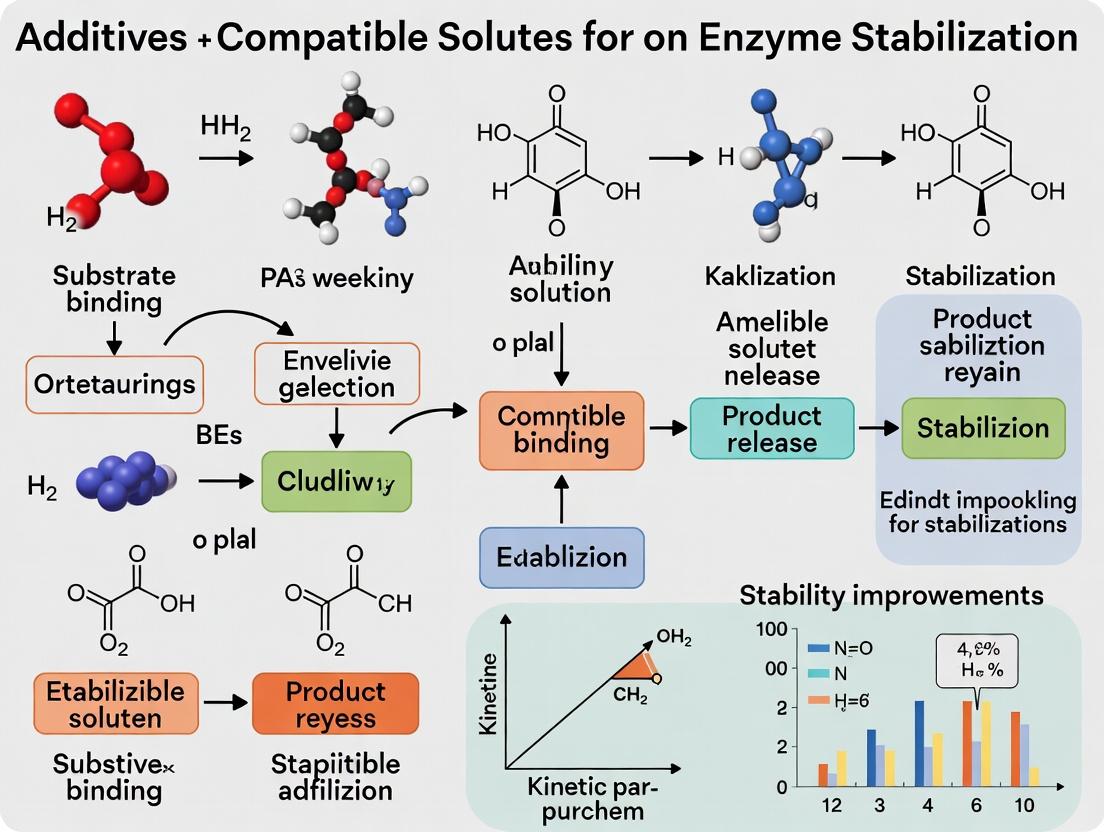
This article provides researchers and drug development professionals with a comprehensive, evidence-based guide to stabilizing enzymes using additives and compatible solutes.
Enzyme Stabilization Strategies: A Comprehensive Guide to Additives and Compatible Solutes for Biomedical Research
Abstract
This article provides researchers and drug development professionals with a comprehensive, evidence-based guide to stabilizing enzymes using additives and compatible solutes. We explore the foundational science behind enzyme destabilization, detail current methodologies for applying stabilizers, address common troubleshooting challenges, and compare validation techniques. The content synthesizes recent scientific advances to offer practical strategies for enhancing enzyme longevity, activity, and shelf-life in diagnostics, therapeutics, and industrial biocatalysis.
The Science of Stability: Understanding How Enzymes Denature and How Additives Intervene
Technical Support Center: Troubleshooting Guide & FAQs
FAQ: What are the primary mechanisms causing my therapeutic enzyme to lose activity during storage?
Answer: The main causes are denaturation (unfolding due to heat, pH extremes, or chemical denaturants), aggregation (irreversible clumping), deamidation (hydrolysis of asparagine/glutamine side chains), oxidation (of methionine, cysteine, or tryptophan residues), and proteolytic cleavage. These are often accelerated in dilute solutions typical for biotherapeutics.
FAQ: My enzyme formulation shows sub-visible particles after 4 weeks at 4°C. What is the likely cause and how can I diagnose it?
Answer: This is strongly indicative of aggregation. Perform the following diagnostic protocol:
- Size-Exclusion Chromatography (SEC-HPLC): Quantify monomer loss and high-molecular-weight species.
- Dynamic Light Scattering (DLS): Measure the hydrodynamic radius shift to confirm size growth.
- Micro-Flow Imaging (MFI): Characterize the count and morphology of the sub-visible particles.
- Intrinsic Fluorescence Spectroscopy: Check for tertiary structural changes.
Table 1: Quantitative Impact of Common Stressors on Model Enzyme Lysozyme
| Stressor Condition | Incubation Time | % Activity Remaining | Primary Degradation Pathway Identified | Key Analytical Method |
|---|---|---|---|---|
| pH 3.0, 37°C | 24 hours | 15% | Denaturation & Aggregation | CD Spectroscopy, SEC |
| pH 7.4, 50°C | 2 hours | 40% | Aggregation | DLS, Turbidity |
| 3 mM H₂O₂, 25°C | 1 hour | 10% | Methionine Oxidation | LC-MS Peptide Mapping |
| 0.005% Trypsin, 37°C | 30 min | 5% | Proteolytic Cleavage | SDS-PAGE, Western Blot |
| 5 Freeze-Thaw Cycles (-80°C to 25°C) | N/A | 60% | Surface-Induced Denaturation | Activity Assay, SEC |
Experimental Protocol: Assessing Thermal Stability by Differential Scanning Fluorimetry (DSF) Objective: To determine the melting temperature (Tm) of an enzyme under different formulation buffers.
- Prepare a 96-well PCR plate with 45 µL of your enzyme sample (0.2-1 mg/mL in target buffer).
- Add 5 µL of a 100X SYPRO Orange dye stock (final concentration 5X).
- Seal the plate and centrifuge briefly.
- Run the DSF/Thermofluor program on a real-time PCR instrument: Ramp temperature from 25°C to 95°C at a rate of 1°C per minute, with fluorescence acquisition (ROX/FRET channel).
- Analyze data: Plot the first derivative of fluorescence vs. temperature. The peak minimum is the Tm. Higher Tm indicates greater thermal stability.
Diagram 1: Primary Pathways of Enzyme Instability
FAQ: How do I choose between polyols (e.g., sucrose) and amino acids (e.g., glycine) as stabilizing additives?
Answer: The choice hinges on the dominant instability mechanism. For stress primarily from denaturation/aggregation, polyols like sucrose or sorbitol (0.2-0.5 M) act as preferential excluders, stabilizing the native fold. For oxidation, consider amino acids like methionine or histidine (10-50 mM) as sacrificial antioxidants. Glycine or proline (100-200 mM) can inhibit surface adsorption. A factorial design experiment is recommended (see protocol below).
Experimental Protocol: Factorial Design for Additive Screening Objective: Systematically evaluate additive combinations for enzyme stability.
- Select Factors: Choose 2-3 additives (e.g., Sucrose (0%, 5%, 10% w/v), Trehalose (0%, 5%), L-Histidine (0mM, 10mM)).
- Prepare Formulations: Create all possible combinations (e.g., 3 x 2 x 2 = 12 formulations).
- Apply Stress: Subject all samples to a standardized stress (e.g., 40°C for 7 days, or agitation at 200 rpm for 24h).
- Analyze Responses: Measure % activity recovery, monomer content by SEC, and particle count.
- Statistically Analyze using ANOVA to identify significant stabilizing interactions.
Diagram 2: Additive Screening & Optimization Workflow
The Scientist's Toolkit: Research Reagent Solutions
| Reagent / Material | Primary Function in Stabilization Research |
|---|---|
| Sucrose / Trehalose | Preferential excluders; form hydrogen bonding networks that stabilize native protein conformation and inhibit aggregation. |
| Polyethylene Glycol (PEG) | Crowding agent and surface blocker; reduces protein-protein interactions and adsorption to container surfaces. |
| L-Histidine | Buffering agent and antioxidant; chelates metal ions and scavenges free radicals, inhibiting oxidation pathways. |
| Methionine | Sacrificial antioxidant; preferentially oxidizes to protect methionine residues in the enzyme. |
| Polysorbate 80 | Surfactant; minimizes air-liquid and solid-liquid interfacial denaturation and aggregation. |
| Glycerol | Preferential excluder and cryoprotectant; stabilizes against cold denaturation and during freeze-thaw cycles. |
| Cyclodextrins | Molecular containers; sequester hydrophobic compounds or residues prone to oxidation or aggregation. |
| Dithiothreitol (DTT) / TCEP | Reducing agents; maintain cysteine residues in reduced state, preventing incorrect disulfide formation. |
Troubleshooting Guides & FAQs
Frequently Asked Questions
Q1: My enzyme activity still declines rapidly despite adding a known stabilizer (e.g., trehalose or glycerol). What could be the issue? A: This often indicates a mismatch between the stabilizer's mechanism and the primary denaturation stress. First, identify the dominant stress: thermal agitation, freeze-thaw cycles, pH shift, or surface adsorption. For thermal stress, increase polyol (e.g., sorbitol) concentration to enhance preferential exclusion. For freeze-thaw, ensure a cryoprotectant (e.g, 10% trehalose) is present before freezing. Verify that the stabilizer does not alter the optimal pH of your enzyme's activity. Incompatibility with buffer salts is also possible—consult Table 1 for guidance.
Q2: How do I choose between a preferential exclusion agent and a direct binding ligand for stabilization? A: The choice depends on your experimental goal. Use preferential exclusion agents (sugars, polyols, certain amino acids) for long-term storage and broad-spectrum stabilization against aggregation and thermal denaturation. They are generally inert. Use direct binding ligands (substrates, inhibitors, cofactors, specific ions) for during-assay stabilization or when you need to stabilize a specific conformational state. Note that binders may modulate enzyme activity. A combination approach is common (see Protocol 1).
Q3: My formulation shows precipitation upon adding a stabilizer. How can I resolve this? A: Precipitation suggests the stabilizer concentration has exceeded the solubility limit of the enzyme or another component in the buffer. Serially dilute the stabilizer to find the maximum tolerated concentration. Ensure the stabilizer is fully dissolved before adding the enzyme. Check for ionic incompatibility; for example, high concentrations of sulfate ions (from ammonium sulfate) can precipitate proteins. Switching to a compatible solute like betaine or proline may help, as they have high solubility.
Q4: Can stabilizers interfere with kinetic assay readings? A: Yes. High concentrations of sugars or polyols can increase solution viscosity, affecting mixing and reaction rates, which may be misinterpreted as inhibition. Some stabilizers (e.g., arginine) absorb light at UV wavelengths, interfering with spectrophotometric assays. Always run a control containing the stabilizer at your working concentration but without the enzyme to establish a baseline. Use Table 2 to anticipate common interferences.
Troubleshooting Common Experimental Issues
Issue: Loss of Activity During Lyophilization
- Problem: Enzyme is inactive after freeze-drying.
- Solution: Incorporate a lyoprotectant. Trehalose is superior to sucrose for this purpose due to its higher glass transition temperature (Tg). Use a molar ratio of at least 100:1 (trehalose:enzyme). Ensure a slow freezing rate (e.g., -20°C freezer) before lyophilization to allow for proper matrix formation. Refer to Protocol 2.
Issue: Inconsistent Stabilization Across Different Batches
- Problem: The same stabilizer formulation yields variable results.
- Solution: Standardize the enzyme's initial state. Trace impurities (proteases, salts) can alter stabilizer efficacy. Perform a buffer exchange into a defined, low-ionic-strength buffer (e.g., 5 mM HEPES, pH 7.5) before adding stabilizers. Measure and report the enzyme's initial specific activity for each batch. Ensure consistent temperature history—do not subject some batches to more freeze-thaw cycles than others.
Issue: Stabilizer Appears to Inhibit Enzyme
- Problem: Immediate activity loss upon stabilizer addition.
- Solution: Distinguish between inhibition and true destabilization. Perform a quick kinetic assay with varying stabilizer concentrations. If the loss is immediate and concentration-dependent, it may be competitive inhibition (e.g., a sugar analog binding the active site). If the loss progresses over time, it is likely destabilization. Switch to a stabilizer with a different chemical structure (e.g., switch from a sugar to a polyol like glycerol).
Table 1: Efficacy of Common Stabilizers Against Different Stress Factors
| Stabilizer (1M conc.) | Thermal Denaturation (ΔTm °C)* | Freeze-Thaw Recovery (%) | Lyophilization Recovery (%) | Mechanism Primary/Secondary |
|---|---|---|---|---|
| Glycerol | +3.5 | 85 | <10 | Preferential Exclusion / Solvent Viscosity |
| Sucrose | +5.8 | 92 | 75 | Preferential Exclusion / Water Replacement |
| Trehalose | +7.2 | 95 | 95 | Preferential Exclusion / Water Replacement, Vitrification |
| Sorbitol | +4.1 | 88 | 15 | Preferential Exclusion |
| L-Proline | +6.5 | 90 | 80 | Preferential Exclusion, Surface Interaction |
| Betaine | +2.9 | 82 | 70 | Preferential Exclusion (Osmolyte) |
| Mg2+ (0.1M) | +4.8 | 60 | 5 | Direct Binding / Structural Ion |
*Average increase in mid-point denaturation temperature for a model enzyme (e.g., lactate dehydrogenase). Data compiled from recent studies (2022-2024).
Table 2: Potential Interferences of Stabilizers in Common Assays
| Stabilizer | UV-Vis Interference (Common Wavelengths) | Fluorescence Interference | Increased Viscosity (>10% effect) | Notes |
|---|---|---|---|---|
| Imidazole | Yes (210-220 nm) | Possible quenching | No | Common in His-tag purifications. |
| DTT / BME | Yes (low UV) | Yes | No | Reducing agents; can interfere with colorimetric assays. |
| Glycerol (>10%) | No | No | Yes | Affects pipetting accuracy; mix thoroughly. |
| Sucrose/Trehalose | No | No | Yes (at high conc.) | Can be hydrolyzed by contaminant enzymes. |
| Arginine | Yes (200-230 nm) | No | No | Common in solubilization buffers. |
Experimental Protocols
Protocol 1: Determining Optimal Stabilizer Concentration via Thermal Shift Assay This protocol identifies stabilizers that increase the enzyme's melting temperature (Tm).
- Prepare Samples: In a 96-well PCR plate, mix 10 µL of enzyme solution (0.5-2 mg/mL in low-salt buffer) with 10 µL of stabilizer solution at 2X final concentration. Create a range of stabilizer concentrations (e.g., 0, 0.25, 0.5, 1.0 M). Include a fluorescent dye (e.g., 5X SYPRO Orange).
- Run Assay: Seal the plate. Use a real-time PCR instrument with a gradient function. Ramp temperature from 25°C to 95°C at a rate of 1°C/min, measuring fluorescence continuously.
- Analyze Data: Plot fluorescence derivative vs. temperature. The peak is the Tm. The stabilizer causing the largest ΔTm is the most effective against thermal denaturation.
Protocol 2: Formulating an Enzyme for Lyophilization This protocol provides a workflow for creating a stable lyophilized enzyme powder.
- Buffer Exchange: Dialyze or desalt the purified enzyme into a volatile buffer (e.g., 10 mM ammonium bicarbonate, pH 7.5). Avoid non-volatile salts or buffers (e.g., Tris, phosphate).
- Add Lyoprotectant: Mix the enzyme solution with an equal volume of 20% (w/v) trehalose solution (in the same volatile buffer) to achieve a final 10% trehalose concentration.
- Aliquot and Freeze: Dispense into lyophilization vials. Freeze at -80°C for 2+ hours or in a shell freezer with liquid N2 for 15 minutes.
- Lyophilize: Place vials on a pre-cooled (-50°C) lyophilizer. Apply vacuum and maintain primary drying at -50°C for 24-48 hours. Perform secondary drying at 20-25°C for 4-6 hours.
- Store: Seal vials under inert gas (argon) if possible. Store at -20°C or 4°C.
Visualizations
Diagram Title: Stabilizer Mechanisms of Action
Diagram Title: Thermal Shift Assay Workflow
The Scientist's Toolkit: Research Reagent Solutions
| Item | Function in Enzyme Stabilization Research |
|---|---|
| SYPRO Orange Dye | A hydrophobic fluorescent dye used in thermal shift assays. It binds exposed hydrophobic patches of unfolding proteins, causing a fluorescence increase. |
| High-Quality Trehalose (Dihydrate) | The gold-standard lyoprotectant and thermostabilizer. Forms a stable glassy matrix and replaces water molecules via hydrogen bonding. |
| HEPES Buffer | A zwitterionic, non-volatile buffer with minimal metal ion chelation, ideal for creating defined initial conditions for stabilization studies. |
| PD-10 Desalting Columns | For rapid buffer exchange into low-ionic-strength or volatile buffers prior to stabilization screening or lyophilization. |
| DSC (Differential Scanning Calorimetry) Capsules | High-temperature resistant capsules used to measure the heat capacity change of protein unfolding, providing direct ΔH and Tm data. |
| Lyo-Stable Vials | Specialty glass vials with minimal protein adsorption and designed for lyophilization, ensuring consistent cake formation and stability. |
Frequently Asked Questions (FAQs) & Troubleshooting Guide
FAQ 1: Why did my enzyme activity decrease after adding a high concentration of a common stabilizing additive like glycerol?
- Answer: This is a classic case of over-stabilization via excessive water displacement. High concentrations of polyols like glycerol (>30% v/v) can strip the essential hydration shell from the enzyme's surface, leading to structural rigidity and loss of catalytic function. This differs from the mechanism of compatible solutes, which are typically effective at lower, osmotically relevant concentrations without disrupting hydration.
- Troubleshooting: Perform a concentration gradient experiment (e.g., 5%, 10%, 20%, 30% glycerol) to identify the optimal stabilization window. Compare with a compatible solute like ectoine (0.1-1.0 M range).
FAQ 2: My protein precipitates when I switch from an additive (e.g., arginine glutamate) to a compatible solute (e.g., betaine) for thermal stress testing. What is the cause?
- Answer: Arginine glutamate is a common additive that suppresses protein aggregation via a complex combination of surface binding and preferential exclusion. Betaine, a compatible solute, operates primarily through preferential exclusion and stabilization of the native protein's hydration shell. The precipitation indicates that your specific protein may have surface patches that require direct, weak chemical interaction (provided by arginine) for stability under thermal stress, which betaine does not provide.
- Troubleshooting: 1) Ensure a gradual transition by dialyzing into the new solute buffer. 2) Test a blend of agents (e.g., 0.5M betaine + 50mM arginine). 3) Verify buffer pH and ionic strength are matched in both solutions.
FAQ 3: How do I choose between a kosmotropic salt (additive) and a kosmotropic compatible solute (e.g., trehalose) for freeze-thaw stability?
- Answer: The choice hinges on the primary stressor. Kosmotropic salts (e.g., (NH₄)₂SO₄) strongly order water and can stabilize the native fold but may induce cold-denaturation or crystallization at sub-zero temperatures, causing mechanical damage. Compatible solutes like trehalose form an amorphous glassy matrix during freezing, vitrifying the solution and physically separating protein molecules to prevent aggregation.
- Troubleshooting Protocol: Split your protein sample into three: one with 0.1M phosphate (control), one with 1.0M (NH₄)₂SO₄, and one with 0.5M trehalose. Subject to 5 freeze-thaw cycles (-80°C to 25°C). Centrifuge and assay supernatant for activity and aggregation (via A₃₄₀).
FAQ 4: Can I use compatible solutes in my high-concentration antibody formulation for subcutaneous injection?
- Answer: Yes, but with formulation viscosity considerations. While compatible solutes like proline or sucrose are excellent for preventing aggregation and stabilizing against interfacial stress, they increase solution viscosity at high concentrations. This can conflict with the need for low viscosity in subcutaneous delivery.
- Troubleshooting: Screen a panel at isotonic concentrations: sucrose (0.25M), trehalose (0.25M), proline (0.5M), and histidine (additive control). Measure viscosity (using a micro-viscometer), thermal stability (by nanoDSF), and aggregation rates (by SEC-HPLC) after mechanical shaking stress.
Experimental Protocols
Protocol 1: Determining the Preferential Interaction Parameter (Γ₍ₘᵤ₎)
Objective: Quantify whether an additive or compatible solute is preferentially excluded from or bound to the protein surface. Methodology:
- Prepare a dialysis cell with two chambers separated by a semi-permeable membrane.
- Fill one chamber with a known volume (V₁) of your protein solution (e.g., 5 mg/mL lysozyme) in buffer containing the test agent (e.g., 0.5M trehalose).
- Fill the other chamber with an equal volume (V₂) of the same buffer without protein but with an identical initial concentration of the test agent.
- Allow the system to reach dialysis equilibrium (24-48 hrs, 4°C with gentle stirring).
- Precisely measure the final concentration of the test solute (Cₒᵤₜ) in the protein-free chamber using a method like HPLC or refractive index.
- Calculate the preferential interaction parameter using: Γ₍ₘᵤ₎ = (Cᵢₙ - Cₒᵤₜ) / Cₒᵤₜ * (V₂ / mᵖʳᵒᵗᵉⁱⁿ), where Cᵢₙ is the initial solute concentration and mᵖʳᵒᵗᵉⁱⁿ is the mass of protein.
- Interpretation: A positive Γ₍ₘᵤ₎ indicates preferential binding; a negative value indicates preferential exclusion (typical for stabilizers).
Protocol 2: High-Throughput Screening of Stabilizer Cocktails for Long-Term Shelf Life
Objective: Identify optimal combinations of additives and compatible solutes for room-temperature storage. Methodology:
- Formulation Plate Setup: Using a 96-well plate, prepare a checkerboard of stabilizers. For example, vary a compatible solute (e.g., Sorbitol: 0M, 0.25M, 0.5M) along one axis and an additive (e.g., Lysine: 0mM, 50mM, 100mM) along the other in a suitable buffer (e.g., 20mM Histidine, pH 6.0).
- Sample Addition: Add a fixed volume of your target enzyme or monoclonal antibody to each well. Use a liquid handler for precision.
- Stress Incubation: Seal the plate and incubate at 40°C (accelerated stability conditions) for 2-4 weeks. Include a control plate stored at 4°C.
- Analysis: At weekly intervals, sample from each well (non-destructively if possible) to measure:
- Activity/Binding: Via fluorescence-based activity assay or ELISA.
- Aggregation: By measuring static light scattering (A₃₄₀ or plate reader fluorescence with Thioflavin T/SYPRO Orange).
- Subvisible Particles: Using micro-flow imaging on pooled top performers.
- Data Analysis: Plot heatmaps of % activity remaining vs. stabilizer concentrations to identify synergistic combinations.
Data Tables
Table 1: Comparative Properties of Stabilizing Agent Categories
| Property | Additives (e.g., PEG, Arginine, Salts) | Compatible Solutes (e.g., Ectoine, Trehalose, Betaine) |
|---|---|---|
| Primary Mechanism | Preferential exclusion, direct binding, crowding, ionic interaction. | Preferential exclusion, vitrification, hydration shell reinforcement. |
| Typical Working Concentration | Broad (mM to M, often >0.5M). | Often 0.1 - 1.0 M (osmolyte range). |
| Impact on Viscosity | High variability (PEG: high; Arg: low). | Generally moderate increase. |
| Thermal Stabilization (ΔTₘ Example) | Variable; 2-10°C possible. | Consistent; often 3-15°C increase. |
| Cost | Generally low to moderate. | Often high (especially natural osmolytes). |
| Regulatory Status | Well-established for many. | Increasing acceptance (e.g., trehalose in approved biologics). |
Table 2: Troubleshooting Matrix: Common Problems and Agent-Specific Solutions
| Observed Problem | Likely Culprit Agent Category | Recommended Corrective Action |
|---|---|---|
| Loss of activity after lyophilization | Ineffective cryoprotectant. | Switch from a simple sugar (additive) to a glass-forming compatible solute like trehalose or sucrose. |
| Increased aggregation at high temperature | Additive failing under stress. | Introduce or increase concentration of a compatible solute (e.g., 0.5M betaine) known for protecting native fold. |
| High viscosity in final formulation | High concentration of viscosogenic agent. | Replace a high % PEG or sucrose with a lower viscosity stabilizer like proline (compatible solute) or arginine-HCl (additive). |
| pH shift during storage | Improperly buffered additive. | Ensure the compatible solute/additive does not affect buffer capacity. Use a zwitterionic buffer and confirm pH stability in pre-formulation studies. |
Diagrams
Decision Tree for Stabilizer Selection
Mechanistic Pathways of Stabilization Against Aggregation
The Scientist's Toolkit: Research Reagent Solutions
| Item | Category | Function in Experiments |
|---|---|---|
| Differential Scanning Fluorimetry (nanoDSF) Capillaries | Analysis Tool | For label-free measurement of protein thermal unfolding (Tm) in the presence of various stabilizers with minimal sample volume. |
| Size-Exclusion Chromatography (SEC) Column, e.g., Superdex 200 Increase | Analysis Tool | To separate and quantify monomeric protein from aggregates after stress experiments with different stabilizing agents. |
| Ectoine (hydroxyectoine) | Compatible Solute | A potent kosmotropic compatible solute from halophiles; used in thermal and desiccation stress studies. |
| L-Arginine Hydrochloride | Additive | A common aggregation suppressor; used as a positive control additive for comparison against compatible solutes. |
| Trehalose, Dihydrate (Pharma Grade) | Compatible Solute | Gold-standard glass-forming stabilizer for lyophilization and long-term storage studies. |
| Polysorbate 80 (Low Peroxide) | Additive (Surfactant) | Used to combat interfacial stress (e.g., shaking, stirring); contrasts with stabilizers acting on conformational stability. |
| Precision Dialysis Cassettes (3.5kDa MWCO) | Laboratory Equipment | Essential for conducting equilibrium dialysis experiments to measure preferential interaction parameters (Γ₍ₘᵤ₎). |
| Static Light Scattering Plate Reader | Analysis Tool | Enables high-throughput quantification of protein aggregation in 96- or 384-well plates during stabilizer screening. |
Technical Support Center: Troubleshooting Enzyme Stabilization Experiments
Frequently Asked Questions (FAQs)
Q1: My target enzyme loses activity upon the addition of sucrose, a classic preferential exclusion agent. What could be the cause? A: This is often due to excessive viscosity or molecular crowding. At high concentrations (>1 M), sucrose increases solution viscosity drastically, which can inhibit substrate diffusion and enzyme turnover. It may also cause unintended macromolecular crowding effects. Troubleshooting Steps: 1) Perform a concentration gradient (e.g., 0.1 M to 1.5 M) to identify an optimal, stabilizing concentration. 2) Compare with lower viscosity co-solutes like trehalose or glycine betaine. 3) Ensure your assay accounts for increased viscosity by extending mix times.
Q2: When using polyols (e.g., glycerol, sorbitol) for thermal stabilization, I observe protection at low temperatures but aggregation at higher temperatures. Why? A: This indicates a collapse of the preferential exclusion mechanism. At lower temperatures, these agents are favorably excluded from the protein surface, stabilizing the native state. As temperature increases, the hydrophobic effect weakens, and the agent may begin to interact directly with exposed hydrophobic patches on a partially unfolded protein, leading to aggregation. Troubleshooting Steps: 1) Switch to a solute less prone to hydrophobic interactions, such as trehalose or hydroxyectoine. 2) Combine the polyol with a small amount of a surfactant (e.g., 0.01% Tween-20) to shield hydrophobic surfaces.
Q3: The "water replacement" stabilizer trehalose fails to protect my lyophilized enzyme formulation. What are the key parameters to check? A: Water replacement requires the stabilizer to form an amorphous glassy matrix with direct hydrogen bonding to the protein. Failure suggests this matrix is compromised. Troubleshooting Steps: 1) Verify the formulation is fully amorphous; use differential scanning calorimetry (DSC) to check for a glass transition (Tg) and absence of crystalline melting peaks. 2) Ensure the residual moisture is low (<1%) but not zero, as a monolayer of water is often needed for optimal H-bonding. 3) Increase the trehalose:protein mass ratio (e.g., 5:1) to ensure sufficient matrix formation.
Q4: I am studying surface-active agents (e.g., amino acids like arginine). How do I distinguish between their stabilizing effects via direct binding versus surface tension modulation? A: This requires deconvoluting the mechanisms. Troubleshooting Steps: 1) Measure surface tension of your buffer with and without the additive. A significant decrease suggests a surfactant-like effect. 2) Use isothermal titration calorimetry (ITC) to detect direct binding enthalpies. 3) Perform a native gel shift assay; a direct, specific binder may alter the protein's electrophoretic mobility, while a non-specific surface effect agent will not.
Table 1: Thermodynamic and Practical Parameters for Key Stabilization Additives
| Additive Class | Example | Typical Effective Concentration | Primary Stabilizing Principle | Key Measurable Effect (e.g., ΔTm) | Potential Interference |
|---|---|---|---|---|---|
| Sugars | Trehalose | 0.2 - 0.5 M | Preferential Exclusion / Water Replacement | +3°C to +10°C ΔTm | High viscosity at >1 M |
| Polyols | Glycerol | 10-20% (v/v) | Preferential Exclusion | +2°C to +6°C ΔTm | Can reduce catalytic rate (kcat) |
| Amino Acids | L-Proline | 0.5 - 2.0 M | Preferential Exclusion / Surface Tension | +4°C to +8°C ΔTm | May affect UV absorbance |
| Osmolytes | Glycine Betaine | 0.5 - 1.5 M | Preferential Exclusion | +2°C to +5°C ΔTm | Ineffective for some halophilic enzymes |
| Salts | Potassium Glutamate | 50 - 200 mM | Water Replacement / Ion-specific | +1°C to +4°C ΔTm | Ionic strength effects |
| Polymers | PEG 3350 | 5-15% (w/v) | Preferential Exclusion / Crowding | +1°C to +3°C ΔTm | Can cause phase separation |
Table 2: Troubleshooting Guide for Stabilization Mechanism Diagnostics
| Observation | Likely Culprit Mechanism | Confirmatory Experiment |
|---|---|---|
| Activity loss with additive | Viscosity inhibition / Direct binding | Measure kinetics across a viscosity gradient (using inert viscogens like Ficoll) |
| Aggregation upon heating with additive | Additive-protein hydrophobic interaction | Perform ANS fluorescence binding assay with additive present |
| No stabilization in freeze-thaw | Ice-induced denaturation / pH shift | Monitor pH change during freezing; switch to a buffering solute (e.g., potassium phosphate) |
| Stabilization only in dry state | Successful water replacement | Use FT-IR to confirm formation of protein-additive H-bonds in lyophilized cake |
Experimental Protocols
Protocol 1: Determining the Thermal Stabilization Coefficient (ΔTm) via Differential Scanning Fluorimetry (DSF) Objective: Quantify the increase in melting temperature (Tm) conferred by an additive.
- Prepare Samples: In a 96-well PCR plate, mix 10 µL of protein solution (2 µM in desired buffer) with 10 µL of additive solution at 2x the final target concentration. Include a no-additive control (replace additive with buffer).
- Add Dye: Add 1 µL of 100x SYPRO Orange protein gel stain (5000x stock diluted in buffer) to each well.
- Run DSF: Seal plate, centrifuge briefly. Run on a real-time PCR instrument with a temperature gradient from 25°C to 95°C with a ramp rate of 1°C/min, monitoring fluorescence (ROX/FAM channel).
- Analyze Data: Plot fluorescence derivative vs. temperature. Identify Tm as the peak minimum. Calculate ΔTm = Tm(with additive) - Tm(control).
Protocol 2: Assessing Preferential Exclusion via Density Measurement Objective: Experimentally measure the preferential hydration parameter.
- Prepare Dialysis: Dialyze a concentrated protein solution (e.g., 20 mg/mL) exhaustively against buffer containing your target additive (e.g., 1 M sucrose).
- Measure Densities: Using a high-precision density meter, measure the density of: (a) the dialysate (ρsolution), and (b) the protein solution after dialysis (ρprotein).
- Calculate: Determine the apparent partial specific volume of the protein in the solution. The difference from the true partial specific volume (measured in buffer alone) indicates the extent of water accumulation (preferential hydration) around the protein surface.
Diagram Title: Decision Workflow for Selecting Stabilization Mechanisms
The Scientist's Toolkit: Key Research Reagent Solutions
Table 3: Essential Materials for Enzyme Stabilization Studies
| Reagent / Material | Function & Rationale | Example Product/Catalog |
|---|---|---|
| Trehalose (Dihydrate), Molecular Biology Grade | Gold standard for water replacement; forms stable amorphous glass. | Sigma-Aldrich T9531 |
| SYPRO Orange Protein Gel Stain (5000X) | Environment-sensitive dye for DSF (Tm determination). | Thermo Fisher Scientific S6650 |
| L-Arginine Hydrochloride, USP Grade | Multi-functional stabilizer; modulates surface tension & suppresses aggregation. | MilliporeSigma A5131 |
| Hydroxyectoine, >98% Purity | Superior osmoprotectant for extreme stress (heat, freeze, drying). | Bitop AG (sold via Sigma) |
| D-Trehalose Anhydrous, Low Moisture | For lyophilization where precise water control is critical. | Pfanstiehl Laboratories |
| Size-Exclusion Chromatography (SEC) Column, e.g., Superdex 200 Increase | Gold-standard for quantifying soluble aggregates vs. monomer. | Cytiva 28990944 |
| 96-Well PCR Plates, Optical Clear Seals | For high-throughput DSF screening of additive libraries. | Bio-Rad HSP3801 |
| Precision Density Meter | For direct measurement of preferential hydration parameters. | Anton Paar DMA 4500 M |
Recent Research Breakthroughs in Understanding Stabilization Mechanisms
Technical Support Center
This support center provides troubleshooting guidance for common experimental challenges in enzyme stabilization research using additives and compatible solutes. All content is framed within the ongoing thesis investigation of molecular mechanisms underpinning stabilization.
Troubleshooting Guides & FAQs
FAQ 1: My enzyme activity drops precipitously upon addition of a polyol (e.g., sorbitol). What could be causing this?
- Answer: A sharp drop in activity often indicates preferential exclusion is not the dominant mechanism or is being counteracted. Consider:
- Direct Inhibition: The additive may be binding directly to the active site. Run a kinetic assay (vary substrate concentration at fixed additive concentration) to check for competitive inhibition patterns.
- Viscosity Effects: High concentrations of polyols increase solvent viscosity, slowing diffusion-limited reactions. Measure activity at different concentrations and plot against solvent viscosity (can be calculated or measured with a viscometer). If the loss correlates linearly with increased viscosity, the effect is likely physical, not conformational.
- Incorrect pH/ Ionic Strength: Some polyols can subtly shift the effective pH or ionic strength of the buffer. Re-measure the pH after additive addition and adjust if necessary.
FAQ 2: How do I distinguish between preferential exclusion and chemical chaperone activity for an osmolyte like trehalose?
- Answer: Design a two-pronged experiment:
- Thermal Stability Assay (Preferential Exclusion): Use differential scanning fluorimetry (DSF) or calorimetry (DSC) to measure the Tm (melting temperature) of your enzyme with and without trehalose. A significant increase in Tm suggests preferential exclusion stabilizes the native fold.
- Refolding Assay (Chemical Chaperone): Chemically denature your enzyme (e.g., with Guanidine HCl). Initiate refolding by rapid dilution into refolding buffer with and without trehalose. Monitor recovery of native activity over time. If trehalose significantly increases the yield or rate of refolding, it is acting as a chemical chaperone by assisting in correct folding pathways.
FAQ 3: My spectroscopic data (e.g., FTIR, CD) shows stabilization, but my functional assay does not. Why the discrepancy?
- Answer: This suggests global structural stability does not equate to functional stability at the active site.
- Local vs. Global Stability: The additive may be stabilizing the overall protein scaffold (seen by CD/FTIR) but causing subtle rigidity or distortion in the active site loop dynamics, impairing catalysis.
- Assay Conditions: Ensure your activity assay is performed at the same temperature and solution conditions as the stabilization incubation. A common error is incubating with stabilizer at a high stress temperature, then assaying activity at a standard 25°C, missing the protective effect.
- Probe Different Regions: Use a site-specific fluorescent probe (e.g., via cysteine mutation near the active site) to monitor local conformational changes upon additive addition, contrasting with global signals.
FAQ 4: What is the best method to prove direct binding of a putative kosmotropic ion (e.g., sulfate) to my enzyme?
- Answer: Preferential exclusion does not require binding, but some ions can specifically bind. To prove direct interaction:
- Isothermal Titration Calorimetry (ITC): The gold standard. Titrate the ion solution into your enzyme solution. A significant binding isotherm (exothermic or endothermic heat changes) provides direct evidence of binding, and you can extract binding affinity (Kd) and stoichiometry (n).
- X-ray Crystallography or Cryo-EM: Solve the enzyme structure in the presence of a high concentration of the ion. Electron density maps may reveal specific binding sites.
- NMR Spectroscopy: Chemical shift perturbations in 1H-15N HSQC spectra upon titration of the ion can map binding interfaces at atomic resolution.
Experimental Protocols
Protocol 1: Differential Scanning Fluorimetry (DSF) for Screening Stabilizer Efficacy Purpose: To rapidly identify additives that increase the thermal melting temperature (Tm) of a target enzyme. Methodology:
- Prepare a master mix of 10X SYPRO Orange dye and your enzyme in the desired buffer (final protein concentration 1-5 µM).
- In a 96-well PCR plate, mix 18 µL of master mix with 2 µL of additive solution (or buffer for control) in triplicate. Final additive concentrations should span a relevant range (e.g., 0, 0.1, 0.5, 1.0 M).
- Seal the plate and centrifuge briefly.
- Run in a real-time PCR instrument with a temperature gradient (e.g., 25°C to 95°C, ramping at 1°C/min). Monitor the fluorescence of the SYPRO Orange channel (excitation ~470-490 nm, emission ~560-580 nm).
- Analyze data by plotting fluorescence vs. temperature. The Tm is the inflection point (minimum of the first derivative) where the protein unfolds and the dye binds to exposed hydrophobic patches.
- Compare Tm values across additive conditions. A right-shift indicates stabilization.
Protocol 2: Kinetic Stability Assay under Stress Conditions Purpose: To measure the half-life of enzyme activity in the presence of a destabilizing stress (e.g., heat, chaotrope) with and without stabilizers. Methodology:
- Prepare two sets of enzyme solutions: one in standard buffer (Control) and one in buffer containing the stabilizer (Test).
- Apply stress. For thermal stress: Incubate both sets at a sub-denaturing but inactivating temperature (e.g., 45°C) in a thermocycler or water bath. For chaotropic stress: Add a fixed concentration of urea or GdnHCl to both.
- At regular time intervals (t=0, 15, 30, 60, 120 min...), remove an aliquot from each condition and immediately place it on ice.
- Measure the residual enzyme activity of each aliquot using your standard activity assay, performed at the non-stressful, optimal condition.
- Plot Ln(% Residual Activity) vs. time. The slope of the linear fit is the inactivation rate constant (k). The half-life (t1/2) = Ln(2)/k.
- Compare t1/2 between Control and Test conditions to quantify the stabilization factor.
Data Presentation
Table 1: Efficacy of Common Additives in Stabilizing Model Enzyme Lysozyme
| Additive Class | Example | Concentration (M) | ΔTm (°C) DSF | Half-life Extension Factor 45°C | Proposed Primary Mechanism |
|---|---|---|---|---|---|
| Polyol | Sorbitol | 1.0 | +3.2 | 2.5x | Preferential Exclusion |
| Sugar | Trehalose | 0.5 | +5.1 | 4.8x | Preferential Exclusion / Water Replacement |
| Amino Acid | Proline | 1.0 | +2.8 | 1.8x | Preferential Exclusion / Surface Binding |
| Kosmotropic Salt | (NH4)2SO4 | 0.5 | +4.5 | 3.2x | Preferential Exclusion / Specific Anion Binding |
| Chaotropic Salt | Guandinium Cl | 0.5 | -6.7 | 0.3x | Preferential Binding / Denaturation |
Table 2: Comparison of Analytical Techniques for Mechanism Elucidation
| Technique | Information Gained | Throughput | Sample Requirement | Key Limitation |
|---|---|---|---|---|
| Differential Scanning Calorimetry (DSC) | Direct measurement of ΔH, Tm, ΔCp of unfolding | Low | High (mg) | Requires high protein stability & concentration |
| Isothermal Titration Calorimetry (ITC) | Binding constants (Kd), stoichiometry (n), ΔH, ΔS | Medium | Medium (mg) | Requires significant heat signal from interaction |
| Circular Dichroism (CD) | Secondary/tertiary structure change, Tm | Medium | Low (µg) | Can be interfered by additive absorbance |
| Static/Dynamic Light Scattering | Hydrodynamic radius, aggregation onset | Medium | Low (µg) | Sensitive to dust/particulates in solution |
Visualizations
Diagram Title: Enzyme Stabilization Mechanism Pathways
Diagram Title: Stabilizer Screening & Validation Workflow
The Scientist's Toolkit: Research Reagent Solutions
| Item | Function in Stabilization Research |
|---|---|
| SYPRO Orange Dye | Environment-sensitive fluorescent dye used in DSF to monitor protein unfolding by binding exposed hydrophobic regions. |
| High-Purity Compatible Solutes (e.g., TMAO, Ectoine) | Defined chemical chaperones and osmolytes for probing specific protection mechanisms, free from contaminant effects. |
| Chaotropic Salts (GdnHCl, Urea) | Used as destabilizing agents to create stress conditions and probe the strength of stabilization. |
| Size-Exclusion Chromatography (SEC) Columns | For assessing aggregation state and monomeric purity of protein samples before and after stress. |
| DSC Microcalorimetry Cells | High-sensitivity cells for directly measuring the heat capacity changes during protein unfolding. |
| ITC Syringe & Sample Cell | Matched, high-precision vessels for titrating additive into protein solution to measure binding thermodynamics. |
| Stable Isotope-Labeled (15N, 13C) Amino Acids | For producing labeled proteins for NMR studies to map additive interactions at atomic resolution. |
| Dynamic Light Scattering (DLS) Cuvettes | Disposable, ultra-clean cuvettes for accurately measuring hydrodynamic radius and detecting aggregation. |
Practical Protocols: Selecting and Applying Stabilizers for Your Enzyme System
Troubleshooting Guides & FAQs
Q1: My enzyme activity decreases sharply after adding a potential stabilizer. What could be the cause? A: This is often due to direct inhibition or incompatibility. First, check if the stabilizer is precipitating the enzyme by visual inspection or light scattering. Next, perform a quick activity assay with varying concentrations of the stabilizer. A common error is using a concentration far above the optimal range. Refer to Table 1 for typical working concentrations. Ensure the stabilizer's chemical functionality (e.g., ionic, reducing) does not interfere with the enzyme's active site.
Q2: How do I differentiate between true stabilization and mere cryoprotection during freeze-thaw screening? A: True stabilization confers resilience against multiple stresses (thermal, chemical, agitation), while cryoprotection is specific to freezing. To differentiate, after the freeze-thaw cycle, aliquot the sample and subject it to an additional stress test, such as a 1-hour incubation at a elevated sub-denaturing temperature (e.g., 45°C for a mesophilic enzyme). Compare residual activity to a control that underwent only the thermal stress. True stabilizers will show higher residual activity in the combined stress test.
Q3: My DSC (Differential Scanning Calorimetry) data shows no increase in Tm (melting temperature) despite observing better shelf-life. Why? A: Not all stabilization mechanisms increase thermal denaturation temperature (Tm). Stabilizers can act by suppressing aggregation, inhibiting chemical degradation (e.g., oxidation, deamidation), or populating a partially unfolded, non-aggregating state. Employ complementary techniques: use size-exclusion chromatography (SEC) to monitor aggregation or peptide mapping to track chemical modifications. A stabilizer may improve long-term stability without altering the DSC thermogram.
Q4: How should I handle the screening of combinations of additives (e.g., a polyol with a salt)? A: Use a design of experiments (DoE) approach rather than one-factor-at-a-time. A fractional factorial design is efficient for initial screening of 2-4 additives. For two additives at three concentration levels each (low, medium, high), a full factorial requires 9 experiments. Assess activity retention after a defined stress. Analyze the data for main effects and interaction effects. A significant interaction effect indicates synergism or antagonism between additives.
Q5: What are the first checks if my high-throughput screening (HTS) assay shows high signal variability? A: 1) Precipitation Check: Use a plate reader to measure optical density at 340nm or 600nm to detect light scattering from precipitates. 2) Evaporation: Ensure plates are properly sealed, especially for long incubations. 3) Dispensing Error: Calibrate liquid handlers; viscous stabilizers like polyethylene glycol (PEG) are prone to dispensing errors. Pre-dilute them. 4) Edge Effects: Use a thermosealed plate or a humidity chamber to minimize well-to-well variation during thermal stress steps.
Key Data Tables
Table 1: Common Stabilizer Classes and Typical Screening Ranges
| Stabilizer Class | Example Compounds | Typical Screening Range (w/v or M) | Primary Proposed Mechanism |
|---|---|---|---|
| Polyols/Sugars | Trehalose, Sucrose, Glycerol | 0.1 - 1.5 M | Preferential Exclusion, Vitrification |
| Amino Acids & Derivatives | Proline, Glycine Betaine, Ectoine | 0.1 - 1.0 M | Osmolyte, Chemical Chaperone |
| Polymers | PEG 3350, PVP, Ficoll | 0.1 - 15% (w/v) | Molecular Crowding, Surface Exclusion |
| Salts | (NH₄)₂SO₄, K₂HPO₄, MgCl₂ | 0.01 - 0.5 M | Specific Ion Effects (Hofmeister Series) |
| Surfactants | Polysorbate 20/80 | 0.001 - 0.1% (w/v) | Interface Stabilization |
Table 2: Example Stabilizer Screening DoE (2-Factor, 3-Level)
| Experiment | Trehalose (M) | MgCl₂ (mM) | Residual Activity After 48h @ 40°C (%) |
|---|---|---|---|
| 1 | 0 (Low) | 0 (Low) | 15 ± 3 |
| 2 | 0 (Low) | 10 (Mid) | 22 ± 4 |
| 3 | 0 (Low) | 25 (High) | 18 ± 5 |
| 4 | 0.25 (Mid) | 0 (Low) | 45 ± 6 |
| 5 | 0.25 (Mid) | 10 (Mid) | 78 ± 7 |
| 6 | 0.25 (Mid) | 25 (High) | 65 ± 5 |
| 7 | 0.75 (High) | 0 (Low) | 52 ± 4 |
| 8 | 0.75 (High) | 10 (Mid) | 70 ± 6 |
| 9 | 0.75 (High) | 25 (High) | 60 ± 8 |
Experimental Protocols
Protocol 1: High-Throughput Thermal Stress Screening in 96-Well Format
- Preparation: Prepare a master mix of your target enzyme in the relevant buffer (e.g., 20 mM HEPES, pH 7.5).
- Dispensing: Using a liquid handler, dispense 90 µL of enzyme solution into each well of a polypropylene 96-well PCR plate.
- Additive Addition: Add 10 µL of 10x concentrated stabilizer solutions (or buffer for controls) to respective wells. Mix thoroughly by pipetting.
- Stress Application: Seal the plate with a thermoscal. Place it in a thermal cycler or precise dry bath. Incubate at the defined stress temperature (e.g., 45°C) for 60 minutes.
- Activity Assay: Immediately transfer the plate to an ice bath for 2 minutes. Add 100 µL of pre-chilled substrate solution to each well. Transfer the plate to a plate reader and measure initial velocity (e.g., by absorbance change per minute).
- Analysis: Calculate residual activity as a percentage of the unstressed control (enzyme kept on ice).
Protocol 2: Differential Scanning Calorimetry (DSC) for Stabilizer Evaluation
- Sample Preparation: Dialyze the enzyme (>1 mg/mL) exhaustively against a buffer containing the stabilizer of interest. Use the final dialysis buffer as the reference solution.
- Degassing: Degas both sample and reference solutions under vacuum for 10-15 minutes to avoid bubble artifacts.
- Loading: Load ~400 µL of sample and reference into the respective cells of the DSC instrument.
- Scanning: Set a temperature scan range from 20°C to 90-100°C (ensure it covers full denaturation) at a controlled scan rate (e.g., 1°C/min). Apply a constant pressure (e.g., 3 atm).
- Data Analysis: Subtract the reference buffer scan from the sample scan. Analyze the resultant thermogram to determine the midpoint melting temperature (Tm) and the enthalpy change (ΔH) of unfolding.
Diagrams
Diagram 1: Systematic Stabilizer Screening Workflow
Diagram 2: Mechanisms of Enzyme Stabilization by Additives
The Scientist's Toolkit
Table 3: Essential Research Reagent Solutions for Stabilizer Screening
| Item | Function & Rationale |
|---|---|
| Compatible Solute Library | A curated collection of osmolytes (e.g., trehalose, betaine, ectoine, hydroxyectoine) for primary screening against thermal and osmotic stress. |
| Polymer & Surfactant Kit | Pre-made stock solutions of common excipients (PEGs, PVP, Polysorbates) to test for interface stabilization and crowding effects. |
| Hofmeister Salt Series | A set of anions and cations (e.g., sulfate, phosphate, citrate, Mg²⁺, Ca²⁺) ordered by their ability to salt-out (stabilize) or salt-in (destabilize) proteins. |
| Fluorogenic Enzyme Substrate | A substrate that yields a fluorescent product upon enzymatic hydrolysis, enabling sensitive, high-throughput activity measurements in small volumes. |
| Size-Exclusion Chromatography (SEC) Column | For analyzing aggregation state (monomer vs. oligomer) before and after stress application in the presence/absence of stabilizers. |
| DSC Calibration Standard | Highly pure indium or sapphire for calibrating the DSC instrument, ensuring accurate and reproducible Tm measurements. |
| PCR Plates & Thermoscal Films | Polypropylene plates for minimal protein adsorption and effective sealing to prevent evaporation during thermal stress steps. |
Troubleshooting Guides & FAQs
Q1: My enzyme activity decreases after adding glycerol. Why does this happen and how can I fix it? A: High concentrations of glycerol can cause excess viscosity, limiting substrate diffusion and denaturing some enzymes. To fix this:
- Perform a concentration gradient assay (e.g., 5-30% v/v) to find the optimal concentration.
- Ensure the glycerol is of high purity (≥99%), as contaminants like aldehydes can inhibit enzymes.
- Check the pH after addition, as glycerol can slightly alter the ionic strength of your buffer.
Q2: Trehalose is not dissolving effectively in my buffer during cryopreservation protocols. What should I do? A: Trehalose has relatively low solubility in cold buffers. Use this protocol:
- Dissolve trehalose in your buffer at 40-50°C with gentle stirring.
- Filter sterilize the solution using a 0.22 µm filter after it cools to near room temperature.
- Avoid autoclaving, as excessive heat can hydrolyze trehalose. Prepare fresh solutions for critical cryopreservation work.
Q3: I am using sucrose as a stabilizer in my enzyme reaction, but I see microbial contamination over time. How do I prevent this? A: Sucrose is a rich carbon source for microbes. To prevent contamination:
- Prepare sucrose solutions in sterile, deionized water and filter sterilize (0.22 µm).
- Add a preservative like 0.02% sodium azide for storage at 4°C, only if compatible with your downstream analysis.
- Aliquot solutions to avoid repeated freeze-thaw cycles and store at -20°C for long-term use.
Q4: During lyophilization with trehalose, my enzyme recovery yield is low. What are the critical parameters to optimize? A: Low recovery often stems from incomplete vitrification (glass formation). Optimize your protocol:
- Ensure a final trehalose concentration of 100-200 mM (or a 1:5 to 1:10 mass ratio of protein:trehalose).
- Use a fast freezing method (e.g., liquid nitrogen or a dry ice-ethanol bath) before transferring to the lyophilizer.
- Include a "collapse" step in your freeze-dryer cycle, staying 5°C below the glass transition temperature (Tg) of the formulation.
Q5: Can I mix glycerol with sugars like trehalose for synergistic stabilization? A: Yes, combinations can be highly effective. A common approach is to use a low concentration of glycerol (10-15%) with a moderate concentration of trehalose (100-150 mM). However, you must empirically test the combination using a factorial experimental design, as interactions can be non-linear and enzyme-specific.
Table 1: Recommended Concentration Ranges for Additives in Enzyme Stabilization
| Additive | Typical Working Concentration | Key Stabilization Mechanism | Primary Use Case |
|---|---|---|---|
| Glycerol | 10-25% (v/v) | Prevents aggregation, reduces water activity, slows conformational changes | Storage buffers, enhancing thermal stability |
| Trehalose | 0.1-0.5 M (≈ 3.4-17% w/v) | Forms a stable glass matrix, water replacement, chemical inertness | Lyophilization, cryopreservation, long-term storage |
| Sucrose | 0.2-0.6 M (≈ 6.8-20.5% w/v) | Preferential exclusion, increases solution viscosity | Thermal stabilization, preventing aggregation |
Table 2: Critical Physical Properties of Polyols and Sugars
| Property | Glycerol | Trehalose | Sucrose |
|---|---|---|---|
| Molecular Weight (g/mol) | 92.09 | 342.3 | 342.3 |
| Glass Transition Temp (Tg) | ~-93°C (pure) | ~115°C (anhydrous) | ~70°C (anhydrous) |
| Common Purity Requirement | ≥99%, low aldehyde | ≥99%, dihydrate or anhydrous | ≥99.5%, molecular biology grade |
Detailed Experimental Protocols
Protocol 1: Determining Optimal Stabilizer Concentration via Thermal Shift Assay Objective: To identify the concentration of glycerol, trehalose, or sucrose that maximally increases the enzyme's melting temperature (Tm). Materials: Purified enzyme, SYPRO Orange dye, real-time PCR instrument, stock solutions of additives, assay buffer. Method:
- Prepare a 2X concentration series of each additive in a transparent PCR plate (e.g., 0%, 5%, 10%, 20%, 30% for glycerol).
- Mix an equal volume of enzyme solution (in your standard buffer) with each additive solution. Include a no-additive control.
- Add SYPRO Orange dye to a final 5X concentration.
- Run the thermal ramp on the real-time PCR instrument from 25°C to 95°C at a rate of 1°C/min, monitoring fluorescence.
- Plot the negative derivative of fluorescence vs. temperature (-dF/dT) to find the Tm. The concentration yielding the highest ΔTm is optimal.
Protocol 2: Lyophilization of an Enzyme with Trehalose as a Lyoprotectant Objective: To produce a stable, dry powder of an enzyme using trehalose. Materials: Enzyme solution, trehalose dihydrate, sterile water, lyophilizer, cryovials. Method:
- Dialyze the purified enzyme into a low-ionic-strength buffer (e.g., 5 mM potassium phosphate, pH 7.0).
- Mix the enzyme solution with a sterile-filtered trehalose solution to achieve a final mass ratio of 1:5 (enzyme:trehalose) and a final trehalose concentration of at least 100 mM.
- Aliquot 1 mL of the mixture into sterile, labeled lyophilization vials.
- Snap-freeze the vials by immersing in liquid nitrogen for 2 minutes.
- Immediately transfer vials to a pre-cooled (-50°C) lyophilizer. Run the primary drying cycle at -40°C and <100 mTorr for 48 hours.
- Implement a secondary drying cycle, gradually raising the shelf temperature to 25°C, and hold for 6-10 hours.
- Seal vials under vacuum or inert gas (argon/nitrogen) and store at -20°C.
Visualizations
Decision Workflow for Stabilizer Use
Mechanisms of Polyol and Sugar Protection
The Scientist's Toolkit: Research Reagent Solutions
| Reagent / Material | Function & Critical Notes |
|---|---|
| High-Purity Glycerol (≥99%) | Reduces ice crystal formation, stabilizes against cold denaturation. Must be low in aldehydes to avoid enzyme cross-linking. |
| Trehalose Dihydrate (Molecular Biology Grade) | Gold standard lyoprotectant. The dihydrate form ensures consistent water content. Avoid autoclaving. |
| Ultra-Pure Sucrose | Preferentially excludes from protein surface, stabilizing folded state. Filter sterilize to prevent microbial growth. |
| SYPRO Orange Dye | Environment-sensitive fluorescent dye for thermal shift assays to determine protein melting temperature (Tm). |
| Lyophilizer with Condenser ≤ -50°C | Essential for removing water while maintaining the integrity of the enzyme-trehalose glassy matrix. |
| Sterile 0.22 µm PES Syringe Filters | For sterilizing sugar solutions without heat-induced hydrolysis. Polyethersulfone (PES) is low protein binding. |
| Inert Gas (Argon/Nitrogen) Canister | For sealing vials post-lyophilization to prevent moisture uptake and oxidative damage during storage. |
| PCR Plates & Real-Time PCR Instrument | For high-throughput thermal stability screening using dye-based assays. |
This technical support center provides guidance for researchers working with the compatible solutes proline, glycine betaine, and ectoine within enzyme stabilization studies. These additives are critical for protecting enzymes against thermal, chemical, and osmotic stress. The following FAQs, protocols, and resources address common experimental challenges.
Frequently Asked Questions (FAQs) & Troubleshooting
Q1: My enzyme activity decreases after adding proline. What could be the cause? A: Proline can sometimes act as a weak chaotrope at high concentrations (>2.0 M), disrupting protein-water interactions. Verify your concentration is within the typical stabilizing range (0.5-1.5 M). Also, ensure the proline solution pH is adjusted after dissolution, as it can alter pH.
Q2: Glycine betaine is precipitating in my buffer. How do I resolve this? A: Glycine betaine has high solubility, but precipitation can occur in high-salt buffers or at low temperatures. Pre-warm the buffer to 25-30°C, dissolve betaine completely, and then slowly adjust to final experimental temperature. Avoid using phosphate buffers above 1 M betaine.
Q3: Is ectoine compatible with divalent cations like Mg²⁺? A: Yes, ectoine is highly compatible. Unlike some solutes, it does not chelate metal ions. However, for critical experiments, always include a control with the cation alone to rule out any specific interaction.
Q4: Can I combine these solutes for a synergistic effect? A: Often, yes. Many studies show additive or synergistic stabilization. Start with sub-optimal concentrations of each (e.g., 0.5 M each) and test combinations systematically using a design-of-experiments (DoE) approach.
Q4: How do I remove compatible solutes from my enzyme sample after stabilization assays? A: Use rapid dialysis or size-exclusion chromatography (desalting columns). Note that proline may weakly bind; ensure at least three buffer exchanges during dialysis.
Key Experimental Protocols
Protocol 1: Thermal Stability Assay with Compatible Solutes
Objective: Determine the half-life (T½) or melting temperature (Tm) shift of an enzyme in the presence of solutes. Materials: Purified enzyme, compatible solute stock solutions (2M, pH-adjusted), thermal cycler or spectrophotometer with Peltier control. Procedure:
- Prepare enzyme solutions with 0, 0.5, 1.0, and 1.5 M final concentration of each solute in assay buffer.
- Aliquot samples into PCR strips or cuvettes.
- For Tm shift: Use a differential scanning fluorimetry (DSF) method. Add 5X SYPRO Orange dye, heat from 25°C to 95°C at 1°C/min, monitor fluorescence.
- For T½: Incubate aliquots at a challenging temperature (e.g., 55°C). Remove samples at time intervals (0, 5, 15, 30, 60 min), place on ice, and measure residual activity.
- Plot % residual activity vs. time or fluorescence derivative vs. temperature.
Protocol 2: Osmotic Shock Protection Assay
Objective: Test solute ability to preserve enzyme activity during rapid dilution from denaturing conditions. Materials: Urea or guanidine HCl, activity assay reagents. Procedure:
- Denature enzyme in 4 M urea for 30 min.
- Rapidly dilute denatured enzyme 20-fold into assay buffers containing different compatible solutes (1 M final).
- Incubate for 10 min at 25°C.
- Measure recovered activity vs. a control diluted into buffer without denaturant (100%) and without solute (0% recovery baseline).
Data Presentation
Table 1: Characteristic Stabilizing Concentrations & Properties
| Solute | Typical Effective Conc. Range | Key Stabilization Mechanism | Notable Incompatibilities |
|---|---|---|---|
| Proline | 0.5 - 1.5 M | Preferential Exclusion, Surface Hydration | Very high conc. (>2M) may destabilize |
| Glycine Betaine | 0.5 - 2.0 M | Osmolyte Accumulation, Preferential Hydration | Can precipitate in cold, high-phosphate buffers |
| Ectoine | 0.1 - 1.0 M | Solvent Structure Modification, "Water-Trapping" | None significant; highly compatible |
Table 2: Example Data from Thermal Denaturation Studies
| Solute (1.0 M) | Tm Shift vs. Control (°C) | ΔT½ at 50°C (min) | Recommended Storage Buffer |
|---|---|---|---|
| Control (None) | 0.0 | 0 | 50 mM HEPES, pH 7.5 |
| L-Proline | +3.2 ± 0.4 | +45 | 50 mM HEPES, 0.5 M Proline, pH 7.5 |
| Glycine Betaine | +4.1 ± 0.3 | +60 | 50 mM Tris, 1.0 M Betaine, pH 7.0 |
| Ectoine | +5.5 ± 0.5 | +85 | 50 mM Potassium Phosphate, 0.75 M Ectoine, pH 7.2 |
Diagrams
Diagram 1: Solute Mechanism of Enzyme Stabilization
Title: Compatible Solute Stabilization Mechanisms
Diagram 2: Workflow for Screening Solute Efficacy
Title: Screening Workflow for Enzyme Stabilization
The Scientist's Toolkit: Research Reagent Solutions
| Item | Function in Experiment |
|---|---|
| High-Purity L-Proline (≥99%) | Ensures no contaminant amines affect enzyme activity or pH. |
| Glycine Betaine Anhydrous | Hygroscopic; must be stored desiccated to maintain concentration accuracy. |
| Ectoine (Natural or Synthetic) | Verify source for consistency; synthetic often has higher purity for sensitive assays. |
| SYPRO Orange Dye (5000X) | For DSF/Thermal shift assays to monitor protein unfolding. |
| Desalting Columns (e.g., PD-10) | For rapid buffer exchange to remove or introduce solutes. |
| PCR Plates & Sealant | For high-throughput thermal stability assays in a thermal cycler. |
| Controlled-Temperature Cuvette | Essential for accurate kinetic activity measurements during thermal challenge. |
Technical Support & Troubleshooting Center
Frequently Asked Questions (FAQs)
Q1: My enzyme activity drops significantly upon addition of PEG 6000. What could be the cause? A: A sharp drop in activity with PEG 6000 often indicates preferential exclusion is not occurring as intended. First, verify the pH of your solution; PEG can cause a slight local pH shift. Re-measure and adjust pH after polymer addition. Second, ensure you are below the cloud point temperature for your specific PEG concentration. Finally, consider molecular weight; switch to PEG 8000 or 10000, which often provide more robust stabilization due to stronger exclusion volume effects.
Q2: How do I remove HPMC from my protein sample after stabilization studies for analysis? A: HPMC is non-ionic and cannot be removed by simple dialysis or ion-exchange. Use ultrafiltration with a membrane with a MWCO of 10 kDa or less (for cellulose-based membranes, ensure compatibility). Alternatively, perform size-exclusion chromatography (SEC) with a column that has excellent separation in the high molecular weight range (e.g., Sephacryl S-500 HR). The high viscosity of HPMC solutions requires low flow rates during SEC.
Q3: PVP is causing interference in my Bradford protein assay. How can I quantify protein concentration? A: PVP is known to interfere with dye-binding assays like Bradford and Coomassie-based methods. Switch to a non-interfering assay. The BCA (bicinchoninic acid) assay is generally more compatible, but perform a standard curve with PVP present at your experimental concentration to confirm. Alternatively, use UV absorbance at 280 nm, but be aware that PVP can scatter light; always run a polymer-only blank.
Q4: What is the best method for preparing a homogeneous, lump-free HPMC stock solution? A: HPMC hydrates slowly and forms surface lumps if added directly to water. Use a hot-cold method: Disperse the calculated weight of HPMC powder into about 1/3 of the final volume of pre-heated (80-90°C) water with vigorous stirring. Stir for 10-15 minutes until fully dispersed. Then, add the remaining 2/3 of the volume as cold water (or buffer) with ice, and continue stirring until the solution is clear and homogeneous (may take several hours). Store at 4°C.
Q5: My solution with PEG and salts becomes cloudy upon cooling. Is my experiment ruined? A: Not necessarily. This indicates you have reached the cloud point, a temperature-dependent phase separation. For stabilization experiments, you must work below this temperature. Warm the solution slightly until it clears, then perform your experiments at that stable temperature. Document the cloud point as it is a critical parameter for formulation. If you need to work at a lower temperature, consider reducing the PEG or salt concentration.
Troubleshooting Guide: Common Experimental Issues
| Issue | Possible Cause | Solution |
|---|---|---|
| High Solution Viscosity (HPMC) | Concentration too high for molecular weight used. | Reduce HPMC concentration (start at 0.1% w/v). Use a lower molecular weight grade (e.g., HPMC 606 instead of HPMC 4M). |
| Protein Precipitation with PVP | Ionic strength is too low, causing polymer-protein binding. | Increase buffer ionic strength (e.g., 50-150 mM NaCl). Switch to a more inert polymer like PEG. |
| Poor Reproducibility of Stabilization | Polymer hydration/storage conditions inconsistent. | Always prepare fresh stock solutions using a standardized protocol. For PEG, avoid autoclaving if >30 kDa; use sterile filtration. |
| Foaming in Agitated Samples (PEG) | Polymer acting as a surfactant. | Add a minor amount (0.01-0.05% v/v) of anti-foaming agent (e.g., Antifoam B). Avoid vigorous vortexing; use gentle inversion. |
| Unable to Filter Sterilize | Polymer solution too viscous or large aggregates. | Pre-filter with a larger pore size (0.45 µm) before 0.22 µm sterilization. For HPMC, use low-protein-binding cellulose acetate filters, not PES. |
Table 1: Characteristic Properties of Featured Polymeric Additives
| Polymer | Typical MW Range (kDa) | Common Use Concentration | Key Stabilization Mechanism | Viscosity (1% soln, approx.) | Cloud Point / Notes |
|---|---|---|---|---|---|
| Polyethylene Glycol (PEG) | 1 - 35 | 0.5 - 20% (w/v) | Preferential Exclusion, Molecular Crowding | Low | Yes, temp & MW dependent |
| Polyvinylpyrrolidone (PVP) | 10 - 360 | 0.1 - 5% (w/v) | Preferential Exclusion, Surface Adsorption | Moderate | No, but can precipitate proteins |
| Hydroxypropyl Methylcellulose (HPMC) | 10 - 1500 | 0.1 - 2% (w/v) | Viscosity Enhancement, Surface Modulation | High (gel-forming) | No, thermal gelation point |
Table 2: Example Stabilization Outcomes for Lysozyme (from Thesis Research)
| Additive (1% w/v) | Residual Activity after 1h, 50°C (%) | Aggregation (Light Scattering, A350) | Recommended Use Case |
|---|---|---|---|
| Control (No Additive) | 42 ± 5 | 0.45 ± 0.08 | Baseline |
| PEG 8000 | 85 ± 4 | 0.12 ± 0.03 | Thermal Stress, Long-term Storage |
| PVP K30 | 78 ± 6 | 0.21 ± 0.05 | Freeze-Thaw Cycles |
| HPMC E5 | 65 ± 7 | 0.08 ± 0.02 | Prevention of Surface Adsorption |
Experimental Protocols
Protocol 1: Assessing Thermal Stabilization by Polymeric Additives
Objective: To quantify the protective effect of PEG, PVP, and HPMC against enzyme thermal inactivation. Materials: Purified enzyme (e.g., Lysozyme), buffer (e.g., 20 mM phosphate, pH 7.0), polymer stock solutions (10% w/v PEG 8000, 5% w/v PVP K30, 2% w/v HPMC E5), water bath, spectrophotometer. Procedure:
- Prepare 1 mL enzyme solutions (0.1 mg/mL) containing 1% w/v of each polymer from stock solutions. Include a no-polymer control.
- Aliquot 100 µL from each sample into separate PCR tubes.
- Place all tubes in a pre-heated thermal block or water bath at 50°C (or stress temperature relevant to your enzyme).
- At time points (e.g., 0, 10, 20, 40, 60 min), remove a tube from each condition and immediately place on ice for 2 min.
- Dilute the stressed sample appropriately and assay for residual enzymatic activity under standard conditions.
- Plot residual activity (%) vs. time. Calculate the half-life of inactivation from an exponential decay fit.
Protocol 2: Evaluating Aggregation Suppression via Static Light Scattering
Objective: To measure the ability of polymers to suppress heat-induced protein aggregation. Materials: As in Protocol 1, plus a UV-Vis spectrophotometer. Procedure:
- Prepare samples as in Protocol 1, Step 1.
- Place quartz cuvettes containing 300 µL of each sample in a spectrophotometer equipped with a temperature controller.
- Set the temperature to 50°C and monitor the absorbance at 350 nm (A350) over 60 minutes.
- The slope and final plateau of the A350 curve are proportional to the rate and extent of aggregate formation.
- Compare the final A350 values across conditions; lower values indicate better anti-aggregation performance.
Visualization
Diagram 1: Polymer Stabilization Mechanisms
Diagram 2: Experimental Workflow for Additive Screening
The Scientist's Toolkit: Research Reagent Solutions
| Item | Function & Rationale |
|---|---|
| PEG 8000 (Bioreagent Grade) | Gold standard for preferential exclusion studies. Provides strong stabilization without high viscosity. Choose low UV absorbance grade for spectral assays. |
| PVP K30 (Pharmaceutical Grade) | Used for studies involving interfacial stress (e.g., stirring, freeze-thaw). K30 refers to a viscosity grade (~40 kDa). |
| HPMC E5 (Low Viscosity Grade) | Provides viscosity and surface effects at manageable viscosities. "E" indicates ethoxyl content; lower number = lower viscosity. |
| Low-Protein-Binding Filters (0.22 µm, CA membrane) | Essential for sterilizing viscous polymer solutions without significant adsorption of your enzyme. |
| Differential Scanning Calorimetry (DSC) Kit | For quantifying the direct thermal stabilization (increase in Tm) provided by additives. |
| Dynamic Light Scattering (DLS) Cell | To measure hydrodynamic radius changes and detect early aggregation before visible precipitation. |
| Forced Degradation Chamber | Allows controlled application of multiple stresses (heat, light, agitation) for formulation robustness testing. |
Technical Support Center
Troubleshooting Guides & FAQs
Q1: My enzyme activity assay shows unexpected inhibition after adding what I thought was a stabilizing kosmotropic anion (e.g., sulfate). What could be going wrong? A: This is a common issue related to ionic strength and specific ion binding. Even strongly kosmotropic anions can inhibit activity at high concentrations due to non-specific screening of essential electrostatic interactions in the enzyme's active site. Troubleshooting Steps:
- Perform a full ion concentration series (e.g., 0.1M to 1.0M) to separate Hofmeister-specific effects from generic ionic strength effects.
- Check the pH of your assay buffer after salt addition. Some salts (e.g., phosphate, citrate) have significant buffering capacity and can shift pH.
- Verify if the anion is directly interacting with a catalytic metal cofactor. Sulfate can compete with phosphate groups in substrates.
Q2: When attempting to precipitate a protein using a chaotropic salt like NaSCN, my protein remains in solution. How can I improve precipitation efficiency? A: Chaotropic salts primarily precipitate proteins via a "salting-in" effect at high concentrations by disrupting hydration shells. Failure can indicate over-stabilization. Troubleshooting Steps:
- Ensure you are at a pH near the protein's isoelectric point (pI), where solubility is minimal.
- Increase the salt concentration incrementally. The required [SCN⁻] may be higher than literature values for your specific protein.
- Combine with a mild kosmotrope (e.g., 0.5 M ammonium sulfate) to create a simultaneous stabilizing/destabilizing effect, which can sharpen precipitation.
- Lower the temperature. Precipitation with chaotropes is often entropically driven and more efficient at 4°C.
Q3: My circular dichroism (CD) spectroscopy shows increased α-helical content upon adding Cl⁻, but the enzyme is inactive. Is this stabilization or denaturation? A: This signals a potential misfolding event or non-native state stabilization. Hofmeister ions can induce compact, yet inactive, molten globule states. Troubleshooting Steps:
- Probe tertiary structure using intrinsic fluorescence (e.g., tryptophan) emission wavelength scans. A red shift indicates solvent exposure of hydrophobic cores despite secondary structure.
- Perform an activity assay in tandem with the CD measurement on the same sample.
- Test a kosmotropic anion (e.g., SO₄²⁻) in parallel. If activity is retained with similar CD spectra, the Cl⁻-induced state is likely non-functional.
Q4: I observe enzyme aggregation with both kosmotropic and chaotropic anions at high concentration. How do I identify the mechanism? A: Aggregation pathways differ. Kosmotropes can induce "salting-out" aggregation by reinforcing water structure, while chaotropes can cause unfolding followed by aggregation. Troubleshooting Protocol:
- Monitor kinetics: Use dynamic light scattering (DLS) over time. Salting-out aggregation is often faster.
- Test with a stabilizer: Add 0.5 M proline or glycine betaine (compatible solutes). If aggregation is suppressed with a chaotrope, it suggests an unfolding mechanism. Compatible solutes have less impact on kosmotrope-induced salting-out.
- Analyze the aggregate: Centrifuge and resuspend in a low-salt buffer. If the aggregate dissolves with a kosmotrope, it's likely reversible; if from a chaotrope, it's often irreversible.
Table 1: Hofmeister Series Ranking & Typical Experimental Concentration Ranges for Enzyme Studies
| Ion Type | Hofmeister Ranking (Strong → Weak) | Common Salts | Typical Conc. Range for Observable Effects | Primary Stabilization Mechanism |
|---|---|---|---|---|
| Anions | CO₃²⁻ > SO₄²⁻ > HPO₄²⁻ > F⁻ > Cl⁻ > Br⁻ > NO₃⁻ > I⁻ > ClO₄⁻ > SCN⁻ | (NH₄)₂SO₄, K₂HPO₄, NaCl, NaI, NaSCN | 0.05 M – 2.0 M | Kosmotropes: Preferential exclusion/water structure making. Chaotropes: Preferential binding/water structure breaking. |
| Cations | NH₄⁺ > K⁺ > Na⁺ > Li⁺ > Mg²⁺ > Ca²⁺ > Ba²⁺ > Guanidinium⁺ | NH₄Cl, KCl, NaCl, MgCl₂, GdmCl | 0.05 M – 1.5 M | Effects are generally weaker than anions but follow similar principles. Divalent cations can have specific binding effects. |
Table 2: Example Data: Lysozyme Activity & Stability in Selected Salts
| Salt (1.0 M) | Relative Activity (%) | ΔTm (°C) | Aggregation Onset Temp (°C) | Suggested Application |
|---|---|---|---|---|
| K₂SO₄ | 85 ± 5 | +6.2 ± 0.3 | 78 ± 1 | Long-term storage stabilization |
| NaCl | 100 ± 3 | +1.5 ± 0.2 | 72 ± 1 | Standard assay condition |
| NaNO₃ | 92 ± 4 | -0.5 ± 0.3 | 70 ± 2 | Mild destabilization studies |
| NaSCN | 10 ± 8 | -8.0 ± 0.5 | 52 ± 3 | Inducing molten globule state |
Experimental Protocols
Protocol 1: Determining the Hofmeister Profile for Enzyme Thermal Stability (Tm Shift Assay) Objective: To quantify the stabilizing or destabilizing effect of different ions on an enzyme's melting temperature (Tm). Materials: Purified enzyme, 96-well PCR plate, real-time PCR instrument with fluorescence detection, SYPRO Orange dye, assay buffers, salt stocks (2M each, pH-adjusted). Method:
- Prepare 50 µL samples containing 0.2 mg/mL enzyme, 5X SYPRO Orange, and 0.5 M final concentration of the test salt in a compatible buffer (e.g., 10 mM HEPES, pH 7.5).
- Include a no-salt control and a buffer-only blank for background subtraction.
- Seal the plate and centrifuge briefly. Load into the PCR instrument.
- Run a thermal ramp from 25°C to 95°C at a rate of 1°C/min, with fluorescence measurement (excitation ~470 nm, emission ~570 nm) at each interval.
- Analyze data by plotting fluorescence vs. temperature. Fit a Boltzmann sigmoidal curve to determine the inflection point (Tm). ΔTm = Tm(sample) - Tm(no-salt control).
Protocol 2: Assessing Kinetic Stability Against Chaotrope-Induced Inactivation Objective: To measure the rate of activity loss under destabilizing conditions. Materials: Enzyme, chaotropic salt (e.g., NaI, NaSCN), standard activity assay reagents, timer. Method:
- Prepare a destabilization mix containing the enzyme and a high concentration of chaotrope (e.g., 1.5 M NaSCN) in a low-buffer matrix. Keep on ice.
- At time zero (t=0), aliquot a small volume into pre-warmed activity assay buffer to achieve a final, non-inhibitory chaotrope concentration (<0.1 M). Immediately measure initial velocity.
- Repeat step 2 for the same destabilization mix aliquot at set time points (e.g., t=1, 5, 15, 30, 60 min) held at a constant, permissive temperature (e.g., 25°C).
- Plot log(% remaining activity) vs. time. The slope of the linear phase provides the inactivation rate constant (k_inact).
Diagrams
Workflow for Enzyme Stabilization Using Hofmeister Salts
Mechanistic Pathways of Kosmotropes vs. Chaotropes
The Scientist's Toolkit: Research Reagent Solutions
Table 3: Essential Materials for Hofmeister Series Experiments
| Reagent/Material | Function & Rationale |
|---|---|
| Ammonium Sulfate ((NH₄)₂SO₄) | Classic kosmotropic salt for "salting-out" protein precipitation and stabilization studies. High solubility allows wide concentration range. |
| Sodium Thiocyanate (NaSCN) | Potent chaotrope used to probe protein unfolding, induce molten globule states, and test kinetic stability. |
| SYPRO Orange Dye | Environment-sensitive fluorescent dye used in thermal shift assays (TSA) to monitor protein unfolding via hydrophobic core exposure. |
| Glycine Betaine | A compatible solute (osmolyte) often used as a positive control for chemical chaperone activity, contrasting with Hofmeister ion effects. |
| HEPES Buffer | A zwitterionic buffer with minimal metal ion binding, preferred for Hofmeister studies to avoid confounding interactions from buffer ions. |
| Dynamic Light Scattering (DLS) Plate Reader | For measuring hydrodynamic radius and detecting aggregation in real-time under different salt conditions. |
| 96-Well PCR Plates & Sealing Films | Essential for high-throughput thermal stability screening using real-time PCR instruments. |
Troubleshooting Guides & FAQs
Q1: Why is my enzyme activity significantly reduced after lyophilization, even with a cryoprotectant present? A: This is often due to inadequate glass formation or cryoconcentration. The chosen protectant (e.g., sucrose, trehalose) may not have formed a stable amorphous glass, allowing for molecular mobility and degradation. Ensure the formulation exceeds the critical glass transition temperature (Tg') of the mixture. Increase the disaccharide concentration to a minimum of 5% (w/v) and optimize the primary drying temperature to remain at least 2°C below the Tg'.
Q2: My protein in liquid formulation is aggregating upon long-term storage at 4°C. What additives can I test? A: Aggregation indicates physical instability. Implement a screening assay with the following classes of compatible solutes:
- Polyols: Glycerol (5-20%), Sorbitol (0.5-2M).
- Amino Acids: L-Arginine (0.1-0.5M), Glycine (0.5-1M).
- Sugars: Trehalose (0.2-0.5M).
- Polymers: PEG 3350 (0.1-1%). Assess via size-exclusion chromatography (SEC) or dynamic light scattering (DLS) weekly over one month.
Q3: After immobilization on a resin, my enzyme loses all activity. What went wrong? A: Likely, the active site was blocked or the conformational flexibility was critically restricted. Troubleshoot using this protocol:
- Switch Coupling Chemistry: If using amine coupling (NHS/EDC), try epoxy-activated or thiol-reactive resins to target different amino acid residues.
- Use a Spacer Arm: Introduce a 10-15 atom spacer (e.g., hexamethylenediamine) between the matrix and the enzyme to reduce steric hindrance.
- Orientated Immobilization: Employ affinity tags (e.g., His-tag) for controlled, uniform binding away from the active site.
Q4: How do I choose between a cryoprotectant and a lyoprotectant for my freeze-drying cycle? A: Their functions differ, and many compounds serve both roles.
- Cryoprotectants (e.g., glycerol, PEG) protect during freezing by minimizing ice crystal damage and cold-denaturation.
- Lyoprotectants (e.g., trehalose, sucrose) protect during dehydration and storage by forming a hydrogen-bonding matrix that replaces water and vitrifies. For comprehensive stabilization, use a combination: 5% trehalose (lyoprotectant) with 0.5% sucrose (adds collapse temperature elevation) is a common starting point.
Q5: What are the key metrics to track when developing a stabilized liquid formulation? A: Monitor these parameters quantitatively:
Table: Key Stability Metrics for Liquid Formulations
| Metric | Analytical Method | Target Goal | Frequency |
|---|---|---|---|
| Residual Activity | Specific activity assay | >90% of initial | Time-points: 0, 1, 3, 6 months |
| Soluble Aggregates | Size-Exclusion Chromatography (SEC) | <2% increase | Time-points: 0, 1, 3, 6 months |
| Subvisible Particles | Microflow Imaging | ≤ 6000 particles/mL ≥10µm | Accelerated stress (40°C) & real-time |
| Conformational Stability | Differential Scanning Fluorimetry (DSF) | ∆Tm shift < 2°C | At formulation screening stage |
Experimental Protocols
Protocol 1: High-Throughput Screening of Lyoprotectants Objective: Identify optimal lyoprotectant mixtures for maximal post-lyophilization enzyme recovery.
- Prepare 96-well plates with your target enzyme in 50 µL volumes.
- Add lyoprotectants from stock solutions to achieve final concentrations (e.g., 0-10% for sugars, 0-1M for polyols/amino acids). Use a matrix design.
- Seal plates with breathable seals and place in a pre-cooled freeze-dryer shelf.
- Execute lyophilization cycle: Freeze to -50°C, primary dry at -30°C for 20h (0.2 mBar), secondary dry at 25°C for 5h.
- Reconstitute with original volume of assay buffer.
- Measure residual activity versus a never-frozen control. Calculate % recovery.
Protocol 2: Immobilization Efficiency & Activity Yield Objective: Covalently immobilize an enzyme on NHS-activated agarose and calculate coupling efficiency.
- Pre-conditioning: Wash 1 mL of NHS-activated resin with 10 mL of cold 1mM HCl.
- Coupling: Incubate the resin with 5-10 mg of enzyme in 2-5 mL of coupling buffer (0.1M NaHCO3, 0.5M NaCl, pH 8.3) for 2 hours at room temperature on a rotator.
- Quenching: Block remaining active groups by adding 0.5 mL of 1M Tris-HCl, pH 8.0, for 1 hour.
- Washing: Wash sequentially with 10 mL each of coupling buffer, acetate buffer (0.1M, pH 4.0 + 0.5M NaCl), and storage buffer.
- Analysis: Measure protein concentration (e.g., Bradford assay) of the initial solution, flow-through, and washes. Calculate:
- Coupling Efficiency (%) = [(Initial protein - Protein in washes) / Initial protein] * 100
- Activity Yield (%) = (Immobilized enzyme activity / Initial soluble activity) * 100
Visualization
Title: Decision Pathway for Enzyme Stabilization Strategy
Title: Stabilization Formulation Development Workflow
The Scientist's Toolkit: Research Reagent Solutions
Table: Essential Reagents for Enzyme Stabilization Research
| Item | Function & Rationale |
|---|---|
| D-(+)-Trehalose dihydrate | Gold-standard lyoprotectant; forms stable glass, vitrifies, and directly interacts with protein via water substitution. |
| Sucrose (Ultra Pure) | Common lyoprotectant; similar to trehalose but with lower Tg'. Often used in combination. |
| L-Arginine Hydrochloride | Suppresses protein aggregation in liquid and solid states via multifaceted interactions (charge-charge, guanidinium). |
| Methionine | Antioxidant; sacrificially oxidizes to protect methionine residues in the protein from oxidation. |
| Glycerol (≥99%) | Cryoprotectant; reduces ice-water interfacial denaturation and stabilizes during freezing. |
| Polyethylene Glycol (PEG 3350) | Crowding agent and surface protector; reduces aggregation and non-specific adsorption. |
| NHS-Activated Agarose Resin | For covalent immobilization; stable ester allows facile amine coupling under mild conditions. |
| Epoxy-Activated Sepabeads | For covalent immobilization; forms stable ether bonds, useful for alkaline conditions. |
| Differential Scanning Calorimetry (DSC) Kit | To determine critical temperatures (Tg', Tm) for rational lyoprotectant and process selection. |
| Size-Exclusion Chromatography (SEC) Column | To quantify soluble aggregates and monitor conformational stability over time. |
Solving Stability Problems: Troubleshooting Ineffective Stabilization and Optimizing Formulations
Technical Support Center
Troubleshooting Guide
Issue 1: Enzyme Activity Decline After Additive Introduction Q: I added a compatible solute (e.g., 0.5M trehalose) to my enzyme preparation, but observed a 40% loss in specific activity after 24 hours at 4°C. What went wrong? A: This is often a pH-mediated incompatibility issue. Many polyol-type compatible solutes can subtly alter the local pH of your storage buffer. A 0.5M trehalose solution can depress the apparent pH of a 20mM phosphate buffer by up to 0.3 units, potentially pushing the enzyme out of its stable pH window. Protocol: Diagnostic pH Check
- Prepare your enzyme stabilization buffer with the additive as usual.
- Using a micro-pH electrode, measure the pH at the exact experimental temperature.
- Prepare a control buffer without the additive but manually pH-adjusted to match the reading from step 2.
- Incubate enzyme aliquots in both buffers and measure activity at T=0, 6, 12, and 24 hours.
- If activity loss is equal in both buffers, the additive itself is problematic. If loss is only in the additive buffer, suspect a true chemical incompatibility.
Issue 2: Inconsistent Stabilization Across Thermal Stress Tests Q: My enzyme is stabilized by 1M proline during a 40°C stress test but aggregates rapidly at 50°C in the same formulation. Why does the stabilization fail at a higher temperature? A: This indicates a breakdown of the preferential exclusion mechanism. At a critical temperature, the additive's interaction with the protein and water changes. Proline, for instance, transitions from a stabilizer to a destabilizer if its concentration is too high for the new thermal stress level. Protocol: Determining Optimal Additive Concentration by Thermal Ramp
- Prepare a series of stabilization buffers with proline concentrations: 0.1M, 0.5M, 1.0M, 1.5M.
- Aliquot enzyme into each buffer.
- Using a thermal cycler or water bath, subject aliquots to a ramp: 25°C, 37°C, 45°C, 50°C, 55°C, holding for 10 min at each step.
- After each temperature step, centrifuge a sample (13,000 x g, 10 min) to pellet aggregates. Measure protein concentration in the supernatant via A280.
- Plot % soluble protein vs. temperature for each proline concentration. The optimal concentration is the one that maintains >90% solubility across the broadest temperature range.
Issue 3: Additive-Induced Conformational Rigidity Leading to Loss of Function Q: Circular dichroism (CD) data shows increased alpha-helical content (a sign of stability) after adding 0.8M betaine, but enzyme-specific activity is completely lost. How is this possible? A: You have over-stabilized a catalytically critical flexible loop. Many enzymes require localized flexibility for substrate binding or catalysis. Overly effective additives can "lock" the enzyme in a stable but non-functional conformation. Protocol: Coupling Conformational & Activity Analysis
- Prepare three samples: Native enzyme (control), enzyme + 0.8M betaine, enzyme + 0.2M betaine.
- Perform Synchrotron Radiation Circular Dichroism (SRCD) or standard CD spectroscopy from 260nm to 180nm to quantify secondary structure.
- In parallel, run a continuous enzyme activity assay (spectrophotometric) for each sample under identical buffer conditions (use a stopped-flow apparatus if necessary to initiate reaction immediately after mixing).
- Correlate the percentage change in the CD signal at 222nm (alpha-helix) with the measured catalytic turnover number (kcat). A sharp increase in helix content with a simultaneous drop in kcat confirms functional rigidity.
Frequently Asked Questions (FAQs)
Q1: Can I mix different classes of additives (e.g., a sugar and a polyamine) for synergistic stabilization? A: Yes, but careful screening is required due to potential chemical interactions. For example, combining high concentrations of reducing sugars (like trehalose) with amino-group containing solutes (like glycine) can initiate Maillard reaction pathways at elevated temperatures, generating deleterious by-products. Always run a chemical compatibility test (incubate the additive mixture at your storage temperature and check for browning or pH drift) before introducing the enzyme.
Q2: My additive works great in a pure enzyme system but fails in cell lysate or formulation buffer. Why? A: This is a classic matrix interference problem. Components in the complex matrix (e.g., nucleotides, lipids, salts, other proteins) can compete for water molecules, bind the additive, or directly interact with your enzyme, nullifying the stabilizing effect. You must perform your stabilization screen in the final, intended matrix.
Q3: How do I differentiate between a true stabilizing effect and mere cryoprotection? A: True stabilization improves long-term shelf-life at the target storage temperature (e.g., 4°C or 25°C). Cryoprotection only prevents damage during freeze-thaw cycles. To test, run two parallel long-term (e.g., 4-week) stability studies: one with continuous storage at 4°C, and another where samples are frozen at -20°C and thawed daily. An additive that only works in the freeze-thaw cycle is a cryoprotectant, not a broad-spectrum stabilizer.
Table 1: Efficacy of Common Compatible Solutes in Enzyme Stabilization
| Additive | Typical Conc. Range | Mechanism | Success Rate* (pH 7.0, 4°C) | Key Failure Mode |
|---|---|---|---|---|
| Trehalose | 0.2 - 0.8 M | Preferential Exclusion, Water Replacement | 65% | pH Depression, Viscosity |
| Glycerol | 10 - 20% (v/v) | Preferential Exclusion, Solvent Dielectric Modifier | 80% | Can promote aggregation at >30% |
| Proline | 0.5 - 2.0 M | Preferential Exclusion, Osmolyte | 55% | Concentration-dependent reversal |
| Betaine | 0.5 - 1.5 M | Preferential Exclusion, Osmolyte | 60% | Induces over-rigidity |
| Sucrose | 0.3 - 1.0 M | Preferential Exclusion | 70% | Microbial contamination risk |
*Success Rate defined as >80% residual activity after 30-day storage vs. no-additive control. Data aggregated from recent literature (2022-2024).
Table 2: Diagnostic Tests for Stabilization Failure Root Causes
| Symptom | Primary Diagnostic Test | Expected Outcome if Root Cause is Confirmed | Corrective Action |
|---|---|---|---|
| Rapid activity loss (<24h) | Micro-pH measurement & matched-pH control | Activity loss identical in pH-matched control | Re-buffer system post-additive addition |
| Aggregation at high temp | Thermal Ramp Solubility Assay | Sharp drop in % soluble protein at T > T_crit | Lower additive concentration or switch class |
| Increased structure, lost function | SRCD + Parallel Activity Assay | ↑ Helicity signal coupled with ↓ k_cat | Titrate additive to find "sweet spot" |
| Failure in complex matrix | Additive Spike/Recovery in Matrix | Poor recovery of activity vs. pure system | Purify enzyme further or pre-treat matrix |
Experimental Protocols
Protocol A: High-Throughput Additive Screen Using Differential Scanning Fluorimetry (DSF) Method: This protocol identifies additives that increase the enzyme's thermal melting temperature (Tm).
- Prepare a 96-well plate with 45 μL of enzyme solution (2-5 μM) per well.
- Add 5 μL of 10x concentrated additive stock solutions to individual wells (include a no-additive control).
- Add 5 μL of 50x SYPRO Orange dye to each well.
- Seal the plate and centrifuge briefly.
- Run in a real-time PCR machine: equilibrate at 20°C for 2 min, then ramp from 20°C to 95°C at a rate of 1°C/min, with fluorescence measurement (ROX channel) at each interval.
- Plot fluorescence vs. temperature. The Tm is the midpoint of the protein unfolding transition. A positive ΔTm indicates a stabilizing effect.
Protocol B: Quantifying Preferential Exclusion via Density Measurement Method: This protocol directly measures the additive's preferential interaction parameter.
- Prepare dialyzed enzyme solution at 5-10 mg/mL in your standard buffer.
- Prepare additive solutions in the same buffer at 0.1M, 0.5M, and 1.0M.
- Perform equilibrium dialysis: place enzyme solution in a dialysis cassette (10kDa MWCO) and dialyze against 500x volume of each additive solution for 24h at 4°C.
- Precisely measure the density (ρ) of the external solution (additive only) and the internal enzyme-additive solution using a digital density meter.
- Calculate the preferential interaction parameter Γμ (grams of additive excluded per gram of protein) using the formula: Γμ = (1/ξ) * (Δρ / cprotein), where Δρ is the density difference and ξ is the density increment of the pure additive. A positive Γμ confirms preferential exclusion.
Diagrams
Diagram 1: Mechanism of Additive-Induced Stabilization vs. Failure
Diagram 2: Experimental Workflow for Diagnosing Stabilization Failure
The Scientist's Toolkit: Research Reagent Solutions
| Item | Function in Enzyme Stabilization Research |
|---|---|
| Compatible Solute Library | A pre-formatted set of solutes (e.g., sugars, polyols, amino acids, methylamines) at high purity for screening. Essential for unbiased discovery. |
| Differential Scanning Fluorimetry (DSF) Dye (e.g., SYPRO Orange) | A fluorescent dye that binds hydrophobic patches exposed upon protein unfolding. The gold standard for high-throughput thermal stability (Tm) measurement. |
| Micro-volume Density Meter | Precisely measures solution density to calculate preferential interaction parameters, providing mechanistic insight into additive action. |
| pH Calibration Buffers (Certified, Low-Ionic Strength) | Crucial for accurate pH measurement in high-additive concentration solutions where liquid junction potentials can cause significant errors. |
| Equilibrium Dialysis Cassettes (3.5kDa & 10kDa MWCO) | Allows for the separation of free additive from protein-bound additive, enabling direct measurement of binding/exclusion. |
| Synchrotron Radiation CD (SRCD) Access | Provides deep-UV circular dichroism data for superior secondary structure analysis, critical for detecting subtle additive-induced conformational changes. |
| Stopped-Flow Spectrophotometer | Allows enzyme activity to be measured within milliseconds of mixing with additive, distinguishing true stabilization from assay interference. |
Troubleshooting Guides & FAQs
FAQ 1: My enzyme activity is significantly lower than expected at the optimal pH reported in the literature. What could be the cause? Answer: This is often due to a synergy between pH and buffer concentration. A high buffer molarity can shift the apparent pH optimum by altering the ionic strength and micro-environment of the enzyme. For glycine or citrate buffers commonly used in stabilization studies, a shift of 0.3-0.5 pH units can occur with a concentration change from 10 mM to 100 mM. First, verify your pH meter calibration with fresh standards. Then, perform a fine-scale pH profile (e.g., steps of 0.2 pH units) at the recommended buffer concentration (typically 20-50 mM). Ensure the buffer has sufficient capacity for your reaction to prevent drift.
FAQ 2: I added a compatible solute (e.g., trehalose) for thermal stabilization, but my enzyme aggregates during a temperature ramp assay. Why? Answer: Compatible solutes often require synergistic optimization with pH. The protective effect of osmolytes like trehalose or betaine is highly pH-dependent. For example, trehalose is most effective near an enzyme's isoelectric point (pI) where net charge is minimal. At a pH far from the pI, charge-charge repulsion can dominate, and the solute may be unable to prevent aggregation. Determine your enzyme's theoretical pI and run thermal shift assays (see Protocol 1) across a pH range with and without the solute.
FAQ 3: How do I decouple the effects of additive concentration from pH effects on kinetic parameters (Km, Vmax)? Answer: Use a full-factorial experimental design. Prepare a matrix of assays varying additive concentration (e.g., 0, 0.25M, 0.5M, 1.0M) and pH (at least 3 levels bracketing the expected optimum). For each condition, run a Michaelis-Menten curve with a minimum of 6 substrate concentrations. Analyze the resulting data to see if the additive changes the pH profile of Km or Vmax. Table 1 summarizes hypothetical data patterns.
Table 1: Interpretation of Synergistic Effects on Enzyme Kinetics
| Pattern Observed | Probable Mechanism | Suggested Action |
|---|---|---|
| Vmax increases with solute; pH optimum shifts | Solute alters active site protonation state | Investigate binding via ITC; test different solute classes (polyol vs. amino acid derivative) |
| Km decreases with solute only at low pH | Solute mitigates substrate charge repulsion | Check substrate & enzyme pKa; consider buffer ion identity |
| Thermal stability (Tm) gain from solute is lost at pH extremes | Solute-water network is disrupted by excess H+ or OH- | Focus stabilization efforts on narrow, optimal pH window |
FAQ 4: My stabilization protocol works in a pure system but fails in cell lysate or complex biological fluid. What next? Answer: This indicates competition or interference from other molecules. Compatible solutes can be sequestered or their action negated by macromolecular crowding. Increase the concentration of your additive in a stepwise manner (e.g., from 0.5M to 2M) while monitoring activity. Alternatively, switch to a more potent stabilizing additive like ectoine or hydroxyectoine, which have stronger exclusion properties. Pre-incubating the lysate with a protease inhibitor cocktail before adding your enzyme is also critical.
Experimental Protocols
Protocol 1: Synergistic pH/Temperature Stability Assay (Thermal Shift) Objective: To determine the melting temperature (Tm) of an enzyme under different pH and additive conditions.
- Prepare 20 mM buffer stocks at pH 4.0, 5.0, 6.0, 7.0, 8.0, 9.0 (e.g., citrate, phosphate, Tris).
- In a 96-well PCR plate, mix 25 µL of enzyme solution (1-2 mg/mL) with 22.5 µL of the appropriate buffer and 2.5 µL of 100x SYPRO Orange dye.
- For additive testing, prepare buffers containing 0.5M or 1M of the solute (e.g., trehalose). Replace the 22.5 µL buffer volume with this solution.
- Seal plate, centrifuge briefly. Run in a real-time PCR machine with a temperature ramp from 25°C to 95°C at 1°C/min, monitoring fluorescence.
- Analyze derivative curves to determine Tm. Plot Tm vs. pH for each additive condition.
Protocol 2: Determining Optimal Additive Concentration for Activity Retention Objective: To find the concentration of a compatible solute that maximizes activity after heat stress.
- Prepare a stock solution of 2M additive in your optimal assay buffer.
- Create a dilution series of the additive in buffer: 0M, 0.1M, 0.25M, 0.5M, 0.75M, 1.0M, 1.5M.
- Aliquot enzyme into each additive/buffer solution. Perform a pre-incubation at a sub-lethal stress temperature (e.g., 45°C) for 30 minutes.
- Cool samples on ice, then perform a standard activity assay at your optimal temperature.
- Express activity as % of unstressed control (0M additive, no pre-incubation). Plot % Activity vs. [Additive] to find the optimum.
Visualizations
(Title: Workflow for Synergistic Stabilization Optimization)
(Title: pH, Temp, and Solute Effects on Enzyme States)
The Scientist's Toolkit: Key Research Reagent Solutions
Table 2: Essential Reagents for Additive Stabilization Studies
| Reagent / Material | Function / Rationale | Example Product/Catalog |
|---|---|---|
| Compatible Solutes (Osmolytes) | Preferentially excluded from enzyme surface, stabilizing native fold. Test different classes. | Trehalose (T9531, Sigma), Betaine (61962, Fluka), Ectoine (324383, Merck) |
| pH Buffer Kit (Wide Range) | For fine-scale pH profiling without variable ionic strength. | Buffers pKa 3.6-10 (e.g., Citrate, HEPES, CHES, CAPS) |
| Fluorescent Dye (Thermal Shift) | Binds hydrophobic patches exposed upon unfolding; reports Tm. | SYPRO Orange Protein Gel Stain (S6650, Invitrogen) |
| Real-Time PCR Instrument | Provides precise, high-throughput temperature ramping for thermal shift assays. | Applied Biosystems StepOnePlus, Bio-Rad CFX96 |
| Size-Exclusion Chromatography (SEC) Column | To separate and quantify monomeric enzyme vs. aggregates post-stress. | Superdex 75 Increase 10/300 GL (Cytiva) |
| Differential Scanning Calorimetry (DSC) | Gold-standard for measuring Tm and unfolding thermodynamics. | MicroCal PEAQ-DSC (Malvern) |
| Protease Inhibitor Cocktail (EDTA-free) | Essential for experiments in complex lysates to prevent degradation. | cOmplete, Mini (4693159001, Roche) |
Addressing Aggregation, Precipitation, and Loss of Specific Activity
Troubleshooting Guides and FAQs
FAQ 1: Why is my enzyme rapidly losing specific activity upon storage in a purified form?
- Answer: Loss of specific activity often stems from conformational instability, leading to incremental unfolding and inactivation. This is frequently a precursor to aggregation. In the context of enzyme stabilization research, this highlights the need for additives that preferentially bind to and stabilize the native state. The loss can be quantified by measuring activity per mg of protein over time.
FAQ 2: What causes my protein solution to become cloudy or form visible particles after thawing or during a reaction?
- Answer: This is visual evidence of protein aggregation and precipitation. It can be triggered by surface denaturation at air-water interfaces during freeze-thaw, mechanical stress, or by the presence of transient, partially unfolded states that expose hydrophobic patches. Compatible solutes like osmolytes can shield these hydrophobic surfaces and stabilize the folded conformation.
FAQ 3: I've added a common stabilizer (e.g., glycerol), but my enzyme still precipitates at high concentration. What else can I try?
- Answer: Glycerol is a kosmotrope that stabilizes the native fold via preferential exclusion. However, at high protein concentrations, colloidal instability (short-range attractive forces) can dominate. Consider a dual-approach: (1) Add a charged, excluded solute like sucrose (another kosmotrope) to increase preferential hydration and conformational stability, and (2) introduce a mild repulsive force by including a low concentration of a charged amino acid (e.g., L-arginine) to counteract attractive interactions.
FAQ 4: How can I distinguish between aggregation due to conformational instability versus colloidal instability?
- Answer: Perform a simple experimental series. Measure aggregation (via light scattering) and activity as a function of (a) denaturant (e.g., urea) – this probes conformational stability, and (b) salt type/ionic strength – this probes colloidal stability. Kosmotropic salts (e.g., (NH₄)₂SO₄) can stabilize both, while chaotropic salts (e.g., CaCl₂) may destabilize.
FAQ 5: Are there additives that can specifically prevent the loss of activity without affecting aggregation?
- Answer: Typically, activity loss and aggregation are linked through a common unfolded or misfolded intermediate. However, specific ligands (substrates, cofactors, inhibitors) can bind the active site and stabilize the native conformation, potentially protecting activity at lower concentrations than needed to prevent large-scale aggregation. Combinatorial screens of ligands with broad-spectrum stabilizers like trehalose are often effective.
Experimental Protocols
Protocol 1: High-Throughput Screening of Additives for Thermal Stabilization Objective: Identify additives that increase the enzyme's melting temperature (Tm). Methodology:
- Prepare 96-well plates with a solution of purified enzyme in a standard buffer (e.g., 20 mM HEPES, pH 7.5).
- Into each well, aliquot a different test additive (sugars, polyols, amino acids, salts) at a standard concentration (e.g., 0.5 M or 1% w/v).
- Include a control well with no additive.
- Add a fluorescent dye that reports protein unfolding (e.g., SYPRO Orange).
- Perform a thermal ramp (e.g., 25°C to 95°C at 1°C/min) in a real-time PCR machine.
- Determine the Tm as the inflection point of the fluorescence curve. An increase in Tm indicates stabilization.
Protocol 2: Quantifying Aggregation Kinetics via Static Light Scattering Objective: Measure the rate of aggregate formation under stress conditions. Methodology:
- Prepare enzyme samples with and without selected stabilizing additives.
- Apply a stressor (e.g., heat at a sub-melting temperature, mechanical shaking, or repeated freeze-thaw cycles).
- At regular time intervals, measure the static light scattering (turbidity) of the solution at 360 nm using a spectrophotometer.
- Plot absorbance at 360 nm vs. time. The initial slope is the aggregation rate constant.
Protocol 3: Measuring Recovery of Specific Activity after Stress Objective: Assess the functional protection offered by an additive. Methodology:
- Aliquot enzyme into stabilization buffers containing different additives.
- Subject all aliquots to an identical stress condition (e.g., incubation at 45°C for 1 hour).
- Return samples to optimal assay temperature (e.g., 25°C).
- Measure initial reaction rates using a validated activity assay.
- Compare to the activity of a non-stressed control sample stored at 4°C. Calculate % recovery of specific activity.
Data Presentation
Table 1: Efficacy of Common Additives on Stabilization Parameters
| Additive (0.5 M) | Class | ΔTm (°C) | Aggregation Rate Reduction (%) | Activity Recovery after 50°C Stress (%) |
|---|---|---|---|---|
| Trehalose | Disaccharide (Kosmotrope) | +4.2 | 75 | 85 |
| Glycerol (20% v/v) | Polyol (Kosmotrope) | +2.1 | 40 | 70 |
| L-Arginine-HCl | Amino Acid | +0.5 | 90 | 60 |
| Sucrose | Disaccharide (Kosmotrope) | +3.8 | 70 | 80 |
| Ammonium Sulfate (1 M) | Kosmotropic Salt | +1.8 | 60 | 40* |
| Control (No Additive) | - | 0.0 | 0 | 15 |
Note: High salt may inhibit activity in some systems.
The Scientist's Toolkit: Key Research Reagent Solutions
| Reagent / Material | Primary Function in Stabilization Research |
|---|---|
| SYPRO Orange Dye | Environment-sensitive fluorescent dye for monitoring protein unfolding in thermal shift assays. |
| Trehalose | Non-reducing disaccharide that stabilizes proteins via preferential exclusion and water replacement. |
| L-Arginine-HCl | Charged amino acid often used to suppress protein aggregation by modulating solution interactions. |
| HEPES Buffer | Non-interacting, zwitterionic buffer that maintains pH without complexing ions. |
| Size-Exclusion Chromatography (SEC) Column | To separate monomeric protein from aggregates and assess solution state. |
| Dynamic Light Scattering (DLS) Instrument | To measure hydrodynamic radius and detect small soluble aggregates (oligomers). |
Diagrams
Additive Stabilization Pathway
Stabilization Screen Workflow
Overcoming Challenges with Multi-Enzyme Systems and Cofactor-Dependent Enzymes
Technical Support Center: Troubleshooting & FAQs
Frequently Asked Questions
Q1: My multi-enzyme cascade reaction rate is significantly lower than the sum of the individual enzyme activities. What could be the cause? A: This is a common issue often due to substrate or intermediate inhibition, pH mismatch between optimal conditions for each enzyme, or local depletion of intermediates. Ensure the reaction buffer is a compromise pH that maintains sufficient activity for all enzymes. Consider spatial co-localization strategies (e.g., enzyme immobilization on co-functionalized beads) to reduce diffusion limitations. The addition of compatible solutes like 0.5 M betaine or proline can sometimes stabilize all enzymes in the cascade.
Q2: I am experiencing rapid inactivation of my NAD(P)H-dependent dehydrogenase. How can I stabilize the cofactor and enzyme? A: Cofactor degradation is a major challenge. Implement an in situ cofactor regeneration system (see Protocol 1). For enzyme stabilization, screen additives from the following table. Polyols like glycerol often help, but for heat-sensitive enzymes, osmolytes like trimethylamine N-oxide (TMAO) may be superior.
Q3: How can I prevent the leaching of expensive cofactors (like NAD+) in continuous flow or immobilized enzyme reactors? A: Cofactor leaching can be mitigated by covalently linking the cofactor to a polymer (e.g., polyethylene glycol) or by using a cofactor-binding tag fused to one of the enzymes in the cascade. Alternatively, engineer a compartmentalized system where a charged cofactor (like NAD+) is retained using an ultrafiltration membrane or within a charged matrix.
Q4: What is the best way to balance the expression levels of multiple enzymes in a whole-cell biocatalyst to avoid metabolic burden and intermediate accumulation? A: Use plasmids with different copy numbers or promoters of varying strength to titrate expression. Monitor cell growth and product formation. The key is to express the rate-limiting enzyme at a higher level. Refer to the experimental workflow diagram "Multi-Enzyme System Optimization" for a strategic approach.
Troubleshooting Guide
| Symptom | Possible Cause | Diagnostic Experiment | Solution |
|---|---|---|---|
| Low final product yield | Cofactor depletion, enzyme instability, unfavorable equilibrium | 1. Assay cofactor concentration over time. 2. Sample and assay individual enzyme activities at reaction end. | Add cofactor regeneration; include stabilizing additives; couple to an irreversible final step. |
| Reaction progress halts prematurely | Intermediate inhibition, product inhibition, enzyme denaturation | Add fresh enzyme/cofactor at the halt point. If reaction restarts, denaturation is likely. | Dilute reaction mix; use continuous product removal (e.g., extraction); add stabilizing osmolytes. |
| Unwanted byproduct formation | Lack of substrate specificity, side activity of an enzyme | Identify byproduct and test each enzyme individually with the intermediate preceding byproduct. | Optimize pH/temperature to favor main activity; consider enzyme engineering; adjust substrate feeding rate. |
| Poor reproducibility between batches | Variable enzyme preparation stability, inconsistent cofactor quality | Run a standardized control reaction with each new batch. | Pre-treat enzymes with stabilizing additives (see Table 1); aliquot and flash-freeze single-use enzyme batches. |
Table 1: Efficacy of Selected Additives in Stabilizing a Model Dehydrogenase (LDH) Data from current stabilization research, showing residual activity after 24h at 25°C.
| Additive Class | Example | Concentration | Residual Activity (%) | Primary Mechanism |
|---|---|---|---|---|
| Polyols | Glycerol | 20% (v/v) | 85 | Preferential exclusion, reduces molecular mobility |
| Sugars | Trehalose | 0.5 M | 78 | Water replacement, vitrification |
| Osmolytes | Betaine | 1.0 M | 92 | Preferential exclusion, stabilizes native fold |
| Osmolytes | TMAO | 0.5 M | 95 | Counteracts denaturing stresses |
| Polymers | PEG 6000 | 10% (w/v) | 70 | Molecular crowding, surface interaction |
| Salts | (NH₄)₂SO₄ | 1.0 M | 40* | Can be stabilizing or destabilizing |
| Control | None | - | 15 | - |
* Ammonium sulfate shows high variability and can cause precipitation.
Table 2: Performance of Cofactor Regeneration Systems Comparative data for NADH regeneration in a model ketone reduction.
| Regeneration System | Regeneration Enzyme | Cofactor Turnover Number (TON) | Total Product Yield (mM) | Key Requirement |
|---|---|---|---|---|
| Formate-Driven | Formate Dehydrogenase (FDH) | >50,000 | 98 | CO₂ removal, mild pH |
| Glucose-Driven | Glucose Dehydrogenase (GDH) | >10,000 | 95 | Cost-effective glucose |
| Phosphite-Driven | Phosphite Dehydrogenase (PTDH) | >100,000 | 99 | Inorganic phosphate buffer |
| Electrochemical | Mediator (e.g., Rh complex) | ~1,200 | 75 | Electrode setup, mediator optimization |
Experimental Protocols
Protocol 1: Setting Up a Formate-Driven NADH Regeneration System This protocol couples a target NADH-dependent reductase (Enzyme A) with Formate Dehydrogenase (FDH) for continuous cofactor recycling.
Reaction Mix:
- 100 mM Potassium Phosphate Buffer, pH 7.5
- 0.2 mM NAD⁺
- 100 mM Sodium Formate
- 2 U/mL Formate Dehydrogenase (C. boidinii, lyophilized)
- 1 U/mL Target Reductase (Enzyme A)
- 10 mM Target Ketone Substrate
- Optional: 0.5 M Betaine (stabilizer)
Procedure:
- Prepare the reaction buffer and degas briefly to minimize initial CO₂ bubbles.
- Add all components except the target ketone substrate to a sealed vial with a small vent needle.
- Start the reaction by adding the ketone substrate.
- Incubate at 30°C with gentle shaking (200 rpm).
- Monitor product formation via GC/HPLC or by tracking NADH absorbance at 340 nm (ε = 6220 M⁻¹cm⁻¹).
Tips: The reaction produces CO₂; do not use airtight seals. For scaled-up reactions, consider a flow-through system to vent CO₂. FDH is O₂-sensitive; purge with N₂ for long reactions.
Protocol 2: High-Throughput Screening of Stabilizing Additives for a Multi-Enzyme System
- Stock Solutions: Prepare a library of additive stock solutions in your standard assay buffer (e.g., 2 M trehalose, 4 M betaine, 50% v/v glycerol). Filter sterilize (0.22 µm).
- Plate Setup: In a 96-well plate, dispense 180 µL of a master mix containing all enzymes (at working concentration) and substrates for the cascade reaction.
- Additive Addition: Add 20 µL of each additive stock to triplicate wells to achieve the desired final concentration. Include buffer-only controls (no additive and negative control with heat-denatured enzymes).
- Activity Assay: Immediately start kinetic readings (e.g., absorbance or fluorescence for final product) for Time = 0 activity.
- Stability Challenge: Seal the plate and incubate at your challenging condition (e.g., 40°C for 2 hours or 25°C for 24 hours).
- Post-Challenge Assay: Re-measure the reaction rate under standard conditions. Calculate residual activity as (Ratepost-challenge / Rateinitial) x 100%.
Diagrams
Multi-Enzyme System Optimization Workflow
Formate-Driven NADH Regeneration Cycle
The Scientist's Toolkit: Research Reagent Solutions
| Reagent / Material | Function in Multi-Enzyme/Cofactor Systems |
|---|---|
| Betaine (Glycine Betaine) | Compatible solute; stabilizes enzyme tertiary structure via preferential exclusion, especially against heat and freeze-thaw stress. |
| Trimethylamine N-oxide (TMAO) | Potent osmolyte; counteracts denaturing effects of urea, heat, and pressure by strengthening water structure and protein backbone hydration. |
| Polyethylene Glycol (PEG) | Crowding agent; mimics intracellular crowded environment, can increase effective enzyme activity and stability. Also used for cofactor tethering. |
| Trehalose | Disaccharide stabilizer; forms a glassy matrix and acts via "water replacement" hypothesis to preserve enzymes in dry or frozen states. |
| NAD⁺/NADH Booster Packs | Pre-optimized blends of cofactors with stabilizing polymers (e.g., PEG-NAD⁺) to enhance solubility and longevity in reaction mixes. |
| Enzyme Immobilization Resins (e.g., Ni-NTA Agarose, Epoxy-activated supports) | For spatial co-localization of enzymes, simplifying recycling and potentially channeling intermediates. |
| Recombinant Formate Dehydrogenase (FDH) | Workhorse enzyme for efficient, irreversible NAD(P)H regeneration from inexpensive formate. |
| Oxygen-Scavenging Systems (e.g., Glucose Oxidase/Catalase) | Protects oxygen-sensitive enzymes and cofactors (like reduced flavins) in aerobic setups. |
Technical Support Center: Troubleshooting & FAQs for Enzyme Stabilization Research
This support center addresses common challenges in applying High-Throughput Screening (HTS) and Design of Experiments (DoE) to the formulation of enzyme-stabilizing additives and compatible solutes.
Frequently Asked Questions (FAQs)
Q1: During an HTS of 96 compatible solutes, my enzyme activity results show excessive variability (high coefficient of variation >15%) within replicate wells. What could be the cause and solution? A: This is often due to inadequate mixing of solutes in the microplate or pipetting inconsistencies. First, ensure solutes are fully dissolved in your buffer (e.g., 50 mM HEPES, pH 7.5) before dispensing. Implement a "pre-mix" step for each formulation in a separate tube before plate transfer. Use liquid handling robots with calibrated tips or manual multi-channel pipettes with reverse pipetting technique for viscous solutions. Include positive (enzyme in optimal buffer) and negative (no enzyme) controls in quadruplicate on every plate to monitor inter-plate variability.
Q2: My DoE model for predicting enzyme half-life based on solute concentration shows poor fit (low R² and insignificant p-values for model terms). How should I proceed? A: A poor model fit often indicates an incorrect choice of factor ranges or missing interactive effects. First, verify you used an appropriate design (e.g., Central Composite Design for response surface methodology). Ensure your factor levels (e.g., concentrations of trehalose, betaine, and salts) span a range wide enough to elicit a measurable response but not so wide as to cause immediate denaturation. Check for outliers using studentized residual plots. Consider transforming your response variable (e.g., use log10 of half-life). If factors are continuous, avoid a screening design like Plackett-Burman for final optimization.
Q3: When screening for thermal stabilization, my fluorescence-based thermal shift assay (DSF) data contradicts my functional activity assay data. Which should I trust? A: This discrepancy is common and informative. DSF measures changes in protein melting temperature (Tm), indicating structural stabilization. Functional assays measure catalytic integrity. A solute may increase Tm (structural stabilization) but inhibit active site function. Trust the functional assay for efficacy, but use DSF to understand mechanism. To troubleshoot: 1) Verify DSF dye (e.g., SYPRO Orange) is compatible with your solutes—some quench fluorescence. 2) Ensure the assay pH and buffer match between both experiments. 3) Perform a time-course functional assay at the target temperature (e.g., 45°C) to correlate Tm shifts with actual stability over time.
Q4: How do I handle the analysis of a high-throughput screen where many data points are below the detection limit of my activity assay? A: Censored data requires specific handling. Do not simply assign zero or the detection limit value. For robust hit identification, use a normalized percent activity scale and apply a robust statistical method like the Z'-factor for each plate. Hits are selected based on a threshold (e.g., >3 standard deviations above the mean of negative controls). For downstream analysis, consider statistical methods designed for left-censored data or use the detection limit as a lower bound in your DoE software during subsequent optimization phases.
Experimental Protocols
Protocol 1: High-Throughput Screening of Additives for Enzymatic Thermostability
- Objective: Identify compatible solutes that enhance the residual activity of a model enzyme (e.g., β-galactosidase) after a heat challenge.
- Materials: 384-well clear assay plates, library of compatible solutes (200mM stock in assay buffer), purified enzyme, substrate (e.g., ONPG for β-galactosidase), reaction stop solution (Na2CO3), plate reader capable of 405nm absorbance.
- Method:
- Formulation: Using a liquid handler, dispense 2 µL of each solute stock into assigned wells. Include buffer-only controls (n=32).
- Enzyme Addition: Add 18 µL of enzyme solution (0.1 mg/mL in 50 mM potassium phosphate, pH 7.0) to all wells. Seal and mix on an orbital shaker (500 rpm, 1 min).
- Heat Challenge: Incubate plate in a thermocycler or precise oven at 50°C for 30 minutes. Include an unheated control plate.
- Activity Assay: Cool plate to 25°C. Add 10 µL of substrate solution (4 mg/mL ONPG). Incubate for 10 min.
- Termination & Read: Add 25 µL of 1M Na2CO3. Measure absorbance at 405 nm immediately.
- Analysis: Calculate residual activity (%) relative to unheated buffer controls. Identify hits as solutes providing >150% residual activity with a p-value <0.01 (Student's t-test vs. buffer control).
Protocol 2: DoE for Optimizing a Multi-Component Stabilization Cocktail
- Objective: Model the effects and interactions of three selected hits (e.g., trehalose, L-proline, and MgCl2) on enzyme half-life at 40°C.
- Design: A Central Composite Face-Centered (CCF) Response Surface Design with 3 factors, 2 levels, and 6 center points (20 total runs).
- Method:
- Factor Ranges: Define low (-1) and high (+1) levels (e.g., Trehalose: 0.1M, 0.5M; Proline: 0.05M, 0.25M; MgCl2: 1mM, 10mM).
- Sample Prep: Prepare 2 mL formulations for each of the 20 design points. Add enzyme to each formulation.
- Stability Sampling: Aliquot each formulation into PCR strips. Incubate all strips at 40°C. Remove one strip at time points (0, 1, 2, 4, 8, 24h), cool on ice.
- Activity Measurement: Perform standard activity assays for all samples.
- Modeling: Fit time-course data to a first-order decay model to determine half-life (t1/2) for each run. Input t1/2 values into DoE software (e.g., JMP, Minitab) to generate a quadratic response surface model.
Data Presentation
Table 1: HTS Results for Selected Compatible Solutes on β-Galactosidase Residual Activity
| Compatible Solute (200mM) | Residual Activity (%) After 50°C/30min | Std. Deviation (n=4) | p-value (vs. Buffer) |
|---|---|---|---|
| Buffer Control | 100.0 | 5.2 | - |
| Trehalose | 218.5 | 8.7 | <0.001 |
| Betaine | 189.2 | 10.1 | <0.001 |
| L-Proline | 175.6 | 9.5 | <0.001 |
| Sucrose | 165.3 | 12.4 | 0.002 |
| Glycerol | 122.5 | 7.8 | 0.045 |
| Mannitol | 98.4 | 6.3 | 0.812 |
Table 2: DoE Model Coefficients for Half-Life (t1/2) Optimization
| Model Term | Coefficient (Hours) | Standard Error | p-value | Significance (α=0.05) |
|---|---|---|---|---|
| Intercept | 12.5 | 0.35 | <0.001 | Yes |
| A:Trehalose | +3.2 | 0.28 | <0.001 | Yes |
| B:Proline | +1.8 | 0.28 | 0.001 | Yes |
| C:MgCl2 | +0.9 | 0.28 | 0.025 | Yes |
| AB | +1.1 | 0.39 | 0.032 | Yes |
| AC | +0.4 | 0.39 | 0.341 | No |
| BC | -0.5 | 0.39 | 0.242 | No |
| A² | -0.7 | 0.30 | 0.058 | No (Marginal) |
| B² | -0.5 | 0.30 | 0.132 | No |
| C² | -0.3 | 0.30 | 0.358 | No |
| Model R² (adj) | 0.89 |
Visualizations
Diagram 1: HTS workflow for enzyme stabilizer discovery.
Diagram 2: Iterative DoE cycle for formulation optimization.
The Scientist's Toolkit: Research Reagent Solutions
| Item / Reagent | Function in Experiment | Key Consideration |
|---|---|---|
| SYPRO Orange Dye | Fluorescent probe for Differential Scanning Fluorimetry (DSF) to measure protein melting temperature (Tm). | Concentration must be optimized; some additives may interfere with fluorescence. |
| 384-Well Assay Plates, Low Volume, Black | Minimizes reagent use for HTS and provides optimal optical clarity for fluorescence/absorbance reads. | Ensure plates are compatible with your plate reader and thermocycler for thermal challenges. |
| Liquid Handling Robot (e.g., Beckman Biomek) | Enables precise, reproducible dispensing of solutes, enzymes, and reagents in HTS and DoE sample prep. | Regular calibration and using the correct tip type (e.g., conductive for viscous solutes) is critical. |
| DoE Software (JMP, Minitab, Design-Expert) | Creates experimental designs, randomizes run order, and performs statistical analysis of factor effects. | Choice depends on design complexity; central composite designs are standard for RSM. |
| Compatible Solute Library (e.g., Sigma Aldrich LOPAC or custom) | A curated collection of osmolytes, sugars, polyols, and amino acids for primary HTS. | Prepare stock solutions in a universal buffer at high concentration, filter sterilize for long-term storage. |
| Precision Temperature-Controlled Incubator/Shaker | Provides the consistent thermal stress required for stability assays across many samples. | Uniformity across all wells/positions is essential; verify with independent temperature loggers. |
Validating Stability: Comparative Analysis of Techniques and Agent Efficacy
Troubleshooting Guide & FAQs
Q1: Our measured enzyme residual activity is consistently lower than expected after stabilization with a compatible solute. What are the primary causes?
A: This discrepancy often stems from assay interference or improper handling.
- Cause 1: Solute-Assay Interference. Some solutes (e.g., polyols, certain salts) can directly interfere with colorimetric or fluorescent assay readouts, leading to false low values.
- Solution: Run a control containing the solute at the experimental concentration but without the enzyme. Subtract any background signal. Consider switching to a direct substrate/product detection method like HPLC.
- Cause 2: Incomplete Removal of Denaturant during Sample Preparation. When diluting from stability challenge conditions (e.g., high temperature, chaotrope), incomplete dilution can allow the denaturant to carry over into the activity assay.
- Solution: Increase the dilution factor into the assay buffer. Validate by spiking native enzyme into the final dilution buffer to ensure activity is not inhibited.
- Cause 3: Activity Assay Conditions are Suboptimal for the Stabilized Form. The stabilized enzyme might have altered kinetics (e.g., Km). Running the assay at a single, non-saturating substrate concentration can yield apparent low activity.
- Solution: Perform a fresh Michaelis-Menten kinetics determination for the stabilized enzyme to establish optimal assay conditions.
Q2: When calculating thermal inactivation half-life (t½), our data doesn't fit a first-order decay model. How should we proceed?
A: Non-linear decay suggests a more complex inactivation mechanism.
- Cause 1: Multi-Phase Inactivation. The enzyme may inactivate via a multi-step process (e.g., initial rapid loss of a labile fraction, followed by slower decay).
- Solution: Fit the data to a biphasic (or multi-phasic) exponential decay model: %Activity = Ae^(-k1t) + Be^(-k2t). Report both half-lives and the fractions (A, B).
- Cause 2: Incorrect Assumption of Irreversibility. If the inactivation is partially reversible, activity loss will plateau.
- Solution: After thermal challenge, hold an aliquot at a permissive temperature (e.g., 4°C) and re-measure activity over time to check for regain. The assay must account for reversibility.
- Cause 3: Aggregation During Assay. Aggregation can cause sudden, non-exponential activity drops.
- Solution: Centrifuge samples post-challenge, pre-assay, and measure activity in the supernatant. Monitor solution turbidity.
Q3: We observe excellent stabilization in residual activity assays but minimal improvement in kinetic thermal stability (Tm shift via DSF). Why the discrepancy?
A: Residual activity and thermal melt temperature (Tm) report on different phenomena.
- Cause: Stabilization of Non-Native States or Surface Effects. Compatible solutes often stabilize the native state dynamics and colloidal stability against aggregation during functional assays, rather than dramatically increasing the thermodynamic stability of the folded core.
- Solution: The assays are complementary. Use both. A small Tm shift with large activity retention indicates the additive is an effective kinetic stabilizer, suppressing inactivation pathways (e.g., aggregation, surface denaturation) that occur below the global unfolding temperature. Include aggregation monitoring (static light scattering) alongside DSF.
Q4: How do we accurately measure the kinetics of stabilization (e.g., rate of inactivation) in the presence of an additive?
A: Follow a rigorous time-course protocol.
- Sample Preparation: Pre-incubate enzyme with and without additive in the stabilization buffer.
- Challenge Application: Apply the stability challenge (e.g., shift to elevated temperature, add chaotrope) to all samples simultaneously.
- Time-Point Sampling: At predetermined time points (e.g., 0, 2, 5, 10, 20, 40, 60 min), withdraw an aliquot and immediately dilute it into ice-cold activity assay buffer to quench the reaction.
- Activity Measurement: Assay all quenched samples under identical, optimal conditions.
- Data Fitting: Plot log(%Initial Activity) vs. time. The slope of the linear phase = -k (inactivation rate constant). Half-life is calculated as t½ = ln(2) / k.
Experimental Protocols
Protocol 1: Determining Residual Activity After Thermal Stress
Objective: Quantify the fraction of active enzyme remaining after exposure to elevated temperature in the presence/absence of stabilizing additives.
- Prepare two master mixes: (A) Enzyme in baseline buffer, (B) Enzyme in buffer + target additive/compatible solute.
- Aliquot each mix into low-protein-binding PCR tubes.
- Place aliquots in a pre-equilibrated thermal cycler or heating block at the challenge temperature (e.g., 50°C).
- Remove triplicate tubes for each condition at t=0 (immediately), t=10, 30, 60 minutes.
- Immediately transfer removed tubes to ice for 2 minutes, then dilute 10-50 fold into ice-cold assay buffer.
- Measure activity using an optimized endpoint or kinetic assay.
- Calculation: Residual Activity (%) = (Activity of stressed sample / Activity of t=0 sample) * 100.
Protocol 2: Determining Thermal Inactivation Half-Life (t½)
Objective: Calculate the time required for enzyme activity to fall to 50% of its initial value under constant thermal stress.
- Follow Protocol 1 steps 1-6, ensuring sufficient time points are taken to capture the decay curve (at least 6-7 points before activity falls below 20%).
- Plot natural log of % Residual Activity (y-axis) versus time (x-axis).
- Perform linear regression on the data points forming a linear descent (typically from 100% down to ~20-30%).
- Obtain the slope (m), which equals the negative inactivation rate constant (-k).
- Calculate Half-Life: t½ = ln(2) / k. Where k = -m.
Protocol 3: Determining Kinetic Parameters (Km, Vmax) for Stabilized Enzymes
Objective: Characterize changes in substrate affinity and turnover after stabilization.
- Prepare the enzyme in stabilization buffer (with additive) and control buffer.
- Prepare a dilution series of substrate across a range spanning the expected Km (e.g., 0.2Km to 5Km).
- For each substrate concentration, initiate the reaction by adding enzyme and monitor product formation continuously (e.g., every 10-30 sec for 5 min).
- Calculate initial velocity (v0) for each substrate concentration [S] from the linear portion of the progress curve.
- Plot data on a Michaelis-Menten plot (v0 vs [S]) and fit using non-linear regression.
- Alternatively, use a Lineweaver-Burk (1/v0 vs 1/[S]) or Eadie-Hofstee plot for linearization.
- Report: Apparent Km and Vmax for both conditions.
Data Presentation
Table 1: Comparison of Stabilization Efficacy for Various Additives
| Additive (0.5M) | Residual Activity at 50°C, 60 min (%) | Inactivation Rate Constant, k (min⁻¹) | Thermal Half-Life, t½ (min) | Apparent Km Shift |
|---|---|---|---|---|
| Control (No Additive) | 15 ± 3 | 0.045 ± 0.005 | 15.4 | 1.0x (Reference) |
| Trehalose | 85 ± 4 | 0.003 ± 0.0005 | 231.0 | 1.2x |
| Glycerol | 65 ± 5 | 0.012 ± 0.002 | 57.8 | 0.9x |
| Sorbitol | 78 ± 3 | 0.006 ± 0.001 | 115.5 | 1.5x |
| Betaine | 45 ± 6 | 0.022 ± 0.003 | 31.5 | 0.8x |
Table 2: Gold-Standard Assay Suite for Enzyme Stabilization Research
| Assay Type | What It Measures | Key Output | Relevance to Stabilization Research |
|---|---|---|---|
| Residual Activity | Functional integrity after a fixed stress. | % Activity Remaining | Screens protective effect of additives. |
| Inactivation Kinetics | Rate of activity loss under constant stress. | Rate constant (k), Half-life (t½) | Quantifies stabilization efficiency; mechanistic insights. |
| Michaelis-Menten | Substrate affinity & turnover rate. | Km, Vmax, kcat | Detects changes in enzymatic function due to additive. |
| Differential Scanning Fluorimetry (DSF) | Thermal unfolding transition. | Melting Temperature (Tm) | Measures thermodynamic stability of folded state. |
| Static Light Scattering (SLS) | Protein aggregation in real-time. | Aggregation Temperature (Tagg) / Rate | Probes colloidal stabilization against aggregation. |
Visualizations
Title: Enzyme Stabilization Assay Workflow
Title: Kinetic Model for Activity Decay
The Scientist's Toolkit: Key Research Reagent Solutions
| Item | Function in Gold-Standard Assays |
|---|---|
| High-Purity Recombinant Enzyme | The target protein; essential for consistent, contaminant-free kinetics and stability data. |
| Defined Stabilization Buffers | Buffer systems (e.g., HEPES, Tris) at precise pH and ionic strength to isolate additive effects. |
| Compatible Solutes (Additives) | Test compounds (e.g., trehalose, betaine, proline, salts) evaluated for stabilizing potential. |
| Thermally-Stable Activity Assay Kit | Reliable, sensitive kit (colorimetric/fluorometric) for rapid, quantitative activity measurement. |
| Real-Time PCR Instrument (qPCR) | Provides precise thermal control for incubation studies and runs DSF assays with dye (e.g., SYPRO Orange). |
| Microplate Spectrophotometer/Fluorometer | For high-throughput kinetic and endpoint activity readings. |
| Size-Exclusion Chromatography (SEC) Column | To check for aggregation before/after stress and purify enzyme if needed. |
| Dynamic/Static Light Scattering (DLS/SLS) Instrument | Directly measures aggregation size (DLS) and onset (SLS) in real-time under stress. |
| Analytical HPLC System | Gold-standard for directly quantifying substrate depletion/product formation without assay interference. |
Troubleshooting Guides & FAQs
Q1: During Circular Dichroism (CD) spectroscopy, I am obtaining a noisy spectrum with a poor signal-to-noise ratio when analyzing my stabilized enzyme. What could be the cause? A: High noise in CD spectra is often due to:
- High absorbance of buffer/additives: Ensure your buffer (e.g., phosphate, citrate) and any additives (osmolytes, salts) are transparent below 200 nm. Use ultrapure water and low-UV-grade salts. For high salt concentrations, use a shorter pathlength cell (e.g., 0.1 mm).
- Protein concentration is too low: For far-UV CD, aim for 0.1-0.3 mg/mL in a 1 mm pathlength cell. Re-measure concentration post-dialysis/filtration.
- Air bubbles in the cuvette: Gently tap the cuvette and inspect before loading.
- Accumulation of dust or particles: Centrifuge or filter (0.22 µm) the protein sample immediately before loading.
Q2: In my DSC experiment, the thermal denaturation of my enzyme with a compatible solute shows no clear transition peak. Why? A: A lack of a defined transition suggests:
- Irreversible or non-two-state denaturation: The enzyme may aggregate upon unfolding. Try varying the scan rate (slower may improve) or pH. Check for precipitate post-scan.
- Protein concentration is insufficient: For most microcalorimeters, use ≥0.5 mg/mL. Concentrate your sample carefully.
- Buffer mismatch between sample and reference: The dialysis method is critical. Always dialyze the protein against the buffer, then use the exact dialysate for the reference cell.
- Denaturation temperature is outside scanned range: Perform initial scans over a broad temperature range (e.g., 10°C to 120°C) to locate the transition.
Q3: My FTIR spectra show a shifted amide I band upon additive addition, but the baseline is unstable. How can I fix this? A: Baseline drift in FTIR often stems from:
- Water vapor interference: Purge the spectrometer with dry, CO2-free nitrogen for at least 30 minutes before and during data collection. Use D2O-based buffers to shift the water band away from the amide I region.
- Inconsistent sample thickness: Use a fixed pathlength demountable cell (e.g., with CaF2 windows and a fixed spacer). Ensure the cell is assembled tightly and uniformly.
- Contaminated windows: Clean windows thoroughly with methanol and dry after each use.
Q4: Fluorescence spectroscopy shows quenching when I add a stabilizing osmolyte. Is the additive interacting with tryptophan? A: Possible interpretations:
- Direct quenching: Some additives (e.g., iodide, acrylamide) are collisional quenchers. Most compatible solutes (e.g., trehalose, glycerol) are not. Perform a Stern-Volmer plot. A linear plot suggests dynamic quenching; a downward curve may indicate static quenching or multiple populations.
- Conformational change: The additive may be causing a subtle conformational shift that alters the local environment of tryptophan residues, changing quantum yield. Correlate with CD and DSC data.
- Inner filter effect: If the additive absorbs at the excitation (280 nm) or emission (∼340 nm) wavelength, it will artificially lower intensity. Keep absorbance at 280 nm < 0.1.
Q5: How do I reconcile conflicting stability results between techniques (e.g., CD shows stabilization, but DSC does not)? A: This is common as each technique probes different aspects:
- CD/Fluorescence primarily sense local/secondary structure changes.
- DSC measures global, cooperative unfolding of the entire tertiary structure.
- An additive may stabilize a local region (detected by CD) without significantly affecting the global unfolding enthalpy (ΔH) or Tm in DSC. Always use a multi-technique approach. The additive may also be changing the unfolding mechanism (e.g., to a non-cooperative process).
Table 1: Comparative Biophysical Parameters for Model Enzyme (Lysozyme) with Additives
| Additive (0.5M) | CD: % α-Helix Change | FTIR Amide I Band Peak (cm⁻¹) | DSC Tm (°C) | ΔH (kcal/mol) | Fluorescence λmax (nm) |
|---|---|---|---|---|---|
| Control (Buffer) | 0% (Reference) | 1654 | 72.5 | 110 | 338 |
| Trehalose | +2.5% | 1652 | 76.8 | 118 | 336 |
| Glycerol | +1.8% | 1653 | 74.2 | 112 | 337 |
| Sorbitol | +1.0% | 1654 | 75.1 | 115 | 338 |
| Betaine | -0.5% | 1655 | 71.0 | 105 | 340 |
Table 2: Troubleshooting Quick Reference
| Symptom | Likely Cause | First Action |
|---|---|---|
| Noisy Far-UV CD signal | Buffer absorbance, low protein | Switch to low-UV buffer, increase concentration, use shorter pathlength. |
| Flat DSC thermogram | Irreversible denaturation | Lower scan rate (e.g., 1°C/min), check for aggregation. |
| Broad FTIR Amide I band | Protein aggregation, H₂O vapor | Filter sample, increase purging time, use D₂O buffer. |
| Fluorescence intensity drop | Inner filter effect, quenching | Dilute sample, measure additive absorbance, perform Stern-Volmer analysis. |
| Data mismatch between tech. | Different structural probes | Cross-validate with a third technique (e.g., NMR, DLS). |
Experimental Protocols
Protocol 1: Circular Dichroism Spectroscopy for Secondary Structure
- Sample Prep: Dialyze enzyme (≥0.1 mg/mL) into low-UV phosphate buffer (e.g., 10 mM sodium phosphate, pH 7.4). Filter (0.22 µm) post-dialysis.
- Baseline: Record buffer spectrum in appropriate cell (Far-UV: 0.1-1 mm pathlength).
- Measurement: Record sample spectrum from 260-190 nm at 20°C. Use a 1 nm bandwidth, 1 sec response time, and 50 nm/min scan speed. Perform 3-5 accumulations.
- Analysis: Subtract buffer baseline. Smooth data (Savitzky-Golay) minimally. Express as mean residue ellipticity [θ] (deg·cm²·dmol⁻¹).
Protocol 2: Differential Scanning Calorimetry for Thermal Stability
- Sample Prep: Dialyze exhaustively (>24h) against buffer. Use dialysate for reference cell.
- Degassing: Degas both sample and reference for 10 minutes prior to loading to prevent bubbles.
- Loading: Load matched pairs (sample cell: protein ≥0.5 mg/mL; reference: buffer) carefully via syringe.
- Scan Parameters: Set scan rate to 1-2°C/min. Scan from 20°C to 100°C or higher. Apply 1-3 atm pressure to prevent boiling.
- Analysis: Subtract buffer-buffer baseline. Fit thermogram to a non-two-state model if irreversible, or a two-state model if reversible, to obtain Tm and ΔH.
Protocol 3: FTIR Spectroscopy for Amide I Band Analysis
- Sample Prep: Exchange protein into D₂O buffer via repeated dilution/concentration or dialysis. Incubate for 2 hours to allow H/D exchange.
- Setup: Assemble a demountable cell with CaF₂ windows and a 50 µm Teflon spacer. Purge instrument with N₂.
- Measurement: Acquire spectra at 4 cm⁻¹ resolution with 256-512 scans. Record buffer background under identical conditions.
- Analysis: Subtract buffer spectrum. Perform second-derivative transformation and/or deconvolution to identify component bands (α-helix, β-sheet).
Visualizations
Title: Multi-Technique Biophysical Validation Workflow
Title: Preferential Exclusion Stabilization Mechanism
The Scientist's Toolkit: Research Reagent Solutions
| Item | Function in Biophysical Validation |
|---|---|
| Ultra-Low UV Cuvettes (e.g., 0.1 mm pathlength) | Enables far-UV CD measurements in high-absorbance buffers by reducing pathlength. |
| Demountable Liquid FTIR Cell (CaF₂ windows, 50 µm spacer) | Allows precise control of sample thickness for transmission FTIR of protein solutions. |
| Micro-Volume DSC Capillary Cells | Required for high-sensitivity microcalorimeters to measure heat changes of dilute protein samples. |
| Quartz Fluorescence Cuvette (Sub-micro, 3 mm pathlength) | Reduces sample volume requirement (down to 70 µL) for precious enzyme/additive samples. |
| Sterile, Low-Protein-Binding Filters (0.22 µm, PES membrane) | Critical for removing aggregates from all protein samples before loading into instruments. |
| High-Purity D₂O (>99.9% atom D) | For FTIR sample preparation to minimize interference from H₂O in the Amide I region. |
| Dialysis Cassettes (e.g., 10kDa MWCO) | Ensures precise buffer exchange for DSC, where perfect buffer matching is mandatory. |
| Lyophilized, Spectroscopy-Grade Salts (e.g., NaF, KF) | Provides low-UV absorbance for preparing CD buffers in the far-UV range (<200 nm). |
Technical Support Center: Troubleshooting & FAQs
FAQ Category: General Stabilizer Selection & Performance
Q1: My enzyme activity drops dramatically after lyophilization with trehalose. Sucrose performs better. Is this expected, and what could be the cause? A: Yes, this can occur. While both are disaccharide glass formers, their stabilization efficacy is highly system-dependent. Key troubleshooting points:
- Residual Moisture: Trehalose's high glass transition temperature (Tg) requires precise control of secondary drying. Incomplete drying leads to a lower-than-expected Tg and poor stability. Verify your lyophilization cycle endpoint.
- Concentration Ratio: The optimal mass ratio of stabilizer to protein is typically 1:1 to 10:1. A suboptimal ratio may fail to form an adequate hydrogen-bonding matrix. Re-test at a 5:1 (stabilizer:enzyme) ratio.
- pH Dependency: Sucrose hydrolysis (inversion) is more rapid at low pH (<4), which can degrade performance. Check your formulation pH. Trehalose is more chemically inert.
Q2: When using high molecular weight PEG as a crowding agent, my enzyme aggregates. Should I switch to PVP? A: Aggregation with PEG suggests potential specific interactions or an excluded volume effect that pushes the protein past its stability threshold. Consider this guide:
- Check Molecular Weight: Very high MW PEG (e.g., PEG 20,000) can induce phase separation. Test a lower MW (e.g., PEG 4000 or 6000).
- Concentration Gradient: Perform a concentration series (5%, 10%, 15% w/v). Aggregation often occurs above a threshold.
- PVP Alternative: PVP, being more hydrophilic and less "plasticizing" than PEG, often shows lower aggregation propensity. A direct swap to PVP K-30 at the same w/v% is a valid comparative experiment.
Q3: My fluorescence-based activity assay is interfered with by PVP. How can I mitigate this? A: This is a common issue due to light scattering or fluorescence quenching by polymers.
- Immediate Fix: Dilute the sample so the polymer concentration falls below the interference threshold. Validate that dilution does not alter enzyme kinetics.
- Alternative Assay: Switch to a UV-Vis absorbance-based assay if possible.
- Stabilizer Switch: Consider replacing PVP with a non-interfering stabilizer like sucrose or hydroxyethyl cellulose for this specific assay.
FAQ Category: Experimental Protocols & Data Interpretation
Q4: What is a robust standard protocol for comparing thermal stabilization by osmolytes vs. polymers? A: Differential Scanning Fluorimetry (DSF) or NanoDSF Protocol
- Reagents: Protein sample, stabilizer solutions (e.g., 1M Trehalose, 1M Sucrose, 10% w/v PEG 8000, 5% w/v PVP K-30), fluorescent dye (e.g., SYPRO Orange for DSF) if required.
- Method:
- Prepare 20 µL samples containing protein (0.2-0.5 mg/mL) and stabilizer at desired concentration in a buffer (e.g., 20 mM phosphate, pH 7.0).
- For DSF: Add dye at recommended dilution. Load into a real-time PCR instrument or dedicated DSF instrument.
- Ramp temperature from 20°C to 95°C at a rate of 1°C/min.
- Monitor fluorescence. The inflection point of the unfolding curve is the melting temperature (Tm).
- Analysis: Compare Tm shifts (ΔTm) between stabilizers. A larger ΔTm indicates greater thermal stabilization.
Q5: How do I benchmark long-term storage stability in liquid formulation? A: Forced Degradation Study Protocol
- Method:
- Formulate enzyme with each stabilizer in candidate buffer. Include a no-stabilizer control.
- Aliquot samples and store under accelerated conditions (e.g., 25°C, 37°C, or 40°C).
- At defined timepoints (e.g., 0, 1, 2, 4 weeks), remove aliquots and assess:
- Activity: Using a standard kinetic assay.
- Aggregation: By dynamic light scattering (DLS) or SEC-HPLC.
- Chemical Integrity: By mass spectrometry or SDS-PAGE.
- Analysis: Plot % residual activity vs. time. Calculate degradation rate constants. The stabilizer yielding the slowest degradation rate is optimal for liquid storage.
Table 1: Thermal Stabilization of Lysozyme by Common Additives (DSF Data)
| Stabilizer (Concentration) | Melting Temp, Tm (°C) | ΔTm vs. Control (°C) | Notes |
|---|---|---|---|
| Control (No additive) | 72.1 ± 0.3 | 0.0 | Phosphate buffer, pH 7.0 |
| Trehalose (1 M) | 78.4 ± 0.5 | +6.3 | Strong glass former, water replacement |
| Sucrose (1 M) | 76.8 ± 0.4 | +4.7 | Similar mechanism, lower Tg than trehalose |
| PEG 3350 (10% w/v) | 74.9 ± 0.6 | +2.8 | Crowding agent, weak stabilizer |
| PVP K-30 (5% w/v) | 75.5 ± 0.5 | +3.4 | Polymer shield, reduces aggregation |
Table 2: Long-Term (4-Week) Storage Stability at 37°C
| Stabilizer | % Residual Activity (25°C) | % Monomer (by SEC) | Observed Primary Degradation Pathway |
|---|---|---|---|
| No Additive | 15 ± 5 | 45 ± 8 | Aggregation & Deamidation |
| 0.5 M Trehalose | 85 ± 4 | 92 ± 3 | Minor Fragmentation |
| 0.5 M Sucrose | 78 ± 6 | 88 ± 4 | Fragmentation |
| 5% PEG 8000 | 60 ± 7 | 75 ± 6 | Aggregation |
| 2% PVP K-30 | 70 ± 5 | 84 ± 5 | Oxidation |
Experimental Workflow & Mechanism Diagrams
Stabilizer Benchmarking Workflow
Mechanisms of Enzyme Stabilization
The Scientist's Toolkit: Research Reagent Solutions
| Reagent / Material | Primary Function in Stabilization Research |
|---|---|
| Trehalose (Dihydrate) | Non-reducing disaccharide; forms high-Tg glass, enables "water replacement" mechanism during drying. |
| Sucrose (Ultra-pure) | Disaccharide glass former; common comparator to trehalose, but more prone to hydrolysis. |
| PEG Series (400 - 20,000 Da) | Polymeric crowding agent; induces excluded volume effect to stabilize compact native state. |
| PVP (K-15, K-30, K-90) | Hydrophilic polymer; provides steric shielding, reduces surface adsorption & aggregation. |
| SYPRO Orange Dye | Fluorescent probe for DSF; binds hydrophobic patches exposed upon protein unfolding. |
| DLS/SEC Column | For quantifying soluble aggregates and hydrodynamic radius changes post-stress. |
| Lyophilizer (Freeze-Dryer) | For testing stabilization under dehydration stress, critical for formulating biologics. |
| NanoDSF Capillary Chips | For label-free thermal stability measurement, avoids dye-polymer interference issues. |
Evaluating Cost-Effectiveness, Scalability, and Regulatory Compliance
Technical Support Center
Troubleshooting Guides & FAQs
Q1: My enzyme activity assay shows inconsistent results after adding the compatible solute betaine. What could be the cause? A: Inconsistent results often stem from solute purity or buffer incompatibility. First, verify the betaine source and grade (≥99% HPLC grade recommended). Check the stock solution pH; betaine can affect local proton concentration. Ensure the solute is fully dissolved and filter-sterilized (0.22 µm). Run a control assay with the solute alone to detect any interference with your detection method (e.g., UV-Vis at 280 nm). A common protocol is to pre-incubate the enzyme with 0.5M betaine in 50mM HEPES buffer, pH 7.5, for 10 minutes at 4°C before initiating the reaction.
Q2: When scaling up from a 1mL to a 100mL stabilization experiment with glycerol, my enzyme precipitates. How can I troubleshoot this? A: This is typically a mixing or thermal control issue during scale-up. Glycerol addition is exothermic and can cause local denaturation. The scaled protocol should involve slow, dropwise addition of glycerol (e.g., 20% v/v) to the enzyme solution under constant stirring in an ice bath. Maintain temperature below 10°C throughout. Use the following validated scale-up table:
| Scale | Vessel Type | Mixing Speed (rpm) | Addition Time (Glycerol) | Recommended Cooling Method |
|---|---|---|---|---|
| 1-10 mL | Microtube | Vortex | 30 sec | Ice bath |
| 50-250 mL | Erlenmeyer Flask | Magnetic stir, 300 | 5-10 min | Jacketed vessel with coolant |
| >250 mL | Bioreactor | Impeller, 150 | >15 min | Internal cooling coil |
Q3: For regulatory documentation, what purity and sourcing data is mandatory for additives like trehalose used in preclinical drug development? A: Regulatory compliance (FDA, EMA) requires detailed Chemical Master File (CMF) or Drug Master File (DMF) references for all excipients. For trehalose, you must document: 1) Source: USP/NF or Ph. Eur. grade, 2) Certificate of Analysis: including assay (≥98%), water content (≤1.5%), microbial limits (<100 CFU/g), and endotoxin levels if for parenteral use (<0.25 EU/mg), 3) Vendor Qualification: Audit reports from GMP-compliant suppliers. Always use sterile, endotoxin-tested trehalose for cell-based assays.
Q4: My cost analysis for using cyclodextrins as a stabilizer seems prohibitive for large-scale manufacturing. Are there effective alternatives? A: Yes. Cost-effectiveness analysis should compare cyclodextrins (CDs) with other polymers. Hydroxypropyl-beta-cyclodextrin (HPBCD) is expensive (~$500/kg). Consider partial substitution with sucrose (≤$10/kg) in a dual-additive system. A cost-performance table can guide decisions:
| Additive | Cost per kg (USD, Bulk) | Effective Conc. Range | Thermal Stabilization (ΔTm increase) | Compatible with Lyophilization? |
|---|---|---|---|---|
| HPBCD | $400-$600 | 0.1-5% w/v | 4-8°C | Yes |
| Sucrose | $5-$15 | 5-15% w/v | 3-6°C | Yes |
| Trehalose | $50-$100 | 5-10% w/v | 5-10°C | Yes |
| L-Proline | $200-$400 | 0.5-2M | 2-5°C | No (hygroscopic) |
Protocol: Screen at 1:1 (w/w) ratio of CD:Sucrose. Perform a Differential Scanning Calorimetry (DSC) run to measure ΔTm.
Q5: How do I validate that my chosen compatible solute (e.g., proline) does not interfere with the enzyme's active site or downstream analytics? A: Perform a combination of kinetic and spectroscopic assays. Use the following detailed protocol:
- Kinetic Interference Assay: Measure Michaelis-Menten constants (Km and Vmax) with and without 1M proline in assay buffer. A change in Km suggests competitive interference.
- Intrinsic Fluorescence Scan: Record fluorescence emission (λex 280 nm, λem 300-400 nm) of the enzyme with/without proline. A spectral shift indicates changes in tryptophan environment near the active site.
- Size-Exclusion Chromatography (SEC): Post-incubation, run the enzyme-proline mixture on an SEC column (e.g., Superdex 75) to check for aggregation or oligomeric state changes.
The Scientist's Toolkit: Research Reagent Solutions
| Item | Function & Rationale |
|---|---|
| HPBCD (USP Grade) | Cyclodextrin used for stabilizing hydrophobic enzymes/APIs via inclusion complex formation; reduces aggregation. |
| D-Trehalose Dihydrate (Endotoxin-Free) | Non-reducing disaccharide providing water replacement for lyophilization and vitrification for thermal stability. |
| L-Proline (HPLC ≥99%) | Compatible solute from extremophytes; acts as a chemical chaperone to promote correct folding at high concentrations. |
| HEPES Buffer (1M, GMP Grade) | Non-volatile, zwitterionic buffer for pH 7.0-8.0 range; minimal metal ion chelation interfering with enzymes. |
| DSC Calorimetry Cell | For precise measurement of protein melting temperature (Tm) shifts (ΔTm) induced by additives. |
| 0.22 µm PVDF Syringe Filter | Sterilization and clarification of viscous additive solutions (e.g., 50% glycerol stocks) prior to use. |
| Lyophilization Stabilizer Kit | Pre-mixed ratios of bulking agents (mannitol) and stabilizers (sucrose) for formulation screening. |
Experimental Workflow for Additive Screening
Diagram 1: Workflow for Stabilization Additive Screening & Development
Mechanism of Enzyme Stabilization by Compatible Solutes
Diagram 2: Solute Action Mechanisms Against Enzyme Denaturation
Troubleshooting & FAQ Center
Frequently Asked Questions
Q1: For my enzyme stabilization research, under which ICH guideline should I design my long-term stability study for a new biologic containing a novel compatible solute? A: The primary guideline is ICH Q1A(R2) - Stability Testing of New Drug Substances and Products. For biologics, ICH Q5C - Stability Testing of Biotechnological/Biological Products is the core document. These should be used in conjunction. Your study on additives falls under the scope of evaluating the stability of the final formulated product.
Q2: When do I use real-time vs. accelerated stability testing, and how do I justify the conditions for my enzyme formulation with additives? A: Use the following table as a guide, justified per ICH Q1A(R2) and Q5C:
| Study Type | Primary Purpose | Standard Condition (ICH) | Minimum Duration | Application in Enzyme/Additive Research |
|---|---|---|---|---|
| Real-Time (Long-Term) | To establish the retest period/shelf life under recommended storage. | 25°C ± 2°C / 60% RH ± 5% RH | 12 months minimum (for submission) | Definitive data on how the additive stabilizes the enzyme over time at the intended storage temperature. |
| Accelerated | To assess the impact of short-term excursions and support provisional shelf life. | 40°C ± 2°C / 75% RH ± 5% RH | 6 months | Rapid screening of different additive candidates. Predicts degradation pathways (e.g., aggregation, oxidation). |
| Intermediate | To evaluate stability when accelerated results show a significant change. | 30°C ± 2°C / 65% RH ± 5% RH | 6 months | Provides data if the formulation is unstable at 40°C, offering a more relevant extrapolation. |
Note: For refrigerated (5°C) or frozen (-20°C) enzyme products, different accelerated conditions apply (e.g., 25°C or 5°C for refrigerated).
Q3: My accelerated stability data for my trehalose-stabilized enzyme shows a 10% loss in activity at 3 months. How do I interpret this for real-time shelf-life prediction? A: A "significant change" at the accelerated condition (like >10% activity loss) prohibits simple extrapolation to predict real-time shelf life. It indicates the accelerated condition is too harsh and may induce different degradation mechanisms. You must:
- Continue the real-time study as the primary shelf-life determinant.
- Consider an intermediate condition study.
- Analyze the degradation products (e.g., via SDS-PAGE, mass spectrometry) to see if the pathways (e.g., deamidation vs. aggregation) are the same at both conditions. This is critical for understanding if the additive's protective mechanism is temperature-sensitive.
Q4: During sampling, I observed microbial growth in my stability study aliquot. Does this invalidate the entire study point? A: Not necessarily, but it requires immediate action. This is a common issue with enzyme solutions containing organic buffers or compatible solutes (e.g., betaine).
- Troubleshooting: Aseptic technique during aliquot preparation may have failed, or the formulation may lack an effective preservative (if a multi-use product).
- Action: Filter-sterilize the remaining solution from that time-point container (if possible, without affecting enzyme activity) and re-analyze immediately. For future time points, ensure sterility by using 0.22 µm filters during aliquot preparation into sterile vials and consider adding a preservative like 0.02% sodium azide (if compatible with your enzyme and regulatory pathway).
Q5: How do I determine the appropriate testing frequency for my stability study protocol? A: ICH recommends a frequency sufficient to establish the stability profile. A standard protocol for a new product is:
| Study Stage | Typical Frequency (Months) |
|---|---|
| Year 1 | 0, 3, 6, 9, 12 |
| Year 2 | 18, 24 |
| Subsequent Years | Annually |
For a screening study of additive efficacy, you may sample more frequently (e.g., monthly) during the first 3-6 months of accelerated testing to rank candidate stabilizers quickly.
Key Experimental Protocols
Protocol 1: Designing an ICH-Compliant Stability Study for Enzyme Formulations with Additives
Objective: To evaluate the long-term stability of an enzyme stabilized with a novel compatible solute (e.g., ectoine derivative) under ICH Q1A(R2) and Q5C guidelines.
Materials: See "The Scientist's Toolkit" below. Methodology:
- Formulation & Packaging: Prepare the final enzyme formulation with the target additive and fill into the primary container closure system (e.g., 2 mL sterile type I glass vials with rubber stoppers).
- Storage Conditions: Place vials in stability chambers set to:
- Long-Term: 25°C ± 2°C / 60% RH ± 5% RH.
- Accelerated: 40°C ± 2°C / 75% RH ± 5% RH.
- (Optional, for refrigerated): 5°C ± 3°C and 25°C ± 2°C / 60% RH ± 5%.
- Sampling Time Points: Withdraw a minimum of 3 vials per time point per condition according to the schedule in FAQ A5.
- Test Parameters:
- Potency (Critical): Enzyme-specific activity assay.
- Purity & Degradation Products: SDS-PAGE, Size-Exclusion HPLC (for aggregates), Peptide Mapping.
- Physicochemical Properties: pH, Appearance, Subvisible Particles.
- Additive Concentration: Verify via HPLC or NMR to ensure it remains stable and does not degrade.
- Data Analysis: Plot activity/purity vs. time. Use statistical models (e.g., Arrhenius, if justified) for extrapolation only if no significant change occurs at accelerated conditions.
Protocol 2: High-Throughput Screening of Compatible Solutes for Enzyme Thermostability
Objective: To rapidly screen a library of osmolytes (e.g., sugars, polyols, amino acid derivatives) for their ability to stabilize an enzyme against thermal stress.
Materials: 96-well plates, thermal cycler or precise heating block, plate reader, fluorescence dyes (e.g., SYPRO Orange for thermal shift assay). Methodology:
- Sample Preparation: In a 96-well PCR plate, mix a fixed concentration of purified enzyme with individual additives (e.g., 0.5 M each) in formulation buffer.
- Thermal Denaturation: Use a real-time PCR instrument to perform a thermal ramp (e.g., from 25°C to 95°C at 1°C/min).
- Detection: Monitor fluorescence of a dye that binds to hydrophobic patches exposed upon unfolding.
- Data Output: Determine the Tm (melting temperature) for each condition. A higher ΔTm (increase over control) indicates a stabilizing effect.
- Validation: Top candidates from this accelerated screen must be validated in real-time stability studies as per Protocol 1.
The Scientist's Toolkit: Research Reagent Solutions
| Item | Function in Stability Studies |
|---|---|
| Controlled Stability Chambers | Provide precise, ICH-compliant temperature and humidity control for long-term & accelerated studies. |
| HPLC Systems (SEC, RP) | Analyze enzyme purity, quantify aggregates (SEC), and measure degradation of additives (RP). |
| Real-Time PCR Instrument | Enables high-throughput Thermal Shift Assays (TSA) for rapid screening of stabilizing additives. |
| Dynamic Light Scattering (DLS) | Measures protein hydrodynamic radius and detects submicron aggregation early in the stability timeline. |
| Forced Degradation Kit | Chemicals (e.g., H2O2, AAPH) for oxidative stress, buffers at extreme pH for hydrolytic stress—used for pre-formulation robustness testing of additive efficacy. |
| Sterile 0.22 µm Filters | Essential for aseptic preparation of stability study aliquots to prevent microbial contamination. |
Visualizations
Diagram Title: Decision Flow for ICH Stability Testing of Enzyme Formulations
Diagram Title: Additive Screening & Validation Workflow
Conclusion
Effective enzyme stabilization is not a one-size-fits-all endeavor but a strategic process grounded in understanding destabilization mechanisms and systematically applying tailored solutions. As demonstrated, successful strategies integrate foundational knowledge of preferential exclusion and water replacement with methodological rigor in screening and optimization. The future of enzyme stabilization lies in the intelligent design of multi-agent formulations, the application of machine learning to predict stabilizer efficacy, and the development of novel biocompatible solutes for next-generation biologic therapeutics and point-of-care diagnostics. For researchers, adopting a comparative and validated approach is crucial for developing robust, translation-ready enzyme products that meet the stringent demands of clinical and industrial applications.