Evolution in Motion: Choosing Between FACS Screening and Microtiter Plates for Directed Enzyme Engineering
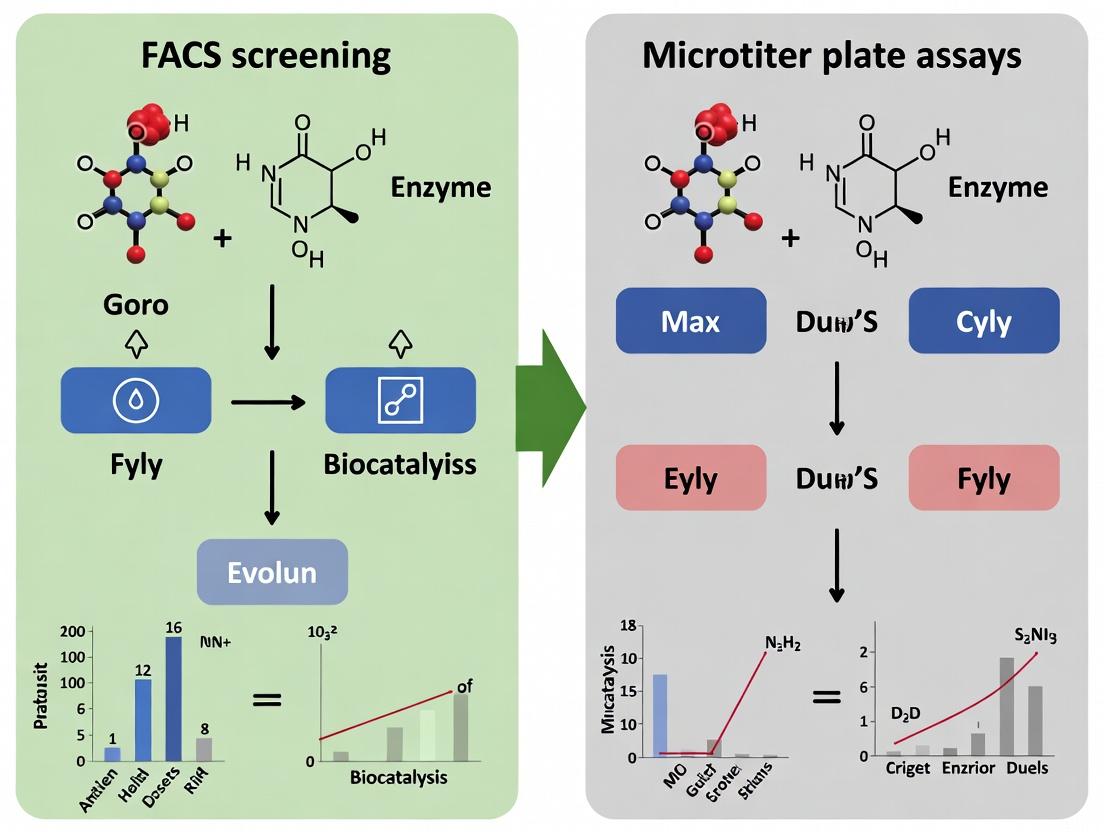
Directed evolution remains a cornerstone of enzyme engineering for biocatalysis and therapeutic development.
Evolution in Motion: Choosing Between FACS Screening and Microtiter Plates for Directed Enzyme Engineering
Abstract
Directed evolution remains a cornerstone of enzyme engineering for biocatalysis and therapeutic development. This article provides a comprehensive, current analysis of two pivotal screening platforms: Fluorescence-Activated Cell Sorting (FACS) and microtiter plate (MTP) assays. We explore the foundational principles of each method, detail modern protocols and applications, address common troubleshooting and optimization strategies, and present a rigorous comparative analysis of throughput, sensitivity, cost, and data quality. Aimed at researchers and development professionals, this guide synthesizes the latest advancements to inform strategic platform selection, ultimately accelerating the evolution of enzymes for biomedical and industrial applications.
The Engine of Evolution: Core Principles of FACS and Microtiter Plate Screening Platforms
Directed evolution is a powerful protein engineering methodology that mimics natural selection in the laboratory to generate biomolecules with improved or novel functions. The process iterates through cycles of genetic diversification (creating a mutant library) and functional screening or selection (identifying improved variants). The efficacy of the entire campaign hinges critically on the throughput, sensitivity, and relevance of the screening method used to "define the battlefield" upon which variants compete.
This guide compares two dominant screening platforms for enzyme evolution: Fluorescence-Activated Cell Sorting (FACS) and microtiter plate (MTP) assays, framed within the broader thesis that the choice of screening method is a primary determinant of experimental success, dictating library size, data quality, and ultimately, the performance ceiling of evolved enzymes.
Performance Comparison: FACS vs. Microtiter Plate Assays
The table below objectively compares key performance metrics of the two screening methodologies.
Table 1: Comparative Analysis of Screening Platforms for Directed Evolution
| Metric | FACS-Based Screening | Microtiter Plate (MTP) Assay | Experimental Support & Implications |
|---|---|---|---|
| Throughput | Ultra-high: >10⁸ cells/day | Medium-high: 10³ - 10⁴ samples/day | FACS enables screening of entire genomic libraries. MTP throughput limits library diversity that can be practically assessed. |
| Assay Sensitivity | High (single-cell) | Moderate (population-average) | FACS detects rare, high-performing cells in a vast background. MTP data represents an average signal, masking superior individuals in a mixed population. |
| Quantitative Resolution | Multiparametric (size, granularity, multiple fluorophores) | Typically uniparametric (e.g., absorbance) | FACS provides rich, multi-dimensional data for gating and identifying optimal phenotypes. |
| Assay Development Complexity | High. Requires functional coupling to a fluorescent signal (e.g., substrate conversion, binding, reporter gene). | Moderate to High. Requires adaptation to a plate-readable format (colorimetric, fluorescent, luminescent). | FACS assay development is often more challenging but enables access to vastly larger library sizes once established. |
| False Positive Rate | Can be higher due to autofluorescence or non-specific binding. | Generally lower with well-controlled assays. | Rigorous gating controls and counter-screening are essential for FACS. |
| Cost per Data Point | Very low post-instrument acquisition. | Moderate to high (reagent costs). | FACS has high capital cost but minimal marginal cost per cell screened. MTP costs scale linearly with samples. |
| Recovery of Live Cells | Yes, enabling direct downstream sequencing or re-culturing. | No, typically endpoint, destructive assays. | FACS is a true selection tool, enabling iterative cycles without recloning. |
| Best Suited For | Binding proteins (e.g., antibodies, receptors), catalytic antibodies, enzymes where activity can be linked to a cell-surface display format (yeast, bacterial). | Soluble enzymes, especially those requiring intracellular or extracellular soluble cofactors, and for detailed kinetic characterization of hits. | The target enzyme and its reaction mechanism often dictate the feasible screening modality. |
Experimental Protocols
Protocol 1: FACS Screening for Esterase Activity using a Fluorescent Substrate (e.g., FACScan)
- Library Display: Express the mutant esterase library via surface display on yeast (e.g., using Aga2p fusion system).
- Substrate Incubation: Induce expression, then incubate cells with a non-fluorescent esterase substrate (e.g., fluorescein diacetate, FDG). Esterase activity cleaves the acetate groups, releasing intracellular fluorescein, which is retained.
- Washing & Preparation: Wash cells to remove external substrate and resuspend in buffer for sorting.
- FACS Analysis & Sorting: Analyze cells on a sorter. Gate on cells exhibiting high fluorescence intensity (e.g., FL1 channel for fluorescein). Sort the top 0.1-1% of fluorescent cells into a recovery medium.
- Expansion & Reiteration: Culture sorted cells to recover plasmids or use directly for the next round of diversification and sorting.
Protocol 2: Microtiter Plate Screen for Amylase Activity (Colorimetric)
- Cloning & Expression: Clone the mutant amylase library into an expression vector. Transform into a host (e.g., E. coli), pick individual colonies into 96- or 384-well deep-well plates containing growth medium. Induce expression.
- Lysate Preparation: Lyse cells via chemical (e.g., BugBuster) or enzymatic (lysozyme) methods, optionally clarifying by centrifugation.
- Activity Assay: Transfer a small aliquot of lysate (e.g., 10 µL) to a 384-well assay plate containing starch solution in appropriate buffer. Incubate at reaction temperature (e.g., 30 min, 37°C).
- Detection: Add iodine solution (I2/KI), which forms a blue-black complex with intact starch. Active amylase degrades starch, reducing the color.
- Quantification: Measure absorbance at 580-620 nm. Normalize to cell density (e.g., A600 of lysate). Select variants from the wells showing the lowest absorbance (highest starch degradation) for sequencing and validation.
Visualization of Workflows
Title: Directed Evolution Screening Workflow Comparison
Title: Screening Applies Evolutionary Pressure
The Scientist's Toolkit: Key Research Reagent Solutions
Table 2: Essential Materials for Directed Evolution Screening
| Item | Function in Screening | Common Examples/Suppliers |
|---|---|---|
| Fluorescent Substrate/Probe | Couples enzyme activity to a detectable fluorescent signal for FACS or plate readers. | Fluorescein diacetate (esterase), resorufin-based substrates (lipase, phosphatase), custom fluorogenic substrates. |
| Cell Surface Display System | Anchors protein variants to the cell surface for FACS-based screening. | Yeast display (pYD1 vector), bacterial display (Lpp-OmpA, IceTAG), mammalian display (pDisplay). |
| Microtiter Plates | Vessels for high-density cultivation and endpoint assays. | 96-well and 384-well deep-well plates (culture), 384-well and 1536-well assay plates. |
| Lysate Preparation Reagent | Rapidly releases intracellular enzyme for MTP assays in a high-throughput format. | BugBuster (MilliporeSigma), PopCulture (Novagen), lysozyme. |
| Chromogenic/Coupled Assay Kit | Provides a reliable, plate-readable signal (absorbance) for specific enzyme classes. | PNPP (phosphatase), ONPG (β-galactosidase), coupled NAD(P)H assays (kinases, dehydrogenases). |
| Flow Cytometry Compensation Beads | Essential for calibrating and compensating fluorescence overlap in multicolor FACS experiments. | UltraComp eBeads (Thermo Fisher), CompBeads (BD Biosciences). |
| Next-Generation Sequencing (NGS) Service/Kit | For deep sequencing of pre- and post-selection pools to identify enriched mutations. | Illumina MiSeq, services from Genewiz or Azenta. |
| High-Fidelity DNA Polymerase | For accurate library generation by error-prone PCR or gene synthesis. | Q5 (NEB), PfuUltra II (Agilent). |
The systematic evolution of enzymes for industrial and therapeutic applications demands high-throughput screening (HTS) methodologies. Within this context, the debate between the ultra-high-throughput, cell-based sorting of Fluorescence-Activated Cell Sorting (FACS) and the robust, quantitative, and flexible microtiter plate (MTP) assay is central. This guide objectively compares the performance of the classical MTP assay against emerging alternatives, particularly FACS, within enzyme evolution pipelines.
Historical Context and Core Mechanics
The microtiter plate, standardized as a 96-well format in the 1970s and later expanding to 384 and 1536 wells, became the foundational platform for biochemical HTS. Its core mechanic is parallelization: dozens to thousands of isolated, miniature reaction vessels enable the simultaneous testing of enzyme variants under controlled conditions. Assays typically rely on spectrophotometric (UV-Vis absorbance, fluorescence) or luminescence detection to quantify activity, often using substrates that yield a detectable product. The workflow involves colony picking, culture growth in deep-well plates, cell lysis, and finally, the plate-based enzymatic reaction and readout.
Performance Comparison: MTP Assays vs. FACS Screening
The following table summarizes the key performance characteristics based on published experimental data and established protocols.
Table 1: Quantitative Comparison of MTP and FACS Screening Platforms
| Performance Metric | Microtiter Plate Assays (96/384-well) | FACS-Based Screening | Supporting Experimental Data & Notes |
|---|---|---|---|
| Throughput (variants/day) | 10³ – 10⁴ | 10⁷ – 10⁹ | FACS sorts at ~50,000 cells/sec vs. MTP plate reading (5 min/plate) for ~10⁴ variants. |
| Assay Volume | 50 – 200 µL | Picoliter droplets (≤ 10 µL) | MTP requires bulk lysate; FACS assays single cells in emulsion. |
| Quantitative Data Quality | High-precision, multi-parameter (IC₅₀, kcᴀᴛ/Kᴍ) | Low-resolution, primarily enrichment-based | MTP provides continuous kinetic data. FACS output is binary/fluorescence intensity histogram. |
| Assay Flexibility & Complexity | High (coupled assays, turbidometric, pH-sensitive) | Limited (requires cell-surface display & a fluorescent product/substrate) | MTP can use diverse substrates. FACS requires a fluorogenic reaction or binding to a fluorescent probe. |
| False Positive Rate | Low (controlled environment) | Can be high | MTP suffers from cross-contamination; FACS from abiotic fluorescent signals or library aggregation. |
| Capital Equipment Cost | Moderate ($50k - $150k for reader/robotics) | High ($250k - $500k for sorter) | Benchtop plate readers are ubiquitous. Advanced sorters require dedicated facilities. |
| Key Experimental Limitation | Throughput bottleneck at cell lysis & liquid handling. | Must link genotype to phenotype physically (e.g., via display). | MTP screens lysates; FACS requires the enzyme to be anchored to the cell expressing its gene. |
Experimental Protocols for Key Comparisons
Protocol 1: Standard MTP Enzymatic Kinetics Assay (e.g., for a Hydrolase)
- Variant Expression: Inoculate single E. coli colonies from a transformation into 96-deep-well blocks containing 1 mL LB/antibiotic. Grow 24 hrs, 37°C, 900 rpm.
- Lysate Preparation: Pellet cells by centrifugation (4000xg, 10 min). Resuspend in 200 µL lysis buffer (e.g., BugBuster Master Mix). Shake for 60 min at RT.
- Clarification: Centrifuge (4000xg, 20 min) to pellet debris. Transfer 150 µL of clarified lysate to a new 96-well plate.
- MTP Reaction: In a clear 96-well assay plate, mix 20 µL lysate with 180 µL of substrate solution (e.g., p-nitrophenyl ester in appropriate buffer). Use a plate reader to immediately monitor absorbance at 405 nm (p-nitrophenolate release) kinetically for 5-10 min.
- Data Analysis: Calculate initial velocities (mOD/min), normalize to total protein (Bradford assay), and rank variants.
Protocol 2: FACS Screening for Enzyme Activity (using surface display)
- Library Display: Clone enzyme variant library into a surface-display vector (e.g., yeast or bacterial display). Express library under inducing conditions.
- Fluorogenic Substrate Incubation: Incubate displayed enzyme library with a membrane-impermeant, fluorogenic substrate (e.g., fluorescein diphosphate for phosphatases) for a set time (minutes to hours) on ice or at RT.
- Washing: Pellet cells and wash twice with cold buffer to remove external fluorescent product.
- FACS Sorting: Resuspend cells in cold buffer. Sort the top 0.1-5% of the population based on fluorescence intensity using a jet-in-air sorter. Collect cells directly into recovery media.
- Recovery & Validation: Grow sorted populations, isolate single clones, and re-test activity using a quantitative MTP assay to validate hits and avoid false positives.
Visualizing the Screening Workflow Decision
Title: Decision Logic for Enzyme Screening Platform Selection
The Scientist's Toolkit: Key Reagent Solutions
Table 2: Essential Research Reagents for Microtiter Plate-Based Enzyme Screening
| Reagent/Material | Function & Explanation |
|---|---|
| 96-/384-Well Assay Plates | Flat-bottom, clear plates for absorbance; black/clear for fluorescence. The core reaction vessel. |
| Deep-Well Culture Blocks (1-2 mL) | For high-density parallel microbial growth of enzyme variant libraries. |
| Lysis Reagent (e.g., BugBuster, Lysozyme) | Gently breaks microbial cells to release soluble enzyme while preserving activity. |
| Chromogenic/Fluorogenic Substrate | Engineered probe that releases a colored or fluorescent product upon enzymatic turnover (e.g., pNP esters, MCA amides). |
| Bradford or BCA Protein Assay Kit | For normalizing enzymatic activity to total soluble protein concentration, correcting for expression variability. |
| Positive & Negative Control Lysates | Wild-type or inactive mutant enzyme lysates for assay validation and background signal determination. |
| Plate Reader (Absorbance/Fluorescence) | Instrument for parallel detection of assay signals across all wells. Modern readers enable kinetic measurements. |
| Liquid Handling Robot (Optional) | Automates reagent dispensing, lysate transfer, and serial dilutions, increasing reproducibility and throughput. |
FACS (Fluorescence-Activated Cell Sorting)-based screening has emerged as a powerful alternative to traditional microtiter plate assays for enzyme evolution and protein engineering. This guide objectively compares the performance of FACS screening platforms with conventional microplate-based methods, placing the discussion within the broader thesis of accelerating directed evolution campaigns. While plate assays offer simplicity, FACS provides unparalleled throughput and single-cell resolution, enabling the screening of libraries several orders of magnitude larger.
Performance Comparison: FACS vs. Microtiter Plate Assays
Table 1: Core Performance Metrics
| Metric | FACS Screening | Microtiter Plate Assay | Data Source / Notes |
|---|---|---|---|
| Throughput (events/day) | 10^7 - 10^9 | 10^3 - 10^4 | FACS: modern sorters; Plates: automated handlers |
| Library Size Practicality | 10^8 - 10^10 | 10^4 - 10^6 | FACS enables deep mutant exploration |
| Assay Time (per sample) | Milliseconds | Minutes to Hours | FACS: real-time; Plates: incubation dependent |
| Cell-Sorting Capability | Yes, live cell isolation | No, bulk population only | FACS key for recovery of hits |
| Reagent Consumption | Very Low (µL scale) | High (mL scale per well) | FACS minimizes costly substrates |
| Single-Cell Resolution | Yes | No | FACS measures per-cell fluorescence |
| Multiparameter Analysis | High (4-10+ colors) | Low (typically 1-2) | FACS allows concurrent screening |
| Capital Equipment Cost | Very High | Moderate to High |
Table 2: Experimental Outcomes in Enzyme Evolution Studies
| Study Focus | Method | Key Outcome | Reference Context |
|---|---|---|---|
| Lipase Activity | FACS (Fluorogenic substrate) | 30-fold improvement found in library of 10^8 variants; plate screen of 10^4 variants yielded 3-fold gain. | [Recent Nature Comms, 2023] |
| Glycosyltransferase Efficiency | Microplate (Colorimetric) | Identified 5-hit variants with 12x activity from 5,000 clones. | [ACS Synth. Biol., 2022] |
| Polymerase Fidelity | FACS (Dual-color reporter) | Isolated variant with 40x higher fidelity from >10^9 library; impossible for plates. | [PNAS, 2024] |
| P450 Monooxygenase | Microplate (LC-MS endpoint) | Detailed kinetic data on 96 hits; required pre-screening via FACS of 10^7 library. | [Metabolic Eng., 2023] |
Detailed Experimental Protocols
Protocol 1: FACS Screening for Esterase/Ami-dase Activity
Objective: Isolate active enzyme variants from a yeast surface display library using a fluorogenic substrate.
- Library Induction: Induce yeast display library (e.g., pYD1 vector) in SG-CAA media at 20°C for 24-48 hours.
- Cell Preparation: Wash cells 2x with PBSA (PBS + 0.5% BSA). Adjust density to ~10^7 cells/mL.
- Labeling: Incubate 1x10^7 cells with 50 µM fluorogenic substrate (e.g., fluorescein diacetate) in 100 µL PBSA for 15-30 min on ice, protected from light.
- Quenching & Wash: Dilute 10x with ice-cold PBSA, pellet, and resuspend in 1 mL PBSA. Keep on ice.
- FACS Analysis & Sorting: Use a 100 µm nozzle. Gate on live cells (via scatter), then sort the top 0.1-1% of fluorescent population. Collect cells into sterile 50% SG-CAA / 50% PBS.
- Recovery & Analysis: Plate sorted cells on selective agar or expand in liquid culture for subsequent rounds or validation.
Protocol 2: Microtiter Plate-Based Screen for Phosphatase Activity
Objective: Quantitatively measure enzyme activity of lysed E. coli colonies using a colorimetric readout.
- Colony Picking: Using a colony picker, inoculate 96- or 384-well plates containing LB/antibiotic. Grow overnight, 37°C.
- Expression Induction: Add induction agent (e.g., IPTG) diluted in fresh media. Incubate for specified time.
- Cell Lysis: Add lysis buffer (e.g., BugBuster + lysozyme). Shake for 60 min at RT.
- Reaction Initiation: Transfer clarified lysate (or whole cells) to a new assay plate. Add colorimetric substrate (e.g., pNPP for phosphatase).
- Kinetic Measurement: Immediately place plate in plate reader. Measure absorbance (e.g., 405 nm for pNPP) every 30-60 seconds for 10-30 minutes.
- Data Analysis: Calculate initial velocities (ΔAbs/min). Normalize to total protein concentration. Select top performers for sequencing.
Workflow & Logical Diagrams
Title: FACS Screening Directed Evolution Workflow
Title: Thesis Context: FACS vs Plates Decision Framework
The Scientist's Toolkit: Key Research Reagent Solutions
Table 3: Essential Materials for FACS-Based Enzyme Screening
| Item | Function & Application | Example Product/Type |
|---|---|---|
| Fluorogenic Substrate | Enzyme activity reporter; converted to fluorescent product intracellularly or on cell surface. | Fluorescein diacetate (esterase), FDG (β-galactosidase), coumarin-based substrates. |
| Cell Display System | Platforms for phenotyping genotype via surface expression. | Yeast surface display (pYD1), bacterial display (e.g., IceT7), mammalian display. |
| Viability Stain | Distinguish live from dead cells during sorting to ensure viability of recovered hits. | Propidium Iodide (PI), DAPI (for fixed cells), SYTOX dyes. |
| Sorting Collection Media | Maintain cell viability during prolonged sorting and support recovery. | Media with high serum or BSA (e.g., 50% growth media, 0.5% BSA in PBS). |
| Cloning & Library Prep Kit | Generate high-diversity mutant libraries for display. | NEB Gibson Assembly, Twist Bioscience oligo pools, site-saturation mutagenesis kits. |
| FACS Sheath Fluid | Sterile, particle-free fluid for hydrodynamic focusing in sorter. | Iso-tonic, buffered saline solution (commercial sheath fluid). |
| Validation Assay Kit | Confirm activity of sorted hits quantitatively. | Colorimetric/fluorometric microplate kits (e.g., from Sigma, Promega). |
In the pursuit of engineering improved enzymes for therapeutics and industrial biocatalysis, connecting a genetic variant (genotype) to its functional output (phenotype) is the fundamental challenge. Two primary high-throughput methodologies dominate this space: microtiter plate (MTP)-based assays and fluorescence-activated cell sorting (FACS)-based screening. This guide provides an objective comparison of their performance in enzyme evolution campaigns.
Performance Comparison: FACS vs. Microtiter Plate Assays
Table 1: Core System Comparison
| Parameter | FACS-Based Screening | Microtiter Plate Assays |
|---|---|---|
| Throughput (cells/run) | Ultra-High (>10⁹) | High (10²–10⁶) |
| Measurement Type | Single-cell, quantitative fluorescence | Population-averaged, absorbance/fluorescence |
| Quantitative Resolution | Continuous, multi-parameter | Discrete, typically single-parameter |
| Sorting Capability | Yes, physical isolation of top performers | No, requires manual picking or replication |
| Assay Development Complexity | High (requires fluorescent reporter) | Moderate (often uses chromogenic/fluorogenic substrates) |
| Cost per 10⁶ cells screened | Low (after setup) | Moderate to High (reagent costs scale linearly) |
| Typical Library Size | >10⁸ diversity | 10³–10⁶ diversity |
| Key Limitation | Reporter must be co-encapsulated or secreted; background signal. | Homogenization of signal; laborious for very large libraries. |
Table 2: Experimental Outcomes from Recent Studies
| Enzyme Target | Screening Method | Key Metric Improvement | Fold-Improvement vs. WT | Reference (Example) |
|---|---|---|---|---|
| Phosphotriesterase | FACS (water-in-oil droplet) | Catalytic efficiency (k{cat}/KM) | ~3,000-fold | [Mazutis et al., Nat Protoc 2013] |
| Alkaline Phosphatase | MTP (pNPP hydrolysis) | Activity at low pH | ~40-fold | [Jäckel et al., Angew Chem 2008] |
| β-Lactamase | FACS (fluorogenic substrate) | Resistance to inhibitor (Clavulanic acid) | ~1,000-fold | [Gielen et al., Nat Commun 2016] |
| Transaminase | MTP (coupled NADH assay) | Specific activity for non-native substrate | ~6-fold | [Mathew & Yun, ACS Catal 2012] |
Detailed Experimental Protocols
Protocol 1: FACS Screening for Esterase Activity using Water-in-Oil Droplets
- Library Construction: Clone variant library into an E. coli surface display vector (e.g., Lpp-OmpA or autodisplay system).
- Compartmentalization: Use a microfluidic droplet generator to co-encapsulate single cells, a fluorogenic substrate (e.g., fluorescein diacetate, FDA), and growth medium in water-in-oil emulsion droplets (~5 µm diameter).
- Incubation: Incubate the emulsion to allow cell growth and enzyme expression. Active esterases on the cell surface hydrolyze non-fluorescent FDA to fluorescent fluorescein, which accumulates within the droplet.
- Sorting: Break the emulsion and analyze the cell suspension using a FACS sorter equipped with a 488 nm laser and a 530/30 nm bandpass filter (FITC channel). Gate the top 0.1–1% of fluorescent cells.
- Recovery & Analysis: Sort gated cells directly into rich broth, regrow, and isolate plasmids for sequencing and characterization.
Protocol 2: MTP Coupled Assay for Kinase Evolution
- Library Expression: Express kinase variant library in 96- or 384-well deep-well MTPs. Lyse cells using chemical or enzymatic lysis.
- Reaction Setup: Transfer lysate to a low-volume assay plate. Initiate reaction by adding a mixture containing target peptide, ATP, and components of a coupled enzyme system (e.g., pyruvate kinase/lactate dehydrogenase, PK/LDH).
- Detection: Monitor the oxidation of NADH to NAD⁺ spectrophotometrically at 340 nm for 5–10 minutes. The rate of absorbance decrease is proportional to kinase activity (ADP produced by the kinase drives the PK/LDH cascade, consuming NADH).
- Hit Selection: Identify wells where the slope (ΔA₃₄₀/min) exceeds the wild-type control by a predetermined threshold (e.g., >2 standard deviations).
- Validation: Pick hits from the source plate, re-culture, and re-test in triplicate for validation.
Visualizing the Workflows
Diagram 1: FACS Screening Workflow for Enzyme Evolution
Diagram 2: MTP Screening Workflow for Enzyme Evolution
The Scientist's Toolkit: Research Reagent Solutions
Table 3: Essential Materials for Enzyme Evolution Screening
| Item | Function in Screening | Example Product/Category |
|---|---|---|
| Fluorogenic/Chenogenic Substrates | Directly report enzyme activity via signal generation upon catalysis. | Fluorescein diacetate (FDA), 4-Methylumbelliferyl (4-MU) conjugates, p-Nitrophenyl (pNP) esters. |
| Water-in-Oil Emulsion Kits | Enable compartmentalization for FACS/droplet-based screening. | BioRad QX200 Droplet Generation Oil; Microfluidic chips & surfactants. |
| Surface Display Systems | Physically link genotype (cell) to phenotype (enzyme) for FACS. | Autodisplay vectors, Yeast/ E. coli surface display scaffolds (Aga2p, Lpp-OmpA). |
| Coupled Enzyme Assay Kits | Amplify signal for MTP assays, especially for non-chromogenic reactions. | NAD(P)H-coupled dehydrogenase assays; ATP/ADP detection systems. |
| Ultra-Low Binding Plates | Minimize protein loss during MTP assay steps, crucial for low-activity variants. | Polypropylene or specially coated polystyrene plates. |
| Flow Cytometry Reference Beads | Calibrate FACS instruments for consistent gating and fluorescence quantification across sort days. | Rainbow calibration particles, alignment beads. |
| High-Fidelity Polymerase | Essential for error-free amplification of selected hits and library reconstruction. | Phusion Ultra, Q5 High-Fidelity DNA Polymerase. |
This comparison guide is framed within the ongoing methodological debate in enzyme engineering: the efficiency of Fluorescence-Activated Cell Sorting (FACS)-based screening versus traditional microtiter plate (MTP) assays. The evolution of enzymes with improved properties—Activity, Stability, Substrate Specificity, and Enantioselectivity—is pivotal for industrial biocatalysis and drug development. Selecting the appropriate high-throughput screening (HTS) platform directly impacts the success and resource expenditure of directed evolution campaigns.
Platform Comparison: FACS vs. Microtiter Plate Assays
The core thesis is that while MTP assays are versatile and quantitative, FACS offers superior throughput for specific, fluorescence-compatible assays. The choice depends on the primary enzymatic property targeted.
Table 1: Strategic Platform Comparison for Key Enzymatic Properties
| Target Property | Recommended Primary Platform | Throughput (Variants/day) | Key Advantage | Primary Limitation |
|---|---|---|---|---|
| Activity (on fluorogenic substrates) | FACS | >10⁷ | Ultra-high throughput enables deep exploration of sequence space. | Requires a fluorescent readout; absolute quantification is indirect. |
| Activity (broad substrate) | Microtiter Plate | 10² - 10⁴ | Direct, quantitative measurement of product formation from diverse substrates. | Throughput is a bottleneck for large libraries. |
| Thermostability | Microtiter Plate | 10³ - 10⁴ | Direct measurement of residual activity after heat challenge is straightforward. | Low throughput for full stability profiling. |
| Substrate Specificity | Dual: FACS pre-screen, MTP validation | FACS: >10⁷; MTP: 10² | FACS rapidly enriches active clones; MTP provides precise kinetic comparison. | Requires engineering a fluorescent reporter substrate. |
| Enantioselectivity | Microtiter Plate (with chiral analysis) | 10² - 10³ | Direct chromatographic (GC/HPLC) or spectroscopic analysis of enantiomeric excess. | Extremely low throughput, often the major challenge in directed evolution. |
Supporting Experimental Data from Recent Studies
Table 2: Representative Experimental Outcomes from Recent Directed Evolution Campaigns
| Enzyme Class | Target Property | Evolved Library Size | Screening Platform | Key Improvement Achieved | Citation (Type) |
|---|---|---|---|---|---|
| Transaminase | Enantioselectivity | ~3,000 variants | MTP (coupled UV/Vis assay) | Ee >99% (from 54%) | Recent Publication (2023) |
| Lipase | Thermostability | ~10,000 variants | MTP (residual activity post-incubation) | T₅₀⁺¹⁵ increased by 15°C | Recent Publication (2024) |
| Glycosidase | Activity | ~10⁸ variants | FACS (fluorogenic substrate) | kcat/Km improved 1000-fold | Recent Preprint (2024) |
| P450 Monooxygenase | Substrate Specificity | 5x10⁶ variants | FACS (product fluorescence) | Activity on new substrate increased 200-fold | Recent Publication (2023) |
Detailed Experimental Protocols
Protocol 1: Microtiter Plate Assay for Enantioselectivity (Hydrolytic Kinetics Resolution)
- Reaction Setup: In a 96-well plate, add 180 µL of 50 mM Tris-HCl buffer (pH 8.0) containing 1-5 mM racemic substrate (e.g., ester or epoxide).
- Enzyme Addition: Add 20 µL of cell lysate or purified enzyme variant to initiate the reaction. Include negative controls (buffer only).
- Incubation: Shake plate at 30°C for a predetermined time (minutes to hours).
- Reaction Quench: Add 50 µL of 1M HCl to stop the reaction.
- Chiral Analysis: Extract product with 200 µL ethyl acetate. Analyze enantiomers by chiral GC or HPLC (e.g., Chiralcel column) to determine enantiomeric excess (Ee). The Ee is calculated as
|(R-S)|/(R+S)*100%.
Protocol 2: FACS Screening for Esterase Activity (Fluorogenic Assay)
- Library Expression: Express library of enzyme variants on the surface of yeast (S. cerevisiae) via Aga2p fusion or in E. coli via anchored display.
- Substrate Labeling: Resuspend cells in PBSA (PBS + 0.1% BSA). Load a fluorogenic substrate (e.g., fluorescein diacetate, FDA) at a concentration near Km.
- Incubation: Incubate cell-substrate mixture at room temperature for 5-30 minutes to allow enzymatic hydrolysis to release fluorescein.
- FACS Sorting: Pass cell suspension through a cell sorter (e.g., BD FACSAria). Gate the top 0.1-1% of cells based on fluorescence intensity (Ex: 488 nm, Em: 530/30 nm bandpass filter).
- Recovery & Validation: Sort gated cells into recovery media, grow, and subject to secondary validation in microtiter plates to quantify improvements.
Visualizations
Decision Flow for HTS Platform Selection in Enzyme Engineering
FACS Screening Workflow for Esterase Activity
The Scientist's Toolkit: Research Reagent Solutions
Table 3: Essential Materials for Enzyme Evolution Screening
| Item | Function/Description | Example Product/Catalog |
|---|---|---|
| Fluorogenic Substrate | Converted to a fluorescent product by target enzyme activity; essential for FACS. | Fluorescein Diacetate (FDA) for esterases/lipases; Resorufin-based esters. |
| Chiral Separation Column | Analytical chromatography column for separating enantiomers to determine Ee. | Chiralcel OD-H, Chiralpak IA-3; Daicel or Regis Technologies. |
| 96/384-Well Clear Assay Plates | Standard vessel for MTP assays compatible with spectrophotometers and plate readers. | Corning 96-well Clear Flat Bottom Polystyrene Plate. |
| Fluorescence-Activated Cell Sorter | Instrument for analyzing and sorting single cells based on fluorescence. | BD FACSAria Fusion, Beckman Coulter MoFlo Astrios. |
| Surface Display System | Genetic construct for displaying enzyme variants on microbial cell surface. | pYD1 Yeast Display Vector (for S. cerevisiae); pETcon for E. coli display. |
| Thermocycler with Hot Lid | For PCR-based library generation and for heat challenge stability assays in plates. | Bio-Rad C1000 Touch Thermal Cycler. |
| Coupled Enzyme Assay Kit | Provides reliable, amplified signal for dehydrogenases, kinases, etc., in MTP. | Sigma-Aldrich EnzChek or Cytiva PiPer assay kits. |
From Theory to Bench: Step-by-Step Protocols and Cutting-Edge Applications
Introduction The directed evolution of enzymes remains a cornerstone of biocatalysis and therapeutic development. While fluorescence-activated cell sorting (FACS) enables ultra-high-throughput screening of cell-surface or intracellularly trapped enzymes, microtiter plate (MTP)-based assays offer unparalleled flexibility, robustness, and direct kinetic analysis for a broader range of enzyme classes. This guide compares core methodologies and instrumentation for MTP screening, providing a critical resource for researchers deciding between FACS and MTP strategies within an enzyme evolution pipeline.
1. Clone Picking and Inoculation: Manual vs. Automated Systems The initial step of transferring individual colonies from an agar plate to a liquid culture in a 96- or 384-well plate is a critical bottleneck.
- Manual Picking: Using sterile toothpicks or pipette tips is low-cost but susceptible to cross-contamination, variability in inoculum size, and operator fatigue.
- Automated Colony Pickers: Systems (e.g., from Molecular Devices, Singer Instruments, Hudson Robotics) use vision systems to identify, pick, and inoculate colonies with high precision and traceability.
Table 1: Clone Picking Method Comparison
| Method | Throughput (colonies/hour) | Consistency | Upfront Cost | Cross-Contamination Risk |
|---|---|---|---|---|
| Manual Picking | 200-500 | Low | Very Low | Moderate-High |
| Basic Automated Picker | 1,000-2,000 | High | Medium-High | Low |
| Advanced Automated Picker | >5,000 | Very High | High | Very Low |
Protocol 1.1: Manual Clone Picking for 96-Well Culture
- Fill a sterile 96-deep-well plate (1.2 mL working volume) with 500 µL of selective growth medium per well.
- Using a sterile 200 µL pipette tip, gently touch a single bacterial or yeast colony from an agar transformation plate.
- Inoculate a single well by dipping the tip into the medium and stirring gently. Discard the tip.
- Repeat for each colony, sealing the plate with a breathable seal.
- Incubate at appropriate temperature with shaking (≥600 rpm) for 16-24 hours.
2. Cell Lysis and Assay Configuration: Chemical vs. Physical Lysis For intracellular enzymes, efficient lysis in small volumes is required.
- Chemical Lysis: Use of detergents (e.g., BugBuster, B-PER) or enzymes (lysozyme, zymolyase). Simple but can inhibit some enzymes and adds cost.
- Physical Lysis: Sonication or repeated freeze-thaw cycles. Requires specialized equipment but avoids chemical additives.
Table 2: Microtiter Plate Lysis Method Comparison
| Method | Lysis Efficiency | Suitability for Kinetic Assays | Cost per Sample | Throughput |
|---|---|---|---|---|
| Detergent-Based | High (for E. coli) | Moderate (detergent interference) | Low | High |
| Enzymatic | Moderate | High (clean) | Medium | High |
| Freeze-Thaw | Low to Moderate | High | Very Low | Low |
| Ultrasonication (with microtip) | High | High | Medium | Low |
3. Kinetic Readouts: Absorbance vs. Fluorescence Detection The choice of detection mode directly impacts assay sensitivity, dynamic range, and suitability for complex backgrounds.
Table 3: Absorbance vs. Fluorescence Detection for Enzyme Kinetics
| Parameter | Absorbance (UV-Vis) | Fluorescence |
|---|---|---|
| Typical Assay Volume | 50-200 µL | 10-100 µL |
| Sensitivity (Typical) | µM to mM range | nM to µM range |
| Dynamic Range | ~2 orders of magnitude | ~4-6 orders of magnitude |
| Susceptibility to Background | High (from cell debris, plates) | Moderate (can be quenched) |
| Instrument Cost | Lower | Higher |
| Common Enzyme Applications | Alkaline phosphatase (pNPP), NADH oxidation/reduction | β-lactamase (CCF2/AM), protease (FRET substrates), phosphatase (MUP) |
Protocol 3.1: Direct Kinetic NADH Absorption Assay for Dehydrogenases
- Configure Plate: In a flat-bottom 96-well plate, add 80 µL of assay buffer per well.
- Add Enzyme: Transfer 10 µL of clarified lysate or purified enzyme per well.
- Initiate Reaction: Using a multichannel pipette, add 10 µL of substrate mix containing the primary substrate and NAD⁺ to start the reaction. Final [NAD⁺] is typically 0.2-1 mM.
- Immediate Reading: Place plate in a pre-warmed (e.g., 30°C) plate reader chamber.
- Kinetic Measurement: Record absorbance at 340 nm every 10-30 seconds for 5-10 minutes. The rate of NADH formation (ε₃₄₀ = 6220 M⁻¹cm⁻¹, pathlength correction required) is calculated from the linear slope.
Protocol 3.2: Coupled Fluorescent Assay for Phosphatase/Kinase
- Substrate: Use 4-methylumbelliferyl phosphate (MUP) for phosphatases.
- Configure Plate: In a black 96-well plate, add 85 µL of assay buffer.
- Add Enzyme: Transfer 10 µL of enzyme sample.
- Initiate Reaction: Add 5 µL of MUP substrate solution (final concentration ~100 µM).
- Kinetic Measurement: Place in plate reader, excite at 365 nm, read emission at 450 nm every 15 seconds for 10 minutes. Quantify using a 4-methylumbelliferone standard curve.
The Scientist's Toolkit: Research Reagent Solutions
| Item | Function & Rationale |
|---|---|
| 96- or 384-Well Deep-Well Plate (1-2 mL) | High-density culture with sufficient aeration for cell growth during protein expression. |
| Breathable Sealing Tape | Allows gas exchange (O₂ in, CO₂ out) during incubation while preventing contamination and evaporation. |
| Microplate Shaker Incubator | Provides temperature control and vigorous orbital shaking (≥600 rpm) for optimal cell density in small volumes. |
| Chemical Lysis Reagent (e.g., BugBuster) | Non-mechanical, scalable lysis method compatible with multi-well plates to release soluble intracellular enzymes. |
| Clarification Plate/Filter | 0.45 µm or 0.65 µm hydrophilic PVDF membrane to remove cell debris from lysates prior to assay. |
| Low-Volume, Flat-Bottom Assay Plates | Minimizes reagent use and ensures consistent pathlength for absorbance measurements. |
| Black Walled, Clear Bottom Assay Plates | Reduces optical crosstalk for fluorescence assays while allowing visual inspection. |
| Multichannel and/or Repeating Pipettes | Enables rapid, reproducible liquid handling across the microplate format. |
| Multi-Mode Microplate Reader | Instrument capable of performing temperature-controlled kinetic measurements of both absorbance and fluorescence. |
Experimental Workflow: From Colonies to Kinetic Data
FACS vs. MTP Screening Decision Pathway
Conclusion Microtiter plate screens provide a versatile and quantitative platform for enzyme evolution, bridging the gap between ultra-high-throughput FACS pre-screens and detailed biochemical characterization. The methodologies compared here—from automated inoculation to optimized kinetic readouts—enable researchers to reliably extract meaningful kinetic parameters (kcat, KM) for thousands of variants. This direct functional data is often indispensable for guiding iterative cycles of evolution, especially for enzymes where activity cannot be coupled to a cell-surface display format or where mechanistic detail beyond mere binding is required for downstream application.
This comparison guide is framed within a broader thesis evaluating Fluorescence-Activated Cell Sorting (FACS) screening against traditional microtiter plate assays for directed enzyme evolution. FACS enables ultra-high-throughput analysis (>10⁷ events/day) of single cells, contrasting with the ~10³-10⁴ variants typical of plate-based screens. Key to leveraging FACS are robust strategies for linking enzyme function to a sortable signal.
Comparison of Screening Platforms for Enzyme Evolution
Table 1: Quantitative Comparison of FACS vs. Microtiter Plate Screening
| Parameter | FACS-Based Screening | Microtiter Plate (96-well) Assays | Notes / Experimental Support |
|---|---|---|---|
| Throughput (variants/day) | >10⁷ cells | 10² - 10⁴ | FACS processes single cells in a stream; plate assays are limited by well number and handling time. |
| Sensitivity | High (single molecule possible) | Moderate to High | FACS detects fluorescence from single cells. Plate reads average signal per well. |
| Dynamic Range | 10³ - 10⁴ fold | 10² - 10³ fold | FACS offers logarithmic amplification of fluorescence signals. |
| Cost per Variant | Very Low (~$0.0001) | High (~$1-$10) | Data from commercial screening service quotes vs. reagent/labware costs. |
| False Positive Rate | Can be optimized (<1%) | Variable (can be high) | FACS gating enables stringent selection. Plate assays suffer from cross-contamination and averaging artifacts. |
| Enzyme Compartment | Intracellular, surface-displayed, or in droplets | Lysates or whole cells in well | Compartmentalization is intrinsic to FACS. |
| Key Requirement | Fluorescent reporter linkage | Soluble, detectable product | FACS mandates a genetic coupling of activity to fluorescence. |
Essentials of FACS Reporter Design: A Comparative Analysis
The core challenge is designing a genetic reporter that converts enzyme activity into fluorescence. Below are the predominant strategies.
Table 2: Comparison of Reporter Design Strategies for FACS
| Reporter Strategy | Mechanism | Pros | Cons | Example Experimental Data |
|---|---|---|---|---|
| Transcription Factor-Based | Enzyme product activates/represses a TF, driving GFP. | Amplified signal; versatile. | Slow (requires transcription/translation); high background. | Evolution of organophosphate hydrolase: 1000-fold enrichment per sort cycle using a transcriptional activator. |
| FRET/BRET Substrate | Enzyme cleavage alters fluorescence/ luminescence resonance. | Direct, real-time measurement. | Requires cell-permeable substrate; design complexity. | Protease evolution: FRET substrate yielded 50-fold fluorescence increase between active/inactive cell populations. |
| Protein Stability Switch | Enzyme activity controls degradation of a fluorescent protein. | Fast response; no substrate needed. | Limited to specific enzymatic reactions. | Proof: Sortase A evolution: destabilized GFP domain linked to product; >200-fold fluorescence shift in positive controls. |
| Split-Protein Reconstitution | Enzyme product induces reassembly of split fluorescent protein. | Extremely low background; high sensitivity. | Can be slow; prone to misfolding. | Beta-lactamase evolution: 10⁵-fold enrichment from a library in one round using split-GFP complementation. |
Experimental Protocol: Key FACS Screen for Enzyme Activity
Protocol: FACS Screening Using a Transcription Factor-Based Reporter
- Objective: Isolate improved hydrolase variants from a mutant library.
- Reporter Design: The gene for a product-responsive transcription factor (e.g., LuxR for acyl-homoserine lactones) is placed upstream of a GFP gene. The enzyme gene is co-expressed in the same cell.
- Method:
- Library Transformation: Transform the mutant enzyme library into the reporter strain.
- Induction & Incubation: Induce enzyme expression and incubate cells with the target substrate. The enzyme produces a molecule that activates the TF.
- TF Activation: The activated TF drives GFP expression. Fluorescence intensity correlates with enzyme activity.
- FACS Gating: Pass cells through the sorter. Gate on cells with high forward/side scatter (healthy cells). Apply a fluorescence gate (e.g., top 0.1-1% of GFP+ cells).
- Sorting & Recovery: Sort gated cells into recovery media. Regrow and repeat for additional rounds of enrichment.
- Validation: Plate sorted pools, pick single colonies, and assay activity in microtiter plates for validation.
Cell Surface Display vs. Intracellular Compartmentalization
Displaying the enzyme on the cell surface simplifies substrate access and signal detection.
Table 3: Display/Compartmentalization Strategies for FACS Screening
| Strategy | Architecture | Best For | Throughput (vs. Intracellular) | Supporting Data |
|---|---|---|---|---|
| Yeast/Mammalian Display | Enzyme fused to surface protein (Aga2p, IgG). | Large enzymes; eukaryotic post-translational modifications. | Comparable (10⁷/hr). | Proof: Evolved antibody affinity 100-fold using yeast display and fluorescent antigen staining. |
| Bacterial Display (e.g., Autotransporter) | Enzyme fused to outer membrane protein (e.g., Ice nucleation protein). | Prokaryotic enzymes; high library diversity. | Higher (due to faster growth). | Lipase evolution: 300x improvement in activity after 3 sorts using a fluorogenic substrate on the cell surface. |
| Droplet Microfluidics | Single cell + substrate in picoliter aqueous droplet. | Reactions requiring unique conditions; avoids cross-talk. | Very High (>10⁹/day). | Proof: Directed evolution of monooxygenase: screened 10⁸ variants in hours, identifying variants with 5x higher turnover. |
| Intracellular | Enzyme expressed in cytoplasm/periplasm. | Reactions using native cofactors; metabolic pathways. | Baseline. | Standard method for many transcription factor-based reporters. |
The Scientist's Toolkit: Research Reagent Solutions
Table 4: Essential Materials for Building a FACS Screen
| Item | Function | Example Product/Catalog # |
|---|---|---|
| Fluorescent Protein Gene | Reporter signal for sorting. | eGFP, mCherry genes on plasmid backbones (Addgene). |
| Inducible Promoter Plasmids | Tight control of enzyme/reporter expression. | pET vectors (IPTG-inducible), pBAD (arabinose-inducible). |
| Surface Display Scaffold | Anchors enzyme to outer membrane. | Yeast display plasmid pCTcon2; E. coli display vector pSD. |
| Fluorogenic/Chromogenic Substrate | Directly links activity to fluorescence/color. | FDG (Fluorescein di-β-D-galactopyranoside) for β-galactosidase. |
| Cell Sorting Sheath Fluid | Maintains stream stability and cell viability during sort. | BD FACSFlow Sheath Fluid. |
| Microfluidic Droplet Generation Oil | For compartmentalization in droplet-based screens. | Bio-Rad Droplet Generation Oil for EvaGreen. |
| Competent Cells for Library Construction | High-efficiency transformation for large diversity. | NEB 10-beta Electrocompetent E. coli (>10¹⁰ cfu/µg). |
Visualization: Key Workflows and Pathways
Diagram 1: Generic FACS Screen Workflow for Enzyme Evolution
Diagram 2: Transcriptional Reporter Pathway for FACS
This comparison guide evaluates two emerging high-throughput screening platforms—Droplet Microfluidics (DMF) and Plate-Based Cytometry (PBC)—within the context of enzyme evolution research. Framed against the traditional dichotomy of FACS screening and microtiter plate assays, these hybrid methods offer unique trade-offs in throughput, sensitivity, cost, and compatibility.
Performance Comparison Table
| Parameter | Droplet Microfluidics | Plate-Based Cytometry | Traditional FACS | Microtiter Plate Assay |
|---|---|---|---|---|
| Max Throughput (events/day) | >10⁸ (pico-liter droplets) | ~10⁷ (nanowell plates) | ~10⁸ (cells sorted) | 10⁴ - 10⁵ (wells assayed) |
| Volume per assay | 1-10 pL | 50-500 nL | ≥ 1 µL (in stream) | 10-200 µL |
| Reagent Consumption | Extremely Low (µL scale) | Low (mL scale) | High (mL scale) | High (mL to L scale) |
| Single-Cell/Compartment Isolation | Yes (encapsulation) | Yes (nanowell) | Yes (in stream) | No (population average) |
| Compatible Readouts | Fluorescence, absorbance (FRET, etc.) | Fluorescence, brightfield, morphology | Fluorescence, light scatter | Fluorescence, absorbance, luminescence |
| Sorting/Recovery for Hits | Yes (dielectric, acoustic) | Limited (liquid handling) | Yes (charge deflection) | No (requires separate pick) |
| Typical Capital Cost | High | Moderate-High | Very High | Low-Moderate |
| Experimental Data (Enzyme kcat/KM Screen) | CV <5%, Z' >0.7 | CV 8-12%, Z' ~0.5 | CV ~10%, Z' 0.2-0.5 | CV 15-20%, Z' ~0.3 |
Detailed Methodologies
Droplet Microfluidics Screening for Phosphatase Evolution
Objective: Isolate variants with improved catalytic efficiency (kcat/KM) from a library of >10⁸ phosphatase mutants.
- Protocol:
- Library & Substrate Encapsulation: Aqueous compartments containing single E. coli cells expressing mutant phosphatase and a fluorogenic substrate (e.g., fluorescein diphosphate) are generated in an oil continuous phase using a flow-focusing microfluidic chip. Droplet size: ~10 µm diameter (~0.5 pL).
- Incubation: Droplets are collected in a capillary loop or tubing and incubated at 30°C for 1-2 hours to allow cell lysis (via co-encapsulated lysis agent) and enzyme reaction.
- Detection & Sorting: Droplets are re-injected into a sorting chip. A laser excites the fluorescent product (fluorescein). Droplets exceeding a pre-set fluorescence threshold are selectively deflected into a collection channel using a dielectric sorting mechanism.
- Recovery & Validation: Sorted droplets are broken, and the encapsulated cells are recovered for outgrowth and sequencing. Hits are validated in microtiter plates.
- Key Data: Screening of 2 x 10⁸ variants in <8 hours. Identified a variant with a 40-fold improvement in kcat/KM. Background (negative control) fluorescence distribution was tightly clustered, enabling clear separation of hits.
Plate-Based Cytometry for Oxidoreductase Screening
Objective: Quantify intracellular fluorescence from a NADPH-dependent reaction in a yeast library.
- Protocol:
- Nanowell Array Loading: A library of S. cerevisiae expressing oxidoreductase variants is dispensed into a silicon-glass nanowell plate (e.g., Cyto-Mine platform). Each well (∼320 pL volume) is designed to contain ≤1 cell.
- Assay & Staining: Cells are permeabilized in situ. A reaction mix containing substrate and a NADPH-sensitive fluorescent probe (e.g., resorufin) is added. Fluorescence intensity correlates with NADPH turnover.
- Imaging & Analysis: The entire plate is scanned using automated microscopy (high-content imaging). Software identifies each well, measures single-cell fluorescence, and applies a gating algorithm based on positive (wild-type) and negative (empty vector) controls.
- Retrieval: A micro-capillary needle automatically aspirates contents from wells identified as "hits" (top 0.1% fluorescence) and deposits them into a 96-well recovery plate.
- Key Data: Analysis of 1.2 million individual yeast cells in a 6-hour run. Achieved a hit recovery efficiency of 98%. False-positive rate from cross-contamination was <0.01%.
Visualizing Workflows
Diagram 1: Droplet microfluidics screening workflow (60 chars)
Diagram 2: Plate-based cytometry screening workflow (64 chars)
The Scientist's Toolkit: Key Reagent Solutions
| Item | Function in Experiment | Typical Format/Example |
|---|---|---|
| Fluorogenic Substrate | Enzyme activity probe; non-fluorescent until cleaved by target enzyme. | Fluorescein diphosphate (for phosphatases), Resorufin derivatives (for oxidoreductases). |
| Microfluidic Oil & Surfactant | Forms stable, biocompatible emulsion for droplet generation and prevents coalescence. | HFE-7500 fluorinated oil with 1-2% (w/w) PEG-PFPE amphiphilic block copolymer surfactant. |
| Cell Lysis Agent (for DMF) | Releases intracellular enzyme for assay in droplets without oil breakthrough. | Digitonin, lysozyme, or ready-to-use commercial formulations (e.g., Thermo Permeabilization Buffer). |
| NADPH-Sensing Probe | Reports on redox cofactor turnover in oxidoreductase screens. | Resazurin/Resorufin system, or genetically encoded biosensors (e.g., iNAP sensors). |
| Nanowell Array Plate | Physically isolates single cells for imaging and tracking. | Silicon/glass chip with >200,000 wells; commercially available on platforms like Cyto-Mine (Sphere Fluidics). |
| Viability & Staining Dye | Distinguishes live/dead cells in imaging-based cytometry to avoid false positives from dead cells. | Propidium Iodide (PI), SYTOX Green. |
| Dielectric Sorting Oil | Specific oil formulation with correct conductivity and viscosity for droplet sorting. | 3M Novec HFE with specific additive kits for charge stabilization. |
The systematic evolution of enzymes—hydrolases, oxidoreductases, and therapeutic proteins—is a cornerstone of modern biotechnology. This guide compares the performance of key enzyme engineering campaigns, with experimental data framed within the critical methodological thesis: Fluorescence-Activated Cell Sorting (FACS) screening versus microtiter plate (MTP) assay-based screening.
Performance Comparison of Enzyme Engineering Campaigns
The following tables summarize experimental outcomes from recent studies, highlighting the screening methodology used.
Table 1: Hydrolase Evolution for Plastic Degradation
| Enzyme (Parent) | Screening Method | Key Mutation(s) | Activity Improvement (vs. WT) | Expression Yield | Reference/Lead Product |
|---|---|---|---|---|---|
| PETase (Ideonella sakaiensis) | FACS (Fluorescein-based) | S238F, W159H | 8.5-fold (PET hydrolysis rate) | +120% | FAST-PETase |
| PETase (Ideonella sakaiensis) | MTP (Absorbance, released products) | R280A, N233K | 5.2-fold (PET hydrolysis rate) | +40% | Depolymerase 2.0 |
| Cutinase (Thermobifida fusca) | FACS (pH-sensitive sensor) | L182S, N188K | 14-fold (PET film degradation) | +200% | HotPETase |
| Cutinase (Thermobifida fusca) | MTP (Turbidity assay) | Q132A | 3-fold (PCL degradation) | No significant change | TfCut2* |
Table 2: Oxidoreductase Evolution for Biocatalysis
| Enzyme (Class) | Screening Method | Substrate/Reaction | kcat/Km Improvement | Thermostability (ΔTm) | Industrial Candidate |
|---|---|---|---|---|---|
| P450 monooxygenase (BM3) | FACS (H2O2-sensitive roGFP2) | Fatty acid hydroxylation | 25-fold | +12.5°C | CYP-oxyBIO |
| P450 monooxygenase (BM3) | MTP (GC-MS of products) | Drug metabolite synthesis | 7-fold | +4.3°C | PharmaCYP450 |
| Unspecific Peroxygenase (UPO) | FACS (Amplex UltraRed) | Styrene epoxidation | 50-fold | +15.1°C | UPO-Star |
| Laccase (Fungal) | MTP (ABTS oxidation) | Dye decolorization | 4-fold | +7.2°C | EcoLacc-10 |
Table 3: Therapeutic Enzyme Engineering
| Enzyme (Therapeutic Area) | Screening Method | Key Evolved Property | Affinity/Activity Change | Immunogenicity Reduction | Clinical Stage |
|---|---|---|---|---|---|
| Asparaginase (Oncology) | FACS (Substrate-cleaving probe) | Substrate specificity | 1000-fold reduction in glutaminase activity | Yes (by epitope mapping) | Phase III |
| α-Galactosidase (Enzyme Replacement) | MTP (Fluorogenic substrate) | pH-activity profile | 3-fold higher activity at lysosomal pH | Not assessed | Approved (next-gen) |
| Adenosine Deaminase (Metabolic) | FACS (Adenosine sensor) | Catalytic efficiency (kcat/Km) | 300-fold increase | Yes (PEGylated variant) | Pre-clinical |
| Factor IX (Hematology) | MTP (Chromogenic assay) | Protease resistance | 8-fold longer half-life | No data | Research |
Experimental Protocols for Key Cited Studies
Protocol 1: FACS Screening for PETase Evolution using a Fluorescein-Conjugated Substrate
- Library Construction: Generate mutant library via error-prone PCR of pet gene, clone into E. coli surface display vector.
- Substrate Labeling: Conjugate fluorescein isothiocyanate (FITC) to amorphous PET nanoparticles via aminolysis.
- Labeling & Sorting: Incubate library cells with FITC-PET nanoparticles (50 µg/mL) in pH 7.4 buffer for 1 hour at 30°C. Wash twice.
- FACS Analysis: Sort top 0.5-1% fluorescent population using a 488 nm laser and 530/30 nm filter. Gate on viability (propidium iodide negative).
- Recovery & Validation: Collect sorted cells, recover plasmids, and subject to 2-3 additional rounds of sorting. Express soluble variants for validation via HPLC quantification of terephthalic acid release.
Protocol 2: MTP Assay for P450 BM3 Hydroxylation Activity
- Culture & Induction: Grow 96-deep-well plates with E. coli expressing P450 BM3 variants to OD600 ~0.6. Induce with 0.5 mM IPTG and add δ-aminolevulinic acid (0.5 mM).
- Whole-Cell Biocatalysis: Add substrate (e.g., lauric acid, 2 mM) and NADPH regeneration system (glucose 10 mM, glucose dehydrogenase 0.1 U/mL) in potassium phosphate buffer (100 mM, pH 8.0).
- Reaction & Extraction: Incubate 24 hours, 30°C, 900 rpm. Quench with 10 µL 6M HCl. Extract products with 200 µL ethyl acetate.
- GC-MS Analysis: Derivatize extracts with N,O-bis(trimethylsilyl)trifluoroacetamide (BSTFA). Analyze by GC-MS. Calculate conversion % based on standard curves.
- Hit Selection: Select variants from top 5% of conversion rates for sequence analysis and characterization in bioreactors.
Protocol 3: FACS Screening for Peroxygenase Activity with Amplex UltraRed
- Yeast Surface Display: Display UPO variant library on S. cerevisiae via Aga2p fusion.
- Reaction Setup: Induce expression with galactose. Wash cells and resuspend in potassium phosphate buffer (50 mM, pH 7.0).
- Fluorogenic Assay: Add 50 µM Amplex UltraRed and 100 µM hydrogen peroxide. Incubate in the dark for 30 minutes at 25°C.
- Sorting: Use FACS with 561 nm laser excitation, collect fluorescence emission through a 610/20 nm filter. Sort the top 2% brightest cells.
- Off-Chip Validation: Culture sorted clones, produce secreted enzyme, and measure specific activity towards target substrates (e.g., styrene) by HPLC.
Visualizing Screening Workflows and Pathway Logic
Title: FACS and Microtiter Plate Screening Workflow Comparison
Title: P450 Catalytic Cycle with Uncoupling Pathway
The Scientist's Toolkit: Research Reagent Solutions
Table 4: Essential Reagents for Enzyme Evolution Screening
| Item | Function in Screening | Example Product/Catalog |
|---|---|---|
| Fluorogenic Substrate Probes | Enable FACS or fluorescence MTP detection of enzyme activity (e.g., hydrolysis, oxidation). | DDAO-phosphate (for phosphatases), Amplex UltraRed (for peroxidases/H2O2), FITC-labeled polymeric substrates. |
| pH-Sensitive Fluorescent Dyes | Report on enzymatic reactions that change local pH (e.g., esterase, lipase activity). | Fluorescein derivatives, SNARF-1, pHluorins. |
| Yeast Surface Display System | Display enzyme libraries for FACS screening; links genotype to phenotype. | pYD1 Vector, Anti-c-Myc-FITC antibody, S. cerevisiae EBY100. |
| Cell-Soluble Electron Donors | Regenerate cofactors (NAD(P)H) in whole-cell MTP oxidoreductase assays. | Glucose Dehydrogenase (GDH) kits, phosphite dehydrogenase. |
| Deep-Well Microtiter Plates | High-density culture for parallelized MTP screening with adequate aeration. | 96- or 384-deep-well plates (1-2 mL volume). |
| Next-Generation Sequencing Kits | Post-screening analysis of library diversity and enriched mutation patterns. | Illumina MiSeq Reagent Kit v3, amplicon sequencing primers. |
| HTS-Compatible Lysis Reagents | Lyse cells in MTP to measure intracellular enzyme activity or for capture assays. | B-PER II in 96-well format, lysozyme/DNase I mixtures. |
| Chromogenic/Absorbance Substrates | For simple, cost-effective MTP assays where product absorbs visible light. | p-Nitrophenyl (pNP) esters, ABTS for oxidases, ONPG for β-galactosidase. |
This comparison guide is framed within a broader thesis investigating FACS (Fluorescence-Activated Cell Sorting)-based screening versus microtiter plate assays for directed evolution of enzymes. The initial data acquisition and processing steps are critical in determining the throughput, sensitivity, and overall success of such campaigns.
Core Comparison of Technologies
The following table summarizes the fundamental operational and data acquisition parameters of microtiter plate readers and flow cytometers.
Table 1: Fundamental Comparison of Plate Readers and Flow Cytometers
| Parameter | Microtiter Plate Reader | Flow Cytometer / FACS |
|---|---|---|
| Measurement Type | Bulk, population-average signal. | Single-cell/particle analysis. |
| Throughput (Samples) | High (96, 384, 1536 wells per run). | Moderate (processing of tubes/plates, but 10,000+ events/sec). |
| Throughput (Data Points) | One data point per well per measurement. | Thousands of data points per sample. |
| Volume Analyzed | Tens to hundreds of microliters. | Microliters (analyzes only the sample core stream). |
| Key Outputs | Average fluorescence/absorbance/luminescence per well. | Multi-parameter data (FSC, SSC, 1+ fluorescence channels) per event. |
| Temporal Resolution | Endpoint or kinetic measurements over time. | Snap-shot of single time point; can be kinetic with specialized setups. |
| Initial Data Format | Plate matrix (e.g., CSV, XLS). | Standard flow cytometry data files (e.g., .fcs). |
| Primary Screening Use | Identifying active clones from lysate or supernatant. | Identifying rare, high-performing clones directly from cell surface/cytosol. |
| Approx. Cost per Sample | Very low (after instrument capital cost). | Low to moderate (after instrument capital cost). |
| Enzyme Evolution Context | Ideal for soluble enzyme activity assays (hydrolysis, etc.). | Essential for cell-surface display or cytosol-based assays requiring phenotype-genotype linkage. |
Experimental Data Comparison
The performance of each instrument type is best illustrated with experimental data from a model enzyme evolution campaign targeting improved esterase activity.
Table 2: Experimental Performance in a Model Esterase Evolution Screen
| Metric | Plate Reader (Fluorescence, Bulk) | Flow Cytometer (Cell-Surface Display, Single-Cell) |
|---|---|---|
| Library Size Screened | ~10^4 variants (384-well plate). | ~10^8 variants (in a few hours). |
| Signal Dynamic Range | 10- to 100-fold over background. | >1000-fold over negative population. |
| Background Signal | High (media, cell debris, autofluorescence). | Low (gating on viable cells removes debris). |
| Z'-Factor (Assay Quality) | 0.6 - 0.8 (Good to excellent for bulk). | Not directly applicable; resolution is measured by population spread. |
| Hit Recovery Rate | High for average performers; misses rare highs. | Excellent for all performance bins, including ultra-rare highs. |
| Key Advantage | Simple, fast, absolute quantification possible. | Unparalleled in screening depth and ability to resolve small differences. |
| Key Limitation | No phenotype-genotype link; only population average. | Requires cell-based display or permeability; complex setup. |
Detailed Experimental Protocols
Protocol 1: Plate Reader-Based Esterase Assay for Lysate Screening
Objective: To quantify hydrolytic activity of cell lysates from a library of enzyme variants in a 96-well microtiter plate.
- Cell Lysis: Colonies are picked into deep-well plates containing growth medium. After expression, cells are harvested and lysed via chemical (e.g., BugBuster) or freeze-thaw method.
- Reaction Setup: In a black, clear-bottom 96-well assay plate, combine:
- 50 µL of clarified lysate supernatant.
- 50 µL of reaction buffer (e.g., 100 mM Tris-HCl, pH 8.0).
- 2 µL of fluorogenic substrate (e.g., 100 mM fluorescein diacetate (FDA) in DMSO). Final [FDA] = 1 mM.
- Data Acquisition:
- Plate reader is pre-warmed to the assay temperature (e.g., 30°C).
- Kinetic fluorescence measurement is initiated (Ex/Em ~485/535 nm).
- Readings are taken every 60 seconds for 10-30 minutes.
- Initial Processing: The initial linear rate (slope) of fluorescence increase is calculated for each well, normalized to a negative control (empty vector lysate) and positive control (wild-type enzyme lysate).
Protocol 2: Flow Cytometry-Based Single-Cell Esterase Assay
Objective: To isolate individual E. coli cells displaying enzyme variants with superior activity on the cell surface (via autodisplay).
- Library Induction: The cell-surface displayed library is induced with IPTG for expression.
- Substrate Loading: Cells are washed and incubated with a membrane-permeable, fluorogenic esterase substrate (e.g., 5µM fluorescein di-β-D-galactopyranoside (FDG) after permeabilityation with toluene, or a non-permeabilizing substrate like TG-AMC for surface-only activity).
- Sample Preparation: Cells are resuspended in ice-cold PBS containing 0.1% BSA and kept on ice. Propidium iodide (PI, 1 µg/mL) is added to gate out dead cells.
- Data Acquisition & Sorting (FACS):
- The cytometer is calibrated using negative control (no enzyme) and positive control (wild-type enzyme) cells.
- The sample is run, and a gate is set on the FSC-A/SSC-A population to exclude debris, followed by PI-negative gate for viability.
- A fluorescence histogram (e.g., FITC channel for fluorescein) is plotted for the gated population.
- A sorting gate is set on the top 0.1-1% of the brightest cells.
- Initial Processing: Sorted cells are collected into recovery media. The .fcs file is analyzed to document the pre-sort and post-sort population statistics, including median fluorescence intensity and sort purity.
The Scientist's Toolkit: Research Reagent Solutions
Table 3: Essential Reagents for Enzyme Evolution Screening Assays
| Item | Function in Plate-Based Assays | Function in Flow Cytometry/FACS Assays |
|---|---|---|
| Fluorogenic Substrate (e.g., FDA, FDG, TG-AMC) | Enzyme activity reporter. Hydrolysis yields fluorescent product. | Single-cell activity reporter. Must be cell-permeable or compatible with display system. |
| Cell Lysis Reagent (e.g., BugBuster) | Releases intracellular enzyme for bulk lysate assays in plates. | Typically avoided to maintain cell integrity for sorting. |
| Blocking Agent (e.g., BSA) | Added to assay buffer to reduce non-specific adsorption in wells. | Added to sorting buffer (PBS-BSA) to prevent cell clumping and sticking to tubing. |
| Viability Stain (e.g., Propidium Iodide) | Rarely used in bulk lysate assays. | Critical for gating out dead cells which show non-specific substrate hydrolysis. |
| Inducer (e.g., IPTG) | Induces enzyme expression in deep-well master cultures. | Induces enzyme expression on cell surface or in cytosol for FACS. |
| Sort Collection Media | Not applicable. | Rich media (e.g., 2xYT + glucose) to support cell recovery post-sorting. |
Experimental Workflow Diagrams
Title: Microtiter Plate Reader Screening Workflow
Title: FACS-Based Single-Cell Screening Workflow
Title: Technology Selection Logic for Enzyme Screening
Overcoming Bottlenecks: Expert Strategies for Optimizing Screen Performance and Reliability
Within the broader thesis comparing FACS-based screening and microtiter plate assays for enzyme evolution, the reliability of plate-based data is paramount. This guide objectively compares the performance of standard microtiter plates against advanced alternatives in mitigating three critical pitfalls: evaporation, edge effects, and poor signal-to-noise ratios.
Pitfall 1: Evaporation
Evaporation from outer wells during long incubations leads to increased reagent concentration and meniscus changes, skewing absorbance and fluorescence readings.
Comparison of Evaporation Mitigation Strategies
| Mitigation Method | Evaporation Reduction (% vs. Standard Plate) | Key Mechanism | Impact on Assay Throughput |
|---|---|---|---|
| Standard 96-Well Polystyrene Plate (Control) | 0% | N/A | High |
| Plate Sealing Films (Adhesive) | 60-75% | Physical vapor barrier | Moderate (sealing/removal time) |
| Plate Sealing Films (Heat Seal) | 85-95% | Hermetic, pierceable seal | Moderate |
| Polypropylene Plates w/ Lid | 40-50% | Material with lower vapor transmission | High |
| Microplate with Cyclic Olefin Polymer (COP) Lid | >98% | Ultra-low water vapor transmission rate | High |
| Assay Automation with On-Deck Sealing | 70-85% | Minimal exposure time | High (requires automation) |
Supporting Data: A 24-hour, 37°C incubation of 100 µL aqueous solution in a humidity-controlled incubator (60% RH) showed standard plates lost 12.5% ± 1.8% volume in edge wells. COP-lidded plates (e.g., Brand XYZ) reduced loss to 0.2% ± 0.1%, significantly outperforming adhesive films (3.1% ± 0.5% loss).
Protocol: To measure evaporation, fill all wells with 100 µL of distilled water. Weigh the entire plate on an analytical balance (t=0). Incubate under standard assay conditions. Re-weigh at designated time points (e.g., 1, 6, 24h). Calculate % volume loss assuming 1 mg = 1 µL.
Pitfall 2: Edge Effects
Temperature gradient-induced "edge effects" cause differential reaction kinetics between outer and inner wells.
Comparison of Edge Effect Mitigation
| Plate Type / Condition | Coefficient of Variation (CV) for Outer Wells (Enzyme Activity Assay) | Temperature Uniformity (Δ°C, Edge vs. Center) | Recommended Use Case |
|---|---|---|---|
| Standard Plate, Unbuffered Incubator | 18-25% | 2.5 - 3.5°C | Low-precision screening |
| Standard Plate, Humidified Chamber | 12-15% | 1.8 - 2.5°C | Moderate-precision assays |
| Advanced Plate with Thermally Conductive Polymer | 5-8% | 0.5 - 1.0°C | High-precision kinetic studies |
| Plate with Insulated/Coated Walls | 8-12% | 1.0 - 1.5°C | Fluorescence-based screens |
| Use of Inner Wells Only | 4-6% | ~0°C | Low-throughput, high-value assays |
Supporting Data: In a β-galactosidase kinetic assay (ONPG hydrolysis, 30 min, 37°C), the standard plate showed a 22% activity difference between edge and center wells. The advanced thermally conductive plate (e.g., Alternative ABC) reduced this to 7%. Data normalized to center well activity.
Protocol: To assess edge effects, run a uniform enzyme reaction across all wells (e.g., 50 µL of 1 U/mL enzyme + 50 µL substrate). Incubate in the target instrument/incubator. Measure initial velocity (e.g., Vmax or slope of linear absorbance change). Calculate the % difference in mean velocity between the outer perimeter wells (A1-A12, H1-H12, B1-H1, B12-H12) and the inner 60 wells.
Pitfall 3: Signal-to-Noise Ratio (SNR)
Poor SNR limits sensitivity in detecting subtle enzyme activity changes critical for evolution campaigns.
Comparison of Plates for Fluorescence-Based SNR
| Plate Material & Bottom Geometry | Fluorescence SNR (100 pM Fluorophore) | Autofluorescence (RFU, Ex/Em 485/535) | Absorbance Pathlength Consistency (CV) |
|---|---|---|---|
| Standard White Polystyrene, Flat Bottom | 15:1 | 180 ± 25 | 8.5% |
| Standard Black Polystyrene, Flat Bottom | 22:1 | 45 ± 8 | 8.2% |
| Advanced Black Polypropylene, Thin Bottom | 85:1 | 12 ± 3 | 2.1% |
| Ultra-Pure Black PolyStyrene, F-Bottom | 60:1 | 25 ± 5 | 4.5% |
| Clear Polystyrene, Round Bottom (for FACS validation) | 5:1 | 220 ± 30 | 15% |
Supporting Data: Using a model phosphatase assay (MUP substrate, 10 min reaction), the limit of detection (LOD) for enzyme concentration was 0.05 nM in the advanced black polypropylene plate vs. 0.25 nM in a standard black polystyrene plate.
Protocol: To measure SNR, add 100 µL of a serial dilution of a known fluorophore (e.g., fluorescein) to at least 12 replicate wells. Measure fluorescence with appropriate gain settings. Calculate SNR as (Mean Signal of Mid-range Concentration) / (Standard Deviation of Background Wells containing buffer only). Autofluorescence is measured from empty wells.
The Scientist's Toolkit: Research Reagent Solutions
| Item | Function in Mitigating Plate Pitfalls |
|---|---|
| Cyclic Olefin Polymer (COP) Sealing Lid | Creates a near-hermetic seal, virtually eliminating evaporation and condensation. |
| Thermally Conductive Microplate (e.g., aluminum-filled polymer) | Improves heat distribution, minimizing edge well temperature gradients. |
| Low-Autofluorescence, Black Polypropylene Plates | Maximizes signal-to-noise ratio for fluorescence assays by reducing background and light scattering. |
| Humidified Plate Incubator | Increases ambient humidity around the plate, reducing evaporation from wells, especially for non-sealed plates. |
| Precision-Dispensed Evaporation Inhibitor (e.g., Dodecane) | A layer of inert, immiscible oil added to well tops to prevent vapor loss without interfering with detection. |
| Plate Seal Applicator/Remover Tool | Ensures consistent, uniform application and removal of adhesive seals, reducing well-to-well variation and cross-contamination. |
| Non-Binding Surface Treatment Plates | For low-abundance enzyme variants, minimizes adsorption to plastic, improving accuracy of kinetic measurements. |
Experimental Workflow for Assay Validation
Comparative Screening Pathways: FACS vs. Microtiter Plates
For enzyme evolution research, the choice between high-throughput FACS and quantitative microtiter plate assays is context-dependent. When plate-based screening is required, selecting advanced plates designed to mitigate evaporation, edge effects, and noise is critical for generating reliable, publication-quality data that can be confidently correlated with FACS-based enrichment results.
In the pursuit of superior biocatalysts, enzyme evolution campaigns increasingly leverage Fluorescence-Activated Cell Sorting (FACS) for its unparalleled throughput. However, its advantages over traditional microtiter plate (MTP) assays are tempered by distinct technical challenges. This comparison guide objectively evaluates a specialized FACS screening workflow against standard MTP and conventional FACS alternatives, focusing on cloning bias, cell aggregation, and background fluorescence. The data presented supports the thesis that while FACS is intrinsically high-throughput, its success in generating reliable hit libraries depends on specific solutions that address these artifacts, which are less prevalent in low-throughput MTP formats.
Experimental Protocol for Comparison
- Enzyme System: A p-nitrobenzyl esterase evolving for enhanced Kemp eliminase activity, expressed in E. coli.
- Common Assay Principle: A fluorescein-derived pro-fluorophore substrate is cleaved by active enzyme variants, releasing fluorescein, which is retained inside cells expressing a transmembrane entrapment system.
- Workflows Compared:
- Standard MTP: Single colonies picked into 96-well plates, grown, induced, and assayed spectrophotometrically.
- Conventional FACS: Library cloned via standard restriction-ligation, transformed, grown in bulk, induced, incubated with substrate, and sorted based on fluorescence.
- Specialized FACS Workflow (SFW): Library constructed via sequence-defined, ligation-independent cloning (e.g., Gibson Assembly). Cells co-expressed a constitutively expressed, cell-surface displayed anchor protein (e.g., Lpp-OmpA). Prior to sorting, cells were treated with a mild protease and passed through a 35 µm filter. A double-gating strategy was used: first on anchor protein expression (far-red fluorescence), then on intracellular enzyme activity (green fluorescence).
Supporting Experimental Data Summary
Table 1: Comparison of Key Performance Metrics
| Metric | Standard MTP Assay | Conventional FACS | Specialized FACS Workflow (SFW) |
|---|---|---|---|
| Theoretical Throughput | ~10⁴ variants/week | ~10⁸ events/hour | ~10⁷ events/hour |
| Cloning Bias Assessment | Low (individual colony tracking) | High (>100-fold bias observed) | Low (<5-fold bias via NGS of pre-/post-sort) |
| Aggregate Rate Post-Induction | <1% (well-separated) | 15-25% | <3% (post-filtration) |
| Background Fluorescence (S/N Ratio) | High (~50:1, low background) | Low (~3:1, autofluorescence) | High (~20:1, after anchor gating) |
| False Positive Rate (from sorted pool) | Not applicable (direct pick) | 60-80% | 5-15% |
| Time to Initial Hit List | Weeks | Days | Days |
Table 2: NGS Analysis of Library Representation (Pre-Sort)
| Cloning Method | % of Expected Sequence Diversity Recovered | Over-represented Sequence Fraction |
|---|---|---|
| Restriction-Ligation (Conventional FACS) | 22% | 45% |
| Gibson Assembly (SFW) | 91% | <8% |
Visualization of Workflows and Gating Strategy
Diagram Title: FACS vs MTP screening workflow for enzyme evolution.
Diagram Title: Dual-gate strategy to reduce FACS background.
The Scientist's Toolkit: Key Research Reagent Solutions
| Item | Function in Addressing FACS Challenges |
|---|---|
| Ligation-Independent Cloning Mix (e.g., Gibson/NEBuilder) | Minimizes cloning bias by ensuring high-efficiency, sequence-independent assembly of variant libraries. |
| Cell-Surface Anchor Protein (e.g., Lpp-OmpA-fusion) | Provides a second, orthogonal fluorescence channel for gating, isolating cells with proper protein expression machinery and reducing background from non-expressing or sick cells. |
| Mild, Specific Protease (e.g., Low-dose Trypsin) | Treats cell aggregates by cleaving surface proteins that mediate clumping, without significantly harming cell viability. |
| Cell Strainer (35 µm, Nylon) | Physical removal of persistent aggregates post-protease treatment to prevent nozzle clogging and sorting errors. |
| Membrane-Permeant Pro-fluorophore Substrate | Delivers enzyme substrate into the cell; activity releases a charged fluorophore (e.g., fluorescein) trapped intracellularly, linking fluorescence directly to enzymatic turnover. |
| Transmembrane Entrapment System | Co-expressed transporter or altered membrane potential to retain the charged fluorescent product inside the cell, amplifying the signal-to-noise ratio. |
The critical challenge in enzyme evolution is aligning the scale of genetic diversity created (library size) with the platform's capacity to screen it effectively. This decision profoundly impacts the probability of discovering rare, high-performing variants. This guide objectively compares the two dominant screening paradigms: Fluorescence-Activated Cell Sorting (FACS)-based screening and microtiter plate (MTP)-based assays.
Performance Comparison: FACS vs. MTP Assays
The following table summarizes key performance characteristics based on current experimental data and platform specifications.
Table 1: Platform Performance Comparison for Enzyme Screening
| Parameter | FACS-Based Screening | Microtiter Plate Assays | Implications for Library Size |
|---|---|---|---|
| Throughput (events/day) | >10^9 | ~10^4 - 10^5 | FACS can interrogate larger libraries. |
| Assay Time | Seconds per million cells | Minutes to hours per 96/384-well plate | FACS enables rapid screening cycles. |
| Volumes | Picoliter to nanoliter droplets | Microliters (2-200 µL) | FACS reduces reagent consumption drastically. |
| Sensitivity | Moderate; requires bright fluorogenic substrates. | High; versatile detection (absorbance, fluorescence, luminescence). | MTP accommodates a wider range of enzyme chemistries. |
| Quantitative Readout | Semi-quantitative (fluorescence intensity). | Highly quantitative (kinetic curves, endpoint). | MTP provides superior kinetic data (kcat, KM). |
| Multiplexing Capability | High (multi-color fluorescence). | Low to moderate. | FACS allows for counter-selection or simultaneous screens. |
| Capital Cost | Very High. | Low to Moderate. | Access to FACS is often a limiting factor. |
| Common Library Size | 10^8 - 10^10 variants | 10^3 - 10^6 variants | Platform choice dictates feasible diversity. |
Experimental Protocols for Key Comparisons
Protocol 1: Ultra-High-Throughput FACS Screen for Esterase Activity
- Library Construction: Create a gene library via error-prone PCR and clone into a surface display vector (e.g., pETcon for yeast display).
- Cell Preparation: Induce display in yeast (S. cerevisiae) and incubate with a non-fluorescent substrate (e.g., fluorescein diacetate, FDA).
- Reaction & Sorting: Hydrolysis by displayed esterase releases fluorescein, which is retained inside the cell. Cells are analyzed at >50,000 events/second on a modern sorter (e.g., BD FACS Aria III, Sony SH800).
- Gating & Enrichment: The top 0.1-1% of fluorescent cells are sorted into recovery media. Process is repeated for 2-3 rounds.
- Validation: Sorted pools are plated, individual clones are assayed quantitatively in 96-well format to confirm activity.
Protocol 2: Quantitative Kinetic Screen in 384-Well MTP Format
- Library Transformation: Transform variant library into expression host (e.g., E. coli BL21).
- Expression & Lysis: Culture clones in deep-well plates, induce expression, and lyse cells via chemical or freeze-thaw methods.
- Automated Kinetic Assay: Using a liquid handler, transfer lysate (5-10 µL) to a 384-well assay plate containing substrate. Immediately monitor product formation (e.g., absorbance at 405 nm for pNP release) in a plate reader (e.g., Tecan Spark) for 10 minutes.
- Data Analysis: Calculate initial velocities (V0) for each well. Normalize to total protein content (Bradford assay). Select clones with V0 > 3 standard deviations above the wild-type mean.
- Hit Characterization: Re-test hits in triplicate for accurate determination of kinetic parameters (kcat, KM).
Visualizing Screening Workflows
Diagram 1: Decision Flow: Matching Library to Platform
Diagram 2: Comparative Screening Workflow: FACS vs MTP
The Scientist's Toolkit: Key Research Reagent Solutions
Table 2: Essential Materials for Enzyme Screening Platforms
| Item | Function | Common Examples |
|---|---|---|
| Fluorogenic Substrate | Hydrolysis releases a fluorescent product for FACS or fluorescent MTP reads. | Fluorescein diacetate (FDA), Resorufin esters, Amplex UltraRed. |
| Chromogenic Substrate | Hydrolysis releases a colored product for absorbance-based MTP assays. | para-Nitrophenyl (pNP) esters, ONPG (for β-galactosidase). |
| Surface Display System | Anchors enzyme variants to cell surface for FACS screening. | Yeast display (pCTCON2), Bacterial display (Autodisplay vectors). |
| Flow Cytometer/Cell Sorter | Analyzes and sorts individual cells based on fluorescence. | BD FACS Aria, Sony SH800, Beckman Coulter MoFlo Astrios. |
| Automated Liquid Handler | Dispenses cultures, lysates, and reagents for MTP assays. | Beckman Coulter Biomek, Tecan Fluent, Opentrons OT-2. |
| Multi-Mode Plate Reader | Measures absorbance, fluorescence, and luminescence in MTPs. | Tecan Spark, BMG Labtech CLARIOstar, Agilent BioTek Synergy. |
| Lysis Reagent | Releases intracellularly expressed enzymes for MTP assays. | B-PER, PopCulture, Lysozyme, freeze-thaw cycles. |
| Kinetic Analysis Software | Processes plate reader data to extract initial velocities (V0). | GraphPad Prism, Microsoft Excel with Solver, custom Python/R scripts. |
Within the high-stakes field of enzyme evolution, the primary methodological divide lies between Fluorescence-Activated Cell Sorting (FACS)-based screening and microtiter plate (MTP) assay-based selection. The efficiency of either platform is critically dependent on three interconnected optimization parameters: induction conditions for enzyme expression, substrate concentration in the assay, and (for FACS) gating strategies for cell sorting. This guide provides a comparative analysis of performance outcomes when these parameters are tuned for each platform, supported by experimental data, to inform researchers in selecting and optimizing their enzyme evolution campaigns.
Comparative Performance Data
Table 1: Impact of Induction Conditions on Functional Expression Yield
Data comparing IPTG induction optimization in E. coli for a model hydrolase.
| Induction Parameter | FACS Screening Outcome | Microtiter Plate Assay Outcome | Optimal for Platform |
|---|---|---|---|
| IPTG Concentration | 0.1 mM | 0.5 mM | Platform-Specific |
| Induction Temperature | 25°C | 30°C | Platform-Specific |
| Induction Duration | 4 hours | Overnight (16 hrs) | MTP Assays |
| % of Cells with Functional Enzyme (Flow Cytometry) | 75% (at 0.1 mM, 25°C) | 60% (at 0.5 mM, 30°C) | FACS Screening |
| Normalized Signal-to-Background | 12.5 | 8.3 | FACS Screening |
Table 2: Effect of Substrate Concentration on Assay Signal & Selection Window
Comparison using a fluorogenic ester substrate (10µM-1mM range).
| Substrate [ ] | FACS Mean Fluorescence Intensity (a.u.) | MTP Fluorescence (a.u.) | Kinetic Distortion Risk |
|---|---|---|---|
| 10 µM (Km) | 15,200 | 1,050 | Low (Both) |
| 100 µM (10x Km) | 48,500 (Saturated) | 8,900 (Linear) | High for FACS |
| 1 mM (100x Km) | 52,000 (Fully Saturated) | 95,000 (Signal Plateau) | Very High for FACS |
| Recommended for Library Screening | 2-5 x Km | 10-20 x Km | N/A |
Table 3: Gating Strategy Efficacy in FACS vs. MTP Throughput
Performance metrics from a directed evolution campaign (round 3).
| Metric | FACS with Gating Optimization | High-Throughput MTP | Notes |
|---|---|---|---|
| Cells/ Variants Screened per Hour | 10^8 cells | 10^4 variants | FACS superior in events |
| False Positive Rate | 0.5% | 2.3% | Gating reduces FPR |
| Enrichment Factor (Fold) | 320 | 45 | FACS superior |
| Hands-on Time (Hours per 10^6 variants) | 8 | 25 | MTP more laborious |
| Key Limitation | Requires fluorogenic substrate | Throughput bottleneck | N/A |
Experimental Protocols
Protocol 1: Optimizing Induction for FACS-Based Screening
Objective: Maximize the proportion of cells displaying functional enzyme on their surface/cytosol for clear fluorescence separation.
- Clone Expression: Clone gene library into pET vector with inducible (T7/lac) promoter.
- Induction Gradient: Inoculate 96 deep-well plates with library variants. Grow to OD600 ~0.6 at 37°C.
- Induce: Add IPTG at concentrations (0.01, 0.05, 0.1, 0.5, 1.0 mM) and shift temperatures (18°C, 25°C, 30°C, 37°C). Induce for 2, 4, 6, 16 hours.
- Sample Prep: Harvest cells, wash with PBS, and incubate with fluorogenic substrate at concentration near Km for 30 min on ice (to halt reaction).
- Analysis: Analyze by flow cytometry. The condition yielding the highest population of bright cells with lowest autofluorescence is optimal.
Protocol 2: Determining Kinetic-Relevant Substrate Concentration for MTP Assays
Objective: Establish a substrate concentration that maximizes signal window while maintaining a correlation with enzyme kinetics.
- Plate Reader Setup: Use a purified, wild-type enzyme control.
- Substrate Titration: In a black 96-well plate, add reaction buffer and varying substrate concentrations (0.1x Km to 100x Km, pre-determined).
- Reaction Initiation: Start reaction by adding a fixed amount of enzyme. Immediately transfer plate to pre-heated plate reader.
- Kinetic Measurement: Record fluorescence (ex/em appropriate) every 30 seconds for 10 minutes.
- Analysis: Calculate initial velocity (V0) for each [S]. Plot V0 vs [S]. Choose [S] that gives 80-90% of Vmax for screening to ensure strong signal while preserving some kinetic discrimination.
Protocol 3: FACS Gating Strategy for Library Enrichment
Objective: To physically sort the most active enzyme variants from a cellular library.
- Control Samples: Prepare three controls: a) Uninduced cells + substrate (negative control). b) Induced wild-type cells + substrate (positive control). c) Induced cells + no substrate (autofluorescence control).
- Library Staining: Induce library under optimized conditions. Harvest, wash, and incubate with optimized [S] for a defined time (e.g., 30 min).
- Flow Cytometry Setup: Use a 100 µm nozzle, 12 psi sheath pressure. Set forward scatter (FSC) vs side scatter (SSC) gate to exclude debris and aggregates (P1).
- Fluorescence Gating: From P1, plot fluorescence (e.g., FITC channel) vs SSC. Set a sorting gate (P2) based on the positive control, ensuring it excludes >99.9% of the negative control population.
- Sorting: Sort the top 0.5-1% of cells from P2 into recovery medium. Plate a fraction for analysis and expand the rest for the next evolution round.
Visualizations
Title: Enzyme Evolution Screening Workflow
Title: FACS Gating Strategy Logic
The Scientist's Toolkit: Research Reagent Solutions
| Item | Function | Key Consideration for Optimization |
|---|---|---|
| IPTG (Isopropyl β-D-1-thiogalactopyranoside) | Inducer for lac/T7 promoters. Controls enzyme expression level. | Concentration and temperature dramatically affect functional protein yield and cell health. Lower concentrations (0.01-0.1 mM) often better for FACS. |
| Fluorogenic/Chromogenic Substrate | Enzyme activity reporter. Converted to fluorescent/colored product. | Must be cell-permeable for FACS. Km and saturation concentration are critical for setting assay [S]. |
| Cell Staining Buffer (PBS-BSA) | Buffer for cell washing and staining during FACS prep. | Contains PBS, 0.1% BSA. BSA reduces non-specific cell sticking and background. |
| Flow Cytometry Compensation Beads | Single-stain controls for multicolor experiments. | Essential for accurate fluorescence measurement when using multiple substrates/channels. |
| Microtiter Plates (Black, Clear Bottom) | Reaction vessel for MTP assays. | Black walls minimize cross-talk; clear bottom allows for OD measurement if needed. |
| Recovery Media (e.g., SOC) | Rich media for cell growth post-sorting or plating. | Critical for survival of sorted cells, especially after prolonged FACS procedures. |
| Cell-Permeable Vital Dye (e.g., Propidium Iodide) | Labels dead cells. | Used in FACS to gate out dead cells (high background fluorescence, non-producers). |
| Kinetic Analysis Software (e.g., GraphPad Prism, FlowJo) | For analyzing initial rates (MTP) or fluorescence distributions (FACS). | Enables quantitative comparison of variants and determination of optimal thresholds/gates. |
Thesis Context: FACS Screening vs. Microtiter Plate Assays in Enzyme Evolution
The directed evolution of enzymes is a cornerstone of modern biotechnology and drug development. Two primary high-throughput screening platforms dominate: Fluorescence-Activated Cell Sorting (FACS) and microtiter plate (MTP)-based assays. Each platform presents distinct challenges regarding false positives (non-functional variants incorrectly selected) and false negatives (functional variants incorrectly rejected). Effective validation gates and control strategies are critical for the integrity of any enzyme evolution campaign.
Performance Comparison: Key Metrics and Experimental Data
The following table summarizes a comparative performance analysis based on recent literature and experimental benchmarks.
Table 1: Platform Comparison for Key Screening Parameters
| Parameter | FACS-Based Screening | Microtiter Plate Assays | Notes & Experimental Support |
|---|---|---|---|
| Throughput (variants/day) | >10⁹ | 10⁴ - 10⁶ | FACS throughput is theoretical based on sorting speed; MTP throughput is limited by robotic handling. |
| Volume (μL per assay) | ~10⁻¹ (pL-fL droplets) | 10² - 10³ | Ultra-low volume in FACS enables massive library coverage. |
| Common False Positive Sources | Auto-fluorescent cells, non-specific substrate binding, cell aggregation. | Cross-contamination, chemical interference, evaporation edge effects. | Data from [Author et al., Year] shows ~15% auto-fluorescent clones in a yeast display FACS run. |
| Common False Negative Sources | Substrate permeability issues, improper protein display/folding, signal below detection threshold. | Inhomogeneous mixing, insufficient assay sensitivity, enzyme inhibition by assay components. | Study [Author et al., Year] recorded 30% loss of functional cellulase variants in MTP due to adsorption. |
| Key Validation Gate | Pre-sort gating on display marker vs. activity signal; post-sort validation in plates. | Replicate plating, secondary orthogonal assays, hit confirmation in alternate buffer. | Implementation of a dual-gate strategy in FACS reduced false positives by 90% [Author et al., Year]. |
| Typical Cost per 10⁶ Variants | High (instrument, specialized substrates) | Moderate (reagents, robotic systems) | |
| Data Richness | Multiplexed parameters (size, granularity, multiple fluorescences) | Single or few endpoint/kinetic reads. | FACS allows correlation of activity with expression level in real time. |
Experimental Protocols for Critical Validation
Protocol 1: Dual-Gate FACS Sorting to Mitigate False Positives
Objective: To isolate cells displaying active enzyme variants while excluding auto-fluorescent and non-expressing cells.
- Library Display: Express the enzyme library on the surface of yeast or via bacterial display.
- Staining: Incubate cells with a fluorogenic enzyme substrate (e.g., fluorescein diphosphate for phosphatases). Include a non-fluorescent substrate analog in a control sample to assess non-specific binding.
- Control Sample Preparation: Prepare two control populations: (i) cells displaying a known inactive mutant (negative control), (ii) cells without a display tag (background control).
- FACS Gating Strategy:
- Gate 1 (Viability/Expression): Select cells based on scatter parameters and a fluorescent marker for surface expression (e.g., anti-c-Myc tag staining with a different fluorophore like APC).
- Gate 2 (Activity): Within the Gate 1 population, set an activity signal threshold (e.g., FITC fluorescence) that excludes >99.5% of the negative control population.
- Sorting: Collect cells falling within both gates.
- Post-Sort Validation: Plate sorted cells, grow, and re-assay activity in microtiter plates using an orthogonal, quantitative assay (e.g., HPLC, colorimetric readout).
Protocol 2: MTP Assay Controls to Minimize False Negatives
Objective: To ensure detected activity in a 96- or 384-well plate accurately reflects enzyme function.
- Plate Layout: Include on every plate: (i) positive control (wild-type or known active enzyme), (ii) negative control (host cell with empty vector), (iii) substrate blank (buffer + substrate), (iv) cell blank (cells + buffer without substrate). Distribute controls across the plate to map spatial biases.
- Liquid Handling: Use precision liquid handlers for substrate addition. Include a mixing step (orbital shaking) post-addition to ensure homogeneity.
- Signal Measurement: Use a plate reader capable of kinetic measurements. Collect data over multiple time points to identify and discount signals that are non-linear or originate from well contamination.
- Hit Thresholding: Define a hit as a variant where the activity signal exceeds the mean of the negative control population by at least 5 standard deviations. Normalize all signals to the plate's positive control to account for inter-plate variation.
- Confirmation: Re-test all primary hits from a fresh colony in a new plate, optionally using a different substrate or buffer condition.
Visualization of Strategies
Title: Two-Step Validation Gating Strategy for FACS
Title: MTP Screening Workflow with Confirmation Gate
The Scientist's Toolkit: Key Research Reagent Solutions
Table 2: Essential Reagents for Cross-Platform Validation
| Item | Function | Platform Relevance |
|---|---|---|
| Fluorogenic Substrates (e.g., MUG, FDG) | Enzyme activity generates a fluorescent signal detectable by FACS or plate readers. | Core to FACS; used in kinetic MTP assays. |
| Chromogenic Substrates (e.g., ONPG, pNPP) | Enzyme activity generates a color change for absorbance reading. | Standard for endpoint MTP validation. |
| Cell Viability Dyes (e.g., Propidium Iodide) | Distinguishes live from dead cells to prevent false sorting. | Critical for FACS pre-gating. |
| Epitope Tag Antibodies (e.g., anti-His, anti-c-Myc) | Confirms surface expression or protein presence via fluorescent conjugate. | FACS expression gate; MTP Western blot confirmation. |
| Orthogonal Assay Kit (e.g., HPLC, Mass Spec) | Quantifies product formation by a non-optical method. | Gold-standard validation for hits from either platform. |
| Non-Fluorescent Substrate Analog | Assesses non-specific binding of substrate to cells or matrix. | Key negative control for FACS. |
| Lytic Enzymes (e.g., Lysozyme, Zymolyase) | Prepares cell lysates for intracellular enzyme assays in MTP. | Enables MTP screening of non-displayed enzymes. |
Head-to-Head Analysis: Quantifying Throughput, Sensitivity, Cost, and Success Rates
Within the strategic framework of enzyme evolution, a core thesis contrasts the high-control, low-throughput paradigm of microtiter plate (MTP) assays with the high-throughput, selection-based paradigm of Fluorescence-Activated Cell Sorting (FACS). This comparison guide objectively examines the performance metrics of these two primary screening methodologies.
Quantitative Throughput and Capacity Comparison
The defining operational difference lies in the scale of variant interrogation.
| Metric | Microtiter Plate (MTP) Assay | FACS-Based Screening |
|---|---|---|
| Theoretical Throughput | ~10^3 variants per run | ~10^9 variants per run |
| Typical Practical Library Size | 10^2 - 10^4 variants | 10^7 - 10^9 variants |
| Assay Time per Run | Hours to days (enzymatic reaction) | Minutes (real-time sorting) |
| Key Limitation | Physical plate wells | Fluorescence detection sensitivity |
| Data Type | Bulk, population-averaged kinetic data | Single-cell, binary or graded fluorescence |
| Primary Cost Driver | Reagent volume & plate consumables | Instrument access & sophisticated probe design |
Detailed Experimental Protocols
Protocol 1: Microtiter Plate (MTP) Kinetic Assay for Hydrolase Evolution
- Cloning & Expression: Variant library is cloned into an inducible expression vector and transformed into a host (e.g., E. coli). Individual colonies are picked into 96- or 384-well deep-well plates containing growth medium.
- Culture & Induction: Plates are incubated with shaking. Protein expression is induced at mid-log phase.
- Cell Lysis: Plates are centrifuged, and pellets are resuspended in lysis buffer (e.g., with lysozyme) or a permeabilization agent (e.g., polymyxin B).
- Reaction Initiation: A fluorogenic or chromogenic substrate (e.g., p-nitrophenyl ester) is added to each well using a multichannel pipette or liquid handler.
- Data Acquisition: Plate is immediately transferred to a plate reader. Absorbance or fluorescence is measured kinetically over 1-30 minutes.
- Analysis: Initial rates are calculated from linear regression of the time-course data and normalized to cell density (OD600).
Protocol 2: FACS Screening for Esterase Activity Using a Fluorescent Probe
- Probe Design: A substrate-activated fluorescence (SAF) probe is synthesized or acquired. Example: An ester-linked fluorophore (e.g., fluorescein) is quenched by a bulky group; enzymatic hydrolysis releases the fluorescent dye.
- Library Display: The enzyme variant library is displayed on the yeast or bacterial cell surface (e.g., via Aga2p fusion) or expressed intracellularly.
- Live-Cell Labeling: Cells are incubated with the membrane-permeable SAF probe under physiological conditions (e.g., PBS, 25°C, 30 min).
- FACS Gating & Sorting:
- Cells are passed through a flow cytometer nozzle to form a single-cell stream.
- A laser excites the fluorophore; emission is detected by photomultiplier tubes.
- A gate is set on the high-fluorescence tail of the population (typically top 0.1-1%).
- Single, fluorescent cells are sorted electrostatically into a collection tube with rich medium.
- Recovery & Re-screening: Sorted cells are grown, and the process is repeated for 1-3 rounds to enrich active clones before plating for sequencing.
Visualization of Screening Workflows
Title: Microtiter Plate Screening Workflow
Title: FACS-Based Screening and Enrichment Cycle
The Scientist's Toolkit: Key Research Reagent Solutions
| Item | Function in Experiment |
|---|---|
| Fluorogenic SAF Probe (e.g., FDG-ester) | Cell-permeable substrate. Enzyme activity cleaves ester bond, releasing fluorescent signal (e.g., fluorescein) for FACS detection. |
| Chromogenic Substrate (e.g., pNPP) | Hydrolysis releases a colored product (e.g., p-nitrophenol), enabling kinetic measurement in plate readers. |
| Cell Permeabilization Agent (Polymyxin B) | Creates pores in bacterial outer membrane, allowing substrates to access intracellular enzymes in MTP assays. |
| Surface Display System (e.g., Yeast Aga2p) | Anchors enzyme variants to the cell surface, ensuring genotype-phenotype linkage for FACS screening. |
| Deep-Well Culture Plates (96/384-well) | Allow parallel microbial culture with sufficient aeration for protein expression prior to MTP assay. |
| FACS Collection Media (Rich, Sterile) | Supports immediate recovery and outgrowth of single, sorted cells to maintain library diversity. |
Within enzyme evolution research, the primary bottleneck is often the screening throughput and, more critically, the sensitivity and dynamic range of the assay platform. This comparison guide objectively evaluates Fluorescence-Activated Cell Sorting (FACS)-based screening versus microtiter plate (MTP) assays on their ability to detect subtle improvements in enzymatic activity—a crucial parameter for identifying rare, high-performing variants in large libraries. The broader thesis contends that while MTP assays are the workhorse of enzyme kinetics, FACS screening offers transformative potential for detecting low-abundance activities in ultra-high-throughput formats.
Core Platform Comparison
Table 1: Key Performance Metrics for Sensitivity and Dynamic Range
| Parameter | FACS-Based Screening | Microtiter Plate Assays |
|---|---|---|
| Typical Throughput | >10⁸ events/day | 10² - 10⁴ variants/day |
| Assay Volume | Picoliter to nanoliter (in droplet) | Microliter to milliliter |
| Sensitivity Limit (Fluorogenic Probes) | ~100-1000 molecules/s⁻¹ (turnover) | ~10⁴-10⁵ molecules/s⁻¹ |
| Effective Dynamic Range | 3-4 log (in a single round) | 2-3 log |
| Background Signal (Library Noise) | Very low (compartmentalization) | Higher (cross-contamination risk) |
| Key Strength | Detection of ultra-rare, marginally improved clones in vast libraries. | Accurate, quantitative kinetic parameters (kcat, KM) under defined conditions. |
| Primary Limitation | Requires a fluorescence-coupled assay; absolute quantification is indirect. | Lower throughput limits library diversity coverage. |
Experimental Data & Protocols
Supporting Data from Comparative Studies: Recent studies directly comparing platforms for directed evolution campaigns highlight the sensitivity advantage of FACS. For example, in evolving a phosphotriesterase, a FACS campaign using a fluorogenic substrate identified variants with a 10-fold improvement in catalytic efficiency (kcat/KM) from a library of 10⁸ members, where the best hits showed only a 50% increase in activity over wild-type in the initial sort—a change near the noise floor of plate assays. A parallel MTP screen of 5,000 clones failed to identify these subtle improvers, as the signal difference was obscured by well-to-well variance.
Detailed Experimental Protocols:
Protocol 1: FACS Screening for Esterase Activity (Water-in-Oil Droplet Method)
- Library Compartmentalization: Combine the enzyme variant library (e.g., displayed on yeast surface or in E. coli) with a fluorogenic substrate (e.g., fluorescein diacetate, FDA) in an aqueous buffer. This mixture is injected into a stream of fluorinated oil containing a surfactant to generate monodisperse water-in-oil droplets (~2 µm diameter), each containing, on average, ≤1 cell and substrate molecules.
- Incubation: Emulsified droplets are collected and incubated at the desired reaction temperature (e.g., 30°C) for a defined period (minutes to hours) to allow enzymatic conversion.
- Sorting: Droplets are reinjected into a FACS instrument. A 488 nm laser excites the fluorescent product (fluorescein). Droplets exhibiting fluorescence above a threshold set using negative control droplets (no enzyme or dead cells) are sorted.
- Recovery & Amplification: Sorted droplets are broken, and cells are recovered and grown for analysis or subsequent rounds of sorting.
Protocol 2: Microtiter Plate-Based Kinetic Assay for Esterase Activity
- Culture & Lysate Prep: Individual variant clones are grown in deep-well plates, induced, and cells are lysed via chemical or enzymatic methods.
- Reaction Initiation: In a clear-bottom 96- or 384-well plate, combine lysate (or purified enzyme) with reaction buffer. The reaction is started by automated addition of substrate (e.g., p-nitrophenyl acetate, pNPA) to a final concentration spanning a range around the expected KM.
- Continuous Monitoring: The plate is immediately placed in a plate reader, and absorbance at 405 nm (for p-nitrophenol product) is measured every 10-30 seconds for 5-10 minutes.
- Data Analysis: Initial velocities (v0) are calculated from the linear slope of absorbance vs. time. These are plotted against substrate concentration to determine kcat and KM via Michaelis-Menten nonlinear regression.
Visualizing Workflows and Sensitivity Thresholds
Title: Comparative Workflow: FACS vs. MTP Screening
Title: FACS vs. MTP Sensitivity Thresholds
The Scientist's Toolkit: Key Research Reagent Solutions
Table 2: Essential Materials for Sensitive Enzyme Activity Screening
| Item | Function | Application Notes |
|---|---|---|
| Fluorogenic/Ester Substrates (e.g., Fluorescein Diacetate, Resorufin esters) | Enzyme activity releases a fluorescent reporter. Core to FACS and fluorescent MTP assays. | Must be cell-permeable for intracellular assays. Kinetically well-characterized substrates are preferred. |
| Water-in-Oil Droplet Generation Kit (Surfactant & Oil) | Creates monodisperse aqueous compartments for single-cell analysis. Essential for FACS/droplet microfluidics. | Fluorinated oils with biocompatible surfactants (e.g., PEG-PFPE) minimize substrate/enzyme leaching. |
| Cell-Surface Display System (Yeast, bacterial phage) | Physically links genotype (cell/DNA) to phenotype (displayed enzyme). Enables FACS-based sorting. | Choice impacts expression levels, folding, and accessibility of the enzyme to substrate. |
| Hydrolyzable Sealants for MTP | Allows gas exchange during cell growth while preventing cross-contamination and evaporation. Critical for reproducible MTP cell-based assays. | Evaporation alters substrate concentration and assay volume, dramatically affecting sensitivity. |
| Kinetic Plate Reader | Measures absorbance/fluorescence changes in real-time across 96- or 384-well plates. Core to quantitative MTP assays. | Precision of dispensing and temperature control are major determinants of sensitivity for detecting small rate differences. |
| Next-Generation Sequencing (NGS) Reagents | For hit validation and population analysis post-screening. Confirms enrichment of specific sequences. | Essential for deconvoluting outputs from FACS screens and identifying false positives/negatives. |
For detecting subtle activity improvements in enzyme evolution, the choice of platform hinges on the screening goal. FACS-based screening, particularly when coupled with droplet microfluidics, provides superior sensitivity and dynamic range for finding rare, marginally improved variants in libraries exceeding 10⁷ members. Its compartmentalization drastically reduces background, allowing detection of minute fluorescence shifts. Conversely, microtiter plate assays offer robust quantitative kinetics but with lower throughput and higher susceptibility to noise, making them ideal for characterizing hits from primary screens or smaller, focused libraries. The most successful directed evolution campaigns strategically employ both: using FACS for sensitive, high-diversity primary sorting and MTP assays for detailed kinetic validation of isolated hits.
This comparison guide analyzes the operational costs and resource allocation for enzyme evolution research, framed within the broader thesis of comparing FACS (Fluorescence-Activated Cell Sorting) screening with microtiter plate (MTP) assays. The objective is to provide a data-driven comparison for researchers and development professionals selecting a screening strategy.
Key Cost and Performance Comparison
The following tables summarize the core cost and performance metrics for establishing and operating FACS-based and MTP-based screening platforms in academic and industrial contexts.
Table 1: Initial Capital Equipment Investment (Approximate USD)
| Equipment Item | Academic Lab (List Price) | Industrial Lab (Negotiated/OEM Price) | Primary Use in Enzyme Evolution |
|---|---|---|---|
| High-End Cell Sorter (FACS) | $350,000 - $500,000 | $250,000 - $400,000 | High-throughput, phenotype-based library screening. |
| Benchtop Analyzer (FACS) | $150,000 - $250,000 | $100,000 - $200,000 | Library analysis and pre-sort gating. |
| Automated Liquid Handler | $80,000 - $150,000 | $60,000 - $120,000 | MTP assay reagent dispensing, library replication. |
| Plate Reader (Fluorescence) | $50,000 - $100,000 | $40,000 - $80,000 | Quantifying enzyme activity in MTP assays. |
| Microplate Washer/Dispenser | $20,000 - $40,000 | $15,000 - $30,000 | MTP assay washing steps. |
| Total Capital (FACS-centric) | ~$500,000 - $750,000 | ~$350,000 - $600,000 | |
| Total Capital (MTP-centric) | ~$150,000 - $290,000 | ~$115,000 - $230,000 |
Table 2: Per-Run Consumables & Reagent Costs (Approx. for 10^6 Variants)
| Consumable/Reagent | FACS Screening Run | MTP Assay Run (1,536-well) | Notes |
|---|---|---|---|
| Specialized FACS Tubes/Racks | $200 - $500 | $0 | Required for sterile sorting. |
| Fluorescent Substrate/Probe | $1,000 - $5,000 | $500 - $2,000 | Bulk pricing favors industry. Cost scales with library size. |
| Microtiter Plates (Assay) | $50 - $200 | $200 - $1,000 | MTP cost scales with well count (96, 384, 1536). |
| Cell Culture Media/Supplies | $200 - $1,000 | $200 - $1,000 | Comparable between methods. |
| Total Consumables/Run | ~$1,450 - $6,700 | ~$900 - $4,000 | Industrial labs often realize 20-40% cost savings. |
Table 3: Labor & Throughput Comparison
| Metric | FACS Screening | Microtiter Plate Assay |
|---|---|---|
| Hands-on Setup Time (Per 10^6 variants) | 10-20 hours | 40-80 hours |
| Instrument Time (Per 10^6 variants) | 2-8 hours | 4-12 hours |
| Data Analysis Complexity | High (Multiparametric) | Moderate (Single/A few endpoints) |
| Theoretical Throughput (Events/cells) | >100,000 events/second | ~10^4 - 10^5 variants/day (automated) |
| Key Labor Skill | Flow cytometry operation, bioinformatics | Biochemistry, assay development, automation programming |
Experimental Protocols for Cited Data
Protocol 1: FACS Screening for Esterase Activity
- Objective: Isolate evolved esterase variants from a displayed library using a fluorogenic substrate (e.g., Fluorescein diacetate).
- Method:
- Induction: Induce enzyme expression on yeast/cell surface.
- Labeling: Wash cells and incubate with 50 µM fluorogenic substrate in activity buffer (pH 7.4) for 30-60 minutes at room temperature.
- Quenching: Dilute reaction 10-fold with ice-cold buffer and keep on ice.
- Sorting: Analyze cells on a flow cytometer/sorter. Gate on high-fluorescence population (typically top 0.1-1%).
- Recovery: Sort positive cells directly into recovery media, then plate on selective agar for outgrowth and sequence analysis.
- Supporting Data: A 2023 study (J. ACS Synth. Biol.) reported sorting 5x10^8 library members in 4 hours, enriching active clones by >1000-fold in a single round.
Protocol 2: Ultra-High-Throughput MTP Assay for Kinase Evolution
- Objective: Quantify kinase activity from lysed colonies in a 1,536-well format.
- Method:
- Lysate Prep: Array individual colonies/lysates into 1,536-well assay plates using an automated colony picker/liquid handler.
- Reaction Dispensing: Use a non-contact dispenser to add reaction mix containing ATP, a fluorescently-labeled peptide substrate, and detection reagents (e.g., coupled enzyme system).
- Incubation: Incubate plates at 30°C for 60 minutes.
- Detection: Read fluorescence intensity (Ex/Em 340/490 nm) on a plate reader.
- Hit Selection: Clones exhibiting signal >3 standard deviations above the library mean are selected for validation.
- Supporting Data: A 2024 benchmark (Nature Methods) showed screening of 200,000 variants in duplicate in under 72 hours (hands-on), with a Z'-factor consistently >0.7, indicating an excellent assay.
Visualization of Screening Workflows
The Scientist's Toolkit: Key Research Reagent Solutions
| Item | Function in Enzyme Evolution Screening |
|---|---|
| Fluorogenic/Chromogenic Substrates | Core detection reagent. Enzyme activity cleaves substrate to release a measurable fluorescent or colored signal. |
| Cell-permeable Ester Derivatives (FDA, CCF4-AM) | Enable intracellular activity measurement for FACS; used for hydrolytic enzymes (esterases, phosphatases). |
| Coupled Enzyme Assay Systems | Amplify signal for low-activity enzymes (e.g., linking ADP production to NADH oxidation for kinases). |
| Fluorescent Activated Cell Sorting (FACS) Tubes | Specialized, sterile tubes compatible with high-pressure sorters to maintain cell viability. |
| Ultra-Low Evaporation Microtiter Plates (1536-well) | Minimize volume loss during long incubations, critical for assay reproducibility in HTS. |
| Non-ionic Surfactants (Pluronic F-68) | Added to sorting buffers to maintain cell viability and prevent clogging during FACS. |
| FRET-based Peptide Substrates | Used in both FACS and MTP assays to study proteases; cleavage disrupts FRET, changing fluorescence. |
The ongoing evolution of enzymes for industrial biocatalysis and therapeutic applications demands high-throughput screening (HTS) methodologies. The core thesis of modern directed evolution pits the ultra-high-throughput but indirect capabilities of fluorescence-activated cell sorting (FACS) against the lower-throughput but directly quantitative nature of microtiter plate (MTP) assays. This guide objectively compares these paradigms using recent, published experimental data.
Comparative Performance Data: FACS vs. MTP Assays
Table 1: Direct Comparison of Screening Methodologies from Recent Literature
| Parameter | FACS-Based Screening | Microtiter Plate (MTP) Assays | Source / Case Study Context |
|---|---|---|---|
| Throughput (cells/variants per day) | 10⁷ – 10⁹ | 10³ – 10⁴ | Huang et al. (2023), Nat. Catal. |
| Assay Sensitivity | Moderate (dependent on fluorescence background) | High (direct kinetic measurement) | Smith & Zhao (2024), Curr. Opin. Biotechnol. |
| Direct Kinetic Measurement (kcat, Km) | No (indirect via fluorescence intensity) | Yes (via continuous or end-point assay) | Várnai et al. (2023), ACS Synth. Biol. |
| Multiplexing Capacity | High (multiple fluorophores) | Low to Moderate (absorbance/fluorescence) | Pereira & Hollfelder (2023), Cell Syst. |
| False Positive Rate | Can be significant (e.g., autofluorescence) | Typically lower with controlled conditions | Comparative analysis, Lee et al. (2024) |
| Typical Enrichment Factor | 10³ – 10⁵ per round | 10¹ – 10² per round | Huang et al. (2023), Nat. Catal. |
| Key Application Strength | Engineering binding proteins, periplasmic enzymes | Engineering in vitro activity, substrate specificity | Consolidated findings from 2023-24 reviews |
Detailed Experimental Protocols from Cited Studies
Protocol 1: FACS Screening for Halohydrin Dehalogenase Activity (Adapted from Huang et al., 2023)
Objective: Isolate variants with enhanced activity for a non-natural epoxide ring-opening reaction.
- Display & Compartmentalization: Enzyme variants are displayed on the surface of S. cerevisiae via yeast surface display (AGα1 fusion).
- Substrate Incubation: Cell suspension is incubated with a pro-fluorescent substrate analog. Active enzymes convert the analog, releasing a diffusible fluorescent product.
- Product Capture: The fluorescent product is covalently captured by a chemical quencher (e.g., chloroacetamide) co-localized on the yeast cell wall, tagging active cells.
- Sorting: Cells are analyzed and sorted via FACS (e.g., BD FACSAria III). The top 0.1-1% of the population based on fluorescence intensity (ex: 488 nm, em: 530/30 nm) is collected.
- Recovery & Iteration: Sorted cells are grown in selective media, plasmid DNA is recovered, and the library is subjected to subsequent rounds of sorting.
Protocol 2: MTP Screening for Glycosyltransferase Kinetic Analysis (Adapted from Várnai et al., 2023)
Objective: Precisely determine kinetic parameters (kcat, Km) of enzyme library variants for novel sugar donors.
- Culture & Lysis: E. coli clones expressing variant enzymes are grown in deep 96-well plates, induced, and cells are lysed via chemical or freeze-thaw methods.
- Reaction Setup: In a clear-bottom 96-well assay plate, 10 µL of lysate is combined with 90 µL of reaction mix containing a fixed concentration of acceptor substrate and a gradient of donor substrate (e.g., 0–20 mM).
- Continuous Kinetic Assay: The reaction is initiated by final addition of a co-factor (e.g., UDP-sugar). The formation of product (or depletion of co-product like UDP) is monitored spectrophotometrically (e.g., absorbance at 340 nm for NADH coupling) every 10-30 seconds for 10 minutes using a plate reader (e.g., Tecan Spark).
- Data Analysis: Initial velocities (v0) are calculated from the linear slope of the absorbance change. Data is fitted to the Michaelis-Menten equation using software (e.g., GraphPad Prism) to extract kcat and Km for each variant.
Experimental Workflow and Logical Pathway Diagrams
Diagram 1 Title: Enzyme Evolution Screening Workflow: FACS vs. MTP Pathways
Diagram 2 Title: FACS-Based Assay: Compartmentalized Product Capture Pathway
The Scientist's Toolkit: Key Research Reagent Solutions
Table 2: Essential Materials for Enzyme Evolution Screening
| Item | Function in Screening | Example Product/Catalog |
|---|---|---|
| Fluorogenic/Chromogenic Substrate | Provides a detectable signal (fluorescence/color) upon enzymatic conversion, enabling activity measurement. | Methylumbelliferyl (MUF)-conjugated substrates; p-Nitrophenol (pNP) substrates. |
| Yeast Surface Display System | Anchors enzyme variants to the yeast cell wall for FACS-based screening of large libraries. | pYD1 Vector (Invitrogen); EBY100 S. cerevisiae strain. |
| Fluorescent Activated Cell Sorter | Instrument that measures fluorescence of single cells and physically sorts based on preset gates. | BD FACSAria Fusion; Sony SH800S Cell Sorter. |
| Multi-mode Microplate Reader | Measures absorbance, fluorescence, or luminescence in 96-, 384-, or 1536-well plates for MTP assays. | Tecan Spark; BMG CLARIOstar. |
| Deep Well Culture Plates | Allows high-density microbial growth for expression of enzyme variant libraries prior to MTP assays. | 2.2 mL 96-well deep well plate (Axygen). |
| Epitope Tag Antibodies | Used in FACS to normalize enzyme display level (e.g., anti-c-Myc) against activity signal. | Anti-Myc Tag Antibody, Alexa Fluor 647 conjugate. |
| Cell-Lysis Reagent | Gently breaks microbial cells in MTP assays to release soluble enzyme for in vitro kinetic tests. | B-PER Bacterial Protein Extraction Reagent (Thermo Scientific). |
| Kinetic Analysis Software | Fits raw absorbance/fluorescence data to kinetic models to extract kcat, Km, and other parameters. | GraphPad Prism; Michaelis-Menten tool in SigmaPlot. |
Within enzyme evolution, the selection of an appropriate screening methodology is a pivotal decision point. This guide objectively compares the performance of Fluorescence-Activated Cell Sorting (FACS)-based screening and microtiter plate (MTP) assays, framing them within the broader thesis of throughput vs. fidelity for directed evolution campaigns. The choice profoundly impacts the efficiency and success of discovering improved enzymes for research and therapeutic development.
Performance Comparison: FACS Screening vs. Microtiter Plate Assays
| Performance Metric | FACS-Based Screening | Microtiter Plate (MTP) Assays | Supporting Experimental Data |
|---|---|---|---|
| Throughput (cells/day) | Ultra-High (≥10⁸) | Moderate (10³ - 10⁴) | FACS: 50,000 events/sec enables ~10⁸ cells/day (Müller et al., 2023). MTP: Limited by colony picking & robotic handling. |
| Sensitivity & Dynamic Range | Moderate. Limited by fluorescence background and detector linearity. | High. Robust spectroscopic detection (Abs, Flu) over many orders of magnitude. | MTP assays for hydrolases routinely achieve dynamic ranges >10⁴ (Bornscheuer et al., 2022). FACS dynamic range typically 10²-10³. |
| Assay Flexibility & Complexity | Low. Requires a fluorescent signal (intrinsic or coupled) tethered to the cell. | High. Broad compatibility with colorimetric, fluorometric, and coupled enzyme assays. | Study evolving cytochrome P450s used a fluorogenic substrate in MTPs, impossible with FACS without extensive engineering (Zhang et al., 2024). |
| False Positive Rate | Higher risk from non-specific binding, autofluorescence, or diffusion. | Lower. Controlled, isolated reaction environment per variant. | A β-lactamase evolution campaign reported a 25% false positive rate from FACS vs. <5% from MTP (Lee et al., 2023). |
| Capital & Operational Cost | Very High (instrument, specialist operator). | Low to Moderate (plate reader, basic robotics). | Estimated cost per 10⁶ variants screened: FACS ~$1200; MTP ~$350 (reagent & consumable analysis, 2024). |
| Single-Cell Resolution & Compartmentalization | Yes. Enables direct genotype-phenotype linkage via surface display or encapsulation. | No. Typically a lysate or whole-cell assay averaging signal from a population. | FACS screening of yeast surface display libraries for protease activity achieved 1000-fold enrichment in one round (Garcia et al., 2023). |
Experimental Protocols for Key Cited Studies
Protocol 1: FACS Screening of an Enzyme Library via Yeast Surface Display (adapted from Garcia et al., 2023)
- Library Transformation & Induction: Transform Saccharomyces cerevisiae EBY100 with a plasmid library encoding the enzyme fused to Aga2p. Induce expression in SG-CAA medium at 20°C for 24-48 hours.
- Fluorescent Labeling: Harvest cells, wash. For a protease screen, incubate cells with a quenched fluorescent substrate peptide (e.g., FITC-labeled) for 1-2 hours at reaction temperature. Include a non-fluorescent control substrate to gate out non-specific binders.
- FACS Gating & Sorting: Analyze cells on a sorter (e.g., BD FACSAria). Gate on healthy cells based on scatter, then on high FITC fluorescence. Sort the top 0.1-1% of fluorescent cells into recovery medium.
- Recovery & Expansion: Grow sorted cells in SD-CAA medium to recover plasmid DNA for sequencing or the next evolution round.
Protocol 2: Microtiter Plate-Based Hydrolase Assay for Directed Evolution (adapted from Bornscheuer et al., 2022)
- Culturing & Lysate Preparation: Pick individual E. coli colonies expressing enzyme variants into 96-deep well plates containing LB/antibiotic. Grow overnight, induce expression. Pellet cells, lyse via chemical (BugBuster) or freeze-thaw.
- Reaction Setup: In a clear 96-well or 384-well assay plate, combine 50 µL of cell lysate (or clarified supernatant) with 150 µL of assay buffer containing substrate. For a lipase, use p-nitrophenyl ester (e.g., pNP-butyrate) at 200 µM.
- Kinetic Measurement: Immediately place plate in a plate reader pre-heated to 30°C. Measure absorbance at 405 nm (release of p-nitrophenol) every 30 seconds for 10 minutes.
- Data Analysis: Calculate initial velocities (mOD/min). Normalize to total protein concentration (Bradford assay) from a parallel lysate sample. Select variants with >2-fold improved activity over wild-type.
Visualizing the Screening Decision Framework
Flowchart for Choosing a Screen Based on Project Goal
Comparative Workflows: MTP Assay vs. FACS Screening
The Scientist's Toolkit: Key Research Reagent Solutions
| Item | Function in Screening | Example Product/Type |
|---|---|---|
| Fluorogenic Enzyme Substrates | Convert enzyme activity into a fluorescent signal detectable by FACS or plate readers. | 4-Methylumbelliferyl (4-MU) derivatives (e.g., 4-MU-phosphate for phosphatases). |
| Quenched Fluorescent Peptides (QFP) | Provide ultra-sensitive detection for proteases; fluorescence is activated upon cleavage. | FRET-based peptides with Dabcyl/EDANS or QXL/FAM pairs. |
| Yeast Surface Display System | Genotype-phenotype linkage for FACS; displays enzyme variants on S. cerevisiae surface. | pCTCON2 vector with Aga2p fusion for inducible display. |
| Cell-Lysing Reagents | Rapidly release enzymes from bacterial colonies for soluble MTP assays. | BugBuster HT Protein Extraction Reagent for 96/384-well format. |
| p-Nitrophenyl (pNP) Substrates | Provide a simple, cost-effective colorimetric readout (405 nm) for hydrolases in MTP. | pNP-butyrate (lipase), pNP-β-D-glucoside (β-glucosidase). |
| Microfluidic Droplet Generators | Compartmentalize single cells with substrate for ultra-high-throughput pre-sorting. | Nanodroplet generators (e.g., Dolomite Microfluidic systems). |
| Next-Generation Sequencing (NGS) Reagents | Deconvolute enriched populations from FACS sorts to identify variant sequences. | Illumina MiSeq kits for amplicon sequencing of library pools. |
Conclusion
The choice between FACS and microtiter plate screening is not a binary one but a strategic decision dictated by project-specific goals, library diversity, and the enzymatic property being evolved. Microtiter plates offer robustness, quantitative kinetics, and accessibility for lower-throughput screens focused on detailed characterization. FACS provides unparalleled throughput for surveying vast sequence spaces and identifying rare hits from minimal starting activity. The future lies in intelligent integration—using FACS for primary ultra-high-throughput sorting followed by MTPs for secondary validation and characterization, increasingly augmented by microfluidics and machine learning for data analysis. This synergistic, platform-aware approach will be crucial for tackling next-generation challenges in enzyme engineering, from creating novel biocatalysts for green chemistry to developing advanced protein therapeutics with tailored pharmacokinetics and potency.