Gene Surfing for Enzyme Discovery: A Metagenomic Workflow for Drug Development
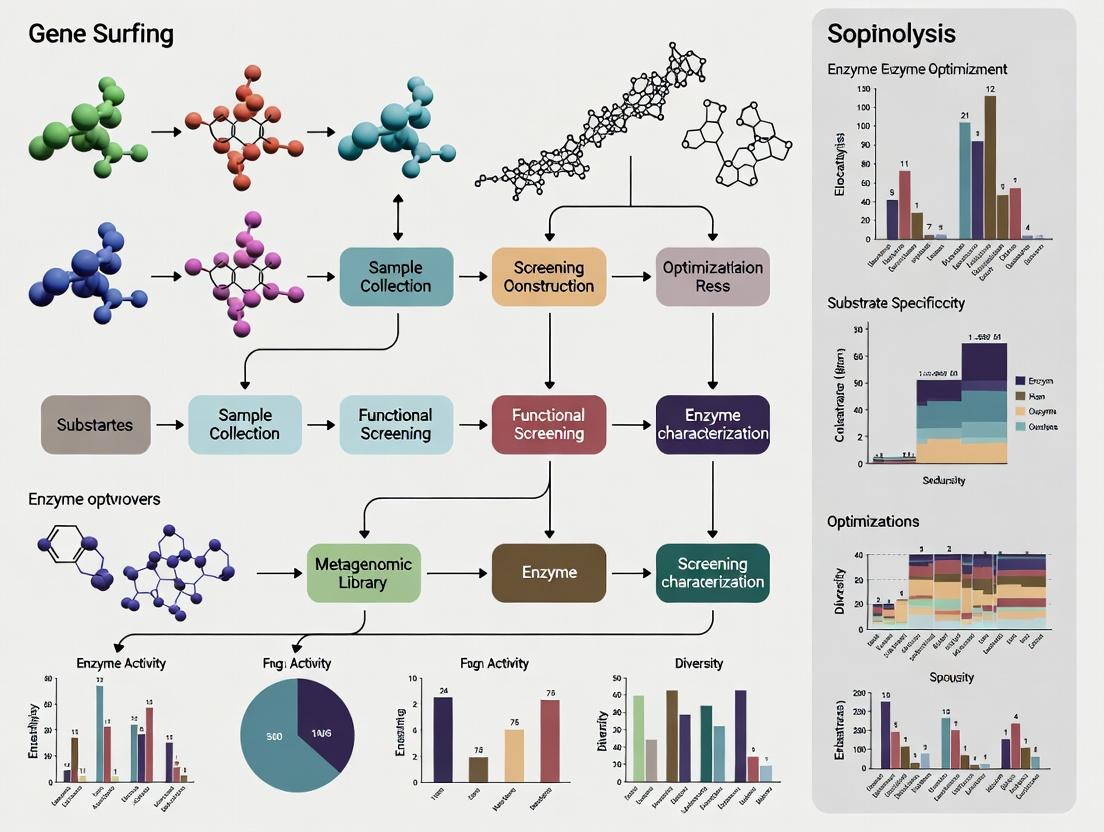
This article provides a comprehensive guide to the Gene Surfing workflow, a computational method for mining vast metagenomic datasets to discover novel enzymes with therapeutic potential.
Gene Surfing for Enzyme Discovery: A Metagenomic Workflow for Drug Development
Abstract
This article provides a comprehensive guide to the Gene Surfing workflow, a computational method for mining vast metagenomic datasets to discover novel enzymes with therapeutic potential. We explore the foundational principles of Gene Surfing, detailing its methodological pipeline for identifying and prioritizing enzyme candidates. The guide includes practical troubleshooting and optimization strategies to enhance discovery rates and discusses rigorous validation frameworks and comparative analyses against traditional methods. Designed for researchers, scientists, and drug development professionals, this resource synthesizes current best practices to accelerate the translation of uncultured microbial diversity into viable enzyme leads for biomedical applications.
What is Gene Surfing? Exploring the Principles of Metagenomic Enzyme Discovery
Gene surfing describes the phenomenon where a neutral or weakly beneficial genetic variant can reach high frequency at the leading edge of a spatially expanding population, not due to selection, but due to repeated founder effects and genetic drift in the expanding wave front. Originally an ecological and evolutionary concept, it has been co-opted as a powerful metaphor and computational method in metagenomics for identifying novel, putatively adaptive enzyme sequences from environmental sequence data.
Within the broader thesis on a Gene Surfing workflow for metagenomic enzyme discovery, this protocol reframes the concept into a bioinformatics pipeline. The core hypothesis is that genes encoding enzymes with functions adaptive to specific environmental gradients (e.g., temperature, pH, pollutant concentration) will "surf" to high frequency in metagenomes sampled along that gradient. Detecting these surfed genes provides a targeted filter for candidate enzymes with high biotechnological or therapeutic potential.
Application Notes: The Gene Surfing Pipeline for Enzyme Discovery
Objective: To identify candidate enzyme genes from metagenomic data that show signatures of "surfing" along an environmental or phenotypic gradient, suggesting functional importance and potential novelty.
Key Principles:
- Gradient-Dependent Frequency Shift: Candidate genes show a non-random, correlated increase in relative abundance or allele frequency across metagenomic samples ordered along a defined gradient (e.g., ocean depth, thermal vent proximity, disease severity).
- Variant Expansion: Specific protein variants may become dominant in the "leading edge" samples (e.g., most extreme environment).
- Contextual Neutrality: The surfing signal is distinguished from population structure by analyzing the pattern relative to neutral genomic markers.
Table 1: Core Inputs and Outputs of the Gene Surfing Pipeline
| Component | Description | Example/Format |
|---|---|---|
| Input: Metagenomes | Sequence data from multiple samples across a gradient. | Paired-end Illumina reads, ≥5 samples. |
| Input: Gradient Vector | Quantitative or ordinal ranking of samples. | e.g., [pH=5.0, 5.8, 6.7, 7.5, 8.2] or [Severity_Score=1, 3, 4, 7, 9]. |
| Input: Reference Database | Protein family database for gene annotation. | PFAM, dbCAN2, MEROPS. |
| Process: Core Metric | Measure of gene "surfing". | Spearman's rank correlation (ρ) of gene abundance vs. gradient. |
| Output: Surfed Gene List | Ranked list of candidate enzyme genes. | Gene IDs, correlation ρ, p-value, predicted enzyme class. |
| Output: Variant Profiles | Haplotype frequencies across the gradient for top candidates. | Visualization of allele distribution. |
Detailed Experimental Protocol
Protocol 3.1: Computational Gene Surfing Analysis
A. Prerequisite Data Processing
- Metagenomic Sequencing & Quality Control:
- Perform DNA extraction from environmental/clinical samples representing the defined gradient.
- Sequence using an Illumina NovaSeq platform to target >10 Gb/sample.
- Use FastQC v0.12.1 for quality assessment.
- Trim adapters and low-quality bases with Trimmomatic v0.39 (parameters: LEADING:20 TRAILING:20 SLIDINGWINDOW:4:20 MINLEN:50).
- Co-Assembly and Gene Prediction:
- Perform co-assembly of all quality-filtered reads using MEGAHIT v1.2.9 (
--k-min 27 --k-max 127 --k-step 10). - Predict open reading frames on contigs >1 kb using Prodigal v2.6.3 in metagenomic mode (
-p meta). - Dereplicate predicted protein sequences at 95% identity using CD-HIT v4.8.1.
- Perform co-assembly of all quality-filtered reads using MEGAHIT v1.2.9 (
B. Quantification and Gradient Correlation
- Gene Abundance Profiling:
- Map reads from each sample back to the dereplicated gene catalog using Bowtie2 v2.5.1 in end-to-end sensitive mode.
- Calculate read counts per gene per sample using featureCounts (from Subread v2.0.3).
- Normalize counts to counts-per-million (CPM) or Transcripts-Per-Million (TPM) to account for sequencing depth variation.
- Surfing Detection:
- For each gene, calculate the Spearman's rank correlation coefficient (ρ) between its abundance profile (across samples) and the numerical gradient vector.
- Perform significance testing (p-value) for each correlation.
- Apply a False Discovery Rate (FDR) correction (Benjamini-Hochberg) to account for multiple testing.
- Candidate Thresholds: |ρ| > 0.8, FDR-adjusted p-value < 0.01.
C. Functional Annotation & Prioritization
- Annotate candidate "surfed" genes against functional databases using eggNOG-mapper v2 or DIAMOND v2.1.6 blastp against the Pfam-A and MEROPS databases (e-value cutoff 1e-5).
- Prioritize genes annotated as hydrolases, oxidoreductases, transferases, or lyases for enzyme discovery.
- For top candidates, perform multiple sequence alignment with Clustal Omega and phylogenetic analysis to assess novelty relative to known enzyme families.
Protocol 3.2:In VitroValidation of a Surfed Hydrolase
Objective: Express and test the activity of a candidate surfed gene predicted to encode a novel lipase.
Materials:
- Synthetic gene (codon-optimized for E. coli), cloned into pET-28a(+) vector.
- E. coli BL21(DE3) competent cells.
- LB broth and agar plates with 50 µg/mL kanamycin.
- IPTG (Isopropyl β-D-1-thiogalactopyranoside).
- Lysis buffer: 50 mM Tris-HCl pH 8.0, 300 mM NaCl, 10 mM imidazole, 1 mg/mL lysozyme, protease inhibitor cocktail.
- Ni-NTA affinity chromatography resin.
- Assay buffer: 50 mM Tris-HCl pH 8.0, 150 mM NaCl.
- Substrate: p-Nitrophenyl palmitate (pNPP) dissolved in isopropanol.
Procedure:
- Transformation & Expression: Transform E. coli with the expression construct. Grow overnight culture, inoculate main culture (1:100), and grow at 37°C to OD600 ~0.6. Induce with 0.5 mM IPTG and express at 18°C for 16-18 hours.
- Purification: Pellet cells, resuspend in lysis buffer, and lyse by sonication. Clarify lysate by centrifugation. Pass supernatant over a Ni-NTA column, wash with wash buffer (20 mM imidazole), and elute with elution buffer (250 mM imidazole). Desalt into assay buffer.
- Activity Assay: In a 96-well plate, mix 50 µL of purified enzyme with 150 µL of assay buffer containing 0.5 mM pNPP. Incubate at 40°C. Monitor hydrolysis of pNPP to p-nitrophenol by measuring absorbance at 410 nm every minute for 30 minutes using a plate reader.
- Analysis: Calculate enzyme activity (U/mg) based on the initial linear rate of product formation, using the molar extinction coefficient of p-nitrophenol (ε410 = 15,000 M⁻¹cm⁻¹ under assay conditions).
Table 2: Key Reagent Solutions for In Vitro Validation
| Reagent/Material | Function | Key Details/Alternatives |
|---|---|---|
| pET-28a(+) Vector | Protein expression plasmid. | Contains T7 promoter, kanamycin resistance, N-terminal His-tag. |
| Ni-NTA Resin | Immobilized metal affinity chromatography (IMAC) medium. | Binds polyhistidine-tagged recombinant protein. |
| p-Nitrophenyl Palmitate (pNPP) | Chromogenic lipase substrate. | Hydrolysis releases yellow p-nitrophenol, measurable at 410 nm. |
| Protease Inhibitor Cocktail | Protects target protein from degradation during lysis. | Typically contains AEBSF, pepstatin, E-64, bestatin, etc. |
| Lysozyme | Enzymatic cell lysis agent. | Degrades bacterial peptidoglycan cell wall. |
Visualizations
Gene Surfing Computational Workflow (760px)
Gene Surfing Concept Visualization (760px)
Application Notes: Gene Surfing Workflow for Enzyme Discovery
The Gene Surfing workflow is a systematic bioinformatic and experimental pipeline designed to navigate the vast sequence space of metagenomic data to discover novel biocatalysts. It leverages the genetic potential of unculturable microorganisms, which represent over 99% of microbial diversity, for applications in drug discovery, biocatalysis, and synthetic biology.
Key Quantitative Findings from Recent Metagenomic Studies (2023-2024):
| Metric | Value from Recent Studies | Significance |
|---|---|---|
| Estimated % of "Unculturable" Microbes | >99% | Vast majority of microbial diversity is inaccessible via traditional cultivation. |
| Avg. Novelty Rate of Enzymes from Soil Metagenomes | 70-85% | Majority of predicted enzymes share <60% identity to known proteins. |
| Functional Hit Rate from Activity-Based Screening | 0.1 - 3% | Highlights need for intelligent sequence prioritization (Gene Surfing's role). |
| Avg. Size of a High-Quality Metagenome-Assembled Genome (MAG) | 1.5 - 3.5 Mbp | MAG completeness is critical for pathway context. |
| Typical Success Rate in Heterologous Expression | 20-40% | Major bottleneck; depends on host, codon optimization, and enzyme class. |
Research Reagent Solutions Toolkit:
| Reagent / Material | Function in Metagenomic Enzyme Discovery |
|---|---|
| High-Fidelity DNA Polymerase (e.g., Phusion) | PCR amplification of target genes from metagenomic DNA or clone libraries with minimal error. |
| Metagenomic DNA Extraction Kit (e.g., for soil/fecal samples) | Maximizes unbiased lysis of diverse cell types and yields high-molecular-weight DNA. |
| Vector: pET Series with N-/C-terminal tags | Standardized E. coli expression vector with His-tag for purification and solubility enhancement. |
| E. coli Expression Hosts (e.g., BL21(DE3), LOBSTR) | DE3 for T7 expression; LOBSTR reduces background binding of endogenous proteins to affinity resins. |
| Activity-Based Probes (ABPs) | Fluorescent or affinity-labeled chemical probes that covalently bind active enzymes for functional screening. |
| Next-Generation Sequencing Kit (Illumina NovaSeq) | Deep sequencing of metagenomic libraries for comprehensive coverage of complex communities. |
| Chromogenic/Flourogenic Substrate Panels | For high-throughput screening of enzyme activities (e.g., glycosidases, proteases, lipases). |
| Ni-NTA Agarose Resin | Immobilized metal affinity chromatography for rapid purification of His-tagged recombinant enzymes. |
Detailed Experimental Protocols
Protocol 2.1: Metagenomic Library Construction & Sequencing
Objective: To create a high-quality, large-insert fosmid library from environmental DNA for functional and sequence-based screening.
Steps:
- DNA Extraction: Use a bead-beating protocol with a commercial kit (e.g., MP Biomedicals FastDNA SPIN Kit) to lyse resilient cells. Include a purification step to remove humic acids (CTAB precipitation).
- Size Selection: Run DNA on a low-melt agarose gel. Excise fragments >25 kb. Recover DNA using GELase enzyme.
- End-Repair: Treat DNA with End-It DNA End-Repair Kit to generate blunt, 5'-phosphorylated ends.
- Ligation: Ligate size-selected DNA into a copy-control fosmid vector (e.g., pCC2FOS) using T4 DNA Ligase. Use a 3:1 insert-to-vector molar ratio.
- Packaging & Transformation: Perform in vitro packaging using MaxPlax Lambda Packaging Extracts. Infect transduced particles into E. coli EPI300-T1R cells. Plate on LB with chloramphenicol (12.5 µg/mL).
- Arraying & Pooling: Pick colonies into 384-well plates containing LB with 10% glycerol. Grow, pool colonies, and extract fosmid DNA (plasmid midi-prep kit).
- Sequencing: Prepare sequencing library from pooled fosmid DNA using Illumina DNA Prep. Sequence on an Illumina NovaSeq 6000 platform (2x150 bp PE). Target 50-100 Gbp of data per sample.
Protocol 2.2:In silicoGene Surfing for Target Prioritization
Objective: To bioinformatically identify and prioritize novel enzyme candidates from metagenomic sequencing data.
Steps:
- Assembly & Gene Calling: Assemble quality-filtered reads using MEGAHIT or metaSPAdes. Predict open reading frames (ORFs) on contigs >1 kb using Prodigal in metagenomic mode (
-p meta). - Clustering & Annotation: Cluster predicted protein sequences at 95% identity (CD-HIT). Annotate against curated databases (Pfam, dbCAN2, MEROPS) using HMMER. Retain only hits with an e-value < 1e-10.
- Novelty Filter (Gene Surfing Step 1): Filter out sequences with >60% amino acid identity (BLASTp) to any characterized enzyme in the BRENDA database.
- Contextual Filter (Gene Surfing Step 2): Analyze genomic context. Prioritize genes located within Biosynthetic Gene Clusters (BGCs) identified by antiSMASH or adjacent to genes suggesting relevant metabolism (e.g., transporters, regulators).
- Phylogenetic Placement (Gene Surfing Step 3): Build multiple sequence alignments (Clustal Omega) for promising candidates with their closest homologs. Construct a phylogenetic tree (FastTree). Prioritize sequences that branch deeply within clades of known activity or form novel clades.
- In silico Stability & Solubility Prediction: Use tools like DeepSol or SOLpro to predict solubility upon heterologous expression. Use I-TASSER or AlphaFold2 to generate a structural model and assess folding confidence.
Protocol 2.3: Heterologous Expression & Activity Screening
Objective: To experimentally validate the activity of a bioinformatically prioritized enzyme.
Steps:
- Gene Synthesis & Cloning: Codon-optimize the gene sequence for E. coli expression. Synthesize the gene and clone into a pET-28a(+) vector via Gibson Assembly, incorporating an N-terminal 6xHis-tag.
- Transformation & Expression: Transform construct into E. coli BL21(DE3) and Rosetta2(DE3) strains. Grow cultures in auto-induction media (ZYP-5052) at 18°C for 48 hours.
- Cell Lysis & Clarification: Pellet cells. Resuspend in lysis buffer (50 mM Tris-HCl pH 8.0, 300 mM NaCl, 10 mM imidazole, 1 mg/mL lysozyme). Lyse by sonication. Clarify by centrifugation (20,000 x g, 30 min, 4°C).
- Rapid Affinity Purification: Incubate clarified lysate with Ni-NTA agarose resin for 1 hour at 4°C. Wash with 20 column volumes of wash buffer (50 mM Tris-HCl pH 8.0, 300 mM NaCl, 25 mM imidazole). Elute with elution buffer (same as wash but with 250 mM imidazole).
- Activity Assay (Generic Glycosyl Hydrolase Example): In a 96-well plate, mix 10 µL of purified enzyme (or cell lysate) with 90 µL of 1 mM para-nitrophenyl (pNP)-glycoside substrate (e.g., pNP-β-D-glucopyranoside) in 50 mM sodium phosphate buffer (pH 6.0). Incubate at 37°C for 30 min. Quench with 100 µL of 1 M Na2CO3. Measure absorbance at 405 nm. Include no-enzyme and vector-only controls.
Mandatory Visualizations
Within the Gene Surfing workflow for metagenomic enzyme discovery, the computational analysis of raw sequencing data is paramount. This workflow processes fragmented, anonymous DNA sequences from complex environmental samples (e.g., soil, ocean, gut microbiomes) to identify novel biocatalytic enzymes with potential applications in drug development, industrial biotechnology, and synthetic biology. The three core, interdependent components—Sequence Assembly, Gene Prediction, and Functional Annotation—form the analytical backbone that transforms raw data into biologically meaningful hypotheses.
Sequence Assembly
The first step involves reconstructing longer contiguous sequences (contigs) from short sequencing reads.
Application Notes
Current metagenomic assembly faces challenges: uneven species abundance, sequence repeats, and conserved genomic regions across strains. Modern assemblers use de Bruijn graphs or overlap-layout-consensus approaches. For Gene Surfing, the goal is not necessarily perfect genome reconstruction but obtaining sufficiently long, high-quality contigs for reliable downstream gene prediction, prioritizing enzyme-coding regions.
Table 1.1: Quantitative Comparison of Popular Metagenomic Assemblers (2024)
| Assembler | Algorithm Type | Optimal Read Type | Key Metric (Avg. N50* on Benchmark) | Computational Demand |
|---|---|---|---|---|
| MEGAHIT | de Bruijn Graph | Short-read (Illumina) | ~15-20 kbp | Moderate |
| metaSPAdes | de Bruijn Graph | Short-read (Illumina) | ~18-25 kbp | High |
| Flye | Repeat Graph | Long-read (ONT/PacBio) | ~50-200 kbp | High |
| metaFlye | Repeat Graph | Long-read (ONT/PacBio) | ~45-180 kbp | High |
| OPERA-MS | Hybrid | Hybrid (Short+Long) | ~40-100 kbp | Very High |
*N50: A measure of contig length where 50% of the total assembled sequence is contained in contigs of this size or longer.
Detailed Protocol: Assembly with MEGAHIT
Objective: Assemble paired-end Illumina metagenomic reads into contigs. Materials: Raw FASTQ files (R1 & R2), high-performance computing (HPC) cluster or server with ≥64GB RAM.
Procedure:
- Quality Control: Use FastQC v0.12.1 and Trimmomatic v0.39 to assess and trim reads.
java -jar trimmomatic.jar PE -phred33 input_R1.fq input_R2.fq paired_R1.fq unpaired_R1.fq paired_R2.fq unpaired_R2.fq LEADING:20 TRAILING:20 SLIDINGWINDOW:4:20 MINLEN:50 - Co-assembly: Run MEGAHIT v1.2.9 using default meta-sensitive preset.
megahit -1 paired_R1.fq -2 paired_R2.fq -o ./assembly_output --preset meta-sensitive - Output: Primary output is
final.contigs.fa. Assess assembly quality using QUAST v5.2.0 (metaQUAST mode).metaquast.py assembly_output/final.contigs.fa -o quast_report - Contig Filtering: Filter contigs by minimum length (≥1000 bp for enzyme discovery) using SeqKit.
seqkit seq -m 1000 final.contigs.fa > final.contigs.min1k.fa
Diagram Title: Metagenomic Sequence Assembly Workflow
Gene Prediction
This step identifies potential protein-coding regions (Open Reading Frames - ORFs) on the assembled contigs.
Application Notes
Metagenomic gene prediction employs ab initio models trained on microbial genetic code and does not rely on reference genomes. Tools are optimized for fragmented, anonymous DNA and must distinguish real genes from random ORFs. For Gene Surfing, sensitivity is critical to avoid missing novel enzyme families.
Table 2.1: Performance Metrics of Metagenomic Gene Finders
| Tool | Prediction Model | Coding Density | Prediction Speed | Prokaryotic Specificity |
|---|---|---|---|---|
| MetaGeneMark | Hidden Markov Model (HMM) | High | Fast | High |
| Prodigal | Dynamic Programming | Medium | Very Fast | High |
| FragGeneScan | HMM (accounts for seq errors) | Medium | Medium | Medium |
| Glimmer-MG | Interpolated Markov Models | High | Slow | High |
Detailed Protocol: Gene Calling with Prodigal
Objective: Predict protein-coding genes on metagenomic contigs. Materials: Filtered contigs FASTA file, Linux environment.
Procedure:
- Run Prodigal in Metagenomic Mode: Use Prodigal v2.6.3 with the
-p metaflag.prodigal -i final.contigs.min1k.fa -o genes.coords -a proteins.faa -p meta -f gff - Output Files:
genes.coords(coordinates),proteins.faa(protein sequences in FASTA). - Post-processing: Extract nucleotide gene sequences (
genes.ffn) from contigs using the coordinates file.prodigal -i final.contigs.min1k.fa -d genes.ffn -p meta - Statistics: Generate basic statistics (count, avg. length) using custom scripts or SeqKit.
seqkit stat proteins.faa
Diagram Title: Gene Prediction & Selection Logic
Functional Annotation
The final step assigns putative functions to predicted protein sequences using homology and motif searches.
Application Notes
Annotation connects sequence to potential enzymatic function. In Gene Surfing, this involves searching against curated enzyme databases (e.g., CAZy, MEROPS) and general protein family databases. The focus is on identifying catalytic domains, EC numbers, and assigning confidence scores. Current best practice uses ensemble approaches combining multiple databases.
Table 3.2: Key Databases for Metagenomic Enzyme Annotation
| Database | Scope | Primary Use in Enzyme Discovery | Update Frequency |
|---|---|---|---|
| Pfam / InterPro | Protein Families/Domains | Identify catalytic domains | Quarterly |
| CAZy | Carbohydrate-Active Enzymes | Discover glycoside hydrolases/transferases | Bi-annual |
| MEROPS | Peptidases | Identify proteolytic enzymes | Quarterly |
| EC (Expasy) | Enzyme Commission Numbers | Standard functional classification | Continuous |
| KEGG Orthology | Metabolic Pathways | Contextualize within pathways | Monthly |
| UniRef90 | Clustered Sequences | Broad homology search | Monthly |
Detailed Protocol: Annotation via DIAMOND & HMMER
Objective: Annotate predicted proteins with functional terms.
Materials: proteins.faa file, HPC access, DIAMOND v2.1, HMMER v3.3.
Procedure:
- Fast Homology Search (DIAMOND): Search against UniRef90.
diamond blastp -d uniref90.dmnd -q proteins.faa -o annotations.m8 --outfmt 6 qseqid sseqid pident length evalue --evalue 1e-5 --id 40 - Domain Analysis (HMMER): Search against Pfam-A.hmm.
hmmscan --cpu 8 --domtblout pfam.out Pfam-A.hmm proteins.faa - Enzyme-Specific Search: Run dbCAN (for CAZy) against HMM db.
run_dbcan.py proteins.faa protein --out_dir dbcan_out - Data Integration: Parse outputs to create a unified annotation table using custom Python/R scripts, linking each protein to best-hit identity, EC number (if any), and domain architecture.
Diagram Title: Functional Annotation Workflow Path
The Scientist's Toolkit: Research Reagent Solutions
Table 4: Essential Computational Tools & Resources for the Core Workflow
| Item / Resource | Category | Function in Workflow | Example Vendor/Provider |
|---|---|---|---|
| Illumina NovaSeq 6000 | Sequencing Platform | Generates high-throughput short-read data for assembly. | Illumina Inc. |
| Oxford Nanopore PromethION | Sequencing Platform | Generates long reads to improve assembly contiguity. | Oxford Nanopore Tech. |
| Trimmomatic | Software | Removes adapter sequences and low-quality bases from reads. | Usadel Lab (Open Source) |
| MEGAHIT | Software | Performs memory-efficient assembly of large metagenomic datasets. | Dinghua Li (Open Source) |
| Prodigal | Software | Predicts protein-coding genes in prokaryotic metagenomic contigs. | Oak Ridge National Lab |
| DIAMOND | Software | Ultra-fast protein homology search, alternative to BLAST. | Benjamin Buchfink (Open Source) |
| HMMER Suite | Software | Profile HMM searches for protein domain identification. | Eddy Lab (Open Source) |
| dbCAN2 Database | Database | Hidden Markov Models for annotating carbohydrate-active enzymes. | Yin Lab |
| Pfam Database | Database | Large collection of protein family alignments and HMMs. | EMBL-EBI |
| UniRef90 Database | Database | Clustered sets of protein sequences for comprehensive homology search. | UniProt Consortium |
| High-Performance Computing Cluster | Infrastructure | Provides necessary CPU, RAM, and parallel processing for all steps. | Institutional / Cloud (AWS, GCP) |
Application Note: Gene Surfing for Targeted Enzyme Discovery
The Gene Surfing workflow accelerates the discovery of novel enzymes from uncultured microbial communities (metagenomes) by integrating in-silico sequence surfing with high-throughput functional screening. This note details its application for therapeutically relevant enzyme classes, emphasizing hydrolases (e.g., proteases, lipases, glycosidases) and oxidoreductases (e.g., laccases, peroxidases, cytochrome P450s), which are pivotal in drug synthesis, bioremediation, and antimicrobial development.
Table 1: Key Therapeutic Enzyme Classes & Screening Metrics in Gene Surfing
| Enzyme Class | Primary Therapeutic Relevance | Typical Gene Surfing Hit Rate (%) | Key Screening Substrate (Example) | Average Expression Yield in E. coli (mg/L) |
|---|---|---|---|---|
| Serine Proteases | Anticoagulants, Anti-inflammatory | 0.5 - 1.2 | Fluorescent casein derivative (FITC-casein) | 5 - 50 |
| Beta-Lactamases | Antibiotic resistance biomarkers, Drug design | 0.1 - 0.7 | Nitrocefin chromogenic substrate | 10 - 100 |
| Lipases | Digestive aids, Lipid metabolism drugs | 0.3 - 1.0 | p-Nitrophenyl palmitate (pNPP) | 20 - 150 |
| Glycosyl Hydrolases | Diabetes management, Anti-virals | 0.4 - 0.9 | 4-Methylumbelliferyl glycosides | 15 - 80 |
| Laccases (Oxidoreductases) | Antioxidant agents, Biosensors | 0.2 - 0.5 | ABTS (2,2'-azino-bis(3-ethylbenzothiazoline-6-sulfonic acid)) | 5 - 30 |
| Cytochrome P450s | Drug metabolism studies, Prodrug activation | 0.05 - 0.3 | Fluorescent O-dealkylation probes (e.g., 7-EFC) | 0.5 - 10 |
Protocol 1: Metagenomic Library Construction & Sequence Surfing for Target Enzymes
Objective: Create a functional metagenomic library enriched for hydrolase and oxidoreductase genes.
Materials:
- Environmental DNA (e.g., from soil, marine sediment, human gut microbiome).
- pET-28a(+) or pCC2FOS vector systems.
- E. coli BL21(DE3) and EPI300-T1R expression hosts.
- Restriction enzymes (BamHI, EcoRI), T4 DNA ligase.
- Size-selection gel electrophoresis system.
Procedure:
- DNA Extraction & Fragmentation: Isolate high-molecular-weight metagenomic DNA using a phenol-chloroform protocol. Partially digest with Sau3AI to generate 2-10 kb fragments.
- Size Selection & Ligation: Purify fragments of 3-5 kb via gel electrophoresis. Ligate into the corresponding BamHI-digested, phosphatase-treated vector at a 3:1 insert:vector molar ratio.
- Library Transformation: Transform ligation mix into E. coli EPI300-T1R for fosmid libraries or BL21(DE3) for direct expression libraries using electroporation. Plate on LB with appropriate antibiotic (e.g., kanamycin for pET-28a).
- "Sequence Surfing": Perform in-silico analysis of a subset of clones. Isolate plasmid DNA from 100-200 random colonies, sequence using flanking primers, and perform BLASTP against Pfam databases (e.g., PF00135 for serine proteases, PF00141 for cytochrome P450s). Calculate the percentage of clones containing fragments of target enzyme families to assess library enrichment.
Protocol 2: High-Throughput Functional Screening for Hydrolase & Oxidoreductase Activity
Objective: Identify positive clones expressing desired enzymatic activity from the library.
Materials:
- Library clones in 96-well format.
- LB auto-induction medium with antibiotic.
- Lysis buffer (50 mM Tris-HCl, pH 8.0, 1 mg/mL lysozyme, 0.1% Triton X-100).
- Substrate solutions: FITC-casein (10 µg/mL) in assay buffer (50 mM Tris, 150 mM NaCl, pH 8.0) for proteases; ABTS (0.5 mM) in sodium acetate buffer (pH 4.5) for laccases.
- Microplate fluorescence/absorbance reader.
Procedure:
- Culture & Expression: Inoculate clones into 200 µL of auto-induction medium per well. Incubate at 37°C, 220 rpm for 24 hours to induce protein expression.
- Cell Lysis: Pellet cells by centrifugation (3000 x g, 10 min). Resuspend in 50 µL lysis buffer, incubate at 37°C for 30 min, then freeze at -80°C for 20 min. Thaw and centrifuge (4000 x g, 20 min); retain supernatant as crude enzyme extract.
- Activity Assay:
- Hydrolases (Protease Example): Mix 50 µL of crude extract with 50 µL of FITC-casein substrate in a black 96-well plate. Incubate at 30°C for 60 min. Measure fluorescence (excitation 485 nm, emission 535 nm). A 5-fold increase over negative control (empty vector) indicates a positive hit.
- Oxidoreductases (Laccase Example): Mix 50 µL of crude extract with 50 µL of ABTS substrate in a clear plate. Incubate at 25°C for 30 min. Measure absorbance at 420 nm. An increase of >0.2 AU over control indicates a positive hit.
- Hit Validation: Streak positive wells for single colonies and re-test activity. Sequence the insert of validated hits for gene identification.
The Scientist's Toolkit: Research Reagent Solutions
| Item | Function in Gene Surfing Workflow |
|---|---|
| Fosmid Vector (pCC2FOS) | Maintains large (30-40 kb) environmental DNA inserts with high stability for comprehensive gene cluster capture. |
| Auto-Induction Media | Enables high-density protein expression without manual IPTG induction, ideal for 96/384-well screening formats. |
| Chromogenic/Coupled Substrates (e.g., Nitrocefin, X-Gal) | Provide rapid visual or spectroscopic readouts of enzyme activity for primary library screening. |
| Fluorescent Probe Substrates (e.g., MUG, 7-EFC) | Offer high sensitivity for detecting low-abundance or low-activity enzymes in complex lysates. |
| Broad-Host-Range Expression Strains (e.g., Pseudomonas putida) | Express GC-rich or complex metalloenzymes (e.g., certain P450s) that fail in E. coli. |
| HaloTag Fusion Systems | Facilitates rapid soluble expression and immobilization of enzymes for activity characterization and directed evolution. |
Diagram 1: Gene Surfing Workflow for Enzyme Discovery
Diagram 2: Key Enzyme Classes & Screening Pathways
Application Notes: Repository Features for Gene Surfing Workflow
Quantitative Comparison of Key Public Repositories
The following table summarizes the core features of MG-RAST and JGI IMG/M as of late 2024, essential for the initial "Data Sourcing" phase of the Gene Surfing workflow for metagenomic enzyme discovery.
Table 1: Feature Comparison of MG-RAST and JGI IMG/M for Metagenomic Enzyme Discovery
| Feature | MG-RAST (v5.0.1) | JGI IMG/M (v.11.0) |
|---|---|---|
| Primary Focus | Automated annotation & comparative metagenomics | Integrated genome & metagenome data management and analysis |
| Standard Analysis Pipeline | Fully automated rRNA removal, protein prediction, clustering, and annotation against SEED, COG, KEGG, etc. | Flexible, user-driven pipeline with multiple gene callers (e.g., Prodigal, MetaGeneMark) and annotation sources. |
| Key Reference Databases for Enzymes | SEED subsystems, KEGG Orthology (KO), FIGfams | IMG-NR, KEGG, COG, Pfam, CAZy (Carbohydrate-Active enZYmes Database) |
| Data Submission & Privacy | Public & private projects; data private until publication. | Requires JGI project proposal or direct submission; data can be private. |
| Maximum Upload File Size | 100 GB per project | 1 TB per genome/metagenome (via JGI project) |
| Typical Processing Time | 24-72 hours for standard metagenomes | Varies; can be days to weeks for full integration. |
| Direct Enzyme/EC Number Query | Yes, via "Functional Abundance" tables. | Yes, advanced search by EC number, protein family, or keyword. |
| Comparative Metagenomics Tools | Built-in visualizations for PCA, heatmaps, rarefaction. | Statistical analysis (e.g., STAMP), scatter plots, metabolic pathway comparisons. |
| Data Export Formats | Raw reads, ORF nucleotide/protein sequences, annotation tables (BIOM, CSV). | Gene sequences, scaffold/contig sequences, functional annotation tables, pathway maps. |
| API Access | RESTful API (MG-RAST API) for programmatic access. | Yes (IMG API) for advanced users and large-scale data retrieval. |
Strategic Application within Gene Surfing Workflow
The Gene Surfing workflow conceptualizes enzyme discovery as navigating successive waves of data refinement: Sourcing (repository mining), Screening (in-silico filtering), and Validation (experimental). Public repositories are critical for the Sourcing phase.
- MG-RAST is optimal for rapid, standardized annotation and initial ecological context assessment (e.g., "Which samples in a bioproject have high abundance of glycosyl hydrolases?"). Its strength lies in consistent, comparable metrics across diverse public datasets.
- JGI IMG/M excels in deep, customizable analysis and integration with isolate genomes. It is superior for detailed pathway reconstruction and extracting genomic context (e.g., "Retrieve all genes surrounding a novel lactamase homolog from a hot spring metagenome").
Protocols for Repository-Driven Enzyme Discovery
Protocol: Targeted Enzyme Discovery via MG-RAST
Objective: To identify and retrieve protein sequences of putative novel β-lactamase enzymes from publicly available human gut metagenomes.
Materials & Reagents:
- MG-RAST Account: (Free registration) for accessing private workspace and submitting jobs.
- List of MG-RAST Metagenome IDs: e.g., mgm4768870.3, mgm4847853.3.
- Local Bioinformatics Tools:
curl(for API access), Python3 withpandasandbiopythonlibraries. - Sequence Analysis Software: BLAST+ suite, HMMER.
Procedure:
Query Construction:
- Log in to MG-RAST. Navigate to "Search Metagenomes".
- In the functional search tab, select "EC Number" and enter "3.5.2.6" (β-lactamase). Filter by "Metagenome Project" or add relevant keywords (e.g., "gut").
- Execute search. The results page lists metagenomes containing hits to this EC number.
Data Retrieval via Web Interface:
- Select a target metagenome from the list. Navigate to its "Functional Abundance" page.
- Under the "SEED Subsystems" or "KEGG" annotation table, locate the relevant row for the EC number.
- Click on the count of protein features. This opens a list of individual annotated protein sequences.
- Select all features and use the "Download" button to export protein sequences in FASTA format. Note: For large feature sets (>5000), use the API.
Programmatic Retrieval via API (Scalable Method):
- Obtain your authentication token from your MG-RAST profile page.
Use the following
curlcommand template to retrieve all protein features annotated with a specific EC number:The
stage=650specifies the aligned protein sequences.
Downstream Screening (Initial Step):
- Perform a local BLASTP search of the retrieved sequences against the NCBI-nr database to assess novelty (e.g., <95% identity to characterized enzymes).
- Cluster sequences at 99% identity using
cd-hitto reduce redundancy.
Protocol: Genomic Context Mining for Enzyme Clusters in JGI IMG/M
Objective: To extract the genomic neighborhood of a putative novel polyketide synthase (PKS) gene cluster from a marine metagenome for hypothesis generation about cluster function.
Materials & Reagents:
- JGI IMG/M Account: (Free registration required).
- IMG Gene Object ID (OID): e.g.,
637356392. - Local Software: Artemis or another genome browser for viewing extracted regions.
Procedure:
Gene Identification:
- Log in to IMG/M. Use the "Find Genes" tool with advanced search parameters.
- Set "Gene Product Name" to contain "polyketide synthase" and limit by "Ecosystem" (e.g., "Marine").
- From the results list, select a gene of interest with no close homologs in isolate genomes (based on "Percent Identity" column). Note its Gene OID.
Genomic Neighborhood Visualization:
- On the gene detail page, click the "Neighborhood" tab.
- Configure the display to show 20-50 genes upstream and downstream. Visually inspect for co-localized genes suggestive of a biosynthetic cluster (e.g., transporters, regulators, other modular synthase genes).
Data Export for Cluster Analysis:
- Within the Neighborhood viewer, use the "Export" function.
- Select "Nucleotide sequences of genes" and "Protein sequences of genes". Choose the range of genes in the neighborhood you wish to export.
- Download the files. The nucleotide FASTA is crucial for promoter and regulatory element analysis.
Downstream Analysis:
- Annotate the protein sequences of the neighborhood using local tools (e.g.,
interproscan.sh) to confirm functional clustering. - Use antiSMASH (standalone version) on the contig/scaffold sequence, if available, for automated biosynthetic gene cluster identification and comparison to known clusters.
- Annotate the protein sequences of the neighborhood using local tools (e.g.,
Visualization of Workflows and Relationships
Gene Surfing Data Sourcing Workflow
Repository Architecture & User Access Paths
The Scientist's Toolkit: Research Reagent Solutions
Table 2: Essential Digital & Bioinformatics Reagents for Repository Mining
| Item/Resource | Function in Gene Surfing Workflow | Example/Supplier |
|---|---|---|
| Repository Accounts | Grants access to private workspaces, job submission, and full data export capabilities. | MG-RAST (free), JGI IMG/M (free), NCBI SRA (free). |
| API Authentication Token | A unique key enabling programmatic, high-throughput data access from repositories. | Generated in user profile on MG-RAST, JGI IMG/M. |
| Command-line BLAST+ Suite | Local sequence similarity searching to validate novelty of repository-derived sequences. | NCBI BLAST+ (freely downloadable). |
| Sequence Clustering Tool (CD-HIT) | Reduces redundancy in large sequence datasets downloaded from repositories. | CD-HIT Suite (cd-hit, cd-hit-est). |
| HMMER Software Suite | Profile Hidden Markov Model searches for detecting distant homologs of enzyme families. | HMMER (hmmscan, hmmsearch). |
| InterProScan | Integrates multiple protein signature databases for functional annotation of candidate genes. | EMBL-EBI InterProScan (standalone or web). |
| BIOM File Format Tools | Handles biological observation matrix files exported by MG-RAST for ecological statistics. | biom-format Python library. |
| Python/R with Bioinformatics Libraries | For custom parsing, analysis, and visualization of complex annotation tables. | Python: pandas, biopython. R: phyloseq, ggplot2. |
| Local Compute Resources | Essential for running downstream analyses on large datasets (100s of MBs to GBs). | High-performance workstation or cluster with ≥16GB RAM. |
The Gene Surfing Pipeline: A Step-by-Step Guide for Researchers
Within the Gene Surfing workflow for metagenomic enzyme discovery, the initial curation and pre-processing of raw sequencing reads is a critical determinant of downstream success. This step ensures that low-quality data, contaminants, and artifacts are removed, preserving high-fidelity genetic information for subsequent assembly, binning, and functional annotation. For researchers and drug development professionals, rigorous quality control (QC) is non-negotiable for generating reliable, reproducible data that can inform enzyme characterization and lead compound development.
Key Quality Metrics & Interpretation
The following quantitative metrics, derived from FASTQ files using tools like FastQC and MultiQC, must be assessed.
Table 1: Primary QC Metrics for Metagenomic Illumina Reads
| Metric | Optimal Range/Value | Interpretation of Deviation | Common Cause in Metagenomics |
|---|---|---|---|
| Per Base Sequence Quality (Phred Score) | ≥ Q30 for >80% of bases | Q<30 increases error rate, impairing assembly. | Degraded environmental DNA, instrument issue. |
| Per Sequence Quality Scores | Mean Phred >30 | Low mean suggests many universally poor reads. | Adapter contamination, low-input DNA. |
| Sequence Length Distribution | Uniform, as expected (e.g., 150bp) | Variable lengths indicate trimming or technical errors. | Random shearing, mixed platform data. |
| Adapter Content | 0% in final reads | >0% impedes assembly, causes misalignment. | Incomplete library prep, short fragment bias. |
| Overrepresented Sequences | <0.1% of total | High percentage indicates contamination (host, vector). | Host genome (e.g., human), PCR primers, phiX. |
| K-mer Content | Expected uniform distribution | Deviation suggests biased sequencing or contamination. | Low complexity regions, specific genome overgrowth. |
Detailed Pre-processing Protocol
This protocol outlines a standard workflow for Illumina paired-end metagenomic reads. It is designed to be integrated as the first module of the Gene Surfing pipeline.
Protocol: Metagenomic Read QC and Cleaning
Objective: To filter raw FASTQ files to produce high-quality, adapter-free, host-contaminant-cleaned reads ready for assembly. Duration: 2-4 hours for a typical 20-50 Gb dataset (depending on compute resources).
Materials & Software:
- Input: Raw paired-end FASTQ files (e.g.,
sample_R1.fastq.gz,sample_R2.fastq.gz). - Computing Environment: Linux-based HPC or server with minimum 16 CPUs and 32 GB RAM.
- Software: FastQC v0.12.0, MultiQC v1.14, Trimmomatic v0.39, Fastp v0.23.4, BBTools (bbduk.sh) v38.96, Bowtie2 v2.5.1.
Procedure:
Initial Quality Assessment:
- Run FastQC on all raw FASTQ files.
fastqc sample_R1.fastq.gz sample_R2.fastq.gz -t 8- Aggregate results using MultiQC:
multiqc .
Adapter & Quality Trimming:
Using Trimmomatic (for precise control):
Using Fastp (for speed and integrated reporting):
Host/Contaminant Removal (if applicable):
- Build a Bowtie2 index from the host genome (e.g., human GRCh38).
Align reads and retain only non-matching pairs:
Alternatively, use BBTools
bbduk.shwith a reference contaminant database.
Post-Cleaning QC:
- Run FastQC and MultiQC on the final cleaned reads (
sample_dehosted_R1.fq.gz,sample_dehosted_R2.fq.gz). - Compare pre- and post-QC reports to verify improvement.
- Run FastQC and MultiQC on the final cleaned reads (
Expected Outcome: A set of paired-end FASTQ files with high per-base quality, minimal adapter content, and free of known contaminants, ready for metagenomic assembly in the next step of the Gene Surfing workflow.
Visualization of the QC Workflow
Diagram 1: Metagenomic Read Pre-processing and QC Workflow
The Scientist's Toolkit: Essential QC Reagents & Software
Table 2: Key Research Reagent Solutions for Metagenomic QC
| Item | Function in QC Protocol | Example Product/Software |
|---|---|---|
| High-Fidelity DNA Extraction Kit | Minimizes bias and shearing during DNA isolation from complex samples, foundational for QC. | DNeasy PowerSoil Pro Kit (QIAGEN), NucleoMag DNA Microbial Kit (Macherey-Nagel) |
| Library Preparation Kit with Dual Indexes | Reduces index hopping and cross-contamination artifacts identifiable in QC. | Illumina DNA Prep, KAPA HyperPlus |
| Sequencing Control (e.g., PhiX) | Provides a known quality metric for run monitoring and base calling calibration. | Illumina PhiX Control v3 |
| Adapter Sequence File | Essential reference for trimming tools to remove adapter oligonucleotides. | TruSeq3-PE-2.fa (for Trimmomatic) |
| Host/Contaminant Reference Genome | Database for aligning and filtering out unwanted host (e.g., human) or vector sequences. | GRCh38 human genome (from ENSEMBL/GENCODE) |
| QC Visualization Software | Aggregates metrics from multiple tools into a single interactive report for decision-making. | MultiQC |
| Automated QC Pipeline | Provides a reproducible, containerized environment for running the entire QC workflow. | nf-core/mag (Nextflow), KneadData, Snakemake QC workflows |
Within the Gene Surfing workflow for metagenomic enzyme discovery, de novo assembly represents the critical phase where short sequencing reads are reconstructed into longer contiguous sequences (contigs) and scaffolds, without relying on a reference genome. This step is essential for uncovering novel genes and enzymatic pathways from uncultured microorganisms in complex communities like soil, gut, or ocean microbiomes. The quality of assembly directly impacts downstream processes like gene prediction, annotation, and functional screening for biotechnological or drug discovery applications.
Core Assembly Strategies and Comparative Analysis
Three primary computational strategies are employed, each with trade-offs between accuracy, completeness, and computational demand.
Table 1: Comparative Analysis of De Novo Assembly Strategies
| Strategy | Key Principle | Optimal Use Case | Advantages | Disadvantages | Example Tools (Current) |
|---|---|---|---|---|---|
| Single-Sample Assembly | Assembles reads from individual samples independently. | Deeply sequenced, high-biomass samples with moderate diversity. | Simplicity; avoids cross-sample contamination. | Misses low-abundance taxa; susceptible to sequencing depth biases. | MEGAHIT, SPAdes, metaSPAdes |
| Co-Assembly | Pools reads from multiple related samples before assembly. | Time-series or condition-specific samples from the same community. | Increases coverage of low-abundance organisms; generates more complete genomes. | Can create chimeric contigs; highly demanding computationally. | MEGAHIT (with pooling), metaSPAdes |
| Hybrid/Multi-Kmer Assembly | Uses multiple k-mer sizes or integrates long and short reads. | Complex communities with high strain diversity; aiming for high contiguity. | Improves resolution of repeats and strain variants; longer contigs. | Extremely resource-intensive; requires specialized sequencing. | MEGAHIT (multi-kmer), metaSPAdes, hybridSPAdes, Opera-MS |
Key Quantitative Metrics for Evaluation:
- Contig Statistics: N50/L50, total assembly size, number of contigs > 1kbp.
- Completeness/Contamination: Assessed via CheckM2 or BUSCO using single-copy core genes.
- Gene Recovery: Number of predicted open reading frames (ORFs).
Detailed Application Notes and Protocols
Protocol 3.1: Standardized Workflow for MetaSPAdes Assembly
Research Reagent Solutions & Essential Materials:
| Item | Function |
|---|---|
| High-Quality DNA (e.g., from kit-based extraction) | Input material; purity (A260/280 ~1.8) is critical for library prep. |
| Illumina DNA Prep Kit | For preparing paired-end (e.g., 2x150bp) sequencing libraries. |
| Illumina NovaSeq or NextSeq System | Platform for generating high-depth, short-read data. |
| High-Performance Computing (HPC) Cluster | Essential for memory- and CPU-intensive assembly tasks. |
| FastQC v0.12.1 | Quality control tool for raw sequencing reads. |
| Trimmomatic v0.39 | Removes adapters and low-quality bases. |
| metaSPAdes v3.15.5 | Primary assembler for metagenomic data. |
| QUAST v5.2.0 | Evaluates assembly quality metrics. |
Methodology:
- Quality Control & Trimming:
- Run
FastQCon raw FASTQ files. - Trim adapters and low-quality ends using
Trimmomatic:
- Run
- De Novo Assembly with metaSPAdes:
- Execute assembly on quality-filtered reads. Specify multiple k-mer sizes for robustness.
-k: k-mer sizes (odd numbers recommended).-t: number of computational threads.-m: memory limit in GB.
- Execute assembly on quality-filtered reads. Specify multiple k-mer sizes for robustness.
- Assembly Quality Assessment:
- Use
QUASTto generate reportable metrics. - Focus on
N50,# contigs, andLargest contig.
- Use
Protocol 3.2: Advanced Hybrid Assembly using Illumina and Oxford Nanopore Reads
Methodology:
- Data Preparation:
- Generate Illumina paired-end reads (as in Protocol 3.1).
- Generate long reads using an Oxford Nanopore Technologies (ONT) MinION with ligation sequencing kit (SQK-LSK114).
- Read Processing:
- Trim Illumina reads with
Trimmomatic. - Filter and trim ONT reads using
NanoFilt(Q>10, length >1000bp).
- Trim Illumina reads with
- Hybrid Assembly:
- Use
hybridSPAdesorOpera-MSwhich are designed for mixed data.
- Use
- Scaffolding Improvement:
- Polish the initial assembly using
Medaka(for ONT-based polishing) orPilon(using Illumina reads).
- Polish the initial assembly using
Visualized Workflows and Strategies
Diagram Title: Decision Workflow for Metagenomic Assembly Strategy Selection (97 chars)
Diagram Title: Co-Assembly and Binning Process Flow (76 chars)
Within the Gene Surfing workflow for metagenomic enzyme discovery, gene calling and Open Reading Frame (ORF) prediction is the critical computational step that translates raw, assembled nucleotide sequences into a predicted protein catalog. This step bridges metagenome assembly and functional annotation, serving as the foundation for downstream screening and characterization of novel biocatalysts for drug development and industrial applications.
Key Concepts and Quantitative Benchmarks
The performance of gene calling tools varies significantly based on metagenomic data characteristics, such as complexity, read length, and the presence of novel sequences.
Table 1: Comparison of Major Gene Calling Tools for Metagenomics
| Tool | Algorithm Type | Key Strength | Reported Sensitivity* | Reported Precision* | Best For |
|---|---|---|---|---|---|
| MetaGeneMark | Ab initio (HMM) | Optimized for metagenomes, prokaryotes | ~95% | ~90% | General prokaryotic metagenomes |
| Prodigal | Ab initio (Dynam. Prog.) | Speed, bacterial/archaeal focus | ~93% | ~95% | High-quality assemblies |
| FragGeneScan+ | Ab initio (HMM) | Error-correction in short reads | ~90% | ~88% | Short-read, error-prone data |
| OrfM | Simple ORF scan | Speed, simplicity, long contigs | ~85% | ~82% | Initial scanning of eukaryotic content |
| GENSCAN | Ab initio (GHMM) | Eukaryotic gene prediction | ~78% | ~80% | Metagenomes with eukaryotic hosts |
*Approximate values from benchmarking studies; performance is dataset-dependent.
Detailed Protocol: Integrated ORF Prediction for the Gene Surfing Pipeline
Protocol 1: Standardized Gene Calling with Prodigal and MetaGeneMark
This dual-tool approach balances sensitivity and precision for prokaryote-dominant metagenomes.
Materials & Reagents:
- Input Data: Assembled metagenomic contigs in FASTA format (
assembly.fasta). - Software: Prodigal (v2.6.3+), MetaGeneMark (v3.26+ with metagenomic parameter file).
- Computing: Linux server or HPC node with minimum 8 GB RAM.
Procedure:
- Pre-processing: Ensure contigs are in a single FASTA file. Remove contigs below 500 bp to minimize spurious ORF calls.
- Run Prodigal in Metagenomic Mode:
-p meta: Uses metagenomic mode parameters.- Output: Amino acid sequences (
-a) and nucleotide sequences (-d).
- Run MetaGeneMark:
-m mgm_11.mod: Specifies the metagenomic model file.-f G: Outputs in GFF3 format.
- Result Consolidation:
- Combine protein FASTA files from both tools.
- Use CD-HIT (v4.8.1) at 100% identity to dereplicate the combined set, removing identical sequences from different callers.
- Quality Check: The final non-redundant file (
final_nr_proteins.faa) is the predicted proteome for downstream annotation and enzyme screening.
Protocol 2: Targeted Gene Calling for Eukaryotic-Rich or Complex Metagenomes
For data containing fungal, protist, or viral sequences alongside prokaryotes.
Procedure:
- Partition Data: Use
EukRepor taxonomic binning to separate putative eukaryotic from prokaryotic contigs. - Parallel Prediction:
- Prokaryotic Contigs: Process with Protocol 1.
- Eukaryotic Contigs: Process with GENSCAN or AUGUSTUS (trained on appropriate models).
- Merge and Dereplicate: Combine all predicted protein sequences and dereplicate as in Step 4 of Protocol 1.
The Scientist's Toolkit: Research Reagent Solutions
| Item | Function/Description | Example/Version |
|---|---|---|
| Prodigal | Fast, ab initio gene predictor for bacterial and archaeal genomes. | v2.6.3 |
| MetaGeneMark | Hidden Markov Model-based predictor tuned for fragmented metagenomic sequences. | v3.26 |
| FragGeneScan+ | Predicts genes in short, error-prone reads by modeling sequencing errors. | v1.31 |
| CD-HIT Suite | Clusters and dereplicates protein sequences to remove redundancy post-prediction. | v4.8.1 |
| HMMER | Toolsuite for searching sequence databases using profile Hidden Markov Models; used for validating predicted domains. | v3.3.2 |
| CheckM | Assesses the quality and contamination of genome bins; useful for evaluating the context of predicted genes. | v1.2.0 |
| Pfam Database | Curated collection of protein families; critical for initial functional assessment of predicted ORFs. | v35.0 |
| High-Performance Computing (HPC) Cluster | Essential for processing large metagenomic assemblies in a timely manner. | Slurm, PBS |
Visualizing the Gene Calling Workflow
Title: Gene Surfing ORF Prediction and Consolidation Workflow
Title: Decision Logic for Selecting a Gene Calling Tool
Application Notes
Homology-based screening is a critical step in the Gene Surfing workflow, enabling the identification of putative enzyme candidates from vast, assembled metagenomic sequence data. This step leverages the evolutionary conservation of protein domains to assign function where sequence identity may be low. Using the HMMER software suite against the Pfam database, researchers can detect distant homologies more sensitively than with simple BLAST-based methods, which is essential for discovering novel enzymes from uncultured microbial communities.
The process involves scanning protein sequences translated from metagenomic contigs against pre-computed Hidden Markov Models (HMMs) of protein families. A significant match (E-value below a set threshold) to a model associated with a desired enzyme function (e.g., glycosyl hydrolases, oxidoreductases) flags the query sequence as a candidate for further characterization. This step effectively filters millions of sequences down to a manageable number of high-potential targets.
Table 1: Key Quantitative Parameters for HMMER3/Pfam Screening
| Parameter | Typical Value / Range | Purpose & Impact |
|---|---|---|
| E-value Threshold | 1e-05 to 1e-10 | Lower values increase stringency, reducing false positives but possibly missing distant homologs. |
| Sequence Length Filter | >80 amino acids | Removes very short ORFs that are unlikely to represent full functional domains. |
| Pfam Database Version | Pfam 36.0 (current) | Defines the repertoire of known protein families; newer versions have expanded coverage. |
| CPU Cores Utilized | 8-64 cores | HMMER hmmscan is CPU-intensive; parallelization significantly reduces runtime. |
| Typical Hit Rate | 0.5% - 5% of input sequences | Varies based on source biome and target enzyme family. |
Table 2: Example Output Metrics from a Metagenomic HMMER Screen
| Metric | Value in Example Run | Interpretation |
|---|---|---|
| Total Query Sequences Scanned | 1,250,000 | Number of predicted proteins from assembled contigs. |
| Sequences with Pfam Hit(s) | 45,750 (~3.66%) | Proportion of the metagenome assignable to known families. |
| Hits to Target Family (e.g., PF00759) | 1,245 | Putative enzyme candidates for downstream analysis. |
| Average Bitscore for Target Hits | 125.4 | Measure of match quality; higher is better. |
| Median E-value for Target Hits | 2.3e-15 | Confidence metric; lower is better. |
Experimental Protocol: Homology Screening with HMMER and Pfam
Materials & Software Requirements
- Computing Infrastructure: High-performance computing cluster or server with multi-core CPUs and sufficient RAM (≥ 16 GB).
- Software:
- HMMER (version 3.4 or later) installed (
hmmscan,hmmsearch). - BioPython or command-line tools (
awk,grep) for parsing.
- HMMER (version 3.4 or later) installed (
- Database: Pfam-A.hmm database (current release) downloaded from InterPro or the HMMER website.
Procedure
Data Preparation:
- Input is a FASTA file of predicted protein sequences from prior Gene Surfing steps (e.g.,
gene_catalog.faa). - Optional: Filter sequences by minimum length (e.g., 80 residues) using
bioawk:
- Input is a FASTA file of predicted protein sequences from prior Gene Surfing steps (e.g.,
Database Preparation:
Download the latest Pfam HMM database and prepare it for HMMER3:
This creates indexed files (
*.h3m,*.h3i,*.h3f,*.h3p) for fast scanning.
Execute
hmmscan:Run the homology search. Using multiple threads (
--cpu) is highly recommended.Parameters:
--domtbloutprovides a parsable table of domain hits.-Esets the per-domain E-value cutoff.
Result Parsing and Candidate Extraction:
- Parse the
domtbloutfile to extract significant, non-overlapping hits for your target Pfam ID(s). Example command to get the best hit per sequence for a specific family (e.g., Glycosyl Hydrolase family 13, PF00128):
Extract the corresponding full-length sequences from the original FASTA for downstream steps (e.g.,
seqkit grep -f ids.txt gene_catalog.faa > candidates.faa).
- Parse the
Validation and Curation:
- Manually inspect top hits by checking alignment to the HMM using
hmmalign. - Cross-reference hits with other databases (e.g., CAZy via dbCAN) to corroborate functional annotation.
- Manually inspect top hits by checking alignment to the HMM using
The Scientist's Toolkit: Research Reagent Solutions
| Item | Function in Homology-Based Screening |
|---|---|
| HMMER Software Suite | Core toolset for scanning sequences against profile HMMs. hmmscan is used for database searches. |
| Pfam-A HMM Database | Curated collection of profile HMMs representing protein families and domains; the reference library for annotation. |
| High-Performance Compute Cluster | Essential for processing metagenomic-scale sequence datasets within a practical timeframe. |
| Sequence Analysis Toolkit (BioPython, SeqKit) | For parsing results, filtering sequences, and managing large FASTA files. |
| Custom Target HMMs | User-built HMMs from multiple sequence alignments of a specific enzyme subfamily for highly targeted searches. |
Visualizations
Title: HMMER-Pfam Screening Workflow
Title: Gene Surfing Workflow with Screening Highlighted
Application Notes
Within the Gene Surfing workflow for metagenomic enzyme discovery, Sequence Similarity Networks (SSNs) are employed post-homology search to visualize and dissect the functional and evolutionary landscape of enzyme families. SSNs transform pairwise sequence similarity data from tools like EFI-EST or DIAMOND into graph-based models, where nodes represent sequences and edges represent significant sequence similarity (typically based on a user-defined alignment score or E-value threshold). This enables researchers to move beyond simple phylogenies to identify subclusters potentially correlating with substrate specificity or functional divergence—a critical step for prioritizing novel biocatalysts from vast, uncharacterized metagenomic datasets. SSNs facilitate the "surfing" from a known anchor sequence to uncharted, functionally promising sequence islands.
Table 1: Key Metrics and Tools for SSN Construction
| Metric/Tool | Typical Value/Range | Purpose in Gene Surfing Workflow |
|---|---|---|
| Alignment Score Threshold (e.g., from HMMER/DIAMOND) | E-value < 1e-20 to 1e-50 | Defines edge creation; stricter thresholds yield fewer, more functionally coherent clusters. |
| Node Count (Metagenome-Derived) | 1,000 - 100,000+ sequences | Represents the scale of initial sequence retrieval. |
| Cluster Coverage (After Thresholding) | 30-70% of initial nodes | Induces a trade-off between cluster granularity and sequence retention. |
| EFI-EST/EFI-Enzyme Similarity Tool | Default bit-score cutoff ~50-150 | Standardized pipeline for generating and visualizing SSNs for enzyme families (Pfam). |
| Cytoscape & yFiles Layouts | N/A | Primary software for SSN visualization and interactive cluster analysis. |
Experimental Protocols
Protocol 1: Generating an SSN using the EFI-Enzyme Similarity Tool (EFI-EST)
Objective: To create a preliminary SSN from a set of homologous protein sequences retrieved via a Pfam family or a user-defined alignment.
- Input Preparation: Gather a FASTA file of protein sequences. This typically originates from Step 4 of Gene Surfing, involving a DIAMOND search of metagenomic reads/scaffolds against a reference enzyme family database.
- EFI-EST Submission:
- Access the EFI-EST webserver (https://efi.igb.illinois.edu/efi-est/).
- Choose the input type ("Pfam Family & Sequence" or "Sequence Input").
- Upload the FASTA file or specify the Pfam ID (e.g., PF00106 for short-chain dehydrogenases).
- Set the alignment score threshold. For initial exploration, use the default (e.g., 50 bits). A subsequent, stricter threshold (e.g., 100 bits) will be applied for functional subclustering.
- Submit the job. The server performs all-vs-all BLAST and generates network files.
- File Retrieval: Download the resulting "network files" package, which includes a
.cytoscapefile for visualization and raw edge/node lists.
Protocol 2: SSN Analysis and Functional Subcluster Identification in Cytoscape
Objective: To visualize, refine, and interpret the SSN to identify putative functionally distinct clusters.
- Network Import & Layout:
- Open Cytoscape (v3.9+). Import the
.cytoscapefile viaFile > Import > Network from File. - Apply a force-directed layout (e.g.,
yFiles Organic Layout) to spatially separate clusters.
- Open Cytoscape (v3.9+). Import the
- Network Pruning (Threshold Application):
- Use the
Select > Nodes > By Column Valuetool. - Select the column containing the alignment score (e.g.,
BLAST bit score). - Set a threshold (e.g.,
bit score >= 100). This selects edges meeting the stricter criterion. - Create a new network from the selection (
File > New > Network > From Selected Nodes, All Edges). This subnetwork contains tighter, more functionally coherent clusters.
- Use the
- Cluster Analysis:
- Use the Cytoscape
ClusterMaker2app to apply a clustering algorithm (e.g., MCL) to the pruned network. - Color nodes by cluster affiliation. Annotate clusters with known reference sequences (from Step 1 of Gene Surfing) to infer potential function.
- Export clusters as individual FASTA files for downstream sequence-structure analysis (Step 6).
- Use the Cytoscape
Diagrams
SSN Workflow in Gene Surfing
SSN Cluster Interpretation
The Scientist's Toolkit
Table 2: Key Research Reagent Solutions for SSN Analysis
| Item | Function/Application in SSNs | Example/Note |
|---|---|---|
| EFI-Enzyme Similarity Tool (EFI-EST) | Web service for automated, high-performance generation of SSNs from sequence sets or Pfam families. | Primary tool for Steps 1-3 of Protocol 1. Handles all-vs-all BLAST. |
| Cytoscape | Open-source platform for complex network visualization and analysis. Core environment for SSN interrogation. | Use with yFiles or Organic layout algorithms. Essential for Protocol 2. |
| ClusterMaker2 App | A Cytoscape app providing multiple clustering algorithms (MCL, Leiden, HCL) for partitioning SSN nodes. | Used to objectively define subclusters within the pruned network. |
| DIAMOND/HMMER Software | Ultra-fast protein aligner or profile HMM tool used in the preceding Gene Surfing step to generate the input FASTA. | Provides the raw homologous sequence set for EFI-EST. |
| Pfam Database | Curated database of protein families and hidden Markov models (HMMs). | Common source of seed families to initiate the SSN exploration workflow. |
| High-Performance Computing (HPC) Cluster | Local or cloud-based computational resources. | Necessary for running all-vs-all alignments on large metagenomic datasets (>50k sequences). |
Within the Gene Surfing workflow for metagenomic enzyme discovery, the Prioritization and Ranking step is critical for transitioning from a large pool of in silico identified candidates to a tractable number for experimental characterization. This step integrates multi-faceted bioinformatic predictions and comparative analyses to score and rank enzymes based on their potential for successful expression, stability, and desired functional activity.
Key Prioritization Criteria and Quantitative Data Framework
Candidate enzymes are evaluated against a weighted scoring system. The following table summarizes the core criteria, their metrics, and typical thresholds.
Table 1: Prioritization Criteria and Scoring Metrics for Candidate Enzymes
| Criterion Category | Specific Metric | Measurement/Data Source | Optimal Range/Desired Outcome | Scoring Weight (%) |
|---|---|---|---|---|
| Sequence & Evolutionary | Sequence Similarity to Known Enzymes | BLASTP against curated database (e.g., UniProt, MEROPS) | 30-70% identity (balances novelty & modelability) | 15 |
| Presence of Catalytic Residues/Motifs | HMMER scan against PFAM/InterPro domains | Full conservation of catalytic triad/site | 20 | |
| Structural & Stability | Predicted Thermostability (Tm) | Deep learning tools (e.g., DeepSTABp, TMPred) | Tm > 50°C | 15 |
| Predicted Aggregation Propensity | Aggrescan3D or TANGO | Low aggregation score | 10 | |
| Expression & Solubility | Codon Adaptation Index (CAI) | Host-specific CAI calculator (e.g., for E. coli) | CAI > 0.8 | 10 |
| Predicted Solubility upon Expression | SOLpro or Protein-Sol | High probability (>0.7) | 15 | |
| Functional Potential | Active Site Completeness & Pocket Size | Fpocket or CASTp on Alphafold2 model | Accessible pocket with appropriate volume | 10 |
| Substrate Docking Score (if known) | AutoDock Vina with target substrate | Lowest binding energy (ΔG) | 5 |
Detailed Experimental Protocols for Initial Validation
Protocol 1:In SilicoStructural Assessment and Active Site Analysis
Objective: To generate and analyze a 3D protein model for assessing structural integrity and active site characteristics.
Materials:
- Candidate enzyme nucleotide/protein sequences.
- High-performance computing cluster or cloud instance (e.g., Google Cloud, AWS).
- Software: AlphaFold2 (via ColabFold), PyMOL, Fpocket.
Methodology:
- Model Generation:
- Input the multiple sequence alignment (MSA) of the candidate and homologs into ColabFold.
- Run the AlphaFold2 prediction with default parameters but set
num_recyclesto 3. - Select the model with the highest predicted Local Distance Difference Test (pLDDT) score for downstream analysis.
- Active Site/ Pocket Detection:
- Load the best model (PDB format) into Fpocket:
fpocket -f model.pdb - Analyze the top-ranked pocket by volume and hydrophobicity. Verify proximity to predicted catalytic residues.
- Load the best model (PDB format) into Fpocket:
- Manual Inspection:
- Visualize the model in PyMOL. Superimpose with a known homologous enzyme structure (if available) to compare active site architecture.
Protocol 2: Rapid Microscale Expression and Solubility Test
Objective: To experimentally assess the expression and solubility of top-ranked candidates in a model host (e.g., E. coli BL21).
Materials:
- Cloned candidate genes in expression vector (e.g., pET series).
- E. coli BL21(DE3) competent cells.
- LB medium, IPTG, BugBuster Master Mix (MilliporeSigma).
- SDS-PAGE gel system, Ni-NTA resin (if His-tagged).
Methodology:
- Transformation and Expression:
- Transform 50 ng of each plasmid into BL21(DE3) cells. Plate on LB-agar with appropriate antibiotic.
- Inoculate 2 mL deep-well blocks with single colonies. Grow at 37°C, 220 rpm to OD600 ~0.6.
- Induce with 0.5 mM IPTG. Shift to 18°C and incubate overnight.
- Solubility Assessment:
- Harvest cells by centrifugation (4000 x g, 10 min).
- Resuspend pellets in 200 µL BugBuster reagent. Incubate on rotator for 20 min at RT.
- Centrifuge at 16,000 x g for 20 min to separate soluble (supernatant) and insoluble (pellet) fractions.
- Analyze 20 µL of total, soluble, and pellet fractions by SDS-PAGE.
- Scoring: Assign a score based on the intensity of the band of expected size in the soluble fraction relative to total.
The Scientist's Toolkit: Key Research Reagent Solutions
Table 2: Essential Reagents for Candidate Validation
| Item | Supplier Examples | Function in Prioritization/Validation |
|---|---|---|
| BugBuster Master Mix | MilliporeSigma | Gentle, ready-to-use reagent for cell lysis and soluble/insoluble fraction separation. |
| Ni-NTA Superflow Cartridge | Qiagen | Fast purification of His-tagged candidate enzymes for initial activity screens. |
| Phusion High-Fidelity DNA Polymerase | Thermo Fisher Scientific | Ensures error-free amplification of candidate genes for cloning. |
| Gateway ORF Clones | Thermo Fisher Scientific | Pre-cloned genes in recombination-ready vectors for rapid expression vector construction. |
| Protease Inhibitor Cocktail (EDTA-free) | Roche | Maintains protein integrity during cell lysis and purification. |
| Pierce Colorimetric His-Tag Assay Kit | Thermo Fisher Scientific | Rapid quantification of expressed soluble His-tagged protein. |
| Zymoblot HRP Substrate | Bio-Rad | Highly sensitive chemiluminescent detection for low-abundance proteins on blots. |
| EnzCheck Ultra Amidase/Protease Assay Kit | Thermo Fisher Scientific | Universal, fluorescent-based assay for initial functional screening of hydrolases. |
Visualizing the Prioritization Workflow
Diagram Title: Gene Surfing Prioritization and Ranking Workflow
A systematic, multi-parameter ranking system, as described, is indispensable for focusing resources on the most promising metagenomic enzyme candidates. Integrating robust in silico protocols with rapid, microscale experimental validation creates a feedback loop that continuously improves the predictive parameters of the Gene Surfing workflow, accelerating the discovery of novel biocatalysts for therapeutic and industrial applications.
Overcoming Challenges: Optimizing Your Gene Surfing Workflow for Higher Yield
Addressing Assembly Fragmentation in Low-Abundance or High-Diversity Samples
Within the Gene Surfing workflow for metagenomic enzyme discovery, the assembly of sequencing reads into contiguous sequences (contigs) is a critical bottleneck. This challenge is exacerbated in samples characterized by low abundance of target organisms or exceptionally high microbial diversity. Fragmentation leads to incomplete gene sequences, hindering functional annotation and downstream characterization of biocatalysts. This application note details protocols and strategies to mitigate fragmentation, thereby enhancing the recovery of complete coding sequences for novel enzyme discovery in drug development pipelines.
Quantitative Data on Fragmentation Drivers
Table 1: Factors Contributing to Assembly Fragmentation and Their Impact
| Factor | Typical Metric Range | Impact on N50 | Proposed Mitigation |
|---|---|---|---|
| Sequencing Depth | < 10X coverage for target taxa | High (Severe fragmentation) | Deep, targeted sequencing (>50X) |
| Genomic GC Bias | GC content deviation >10% from mean | Moderate to High | Use of polymerases/reagents reducing bias |
| Read Length | Short-read (150-300 bp) vs. Long-read (>10 kb) | High vs. Low | Hybrid assembly approaches |
| Species Richness (Alpha Diversity) | Shannon Index >8 (High) | High | Extensive subsampling & co-assembly |
| Evenness (Abundance Skew) | Low evenness (dominant species) | Moderate (for rare species) | Normalization techniques |
| Repeat Regions | Varies by genome | High | Long-read sequencing for spanning repeats |
Table 2: Performance Comparison of Assembly Strategies for Complex Metagenomes
| Assembly Strategy | Avg. Contig N50 (bp) | % Increase in Complete Genes | Computational Demand | Best Suited For |
|---|---|---|---|---|
| Short-read only (SPAdes) | 1,000 - 3,000 | Baseline | Moderate | High-abundance targets |
| Long-read only (Flye) | 10,000 - 100,000 | +150% | High (GPU beneficial) | Isolated, low-diversity samples |
| Hybrid (Unicycler) | 5,000 - 20,000 | +80% | High | Mixed abundance samples |
| Iterative Binning/Assembly | 4,000 - 15,000 | +120% | Very High | Extremely high-diversity samples |
Experimental Protocols
Protocol 3.1: Sequential Size-Fractionation and Enrichment for Low-Abundance Targets
Objective: To physically enrich low-abundance microbial cells prior to DNA extraction, reducing host or dominant species DNA. Materials:
- Sample homogenate.
- Differential centrifugation setup.
- Sequential filters (e.g., 5.0 µm, 1.2 µm, 0.45 µm).
- DNA extraction kit for low-biomass (e.g., QIAamp DNA Microbiome Kit).
Procedure:
- Pre-filter homogenate through a 5.0 µm filter to remove large debris and eukaryotic cells.
- Centrifuge filtrate at 3,000 x g for 15 min at 4°C. Discard pellet (further debris).
- Centrifuge supernatant at 12,000 x g for 30 min at 4°C. Retain pellet (microbial cell-enriched).
- Resuspend pellet in PBS and pass through a 1.2 µm filter, collecting the flow-through.
- Filter the 1.2 µm flow-through through a 0.45 µm filter, retaining the filter. This captures a size-fractionated microbial population.
- Proceed with DNA extraction directly from the 0.45 µm filter using a low-biomass protocol, incorporating enzymatic lysis (lysozyme, mutanolysin) and bead beating.
Protocol 3.2: Long-Read Library Preparation Using Ligation Sequencing Kit (SQK-LSK114)
Objective: Generate ultra-long reads to span repetitive regions and improve contiguity. Materials:
- >1 µg high molecular weight (HMW) DNA (Fragment size >20 kb).
- Oxford Nanopore Technologies (ONT) SQK-LSK114 kit.
- Magnetic beads for cleanup (e.g., AMPure XP).
- Qubit fluorometer and genomic DNA assay.
Procedure:
- DNA Repair and End-Prep: Incubate HMW DNA with NEBNext FFPE DNA Repair Buffer and Ultra II End-prep enzyme mix for 30 minutes at 20°C, then 30 minutes at 65°C. Clean up with AMPure XP beads (0.4x ratio).
- Native Barcoding: Ligate unique ONT Native Barcodes to repaired DNA using Blunt/TA Ligase Master Mix for 30 minutes at room temperature. Pool barcoded samples. Clean up with AMPure XP beads (0.4x ratio).
- Adapter Ligation: Ligate ONT Adapter Mix to the barcoded library for 30 minutes at room temperature. Clean up with Sequencing Beads (provided in kit).
- Priming & Loading: Mix Sequencing Buffer and Loading Beads. Add the library mix to the primed Flow Cell (R10.4.1 or newer).
- Sequencing: Run on MinKNOW software for up to 72 hours.
Protocol 3.3: Hybrid Metagenomic Assembly Using Unicycler
Objective: Integrate short-read accuracy with long-read contiguity. Materials:
- Illumina paired-end reads (cleaned).
- Oxford Nanopore or PacBio HiFi reads.
- High-performance computing server (≥32 cores, ≥128 GB RAM recommended).
- Unicycler v0.5.0 or later installed.
Procedure:
- Quality Control: Trim Illumina reads with Trimmomatic (
ILLUMINACLIP:TruSeq3-PE.fa:2:30:10 LEADING:3 TRAILING:3 SLIDINGWINDOW:4:20 MINLEN:50). - Filter Long Reads: Filter ONT reads with Filtlong (
--min_length 1000 --keep_percent 90). - Run Hybrid Assembly: Execute Unicycler in conservative mode:
- Output: The primary assembly graph and contigs (
assembly.fasta) will be in the output directory. Assess with QUAST.
Visualization of Workflows and Pathways
Title: Gene Surfing Anti-Fragmentation Workflow
Title: Assembly Strategy Decision Tree
The Scientist's Toolkit: Research Reagent Solutions
Table 3: Essential Reagents and Kits for Fragmentation Mitigation
| Item Name | Supplier (Example) | Function in Workflow | Key Benefit |
|---|---|---|---|
| QIAamp DNA Microbiome Kit | QIAGEN | DNA extraction from low-biomass, complex samples | Selectively depletes host/mammalian DNA, enriching microbial DNA. |
| NEB Next Microbiome DNA Enrichment Kit | New England Biolabs | Chemical depletion of methylated host DNA (e.g., human). | Increases relative microbial sequencing depth without physical separation. |
| SQK-LSK114 Ligation Sequencing Kit | Oxford Nanopore Tech. | Preparation of libraries for long-read sequencing on ONT platforms. | Enables generation of ultra-long reads (>50 kb) to span repeats. |
| SMRTbell Prep Kit 3.0 | PacBio | Preparation of libraries for HiFi long-read sequencing. | Produces highly accurate long reads (HiFi) for precise assembly. |
| AMPure XP Beads | Beckman Coulter | Size selection and clean-up of DNA fragments. | Critical for removing short fragments and retaining HMW DNA for long-read lib prep. |
| ProNex Size-Selective Purification System | Promega | Precise size selection of DNA fragments (e.g., 3-10 kb, >20 kb). | Improves library uniformity and optimizes sequencing yield for target insert sizes. |
| NEBNext Ultra II FS DNA Library Prep Kit | New England Biolabs | Fast, efficient Illumina library prep from low input. | Rapid generation of high-quality short-read libraries for hybrid sequencing. |
| Lysozyme & Mutanolysin | Sigma-Aldrich | Enzymatic lysis of Gram-positive bacterial cell walls. | Essential for complete lysis in diverse microbial communities during DNA extraction. |
Application Notes
False positives in gene prediction and functional annotation present a significant bottleneck in metagenomic enzyme discovery, leading to wasted resources on invalid targets. Within the Gene Surfing workflow, which prioritizes novel enzymes from complex environmental samples, stringent false-positive mitigation is the critical step that determines downstream success. The primary sources of error include: 1) Ab initio gene callers misidentifying intergenic ORFs as genes, 2) Homology-based annotations propagating errors from reference databases, and 3) Domain-based tools (e.g., Pfam) overpredicting domains in low-complexity sequences.
Recent benchmarks (see Table 1) illustrate the performance trade-offs of standalone tools. Integration within a consensus framework, as employed in Gene Surfing, significantly improves precision. For functional annotation, the agreement level between multiple independent methods (e.g., eggNOG-mapper, InterProScan, DeepFRI) is a strong predictor of annotation reliability. The application of machine learning classifiers trained on sequence features (e.g., length, hexamer frequency, domain co-occurrence) can further filter erroneous calls with >95% accuracy.
Table 1: Benchmark of Common Gene Prediction Tools on a Curated Metagenomic Test Set
| Tool Name | Sensitivity (%) | Precision (%) | Key Strength | Primary False Positive Source |
|---|---|---|---|---|
| Prodigal | 96.2 | 94.8 | Bacterial/Archaeal genes | Overlapping short ORFs |
| MetaGeneMark | 95.1 | 92.3 | Virus & plasmid genes | High GC regions |
| Glimmer-MG | 90.5 | 96.1 | High precision | Misses atypical genes |
| FragGeneScan+ | 93.7 | 89.5 | Error-prone reads | Frameshift artifacts |
Protocols
Protocol 1: Consensus Gene Calling and Initial Filtering Objective: To generate a high-confidence gene set from assembled metagenomic contigs. Materials: High-quality metagenome assembly, computing cluster. Steps:
- Parallel Prediction: Run at least two gene callers (e.g., Prodigal and MetaGeneMark) independently on all contigs >1 kbp.
prodigal -i input.fna -a output_prodigal.faa -o output_prodigal.gff -p metagmhmmp -m metagenomic_model -f gff -o output_gmhm.gff -a output_gmhm.faa input.fna
- Intersection: Use
BEDToolsto retain only ORFs predicted by all callers.bedtools intersect -a prodigal.gff -b gmhm.gff -f 0.8 -r -s > consensus.gff
- Length & Start Codon Filter: Discard any predicted gene < 100 codons or not starting with ATG, GTG, or TTG.
- Output: A high-confidence protein sequence FASTA file (
consensus_genes.faa).
Protocol 2: Multi-Layer Functional Annotation and Confidence Scoring
Objective: To assign functions with a measurable confidence level.
Materials: consensus_genes.faa, HMMER, InterProScan, eggNOG-mapper.
Steps:
- Run Annotations in Parallel:
- eggNOG:
emapper.py -i consensus_genes.faa -o eggnog_out --cpu 8 - InterProScan:
interproscan.sh -i consensus_genes.faa -f tsv -appl Pfam,TIGRFAM,SUPERFAMILY -cpu 8 - Custom HMM Search:
hmmsearch --cut_ga -o hmm.out --tblout hmm.tbl custom_enzyme.hmm consensus_genes.faa
- eggNOG:
- Compile Results: Create a master table with columns: GeneID, eggNOGDesc, eggNOGEC, PfamIDs, TIGRFAMID, CustomHMM_Hit.
- Assign Confidence Tiers:
- High: EC number or specific descriptor (e.g., "glycosyl hydrolase") agreed by ≥2 sources.
- Medium: General descriptor (e.g., "hydrolase") agreed by ≥2 sources OR a single specific hit with strong HMM score (bitscore > cutoff).
- Low: All other cases (single general hit, weak scores). Flag for manual review.
Diagrams
The Scientist's Toolkit: Research Reagent Solutions
| Item | Function in Mitigating False Positives |
|---|---|
| Curated HMM Profiles (e.g., dbCAN, TIGRFAMs) | Family-specific hidden Markov models provide high-specificity hits for enzyme families, reducing over-prediction from simple BLAST. |
| InterProScan Software Suite | Integrates multiple signature databases (Pfam, SUPERFAMILY, etc.) to give a consensus domain architecture, highlighting conflicting evidence. |
| Benchmark Dataset (e.g., CAMI challenges) | Provides gold-standard true positive/false positive sets for validating and tuning in-house prediction pipelines. |
| ML Feature Set (Codon usage, hexamer bias) | Quantitative sequence features used to train Random Forest classifiers to distinguish real genes from random ORFs. |
| Manual Curation Platform (e.g., Apollo) | Enables expert review of ambiguous predictions flagged by automated protocols for final validation. |
Optimizing HMM Profile Selection and E-value Thresholds for Specific Targets
Application Notes and Protocols Thesis Context: Gene Surfing Workflow for Metagenomic Enzyme Discovery
Within the Gene Surfing workflow for metagenomic enzyme discovery, the identification of target protein families from complex sequence data relies critically on Hidden Markov Model (HMM) profiling. The selection of appropriate HMM profiles and the setting of biologically relevant E-value thresholds directly impact sensitivity, specificity, and downstream experimental validation success. This document provides optimized protocols for these steps, targeting researchers in drug development seeking novel enzymatic activities.
Table 1: Comparison of Major HMM Databases for Enzyme Discovery
| Database | Version (as of 2024) | Number of Protein Family Profiles | Typical E-value Cutoff Range | Best For |
|---|---|---|---|---|
| Pfam | 36.0 | 19,632 | 1e-5 to 1e-30 | Broad-domain, general function |
| TIGRFAMs | 15.0 | 4,488 | 1e-10 to 1e-50 | Specific enzyme subfamilies, precise role |
| dbCAN3 (CAZy) | 11.0 | 929 | 1e-15 to 1e-30 | Carbohydrate-Active Enzymes (CAZymes) |
| MEROPS | 12.4 | 4,912 | 1e-20 to 1e-50 | Peptidases and inhibitors |
| antiSMASH | 7.1 | 1,223 | 1e-10 to 1e-40 | Biosynthetic gene clusters (BGCs) |
Table 2: Impact of E-value Threshold on Hit Retrieval in a Simulated Metagenome
| E-value Threshold | True Positives Recovered (%) | False Positives Introduced (%) | Recommended Application in Gene Surfing |
|---|---|---|---|
| 1e-05 | ~98% | High (~25%) | Initial exploratory sweep |
| 1e-10 | ~95% | Moderate (~10%) | Balanced discovery phase |
| 1e-20 | ~85% | Low (<2%) | High-confidence target shortlisting |
| 1e-30 | ~70% | Very Low (<0.5%) | Validation-ready candidate selection |
| 1e-50 | ~50% | Negligible | Ultra-specific, known family confirmation |
Experimental Protocols
Protocol 3.1: Iterative HMM Profile Selection and Validation
Objective: To select and refine the optimal HMM profile for a target enzyme class (e.g., Glycosyl Hydrolase Family 7).
Materials:
- Reference sequence set (known positive controls from UniProt).
- Non-target sequence set (known negatives).
- HMMER software suite (v3.3.2+).
- Target HMM databases (Pfam, dbCAN3, custom).
- Computing cluster or high-performance workstation.
Procedure:
- Initial Profile Sourcing:
- Query Pfam (pfam.xfam.org) and dbCAN3 (bcb.unl.edu/dbCAN2) for "GH7" or "Glycosyl Hydrolase Family 7".
- Download HMM profiles (e.g., PF00840, GH7.hmm).
- Baseline Search:
- Run
hmmsearchagainst a curated test sequence database containing both positive and negative controls:hmmsearch --cpu 8 -o output.txt --tblout table.txt PF00840.hmm test_db.fasta - Use a permissive E-value (1e-5).
- Run
- Performance Calibration:
- Generate a Receiver Operating Characteristic (ROC) curve by running searches at sequentially stricter E-values (1e-5, 1e-10, 1e-15, 1e-20, 1e-25).
- Calculate sensitivity and specificity at each threshold using the known control labels.
- Profile Refinement (if needed):
- If performance is suboptimal, build a custom HMM. Align high-confidence positive control sequences with MAFFT. Build a profile with
hmmbuild:hmmbuild custom_GH7.hmm alignment.sto - Calibrate the custom HMM with
hmmpress.
- If performance is suboptimal, build a custom HMM. Align high-confidence positive control sequences with MAFFT. Build a profile with
- Threshold Selection:
- From the ROC data, select the E-value threshold that yields >95% sensitivity while maximizing specificity (or as required by the downstream workflow stage).
Protocol 3.2: Determining Target-Specific E-value Thresholds for Metagenomic Screening
Objective: To establish a justified E-value cutoff for large-scale metagenomic ORF screening.
Materials:
- Metagenomic ORF prediction file (six-frame translation or gene-caller output in FASTA).
- Validated HMM profile from Protocol 3.1.
- Python/R scripting environment for data analysis.
Procedure:
- Initial Discovery Search:
- Execute
hmmsearchon the metagenomic ORF file using the validated HMM profile with a very permissive E-value of 1.0:hmmsearch -E 1.0 --domE 1.0 --cpu 16 --tblout initial_hits.tbl profile.hmm metagenome_orfs.faa
- Execute
- Domain Score Analysis:
- Extract the independent (sequence) and conditional (domain) E-values for all hits.
- Plot a histogram of the log(independent E-value). Visually identify the "elbow" point where the distribution of likely false positives begins.
- Decoy Database Analysis:
- Create a decoy database by reversing or shuffling a subset of the metagenomic ORFs.
- Run the same
hmmsearchcommand against the decoy database. - Plot the number of decoy hits (false discoveries) as a function of the E-value threshold.
- Threshold Determination:
- Set the operational E-value threshold at the point where decoy hits fall below an acceptable rate (e.g., < 5% of total hits). This threshold is often significantly stricter (e.g., 1e-23) than default recommendations.
- Final Screening:
- Re-run the search on the true ORF database using the determined stringent threshold to generate the final high-confidence hit list.
Visualization
Diagram 1: HMM Optimization in Gene Surfing Workflow
Diagram 2: E-value Threshold Decision Logic
The Scientist's Toolkit
Table 3: Essential Research Reagent Solutions for HMM-Based Screening
| Item / Solution | Function in Protocol | Example / Specification |
|---|---|---|
| HMMER Suite | Core software for building HMMs and searching sequence databases. | Version 3.3.2 or higher. Required for hmmbuild, hmmpress, hmmsearch. |
| Curated Reference Sequence Set | Positive and negative controls for calibrating HMM profile performance. | Manually curated FASTA from UniProt/Swiss-Prot for target enzyme family. |
| High-Performance Computing (HPC) Resource | Enables rapid iteration of hmmsearch across large metagenomic datasets and parameter spaces. |
Cluster with ≥ 16 cores and 64+ GB RAM per job recommended. |
| Multiple Sequence Alignment Tool | Creates alignments for custom HMM profile building. | MAFFT (v7.520+) or Clustal Omega. |
| Decoy Sequence Database | Provides an empirical estimate of false discovery rate for E-value thresholding. | Created by shuffle or reverse functions (e.g., in BioPython) on a subset of query ORFs. |
| Scripting Environment | Automates analysis, parsing of HMMER outputs, and generation of ROC/FDR plots. | Python (BioPython, pandas, matplotlib) or R (tidyverse, pROC). |
| Target-Specific HMM Database | Provides pre-built, high-quality profiles for initial discovery. | dbCAN3 for CAZymes, MEROPS for peptidases, antiSMASH for BGCs. |
Application Notes
Efficient computational resource management is the cornerstone of modern metagenomic enzyme discovery pipelines like Gene Surfing. The workflow's three primary metrics—sensitivity (completeness of homolog discovery), speed (time to result), and cost (cloud/compute expenditure)—exist in a dynamic tension. Optimizing for one often compromises another, requiring strategic tiering of resources based on experimental phase.
Current benchmarking (2024) indicates that naive, high-sensitivity settings on massive metagenomic assemblies can lead to prohibitive costs (>$10,000 per project) and extended timelines (weeks). A balanced approach uses filtered target databases, heuristic pre-screens, and conservative cloud instance selection to reduce costs by 70-80% while retaining >95% of high-probability hits.
Table 1: Computational Strategy Trade-offs in Gene Surfing
| Phase | Primary Goal | Recommended Compute Instance (AWS) | Estimated Cost (USD) | Time (hrs) | Sensitivity Trade-off |
|---|---|---|---|---|---|
| Raw Read QC & Assembly | Generate high-quality contigs | Memory-optimized (r6i.4xlarge) | ~$1.20/hr | 6-24 | Minimal; affects all downstream data. |
| Homolog Detection (Primary) | Broad-spectrum search against curated DB | Compute-optimized (c6i.8xlarge) | ~$1.60/hr | 4-12 | Controlled via E-value (1e-5) & coverage filters. |
| Precise HMM Profiling | Family-specific deep dive | General-purpose (m6i.2xlarge) | ~$0.40/hr | 2-8 | High; uses rigorous, model-based search. |
| Structural Modeling & Docking | Functional validation | GPU-enabled (g5.xlarge) | ~$1.20/hr | 1-4 | Dependent on template availability; can be high. |
Table 2: Cost-Benefit Analysis of Search Tools
| Tool | Type | Speed (Relative) | Sensitivity (Relative) | Best Use Case in Gene Surfing |
|---|---|---|---|---|
| DIAMOND | Heuristic protein search | Very High (100x) | Moderate | Initial, broad-scale homolog screening. |
| HMMER3 (hmmscan) | Profile HMM search | Low (1x) | Very High | Definitive family assignment post-filtering. |
| MMseqs2 | Clustering & search | High (50x) | High | Pre-clustering sequences to reduce redundancy. |
| BLASTp | Exact alignment | Very Low (0.3x) | High | Final validation of a small candidate set. |
Protocols
Protocol 1: Tiered Homolog Discovery for Cost-Effective Screening
Objective: To identify putative enzyme homologs from metagenomic-assembled contigs while managing compute time and cost. Materials: Protein-contig FASTA file, curated enzyme family database (e.g., MEROPS, CAZy subset), high-performance computing cluster or cloud instance (AWS c6i.8xlarge equivalent). Procedure:
- Pre-filter Database: Use
seqkit grepto extract only relevant families from a comprehensive database (e.g., UniRef50) to reduce search space by 90%. - First-Pass Heuristic Search: Run DIAMOND in
--sensitivemode (not--ultra-sensitive) with an E-value threshold of 1e-5.
- Extract Candidate Sequences: Parse results and extract unique subject IDs.
Second-Pass Precise Search: Build a smaller database from these IDs. Run HMMER3
hmmscanagainst specific Pfam enzyme profiles.Aggregate & Filter: Retain hits with independent E-values < 1e-10 and query coverage > 70%.
Protocol 2: Dynamic Cloud Resource Management for Structural Prediction
Objective: To run AlphaFold2 or RoseTTAFold predictions efficiently on a cloud GPU instance, minimizing idle time. Materials: Candidate protein sequence(s) (< 500 aa), cloud account (AWS/GCP), containerized prediction software. Procedure:
- Pre-launch Checklist: Prepare input sequence file and job script locally. Select a spot instance or preemptible VM (e.g., GCP n1-standard-8 with Tesla T4).
- Instance Launch & Configuration: Launch instance with a deep learning AMI. Attach a high-performance SSD for model databases.
Dockerized Execution: Pull and run the prediction software container, mounting the data volume.
Post-processing & Automatic Shutdown: Script the workflow to copy results to persistent storage (e.g., S3 bucket) and then terminate the instance within 60 seconds of job completion.
Diagrams
Tiered Homolog Discovery Workflow
Dynamic Resource Management Decision Loop
The Scientist's Toolkit
Table 3: Key Research Reagent Solutions for Gene Surfing Computation
| Item (Vendor/Service Example) | Function in Workflow |
|---|---|
| AWS EC2 c/m/r/g5 Instances | Scalable cloud compute for different phases (compute, memory, GPU-optimized). |
| Google Cloud Preemptible VMs | Low-cost, short-lived instances ideal for interruptible batch jobs (e.g., initial screening). |
| DIAMOND Software | Ultra-fast protein sequence aligner for reducing search time by orders of magnitude. |
| HMMER3 Suite | Sensitive profile Hidden Markov Model tools for definitive enzyme family classification. |
| Nextflow/Snakemake | Workflow management systems for creating reproducible, scalable, and portable analysis pipelines. |
| Docker/Singularity Containers | Containerization ensures software environment consistency across local and cloud resources. |
| S3/Google Cloud Storage | Persistent, scalable object storage for raw data, databases, and final results. |
| Slurm/AWS Batch | Job schedulers for managing HPC cluster or cloud-based compute arrays efficiently. |
Strategies for Handling Massive Datasets and Integrating Multi-Omics Layers
Application Notes
In the context of the Gene Surfing workflow for metagenomic enzyme discovery, managing petabyte-scale sequencing outputs and integrating heterogeneous omics layers (metagenomics, metatranscriptomics, metaproteomics) is paramount. The core strategy employs a cloud-native, hybrid computational architecture. Primary sequence data (FASTQ) is processed through streaming-based quality control (Fastp) on edge servers, reducing data volume by ~25% before transfer to cloud storage. Assembly and gene calling (using metaSPAdes and Prodigal) are orchestrated via Kubernetes, scaling dynamically with workload.
Integration of multi-omics layers is achieved through a graph-based knowledge system. Genes, transcripts, and proteins are represented as interconnected nodes using a labeled property graph model (Neo4j/AWS Neptune). This enables functional annotation enrichment and the identification of candidate enzymes through cross-layer evidence weighting. Quantitative metrics from a typical large-scale marine bioprospecting project are summarized below.
Table 1: Quantitative Metrics for a Large-Scale Multi-Omics Metagenomic Project
| Metric | Pre-Processing Phase | Integrated Analysis Phase |
|---|---|---|
| Raw Data Volume | 1.2 PB (FASTQ) | 180 TB (Cleaned, assembled graphs) |
| Average Data Reduction | 25% (via adaptive QC) | 85% (via feature extraction) |
| Key Computational Nodes | 50-100 (Batch) | 500+ (Containerized, elastic) |
| Primary Tools | Fastp, Trimmomatic | metaSPAdes, Prodigal, DIAMOND |
| Integration Yield | N/A | 12% increase in high-confidence enzyme candidates |
Experimental Protocols
Protocol 1: Cloud-Optimized Preprocessing and Assembly of Metagenomic Reads
- Data Ingest: Transfer raw FASTQ files to an object storage bucket (e.g., AWS S3, Google Cloud Storage). Use checksum validation during transfer.
- Streaming Quality Control: Launch a Kubernetes Job or AWS Batch array job. Each task runs Fastp (v0.23.2) with parameters:
--detect_adapter_for_pe --cut_right --cut_window_size 4 --cut_mean_quality 20 --length_required 75. Output compressed, filtered FASTQ to a new storage bucket. - Co-Assembly: For each sample group, launch a high-memory compute instance (e.g., r6i.32xlarge). Run metaSPAdes (v3.15.5) via a workflow manager (Nextflow):
nextflow run nf-core/mag -profile docker,aws --input 's3://bucket/*_R{1,2}.fastq.gz' --co-assembly. Output assembly graphs and contigs. - Gene Prediction: On assembled contigs (>1kb), run Prodigal (v2.6.3) in metagenomic mode:
prodigal -i contigs.fa -p meta -a proteins.faa -d genes.fna -o genes.gff. Store results in a structured database (Parquet files on S3).
Protocol 2: Multi-Omics Integration via a Graph Database
- Node Creation: Parse Prodigal GFF, metatranscriptomic alignment files (SAM), and metaproteomic identification results (MSFragger output). Create nodes with properties:
- Gene:
ID, sequence, sample_origin, scaffold_length. - Transcript:
ID, TPM, alignment_coverage. - Protein:
ID, spectral_count, PEP.
- Gene:
- Relationship Mapping: Establish directed edges in the graph database using Cypher queries (Neo4j example):
- Evidence Weighting & Candidate Ranking: Execute a graph algorithm (e.g., weighted PageRank) where edges are weighted by the confidence of each omics layer (Genomics=0.3, Transcriptomics=0.3, Proteomics=0.4). Top-ranked gene nodes linked to all three layers are prioritized for in silico enzyme function prediction (using e.g., EFI-EST, dbCAN2).
Mandatory Visualization
Diagram 1: Gene Surfing Multi-Omics Integration Workflow
The Scientist's Toolkit
Table 2: Key Research Reagent Solutions for Multi-Omics Metagenomics
| Item | Function in Workflow | Example Product/Provider |
|---|---|---|
| Nucleic Acid Extraction Kit (Metagenomic) | Lysis of diverse microbes, inhibitor removal, high-yield DNA/RNA co-extraction. | ZymoBIOMICS DNA/RNA Miniprep Kit (Zymo Research) |
| Library Prep Kit (Long-Read) | Enables hybrid assembly for improved contiguity of complex metagenomes. | Ligation Sequencing Kit (SQK-LSK114, Oxford Nanopore) |
| Mass Spectrometry Grade Trypsin | Standardized protein digestion for reproducible metaproteomic profiling. | Trypsin Platinum, MS Grade (Promega) |
| Internal Standard Spike-Ins (Proteomics) | Quantitative normalization across samples. | Thermo Scientific Pierce TMTpro 16plex Label Reagent Set |
| Cloud Compute Credit | Essential for elastic scaling of assembly and database search jobs. | AWS Research Credits, Google Cloud Research Credits Program |
| Workflow Management Platform | Reproducible, portable execution of complex multi-step analyses. | Nextflow (Seqera Labs), Snakemake |
| Graph Database Service | Hosting and querying the integrated multi-omics knowledge graph. | Neo4j AuraDB, Amazon Neptune |
Benchmarking Gene Surfing: Validation, Comparisons, and Real-World Impact
Thesis Context: This protocol details the in silico validation module of the Gene Surfing workflow, a pipeline for the discovery of novel enzymes from metagenomic sequencing data. Following the identification of candidate "hits" via sequence homology and hidden Markov model searches, this phase employs phylogenetic analysis and structural modeling to prioritize the most phylogenetically novel and structurally sound candidates for downstream biochemical characterization.
Protocol: Phylogenetic Analysis for Evolutionary Context & Novelty Assessment
Objective: To place candidate hits within an evolutionary framework, identifying clades of known function, assessing phylogenetic novelty, and detecting potential horizontal gene transfer events.
1.1 Multiple Sequence Alignment (MSA) Construction
- Input: FASTA file of candidate hit sequences.
- Tool: MAFFT (v7.520) or Clustal Omega.
- Protocol:
- Retrieve related sequences via BLASTp against the non-redundant (nr) protein database (E-value threshold: 1e-10).
- Combine top 50-100 significant hits (spanning diverse taxa) with candidate sequences.
- Perform alignment using MAFFT with the L-INS-i algorithm for improved accuracy with globally alignable sequences:
mafft --localpair --maxiterate 1000 input.fasta > alignment.aln - Trim the alignment using TrimAl to remove poorly aligned positions:
trimal -in alignment.aln -out alignment.trimmed.aln -automated1
1.2 Phylogenetic Tree Reconstruction
- Tool: IQ-TREE (v2.2.0) for maximum likelihood inference.
- Protocol:
- Determine the best-fit substitution model:
iqtree2 -s alignment.trimmed.aln -m MFP - Reconstruct the tree with ultrafast bootstrap (1000 replicates) for branch support:
iqtree2 -s alignment.trimmed.aln -m [SelectedModel] -B 1000 -alrt 1000 -T AUTO - Visualize and annotate the tree using FigTree or iTOL.
- Determine the best-fit substitution model:
1.3 Data Interpretation & Hit Prioritization
- Analyze tree topology. Candidates clustering within well-characterized clades (e.g., all from known E. coli homologs) may have predictable function but lower novelty.
- High-priority candidates are those forming deep-branching, novel clades sister to families of known enzymes, or those placed in unexpected taxonomic groups (suggesting horizontal gene transfer).
Table 1: Quantitative Metrics from Phylogenetic Analysis of Candidate Hits
| Hit ID | Closest Cultured Homolog (NCBI Accession) | Percent Identity | Inferred Clade/Function | Bootstrap Support for Novel Branch | Novelty Priority (High/Med/Low) |
|---|---|---|---|---|---|
| GS-HIT-001 | Pseudomonas fluorescens Lipase (WP_123456789) | 62% | Lipase/Acylhydrolase | 98% | High |
| GS-HIT-045 | Bacillus subtilis Glycosidase (NP_567890123) | 78% | Glycoside Hydrolase Family 13 | 45% | Low |
| GS-HIT-078 | Uncultured archaeon protein (MBP987654) | 31% | Novel branch sister to Amidases | 100% | High |
Phylogenetic Analysis of Candidate Hit Sequences
Protocol: Comparative Protein Structure Modeling
Objective: To generate and validate 3D structural models of candidate hits, assessing active site conservation, folding plausibility, and identifying potential ligand-binding pockets.
2.1 Template Identification & Alignment
- Tool: HHSuite against the PDB70 database or Foldseek for sensitive remote homology detection.
- Protocol:
- Search for structural homologs:
hhblits -i hit.fasta -d pdb70 -o hit.hhr - Select the top template(s) based on E-value (<1e-3), probability, and coverage. Prioritize templates with resolved ligands (substrates, cofactors).
- Search for structural homologs:
2.2 Model Building
- Tool: MODELLER (v10.4) or AlphaFold2 (via ColabFold).
- Protocol for MODELLER:
- Generate a target-template alignment in PIR format.
- Write a Python script to generate multiple models (e.g., 25) and select by DOPE assessment score.
- Execute:
python3 generate_model.py
2.3 Model Validation
- Tools: SWISS-MODEL QMEAN, PROCHECK, MolProbity.
- Protocol:
- Calculate global quality scores (QMEAN, Z-score). A Z-score > -4.0 is acceptable.
- Analyze the Ramachandran plot via PROCHECK. Prioritize models with >90% residues in favored regions.
- Check for steric clashes and sidechain rotamer outliers using MolProbity.
2.4 Active Site & Binding Pocket Analysis
- Tool: CASTp or fPocket.
- Protocol: Submit the final validated model to a pocket detection server. Manually inspect the largest pockets for conservation of catalytic residues inferred from the MSA and template.
Table 2: Structural Modeling & Validation Metrics for High-Priority Hits
| Hit ID | Best Template (PDB ID) | Template Sequence Identity | Model QMEAN Z-Score | Ramachandran Favored (%) | Predicted Catalytic Pocket Volume (ų) |
|---|---|---|---|---|---|
| GS-HIT-001 | 1EX9 (Triacylglycerol lipase) | 58% | -2.1 | 92.5% | 312 |
| GS-HIT-078 | 3F2E (Amidohydrolase) | 29% | -3.7 | 88.1% | 285 |
Structural Modeling and Validation Pipeline
The Scientist's Toolkit: Key Research Reagent Solutions
Table 3: Essential Resources for In Silico Validation
| Resource Name | Type | Primary Function in Protocol |
|---|---|---|
| MAFFT | Software Suite | Creates accurate multiple sequence alignments, critical for phylogenetic inference. |
| IQ-TREE | Software Suite | Performs efficient maximum likelihood phylogenetic analysis with model finding and branch support tests. |
| PDB (Protein Data Bank) | Database | Primary repository of experimentally determined 3D protein structures, used for template identification. |
| MODELLER | Software Suite | Builds comparative (homology) protein structure models from alignments. |
| ColabFold (AlphaFold2) | Web Server/Software | Provides state-of-the-art protein structure prediction using deep learning, useful for low-homology targets. |
| MolProbity | Web Server/Software | Validates the stereochemical quality of protein structures, identifying clashes and rotamer outliers. |
| fPOCKET | Software Suite | Detects, scores, and analyzes potential ligand-binding pockets in protein structures. |
| Conda/Bioconda | Package Manager | Facilitates reproducible installation and management of complex bioinformatics software environments. |
In VitroandIn VivoValidation Pathways for Novel Enzyme Candidates
Within the Gene Surfing workflow for metagenomic enzyme discovery, the identification of a novel gene sequence is merely the starting point. The subsequent rigorous in vitro and in vivo validation pathways are critical to confirm enzymatic function, characterize kinetics, and assess therapeutic or industrial potential. This document provides detailed application notes and protocols for this essential validation phase, targeting researchers and drug development professionals.
In VitroValidation Pathway: From Cloning to Kinetic Characterization
This pathway focuses on expressing, purifying, and biochemically characterizing the enzyme candidate in a controlled environment.
Protocol 1.1: Recombinant Expression & Purification
Objective: To produce a purified enzyme sample for biochemical assays. Materials: Expression vector (e.g., pET series), E. coli BL21(DE3) cells, LB media, IPTG, Lysis Buffer (50 mM Tris-HCl pH 8.0, 300 mM NaCl, 10 mM imidazole, 1 mg/mL lysozyme), Ni-NTA affinity resin, Wash Buffer (50 mM Tris-HCl pH 8.0, 300 mM NaCl, 20 mM imidazole), Elution Buffer (50 mM Tris-HCl pH 8.0, 300 mM NaCl, 250 mM imidazole), dialysis tubing. Methodology:
- Clone the candidate gene into an expression vector downstream of an inducible promoter (e.g., T7).
- Transform into an appropriate expression host (e.g., E. coli BL21(DE3)).
- Inoculate a single colony into 5 mL LB with antibiotic, grow overnight at 37°C.
- Dilute 1:100 into 500 mL fresh LB with antibiotic. Grow at 37°C until OD600 ~0.6.
- Induce protein expression with 0.5 mM IPTG. Incubate at 18°C for 16-18 hours.
- Harvest cells by centrifugation (4,000 x g, 20 min, 4°C). Resuspend pellet in 20 mL Lysis Buffer.
- Lyse cells by sonication on ice (10 cycles of 30 sec pulse, 30 sec rest).
- Clarify lysate by centrifugation (16,000 x g, 30 min, 4°C).
- Incubate supernatant with 2 mL pre-equilibrated Ni-NTA resin for 1 hour at 4°C.
- Load resin into a column, wash with 20 mL Wash Buffer.
- Elute the His-tagged protein with 10 mL Elution Buffer.
- Dialyze the eluate overnight at 4°C against storage buffer (e.g., 50 mM Tris-HCl pH 8.0, 100 mM NaCl, 10% glycerol).
- Determine protein concentration (e.g., Bradford assay) and assess purity via SDS-PAGE.
Protocol 1.2: Kinetic Parameter Determination
Objective: To determine Michaelis-Menten constants (Km and kcat). Materials: Purified enzyme, known substrate, reaction buffer (optimized for enzyme activity), spectrophotometer or HPLC. Methodology:
- Prepare a substrate dilution series covering a range below and above the suspected Km.
- Set up reactions in a 96-well plate or cuvettes containing a fixed, low concentration of enzyme (e.g., 10 nM) and varying substrate concentrations.
- Initiate the reaction by adding enzyme, and monitor product formation (e.g., change in absorbance) continuously for the initial 5-10% of reaction completion.
- Calculate initial velocity (v0) for each substrate concentration [S].
- Plot v0 vs. [S] and fit the data to the Michaelis-Menten equation (v0 = (Vmax * [S]) / (Km + [S])) using non-linear regression software (e.g., GraphPad Prism).
- Extract Km (substrate affinity) and Vmax. Calculate kcat (turnover number) as Vmax / [total enzyme].
| Parameter | Typical Assay | Measurement Output | Significance for Development |
|---|---|---|---|
| Specific Activity | Product formation per unit time per mg protein. | Units/mg. | Indicates enzyme purity and catalytic efficiency. |
| Km (Michaelis Constant) | Substrate saturation kinetics (Protocol 1.2). | Concentration (mM or µM). | Measures substrate binding affinity; lower Km = higher affinity. |
| kcat (Turnover Number) | Derived from Vmax (Protocol 1.2). | per second (s⁻¹). | Measures catalytic steps per active site per unit time. |
| kcat/Km (Specificity Constant) | Calculated from Km and kcat. | M⁻¹s⁻¹. | Overall catalytic efficiency; allows comparison between enzymes. |
| pH & Temperature Optima | Activity across pH/temp gradients. | Optimal pH and °C. | Informs formulation and application conditions. |
| Inhibitor Screening | Activity in presence of candidate inhibitors. | IC50 value. | Identifies potential drug leads or regulatory molecules. |
Figure 1: In Vitro Enzyme Validation Workflow
In VivoValidation Pathway: Cellular and Whole-Organism Efficacy
This pathway assesses enzyme function, efficacy, and safety in living systems, from microbial to animal models.
Protocol 2.1: Microbial Complementation Assay
Objective: To validate enzyme function by complementing a metabolic defect in a model microbe. Materials: Deletion mutant strain (e.g., E. coli auxotroph), minimal media with/without target metabolite, expression plasmid with candidate gene, control empty vector. Methodology:
- Transform the deletion mutant strain with the plasmid containing the novel enzyme gene. Transform a control with empty vector.
- Plate transformed cells on minimal media agar lacking the essential metabolite the enzyme is predicted to produce.
- Plate identical dilutions on minimal media supplemented with the metabolite (permissive condition) to confirm equal transformation efficiency.
- Incubate plates at appropriate temperature for 24-48 hours.
- Validation: Growth only on the supplemented plate for the empty vector control, but growth on both plates for the strain expressing the candidate enzyme, confirms functional complementation.
Protocol 2.2: Efficacy in a Preclinical Animal Model
Objective: To evaluate therapeutic enzyme efficacy and pharmacokinetics in vivo. Materials: Disease model mice (e.g., knockout or induced pathology), purified enzyme candidate, vehicle control, injection supplies (IV, IP), blood collection tubes (EDTA for plasma), tissue homogenizer, activity assay kits. Methodology:
- Randomize animals into treatment (enzyme) and control (vehicle) groups (n=8-10).
- Administer enzyme via appropriate route (e.g., 5 mg/kg, IV bolus) at defined time points (e.g., Day 0, 3, 7).
- Collect serial blood samples (e.g., 5, 15, 30, 60, 120 min post-first dose) into EDTA tubes. Centrifuge to obtain plasma.
- At study endpoint, euthanize animals and collect relevant tissues (e.g., liver, kidney, target organ).
- Pharmacokinetics (PK): Measure enzyme activity or concentration in plasma samples to calculate half-life (t1/2), clearance (CL), and area under the curve (AUC).
- Pharmacodynamics (PD): Measure substrate accumulation or product formation in target tissues. Assess disease-relevant biomarkers (e.g., serum metabolites, histology).
- Safety: Monitor body weight, clinical signs, and measure standard serum biomarkers of organ toxicity (ALT, AST, creatinine).
| Validation Level | Model System | Primary Readout | Quantifiable Endpoint |
|---|---|---|---|
| Cellular Function | Microbial complementation assay (Protocol 2.1). | Colony growth on selective media. | Colony Forming Units (CFU/mL). |
| Cellular Efficacy | Diseased mammalian cell line. | Reduction in intracellular substrate. | Substrate concentration (µM) via LC-MS/MS. |
| Pharmacokinetics (PK) | Rodent model (Protocol 2.2). | Enzyme concentration in plasma over time. | t1/2 (hr), Cmax (µg/mL), AUC (µg*hr/mL). |
| Pharmacodynamics (PD) | Rodent disease model (Protocol 2.2). | Correction of pathological biomarker. | % reduction in serum substrate vs. control. |
| Toxicology | Rodent model (Protocol 2.2). | Serum clinical chemistry, histopathology. | ALT/AST (U/L), body weight change (%). |
Figure 2: Tiered In Vivo Validation Decision Pathway
The Scientist's Toolkit: Key Research Reagent Solutions
| Reagent / Material | Supplier Examples | Function in Validation |
|---|---|---|
| pET Expression Vectors | Novagen (Merck), Addgene | High-yield, T7-driven protein expression in E. coli. |
| Ni-NTA Superflow Resin | Qiagen, Cytiva | Immobilized metal affinity chromatography for purifying His-tagged proteins. |
| Precision Assay Kits (e.g., NAD(P)H-coupled) | Sigma-Aldrich, Cayman Chemical | Reliable, optimized kits for continuous kinetic measurement of enzyme activity. |
| Pathway-Specific Substrates & Inhibitors | Tocris Bioscience, MedChemExpress | Validated chemical tools for specificity and inhibition profiling. |
| Animal Disease Models (e.g., KO mice) | The Jackson Laboratory, Taconic Biosciences | Genetically defined models for in vivo efficacy testing. |
| Multiplexed Clinical Chemistry Analyzers | IDEXX Laboratories | High-throughput analysis of serum PK/PD and toxicity biomarkers. |
| LC-MS/MS Systems | Waters, Sciex, Agilent | Gold-standard for quantifying substrates, products, and metabolites in complex samples. |
This application note quantitatively compares two dominant paradigms in metagenomic enzyme discovery: Traditional Cultivation-Based Discovery and the Gene Surfing workflow. Within the broader thesis of the Gene Surfing approach—which emphasizes the high-throughput computational "surfing" of vast, uncultivated sequence space to rapidly identify and prioritize potential biocatalysts—this document provides the experimental and quantitative framework to validate its advantages over traditional, resource-intensive cultivation methods.
Table 1: High-Level Workflow Comparison
| Parameter | Traditional Cultivation-Based Discovery | Gene Surfing Workflow |
|---|---|---|
| Primary Source | Culturable microorganisms (≤1% of environmental diversity) | Total environmental DNA (metagenomes; 100% of sampled genetic material) |
| Time to Candidate Gene | Months to years | Days to weeks |
| Key Bottleneck | Microbial growth rate, medium optimization, expression host compatibility | Sequence database size, computational power, functional prediction accuracy |
| Discovery Throughput | Low (10s-100s of strains screened) | Very High (1000s-1,000,000s of genes screened in silico) |
| Functional Validation Rate | High (activity confirmed from cultured producer) | Variable (dependent on in silico prediction quality and heterologous expression success) |
| Access to Novelty | Limited to cultivable diversity | Access to the "microbial dark matter" |
| Typical Cost per Candidate | High (media, labor, facility maintenance) | Lower (sequencing & computational costs) |
Table 2: Quantitative Performance Metrics from Recent Studies (2022-2024)
| Metric | Traditional Approach (Case Study: Novel Hydrolase) | Gene Surfing Approach (Case Study: Novel Oxidoreductase) |
|---|---|---|
| Starting Genetic Material | ~500 environmental isolates | ~500 Gb of metagenomic sequence data |
| Candidate Genes Identified | 15 (from PCR/activity screening of isolates) | 2,150 (from HMM-based mining) |
| Time to Gene List | 6 months | 48 hours |
| Heterologous Expression Success Rate | 80% (12/15 genes) | 25% (∼538 genes) |
| Novel Enzymes Confirmed | 3 (based on <70% sequence identity to known proteins) | 127 (based on <70% sequence identity to known proteins) |
| Overall Discovery Efficiency (Novel enzymes/month) | 0.5 | 63.5 |
Experimental Protocols
Protocol 3.1: Traditional Cultivation & Activity-Based Screening
Objective: To isolate a novel microbial strain producing a desired enzymatic activity (e.g., cellulose degradation) and clone the corresponding gene.
Materials: See "The Scientist's Toolkit" (Section 5).
Procedure:
- Sample Collection & Pre-treatment: Collect environmental sample (e.g., soil, compost). Perform serial dilutions or heat treatment to select for specific groups.
- Selective Cultivation: Plate serial dilutions on agar media containing the target substrate (e.g., carboxymethyl cellulose, CMC) as the sole carbon source. Incubate at relevant temperatures for 24h-7 days.
- Primary Activity Screening: Flood plates with a revealing agent (e.g., Congo Red for cellulases, followed by destaining with 1M NaCl). Colonies surrounded by a halo of substrate clearance are positive.
- Strain Purification & Identification: Re-streak positive colonies to purity. Identify strain via 16S rRNA gene Sanger sequencing.
- Genomic DNA Extraction: Purify high-molecular-weight genomic DNA from the pure culture.
- Gene Cloning:
- Option A (Known Gene Families): Design degenerate primers based on conserved regions of known target enzyme families. Perform PCR, clone amplicons into an expression vector.
- Option B (Shotgun): Fragment gDNA, prepare a shotgun library in an expression vector (e.g., fosmid), transform into a heterologous host (e.g., E. coli).
- Functional Screening: Screen expression clones (transformants) for the desired activity using plate-based or liquid assays.
- Sequence Analysis: Sequence the insert of positive clones and perform BLAST analysis to assess novelty.
Protocol 3.2: Gene Surfing Workflow for Metagenomic Discovery
Objective: To computationally identify, prioritize, and experimentally validate novel enzyme genes directly from complex metagenomic sequencing data.
Procedure:
- Metagenomic Sequencing & Assembly:
- Extract total environmental DNA.
- Perform shotgun sequencing (Illumina NovaSeq, PacBio HiFi). Generate ≥50 Gb of paired-end reads per sample.
- Conduct quality trimming (Trimmomatic v0.39) and de novo co-assembly (MEGAHIT v1.2.9 or metaSPAdes v3.15.5). Filter contigs >1.5 kbp.
- Gene Prediction & Annotation:
- Predict open reading frames on contigs using Prodigal (v2.6.3) in meta-mode.
- Perform homology-based annotation against public databases (UniRef90, Pfam) using DIAMOND (v2.1.8) or HMMER (v3.3.2).
- Target Gene Mining ("Surfing"):
- Build/Select HMM Profile: Curate a multiple sequence alignment of known target enzyme family. Build a profile HMM using
hmmbuild(HMMER suite). - Search: Use
hmmsearchagainst the metagenomic protein database (e-value cutoff ≤1e-10). Extract all significant hits. - Prioritization: Filter hits based on: i) sequence identity (<70% to characterized enzymes), ii) presence of conserved catalytic residues, iii) completeness of gene, iv) phylogenetic novelty.
- Build/Select HMM Profile: Curate a multiple sequence alignment of known target enzyme family. Build a profile HMM using
- In silico Characterization & Design:
- Analyze top candidates for signal peptides (SignalP 6.0) and transmembrane domains (TMHMM 2.0).
- Perform phylogenetic analysis (FastTree 2).
- Design codon-optimized synthetic genes for heterologous expression.
- Synthetic Gene Assembly & Expression:
- Order codon-optimized genes cloned into a T7 expression vector (e.g., pET series).
- Transform expression plasmid into suitable host (e.g., E. coli BL21(DE3)).
- Induce expression with IPTG (0.1-1.0 mM) at optimal temperature (16-37°C).
- High-Throughput Activity Assay:
- Lysate cells via sonication or chemical lysis.
- Use a plate-based colorimetric or fluorometric assay specific for the enzyme activity (e.g., para-nitrophenyl derivatives for hydrolases).
- Confirm positives with kinetic measurements on purified protein.
Visualizations
Diagram Title: Gene Surfing vs Traditional Discovery Workflow
Diagram Title: Gene Surfing Computational Pipeline
The Scientist's Toolkit: Key Research Reagent Solutions
Table 3: Essential Materials for Featured Experiments
| Item Name | Category | Function/Application | Example Vendor/Product |
|---|---|---|---|
| Selective Agar Media | Cultivation Reagent | Enriches for microorganisms utilizing a specific substrate as carbon/nitrogen source. | Custom formulation (e.g., CMC-Agar for cellulases). |
| Congo Red Stain | Detection Reagent | Binds to polysaccharides (e.g., cellulose); reveals hydrolysis zones (halos) around active colonies. | Sigma-Aldrich, C6767. |
| Soil DNA Extraction Kit | Nucleic Acid Purification | Isolates high-quality, inhibitor-free total genomic DNA from complex environmental samples. | Qiagen DNeasy PowerSoil Pro Kit. |
| NovaSeq 6000 Reagents | Sequencing | Provides ultra-high-throughput sequencing for deep metagenomic coverage. | Illumina NovaSeq 6000 S4 Flow Cell. |
| HMMER Software Suite | Bioinformatics Tool | Creates profile Hidden Markov Models and searches sequence databases for remote homologs. | http://hmmer.org/. |
| Codon-Optimized Gene Fragment | Synthetic Biology | Guarantees high expression success in the chosen heterologous host (e.g., E. coli). | Twist Bioscience, IDT gBlocks. |
| pET Expression Vector | Cloning/Expression | High-copy, T7 promoter-driven vector for controlled protein overexpression in E. coli. | EMD Millipore, Novagen pET series. |
| p-Nitrophenyl Substrate | Enzyme Assay | Colorimetric substrate for hydrolytic enzymes (e.g., pNP-acetate for esterases); releases yellow p-nitrophenol upon cleavage. | Sigma-Aldrich (various esters). |
| 96-well Deep Well Plates | High-Throughput Labware | Enables parallel microbial culture and cell lysis for screening 100s of expression clones. | Thermo Scientific Nunc. |
| Microplate Spectrophotometer | Analytical Instrument | Measures absorbance/fluorescence in 96- or 384-well format for rapid activity screening. | BioTek Synergy H1. |
Application Note: Gene Surfing Workflow for Metagenomic Enzyme Discovery
This Application Note presents three case studies demonstrating the efficacy of the "Gene Surfing" workflow—a method leveraging high-throughput functional metagenomics, machine learning-based sequence prioritization, and automated heterologous expression—for discovering novel enzymes with pharmaceutical and industrial applications.
Case Study 1: Discovery of a Novel Glycopeptide Antibiotic (Malacidin)
- Source Metagenome: Desert soil.
- Gene Surfing Workflow: Bioinformatic screening of metagenomic contigs for biosynthetic gene clusters (BGCs) encoding non-ribosomal peptide synthetases (NRPS) with divergent sequences.
- Key Outcome: Discovery of the "malacidins," a class of calcium-dependent antibiotics active against multidrug-resistant Gram-positive pathogens, including Staphylococcus aureus.
- Quantitative Efficacy Data:
| Parameter | Value | Notes |
|---|---|---|
| Primary Screen Hits | 2 unique BGCs | From ~2,000 soil samples |
| Activity against MRSA | MIC = 2 µg/mL | Minimum Inhibitory Concentration |
| Mammalian Cell Cytotoxicity | HC50 > 128 µg/mL | 50% Hemolytic Concentration |
| In Vivo Efficacy (Mouse Model) | 100% survival (n=4) | MRSA skin infection, 200 µg dose |
Protocol: Functional Screening for Antibiotic Activity
- Library Construction: Isolate high-molecular-weight DNA from environmental samples. Fragment and clone into a broad-host-range fosmid vector.
- Heterologous Expression: Transform fosmid libraries into an optimized Streptomyces expression host.
- Agar-Overlay Screening: Plate transformants on agar. After colony growth, overlay with soft agar containing a lawn of S. aureus. Incubate 24-48h.
- Hit Identification: Select colonies surrounded by a zone of growth inhibition.
- Fosmid Recovery & Sequencing: Isolate the fosmid from the hit colony and sequence using long-read technology.
- Bioinformatic Analysis: Annotate the sequence using antiSMASH for BGC prediction.
Research Reagent Solutions:
Reagent/Material Function CopyControl Fosmid Library Production Kit For stable maintenance of large (40kb) inserts in E. coli. Streptomyces lividans TX21 Engineered heterologous host for actinobacterial BGC expression. ISP2 Medium & R5 Agar Optimal growth media for Streptomyces and sporulation. AntiSMASH Software Suite For genomic identification and analysis of BGCs.
Diagram: Functional Metagenomic Screen for Antibiotics
Case Study 2: Discovery of a Thermostable PET-Degrading Hydrolase (PET46)
- Source Metagenome: Compost microbial community.
- Gene Surfing Workflow: Activity-based screening of a metagenomic expression library using polyethylene terephthalate (PET) nanoparticles as a substrate.
- Key Outcome: Discovery of PET46, a highly thermostable cutinase-like enzyme capable of depolymerizing amorphous PET at 70°C.
- Quantitative Performance Data:
| Parameter | PET46 | Reference (LCC) |
|---|---|---|
| Optimal Temperature | 70 °C | 65 °C |
| Thermostability (T50) | 75 °C | 67 °C |
| PET Nanoparticle Activity | 12 U/mg | 8.5 U/mg |
| Amorphous PET Conversion (96h) | ~95% | ~90% |
Protocol: Fluorescence-Based Screening for PET Hydrolase Activity
- Library Construction: Create a plasmid-based metagenomic expression library in E. coli.
- Substrate Preparation: Synthesize fluorescent PET nanoparticles (fdPET) by copolymerization with a fluorescent dye.
- Agar Plate Screening: Plate library clones on LB-agar containing 0.1% fdPET. Incubate at 37°C for 48h.
- Hit Visualization: Image plates under UV light (λ~365 nm). Active clones are surrounded by a fluorescent halo due to particle degradation and dye release.
- Liquid Assay Validation: Culture hit clones, induce expression, and measure activity on fdPET in microtiter plates using a fluorimeter.
- Characterization: Purify enzyme and assess activity on industrial PET substrates via HPLC.
Research Reagent Solutions:
Reagent/Material Function pET-28a(+) Expression Vector Provides T7 promoter for high-level expression in E. coli. E. coli BL21(DE3) Robust host for protein expression from T7 promoter. Fluorescent-dye PET (fdPET) Custom substrate for sensitive, high-throughput activity screening. HisTrap HP Column For rapid purification of his-tagged recombinant enzymes via Ni-affinity.
Diagram: Activity Screen for PET-Degrading Enzymes
Case Study 3: Discovery of a High-Fidelity CRISPR-Associated Transposase (CAST) for Diagnostics
- Source Metagenome: Uncultivated archaea from hydrothermal vents.
- Gene Surfing Workflow: Sequence-based mining for novel CRISPR-Cas systems, followed by in vitro reconstruction and biochemical characterization.
- Key Outcome: Identification of a novel, hyper-accurate Type I-F CRISPR-associated transposase (CAST) system for programmable, sequence-specific DNA insertion without double-strand breaks.
- Quantitative Performance Data:
| Parameter | Value | Application Relevance |
|---|---|---|
| Insertion Efficiency | >95% in vitro | High yield for diagnostic assay construction |
| Off-Target Insertion | Undetectable | Critical for diagnostic specificity |
| Optimal Temperature | 50-55 °C | Compatible with isothermal amplification |
| Programmable Target Sites | Any 5'-TTN-3' PAM | Flexible design for diagnostic targets |
Protocol: In Vitro Reconstitution and Assay of CAST Activity
- Gene Synthesis & Cloning: Synthesize and clone the identified tniQ-cas6-cas7-cas8-cas5-cas1-cas2-tnsC-tnsB operon and a separate tnsA gene into expression vectors.
- Protein Expression & Purification: Express proteins in E. coli and purify via affinity and size-exclusion chromatography.
- Ribonucleoprotein (RNP) Complex Assembly: Combine purified proteins with a synthetic CRISPR RNA (crRNA) targeting a specific sequence. Incubate to form the active CAST RNP.
- In Vitro Transposition Assay: Mix the RNP complex with a supercoiled donor plasmid (containing the transposon) and a target plasmid. Incubate at 50°C for 60 min.
- Analysis: Transform reaction products into E. coli. Screen colonies via PCR and sequencing to confirm site-specific insertion into the target plasmid.
Research Reagent Solutions:
Reagent/Material Function HiScribe T7 High Yield RNA Synthesis Kit For in vitro transcription of custom crRNAs. Ni-NTA Superflow Cartridge For purification of his-tagged Cas and Tns proteins. Supercoiled Plasmid DNA Donor and target substrates for in vitro transposition assay. Gibson Assembly Master Mix For seamless cloning of large, multi-gene constructs.
Diagram: Discovery Pipeline for Novel CRISPR Enzymes
Within the Gene Surfing workflow for metagenomic enzyme discovery, AI/ML integration is transforming a historically slow, low-throughput process into a predictive, high-throughput pipeline. Gene Surfing conceptualizes the exploration of vast metagenomic sequence space—navigating through genetic diversity to identify functional enzyme "hotspots." AI/ML acts as the computational surfboard, enabling researchers to predict function from sequence with high accuracy, prioritize candidates for expression, and optimize discovered enzymes in silico.
Core Application Notes:
- Target Identification: Deep learning models (e.g., CNNs, Transformers) analyze sequence homology, phylogenetic relationships, and latent features to predict novel enzyme classes (e.g., PET hydrolases, nitrilases) from uncultivated microbial genomes.
- Functional Prediction: Models trained on structural databases (AlphaFold DB, PDB) and mechanistic annotations predict substrate specificity, regioselectivity, and thermostability, reducing false-positive hits.
- Activity Optimization: Generative AI and reinforcement learning propose strategic mutations to enhance catalytic efficiency, stability, or expression yield, guiding directed evolution campaigns.
- Workflow Integration: AI/ML modules are embedded at each Gene Surfing stage: 1) Sequence Pre-screening, 2) Functional Prioritization, 3) In Silico Characterization, and 4) Experimental Design.
Table 1: Performance Metrics of Recent AI/ML Tools in Enzyme Discovery
| Tool/Model Name | Primary Function | Benchmark Dataset | Key Metric | Reported Performance | Reference (Year) |
|---|---|---|---|---|---|
| DeepEC | Enzyme Commission (EC) number prediction | BRENDA, Swiss-Prot | Precision (Top-1) | 92.1% | (Natl. Acad. Sci., 2019) |
| CatBoost (for stability) | Protein thermostability prediction | ProTherm | Pearson Correlation | 0.85 | (Nat. Comm., 2021) |
| AlphaFold2 | Protein structure prediction | CASP14 | Global Distance Test (GDT_TS) | ~92.4 (on avg.) | (Nature, 2021) |
| ESM-1b / ESM-2 | Functional site & fitness prediction | Deep Mutational Scanning | Spearman's Rank | Up to 0.70 | (Science, 2021) |
| CLEAN | Enzyme function similarity | ENZYME database | AUPRC | 0.97 | (Science, 2023) |
| FunCLIP | Substrate specificity prediction | MetaBioNet | Accuracy | 89.7% | (Nucleic Acids Res., 2024) |
Table 2: Impact of AI-Prioritization on Gene Surfing Experimental Throughput
| Experimental Stage | Traditional Workflow (Candidates) | AI-Prioritized Gene Surfing (Candidates) | Fold Improvement (Hit Rate) | Notes |
|---|---|---|---|---|
| Cloning & Expression | 10,000 | 200 | 50x (Reduction) | AI filters >98% of low-potential sequences. |
| Functional Screening | 200 | 200 | 5-10x (Hit Rate) | AI-selected pool yields 50-100 hits vs. 10-20. |
| Characterization | 50 | 50 | 3-5x (Speed) | AI-predicted optimal conditions (pH, Temp) accelerate assays. |
Detailed Experimental Protocols
Protocol 1: AI-Guided Candidate Identification from Metagenomic Assemblies
Objective: To shortlist putative hydrolase genes from terabyte-sized metagenomic contigs using a convolutional neural network (CNN) classifier.
Materials: High-performance computing cluster, metagenomic assemblies (FASTA), Python environment with TensorFlow/PyTorch, pre-trained HydrolaseCNN model, HMMER suite.
Procedure:
- Data Preparation: Extract all open reading frames (ORFs) from input contigs using Prodigal (
prodigal -i contigs.fna -a proteins.faa -p meta). - Feature Extraction: Compute position-specific scoring matrix (PSSM) profiles for each protein sequence using PSI-BLAST against UniRef90 (
psiblast -db uniref90.db -query proteins.faa -out pssm -out_ascii_pssm -num_iterations 3). - AI Scoring: Load the HydrolaseCNN model. Convert PSSM profiles into normalized 2D matrices (L x 20). Run batch prediction to generate a "hydrolase probability" score (0-1) for each ORF.
- Candidate Shortlisting: Apply a probability threshold (e.g., >0.95). Pass high-scoring sequences through a Pfam scan (
pfam_scan.pl -fasta candidates.faa -dir /pfam_db) to confirm catalytic domain presence (e.g., PF00135 for amidase). - Deduplication: Cluster sequences at 90% identity using CD-HIT (
cd-hit -i candidates.faa -o candidates_unique.faa -c 0.9). The output is the prioritized gene list for cloning.
Protocol 2: In Silico Saturation Mutagenesis for Thermostability Optimization
Objective: Use a protein language model (ESM-2) and a gradient-boosted regressor to predict ΔΔG of folding for all possible single-point mutants and rank stabilizing variants.
Materials: Wild-type enzyme structure (PDB or AlphaFold2 prediction), RosettaDDGPrediction suite, ESM-2 embeddings, Scikit-learn, stability prediction model (e.g., ThermoNet).
Procedure:
- Generate Mutant Library: Use
generate_saturation_mutants.pyto create a list of all possible single amino acid substitutions (19 * L positions) for the target enzyme. Output a FASTA file of mutant sequences. - Compute Structural & Evolutionary Features:
- For each mutant, calculate Rosetta-derived features (ddGscore, scvalue, fa_intra).
- Extract per-residue embeddings (layer 33) for the wild-type and mutant sequences using the ESM-2 model (
esm2_t33_650M_UR50D). - Compute the cosine distance between wild-type and mutant residue embeddings.
- Predict ΔΔG: Load the pre-trained Gradient Boosting model (trained on ProTherm). Input the feature vector [Rosettafeatures, ESMdistance, predictedsolventaccessibility] for each mutant. Run prediction.
- Rank & Select: Sort mutants by predicted ΔΔG (most negative indicating highest stabilization). Select top 20-30 candidates for experimental validation. Cross-reference with conservation scores to avoid mutating critical active site residues.
Visualization: Workflows & Pathways
AI-Driven Gene Surfing Workflow
Multi-Model AI Prediction Pipeline
The Scientist's Toolkit: Research Reagent Solutions
Table 3: Essential Materials for AI/ML-Enhanced Enzyme Discovery
| Item / Solution | Function in Workflow | Example Product / Specification |
|---|---|---|
| Curated Training Datasets | To train and validate supervised ML models for function prediction. | BRENDA, MEROPS, CAZy databases; custom-labeled datasets from literature. |
| Pre-trained Protein Language Models (pLMs) | To generate evolutionary and structural embeddings for sequences without explicit homology. | ESM-2 (650M to 15B params), ProtBERT, from Hugging Face Model Hub. |
| High-Performance Computing (HPC) Resources | To run intensive AI inference (pLM, AF2) on thousands of sequences. | Cloud GPUs (NVIDIA A100/A6000), local cluster with SLURM scheduler. |
| Automated Cloning & Expression Kit | To physically validate AI-prioritized gene candidates at high throughput. | Gibson Assembly Master Mix, ligation-independent cloning kits, 96-well expression systems. |
| Cell-Free Protein Synthesis (CFPS) System | For rapid expression screening of AI-proposed mutant libraries. | PURExpress (NEB) or homemade E. coli extract systems in 384-well format. |
| Fluorogenic / Chromogenic Substrate Panels | To experimentally test AI-predicted substrate specificity. | Diverse ester, amide, glycoside substrate panels (e.g., from Sigma, Toyobo). |
| Thermal Shift Dye | To validate AI-predicted thermostability (ΔTm). | SYPRO Orange, applied in real-time PCR machines for high-throughput DSF. |
Conclusion
The Gene Surfing workflow represents a paradigm shift in enzyme discovery, effectively bridging the gap between immense metagenomic sequence space and actionable therapeutic candidates. By mastering its foundational principles, methodological pipeline, optimization strategies, and validation frameworks, researchers can systematically convert uncultured microbial genetic potential into novel enzymes for drug development, biocatalysis, and diagnostics. Future advancements lie in the deeper integration of machine learning for functional prediction, the expansion into host-associated and extreme environment microbiomes, and the development of automated, cloud-native platforms. Embracing this workflow will be crucial for accelerating the discovery of next-generation biologics and addressing emerging biomedical challenges.