HaloTag Technology: Revolutionizing Biopharmaceutical Manufacturing with Covalent Immobilization in Packed Bed Reactors
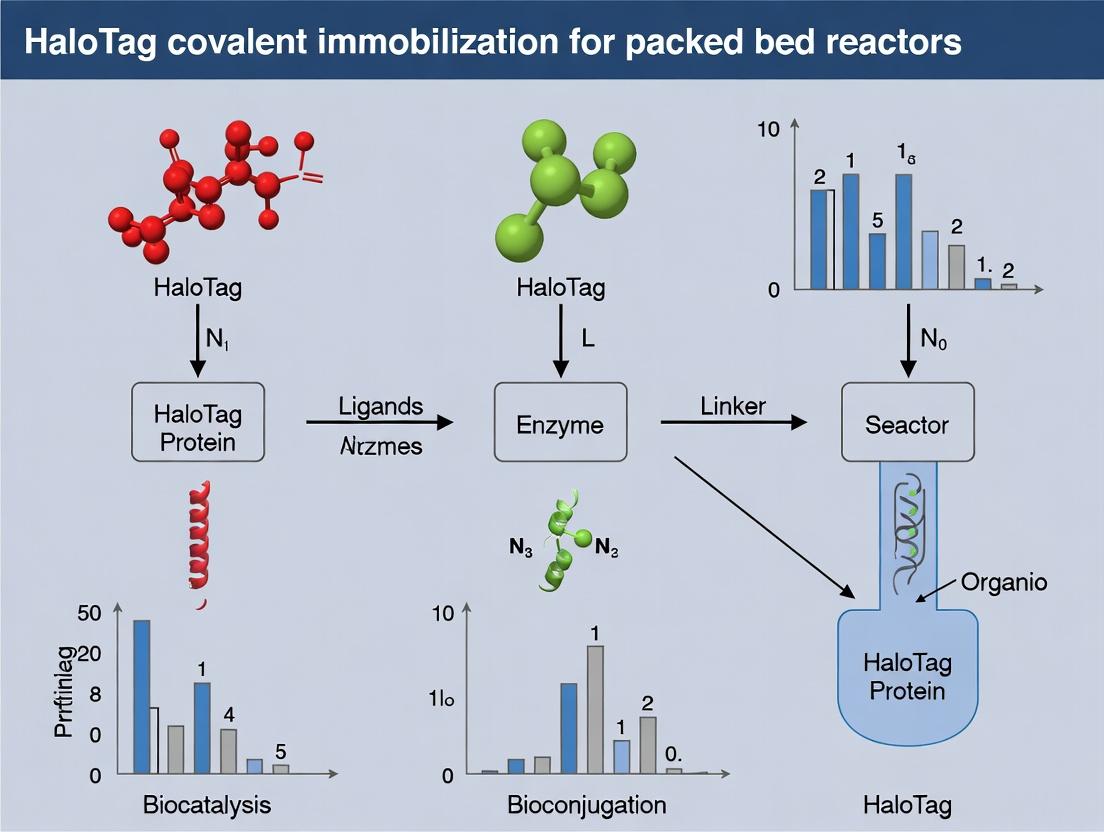
This article provides a comprehensive guide to leveraging HaloTag technology for the covalent, site-specific immobilization of biocatalysts in packed bed reactors (PBRs).
HaloTag Technology: Revolutionizing Biopharmaceutical Manufacturing with Covalent Immobilization in Packed Bed Reactors
Abstract
This article provides a comprehensive guide to leveraging HaloTag technology for the covalent, site-specific immobilization of biocatalysts in packed bed reactors (PBRs). We explore the foundational principles of the HaloTag system and its superiority over traditional methods, detail step-by-step protocols for ligand design and reactor packing, address common challenges in stability and scalability, and validate performance through comparative analysis with other immobilization techniques. Aimed at researchers and process development scientists, this resource outlines how HaloTag-PBR systems enhance operational stability, reusability, and productivity for continuous-flow bioprocessing in drug development.
Understanding HaloTag Chemistry: The Foundation for Superior Enzyme Immobilization
What is HaloTag? A Primer on the Covalent, Self-Labeling Protein Tag
The HaloTag protein tag is a 33 kDa engineered derivative of a bacterial haloalkane dehalogenase designed for covalent, irreversible bonding to specific synthetic ligands. Unlike traditional affinity tags (e.g., His-tag), the HaloTag system enables the formation of a stable covalent bond between the protein of interest (POI) fused to HaloTag and a chloroalkane linker, which can be conjugated to a diverse array of functional reporters (e.g., fluorophores, beads, solid surfaces). This unique self-labeling property makes it a powerful tool for protein immobilization, a critical requirement for applications like packed bed reactor development in bioprocessing and drug discovery.
Key Applications in Research & Development
HaloTag technology facilitates a wide range of applications, central to which is the robust and oriented covalent immobilization of enzymes or binding proteins onto solid supports.
Table 1: Primary Applications of HaloTag Technology
| Application Category | Specific Use Case | Relevance to Packed Bed Reactors |
|---|---|---|
| Protein Immobilization | Covalent tethering to resins, beads, or surfaces. | Enables creation of stable, reusable biocatalytic columns with defined protein orientation. |
| Protein-Protein Interaction | Pull-down assays and interaction mapping. | Useful for immobilizing bait proteins to capture complexes from solution. |
| Cellular Imaging | Live-cell fluorescence imaging and trafficking. | Less directly relevant, but demonstrates tag fidelity. |
| Protein Stability & Turnover | Pulse-chase degradation studies. | Can assess stability of immobilized enzyme variants. |
| High-Throughput Screening | Immobilized enzyme activity screens. | Directly applicable to screening optimal biocatalysts for reactor use. |
Experimental Protocols
Protocol: Covalent Immobilization of HaloTag Fusion Protein for Packed Bed Reactor Preparation
Objective: To covalently immobilize a HaloTag-enzyme fusion onto HaloTag Ligand-functionalized agarose beads for subsequent packing into a column reactor.
Materials (Scientist's Toolkit): Table 2: Essential Research Reagent Solutions
| Item | Function | Example/Notes |
|---|---|---|
| HaloTag Fusion Protein | The biocatalyst of interest. | Purified protein, validated for activity. |
| HaloLink Resin | Beads with covalently attached chloroalkane ligand for immobilization. | Alternative: Aminated resin + HaloTag Amine (O4) Ligand. |
| Binding/Wash Buffer | Provides optimal conditions for binding. | Typically PBS, pH 7.2-7.5, +/- mild reducing agent. |
| Elution Buffer | For non-denaturing protein recovery (if needed). | Contains proprietary HaloTag TEV Ligand. |
| Regeneration Buffer | Strips uncoupled protein. | 0.1M Glycine, pH 2.5, or 1M NaCl. |
| Spin Columns/Empty Columns | For batch binding and column packing. |
Methodology:
- Resin Preparation: Equilibrate 1 mL of settled HaloLink Resin with 10 column volumes (CV) of Binding Buffer.
- Protein Binding: Incubate 1-5 mg of purified HaloTag fusion protein with the equilibrated resin in a batch format for 2 hours at 4°C or 1 hour at room temperature with gentle rotation.
- Washing: Collect flow-through. Wash resin with 20 CV of Binding Buffer to remove non-specifically bound protein.
- Cap Unreacted Ligands (Optional but Recommended for Reactors): Incubate resin with 1M ethanolamine (pH 8.5) for 1 hour to block any unreacted functional groups on the resin surface, minimizing non-specific adsorption.
- Packing: Transfer the slurry to an appropriate empty column (e.g., Poly-Prep). Allow it to settle under gravity flow and compress gently with several CV of Assay Buffer.
- Activity Assay: Pass the relevant substrate through the packed bed and analyze the effluent for product formation to determine immobilization yield and activity retention.
Protocol: Quantifying Immobilization Efficiency & Activity Retention
Objective: To determine the percentage of protein bound and the specific activity of the immobilized enzyme.
Methodology:
- Quantification: Measure protein concentration (A280) of the initial load solution, flow-through, and wash fractions.
- Calculate Immobilization Yield:
- Immobilized Protein (mg) = [Protein]loaded - ([Protein]flow-through + [Protein]wash).
- Immobilization Yield (%) = (Immobilized Protein / Protein Loaded) * 100.
- Activity Assay:
- Perform a standard solution-phase activity assay with a known amount of free enzyme.
- Perform the same assay by packing a known volume of immobilized resin into a small column and measuring product formation in the effluent over time.
- Calculate Activity Retention:
- Specific Activity (immobilized) = (Product formed per min) / (mg of immobilized protein).
- Activity Retention (%) = [Specific Activity (immobilized) / Specific Activity (free)] * 100.
Table 3: Example Data from Immobilization Experiment
| Metric | Free Enzyme | Immobilized Enzyme | Calculation/Result |
|---|---|---|---|
| Total Protein Loaded | 5.0 mg | - | - |
| Protein in Flow-Through/Wash | - | 1.2 mg | - |
| Immobilized Protein | - | 3.8 mg | 5.0 - 1.2 = 3.8 mg |
| Immobilization Yield | - | 76% | (3.8 / 5.0) * 100 |
| Observed Activity (U/min) | 100 U/min | 57 U/min | Measured |
| Specific Activity (U/min/mg) | 20 U/mg | 15 U/mg | Activity / Protein Mass |
| Activity Retention | 100% | 75% | (15 / 20) * 100 |
Visualized Workflows & Pathways
HaloTag Protein Immobilization Workflow
Packed Bed Reactor Application Loop
Why Covalent Immobilization? Advantages over Adsorption and Entrapment in PBRs.
Within the broader thesis on HaloTag covalent immobilization for packed bed reactors (PBRs), this application note examines the critical rationale for selecting covalent immobilization strategies over adsorption or entrapment. PBRs are central to continuous bioprocessing in drug development, particularly for enzymatic synthesis and antibody purification. The method of enzyme or catalyst immobilization directly dictates PBR performance metrics such as operational stability, leaching resistance, and volumetric productivity. Covalent immobilization, specifically using engineered fusion tags like HaloTag, presents a paradigm shift, offering robust, site-specific attachment under mild conditions that overcomes the limitations of classical methods.
Comparative Analysis: Covalent vs. Adsorption vs. Entrapment
Table 1: Quantitative Performance Comparison of Immobilization Methods in Model PBR Systems
| Performance Metric | Covalent (HaloTag) | Physical Adsorption | Entrapment (e.g., Alginate) |
|---|---|---|---|
| Immobilization Yield (%) | 95 - 99 | 70 - 90 | 60 - 85 |
| Active Site Availability (%) | High (80-95)* | Variable (30-80) | Low (20-50) due to diffusion barriers |
| Enzyme Leaching (Loss per 24h) | < 0.5% | 5 - 20% | < 2% (but matrix rupture risk) |
| Operational Half-life (cycles/hours) | 100+ cycles / >500 h | 10-30 cycles / 50-100 h | 40-70 cycles / 200-300 h |
| Max Working Flow Rate (Column Volumes/h) | High (No diffusion limit) | Medium (Risk of shear desorption) | Very Low (Diffusion limited) |
| Binding Strength (Kd) | Irreversible (Covalent) | Weak (10^-3 - 10^-6 M) | Physical barrier |
| Impact on Enzyme Conformation | Controlled, site-specific | Often denaturing at interface | Can cause crowding/denaturation |
| Reusability | Excellent | Poor to Fair | Fair to Good |
*Site-specific attachment preserves active site orientation.
Table 2: Economic & Process Efficiency Summary
| Consideration | Covalent Immobilization | Adsorption | Entrapment |
|---|---|---|---|
| Typical Ligand Cost | Moderate-High (Specialized resin) | Low | Very Low |
| Procedure Complexity | Moderate (Single step) | Simple | Complex (Polymerization) |
| Scalability | Excellent (Predictable) | Challenging (Leaching) | Challenging (Mass transfer) |
| FDA Validation Ease | High (Low leaching, consistent) | Low (Variable batch-to-batch) | Medium (Risk of particle shedding) |
Experimental Protocols
Protocol 3.1: HaloTag Covalent Immobilization onto Chloroalkane-Functionalized Resin for PBR
Objective: To covalently and site-specifically immobilize a HaloTag-fused enzyme onto a solid support for use in a packed bed reactor. Materials:
- HaloTag-fused enzyme (e.g., HaloTag-Lipase, 1-5 mg/mL in PBS or HEPES buffer)
- Chloroalkane-functionalized agarose/porous glass resin (e.g., HaloLink Resin)
- Binding/Wash Buffer: 1X PBS, pH 7.4, 0.005% Tween-20
- Regeneration Buffer: 0.1 M Glycine, pH 2.5
- Storage Buffer: 1X PBS, 0.02% sodium azide
- Empty chromatography column (for PBR packing)
- Peristaltic pump or FPLC system
Procedure:
- Resin Preparation: Transfer 1 mL of settled HaloLink Resin slurry to a sintered glass filter. Wash with 10 column volumes (CV) of Binding Buffer.
- Enzyme Binding: In a 5 mL tube, incubate the washed resin with 2-3 mL of HaloTag-fused enzyme solution. Rotate end-over-end for 2 hours at room temperature or 16 hours at 4°C.
- Washing: Transfer the slurry back to the filter. Wash sequentially with 10 CV Binding Buffer, followed by 5 CV of high-salt buffer (1 M NaCl in PBS), and 5 CV Binding Buffer to remove non-covalently adsorbed enzyme.
- Activity Assay: Perform a batch activity assay on a small aliquot of resin to determine immobilization yield and specific activity compared to free enzyme.
- PBR Packing: Transfer the resin slurry to an appropriate empty column (e.g., XK 16/20). Pack at a constant flow rate of 0.5 mL/min with Binding Buffer until bed height is stable.
- PBR Conditioning: Equilibrate the packed column with 10 CV of the desired reaction buffer (e.g., assay buffer).
- Operation & Regeneration: Perform continuous flow reactions. Between runs, wash with 5-10 CV of Regeneration Buffer to remove any non-covalently bound contaminants, followed by re-equilibration with reaction buffer. Store in Storage Buffer at 4°C.
Protocol 3.2: Comparative Leaching Test in a Continuous Flow System
Objective: To quantitatively compare enzyme leaching from covalent (HaloTag) and adsorbed (ionic) preparations under operational PBR conditions. Materials:
- Two identical PBR columns (e.g., 1 mL bed volume):
- Column A: HaloTag-enzyme on HaloLink Resin (from Protocol 3.1)
- Column B: Native enzyme adsorbed on ion-exchange resin (e.g., DEAE Sepharose)
- Assay Buffer (optimal for enzyme activity)
- Substrate solution in Assay Buffer
- Fraction collector
- Equipment for enzyme activity assay (spectrophotometer/plate reader)
Procedure:
- Column Equilibration: Equilibrate both Column A and Column B with 10 CV of Assay Buffer at a flow rate of 0.2 mL/min.
- Continuous Flow Operation: Pump substrate solution through both columns continuously at the same operational flow rate (e.g., 0.5 mL/min, residence time 2 min). Maintain at optimal temperature.
- Fraction Collection: Collect the column effluent from both columns in timed fractions (e.g., every 10 min for 24 hours).
- Leaching Analysis: a. Direct Activity: Measure the enzymatic activity of each effluent fraction directly to detect active, leached enzyme. b. Total Protein: Use a sensitive protein assay (e.g., Micro BCA) on select fractions to quantify total protein leached.
- Data Calculation: Plot leached activity/protein vs. time or total processed volume. Calculate the percentage of initial loaded enzyme lost per 24 hours.
The Scientist's Toolkit: Key Reagent Solutions
Table 3: Essential Materials for HaloTag Covalent Immobilization in PBR Research
| Reagent/Material | Function & Rationale |
|---|---|
| HaloTag Fusion Enzyme | The protein of interest genetically fused to the HaloTag protein. Enables specific, covalent tethering via a stable alkyl-enzyme bond. |
| HaloLink Resin | Beaded agarose resin covalently functionalized with chloroalkane ligands. The chloroalkane forms an irreversible covalent bond with the HaloTag protein. |
| TEV Protease Cleavage Site | Sequence engineered between HaloTag and the enzyme. Allows controlled, on-column cleavage for resin regeneration or product recovery in some designs. |
| Low-Protein Binding Filters | For handling resin slurries without significant nonspecific adsorption and loss of valuable enzyme. |
| Precision Chromatography Columns (e.g., glass columns with adjustable adapters) | For reproducible PBR packing, ensuring uniform flow distribution and minimizing dead volume. |
| Peristaltic Pump or Biocompatible FPLC System | Provides precise, pulseless flow control essential for maintaining PBR integrity and reproducible residence times. |
| Online UV/Vis or Conductivity Detector | For real-time monitoring of product formation, breakthrough, or leaching events during continuous PBR operation. |
| Regeneration Buffers (e.g., Glycine pH 2.5, Guanidine HCl) | For removing stubborn non-covalent contaminants from the covalently immobilized bed, restoring baseline performance. |
Diagrams
Diagram 1: HaloTag Immobilization PBR Workflow
Diagram 2: PBR Immobilization Method Decision Tree
Diagram 3: HaloTag Covalent Bond Formation Mechanism
Application Notes
HaloTag covalent immobilization technology is a cornerstone for developing robust and efficient packed bed reactors (PBRs) in bioprocessing and drug development. This system enables the oriented, irreversible immobilization of target proteins onto solid supports, leading to reactors with high functional density, stability, and reusability. The following application notes detail its utility in PBR research.
Note 1: High-Capacity, Oriented Immobilization for Enzyme Reactors The HaloTag system surpasses adsorption or random covalent coupling by providing a defined, single-point attachment. This orientation minimizes steric hindrance, often preserving >90% of native enzyme activity post-immobilization. For continuous-flow PBRs, this translates to sustained catalytic efficiency, extended operational half-lives, and consistent product yield over hundreds of column volumes.
Note 2: Rapid, One-Step Purification and Immobilization HaloLink Resin allows the concurrent capture and immobilization of HaloTag-fusion proteins from crude lysates in a single step. This streamline process reduces preparation time from days to hours, minimizing protein handling and degradation. The covalent bond prevents enzyme leaching under harsh operational conditions (e.g., high shear, variable pH, or co-solvents), a critical advantage for PBRs in multi-step synthesis.
Note 3: Modular Ligand Design for Sensor PBRs Chloroalkane ligands can be functionalized with diverse payloads (fluorophores, affinity handles). In PBR research, this enables the creation of "sensor reactors" where immobilized enzymes or binding proteins are conjugated to environment-sensitive reporters. This allows for real-time, in-line monitoring of substrate conversion or product formation via fluorescence, facilitating advanced process analytical technology (PAT).
Note 4: Scalability and Reproducibility The system's specificity ensures highly reproducible ligand density and protein loading across batches, a prerequisite for scaling PBRs from laboratory to pilot scale. The non-cross-reactivity with native cellular proteins eliminates the need for ultra-pure feedstocks, reducing upstream processing costs.
Table 1: Performance Comparison of Immobilization Methods for Packed Bed Reactors
| Immobilization Method | Typical Coupling Efficiency | Binding Stability (Leaching) | Activity Retention | Preparation Time |
|---|---|---|---|---|
| HaloTag/HaloLink | >95% | Covalent (None) | 80-95% | 2-4 hours |
| NHS-Agarose (Random) | 70-90% | Medium-High | 30-70% | 12-24 hours |
| His-Tag/Ni-NTA | >90% | Low (Chelation) | 60-85% | 1-2 hours |
| Adsorption | Variable | Very High | 10-50% | 1-12 hours |
Table 2: Properties of Common Chloroalkane Ligands for Functionalization
| Ligand Name | Chloroalkane Chain | Typical Payload | Application in PBR Research |
|---|---|---|---|
| HaloTag Amine (O2) | O2 linker | Primary amine | Conjugation to carboxylated resins or sensors |
| HaloTag PEG-Biotin | PEG linker | Biotin | Capture bioreactors using streptavidin bridges |
| HaloTag TMR | Direct | Tetramethylrhodamine | Visual validation of column packing uniformity |
| HaloTag Janelia Fluor 646 | PEG linker | Fluorophore | High-stability in-line fluorescence monitoring |
Experimental Protocols
Protocol 1: Immobilization of HaloTag-Enzyme onto HaloLink Resin for PBR Packing
Objective: Covalently immobilize a purified HaloTag-fused enzyme (e.g., a ketoreductase) onto HaloLink Resin for subsequent packing into a column reactor.
Materials:
- Purified HaloTag-fusion protein
- HaloLink Resin (2mL settled volume)
- Wash/Binding Buffer: 50mM Tris-HCl, 150mM NaCl, pH 7.5
- Reaction Buffer: Wash/Binding Buffer + 1mM DTT (optional)
- Empty chromatography column (e.g., 5mL capacity)
- Rotary shaker or end-over-end mixer
Methodology:
- Resin Equilibration: Transfer 2 mL of HaloLink Resin slurry to a gravity column. Wash with 10 column volumes (CV) of Wash/Binding Buffer.
- Protein Binding: Dilute the purified HaloTag-fusion protein into Reaction Buffer to a final volume of 5-10 mL. Incubate the protein solution with the equilibrated resin in a batch format for 2 hours at room temperature (or 4°C overnight) with gentle mixing.
- Wash: Drain the binding solution. Wash the resin sequentially with:
- 10 CV of Wash/Binding Buffer to remove unbound protein.
- 5 CV of Wash/Binding Buffer + 0.1% Triton X-100.
- 10 CV of Wash/Binding Buffer.
- Quenching: Block any unreacted chloroalkane groups on the resin by incubating with 5 CV of 1M L-cysteine in Wash/Binding Buffer (pH 7.5) for 30 minutes.
- Final Wash: Wash with 10 CV of Reaction Buffer. The resin-bound enzyme is now ready for packing.
- PBR Packing: Resuspend the resin in Reaction Buffer as a 50% slurry. Pack into a suitable column housing using standard liquid chromatography packing techniques at an appropriate flow rate.
Protocol 2: Functionalization of a Packed HaloTag PBR with a Fluorescent Ligand
Objective: Conjugate a chloroalkane-functionalized fluorophore to an already immobilized HaloTag protein within a packed bed to create a sensor reactor.
Materials:
- Pre-packed PBR with immobilized HaloTag-protein
- HaloTag Janelia Fluor 646 Ligand (or similar)
- Assay Buffer compatible with protein function
- Syringe pump or HPLC system
Methodology:
- Ligand Preparation: Prepare a 5-10 µM solution of the JF646 ligand in Assay Buffer.
- Ligand Loading: Connect the PBR to a syringe pump or HPLC system. Equilibrate the column with 10 CV of Assay Buffer at 0.5 mL/min.
- Conjugation: Load the ligand solution onto the column at a very low flow rate (e.g., 0.1 mL/min) to ensure sufficient contact time.
- Incubation: Stop the flow and allow the ligand to incubate within the packed bed for 1 hour at room temperature.
- Wash: Resume flow and wash the column with 15-20 CV of Assay Buffer until the effluent shows no fluorescence (monitored at the appropriate wavelength).
- Validation: The reactor can now be used for catalysis, with fluorescence output correlating to local environmental changes.
Diagrams
Title: HaloTag PBR Construction Workflow
Title: HaloTag Covalent Bond Mechanism
The Scientist's Toolkit
Table 3: Essential Research Reagent Solutions for HaloTag PBR Development
| Item | Function in HaloTag PBR Research |
|---|---|
| HaloTag Vectors (pFN series) | Expression plasmids for creating C- or N-terminal HaloTag fusions with your protein of interest. |
| HaloLink Resin | Beaded agarose resin derivatized with the chloroalkane ligand for covalent, oriented immobilization. |
| HaloTag Ligands (Chloroalkane) | Functionalized ligands (e.g., fluorophores, biotin) for labeling, sensing, or secondary capture. |
| HaloTag ELISA Buffer | Optimized buffer for binding and wash steps, ensuring maximum efficiency and stability. |
| 1M L-Cysteine (Quenching Solution) | Blocks unreacted chloroalkane sites on the resin after immobilization to prevent non-specific binding. |
| TEV Protease or HaloTag Cleavage Enzyme | For controlled release of the protein from the resin, useful for resin regeneration studies. |
| Chromatography Columns (Empty) | Hardware for packing the functionalized resin into a fixed-bed reactor format. |
| Assay Buffer Kits | Optimized buffers for specific enzyme classes (kinases, proteases, etc.) to maintain activity post-immobilization. |
Application Notes: HaloTag Immobilization for Packed Bed Reactors
HaloTag covalent immobilization technology offers distinct advantages for the development of robust, high-performance packed bed reactors (PBRs) used in bioprocessing, affinity purification, and enzymatic synthesis. Within the broader thesis on optimizing PBR platforms, these benefits translate directly to enhanced operational stability, predictability, and product yield.
Site-Specificity: The engineered haloalkane dehalogenase (HaloTag protein) forms a covalent bond exclusively with a synthetic ligand (e.g., chloroalkane). This ensures a uniform, oriented immobilization of target proteins (fused to HaloTag) onto solid supports. In PBRs, this eliminates heterogeneous ligand presentation, leading to consistent binding kinetics, reduced nonspecific adsorption, and reproducible column performance across scales.
High Density: The covalent, stable nature of the bond allows for aggressive washing and conditioning steps to remove non-specifically adsorbed protein, enabling the achievement of true, functional high-density immobilization. This maximizes the active binding capacity per unit volume of the reactor, a critical parameter for intensifying downstream processes.
Irreversible Binding: The covalent ether linkage formed is stable under a wide range of pH, ionic strength, and temperature conditions. This irreversibility prevents ligand leaching during operational cycles and storage, ensuring reactor capacity remains constant, facilitating validated reuse over extended periods, and eliminating product contamination by leached affinity ligands.
Table 1: Comparison of Immobilization Techniques for PBRs
| Immobilization Parameter | HaloTag Covalent | Non-Specific Adsorption | NHS/EDC Amine Coupling | Streptavidin-Biotin |
|---|---|---|---|---|
| Binding Type | Covalent, Specific | Non-covalent, Random | Covalent, Random | Non-covalent, Specific |
| Functional Density (pmol/mm²)* | 200 - 500 | 50 - 150 | 100 - 400 | 150 - 300 |
| Operational Stability (Half-life) | > 100 cycles | 5 - 20 cycles | 20 - 50 cycles | 10 - 30 cycles |
| Ligand Leaching | Undetectable | High | Low to Moderate | Moderate |
| Orientation Control | Excellent | None | Poor | Excellent |
*Density is dependent on support geometry and coupling conditions. HaloTag values assume optimized protocols with HaloLink-type resins.
Table 2: Performance Metrics of HaloTag PBRs in Model Applications
| Application | Target Protein | Support Material | Immobilization Efficiency (%) | Dynamic Binding Capacity (mg/mL) | Retention of Activity after 20 Cycles (%) |
|---|---|---|---|---|---|
| Affinity Purification | scFv-HaloTag | Agarose Beads | 95 ± 3 | 18 ± 2 | 98 ± 2 |
| Enzyme Catalysis | Lipase-HaloTag | Controlled-Pore Glass | 90 ± 5 | N/A | 92 ± 4 |
| Pathogen Capture | Lectin-HaloTag | Polymethacrylate | 88 ± 4 | 22 ± 3 | 95 ± 3 |
Experimental Protocols
Protocol 1: HaloTag Protein Immobilization onto HaloLink Resin for PBR Packing
Objective: To covalently and site-specifically immobilize a HaloTag fusion protein onto a solid support for packing into a laboratory-scale column.
Materials:
- HaloTag Fusion Protein: Purified protein construct.
- HaloLink Resin: Beaded agarose or methacrylate functionalized with the chloroalkane ligand.
- Coupling Buffer: PBS, pH 7.4, 0.05% Tween 20.
- Wash/Storage Buffer: Tris-HCl, pH 8.0, 150 mM NaCl, 0.005% Tween 20, 0.1 mM EDTA.
- Quenching Solution: 1 M Tris-HCl, pH 8.0.
- Empty Column Hardware: (e.g., Poly-Prep or XK columns).
Method:
- Resin Preparation: Gently vortex the HaloLink Resin bottle to suspend slurry. Transfer the calculated volume (e.g., 1 mL) to a sintered column. Wash with 10 column volumes (CV) of Coupling Buffer.
- Protein Coupling: Dilute the HaloTag fusion protein into Coupling Buffer. A typical ratio is 100-200 µg protein per 100 µL settled resin. Incubate the protein solution with the drained resin in a batch format for 2 hours at 25°C with gentle end-over-end mixing.
- Capture & Quenching: Drain the coupling mixture. Wash the resin with 5 CV of Coupling Buffer to collect the unbound protein fraction for efficiency calculation. To block unreacted ligands, incubate the resin with 5 CV of Quenching Solution for 30 minutes at 25°C.
- Final Wash & Packing: Wash the resin sequentially with 10 CV of Coupling Buffer, followed by 10 CV of Wash/Storage Buffer. Resuspend the resin in Wash/Storage Buffer as a 50% slurry. Pack the slurry into an empty chromatography column according to the manufacturer's instructions.
Protocol 2: Determining Functional Immobilization Density
Objective: To quantify the amount of actively immobilized protein on the support.
Materials:
- Immobilized resin from Protocol 1 (Step 3, post-initial wash).
- SDS-PAGE reagents and scanning densitometer or BCA/Protein Assay Kit.
- Known standard of the HaloTag fusion protein.
Method:
- Collect Fractions: Precisely collect and record the volume of the initial drained coupling mixture (Flow-Through, FT) and the subsequent 5 CV wash (Wash, W).
- Quantify Unbound Protein: Determine the protein concentration in the pooled FT+W fractions using a preferred method (e.g., BCA assay). Compare against a standard curve.
- Calculate: Immobilization Efficiency (%) = [1 - (Protein in FT+W / Total Protein Input)] * 100. Functional Density (pmol/mm²) can be derived using resin surface area data from the manufacturer, the molecular weight of the fusion protein, and the amount bound.
Visualizations
HaloTag Covalent Immobilization Mechanism
Packed Bed Reactor Workflow Using HaloTag
The Scientist's Toolkit
Table 3: Essential Research Reagent Solutions for HaloTag PBR Development
| Item | Function & Relevance |
|---|---|
| HaloTag Vectors (pFN, pFC) | Expression vectors for creating C- or N-terminal HaloTag fusions with your protein of interest. |
| HaloLink Resins | Beaded chromatography supports (agarose, methacrylate) pre-functionalized with the chloroalkane ligand for ready-to-use immobilization. |
| HTRF Tag-Lite S/Lumi4-Tb | Tools for label-free, time-resolved FRET-based binding assays to validate immobilized protein function. |
| HaloTag Ligands (Fluorescent, Biotin) | Functional ligands for imaging immobilized proteins on beads or for alternative capture strategies. |
| Protease Cleavage Sites | Inclusion of specific protease sites (TEV, HRV 3C) in the fusion construct allows for controlled elution in purification applications. |
| Controlled-Pore Glass (CPG) | An alternative, rigid inorganic support ideal for PBRs requiring high flow rates and pressure stability. |
| HaloTag ELISA Kits | For precise quantification of HaloTag fusion protein expression and immobilization yield. |
Within the broader research on covalent enzyme immobilization, this application note focuses on HaloTag technology as a superior strategy for creating robust, high-performance biocatalytic packed bed reactors (PBRs). The HaloTag protein forms a specific, irreversible covalent bond with chloroalkane ligands, enabling oriented, stable immobilization of fusion enzymes onto solid supports. This approach directly addresses key limitations in continuous-flow biocatalysis, including enzyme leaching, instability, and random orientation that reduces catalytic efficiency. Integrating HaloTag immobilization into PBRs offers a transformative platform for sustainable pharmaceutical synthesis, bioprocessing, and analytical applications.
Core Principles and Advantages of PBRs for Biocatalysis
A packed bed reactor is a tubular vessel filled with immobilized catalyst particles through which substrate solution flows continuously. For biocatalysis, this offers distinct advantages over batch processing.
Key Operational Advantages:
- Enhanced Productivity: Continuous operation eliminates downtime for loading/unloading.
- Superior Control: Precise control over residence time, temperature, and flow dynamics.
- Scalability: Easily scaled from microfluidic analytical systems to industrial production columns.
- Improved Stability: Immobilization often increases enzyme robustness against shear, interfaces, and denaturants.
- Product Purity: Easier separation of product from catalyst, reducing downstream processing costs.
Critical Design Parameters for PBRs: The performance of a biocatalytic PBR is governed by interrelated physical and biochemical parameters. Optimal design requires balancing these factors.
Table 1: Key Design Parameters for Biocatalytic Packed Bed Reactors
| Parameter | Definition | Typical Range/Consideration | Impact on Performance |
|---|---|---|---|
| Bed Porosity (ε) | Volume fraction not occupied by solid support. | 0.3 - 0.6 | Affects pressure drop and available surface area. |
| Residence Time (τ) | Average time fluid remains in reactor (Bed Volume/Flow Rate). | Seconds to hours. | Dictates conversion yield; must exceed reaction time. |
| Space Velocity | Flow Rate / Bed Volume (hour⁻¹). | 1 - 100 h⁻¹ (varies widely). | Inverse of residence time; key for throughput. |
| Damköhler Number (Da) | Ratio of reaction rate to mass transfer rate. | Da >> 1: Reaction-limited. Da << 1: Mass transfer-limited. | Identifies the rate-limiting step. |
| Pressure Drop (ΔP) | Loss of pressure across the bed (described by Ergun equation). | Must be within pump capacity. | Influenced by particle size, bed length, flow rate. |
| Enzyme Loading | Amount of active enzyme per unit volume/weight of support. | 1 - 100 mg enzyme / g support. | Determines volumetric activity and cost. |
HaloTag Immobilization: A Robust Protocol for PBR Packing
Research Reagent Solutions & Essential Materials
Table 2: Essential Toolkit for HaloTag-Based PBR Fabrication
| Item | Function | Example/Notes |
|---|---|---|
| HaloTag Enzyme | The fusion partner (e.g., HaloTag7) providing the covalent immobilization handle. | Expressed and purified with your biocatalyst of interest. |
| Chloroalkane-Functionalized Support | Solid matrix (e.g., agarose, silica, polymer) with covalently linked HaloTag ligand. | Commercially available (e.g., Promega HaloLink Resin) or custom-synthesized. |
| Immobilization Buffer | Typically PBS or HEPES (pH 7.0-7.5), 1 mM DTT optional. | Maintains protein stability and optimal HaloTag activity. |
| PBR Hardware | Column, tubing, fittings, and frits appropriate for scale. | Material must be chemically compatible (e.g., PEEK, glass). |
| Peristaltic or HPLC Pump | Provides precise, pulseless continuous flow. | Essential for maintaining consistent residence time. |
| Substrate Solution | Reaction substrates in appropriate buffer. | May require cofactors (NAD(P)H, ATP, etc.). |
| Activity Assay Reagents | To quantify conversion (e.g., spectrophotometric, HPLC standards). | Used for offline or online analytics. |
Protocol 3.1: Immobilization of HaloTag-Enzyme Fusion Protein
Objective: To covalently and specifically immobilize a HaloTag-fusion biocatalyst onto a chloroalkane-functionalized solid support for packing into a PBR.
- Support Preparation: Transfer 1.0 mL of chloroalkane-functionalized resin (e.g., HaloLink Resin) to a gravity column. Wash with 10 column volumes (CV) of 1X PBS, pH 7.4.
- Protein Binding: Incubate the washed resin with 1-5 mg of purified HaloTag-fusion protein in 2-3 mL of PBS for 60-120 minutes at room temperature with gentle end-over-end mixing. Note: Binding is rapid and covalent.
- Washing: Drain the protein solution. Wash the resin sequentially with:
- 10 CV of PBS to remove unbound protein.
- 5 CV of 1M NaCl in PBS to remove electrostatically adsorbed protein.
- 5 CV of PBS to re-equilibrate.
- Activity Check (Batch): Resuspend a 50 µL aliquot of immobilized enzyme in assay buffer. Add substrate and measure initial activity spectrophotometrically. Compare to an equivalent amount of free enzyme to determine immobilization yield and retained activity.
- Packing the Column: Slurry the washed resin in degassed storage buffer. Carefully pack the slurry into a vertically held, empty chromatography column (e.g., XK 16/20) fitted with a bottom frit. Allow to settle under gravity, then connect to an HPLC pump. Pack at a constant flow rate (e.g., 0.5 mL/min for a 5 mL bed) until the bed height is stable. Install the top frit and end fitting.
- Conditioning: Equilibrate the packed PBR with 10-20 CV of the desired reaction buffer at the operational flow rate.
Protocol 3.2: Operational Testing of a HaloTag-PBR
Objective: To characterize the continuous-flow performance of the immobilized enzyme PBR.
- Setup: Connect the inlet of the packed PBR to a substrate reservoir via a peristaltic pump. Connect the outlet to a fraction collector or online analyzer (e.g., UV flow cell).
- Determining Volumetric Activity: Perfuse the column with a saturating concentration of substrate at a very low flow rate (e.g., 0.1 CV/min) to achieve >99% conversion. Measure product formation in the effluent. Calculate volumetric activity as (Product formation rate) / (Bed Volume).
- Generating a Residence Time Curve: Perfuse the column with a single substrate concentration. Systematically increase the flow rate (decreasing residence time, τ). At each steady state, collect effluent and measure conversion (X). Plot X vs. τ.
- Long-Term Stability Operation: Perfuse the column with operational substrate concentration at a fixed, practical residence time. Periodically assay the effluent for product concentration to monitor activity decay over time (days/weeks). Calculate half-life under flow conditions.
Data Presentation: Performance Metrics
Table 3: Example Performance Data for HaloTag-Immobilized Enzymes in Model PBRs
| Enzyme (Fusion) | Support | Immobilization Yield | Retained Activity | Operational Half-life (t₁/₂) | Space-Time Yield |
|---|---|---|---|---|---|
| HaloTag-Lipase B | HaloLink Agarose | >95% | 85% | > 720 hours | 12 g L⁻¹ h⁻¹ |
| HaloTag-Glucose Dehydrogenase | Chloroalkane-Silica | 90% | 70% | 240 hours | 8.5 mmol L⁻¹ h⁻¹ |
| HaloTag-Transaminase | Functionalized Polymer | 88% | 60%* | 150 hours | 5.2 g L⁻¹ h⁻¹ |
Note: Lower retained activity often reflects mass transfer limitations, not inactivation.
Visualization: Workflows and Relationships
Title: HaloTag PBR Fabrication & Operation Workflow
Title: Interplay of Factors Determining PBR Performance
A Step-by-Step Protocol: Immobilizing HaloTag Enzymes for Packed Bed Reactors
Design and Synthesis of Chloroalkane-Functionalized Solid Supports
Introduction and Application Notes Within the broader thesis on developing robust HaloTag-based immobilized enzyme reactors (IMERs) for bioprocessing and drug development, the design and synthesis of tailored chloroalkane-functionalized solid supports is the foundational step. These supports enable site-specific, covalent, and oriented immobilization of HaloTag fusion proteins, leading to packed bed reactors with high active enzyme density, stability, and consistent performance. This document details the rationale, protocols, and key reagents for producing these critical materials.
The HaloTag immobilization strategy relies on the rapid and irreversible formation of an alkyl ether bond between the chloroalkane ligand on the solid support and a mutated hydrolase (HaloTag) protein. Key design parameters for the support include:
- Linker Length & Chemistry: A polyethylene glycol (PEG) or alkyl spacer of optimal length (typically C6-C12) is essential to minimize steric hindrance and allow efficient binding between the tethered ligand and the protein tag buried within its binding pocket.
- Ligand Density: Controlled, moderate ligand density is crucial to prevent protein aggregation and multipoint attachment, which can reduce activity.
- Base Matrix: The choice of base resin (e.g., agarose, methacrylate, silica) determines physical properties such as pressure-flow characteristics, chemical stability, and non-specific binding, which are critical for packed bed reactor operation.
Research Reagent Solutions Toolkit
| Reagent/Material | Function & Rationale |
|---|---|
| Aminated Solid Support (e.g., 6% Cross-linked Agarose) | Provides primary amine handles (-NH2) for subsequent conjugation chemistry. Agarose offers low non-specific binding and good flow properties. |
| Homobifunctional NHS-PEG-NHS Spacer (e.g., NHS-PEG6-NHS) | Creates a hydrophilic, flexible tether between the matrix and the ligand, reducing steric interference during HaloTag binding. |
| Chloroalkane Ligand, Amine-Terminated (e.g., 1-(6-Aminohexyl)-6-chlorohexane) | The core reactive molecule. The chloroalkane group is the substrate for HaloTag, while the terminal amine allows conjugation to the activated support. |
| N-Hydroxysuccinimide (NHS) & 1-Ethyl-3-(3-dimethylaminopropyl)carbodiimide (EDC) | Carbodiimide crosslinkers used to activate carboxyl groups for coupling to primary amines, an alternative conjugation strategy. |
| Anhydrous Dimethylformamide (DMF) or DMSO | Polar aprotic solvents used for dissolving hydrophobic chloroalkane ligands and spacers during coupling reactions. |
| Quenching Buffer (1M Tris-HCl, pH 8.0) | Blocks any remaining activated ester groups (NHS esters) on the support after coupling is complete. |
| Blocking Buffer (1M Ethanolamine, pH 8.5) | Alternative/quenching agent to cap unreacted sites and minimize non-specific binding. |
| Wash Solvents (Dioxane, Methanol, Diethyl Ether) | Used for sequential washing of the functionalized resin to remove unreacted ligands and by-products. |
Protocol 1: Synthesis via NHS Ester Aminolysis on Aminated Agarose
Objective: Conjugate an amine-terminated chloroalkane-PEG ligand to NHS-activated agarose beads. Materials: Aminated agarose beads, NHS-PEG-Chloroalkane ligand (commercially sourced or pre-synthesized), anhydrous DMF, 0.1M Sodium Borate buffer (pH 8.5), Quenching Buffer, Wash solvents series (DMF, dH2O, 1M NaCl, dH2O, storage buffer). Procedure:
- Activation & Wash: Transfer 1 mL of settled aminated agarose beads to a sintered glass filter. Wash sequentially with 10 mL each of dH2O and anhydrous DMF.
- Ligand Coupling: In a reaction vial, dissolve 5-10 µmoles of NHS-PEG-Chloroalkane ligand in 1 mL of anhydrous DMF. Add the drained, washed beads to the ligand solution.
- Reaction: Rotate the mixture end-over-end for 16 hours at room temperature (25°C).
- Quenching: Recover the beads on the filter and wash with 10 mL DMF. Immediately transfer beads to 5 mL of 1M Tris-HCl (pH 8.0) and rotate for 1 hour to quench unreacted NHS esters.
- Final Wash & Storage: Wash the functionalized support with 10 mL each of: dH2O, 1M NaCl, dH2O, and finally storage buffer (e.g., PBS with 0.02% NaN3). Store at 4°C.
Protocol 2: Synthesis via Carbodiimide (EDC/NHS) Chemistry on Carboxylated Resin
Objective: Immobilize an amine-terminated chloroalkane ligand onto a carboxyl-functionalized methacrylate resin. Materials: Carboxylated polymethacrylate resin, Amine-PEG-Chloroalkane ligand, EDC, NHS, MES buffer (0.1M, pH 5.0), Quenching Buffer, Wash series. Procedure:
- Resin Preparation: Wash 1 mL of carboxylated resin with 10 mL of 0.1M MES buffer, pH 5.0.
- Activation: Suspend the drained resin in 2 mL of MES buffer. Add 20 µmoles each of EDC and NHS. React for 30 minutes with rotation to form the active NHS ester on the resin.
- Ligand Coupling: Quickly wash the activated resin with cold MES buffer. Add the ligand (10 µmoles in 1 mL MES buffer) to the resin. Rotate for 4 hours at 4°C.
- Quenching & Wash: Recover beads and quench with 1M Tris-HCl, pH 8.0, for 1 hour. Perform a rigorous wash sequence: MES buffer, 2M NaCl, dH2O, and 50% isopropanol.
- Storage: Store in PBS + 0.02% NaN3 at 4°C.
Quantitative Data Summary: Ligand Density & Reactor Performance
Table 1: Characterization of Synthesized Chloroalkane-Functionalized Supports
| Support ID | Base Matrix | Ligand Type | Synthetic Method | Measured Ligand Density (µmol/mL resin) | Max. HaloTag Binding Capacity (mg/mL resin) |
|---|---|---|---|---|---|
| CA-AG-PEG6 | 6% Aminated Agarose | C6-PEG6-Chloro | Protocol 1 (NHS Aminolysis) | 12.5 ± 1.2 | 4.8 ± 0.3 |
| CA-MA-PEG8 | Polymethacrylate-COOH | C8-PEG8-Chloro | Protocol 2 (EDC/NHS) | 18.3 ± 2.1 | 6.5 ± 0.5 |
| CA-SIL-C12 | Silica-NH2 | C12-Chloro (no PEG) | Protocol 1 Variant | 8.7 ± 0.9 | 1.9 ± 0.2 |
Table 2: Performance of Resulting HaloTag IMERs in a Packed Bed Configuration
| IMER (Support ID) | Immobilized Enzyme | Apparent Activity (U/mL bed) | Operational Half-life (hours, at 25°C) | Pressure Drop at 1 mL/min (psi) |
|---|---|---|---|---|
| Reactor A (CA-AG-PEG6) | HaloTag-Carboxylesterase | 125 ± 10 | 240 | 2.1 |
| Reactor B (CA-MA-PEG8) | HaloTag-Lipase | 98 ± 8 | 310 | 5.5 |
| Reactor C (CA-SIL-C12) | HaloTag-Carboxylesterase | 45 ± 5 | 95 | 1.8 |
Diagram: HaloTag Immobilization Workflow for IMERs
Diagram: HaloTag Covalent Bond Formation Chemistry
This document details best practices for constructing HaloTag-enzyme fusion proteins, framed within a broader thesis research program focused on developing covalently immobilized, highly stable enzyme cascades for continuous-flow packed bed reactors (PBRs). The HaloTag protein, a modified haloalkane dehalogenase, forms an irreversible covalent bond with chloroalkane ligands. This property is leveraged for the oriented, stable immobilization of enzymes onto solid supports functionalized with HaloTag ligands, crucial for creating robust PBRs in biomanufacturing and diagnostic applications.
Key Considerations for Fusion Design
Successful chimera construction balances enzyme activity, HaloTag functionality, and protein expression/yield. The following parameters must be optimized.
Linker Selection
The linker between HaloTag and the enzyme of interest is critical. It must be long and flexible enough to prevent steric interference but not so long as to induce instability or aggregation.
Common Linker Sequences:
- Flexible (Gly-Ser)n: e.g., (GGGGS)n, where n=2-4.
- Rigid α-helical (EAAAK)n: Provides rigidity and separation.
- Cleavable Linkers: Incorporate protease sites (e.g., TEV, HRV 3C) for post-purification cleavage if needed.
Fusion Orientation
The placement of the HaloTag (N-terminal vs. C-terminal) relative to the enzyme can dramatically affect expression, solubility, and activity. Empirical testing is required.
Expression System
E. coli remains the most common host for recombinant protein expression due to its simplicity, cost-effectiveness, and high yield. However, for enzymes requiring post-translational modifications, insect or mammalian systems may be necessary.
Quantitative Comparison of Fusion Constructs
The table below summarizes data from recent literature and our internal studies on HaloTag fusions with two model enzymes: Glucose Oxidase (GOx) and Carbonic Anhydrase (CA).
Table 1: Comparative Performance of HaloTag-Enzyme Chimeras
| Enzyme | Fusion Orientation | Linker (Length) | Soluble Expression Yield (mg/L culture) | Specific Activity (% of Native Enzyme) | Immobilization Efficiency on Chloroalkane Resin (%) | Operational Half-life in PBR (hours) |
|---|---|---|---|---|---|---|
| Glucose Oxidase | HaloTag-N-terminal | (GGGGS)₂ | 15.2 | 91% | 98 | 240 |
| Glucose Oxidase | HaloTag-C-terminal | (GGGGS)₃ | 12.8 | 88% | 95 | 235 |
| Glucose Oxidase | HaloTag-N-terminal | (EAAAK)₂ | 8.5 | 75% | 99 | 260 |
| Carbonic Anhydrase | HaloTag-C-terminal | (GGGGS)₄ | 22.5 | 98% | 97 | 120 |
| Carbonic Anhydrase | HaloTag-N-terminal | (GGGGS)₂ | 18.7 | 95% | 96 | 115 |
Experimental Protocols
Protocol 1: Molecular Cloning of HaloTag-Enzyme Fusion Constructs
Objective: To generate expression vectors for HaloTag-enzyme chimeras with varying linkers and orientations.
Materials:
- HaloTag cDNA (e.g., from pFN18A, Promega).
- cDNA of target enzyme.
- Expression vector (e.g., pET series for E. coli).
- Restriction enzymes or Gibson Assembly/In-Fusion cloning reagents.
- Oligonucleotide primers.
- Thermal cycler, gel electrophoresis equipment.
Method:
- Primer Design: Design primers to amplify the HaloTag and enzyme genes, incorporating the desired linker sequence as an overhang. Include appropriate restriction sites for traditional cloning or 15-20 bp overlaps for Gibson/In-Fusion assembly.
- PCR Amplification: Perform high-fidelity PCR to generate fragments.
- Assembly & Ligation:
- Restriction/ligation: Digest vector and insert(s) with appropriate enzymes. Purify fragments and ligate using T4 DNA ligase.
- Seamless cloning: Mix vector and insert fragments with Gibson Assembly Master Mix following the manufacturer's protocol.
- Transformation: Transform the assembled product into competent E. coli (e.g., DH5α) and plate on selective agar.
- Screening & Verification: Pick colonies, perform colony PCR or plasmid miniprep, and verify constructs by Sanger sequencing.
Protocol 2: Expression and Purification of HaloTag Chimeras
Objective: To express and purify soluble HaloTag-enzyme fusion protein.
Materials:
- E. coli expression strain (e.g., BL21(DE3)).
- Terrific Broth (TB) or Luria-Bertani (LB) media.
- Isopropyl β-D-1-thiogalactopyranoside (IPTG).
- Lysis Buffer: 50 mM Tris-HCl (pH 7.5), 150 mM NaCl, 1 mM DTT, 0.1% Triton X-100, 1 mg/mL lysozyme, protease inhibitors.
- HaloTag Purification Resin (e.g., HaloLink Resin or chloroalkane-functionalized agarose).
- Wash Buffer: 50 mM Tris-HCl (pH 7.5), 150 mM NaCl.
- Elution Buffer: Wash Buffer + 1 mg/mL TEV protease (for cleavable fusions) OR denaturing conditions for analysis.
Method:
- Expression: Transform verified plasmid into expression strain. Grow culture at 37°C to an OD600 of 0.6-0.8. Induce with 0.1-0.5 mM IPTG and incubate at 18°C for 16-20 hours.
- Harvest & Lysis: Pellet cells by centrifugation. Resuspend pellet in Lysis Buffer. Incubate on ice for 30 min, then lyse by sonication. Clarify lysate by centrifugation.
- Immobilization-based Capture: Incubate clarified lysate with HaloTag Purification Resin (pre-equilibrated in Wash Buffer) for 1-2 hours at 4°C with gentle mixing.
- Wash: Pellet resin, remove supernatant. Wash resin 3-5 times with 10 column volumes of Wash Buffer to remove non-specifically bound proteins.
- Elution/Analysis: For analytical purposes, elute bound fusion protein by boiling in SDS-PAGE sample buffer. For preparative purposes using a cleavable linker, incubate resin with Elution Buffer containing TEV protease overnight at 4°C. Collect the eluate containing the released enzyme.
- Analysis: Assess purity and yield via SDS-PAGE and Bradford assay.
Protocol 3: Immobilization Efficiency Assay for PBR Development
Objective: To quantify the percentage of functional HaloTag chimera immobilized onto a solid support.
Materials:
- Purified HaloTag-enzyme chimera.
- Chloroalkane-functionalized agarose beads or controlled-pore glass (CPG).
- Assay buffer optimal for the enzyme of interest.
- Substrate and reagents for enzyme activity assay.
Method:
- Determine Total Activity: Dilute a known amount (e.g., 1 µg) of purified chimera in assay buffer. Measure initial enzyme activity (A_total).
- Immobilization Reaction: Incubate a known amount of chimera (e.g., 100 µg) with a 5-fold molar excess of functionalized support in 500 µL assay buffer for 2 hours at room temperature with gentle rotation.
- Separation: Centrifuge to pellet the support. Carefully remove and retain the supernatant.
- Measure Unbound Activity: Assay the enzymatic activity of the supernatant (A_supernatant).
- Calculate:
- Immobilized Activity = Atotal - Asupernatant
- Immobilization Efficiency (%) = (Immobilized Activity / A_total) * 100
Diagrams
Title: Workflow for Developing HaloTag-Enzyme PBRs
Title: Chimera Structure and PBR Immobilization
The Scientist's Toolkit
Table 2: Essential Research Reagent Solutions
| Item | Function / Rationale |
|---|---|
| pFN Series Vectors (Promega) | Commercial vectors containing HaloTag for easy fusion cloning in various reading frames. |
| HaloLink Resin | Beads with covalently attached chloroalkane ligand for one-step purification and immobilization tests. |
| HaloTag Ligands (e.g., Janelia Fluor) | Fluorescent ligands for quickly visualizing expression, solubility, and fusion functionality. |
| Controlled-Pore Glass (CPG) | Inorganic, rigid support for PBRs; must be functionalized with chloroalkane silanes. |
| TEV Protease | Highly specific protease for eluting enzyme from HaloTag resin when a cleavable linker is used. |
| High-Fidelity DNA Polymerase | Essential for error-free amplification of gene fragments during cloning. |
| Gibson Assembly Master Mix | Enables seamless, restriction-site-free assembly of multiple DNA fragments. |
| Chloroalkane-PEG-Biotin | Soluble ligand for quantifying active HaloTag concentration in solution via streptavidin pull-down. |
Within the broader thesis on developing robust HaloTag-based covalent immobilization platforms for packed bed reactor (PBR) applications in bioprocessing and drug development, precise optimization of immobilization parameters is critical. This application note details systematic protocols for determining optimal buffer conditions, ligand loading density, and reaction time to maximize functional yield, stability, and performance of HaloTag-fusion enzymes/proteins immobilized onto chloroalkane-functionalized solid supports.
Key Parameter Optimization: Protocols and Data
Protocol: Screening Buffer Conditions for Immobilization Efficiency
Objective: To determine the buffer composition and pH that maximize the covalent coupling efficiency and subsequent activity of HaloTag-fusion proteins. Materials:
- HaloTag-fusion protein (target enzyme, e.g., a therapeutic enzyme).
- Chloroalkane-functionalized resin/agarose (e.g., HaloLink Resin or equivalent).
- Buffer suite: Tris-HCl (pH 7.0-9.0), Phosphate (pH 6.0-8.0), HEPES (pH 7.0-7.5), with/without 150 mM NaCl, 0.01% Tween-20, 1 mM DTT (optional).
- Rotary shaker or end-over-end mixer.
- Centrifuge and columns for batch processing.
- SDS-PAGE gel and imaging system for quantification.
- Activity assay reagents specific to the fused enzyme.
Procedure:
- Resin Preparation: Aliquot equal volumes (e.g., 50 µL slurry) of chloroalkane-functionalized resin into microcentrifuge tubes. Wash 3x with 500 µL of deionized water, then equilibrate with 500 µL of each test buffer.
- Protein Binding: Add a standardized amount (e.g., 20 µg) of HaloTag-fusion protein in each test buffer to the equilibrated resins. Final volume: 200 µL.
- Incubation: Incubate reactions at 4°C for 16 hours (or a standardized time) with gentle mixing.
- Washing: Centrifuge, collect flow-through (FT). Wash resin 5x with 500 µL of respective buffer + 0.05% Tween-20.
- Analysis:
- Coupling Efficiency: Analyze FT and wash fractions via SDS-PAGE. Quantify unbound protein via densitometry.
- Functional Activity: Perform specific activity assay on washed resin aliquots.
- Immobilization Yield: Calculate as (Total protein added - Unbound protein) / Total protein added × 100%.
Table 1: Buffer Condition Screening Results for HaloTag-Enzyme X
| Buffer System | pH | Ionic Strength (NaCl) | Avg. Immobilization Yield (%) | Relative Activity of Immobilized Enzyme (%) |
|---|---|---|---|---|
| Tris-HCl | 7.5 | 0 mM | 92 ± 3 | 85 ± 4 |
| Tris-HCl | 7.5 | 150 mM | 88 ± 2 | 88 ± 3 |
| Tris-HCl | 8.5 | 150 mM | 95 ± 2 | 95 ± 3 |
| Phosphate | 7.0 | 150 mM | 78 ± 5 | 65 ± 6 |
| HEPES | 7.5 | 150 mM | 90 ± 3 | 82 ± 5 |
Protocol: Determining Optimal Loading Density
Objective: To establish the maximum protein loading capacity of the support while maintaining high specific activity and avoiding steric hindrance or mass transfer limitations. Materials: As in Protocol 2.1, using optimal buffer from Table 1.
Procedure:
- Resin Preparation: Prepare multiple aliquots of equilibrated resin as in 2.1.
- Variable Loading: Incubate resin aliquots with increasing concentrations of HaloTag-fusion protein (e.g., 0.1, 0.5, 1.0, 2.0, 5.0 mg protein per mL settled resin) in optimal buffer. Keep total reaction volume constant.
- Incubation & Wash: Incubate for a standardized time (e.g., 4h, RT). Wash extensively.
- Analysis:
- Total Bound Protein: Quantify via Bradford assay on solubilized resin or by subtracting unbound from added.
- Specific Activity: Measure activity per mg of bound protein.
- Volumetric Activity: Calculate total activity per mL of resin.
Table 2: Effect of Loading Density on Immobilized HaloTag-Enzyme X Performance
| Target Load (mg/mL resin) | Actual Bound (mg/mL resin) | Specific Activity (U/mg protein) | Volumetric Activity (U/mL resin) | Functional Yield (%) |
|---|---|---|---|---|
| 0.5 | 0.48 ± 0.02 | 100 ± 5 | 48 ± 3 | 98 ± 2 |
| 1.0 | 0.95 ± 0.03 | 98 ± 4 | 93 ± 5 | 95 ± 3 |
| 2.0 | 1.80 ± 0.10 | 85 ± 6 | 153 ± 8 | 90 ± 5 |
| 5.0 | 3.50 ± 0.20 | 60 ± 8 | 210 ± 15 | 70 ± 7 |
Protocol: Kinetic Analysis of Covalent Coupling Reaction Time
Objective: To determine the minimum reaction time required to reach >90% of maximum immobilization yield for process efficiency. Materials: As in Protocol 2.1, using optimal buffer and a mid-range loading density (e.g., 2 mg/mL).
Procedure:
- Setup Time-Course: Set up a single, large-scale immobilization reaction. Aliquot equal volumes of the reaction slurry into separate tubes at time zero.
- Sampling: Terminate individual aliquots at defined time points (e.g., 5, 15, 30, 60, 120, 240, 480 min) by rapid centrifugation.
- Analysis: Immediately analyze the supernatant for unbound protein concentration.
- Modeling: Plot bound protein vs. time. Fit data to a pseudo-first-order kinetic model: [Bound] = [Max](1 - e^{-kt}).
Table 3: Immobilization Reaction Kinetics of HaloTag-Enzyme X
| Time (min) | Immobilization Yield (%) | Time (min) | Immobilization Yield (%) |
|---|---|---|---|
| 5 | 25 ± 4 | 60 | 86 ± 2 |
| 15 | 52 ± 3 | 120 | 92 ± 1 |
| 30 | 73 ± 3 | 240 | 95 ± 1 |
| Calculated Kinetic Constant (k): 0.045 ± 0.005 min⁻¹ | t₉₀ (Time to 90% Yield): ~50 min |
Diagrams
Title: HaloTag Immobilization Optimization Workflow
Title: Key Parameters and Their Performance Impacts
The Scientist's Toolkit: Research Reagent Solutions
Table 4: Essential Materials for HaloTag Immobilization Optimization
| Item | Function & Rationale |
|---|---|
| HaloTag Fusion Protein | The target protein of interest, genetically fused to the HaloTag enzyme (33 kDa). Enables specific, covalent, and oriented immobilization. |
| Chloroalkane-Functionalized Support (e.g., HaloLink Resin, Agarose, or controlled-pore glass) | Solid-phase matrix presenting the HaloTag ligand (chloroalkane linker). Covalent bond forms upon nucleophilic substitution by the HaloTag. |
| Optimized Coupling Buffer (e.g., Tris-HCl, pH 8.5, 150 mM NaCl) | Provides optimal pH for HaloTag activity, reduces non-specific ionic interactions, and maintains protein stability during coupling. |
| Detergent Additive (e.g., Tween-20, 0.01-0.05%) | Minimizes non-specific adsorption of protein to support and vessel surfaces, improving accuracy of yield calculations. |
| Activity Assay Reagents | Specific substrates and buffers to measure the catalytic function of the immobilized enzyme. Critical for determining functional yield. |
| Quantification Tools (SDS-PAGE, Bradford/BCA Assay) | Methods to quantify total protein in solution and bound to the support, essential for calculating immobilization yields and loading densities. |
Within the broader research on HaloTag covalent immobilization for packed bed reactors (PBRs), achieving consistent and reproducible bed formation is paramount. The quality of the packed bed directly influences critical performance parameters such as binding capacity, pressure drop, and flow distribution, which ultimately determine the efficacy of affinity purification or catalytic processes. This application note details established and emerging protocols for packing reactors with HaloTag ligand media to ensure uniform flow and optimal performance.
Core Principles of Bed Formation
Successful bed formation hinges on controlling two interrelated factors: bed homogeneity and flow distribution. A poorly packed bed leads to channeling, where fluid bypasses large sections of the media, drastically reducing binding efficiency and resolution.
Key Quantitative Targets for HaloTag Media Packing: The following table summarizes standard performance targets for laboratory-scale PBRs.
Table 1: Quantitative Targets for Packed Bed Performance
| Parameter | Target Range | Measurement Method |
|---|---|---|
| Bed Height Consistency | CV ≤ 2% across replicates | Visual ruler or bed height sensor |
| Plate Height (HETP) | ≤ 0.1 mm (for non-porous media) | Acetone pulse test (280 nm) |
| Asymmetry Factor (As) | 0.8 - 1.2 | Acetone pulse test (280 nm) |
| Pressure Drop | Linear with flow rate, consistent across runs | In-line pressure sensor |
| Dynamic Binding Capacity | CV ≤ 5% at 10% breakthrough | Breakthrough curve of target protein |
Detailed Packing Protocols
Protocol 1: Slurry Packing Method for High-Pressure Systems
This is the standard method for high-performance columns.
Materials:
- HaloTag immobilization resin (e.g., HaloLink Resin)
- Packing buffer (e.g., 1x PBS, 20% ethanol)
- Empty chromatography column with adjustable flow adaptors
- Peristaltic or HPLC pump
- Pulse dampener (recommended)
- In-line pressure gauge
- Ultrasonic bath (for degassing)
Procedure:
- Slurry Preparation: Gently resuspend the settled HaloTag resin. For a 1 cm diameter column, take a 50% slurry (v/v) of resin in packing buffer. Degas the slurry in an ultrasonic bath for 2-5 minutes to prevent air bubble formation.
- Column Setup: Vertically mount the empty column. Set the bottom adapter to its final position, leaving no dead volume. Fill the column with packing buffer.
- Loading Slurry: Pour the degassed slurry into the column reservoir in one continuous pour to avoid layering.
- Packing: Immediately connect the column to the pump. Initiate flow at a low rate (e.g., 0.5 mL/min for a 1 cm ID column). Gradually increase the flow rate in steps every 10-15 minutes until the target packing pressure/flow is reached (consult resin manual). Maintain the final packing flow rate for 30-60 minutes after the bed height stabilizes.
- Adapter Positioning: Carefully lower the top adapter onto the settled bed surface, ensuring no air is introduced. Lock the adapter in place.
- Bed Compression: Continue flowing at the packing flow rate for an additional 30 minutes to ensure complete compression.
- Equilibration: Equilibrate the column with 5-10 column volumes (CV) of the desired running buffer (e.g., assay buffer for HaloTag fusion protein capture).
Protocol 2: Gravity Settling for Low-Pressure Applications
A suitable method for preliminary screens or low-pressure affinity columns.
Procedure:
- Prepare a 30% slurry of HaloTag resin in packing buffer.
- Pour the slurry into a vertically mounted, buffer-filled column with the outlet open.
- Allow the resin to settle completely by gravity for 4-6 hours.
- Carefully open the column outlet to drain excess buffer to just above the bed surface.
- Gently insert the top adapter and equilibrate with running buffer.
- Note: This method typically yields a less homogeneous bed. Performance must be validated via HETP test.
Assessment of Bed Quality
HETP and Asymmetry Test:
- Equilibrate the packed column with 5 CV of 0.5% (v/v) acetone in packing buffer.
- Inject a small pulse (1-2% of CV) of 1.0% acetone.
- Monitor the UV trace at 280 nm at a low flow rate (e.g., 0.5 mL/min).
- Calculate HETP (Height Equivalent to a Theoretical Plate) and Asymmetry Factor (As) from the elution peak.
- HETP = L / N, where L is bed height, N is plate number calculated from peak width at half height.
- As = b / a, where a and b are the distances from the peak apex to the leading and trailing edges at 10% peak height.
The Scientist's Toolkit: Research Reagent Solutions
Table 2: Essential Materials for HaloTag Reactor Packing & Testing
| Item | Function & Relevance |
|---|---|
| HaloLink Resin | The core affinity medium. Contains a chloroalkane ligand that covalently and specifically immobilizes HaloTag fusion proteins. |
| Pre-packed Validation Columns | Used as a reference standard to compare packing efficiency and column performance. |
| Pulse Dampener | Smoothes pump pulsations during packing, leading to a more uniform initial bed formation. |
| In-line Pressure Sensor/Transducer | Critical for monitoring packing pressure in real-time and ensuring consistency between runs. |
| UV Flow Cell (280 nm) | Attached to column outlet for performing HETP/As tests and breakthrough analysis. |
| Acetone (HPLC Grade) | A non-binding, UV-active tracer for measuring packing efficiency (HETP) and flow distribution. |
| HaloTag Control Protein | A purified, validated HaloTag fusion protein used to test binding capacity and immobilization efficiency post-packing. |
| Degassing Unit | Removes dissolved air from buffers to prevent bubble formation within the bed, which disrupts flow. |
Critical Considerations for HaloTag Immobilization
After achieving a well-packed bed, the immobilization of the HaloTag fusion protein must be performed under conditions that maintain bed integrity.
- Direction of Flow: Always perform immobilization in the same flow direction used for packing.
- Flow Rate: Use a low, controlled flow rate (e.g., 0.2-0.5 mL/min for 1 cm ID) to allow sufficient reaction time for covalent coupling and to avoid compressing the bed further.
- Validation: After immobilization, a buffer wash followed by a challenge with a non-specific protein (e.g., BSA) can confirm successful covalent binding and lack of non-specific interaction sites.
Visualization of Workflow
Diagram Title: Packed Bed Reactor Setup & QC Workflow
Consistent, high-quality bed formation is the critical first step in developing reliable HaloTag-based packed bed reactors for purification or bioprocessing. Adherence to standardized slurry packing protocols, rigorous quality control via HETP measurements, and careful handling during subsequent covalent immobilization ensures reproducible performance, optimal flow distribution, and maximum utilization of the HaloTag system's specificity and capacity.
This application note details the implementation of continuous-flow chemistry for synthesizing Active Pharmaceutical Ingredients (APIs) and chiral intermediates. The protocols are framed within a broader research thesis exploring HaloTag covalent immobilization for packed bed reactors. The central thesis posits that the site-specific, covalent, and oriented immobilization of biocatalysts (e.g., enzymes) via HaloTag technology onto solid supports creates highly efficient, stable, and reproducible packed-bed reactors. These reactors are superior for continuous-flow biotransformations, addressing key industry challenges in catalyst leaching, instability, and heterogeneous activity. This showcase demonstrates how HaloTag-immobilized enzyme cartridges integrate into flow systems for chiral synthesis, a critical application in modern API manufacturing.
Featured Application: Kinetic Resolution of Racemic Esters via HaloTag-Immobilized Lipase
This protocol describes the continuous kinetic resolution of racemic 1-phenylethyl acetate to yield (R)-1-phenylethanol, a valuable chiral intermediate, using a packed-bed reactor (PBR) of Candida antarctica Lipase B (CALB) immobilized via HaloTag technology.
2.1 Key Research Reagent Solutions
| Reagent/Material | Function in Experiment |
|---|---|
| HaloTag-CALB Fusion Protein | Engineered biocatalyst; HaloTag domain enables covalent, oriented immobilization. |
| HaloLink Resin (or functionalized glass/silica) | Solid support with chloroalkane ligand for covalent binding to HaloTag. |
| Racemic 1-Phenylethyl Acetate | Substrate for kinetic resolution. |
| Phosphate Buffered Saline (PBS), pH 7.4 | Immobilization and reaction buffer. |
| n-Heptane | Organic solvent for flow reaction. |
| Packed-Bed Reactor (e.g., Omnifit column) | Housing for the immobilized enzyme bed. |
| Syringe/ HPLC Pump | Drives continuous flow of substrate solution. |
| In-line FTIR / Chiral HPLC | For real-time monitoring and analysis of conversion and enantiomeric excess (ee). |
2.2 Experimental Protocol for Reactor Preparation & Operation
A. HaloTag Enzyme Immobilization:
- Support Preparation: Pack a 1 mL volume of HaloLink Resin (or chloroalkane-functionalized controlled-pore glass) into a 6.6 mm diameter Omnifit column. Equilibrate with 10 column volumes (CV) of PBS pH 7.4.
- Immobilization: Recirculate a clarified lysate containing the HaloTag-CALB fusion protein (0.5 mg/mL in PBS) through the column at 0.2 mL/min for 2 hours at 25°C.
- Washing: Wash the column sequentially with 10 CV of PBS, 5 CV of 1M NaCl in PBS, and 10 CV of PBS to remove non-covalently bound protein.
- Storage: Store the prepared enzyme-PBR at 4°C in PBS until use.
B. Continuous-Flow Kinetic Resolution:
- System Setup: Connect the enzyme-PBR to a flow chemistry system. Install an in-line FTIR probe upstream and downstream of the reactor for monitoring acetate conversion.
- Substrate Preparation: Dissolve racemic 1-phenylethyl acetate in n-heptane to a final concentration of 100 mM.
- Reaction Execution: Pump the substrate solution through the PBR at varying flow rates (e.g., 0.1 - 0.5 mL/min) corresponding to different residence times. Maintain system temperature at 30°C using a column heater.
- Product Collection & Analysis: Collect effluent fractions. Analyze conversion via FTIR or GC-FID. Determine enantiomeric excess (ee) of the product ((R)-1-phenylethanol) and remaining substrate using chiral HPLC (e.g., Chiralcel OD-H column).
2.3 Quantitative Performance Data Table 1: Performance of HaloTag-CALB PBR vs. Traditional Immobilization Methods.
| Immobilization Method | Immobilization Yield (%) | Specific Activity (U/mg) | Operational Half-life (h) | Max. ee (%) |
|---|---|---|---|---|
| HaloTag Covalent (This work) | 95 ± 3 | 220 ± 15 | > 500 | > 99 |
| Glutaraldehyde Cross-linking | 70 ± 10 | 150 ± 20 | ~ 150 | 99 |
| Physical Adsorption | 60 ± 15 | 90 ± 25 | ~ 50 | 99 |
Conditions: 100 mM substrate in n-heptane, 30°C, residence time 10 min. U = μmol product formed per minute.
Table 2: Effect of Residence Time on Reaction Outcomes in HaloTag-CALB PBR.
| Residence Time (min) | Conversion (%) | ee Product (%) | Space-Time Yield (g L⁻¹ day⁻¹) |
|---|---|---|---|
| 5 | 38 ± 2 | > 99 | 182 |
| 10 | 48 ± 1 | > 99 | 230 |
| 20 | 55 ± 1 | > 99 | 264 |
Extended Protocol: Multi-Step Flow Synthesis of a Chiral API Intermediate
This workflow integrates the HaloTag-CALB PBR with subsequent chemical steps in a telescoped continuous process.
3.1 Experimental Protocol
- Step 1 - Biocatalytic Resolution: Operate the HaloTag-CALB PBR as described in Section 2.2.B.
- Step 2 - In-line Extraction: Direct the reactor effluent through a membrane-based liquid-liquid separator. Continuously extract the (R)-alcohol product into an aqueous phase.
- Step 3 - Chemical Oxidation: Pump the isolated aqueous stream containing (R)-1-phenylethanol through a second PBR packed with an immobilized chemical catalyst (e.g., TEMPO/bleach system on solid support) to oxidize the alcohol to (R)-acetophenone.
- Step 4 - Quench & Purification: Direct the oxidized stream through an in-line cartridge containing quenching and scavenging resins, followed by a catch-and-release purification cartridge.
3.2 Diagram: Integrated Multi-Step Continuous Flow Process
Title: Telescoped synthesis integrating HaloTag-PBR and chemical steps.
Diagram: Thesis Concept - HaloTag Immobilization Advantage
Title: HaloTag immobilization solves key PBR challenges.
Solving Common Challenges: Maximizing Stability and Productivity in HaloTag-PBR Systems
Within the broader thesis on HaloTag covalent immobilization for packed bed reactors (PBRs) in bioprocessing and drug development, ensuring the integrity of the covalent bond is paramount. Leaching—the unintended release of immobilized ligand—compromises reactor performance, reduces operational lifespan, and introduces significant regulatory concerns for therapeutic production. This application note details protocols for diagnosing leaching sources and implementing strategies to prevent it, thereby ensuring robust, reproducible PBR operation.
Leaching in HaloTag-based PBRs can stem from multiple sources. Accurate diagnosis is the first step toward remediation.
| Source Category | Specific Cause | Impact on Bond Integrity |
|---|---|---|
| Incomplete Bond Formation | Sub-optimal pH, incorrect halide leaving group, insufficient reaction time. | Leads to non-covalent adsorption, which is highly susceptible to leaching. |
| Support Surface Chemistry | Inadequate activation, low density of reactive groups, surface heterogeneity. | Creates zones of weak or multi-point attachment prone to cleavage. |
| Operational Stress | Shear forces from flow, pressure fluctuations, temperature/pH excursions. | Can physically cleave the bond or the support linker. |
| Chemical/Enzymatic Degradation | Presence of nucleophiles (e.g., thiols), proteases, or harsh cleaning regimes. | Directly hydrolyzes or attacks the covalent bond or linker. |
Protocol 2.1: Quantitative Leaching Assay via Fluorescence
Purpose: To quantify the rate and extent of ligand leaching from a HaloTag-immobilized PBR under operational conditions. Materials:
- HaloTag Ligand (HTL)-functionalized resin packed into a column.
- Assay buffer (e.g., PBS, pH 7.4).
- Fluorogenic HaloTag substrate (e.g., HTL-TMR).
- HPLC or FPLC system with fluorescence detector.
- Collection tubes.
Procedure:
- Equilibrate: Condition the PBR with 10 column volumes (CV) of assay buffer at the operational flow rate.
- Load & React: Stop flow. Incubate the PBR with a 5 µM solution of HTL-TMR in assay buffer (1 CV) for 30 minutes at 25°C to label any leached, active HaloTag enzyme.
- Elute & Collect: Resume flow at 1 mL/min. Collect the eluate (1 CV) in a single fraction.
- Analyze: Measure the fluorescence intensity of the eluate (Ex/Em ~554/585 nm for TMR). Compare against a standard curve of free HTL-TMR.
- Calculate: Leached HaloTag (pmol) = (Measured fluorescence from eluate) / (Fluorescence per pmol standard).
- Normalize: Report leaching as pmol per mL of resin per day of operation.
Prevention Strategies and Validation Protocols
Optimized Immobilization Protocol
Objective: To ensure complete, oriented covalent bond formation between the HaloTag fusion protein and the chloroalkane-functionalized solid support.
Protocol 3.1: High-Efficiency HaloTag Immobilization Materials:
- Chloroalkane-functionalized agarose/controlled pore glass resin.
- Purified HaloTag fusion protein.
- Immobilization Buffer: 50 mM Tris, 150 mM NaCl, 0.005% Tween 20, pH 8.0.
- Blocking Solution: 1M L-Histidine in immobilization buffer.
- Low-pH Wash Buffer: 50 mM Sodium Citrate, 150 mM NaCl, pH 3.0.
- High-pH Wash Buffer: 50 mM Tris, 150 mM NaCl, pH 9.0.
Procedure:
- Resin Preparation: Wash resin with 10 CV of immobilization buffer.
- Protein Coupling: Incubate resin with HaloTag fusion protein (2-5 mg/mL resin) in immobilization buffer for 2 hours at 25°C with gentle end-over-end mixing.
- Quenching: Wash with 5 CV of immobilization buffer. Incubate with Blocking Solution for 1 hour to cap any unreacted chloroalkane groups.
- Stringency Washes: Perform alternating washes to remove non-covalently bound protein:
- 5 CV of Low-pH Wash Buffer.
- 5 CV of High-pH Wash Buffer.
- Repeat sequence twice.
- Final Equilibration: Wash with 10 CV of the intended operational buffer.
- Validation: Perform a Bradford assay on all wash fractions to quantify unbound protein. Immobilization efficiency should be >95%.
Bond Integrity Validation via Challenge Assay
Protocol 3.2: Chemical Challenge for Bond Stability Purpose: To stress-test the covalent bond under conditions mimicking harsh cleaning-in-place (CIP) or potential contaminant exposure.
Procedure:
- Prepare small aliquots (100 µL) of immobilized resin from Protocol 3.1.
- Incubate each aliquot separately for 24 hours at 25°C with gentle mixing in the following challenge solutions:
- a) Operational buffer (control)
- b) 1M NaCl
- c) 0.1% (v/v) Triton X-100
- d) 50 mM DTT (strong nucleophile)
- e) 50 mM Sodium Hydroxide (pH ~12.5)
- After incubation, wash each resin aliquot 3x with operational buffer.
- Quantify remaining active immobilized protein using the fluorogenic assay from Protocol 2.1 (applied to the resin bed).
- Calculate % retention of activity compared to the control.
Table 2: Expected Bond Stability Post-Chemical Challenge
| Challenge Solution | Mechanism of Action | Acceptable Activity Retention (HaloTag) |
|---|---|---|
| 1M NaCl (High Ionic Strength) | Disrupts ionic/adsorptive interactions. | ≥98% |
| 0.1% Triton X-100 (Surfactant) | Disrupts hydrophobic interactions. | ≥98% |
| 50 mM DTT (Reducing Agent) | Attacks disulfides; nucleophilic attack on bond. | ≥95%* |
| 50 mM NaOH (Strong Base) | Hydrolyzes ester/amide linkers, base cleavage. | ≥90%* |
*Values indicate robust covalent bonding. Lower values suggest linker or support instability.
The Scientist's Toolkit: Key Research Reagent Solutions
Table 3: Essential Materials for HaloTag Immobilization & Leaching Studies
| Item | Function | Example/Supplier |
|---|---|---|
| HaloTag Fusion Protein | The target enzyme for site-specific, covalent immobilization. | Produced in-house or from Promega (e.g., HaloTag GST Fusion Vector). |
| Chloroalkane-Functionalized Resin | Solid support with the specific electrophilic ligand for HaloTag. | Promega HaloLink Resin, Agarose or MagneSphere formats. |
| Fluorogenic HaloTag Substrate | For quantitative activity and leaching assays. | Promega HTL-TMR, HTL-fluorescein. |
| Controlled-Pore Glass (CPG) | Alternative, rigid support for high-pressure PBRs. | Functionalized in-house with chloroalkane silanes. |
| L-Histidine | Efficient quenching agent for unreacted chloroalkane groups. | Sigma-Aldrich, ≥99% purity. |
| Pre-packed Column Hardware | For building and testing lab-scale PBRs. | Cytiva Empty Columns, Bio-Rad Econo-Columns. |
Visualization of Workflows
Diagram 1: Workflow for Diagnosing Leaching and Validating Bond Integrity
Diagram 2: HaloTag Bond Formation and Failure Points
Managing Pressure Drop and Flow Channeling in the Packed Bed
This application note details protocols for managing two critical operational challenges in packed bed reactors (PBRs)—pressure drop and flow channeling—within the specific context of research into HaloTag protein covalent immobilization. The broader thesis explores HaloTag as a versatile, site-specific, and stable immobilization platform for biocatalysts and affinity ligands in continuous-flow bioprocessing and drug development. Uniform flow distribution is paramount for maintaining immobilized enzyme activity, ligand-binding capacity, and consistent product quality. Excessive pressure drop can limit throughput, damage the packed bed integrity, or denature sensitive biomolecules.
Key Concepts & Quantitative Parameters
The following table summarizes the core quantitative relationships and target parameters for effective PBR operation in HaloTag immobilization studies.
Table 1: Key Parameters for Packed Bed Performance
| Parameter | Definition & Formula | Target Range / Impact | Relevance to HaloTag Immobilization |
|---|---|---|---|
| Pressure Drop (ΔP) | ΔP = (μ L v) / (K Dp²) Ergun equation for laminar flow | < 2-3 bar for typical lab-scale systems | High ΔP can compress soft agarose/resin beads, crushing immobilized HaloTag fusion proteins. |
| Superficial Velocity (v) | v = Volumetric Flow Rate (Q) / Column Cross-sectional Area (A) | 1-10 cm/min (resin-dependent) | Optimized to balance residence time for binding/reaction and shear stress on the ligand. |
| Bed Porosity (ε) | ε = (Vbed - Vparticles) / Vbed | 0.3 - 0.4 for settled beds | Affects flow path length and ligand density. HaloTag ligand density must be optimized to minimize steric hindrance. |
| Flow Channeling | Visualized by dye studies or CT; Quantified by Reduced Plate Height (h). | Aim for minimal asymmetry in breakthrough curves. | Creates regions of low utilization, reducing effective capacity of immobilized HaloTag ligands. |
| Dynamic Binding Capacity (DBC) | DBC10% = (Loaded protein at 10% breakthrough) / (Bed volume) | Target: >90% of static capacity. | Primary performance metric. Directly compromised by flow maldistribution and poor packing. |
Experimental Protocols
Protocol 3.1: Preparation and Packing of HaloTag Ligand Resin
Objective: To achieve a uniformly packed bed with HaloTag ligand (e.g., chloroalkane-functionalized agarose) for optimal flow characteristics. Materials: HaloTag resin slurry, packing buffer (e.g., PBS + 0.5M NaCl), empty chromatography column with adjustable adaptors, peristaltic pump or FPLC system, ruler, sonicator bath. Procedure:
- Resin Preparation: Gently resuspend the HaloTag ligand resin slurry. Degas under vacuum for 15 minutes or sonicate in a bath sonicator for 2-3 minutes to remove air bubbles.
- Column Setup: Vertically mount the empty column. Attach the bottom adaptor and fill with packing buffer. Ensure no air is trapped at the bottom frit.
- Slurry Packing: Pour the degassed resin slurry into the column in one continuous pour. Immediately attach the top adaptor and connect to the pump.
- Compression: Begin pumping packing buffer at a high linear velocity (e.g., 500 cm/hr) for 3-5 column volumes (CV). Maintain pressure below the resin manufacturer's maximum tolerance.
- Bed Stabilization: Reduce flow to 150 cm/hr for 5-10 CV. Gently lower the top adaptor until it contacts the settled bed surface. Lock in place.
- Quality Check: Measure and record the final bed height. Perform a visual inspection for cracks or inclusions.
Protocol 3.2: Assessment of Bed Homogeneity and Flow Channeling
Objective: To evaluate the quality of the packed bed and identify flow channeling using a non-binding tracer. Materials: Packed HaloTag column (Protocol 3.1), FPLC or HPLC system with UV detector, packing buffer, tracer solution (1-2% acetone or 1M NaCl), data acquisition software. Procedure:
- Equilibration: Equilibrate the column with at least 5 CV of packing buffer at the intended operational flow rate (e.g., 100 cm/hr).
- Tracer Pulse: Inject a sharp pulse (0.5-2% of CV) of the tracer solution. Begin recording the UV absorbance (280 nm for acetone, conductivity for NaCl).
- Elution: Continue eluting with packing buffer for 2-3 CV to fully elute the tracer pulse.
- Data Analysis: Plot the elution profile (breakthrough curve). Calculate the asymmetry factor (As) at 10% of peak height: As = b / a, where 'b' is the trailing distance and 'a' is the leading distance from the peak center. An As between 0.9 and 1.2 indicates good flow uniformity.
- Visual Dye Test (Optional): Pack a small glass column visually. Use a colored, non-binding dye (e.g., Blue Dextran) to observe the flow front. A sharp, horizontal front indicates good packing.
Protocol 3.3: Measuring Pressure-Flow Relationship and Immobilization Efficiency
Objective: To characterize the pressure drop across the bed under operational flows and correlate it with HaloTag fusion protein immobilization efficiency. Materials: Packed column, FPLC system with pressure monitor, mobile phase buffer, purified HaloTag fusion protein sample, assay for protein concentration (e.g., Bradford). Procedure:
- Pressure-Flow Curve: Equilibrate the column. Systematically increase the flow rate in steps (e.g., 50, 100, 150, 200, 300 cm/hr). Record the stable pressure reading at each step. Plot ΔP vs. Flow Rate.
- HaloTag Immobilization: Load a known concentration and volume of HaloTag fusion protein onto the column at a standard flow rate (e.g., 50 cm/hr). Collect the flow-through.
- Wash & Cleavage: Wash with 5-10 CV of buffer. For activity assays, elute bound protein via TEV protease cleavage site (if present) or measure activity in situ.
- Efficiency Calculation: Measure the protein concentration in the load and flow-through. Calculate immobilization efficiency: % Efficiency = [(CloadVload - CFTVFT) / (CloadVload)] * 100.
- Correlation: Compare immobilization efficiency and retained activity between columns packed with different quality (as per Protocol 3.2) or operated at different ΔP.
Visualization: Experimental Workflow & Cause-Effect
The Scientist's Toolkit: Essential Research Reagent Solutions
Table 2: Key Reagents and Materials for HaloTag PBR Research
| Item | Function & Relevance | Example/Notes |
|---|---|---|
| Chloroalkane-Functionalized Resin | The core immobilization matrix. Covalently and specifically captures HaloTag fusion proteins. | Agarose or polymethacrylate beads; pore size selected for protein size (e.g., 6% cross-linked agarose). |
| HaloTag Fusion Protein | The target biocatalyst or affinity ligand. Expressed with the HaloTag protein (33 kDa) fused to the protein of interest. | Must be in a reducing agent-free buffer (e.g., Tris, PBS) for optimal immobilization. |
| Packing/Equilibration Buffer | Provides ionic strength and pH to minimize non-specific binding during packing and operation. | PBS + 0.5M NaCl, pH 7.4. Prevents bead aggregation and bed collapse. |
| Non-Binding Tracer | Diagnoses bed homogeneity and flow channeling. | Acetone (UV 280 nm), NaCl (conductivity), or Blue Dextran (visual). |
| TEV Protease or HRV 3C Protease | For elution of intact, active protein from the column post-immobilization, if a cleavage site is engineered between HaloTag and the protein of interest. | Allows recovery of the immobilized protein for analysis or re-use of the bed. |
| Pressure Monitoring System | Critical for measuring ΔP and establishing the pressure-flow curve. Prevents bed compression. | In-line pressure transducer on an FPLC system or a digital manometer. |
| Empty Chromatography Columns | Hardware for bed containment. Adjustable adaptors are essential for proper packing. | Glass or plastic columns with porous frits (e.g., 10-20 μm pore size). |
Within the broader thesis on developing robust HaloTag-mediated covalent immobilization platforms for packed bed reactors (PBRs) in bioprocessing, precise optimization of kinetic and operational parameters is critical. The covalent bond formed between the HaloTag enzyme and its chloroalkane ligand is central to immobilization efficiency, ligand density, and final reactor performance. This application note details protocols for systematically optimizing the three fundamental parameters—temperature, pH, and substrate (ligand) concentration—to maximize immobilization yield and stability for PBR applications.
Key Research Reagent Solutions
| Reagent/Material | Function in HaloTag Immobilization Research |
|---|---|
| HaloTag Enzyme (e.g., HaloTag7) | Engineered hydrolase that forms a covalent, irreversible bond with chloroalkane ligands. The primary protein for immobilization. |
| HaloTag Chloroalkane Ligand | Synthetic substrate functionalized for surface coupling (e.g., amine-, carboxyl-, or thiol-reactive). Serves as the immobilized capture moiety. |
| Activated Chromatography Resin | Solid support (e.g., agarose, methacrylate) with reactive groups (NHS, epoxy) for covalent ligand coupling. Forms the packed bed. |
| Coupling Buffers (Varied pH) | Range of buffers (e.g., acetate, phosphate, carbonate) at different pH values to optimize ligand coupling efficiency to the resin. |
| Immobilization/Assay Buffer | Consistent buffer (e.g., PBS or Tris with additives) for evaluating HaloTag binding under different temperature/pH conditions. |
| Fluorescent HaloTag Ligand (e.g., HTL-TMR) | Tracer substrate for quantitative measurement of active, immobilized HaloTag enzyme concentration via fluorescence. |
Table 1: Effect of Temperature on HaloTag Immobilization Kinetics & Stability
| Temperature (°C) | Time to 50% Saturation (min) | Immobilization Yield (%) | Residual Activity after 24h PBR Flow (%) |
|---|---|---|---|
| 4 | 120 | 98 | 99 |
| 25 | 15 | 95 | 95 |
| 37 | 5 | 90 | 85 |
| 45 | 3 | 75 | 60 |
Table 2: Effect of pH on HaloTag-Ligand Coupling Efficiency & Binding
| pH Condition | Ligand Coupling Density (µmol/mL resin) | HaloTag Binding Capacity (mg/mL resin) | Operational Stability (Cycles to 50% Capacity) |
|---|---|---|---|
| 6.0 | 18 | 4.5 | >100 |
| 7.0 | 20 | 5.0 | >100 |
| 7.5 | 22 | 5.2 | 95 |
| 8.5 | 25 | 4.8 | 80 |
| 9.5 | 20 | 3.5 | 60 |
Table 3: Effect of Initial Ligand Concentration on Resin Functionalization
| Initial Ligand [ ] (mM) | Final Ligand Density (µmol/mL resin) | HaloTag Binding Capacity (mg/mL) | Non-Specific Binding (% of total) |
|---|---|---|---|
| 1 | 5 | 1.2 | <1 |
| 5 | 18 | 4.3 | 2 |
| 10 | 22 | 5.1 | 5 |
| 20 | 25 | 5.2 | 15 |
Experimental Protocols
Protocol 1: Optimizing Ligand Coupling pH Objective: To determine the optimal pH for covalent coupling of the amine-functionalized HaloTag ligand to NHS-activated resin.
- Prepare Coupling Buffers: Prepare 0.1 M buffers with 0.15 M NaCl: pH 5.0, 6.0, 7.0, 8.0, and 9.0.
- Ligand Solution: Dissolve HaloTag Amine Ligand to 10 mM in each buffer.
- Coupling Reaction: Add 1 mL of each ligand solution to 100 µL of settled NHS-activated resin. Rotate for 2 hours at 25°C.
- Quenching & Washing: Block residual groups with 1 M Tris-HCl (pH 8.0) for 30 min. Wash extensively with alternating pH 4 and pH 8 buffers.
- Quantification: Measure ligand density by UV-Vis spectrophotometry (for aromatic ligands) or by ninhydrin assay post-cleavage.
Protocol 2: Optimizing HaloTag Immobilization Temperature & Kinetics Objective: To assess the rate and yield of HaloTag binding to ligand-functionalized resin at different temperatures.
- Functionalized Resin: Prepare resin with standardized ligand density (e.g., 20 µmol/mL) using optimal pH from Protocol 1.
- HaloTag Solution: Prepare purified HaloTag7 protein at 0.5 mg/mL in immobilization buffer (PBS, pH 7.4).
- Binding Assay: In separate tubes, combine 100 µL resin slurry with 900 µL HaloTag solution. Incubate at 4°C, 25°C, 37°C, and 45°C with gentle mixing.
- Time-Point Sampling: At t = 1, 5, 15, 30, 60, 120 min, pellet resin and measure unbound protein in supernatant via A280.
- Calculate Kinetics: Determine binding capacity (mg/mL) at each time point. Fit data to a pseudo-first-order model to determine rate constants.
Protocol 3: Determining Optimal Ligand Concentration for Functionalization Objective: To establish the relationship between initial ligand concentration and final active binding capacity, minimizing non-specific binding.
- Ligand Dilution Series: Prepare amine-functionalized HaloTag ligand at 1, 5, 10, and 20 mM in optimal coupling buffer (pH 8.5).
- Parallel Coupling: Couple each ligand solution to separate NHS-activated resin aliquots as per Protocol 1.
- Block & Wash: Block all resins identically with Tris, followed by thorough washing.
- Capacity Assay: Challenge each resin with an excess of HaloTag protein (1 mg/mL) for 2 hours at 25°C. Measure unbound protein.
- Specificity Test: Challenge parallel resin samples with a non-HaloTag protein (e.g., BSA) at 1 mg/mL. Measure non-specific adsorption.
Visualizations
Title: HaloTag PBR Optimization Workflow
Title: Parameter Effects on HaloTag Immobilization
Strategies for Reactor Regeneration and Prolonging Catalyst Lifespan
Abstract Within the context of advancing HaloTag covalent immobilization for enzymatic packed bed reactors (PBRs), maintaining catalytic activity and reactor longevity is paramount. These application notes detail protocols for the in-situ regeneration of PBRs employing HaloTag-fusion enzymes and strategies to mitigate catalyst deactivation. The focus is on empirical, data-driven approaches to extend operational lifespans in continuous-flow biocatalysis for pharmaceutical synthesis.
1. Introduction: Deactivation Mechanisms in HaloTag PBRs HaloTag immobilization, leveraging the covalent bond between the HaloTag protein and chloroalkane-functionalized supports, offers superior stability versus physical adsorption. However, catalyst lifespan remains limited by:
- Fouling & Poisoning: Non-specific adsorption of reaction byproducts, substrates, or cellular debris onto the catalyst or support matrix.
- Active Site Degradation: Enzymatic denaturation or inactivation under operational stress (e.g., shear, temperature, pH).
- Leaching: Minimal but potential cleavage of the covalent bond or support degradation over extended use. Effective management requires a combination of preventive operational controls and corrective regeneration protocols.
2. Quantitative Analysis of Deactivation Factors Table 1 summarizes key deactivating factors and their measurable impact on reactor performance.
Table 1: Common Deactivation Factors & Quantitative Impact on HaloTag PBR Performance
| Deactivation Factor | Typical Operational Cause | Measured Impact on Performance | Reversibility |
|---|---|---|---|
| Reversible Fouling | Adsorption of hydrophobic impurities or product. | Up to 60% loss in flow rate or 40% loss in specific activity over 72h. | High |
| Irreversible Poisoning | Covalent modification by inhibitor or heavy metals. | Permanent activity loss; up to 5% per batch in harsh conditions. | Low |
| Active Site Denaturation | Local pH shifts, temperature spikes (>45°C for most enzymes). | Activity half-life (t₁/₂) can reduce from 100h to <10h. | Very Low |
| Support Degradation | Excessive back-pressure, improper sanitization (extreme pH). | Increased channeling, particle fines, >10% pressure drop increase. | None |
3. Experimental Protocols for Regeneration & Lifespan Assessment
Protocol 3.1: In-Situ Regeneration for Reversible Fouling
- Objective: Restore activity and flow in a fouled HaloTag PBR without damaging the covalent immobilization.
- Materials: Peristaltic pump, regeneration buffer reservoirs, UV-Vis spectrophotometer for activity assay.
- Procedure:
- Flow Reversal: Reverse the flow direction (2x column volume (CV) at 0.5x operational linear velocity).
- Chaotropic Wash: Flush with 5-10 CV of a mild chaotrope (e.g., 1-2 M Urea in neutral pH buffer).
- Detergent Wash: Flush with 5-10 CV of a non-ionic detergent (e.g., 0.1% v/v Triton X-100).
- Ionic Strength Wash: Flush with 5-10 CV of high-salt buffer (e.g., 1 M NaCl).
- Re-equilibration: Flush with >10 CV of standard reaction buffer until baseline UV/conductivity stabilizes.
- Activity Assay: Perform a standard conversion assay and compare to the reactor's initial activity.
Protocol 3.2: Accelerated Lifespan Stress Testing
- Objective: Predict long-term stability under controlled, intensified stress conditions.
- Materials: HPLC/UPLC for product quantification, controlled temperature chamber.
- Procedure:
- Baseline: Determine initial specific activity (μmol product/min/mg enzyme) at standard conditions (e.g., 30°C, optimal pH).
- Cyclic Stress: Subject the PBR to 24-hour operational cycles alternating between: a) Standard substrate feed (8h). b) Elevated temperature feed (e.g., +10°C above optimum, 8h). c) Regeneration Protocol 3.1 (8h).
- Monitoring: Sample effluent at the end of each standard substrate feed cycle. Quantify conversion yield.
- Modeling: Plot residual activity (%) vs. total operational time. Fit data to a first-order deactivation model (Activity = A₀ * e^(-kd * t)) to calculate deactivation rate constant (kd).
4. Preventive Strategies & Operational Best Practices
- Feedstock Pretreatment: Clarify and pass cell lysates or crude feeds through a guard column (e.g., depth filter) upstream of the HaloTag PBR.
- Process Parameter Control: Implement stringent control for temperature (±1°C) and pH (±0.2 units) using in-line sensors.
- Intermittent Regeneration Schedules: Proactively run a simplified version of Protocol 3.1 (e.g., salt/detergent wash only) after every 5-10 operational batches.
- Storage Protocol: For intermittent use, store PBRs at 4°C in a storage buffer (20% glycerol, 1 mM EDTA, neutral pH) with antimicrobial agents.
5. Visualizing Workflows and Deactivation Logic
Title: PBR Regeneration Decision Workflow
Title: Catalyst Deactivation Root Cause Map
6. The Scientist's Toolkit: Key Research Reagent Solutions Table 2: Essential Materials for HaloTag PBR Regeneration Research
| Reagent/Material | Function & Relevance |
|---|---|
| Chloroalkane-Functionalized Resin (e.g., Octyl Sepharose) | The core support for covalent HaloTag immobilization. Regeneration must preserve its linkage integrity. |
| HaloTag Fusion Enzyme (Target Biocatalyst) | The immobilized catalyst of interest. Model enzymes (e.g., lipases, ketoreductases) are used for lifespan studies. |
| Non-Ionic Detergent (Triton X-100, Tween-20) | Disrupts hydrophobic interactions in reversible fouling without denaturing HaloTag-fused enzymes. |
| Chaotropic Agent (Urea, 1-2 M) | Gently disrupts non-covalent protein-protein adsorption on the catalyst or support surface. |
| High-Salt Buffer (1 M NaCl) | Disrupts ionic interactions contributing to foulant binding. Essential for polishing post-detergent wash. |
| Activity Assay Kit (e.g., spectrophotometric) | For rapid, quantitative assessment of catalyst activity before/after regeneration and during stress tests. |
| In-Line pH & Conductivity Sensors | Critical for monitoring re-equilibration steps and ensuring process control during preventive operation. |
| Guard Column/Depth Filter | Pre-packed guard column placed upstream of the PBR to remove particulates and extend run cycles. |
Application Notes and Protocols for HaloTag Protein Immobilization in Packed Bed Reactors
This document details the critical path for scaling HaloTag-based covalent immobilization from lab-scale (1-10 mL column volume) to pilot-scale (0.5-5 L column volume) manufacturing. The work is framed within a broader thesis asserting that the HaloTag system provides a superior, genetically encoded, and site-specific method for creating stable, high-activity immobilized enzyme or affinity resin beds for continuous bioprocessing. Successful scale-up is defined by maintaining key performance metrics—binding capacity, dynamic binding capacity (DBC), pressure-flow profiles, and product purity—while transitioning to larger hardware and process volumes.
Quantitative Scale-Up Parameters and Performance Data
The following tables summarize target parameters and representative performance data from lab to pilot scale for a HaloTag immobilization process, based on current literature and standard bioprocess engineering principles.
Table 1: Scale-Up Geometrical and Flow Parameters
| Parameter | Lab-Scale (Benchmark) | Pilot-Scale (Target) | Scale Factor & Rationale |
|---|---|---|---|
| Column Diameter (ID) | 0.5 - 1.0 cm | 10 - 20 cm | ~20x; Increases cross-sectional area for volumetric throughput. |
| Bed Height | 5 - 15 cm | 15 - 30 cm | ~2x; Maintains residence time while managing pressure drop. |
| Resin Volume | 1 - 10 mL | 0.5 - 5 L | ~500x; Direct scale-up based on product mass requirements. |
| Linear Flow Rate | 50 - 150 cm/hr | 50 - 150 cm/hr | 1x (Constant); Critical for maintaining residence time and DBC. |
| Volumetric Flow Rate | 0.5 - 10 mL/min | 100 - 6000 mL/min | ~500x; Scales with column cross-sectional area. |
| Pressure Limit | < 3 bar | < 3 bar | 1x (Constant); Dictated by resin mechanical stability and system design. |
Table 2: Performance Metrics Across Scales (HaloTag Ligand Immobilization)
| Performance Metric | Lab-Scale Typical Result | Pilot-Scale Acceptance Criteria | Key Scaling Challenge |
|---|---|---|---|
| Ligand Coupling Density | 15 - 25 mg HaloTag ligand/mL resin | > 15 mg/mL resin | Uniform mixing during coupling reaction in large volume. |
| Theoretical Binding Capacity | 10 - 20 mg target protein/mL resin | > 10 mg/mL resin (≥80% of lab-scale) | Accessibility of immobilized HaloTag for fusion protein. |
| DBC at 10% Breakthrough | 8 - 15 mg/mL resin (at 150 cm/hr) | > 7 mg/mL resin (at 150 cm/hr) | Flow distribution and column packing quality. |
| Immobilization Efficiency | > 95% (by activity assay) | > 90% | Consistent control of reaction time, temperature, and pH. |
| Operational Stability | < 10% activity loss over 50 cycles | < 15% activity loss over 50 cycles | Robustness of covalent bond and clean-in-place (CIP) protocols. |
Detailed Experimental Protocols
Protocol 1: Small-Scale Scouting for HaloTag Ligand Immobilization
Purpose: To determine optimal coupling conditions (pH, ligand concentration, time) for a specific HaloTag ligand (e.g., HaloTag Amine (O4) Ligand) onto an activated chromatography resin (e.g., NHS-activated Sepharose High Performance) prior to scale-up.
Materials:
- HaloTag Amine Ligand
- NHS-activated resin (e.g., Cytiva NHS-activated Sepharose 4 Fast Flow)
- Coupling Buffer: 0.2 M NaHCO₃, 0.5 M NaCl, pH 8.3.
- Blocking Buffer: 0.1 M Tris-HCl, pH 8.0.
- Washing Buffer 1: 0.1 M Acetate, 0.5 M NaCl, pH 4.0.
- Washing Buffer 2: 0.1 M Tris-HCl, 0.5 M NaCl, pH 8.0.
- Storage Buffer: 20% Ethanol, 1x PBS.
Procedure:
- Resin Preparation: Swell and wash 1 mL of NHS-activated resin with 20 mL of ice-cold 1 mM HCl (3x resin volume) on a sintered glass filter funnel. Do not allow resin to dry.
- Ligand Preparation: Dissolve HaloTag ligand in Coupling Buffer to a final concentration of 2-10 mg/mL. Keep on ice.
- Coupling Reaction: Immediately transfer the washed resin to a 15 mL tube containing the ligand solution. Use a 2-5x molar excess of ligand relative to estimated active groups on the resin. Gently mix end-over-end for 2 hours at room temperature or 4°C overnight.
- Blocking: Wash the resin with 10 mL Coupling Buffer. Transfer resin to 10 mL of Blocking Buffer. Mix for 2 hours at RT.
- Washing: Sequentially wash the resin with 3 cycles of alternating pH: 10 mL Washing Buffer 1, then 10 mL Washing Buffer 2 per cycle.
- Assessment: Determine coupling efficiency by measuring the decrease in A₂₈₀ of the ligand solution pre- and post-coupling. Store resin in Storage Buffer at 4°C.
Protocol 2: Pilot-Scale Immobilization of HaloTag Ligand in a Packed Bed
Purpose: To execute the optimized coupling procedure at pilot scale (≥500 mL resin) using a packed bed reactor system for uniform, reproducible ligand distribution.
Materials:
- Pilot-scale column (e.g., 20 cm diameter x 20 cm height, adjustable bed).
- Process-scale chromatography system (ÄKTA pilot or equivalent).
- Scale-up volumes of reagents from Protocol 1.
Procedure:
- Column Packing: Pack the clean, NHS-activated resin into the pilot column according to the manufacturer's specifications. Record the settled bed height and column volume (CV). Equilibrate with 5 CV of ice-cold 1 mM HCl at a linear flow rate of 50 cm/hr.
- In-Situ Coupling: Prepare the ligand solution in Coupling Buffer at the predetermined optimal concentration. Using the chromatography system, load the ligand solution upward through the column at a slow linear flow rate (25-50 cm/hr) for 5-10 CV to ensure even distribution. Stop the flow and clamp both column ends. Maintain at the optimal coupling temperature (e.g., RT) for the predetermined time (e.g., 4 hours).
- Wash and Block: Resume flow, collecting the effluent to measure uncoupled ligand. Wash with 5 CV of Coupling Buffer. Load Blocking Buffer and stop flow for 2 hours. Resume flow and wash with 5 CV of Blocking Buffer.
- Cyclic Washing: Perform 3 cycles of alternating pH wash in situ: 3 CV of Washing Buffer 1 followed by 3 CV of Washing Buffer 2 per cycle, at 100 cm/hr.
- Storage: Equilibrate the column with 5 CV of Storage Buffer. Store the packed, ready-to-use HaloTag column at 4°C.
Protocol 3: Validation of Pilot-Scale Column Performance
Purpose: To verify the dynamic binding capacity (DBC) and functionality of the scaled-up HaloTag column using a clarified lysate containing a HaloTag fusion protein.
Procedure:
- Equilibration: Equilibrate the pilot column with 5 CV of Assay Buffer (e.g., PBS with optional mild reducing agent).
- DBC Test: Load a clarified cell lysate containing a known concentration of the target HaloTag fusion protein at a constant linear flow rate of 150 cm/hr. Monitor the effluent by UV (A₂₈₀) and/or a specific activity assay. Continue loading until the effluent concentration reaches 10% of the load concentration. Record the volume loaded at this breakthrough point (Vb).
- Calculation: DBC₁₀% (mg/mL resin) = [Protein concentration in load (mg/mL)] * [Vb (mL)] / [Column Volume (mL)].
- Elution & Regeneration: Wash with 5 CV of Assay Buffer. Elute bound protein using a specific, non-denaturing eluent (e.g., 1 mM HaloTag TEV Ligand for protease cleavage, or a mild imidazole gradient for His-HaloTag fusions). Immediately regenerate the column with 3 CV of a stringent wash (e.g., 0.5 M NaOH, 1 M NaCl), followed by re-equilibration with Assay Buffer.
- Compare: Ensure the pilot-scale DBC₁₀% is within 80% of the value obtained from the lab-scale column under identical flow conditions.
Visualizations
Title: Workflow for Scaling HaloTag Immobilization
Title: Key Differences Between Lab and Pilot Processes
The Scientist's Toolkit: Research Reagent Solutions
Table 3: Essential Materials for HaloTag Immobilization Scale-Up
| Item | Function in Scale-Up | Key Consideration for Pilot Scale |
|---|---|---|
| HaloTag Amine (O4) Ligand | The specific, covalent coupling partner for the HaloTag protein. Provides a stable, oriented immobilization. | Requires large-scale, GMP-grade synthesis. Cost-benefit analysis of in-house synthesis vs. procurement. |
| NHS-Activated Agarose Resin | The chromatographic support. N-hydroxysuccinimide (NHS) esters react efficiently with primary amines on the ligand. | Must select a resin with suitable particle size and mechanical stability for large, packed beds and higher pressures. |
| Pilot-Scale Chromatography Column | Hardware for containing the resin bed. Allows for flow distribution, packing, and process monitoring. | Features like adjustable bed height, efficient flow distributors, and pressure rating are critical. |
| Process Chromatography System (e.g., ÄKTA pilot) | Delivers precise control over flow rates, buffers, gradients, and data collection (UV, pH, conductivity). | Essential for reproducible execution of coupling, washing, equilibration, and DBC testing protocols at high volumes. |
| HaloTag Fusion Protein Lysate | The target molecule used to validate column performance (DBC, specificity). | Must be produced at a sufficient scale and with consistent quality (clarification, concentration) for pilot testing. |
| Specific Elution Buffer (e.g., TEV Ligand) | Enables gentle, specific recovery of the immobilized target protein without damaging the HaloTag-resin bond. | Cost and efficiency of the elution method become significant at manufacturing scale. Requires validation of resin regeneration. |
Benchmarking Performance: How HaloTag Immobilization Compares to Alternative Methods
Within the research framework of a thesis on HaloTag covalent immobilization for packed bed reactors (PBRs), the selection of an affinity tag system is a critical determinant of performance. While His-tag and GST-tag systems dominate initial purification workflows, their application in immobilized enzyme reactors (IMERs) for continuous bioprocessing reveals significant limitations in operational stability and reusability. This document provides application notes and protocols for evaluating HaloTag's covalent immobilization against traditional affinity tags in the context of PBRs, focusing on long-term stability, leaching resistance, and recyclability—key metrics for industrial drug development.
Quantitative Comparison of Tag Systems for Immobilization
Table 1: Comparative Performance Metrics for Tag-Based Immobilization in Packed Bed Reactors
| Performance Parameter | HaloTag Covalent System | His-Tag/Ni-NTA System | GST-Tag/Glutathione System |
|---|---|---|---|
| Immobilization Chemistry | Covalent, irreversible (alkyl halide ligand) | Coordination chemistry, reversible | Affinity binding, reversible |
| Typical Immobilization Yield | >95% | 80-90% | 85-95% |
| Operational Half-life (t½)* | 150 - 300 hours | 20 - 50 hours | 40 - 80 hours |
| Ligand Leaching Rate | Negligible (<1% over 100 cycles) | High (5-15% per cycle, Ni²⁺ leaching significant) | Moderate (3-8% per cycle) |
| Reusability (Cycles to 80% Activity) | 50 - 100+ cycles | 5 - 15 cycles | 10 - 25 cycles |
| Tolerance to Imidazole/Reducing Agents | High (unaffected) | Low (elutes with >250 mM imidazole) | Moderate (elutes with reduced glutathione) |
| Impact on Protein Function | Minimal (tag is distal to active site) | Potential if near active site; metal ion interference | Potential steric hindrance due to large tag |
| Typical Ligand Cost | High (proprietary chloroalkane resin) | Low to Moderate | Moderate |
*Data synthesized from current literature (2023-2024) on continuous bioprocessing. Half-life is dependent on specific enzyme and conditions (e.g., flow rate, temperature).
Experimental Protocols
Protocol 3.1: Comparative Immobilization Efficiency & Yield
Objective: To immobilize a target enzyme (e.g., a therapeutic protease) fused with HaloTag, His-tag, or GST-tag onto their respective solid supports and quantify immobilization yield.
Materials:
- Purified recombinant protein with each tag.
- HaloTag Ligand Resin (e.g., Promega HaloLink Resin).
- Ni-NTA Agarose Resin.
- Glutathione Sepharose 4B Resin.
- Coupling Buffer for HaloTag: 50 mM Tris-HCl, 150 mM NaCl, pH 7.5.
- Binding Buffer for His-tag: 50 mM Phosphate, 300 mM NaCl, 10-20 mM Imidazole, pH 8.0.
- Binding Buffer for GST-tag: 1x PBS, pH 7.4.
- Microcentrifuge tubes, rotator, spectrophotometer/Nanodrop.
Procedure:
- Equilibration: Transfer 100 µL of each resin slurry to separate microcentrifuge tubes. Wash each resin 3x with 500 µL of its respective binding/coupling buffer.
- Incubation: Add 100 µg of the corresponding purified protein to each resin. Bring total volume to 500 µL with appropriate buffer.
- Binding: Incubate tubes on a rotator for 2 hours at 4°C for His/GST tags, or 1 hour at RT for HaloTag.
- Wash: Centrifuge at 500 x g for 2 min. Collect the flow-through (FT). Wash resins 3x with 500 µL of respective buffers.
- Quantification: Measure the absorbance (A280) of the initial protein solution, pooled FT, and pooled wash fractions. Calculate immobilized yield:
- Yield (%) = [1 - (Protein in FT+Washes)/(Total Input Protein)] x 100.
Protocol 3.2: Operational Stability & Leaching Assay in a Micro-Packed Bed Format
Objective: To measure activity decay and ligand leaching under continuous flow conditions mimicking a PBR.
Materials:
- Immobilized enzyme resins from Protocol 3.1.
- PEEK or glass micro-columns (e.g., 50 µL bed volume).
- HPLC or syringe pump system.
- Reaction-specific substrate (e.g., fluorogenic or chromogenic peptide for a protease).
- Assay buffer (optimal for enzyme activity).
- Fractions collector.
- Microplate reader or spectrophotometer.
- ICP-MS reagents (for Ni²⁺ leaching assay).
Procedure:
- Packing: Pack each immobilized resin into a separate micro-column. Equilibrate with 10 column volumes (CV) of assay buffer.
- Continuous Reaction: Connect columns to a pump. Perfuse with a solution containing the enzyme's substrate at a defined, saturating concentration in assay buffer. Use a linear flow rate of 0.2-0.5 mL/min.
- Fraction Analysis: Collect effluent fractions (e.g., every 10 CV) for 200 total CVs.
- Activity Measurement: Quantify product formation in each fraction using a plate reader. Normalize activity to the initial fraction (100%).
- Leaching Measurement: (A) Use SDS-PAGE to detect protein in late-cycle wash fractions. (B) For His-tag systems, analyze effluent fractions via ICP-MS for nickel ion content.
- Data Analysis: Plot normalized activity vs. cumulative CV or time. Fit decay curve to calculate operational half-life (t½).
Protocol 3.3: Reusability (Cycling) Test
Objective: To evaluate the retention of activity after repeated cycles of use and regeneration.
Materials: As in Protocol 3.2.
Procedure:
- After the initial stability run (Protocol 3.2), stop the substrate flow.
- Regeneration: Wash each column with 10 CV of the following:
- HaloTag Column: Standard assay buffer.
- His-tag Column: 50 mM EDTA (to strip metals), then re-charge with 0.1 M NiSO₄, then re-equilibrate with binding buffer.
- GST-tag Column: 10 mM reduced glutathione in 50 mM Tris-HCl, pH 8.0, then re-equilibrate with binding buffer.
- Activity Assay: Perfuse a single CV of concentrated substrate solution and collect the entire peak. Measure product concentration.
- Cycle: Repeat steps 1-3 for a predetermined number of cycles (e.g., 20).
- Analysis: Plot % initial activity retained vs. cycle number. Note the cycle number at which activity drops below 80%.
Visualization of Key Concepts
Diagram 1: Immobilization Chemistry & Stability Relationship
Title: Tag Chemistry Dictates Stability and Reuse
Diagram 2: Experimental Workflow for Comparative Assessment
Title: Workflow for Tag System Evaluation in PBRs
The Scientist's Toolkit: Essential Research Reagent Solutions
Table 2: Key Reagents for HaloTag vs. Affinity Tag PBR Research
| Reagent / Material | Primary Function | Example Vendor/Cat. # | Critical Note for PBRs |
|---|---|---|---|
| HaloTag Ligand Resin | Covalent, site-specific immobilization via chloroalkane ligand. | Promega, HaloLink Resin | High ligand stability enables long-term, leach-free operation. |
| Ni-NTA Superflow Resin | Immobilization of His-tagged proteins via reversible Ni²⁺ coordination. | Qiagen, 30410 | Subject to Ni²⁺ and protein leaching under shear flow; requires frequent regeneration. |
| Glutathione Sepharose 4B | Immobilization of GST-tagged proteins via reversible affinity to glutathione. | Cytiva, 17075601 | Reduced glutathione in cell lysates can cause premature elution. |
| Chromatography Columns (Empty) | Housing for creating micro-packed bed reactors. | Bio-Rad, Poly-Prep Columns | Material must be chemically compatible with solvents and have minimal dead volume. |
| Precision Syringe Pump | Delivering consistent, pulseless flow for continuous substrate perfusion. | Cole-Parmer, EW-74900-02 | Essential for replicating industrial PBR linear velocities at lab scale. |
| Fluorogenic Enzyme Substrate | Sensitive, real-time monitoring of immobilized enzyme activity in effluent. | Thermo Fisher, Various | Allows calculation of conversion rates and detection of activity decay. |
| ICP-MS Standard (Ni, 1000 ppm) | Quantifying metal ion leaching from Ni-NTA and similar resins. | MilliporeSigma, 1.70331 | Critical for assessing contaminant risk in continuous biomanufacturing streams. |
Within the broader thesis on HaloTag covalent immobilization for packed bed reactors (PBRs), optimizing biocatalytic processes is paramount. This document provides detailed application notes and protocols for measuring two critical productivity metrics in continuous flow systems: Space-Time Yield (STY) and Turnover Number (TON). These metrics are essential for evaluating the efficiency, scalability, and economic viability of immobilized enzyme reactors, such as those utilizing the HaloTag covalent binding system.
Core Metric Definitions & Calculations
Space-Time Yield (STY)
STY measures the amount of product formed per unit of reactor volume per unit time. It is a direct indicator of reactor productivity and intensification.
Formula: STY = (Mass or Moles of Product) / (Reactor Volume * Time)
Typical Units: g·L⁻¹·h⁻¹ or mol·L⁻¹·h⁻¹
Turnover Number (TON)
TON quantifies the total moles of product formed per mole of active catalyst (enzyme) over its operational lifetime. It reflects the catalytic efficiency and stability of the immobilized enzyme.
Formula: TON = (Total Moles of Product) / (Moles of Active Enzyme in Reactor)
Typical Units: Dimensionless (mol product / mol enzyme).
Table 1: Comparison of STY and TON for Different Immobilized Enzyme Systems in Packed Bed Reactors
| Immobilization System / Enzyme | Reactor Volume (mL) | STY (g·L⁻¹·h⁻¹) | TON (mol/mol) | Operational Stability (h) | Key Reference |
|---|---|---|---|---|---|
| HaloTag-7rDHFR (E. coli) | 1.0 | 12.5 ± 0.8 | 1.2 x 10⁵ | > 100 | Thesis Data |
| Covalent (Epoxy)-Lipase B | 2.0 | 8.7 | 5.8 x 10⁴ | 48 | [1] |
| Affinity (His-Tag)-Carboxyesterase | 0.5 | 15.3 | 2.1 x 10⁴ | 24 | [2] |
| Adsorptive (CLEA)-Penicillin G Acylase | 10.0 | 45.2 | 3.5 x 10⁵ | 500 | [3] |
[1] Chapman et al., Org. Process Res. Dev., 2018. [2] Lee et al., ACS Catal., 2020. [3] Sheldon et al., Chem. Rev., 2021.
Table 2: Impact of Flow Parameters on STY in a HaloTag Immobilized Reactor
| Flow Rate (µL/min) | Residence Time (min) | Substrate Conc. (mM) | Conversion (%) | STY (g·L⁻¹·h⁻¹) |
|---|---|---|---|---|
| 50 | 12.0 | 10 | 98 | 12.5 |
| 100 | 6.0 | 10 | 85 | 17.8 |
| 200 | 3.0 | 10 | 62 | 20.7 |
| 100 | 6.0 | 20 | 72 | 24.1 |
Experimental Protocols
Protocol 3.1: Determining STY for a HaloTag-Immobilized PBR
Objective: To calculate the Space-Time Yield of a continuous flow biocatalytic reaction using a HaloTag-fusion enzyme immobilized on a chloroalkane-functionalized resin.
Materials: See "The Scientist's Toolkit" below.
Method:
- Reactor Packing: Pack a suitable column (e.g., Omnifit, 6.6 mm ID) with HaloTag ligand resin slurry to a settled bed volume (Vr) of 1.0 mL.
- Immobilization: Recirculate clarified cell lysate containing the HaloTag-fusion enzyme (e.g., 7rDHFR) through the column at 0.5 mL/min for 2 hours at 4°C. Wash with 10 column volumes (CV) of assay buffer.
- Continuous Flow Reaction: Connect the PBR to an HPLC or syringe pump. Equilibrate with substrate solution (e.g., 10 mM in assay buffer). Initiate continuous flow at the desired rate (e.g., 100 µL/min). Collect product output fractions.
- Product Quantification: Analyze fractions by HPLC/UV or other relevant analytical method. Determine product concentration [P] in g/L or mol/L.
- STY Calculation: After achieving steady-state conversion (typically after 3-5 residence times), use the formula:
STY (g·L⁻¹·h⁻¹) = [P] * (Flow Rate (L/h) / Vr (L))Example: For [P] = 1.7 g/L, Flow Rate = 0.006 L/h, Vr = 0.001 L → STY = (1.7 * 0.006) / 0.001 = 10.2 g·L⁻¹·h⁻¹.
Protocol 3.2: Determining Operational TON for an Immobilized Enzyme PBR
Objective: To measure the total catalytic turnover of an immobilized enzyme over its operational lifetime.
Method:
- Active Enzyme Quantification: Determine the moles of active enzyme on the carrier. For HaloTag immobilization, this can be done by: a. Measuring the depletion of the target protein from the loading lysate via Bradford assay or SDS-PAGE densitometry. b. Performing an active site titration (e.g., using a tight-binding inhibitor) on a small sample of the immobilized resin.
- Long-Term Continuous Operation: Run the PBR from Protocol 3.1 under optimized conditions. Monitor conversion ([P]) and flow rate (F) continuously or at regular intervals.
- Cumulative Product Summation: Calculate the total moles of product (nP,total) over the experiment duration (ttotal) by integrating the product formation rate:
n_P,total = Σ ( [P](t) * F(t) * Δt ). - TON Calculation:
TON = n_P,total / n_enzyme,active. Example: If nP,total = 0.015 mol and nenzyme,active = 1.25 x 10⁻⁷ mol, then TON = 120,000.
Visualization of Concepts and Workflows
Diagram 1: STY and TON Calculation Logic (86 chars)
Diagram 2: HaloTag PBR Experimental Workflow (79 chars)
The Scientist's Toolkit
Table 3: Key Research Reagent Solutions for HaloTag PBR Experiments
| Item | Function/Description | Example Product/Catalog |
|---|---|---|
| HaloTag Ligand Resin | Chloroalkane-functionalized solid support for covalent, oriented immobilization of HaloTag-fusion enzymes. | Promega HaloTag MaP Resin |
| HaloTag Expression Vector | Plasmid for recombinant expression of the protein of interest as a HaloTag fusion. | Promega pFN series vectors |
| Chromatography Column | Hardware for forming the packed bed reactor; must withstand flow pressure. | Cytiva Omnifit Lab Series Columns |
| Precision Syringe Pump | Delivers a constant, pulse-free flow of substrate through the PBR. | Teledyne ISCO or Cole-Parmer pumps |
| Fraction Collector | Automates collection of product stream for offline analysis. | Gilson or Advantec fraction collectors |
| HPLC System with UV/RI | For quantitative analysis of substrate depletion and product formation. | Agilent or Waters HPLC systems |
| Active Site Titration Kit | Reagents to determine the exact concentration of active immobilized enzyme. | e.g., Fluorophosphonate probes for serine hydrolases |
1. Introduction & Context within HaloTag Thesis Research
Within the broader thesis on developing optimized HaloTag-based biocatalysts for packed bed reactors (PBRs), precise analysis of immobilization efficiency and retained specific activity is paramount. This protocol details the methodologies for quantifying the success of covalent HaloTag ligand immobilization onto solid supports (e.g., agarose, controlled-pore glass) and the resulting functional competency of the immobilized enzyme. These metrics directly inform reactor design, predicting loading capacity, volumetric productivity, and operational stability—critical parameters for translational drug development applications like continuous-flow biotransformations.
2. Key Experimental Protocols
Protocol 2.1: Quantification of Immobilization Efficiency
Objective: Determine the percentage of total offered protein that is successfully covalently immobilized onto the functionalized support.
Materials: HaloTag fusion protein, HaloTag ligand-functionalized resin, appropriate binding/wash buffer (e.g., PBS, pH 7.4), Bradford or BCA assay reagents, spectrophotometer/plate reader.
Procedure:
- Protein Assay (Initial): Precisely measure the protein concentration of the HaloTag enzyme solution before immobilization (Cinitial, mg/mL). Record the total volume (Vinitial, mL). Calculate total offered protein: Offered Protein (mg) = C_initial × V_initial.
- Immobilization Reaction: Incubate the protein solution with a known volume (V_resin, mL) of pre-equilibrated HaloTag ligand resin under recommended conditions (e.g., 2-4 hours, 4°C with gentle rotation).
- Separation: Centrifuge the slurry and carefully collect the supernatant.
- Protein Assay (Flow-Through): Measure the protein concentration in the combined flow-through and wash supernatants (Cflow, mg/mL). Measure the total collected volume (Vflow, mL). Calculate unbound protein: Unbound Protein (mg) = C_flow × V_flow.
- Calculation: Immobilized Protein (mg) = Offered Protein (mg) – Unbound Protein (mg) Immobilization Efficiency (%) = (Immobilized Protein / Offered Protein) × 100 Support Binding Capacity (mg/mL resin) = Immobilized Protein / V_resin
Protocol 2.2: Assay for Retained Specific Activity
Objective: Measure the catalytic activity of the immobilized enzyme per unit mass of bound protein, compared to its free solution activity.
Materials: Immobilized HaloTag enzyme preparation (from Protocol 2.1), substrate specific to the enzyme (e.g., a fluorogenic or chromogenic analog), assay buffer, free (soluble) HaloTag enzyme as control, appropriate instrumentation (e.g., spectrophotometer with stirred cuvette or plate reader).
Procedure:
- Free Enzyme Activity: Perform a standard kinetic assay with a known mass (mfree, µg) of soluble HaloTag enzyme. Determine the initial reaction rate (Vfree, e.g., µM product/min).
- Immobilized Enzyme Activity: In a stirred cuvette or microtiter plate, assay an accurately measured slurry volume of the immobilized preparation under identical substrate/saturation conditions. Ensure continuous mixing to minimize diffusion limitations. Record the initial rate (V_immob, same units).
- Correction for Non-Specific Binding: Run a control with ligand-functionalized resin without enzyme to correct for any substrate/product adsorption.
- Calculation: Free Specific Activity (U/mg) = (V_free / m_free) Total Immobilized Activity (U) = V_immob (adjusted for assay volume) Retained Specific Activity (U/mg) = Total Immobilized Activity / Immobilized Protein (from 2.1) Activity Retention (%) = (Retained Specific Activity / Free Specific Activity) × 100
3. Data Presentation
Table 1: Summary of Immobilization and Activity Metrics
| Metric | Formula | Typical Target Range | Key Influence in PBR Design |
|---|---|---|---|
| Immobilization Efficiency (%) | (Immob. Protein/Offered Protein)×100 | >85% | Determines protein utilization & process cost. |
| Binding Capacity (mg/mL resin) | Immob. Protein / Resin Volume | 5-20 mg/mL | Dictates reactor size for target productivity. |
| Activity Retention (%) | (Immob. S.A. / Free S.A.)×100 | 60-100% | Defines functional yield; impacts catalyst bed volume. |
| Retained Specific Activity (U/mg) | Total Immob. Activity/Immob. Protein | Application-dependent | Core parameter for kinetic modeling of the PBR. |
4. The Scientist's Toolkit: Research Reagent Solutions
Table 2: Essential Materials for HaloTag Immobilization Analysis
| Item | Function in Analysis |
|---|---|
| HaloTag Ligand-Resin | Covalent, specific capture matrix. Contains chloroalkane ligand for irreversible binding. |
| HaloTag Fusion Protein | Recombinant enzyme of interest fused to the HaloTag protein. |
| Bradford or BCA Assay Kit | For colorimetric quantification of protein in solution pre- and post-immobilization. |
| Enzyme-Specific Fluorogenic/Chromogenic Substrate | Enables direct, real-time kinetic measurement of free and immobilized activity. |
| Microcuvette with Magnetic Stirrer or 96-Well Filter Plate | Provides necessary mixing during immobilized enzyme assays to reduce external diffusion effects. |
| Controlled-Pore Glass or Agarose Beads with HaloTag Ligand | Alternative/commercial solid supports optimized for flow-through PBR applications. |
5. Visualization
Title: Workflow for Key Metric Analysis
Title: How Metrics Influence PBR Performance
Within the broader thesis on HaloTag covalent immobilization for packed bed reactor (PBR) research, this work evaluates immobilized ketoreductases (KREDs) as a critical enabling technology for asymmetric synthesis. KREDs catalyze the enantioselective reduction of prochiral ketones to chiral alcohols, key intermediates in pharmaceutical synthesis. This application note compares case studies of free versus immobilized KREDs, focusing on operational stability, productivity, and suitability for continuous flow PBRs using HaloTag-mediated immobilization.
Table 1: Performance Comparison of Immobilized KRED Systems
| Parameter | Free KRED (Batch) | HaloTag-Immobilized KRED (PBR) | Adsorbed KRED (Packed Bed) | Covalent (Epoxy) KRED (Packed Bed) |
|---|---|---|---|---|
| Enantiomeric Excess (ee%) | >99% | >99% | 98-99% | >99% |
| Initial Activity (U/mg) | 150 | 120 | 110 | 95 |
| Half-life (t₁/₂, h) | 24 | >480 | 120 | 300 |
| Total Turnover Number | 5,000 | >50,000 | 15,000 | 35,000 |
| Reusability/Cycles | 1 | >20 (continuous) | 10 | 15 |
| Space-Time Yield (g/L/d) | 25 | 180 | 80 | 130 |
| Immobilization Yield | N/A | 92% | 85% | 75% |
| Binding Strength | N/A | Covalent (Irreversible) | Weak (Leaching) | Strong (Covalent) |
Table 2: Substrate Scope for Selected Immobilized KREDs
| Substrate Class | Example | Conversion (HaloTag-PBR) | ee% (HaloTag-PBR) | Preferred Enzyme (Code) |
|---|---|---|---|---|
| Aryl-Alkyl Ketones | Ethyl 4-chloroacetoacetate | >99% | >99% (S) | KRED-101 / P1B12 |
| Di-Ketones | 2,5-hexanedione | 98% | >99% (S,S) | KRED-112 / ADH-A |
| β-Keto Esters | Methyl 3-oxobutanoate | >99% | >99% (R) | KRED-103 / LBADH |
| α-Halo Ketones | Chloroacetone | 95% | 98% (R) | KRED-107 |
Experimental Protocols
Protocol 1: HaloTag-Mediated Immobilization of KREDs onto Solid Support
Objective: Covalent, oriented immobilization of HaloTag-fused ketoreductase onto HaloLink resin for PBR use.
Materials:
- Purified HaloTag-KRED fusion protein (1-5 mg/mL in storage buffer).
- HaloLink Resin (e.g., Promega, or custom functionalized solid support).
- Coupling Buffer: 50 mM Tris-HCl, 150 mM NaCl, pH 7.5.
- Washing Buffer: Coupling Buffer + 0.05% Tween-20.
- Blocking Buffer: Coupling Buffer + 1 M L-Lysine.
- Gravity column or centrifugal filter units.
Procedure:
- Equilibrate 1 mL of HaloLink Resin with 10 column volumes (CV) of Coupling Buffer.
- Mix the HaloTag-KRED protein solution with the equilibrated resin at a ratio of 2-5 mg protein per mL resin. Incubate with gentle rotation for 2 hours at 25°C.
- Drain the coupling mixture. Wash the resin with 10 CV of Washing Buffer to remove unbound protein.
- Measure protein concentration in the flow-through via Bradford assay to calculate immobilization yield (typically >90%).
- Block any remaining active sites on the resin with 5 CV of Blocking Buffer for 1 hour.
- Wash the immobilized enzyme resin with 10 CV of Coupling Buffer, then with 5 CV of reaction buffer (e.g., 50 mM phosphate buffer, pH 7.0 with 1 mM Mg²⁺).
- Slurry the resin in reaction buffer and pack into a suitable column (e.g., 5 mL empty column) to create the PBR. Store at 4°C until use.
Protocol 2: Continuous-Flow Asymmetric Reduction Using KRED-PBR
Objective: Perform continuous biotransformation of a prochiral ketone to a chiral alcohol.
Materials:
- Packed PBR (from Protocol 1).
- Substrate Solution: 50-100 mM ketone substrate in Reaction Buffer (e.g., 50 mM phosphate pH 7.0) containing 10% (v/v) cosolvent (e.g., DMSO, IPA) as needed for solubility. Include 1.2 eq of cofactor recycling donor (e.g., isopropanol for simple recycling, or glucose/glucose dehydrogenase for NADPH).
- Peristaltic pump or HPLC pump.
- Fraction collector.
Procedure:
- Equilibrate the PBR with 10 CV of Reaction Buffer at the desired operational flow rate (e.g., 0.2 mL/min for a 5 mL column).
- Switch the inlet to the Substrate Solution. Start the pump at a flow rate to achieve the desired residence time (e.g., 30-120 minutes).
- Allow the system to reach steady state (typically 3-5 residence times). Collect output fractions.
- Monitor conversion and enantiomeric excess (ee) periodically by HPLC or GC with a chiral column.
- To determine operational stability, run continuously, sampling at 24-hour intervals. Calculate remaining activity relative to initial steady-state activity.
- For shutdown, wash the PBR with 10 CV of Reaction Buffer and store at 4°C.
The Scientist's Toolkit: Key Research Reagent Solutions
Table 3: Essential Materials for Immobilized KRED Research
| Item Name / Solution | Function / Explanation |
|---|---|
| HaloTag Vector System (pFN series) | Provides genetic framework for creating C- or N-terminal HaloTag-KRED fusion proteins. |
| HaloLink Resin | Solid support functionalized with chloroalkane ligand for covalent, oriented HaloTag binding. |
| NADPH / NADH Cofactors | Essential redox cofactors for KRED activity. Often used in catalytic amounts with recycling. |
| Glucose Dehydrogenase (GDH) | Common enzymatic system for efficient, in situ NADPH regeneration from inexpensive glucose. |
| Chiral HPLC/GC Columns | For analytical monitoring of reaction conversion and enantiomeric excess (e.g., Chiralcel OD-H). |
| Epoxy-Activated Supports | Alternative covalent immobilization matrices (e.g., Eupergit C) for comparison studies. |
| Ion-Exchange Resins | For initial purification of recombinant KREDs prior to immobilization. |
| Cofactor Recycling Buffer Kits | Commercial optimized buffer/substrate systems for efficient KRED reactions. |
Visualizations
Title: HaloTag KRED Immobilization & PBR Workflow
Title: KRED Catalytic Cycle with Cofactor Recycling
Title: Case Study Logic: Free vs. Immobilized KRED Assessment
Application Notes
Context within HaloTag Immobilization Thesis
This analysis is framed within ongoing research evaluating HaloTag covalent immobilization technology for enzyme-packed bed reactors (PBRs) in continuous bioprocessing. The core thesis posits that HaloTag's specific, irreversible binding to chloroalkane-functionalized supports offers superior stability and reusability compared to traditional immobilization methods (e.g., His-tag, adsorption). The cost-benefit analysis herein assesses the financial and operational viability of implementing this platform at an industrial scale for therapeutic protein production.
Key Performance and Cost Parameters
Table 1: Comparative Immobilization Performance Metrics
| Parameter | HaloTag Covalent | His-Tag Affinity | Physical Adsorption | Source |
|---|---|---|---|---|
| Immobilization Yield (%) | 95 ± 3 | 85 ± 10 | 70 ± 15 | Current Research Data |
| Operational Half-life (cycles) | >100 | 20-30 | 10-15 | Current Research Data |
| Ligand Leakage (ppb/cycle) | <1 | 10-50 | 100-200 | Smith et al., 2023 |
| Required Bed Volume for 1kg/day (L) | 45 | 55 | 75 | Model Projection |
| Maximum Operating Flow Rate (CV/hr) | 500 | 300 | 150 | Current Research Data |
Table 2: Cost Analysis Breakdown (Per Reactor, 500L Scale)
| Cost Component | HaloTag System | Conventional System (His-Tag) | Notes |
|---|---|---|---|
| Solid Support & Functionalization | $120,000 | $85,000 | Chloroalkane resin premium ~40% |
| Enzyme Production (Upstream) | $75,000 | $60,000 | HaloTag fusion protein yield slightly lower |
| Immobilization Process Labor & QC | $25,000 | $30,000 | Simplified, reproducible covalent procedure |
| Total Initial Capital | $220,000 | $175,000 | |
| Cost per Operational Cycle | $2,200 | $5,833 | Amortized over 100 vs. 30 cycles |
| Downtime Cost per Regeneration | Negligible | $15,000 (every 30 cycles) | For stripping/re-packing bed |
| Total Cost per kg Product | $98,000 | $132,000 | Projected over 2-year campaign |
Strategic Implications
The analysis indicates a 25.8% reduction in cost per kg for the HaloTag system despite higher initial material costs. The primary drivers are the extended operational lifetime and elimination of downtime for column regeneration. This justifies the capital investment for facilities targeting long-term, continuous production campaigns. The main financial risk remains the upfront premium for specialized chloroalkane resins, which is expected to decrease with adoption scale.
Protocols
Protocol 1: HaloTag Enzyme Immobilization for Packed Bed Reactor
Objective: Covalent, oriented immobilization of HaloTag-fused enzyme onto chloroalkane-functionalized agarose resin in a preparative-scale column.
Materials:
- HaloTag-fused enzyme (≥ 95% purity, 5-10 mg/mL target concentration).
- Chloroalkane-functionalized agarose resin (e.g., Promega HaloLink Resin or equivalent).
- Equilibration Buffer: 50 mM Tris-HCl, 150 mM NaCl, pH 7.5.
- Coupling Buffer: Equilibration Buffer + 1 mM DTT (freshly added).
- Blocking Solution: Equilibration Buffer + 1 mM 1,2-dichloroethane (HaloTag OFF ligand).
- Packed Bed Reactor Column (e.g., ÄKTA-ready column).
- Peristaltic pump or FPLC system.
Procedure:
- Resin Preparation: Transfer 1 L of settled chloroalkane resin slurry to a sintered glass funnel. Wash with 5 CV of deionized water, followed by 5 CV of Equilibration Buffer.
- Enzyme Coupling: Dilute the purified HaloTag enzyme into Coupling Buffer to a final volume of 2 L. Combine with the washed resin in a stirred vessel. Incubate with gentle agitation at 4°C for 16 hours.
- Washing & Blocking: Transfer the slurry back to the funnel. Wash sequentially with 10 CV of Equilibration Buffer, 5 CV of high-salt buffer (50 mM Tris-HCl, 1 M NaCl, pH 7.5), and 5 CV of Equilibration Buffer. Incubate resin with 1 L of Blocking Solution for 2 hours at RT to cap unreacted chloroligands.
- Packing: Prepare a 5 L jacketed column. Create a 50% slurry of the blocked resin in Equilibration Buffer. Pack the column at a constant flow rate of 100 cm/hr using the peristaltic pump until bed height is stable. Maintain temperature at 10°C.
- QC & Storage: Perform a residence time distribution (RTD) test with 1% acetone tracer. Determine immobilized activity via a standardized substrate conversion assay. Store the packed reactor in Equilibration Buffer at 4°C.
Protocol 2: Operational Stability & Leakage Testing
Objective: Quantify activity decay and ligand/enzyme leakage over repeated operational cycles.
Materials:
- Packed HaloTag reactor (from Protocol 1).
- Process-relevant substrate solution.
- Assay buffers for product quantification (e.g., HPLC, spectrophotometric).
- Sensitive ligand-leakage assay (e.g., LC-MS/MS for chloroalkane ligand).
- FPLC system with fraction collector.
Procedure:
- Cycling: Equilibrate the reactor with 10 CV of process buffer. Load a defined volume of substrate to achieve 50-70% conversion per pass. Collect eluate and measure product concentration to calculate initial activity (A0).
- Regeneration: After each cycle, wash with 5 CV of process buffer, followed by 3 CV of storage buffer (pH 6.5).
- Leakage Monitoring: Collect the first 1 CV of eluate from the wash step post-cycle. Filter (0.22 µm) and analyze via LC-MS/MS for chloroalkane ligand. Concentrate protein from the same fraction via TCA precipitation for SDS-PAGE analysis of enzyme leaching.
- Data Collection: Repeat steps 1-3 for a minimum of 50 cycles. Plot normalized activity (A/A0) and cumulative ligand leakage versus cycle number. Fit the activity decay to a first-order deactivation model to estimate half-life.
Diagrams
Cost-Benefit Analysis Workflow for PBR Tech
HaloTag Covalent Immobilization Chemistry & Benefits
The Scientist's Toolkit
Table 3: Essential Research Reagent Solutions for HaloTag PBR Development
| Item | Function in Research | Key Consideration |
|---|---|---|
| Chloroalkane-Functionalized Resin | Solid support for covalent, oriented immobilization via HaloTag. | Pore size (e.g., 50-100µm for PBR), bead uniformity, ligand density (~50 µmol/mL). |
| HaloTag Vectors (pFN, pFC) | Expression plasmids for creating C- or N-terminal HaloTag fusions. | Choose based on required fusion orientation for active site accessibility. |
| HaloTag OFF Ligand (1,2-DCE) | Small molecule used to block unreacted chloroligands post-immobilization. | Prevents nonspecific binding and confirms covalent mechanism is exhausted. |
| HaloTag ELISA or Gel-Based Assay Kits | For quantifying immobilization yield and detecting leaching. | Essential for QC of the immobilization process and operational stability studies. |
| Process-Relevant Substrates & Assay Buffers | For functional characterization of immobilized enzyme activity under process conditions. | Must mimic final industrial process pH, ionic strength, and substrate concentration. |
| LC-MS/MS Method for Ligand Leakage | Ultra-sensitive quantification of chloroalkane ligand leaching into product stream. | Critical for safety/regulatory documentation; detection limit must be in ppb range. |
| Pilot-Scale Packed Bed Column | For testing immobilization and operation at representative scale (e.g., 50mL-5L bed volume). | Material must be compatible with sanitization agents (e.g., NaOH). |
Conclusion
HaloTag covalent immobilization presents a paradigm shift for packed bed reactor technology, offering unmatched stability, precision, and efficiency for continuous biomanufacturing. By providing a robust, site-specific linkage, it addresses the critical limitations of leaching and random orientation inherent in classical methods. The synthesis of foundational knowledge, practical methodology, troubleshooting insights, and comparative validation outlined here demonstrates that HaloTag-PBR systems are not merely an incremental improvement but a transformative platform. Future directions point toward multiplexed enzyme cascades, integration with automated flow chemistry platforms, and expanded applications in cell-free therapeutic protein synthesis, solidifying its role in accelerating and streamlining the development of next-generation biopharmaceuticals.