Machine Learning to Navigate Protein Fitness Landscapes: A Comprehensive Guide for Researchers and Drug Developers
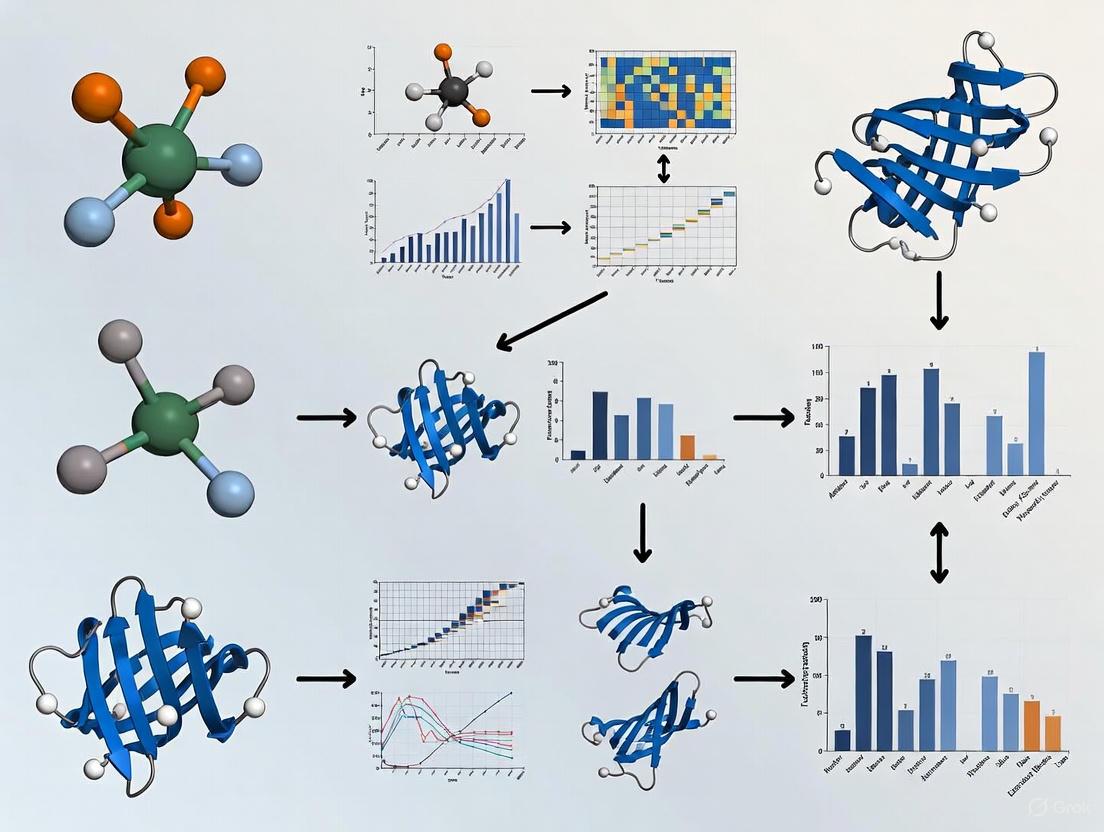
This article provides a comprehensive overview of how machine learning (ML) is revolutionizing the navigation of protein fitness landscapes to accelerate protein engineering.
Machine Learning to Navigate Protein Fitness Landscapes: A Comprehensive Guide for Researchers and Drug Developers
Abstract
This article provides a comprehensive overview of how machine learning (ML) is revolutionizing the navigation of protein fitness landscapes to accelerate protein engineering. It covers the foundational concepts of sequence-function landscapes and the challenge of epistasis, explores key ML methodologies from supervised learning to generative models, addresses critical troubleshooting for rugged landscapes and data scarcity, and offers a comparative analysis of model validation and performance. Aimed at researchers, scientists, and drug development professionals, this guide synthesizes current best practices and emerging trends to empower the efficient design of novel proteins for therapeutic and industrial applications.
Understanding Protein Fitness Landscapes and the Role of Epistasis
Defining the Protein Sequence-Function Fitness Landscape
This technical support center provides troubleshooting guides and FAQs for researchers applying machine learning to navigate and characterize protein fitness landscapes.
### Frequently Asked Questions (FAQs)
Q1: How complex are protein sequence-function relationships? Are high-order epistatic interactions common? Recent evidence suggests that sequence-function relationships are often simpler than previously thought. A 2024 study using a reference-free analysis method found that for 20 experimental datasets, context-independent amino acid effects and pairwise interactions explained a median of 96% of the phenotypic variance, and over 92% in every case. Only a tiny fraction of genotypes were strongly affected by higher-order epistasis. The genetic architecture was also found to be sparse, meaning a very small fraction of possible amino acids and their interactions account for the majority of the functional output [1]. However, the importance of higher-order epistasis can vary and may be critical for generalizing predictions from local data to distant regions of sequence space [2].
Q2: My ML model performs well on validation data but generates non-functional protein designs. What is happening? This is a classic sign of failed extrapolation. Model architecture heavily influences design performance. A 2024 study experimentally testing thousands of designs found that simpler models like Fully Connected Networks (FCNs) excelled at designing high-fitness proteins in local sequence space. In contrast, more sophisticated Convolutional Neural Networks (CNNs) could venture deep into sequence space to design proteins that were folded but non-functional, indicating they might capture general biophysical rules for folding but not specific function. Implementing a simple ensemble of CNNs was shown to make protein engineering more robust by aggregating predictions and reducing model-specific idiosyncrasies [3].
Q3: What machine learning strategies can I use when I have very limited functional data for my protein of interest? Two primary strategies address small data regimes:
- Leverage unsupervised learning representations: Using low-dimensional protein sequence representations learned from vast, unlabeled protein databases (e.g., via VAEs, LSTMs, or transformers) as input for your supervised model. For instance, the eUniRep representation, trained on 24 million sequences, enabled successful design of improved GFP variants with fewer than 100 labeled examples [4].
- Employ active learning cycles: Instead of a one-shot design, use an iterative design-test-learn cycle with methods like Bayesian Optimization. This allows you to strategically select which sequences to test to refine the model with maximal efficiency. One application engineered improved enzymes with less than 100 experimental measurements over ten cycles [4].
Q4: What is the difference between "global" (nonspecific) and "specific" epistasis, and why does it matter for modeling? Understanding this distinction is crucial for building accurate models.
- Specific Epistasis: Refers to interactions between specific amino acids at specific positions in the sequence (e.g., a pairwise interaction between residue 5 and residue 20).
- Global (Nonspecific) Epistasis: Refers to a nonlinear transformation that affects all mutations universally, often due to the limited dynamic range of the experimental assay. For example, a saturation effect where fitness scores cannot exceed a certain upper limit [1] [2]. Failing to account for global epistasis can make the genetic architecture appear unnecessarily complex. A model that jointly infers specific interactions and a global nonlinearity can provide a much simpler and more accurate explanation of the data [1].
### Troubleshooting Experimental Workflows
Problem: ML-guided directed evolution gets stuck in a local fitness peak. Solution: Integrate diversification strategies and model-based exploration.
- Recommended Protocol (ML-Assisted Directed Evolution):
- Start with a combinatorial site-saturation mutagenesis library.
- Screen a small subset of variants to generate initial sequence-function data.
- Train a supervised ML model (e.g., CNN, FCN) on this data.
- Use the model to predict the fitness of all unscreened variants in the combinatorial space.
- Fix the top-performing mutations to create a new parent for the next round.
- To avoid local optima, select multiple high-fitness variants from distinct clusters in sequence space for the next round, rather than just the single top predictor [4]. Using an ensemble model can also help identify more robustly beneficial mutations [3].
The workflow below illustrates this iterative cycle:
Problem: Poor model generalization when predicting the effect of multiple mutations. Solution: Carefully select your model architecture based on the extrapolation task. The table below summarizes the experimental performance of different architectures from a systematic study on the GB1 protein [3].
| Model Architecture | Key Inductive Bias | Best Use-Case for Design | Performance Note |
|---|---|---|---|
| Linear Model (LR) | Assumes additive effects; no epistasis. | Local optimization where epistasis is minimal. | Notably lower performance due to inability to model epistasis [3]. |
| Fully Connected Network (FCN) | Can capture nonlinearity and epistasis. | Local extrapolation for designing high-fitness proteins [3]. | Infers a smoother landscape with a prominent peak [3]. |
| Convolutional Neural Network (CNN) | Parameter sharing across sequence; captures local patterns. | Designing folded proteins; requires ensemble for robust functional design [3]. | Can design folded but non-functional proteins in distant sequence space [3]. |
| Graph CNN (GCN) | Incorporates protein structural context. | Identifying high-fitness variants from a ranked list [3]. | Showed high recall for identifying top 4-mutants in a combinatorial library [3]. |
| Transformer-based | Models long-range and higher-order interactions. | Scenarios where higher-order epistasis is critical [2]. | Can isolate interactions involving 3+ positions; importance varies by protein [2]. |
### The Scientist's Toolkit: Research Reagent Solutions
The following table details key computational and experimental resources for mapping fitness landscapes.
| Resource / Solution | Function in Fitness Landscape Research |
|---|---|
| Deep Mutational Scanning (DMS) | High-throughput experimental method to assess the functional impact of thousands to millions of protein variants in parallel [2] [5]. |
| T7 Phage Display | A display technology that can be coupled with high-throughput sequencing to quantitatively track the binding fitness of hundreds of thousands of protein variants [5]. |
| Reference-Free Analysis (RFA) | A computational method that dissects genetic architecture relative to the global average of all variants, providing a robust, simple, and interpretable model of sequence-function relationships [1]. |
| eUniRep / Learned Representations | Low-dimensional vector representations of protein sequences learned from unlabeled data, enabling supervised learning with very limited functional data [4]. |
| Bayesian Optimization (BO) | An active learning framework for iteratively proposing new protein sequences to test, balancing exploration (model uncertainty) and exploitation (predicted fitness) [4]. |
| Epistatic Transformer | A specialized neural network designed to explicitly model and quantify the contribution of higher-order epistatic interactions (e.g., 3-way, 4-way) to protein function [2]. |
Frequently Asked Questions (FAQs)
Q1: Why does my machine learning model perform poorly when predicting the effect of new, multiple mutations? This is a classic symptom of model extrapolation failure. When a model trained on single and double mutants is used to predict variants with three or more mutations, it operates outside its training domain. Performance can drop sharply in this extrapolated regime, as the model may not have learned the underlying higher-order epistatic interactions from the limited training data [3].
Q2: My experimental fitness measurements are noisy. How does this impact the study of landscape ruggedness? Fitness estimation error directly and significantly biases the inferred ruggedness of your landscape upward. Noise can create false local peaks and make epistasis appear more prevalent than it is. Without correction, all standard ruggedness measures (e.g., number of peaks, fraction of sign epistasis) will be overestimated. It is advised to use at least three biological replicates to enable unbiased inference of landscape ruggedness [6].
Q3: What is the single most important landscape characteristic that determines ML prediction accuracy? Research indicates that landscape ruggedness, which is primarily driven by epistasis, is a key determinant of model performance. Ruggedness impacts a model's ability to interpolate within the training domain and, most critically, to extrapolate beyond it [7].
Q4: Are some ML model architectures better at handling epistasis than others? Yes, architectural inductive biases prime models to learn different aspects of the fitness landscape. For instance:
- Linear Models: Assume additivity and cannot capture epistasis, leading to poor performance on rugged landscapes [3].
- Fully Connected Networks (FCN): Can capture nonlinearity and epistasis, often excelling at local extrapolation to design high-fitness variants near the training data [3].
- Convolutional Neural Networks (CNN): Can capture long-range interactions and have been shown to venture deep into sequence space, sometimes designing folded but non-functional proteins, suggesting they learn fundamental biophysical rules [3].
Q5: What is "fluid" epistasis? Fluid epistasis describes a phenomenon where the type of interaction (e.g., positive, negative, or sign epistasis) between a pair of mutations changes drastically depending on the genetic background. This is caused by higher-order epistatic interactions and contributes to the challenge of predicting mutational effects [8].
Troubleshooting Guides
Problem: Poor Model Performance on Combinatorial Mutants
Symptoms:
- High prediction accuracy on single/double mutants (interpolation) but low accuracy on triple+ mutants (extrapolation).
- The model fails to identify high-fitness combinations of beneficial mutations.
Solutions:
- Architecture Selection: Use model architectures capable of capturing epistasis, such as Fully Connected Networks (FCN), Convolutional Neural Networks (CNN), or Graph Convolutional Networks (GCN). Avoid purely additive models for highly epistatic landscapes [9] [3].
- Employ Ensembles: Implement a neural network ensemble, which averages predictions from multiple models trained with different random initializations. This has been shown to make protein engineering more robust and mitigate the risk of poor extrapolation from any single model [3].
- Active Learning: Instead of a single round of training and prediction, use an Active Learning-guided Directed Evolution (ALDE) strategy. Iteratively train the model with new experimental data from each round, allowing the model to gradually learn the complex landscape structure [9].
- Focused Training (ftMLDE): Use zero-shot predictors (e.g., based on evolutionary data or protein stability) to create an enriched, focused training set. This biases the training data toward more functional regions of sequence space, providing a better starting point for the model [9].
Problem: Overestimation of Landscape Ruggedness
Symptoms:
- An unexpectedly high number of local fitness peaks are inferred from the data.
- Evolutionary pathways appear heavily constrained or blocked.
Solutions:
- Increase Replication: Incorporate a minimum of three biological replicates for fitness measurements [6].
- Error-Aware Analysis: Use a statistical framework that incorporates fitness estimation error and replicate data to correct the bias in ruggedness measures. The table below summarizes common ruggedness measures and the impact of error on them [6].
Table 1: Common Measures of Fitness Landscape Ruggedness and Impact of Estimation Error
| Measure | Description | Effect of Fitness Estimation Error |
|---|---|---|
| Number of Maxima (Nₘₐₓ) | Count of fitness peaks (genotypes with no fitter neighbors). | Strong overestimation |
| Fraction of Reciprocal Sign Epistasis (Fᵣₛₑ) | Proportion of mutation pairs that show strong, constraining epistasis. | Strong overestimation |
| Roughness/Slope Ratio (r/s) | Standard deviation of fitness residuals after additive fit, divided by mean selection coefficient. | Overestimation |
| Fraction of Blocked Pathways (Fᵦₚ) | Proportion of evolutionary paths where any step decreases fitness. | Overestimation |
Problem: Navigating a Rugged Landscape with Many Local Peaks
Symptoms:
- Directed evolution experiments get stuck at suboptimal fitness peaks.
- Different evolutionary replicates converge to different final genotypes.
Solutions:
- ML-guided Design: Replace greedy hill-climbing with model-guided search. Use ML models to predict high-fitness sequences across the entire landscape, enabling jumps across fitness valleys that would be inaccessible to traditional methods [9].
- Broad Sampling: For model training, ensure the initial library samples a diverse set of genotypes rather than just single mutants. This gives the model a broader view of the landscape and its epistatic structure from the outset [7] [3].
- Landscape Topography Analysis: Before embarking on large-scale engineering, characterize the landscape's topography. Landscapes that are rugged but have broad basins of attraction around high peaks are more "navigable" and better suited for ML-guided search [8].
Experimental Protocols
Protocol 1: Evaluating ML Model Extrapolation Capacity
Purpose: To systematically test a model's ability to make accurate predictions far from its training data, a critical requirement for protein design.
Procedure:
- Data Partitioning: Start with a deep mutational scan dataset (e.g., all single and double mutants within a protein domain). Use all single and double mutants as the training set.
- Create Extrapolation Test Sets: Construct separate test sets containing all combinatorial triple mutants, quadruple mutants, etc., from the same set of positions.
- Model Training: Train your ML model(s) exclusively on the single and double mutant training set.
- Hierarchical Validation: Evaluate model performance (e.g., using Spearman's correlation or recall of top variants) separately on the single/double test set (interpolation) and on the triple+, quadruple+ test sets (extrapolation).
- Analysis: Compare performance degradation as a function of mutational distance from the wild-type sequence. This reveals the effective "range" of the model [3].
Protocol 2: Bias-Corrected Inference of Landscape Ruggedness
Purpose: To accurately measure the ruggedness of a fitness landscape from experimental data while accounting for and correcting the bias introduced by fitness estimation error.
Procedure:
- Data Collection with Replicates: Measure the fitness of all genotypes in the landscape of interest with a minimum of three biological replicates.
- Calculate True Fitness: For each genotype, compute the mean fitness across replicates.
- Generate Noisy Landscapes: Create a large number (e.g., 1000) of "observed" landscapes by resampling fitness values for each genotype from a normal distribution defined by the mean and standard deviation of its replicates.
- Measure Ruggedness: Calculate your chosen ruggedness measure (e.g., Nₘₐₓ, r/s) for both the "true" landscape (using mean fitness) and for each of the noisy "observed" landscapes.
- Estimate and Correct Bias: Calculate the mean ruggedness value across all the noisy landscapes. The difference between this mean and the "true" value estimates the bias. Use this to correct the initial measurement [6].
The Scientist's Toolkit
Table 2: Essential Research Reagents and Computational Tools
| Item / Resource | Function / Description |
|---|---|
| Combinatorial Landscape Datasets (e.g., GB1, ParD-ParE, DHFR) | Experimental data mapping sequence to fitness for many variants; essential for training and benchmarking ML models [9]. |
| Zero-Shot (ZS) Predictors | Computational models (e.g., based on evolutionary coupling, stability, or structure) that predict fitness without experimental data; used to create enriched training sets for ftMLDE [9]. |
| Model Ensembles (e.g., EnsM, EnsC) | A set of neural networks with different initializations; using their median (EnsM) or lower percentile (EnsC) prediction makes design more robust than relying on a single model [3]. |
| Fitness Landscape Analysis Software (e.g., MAGELLAN) | A graphical tool that implements various measures of epistasis and ruggedness, including the correlation of fitness effects (γ), for analyzing small fitness landscapes [10]. |
| High-Throughput Phenotyping Assay | An experimental method (e.g., yeast display, mRNA display, growth selection) to reliably measure the fitness/function of thousands of protein variants in parallel [3] [8]. |
Workflow and Relationship Diagrams
Model-Guided Protein Design Workflow
How Epistasis Influences ML-Guided Protein Design
Why Traditional Directed Evolution Reaches Local Optima
Frequently Asked Questions
Q1: What is a "local optimum" in the context of my protein engineering experiment?
- A: A local optimum is a protein variant that is the best in its immediate "neighborhood" of sequences (e.g., all sequences one or two mutations away), but is not the best possible variant in the entire sequence space. It's like being on the top of a small hill in a mountain range; you can't go higher by taking a single small step, even though a much taller peak exists elsewhere. Traditional directed evolution often gets stuck on these small hills because it only tests variants that are very similar to the current best one [11] [12].
Q2: The main screening round identified a great hit. Why does recombining its mutations with other good hits sometimes fail to improve the protein further?
- A: This failure is often due to epistasis—a non-additive, synergistic interaction between mutations [13] [11]. A mutation that is beneficial in one genetic background (e.g., your parent sequence) may be neutral or even detrimental when combined with other beneficial mutations. If mutations interact negatively, recombining them can lead to a less stable or less active protein, causing your experiment to stall at a local optimum [11]. As highlighted in one study, recombining the best single-site mutants sometimes yields variants with poorer performance than the parent [11].
Q3: My directed evolution campaign has plateaued after several rounds. Have I found the best possible variant?
- A: Not necessarily. You have likely exhausted the supply of beneficial mutations accessible via single steps from your current sequence. The global optimum may require a combination of mutations that individually appear neutral or slightly deleterious but are highly beneficial when present together. These combinations are invisible to traditional "greedy" directed evolution, which only accumulates obviously beneficial mutations [14] [12].
Q4: Are there specific protein properties that make an experiment more prone to getting stuck in local optima?
- A: Yes. Experiments are more prone to getting stuck when optimizing complex functions involving trade-offs (e.g., activity vs. stability) or when engineering entirely new-to-nature functions. These scenarios often create "rugged" fitness landscapes with many peaks and valleys, making it easy for a traditional search to get trapped [11] [12].
Troubleshooting Guide: Overcoming Local Optima
| Symptom | Likely Cause | Recommended Solution |
|---|---|---|
| Fitness plateaus after 2-3 rounds of mutagenesis and screening. | Exhaustion of accessible beneficial single mutations; rugged fitness landscape. | Switch to a machine learning-assisted approach like MLDE or Active Learning (ALDE) to model epistasis and propose high-fitness combinations [4] [11]. |
| Recombined "best hit" mutations result in inactive or poorly performing variants. | Negative epistasis between mutations. | Use neutral drifts to increase protein stability and mutational robustness before selecting for function, creating a more permissive landscape [13] [12]. |
| Need to optimize multiple properties simultaneously (e.g., yield and selectivity). | Conflicting evolutionary paths; multi-objective optimization creates a complex landscape. | Implement Bayesian Optimization (BO) with an acquisition function that balances the multiple objectives [4] [15]. |
Quantitative Comparison of Directed Evolution Strategies
The following table summarizes the key characteristics of different protein engineering strategies, highlighting how modern methods address the limitations of traditional directed evolution.
| Method | Key Principle | Data & Screening Requirements | Pros | Cons |
|---|---|---|---|---|
| Traditional Directed Evolution | Iterative "greedy" hill-climbing via random mutagenesis and screening [12]. | Requires high-throughput screening for each round. | Conceptually simple; requires no model. | Prone to local optima; ignores epistasis; screening-intensive [11]. |
| Machine Learning-Assisted Directed Evolution (MLDE) | Train a model on initial screening data to predict fitness and propose best recombinations [4]. | Requires a medium-throughput initial dataset (e.g., from a combinatorial library). | Accounts for some epistasis; more efficient than random recombination [4]. | Limited to the defined combinatorial space; performance depends on initial data quality. |
| Active Learning (e.g., ALDE) | Iterative Design-Test-Learn cycle using a model that quantifies uncertainty to guide the next experiments [11]. | Lower screening burden per round; total screening is drastically reduced. | Highly efficient; actively explores rugged landscapes; excellent at handling epistasis [11]. | Requires iterative wet-lab/computational cycles; more complex setup. |
Experimental Protocol: Implementing an Active Learning Workflow (ALDE)
The ALDE protocol is designed to efficiently navigate epistatic landscapes and escape local optima [11].
Define the Combinatorial Space:
- Select
kresidues hypothesized to influence function (e.g., active site residues). This defines a search space of 20k possible sequences [11].
- Select
Generate and Screen an Initial Library:
- Synthesize a library where the
kresidues are randomized, for example, using NNK codons. - Screen a random subset (e.g., hundreds) of variants from this library to collect initial sequence-fitness data [11].
- Synthesize a library where the
Computational Model Training and Proposal:
- Train a machine learning model (e.g., a neural network with uncertainty quantification) on the collected sequence-fitness data.
- Use the trained model to predict the fitness of all sequences in the defined 20k space.
- Apply an acquisition function (e.g., favoring sequences with high predicted fitness and high uncertainty) to select the next batch of variants to test experimentally [11].
Iterative Refinement:
- Synthesize and screen the top
Nvariants proposed by the model. - Add the new data to the training set and repeat steps 3 and 4 until a fitness goal is reached or performance plateaus [11].
- Synthesize and screen the top
The workflow for this protocol is summarized in the following diagram:
The Scientist's Toolkit: Research Reagent Solutions
| Item | Function in Experiment |
|---|---|
| NNK Degenerate Codon | A primer encoding strategy that randomizes a single amino acid position to all 20 possibilities (encodes 32 possible codons). Used in site-saturation mutagenesis to explore a specific residue [11]. |
| Error-Prone PCR (epPCR) Kit | A standard method for introducing random mutations throughout a gene. It mimics imperfect DNA replication to create diversity in early rounds of directed evolution [13]. |
| Combinatorial Library Synthesis | A service (or in-house method) to simultaneously randomize multiple predetermined amino acid positions. This is crucial for generating the initial dataset for MLDE or ALDE [14]. |
| High-Throughput Screening Assay | An assay (e.g., based on fluorescence, absorbance, or growth coupling) that allows you to rapidly test the function of thousands of protein variants. The quality and throughput of this assay are critical for generating reliable data [12]. |
| Gaussian Process Model / Bayesian Optimization | A class of machine learning models that not only predict fitness but also estimate the uncertainty of their predictions. This is particularly valuable for balancing exploration and exploitation in active learning [4] [11]. |
Technical Support Center
This support center provides troubleshooting guides and frequently asked questions (FAQs) for researchers employing machine learning (ML) to navigate protein fitness landscapes. The content is designed to help you identify and resolve common issues in your experimental workflows.
Troubleshooting Guides
Guide 1: Poor Model Generalization and Extrapolation
Problem: Your trained model performs well on validation data but fails to guide the design of novel, high-fitness protein variants, especially those with many mutations distant from the training set.
Explanation: This is a classic problem of model extrapolation. The model has learned the local fitness landscape around your training sequences but cannot accurately predict the fitness of sequences in unexplored regions of the vast sequence space [3].
Solutions:
- Implement Model Ensembles: Instead of relying on a single model, use an ensemble of models (e.g., 100 convolutional neural networks with different random initializations). Using the median (EnsM) or a conservative percentile (EnsC) of the ensemble's predictions can lead to more robust and reliable designs, making the engineering process more robust [3].
- Choose an Appropriate Architecture: Model architecture significantly influences extrapolation capability. Evidence from GB1 binding experiments shows that simpler models like Fully Connected Networks (FCNs) can excel at designing improved variants in local sequence space, while Convolutional Neural Networks (CNNs) may venture deeper but sometimes produce folded, non-functional proteins. Consider your goal—local optimization versus distant exploration [3].
- Utilize Informative Sequence Representations: Reduce data requirements and improve model generalization by using low-dimensional protein representations. These can be learned from large, unlabeled protein sequence databases (e.g., via UniRep) and capture key evolutionary or biophysical features, helping to guide predictions away from non-functional sequence space [4].
Table 1: Model Performance in Extrapolation Tasks
| Model Architecture | Strength in Local Search | Strength in Distant Exploration | Note on Design Outcomes |
|---|---|---|---|
| Linear Model (LR) | Low | Low | Cannot capture epistasis [3] |
| Fully Connected Network (FCN) | High | Medium | Excels at designing high-fitness variants near training data [3] |
| Convolutional Neural Network (CNN) | Medium | High | Can design folded but non-functional proteins in distant sequence space [3] |
| Graph CNN (GCN) | Medium | High | High recall for identifying top fitness variants in combinatorial spaces [3] |
| CNN Ensemble (EnsM) | High | High | Most robust approach for designing high-performing variants [3] |
Guide 2: Managing Small or Sparse Sequence-Function Datasets
Problem: You have limited functional data (tens to hundreds of variants) for a protein of interest, which is insufficient for training a powerful supervised ML model.
Explanation: Many proteins lack high-throughput functional assays, resulting in small labeled datasets. Deep learning models typically require large amounts of data to avoid overfitting and to learn complex sequence-function relationships [4].
Solutions:
- Leverage Transfer Learning: Use pre-trained models that have learned general protein sequence representations from massive datasets (e.g., 24 million sequences for UniRep). These representations can then be fine-tuned for your specific protein using your small labeled dataset, enabling effective learning with fewer than 100 examples [4].
- Incorporate Biophysical and Evolutionary Features: Instead of using only raw amino acid sequences, engineer feature vectors that include information like total charge, site conservation, and solvent accessibility. These features can distill essential aspects of protein function and enable learning with less data [4].
- Adopt Active Learning Cycles: Move from a one-shot training approach to an iterative "design-test-learn" cycle using methods like Bayesian Optimization (BO). BO proposes sequences that are both informative for the model and predicted to be high-fitness, maximizing the value of each experimental measurement. This approach has successfully engineered enzymes with less than 100 experimental measurements [4].
Guide 3: Software and Dependency Conflicts
Problem: Errors occur when running automated ML pipelines or loading pre-trained models, often manifesting as ModuleNotFoundError, ImportError, or AttributeError.
Explanation: These issues are frequently caused by dependency version conflicts. Automated ML tools and pre-trained models often rely on specific versions of packages like pandas and scikit-learn. Using an incompatible version can break the code [16].
Solutions:
- Create a Dedicated Conda Environment: Isolate your project dependencies to prevent conflicts with other projects. You can use scripts like
automl_setupto facilitate this process [16]. - Pin Package Versions: Determine the version of your AutoML SDK and install the corresponding compatible packages [16]:
- For AutoML SDK > 1.13.0, use:
- For AutoML SDK <= 1.12.0, use:
- Reinstall for Major Updates: When upgrading from an old SDK version (pre-1.0.76) to a newer one, uninstall the previous packages completely before installing the new ones [16]:
Frequently Asked Questions (FAQs)
Q1: What is the difference between in silico optimization and active learning for protein engineering?
A1: In silico optimization is a one-step process where a model is trained on an existing dataset and then used to propose improved protein designs, for example, by using hill climbing or genetic algorithms to find sequences with the highest predicted fitness [4]. In contrast, active learning (e.g., Bayesian Optimization) or Machine Learning-assisted Directed Evolution (MLDE) implements an iterative "design-test-learn" cycle. A model is used to propose new variants, which are then experimentally tested, and the new data is used to refine the model for the next round. This cycle drastically reduces the total experimental screening burden compared to traditional directed evolution or one-shot in silico design [4].
Q2: My model predictions are becoming extreme and unrealistic when exploring distant sequences. Is this normal?
A2: Yes, this is a recognized challenge. Neural network models have millions of parameters that are not fully constrained by the training data. When predicting far from the training regime, these unconstrained parameters can lead to significant divergence and extreme, often invalid, fitness predictions [3]. This phenomenon underscores the importance of using ensembles and experimental validation instead of blindly trusting single-model predictions in distant sequence space.
Q3: How can I decide between using a simple linear model versus a more complex deep neural network for my project?
A3: The choice involves a trade-off. Linear models assume additive effects of mutations and are unable to capture epistasis (non-linear interactions between mutations). They are simpler and require less data but can have lower predictive performance, especially for complex landscapes [3]. Deep neural networks (CNNs, FCNs, GCNs) can learn complex, non-linear relationships and epistasis, leading to better performance, but they require more data and computational resources. The best choice depends on the known complexity of your protein's fitness landscape and the size of your dataset [4] [3].
Experimental Workflow Visualization
The following diagram illustrates a robust, iterative workflow for machine learning-guided protein engineering, integrating the troubleshooting solutions outlined above.
Research Reagent Solutions
Table 2: Essential Research Reagents and Materials for ML-Guided Protein Engineering
| Reagent / Material | Function in Workflow |
|---|---|
| High-Throughput Assay System (e.g., yeast display, mRNA display) | Essential for generating the large-scale sequence-function data required for training and validating ML models. Measures protein properties like binding affinity or enzymatic activity for thousands of variants [4] [3]. |
| Gene Synthesis Library | Allows for the physical construction of the protein sequences proposed by the ML model, enabling experimental testing [3]. |
| Model Protein System (e.g., GB1, GFP, Acyl-ACP Reductase) | A well-characterized protein domain used as a testbed for developing and benchmarking ML-guided design methods. GB1, for instance, has a comprehensively mapped fitness landscape [4] [3]. |
| Pre-trained Protein Language Model (e.g., UniRep, ESM) | Provides a low-dimensional, informative representation of protein sequences that can be used as input to supervised models, drastically reducing the amount of labeled data needed for effective learning [4]. |
| ML Framework with Ensemble & BO Tools (e.g., TensorFlow, PyTorch, Ax) | Software libraries that provide the algorithms for building model ensembles, performing Bayesian optimization, and executing other active learning strategies critical for robust and data-efficient protein design [4] [3]. |
Key Machine Learning Strategies for Protein Engineering
Frequently Asked Questions (FAQs)
Q1: What does "modeling sequence-function relationships" mean in the context of protein engineering? This refers to the use of supervised machine learning to learn the mapping between a protein's amino acid sequence (the input) and a specific functional property, such as catalytic activity or binding affinity (the output). The resulting model can predict the function of unseen sequences, guiding the search for improved proteins. [4]
Q2: My model achieves high accuracy on the training data but fails to predict the function of new, unseen sequences. What is the cause? This is a classic sign of overfitting. Your model has likely learned noise and specific patterns from your limited training data rather than the underlying generalizable sequence-function rules. This is especially common with complex models like deep neural networks trained on small datasets. [17]
Q3: How can I prevent overfitting when my experimental dataset is small (e.g., only 100s of sequences)? Several strategies can help:
- Use Informative Sequence Representations: Instead of using raw amino acid sequences, leverage low-dimensional representations learned from millions of unlabeled sequences by unsupervised models (e.g., LSTMs, VAEs, Transformers). These representations, such as those from UniRep, distill biophysically relevant features and make learning more data-efficient. [4]
- Apply Regularization: Use techniques like dropout or L1/L2 regularization during model training to prevent the network from becoming overly complex and relying on spurious correlations. [17]
- Simplify the Model: Start with a simpler model (like a linear model) as a baseline. A well-tuned simpler model can often outperform an overly complex one on small datasets. [17]
Q4: What is the difference between MLDE and active learning for directed evolution?
- Machine Learning-Assisted Directed Evolution (MLDE) typically uses a model trained on a single, initial dataset (e.g., from a combinatorial library) to predict and select the top-performing sequences for a single round of testing. [4] [9]
- Active Learning (or Active Learning-Directed Evolution, ALDE) employs an iterative "design-test-learn" cycle. A model is trained and then used to propose a small, informative batch of sequences to test experimentally. The new data is used to refine the model, and the process repeats, often requiring far fewer total measurements than traditional methods. [4] [9]
Q5: What is epistasis and why does it challenge protein engineering? Epistasis occurs when the effect of one mutation depends on the presence of other mutations in the sequence. This creates a "rugged" fitness landscape with multiple peaks and valleys, making it difficult for traditional directed evolution to combine beneficial mutations, as they may not be beneficial in all genetic backgrounds. [9]
Q6: How do supervised learning models handle epistatic interactions? Different model architectures have different capacities to capture epistasis:
- Convolutional Neural Networks (CNNs) can learn local, non-linear interactions between nearby residues in the sequence. [4]
- Recurrent Neural Networks (RNNs), like LSTMs, process sequences step-by-step and can capture long-range dependencies. [4]
- Transformers use attention mechanisms to explicitly learn the specific long-range interactions between any residues in the sequence, making them particularly powerful for modeling complex epistasis. [4] [18]
Troubleshooting Guide
| Problem | Possible Causes | Potential Solutions |
|---|---|---|
| Poor Model Generalization | • Insufficient or non-representative training data.• Overfitting due to high model complexity.• Ignoring key feature engineering or domain knowledge. [17] | • Use low-dimensional protein representations (e.g., from UniRep). [4]• Apply regularization (dropout, L1/L2) and cross-validation. [17]• Incorporate biophysical features (charge, conservation). [4] |
| Inability to Find High-Fitness Sequences | • Model cannot extrapolate beyond training data distribution.• Rugged, epistatic fitness landscape. [9] | • Switch to an active learning framework for iterative refinement. [4]• Use models that capture epistasis (Transformers, CNNs). [4] [18]• Employ landscape-aware search algorithms (e.g., μSearch). [18] |
| High Variance in Model Performance | • Small dataset size.• Improper model evaluation or data leakage. [17] | • Use k-fold cross-validation to ensure performance consistency. [17]• Ensure no test set information is used in training/feature selection. [17] |
Experimental Protocols & Data Presentation
Protocol 1: Standard MLDE Workflow
This protocol outlines the steps for a standard Machine Learning-Assisted Directed Evolution campaign. [9]
- Library Design & Data Generation: Create a combinatorial site-saturation mutagenesis library targeting key residues.
- High-Throughput Screening: Screen a subset of the library to generate a dataset of sequences and their corresponding fitness measurements.
- Model Training: Train one or more supervised learning models (e.g., CNN, RNN, Transformer) on the sequence-function data.
- In Silico Prediction: Use the trained model to predict the fitness of all possible variants in the combinatorial space.
- Experimental Validation: Synthesize and experimentally characterize the top in silico predicted sequences.
The following diagram illustrates this workflow and the key decision points:
Protocol 2: The μProtein Framework for Advanced Optimization
This protocol describes a more advanced framework that combines a deep learning model with reinforcement learning for efficient landscape navigation. [18]
- Base Data Collection: Generate a deep mutational scanning dataset, ideally containing single-mutation effects.
- Train μFormer Model: Train a Transformer-based model on the mutational data. This model learns to predict fitness and, crucially, captures epistatic interactions between mutations.
- Setup μSearch: Use the trained μFormer model as an "oracle" for the μSearch reinforcement learning algorithm.
- Multi-Step Search: μSearch performs a multi-step, guided exploration of the sequence space, proposing multi-point mutants that are likely to have high fitness.
- Wet-Lab Validation: Test the proposed high-gain-of-function mutants in the laboratory.
Performance of MLDE Strategies Across Diverse Landscapes
A comprehensive study evaluated different ML-assisted strategies across 16 combinatorial protein landscapes. The table below summarizes key findings on how these strategies compare to traditional Directed Evolution (DE). [9]
Table 1: Comparative performance of machine learning-assisted strategies against traditional directed evolution. [9]
| Strategy | Description | Advantage over DE | Best For |
|---|---|---|---|
| MLDE | Single-round model training and prediction on a random sample. | Matches or exceeds DE performance; more pronounced advantage on rugged landscapes with many local optima. [9] | Standard landscapes where initial library coverage is good. |
| focused training MLDE (ftMLDE) | Model training on a library pre-filtered using zero-shot (ZS) predictors (e.g., based on evolution or structure). | Further improves performance by enriching training sets with more informative, higher-fitness variants. [9] | Landscapes with fewer active variants; leveraging prior knowledge. |
| Active Learning DE (ALDE) | Iterative rounds of model-based proposal and experimental testing. | Drastically reduces total screening burden by guiding the search with sequential model refinement. [4] [9] | Settings with low throughput assays and complex, epistatic landscapes. |
The Scientist's Toolkit: Research Reagent Solutions
Table 2: Essential computational tools and resources for modeling protein sequence-function relationships.
| Item / Resource | Function / Description | Relevance to Research |
|---|---|---|
| Deep Mutational Scanning (DMS) Data | High-throughput experimental method to measure the functional effects of thousands of protein variants. [18] | Provides the essential labeled dataset (sequences & fitness) for training supervised models. |
| Zero-Shot (ZS) Predictors | Computational models (e.g., EVmutation, SIFT) that predict fitness effects without experimental data, using evolutionary or structural information. [9] | Used in ftMLDE to pre-filter libraries and create enriched training sets, improving model performance. [9] |
| Representation Learning Models (e.g., UniRep, ESM) | Unsupervised models trained on millions of protein sequences to learn low-dimensional, biophysically meaningful vector representations of sequences. [4] | Enables supervised learning in remarkably small data regimes (<100 examples) by providing powerful feature inputs. [4] |
| Benchmark Datasets (e.g., FLIP, ProteinGym) | Standardized public datasets and tasks for evaluating and comparing fitness prediction models. [18] | Critical for fair model comparison, benchmarking performance, and advancing the field. [4] |
| μProtein Framework | A combination of the μFormer (Transformer model) and μSearch (RL algorithm) for navigating fitness landscapes. [18] | Demonstrates the ability to find high-gain-of-function multi-mutants from single-mutant data alone. [18] |
Frequently Asked Questions (FAQs)
FAQ 1: What is the fundamental difference between Active Learning and Bayesian Optimization in the context of protein engineering?
While both are iterative optimization strategies, their core objectives differ [19]:
- Active Learning aims to build the most accurate model possible of the entire protein fitness landscape while minimizing the number of expensive experimental measurements (labels). It does this by querying the points of highest uncertainty [20] [21].
- Bayesian Optimization (BO) aims to find the global optimum of a function—the single best protein sequence or variant—as efficiently as possible. It uses an acquisition function to balance exploring uncertain regions and exploiting known promising areas [22] [23] [19].
In short, Active Learning seeks to understand the entire map, while Bayesian Optimization is focused on finding the highest peak in the most direct way.
FAQ 2: My Bayesian Optimization algorithm is converging to a local optimum, not the global one. What could be wrong?
This is a common problem often linked to three key issues [23]:
- Incorrect Prior Width: An improperly specified prior for your surrogate model (e.g., a Gaussian Process) can hinder its ability to model the true complexity of the fitness landscape.
- Over-smoothing: A kernel with too large a lengthscale can oversmooth the model, causing it to miss narrow, high-value peaks in the fitness landscape.
- Inadequate Acquisition Maximization: If the process of finding the maximum of your acquisition function (e.g., Expected Improvement) is not thorough, it may miss the most promising points to evaluate next.
FAQ 3: How do I choose the right query strategy for my Active Learning experiment on protein sequences?
The choice depends on your data and goals [20] [21]:
- Uncertainty Sampling: Best when you have a large pool of unlabeled data and want to improve overall model accuracy. It selects points where the model's prediction is least confident.
- Query by Committee: Useful when you can train multiple models. It selects points where a "committee" of models disagrees the most, indicating high uncertainty.
- Expected Model Change: Focuses on points that would cause the greatest change to the current model if their labels were known.
For protein landscapes with complex epistatic interactions, Query by Committee can be particularly effective as it naturally captures model disagreement arising from complex, non-linear relationships between mutations.
Troubleshooting Guides
Problem: Poor Optimization Performance in Bayesian Optimization
Symptoms: The algorithm fails to find high-fitness protein variants, gets stuck in local optima, or shows slow improvement over iterations.
Diagnosis and Solution:
| Step | Diagnosis | Solution |
|---|---|---|
| 1. Check Surrogate Model | The Gaussian Process (GP) prior or kernel is mis-specified, leading to a poor fit of the protein fitness landscape [23]. | Tune the GP hyperparameters, especially the lengthscale and amplitude. Use a prior that reflects the expected smoothness and variability of your fitness function. |
| 2. Analyze Acquisition Function | The acquisition function (e.g., EI, UCB) is not effectively balancing exploration and exploitation [19]. | Adjust the exploration-exploitation trade-off. For UCB, increase the β parameter to encourage more exploration. For PI, adjust the ε parameter [19]. |
| 3. Verify Optimization | The internal maximization of the acquisition function is incomplete or gets stuck itself [23]. | Use a robust global optimizer (e.g., multi-start L-BFGS-B) to find the true maximum of the acquisition function in each iteration. |
Problem: Selecting an Ineffective Query Strategy in Active Learning
Symptoms: The model's performance does not improve significantly despite adding new data points, or the selected data points are not informative for the task.
Diagnosis and Solution:
| Step | Diagnosis | Solution |
|---|---|---|
| 1. Define Goal | The query strategy is misaligned with the ultimate goal of the experiment [21]. | If the goal is accurate landscape estimation, use uncertainty sampling. If the goal is finding high-performance variants, use a strategy that combines uncertainty with potential for high fitness, similar to BO. |
| 2. Assess Data Pool | The unlabeled data pool is not representative or lacks diversity. | Ensure your initial sequence library is diverse. Consider density-weighted strategies to select uncertain points that are also representative of the overall data distribution. |
| 3. Evaluate Model Uncertainty | The model's uncertainty estimates are unreliable. | Calibrate your model's confidence scores. For complex protein landscapes, use models that provide better uncertainty quantification, such as ensembles or Bayesian neural networks. |
Problem: High Experimental Cost and Labeling Bottleneck
Symptoms: The iterative cycle is prohibitively slow or expensive because the physical experiments (e.g., measuring protein activity) are a major bottleneck.
Diagnosis and Solution:
| Step | Diagnosis | Solution |
|---|---|---|
| 1. Analyze Batch Selection | The algorithm queries labels for points one-by-one, leading to many slow experimental cycles. | Implement batch active learning or batch BO. Select a diverse batch of points to query in parallel in each cycle, dramatically reducing the total number of experimental rounds [24]. |
| 2. Review Labeling Cost | Each experimental measurement is inherently expensive and time-consuming. | This is a fundamental constraint. The solution is to maximize the value of each experiment by using the strategies above to ensure every data point collected is highly informative [20] [24]. |
Experimental Protocols & Workflows
Protocol 1: Standard Iterative Design-Test-Learn Cycle for Protein Engineering
This protocol outlines a generalized workflow for using Active Learning and Bayesian Optimization to navigate protein fitness landscapes.
1. Design Phase: * Input: A starting set of labeled protein sequences (initial training data). * Action: Train a surrogate model (e.g., Gaussian Process, Bayesian Neural Network) on the labeled data. The model learns to predict protein fitness from sequence. * Query: Using the trained model, evaluate a large pool of unlabeled candidate sequences. Apply an acquisition function (for BO) or query strategy (for AL) to select the most promising sequence(s) to test experimentally.
2. Test Phase: * Synthesis & Measurement: Physically create the selected protein variant(s) (e.g., via site-directed mutagenesis or gene synthesis) and measure their fitness/functions in a high-throughput assay [25].
3. Learn Phase: * Labeling: The measured fitness value becomes the label for the new sequence. * Update: Add the newly labeled sequence to the training dataset.
4. Iterate: * Repeat the Design-Test-Learn cycle until a performance target is met, the experimental budget is exhausted, or no further improvement is observed.
The following diagram illustrates this iterative cycle and its integration within a larger research infrastructure, as seen in production-grade MLOps systems [26].
Protocol 2: Inferring Fitness Landscapes from Laboratory Evolution Data
This protocol is based on a specific study that used a statistical learning framework to infer the DHFR fitness landscape from directed evolution data [25].
1. Laboratory Evolution Experiment: * Perform multiple rounds (e.g., 15 rounds) of mutagenesis and selection on the target protein (e.g., Dihydrofolate Reductase, DHFR). * In each round, apply random mutagenesis (e.g., error-prone PCR) and select functional variants under a specific selective pressure (e.g., antibiotic trimethoprim resistance) [25]. * Track the population size and diversity over generations.
2. Sequence Sampling: * At multiple generational timepoints, extract samples from the evolving population. * Perform high-throughput DNA sequencing to obtain a collection of protein sequences from rounds 1, 5, 10, 15, etc.
3. Model Building and Inference: * Model Assumptions: Assume the evolutionary process can be modeled as a Markov chain, where sequence transitions depend on mutational accessibility and relative fitness. Assume a time-homogeneous process [25]. * Landscape Parameterization: Parameterize the fitness landscape using a generalized Potts model, which captures the effects of individual residues and pairwise interactions on fitness. * Likelihood Maximization: Estimate the Potts model parameters by maximizing the likelihood of observing the sequenced evolutionary trajectories under the assumed Markov model.
4. Model Application: * Landscape Analysis: Use the learned model to identify key interacting residues, detect epistasis, and understand the global structure of the fitness landscape. * In Silico Extrapolation: Run evolutionary simulations in silico starting from a given sequence to predict future evolutionary paths or design new functional proteins.
The workflow below details the specific steps of this data-driven inference approach.
The Scientist's Toolkit: Research Reagent Solutions
This table details key computational and experimental resources essential for implementing the iterative cycles described in this guide.
| Item | Function / Application | Example / Specification |
|---|---|---|
| Gaussian Process (GP) Surrogate Model | Serves as the probabilistic model of the protein fitness landscape, providing predictions and uncertainty estimates for Bayesian Optimization [23] [19]. | Kernel: RBF (Radial Basis Function) with tunable lengthscale and amplitude. Implemented in libraries like GPyTorch or scikit-learn. |
| Acquisition Function | Guides the selection of the next sequence to test by balancing exploration and exploitation in BO [23] [19]. | Expected Improvement (EI), Upper Confidence Bound (UCB), or Probability of Improvement (PI). |
| Query Strategy (AL) | The algorithm that selects the most informative data points from the unlabeled pool in Active Learning [20] [21]. | Uncertainty Sampling, Query by Committee, or Expected Model Change. |
| Directed Evolution Platform | The experimental system for generating and selecting diverse protein variants [25]. | Error-prone PCR for mutagenesis, a selection assay (e.g., growth in antibiotic like trimethoprim for DHFR), and E. coli as a host organism. |
| High-Throughput Sequencer | Enables the sampling of sequence populations from multiple rounds of laboratory evolution for fitness landscape inference [25]. | Illumina MiSeq or NovaSeq systems. |
| Potts Model / Statistical Framework | A parameterized model used to infer the fitness landscape from evolutionary trajectories, capturing epistatic interactions [25]. | A generalized Potts model with parameters estimated via maximum likelihood. |
Leveraging Zero-Shot Predictors for Cold-Start Problems
Frequently Asked Questions (FAQs)
Q1: What is the core challenge of the "cold-start problem" in machine learning, particularly for protein engineering? The cold-start problem refers to the challenge where a machine learning system struggles to make accurate predictions for new users, items, or scenarios for which it has little to no historical data. In the context of protein fitness landscapes, this occurs when you need to predict the functional impact of mutations in a novel protein or a protein region without any prior experimental measurements. This data scarcity makes it difficult for models reliant on collaborative or supervised learning to generalize effectively [27] [28].
Q2: How does zero-shot learning specifically address this data scarcity? Zero-shot learning (ZSL) is a paradigm where a model can make predictions for tasks or classes it has never seen during training. It avoids dependence on labeled data for the specific new task by transferring knowledge from previously learned, related tasks, often using auxiliary information [29]. For protein fitness prediction, a zero-shot model pre-trained on a large corpus of protein sequences and structures can be applied to predict the fitness of novel protein variants without requiring any new labeled fitness data for that specific protein [30] [31].
Q3: My zero-shot model performs poorly on intrinsically disordered protein regions. Why? This is a recognized limitation. Zero-shot fitness prediction models often struggle with intrinsically disordered regions (IDRs) because these regions lack a fixed 3-dimensional structure. The model's performance is tied to the quality of the input structural data. Using predicted structures for these disordered regions can be misleading, as the prediction algorithms may generate inaccurate or overly rigid conformations that do not represent the protein's true biological state, ultimately harming predictive performance [30] [31].
Q4: What is a simple yet effective strategy to boost the performance of my zero-shot predictor? Implementing simple multi-modal ensembles is a strong and straightforward baseline. Instead of relying on a single type of data (e.g., only sequence or only structure), you can combine predictions from multiple models that leverage different data modalities. For instance, ensembling a structure-based zero-shot model with a sequence-based model can lead to more robust and accurate fitness predictions by capturing complementary information [30] [31].
Q5: How can I validate a zero-shot model's prediction for a novel protein variant in the wet-lab? A foundational experimental protocol is a deep mutational scan. This involves creating a library that encompasses many (or all) possible single-point mutations of your protein of interest and using high-throughput sequencing to quantitatively measure the fitness or function of each variant in a relevant assay. The experimentally measured fitness scores can then be directly compared to the model's zero-shot predictions for validation [30] [32].
Troubleshooting Guides
Issue 1: Poor Predictive Performance on Novel Protein Targets
Problem: Your zero-shot model shows low accuracy when predicting fitness for a protein family not well-represented in its training data.
Solution:
- Action 1: Employ Multi-Source Domain Adaptation. Techniques like the Multi-branch Multi-Source Domain Adaptation (MSDA) plug-in can be integrated with standard models. This approach learns invariant features from the prior response data of similar drugs or proteins, enhancing real-time predictions for novel, unlabeled compounds [33].
- Action 2: Build a Multi-Modal Ensemble. Combine the strengths of different model architectures.
- Procedure:
- Obtain predictions from at least two different pre-trained zero-shot models (e.g., a structure-based predictor and an language model-based sequence predictor).
- Aggregate the predictions using a simple method like averaging or a weighted average based on the models' past performance on a held-out benchmark.
- Expected Outcome: This ensemble approach can smooth out individual model biases and leverage complementary information, leading to a general performance improvement of 5-10% in challenging cold-start scenarios [30] [33].
- Procedure:
Issue 2: Handling Intrinsically Disordered Regions (IDRs)
Problem: Predictions are unreliable for proteins or regions that are intrinsically disordered.
Solution:
- Action 1: Prioritize Experimental Structures. Whenever possible, use experimental structural data (e.g., from NMR that captures conformational ensembles) for disordered regions instead of relying solely on computationally predicted structures [30] [31].
- Action 2: Match Structural Input to Fitness Assay. Ensure the structural context used for prediction (e.g., a protein's bound vs. unbound state) matches the functional context being measured in the fitness assay. A mismatch can significantly degrade performance [30].
- Action 3: Leverage Ensemble Methods. A multi-modal ensemble that includes predictions from models not solely dependent on 3D structure can help mitigate the limitations of structure-based predictors in disordered regions [31].
Issue 3: Model Hallucination and Unstable Recommendations
Problem: The model generates confident but incorrect predictions or provides inconsistent outputs for similar queries.
Solution:
- Action: Implement a Knowledge-Guided RAG Framework. Use a framework like ColdRAG, which combines Retrieval-Augmented Generation (RAG) with a dynamically built knowledge graph.
- Procedure:
- Item Profiling: Transform available protein data (e.g., sequence, known domains, functional annotations) into a rich natural-language profile.
- Knowledge Graph Construction: Extract entities (e.g., protein names, domains, functions) and relations from these profiles to build a domain-specific knowledge graph that captures semantic connections.
- Reasoning-Based Retrieval: Given a user's query (e.g., "find proteins with similar fitness landscapes"), traverse the knowledge graph using LLM-guided edge scoring to retrieve candidate items with supporting evidence.
- Evidence-Grounded Ranking: Prompt the LLM to rank the final candidates based on the retrieved, verifiable evidence [28].
- Expected Outcome: This grounds the model's predictions in explicit evidence, substantially reducing hallucinations and improving the stability and explainability of recommendations in cold-start settings [28].
- Procedure:
Experimental Protocols & Data
Table 1: Performance Comparison of Cold-Start Strategies
This table summarizes quantitative improvements from different approaches to mitigating the cold-start problem, as reported in the literature.
| Strategy / Model | Dataset / Context | Key Metric | Performance Improvement | Reference |
|---|---|---|---|---|
| MSDA (Zero-Shot DRP) | GDSCv2, CellMiner (Drug Response) | General Performance | 5-10% improvement | [33] |
| TxGNN (Zero-Shot Drug Repurposing) | Medical Knowledge Graph (17k diseases) | Treatment Prediction Accuracy | Up to 19% improvement | [34] |
| ColdFusion (Machine Vision) | Anomaly Detection Benchmark | AUROC Score | ~21 percentage point increase (from ~61% to ~82%) | [35] |
| ColdRAG (LLM Recommendation) | Multiple Public Benchmarks | Recall & NDCG | Outperformed state-of-the-art zero-shot baselines | [28] |
| Transfer Learning (Inventory Mgmt) | Simulated New Products | Average Daily Cost | 23.7% cost reduction | [35] |
Protocol 1: Benchmarking a Zero-Shot Protein Fitness Predictor
Objective: To quantitatively evaluate the performance of a zero-shot structure-based fitness prediction model on a set of protein variants with known experimental fitness measurements.
Materials:
- A curated benchmark dataset like ProteinGym, which contains deep mutational scanning data for numerous proteins [30] [31].
- Pre-trained zero-shot fitness prediction model(s).
- Protein structures (experimental or predicted via tools like AlphaFold2) corresponding to the wild-type sequences in your benchmark.
Methodology:
- Input Preparation: For each protein variant in the benchmark (e.g., a single-point mutation), generate the input features required by your model. For structure-based models, this typically involves the 3D coordinates of the wild-type and/or mutant structure [30].
- Zero-Shot Inference: Run the pre-trained model on each variant without any training or fine-tuning on the target protein's data. Collect the model's predicted fitness score for each variant.
- Performance Calculation: Compare the model's predictions against the ground-truth experimental fitness values. Common metrics include:
- Spearman's Rank Correlation: Measures the monotonic relationship between predicted and true scores, assessing if the model can correctly rank variants by fitness.
- Pearson's Correlation: Measures the linear correlation between predicted and true scores.
- AUC-ROC: Useful if fitness is binarized (e.g., functional vs. non-functional) [30] [31].
Protocol 2: Conducting a Deep Mutational Scan (DMS) for Validation
Objective: To experimentally generate a ground-truth fitness landscape for a protein, against which computational predictions can be validated.
Methodology:
- Library Construction: Synthesize a gene library encoding the wild-type protein and all single-amino-acid mutants (or a targeted subset) you wish to test.
- Functional Selection: Clone this library into an expression system and subject the population to a functional assay that links protein fitness (e.g., enzymatic activity, binding affinity, growth rate) to cell survival or a selectable marker.
- Sequencing and Quantification: Use high-throughput DNA sequencing (e.g., Illumina) to count the frequency of each variant in the population both before and after selection.
- Fitness Score Calculation: For each variant, calculate an enrichment score based on its change in frequency during selection. This enrichment score serves as the experimental measure of fitness [32].
The Scientist's Toolkit
| Item | Function in Research | Example / Note |
|---|---|---|
| ProteinGym Benchmark | A standardized benchmark suite for assessing protein fitness prediction models on deep mutational scanning data. | Critical for fair comparison of zero-shot and other prediction methods [30] [31]. |
| Predicted Protein Structures | Serve as input features for structure-based zero-shot predictors when experimental structures are unavailable. | Resources like AlphaFold Protein Structure Database provide pre-computed predictions [30]. |
| Deep Mutational Scanning (DMS) Data | Provides ground-truth experimental fitness measurements for thousands of protein variants, used for model training and validation. | Available for specific proteins in repositories like the ProteinGym dataset [30] [32]. |
| Knowledge Graph | A structured representation of biological knowledge (entities and relations) that enables reasoning and evidence retrieval for frameworks like ColdRAG. | Can be dynamically built from protein databases and literature [28]. |
| Multi-modal Ensemble Framework | A software approach to combine predictions from diverse models (sequence-based, structure-based) to improve accuracy and robustness. | Simple averaging is a strong baseline; more complex weighting can be explored [30] [31]. |
Workflow and Strategy Visualizations
Diagram 1: Zero-Shot Protein Fitness Prediction Workflow
Diagram 2: Knowledge-Guided RAG for Cold-Start
Diagram 3: Multi-Modal Ensemble Strategy
Generative Models and Reinforcement Learning for Novel Sequence Design
Troubleshooting Guides & FAQs
Common Experimental Problems and Solutions
Problem 1: Poor Fitness of Generated Protein Sequences
- Question: "My generative model produces sequences that score well on the likelihood metric but show low fitness in experimental assays. What could be wrong?"
- Potential Causes & Solutions:
- Cause A: Distributional Mismatch. The generative prior (e.g., a protein language model) is biased towards its training data (like natural sequences from the PDB) and may not cover high-fitness regions for your specific function [36].
- Solution: Implement a steering strategy. Use plug-and-play guidance with a fitness predictor to condition the generative model on your property of interest without retraining the base model [37] [38]. For example, apply ProteinGuide to bias models like ESM3 or ProteinMPNN towards sequences with higher stability or activity [38].
- Cause B: Inadequate Exploration. The optimization is stuck in a local optimum.
- Solution: Integrate uncertainty-aware exploration. Ensemble multiple fitness predictors and use their predictive uncertainty to guide the search, similar to principles in Bayesian optimization [37]. Alternatively, use reinforcement learning (RL) algorithms like GRPO or wDPO which are designed to escape local optima [36].
Problem 2: Handling Small Labeled Datasets
- Question: "I only have a few hundred labeled sequence-fitness pairs. Which method is most effective for leveraging this data?"
- Potential Causes & Solutions:
- Solution A: Steered Generative Protein Optimization (SGPO). Frameworks like SGPO are specifically designed to work with small amounts (hundreds) of labeled data. They combine a generative prior with a fitness predictor for conditional generation, which is more data-efficient than training a supervised model from scratch [37].
- Solution B: Posterior Sampling. Techniques like decoupled annealing posterior sampling have shown strong performance in SGPO contexts with limited labels [37]. Plug-and-play guidance methods also reduce training costs compared to fine-tuning large models [37] [38].
Problem 3: Model Generates Unrealistic or Poorly-Structured Sequences
- Question: "The sequences my optimized model generates are not protein-like and are predicted to have poor structure. How can I maintain structural integrity?"
- Potential Causes & Solutions:
- Cause: Lack of Structural Priors. The optimization process has drifted away from the manifold of foldable sequences.
- Solution: Use a generative model with a strong structural prior. Integrate a confidence metric like pLDDT from a structure prediction model (e.g., ESMFold) as a reward signal during RL-based alignment [36]. Alternatively, use an inverse folding model like ProteinMPNN, which is inherently conditioned on backbone structure, and guide it with your fitness function [38].
Problem 4: Choosing Between Reinforcement Learning and Guidance
- Question: "When should I use reinforcement learning versus plug-and-play guidance for my protein optimization project?"
- Potential Causes & Solutions:
- Solution: The choice depends on your goals and resources. The table below summarizes key considerations based on recent research:
Table: RL vs. Guidance for Protein Design
| Feature | Reinforcement Learning (e.g., ProtRL, PPO) | Plug-and-Play Guidance (e.g., ProteinGuide, SGPO) |
|---|---|---|
| Primary Use Case | Permanently aligning a model's distribution to a new reward function [36]. | On-the-fly conditioning of a pre-trained model on a new property [38]. |
| Computational Cost | Higher (requires fine-tuning model parameters) [37]. | Lower (leaves model weights unchanged) [37] [38]. |
| Steerability | Can dramatically shift output distribution (e.g., change protein fold) [36]. | Effective at property enhancement while maintaining core sequence features [38]. |
| Best for | Long-term, dedicated projects aiming for a specialized model. | Rapid prototyping, iterative design-test cycles, and applying multiple different constraints. |
FAQ: Strategic Experimental Design
Q1: My fitness landscape is known to be rugged and epistatic. What ML strategy should I prioritize? A1: For rugged landscapes, Machine Learning-Assisted Directed Evolution (MLDE) and active learning (ALDE) strategies have been shown to outperform traditional directed evolution. Focused training (ftMLDE) that enriches your training set with high-fitness variants, selected using zero-shot predictors, can be particularly effective in navigating such complex terrains [9].
Q2: How can I integrate wet-lab experimental data back into the computational design cycle? A2: This is a core strength of iterative steered generation frameworks.
- Design: Use a generative model (e.g., a diffusion model or a protein language model) to create an initial library of sequences.
- Build & Test: Synthesize and assay these sequences in the lab for your target fitness property.
- Learn: Train a regression or classification model on the newly acquired experimental data.
- Guide: Use this newly trained predictor to guide the same generative model in the next design round, creating sequences predicted to have even higher fitness [37] [38]. This creates a closed-loop, adaptive optimization system.
Experimental Protocols
Protocol 1: Iterative Steered Generation for Protein Optimization (SGPO)
This protocol is adapted from studies on optimizing proteins like TrpB and CreiLOV using small labeled datasets [37].
1. Initial Library Generation
- Input: A pre-trained generative prior model (e.g., a discrete diffusion model or a protein language model like ESM3).
- Procedure: Generate an initial set of candidate protein sequences. This can be unconditional or conditioned on a starting scaffold.
- Output: A library of sequences (e.g., 2,000 variants) for the first round of testing.
2. Wet-Lab Fitness Assay
- Procedure: Clone, express, and purify the generated protein variants. Measure the desired quantitative property (e.g., enzymatic activity, fluorescence, binding affinity) using a low-throughput assay.
- Output: A dataset of several hundred labeled sequence-fitness pairs.
3. Fitness Predictor Training
- Input: The collected sequence-fitness data.
- Procedure: Train a supervised model (e.g., a regression model for continuous fitness or a classifier for high/low activity) to predict fitness from sequence.
- Output: A trained fitness predictor.
4. Guided Generation for Subsequent Rounds
- Input: The generative prior from Step 1 and the fitness predictor from Step 3.
- Procedure: Use a steering strategy to guide the generative model. For diffusion models, apply classifier guidance or posterior sampling. For other models, use a framework like ProteinGuide [38].
- Optional - Adaptive Sampling: Ensemble multiple fitness predictors to also estimate predictive uncertainty. Use a strategy akin to Thompson sampling to balance exploration (trying uncertain sequences) and exploitation (trying high-predicted-fitness sequences) [37].
- Output: A new, optimized library of sequences for the next round of testing.
5. Iteration
- Repeat steps 2-4 for multiple rounds, using the experimental data from each round to refine the fitness predictor and guide subsequent designs.
Protocol 2: Aligning Protein Language Models with Reinforcement Learning
This protocol is based on the ProtRL framework for shifting a model's distribution towards a desired property [36].
1. Base Model and Reward Definition
- Base Model: Select a pre-trained autoregressive protein language model (e.g., ZymCTRL).
- Reward Function: Define a reward function that quantifies the desired property. This can be an oracle (e.g., TM-score for structural similarity to a target fold) or a predictor (e.g., a classifier for a specific enzyme class).
2. Sequence Generation and Evaluation
- Procedure: The base model generates a batch of sequences.
- Evaluation: Each generated sequence is scored by the reward function.
3. Policy Optimization
- Algorithm Selection: Choose an RL algorithm such as:
- GRPO (Group Relative Policy Optimization): Draws multiple samples and computes advantage for each token based on the group's reward distribution [36].
- wDPO (Weighted Direct Preference Optimization): Learns directly from a dataset of preferred and non-preferred sequences without explicitly training a reward model [36].
- Procedure: Use the rewards and the chosen algorithm to compute a policy gradient and update the weights of the base language model.
4. Iteration
- Repeat steps 2 and 3 over multiple rounds. The model's policy (its sequence generation behavior) will progressively align with the reward function, increasing the likelihood of generating high-reward sequences.
Experimental Workflow Visualizations
Diagram 1: SGPO Adaptive Optimization Cycle
Diagram 2: RL for Protein Language Models
Research Reagent Solutions
Table: Key Tools and Models for Generative Protein Design
| Research Reagent / Tool | Type | Primary Function in Experiment |
|---|---|---|
| ESM3 [38] [39] | Generative Protein Language Model | A foundational model for generating protein sequences and structures. Can be guided or fine-tuned for specific tasks. |
| ProteinMPNN [38] | Inverse Folding Model | Generates sequences that are likely to fold into a given protein backbone structure. |
| ProteinGuide [38] | Guidance Framework | A general method for plug-and-play conditioning of various generative models (ESM3, ProteinMPNN) on auxiliary properties. |
| ProtRL [36] | Reinforcement Learning Framework | Implements RL algorithms (GRPO, wDPO) to align autoregressive protein language models with custom reward functions. |
| Discrete Diffusion Models (e.g., EvoDiff, DPLM) [37] [39] | Generative Model | Models for generating protein sequences; offer advantages for plug-and-play guidance strategies like classifier guidance. |
| Fitness Predictor | Supervised Model | A regression or classification model (trained on experimental data) that predicts protein fitness from sequence. Serves as the guide or reward signal. |
| Zero-Shot (ZS) Predictors [9] | Fitness Estimation | Computational tools (e.g., based on evolutionary data or structure) to estimate fitness without experimental labels. Used to enrich initial training libraries. |
Co-Optimizing Fitness and Diversity in Library Design
Core Concepts and FAQs
What is meant by "fitness" and "diversity" in the context of ML-guided library design?
- Fitness: A quantitative measure of a protein's performance on a desired property, such as catalytic activity for enzymes, fluorescence intensity, or binding affinity to a specific target. In machine learning models, this is the predicted output value for a given protein sequence [40] [4].
- Diversity: The variety of protein sequences within a designed library. A diverse library samples broad regions of sequence space, ensuring coverage of distinct functional variants and increasing the likelihood of uncovering multiple fitness peaks rather than converging on a single local optimum [40].
Why is co-optimization of fitness and diversity crucial for successful library design?
Traditional library design often prioritizes either fitness or diversity, but not both simultaneously. Co-optimization is essential because:
- High fitness alone can lead to libraries concentrated around a narrow peak, making models susceptible to false positives and missing potentially superior variants in other regions [41].
- High diversity alone may yield many non-functional variants, reducing screening efficiency [40].
- Balanced approach ensures identification of excellent starting variants while exploring the sequence landscape effectively, providing more informative training data for downstream machine learning-guided directed evolution (MLDE) [40].
What are the common indicators of a suboptimal library, and how can they be addressed?
Common issues and troubleshooting approaches are summarized in the table below.
| Observation | Possible Cause | Solution |
|---|---|---|
| Library yields mostly non-functional variants | Overly diverse sampling without fitness guidance | Increase the fitness weight (λ) in the Pareto optimization; apply stability filters based on structure or evolutionary data [40] [4]. |
| Limited sequence variation among functional hits | Over-emphasis on fitness, neglecting diversity | Increase diversity parameter (α); use diversification strategies in optimization algorithms [40] [4]. |
| Model performs well in silico but fails to predict functional variants experimentally | Noisy fitness landscape; model overfitting | Apply landscape smoothing techniques (e.g., Tikunov regularization); use ensemble models for more robust prediction; increase training data quality/quantity [41]. |
| Inability to find variants with multiple desired functions | Single-objective optimization | Implement multi-trait models that simultaneously predict several functions (e.g., manufacturability and targeting) to design multifunctional libraries [42]. |
Which machine learning models are most effective for zero-shot fitness prediction?
When experimental fitness data is scarce or absent (the "cold-start" problem), unsupervised or pre-trained models are essential. The following table compares methods based on benchmark performance.
| Model / Method | Type | Key Features | Performance Note |
|---|---|---|---|
| MODIFY (Ensemble) | Ensemble | Combines PLMs (ESM-1v, ESM-2) and sequence density models (EVmutation, EVE) [40]. | Outperformed baselines in 34/87 ProteinGym benchmarks; robust across proteins with low, medium, and high MSA depths [40]. |
| ESM-1v & ESM-2 | Protein Language Model (PLM) | Pre-trained on vast corpus of natural protein sequences; learns evolutionary patterns [40]. | Strong individual performers, but no single model consistently outperformed all others [40]. |
| EVmutation & EVE | Sequence Density Model | Based on evolutionary couplings from multiple sequence alignments (MSAs) [40]. | Effective for fitness prediction, particularly when ample homologous sequences exist [40]. |
| GGS | Energy-Based Model | Uses graph-based smoothing of the fitness landscape and Gibbs sampling [41]. | Achieved state-of-the-art results in extrapolating to higher fitness in GFP and AAV benchmarks [41]. |
Experimental Protocols
Protocol 1: Implementing the MODIFY Framework for Starting Library Design
This protocol designs a high-quality starting library by co-optimizing predicted fitness and sequence diversity using the MODIFY algorithm [40].
Key Materials:
- Parent Protein Sequence: The wild-type or starting sequence for the engineering project.
- Specified Residues: The set of amino acid residues targeted for mutagenesis.
- Computational Resources: Adequate computing power (e.g., high-performance cluster) is essential for running machine learning models.
Methodology:
- Input and Pre-processing: Input the parent sequence and the list of residues to be optimized.
- Zero-Shot Fitness Prediction: Utilize an ensemble model (e.g., combining ESM-1v, ESM-2, EVmutation) to generate a fitness score for variants in the combinatorial sequence space without prior experimental data [40].
- Pareto Optimization: Solve the multi-objective optimization problem: max(fitness + λ · diversity). The parameter λ controls the trade-off between exploiting high-fitness variants and exploring diverse sequence space.
- Library Generation: The algorithm outputs a set of optimal libraries along the Pareto frontier, where neither fitness nor diversity can be improved without compromising the other.
- Post-processing Filtering: Filter the sampled variants based on additional criteria like predicted protein foldability and stability to finalize the library for experimental synthesis [40].
MODIFY Library Design Workflow
Protocol 2: Multi-Trait AAV Capsid Engineering
This protocol details a machine-learning approach to engineer AAV capsids optimized for multiple desirable traits simultaneously, such as tissue targeting and manufacturability [42].
Key Materials:
- Initial Diverse AAV Library: A library containing a wide variety of capsid protein variants.
- Cell Lines and Animal Models: Relevant systems (e.g., human cells, mice) for in vitro and in vivo screening.
- High-Throughput Sequencing Capability: For characterizing selected capsids.
Methodology:
- Initial Library Screening: Screen the initial diverse AAV library in relevant systems (e.g., human cells, mice) to identify capsids that perform well for specific functions.
- Model Training: Use the screening data (capsid sequences and corresponding functional scores) to train multiple independent machine learning models. Each model is trained to predict a specific trait (e.g., liver targeting in mice, manufacturability in human cells) from the capsid's amino acid sequence [42].
- In Silico Library Design: Combine the trained models to design a new, focused library. Select capsid sequences that are predicted by the ensemble of models to perform well across all desired traits simultaneously.
- Validation: Synthesize and experimentally validate the top-performing, multi-functional capsids from the designed library in the relevant biological systems.
Multi-Trait AAV Capsid Engineering
The Scientist's Toolkit: Key Research Reagent Solutions
| Item | Function in Experiment |
|---|---|
| Q5 High-Fidelity DNA Polymerase | Used for accurate amplification of library DNA sequences, minimizing errors during PCR [43]. |
| PreCR Repair Mix | Repairs damage in template DNA before library construction, ensuring higher quality input material [43]. |
| Monarch PCR & DNA Cleanup Kit | Purifies and concentrates synthesized DNA libraries, removing enzymes, salts, and other impurities [43]. |
| Fit4Function Library | A machine learning-generated, moderately-sized AAV capsid library pre-enriched for variants predicted to package gene cargo effectively [42]. |
| Ensemble ML Models (e.g., MODIFY) | Software tools that combine multiple unsupervised models for robust zero-shot fitness prediction when experimental data is limited [40]. |
| Gibbs with Graph-based Smoothing (GGS) | A computational algorithm that smooths the fitness landscape to facilitate optimization, effective in low-data regimes [41]. |
Overcoming Challenges in Rugged Landscapes and Data-Scarce Scenarios
Why Model Predictions Fail on Highly Epistatic Landscapes
Frequently Asked Questions (FAQs)
1. What is epistasis and why does it cause models to fail? Epistasis occurs when the effect of one mutation depends on the presence of other mutations in the sequence [44]. In machine learning terms, it represents complex, non-additive interactions between features (amino acids or nucleotides). Models fail because many are built on assumptions of additivity or low-order interactions and cannot capture these complex dependencies, leading to inaccurate predictions when such interactions are prevalent [45] [46] [2].
2. My model has high training accuracy but poor experimental validation. Is this epistasis? While this can be a symptom of overfitting, it is a classic sign of a model failing to capture the underlying epistatic landscape. Your model may have learned the local, additive effects in your training data but fails to generalize to new sequence combinations where higher-order interactions come into play [3]. Performance degradation is particularly sharp when predicting sequences with more mutations than were present in the training data [3].
3. Are some machine learning models better at handling epistasis? Yes, model architecture significantly influences its ability to capture epistasis. Simple linear models, which assume strict additivity, perform poorly [3]. Nonlinear models like Fully Connected Networks (FCNs) and Convolutional Neural Networks (CNNs) show a better capacity to model epistatic interactions [4] [3]. Emerging evidence suggests that Transformer-based models explicitly designed for higher-order epistasis can capture complex interactions involving three or more positions [2].
4. I have limited data. Can I still model an epistatic landscape? Yes, but strategy is key. Leveraging pre-trained representations (e.g., from models like UniRep trained on large protein sequence databases) can make your modeling more data-efficient by providing a informative prior [4]. Furthermore, active learning or Bayesian optimization approaches, which iteratively select the most informative sequences to test, can optimize your experimental budget for exploring epistatic landscapes [4].
5. How can I quantitatively evaluate if epistasis is my problem? Benchmark your model's performance against a simple additive model. If your complex model fails to outperform the additive baseline on held-out test sets—particularly on variants with multiple mutations—it indicates an failure to capture epistasis [45] [9]. You can also use a held-out combinatorial library containing higher-order mutants (e.g., all triple or quadruple mutants) to explicitly test extrapolation capability [3].
Troubleshooting Guide: Diagnosing Failure on Epistatic Landscapes
Problem 1: The Model Fails to Generalize Beyond Training Data
- Symptoms: High accuracy on training and test sets from the same distribution, but drastically poor performance on new combinatorial libraries or sequences with more mutations.
- Diagnosis: The model is likely overfitting to the specific variants in the training set and cannot extrapolate to unseen regions of the fitness landscape where epistatic interactions dominate [3].
- Solutions:
- Implement Ensembling: Combine predictions from multiple models (e.g., 100 CNNs with different random initializations). Using the median prediction (EnsM) makes the search for high-fitness sequences more robust [3].
- Use Conservative Prediction: In an ensemble, using a lower percentile prediction (e.g., the 5th, EnsC) can guide a more cautious and stable exploration of the landscape [3].
- Architecture Selection: Simpler models like FCNs can sometimes outperform more complex CNNs in local extrapolation (e.g., designing sequences with 5-10 mutations) [3].
Problem 2: Poor Performance Even on Standard Test Splits
- Symptoms: Low predictive accuracy on a standard held-out test set that is randomly split from your experimental data.
- Diagnosis: The model may be underfitting due to an inability to capture the complex, non-linear relationships in the data. This is a fundamental failure to model epistasis [45] [2].
- Solutions:
- Switch Model Architecture: Move beyond linear and additive models. Adopt deep learning models like CNNs, GNNs, or Transformers that are known to capture non-linearities and interactions [4] [3] [2].
- Incorporate Prior Knowledge: Use models that integrate biophysical, structural, or evolutionary information. This provides a strong inductive bias to learn more generalizable relationships [4] [9].
- Check for Higher-Order Epistasis: The contribution of higher-order epistasis (interactions between 3+ sites) can be significant. If your model only captures pairwise effects, it may be insufficient. Consider a transformer-based "epistatic transformer" model designed to isolate these higher-order terms [2].
Problem 3: Model Proposes Functional but Non-Functional Sequences
- Symptoms: Designed sequences are well-expressed and folded (indicating stability) but lack the target function (e.g., binding or catalysis).
- Diagnosis: The model may be correctly capturing biophysical properties related to protein folding and stability but is failing to learn the specific functional constraints. Parameter-sharing models like CNNs are particularly prone to this, as they can learn general structural patterns that lead to folded but inactive proteins [3].
- Solutions:
- Incorporate Functional Constraints: Ensure your training data and model objective directly reflect the function of interest, not just stability. In multi-task learning, explicitly model function and stability as separate outputs.
- Refine Training Data: Use focused training (ftMLDE) to enrich your training set with functional variants, potentially using zero-shot predictors as a filter to avoid non-functional regions of sequence space [9].
Quantitative Evidence: Model Performance Degradation with Epistasis
The following table summarizes empirical findings on how model performance drops as a function of extrapolation distance and epistasis, using the GB1 protein domain as a model system [3].
Table 1: Model Extrapolation Performance on a GB1 Fitness Landscape
| Model Architecture | Performance on Single/Double Mutants (Training Regime) | Performance on 3-4 Mutants (Extrapolation Regime) | Key Finding on Epistatic Landscapes |
|---|---|---|---|
| Linear Model (LR) | Lower performance, cannot capture epistasis | Very poor performance | Fails entirely due to inherent assumption of additivity. |
| Fully Connected Network (FCN) | Good performance | Good recall with small design budgets | Excels at local extrapolation for designing high-fitness variants. |
| Convolutional Neural Network (CNN) | Good performance | Moderate performance, can design folded but non-functional proteins | Infers general biophysical rules; risk of proposing stable but inactive designs. |
| Graph CNN (GCN) | Good performance | Highest recall for identifying top 4-mutants | Better at navigating deeper sequence space to find high-fitness peaks. |
Experimental Protocols for Benchmarking Model Robustness to Epistasis
Protocol 1: Train-Test Split by Mutation Distance
Purpose: To systematically evaluate a model's ability to extrapolate to more highly mutated sequences, a key challenge in epistatic landscapes [3].
- Data Collection: Start with a deep mutational scanning dataset that includes fitness measurements for all single and double mutants of a protein (or a defined subset of positions).
- Define Training Set: Use all single and double mutants as the training data.
- Define Test Sets: Create multiple test sets:
- Test Set 1: All triple mutants.
- Test Set 2: All quadruple mutants.
- (Optional) Test distant sequences designed by in-silico optimization.
- Model Training & Evaluation: Train your model on the training set. Evaluate its performance (e.g., Spearman correlation, RMSE) on each of the held-out test sets. A significant drop in performance with increasing mutation count indicates limited extrapolation capacity.
Protocol 2: Evaluating Epistasis with Additive Baselines
Purpose: To explicitly test if a model captures non-additive (epistatic) effects, or merely recapitulates additive assumptions [45].
- Create an Additive Baseline Model: For any given variant, calculate its predicted fitness as the sum of the fitness effects of its constituent single mutations. This creates a simple additive model.
- Train a Complex Model: Train your machine learning model (e.g., CNN, FCN) on the same dataset.
- Benchmark on Combinatorial Data: On a test set of variants with multiple mutations (especially doubles or triples), compare the performance of your complex model against the additive baseline.
- Analysis: If your model fails to significantly outperform the additive baseline, it is not successfully capturing epistatic interactions in the data.
The workflow for diagnosing and addressing model failures on epistatic landscapes can be summarized as follows:
Diagram 1: A diagnostic workflow for troubleshooting model failures on epistatic landscapes.
Research Reagent Solutions
Table 2: Key computational and experimental reagents for studying epistasis.
| Reagent / Resource | Type | Function in Epistasis Research | Example/Reference |
|---|---|---|---|
| Combinatorial Library Datasets | Experimental Data | Provides ground-truth fitness measurements for multi-mutant variants, essential for training and benchmarking models that claim to capture epistasis. | GB1, ParD-ParE, DHFR landscapes [9] |
| Deep Mutational Scanning (DMS) | Experimental Method | High-throughput technique to generate sequence-function maps by measuring the fitness of thousands of variants in parallel. | [4] [2] |
| Epistatic Transformer | Software/Model | A specialized neural network architecture designed to isolate and quantify the contribution of higher-order epistasis (3+ interactions). | [2] |
| ThermoMPNN | Software/Model | A structure-based deep learning model for predicting changes in protein stability (ΔΔG), including for double mutants. | ThermoMPNN-D [45] |
| Model Ensembles (EnsM, EnsC) | Computational Method | Improves the robustness of sequence design by aggregating predictions from multiple models, mitigating instability in extrapolation. | [3] |
| Bayesian Optimization (BO) | Computational Method | An active learning strategy that iteratively proposes informative sequences to test, optimizing the experimental budget for exploring rugged landscapes. | [4] |
| EpiSIM | Software/Simulator | A genetic simulator that can generate data with defined epistasis models, useful for method development and validation. | [47] |
Strategies for Effective Optimization with Limited Data
Frequently Asked Questions (FAQs)
Q1: What does "limited data" mean in the context of machine learning for protein engineering? In protein engineering, "limited data" typically refers to having only tens to hundreds of experimentally measured sequence-function data points, which is a very small fraction of the vast possible sequence space. This creates a "small data" regime where standard machine learning models often fail due to overfitting and inability to capture complex epistatic relationships [48] [49]. For example, optimizing five epistatic residues in an enzyme active site involves a search space of 3.2 million (20⁵) possible variants, yet effective engineering was achieved with only ~0.01% of this space explored [50].
Q2: Which machine learning optimizers perform best with small biological datasets? While no optimizer is universally superior in all small-data scenarios, some generally perform better than others. Adam (Adaptive Moment Estimation) often serves as a good default choice as it combines the benefits of momentum and adaptive learning rates, which helps navigate complex loss landscapes efficiently [51] [52]. For very small datasets, standard Gradient Descent (batch) can be more stable than its stochastic counterpart because it computes the gradient on the entire dataset in each iteration, leading to more consistent updates [53]. It is critical to remember that the choice of model architecture and sequence representation often matters more than the optimizer itself when data is scarce [3].
Q3: How can I improve my model's predictions when I cannot collect more data? Leveraging transfer learning is one of the most effective strategies. This involves using a model pre-trained on a large, general protein sequence database (like UniProt) and then fine-tuning it on your small, specific dataset [49] [4]. This approach allows the model to start with a strong prior understanding of protein sequences, reducing the amount of labeled data needed for good performance. For instance, deep transfer learning models like ProteinBERT have shown promising performance in protein fitness prediction with limited labeled data [49].
Q4: My model seems to learn the training data but fails on new designs. What is happening and how can I fix it? This is a classic sign of overfitting, where the model memorizes the training examples rather than learning the underlying sequence-function relationship. To address this:
- Use an ensemble of models: Train multiple models with the same architecture but different random initializations and use their median prediction. This makes the design process more robust and prevents over-reliance on a single, potentially overfitted model [3].
- Apply regularization techniques: Methods like dropout and weight decay during training can prevent the model from becoming overly complex.
- Incorporate uncertainty quantification: Choose design candidates that the model is both confident about and predicts to have high fitness [50].
Q5: What is the difference between "in silico optimization" and "active learning"? These are two key strategies for using ML models to guide protein engineering:
- In silico Optimization: A one-step process where a model is trained on all available data and then used to directly predict and rank the best sequences from the entire design space, often using search heuristics like hill climbing [4].
- Active Learning: An iterative "design-test-learn" cycle. A model is trained on an initial dataset and used to propose a small batch of new sequences to test experimentally. The new data is then added to the training set to refine the model for the next round. This is highly data-efficient [50] [4]. A prominent example is Active Learning-assisted Directed Evolution (ALDE) [50].
Troubleshooting Guides
Problem: Model Performance Plateaus at a Local Optimum
Description: Your ML-guided engineering campaign is no longer finding improved variants, likely because the search is trapped in a local fitness peak.
Solution: Implement exploration-focused strategies.
- Adjust the Acquisition Function: If using Bayesian or active learning, use an acquisition function that balances exploration (testing uncertain regions) with exploitation (testing high-fitness regions). The Upper Confidence Bound (UCB) function is a common choice for this [50].
- Diversify Design Proposals: Instead of only selecting the top predicted variants, include some sequences that are diverse from each other but still have reasonably high predicted fitness. This ensures a broader exploration of the fitness landscape [4].
- Incorporate Epistatic Models: Use model architectures capable of capturing epistatic interactions (non-additive effects of mutations), such as Convolutional Neural Networks (CNNs) or Fully Connected Networks (FCNs), as they can identify complex, high-fitness combinations that additive models miss [50] [3].
Problem: Poor Model Extrapolation to Distant Regions of Sequence Space
Description: The model performs well on variants close to the training data but fails to accurately predict the fitness of sequences with many mutations, limiting its design power.
Solution:
- Choose the Right Architecture: Research indicates that simpler models like Fully Connected Networks (FCNs) can sometimes outperform more complex ones for local extrapolation (e.g., designing variants with 5-10 mutations). For deeper exploration, ensembles of CNNs are more robust [3].
- Leverage Protein Language Models (PLMs): Use feature representations derived from unsupervised protein language models (e.g., from ProteinBERT, ESM). These representations embed semantic information about sequences, which can guide the model much more effectively in uncharted regions of sequence space than one-hot encoding [49] [4].
- Validate Incrementally: When moving far from your training data, experimentally validate your model's predictions in stages (e.g., first 5 mutations, then 10, then 20) rather than making a large leap, to monitor the degradation of model performance [3].
Problem: Handling High-Dimensional, Combinatorial Search Spaces
Description: The number of possible variants is astronomically large (e.g., mutating 5+ positions), making exhaustive screening impossible and challenging for ML models.
Solution: Adopt a Bayesian Optimization (BO) framework with a suitable surrogate model.
- Use a Surrogate Model: Gaussian Process (GP) models are a traditional choice for BO as they naturally provide uncertainty estimates. For very complex landscapes, ensembles of deep learning models can be used to quantify uncertainty [4].
- Implement Batch Bayesian Optimization: This allows you to propose a batch of multiple sequences for parallel experimental testing in each cycle, greatly accelerating the overall engineering campaign. This is the core of methods like ALDE [50].
- Define a Manageable Design Space: Use domain knowledge (e.g., from structural biology or previous studies) to focus mutations on specific functional regions (like active sites) rather than the entire protein, thereby reducing the dimensionality of the problem [50].
Experimental Protocols
Protocol: Active Learning-assisted Directed Evolution (ALDE)
Background: This protocol outlines a machine learning-guided directed evolution workflow designed to efficiently optimize protein fitness with minimal experimental screening, specifically effective for navigating epistatic fitness landscapes [50].
Workflow Diagram:
Methodology Details:
- Define Design Space: Select
kspecific residue positions to mutate. - Initial Library Construction: Create an initial combinatorial library, for example, by using NNK degenerate codons for simultaneous mutagenesis at all
kpositions. Screen a random subset to collect initial sequence-fitness data. - Model Training: Train a supervised machine learning model (e.g., CNN, FCN) using the collected data. The input is the protein sequence variant, and the output is the measured fitness.
- Variant Proposal: Use the trained model to predict the fitness for all possible variants in the predefined
k-residue design space. Rank them using an acquisition function (e.g., expected improvement, upper confidence bound). - Iterative Cycling: Synthesize and experimentally test the top
N(e.g., tens to hundreds) proposed variants. Add this new data to the training set and repeat steps 3-5 until a fitness goal is achieved.
Key Considerations:
- Model Choice: Studies suggest that using an ensemble of models and frequentist uncertainty quantification can yield more consistent and robust results than single models [50].
- Epistasis: This method is particularly advantageous over traditional directed evolution when the target residues are suspected to exhibit strong epistatic interactions [50].
Quantitative Comparison of ML Model Performance for Protein Design
The following table summarizes findings from a systematic evaluation of neural network architectures extrapolating on the GB1 protein fitness landscape, illustrating their performance characteristics in data-limited regimes [3].
| Model Architecture | Key Inductive Bias | Strength in Limited Data Context | Weakness in Limited Data Context |
|---|---|---|---|
| Linear Model (LR) | Additive effects only | Simple, less prone to overfitting on very small datasets. | Cannot capture epistasis; poor performance on rugged landscapes [3]. |
| Fully Connected Network (FCN) | Non-linear, global interactions | Excels at local extrapolation; designs high-fitness variants near training data [3]. | Performance degrades sharply with deep extrapolation far from training set [3]. |
| Convolutional Neural Network (CNN) | Parameter sharing, local feature detection | Can venture deep into sequence space; captures local sequence motifs [3]. | May design folded but non-functional proteins when extrapolating too far [3]. |
| Model Ensemble (e.g., EnsM) | Averages multiple model predictions | Most robust for designing high-fitness variants; reduces variance from random initialization [3]. | Computationally more expensive to train and run. |
Research Reagent Solutions
| Reagent / Resource | Function in ML-Guided Protein Engineering |
|---|---|
| NNK Degenerate Codon Oligos | Used for library construction to randomize target codons, encoding all 20 amino acids and one stop codon, enabling the exploration of diverse sequence space [50]. |
| High-Throughput Screening Assay | A critical experimental component to generate the sequence-fitness data required for training ML models. Examples include yeast display for binding affinity or GC/HPLC for enzyme product yield [50] [3]. |
| Pre-trained Protein Language Model (e.g., ProteinBERT) | Provides powerful, low-dimensional numerical representations of protein sequences that encapsulate evolutionary and functional information, dramatically improving model performance with small datasets [49] [4]. |
| Bayesian Optimization Software | Software tools (e.g., custom scripts based on Gaussian Processes or BoTorch) that automate the iterative "design-test-learn" cycle by proposing which sequences to test next [50] [4]. |
Improving Model Robustness with Ensembles and Landscape Smoothing
Welcome to the Technical Support Center
This resource provides targeted troubleshooting guides and FAQs for researchers employing machine learning to navigate protein fitness landscapes. The content is designed to help you diagnose and resolve common issues related to model robustness, ensemble methods, and landscape smoothing techniques.
Frequently Asked Questions (FAQs)
FAQ 1: What are ensemble methods and why should I use them to study protein fitness landscapes?
Ensemble methods are machine learning techniques that combine multiple models to produce a single, more robust prediction [54] [55]. In the context of protein fitness landscapes, which can be rugged with many local optima, this approach is vital [32]. By aggregating the predictions of several base models, an ensemble can capture the strengths of each individual model while mitigating their weaknesses, leading to improved accuracy and reduced overfitting [54]. This is crucial for reliably identifying viable protein sequences that fold correctly and exhibit desired functions.
FAQ 2: My model's performance has plateaued during protein optimization. Could the "ruggedness" of the fitness landscape be the cause?
Yes, this is a common challenge. A rugged fitness landscape, characterized by many local fitness peaks and valleys, can easily trap optimization algorithms [32]. In such landscapes, the search process can get stuck on suboptimal sequences, making it difficult to find the global optimum. Strategies like landscape smoothing can help by creating a simplified version of the landscape that is easier to navigate, allowing the algorithm to bypass local traps [56].
FAQ 3: How can I tell if my model is overfitting to my protein sequence data?
Overfitting occurs when a model learns the training data too closely, including its noise, and performs poorly on new, unseen data [57] [55]. Signs of overfitting include:
- Exceptionally high accuracy on the training set but significantly lower accuracy on a validation or test set.
- The model fails to generalize and predict the fitness of novel protein sequences not present in the training data. Ensemble methods, particularly bagging (like Random Forest), are explicitly designed to reduce this overfitting by combining multiple models trained on different data subsets [54] [55].
FAQ 4: What is the minimum amount of data required to build a reliable model?
While the exact amount depends on the problem's complexity, a general rule of thumb is to have more than three weeks of data for periodic trends or a few hundred data points for non-periodic data [58]. For smaller datasets, which are common in early-stage research, ensemble methods can be particularly beneficial as they make efficient use of limited data by leveraging resampling techniques [54].
Troubleshooting Guides
Problem 1: Poor Model Generalization on Unseen Protein Variants
Symptoms: Your model performs well on your training data but makes inaccurate fitness predictions for new sequence variants.
| Potential Cause | Diagnostic Steps | Recommended Solution |
|---|---|---|
| Overfitting [55] | Compare performance on training vs. validation set. A large gap indicates overfitting. | Implement Bagging (e.g., Random Forest) to reduce variance [54] [55]. |
| Insufficient Data [57] | Check the size and diversity of your training dataset. | Use ensemble methods like boosting, which can be effective with smaller datasets, or explore data augmentation techniques [55]. |
| Non-Robust Features | Perform feature importance analysis (e.g., with Random Forest) [57]. | Apply feature selection (e.g., PCA, Univariate Selection) to remove non-informative features and reduce noise [57]. |
Experimental Protocol: Implementing a Random Forest Classifier This protocol is a practical starting point for creating a robust model using the bagging ensemble method [54].
- Import Libraries: Use a library like scikit-learn in Python.
- Prepare Data: Load your protein fitness data, where features could include sequence descriptors, physico-chemical properties, etc. Split the data into training and testing sets (e.g., 70%/30%).
- Initialize Model: Create a
RandomForestClassifier, specifying the number of base models (e.g.,n_estimators=100). - Train Model: Train the ensemble on your training data using the
fit()method. - Make Predictions & Evaluate: Use the trained model to predict on the test set and evaluate accuracy with
accuracy_score()[54].
Problem 2: Optimization Stagnation in Rugged Fitness Landscapes
Symptoms: Your search algorithm consistently converges to suboptimal regions of the protein fitness space and cannot escape local optima.
| Potential Cause | Diagnostic Steps | Recommended Solution |
|---|---|---|
| Rugged Landscape [32] | Visualize the fitness landscape (if possible) or analyze the prevalence of local optima. | Apply a landscape smoothing algorithm like HC Transformation to simplify the landscape [56]. |
| Poor Search Strategy | Analyze the search history to see if it cycles around the same fitness values. | Integrate a parallel cooperative metaheuristic (e.g., PC-LSILS) to allow multiple search processes to share information and escape local traps [56]. |
Experimental Protocol: Applying HC Transformation for Landscape Smoothing This methodology outlines how to smooth a combinatorial optimization problem, which can be adapted for discrete protein sequence spaces [56].
- Problem Definition: Define your protein optimization problem (e.g., maximizing fitness function
f(x)). - Construct a "Toy" Problem: Create a unimodal "toy" version of your problem based on a known high-quality local optimum. This toy landscape should be smooth and easy to navigate.
- Apply HC Transformation: Create a smoothed landscape
L_smoothby taking a convex combination of the original landscapeL_originaland the toy landscapeL_toyusing a parameterλ(ranging from 0 to 1):L_smooth = (1 - λ) * L_original + λ * L_toy. - Iterative Search: Use an algorithm like LSILS (Landscape Smoothing Iterated Local Search) to search on the smoothed landscape, iteratively updating the best-found solution and refining the smoothing process.
The following diagram illustrates the core workflow of this smoothing process:
The Scientist's Toolkit
Research Reagent Solutions
| Item | Function in Research |
|---|---|
| Random Permutant (RP) Method [59] | A computational technique to assess a protein scaffold's robustness by simulating how random sequence permutations affect folding, helping to identify designable scaffolds. |
| Structure-Based Models (SBMs) [59] [60] | Coarse-grained molecular dynamics models used to simulate protein folding dynamics and analyze energy landscapes, often with a funneled shape. |
| Markov State Models (MSMs) [60] | Models built from simulation data to understand the ensemble dynamics and mechanistic pathways of protein folding. |
| Parallel Cooperative LSILS (PC-LSILS) [56] | A parallel metaheuristic algorithm that combines landscape smoothing with multiple concurrent search processes to more effectively solve complex optimization problems like the UBQP and TSP. |
| Homogeneous Ensembles [55] | Ensembles composed of the same type of base model (e.g., all Decision Trees in a Random Forest), useful for reducing variance through parallel training on data subsets. |
Experimental Protocols & Workflows
Workflow: Combining Ensembles and Landscape Smoothing for Protein Design
This integrated workflow leverages both ensemble robustness and landscape smoothing to navigate complex protein fitness landscapes.
Key Quantitative Findings
Table 1: Performance of Landscape Smoothing on UBQP Instances Data adapted from tests on 10 UBQP instances (bqp2500.1 to bqp2500.10) showing the effectiveness of the HC Transformation method integrated into the LSILS algorithm [56].
| Instance | Known Best Solution | LSILS with HC Transformation | Standard ILS (No Smoothing) |
|---|---|---|---|
| bqp2500.1 | 6,119,, | ||
| bqp2500.2 | 6,, | ||
| Other Instances | ... | ... | ... |
| Summary | Outperformed standard ILS and a previous smoothing method (GH) on multiple instances. | Performance was less consistent and effective compared to the smoothing approach. |
Table 2: Comparison of Common Ensemble Techniques [54] [55]
| Technique | Learning Approach | Primary Benefit | Ideal Use Case |
|---|---|---|---|
| Bagging (e.g., Random Forest) | Parallel | Reduces Variance / Overfitting | High-variance base models (e.g., deep decision trees). |
| Boosting (e.g., XGBoost) | Sequential | Reduces Bias / Underfitting | Achieving high accuracy on complex, structured data. |
| Stacking | Hybrid (Parallel + Sequential) | Maximizes Predictive Accuracy | Heterogeneous models with complementary strengths. |
Selecting the Right Model Architecture for Your Protein System
This technical support guide provides answers to common questions researchers encounter when selecting machine learning model architectures for protein engineering projects within the context of navigating protein fitness landscapes.
Frequently Asked Questions
What are the primary categories of machine learning models used for protein fitness tasks?
Machine learning models for protein fitness landscapes generally fall into three main categories, each suited to different data availability and project goals [4]:
- Supervised Learning Models: These models learn the mapping from protein sequence to function from labeled experimental data. They are ideal when you have a dataset of sequences with measured fitness values (e.g., from deep mutational scanning). Common architectures include:
- Convolutional Neural Networks (CNNs): Effective at capturing local sequence motifs and patterns. They can predict the effects of unseen mutations and handle epistatic interactions within a local "receptive field" [4].
- Recurrent Neural Networks (RNNs/LSTMs): Process sequences in a sequential manner, useful for capturing dependencies along the protein chain [4].
- Transformers: Utilize attention mechanisms to learn long-range interactions between residues, offering state-of-the-art performance on many tasks [4].
- Generative Models: These models learn the underlying distribution of functional protein sequences and can generate novel sequences. They are used for de novo protein design or to explore vast areas of sequence space. Examples include Variational Autoencoders (VAEs) and models like ProteinMPNN [4] [61].
- Active Learning & Bayesian Optimization (BO): These are iterative "design-test-learn" frameworks rather than single model architectures. They are most useful when experimental data is very limited or expensive to acquire. A model (often a Gaussian process or a deep learning ensemble) is used to propose the most informative sequences to test next, maximizing fitness gains with minimal experiments [4].
How do I choose a model when I have very limited functional data (<100 labeled sequences)?
Working with small data requires strategies that reduce the data burden on the primary model. The most effective approach is to use learned protein sequence representations [4].
- Methodology: Instead of training a model from raw sequences, use a representation model (e.g., UniRep, ESM) that has been pre-trained on millions of unlabeled protein sequences from databases like UniProt. These models condense evolutionary and structural information into low-dimensional vectors.
- Protocol:
- Acquire Pre-trained Embeddings: Pass your protein sequences through a pre-trained model to get their numerical representations (embeddings).
- Train a Supervised Model: Use these embeddings as input features for a simpler supervised model (e.g., a linear model or a small neural network) trained on your small labeled dataset.
- In-silico Optimization: Use the trained model to screen or design new sequences.
- Example: The eUniRep representation has been successfully used to design improved GFP variants with fewer than 100 labeled examples, as the pre-trained knowledge guides proposals away from non-functional sequence space [4].
My model performs well in validation but proposes non-functional sequences. How can I troubleshoot this?
This is a common issue where the model has learned biases or is extrapolating poorly. Here is a troubleshooting guide and a checklist for model evaluation beyond simple accuracy.
- Check for Data Bias: Ensure your training data is not dominated by a few "hub" proteins. Models can learn to simply predict high fitness for any sequence containing residues from these hubs, rather than learning the true sequence-function relationship [62].
- Evaluate Extrapolation and Epistasis: Standard validation (e.g., random train-test splits) may not reflect a model's real-world performance for protein engineering. Adopt more rigorous evaluation metrics designed for these tasks [4]:
- Incorporate Structural or Biophysical Filters: Use a tool like AlphaFold2 to predict the structure of your top proposed sequences. A poorly folded or unstable structure is a red flag. You can also use computational energy functions (e.g., from Rosetta) to filter designs [63] [61] [64].
Table: Key Evaluation Metrics for Protein Fitness Models
| Metric | Purpose | Why It Matters |
|---|---|---|
| Extrapolation Test | Assesses model performance on sequences that are distant from the training set. | Protein engineering often requires moving beyond known sequence space [4]. |
| Epistasis Test | Evaluates the model's ability to predict the fitness of combinations of mutations. | Non-additive effects between mutations are common and critical for function [4]. |
| Sparse Data Test | Measures performance when trained on very small subsets of data. | Simulates the real-world scenario of limited experimental data [4]. |
| Precision-Recall (P-R) Curve | Evaluates performance on imbalanced datasets where positive examples (functional proteins) are rare. | A more reliable metric than accuracy for real-world interactome prediction, where <1.5% of pairs may interact [62]. |
What is the difference between heuristic and provable algorithms in structure-based design, and when does it matter?
This distinction is critical for computational protein design where the goal is to find a sequence that folds into a target structure and performs a function.
- Heuristic Algorithms (e.g., Simulated Annealing in Rosetta): Use stochastic processes to search the vast space of sequences and conformations. They are fast and can handle very complex biophysical models but offer no guarantee that the found solution is the optimal one (Global Minimum Energy Conformation, or GMEC) [64].
- Provable Algorithms (e.g., implemented in Toulbar2): Guarantee that, if they run to completion, the computed sequence is the GMEC or is provably close to it. They are often more computationally intensive but provide a higher level of confidence [64].
Table: Heuristic vs. Provable Algorithms
| Feature | Heuristic Algorithms | Provable Algorithms |
|---|---|---|
| Solution Guarantee | No guarantee of optimality [64]. | Guaranteed optimal or near-optimal relative to the model [64]. |
| Speed | Typically faster [64]. | Can be slower, but provides a confidence signal [64]. |
| Best Use Case | Early-stage exploration, very large or complex design problems [64]. | Final-stage design validation, isolating model failures from search failures [64]. |
| When it Matters | When experimental validation is low-throughput or costly, the certainty of a provable algorithm can save significant resources. If a heuristic-designed protein fails, you cannot tell if the model or the search algorithm was at fault [64]. |
The workflow below illustrates the decision process for integrating these algorithms.
Model Validation Workflow
Table: Essential Computational Tools for AI-Driven Protein Design
| Tool Name | Primary Function | Key Features & Use Case |
|---|---|---|
| AlphaFold2 / ColabFold [63] [61] | Protein Structure Prediction (T2) | Predicts 3D structure from sequence with high accuracy. Use for validating foldability of designed sequences. |
| Rosetta [61] [64] [65] | Protein Structure Prediction & Design | A comprehensive suite for de novo design, docking, and energy-based scoring. Highly customizable but has a steep learning curve. |
| ProteinMPNN [61] | Protein Sequence Generation (T4) | A deep learning model for "inverse folding": designing sequences for a given backbone structure. Fast and robust. |
| RFDiffusion [61] | Protein Structure Generation (T5) | Generates novel protein backbones de novo or from scaffolds. Used for creating entirely new protein folds. |
| SWISS-MODEL [66] [65] | Homology Modeling (T2) | Web-based, automated tool for comparative modeling. Excellent for beginners and when a homologous template exists. |
| I-TASSER [65] | Protein Structure & Function Prediction | Uses threading and fragment assembly for proteins with distant templates. Also predicts protein function. |
| Modeller [65] | Homology Modeling | A robust, script-based tool for comparative modeling. Offers high customization for advanced users. |
| ESMFold [63] | Protein Structure Prediction | A rapid, language model-based predictor. Useful for high-throughput predictions on large sets of sequences. |
Sampling and Training Set Design for Informative Data
Frequently Asked Questions (FAQs)
Q1: What is the primary advantage of using Machine Learning-Assisted Directed Evolution (MLDE) over traditional Directed Evolution (DE)?
A1: MLDE utilizes supervised machine learning models trained on sequence-fitness data to capture non-additive (epistatic) effects, which allows it to explore a broader scope of the protein sequence space and navigate rugged fitness landscapes more effectively than traditional DE. This can lead to the discovery of high-fitness variants with fewer screening rounds [9].
Q2: My protein fitness landscape is highly epistatic. How should I design my training set?
A2: For epistatic landscapes, a focused training (ftMLDE) approach is recommended. This involves selectively sampling variants to avoid populating your training set with low-fitness variants. The quality of this focused set can be significantly enriched using zero-shot predictors, which leverage prior information like evolutionary data or protein stability to estimate fitness without experimental data, helping you reach high-fitness variants more effectively [9].
Q3: How does the ruggedness of a fitness landscape impact my choice of ML model?
A3: Landscape ruggedness, driven by epistasis, is a primary determinant of ML model accuracy. Models struggle with prediction on highly rugged landscapes. Therefore, understanding the level of epistasis in your system can guide model selection. Your sampling strategy should also be adapted; landscapes with more local optima and fewer active variants require more sophisticated MLDE strategies to outperform traditional DE [9] [7].
Q4: Why is managing my raw data so important?
A4: Proper management of raw, unprocessed data is crucial for scientific integrity and reproducibility. Raw data serves as a dependable and credible source of information about the experimental setup and measurements. Storing original, timestamped files helps ensure authenticity, allows for the refinement of experimental protocols, and enables other researchers to validate and build upon your work [67].
Troubleshooting Guides
Problem: Poor Model Performance and Inaccurate Fitness Predictions
| Possible Cause | Diagnostic Steps | Solution |
|---|---|---|
| Non-informative training set | Analyze the fitness distribution of your sampled variants. Check if the set is dominated by low-fitness sequences. | Adopt a focused training (ftMLDE) strategy. Use zero-shot predictors to pre-select variants that are more likely to be functional for experimental testing, thereby enriching your training set [9]. |
| High landscape ruggedness | Calculate epistasis metrics for your dataset. Check if model performance degrades on landscapes known to be highly epistatic. | Ensure your training data is sufficient and sampled to capture interactions. Consider ML architectures specifically designed to model complex interactions, as performance varies significantly with ruggedness [7]. |
| Insufficient training data | Plot a learning curve (model performance vs. training set size). | If possible, expand the diversity of your training set. Utilize multi-task learning frameworks that can integrate data from multiple related deep mutational scanning experiments to improve prediction [68]. |
Problem: Failure to Discover Improved Variants in Directed Evolution Campaign
| Possible Cause | Diagnostic Steps | Solution |
|---|---|---|
| Trapped in a local fitness optimum | Analyze the sequence diversity of your selected variants. If they are highly similar, you may be stuck. | Incorporate recombination or structure-guided mutagenesis to explore distant regions of sequence space. Use the ML model to predict high-fitness sequences outside the immediate neighborhood of your current variants [12] [69]. |
| Ineffective sampling strategy | Compare the performance of random sampling versus focused sampling for your specific landscape. | For challenging landscapes with few active variants, move from simple random sampling to MLDE and active learning (ALDE), which iteratively selects the most informative variants to test next [9]. |
Key Experimental Protocols and Data
Protocol 1: Benchmarking ML Models on Protein Fitness Landscapes
This methodology is used to evaluate the effectiveness of different machine learning architectures across diverse landscape attributes [9] [7].
- Landscape Selection: Select a set of experimental combinatorial fitness landscapes that span different protein systems (e.g., GB1, ParD-ParE, dihydrofolate reductase) and function types (binding, enzyme activity) [9].
- Define Performance Metrics: Establish key metrics for evaluation. These typically include:
- Interpolation Accuracy: Prediction accuracy for variants within the domain of the training data.
- Extrapolation Accuracy: Prediction accuracy for sequences outside the training domain.
- Robustness to Epistasis: How performance changes as landscape ruggedness increases.
- Performance on Sparse Data: Accuracy when trained with limited data points [7].
- Model Training and Evaluation: Train a diverse set of ML models on data from the selected landscapes. Evaluate their predictions against the held-out experimental fitness data using the defined metrics.
- Analysis: Identify which model architectures and training strategies perform best against specific landscape attributes (e.g., ruggedness, number of active variants).
Protocol 2: Implementing Focused Training with Zero-Shot Predictors
This protocol details the use of zero-shot predictors to create enriched training sets for MLDE [9].
- Define Target Region: Identify the protein residues to be mutated (e.g., active site, binding interface).
- Generate Combinatorial Library: Create the full combinatorial sequence space for the targeted residues.
- Apply Zero-Shot Predictors: Use one or more zero-shot predictors, which leverage auxiliary information like evolutionary data or structural features, to compute a fitness score for every variant in the combinatorial library without any experimental data [9].
- Select Focused Training Set: Rank all variants based on their zero-shot predicted fitness. Select the top-performing variants (e.g., top 1%) to constitute the focused training set for experimental characterization.
- Train ML Model and Predict: Train an ML model on the experimentally measured fitness of the focused training set. Use the trained model to predict the fitness of the entire combinatorial library and select the best candidates for the next round or for final validation.
Table 1: Comparison of Zero-Shot Predictors for Focused Training
| Predictor Type | Basis of Prediction | Best Use Cases | Considerations |
|---|---|---|---|
| Evolutionary Data-Based | Statistical analysis of multiple sequence alignments to infer conservation and co-evolution. | General purpose; identifying structurally and functionally important mutations. | May be biased towards natural function rather than a novel desired function [9]. |
| Protein Stability-Based | Estimates the change in protein folding stability upon mutation. | Engineering thermostable enzymes; when protein folding is a constraint on function. | May miss functional mutations that are mildly destabilizing [9] [12]. |
| Structural Information-Based | Uses 3D protein structure to assess interactions (e.g., steric clashes, residue contacts). | Targeting binding interfaces or active sites where spatial constraints are critical. | Dependent on the availability and accuracy of a protein structure [9]. |
Table 2: Machine Learning Model Performance Determinants
| Model Characteristic | Impact on Performance | Recommendation |
|---|---|---|
| Architecture | Different models (e.g., CNN, GNN, Transformer) have varying capacities to capture epistasis and sequence context. | Choose architecture based on landscape ruggedness; no single model outperforms in all scenarios. Benchmark on your specific landscape type [7]. |
| Training Set Size | Performance typically increases with more data, but the rate of improvement depends on landscape complexity. | Use learning curves to diagnose if poor performance is due to insufficient data. For small datasets, prioritize focused sampling [9] [7]. |
| Training Set Diversity | Sampling from multiple regions of sequence space improves model ability to interpolate and extrapolate. | Avoid sampling only from a single local sequence neighborhood. Actively seek diverse, informative variants [9]. |
Experimental Workflow and Signaling Pathways
Diagram 1: ML-Assisted Directed Evolution Workflow
Diagram 2: Focused Training Set Design Strategy
The Scientist's Toolkit
Table 3: Key Research Reagent Solutions
| Item | Function in Experiment |
|---|---|
| Combinatorial Variant Libraries | Libraries of protein sequences simultaneously mutated at multiple residues, used to empirically map fitness landscapes and generate training data for ML models [9]. |
| Deep Mutational Scanning (DMS) Data | High-throughput experimental data measuring the fitness or activity of thousands of protein variants, serving as the foundational dataset for training fitness prediction models [68]. |
| Zero-Shot (ZS) Predictors | Computational tools that estimate protein fitness without experimental data, used to pre-select promising variants and create enriched training sets for focused MLDE [9]. |
| Public Dataset Repositories (e.g., Zenodo) | Platforms for depositing and accessing published fitness landscape data (e.g., GB1, ParD-ParE, DHFR), essential for benchmarking new models and methods [9]. |
Benchmarking ML Models and Experimental Validation for Real-World Impact
Standardized Metrics for Evaluating Model Performance and Extrapolation
Frequently Asked Questions
Q1: What are the core standardized metrics I should use to evaluate my protein fitness prediction model?
A comprehensive framework for evaluation should include the following six key performance metrics, which assess a model's ability to handle different challenges in fitness prediction [70]:
- Interpolation Performance: Measures how well the model predicts fitness for sequences within the same mutational regimes (e.g., same number of mutations from a reference sequence) that were present in the training data.
- Extrapolation Performance: Assesses the model's ability to predict fitness for sequences in mutational regimes beyond those represented in the training set. This is crucial for proposing novel, high-fitness variants.
- Robustness to Landscape Ruggedness: Evaluates how the model's accuracy is affected by the ruggedness of the fitness landscape, which is determined by the degree of epistasis (non-additive interactions between mutations).
- Positional Extrapolation: Tests the model's capability to predict the effect of mutations at sequence positions that were not varied in the training dataset.
- Performance with Sparse Data: Measures how well the model performs when trained on limited amounts of experimental data.
- Robustness to Sequence Length: Assesses whether the model maintains its performance as the length of the protein sequence being analyzed increases.
Q2: My model performs well during training but fails to guide the discovery of improved protein variants. What could be wrong?
This common issue often arises from poor model extrapolation capabilities and inadequate uncertainty quantification. A model might achieve high accuracy on a random test split but fail in real-world design because it cannot generalize beyond the specific distribution of its training data [70] [71]. To troubleshoot:
- Re-evaluate Your Test Sets: Move beyond simple random splits. Create test sets that specifically require extrapolation, such as sequences with more mutations than were in the training data, or sequences from a different region of sequence space (e.g., "designed" vs. "random" sequences) [71].
- Benchmark Extrapolation Metrics: Formally measure the metrics listed in Q1, particularly extrapolation performance and robustness to ruggedness [70].
- Check Uncertainty Calibration: A model that is overconfident in its incorrect predictions can derail an optimization campaign. Ensure your model's uncertainty estimates are well-calibrated, meaning that its predicted confidence intervals accurately reflect the true likelihood of a prediction being correct [71].
Q3: How does the "ruggedness" of a protein fitness landscape affect my choice of machine learning model?
Fitness landscape ruggedness, largely driven by epistasis, is a primary determinant of model performance [70]. The more rugged a landscape, the more difficult it is for any model to accurately predict fitness.
- Smooth Landscapes (Low Epistasis): Simple models, including linear regressors or Gaussian process (GP) models, can perform well. Extrapolation is more feasible.
- Rugged Landscapes (High Epistasis): More complex, non-linear models like deep neural networks (CNNs, RNNs) or ensembles are typically required. All models show decreased performance as ruggedness increases, and their ability to extrapolate diminishes significantly. In maximally rugged landscapes, models may fail completely at extrapolation [70].
- Actionable Advice: If you suspect high epistasis in your system, prioritize models with higher capacity for learning complex interactions and focus evaluation on extrapolation metrics under rugged conditions.
Q4: What is the role of Uncertainty Quantification in protein engineering, and which methods are most effective?
Uncertainty Quantification is critical for two main applications: Active Learning (selecting sequences to test to improve the model) and Bayesian Optimization (selecting sequences predicted to have high fitness) [71].
No single UQ method consistently outperforms all others across all protein datasets and tasks [71]. The choice depends on the specific context. The table below summarizes common UQ methods and their performance considerations based on a recent benchmark [71]:
| Method | Description | Key Considerations |
|---|---|---|
| Ensemble | Multiple models trained with different initializations. | Often robust; strong performance in Bayesian Optimization tasks [71]. |
| Gaussian Process (GP) | A probabilistic non-parametric model. | Provides natural uncertainty estimates but can be computationally heavy for large datasets [71]. |
| Dropout | Using dropout at inference time to approximate a Bayesian neural network. | A computationally efficient alternative to ensembles [71]. |
| Evidential | Models the prior over the data distribution to estimate uncertainty. | Can sometimes produce overconfident predictions on out-of-distribution data [71]. |
| SVI (Stochastic Variational Inference) | A Bayesian method for approximating posterior distributions in neural networks. | Performance can be variable depending on the task and dataset [71]. |
The benchmark found that while uncertainty-based sampling often outperforms random sampling in active learning, it frequently does not surpass a simple greedy (selecting the top predicted sequences) approach in Bayesian optimization [71].
Experimental Protocols & Methodologies
Protocol 1: A Standardized Framework for Benchmarking Model Performance
This protocol, derived from Sandhu et al., outlines how to rigorously evaluate models against the six key metrics using both synthetic (NK model) and empirical fitness landscapes [70].
- Dataset Generation & Sampling:
- Synthetic Landscapes: Use the NK model to generate fitness landscapes with tunable ruggedness (parameter
K). This allows for a controlled assessment of robustness to epistasis [70]. - Stratified Sampling: For a given protein dataset, stratify sequences into "mutational regimes" (Mn) based on their Hamming distance from a reference sequence (e.g., wild-type). This creates a structured framework for testing interpolation and extrapolation [70].
- Synthetic Landscapes: Use the NK model to generate fitness landscapes with tunable ruggedness (parameter
- Model Training & Evaluation:
- Train your model on a subset of mutational regimes (e.g., M0 to M2).
- Test for Interpolation: Evaluate predictive accuracy on held-out sequences from the same mutational regimes (M0 to M2).
- Test for Extrapolation: Evaluate predictive accuracy on sequences from higher mutational regimes (e.g., M3, M4, etc.) that were not seen during training.
- Repeat this process across landscapes of increasing ruggedness (
Kvalues) to assess robustness to ruggedness.
- Metrics Calculation:
- Use Mean Squared Error (MSE), Pearson's
r, and the Coefficient of Determination (R²) to quantify performance on each test set [70].
- Use Mean Squared Error (MSE), Pearson's
The following workflow diagram illustrates this benchmarking process:
Protocol 2: Benchmarking Uncertainty Quantification Methods
This protocol is based on the work of Greenman et al. for evaluating the quality of uncertainty estimates in protein sequence-function models [71].
- Dataset and Splits:
- Use standardized protein fitness benchmarks like FLIP (Fitness Landscape Inference for Proteins), which includes datasets for GB1, AAV, and thermostability.
- Use train-test splits that mimic real-world domain shifts (e.g., "Random vs. Designed," "1 vs. Rest") rather than only random splits.
- Model Training:
- Implement a panel of UQ methods (e.g., Ensemble, GP, Dropout, Evidential, SVI) on a base model architecture (e.g., a CNN).
- Train models on the training split. Use multiple random seeds for robust results.
- Uncertainty Quality Assessment:
- Evaluate on the test set using a suite of metrics:
- Calibration: Measure using Miscalibration Area (AUCE), which quantifies the difference between the model's confidence and its actual accuracy.
- Coverage and Width: Calculate the percentage of true values that fall within the 95% confidence interval (Coverage) and the size of that interval (Width). Ideal models have high coverage and low width.
- Accuracy: Standard metrics like
R²are still important. - Rank Correlation: Spearman's correlation assesses the model's ability to correctly rank sequences by fitness.
- Evaluate on the test set using a suite of metrics:
- Downstream Task Evaluation:
- Test the UQ methods in Active Learning loops (using acquisition functions like Upper Confidence Bound) and Bayesian Optimization tasks to see which UQ method leads to the most efficient discovery of high-fitness sequences.
The diagram below outlines this UQ benchmarking workflow:
The Scientist's Toolkit: Research Reagent Solutions
This table details key computational and data resources essential for evaluating models in protein fitness landscape research.
| Item Name | Function & Application | Key Notes |
|---|---|---|
| NK Landscape Model | A simulated fitness landscape model where the K parameter controls epistasis and ruggedness. Used for controlled benchmarking of model performance against known ground truth [70]. |
Allows for precise evaluation of how ruggedness affects interpolation, extrapolation, and overall model accuracy [70]. |
| FLIP Benchmark | A public benchmark suite containing multiple protein fitness landscapes (GB1, AAV, Meltome) with predefined tasks and train-test splits [71]. | Provides standardized datasets and realistic data splits (e.g., "Random vs. Designed") for equitable model comparison and evaluation under domain shift [71]. |
| Protein Language Models (ESM-2) | A deep learning model pre-trained on millions of protein sequences. Can be used to generate informative sequence representations (embeddings) [72]. | Using ESM-2 embeddings as model inputs can improve predictive performance and robustness compared to one-hot encodings, especially on some UQ tasks [71]. |
| Directed Evolution & DMS Data | Experimental data from Directed Evolution or Deep Mutational Scanning (DMS) studies. Provides the labeled sequence-function data for training and evaluating supervised models [4] [73]. | The quality, size, and sampling strategy of this dataset is a primary determinant of model success. Data should ideally span multiple mutational regimes [4] [70]. |
| Spearman's Rank Correlation | A statistical metric that assesses how well the model's predictions rank sequences by their true fitness. | Often more important than absolute error for tasks like prioritizing variants for experimental testing [72]. |
How do I choose between a linear regression model and a neural network for my protein fitness prediction project?
The choice depends on your dataset size, problem complexity, and need for interpretability.
| Factor | Linear Regression | Neural Networks |
|---|---|---|
| Relationship Modeled | Linear relationships [74] | Complex, non-linear relationships [74] |
| Interpretability | Highly interpretable; coefficients show feature impact [74] | "Black box"; difficult to interpret weights [74] |
| Data Requirements | Small to medium-sized datasets [74] | Large datasets [74] |
| Computational Resources | Fewer resources; faster training [74] | Significant resources; longer training times [74] |
| Ideal Use Case | Quick modeling, linear assumptions, high interpretability needs [74] | High accuracy on complex problems (e.g., image recognition, NLP) [74] |
For protein fitness landscapes, start with linear models for a small set of mutagenesis data. Use neural networks like Convolutional Neural Networks (CNNs) or Recurrent Neural Networks (RNNs) when dealing with large-scale deep mutational scanning data or when capturing complex epistatic interactions between mutations is critical [4].
What should I do if I have very limited sequence-function data for training?
Limited data is a common challenge in protein engineering. You can use the following strategies:
| Strategy | Description | Application Example |
|---|---|---|
| Informative Protein Representations | Use features like physiochemical properties (charge, conservation) instead of raw amino acid sequences [4]. | Predict thermostability from a handful of mutant measurements. |
| Transfer Learning with Protein Language Models (PLMs) | Use a model pre-trained on millions of diverse protein sequences (e.g., from UniProt) and fine-tune it on your small labeled dataset [4] [72]. | The eUniRep representation enabled improved GFP design with fewer than 100 labeled examples [4]. |
| Data Efficiency with Model Ensembles | Combine predictions from multiple models to improve robustness and estimate uncertainty with small data [4]. | Bayesian Optimization with CNN/RNN ensembles achieved higher fitness than Gaussian processes [4]. |
How can I effectively search the protein fitness landscape to find high-fitness variants?
Once a predictive model is built, use it to guide the search for optimal sequences.
| Search Method | Key Principle | Experimental Protocol | Best For |
|---|---|---|---|
| In Silico Optimization | Use heuristics (e.g., hill climbing) to find sequences with the highest predicted fitness from a trained model [4]. | 1. Train a model on initial data.2. Propose new sequences by optimizing the model's prediction.3. Synthesize and test top candidates. | Scenarios with a reliable model and capacity for solid-phase gene synthesis. |
| Active Learning / ML-Assisted Directed Evolution (MLDE) | An iterative design-test-learn cycle that uses model uncertainty to select informative sequences to test [4] [75]. | 1. Screen a initial library.2. Train a model on the results.3. Use the model to predict and screen a new, enriched library.4. Repeat steps 2-3. | Efficiently traversing large sequence spaces with reduced screening burden [4]. |
| Generative Models | Learn the underlying distribution of functional sequences from data to generate novel, high-fitness candidates [4]. | 1. Train a generative model (e.g., VAE, GAN) on a family of functional sequences.2. Sample new sequences from the model.3. Filter and test promising candidates. | Exploring vast sequence spaces beyond the regions sampled by initial data. |
My model performs well on training data but poorly on new variants. How can I prevent this overfitting?
Overfitting indicates your model has learned noise from limited data rather than the true sequence-function relationship.
- Gather More Data: The most effective solution. Increase the size and diversity of your training dataset [74].
- Apply Regularization: For linear models, use L1 (Lasso) or L2 (Ridge) regularization. For neural networks, use techniques like dropout or weight decay [74].
- Simplify the Model: Choose a less complex model. A linear model may generalize better than a deep network on a small dataset [76].
- Use Cross-Validation: Rigorously evaluate model performance using hold-out test sets or k-fold cross-validation to ensure it generalizes [4].
- Leverage Smoothing Techniques: For fitness landscapes, apply graph-based smoothing (e.g., Tikunov regularization) to create a more continuous and learnable landscape, which can improve generalization [77].
What are the key reagents and computational tools needed for ML-driven protein engineering?
A successful project requires both computational and experimental tools.
| Category | Item | Function / Description |
|---|---|---|
| Computational Tools | Protein Language Models (ESM-2, ESM-3) [72] | Learn informative representations from unlabeled sequence data for supervised learning. |
| Structured Datasets (UniProt) [4] | Provide vast amounts of sequence data for pre-training and analysis. | |
| Deep Learning Frameworks (PyTorch, TensorFlow) | Build, train, and deploy complex neural network models (CNNs, RNNs, Transformers). | |
| Experimental Reagents & Tools | High-Throughput Functional Assays | Generate the large-scale sequence-function data needed to train accurate models (e.g., deep mutational scanning) [4]. |
| Site-Saturation Mutagenesis Libraries | Create diverse variant libraries for initial model training or active learning cycles [4]. | |
| Gene Synthesis Services | Physically produce the novel protein sequences designed by in silico optimization. |
How do I handle epistasis (non-additive effects of mutations) in my models?
Epistasis is a major challenge as the effect of one mutation can depend on the presence of others.
- Choose Non-Linear Models: Simple linear models assume additive effects. Neural networks, especially CNNs and Transformers, inherently capture complex, non-linear interactions between residues in a sequence [4].
- Use Attention Mechanisms: Transformer architectures use attention to learn long-range interactions between different positions in the protein sequence, directly modeling epistasis [4].
- Incorporate Structural Information: If available, use protein structure data (e.g., distance matrices, contact maps) as input to inform the model about spatial proximity and potential interactions [78].
- Benchmark Model Performance on Epistasis: Use evaluation metrics specifically designed to test a model's ability to handle epistatic effects, beyond simple prediction error [4].
In Silico Benchmarking on Diverse Experimental Landscapes (e.g., GB1, DHFR, ParD-ParE)
Frequently Asked Questions
Q1: My machine learning model performs well on held-out test data but generates poor or non-functional protein sequences during guided design. What could be wrong? This is a classic sign of model extrapolation failure. Models trained on local sequence data (like single and double mutants) often fail to accurately predict the fitness of sequences far from the training regime [79]. Simpler models like Fully Connected Networks (FCNs) may be more reliable for designing sequences with improved function within a few mutations of the wild type, whereas complex Convolutional Neural Networks (CNNs) might design deeply mutated, folded proteins that are no longer functional [79]. Implementing a model ensemble can make designs more robust [79].
Q2: How can I account for the high experimental noise in my high-throughput fitness data when training a model? Ignoring experimental noise can lead to models that overfit to the noise, resulting in poor performance and inaccurate benchmarks [80]. Use a preprocessing method like FLIGHTED (Fitness Landscape Inference Generated by High-Throughput Experimental Data). FLIGHTED is a Bayesian framework that uses a calibration dataset to generate a probabilistic fitness landscape, representing fitness as a distribution (with a mean and variance) instead of a single, noisy value [80]. This provides a more robust foundation for model training.
Q3: What is more critical for improving my model's performance: using a larger dataset or a more advanced model architecture? Recent benchmarking studies that account for experimental noise indicate that data size is currently a more limiting factor than model scale or architectural complexity [80]. While the choice of top model architecture is important, its performance is heavily dependent on the amount of quality data available for training [80].
Q4: How can I integrate data from different types of perturbation experiments (e.g., CRISPR and chemical treatments) into a single model? A Large Perturbation Model (LPM) architecture is designed for this purpose. It represents an experiment as a disentangled tuple of Perturbation (P), Readout (R), and Context (C) [81]. This allows the model to learn from heterogeneous datasets and make predictions for novel combinations of P, R, and C that were not present in the training data, enabling integration of diverse data types [81].
Troubleshooting Guides
Issue: Poor Model Performance Due to Noisy Training Data
Problem: Your high-throughput experimental data contains significant noise, which is degrading the performance and reliability of your machine learning model [80].
Solution: Apply the FLIGHTED framework to preprocess your data and account for experimental uncertainty.
Step 1: Identify Your Experiment Type FLIGHTED requires a pre-trained model specific to your experimental method. Versions currently exist for single-step selection assays (e.g., phage display) and the DHARMA assay [80].
Step 2: Obtain a Calibration Dataset You will need a separate, noisy high-throughput dataset from your experiment type to train the FLIGHTED guide. This dataset must be independent of the data you intend to use for your final fitness model training [80].
Step 3: Generate a Probabilistic Fitness Landscape The FLIGHTED guide uses stochastic variational inference to process your noisy experimental results. It outputs a landscape where each sequence is assigned a mean fitness and a variance, quantifying the uncertainty [80].
Step 4: Train Your Final Model Use the mean fitness values from the FLIGHTED-generated landscape as the training labels for your downstream machine learning model. This process has been shown to significantly improve model performance, particularly for CNN architectures [80].
Issue: Model Failure When Designing Deeply Mutated Sequences
Problem: Your model successfully designs sequences with a few mutations but produces non-functional proteins when tasked with designing sequences that are heavily mutated from the wild type [79].
Solution: Understand model-specific extrapolation biases and use ensemble methods.
Step 1: Diagnose the Extent of Extrapolation Calculate the Hamming distance (number of amino acid changes) between your designed sequences and the wild-type sequence. Compare this to the average number of mutations in your training data. Performance can drop sharply beyond 4-5 mutations [79].
Step 2: Match the Model to the Design Goal
- For local extrapolation (2-5 mutations) aiming for improved function, Fully Connected Networks (FCNs) or Graph Convolutional Networks (GCNs) may be more reliable [79].
- For deep exploration of sequence space (e.g., >20 mutations), be aware that Convolutional Neural Networks (CNNs) may prioritize folded but non-functional sequences. Always validate designs experimentally [79].
Step 3: Implement a Model Ensemble To reduce variance and increase robustness, use an ensemble of models. For example, train 100 CNNs with different random initializations and use the median prediction (EnsM) to guide your design search [79]. This helps avoid paths based on the erratic predictions of a single model.
Step 4: Experimental Validation Experimentally test a diverse panel of designs from different model types and extrapolation distances. This is the only way to truly benchmark your model's extrapolation capability and refine your approach [79].
Experimental Protocols & Data
Table 1: Model Performance on GB1 Landscape Extrapolation Task
This table summarizes key quantitative findings from a systematic evaluation of neural networks trained on GB1 binding data and their ability to extrapolate to design 4-mutant combinations [79].
| Model Architecture | Spearman Correlation (4-Mutants) | Key Design Characteristic | Recommended Use Case |
|---|---|---|---|
| Linear Model (LR) | Lowest | Assumes additive effects; cannot capture epistasis. | Baseline benchmarking. |
| Fully Connected Network (FCN) | Moderate (similar to other non-linear models) | Excels in local extrapolation; designs high-fitness variants near training data. | Designing sequences with improved function within a few mutations. |
| Convolutional Neural Network (CNN) | Moderate (similar to other non-linear models) | Ventures deep into sequence space; may design folded, non-functional proteins. | Exploring distant regions of sequence space with caution. |
| Graph Convolutional Network (GCN) | Highest recall of top fitness variants | Infers landscape using structural context. | Identifying high-fitness variants from a large candidate set. |
Table 2: Key Research Reagent Solutions for Protein Fitness Landscapes
Essential materials and computational tools used in the featured experiments and field [80] [79].
| Reagent / Tool | Function / Description | Example Use Case |
|---|---|---|
| GB1 (IgG Binding Domain) | A small, well-characterized model protein used for high-throughput fitness landscape mapping. | Benchmarking model predictions and extrapolation capabilities [79]. |
| DHARMA Assay | A novel high-throughput assay that links molecular activity to base editing mutations in a canvas [80]. | Generating large-scale fitness data for training machine learning models [80]. |
| FLIGHTED | A Bayesian method for generating probabilistic fitness landscapes from noisy high-throughput data [80]. | Preprocessing experimental data to account for noise and improve model training [80]. |
| Large Perturbation Model (LPM) | A deep-learning model that integrates heterogeneous perturbation data (e.g., CRISPR, chemical) [81]. | Predicting outcomes for unseen combinations of perturbations, readouts, and contexts [81]. |
| yeast display | A high-throughput experimental system used to screen for protein foldability and binding function [79]. | Validating the foldability and function of ML-designed protein variants [79]. |
The engineering of proteins for novel therapeutics and biocatalysts is a central goal of modern biotechnology. However, the sequence space of any given protein is astronomically large, making exhaustive experimental screening impossible. The relationship between a protein's sequence and its function, or "fitness," can be visualized as a rugged landscape with peaks (high fitness) and valleys (low fitness). Machine learning (ML) has emerged as a powerful tool to navigate these protein fitness landscapes by learning from experimental data to predict which sequences will have desired properties, dramatically accelerating the design process [7] [9].
This technical support guide provides a detailed framework for the experimental validation of ML-designed enzymes and therapeutic proteins. It addresses common challenges and offers standardized protocols to ensure robust, reproducible results, framed within the context of a broader thesis on ML-guided protein engineering.
Key Concepts and Frequently Asked Questions (FAQs)
FAQ 1: What is a protein fitness landscape and why is it important for ML? A protein fitness landscape is a conceptual map that relates every possible protein sequence to its fitness (e.g., enzymatic activity, binding affinity, or stability). The "ruggedness" of this landscape, primarily caused by epistasis (where the effect of one mutation depends on other mutations present), determines how difficult it is to find optimal sequences. ML models trained on sequence-fitness data learn the structure of this landscape, allowing them to predict high-fitness variants without testing every single one [82] [9].
FAQ 2: What are the main types of ML models used for protein design? Different models are suited for different tasks and data availability. The table below summarizes key models and their typical applications.
Table: Key Machine Learning Models in Protein Design
| Model Type | Description | Common Use Cases in Biology |
|---|---|---|
| Supervised Learning (e.g., Ridge Regression, Random Forest) | Learns the relationship between protein sequence and experimentally measured fitness from a labeled dataset. | Predicting the activity of enzyme variants from sequence-function data [83] [9]. |
| Protein Language Models (e.g., ESM-2) | Large models pre-trained on millions of natural protein sequences to learn evolutionary constraints and patterns. | Predicting the fitness of viral variants (e.g., SARS-CoV-2 spike protein) and the effects of mutations [72]. |
| Generative Models (e.g., GANs, WGAN-GP) | Learns the underlying distribution of functional protein sequences to generate novel, plausible sequences. | De novo generation of therapeutic antibody sequences with desirable developability profiles [84]. |
FAQ 3: How do I know if my ML model's predictions are reliable? Model reliability depends on the quality and quantity of training data. Performance is typically assessed by holding out a portion of the experimental data during training and evaluating the model's predictions against this test set. Key metrics include the Spearman correlation (which measures how well the model ranks variants by fitness) and simple correlation coefficients. High performance on the test set indicates an ability to generalize to new, unseen sequences [9] [72].
Experimental Protocols for Validation
Protocol 1: Validating ML-Designed Enzyme Variants
This protocol is adapted from a study that used ML to engineer amide synthetases, resulting in variants with 1.6- to 42-fold improved activity [83].
1. Objective: To express, purify, and biochemically characterize the activity of ML-predicted high-fitness enzyme variants.
2. Materials:
- Plasmids containing genes for parent and ML-predicted variant enzymes.
- Cell-free protein synthesis (CFE) system OR appropriate expression cells (e.g., E. coli).
- Relevant substrates and cofactors for the enzymatic reaction.
- Analytical equipment (HPLC, MS, or plate reader for absorbance/fluorescence).
3. Methodology:
- Step 1: High-Throughput Expression. Use a CFE system for rapid, parallel synthesis of target enzyme variants. This bypasses time-consuming cell transformation and cultivation [83].
- Step 2: Reaction Setup.
- Prepare reactions containing the expressed enzyme, buffer, and substrates.
- Use industrially relevant conditions (e.g., ~1 µM enzyme, 25 mM substrate) to ensure practical relevance [83].
- Incubate at the optimal temperature for a fixed time (e.g., 30-60 minutes).
- Step 3: Activity Assay.
- Quench the reaction at the end of the time period.
- Quantify product formation using a suitable method (e.g., HPLC-MS).
- Ensure the assay is performed in the linear range with respect to time and enzyme concentration. This is critical for accurate activity calculations [85].
- Step 4: Data Analysis.
- Calculate conversion percentage for each variant.
- Determine enzyme activity in nmol product formed per min.
- Normalize the activity of ML-predicted variants to the parent enzyme to calculate fold-improvement.
4. Validation: Compare the experimentally measured fitness (activity) of the ML-predicted variants with the model's predictions. A successful validation will show a strong positive correlation.
Protocol 2: Validating ML-Designed Therapeutic Antibodies
This protocol is based on the experimental validation of deep learning-generated antibody sequences [84].
1. Objective: To produce and test the developability profiles of ML-generated antibody variable regions.
2. Materials:
- Genes encoding the in silico-generated VH and VL sequences.
- Mammalian expression system (e.g., HEK293 cells).
- Protein A or G resin for purification.
- Assays for stability, hydrophobicity, and aggregation (e.g., SEC-HPLC, DSF, SPR).
3. Methodology:
- Step 1: Cloning and Expression. Clone the VH and VL sequences into an immunoglobulin G (IgG) expression vector. Transfect mammalian cells for full-length antibody production and purify from the culture supernatant [84].
- Step 2: Developability Assessment.
- Expression Titer: Measure the concentration of purified antibody. High titer indicates the sequence is compatible with cellular machinery.
- Purity and Aggregation: Analyze by Size-Exclusion Chromatography (SEC). A high monomeric content (>95%) and low aggregation are desirable.
- Thermal Stability: Use Differential Scanning Fluorimetry (DSF) to determine melting temperature (Tm). Higher Tm indicates greater stability.
- Non-Specific Binding: Assess using assays like surface plasmon resonance (SPR) against non-target proteins. Low signal indicates low risk of off-target effects.
- Step 3: Functional Assay.
- If a target antigen is known, measure binding affinity (e.g., KD) using SPR or BLI.
4. Validation: Compare the developability metrics of the ML-generated antibodies to those of known clinical-stage therapeutics. Successful ML-designed antibodies will exhibit high expression, high monomer content, high thermal stability, and low non-specific binding, comparable to or better than marketed drugs [84].
Troubleshooting Common Experimental Challenges
Problem 1: Poor Correlation Between Predicted and Measured Fitness
- Potential Cause: The training data was too sparse or did not adequately capture epistatic interactions in the fitness landscape.
- Solution: Implement an active learning strategy. Use the initial model to select a new batch of variants that are predicted to be high-fitness or are highly uncertain. Test these variants experimentally and add the new data to retrain and improve the model iteratively [9].
Problem 2: ML-Designed Protein Fails to Express or is Insoluble
- Potential Cause: The model may have optimized for activity without sufficient constraints on biophysical properties like stability.
- Solution: Integrate zero-shot predictors or "focused training" during the ML stage. These predictors use evolutionary or structural information to pre-filter variant libraries for stability and expressibility before they are even tested, enriching the training set with more viable candidates [9].
Problem 3: High Experimental Noise Obscures True Fitness Signals
- Potential Cause: The enzyme activity assay is not operating in its linear range, leading to inaccurate measurements.
- Solution: Perform an enzyme dilution series to establish the linear range of your assay (see diagram below). Ensure that the amount of enzyme and the assay duration are chosen such that the rate of product formation is constant and proportional to the enzyme concentration [85].
Assay Linear Range Determination
The Scientist's Toolkit: Essential Research Reagents and Materials
The following table lists key reagents and their functions for setting up ML-guided protein engineering campaigns and validation experiments.
Table: Essential Reagents for ML-Guided Protein Engineering
| Reagent / Material | Function in ML-Guided Workflow |
|---|---|
| Cell-Free Protein Synthesis (CFE) System | Enables rapid, high-throughput expression of thousands of protein variants without live cells, crucial for generating large sequence-function datasets [83]. |
| Linear DNA Expression Templates (LETs) | PCR-amplified DNA templates for CFE; bypasses cloning and allows for rapid, parallel assembly of variant libraries [83]. |
| Deep Mutational Scanning (DMS) Libraries | Comprehensively mutated gene libraries used to generate the large-scale sequence-function data required for training robust ML models [72]. |
| Size-Exclusion Chromatography (SEC) | A critical analytical technique for assessing the aggregation state and monomeric content of purified therapeutic protein candidates (e.g., antibodies) [84]. |
| Surface Plasmon Resonance (SPR) | Used to measure the binding affinity (KD) and kinetics (kon, koff) of engineered therapeutic proteins (e.g., antibodies, enzymes) against their targets [84]. |
| Differential Scanning Fluorimetry (DSF) | A high-throughput method to determine protein thermal stability (Tm), a key developability metric for therapeutics and biocatalysts [84]. |
Guidelines for Selecting and Applying MLDE Strategies
Frequently Asked Questions (FAQs)
FAQ 1: What is MLDE and how does it differ from traditional directed evolution? Machine Learning-assisted Directed Evolution (MLDE) is a method that combines traditional directed evolution with supervised machine learning models to navigate protein fitness landscapes more efficiently [9]. Unlike traditional directed evolution, which is an empirical, greedy hill-climbing process, MLDE uses models trained on sequence-fitness data to predict high-fitness variants, allowing it to explore a broader scope of sequence space and navigate epistatic (non-additive) effects more effectively [9] [12].
FAQ 2: When should I consider using an MLDE strategy over traditional DE? You should consider MLDE when facing rugged fitness landscapes rich in epistatic effects, which are common when mutating residues in close structural proximity like binding surfaces or enzyme active sites [9]. MLDE strategies have been shown to outperform or at least match traditional DE performance across diverse landscapes, with advantages becoming more pronounced when landscape attributes pose greater obstacles, such as fewer active variants and more local optima [9].
FAQ 3: My experimental fitness data is limited. Can I still use MLDE? Yes. Deep transfer learning is a promising approach for scenarios with small datasets [49]. This method involves taking a model pre-trained on a large, general protein dataset (e.g., ProteinBERT) and fine-tuning it on your limited, specific experimental data. Studies show this can achieve competitive performance even with limited labeled data [49].
FAQ 4: What are zero-shot (ZS) predictors and how are they used in MLDE? Zero-shot predictors estimate protein fitness without requiring experimental data from your current project [9]. They are based on prior assumptions and leverage auxiliary information like evolutionary data, protein stability, or structural information [9]. In focused training MLDE (ftMLDE), ZS predictors can pre-select more informative, higher-fitness variants for the initial training set, enriching its quality and helping the model reach high-fitness variants more effectively [9].
FAQ 5: What are common reasons for MLDE model failure and how can I troubleshoot them? A common failure is overfitting, where a model learns the training data too well, including noise, but performs poorly on new, unseen data [86]. To address this:
Troubleshooting Common Experimental Issues
| Problem Area | Specific Issue | Potential Causes | Solution |
|---|---|---|---|
| Data Quality & Quantity | Model performs well on training data but poorly in validation. | Insufficient/Noisy data; Overfitting [86]. | Use cross-validation; Apply regularization; Increase data quality/quantity [86]. |
| Model Performance | MLDE offers no advantage over traditional DE. | Landscape may lack significant epistasis; Inappropriate ML model or training set [9]. | Use ftMLDE with ZS predictors to enrich the training set for complex landscapes [9]. |
| Strategy Selection | Uncertainty in selecting a ZS predictor. | Multiple ZS options with no definitive guidelines [9]. | Select a ZS predictor based on the specific protein properties and the type of prior knowledge it leverages [9]. |
| Implementation | Anomalous job failures during computational analysis. | Transient or persistent computational errors [58]. | Force-stop and restart the datafeed and job; Check node logs for persistent errors [58]. |
Experimental Protocols for Key MLDE Strategies
Protocol 1: Standard MLDE Workflow
- Initial Library Construction: Generate a diverse variant library, for example, via site-saturation mutagenesis (SSM) at targeted residues [9].
- First-Round Screening: Screen the initial library to obtain a dataset of sequences and their corresponding fitness values.
- Model Training: Train a supervised machine learning model (e.g., Random Forest, Deep Neural Network) on the sequence-fitness data from step 2.
- In Silico Prediction: Use the trained model to predict the fitness of all possible variants within the defined combinatorial space.
- Experimental Validation: Synthesize and experimentally test the top in silico predicted variants to identify improved clones.
Protocol 2: Focused Training MLDE (ftMLDE)
- ZS Predictor Selection: Choose one or more zero-shot predictors suitable for your protein system (e.g., based on evolutionary data or structural information) [9].
- Focused Library Design: Use the ZS predictor(s) to score all possible variants in your combinatorial space. Select a subset of variants predicted to have higher fitness for your initial training library, rather than sampling randomly [9].
- Screening & Model Training: Experimentally screen this focused library and use the data to train your ML model. This provides a higher-quality, more informative starting dataset.
- Prediction & Validation: Follow steps 4 and 5 of the Standard MLDE workflow.
Protocol 3: Active-Learning DE (ALDE) [9]
- Initialization: Start with a small, randomly sampled initial training set. Screen it to get fitness data.
- Iterative Loop: a. Model Training: Train an ML model on all data collected so far. b. Informed Selection: Use the model to select the most "informative" variants (e.g., those with high uncertainty or high predicted fitness) for the next round of screening. c. Experimental Update: Screen the newly selected variants and add the new sequence-fitness data to the training pool.
- Termination: Repeat the iterative loop until a fitness target is met or resources are exhausted.
Table 1: Comparison of Key MLDE Strategies [9]
| Strategy | Key Principle | Data Efficiency | Advantage | Best-Suited Landscape |
|---|---|---|---|---|
| Standard MLDE | Single round of model training on random sample. | Moderate | Simplicity; Broad exploration. | Landscapes with moderate epistasis. |
| Focused Training (ftMLDE) | Uses ZS predictors to create an enriched initial training set. | High | Reaches high-fitness variants faster. | Rugged, epistatic landscapes. |
| Active-Learning (ALDE) | Iterative model retraining with informed variant selection. | Highest | Continuously improves with new data. | Complex landscapes with unknown features. |
Table 2: Essential Research Reagent Solutions
| Item | Function in MLDE Experiments |
|---|---|
| Site-Saturation Mutagenesis (SSM) Library | Creates a library where targeted amino acids are mutated to many or all other possible amino acids [9]. |
| High-Throughput Screening Assay | Enables functional assessment of thousands of variants for selection or screening [9]. |
| Zero-Shot (ZS) Predictors | Computational tools that leverage auxiliary data to pre-score variants without experimental fitness data, guiding focused library design [9]. |
| Pre-trained Protein Language Models (e.g., ProteinBERT) | Provides a foundational model for transfer learning, especially effective when fine-tuned on small, project-specific datasets [49]. |
Workflow and Relationship Diagrams
Conclusion
Machine learning has fundamentally transformed protein engineering by providing powerful, data-driven strategies to navigate complex fitness landscapes. The key takeaways are that ML-assisted directed evolution consistently outperforms traditional methods, especially on rugged landscapes rich in epistasis; successful application requires carefully matching model architecture and sampling strategy to the landscape's properties and available data; and emerging techniques like landscape smoothing and zero-shot predictors are overcoming the cold-start problem. Future directions point toward the development of generalist biocatalysts for new-to-nature functions, tighter integration of lab-in-the-loop validation, and the increasing use of generative models and reinforcement learning to fully explore the vast potential of protein sequence space, with profound implications for drug discovery, synthetic biology, and biomedicine.
References
- 1. The simplicity of protein sequence-function relationships [https://www.nature.com/articles/s41467-024-51895-5]
- 2. Importance of higher-order epistasis in protein sequence- ... [https://elifesciences.org/reviewed-preprints/108005]
- 3. Neural network extrapolation to distant regions of the ... [https://www.nature.com/articles/s41467-024-50712-3]
- 4. Machine learning to navigate fitness landscapes for protein ... [https://pmc.ncbi.nlm.nih.gov/articles/PMC9177649/]
- 5. High Resolution Mapping of Protein Sequence–Function ... [https://pmc.ncbi.nlm.nih.gov/articles/PMC2938879/]
- 6. Unbiased inference of the fitness landscape ruggedness ... [https://pmc.ncbi.nlm.nih.gov/articles/PMC9018209/]
- 7. Investigating the determinants of performance in machine ... [https://pubmed.ncbi.nlm.nih.gov/40689706/]
- 8. Fluidity and Predictability of Epistasis on an Intragenic ... [https://elifesciences.org/reviewed-preprints/104848v2]
- 9. Evaluation of machine learning-assisted directed evolution ... [https://www.sciencedirect.com/science/article/abs/pii/S2405471225002200]
- 10. Measuring epistasis in fitness landscapes: The correlation ... [https://www.sciencedirect.com/science/article/abs/pii/S0022519316000771]
- 11. Active learning-assisted directed evolution [https://www.nature.com/articles/s41467-025-55987-8]
- 12. Exploring protein fitness landscapes by directed evolution [https://pmc.ncbi.nlm.nih.gov/articles/PMC2997618/]
- 13. In the Light of Directed Evolution: Pathways of Adaptive ... - NCBI [https://www.ncbi.nlm.nih.gov/books/NBK219720/]
- 14. Directed Evolution Webinar Q&A [https://www.thermofisher.com/us/en/home/life-science/cloning/synthetic-biology/synthetic-biology-webinars/directed-evolution-questions.html]
- 15. Optimisation strategies for directed evolution without sequencing [https://journals.plos.org/ploscompbiol/article?id=10.1371/journal.pcbi.1012695]
- 16. Troubleshoot automated ML experiments - Azure [https://learn.microsoft.com/en-us/AZURE/machine-learning/how-to-troubleshoot-auto-ml?view=azureml-api-1]
- 17. Avoid These Common Machine Learning Mistakes [https://www.refontelearning.com/blog/avoid-these-common-machine-learning-mistakes-how-experts-build-robust-models]
- 18. Accelerating protein engineering with fitness landscape ... [https://www.nature.com/articles/s42256-025-01103-w]
- 19. Exploring Bayesian Optimization [https://distill.pub/2020/bayesian-optimization]
- 20. ML | Active - GeeksforGeeks Learning [https://www.geeksforgeeks.org/machine-learning/ml-active-learning/]
- 21. Active learning (machine learning) [https://en.wikipedia.org/wiki/Active_learning_(machine_learning)]
- 22. Bayesian Optimization in Drug Discovery [https://pubmed.ncbi.nlm.nih.gov/37702937/]
- 23. Diagnosing and fixing common problems in Bayesian ... [https://arxiv.org/html/2406.07709v1]
- 24. Active Learning: Strategies, Tools, and Real-World Use ... [https://neptune.ai/blog/active-learning-strategies-tools-use-cases]
- 25. Inferring protein fitness landscapes from laboratory ... [https://pmc.ncbi.nlm.nih.gov/articles/PMC10010530/]
- 26. Fundamentals: Machine Learning active learning tutorial [https://dev.to/devopsfundamentals/machine-learning-fundamentals-active-learning-tutorial-1of1]
- 27. The Cold-Start Problem In ML Explained & 6 Mitigating ... [https://spotintelligence.com/2024/02/08/cold-start-problem-machine-learning/]
- 28. Cold-Start Recommendation with Knowledge-Guided ... [https://arxiv.org/html/2505.20773v2]
- 29. Zero-shot learning and its applications from autonomous ... [https://pmc.ncbi.nlm.nih.gov/articles/PMC7531283/]
- 30. Exploring zero-shot structure-based protein fitness prediction [https://arxiv.org/abs/2504.16886]
- 31. Exploring zero-shot structure-based protein fitness prediction [https://openreview.net/forum?id=DtpbhlaNdb]
- 32. Computational and Experimental Exploration of Protein ... [https://pubmed.ncbi.nlm.nih.gov/40132127/]
- 33. Zero-shot Learning of Drug Response Prediction for ... [https://arxiv.org/abs/2310.12996]
- 34. AI Uses Zero-Shot Learning to Find Existing Drugs for ... [https://developer.nvidia.com/blog/ai-uses-zero-shot-learning-to-find-existing-drugs-for-treating-rare-diseases/]
- 35. Key Concepts Behind Cold-Start Machine Vision Systems [https://www.unitxlabs.com/resources/cold-start-machine-vision-system-key-concepts-solutions/]
- 36. ProtRL - Reinforcement learning and the Move 37 of ... [https://www.adaptyvbio.com/blog/protrl/]
- 37. Steering Generative Models with Experimental Data for ... [https://arxiv.org/html/2505.15093v1]
- 38. Guide your favorite protein sequence generative model [https://arxiv.org/html/2505.04823v2]
- 39. Getting started with Protein Language Models - Elisa G. de Lope [https://elisagdelope.rbind.io/post/plms/]
- 40. Machine learning-guided co-optimization of fitness and ... [https://www.nature.com/articles/s41467-024-50698-y]
- 41. Improving protein optimization with smoothed fitness ... [https://arxiv.org/html/2307.00494v3]
- 42. Machine learning approach helps researchers design ... [https://www.broadinstitute.org/news/machine-learning-approach-helps-researchers-design-better-gene-delivery-vehicles-gene-therapy]
- 43. PCR Troubleshooting Guide [https://www.neb.com/en-us/tools-and-resources/troubleshooting-guides/pcr-troubleshooting-guide?srsltid=AfmBOop5EIhhLD8CNf_k46KGGBaDUyfkiFoerlnlcZNbHZS0BKD4DRFy]
- 44. Epistasis—the essential role of gene interactions in the ... [https://pmc.ncbi.nlm.nih.gov/articles/PMC2689140/]
- 45. Protein stability models fail to capture epistatic interactions ... [https://pmc.ncbi.nlm.nih.gov/articles/PMC11370451/]
- 46. Considerations in the search for epistasis | Genome Biology [https://genomebiology.biomedcentral.com/articles/10.1186/s13059-024-03427-z]
- 47. EpiSIM - Genetic Simulation Resources [https://surveillance.cancer.gov/genetic-simulation-resources/packages/episim/]
- 48. Small data machine learning in materials science [https://www.nature.com/articles/s41524-023-01000-z]
- 49. Addressing data scarcity in protein fitness landscape analysis [https://www.sciencedirect.com/science/article/pii/S1566253523003512]
- 50. Active learning -assisted directed evolution | Nature Communications [https://www.nature.com/articles/s41467-025-55987-8?error=cookies_not_supported&code=362ff6ac-6a2f-4b77-a54c-1844b2844bc0]
- 51. 10 Optimization Techniques in Data Science to Fine-Tune ... [https://medium.com/@adeeba.noorr/10-optimization-techniques-in-data-science-to-fine-tune-your-ml-models-53a313db5db2]
- 52. Machine Learning Optimization: Best Techniques and ... [https://www.neuralconcept.com/post/machine-learning-based-optimization-methods-use-cases-for-design-engineers]
- 53. Are there any optimizers that perform well on small datasets? [https://stats.stackexchange.com/questions/398977/are-there-any-optimizers-that-perform-well-on-small-datasets]
- 54. Ensemble Methods in Machine Learning [https://datasciencedojo.com/blog/ensemble-methods-in-machine-learning/]
- 55. Ensemble Learning: Combining Models for Better Machine ... [https://medium.com/@duygujones/ensemble-learning-combining-models-for-better-machine-learning-d75d7be66b10]
- 56. A new parallel cooperative landscape smoothing algorithm ... [https://www.sciencedirect.com/science/article/abs/pii/S0957417424024783]
- 57. The Lazy Data Scientist's Guide to AI/ML Troubleshooting [https://odsc.medium.com/the-lazy-data-scientists-guide-to-ai-ml-troubleshooting-abaf20479317?source=post_internal_links---------0----------------------------]
- 58. Troubleshooting and FAQ [https://www.elastic.co/docs/explore-analyze/machine-learning/anomaly-detection/ml-ad-troubleshooting]
- 59. A Method for Assessing the Robustness of Protein ... [https://pmc.ncbi.nlm.nih.gov/articles/PMC9271847/]
- 60. Protein Folding Is Mechanistically Robust - PMC [https://pmc.ncbi.nlm.nih.gov/articles/PMC3283819/]
- 61. Engineering Life: A New Roadmap for AI-Driven Protein ... [https://www.ailurus.bio/post/engineering-life-a-new-roadmap-for-ai-driven-protein-design]
- 62. Benchmark Evaluation of Protein–Protein Interaction ... [https://pmc.ncbi.nlm.nih.gov/articles/PMC8746451/]
- 63. Unlocking the power of AI models: exploring protein folding ... [https://pmc.ncbi.nlm.nih.gov/articles/PMC11377126/]
- 64. Algorithms for Protein Design - PMC [https://pmc.ncbi.nlm.nih.gov/articles/PMC5065368/]
- 65. Overview of 5 Popular Homology Modeling Software Tools [https://parssilico.com/blogs/102-5-popular-homology-modeling-software]
- 66. SWISS-MODEL [https://swissmodel.expasy.org/]
- 67. Best practices for data management and sharing in ... - PMC [https://pmc.ncbi.nlm.nih.gov/articles/PMC11380994/]
- 68. Learning protein fitness landscapes with deep mutational ... [https://www.sciencedirect.com/science/article/pii/S2405471223002107]
- 69. Exploring protein fitness landscapes by directed evolution [https://www.nature.com/articles/nrm2805]
- 70. Investigating the determinants of performance in machine ... [https://pmc.ncbi.nlm.nih.gov/articles/PMC12278695/]
- 71. Benchmarking uncertainty quantification for protein engineering [https://journals.plos.org/ploscompbiol/article?id=10.1371/journal.pcbi.1012639]
- 72. A protein language model for exploring viral fitness ... [https://www.nature.com/articles/s41467-025-59422-w]
- 73. Inferring protein fitness landscapes from laboratory evolution ... [https://journals.plos.org/ploscompbiol/article?id=10.1371/journal.pcbi.1010956]
- 74. Linear Regression vs. Neural Networks: Understanding ... [https://www.geeksforgeeks.org/machine-learning/linear-regression-vs-neural-networks-understanding-key-differences/]
- 75. Machine learning to navigate fitness landscapes for protein ... [https://www.sciencedirect.com/science/article/abs/pii/S0958166922000465]
- 76. 7.Classical Machine Learning vs Neural Approaches: [https://medium.com/@kiranvutukuri/7-classical-machine-learning-vs-neural-approaches-9316b3804af5]
- 77. Advancements in Protein Design Through Smoothing Techniques [https://scisimple.com/en/articles/2025-10-17-advancements-in-protein-design-through-smoothing-techniques--akgqg1o]
- 78. Deep Learning in Protein Structural Modeling and Design - PMC [https://pmc.ncbi.nlm.nih.gov/articles/PMC7733882/]
- 79. Neural network extrapolation to distant regions of the protein ... fitness [https://www.nature.com/articles/s41467-024-50712-3?error=cookies_not_supported&code=70aa26fe-eb06-456c-b09a-dfbbf4ce232d]
- 80. FLIGHTED: Inferring Fitness Landscapes from Noisy High-Throughput Experimental Data - PMC [https://pmc.ncbi.nlm.nih.gov/articles/PMC10996587/]
- 81. In-silico biological discovery with large perturbation models [https://arxiv.org/html/2503.23535v1]
- 82. Adaptation in protein fitness landscapes is facilitated by ... [https://pmc.ncbi.nlm.nih.gov/articles/PMC4985287/]
- 83. Accelerated enzyme engineering by machine-learning ... [https://www.nature.com/articles/s41467-024-55399-0]
- 84. Deep learning-based design and experimental validation ... [https://pmc.ncbi.nlm.nih.gov/articles/PMC11757908/]
- 85. Guide to Enzyme Unit Definitions and Assay Design [https://resources.biomol.com/biomol-blog/guide-to-enzyme-unit-definitions-and-assay-design]
- 86. Your Essential FAQ Guide to understand ML and AI [https://www.kenility.com/blog/faq-guide-ml/]