Mastering Rosetta Protein Structure Prediction: A Comprehensive Tutorial for Computational Biology and Drug Design
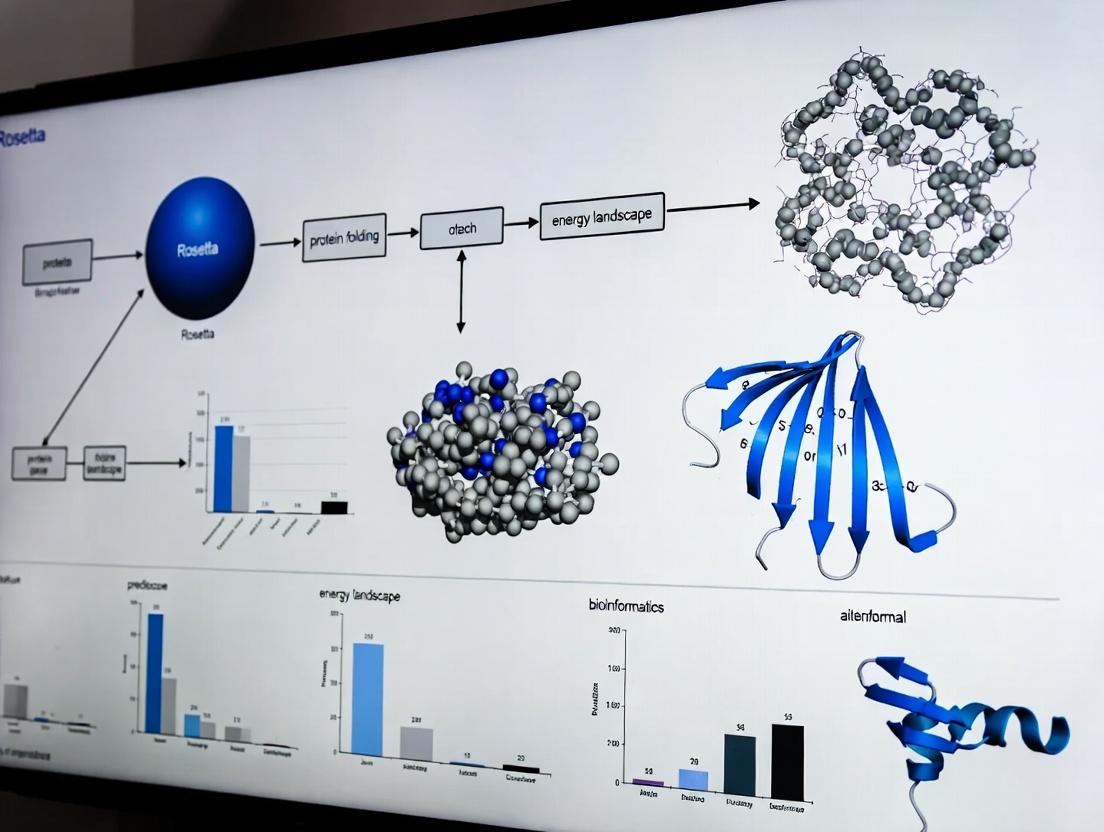
This comprehensive guide provides researchers, scientists, and drug development professionals with a practical, step-by-step tutorial on using the Rosetta software suite for protein structure prediction.
Mastering Rosetta Protein Structure Prediction: A Comprehensive Tutorial for Computational Biology and Drug Design
Abstract
This comprehensive guide provides researchers, scientists, and drug development professionals with a practical, step-by-step tutorial on using the Rosetta software suite for protein structure prediction. Covering foundational principles, detailed methodological workflows, troubleshooting strategies, and rigorous validation protocols, the article addresses the full spectrum of user needs—from initial exploration to comparative analysis with state-of-the-art tools like AlphaFold. Readers will gain actionable knowledge to predict, analyze, and refine protein structures for applications in biomedical research and therapeutic development.
Rosetta Unpacked: Core Principles and Setup for Protein Structure Prediction
1. Origins and Evolution of the Rosetta Software Suite
The Rosetta software suite originated in the laboratory of David Baker at the University of Washington in the late 1990s. Its initial goal was to address the protein folding problem—predicting a protein’s three-dimensional structure from its amino acid sequence. The foundational method, now known as de novo or ab initio structure prediction, relied on a fragment-assembly approach. This method leveraged the observation that local sequence patterns tend to adopt recurrent local structural motifs ("fragments") found in the Protein Data Bank (PDB). By assembling these fragments through a Monte Carlo search guided by a physically informed energy function, Rosetta could sample conformational space to identify low-energy, native-like structures.
The core of Rosetta is its scoring function, a weighted sum of energetic terms describing physics-based interactions (e.g., van der Waals, electrostatics, solvation) and knowledge-based terms derived from statistical distributions in known protein structures. Over two decades, Rosetta has evolved from a single-purpose folding algorithm into a comprehensive ecosystem for macromolecular modeling and design. Key milestones include the development of protocols for protein-protein docking (RosettaDock), protein design (RosettaDesign), protein-ligand docking, cryo-EM density fitting, and, most recently, deep learning-integrated pipelines like RoseTTAFold.
Table 1: Evolution of Key Rosetta Capabilities
| Year Period | Key Development | Primary Application |
|---|---|---|
| 1997-2000 | Fragment assembly de novo folding | Protein structure prediction |
| 2000-2005 | RosettaDock, RosettaDesign | Protein-protein docking & protein design |
| 2005-2015 | Relax protocols, loop modeling, membrane proteins | Structure refinement & specialized systems |
| 2015-2020 | RosettaES for cryo-EM, hybridize for homology modeling | Integrative structural biology |
| 2021-Present | RoseTTAFold (DL integration), AlphaFold2-Rosetta hybrid protocols | High-accuracy prediction & multi-state modeling |
2. Core Methodologies and Application Notes
2.1 Ab Initio Protein Structure Prediction Protocol Overview: This protocol is used when no homologous structure is available.
- Input: Amino acid sequence (fasta format).
- Fragment Selection: Query the sequence against the PDB using PSI-BLAST and NNmake to generate libraries of 3-mer and 9-mer fragment structures likely to be adopted by each sequence segment.
- Monte Carlo Fragment Assembly: Start from an extended chain. Repeatedly replace a randomly chosen segment with a candidate fragment and perform a small gradient-based energy minimization.
- Scoring & Selection: Each decoy structure is scored using the Rosetta energy function (REF2015 or later). Thousands of decoys are generated, and low-energy clusters are identified.
- Output: A set of predicted decoy structures (PDB format) and a score vs. RMSD plot to identify the lowest-energy, most clustered solutions.
2.2 Protein-Protein Docking with RosettaDock Protocol Overview: Predicts the atomic-level structure of a protein-protein complex.
- Input: Structures of the two monomeric partners (unbound or modeled).
- Low-Resolution Global Docking: Rigid-body sampling of translational and rotational degrees of freedom on a coarse grid, using a smoothed scoring function to identify promising encounter complexes.
- High-Resolution Refinement: In the region of promising low-resolution solutions, perform Monte Carlo sampling with small rigid-body moves plus side-chain repacking and minimization. Uses the full atomistic scoring function.
- Analysis: Cluster refined decoys by interface RMSD. The lowest-energy decoys from the largest clusters represent the most likely predictions.
2.3 Protein Design with RosettaFixbb Protocol Overview: Redesigns a protein's amino acid sequence to stabilize a given structure or confer new function.
- Input: A protein backbone structure (PDB format) and a residue selection for design.
- PackRotamers Algorithm: For each design position, the algorithm samples the conformational space of side-chain rotamers and alternative amino acids. It uses a Monte Carlo simulated annealing search to find the lowest-energy combination of amino acid identities and rotamer conformations across all selected positions simultaneously.
- Energy Evaluation: Each possible configuration is scored by the Rosetta energy function, favoring interactions that stabilize the target fold or binding interface.
- Output: A designed protein structure and its corresponding novel amino acid sequence.
2.4 Integration with Cryo-EM Data (RosettaES and Relax) Protocol Overview: Refines a protein model into a cryo-EM density map.
- Input: An initial atomic model (e.g., from homology modeling) and a cryo-EM density map (
.mrcformat). - Density-Guided Scoring: The scoring function is supplemented with an electron density agreement term (e.g.,
elec_dens_fast). - Conformational Sampling: Protocols like RosettaES (Envelope Sculpting) combine rigid-body fitting of domains with flexible refinement of loops and side-chains, guided by both the density and the physics-based energy function.
- Output: A refined atomic model with improved fit-to-density and better stereochemistry.
3. Modern Applications in Drug Discovery and Design
Rosetta is integral to structure-based drug design (SBDD). Key applications include:
- High-Resolution Ligand Docking (RosettaLigand): Models protein-small molecule interactions with full flexibility of the ligand, protein side-chains, and backbone.
- Site-Saturation Mutagenesis in silico: Predicts the impact of mutations on protein stability or ligand binding, guiding enzyme engineering or understanding drug resistance.
- De Novo Enzyme and Binder Design: Rosetta has been used to design novel enzymes for non-biological reactions and therapeutic miniprotein binders targeting pathogens (e.g., SARS-CoV-2).
- Macrocyclic Peptide Design: Protocols like Rosetta
peptoidenable the design of conformationally constrained peptides for targeting "undruggable" protein surfaces.
Table 2: Quantitative Performance Benchmarks of Rosetta Protocols
| Protocol | Typical Success Metric | Approximate Computational Cost |
|---|---|---|
| Ab initio folding (short proteins) | <5Å RMSD for ~70% of targets under 100 residues | 100-1000 CPU-hours per target |
| RosettaDock (unbound starting structures) | High-accuracy model (<2.0 Å L_RMSD) in top 10 for ~40% of cases | 50-200 CPU-hours per complex |
| Fixed-Backbone Design | Experimental validation of stability/function for ~20-50% of designs | 10-50 CPU-hours per design |
| Cryo-EM Refinement | Can improve model-map CCC by 10-30% from initial placement | 100-500 CPU-hours per model |
4. Research Reagent Solutions
Table 3: Essential Toolkit for Rosetta-Based Research
| Item | Function & Relevance |
|---|---|
| High-Performance Computing (HPC) Cluster | Essential for all non-trivial Rosetta simulations due to the massive conformational sampling required. |
| Rosetta Database (rosetta_database) | Contains essential parameters (energy function weights, rotamer libraries, fragment libraries, etc.). Must be correctly referenced. |
| PyRosetta Python Module | Provides a Python interface to Rosetta, enabling scriptable, custom protocol development and rapid prototyping. |
| Third-Party Tools (e.g., PSIPRED, HH-suite) | Used for generating secondary structure predictions and multiple sequence alignments to guide fragment picking and constrain modeling. |
| Model Validation Suites (MolProbity, Phenix) | Used to assess the geometric quality, steric clashes, and energy landscapes of Rosetta-generated models post-production. |
| Visualization Software (PyMOL, ChimeraX) | Critical for visualizing input structures, output decoys, density maps, and analyzing protein-ligand interfaces. |
5. Protocol Workflow and Data Analysis Diagrams
Title: Rosetta Ab Initio Structure Prediction Workflow
Title: RosettaDock Protocol for Protein Complex Prediction
Title: Cryo-EM Model Refinement Workflow in Rosetta
Within the broader thesis on Rosetta protein structure prediction tutorial research, this document details the core computational methodologies that enable de novo protein structure prediction and design. The Rosetta software suite operates on two interdependent pillars: a physics-based energy function that quantifies structural stability, and a fragment assembly method that efficiently explores conformational space. This combination allows researchers to predict protein structures from amino acid sequences and engineer novel proteins with desired functions, a capability central to modern structural biology and therapeutic design.
The Physics-Based Energy Function
The Rosetta energy function is a semi-empirical scoring function that approximates the molecular mechanics force field and solvation effects. It evaluates the stability of a protein conformation by calculating a weighted sum of energetic terms.
Core Energy Terms & Quantitative Data
The contemporary Rosetta energy function (REF2015/REF2021) integrates multiple terms. The following table summarizes key components and their typical weights or contributions.
Table 1: Core Components of the Rosetta Energy Function (REF2021)
| Term Name | Description | Physical Basis | Typical Weight (Relative) |
|---|---|---|---|
| fa_atr | Attractive Lennard-Jones potential | Van der Waals forces | ~1.0 |
| fa_rep | Repulsive Lennard-Jones potential | Steric clash penalty | ~0.55 |
| fa_sol | Lazaridis-Karplus solvation energy | Hydrophobic effect | ~1.0 |
| fa_elec | Coulombic electrostatic potential | Electrostatic interactions | ~1.0 |
| hbondsrbb, hbondlrbb | Hydrogen bonding (backbone) | Hydrogen bonds in secondary structure | ~1.0-2.0 |
| rama_prepro | Backbone torsion preferences | Ramachandran plot propensities | ~0.2 |
| paapp | Amino acid preference for ϕ/ψ | Sequence-structure relationship | ~0.6 |
| dslf_fa13 | Disulfide bond geometry | Cysteine bond formation | ~1.5 |
| omega | Peptide bond torsion restraint | Planarity of peptide bond | ~0.5 |
| ref | Reference energy per amino acid | Amino acid chemical potential | ~1.0 |
Protocol: Energy Function Evaluation for a Single Pose
Application Note: This protocol is used to score a given protein structural model (pose) to assess its predicted stability.
Materials & Reagents:
- Input PDB File: A coordinate file of the protein structure.
- Rosetta Database: Contains rotamer libraries, score function weights, and chemical parameters.
- Parameter Files: For any non-standard residues or ligands.
- High-Performance Computing (HPC) Cluster or Workstation.
Procedure:
- Preprocessing:
- Prepare the PDB file using the
clean_pdb.pyscript orpdbsetcommand to standardize atom names and remove heteroatoms if not required. - Generate a Rosetta-specific parameter file for the sequence using the sequence from the PDB file.
- Prepare the PDB file using the
Score Function Configuration:
- Select the appropriate score function (e.g.,
ref2015,ref2021,beta_nov16for design) within your Rosetta command line or script.
- Select the appropriate score function (e.g.,
Scoring Execution:
- Run the
score.default.linuxgccrelease(or equivalent) application.
- Run the
Output Analysis:
- The primary output file (
score.sc) is a tab-delimited text file containing the total score and a breakdown per energy term (see Table 1). - Lower (more negative) total scores indicate more stable, native-like conformations.
- The primary output file (
The Fragment Assembly Method
Fragment assembly is a Monte Carlo-based search strategy that builds protein models from short (3-9 residue) fragments extracted from known structures in the Protein Data Bank (PDB).
Logic of the Fragment Assembly Algorithm
The method leverages the local sequence-structure relationships observed in nature. For each position in the target sequence, a library of candidate fragment structures is generated based on sequence similarity.
Diagram Title: Rosetta Fragment Assembly Monte Carlo Workflow
Protocol:De NovoStructure Prediction via Fragment Assembly
Application Note: This is the standard ab initio protocol for predicting a protein structure when no homologous template is available.
Materials & Reagents: Table 2: Research Reagent Solutions for Ab Initio Prediction
| Item | Function/Description |
|---|---|
| Target FASTA File | Contains the amino acid sequence of the protein to be predicted. |
| Rosetta Fragment Picker | Module (fragment_picker) that selects 3-mer and 9-mer fragments from the PDB. |
| Sequence Profile (PSI-BLAST) | Position-specific scoring matrix (PSSM) used to guide fragment selection based on remote homology. |
| Secondary Structure Prediction (PSIPRED) | Predicted secondary structure used as a filter for fragment selection. |
| Rosetta Ab Initio Protocol | Primary application (AbinitioRelax) that performs fragment insertion and scoring. |
| Cluster Application (cluster.info) | Tool to identify the centroid of the largest cluster of low-energy decoys as the final prediction. |
Procedure:
- Fragment Generation:
- Generate multiple sequence alignments for the target using PSI-BLAST against a non-redundant database.
- Run PSIPRED to obtain secondary structure predictions.
- Execute the fragment picker:
- This outputs two fragment files:
target.aa.3merandtarget.aa.9mer.
Ab Initio Modeling:
- Run the
AbinitioRelaxprotocol for many independent trajectories (typically 10,000-50,000).
- Run the
Decoy Analysis and Selection:
- Extract the lowest-energy decoys from the silent file.
- Cluster the decoys based on Cα root-mean-square deviation (RMSD).
- Select the model that is the centroid of the largest cluster of low-energy structures as the final prediction.
Integrated Application: Protein Design Protocol
Protein design combines the energy function and fragment assembly principles to optimize sequences for a given backbone.
Workflow for Fixed-Backbone Design
Diagram Title: Fixed-Backbone Protein Design Workflow
Protocol: Optimizing a Protein Interface for Binding
Objective: Redesign the amino acid sequence at a protein-protein interface to improve binding affinity.
Procedure:
- Setup:
- Prepare the complex structure in a PDB file. Define the "designable" residues (those to be mutated) and "repackable" residues (sidechains allowed to adjust but not change identity) using a residue selector file.
- Run Design Script:
- Use the
Fixbb(fixed-backbone) design application or a RosettaScripts XML. - A typical command includes constraints to maintain key interactions (e.g., hydrogen bonds):
- Use the
- Filtering and Validation:
- Filter designed models based on total score and interface energy (
dG_separated). - Select top designs for in silico validation (e.g., docking, molecular dynamics) and subsequent experimental testing.
- Filter designed models based on total score and interface energy (
As part of a broader thesis on Rosetta protein structure prediction tutorial research, this guide provides the foundational Application Notes and Protocols for establishing a functional computational environment. A correct installation is critical for subsequent experiments in protein folding, docking, and design, enabling reproducible and reliable results for researchers, scientists, and drug development professionals.
System Requirements
The following quantitative data, gathered from the official Rosetta Commons documentation and community forums, details the minimum and recommended hardware and software prerequisites for a standard Rosetta installation.
Table 1: Hardware Requirements
| Component | Minimum Specification | Recommended Specification | Notes |
|---|---|---|---|
| CPU | 64-bit x86 processor | Multi-core 64-bit x86 (Intel/AMD) | Rosetta is CPU-intensive; no GPU acceleration for core protocols. |
| RAM | 4 GB | 16 GB or more | >8 GB required for large structures (e.g., viral capsids). |
| Storage | 10 GB free space | 50+ GB free SSD | Fast I/O (SSD) highly recommended for database access. |
| OS | Linux (Kernel 3.0+), macOS 10.9+, Windows (via WSL2) | Linux (Ubuntu 20.04 LTS, CentOS 7+) | Native Linux is the primary development and testing platform. |
Table 2: Software Dependencies
| Dependency | Version | Purpose |
|---|---|---|
| Compiler | GCC 4.8+, Clang 3.3+ | Compilation of C++ source code. |
| Python | 2.7 or 3.6+ | For running analysis and helper scripts. |
| CMake | 3.10+ | Cross-platform build system generator. |
| Boost | 1.56+ (headers only) | Required for certain utility apps. |
| OpenMPI | 1.6.5+ (Optional) | For multi-processor/multi-node MPI protocols. |
Installation Protocol
This detailed protocol outlines the standard method for obtaining and compiling Rosetta from source.
Protocol 1: Source Acquisition and Compilation
Objective: To install the Rosetta software suite from source code on a Linux system.
Materials:
- A workstation meeting the recommended specifications in Table 1.
- Software dependencies listed in Table 2.
Methodology:
- Request Access: Register and obtain a license from the Rosetta Commons website (https://www.rosettacommons.org/software/license). Download links are provided post-license.
- Download Source: Use the provided link to download the Rosetta source code (
rosetta_src_<version>.tar.bz2) and the required database (rosetta_database_<version>.tar.bz2). - Extract Archives:
Configure Build with CMake: Navigate to the source directory and create a build directory.
Flags:
Releaseenables optimizations;OFFfor static linking is standard.Compile: This process can take several hours.
Set Environment Variables: Add the following lines to your shell configuration file (e.g.,
~/.bashrc).Verification: Test the installation by running a simple AbinitioRelax protocol on a test PDB file.
Visualization: Rosetta Installation & Validation Workflow
Title: Rosetta Installation Protocol Workflow
The Scientist's Toolkit: Research Reagent Solutions
Table 3: Essential Materials for Rosetta-Based Experiments
| Item | Function in Research Context |
|---|---|
| Rosetta Source Code | Core algorithmic framework for all structure prediction and design calculations. |
| Rosetta Database | Contains force field parameters, rotamer libraries, and fragment libraries essential for scoring and conformational sampling. |
| Target Protein FASTA | The amino acid sequence of the protein to be modeled; the primary input for ab initio or comparative modeling. |
| Reference PDB Structure | A known experimental structure (if available) used as a template for comparative modeling or for validation of predictions. |
| Fragment Libraries | Short 3-mer and 9-mer sequence-structure pairs generated for the target, guiding conformational search. |
| Flags File | A text configuration file specifying all runtime options (e.g., -in:file:fasta, -out:pdb) for a Rosetta executable. |
| High-Performance Computing (HPC) Cluster | For production runs, as Rosetta protocols often require thousands of independent decoy generations to sample conformational space effectively. |
Application Notes
This document provides essential context for the input file formats central to performing protein structure prediction and design using the Rosetta software suite, as part of a broader thesis on computational structural biology methodologies. These files form the foundational data layer upon which all Rosetta protocols are built.
Protein Data Bank (PDB) Files
The PDB file format is the global standard for representing 3D macromolecular structure data. In Rosetta, PDB files serve as both inputs (starting structures for refinement, docking, or design) and outputs (predicted models). Rosetta internally converts the standard PDB information into its own pose object, which manages coordinates, energetics, and residue relationships. Critical metadata includes ATOM/HETATM records for coordinates, REMARK fields, and SEQRES for the full biological sequence. Discrepancies between SEQRES and actual ATOM records are common and must be addressed during preprocessing.
FASTA Files
The FASTA format provides the amino acid sequence of the protein target in a simple text format. It is the primary input for ab initio folding and is used alongside PDB files in comparative modeling and design to define the sequence of interest. The sequence defines the chemical identity of each residue, which Rosetta uses to construct the polymer and apply the appropriate scoring function parameters. For design protocols, the FASTA defines the "native" or wild-type sequence.
Fragment Libraries
Fragment libraries are collections of short (typically 3-mer and 9-mer) polypeptide segments derived from high-resolution crystal structures in the PDB. These fragments provide plausible local structures for a given sequence based on sequence similarity, enabling Rosetta's ab initio protocol to efficiently sample conformational space. They are not standard file formats but are generated using tools like nnmake or the Robetta server, resulting in two primary files: frag3 and frag9.
Table 1: Core Input File Comparison for Rosetta
| File Type | Primary Role in Rosetta | Typical Source | Key Content |
|---|---|---|---|
| PDB | Starting 3D coordinates; Final model output. | RCSB PDB, previous Rosetta run. | Atomic coordinates, chain IDs, B-factors, heteroatoms. |
| FASTA | Primary amino acid sequence definition. | UniProt, gene sequence, manual design. | Single-letter amino acid code for the target protein. |
Fragment Files (frag3, frag9) |
Providing local structural preferences for folding. | Generated via fragment picker (nnmake). |
Sequence-matched fragment candidates with PDB source, RMSD, and phi/psi/omega angles. |
Protocols
Protocol 1: Preprocessing a PDB File for Rosetta
Objective: To clean and prepare a PDB file from the RCSB for use in Rosetta simulations.
- Download Structure: Obtain your target PDB file (e.g.,
1abc.pdb) from the RCSB. - Remove Heteroatoms (Optional): Use the
clean_pdb.pyscript (bundled with Rosetta):python <Rosetta_path>/tools/protein_tools/scripts/clean_pdb.py 1abc AThis creates1abc_A.pdb, stripping water, ions, and ligands, and renumbering residues sequentially. - Ensure Consistent Chain IDs: Verify the chain of interest is correctly identified (e.g., 'A').
- Check for Missing Density: Inspect the file for REMARK 465 (residues not observed). These regions may require loop modeling or truncation.
- Relax the Structure (Recommended): Run a fast relaxation protocol (
relax.linuxgccrelease) to remove clashes and optimize the structure within the Rosetta energy function before using it as a starting model.
Protocol 2: Generating Fragment Libraries
Objective: To create 3-mer and 9-mer fragment libraries for a target sequence via the Robetta server.
- Prepare Input: Have the target protein's amino acid sequence in FASTA format ready.
- Submit to Server: Navigate to the Robetta server (robetta.bakerlab.org). Submit the FASTA sequence for a de novo structure prediction.
- Retrieve Fragments: Upon job completion, download the resulting fragment files (
aat000_03_05.200_v1_3,aat000_09_05.200_v1_3). These are thefrag3andfrag9files. - Local Generation (Alternative): Using a local Rosetta installation, run the
fragment_pickerapplication with a configured fragment picker protocol, referencing a database of structural profiles (e.g.,vall.jul19.2011.gz).
Protocol 3: Running a BasicAb InitioFolding Simulation
Objective: To predict a protein's structure from sequence using pre-generated fragment libraries.
- Input File Preparation: Ensure you have:
- Target sequence in FASTA format (
target.fasta). - Generated fragment files (
frag3,frag9). - A Rosetta command file (
flags).
- Target sequence in FASTA format (
- Configure Command Flags: Create a
flagsfile with the following core directives: - Execute Simulation: Run the Rosetta
AbinitioRelaxapplication:AbinitioRelax.linuxgccrelease @flags - Output Analysis: The run will generate a silent file (
abinitio.out) containing 1000 decoy structures. Extract the lowest-scoring decoys usingscore_jd2and visualize them in molecular graphics software.
Diagrams
Rosetta Ab Initio Input and Workflow
Input File Roles in a Rosetta Protocol
The Scientist's Toolkit
Table 2: Essential Research Reagents & Solutions for Rosetta Input Preparation
| Item | Function in Context |
|---|---|
| RCSB Protein Data Bank (PDB) | The primary repository for experimentally-determined 3D structural data used as starting points or for fragment generation. |
Rosetta Database (rosetta_database) |
Contains residue-specific parameters, scoring function weights, and chemical knowledge required to interpret input files. |
Fragment Picker (fragment_picker) |
The Rosetta application that selects sequence-matched fragments from a vall database to create fragment libraries. |
clean_pdb.py Script |
A preprocessing utility that removes non-protein atoms and standardizes residue numbering for Rosetta compatibility. |
vall.jul19.2011.gz Database |
A curated library of all peptide fragments from high-resolution PDB structures, used as the source for picking fragments. |
| Molecular Visualization Software (e.g., PyMOL) | Used to visually inspect input PDB files, assess fragment quality, and analyze output decoy structures. |
| Robetta Server (robetta.bakerlab.org) | A web-based service that automates fragment library generation and provides access to key Rosetta protocols. |
| Silent File Format | A compact, proprietary Rosetta output format for storing thousands of decoy structures; requires extraction to PDB for analysis. |
This document serves as a critical Application Note within a broader thesis on Rosetta protein structure prediction. Efficient navigation of Rosetta's extensive documentation and community resources is foundational for conducting reproducible, state-of-the-art computational biology experiments, ranging from protein design and docking to energetic scoring and structural refinement.
The primary documentation and code resources are distributed across several official platforms. The following table summarizes their purpose, update frequency, and content type.
Table 1: Official Rosetta Documentation Hubs
| Resource Name | URL (Base) | Primary Content | Update Frequency | Key For |
|---|---|---|---|---|
| Rosetta Commons Documentation | https://www.rosettacommons.org/docs/latest/ | Comprehensive manuals, tutorials, code documentation, and application guides. | With every major release (≈2-3/year). | All users. The primary technical reference. |
| Rosetta GitHub Repository | https://github.com/RosettaCommons/main | Source code, mini-tutorials in demos/, and high-level READMEs. |
Continuous commits. | Developers and advanced users needing the latest features or contributing code. |
| RosettaScripts Documentation | https://new.rosettacommons.org/docs/latest/scripting_documentation/RosettaScripts/RosettaScripts | XML tag documentation for the RosettaScripts interface. | With Rosetta releases. | Users of the flexible RosettaScripts protocol generator. |
| PyRosetta Toolkit & Docs | https://www.pyrosetta.org/ | Python-based interactive interface, Jupyter notebook tutorials, and API documentation. | Independent release cycle. | Researchers leveraging Python for scripting and prototyping. |
Beyond official docs, the community-driven resources are vital for troubleshooting and advanced methodologies.
Table 2: Key Community Support Platforms
| Platform | Access Point | Purpose & Best Use | Response Dynamics |
|---|---|---|---|
| Rosetta Forums | https://www.rosettacommons.org/forum | Primary Q&A forum. Search before posting. Ideal for protocol design questions and bug reports. | Days. Answered by community experts and developers. |
| RosettaCommons on Slack | Invite via Rosetta Commons site. | Real-time discussion, quick queries, and collaborative problem-solving. | Minutes to hours. |
| BioStars (Tag: rosetta) | https://www.biostars.org/t/rosetta/ | Bioinformatics-focused Q&A. Useful for broader context questions. | Variable. |
Experimental Protocol: A Standard Workflow for Leveraging Documentation
This protocol details a systematic approach to solving a Rosetta-based research problem using available resources.
Protocol: Efficient Problem-Solving for a Novel Protein Design Project
Objective: To design a protocol for stabilizing a target protein helix-helix interface using Rosetta, starting from minimal prior knowledge.
Materials (The Scientist's Toolkit):
- Computational Cluster/HPC Access: For running resource-intensive Rosetta simulations.
- Local Rosetta Installation: Compiled from source or via PyRosetta installer.
- Target PDB File: Initial structure of the protein complex.
- Reference Manuscripts: Key papers (e.g., Bhardwaj et al., Nature 2016) describing similar design goals.
Procedure:
Problem Definition & Background Search:
- Formulate a specific question: "Which Rosetta applications and scoring functions are best for de novo helical interface design?"
- Search the Rosetta Commons Documentation homepage for "helical bundle," "protein design," and "interface." Skim the "Application Documentation" index.
- Simultaneously, search the Rosetta Forums for "helix interface design" to find existing discussions and solutions.
Identification of Relevant Tutorials:
- In the Documentation, navigate to "Rosetta Tutorials." Locate the "Protein Design Tutorial" and "RosettaScripts Tutorial."
- Follow the "Generalized Kinematic Closure (GenKIC) Tutorial" if de novo helix-loop-helix motifs are involved. Execute all demo commands to build proficiency.
Protocol Assembly & Scripting:
- Based on tutorial insights, identify necessary RosettaScripts movers and filters (e.g.,
PackRotamersMover,HelixBundleDesign,InterfaceAnalyzerMover). - Consult the RosettaScripts Documentation for the exact XML syntax and options for each identified component.
- Assemble a preliminary XML script by adapting examples from tutorials and documentation.
- Based on tutorial insights, identify necessary RosettaScripts movers and filters (e.g.,
Benchmarking & Validation:
- Run the assembled protocol on a provided tutorial case or a small-scale version of your target.
- Use PyRosetta in a Jupyter notebook (from pyrosetta.org) for rapid, iterative testing of scoring function components and mover parameters.
Community Verification & Optimization:
- If results are suboptimal or errors persist, prepare a detailed post for the Rosetta Forums. Include:
- Your objective.
- The relevant XML script segment.
- Command line used.
- Error output or unexpected results.
- What you have already tried based on documentation.
- If results are suboptimal or errors persist, prepare a detailed post for the Rosetta Forums. Include:
Iteration and Execution:
- Integrate feedback from the forums. Scale up the optimized protocol to your full target system on an HPC cluster.
- Document all final parameters and script versions for thesis reproducibility.
Visualization of Resource Navigation Workflow
Diagram Title: Rosetta Resource Navigation Decision Pathway
Research Reagent Solutions Table
The following table details essential "digital reagents" – key software tools and resources – required for effective Rosetta research.
Table 3: Essential Digital Research Reagents for Rosetta Studies
| Item | Function & Purpose | Source/Access |
|---|---|---|
| Rosetta Software Suite | Core simulation engine for energy scoring, conformational sampling, and design. | Licensed download via Rosetta Commons (academic/commercial) or PyRosetta (academic). |
| PyRosetta | Python binding library for Rosetta, enabling interactive scripting, rapid prototyping, and use in ML pipelines. | pyrosetta.org |
| RosettaScripts XML Schema | High-level interface for combining Rosetta modules into complex protocols without recompiling code. | Bundled with Rosetta; documentation online. |
| Benchmark Datasets | Curated sets of structures (e.g., for docking, design) to validate protocol performance. | Rosetta Commons documentation demos/ directory; community publications. |
| Third-Party Visualization | Molecular graphics software (e.g., PyMOL, ChimeraX) for analyzing input and output structures. | Critical for result interpretation. |
| Version Control (Git) | To track changes in custom scripts, XML protocols, and to clone the main repository. | Essential for reproducibility. |
Step-by-Step Rosetta Protocols: From ab initio Folding to Ligand Docking
Within the context of Rosetta protein structure prediction tutorial research, selecting the appropriate computational protocol is paramount. The prediction goal—whether ab initio folding, comparative modeling, loop remodeling, or protein-protein docking—directly dictates the algorithmic path. This document provides application notes and detailed protocols to guide researchers, scientists, and drug development professionals in navigating the Rosetta software suite.
Core Prediction Goals & Protocol Selection Table
The following table summarizes the primary prediction goals and the recommended Rosetta protocols based on current best practices (as of late 2023/early 2024). Data is synthesized from the Rosetta Commons documentation, recent benchmarking publications, and community forums.
Table 1: Prediction Goal to Rosetta Protocol Mapping
| Primary Prediction Goal | Recommended Rosetta Protocol(s) | Typical Use Case | Expected Resolution / Key Metric | Approximate Computational Cost (CPU-hr) |
|---|---|---|---|---|
| Ab Initio Folding | AbinitioRelax, RosettaCM (hybrid) |
Novel folds, minimal sequence homology | RMSD 2-6 Å (for small proteins) | 500 - 10,000+ |
| Comparative (Homology) Modeling | RosettaCM, Hybridize |
High sequence identity to known template(s) | RMSD 1-3 Å (core regions) | 50 - 500 |
| Loop Modeling | LoopModel, NextGenKIC, CDDLoop |
Refining flexible regions, insertion/deletion loops | Loop RMSD < 2 Å | 10 - 200 |
| Protein-Protein Docking | Dock, SnugDock, FlexPepDock (peptide-specific) |
Predicting binding mode of protein complexes | Interface RMSD (iRMSD) < 2.0 Å | 100 - 2000 |
| Protein-Small Molecule Docking | RosettaLigand |
Structure-based drug design, binding pose prediction | Ligand RMSD < 2.0 Å | 20 - 100 |
| Protein Design | FastDesign, Fixbb |
Engineering stability, affinity, or novel function | ΔΔG (predicted) < 0 (stabilizing) | 5 - 100 |
| Refinement & Relax | FastRelax, CartesianDDG |
Final model polishing, energy minimization | MolProbity Score < 2.0 | 1 - 20 |
Detailed Experimental Protocols
Protocol 3.1: Ab Initio Folding for a Novel Protein (usingRosettaCM)
Application Note: Use when no suitable structural template (>25% identity) exists.
Input Preparation:
- Gather the target amino acid sequence in FASTA format.
- Run PSI-BLAST and HHsearch against the PDB to identify distant homologs and generate multiple sequence alignments (MSAs).
- Use
rosetta_scriptswith thefragment_pickerapplication to generate 3-mer and 9-mer fragment libraries from the MSA.
Template Detection (if any):
- Submit target sequence to servers like HHSuite or RaptorX to detect very weak homology.
- Prepare any identified template structures (align to target sequence).
Hybrid Structure Generation (RosettaCM):
- Create a
RosettaCMXML script specifying the sequence, alignments, fragments, and template PDBs. Execute:
The protocol performs Monte Carlo assembly with fragment insertion and kinematic closure.
- Create a
Model Selection:
- Cluster the 10,000+ decoy models using
cluster.linuxgccreleasebased on RMSD. - Select the center of the largest cluster or the model with the lowest Rosetta Energy Unit (REU) score.
- Cluster the 10,000+ decoy models using
Protocol 3.2: High-Resolution Protein-Protein Docking (usingSnugDock)
Application Note: Optimized for antibody-antigen or other flexible binding interfaces.
Input Preparation:
- Obtain starting structures for receptor and ligand. Pre-relax each subunit using
FastRelax. - Define the approximate binding region (a "dockchain" file or specifying -dockpert).
- Obtain starting structures for receptor and ligand. Pre-relax each subunit using
Global Docking Phase:
- Run low-resolution, rigid-body docking using the
Dockprotocol to sample many binding orientations. - Generate 10,000-20,000 decoys.
- Filter top 1000 by interface score.
- Run low-resolution, rigid-body docking using the
High-Resolution Refinement (SnugDock):
- Input the filtered decoys into
SnugDock, which allows backbone and CDR loop flexibility. Execute:
The protocol performs simultaneous rigid-body minimization and loop remodeling.
- Input the filtered decoys into
Analysis:
- Rank models by totalscore or interfacescore.
- Analyze interface metrics (packing, SASA, hydrogen bonds) using
InterfaceAnalyzer.
Visualization of Workflow Decision Logic
Title: Rosetta Protocol Selection Workflow
The Scientist's Toolkit: Key Research Reagent Solutions
Table 2: Essential Resources for Rosetta-Based Structure Prediction
| Resource/Solution | Function/Application | Source/Provider |
|---|---|---|
| Rosetta Software Suite | Core modeling & simulation engine. | Rosetta Commons (https://www.rosettacommons.org) |
| Robetta Web Server | Automated pipeline for ab initio, comparative modeling, and docking. | Baker Lab (https://robetta.bakerlab.org) |
| AlphaFold2 DB / Model Archive | Source of high-quality template structures and confidence metrics. | EMBL-EBI (https://alphafold.ebi.ac.uk) |
| PDB (Protein Data Bank) | Primary repository for experimental protein structures. | RCSB (https://www.rcsb.org) |
| UniProt | Comprehensive resource for protein sequences and functional annotation. | UniProt Consortium (https://www.uniprot.org) |
| PyrRosetta | Python-based interactive interface for Rosetta. | PyRosetta (https://www.pyrosetta.org) |
| RosettaScripts XML Templates | Pre-configured protocols for common tasks. | Rosetta Documentation & GitHub Community |
| MolProbity | Structure validation server for assessing model quality. | Richardson Lab (http://molprobity.biochem.duke.edu) |
| MPNN (ProteinMPNN) | Deep learning-based sequence design tool, often used in conjunction with Rosetta. | Public GitHub Repository |
| CHARMm/AMBER Forcefields | Alternative forcefields sometimes used in refinement stages. | Academia / Commercial (e.g., D. E. Shaw Research) |
Within the broader thesis on Rosetta protein structure prediction tutorial research, this protocol details the application of ab initio (or de novo) structure prediction for protein sequences with no homology to known structures. This method is critical for novel protein design, functional annotation of orphan sequences, and early-stage drug target assessment. The protocol leverages the Rosetta software suite, which employs fragment assembly and Monte Carlo minimization to explore conformational space.
Key Concepts and Recent Data
Ab initio prediction in Rosetta is guided by the principle that the native structure corresponds to the global free energy minimum. Recent benchmarks on standardized datasets (e.g., CASP targets) indicate performance is highly length-dependent.
Table 1: Rosetta Ab Initio Performance Metrics (CASP15 Data Summary)
| Target Length (residues) | Average TM-score (Top Model) | Success Rate (TM-score >0.5) | Typical CPU Hours per Model |
|---|---|---|---|
| < 80 | 0.68 | 75% | 40-80 |
| 80 - 120 | 0.52 | 45% | 80-200 |
| 120 - 150 | 0.41 | 20% | 200-500 |
| > 150 | 0.35 | <10% | 500+ |
Success is defined as a TM-score > 0.5, indicating correct topological fold. Data aggregated from community benchmarks (2023-2024).
Detailed Protocol
Pre-Processing and Fragment Selection
Objective: Generate 3-mer and 9-mer fragment libraries from the query sequence.
- Input: Single protein sequence in FASTA format (
target.fasta). - Run PSI-BLAST: Execute a multi-threaded PSI-BLAST against the non-redundant (nr) database (e.g., via NCBI) with an E-value cutoff of 0.001 for 3 iterations to generate a Position-Specific Scoring Matrix (PSSM).
- Generate Fragments: Use the Robetta server (
http://robetta.bakerlab.org/fragmentsubmit.jsp) or the standalonennmakeapplication with the PSSM file. This neural-network-based tool predicts fragment sequences and structures from the protein sequence and evolutionary profile. - Output: Two fragment files:
target.200.3mersandtarget.200.9mers, each containing the top 200 candidate fragments for each position.
Ab InitioStructure Generation
Objective: Generate a large ensemble of decoy structures via fragment insertion and Monte Carlo simulated annealing.
- Basic Command: Run the
rosetta_scriptsapplication with theabinitioprotocol XML.
- Protocol Stages: The default protocol cycles through five distinct phases, gradually decreasing the chain temperature and increasing the scoring function weight towards the full
ref2015orref2015_cartpotential. Table 2: Ab Initio Protocol StagesStage Description Scoring Function Weights Key Moves I Very low-resolution centroid mode expansion score4_smooth_cart(simplified)Random 9-mer fragment insertions II Centroid mode folding with increased repulsion score5Combination of 3-mer & 9-mer inserts III Centroid mode slow cooling (simulated annealing) Transition score5toscore3Smooths backbone, optimizes chain compactness IV Switch to all-atom representation (full-atom) ref2015(partial weight)Side-chain packing, small backbone moves V Full-atom refinement ref2015(full weight)Gradient-based minimization (e.g., dfpmin)
Decoy Clustering and Selection
Objective: Identify the lowest-energy consensus fold from the decoy ensemble.
- Extract Models: Convert the silent file to PDB files or score files.
Cluster: Use the
clusterapplication based on backbone Cα RMSD.Select Output: Choose the lowest-energy model from the largest cluster (presumed native-like basin). Visually inspect top clusters using molecular visualization software (e.g., PyMOL).
The Scientist's Toolkit
Table 3: Essential Research Reagents & Solutions for Rosetta Ab Initio Prediction
| Item/Resource | Function/Explanation |
|---|---|
| Rosetta Software Suite (v2024.x) | Core modeling platform; requires a license for academic/commercial use. |
| High-Performance Computing Cluster | Essential for generating 1000s of decoys; protocol is highly parallelizable. |
| Non-Redundant (nr) Protein Database | Source for PSI-BLAST to generate evolutionary profiles (PSSM). |
| Fragment Picking Server (Robetta) | Web-based or local tool for reliable 3-mer/9-mer fragment generation from sequence & PSSM. |
Reference Scoring Function (ref2015, ref2015_cart) |
All-atom, physics- and knowledge-based potential for evaluating decoy energy. |
| Visualization Software (PyMOL, ChimeraX) | Critical for qualitative assessment of final models and cluster representatives. |
| Validation Servers (MolProbity, PDB Validation) | To assess stereochemical quality, clashes, and backbone torsion angles of predicted structures. |
Visualization of Workflow
Title: Ab Initio Structure Prediction Workflow
Title: Ab Initio Protocol Stages & Moves
Application Notes
Comparative or homology modeling with RosettaCM is a method for predicting the three-dimensional structure of a protein (the "target") based on its amino acid sequence similarity to one or more proteins of known structure (the "templates"). This protocol is a core component of a broader thesis on Rosetta-based structure prediction, bridging the gap between high-identity template scenarios and de novo folding. RosettaCM integrates classical homology modeling with Rosetta's all-atom energy function and conformational sampling, typically yielding higher accuracy than rigid-body assembly when sequence identity is above ~20%.
Key Applications:
- Generating high-quality structural hypotheses for proteins with evolutionary relatives in the PDB.
- Providing starting models for molecular docking, virtual screening, and drug design.
- Constructing models for mutagenesis studies and functional analysis.
- Serving as input for more advanced protocols like RosettaDock or loop modeling.
Current Performance Metrics (Summarized): The accuracy of a RosettaCM model is primarily dependent on the sequence identity between the target and the best available template, as well as the correctness of the input sequence alignment.
Table 1: Expected Model Accuracy Relative to Template-Target Sequence Identity
| Sequence Identity Range | Typical RMSD (Å) to Native* | Expected Model Quality | Key Challenge |
|---|---|---|---|
| >50% | 1.0 - 2.0 | High (Backbone Reliable) | Sidechain packing |
| 30% - 50% | 2.0 - 3.5 | Medium (Core Reliable) | Loop modeling, alignment errors |
| 20% - 30% | 3.5 - 5.0 | Low (Caution Required) | Severe alignment errors, fold deviations |
| <20% ("Twilight Zone") | Often >5.0 | Unreliable | Risk of incorrect fold; consider de novo |
*Root-mean-square deviation of Cα atoms for the best-scoring model from a large ensemble. Data compiled from recent CASP assessments and RosettaCommons publications.
Detailed Protocol
Stage 1: Template Identification & Alignment
- Input: Target amino acid sequence in FASTA format.
- Search: Perform a BLAST or HHsearch against the Protein Data Bank (PDB) to identify potential template structures. Use tools like HHSuite or the RCSB PDB search interface.
- Selection: Choose 1-5 templates based on high sequence coverage, high percent identity, and low expected E-value. Prefer templates with high resolution (<2.5 Å) and minimal missing residues.
- Alignment: Generate multiple sequence alignments (MSAs) for the target and templates. Use ClustalOmega, MUSCLE, or PROMALS3D. Manually inspect and correct alignments in regions of low sequence identity, especially near predicted secondary structure boundaries.
Stage 2: Input File Generation for RosettaCM
- Installation: Ensure a working Rosetta installation (source code or binaries from https://www.rosettacommons.org/software).
- Create Alignment File: Generate a PIR-format alignment file. Example:
- Prepare Template Files: Download template PDB files. Clean them using
clean_pdb.py(inrosetta/tools/protein_tools/scripts/) to remove non-protein atoms and standardize residue numbering:python2 clean_pdb.py 1xxxA - Generate Fragments: Create 3-mer and 9-mer fragment libraries for the target sequence using the Robetta server (https://robetta.bakerlab.org/) or the
ncbi_blastandmake_fragments.plprotocols provided with Rosetta.
Stage 3: Hybridize/Comparative Modeling Execution
The core protocol uses the hybridize application, which performs fragment insertion, template recombination, and all-atom refinement.
- Basic Command:
- Key Parameters:
-nstruct: Number of decoy models to generate (500-2000 recommended).-hybridize:stage[1-3]_probability: Weights for fragment insertion (stage1), template chain closure (stage2), and full-atom refinement (stage3).- Increase
-default_max_cyclesfrom 200 to 500 for larger proteins (>250 residues).
Stage 4: Model Selection & Validation
- Extract Models: Convert the silent output file to PDB format:
score_jd2.default.linuxgccrelease -in:file:silent decoys.silent -out:pdb - Score Models: Models are automatically scored with the
ref2015orref2015_cartenergy function. Lower total score (often reported astotal_score) generally correlates with higher model quality. - Cluster: Cluster models by Cα RMSD (e.g., 2.0 Å cutoff) using
cluster.infoorcalibur. Select the center of the largest cluster. - Validate: Use external tools: MolProbity for steric clashes and rotamer outliers, QMEANDisCo for global quality estimation, and RamaZ8000 for backbone dihedral assessment.
Visualization of Workflow
Comparative Modeling with RosettaCM
The Scientist's Toolkit: Research Reagent Solutions
Table 2: Essential Materials and Tools for RosettaCM
| Item | Function/Description |
|---|---|
| Target Protein Sequence (FASTA) | The primary input; the amino acid sequence of the protein to be modeled. |
| Rosetta Software Suite | The core modeling engine. Required for executing the hybridize protocol and scoring functions. |
| Protein Data Bank (PDB) | Repository of experimentally solved protein structures used as templates. |
| HHsuite / BLAST+ | Software for sensitive sequence/profile-based searches against the PDB to identify homology templates. |
| ClustalOmega / MUSCLE | Tools for generating multiple sequence alignments between target and template sequences. |
| Fragment Files (3mer, 9mer) | Libraries of short structural fragments derived from the PDB for the target sequence, used to sample local conformations. |
| PyMOL / ChimeraX | Molecular visualization software for inspecting alignments, templates, and final models. |
| MolProbity Server | Web service for comprehensive structural validation (clashes, rotamers, Ramachandran outliers). |
| High-Performance Computing (HPC) Cluster | Essential for large-scale sampling (nstruct=500+); runs are highly parallelizable. |
Within the broader thesis on Rosetta protein structure prediction tutorials, this protocol addresses the critical step of modeling macromolecular interactions. RosettaDock is a Monte Carlo minimization algorithm designed to sample the conformational space of protein complexes (protein-protein) or small molecule binding (protein-ligand). It is essential for understanding biological mechanisms, protein engineering, and structure-based drug design. The protocol is iterative, refining starting models—often from homology modeling or low-resolution techniques—into high-accuracy, atomically detailed structures.
Core Algorithmic Framework
RosettaDock operates through a multi-scale approach:
- Low-Resolution Phase: Uses a coarse-grained representation (side chains as centroid spheres) to rapidly sample translational and rotational degrees of freedom.
- High-Resolution Phase: Uses full-atom representation with precise side-chain packing and continuous backbone minimization. Scoring is dominated by the physical chemistry-inspired Rosetta energy function (
ref2015or later).
Key Scoring Metrics & Data
| Metric/Parameter | Typical Target Value/Range | Purpose & Interpretation |
|---|---|---|
| Interface RMSD (I_RMSD) | < 1.0 – 2.5 Å (near-native) | Measures Cα RMSD at the interface after superposition of one partner. |
| Ligand RMSD (L_RMSD) | < 1.0 – 5.0 Å (for small molecules) | Measures heavy-atom RMSD of the ligand after protein superposition. |
| Rosetta Energy Units (REU) | Lower is better; ΔΔG < 0 favors binding | Total score of the complex. Must be compared to unbound states. |
interface_delta_X |
Negative value indicates stability | Weighted sum of interface energies (e.g., interface_delta, dG_separated). |
packstat |
> 0.65 suggests good packing | Packing statistic for the interface (0-1 scale). |
| # of Decoys Generated | 1,000 – 10,000+ | Required for sufficient sampling. |
| Clustering Radius | 5.0 – 10.0 Å (Cα RMSD) | Groups structurally similar decoys; top cluster centroid is often the best prediction. |
Experimental Protocols
Protocol 3.1: Standard Protein-Protein Docking
Objective: Predict the bound structure of two protein partners from their unbound coordinates.
Detailed Methodology:
- Input Preparation:
- Obtain PDB files for both partners. Clean structures (remove waters, heteroatoms).
- Pre-process with the
prepack_protocolto optimize side-chain conformations of the unbound monomers. - Define the initial relative orientation. If unknown, start from a large translational/rotational perturbation.
Low-Resolution Global Docking:
- Execute:
docking_protocol.linuxgccrelease -database /path/to/rosetta/db -s partner1.pdb partner2.pdb -dock_pert 3 8 -spin -no_filters -dock_mcm_trans_magnitude 8 -dock_mcm_rot_magnitude 8 -nstruct 1000 -out:file:scorefile lowres.sc -out:path:pdb lowres_decoy/ - Flags:
-dock_pertapplies an initial perturbation.-spinrandomizes initial rotation.-nstructdefines the number of decoys.
- Execute:
High-Resolution Refinement:
- Execute:
docking_protocol.linuxgccrelease -database /path/to/rosetta/db -s lowres_best.pdb -ex1 -ex2aro -use_input_sc -flexible_bb_docking -nstruct 500 -high_res_score:scorefile highres.sc -out:path:pdb highres_decoy/ - Flags:
-ex1/ex2aroenable extra side-chain rotamer sampling.-flexible_bb_dockingallows small backbone moves.
- Execute:
Analysis:
- Use
cluster.linuxgccreleasewith the-database,-in:file:fullatom, and-cluster:radiusflags. - Sort decoys by total score and interface energy. Select the top-ranked model from the largest cluster.
- Use
Protocol 3.2: Protein-Small Molecule Ligand Docking
Objective: Predict the binding pose and affinity of a small molecule within a protein binding pocket.
Detailed Methodology:
- Ligand and Receptor Parameterization:
- Prepare the ligand: Generate a 3D conformation (e.g., with Open Babel). Create a
.paramsfile usingmolfile_to_params.py(part of Rosetta) to define residue type. - Prepare the protein: Clean the receptor PDB file. Generate a "constraint file" if key interactions (H-bonds) are known.
- Prepare the ligand: Generate a 3D conformation (e.g., with Open Babel). Create a
Docking with Flexible Backbone (Local):
- Execute:
docking_protocol.linuxgccrelease -database /path/to/rosetta/db -s receptor.pdb ligand.pdb -extra_res_fa ligand.params -dock_pert 3 5 -spin -ex1 -ex2aro -flexible_bb_docking -nstruct 1000 -out:file:scorefile dock.sc - Use
-ligand:soft_repfor initial sampling to avoid clashes.
- Execute:
Binding Affinity Estimation (ΔG prediction):
- Execute the
InterfaceAnalyzerMoverorflex_ddGprotocol on the top docked poses to estimate binding free energy changes.
- Execute the
Visual Workflows
Protein-Protein Docking Workflow in RosettaDock
Protein-Ligand Docking & Scoring Workflow
The Scientist's Toolkit: Research Reagent Solutions
| Item | Function in Protocol |
|---|---|
| Rosetta Software Suite | Core computational framework for all sampling and scoring calculations. |
| PyRosetta (Python Library) | Enables scripting, automation, and custom protocol development within Python. |
| ROSETTA3 Database | Contains rotamer libraries, chemical parameters, and energy function weights. |
molfile_to_params.py |
Script to generate Rosetta-readable residue definition files for novel ligands. |
prepack_protocol |
Pre-docking optimization of side-chain conformations in input structures. |
cluster.linuxgccrelease |
Executable for clustering decoy structures based on RMSD. |
InterfaceAnalyzerMover |
Tool for calculating detailed interface metrics (buried SASA, energy terms). |
| PDB2PQR / PROPKA | Used for pre-docking assignment of protonation states at a given pH. |
| High-Performance Computing (HPC) Cluster | Essential for generating the thousands of decoys required for statistical significance. |
Within the broader thesis on Rosetta protein structure prediction, accurate loop modeling is critical for refining local structural details, which directly impacts functional annotation and drug design. Loops are often involved in binding sites and catalytic activity. This protocol details the application of Rosetta's loop modeling and refinement tools to improve the local geometry of protein models, a necessary step after global fold generation.
Key Concepts and Quantitative Benchmarks
Loop modeling performance in Rosetta is typically evaluated using Root Mean Square Deviation (RMSD) of the loop backbone atoms from the native structure. Success is often defined as achieving a sub-Angstrom (Å) RMSD for loops shorter than 12 residues.
Table 1: Performance Metrics for Rosetta Loop Modeling Protocols
| Protocol | Loop Length (residues) | Median RMSD (Å) | Success Rate* | Computational Cost (CPU-hr) |
|---|---|---|---|---|
| Next-Generation KIC (NGK) | 4-12 | 0.5 - 1.2 | 70-80% | 2-10 |
| Hybrid KIC/Fragment | 8-15 | 1.0 - 2.5 | 50-65% | 5-20 |
| Refinement only (FastRelax) | N/A | 0.1 - 0.3 improvement | N/A | 0.5-2 |
| Cyclic Coordinate Descent (CCD) | 4-8 | 0.8 - 1.5 | 60-70% | 1-5 |
*Success Rate: Percentage of predictions with RMSD < 1.5 Å.
Detailed Experimental Protocol: Loop Modeling with Next-Generation KIC (NGK)
Objective: Predict the conformation of a missing or poorly modeled loop region (residues 45-55) in a protein structure.
Materials & Inputs:
- Starting PDB File: Protein structure with the target loop removed or distorted.
- Loop Definition File: Text file specifying the start and end residues of the loop.
- Rosetta Database: Required for energy function calculations.
- Fragment Files: (Optional) 3-mer and 9-mer fragment files for the loop region, generated via Robetta server.
Procedure:
Preparation:
Loop Modeling Execution:
-nstruct 50: Generates 50 decoy structures.-loops:remodel quick_ccd: Initial loop closure method.-loops:refine refine_ccd: Refinement protocol using CCD.
Selection of Best Model:
- Cluster all output decoys based on loop RMSD.
- Select the model with the lowest Rosetta Energy Unit (REU) score from the largest cluster.
High-Resolution Refinement: Apply the
FastRelaxprotocol to the selected model to alleviate clashes and optimize side-chain rotamers.
The Scientist's Toolkit
Table 2: Essential Research Reagent Solutions for Loop Modeling
| Item | Function/Description | Example/Supplier |
|---|---|---|
| Rosetta Software Suite | Core platform for sampling and scoring loop conformations. | rosettacommons.org |
| Robetta Server | Web-based service for generating fragment files and automated loop modeling. | robetta.bakerlab.org |
| PyRosetta | Python-based interface for Rosetta, enabling custom scripting of protocols. | pyrosetta.org |
| Phenix Loopfit | Tool for real-space refinement of loops in crystallographic maps. | phenix-online.org |
| COOT | Molecular graphics software for manual loop building and inspection. | www2.mrc-lmb.cam.ac.uk/personal/pemsley/coot/ |
| MolProbity | Server for validating the geometry of modeled loops (clashes, rotamers, Ramachandran). | molprobity.biochem.duke.edu |
Workflow and Relationship Diagrams
Title: Loop Modeling and Refinement Workflow
Title: Loop Modeling's Role in the Thesis Workflow
1. Introduction Within the broader thesis on Rosetta protein structure prediction tutorial research, efficient execution of computational simulations is critical. This document details protocols for command-line execution and job distribution, enabling scalable and reproducible research for scientists in structural biology and drug development.
2. Command-Line Execution for Single-Node Simulations Protocol 2.1: Basic Rosetta AbInitio Relax Execution
- Environment Setup: Source the Rosetta environment.
source /path/to/rosetta/main/source/bashrc. - Input Preparation: Ensure the target protein sequence is in FASTA format and a fragment file is generated via the Robetta server or
nnmake. - Command Construction: Use the
rosetta_scriptsapplication. A typical command is structured as:
- Execution: Run the command in a terminal on a local workstation or login node of a cluster. Monitor output via
.logfiles.
Table 2.1: Key Rosetta Execution Flags and Data
| Flag | Typical Value / Data Type | Function |
|---|---|---|
-in:file:fasta |
target.fasta (Text) |
Input protein sequence. |
-parser:protocol |
abinitio_relax.xml (XML) |
Defines the modeling protocol. |
-nstruct |
1000 - 100000 (Integer) | Number of decoy structures to generate. |
-out:file:silent |
output.silent (Binary) |
Compact output format for decoys. |
| Runtime per decoy | 10 - 60 CPU-hours (Float) | Highly dependent on protein size and protocol. |
| Output decoy size | 50 - 500 KB (Float) | Size of a single silent file entry. |
3. Job Distribution for High-Throughput Simulations Protocol 3.1: Distributed Execution via SLURM Workload Manager
- Job Script Creation: Write a Bash script (e.g.,
submit_job.slurm) that loads modules, sets paths, and contains the Rosetta execution command. - Array Job Configuration: Use SLURM's array job feature to launch parallel instances (
-nstruct). The script header must include:
Parameterization: Modify the Rosetta command to use
$SLURM_ARRAY_TASK_IDto seed random number generation and create unique output.Submission & Monitoring: Submit with
sbatch submit_job.slurm. Monitor usingsqueue -u $USER.
Protocol 3.2: Condor-based Distribution for Heterogeneous Clusters
- Submit File Creation: Create a Condor submit file (
rosetta.submit). - Defining Job Requirements: Specify universe, executable, arguments, and resources.
- Queue Submission: Submit the job array with
condor_submit rosetta.submit.
Table 3.1: Performance Comparison of Job Distribution Methods
| Metric | Local Execution (Single Node) | SLURM Array Job | HTCondor Pool |
|---|---|---|---|
| Max Concurrent Jobs | 1-10 (CPU core limit) | 100 - 10,000+ | 1,000 - 100,000+ |
| Typical Use Case | Protocol debugging, small nstruct. |
Production runs on dedicated HPC clusters. | Crowdsourcing across heterogeneous workstations. |
| Resource Management | Manual | Integrated (CPU, Mem, GPU, Time) | Policy-based, opportunistic. |
| Data Aggregation | Manual collation of outputs. | Requires post-processing scripts (e.g., cat silent files). |
Requires shared or pooled filesystem (e.g., NFS). |
| Fault Tolerance | None. | Job resubmission on failure is manual. | Built-in retry and checkpointing capabilities. |
4. The Scientist's Toolkit: Research Reagent Solutions Table 4.1: Essential Materials for Distributed Rosetta Simulations
| Item | Function / Explanation |
|---|---|
| Rosetta Software Suite | Core modeling and design application. Must be compiled for the target architecture. |
Fragment Files (*.frag3/9) |
Provide local structural biases for ab initio folding. Generated from sequence via server or tools. |
| XML Protocol Script | Defines the specific workflow (e.g., AbInitioRelax). The "recipe" for the simulation. |
| Workload Manager (SLURM/PBS/Condor) | Manages compute resources, schedules jobs, and handles job queues. |
| Parallel Filesystem (e.g., NFS, Lustre) | Essential for distributing input files and aggregating output from thousands of concurrent jobs. |
| Post-processing Scripts (Python/Bash) | For extracting results from silent files, calculating metrics, and identifying low-energy decoys. |
| Relaxation Refinement Script | A follow-up protocol to optimize and score the best decoys from the initial screen. |
Title: Rosetta Simulation Job Distribution Workflow
Solving Common Rosetta Challenges: Tips for Efficiency and Accuracy
Within the broader thesis on Rosetta protein structure prediction tutorial research, the reproducibility and success of computational experiments are paramount. Failed runs, often signaled by cryptic error messages, represent a significant bottleneck. This document provides detailed Application Notes and Protocols for diagnosing and resolving these failures, ensuring efficient progress for researchers, scientists, and drug development professionals.
Common Error Categories and Solutions
The following table summarizes frequent error categories, their potential causes, and recommended solutions based on current community forums and documentation.
Table 1: Common Rosetta Error Messages and Mitigation Strategies
| Error Category | Example Message/Indicators | Primary Cause | Recommended Solution Protocol |
|---|---|---|---|
| Dependency/Environment | ERROR: undefined symbol, command not found, MPI issues |
Incorrect compiler, missing libraries, or incompatible MPI version. | Protocol 1: Environment Validation. 1. Confirm GCC/Clang version matches Rosetta build requirements. 2. Use ldd on Rosetta binary to check for missing shared libraries. 3. For MPI: Ensure a single, consistent MPI implementation (e.g., OpenMPI) is used for both build and execution. |
| Input File Issues | ERROR: File not found, ERROR: Illegal value for option, PDB formatting errors. |
Incorrect file paths, malformed input files (PDB, silent file, resfile), or incompatible flags. | Protocol 2: Input File Sanitization. 1. Use absolute file paths. 2. Validate PDB files with rosetta_scripts.linuxgccrelease -parser:protocol validate.xml -in:file:s input.pdb. 3. Check Rosetta XML script syntax with a validator. |
| Memory/Resources | Bad alloc, Segmentation fault (core dumped), process killed. |
Insufficient RAM for large systems or complex protocols, or CPU over-subscription. | Protocol 3: Resource Estimation. 1. Estimate memory: ~(2 * System_Atoms) bytes. For 3000-residue system, plan for >12GB. 2. Run with -out:mpi:ranks N where N is less than available physical cores to prevent thrashing. |
| Sampling/Critical Errors | ERROR: Incomplete sampling for residue X, SCAN: No atoms to scan! |
Internal Rosetta logic errors, often due to extreme conformational strain or flawed starting model. | Protocol 4: Model De-stressing. 1. Pre-relax the input structure with constraints (-relax:constrain_relax_to_start_coords). 2. Increase -cyclic_peptide:disulfide_frequency for disulfide-rich peptides. 3. Simplify protocol; run stepwise debugging. |
Visualization of Diagnostic Workflow
Diagram Title: Rosetta Run Failure Diagnostic Decision Tree
The Scientist's Toolkit: Research Reagent Solutions
Table 2: Essential Software & Validation Tools for Rosetta Diagnostics
| Tool/Reagent | Function & Purpose |
|---|---|
| Rosetta Database | Contains chemical parameters, rotamer libraries, and energy function weights. Essential for all runs; path must be set via -database flag. |
| PDB Validator (MolProbity) | Validates input PDB geometry (clashes, rotamers, Ramachandran). Identifies problematic starting models before Rosetta execution. |
| GCC/Clang Compiler Suite | Required to compile Rosetta from source. Version compatibility is critical for stability and avoiding undefined symbol errors. |
| MPI Implementation (OpenMPI) | Enables parallelized, multi-core execution. Must be consistent between build (scons mpi=yes) and run (mpirun). |
Debug Build (scons mode=debug) |
A version of Rosetta compiled with debugging symbols. Provides more informative stack traces on crashes. |
| Rosetta XML Schema | Defines valid syntax for RosettaScripts. Used by XML validators to catch syntax errors pre-execution. |
| System Monitor (htop, free) | Monitors real-time CPU and memory usage during a run. Critical for diagnosing resource exhaustion. |
Detailed Experimental Protocol: Protocol 2 - Input File Sanitization
Objective: To systematically validate and correct input files for a Rosetta run, minimizing failures due to malformed data.
Materials:
- Suspect input PDB file.
- Rosetta executable (
rosetta_scripts.linuxgccreleaseor equivalent). - Basic validation XML script (
validate.xml). - Command-line access.
Methodology:
- Path Verification:
- Convert all relative file paths in your command or script to absolute paths.
- Example: Change
-in:file:s ./inputs/target.pdbto-in:file:s /home/user/project/inputs/target.pdb.
PDB File Validation:
Create a minimal RosettaScripts XML file,
validate.xml:Run Rosetta in validation mode:
- Examine the output log for warnings about missing atoms, unrecognized residues, or serious geometric violations. Address these issues in the original PDB file using tools like PyMOL or Phenix.
Script and Flag File Validation:
- For RosettaScripts XML, validate against the official schema.
- For flag files, ensure no deprecated options are used by cross-referencing with the latest Rosetta documentation. Use one flag per line.
Expected Outcome: A cleaned and validated set of input files ready for a production run, with common file-related errors eliminated.
Within the broader thesis on Rosetta protein structure prediction tutorial research, a central operational challenge is the allocation of finite computational resources. This application note addresses the critical trade-off between the speed of sampling conformational space and the depth (or thoroughness) of that sampling. Efficient optimization of this balance is paramount for researchers, scientists, and drug development professionals seeking reliable protein models within practical timeframes.
Key Concepts & Quantitative Comparison
Table 1: Comparison of Rosetta Sampling Protocols
| Protocol | Core Method | Relative Speed (Arb. Units) | Sampling Depth Metric | Primary Use Case |
|---|---|---|---|---|
| FastRelax | Iterated repacking & minimization | 1 (Baseline) | Low (Refinement) | Final model refinement, side-chain optimization. |
| Backrub | Local backbone ensemble sampling | ~3-5 | Medium (Local) | Modeling local flexibility, crystallographic B-factors. |
| AbinitioRelax | Fragment assembly + Relax | ~50-100 | High (Global) | De novo structure prediction, no template available. |
| RosettaCM | Hybrid homology modeling | ~10-30 | High (Template-guided) | Comparative modeling with sparse/distant templates. |
| CartesianDDG | Cartesian space minimization | ~15-20 | Low (Specific) | Predicting mutational stability changes (ΔΔG). |
Table 2: Computational Cost vs. Expected RMSD Improvement
| Resource Increase (CPU-hours) | Protocol Class | Expected ΔRMSD (Å) | Law of Diminishing Returns Threshold |
|---|---|---|---|
| 10 → 100 | Abinitio (Low decoys) | ~2.0 - 4.0 | Often after 1,000-2,000 decoys per target. |
| 100 → 1,000 | Abinitio (High decoys) | ~0.5 - 1.5 | Target-dependent; plateaus observed. |
| 10 → 50 | Refinement (Relax cycles) | ~0.1 - 0.5 | Typically beyond 5-10 cycles. |
Experimental Protocols
Protocol 1: Iterative Relax with Aggressive Early Termination Objective: Rapidly generate a set of low-energy conformations for initial screening.
- Input Preparation: Prepare your protein PDB file using the
clean_pdb.pyscript (e.g.,clean_pdb.py input.pdb Afor chain A). - Flag File Creation: Create a flag file (
flags_iterative). Key directives: - Execution: Run Rosetta Relax in MPI mode:
mpirun -np 8 relax.mpi.macosclangrelease @flags_iterative. - Analysis: Extract total scores:
grep "total_score" output/*.sc > scores_iterative.dat. Plot score vs. RMSD to identify low-energy clusters quickly.
Protocol 2: Balanced High-Decoy Abinitio for De Novo Targets Objective: Achieve comprehensive conformational sampling for fold prediction.
- Fragment Generation: Use the Robetta server (or offline tools) with your target sequence to generate 3-mer and 9-mer fragment files (
aainput_03_05.200_v1_3,aainput_09_05.200_v1_3). - Secondary Structure Prediction: Provide a PSIPRED-style secondary structure prediction file (
input.ss2). - Flag File Creation: Create a flag file (
flags_abinitio): - Phased Execution: Run stage-by-stage to monitor progress. Use the
jd2application:mpirun -np 64 AbinitioRelax.mpi.macosclangrelease @flags_abinitio. - Clustering & Selection: Cluster the lowest-scoring 10% of models using
cluster.linuxgccreleasewith a 4.0 Å Cα RMSD cutoff. Select the centroid of the largest cluster for further analysis.
Visualizations
Decision Tree for Resource Allocation
Rosetta De Novo Workflow
The Scientist's Toolkit: Research Reagent Solutions
Table 3: Essential Materials & Tools for Rosetta Optimization
| Item | Function/Description | Example/Version |
|---|---|---|
| Rosetta Software Suite | Core computational framework for protein structure prediction and design. | Rosetta 2024.xx (or latest stable release). |
| MPI Library (OpenMPI/MPICH) | Enables parallel execution across multiple CPU cores/nodes, drastically reducing wall-clock time. | OpenMPI 4.1.5 |
| Job Scheduler | Manages computational resource allocation on clusters (HPC). | SLURM, PBS Pro, or SGE. |
| Fragment Server/Generator | Provides plausible local backbone fragments essential for ab initio protocols. | Robetta Server (online) or nnmake (offline). |
| Secondary Structure Prediction Tool | Supplies 3-state (H/E/L) prediction to guide fragment assembly. | PSIPRED, DeepMind's AlphaFold2 (via ColabFold). |
| Clustering Software | Identifies conformational families from thousands of decoys. | Rosetta's cluster application, MMseqs2, or SCWRL. |
| Visualization & Analysis Suite | For model inspection, quality assessment, and comparison. | PyMOL, UCSF ChimeraX, MolProbity. |
| Large-Scale Storage (NAS/Cloud) | Stores terabytes of intermediate decoy files and final models. | Local NAS or AWS S3/Google Cloud Storage. |
Refining Energy Function Weights for Specific Targets (e.g., Membrane Proteins)
1. Introduction: Thesis Context
Within the broader thesis on Rosetta protein structure prediction tutorial research, a critical challenge is the generalization of energy functions. The standard Rosetta energy function (ref2015 or its successors) is parameterized on a broad set of soluble, globular proteins. This thesis posits that predictive accuracy for challenging, biologically-relevant target classes—such as membrane proteins—can be significantly improved through systematic, target-specific refinement of the energy function weights. These application notes detail the protocol for this refinement process.
2. Theoretical Background and Justification
Membrane proteins present a distinct physicochemical environment: a hydrophobic bilayer core, interfacial regions with specific lipid headgroups, and often reduced dielectric constants. The standard energy function may overweight or underweight certain energy terms in this context. For example, solvation terms (fa_sol, lk_ball_wtd) and electrostatic terms (fa_elec) require recalibration for the low-dielectric membrane. Similarly, the weight for the hbond_lr_bb term might need adjustment due to altered hydrogen bonding patterns in transmembrane helices.
3. Experimental Protocol: Iterative Weight Refinement
This protocol describes the stepwise process for refining energy function weights using a benchmark set of known membrane protein structures.
Step 1: Preparation of Benchmark Set.
- Objective: Assemble a non-redundant set of high-resolution membrane protein structures for training and testing.
- Methodology:
- Query the OPM or PDBTM databases for α-helical membrane protein structures with resolution ≤ 2.5 Å and minimal sequence identity (<30%).
- Split structures into a training set (≥70%) and a held-out testing set (≤30%).
- For each structure, generate 50-100 decoy models using RosettaMP with the membrane_highres protocol, ensuring substantial conformational diversity (high RMSD from native).
- For each native and decoy, calculate all per-residue energy term scores using the Rosetta
Scoreapplication.
Step 2: Initial Correlation Analysis.
- Objective: Identify energy terms that poorly correlate with structural quality in the membrane environment.
- Methodology:
- For each decoy in the training set, calculate the RMSD to the native structure.
- Perform a linear regression for each energy term (e.g., faatr, farep, fasol, hbondbb_sc) against the decoy's RMSD.
- Terms with low R² values (<0.2) or incorrect sign (e.g., more favorable energy for higher RMSD) are primary candidates for reweighting.
Step 3: Weight Optimization via Linear Programming.
- Objective: Find a new set of weights that maximizes the energy gap between native and decoy structures.
- Methodology:
- Formulate the optimization problem: Minimize the score of the native structure subject to the constraint that the score of each decoy is higher than the native by a fixed margin (e.g., 1 Rosetta Energy Unit (REU)).
- Use the
optEutility in Rosetta or a custom Python script with a linear programming library (e.g., PuLP, SciPy) to solve for new term weights. - Constrain weights to be positive and optionally cap their change (±50%) from default to maintain physical realism.
Step 4: Validation and Iteration.
- Objective: Test the refined weights on the independent testing set and iterate if necessary.
- Methodology:
- Apply the new weights to score the decoys of the testing set.
- Evaluate performance by calculating the enrichment: the fraction of cases where the native structure has a lower (better) score than the top 5% of decoys by RMSD. Compare this to the enrichment achieved with default weights.
- If improvement is marginal (<5%), return to Step 2 with an expanded benchmark set or consider term-specific refinements (e.g., angle-dependent solvation).
4. Quantitative Data Summary
Table 1: Example Energy Term Correlation Analysis (Training Set)
| Energy Term | Default Weight | Correlation (R²) with RMSD | Proposed Weight Change |
|---|---|---|---|
fa_sol (LJ Solvation) |
0.65 | 0.15 | +40% |
fa_elec (Electrostatics) |
0.70 | -0.10 | -30% |
hbond_lr_bb (Long-range bb H-bond) |
1.17 | 0.45 | +10% |
rama_prepro (Backbone Torsion) |
0.45 | 0.60 | No Change |
Table 2: Protocol Performance on Benchmark Testing Set
| Scoring Function | Enrichment (Native Ranked Best) | Average Score-RMSD Correlation (R²) | Dock Successful (DDG < -1.5 REU) |
|---|---|---|---|
Rosetta ref2015 (Default) |
62% | 0.31 | 55% |
| Refined Weights (This Protocol) | 78% | 0.52 | 72% |
5. The Scientist's Toolkit
Table 3: Essential Research Reagent Solutions
| Item | Function in Protocol |
|---|---|
| Rosetta Software Suite | Core platform for structure prediction, scoring, and energy function manipulation. |
| RosettaMP Module | Provides membrane-specific protocols, lipid-aware energy terms, and transformation utilities. |
| OPM/PDBTM Database | Source of high-quality, oriented membrane protein structures for benchmarking. |
| PyMOL/Molecular Viewer | Visualization of decoy ensembles and native structures to assess model quality. |
| Python with SciPy/PuLP | Environment for data analysis, linear regression, and solving the weight optimization problem. |
| High-Performance Computing (HPC) Cluster | Essential for generating large decoy sets and running parallelized optE calculations. |
6. Visualization of Protocols and Relationships
Title: Workflow for Energy Function Weight Refinement
Title: Protocol Context within Broader Research Thesis
Strategies for Handling Large Proteins and Complex Multi-Chain Assemblies
Within the broader thesis on advancing Rosetta-based protein structure prediction, a critical frontier is the modeling of large (>500 residues) proteins and intricate multi-chain assemblies. These targets represent the functional machinery of the cell but present significant computational and methodological challenges. This document provides detailed application notes and protocols for tackling these systems using contemporary Rosetta protocols, informed by current best practices.
Key Challenges and Strategic Approaches
| Challenge | Strategic Solution | Relevant Rosetta Protocol/Tool |
|---|---|---|
| Conformational Sampling | Divide-and-conquer with recombination | RosettaCM (Comparative Modeling), Fold-and-Dock |
| Computational Cost | Hybrid resolution methods, efficient scoring | Relax with -fast option, StepWise Assembly |
| Interface Modeling | Explicit docking and refinement | Dock (local), SnugDock, InterfaceAnalyzer |
| Symmetry Handling | Apply symmetric constraints | Symmetry framework (-symmetry:<symm_file>) |
| Membrane Proteins | Incorporate environment-specific energy terms | MPFramework, Membrane relax |
Detailed Protocols
Protocol 3.1: Hybrid-Resolution Modeling with RosettaCM for a Multi-Domain Protein
Objective: Generate a high-resolution model of a large, multi-domain protein using available templates for individual domains.
Materials:
- Input: Target sequence, domain architecture definition, PDB templates for each domain.
- Software: ROSETTA3 (installed with MPI support), sequence alignment tool (e.g., Clustal Omega, HHblits).
- Hardware: High-performance computing cluster.
Method:
- Domain Parsing & Alignment: Split the target sequence into defined domains. Generate separate alignments for each domain against its best template(s).
- Low-Resolution Sampling: Run
hybridizeapplication with the alignments and templates. This protocol performs fragment insertion and Monte Carlo assembly of domains. Flags file (flags_hybridize): - Model Selection & High-Resolution Refinement: Extract the 10 lowest-scoring models from the silent output file. Apply all-atom refinement using the
relaxprotocol.
Protocol 3.2: SnugDock for Antibody-Antigen Complex Refinement
Objective: Refine the binding interface of an antibody-antigen complex starting from a rigid-body docked pose.
Materials:
- Input: Initial docked model (Antibody + Antigen).
- Software: ROSETTA3 with antibody modeling suite.
Method:
- Preparation: Ensure the input PDB file has correct chain IDs (e.g., H, L for antibody chains, A for antigen).
- SnugDock Execution: Run the SnugDock protocol, which simultaneously samples flexible backbone loops at the complementarity-determining regions (CDRs) and rigid-body degrees of freedom.
Flags file (
flags_snugdock): - Analysis: Use
InterfaceAnalyzerto compute binding energy (dG_separated) and interface metrics (SASA, packstat) for the top models.
Visualization of Workflows
Workflow for Multi-Domain Protein Modeling
Antibody-Antigen Complex Refinement Workflow
The Scientist's Toolkit: Research Reagent Solutions
| Item | Function in Rosetta Modeling |
|---|---|
| ROSETTA3 Software Suite | Core computational framework for all structure prediction and design simulations. |
| PyRosetta | Python-based interactive interface for Rosetta, enabling rapid scripting and prototyping. |
| MPI (Message Passing Interface) | Enables parallel execution of Rosetta protocols across multiple compute nodes (critical for -nstruct). |
| HH-suite (HHblits/HHsearch) | Sensitive sequence searching and alignment tools for detecting remote homology for templates. |
| PISCES Server | Curates lists of high-quality, non-redundant PDB structures for use as potential templates. |
| MolProbity | Validates the geometric and steric quality of final Rosetta models post-refinement. |
| UCSF Chimera/PyMOL | Visualization software for inspecting input templates, intermediate models, and final outputs. |
Data Presentation: Performance Metrics
The following table summarizes typical output metrics from the described protocols, based on recent benchmark studies.
Table 1: Benchmark Results for Rosetta Protocols on Complex Targets
| System Type | Protocol | Typical No. of Models Generated | Approx. Runtime (CPU hours)* | Success Metric (Sub-Angstrom RMSD) |
|---|---|---|---|---|
| Large Multi-Domain Protein (800 residues) | RosettaCM (hybridize) |
5,000 - 10,000 | ~5,000 | ~40-60% (for core domains) |
| Antibody-Antigen Complex | SnugDock | 500 - 2,000 | ~1,000 | ~30-50% (interface RMSD < 2.0Å) |
| Symmetric Homomer (Trimer) | Docking with Symmetry | 10,000 | ~2,000 | ~70% (for symmetric interfaces) |
| Runtime is highly dependent on system size, protocol parameters, and available hardware. |
This document serves as a set of application notes and protocols within a broader thesis research project on advanced methodologies for the Rosetta protein structure prediction suite. A central challenge in computational structure prediction is achieving convergence to the global energy minimum—the native or biologically relevant state—amidst a rugged energy landscape. This work details analytical and experimental protocols for systematically analyzing Rosetta trajectory outputs, comparing scoring functions, and identifying clusters representing putative low-energy states to improve the reliability of predictions for researchers and drug development professionals.
Table 1: Comparison of Rosetta Scoring Function Performance on Benchmark Set
| Scoring Function (Ref2015 variant) | Average RMSD to Native (Å) (Top Cluster) | Full-atom Energy (REU) Mean | Successful Funnel Identification (%) | Computational Cost (Relative CPU-hr) |
|---|---|---|---|---|
| ref2015 | 2.1 | -280.5 | 72 | 1.0 (baseline) |
| beta_nov16 | 1.8 | -285.2 | 78 | 1.2 |
| beta_july15 | 2.3 | -275.8 | 68 | 0.9 |
Table 2: Clustering Analysis Metrics for a Sample Protein (7,500 decoys)
| Clustering Algorithm | Radius (Å) | Number of Clusters Identified | Population of Largest Cluster | Lowest Avg. Energy Cluster RMSD (Å) |
|---|---|---|---|---|
| k-means (k=10) | N/A | 10 | 22% | 3.5 |
| Hierarchical | 2.0 | 15 | 18% | 2.8 |
| DBSCAN | 2.5 | 8 | 35% | 2.1 |
Experimental Protocols
Protocol 3.1: Generating and Filtering Decoy Ensembles
- Input Preparation: Provide a cleaned protein sequence file (
target.fasta) and, if available, a rough homology model or extended chain PDB file (start.pdb). - Fragment Generation: Use the RosettaServer or
nnmaketo generate 3-mer and 9-mer fragment libraries from the target sequence. - Ab Initio Folding: Execute the Rosetta
abinitioapplication with MPI parallelization.
- Decoy Extraction: Convert the lowest 10% of energy silent files to PDB format using
score_jd2for subsequent analysis.
Protocol 3.2: Trajectory Analysis and Low-Energy State Identification
- Energy vs. RMSD Plotting: Extract total score and Cα-RMSD to the starting model for all decoys. Plot using a 2D histogram to visualize the energy landscape.
- Cluster Analysis: Use the
clusterapp with thedbscanalgorithm.
- Identify Representative Structures: Select the centroid (geometric center) of the five largest clusters and the cluster with the lowest average energy.
- Full-Atom Relaxation: Perform constrained FastRelax on the selected centroid structures to remove atomic clashes and refine side-chain packing.
- Final Selection: Re-score relaxed structures using the
ref2015orbeta_nov16scoring function. The structure with the lowest final energy is nominated as the predicted low-energy state.
Mandatory Visualizations
Workflow for Low-Energy State Identification
From Energy Landscape to Converged States
The Scientist's Toolkit: Research Reagent Solutions
Table 3: Essential Materials for Rosetta Convergence Studies
| Item | Function & Explanation |
|---|---|
| Rosetta Software Suite | Core computational platform for protein structure prediction, design, and docking. Provides all necessary applications (abinitio, relax, cluster, score_jd2). |
| High-Performance Computing (HPC) Cluster | Essential for generating statistically significant decoy ensembles (10,000+ structures) in a reasonable timeframe via MPI parallelization. |
| Python/R Data Analysis Stack (Pandas, NumPy, Matplotlib / ggplot2) | For custom parsing of Rosetta output files, statistical analysis, and generation of publication-quality energy landscape plots. |
| PyRosetta or RosettaScripts | Enables the automation of complex protocols, custom scoring function modification, and integration of novel sampling algorithms. |
| Reference Protein Datasets (e.g., PDB, CAMEO targets) | High-resolution experimental structures are required as benchmarks for validating prediction accuracy (RMSD calculation) and method performance. |
| Structure Visualization Software (PyMOL, ChimeraX) | Critical for qualitative assessment of decoy clusters, comparing predicted states to native structures, and preparing figures. |
Validating Rosetta Models: Metrics, Benchmarks, and Comparison to AlphaFold2
This document provides detailed application notes and protocols for three essential validation metrics—Root Mean Square Deviation (RMSD), MolProbity, and Energy Landscape Analysis—within the context of a broader thesis research project on protein structure prediction using the Rosetta software suite. These metrics are critical for assessing the accuracy, steric quality, and convergence of predicted structural models, directly informing their utility in downstream research and drug development.
RMSD (Root Mean Square Deviation)
Definition & Application Notes
RMSD quantifies the average distance between the backbone atoms (typically Cα) of two superimposed protein structures. In Rosetta-based research, it is the primary metric for gauging predictive accuracy by comparing a computational model to a known experimental structure (the "native" or "target" structure). A lower RMSD indicates higher structural similarity.
Table 1: RMSD Interpretation Guidelines for Protein Structure Prediction
| RMSD Range (Å) | Interpretation |
|---|---|
| 0 - 1.0 | Excellent prediction. Near-atomic accuracy. |
| 1.0 - 2.0 | High-quality prediction. Correct fold, minor loop/terminal deviations. |
| 2.0 - 3.5 | Good prediction. Correct global fold, possible local errors. |
| 3.5 - 5.0 | Moderate prediction. Generally correct topology, significant structural errors. |
| > 5.0 | Poor prediction. Likely incorrect fold or major modeling errors. |
Experimental Protocol: Calculating RMSD in Rosetta
Protocol 1: Backbone (Cα) RMSD Calculation Using score_jd2
- Input Preparation: Ensure you have two PDB files: your Rosetta-generated model (
model.pdb) and the reference native structure (native.pdb). - Superposition & Calculation: Use the Rosetta
score_jd2application with the-in:file:nativeflag.
- Data Extraction: The RMSD value is reported in the
scorefile(model.sc) under the column headerrmsd. - Alternative Method: For all-atom RMSD or RMSD of specific regions, use the
superpose.pyscript in the Rosetta tools suite or standalone tools like UCSF Chimera.
Title: RMSD Calculation Workflow in Rosetta
MolProbity
Definition & Application Notes
MolProbity is a structure-validation server that provides steric and geometric quality metrics. It evaluates Ramachandran outliers, sidechain rotamer outliers, and steric clashes (measured as Clashscore). In Rosetta research, it is used post-prediction to ensure models are not only accurate but also physically realistic and of high enough quality for publication or molecular docking.
Table 2: Key MolProbity Metrics and Target Values for High-Quality Models
| Metric | Calculation Basis | Target Value (High-Quality) | Poor Value |
|---|---|---|---|
| Clashscore | # steric clashes > 0.4Å per 1000 atoms | < 5 | > 20 |
| Ramachandran Favored | % residues in favored regions of Ramachandran plot | > 98% | < 90% |
| Ramachandran Outliers | % residues in disallowed regions of Ramachandran plot | < 0.2% | > 2% |
| Rotamer Outliers | % residues with unlikely sidechain dihedral angles | < 1% | > 5% |
| Overall Score | Composite of above metrics (lower is better) | < 1.5 | > 3.0 |
Experimental Protocol: Validating Rosetta Models with MolProbity
Protocol 2: Web Server Validation
- Input Preparation: Obtain your final Rosetta-refined model in PDB format. Ensure it contains all atoms; MolProbity works best with all-atom models.
- Submission: Navigate to the MolProbity web service. Upload your PDB file.
- Job Configuration: Typically, default settings are appropriate. Ensure "Add hydrogens" and "Optimize H-bonds" are selected for accurate clash detection.
- Analysis: Once processing is complete, review the summary page. Focus on the key metrics in Table 2. Download the detailed report and any corrected PDB files.
- Iterative Refinement: Use MolProbity's "Flip/Refine" suggestions to fix rotamer and clash issues. Re-submit the corrected model to confirm improvements.
Title: MolProbity Validation and Refinement Cycle
Energy Landscape Analysis
Definition & Application Notes
Energy Landscape Analysis involves examining the relationship between the calculated Rosetta energy (typically total_score or ref energy) and structural similarity (e.g., RMSD to native) across an ensemble of decoy structures. A funnel-shaped landscape, where lower energy strongly correlates with lower RMSD, is the hallmark of a successful, convergent Rosetta prediction and indicates a well-posed folding problem.
Table 3: Interpreting Energy Landscape Characteristics
| Landscape Feature | Observation | Interpretation |
|---|---|---|
| Deep, Narrow Funnel | Strong negative correlation (r < -0.8) between score and RMSD. Low-energy cluster with low RMSD. | Excellent prediction confidence. Native-like state is the clear global energy minimum. |
| Shallow or Broad Funnel | Moderate to weak correlation (-0.8 < r < -0.3). Energy minimum near native, but other low-energy decoys exist. | Prediction may be correct, but with lower confidence or precision. May require clustering analysis. |
| No Funnel / Rugged Landscape | No correlation (r ≈ 0). Many low-energy decoys far from native. | Prediction likely failed. The forcefield may not recognize the native fold, or the sampling was insufficient. |
Experimental Protocol: Generating and Analyzing Energy Landscapes
Protocol 3: Creating an Energy-vs-RMSD Scatter Plot
- Generate Decoy Ensemble: Perform a Rosetta ab initio or comparative modeling run for your target, producing thousands of decoy structures (e.g.,
decoy_*.pdb). - Extract Data: For each decoy, calculate its Rosetta
total_scoreand its Cα RMSD to the native structure.- Use
score_jd2in batch mode with-in:file:l decoy_list.txtand-in:file:native native.pdb. - Parse the resulting scorefile for
total_scoreandrmsdcolumns.
- Use
- Create Plot: Use a plotting library (Python/matplotlib, R/ggplot2) to generate a scatter plot with RMSD on the x-axis and
total_scoreon the y-axis. - Analyze: Visually inspect for funnel shape. Calculate the Pearson correlation coefficient (r) between
total_scoreand RMSD. Cluster the lowest 5% of decoys by energy and compute their average RMSD.
Title: Energy Landscape Analysis Workflow
The Scientist's Toolkit: Research Reagent Solutions
Table 4: Essential Resources for Rosetta Model Validation
| Item / Resource | Provider / Tool | Primary Function in Validation |
|---|---|---|
| Rosetta Software Suite | Rosetta Commons (https://www.rosettacommons.org) | Core platform for generating protein structure predictions and calculating model energies (scores). |
| MolProbity Web Service | Richardson Lab, Duke University | Comprehensive all-atom contact and geometry validation for 3D macromolecular structures. |
| PyMOL / UCSF Chimera | Schrödinger / UCSF | Molecular visualization for manual inspection, RMSD superposition, and analyzing structural features. |
| Python with Biopython | Python Software Foundation | Scripting for automated analysis, parsing scorefiles, and generating plots (energy landscapes). |
| Reference (Native) PDBs | RCSB Protein Data Bank (https://www.rcsb.org) | Source of experimental "true" structures for calculating RMSD and benchmarking predictions. |
| Linux Compute Cluster | Local HPC or Cloud (AWS, GCP) | Provides necessary computational resources for large-scale Rosetta simulations and decoy generation. |
Using the PDB and CASP Results to Benchmark Your Predictions
Within the broader thesis on Rosetta protein structure prediction tutorial research, benchmarking predicted models against experimental structures is the cornerstone of methodological validation. The Protein Data Bank (PDB) serves as the authoritative source of experimental structures, while the Critical Assessment of protein Structure Prediction (CASP) provides a blind, community-wide assessment framework. This protocol details how to leverage these resources to rigorously benchmark and improve Rosetta-based predictions.
Research Reagent Solutions & Essential Materials
| Item | Function in Benchmarking |
|---|---|
| RCSB PDB | Primary repository for experimentally-determined 3D structures of proteins, used as gold-standard references. |
| CASP Results Database | Repository of blind prediction targets and assessor-evaluated models, providing community performance benchmarks. |
| Rosetta Software Suite | Comprehensive modeling suite for de novo structure prediction, comparative modeling, and refinement. |
| MolProbity | Validation server for steric clashes, rotamer outliers, and backbone geometry to assess model quality. |
| TM-score & GDT-TS Software | Metrics for quantifying global topological similarity between a prediction and a native structure. |
| Z-score Calculator | Normalizes raw scores (e.g., RMSD) against a distribution to assess statistical significance. |
Quantitative Benchmarking Data
Table 1: Key Metrics for Structural Comparison
| Metric | Full Name | Ideal Range | Interpretation |
|---|---|---|---|
| RMSD | Root Mean Square Deviation | 0-2 Å (backbone) | Measures atomic distance error; lower is better. Sensitive to local errors. |
| GDT-TS | Global Distance Test Total Score | 0-100% | Percentage of Cα atoms under distance cutoffs (1, 2, 4, 8 Å); higher is better. |
| TM-score | Template Modeling Score | 0-1 | Scale-independent measure of global fold similarity; >0.5 indicates same fold, ~1 is perfect. |
| MolProbity Score | - | 0-2 | Composite of clashscore, rotamer, and Ramachandran evaluations; lower is better (<2 is good). |
Table 2: CASP15 Rosetta Performance Summary (Top Groups)
| Participant Group | Avg GDT-TS (FM) | Avg TM-score (FM) | Key Methodology |
|---|---|---|---|
| AlphaFold2 | 87.2 | 0.92 | Deep learning, multiple sequence alignments. |
| Baker-Rosetta | 68.5 | 0.78 | Hybrid Rosetta+deep learning, de novo folding. |
| Zhang-Server | 71.3 | 0.80 | Deep learning and template-based modeling. |
| Pure Rosetta de novo | ~55.1 | ~0.65 | Classic fragment assembly & refinement. |
Experimental Protocols
Protocol 4.1: Benchmarking Against a Known PDB Structure
Objective: To evaluate the accuracy of a Rosetta-predicted model using a corresponding experimentally-solved structure from the PDB.
- Data Retrieval: Download your Rosetta-generated model (
model.pdb) and the experimental reference structure (ref.pdb) from the RCSB PDB. - Structural Alignment: Use the
TM-alignsoftware to perform sequence-independent structural alignment. Execute:TMalign model.pdb ref.pdb -o TM.sup. - Metric Calculation: The
TM-alignoutput provides TM-score and RMSD. Record these values. For GDT-TS, use theLGAprogram:lga -o -3 model.pdb -d ref.pdb. - Model Validation: Submit your
model.pdbto the MolProbity web server. Record the MolProbity score, clashscore, and Ramachandran outlier percentage. - Analysis: Compare calculated metrics to standard thresholds (Table 1). A TM-score >0.5 and a MolProbity score <2 indicate a successful prediction.
Protocol 4.2: Benchmarking Against CASP Blind Targets
Objective: To assess your Rosetta protocol's performance in a blind prediction scenario mimicking CASP.
- Target Selection: Identify a recent CASP target where the experimental structure is now released in the PDB but was previously blind. Download the target sequence and experimental structure from the CASP and PDB websites.
- Blind Prediction: Using only the target sequence (and permitted coevolutionary data), generate a structure model with your Rosetta pipeline. Do not use the experimental structure for modeling.
- Assessment: Use the official CASP assessment metrics. Run the
US-aligntool (commonly used in CASP):USalign ref.pdb model.pdbto obtain TM-score and RMSD. - Benchmark Comparison: Locate the official CASP results for your chosen target. Compare your model's metrics (GDT-TS, TM-score) to the distribution of scores from all CASP participants to estimate your relative performance (e.g., via Z-score).
Protocol 4.3: Protocol Optimization via Iterative Benchmarking
Objective: To use PDB/CASP benchmarking feedback to iteratively refine your Rosetta protocol parameters.
- Baseline: Run Protocol 4.1 on a diverse test set of 10-20 PDB targets. Calculate average TM-score and MolProbity score.
- Parameter Variation: Systematically vary a key Rosetta parameter (e.g.,
-relax:constrain_relax_to_start_coords, fragment library size). - Re-predict & Re-score: For each parameter set, re-predict all test set targets and calculate the same quality metrics.
- Statistical Analysis: Perform a paired t-test to determine if changes in the parameter set yield a statistically significant (p < 0.05) improvement in the average TM-score or MolProbity score.
- Implementation: Adopt the parameter set that yields the highest significant improvement as your new default.
Visualization of Workflows
Title: PDB & CASP Benchmarking Workflow for Rosetta
Title: Benchmarking's Role in Rosetta Research Thesis
This analysis is framed within a broader thesis on Rosetta protein structure prediction tutorial research. The field of computational protein structure prediction has been revolutionized by two distinct paradigms: the physics-based, fragment-assembly approach of Rosetta and the deep learning-based, end-to-end transformation represented by AlphaFold2 and AlphaFold3. This document provides detailed application notes and protocols for researchers, scientists, and drug development professionals to understand, compare, and utilize these tools effectively.
Rosetta is a comprehensive software suite for macromolecular modeling, grounded in thermodynamic principles. Its core methodology involves sampling conformational space through fragment insertion and refining models using a detailed all-atom energy function to identify low-energy, native-like structures.
AlphaFold2/3, developed by DeepMind, utilize deep neural networks—specifically attention-based architectures (Evoformer and Structure Module)—to predict protein structures directly from amino acid sequences and multiple sequence alignments (MSAs). AlphaFold3 extends this capability to predict complexes of proteins, nucleic acids, and small molecules.
Core Algorithmic Comparison & Performance Metrics
Table 1: Quantitative Performance Comparison (CASP14/15 & Benchmark Data)
| Metric | Rosetta (Refinement/ Hybrid Methods) | AlphaFold2 (AF2) | AlphaFold3 (AF3) |
|---|---|---|---|
| Global Distance Test (GDT_TS) | ~60-75 (on hard targets) | ~87 (CASP14) | Not formally assessed in CASP |
| RMSD (Å) on High-Accuracy Targets | 2-5 Å (after refinement) | 0.5-2.0 Å (median) | Comparable or superior to AF2 for monomers |
| Prediction Time (per target) | Hours to Days (CPU-intensive) | Minutes to Hours (GPU-dependent) | Similar to AF2, plus ligand parameters |
| Typical Hardware | High-CPU Clusters | High-RAM GPU (e.g., A100, V100) | High-RAM GPU (e.g., A100, V100) |
| Multi-Chain Complex Prediction | Manual docking or symmetric modeling | Limited (via AlphaFold-Multimer) | Native support for proteins, DNA, RNA, ligands |
| Small Molecule (Ligand) Binding | Explicit docking protocols (RosettaLigand) | Not supported | Supported via diffusion-based module |
Table 2: Methodological and Practical Strengths & Limitations
| Aspect | Rosetta | AlphaFold2/3 |
|---|---|---|
| Theoretical Basis | Physics-based (Energy Minimization). Pros: Provides mechanistic insight, modifiable energy terms. Cons: Computationally expensive, may get trapped in local minima. | Pattern recognition via Deep Learning. Pros: Extremely fast at inference, high accuracy for monomers. Cons: "Black box" nature, limited explicit physics. |
| Data Dependency | Low. Requires only sequence; uses fragments from PDB. | Very High. Relies on deep MSAs and known structures for training. Performance degrades with shallow MSAs. |
| Flexibility & Design | Excellent. Built for protein design, docking, and functional perturbation studies. | Limited. Primarily a prediction tool. Emerging fine-tuning for design (e.g., AlphaFold-Design). |
| Conformational Sampling | Explicitly samples diverse states. Can model alternative conformations, folding pathways. | Predicts a single, static "most likely" state. Limited for modeling large-scale dynamics. |
| User Control & Interpretability | High. Users can adjust parameters, steering sampling. Energy components are interpretable. | Low. Limited user knobs. Output is a prediction with confidence metrics (pLDDT, pTM). |
| Access & Cost | Open-source but complex to compile/run. Free for academic use. | AF2 open-source; requires significant resources. AF3 available via paid cloud service (AlphaFold Server). |
Detailed Experimental Protocols
Protocol 3.1:De NovoProtein Structure Prediction with Rosetta
Objective: Generate a de novo 3D model of a protein from its amino acid sequence. Materials: Linux cluster, Rosetta software (compile from source), sequence file (FASTA), fragment files (generated via Robetta server or nnMake). Procedure:
- Fragment Generation: Submit your target sequence to the Robetta server (http://robetta.bakerlab.org/) or run nnMake locally to generate two fragment libraries: 3-mer and 9-mer.
- Ab Initio Relax Protocol:
- Analysis: Identify the lowest-scoring (lowest Rosetta energy) models. Use clustering to select representative structures. Validate with metrics like Ramachandran plot quality.
Protocol 3.2: Protein Structure Prediction using AlphaFold2 (Local ColabFold)
Objective: Predict a protein structure using the fast, optimized ColabFold implementation.
Materials: Google Colab notebook or local system with GPUs, MMseqs2, Conda.
Procedure:
- Environment Setup: In a Colab notebook, run the ColabFold setup cell to install dependencies.
- Sequence Input & MSA Generation: Provide a FASTA sequence. ColabFold will use MMseqs2 to search Uniref30 and environmental sequences.
- Model Prediction: Select model type (AlphaFold2ptm or AlphaFold2multimer_v3). Adjust the number of "recycles" (typically 3).
- Execution:
- Analysis: Download the results, including the predicted model (ranked by pLDDT), confidence scores (pLDDT per residue), and predicted aligned error (PAE) matrix for multi-chain confidence.
Protocol 3.3: Protein-Ligand Complex Modeling Comparison
Objective: Model the structure of a protein in complex with a known small molecule ligand.
A. Using Rosetta (RosettaLigand):
1. Prepare protein PDB file (remove water, add hydrogens).
2. Prepare ligand parameter file (.params) using the molfile_to_params.py script.
3. Run high-resolution local docking:
B. Using AlphaFold3 (via AlphaFold Server):
1. Access the AlphaFold Server (https://alphafoldserver.com).
2. Input the protein sequence(s) and provide the SMILES string of the ligand molecule.
3. Submit the job. The server will predict the complex structure using its integrated diffusion model for ligands.
Visualizations
Title: Comparative Workflow: Rosetta vs AlphaFold
Title: Data Dependencies & Application Mapping
Table 3: Key Computational Resources for Protein Structure Prediction
Resource Name
Type/Purpose
Brief Description & Function
Robetta Server
Web Server
Fully automated pipeline for Rosetta-based structure prediction and design. Provides fragments and runs protocols.
AlphaFold DB
Database
Pre-computed AlphaFold2 predictions for entire proteomes of model organisms, enabling immediate lookup.
AlphaFold Server
Web Service
Google DeepMind's official interface for running AlphaFold3 on custom inputs, including complexes.
ColabFold
Software/Notebook
Streamlined, faster implementation of AlphaFold2 using MMseqs2, accessible via Google Colab or locally.
PyRosetta
Software Library
Python-based interface to Rosetta, enabling scriptable modeling and integration with ML frameworks.
PDB (RCSB)
Database
Primary repository for experimentally solved 3D structures of proteins, used for training, validation, and template input.
UniRef90/UniRef30
Database
Clustered protein sequence databases used by AlphaFold/ColabFold to generate deep MSAs.
ChEMBL / PubChem
Database
Public databases of bioactive molecules with chemical structures, used for ligand preparation in docking.
RosettaCommons
Community
Open-source repository for Rosetta code, documentation, and tutorials. Essential for learning protocols.
Modeller
Software
Complementary tool for homology modeling, useful when only distantly related templates are available.
Within the broader thesis on Rosetta protein structure prediction tutorial research, a critical advancement is the development of robust hybrid pipelines. These pipelines integrate highly accurate, but often locally imperfect, deep learning (DL) initial models (e.g., from AlphaFold2, RoseTTAFold, ESMFold) with the physics-based sampling and atomic-level refinement capabilities of the Rosetta suite. This integration addresses the limitations of purely DL-based models, which may exhibit subtle steric clashes, suboptimal side-chain packing, or local backbone strain, thereby enhancing model utility for downstream applications like drug docking and functional analysis.
Application Notes: Rationale and Comparative Performance
The primary application is the refinement of DL-generated protein structures to improve geometric quality, physical realism, and atomic-level accuracy, particularly in regions of low prediction confidence.
Table 1: Quantitative Impact of Rosetta Refinement on DL Initial Models
| Metric | DL Model Alone (Typical Range) | After Hybrid Rosetta Refinement (Typical Range) | Measurement Tool / Notes |
|---|---|---|---|
| Steric Clashes (MolProbity Score) | 2.0 - 5.0 | 1.0 - 2.0 | Lower score indicates fewer clashes/steric issues. Target < 2.0. |
| Rotamer Outliers (%) | 2% - 5% | < 1% | Percentage of poorly packed side chains. |
| Ramachandran Outliers (%) | 0.5% - 2% | < 0.2% | Percentage of residues in disallowed phi/psi angles. |
| Local Distance Difference Test (lDDT) | Potential local decrease | Maintained or slightly improved | Refinement should not degrade global accuracy. |
| ΔΔG (Folding Energy) | Often positive | Lower (more negative) | Rosetta's ref2015 or ref2015_cart score indicates improved stability. |
| RMSD to Native (Å)* | Baseline (e.g., 1.5 Å) | 0.1 - 0.5 Å improvement | *When a true native structure is known; refinement "relaxes" model toward more native-like state. |
Detailed Experimental Protocols
Protocol 2.1: Fast Relaxation of a DL-Generated Model
This protocol performs aggressive all-atom refinement to fix local errors while constraining the backbone to prevent dramatic deviation from the initial accurate fold.
Input Preparation:
- Convert your DL model (e.g.,
.pdbfile from AlphaFold2) to contain standard atom names. Use theclean_pdb.pyscript orpdbtools. Generate a constraint file to tether the backbone. Use the Rosetta application
generate_constraints_from_pdb:(Alternative) Generate a simple coordinate constraint file via command line:
- Convert your DL model (e.g.,
Execution of FastRelax:
Create a RosettaScripts XML file (
relax_protocol.xml):Run the relaxation:
Post-Processing and Selection:
- Analyze the 10 output models using Rosetta's
score.default.linuxgccreleaseto obtain energy scores. - Select the model with the lowest total score (or lowest
fa_repscore, indicating minimal steric clashes) for further analysis using MolProbity or PDB-validation servers.
- Analyze the 10 output models using Rosetta's
Protocol 2.2: Iterative Refinement with Phase Constraints (for Low Confidence Regions)
This protocol targets refinement specifically to regions of low predicted confidence (pLDDT or ipTM score).
Identify Low-Confidence Regions:
- Parse the B-factor column of the DL model (which often stores pLDDT). Residues with pLDDT < 70 are candidates.
Generate Fragment Libraries:
- Use the Robetta server (or
nnmakeapplication) with the target sequence to generate 3-mer and 9-mer fragment libraries.
- Use the Robetta server (or
Execute Iterative Refinement (RosettaScripts):
- Design an XML protocol that applies: a. Coordinate constraints with a harmonic potential on high-confidence regions (pLDDT > 80). b. Loop modeling or backbone relaxation moves preferentially on low-confidence regions. c. A scoring function weighted toward van der Waals packing and hydrogen bonding.
Visualization of Workflows
Diagram Title: Hybrid Structure Refinement Pipeline
Diagram Title: Iterative Refinement Logic for Low Confidence Regions
The Scientist's Toolkit: Research Reagent Solutions
Table 2: Essential Materials and Tools for Hybrid Refinement
| Item / Resource | Function / Purpose | Source / Example |
|---|---|---|
| DL Model Prediction Servers | Generate initial 3D structural models. | AlphaFold2 (ColabFold), ESMFold, RoseTTAFold (Robetta). |
| Rosetta Software Suite | Core platform for physics-based refinement and scoring. | RosettaCommons (Academic License). |
| Constraint Generation Scripts | Create harmonic constraints to preserve high-confidence regions during refinement. | generate_constraints_from_pdb, create_restraint within Rosetta. |
| Fragment Pickers | Generate local backbone fragment libraries for loop remodeling. | nnmake (classic) or deep learning-based fragment pickers. |
| Validation Servers | Independent assessment of geometric and stereochemical quality. | MolProbity, PDB Validation Server, ModFOLD. |
| High-Performance Computing (HPC) Cluster | Provides necessary CPU/GPU resources for computationally intensive Rosetta sampling. | Local institutional cluster or cloud computing (AWS, GCP). |
This application note details the computational validation of the KRAS-G12C oncoprotein as a drug target, producing a publication-ready model. It is framed within a broader thesis on Rosetta protein structure prediction tutorial research, demonstrating how rigorous in silico validation protocols transform a predicted model into a credible tool for hypothesis generation and drug discovery. KRAS mutations, particularly G12C, are prevalent in cancers and have been the focus of recent therapeutic breakthroughs, making it an ideal case study.
Key Research Reagent Solutions
Table 1: Essential Computational Tools & Datasets
| Item Name | Function in Validation | Source/Example |
|---|---|---|
| Rosetta Suite | Core software for protein structure prediction, refinement, and energy scoring. | https://www.rosettacommons.org |
| AlphaFold2 DB | Provides high-accuracy reference structures for comparative analysis. | https://alphafold.ebi.ac.uk |
| PDB Database | Source of experimental structures (e.g., KRAS-inhibitor complexes) for validation. | RCSB Protein Data Bank |
| AMBER/CHARMM Force Fields | For molecular dynamics (MD) simulations to assess model stability. | AMBER22, CHARMM36 |
| PyMOL/MOL* Viewer | Visualization and analysis of structural models, mutations, and binding pockets. | https://pymol.org, PDBe Mol* |
| PoseBusters | AI-powered tool to check for structural and chemical errors in predicted models. | https://posebusters.org |
| MolProbity | Validates stereochemistry, clashes, and rotamer outliers in protein structures. | http://molprobity.biochem.duke.edu |
| GPCRdb | (Example for other targets) For membrane protein-specific validation metrics. | https://gpcrdb.org |
Experimental Protocols
Protocol 1: Target Selection and Initial Model Generation
- Target Identification: Select KRAS-G12C (UniProt ID P01116-1, mutation at residue 12). Retrieve the wild-type sequence.
- Template Identification: Search the PDB for homologous structures (e.g., 4OBE, 6GOD) using BLAST or HHblits.
- Comparative Modeling with Rosetta: Use the
rosetta_scriptsapplication with thehybridizeprotocol to generate an initial ensemble of 10,000 models.- Script Core:
rosetta_scripts.default.linuxgccrelease -parser:protocol hybridize.xml -s template.pdb -in:file:fasta target.fasta -nstruct 10000 -out:prefix init_
- Script Core:
- Model Selection: Cluster models using
cluster.linuxgccreleaseand select the top 10 centroids by Rosetta Energy Unit (REU) score for further validation.
Protocol 2: Comprehensive Model Validation Pipeline
- Geometric Quality Check:
- Run selected models through the MolProbity web server. Record clashscore, Ramachandran outliers, and rotamer outliers.
- Accept models with MolProbity score < 2.0, clashscore < 10, and >95% residues in favored Ramachandran regions.
- Convergence & Stability Validation:
- Perform a brief MD simulation (AMBER22, explicit solvent, 100 ns). Analyze Cα-Root Mean Square Deviation (RMSD) and Root Mean Square Fluctuation (RMSF) using
cpptraj. - A stable model should plateau in RMSD (< 2.5 Å) after equilibration.
- Perform a brief MD simulation (AMBER22, explicit solvent, 100 ns). Analyze Cα-Root Mean Square Deviation (RMSD) and Root Mean Square Fluctuation (RMSF) using
- Functional Site Validation:
- Docking: Use Rosetta
FlexPepDockor AutoDock Vina to dock a known inhibitor (e.g., sotorasib, from PDB 6OIM) into the predicted switch-II pocket of the KRAS-G12C model. - Pose Analysis: Ensure the covalent bond to C12 and key hydrogen bonds (e.g., to H95) are recapitulated. Calculate the binding energy (ΔG) of the top pose.
- Docking: Use Rosetta
Protocol 3: Publication-Ready Analysis & Metrics Compilation
- Quantitative Table Generation: Compile all validation metrics into a summary table (see Table 2).
- Comparative Analysis: Superimpose the final validated model onto the AlphaFold2 model (AF-P01116-F1) and the top experimental template. Calculate the global Cα-RMSD.
- Figure Preparation: Generate high-quality images of the final model, the binding pocket with docked ligand, and the MD stability plots using PyMOL and Grace/Xmgrace.
Data Presentation
Table 2: Validation Metrics for Final Publication-Ready KRAS-G12C Model
| Validation Category | Metric | Our Model Value | Threshold for Acceptance | Experimental Reference Value (PDB: 6OIM) |
|---|---|---|---|---|
| Geometric Quality | MolProbity Score | 1.85 | < 2.0 | 1.42 |
| Clashscore | 8.2 | < 10 | 4.1 | |
| Ramachandran Favored (%) | 96.7% | > 95% | 98.1% | |
| Convergence | Rosetta REU (relaxed) | -875.3 | N/A (lower is better) | - |
| Cα-RMSD to AF2 (Å) | 1.05 Å | < 2.0 Å | - | |
| Stability (MD) | Avg. Cα-RMSD (last 50ns) | 1.82 Å | < 2.5 Å | 1.12 Å* |
| Binding Pocket RMSF (Å) | 0.8 Å | < 1.5 Å | 0.6 Å* | |
| Functional Validation | Docked Pose RMSD to Native (Å) | 1.3 Å | < 2.0 Å | N/A |
| Predicted ΔG (kcal/mol) | -9.8 | N/A (lower is better) | -11.2 (exp.) |
*Metrics derived from 100ns MD simulation of the experimental structure starting from 6OIM.
Mandatory Visualizations
Diagram 1: Validation Workflow for Drug Target Model
Diagram 2: KRAS Signaling & G12C Target Context
Conclusion
This tutorial underscores Rosetta's enduring power and flexibility as a physics-based platform for protein structure prediction and design, complementing the rise of deep learning tools. By mastering the foundational principles, methodological protocols, troubleshooting techniques, and rigorous validation practices outlined, researchers can confidently deploy Rosetta to solve challenging structural problems, especially in scenarios where experimental data is sparse or for designing novel proteins. The future lies in integrative approaches, leveraging Rosetta's strengths in refinement and conformational sampling to build upon initial models from tools like AlphaFold, thereby accelerating discoveries in mechanistic biology and structure-based drug design. Continued engagement with the active Rosetta Commons community and adaptation of new methodologies will be key to pushing the boundaries of computational structural biology.