Stabilizing Enzymes Against Heat-Induced Aggregation: Mechanisms, Methods, and Biotherapeutic Applications
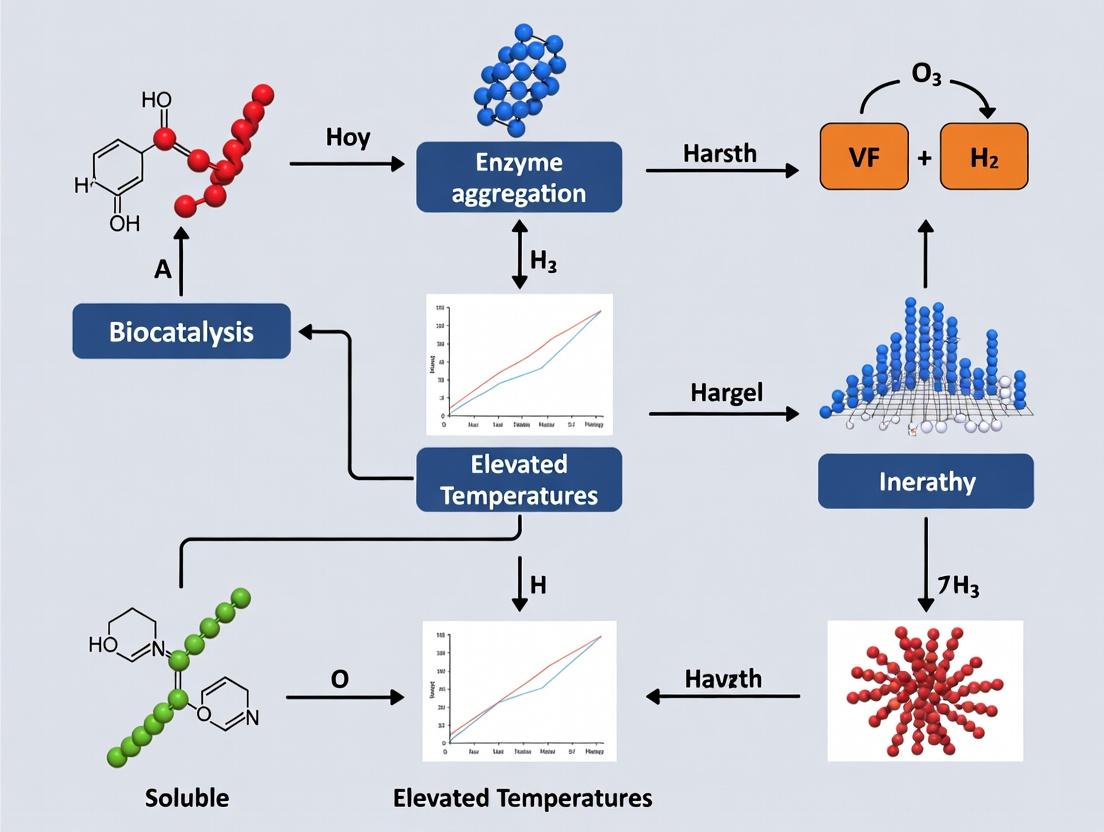
This comprehensive review addresses the critical challenge of enzyme aggregation at elevated temperatures, a major obstacle in biotherapeutic development and industrial enzymology.
Stabilizing Enzymes Against Heat-Induced Aggregation: Mechanisms, Methods, and Biotherapeutic Applications
Abstract
This comprehensive review addresses the critical challenge of enzyme aggregation at elevated temperatures, a major obstacle in biotherapeutic development and industrial enzymology. Targeting researchers and drug development professionals, it systematically explores the biophysical foundations of thermal aggregation, covering key concepts like hydrophobic exposure and nucleation. It details contemporary methodological approaches, including rational design, directed evolution, and formulation strategies. The article provides a practical troubleshooting framework for diagnosing and mitigating aggregation and offers guidance on validating stability through orthogonal analytical techniques. By synthesizing foundational knowledge with advanced applications, this resource aims to equip scientists with strategies to enhance enzyme thermostability for more robust and effective biomedical products.
Understanding the Heat: Biophysical Fundamentals of Enzyme Aggregation
Troubleshooting Guide & FAQs
Q1: Why does my enzyme lose activity rapidly when incubated at 37°C in a buffer without stabilizers? A: Elevated temperature provides kinetic energy that disrupts the native, folded conformation of the enzyme. This exposes hydrophobic regions normally buried in the core. Exposed hydrophobic patches on different enzyme molecules interact and drive irreversible aggregation, forming inactive precipitates or soluble oligomers.
Q2: How can I quickly diagnose if my enzyme sample has undergone thermal aggregation? A: Perform these rapid assays in parallel:
- Activity Assay: Immediate loss of specific activity (>50%) after a short heat challenge.
- Static Light Scattering (SLS): A sharp increase in scattered light intensity indicates particle formation.
- Visual Inspection: Cloudiness or visible precipitate after centrifugation.
- Native PAGE: Shows shifted bands corresponding to higher molecular weight aggregates.
Key Diagnostic Data for Thermal Aggregation
| Diagnostic Method | Measurement | Indication of Aggregation | Typical Time Scale |
|---|---|---|---|
| Activity Assay | Residual Specific Activity | < 50% of initial value | Minutes to Hours |
| Dynamic Light Scattering (DLS) | Hydrodynamic Radius (Rₕ) | Increase > 2x native Rₕ; Polydispersity Index > 0.3 | Seconds to Minutes |
| Intrinsic Fluorescence | Emission Wavelength Shift | Red shift of 5-20 nm (unfolding) | Milliseconds to Seconds |
| Turbidity (A340) | Optical Density at 340nm | Increase > 0.1 AU above baseline | Minutes |
Q3: What experimental protocol can I use to quantify thermal aggregation kinetics? A: Protocol: Thioflavin T (ThT) Fluorescence-Based Aggregation Kinetics.
- Principle: ThT fluorescence increases upon binding to amyloid-like or cross-β sheet structures common in aggregated proteins.
- Reagents: Enzyme sample, Assay buffer, 1 mM Thioflavin T stock solution.
- Method:
- Prepare enzyme sample at 1-5 µM in desired buffer.
- Add ThT to a final concentration of 10-20 µM.
- Load into a multi-well plate suitable for fluorescence.
- Place plate in a temperature-controlled fluorimeter or plate reader.
- Set excitation to 440 nm, emission to 480 nm.
- Rapidly heat to target temperature (e.g., 45°C) and monitor fluorescence continuously for 60-120 minutes.
- Analysis: Plot fluorescence vs. time. Fit data to a sigmoidal curve to derive lag time, aggregation rate, and maximum amplitude.
Q4: Are there standard additives to prevent thermal aggregation in my storage buffer? A: Yes, stabilizers work via different mechanisms. Efficacy is enzyme-specific and must be empirically determined.
Common Stabilizers for Thermal Aggregation
| Stabilizer Category | Example Reagents | Proposed Mechanism of Action | Typical Working Concentration |
|---|---|---|---|
| Osmolytes / Excipients | Trehalose, Glycerol, Sorbitol | Preferential exclusion, stabilizing native state hydration shell | 0.2 - 1.0 M |
| Polyols | Ethylene Glycol, Glycerol | Alter solvent dielectric constant, strengthen H-bonds | 5-20% (v/v) |
| Salts | Ammonium Sulfate, NaCl | Specific ion effects; can stabilize or destabilize | 50-200 mM |
| Polymers | PEG 3350, Ficoll 70 | Molecular crowding, steric hindrance to aggregation | 1-10% (w/v) |
| Surfactants | Polysorbate 20, 80 | Shield exposed hydrophobic patches | 0.01-0.1% (w/v) |
Q5: What is a robust protocol to screen for aggregation suppressors? A: Protocol: High-Throughput Thermal Stability Screening with Dye-Based Assays.
- Principle: Use environmental-sensitive dyes (e.g., SYPRO Orange) that fluoresce upon binding to hydrophobic surfaces (unfolded/aggregating protein).
- Reagents: Enzyme, Screening buffer, SYPRO Orange dye (5000X stock), test ligands/stabilizers in a 96/384-well plate.
- Method:
- Dispense 45 µL of enzyme solution (2-5 µM) with test compound into each well.
- Add 5 µL of 50X SYPRO Orange dye (diluted from stock).
- Seal plate and centrifuge briefly.
- Perform a thermal ramp (e.g., 25°C to 80°C at 1°C/min) in a real-time PCR machine or thermal shift assay instrument.
- Monitor fluorescence (ex: 470 nm, em: 570 nm) continuously.
- Analysis: Determine the melting temperature (Tₘ) as the inflection point of the fluorescence curve. A positive shift in Tₘ (ΔTₘ) indicates stabilization. Wells showing suppressed maximum fluorescence may indicate direct aggregation suppression.
The Scientist's Toolkit: Key Research Reagent Solutions
| Reagent / Material | Function in Aggregation Research |
|---|---|
| Thioflavin T (ThT) | Fluorescent dye for detecting amyloid-like aggregates. |
| SYPRO Orange Dye | Hydrophobic dye for monitoring unfolding & aggregation in thermal shift assays. |
| Trehalose (High Purity) | Model stabilizing osmolyte for formulation studies. |
| Size-Exclusion Chromatography (SEC) Column | Analytical tool to separate monomeric enzyme from soluble aggregates. |
| Dynamic/Static Light Scattering (DLS/SLS) Instrument | Measures particle size distribution and aggregation onset in real-time. |
| Polysorbate 20/80 | Surfactant to test interfacial and hydrophobic patch shielding. |
| Differential Scanning Calorimetry (DSC) Cell | Gold-standard for measuring thermal unfolding enthalpy and Tₘ. |
Experimental Workflow for Aggregation Analysis
Pathways Leading to Thermal Inactivation
Troubleshooting Guides & FAQs
FAQ 1: Why is my Thioflavin-T (ThT) fluorescence signal decreasing at very high temperatures instead of increasing?
- Answer: This is likely due to thermal quenching of the ThT fluorophore itself or rapid precipitation of large aggregates that sediment out of the measurement volume. ThT fluorescence intensity is temperature-dependent. Verify by running a buffer-only control with ThT across the same temperature ramp. Consider using a temperature-insensitive dye like ProteoStat or performing centrifugation assays in parallel to quantify sedimentable aggregates.
FAQ 2: My dynamic light scattering (DLS) data shows a multimodal size distribution during aggregation. How do I interpret which population is the critical nucleus?
- Answer: The critical nucleus is typically sub-visible and may be at the lower detection limit of DLS. The initial, stable population of small oligomers (2-10 nm) observed before a rapid increase in larger aggregates is likely your nucleation-competent species. Confirm using orthogonal methods like analytical ultracentrifugation (AUC) or native mass spectrometry. See Table 1 for size comparison.
FAQ 3: How can I distinguish between hydrophobic exposure due to partial unfolding versus mature aggregate formation?
- Answer: Use a combination of site-specific probes. ANS (8-Anilino-1-naphthalenesulfonic acid) binds to exposed hydrophobic clusters on unfolded monomers/oligomers. ThT binds to cross-beta-sheet structures in fibrillar aggregates. Perform kinetic measurements with both dyes simultaneously on a plate reader equipped with dual emission channels. An increase in ANS fluorescence preceding ThT increase confirms the unfolding-hydrophobic exposure step.
FAQ 4: My enzyme aggregates irreversibly upon heating. How can I recover activity for subsequent assays?
- Answer: Irreversible aggregates, especially amyloid-like ones, are often impossible to reactivate. Focus on prevention. Include osmolytes (e.g., 0.5 M trehalose), chaperones (GroEL, Hsp70), or pharmacologic chaperones in your pre-heating incubation. Test different buffer salts (e.g., citrate may stabilize better than phosphate at high T). If aggregation is nucleation-limited, brief, high-speed centrifugation may remove nuclei and prolong the lag phase.
Experimental Protocols
Protocol 1: Kinetic Monitoring of Aggregation via ThT Fluorescence
- Objective: Quantify the kinetics of fibrillar aggregate growth.
- Materials: Purified protein, ThT stock (1 mM in water), black-walled 96-well plate, plate sealer, fluorescent microplate reader with temperature control.
- Method:
- Prepare protein solution in desired buffer. Add ThT to a final concentration of 20 µM.
- Pipette 100 µL of solution into plate wells. Seal plate to prevent evaporation.
- Place plate in pre-equilibrated reader (e.g., 45°C or higher). Use orbital shaking before each read.
- Set excitation: 440 nm, emission: 482 nm. Take readings every 5-10 minutes for 24-48 hours.
- Fit data to a sigmoidal curve to determine lag time, growth rate, and plateau.
Protocol 2: Detecting Hydrophobic Exposure with ANS Fluorescence
- Objective: Measure the exposure of hydrophobic patches during thermal unfolding.
- Materials: Purified protein, ANS stock (5 mM in DMSO), fluorometer cuvette or plate reader.
- Method:
- Prepare protein sample with 50 µM ANS.
- Incubate at desired temperature for 5 minutes.
- Measure fluorescence emission scan from 450-600 nm with excitation at 380 nm.
- The intensity at ~480 nm and a blue shift in λmax correlate with hydrophobic exposure.
- Perform as a function of temperature to generate a melt curve.
Data Presentation
Table 1: Comparative Biophysical Techniques for Aggregation Analysis
| Technique | Parameter Measured | Size Range | Key Advantage for Pathway Study |
|---|---|---|---|
| Dynamic Light Scattering (DLS) | Hydrodynamic radius | 1 nm - 10 µm | Monitors size evolution in real-time, non-invasively. |
| Thioflavin-T Fluorescence | Cross-β-sheet content | N/A | Highly specific for amyloid-like aggregates; excellent for kinetics. |
| ANS Fluorescence | Surface hydrophobicity | N/A | Probes early unfolding events before aggregation. |
| Analytical Ultracentrifugation (AUC) | Molecular weight & shape | 0.1 nm - 10 µm | Resolves populations of monomers, oligomers, and aggregates. |
| Size Exclusion Chromatography (SEC) | Hydrodynamic volume | ~1 nm - 100 nm | Separates species for offline analysis; resolves oligomers. |
Table 2: Common Aggregation Suppressors & Their Proposed Mechanisms
| Reagent | Typical Conc. | Proposed Mechanism | Impact on Pathway Phase |
|---|---|---|---|
| Trehalose | 0.2 - 0.5 M | Preferential exclusion, stabilizes native state, water replacement | Delays unfolding & nucleation |
| Arginine-HCl | 0.1 - 0.5 M | Suppresses protein-protein interactions | Disrupts growth & secondary nucleation |
| GroEL (Chaperonin) | 1-10 µM | Encapsulates unfolded monomers | Sequesters unfolding intermediates |
| Glycerol | 10-30% (v/v) | Increases solvent viscosity, stabilizes native fold | Slows diffusion-limited growth |
Mandatory Visualization
Title: The Protein Aggregation Pathway
Title: Experimental Workflow for Aggregation Analysis
The Scientist's Toolkit: Research Reagent Solutions
| Item | Function & Role in Aggregation Research |
|---|---|
| Thioflavin T (ThT) | Fluorescent dye that intercalates into cross-β-sheet structures of amyloid-like aggregates, enabling kinetic growth monitoring. |
| ANS (8-Anilino-1-naphthalenesulfonate) | Polarity-sensitive fluorescent probe that binds to exposed hydrophobic clusters, reporting on early unfolding events. |
| Recombinant Molecular Chaperones (e.g., Hsp70, GroEL/ES) | ATP-dependent proteins that bind to unfolded/misfolded clients, preventing aberrant interactions and suppressing nucleation. |
| Osmolytes (Trehalose, Sorbitol) | Chemical chaperones that are preferentially excluded from the protein surface, stabilizing the native state and extending the lag phase. |
| Arginine Hydrochloride | A solution additive that suppresses protein-protein interactions via its guanidinium group, often used to inhibit aggregate growth. |
| Size Exclusion Chromatography (SEC) Column (e.g., Superdex 200) | High-resolution column for separating monomers, small oligomers, and large aggregates post-incubation to quantify species distribution. |
Technical Support Center
Troubleshooting Guides & FAQs
Q1: During my thermal shift assay, the fluorescence signal decreases rapidly instead of increasing. What could be the cause? A: This is typically indicative of rapid protein aggregation during the heating phase, which quenches the fluorophore signal. First, verify the Sypro Orange dye concentration (recommended 5-10X final). Second, ensure your protein sample buffer contains a stabilizing agent like 100-150 mM NaCl or 5% glycerol. Third, check the pH; a shift outside the protein's optimal range (often pH 7.0-7.5) can accelerate aggregation. Pre-filter the protein sample through a 0.22 µm membrane to remove pre-existing aggregates before the run.
Q2: My SEC-MALS analysis shows a high polydispersity index (>1.2) at 40°C, suggesting heterogeneous aggregation. How can I identify the primary sequence motif responsible? A: High polydispersity indicates a mixture of oligomeric states. Follow this protocol:
- Cross-linking: Incubate samples at 40°C for 10 mins, then add 1 mM BS3 (cross-linker) for 30 mins on ice. Quench with 100 mM Tris-HCl pH 7.5.
- Tryptic Digest & LC-MS/MS: Run cross-linked and control samples on SDS-PAGE. Excise high-molecular-weight bands, perform in-gel tryptic digestion, and analyze by LC-MS/MS.
- Data Analysis: Use software like xQuest or StavroX to identify cross-linked peptides. Recurrent cross-links between specific hydrophobic regions (e.g., β-strands containing motifs like VI/VLV) are strong aggregation motif candidates.
Q3: How do I distinguish between aggregation due to hydrophobic exposure versus disordered region collapse? A: Employ the following comparative assay:
| Assay | Target Signal | Protocol for Elevated Temp (45°C) | Interpretation |
|---|---|---|---|
| ANS Fluorescence | Exposed hydrophobic clusters | Add 50 µM ANS to protein sample. Monitor emission at 480 nm (excitation 380 nm) while ramping temp. | A sharp increase pre-denaturation indicates hydrophobic patch exposure. |
| Proline Mutagenesis | Rigidity in disordered loops | Introduce Pro mutations in predicted flexible loops (e.g., G/A to P). Compare Tm & aggregation onset vs. wild-type via DSF. | Increased stability in mutant implicates loop flexibility in aggregation. |
| HDX-MS | Solvent accessibility & dynamics | Incubate at 35°C & 45°C for 30s-30min, then quench. Compare deuterium uptake rates. | Rapid uptake in a region that slows upon heating suggests disorder-to-order collapse. |
Q4: My in-silico predictions (using tools like AGGRESCAN or TANGO) suggest multiple aggregation-prone regions (APRs). How do I prioritize them for experimental validation? A: Create a decision matrix based on calculated parameters. Prioritize motifs with high scores in conjunction with structural accessibility.
| APR Sequence | Prediction Score | Location (PDB) | Solvent Accessible Surface Area (Ų) | Conservation (%) | Priority for Mutagenesis |
|---|---|---|---|---|---|
| e.g., KVVIVF | 85 (TANGO) | Solvent-exposed β-strand | 120 | 30 | High |
| e.g., GNNQQNY | 92 (TANGO) | Buried in native core | 15 | 90 | Low (stabilizing) |
Q5: When performing accelerated molecular dynamics (aMD) at high temperature simulations, what are key parameters to monitor for aggregation propensity? A: Focus on these metrics in your trajectory analysis:
- Radius of Gyration (Rg): A sudden decrease may indicate hydrophobic collapse.
- Intermolecular Main-Chain H-Bonds: Between copies of the same protein in a simulation box >4 is a red flag.
- Per-Residue Solvent Accessible Surface Area (SASA): A sustained increase >20% in a hydrophobic residue's SASA suggests exposure. Protocol: Use pmemd.cuda (AMBER) or GROMACS with a 2-4x boost potential. Run triplicate 100ns simulations at 400K. Analyze with cpptraj (AMBER) or GROMACS built-in tools. Cluster structures from the last 20ns to identify dominant aggregation-competent conformers.
The Scientist's Toolkit: Research Reagent Solutions
| Reagent / Material | Function & Rationale |
|---|---|
| Sypro Orange Dye | Environment-sensitive fluorophore for Differential Scanning Fluorimetry (DSF). Binds hydrophobic patches exposed during unfolding/aggregation. |
| BS3 (Bis(sulfosuccinimidyl)suberate) | Homobifunctional, amine-reactive cross-linker. Traps transient protein-protein interactions at elevated temperatures for MS analysis. |
| ANS (1-Anilinonaphthalene-8-sulfonate) | Fluorescent dye reporting on surface hydrophobicity. Used to monitor aggregation-prone intermediate states. |
| Trehalose | Chemical chaperone and stabilizing agent. Used in buffers (0.2-0.5M) to suppress non-specific aggregation by preferential exclusion. |
| TCEP-HCl (Tris(2-carboxyethyl)phosphine) | Reducing agent superior to DTT at higher temperatures (>40°C). Prevents spurious intermolecular disulfide formation. |
| Size-Exclusion Columns (Superdex 200 Increase) | For high-resolution SEC at 30-45°C. Used with inline MALS/RI/DLS detectors to characterize oligomeric state and aggregate size in real time. |
| HDX-MS Buffer (D₂O-based) | Enables Hydrogen-Deuterium Exchange Mass Spec. Probes conformational dynamics and solvent accessibility changes under aggregating stress. |
Experimental Workflow Diagram
Diagram Title: Workflow for Identifying Key Aggregation-Prone Motifs
Signaling Pathway for Heat-Induced Aggregation
Diagram Title: Pathway of Heat-Induced Protein Aggregation
Technical Support Center: Troubleshooting Enzyme Aggregation Studies
Differential Scanning Calorimetry (DSC) Troubleshooting
Q1: My DSC thermogram for my enzyme sample shows no discernible thermal transition (Tm). What could be wrong? A: This is often due to protein concentration being too low or instrument sensitivity issues.
- Solution: Verify protein concentration using a UV-Vis spectrophotometer (A280). For most enzymes, a concentration of 0.5-2 mg/mL in a matching buffer is optimal. Ensure the reference pan contains an equal volume of dialysis buffer. Increase the scan rate to 2-3°C/min to amplify the signal, but note this may slightly alter the observed Tm.
Q2: I observe multiple, poorly defined peaks in my DSC scan of a purportedly pure enzyme. A: This typically indicates sample heterogeneity, often from partial aggregation or degradation.
- Solution:
- Pre-filter: Centrifuge the sample at 16,000 x g for 10 minutes at 4°C and use only the supernatant. Filter using a 0.1 μm low-protein-binding syringe filter directly into the DSC cell.
- Buffer Match: Ensure perfect buffer matching between sample and reference. Perform exhaustive dialysis, not just dilution.
- Protocol: Run a "re-heat" scan. If the multiple peaks disappear on the second heating cycle, it confirms irreversible aggregation during the first scan.
Dynamic Light Scattering (DLS) Troubleshooting
Q3: My DLS measurement shows a high polydispersity index (PDI > 0.3) and poor fit quality. A: High PDI suggests a non-uniform population, likely from aggregate presence.
- Solution: Always filter samples (0.02 μm for oligomeric state, 0.1 μm for aggregate detection) directly into a ultra-clean, low-volume cuvette. Allow the sample to equilibrate to the instrument temperature (often 25°C) for 5 minutes before measurement. Increase the measurement duration (e.g., to 15 runs of 10 seconds each) to improve statistics. For temperature-ramp studies, hold at each temperature for 5 minutes prior to measurement.
Q4: How do I distinguish between a dimer and a small aggregate using DLS? A: Rely on hydrodynamic radius (Rh) and complementary techniques.
- Solution: Compare the measured Rh to the theoretical Rh of the native monomer/dimer (calculated from sequence). An increase of >1.5x the theoretical dimer size suggests higher-order aggregation. Use Size-Exclusion Chromatography (SEC) coupled with MALS (Multi-Angle Light Scattering) for absolute molecular weight confirmation. Perform the DLS measurement at multiple protein concentrations; true oligomers will show concentration-independent Rh, while aggregates may show concentration-dependent growth.
Spectroscopic Techniques (CD, Fluorescence) Troubleshooting
Q5: My Circular Dichroism (CD) spectra have very high noise in the far-UV region (< 220 nm). A: This is usually caused by buffer absorption or incorrect pathlength.
- Solution: Use high-purity, CD-compatible buffers: prefer phosphate or fluoride over chloride salts. For far-UV scans (190-250 nm), use a shorter pathlength cuvette (0.1 mm or 0.02 mm) and increase protein concentration to 0.2-0.5 mg/mL. Purge the instrument with nitrogen for at least 20 minutes before and during the scan to reduce oxygen absorbance.
Q6: My intrinsic tryptophan fluorescence shows a decreasing signal with increasing temperature. Is this always unfolding? A: Not necessarily. Signal loss can be due to aggregation-induced quenching.
- Solution: Run a synchronous experiment:
- Monitor fluorescence emission intensity at 330-350 nm (λex = 295 nm).
- Simultaneously monitor light scattering at 320 nm (λex = 320 nm) on the same instrument.
- A decrease in fluorescence coincident with a sharp increase in scattering confirms aggregation as the primary event, not just unfolding.
Experimental Protocols for Enzyme Aggregation Studies
Protocol 1: Integrated DSC and DLS Temperature Ramp
Objective: To correlate loss of native structure (DSC) with the onset of particle formation (DLS).
- Sample Prep: Dialyze enzyme exhaustively against desired buffer (e.g., 20 mM phosphate, 150 mM NaCl, pH 7.4). Centrifuge at 16,000 x g, 4°C for 15 min. Filter supernatant (0.1 μm).
- DSC Run: Load sample (0.8 mg/mL) and reference. Equilibrate at 20°C. Scan from 20°C to 90°C at 1.5°C/min.
- DLS Run: Using aliquot from same prep, load filtered sample into cuvette. Equilibrate at 20°C. Measure Rh and scattering intensity at 5°C intervals from 25°C to 80°C, with a 5 min hold prior to each measurement.
- Analysis: Overlay DSC thermogram (Heat Flow) and DLS scattering intensity vs. Temperature. The temperature at which scattering sharply increases often aligns with the Tm or the end of the DSC transition.
Protocol 2: Aggregation Kinetics via DLS and Fluorescence
Objective: To monitor real-time aggregate growth at a constant elevated temperature.
- Setup: Pre-equilibrate spectrofluorometer cell holder to target temperature (e.g., 55°C, just above Tm).
- Load Sample: Rapidly inject filtered, room-temperature enzyme sample into a pre-warmed cuvette.
- Kinetic Measurement:
- DLS Mode: Measure Rh every 60 seconds for 2 hours.
- Fluorescence Mode: Concurrently, record tryptophan fluorescence intensity (λex=295 nm, λem=340 nm) and static light scattering intensity (λex=λem=340 nm) every 60 seconds.
- Analysis: Plot Rh, Fluorescence Intensity, and Scattering Intensity vs. Time. Early decrease in fluorescence with concurrent rise in scattering indicates rapid aggregation.
Table 1: Characteristic Signatures of Unfolding vs. Aggregation
| Technique | Observation in Pure Unfolding | Observation in Aggregation-Prone Systems |
|---|---|---|
| DSC | Single, sharp endothermic peak. Reversible upon re-scan (if slow cooling). | Broad, asymmetric transition peak. No peak on second re-scan (irreversible). |
| DLS | Rh increases slightly (~20%) upon unfolding. Monomodal distribution. | Rh increases dramatically (100-1000%), often multimodal. Scattering intensity rises sharply. |
| CD | Loss of secondary structure (minima at 208nm & 222nm). Isoelliptic point may be seen. | Often shows precipitation at high temps, leading to noisy, unreliable spectra. |
| Fluorescence | Red shift in λmax (e.g., 330nm → 350nm). Gradual intensity change. | Sudden, severe quenching of intensity. May see blue shift if hydrophobic clusters form. |
Table 2: Recommended Parameters for Key Experiments
| Experiment | Optimal Protein Concentration | Key Buffer Considerations | Critical Instrument Settings |
|---|---|---|---|
| DSC (Thermal Unfolding) | 0.5 - 2.0 mg/mL | Exact dialysis match. Avoid DTT in reference. | Scan Rate: 1-2 °C/min. Filter Period: 5-10 s. |
| DLS (Size vs. Temp) | 0.1 - 0.5 mg/mL | Pre-filter all buffers (0.02 μm). Low dust. | Equilibration Time: 300 s. Number of Measurements: ≥ 15. |
| CD (Far-UV) | 0.2 - 0.5 mg/mL | Use phosphate, not Tris or chloride. | Pathlength: 0.1 mm. N2 Purging: >20 min. |
| Fluorescence Thermal Ramp | 0.05 - 0.2 mg/mL | Use low-fluorescence cuvettes. | Temperature Slope: 1 °C/min. Data Interval: 0.5 °C. |
Visualization
Title: DSC Thermal Analysis Workflow
Title: Enzyme Aggregation Pathway Under Heat
The Scientist's Toolkit: Research Reagent Solutions
| Item | Function in Enzyme Aggregation Studies |
|---|---|
| Low-Protein-Binding Filters (0.1 μm, 0.02 μm) | Critical for removing pre-existing aggregates from samples prior to DLS, DSC, or spectroscopy to ensure clean baselines. |
| CD-Compatible Buffers (e.g., Ammonium Fluoride, Sodium Phosphate) | Minimize background absorbance in the far-UV range, allowing accurate secondary structure determination. |
| Spectrophotometer Cuvettes (Quartz, 0.1 mm path) | Essential for far-UV CD measurements. Short pathlength allows use of higher buffer concentrations. |
| DSC Crucibles/Cells (High Pressure, Hermetic) | Enable studies of enzymes under different atmospheric conditions or with volatile buffers, preventing bubble formation during heating. |
| Dynamic Light Scattering Cuvettes (Ultra-Clean, Disposable) | Minimize dust contamination, which is a major source of artifact in DLS measurements of large protein aggregates. |
| Fluorescence Dyes (e.g., SYPRO Orange, Thioflavin T) | Used in differential scanning fluorimetry (DSF/TSA) or as extrinsic probes to detect aggregation (increase in fluorescence). |
| Size-Exclusion Chromatography (SEC) Column (e.g., Superdex 200 Increase) | Coupled with DLS or MALS detectors, it separates oligomeric states from aggregates for definitive size/mass analysis. |
Strategies for Stability: Engineering and Formulation Solutions to Prevent Aggregation
Technical Support Center: Troubleshooting Enzyme Thermostabilization
Frequently Asked Questions (FAQs)
Q1: My enzyme's activity plummets after introducing a computationally predicted stabilizing mutation. What went wrong? A: This is often due to disrupting a catalytically critical residue or a key interaction at the active site. Verify the mutation's location relative to the active site using your 3D model. Revert to wild-type and conduct site-saturation mutagenesis at that position to identify variants that balance stability and activity.
Q2: Surface engineering to reduce aggregation is making my protein more hydrophobic and prone to precipitation. Why? A: You may have inadvertently created a hydrophobic patch. The goal is to replace hydrophobic surface residues with charged (e.g., Glu, Lys, Arg) or polar (Ser, Thr) ones to enhance solvation. Re-analyze your engineered surface using a tool like Pymol or Chimera to visualize electrostatic potential and ensure you haven't introduced new hydrophobic clusters.
Q3: The introduced disulfide bond does not form, and my protein shows increased aggregation. How do I troubleshoot this? A: This indicates improper oxidation or structural strain. Ensure your purification and storage buffers contain redox agents (e.g., 2mM reduced/0.2mM oxidized glutathione) to facilitate correct bond formation. Check the χ3 and χ3' dihedral angles of the cysteine pair in your model; they should be favorable (typically -87° ± 30°). Consider adding a stabilizing filler mutation first to pre-shape the site.
Q4: My engineered enzyme is more thermostable in melting assays (Tm increased) but aggregates faster at working temperatures (e.g., 50°C). What does this mean? A: Increased thermodynamic stability (higher Tm) does not always correlate with improved kinetic stability against aggregation. The mutations may have created sticky, partially unfolded intermediates. Employ a kinetic stability assay (e.g., incubation at 50°C with time-point sampling) and analyze aggregation via light scattering. Focus on rigidifying flexible regions identified by B-factor/DynaMut analysis rather than just overall stability.
Troubleshooting Guides
Issue: Low Yield of Soluble Protein After Mutagenesis
- Step 1: Check protein sequence and expression vector. Confirm mutation via sequencing. Verify induction conditions (IPTG concentration, temperature, time).
- Step 2: Analyze cell lysate via SDS-PAGE. If protein is in inclusion bodies, consider:
- Lowering expression temperature to 18-25°C.
- Using a lower inducer concentration (e.g., 0.1 mM IPTG).
- Switching to an autoinduction medium.
- Step 3: If soluble but aggregated post-purification, add low concentrations of stabilizers (e.g., 150 mM NaCl, 10% glycerol, 0.01% Tween-20) to storage buffer.
Issue: Disulfide Bond Formation Inefficient During In Vitro Refolding
- Step 1: Optimize redox buffer. Standard is 5mM GSH:0.5mM GSSG. Try ratios from 10:1 to 1:2 (GSH:GSSG).
- Step 2: Reduce protein concentration during refolding (to 10-20 μg/mL) to minimize intermolecular aggregation.
- Step 3: Introduce the disulfide bond in a background that already has enhanced stability (from a filler mutation) to improve correct folding kinetics.
Issue: Engineered Enzyme Has High Thermostability but Low Operational Stability (Half-life)
- Step 1: Distinguish between thermal denaturation and oxidative/inactivation pathways. Perform long-term incubation at target temperature and measure residual activity.
- Step 2: Check for oxidation-prone residues (Met, Cys, Trp) near the active site. Consider replacing Met with norleucine or Leu if oxidation is suspected.
- Step 3: Use a substrate-mimetic ligand or inhibitor during incubation to see if it stabilizes; if so, active site rigidity is likely the issue.
Data Presentation: Common Thermostabilizing Strategies & Outcomes
Table 1: Efficacy of Different Rational Design Strategies on Model Enzymes
| Strategy | Target Region | Typical ΔTm Range (°C) | Common Pitfall | Success Rate* |
|---|---|---|---|---|
| Rigidifying Mutations | High B-factor loops | +2 to +8 | Can reduce catalytic turnover (kcat) | ~40-50% |
| Surface Charge Engineering | Hydrophobic surface clusters | +3 to +10 | Can alter pH profile or solubility | ~60-70% |
| Disulfide Bond Introduction | Close (<7Å) Cβ atoms | +5 to +15 | Can cause folding defects/strain | ~30-40% |
| Proline Substitution | Non-essential flexible turns | +1 to +4 | Can disrupt hinge motions needed for function | ~50-60% |
| Consensus Design | Whole protein scaffold | +4 to +12 | Can be incompatible with host expression | ~70-80% |
*Reported success rates in literature for increasing Tm by >2°C without significant activity loss.
Table 2: Troubleshooting Aggregation During Purification
| Aggregation Symptom | Possible Cause | Immediate Experiment | Solution |
|---|---|---|---|
| Cloudy elution from IMAC column | Non-specific hydrophobic interactions | Add 5% glycerol or 150 mM Arg to lysis/binding buffer | Include mild non-ionic detergent (0.01% Tween-20) |
| Aggregation after concentration | Concentration-dependent oligomerization | Perform size-exclusion chromatography (SEC) post-concentration | Keep final concentration <2 mg/mL or add 10% trehalose |
| Precipitate upon freezing | Cold denaturation or buffer crystallization | Dialyze into buffer with cryoprotectant (e.g., 20% glycerol) | Flash-freeze in liquid N2 and store at -80°C |
Experimental Protocols
Protocol 1: Assessing Thermostability via Differential Scanning Fluorimetry (DSF)
- Prepare Sample: Mix purified protein (0.2 mg/mL, 10 μL) with a fluorescent dye (e.g., SYPRO Orange, 5X final concentration) in a final volume of 25 μL using PCR-grade tubes.
- Run Melt Curve: Use a real-time PCR instrument. Ramp temperature from 25°C to 95°C at a rate of 1°C per minute, with fluorescence measurements (ROX/FAM filter) taken at each interval.
- Analyze Data: Plot fluorescence (F) vs. Temperature (T). Fit data to a Boltzmann sigmoidal curve. The inflection point is the apparent melting temperature (Tm). Compare Tm of wild-type vs. mutant.
Protocol 2: In Vitro Oxidative Refolding for Disulfide Bond Formation
- Denature and Reduce: Incubate purified, reduced protein (1 mg/mL) in 6 M Guanidine-HCl, 50 mM Tris-HCl (pH 8.0), 10 mM DTT for 1 hour at 25°C.
- Initiate Refolding: Rapidly dilute the denatured protein 100-fold into refolding buffer: 50 mM Tris-HCl (pH 8.0), 0.5 M L-Arg, 5 mM GSH, 0.5 mM GSSG, 1 mM EDTA. Stir gently at 4°C for 12-24 hours.
- Recover Protein: Concentrate the refolding mixture using a centrifugal concentrator (10 kDa MWCO). Dialyze into your desired storage buffer. Analyze disulfide formation by non-reducing SDS-PAGE and LC-MS.
Visualizations
Title: Rational Design Strategies to Combat Enzyme Aggregation
Title: Troubleshooting Aggregation of Engineered Enzymes
The Scientist's Toolkit: Research Reagent Solutions
Table 3: Essential Reagents for Enzyme Thermostabilization Studies
| Item | Function in Research | Example/Brand |
|---|---|---|
| Site-Directed Mutagenesis Kit | Introduces specific point mutations for stability testing. | NEB Q5 Site-Directed Mutagenesis Kit, Agilent QuikChange |
| Thermofluor Dye | Binds hydrophobic patches exposed during unfolding for DSF (Tm measurement). | SYPRO Orange, NanoDSF Grade Dyes |
| Redox Pair for Refolding | Creates a redox buffer to facilitate correct disulfide bond formation in vitro. | Reduced/Oxidized Glutathione (GSH/GSSG) |
| Kosmotropic Additives | Stabilizes protein native state in solution, prevents aggregation during purification. | Glycerol, Trehalose, L-Arginine |
| Surface Tension Reducer | Reduces surface-induced aggregation at air-liquid interfaces during handling. | Tween-20, Pluronic F-68 |
| Analytical Size-Exclusion Column | Assesses monomeric state and detects soluble aggregates post-engineering. | Bio-Rad ENrich SEC 650, Superdex 200 Increase |
| Computational Stability Prediction Server | Predicts ΔΔG of mutation to prioritize designs. | FoldX, Rosetta ddG_monomer, DUET, PoPMuSiC |
Technical Support Center
Troubleshooting Guides & FAQs
Q1: During the initial colony PCR screening for variant libraries, I am getting weak or no amplification bands. What could be the cause? A: This is often due to primer mismatches from degenerate codon libraries or suboptimal PCR conditions.
- Solution 1: Redesign primers to have a higher melting temperature (Tm) and ensure they are not complementary to the degenerate region. Use touchdown PCR.
- Solution 2: Increase template concentration by performing a more robust colony pick or using a small-scale plasmid prep. Add DMSO (2-5%) to the PCR mix to reduce secondary structure.
- Protocol: Touchdown Colony PCR: 1. Initial denaturation: 98°C for 2 min. 2. 10 cycles of: Denaturation at 98°C for 10 sec, Annealing starting at 72°C (decreasing by 1°C per cycle) for 15 sec, Extension at 72°C for 30 sec/kb. 3. 25 cycles of: Denaturation at 98°C for 10 sec, Annealing at 62°C for 15 sec, Extension at 72°C for 30 sec/kb.
Q2: My enzyme variants show improved thermostability in a purified assay but aggregate significantly during the expression heat shock step at 42°C. How can I decouple selection for solubility from thermostability? A: This is a core challenge in the thesis context of addressing enzyme aggregation at elevated temperatures. You must separate the selection pressures.
- Solution: Implement a two-step screening protocol. First, screen for soluble expression under normal conditions (e.g., 30°C induction). Isolate soluble variants. Second, subject the pre-purified soluble variants to a high-temperature incubation (e.g., 60°C for 1 hour), then assay for retained activity. This selects for intrinsic thermostability without the confounding factor of aggregation during expression.
Q3: The predictive accuracy of my machine learning model for thermostability plateaus or decreases after several rounds of directed evolution. Why? A: This is often a sign of insufficient diversity in your training data or model overfitting to a local sequence space.
- Solution 1: Introduce diversity-generating rounds. Use error-prone PCR or DNA shuffling on the best-performing variants to explore a wider sequence landscape before feeding new data to the model.
- Solution 2: Incorporate additional protein features into the model. Move beyond simple sequence data to include predicted structural features (e.g., solvent accessibility, flexibility indices, contact maps) from tools like AlphaFold2.
- Protocol: Diversity Generation Round: 1. Pool plasmids from top 20-50 variants. 2. Perform DNA shuffling using DNase I fragmentation and reassembly PCR. 3. Clone shuffled library back into expression vector. 4. Proceed with standard screening workflow.
Q4: My high-throughput thermal shift assay (TSA or nanoDSF) data is noisy, making it hard to rank variants. How can I improve signal-to-noise? A: Noisy TSA data often stems from protein impurity or suboptimal dye/protein ratios.
- Solution: For crude lysates, implement a quick normalization step. Use a Bradford or BCA assay to normalize total protein concentration across all lysate samples before running the TSA. For purified protein, ensure an A260/A280 ratio >0.8 for minimal nucleic acid contamination.
- Protocol: Crude Lysate Normalization for TSA: 1. Prepare clarified lysates in 96-well format. 2. Perform microplate BCA assay on 10 µL of each lysate. 3. Dilute all lysates to the same total protein concentration (e.g., 0.5 mg/mL) using lysis buffer. 4. Proceed with SYPRO Orange dye addition (final 5X) and run melt curve from 25°C to 95°C with 0.5°C increments.
Q5: How do I effectively integrate HT-Screening data with machine learning when my dataset sizes are still relatively small (<1000 data points)? A: Use transfer learning or shallow models to avoid overfitting.
- Solution: Employ a pre-trained protein language model (e.g., ESM-2) to generate meaningful feature embeddings for your variants. Fine-tune a simple regression model (like Ridge Regression or a small neural network) on top of these embeddings using your small, high-quality experimental ΔTm or residual activity data. This leverages general protein sequence knowledge to boost predictive power.
Table 1: Comparison of High-Throughput Thermostability Assays
| Assay Method | Throughput (samples/day) | Required Protein | Key Output | Approximate Cost per Sample | Key Limitation |
|---|---|---|---|---|---|
| NanoDSF | 192 - 384 | Purified, 10 µL at >0.2 mg/mL | Tm, Aggregation Onset | $3 - $5 | Requires purified protein; sensitive to buffer components. |
| Dye-Based Microplate TSA | 960 - 3840 | Crude lysate or purified, 20 µL | Apparent Tm | $0.50 - $1 | Dye can interfere with some proteins; signal from aggregates. |
| CETSA-HT (Cellular) | 96 - 384 | Intact cells expressing variant | Melting Curve in-cell | $5 - $10 | Complex data analysis; reflects cellular environment. |
| Residual Activity after Heat Shock | 384 - 1536 | Crude lysate, 5-10 µL | % Activity Remaining | $0.20 - $0.50 | Enzyme-specific assay required; measures function, not just unfolding. |
Table 2: Performance Metrics of ML Models for Predicting ΔTm
| Model Architecture | Training Data Size (variants) | Avg. Absolute Error (ΔTm °C) | Key Feature Inputs | Best For |
|---|---|---|---|---|
| Gradient Boosting (XGBoost) | 500 - 5,000 | 1.2 - 2.5 | One-hot encoding, physicochemical properties | Small to medium datasets, interpretability. |
| Convolutional Neural Net (CNN) | 5,000 - 50,000 | 0.8 - 1.8 | Sequence alone (as embedding) | Capturing local sequence motifs. |
| Transformer (Fine-tuned ESM-2) | 1,000 - 20,000 | 0.5 - 1.5 | Sequence embeddings from pre-trained model | Leveraging evolutionary context; small datasets. |
| Graph Neural Net (GNN) | 5,000+ | 0.7 - 1.3 | AlphaFold2-predicted structure graphs | Incorporating 3D structural information. |
Experimental Protocols
Protocol 1: High-Throughput Residual Activity Screen for Thermostability Objective: To identify variants retaining enzymatic activity after a defined heat challenge.
- Lysate Preparation: In a 96-well deep-well plate, express variant library. Pellet cells, lyse with 200 µL B-PER II buffer per well with lysozyme and Benzonase. Clarify by centrifugation (4000xg, 20 min).
- Heat Challenge: Transfer 40 µL of clarified lysate to a fresh 96-well PCR plate. Seal plate. Incubate in a thermal cycler at target temperature (e.g., 60°C) for 30 minutes. A control plate is kept on ice.
- Activity Assay: Transfer 10 µL of heated (and control) lysate to a 384-well assay plate. Add 90 µL of activity assay master mix (containing substrate in appropriate buffer). Immediately measure initial reaction rate (e.g., absorbance at 340 nm for NADH depletion) for 5 minutes using a plate reader.
- Data Analysis: Calculate residual activity as (Activityheated / Activitycontrol) * 100%. Normalize to a wild-type control on each plate.
Protocol 2: Machine Learning-Guided Library Design Workflow Objective: To select sequences for the next round of evolution using model predictions.
- Feature Generation: For all tested sequences, generate feature vectors. This can include: a) One-hot encoded sequences, b) ESM-2 per-residue embeddings (averaged), c) Predicted ΔΔG of folding from tools like FoldX or Rosetta.
- Model Training & Validation: Using data from previous rounds (ΔTm or residual activity), train a regression model (e.g., XGBoost). Perform 5-fold cross-validation to estimate performance.
- In Silico Saturation Mutagenesis: For the top 10 parent sequences, predict the ΔTm for all possible single mutants at every residue position using the trained model.
- Library Synthesis: Select 200-500 top-predicted single mutants and combine them into a "smart library" using oligonucleotide synthesis and assembly (e.g., Twist Bioscience). Include 20 random mutants as a control for model bias.
Visualizations
Diagram 1: Integrated DE-ML Workflow for Thermostability
Diagram 2: Thesis Context: Aggregation vs. Thermostability Pathways
The Scientist's Toolkit: Research Reagent Solutions
| Item | Function & Relevance to Experiment |
|---|---|
| Sypro Orange Dye | A fluorescent dye that binds to hydrophobic patches exposed upon protein unfolding; used in high-throughput thermal shift assays (TSA) to determine melting temperature (Tm). |
| Ni-NTA Magnetic Beads | Enable rapid, semi-purification of His-tagged variant proteins from crude lysates in a 96-well format, improving data quality for downstream assays like nanoDSF. |
| Phusion HF DNA Polymerase | High-fidelity polymerase for accurate amplification of variant genes prior to cloning; essential for maintaining sequence integrity in library construction. |
| Gateway LR Clonase II | Enzyme mix for rapid and efficient recombination-based cloning of variant libraries from entry vectors into expression vectors, increasing throughput. |
| ESPRESSO Superfolder GFP | When fused to enzyme variants, allows for quick visual screening of soluble expression levels in colonies or lysates under heat stress, a proxy for stability. |
| StableFold Dyes (Thermo Fluor) | A set of dyes with different chemical sensitivities; screening with multiple dyes can distinguish between unfolding and aggregation events in thermal denaturation. |
| Cytiva HisTrap HP 96-well Plate | Filter plate format for parallel purification of dozens of His-tagged variants via immobilized metal affinity chromatography (IMAC) for thorough characterization. |
| Nano-Glo Luciferase Assay System | Can be used as an internal control in cell-based thermostability assays (CETSA-HT) by co-expressing a thermolabile luciferase reporter. |
Troubleshooting Guides & FAQs
Q1: During thermal stress testing, my target enzyme still precipitates despite adding 250 mM trehalose. What could be wrong? A: This is a common issue. First, verify the pH of your formulation buffer. Excipient efficacy is highly pH-dependent; a shift can alter the stabilizing preferential exclusion mechanism. Second, ensure you are using a high-purity, anhydrous trehalose source. Contaminants or residual moisture can promote degradation. Third, consider the enzyme's isoelectric point (pI). If the pH is near the pI, aggregation risk is higher, and you may need to adjust pH away from it or combine trehalose with a polyol like glycerol (e.g., 5-10% v/v). Finally, increase the excipient concentration systematically. For some enzymes, stabilization requires >0.5 M trehalose.
Q2: My circular dichroism (CD) spectra show loss of secondary structure after freeze-thaw cycles with sorbitol, but not with sucrose. Why? A: Sorbitol, a polyalcohol, has a lower glass transition temperature (Tg) than sucrose. During freezing, it may not form an adequate amorphous glass matrix to immobilize and protect the protein. Sucrose forms a better glass, kinetically stabilizing the native structure. Check your freeze-thaw rate. A rapid freeze/slow thaw cycle can exacerbate damage with lower-Tg excipients. We recommend using sucrose or trehalose for freeze-thaw stability. If you must use a polyol, consider combining it with a sugar.
Q3: How do I choose between arginine (an osmolyte) and a sugar for inhibiting heat-induced aggregation? A: Their mechanisms differ. Sugars and polyalcohols act primarily through preferential exclusion, stabilizing the native state. Arginine can suppress aggregation by binding to aggregation-prone intermediates, but may destabilize the native state slightly. Use arginine (0.1-0.5 M) if your protein is prone to forming soluble oligomers or amorphous aggregates at high temperatures. Use sugars (0.2-0.5 M) for general thermal stabilization of the native fold. For severe aggregation, a combination (e.g., 0.2 M trehalose + 0.1 M arginine) is often most effective.
Q4: My dynamic light scattering (DLS) data shows increased hydrodynamic radius after incubation at 50°C with mannitol, suggesting aggregation. Is this excipient ineffective? A: Not necessarily. Mannitol can crystallize out of solution during thermal stress, especially at higher concentrations (>50 mM). This phase change can create surfaces that nucleate protein aggregation. Confirm by visual inspection for cloudiness or crystals. Switch to a non-crystallizing excipient like trehalose, sucrose, or glycerol. If mannitol is required for tonicity, use it at a lower concentration and combine it with an amorphous stabilizer.
Q5: What is the optimal method for screening multiple excipients for thermal stabilization? A: Use a high-throughput thermal shift assay (differential scanning fluorimetry, DSF). Prepare your protein in a 96-well plate with different excipients (e.g., 0.4 M each) in a standard buffer. Use a fluorescent dye (e.g., SYPRO Orange) that binds to hydrophobic patches exposed upon unfolding. Run a temperature ramp (e.g., 25°C to 95°C) and monitor fluorescence. The midpoint of the transition (Tm) indicates stability. An increase in Tm compared to control shows stabilization.
Experimental Protocols
Protocol 1: High-Throughput Thermal Shift Assay (DSF) for Excipient Screening
Objective: To determine the melting temperature (Tm) of an enzyme in the presence of various excipients.
- Prepare a 10X stock solution of each excipient (e.g., 4 M trehalose, 4 M sucrose, 4 M glycerol, 2 M arginine-HCl) in your assay buffer (e.g., 20 mM phosphate, pH 7.0).
- Dilute purified target enzyme to 0.5 mg/mL in the same buffer.
- In a 96-well PCR plate, mix:
- 18 µL of enzyme solution
- 2 µL of 10X excipient stock (final 1X concentration)
- 5 µL of 20X SYPRO Orange dye stock.
- Include control wells: enzyme with buffer only (no excipient) and buffer with dye only (no enzyme).
- Seal the plate, centrifuge briefly.
- Run in a real-time PCR instrument with a temperature gradient from 25°C to 95°C with a ramp rate of 1°C/min, monitoring fluorescence in the ROX/FAM channel.
- Analyze data by plotting the negative first derivative of fluorescence vs. temperature to find Tm.
Protocol 2: Assessing Anti-Aggregation Efficacy by Static Light Scattering
Objective: To quantify the suppression of heat-induced aggregation over time.
- Prepare 1 mL samples of your enzyme (0.2 mg/mL) in buffer containing the selected excipients.
- Pre-equilibrate a cuvette-based spectrophotometer (or plate reader) with a thermal controller to your stress temperature (e.g., 45°C).
- Load samples into quartz cuvettes or a 96-well plate.
- Monitor absorbance or optical density (OD) at 350 nm or 600 nm (turbidity) every 2 minutes for 60-90 minutes.
- Plot OD vs. time. The initial slope of the curve indicates the aggregation rate. Effective excipients will show a flat, low-slope line.
Data Presentation
Table 1: Thermal Stabilization Efficacy of Common Excipients on Model Enzyme Lysozyme
| Excipient (0.4 M) | Class | Tm Shift (°C) from DSF | Aggregation Rate (ΔOD350/min) at 45°C |
|---|---|---|---|
| Control (Buffer) | N/A | 0.0 | 0.025 |
| Trehalose | Sugar | +5.2 | 0.003 |
| Sucrose | Sugar | +4.8 | 0.004 |
| Glycerol | Polyalcohol | +3.1 | 0.010 |
| Sorbitol | Polyalcohol | +2.5 | 0.015 |
| L-Arginine-HCl | Osmolyte | -0.5 | 0.001 |
| Mannitol | Polyalcohol | +1.8 | 0.022* |
*Mannitol showed crystallization after 30 minutes.
Table 2: Recommended Excipient Concentrations for Stabilization Functions
| Stabilization Goal | Recommended Excipients | Typical Working Concentration |
|---|---|---|
| Long-Term Thermal Storage | Trehalose, Sucrose | 0.2 - 0.5 M |
| Freeze-Thaw Cycling | Sucrose, Trehalose, Glycerol (mix) | 5-10% w/v or v/v |
| Suppression of Soluble Aggregates | L-Arginine, L-Glutamate | 0.1 - 0.3 M |
| Prevention of Surface Adsorption | Polysorbate 80 + Trehalose | 0.01% + 0.2 M |
| pH Buffering + Stabilization | Histidine + Sucrose | 20 mM + 0.25 M |
Diagrams
Title: Mechanism of Excipient Stabilization Against Thermal Aggregation
Title: Workflow for Optimizing Excipient Formulations
The Scientist's Toolkit
Table 3: Essential Research Reagent Solutions for Excipient Stabilization Studies
| Reagent/Material | Function in Experiments | Key Considerations |
|---|---|---|
| Trehalose (Dihydrate), High Purity | Gold-standard stabilizing sugar; forms stable glass. | Use anhydrous for precise molarity. Filter sterilize (0.22 µm). |
| SYPRO Orange Protein Gel Stain | Fluorescent dye for DSF; binds hydrophobic patches. | Light sensitive. Aliquot and store at -20°C in the dark. |
| 96-Well Hard-Shell PCR Plates | For high-throughput DSF assays. | Ensure compatibility with your real-time PCR instrument. |
| L-Arginine Hydrochloride | Suppresses aggregation, especially of molten globule states. | Can lower pH; adjust with NaOH. May increase solution viscosity. |
| Glycerol, Molecular Biology Grade | Polyalcohol for cryoprotection and thermal stabilization. | Hygroscopic; can promote microbial growth in long-term storage. |
| Amicon Ultra Centrifugal Filters | To exchange buffer/excipient and concentrate protein samples. | Choose appropriate MWCO. Do not exceed recommended g-force. |
| Quartz Suprasil Cuvettes | For UV spectroscopy and turbidity measurements at high temps. | Ensure they are compatible with your instrument's thermal holder. |
| Differential Scanning Calorimetry (DSC) Cell | For label-free, direct measurement of Tm and ΔH. | Requires higher protein concentration and thorough degassing. |
FAQs & Troubleshooting Guides
Q1: During covalent immobilization of my enzyme onto mesoporous silica supports, I observe a severe loss (>80%) of initial activity. What are the potential causes and solutions?
A: This is a common issue often linked to improper handling of the immobilization chemistry or pore blockage.
- Potential Cause 1: The coupling reaction (e.g., using glutaraldehyde or EDC/NHS chemistry) is occurring at a pH far from the enzyme's optimal pH, leading to denaturation during immobilization.
- Troubleshooting: Perform the coupling reaction in a mild buffer (e.g., phosphate, MOPS) close to the enzyme's optimal storage pH, not necessarily its catalytic pH. Conduct a pH profile of the immobilization buffer.
- Potential Cause 2: Multipoint covalent attachment is too rigid, distorting the active site, or the support surface is too hydrophobic.
- Tbleshooting: Use a spacer arm (e.g., APTES followed by a longer linker than glutaraldehyde) to provide more flexibility. Consider a less hydrophobic support like functionalized agarose or controlled-pore glass.
- Potential Cause 3: Pore diffusion limitations or physical blockage of pores by aggregated enzyme.
- Troubleshooting: Use a support with a larger pore diameter (≥ 10x the hydrodynamic diameter of the enzyme). Pre-treat the enzyme with a mild detergent to prevent aggregation during the immobilization process.
Q2: My nanoconfined enzyme shows excellent thermal stability in buffer but rapidly deactivates in my actual reaction medium (e.g., organic solvent, high ionic strength). Why?
A: Nanoconfinement primarily stabilizes the protein's tertiary structure against thermal unfolding. It may not protect against chemical denaturants or interfacial forces.
- Potential Cause: The support material may interact adversely with the reaction medium, causing swelling, shrinkage, or non-specific binding of inhibitors.
- Troubleshooting: Match the support hydrophobicity to the solvent. For organic solvents, use hydrophobic carriers (e.g., polyacrylate resins). For high ionic strength, use highly cross-linked, non-swelling supports. Consider adding a protective coating layer after immobilization.
Q3: How do I definitively prove that my enzyme is nanoconfined within pores and not just aggregated on the external surface of the support?
A: This requires a combination of physical characterization and enzymatic assays.
- Solution Protocol:
- Nitrogen Physisorption (BET/BJH): Measure the pore volume and surface area of the support before and after immobilization. A significant decrease in pore volume is strong evidence of internal loading.
- Confocal Fluorescence Microscopy (if enzyme is labeled): Compare z-stack images of labeled enzyme on a non-porous vs. porous support. Internalization shows diffuse fluorescence throughout the particle.
- Activity Assay with a Non-Penetrating Inhibitor: Use a large molecular weight inhibitor or polymer (e.g., PEGylated inhibitor) that cannot access the pores. Minimal inhibition suggests the active enzyme is primarily confined inside the pores.
Q4: I am using a "smart" stimuli-responsive polymer for confinement. My enzyme leaks upon repeated thermal cycling. How can I improve retention?
A: Leakage indicates weak physical entrapment. A hybrid approach is recommended.
- Solution Protocol: Covalent Tethering after Nanoconfinement.
- Immobilize the enzyme within the stimuli-responsive polymer gel under mild conditions.
- Gently introduce a dilute solution of a homo-bifunctional crosslinker (e.g., bis(sulfosuccinimidyl)suberate - BS³) that is small enough to diffuse into the gel network.
- Allow it to react with surface lysines on the enzyme and amine groups on the polymer matrix, creating a loose covalent net.
- Wash thoroughly. This protocol combines the benefits of soft confinement with secure attachment, preventing leakage during polymer swelling/deswelling cycles.
Experimental Protocol: Assessing Thermal Stability under Nanoconfinement
Title: Protocol for Determining Thermostability Half-life (t₁/₂) of a Nanoconfined Enzyme.
Objective: To quantitatively compare the thermal stability of free and nanoconfined enzymes by measuring the decay of residual activity over time at an elevated temperature.
Materials:
- Free enzyme in appropriate buffer.
- Nanoconfined enzyme preparation (e.g., enzyme in mesoporous silica).
- Thermostatic water bath or heating block (±0.5°C accuracy).
- Standard activity assay reagents.
Method:
- Preparation: Pre-equilibrate free and nanoconfined enzyme samples (in triplicate) in identical, degassed buffer (e.g., 50 mM phosphate, pH 7.5) at room temperature.
- Thermal Challenge: Rapidly transfer all samples to a pre-heated bath set at the target temperature (e.g., 65°C, 70°C, 75°C). Record this as time = 0.
- Sampling: At defined time intervals (e.g., 0, 15, 30, 60, 120, 180, 240 min), withdraw an aliquot from each sample and immediately place it on ice for 2 minutes.
- Activity Assay: Perform the standard activity assay for each aliquot under optimal, non-denaturing conditions (typically 25-30°C). Measure initial reaction rates.
- Data Analysis: Express the activity of each aliquot as a percentage of the initial activity (time = 0 aliquot). Plot % Residual Activity vs. Time (min). Fit the data to a first-order decay model:
A = A₀ * e^(-k_d * t), wherek_dis the deactivation rate constant. Calculate the half-life:t₁/₂ = ln(2) / k_d.
Thermal Deactivation Half-life (t₁/₂) of Lipase at 70°C
| Immobilization/Confinement Method | Support Material | Average t₁/₂ (min) | Relative Stabilization (vs. Free) |
|---|---|---|---|
| Free Enzyme (Control) | N/A | 45 ± 5 | 1.0x |
| Physical Adsorption | Mesoporous Silica (10 nm) | 120 ± 15 | 2.7x |
| Covalent Attachment | Amino-functionalized Silica | 280 ± 20 | 6.2x |
| Nanoconfinement (Encapsulation) | Silica Sol-Gel (4 nm pores) | 550 ± 45 | 12.2x |
| Cross-Linked Enzyme Aggregates (CLEAs) | N/A (enzyme polymer) | 180 ± 25 | 4.0x |
The Scientist's Toolkit: Research Reagent Solutions
| Item | Function & Rationale |
|---|---|
| Amino-functionalized Mesoporous Silica (e.g., SBA-15-NH₂) | Provides high surface area, tunable pore size (2-30 nm), and surface amines for covalent enzyme attachment via glutaraldehyde or NHS-ester chemistry. |
| Glutaraldehyde (25% aqueous solution) | A homo-bifunctional crosslinker that reacts with amine groups on the support and surface lysines on the enzyme, creating stable covalent bonds. |
| 3-Aminopropyltriethoxysilane (APTES) | A common silanizing agent used to introduce amine groups onto hydroxylated silica surfaces for subsequent functionalization. |
| Polyethylenimine (PEI), Branched | A cationic polymer used for ion-exchange immobilization or as a macro-molecular spacer to create a nano-caged environment around the enzyme on a support. |
| Tetramethyl orthosilicate (TMOS) | Precursor for silica sol-gel encapsulation. Forms a nanoporous silica network around enzymes in a gentle, aqueous process. |
| Escherichia coli (E. coli) Beta-Glucuronidase (GUS) | A robust, commonly used model enzyme for immobilization and stability studies due to its easy colorimetric assay. |
| p-Nitrophenyl Phosphate (pNPP) / p-Nitrophenyl-β-D-Glucuronide | Chromogenic substrates that yield a yellow p-nitrophenolate product upon enzymatic hydrolysis, allowing for simple kinetic monitoring. |
Mechanism of Nanoconfinement Stabilization
Experimental Workflow for Stability Assessment
Diagnosing and Solving Aggregation: A Step-by-Step Troubleshooting Guide
Technical Support Center: Troubleshooting & FAQs forIn SilicoAggregation Prediction
This support center addresses common issues encountered when using predictive in silico tools for assessing protein aggregation propensity, specifically within the context of research focused on mitigating enzyme aggregation at elevated temperatures.
Frequently Asked Questions (FAQs)
Q1: The TANGO algorithm predicts a high aggregation propensity region in a known, well-behaved enzyme. Is the tool flawed? A: Not necessarily. Many aggregation-prone regions (APRs) are buried in the native, folded structure. The discrepancy highlights a core principle: in silico tools predict intrinsic sequence propensity, not the behavior of the folded protein. Your next step should be to run a structure-based algorithm (e.g., Aggrescan3D, Solubis) that considers 3D context. If the APR is buried with a low solvent-accessible surface area (SASA), it is likely not a risk in the native state but may become exposed during thermal stress.
Q2: When comparing outputs from PASTA 2.0 and Waltz, I get conflicting predictions for the same peptide segment. Which result should I trust? A: This is common. PASTA 2.0 is optimized for predicting cross-beta amyloid-like fibrils, while Waltz is trained on a broader set of amyloidogenic sequences. For general aggregation propensity at elevated temperatures, consider the consensus.
- Run a third predictor (e.g., Aggrescan, Zyggregator).
- Create a consensus table (see below). Regions flagged by 2+ algorithms warrant experimental validation.
- Consider the physical context: Waltz may be more relevant for amyloidogenic aggregates, while PASTA might be sensitive to different fibril cores.
Q3: How do I interpret the "solubility score" from tools like CamSol? What is a significant change? A: CamSol provides an intrinsic solubility profile. The score is unitless. Focus on the change between wild-type and a designed variant.
- A score increase of >1.0 for a variant is considered a strong predictor of improved solubility.
- A decrease of >0.5 is a red flag for potential aggregation.
- Always analyze the profile along the sequence, not just the overall score, to identify problematic regions targeted for mutation.
Q4: My experimental data (e.g., light scattering at 60°C) shows aggregation, but all in silico tools predict a low-propensity sequence. What could explain this? A: This points to non-native, stress-induced aggregation mechanisms.
- Cause 1: Thermal unfolding. At elevated temperatures, the protein unfolds, exposing hydrophobic cores that are not primary APRs. Use tools like UNFOLD or IUPred3 to predict disordered regions upon unfolding.
- Cause 2: Colloidal instability. Aggregation is driven by surface charge patches, not linear APRs. Use tools like PPCheck or PropKa to calculate electrostatic interaction potentials at your experimental pH and temperature.
- Action: Re-run predictions on the full-length unfolded sequence or use molecular dynamics (MD) simulation snapshots of the thermally unfolded state as input for structure-based predictors.
Experimental Protocols for Validation
Protocol 1: In Vitro Validation of Predicted Aggregation-Prone Regions (APRs) Objective: Experimentally confirm the aggregation propensity of a peptide segment identified by in silico tools. Materials: Synthetic peptide corresponding to the predicted APR (and a scrambled control), Thioflavin T (ThT), phosphate buffer, fluorescence plate reader. Method:
- Peptide Preparation: Dissolve peptides in DMSO to 10 mM, then dilute in phosphate buffer (pH 7.4) to a final concentration of 50 µM. Include 20 µM ThT.
- Incubation: Aliquot 100 µL into a black 96-well plate. Seal plate to prevent evaporation.
- Thermal Stress: Incubate in a plate reader at 37°C and 55°C with continuous orbital shaking.
- Kinetic Measurement: Measure ThT fluorescence (Ex: 440 nm, Em: 485 nm) every 5 minutes for 24-48 hours.
- Analysis: Plot fluorescence vs. time. A sigmoidal increase confirms amyloid-like fibril formation, validating the APR prediction.
Protocol 2: Assessing Thermal Stability & Aggregation of Full-Length Enzyme Variants Objective: Correlate in silico solubility scores with experimental aggregation under heat stress. Materials: Purified wild-type and engineered enzyme variants, DSF dye (e.g., SYPRO Orange), clear seal film, real-time PCR machine or dedicated DSF instrument. Method (Differential Scanning Fluorimetry - DSF):
- Sample Prep: Mix protein (0.2 mg/mL) with 5X SYPRO Orange dye in a suitable buffer. Final volume: 20 µL in a PCR tube or 96-well plate.
- Temperature Ramp: Set the instrument to ramp from 25°C to 95°C at a rate of 1°C per minute.
- Fluorescence Monitoring: Monitor fluorescence (Ex: 470-490 nm, Em: 560-580 nm) continuously.
- Data Analysis: Plot normalized fluorescence vs. temperature. The inflection point (Tm) indicates unfolding. The formation of large aggregates often causes a rapid, high-intensity signal increase post-Tm. Compare the temperature of aggregate onset between variants with different CamSol scores.
Data Presentation: Comparison of MajorIn SilicoTools
Table 1: Feature Comparison of Predictive Aggregation Propensity Tools
| Tool Name | Algorithm Basis | Output | Key Parameter | Best For |
|---|---|---|---|---|
| TANGO | Statistical mechanics | Aggregation-prone segments (%) | pH, Temperature | Identifying core APRs in unfolded/destabilized states |
| Aggrescan | Average aggregation propensities | Hot-spot map & AS score | Sequence window | Quick, visual profiling of aggregation "hot spots" |
| PASTA 2.0 | Energy-based pairwise | Fibril-forming energy | Temperature | Predicting amyloidogenic fibril cores |
| Waltz | Amphipathic patterns | Amyloid propensity score | N/A | Distinguishing amyloids from non-amyloid aggregates |
| CamSol | Physicochemical profile | Intrinsic solubility score | pH, Ionic Strength | Rational protein engineering for solubility |
| Solubis | Structural & sequence | Stability & solubility change (ΔΔG) | 3D PDB File | Assessing impact of point mutations on folded proteins |
Table 2: Example Consensus Prediction Output for Hypothetical Enzyme 'Thermase'
| Sequence Region (Residues) | TANGO Score | Aggrescan Score | PASTA Energy | Waltz Propensity | Consensus Risk |
|---|---|---|---|---|---|
| 45-52 (VIFLVTAV) | 98% | 1.25 | -3.2 | 87% | HIGH (4/4) |
| 108-115 (KDLIASYD) | 12% | -0.45 | 1.1 | 15% | LOW (0/4) |
| 201-208 (VVLNLLWA) | 85% | 0.98 | -2.8 | 45% | MEDIUM (2/4 - TANGO, PASTA) |
Visualizations
Title: Logic Flow for APR Risk Assessment in Thermal Aggregation
Title: Multi-Tool Consensus Workflow for APR Identification
The Scientist's Toolkit: Research Reagent Solutions
Table 3: Essential Materials for In Silico Prediction & Experimental Validation
| Item | Function in Context | Example Product/Software |
|---|---|---|
| APR Prediction Suite | Identifies linear sequence segments with high intrinsic aggregation propensity. | TANGO, Aggrescan, Zyggregator |
| Structure-Based Solubility Tool | Predicts aggregation risk and solubility changes in the context of the 3D folded state. | CamSol (web server), Solubis (web server), Aggrescan3D |
| Thermal Unfolding Predictor | Estimates protein stability (Tm) and regions prone to disorder upon heating. | IUPred3, UNFOLD |
| Molecular Dynamics (MD) Software | Simulates protein dynamics at atomic resolution under elevated temperatures. | GROMACS, AMBER, NAMD |
| Fluorescent Dye (Thioflavin T) | Binds to amyloid-like fibrils, enabling kinetic monitoring of aggregation. | Sigma-Aldrich T3516 |
| Environment-Sensitive Dye (SYPRO Orange) | Binds exposed hydrophobic patches, used in DSF to monitor thermal unfolding/aggregation. | Thermo Fisher Scientific S6650 |
| Synthetic Peptides | Used to experimentally validate predicted APRs via in vitro aggregation assays. | Custom order from GenScript, etc. |
| Microplate Reader with Temp. Control | Enables high-throughput kinetic ThT assays and DSF under precise thermal stress. | BioTek Synergy H1, Applied Biosystems StepOnePlus |
Interpreting Aggregation Kinetics Data from SEC, DLS, and Microflow Imaging
Troubleshooting Guides & FAQs
Q1: My SEC chromatogram shows a decreasing main peak area but no corresponding increase in the high molecular weight (HMW) aggregate peak. Where is the mass going? A: This is a common issue. The aggregation products may be insoluble sub-visible or visible particles that are filtered out by the SEC column frits or trapped in the column matrix, preventing elution.
- Troubleshooting Steps:
- Check sample filtration: If you are pre-filtering samples prior to SEC injection, aggregates are being removed. Analyze an unfiltered aliquot by DLS or MFI to confirm.
- Inspect the column guard: Dissect and inspect the guard column or inlet frit for trapped material.
- Use orthogonal methods: Perform DLS on the SEC fraction corresponding to the void volume. Use MFI on the original sample to quantify sub-visible particles (2-100 µm).
- Protocol (SEC Method): Use a tandem column set (e.g., Tosoh TSKgel G3000SWxl + guard) with an isocratic mobile phase (e.g., 100 mM sodium phosphate, 150 mM NaCl, pH 7.0) at 0.5 mL/min. Inject 50-100 µL of unfiltered sample. Compare area under the curve (AUC) of the monomer peak across time points.
Q2: DLS reports a multimodal size distribution and a high PDI (>0.3) for my supposedly monodisperse enzyme at elevated temperature. How do I interpret this? A: High polydispersity indicates a mixture of species. The intensity-weighted distribution from DLS is highly sensitive to large aggregates.
- Troubleshooting Steps:
- Always report Z-average and PDI: The Z-average (harmonic mean) and Polydispersity Index (PDI) are primary metrics from cumulant analysis.
- Examine volume/number distributions: Use these with caution, as they are derived from the intensity fit, but can help visualize populations.
- Correlate with SEC: A growing population at >10 nm in DLS should correlate with a loss of monomer in SEC.
- Protocol (DLS Measurement): Use a low-volume quartz cuvette. Equilibrate enzyme sample (0.5-1 mg/mL) in DLS instrument at desired temperature (e.g., 50°C) for 5 min. Perform 10-15 measurements of 10 seconds each. Use the "Contin" or "Multiple Narrow Modes" algorithm for distribution analysis. Always centrifuge samples (e.g., 10,000 x g, 10 min) prior to analysis to remove dust.
Q3: MFI detects a high concentration of translucent particles that DLS and SEC miss. What are they, and are they relevant for enzyme stability? A: MFI is unique in detecting translucent/proteinaceous particles and providing morphological data. These are likely early-stage amorphous aggregates or dense protein clusters not resolved by SEC or DLS.
- Troubleshooting Steps:
- Analyze morphology: Use circularity and intensity metrics. Proteinaceous aggregates often have irregular shapes (low circularity).
- Track kinetics: The rate of formation of these translucent particles is a critical early indicator of instability.
- Protocol (MFI Analysis): Load 1 mL of sample into the MFI syringe. Use a 5 µm syringe tip. Set flow rate to 0.15 mL/min. Acquire data for the entire volume. Set image classification parameters: particles with aspect ratio >0.85 and low intensity threshold classified as "proteinaceous."
Q4: How do I reconcile different aggregate size and concentration numbers from DLS and MFI? A: This is expected due to fundamentally different measurement principles. The table below summarizes key differences.
Table 1: Comparison of SEC, DLS, and MFI for Aggregation Analysis
| Method | Size Range | What is Measured | Key Output | Advantage | Limitation |
|---|---|---|---|---|---|
| SEC | ~0.5-10 nm (radius of gyration) | Hydrodynamic radius via elution time | % Monomer, % Soluble Aggregate | Quantitative, separates species | Misses insoluble aggregates, low throughput |
| DLS | ~0.3 nm - 10 µm | Fluctuation of scattered light intensity | Z-Average, PDI, Size Distribution | Fast, minimal sample prep | Intensity-weighted, biased towards large particles |
| MFI | 2 µm - 70 µm (optical limit) | Light obscuration & image analysis | Particle count/mL, size, morphology | Direct visualization, morphology | Cannot detect sub-micron particles |
Experimental Protocol: Integrated Aggregation Kinetics Workflow
Title: Time-Course Study of Enzyme Aggregation at 50°C
Objective: To quantify the kinetics of heat-induced enzyme aggregation using orthogonal techniques.
Materials:
- Purified enzyme solution (1 mg/mL in formulation buffer).
- Heated water bath or thermal cycler.
- Microcentrifuge.
- HPLC system with UV detector and SEC column.
- Dynamic Light Scattering instrument.
- Microflow Imaging instrument.
Procedure:
- Sample Preparation: Aliquot 200 µL of enzyme solution into PCR tubes.
- Incubation: Place all tubes in a heated block at 50°C. Remove one tube at t = 0, 1, 2, 4, 8, 24, and 48 hours. Immediately place on ice.
- Analysis:
- SEC: Centrifuge a 100 µL aliquot at 13,000 x g for 10 min. Inject supernatant. Calculate % monomer from peak AUC.
- DLS: Dilute 10 µL of centrifuged sample with 90 µL of buffer. Load into DLS cuvette. Perform triplicate measurements.
- MFI: Analyze 1 mL of uncentrifuged sample directly using MFI. Report total particle count ≥2 µm/mL.
Research Reagent Solutions Toolkit
Table 2: Essential Materials for Aggregation Studies
| Item | Function & Importance |
|---|---|
| Tosoh TSKgel G3000SWxl SEC Column | Industry standard for protein separation; provides robust resolution of monomer from soluble aggregates. |
| Disposable DLS Micro Cuvettes (Quartz) | Ensures clean, reproducible light scattering measurements with minimal sample volume (~50 µL). |
| MFI Flow Cell (5 µm syringe tip) | Standard tip for protein solutions; minimizes clogging while capturing relevant particle sizes. |
| Anotop 0.02 µm Syringe Filters | For optional SEC sample prep; can be a source of aggregate loss—must document use. |
| Molecular Grade Bovine Serum Albumin (BSA) | Used as a system suitability standard for DLS and SEC to verify instrument performance. |
| Latex Bead Standards (e.g., 100 nm, 1 µm) | Essential for size calibration and validation of both DLS and MFI instruments. |
| Stabilizing Formulation Buffers (e.g., with Sucrose, Polysorbate 20) | Critical for control experiments to understand intrinsic vs. buffer-modulated aggregation. |
Workflow and Data Interpretation Diagrams
Integrated Workflow for Aggregation Kinetics
Proposed Aggregation Pathways Under Heat Stress
Technical Support Center
Troubleshooting Guide: Addressing Common Experimental Issues
Q1: During thermal stability assays, my enzyme precipitates rapidly at 50°C, obscuring spectroscopic readings. What initial buffer adjustments should I prioritize? A: Immediate focus should be on pH and ionic strength. First, perform a rapid pH screen (pH 6.0-9.0 in 0.5 unit increments) using a buffer with good temperature compensation (e.g., HEPES or phosphate). Simultaneously, test ionic strength (50-500 mM NaCl or KCl). Aggregation at elevated temperature is often due to reduced solubility and increased hydrophobic interactions. A preliminary table of suggested starting points is below.
| Condition | Typical Range for Screening | Recommended Starting Point for Thermally Sensitive Enzymes | Notes |
|---|---|---|---|
| pH | 6.0 - 9.0 | 7.5 | Use a buffer with a pKa ±0.5 of target pH. |
| Ionic Strength ([NaCl]) | 0 - 500 mM | 150 mM | Can suppress non-specific interactions but may also screen out essential weak interactions. |
| Buffer Species | Various | 20 mM HEPES, pH 7.5 | Good temperature coefficient (-0.014/°C). Avoid citrate for metalloenzymes. |
Protocol: Rapid Microplate-Based pH & Ionic Strength Screen.
- Prepare a 5X stock solution of your purified enzyme in a low-salt buffer (e.g., 10 mM Tris, pH 8.0).
- Prepare 96-well plate master mixes: Rows A-D for pH buffers (e.g., MES, HEPES, Tris, CHES) at different pH values. Columns 1-6 for NaCl concentrations (0, 50, 150, 250, 350, 500 mM).
- Dilute the 5X enzyme stock 1:5 into each well containing the buffer/additive mix. Final volume: 100 µL.
- Seal the plate, incubate at the elevated temperature (e.g., 50°C) for 15 minutes in a thermocycler or heated shaker.
- Cool to 4°C, then centrifuge the plate at 3000 x g for 10 min to pellet aggregates.
- Transfer 80 µL of supernatant to a fresh plate and measure soluble protein concentration (e.g., via Bradford assay). Percent solubility = (Concpost-heat / Concinitial) * 100.
Q2: My enzyme remains partially soluble after pH/ionic strength optimization, but loses all activity. How can additives help recover functional stability? A: Additives target specific aggregation pathways. Activity loss suggests the native fold is compromised. Screen additives that stabilize the native state (osmolytes) or inhibit non-native protein-protein interactions.
Protocol: Additive Screening for Functional Recovery.
- Start with the best pH/ionic condition from the previous screen.
- Prepare a panel of additive stocks. Common categories include:
- Osmolytes: 1-4 M Glycerol, 0.5-2 M Betaine, 0.5-1.5 M Sorbitol.
- Salts/Ligands: 5-100 mM MgCl₂ (for nucleases/kinases), 1-10 mM DTT/TCEP (for redox-sensitive enzymes).
- Surfactants: 0.01-0.1% (v/v) Polysorbate 20 (Tween-20).
- Polymer/Protein: 0.1-1 mg/mL BSA (as a non-specific competitor).
- In a PCR strip tube, mix enzyme with additive in the optimized buffer. Final volume: 50 µL.
- Run a thermal challenge protocol: Incubate at your target temperature (e.g., 50°C) for 10 minutes, then cool on ice for 5 minutes.
- Immediately assay for enzymatic activity using a standardized kinetic assay, comparing to a non-heated control kept on ice. Report as % Activity Retained.
Q3: How do I systematically analyze which buffer component is most significant in preventing aggregation? A: Employ a Design of Experiments (DOE) approach. A factorial design can identify main effects and interactions between pH, [Salt], and [Additive].
FAQ
Q: What is the most critical buffer property when working at elevated temperatures? A: Buffer ∆pKa/°C (temperature coefficient). Buffers like Tris have a large temperature coefficient (-0.031 pH/°C), meaning the pH at 50°C can be over 0.6 units lower than at 25°C. This can inadvertently destabilize your enzyme. Use low ∆pKa/°C buffers like phosphate (-0.0028/°C) or HEPES (-0.014/°C) and always adjust pH at the assay temperature.
Q: Can high ionic strength ever promote aggregation? A: Yes. While low salt can reduce electrostatic shielding and promote aggregation (salting-in), very high salt concentrations can cause "salting-out" by stripping the hydration shell, increasing hydrophobic interactions and aggregation. A full ionic strength curve (e.g., 0-1 M) is essential.
Q: Are there any "universal" stabilizing additives? A: No. While osmolytes like glycerol often help, they can also be inhibitory. Ligands (substrates, cofactors) are often the best stabilizers as they bind the native state. Always run a no-additive control and an activity control.
Q: How do I distinguish between amorphous aggregation and amyloid-like fibril formation? A: Use a combination of turbidity (A340), dynamic light scattering (DLS) for particle size distribution, and a fluorescent amyloid dye assay (e.g., Thioflavin T). Amorphous aggregates cause immediate turbidity, while fibrils may show a lag phase and a strong ThT signal.
The Scientist's Toolkit: Key Reagent Solutions
| Item | Function in Aggregation Studies |
|---|---|
| HEPES Buffer (1M stock, pH adjusted at temp) | Chemically inert, low temperature coefficient buffer for maintaining stable pH during thermal stress. |
| NaCl/KCl (4M stock) | Modulates ionic strength to screen electrostatic contributions to aggregation. |
| Tween-20 (10% stock) | Non-ionic surfactant that coats hydrophobic interfaces, preventing surface-induced aggregation. |
| DTT/TCEP (0.5M/1M stock) | Reducing agents that break spurious intermolecular disulfide bonds, a common aggregation pathway. |
| Glycerol (100% stock) | Osmolyte that preferentially hydrates the protein native state, stabilizing it thermodynamically. |
| BSA (10 mg/mL stock) | Acts as a non-specific "chaperone" and competitor for adsorption to surfaces. |
| SYPRO Orange dye | Environment-sensitive dye used in differential scanning fluorimetry (DSF) to measure protein unfolding temperature (Tm). |
Experimental Workflow for Aggregation Suppression
Buffer Optimization Workflow for Thermal Aggregation
Mechanism of Additive Action on Protein Stability
How Additives Stabilize Proteins and Inhibit Aggregation
Technical Support Center
Troubleshooting Guides & FAQs
Q1: During thermal stability assays, our model therapeutic enzyme forms visible precipitates at 40°C. What are the first steps to diagnose the issue? A: First, confirm aggregation via dynamic light scattering (DLS) to measure particle size distribution. Check sample buffer conditions; a shift in pH or low ionic strength can induce aggregation. Perform a quick centrifuge (15,000 x g, 10 min) and compare supernatant activity to initial sample. Immediate steps include adding a stabilizing agent (e.g., 100-200 mM trehalose) and ensuring the enzyme is in a purified, monodisperse state before heating.
Q2: Which excipients are most effective at preventing thermal aggregation, and at what concentrations? A: Based on recent high-throughput screening studies, the following excipients show efficacy in preventing aggregation of model enzymes (e.g., asparaginase, α-galactosidase) at elevated temperatures (40-50°C):
| Excipient Class | Example Compound | Typical Effective Concentration | Proposed Primary Mechanism |
|---|---|---|---|
| Sugars | Trehalose | 100 - 250 mM | Preferential exclusion, water replacement |
| Polyols | Sorbitol | 5 - 10% (w/v) | Preferential exclusion, stabilizing native fold |
| Amino Acids | L-Arginine | 100 - 500 mM | Suppresses protein-protein interactions |
| Salts | Sodium Citrate | 50 - 200 mM | Specific anion effects, enhances hydration |
| Surfactants | Polysorbate 20 | 0.005 - 0.02% (w/v) | Binds to hydrophobic patches, prevents association |
Q3: How do we differentiate between disordered aggregation and amyloid-like fibrillation? A: Use the following experimental protocol:
- Thioflavin T (ThT) Assay: Prepare a 20 µM ThT solution in buffer. Mix 10 µL of sample (heated and control) with 190 µL of ThT solution. Incubate for 1 min in the dark. Measure fluorescence (Ex: 440 nm, Em: 482 nm). A >5-fold increase indicates amyloid-like structures.
- FTIR Spectroscopy: Analyze the amide I region (1600-1700 cm⁻¹). A sharp peak at ~1625 cm⁻¹ indicates β-sheet rich amyloid fibrils, while a broad spectrum suggests disordered aggregates.
- Negative Stain TEM: Prepare grids with heated sample, stain with 2% uranyl acetate, and image. Fibrils appear as long, unbranched filaments; disordered aggregates are amorphous clumps.
Q4: Our formulation prevents aggregation at 45°C but loses >80% activity. How can we decouple aggregation from inactivation? A: Inactivation often precedes aggregation. To investigate:
- Perform Differential Scanning Calorimetry (DSC) to determine the enzyme's melting temperature (Tm) in your formulation.
- Conduct activity assays under non-aggregating conditions (e.g., on ice immediately after brief heating pulses) to isolate thermal denaturation kinetics.
- Consider site-directed mutagenesis or directed evolution strategies if excipient screening fails. Stabilizing mutations (e.g., introducing disulfide bonds, charge swaps on the surface) can raise the inactivation temperature threshold independently of aggregation.
Q5: What is a robust protocol for screening anti-aggregation agents using a microplate reader? A: Materials: Purified enzyme, 96-well plate, plate reader with heating and fluorescence/light scattering capabilities, library of excipients. Protocol:
- Prepare enzyme solution in a standard buffer (e.g., 20 mM phosphate, pH 7.4).
- In each well, mix 90 µL of enzyme with 10 µL of 10x excipient solution or buffer control.
- Seal the plate. Set the plate reader to heat to the target temperature (e.g., 45°C) and hold.
- Monitor aggregation every 2 minutes for 1 hour by measuring static light scattering (e.g., Optical Density at 350 nm or 600 nm) and/or backscattering intensity.
- Run in triplicate. Calculate the aggregation onset time (T‑agg) and initial rate for each condition.
- Post-assay, centrifuge the plate (2000 x g, 10 min) and measure supernatant activity to confirm correlation.
The Scientist's Toolkit: Research Reagent Solutions
| Item | Function in Aggregation Studies |
|---|---|
| Dynamic Light Scattering (DLS) Instrument | Measures hydrodynamic radius (Rh) and polydispersity index (PDI) to quantify aggregate size and distribution in solution. |
| Differential Scanning Calorimeter (DSC) | Determines the thermal melting profile (Tm, ΔH) of the protein, identifying unfolding events that precede aggregation. |
| Thioflavin T (ThT) Dye | Fluorescent dye that specifically binds to cross-β-sheet structures, diagnostic for amyloid-type aggregation. |
| Size-Exclusion Chromatography (SEC) Columns | High-resolution separation of monomeric protein from oligomers and large aggregates. |
| Microplate Reader with Temperature Control | Enables high-throughput screening of aggregation kinetics under thermal stress for multiple conditions simultaneously. |
| Synchrotron Radiation SAXS Setup | Provides low-resolution, solution-state structural information and detects early oligomeric species. |
| ANS (8-Anilino-1-naphthalenesulfonate) Dye | Binds to exposed hydrophobic clusters, indicating early unfolding events and aggregation-prone intermediates. |
| Stabilizing Excipient Library | A curated collection of sugars, polyols, amino acids, and surfactants for formulation screening. |
Experimental Workflow for Aggregation Analysis
Diagram Title: Thermal Aggregation Analysis & Resolution Workflow
Mechanisms of Aggregation and Intervention
Diagram Title: Aggregation Pathways & Therapeutic Intervention Points
Proof of Stability: Validating and Comparing Thermostabilization Strategies
Technical Support & Troubleshooting Center
Frequently Asked Questions (FAQs)
Q1: My SEC-MALS data shows a high polydispersity index (PdI) for my enzyme sample. What could be the cause, and how do I troubleshoot this? A: A high PdI (>1.2) indicates sample heterogeneity, which is common in aggregation studies. Causes and solutions:
- Cause: Non-filtered samples or column contaminants.
- Solution: Always centrifuge (e.g., 15,000 x g, 10 min) and filter (0.1 or 0.22 µm) samples prior to injection. Use an in-line 0.1 µm filter before the column.
- Cause: Protein adsorption to the column matrix or MALS flow cell.
- Solution: Increase mobile phase ionic strength (e.g., 150-300 mM NaCl) and consider adding a non-ionic detergent (e.g., 0.05% Tween-20).
- Cause: True sample polydispersity due to aggregation.
- Solution: This may be the intended observation. Validate with orthogonal techniques: check for correlated loss of α-helical content in CD and loss of specific activity in functional assays.
Q2: During a thermal ramp CD experiment, my signal becomes noisy and unreliable above 60°C. What should I do? A: This is often due to condensation on the cuvette windows at elevated temperatures.
- Solution: Purge the CD spectrometer's sample chamber with a constant, dry nitrogen gas stream (5-10 L/min) throughout the experiment, starting at least 5 minutes before data collection.
- Additional Tip: Use a high-temperature, sealed cuvette (e.g., with a Teflon cap) and ensure the sample volume is sufficient to prevent creation of an air space where condensation can form.
Q3: How do I reconcile discrepancies where SEC-MALS shows minimal aggregation after heat stress, but my functional assay shows a >80% activity loss? A: This indicates the formation of small, soluble oligomers or misfolded species that are functionally impaired but not resolved as separate peaks by SEC.
- Troubleshooting Steps:
- Increase SEC Resolution: Use a column with better separation in the lower molecular weight range (e.g., a column with a separation range of 1-300 kDa instead of 10-600 kDa).
- Employ a More Sensitive Aggregation Assay: Use native PAGE or analytical ultracentrifugation (AUC) to detect small oligomers.
- Check for Misfolding: Correlate with CD data. A loss of secondary structure without large aggregate formation is a strong indicator of misfolding as the cause of functional loss.
Q4: My functional assay data is highly variable after heat treatment of the enzyme. How can I improve reproducibility? A: Inconsistent heat stressing is a common culprit.
- Solution: Implement a controlled thermal cycler or water bath for sample incubation. Use thin-walled PCR tubes for rapid, uniform heat transfer.
- Protocol: After heat stress, immediately place samples on ice for 2 minutes, then centrifuge briefly (10,000 x g, 2 min) to pellet any large aggregates before assaying the supernatant. Always include an internal control (non-heated sample) in the same assay plate.
Troubleshooting Guide: Common Experimental Issues
| Symptom | Potential Cause | Orthogonal Validation Check | Corrective Action |
|---|---|---|---|
| SEC Peak Tailing | Non-specific interaction with column | Check recovery via UV280; run a CD scan for structural change | Modify mobile phase (pH, add salt, or mild detergent) |
| MALS Signal Spikes | Air bubbles or particulates in flow cell | Inspect dRI signal for coincident spikes | Degas all buffers; use in-line filters; flush system |
| Irreversible CD Spectrum | Permanent aggregation or chemical degradation | Perform SEC-MALS post-CD to check for soluble aggregates | Reduce incubation temperature/time; add stabilizing agents |
| High Baseline Noise in CD | Dirty cuvette or lamp aging | Measure buffer baseline before/after sample | Thoroughly clean cuvette; schedule lamp replacement |
| Enzyme Activity Loss Post-SEC | Dilution or separation of cofactors | Compare activity of injected vs. collected sample | Adjust SEC buffer to include essential cofactors/metal ions |
| Discrepancy in MW (MALS vs. Theoretical) | Protein glycosylation or abnormal shape | Check sequence for glycosylation sites; run SDS-PAGE | Use a conformation-independent method (e.g., mass spectrometry) |
Detailed Experimental Protocols
Protocol 1: SEC-MALS for Aggregation Analysis Post-Heat Stress
Objective: To quantify the molecular weight and size distribution of native and heat-stressed enzyme samples.
- Sample Preparation: Incubate enzyme (1 mg/mL in formulation buffer) at target elevated temperature (e.g., 40°C, 50°C, 60°C) for 30 minutes. Cool on ice. Centrifuge at 15,000 x g for 10 min. Filter supernatant through a 0.1 µm PVDF filter.
- System Setup: Equilibrate SEC column (e.g., TSKgel G3000SWxl) with mobile phase (e.g., 50 mM phosphate, 150 mM NaCl, pH 7.0) at 0.5 mL/min for ≥30 min.
- Calibration: Normalize MALS detector using pure bovine serum albumin (BSA) monomer. Ensure alignment between UV, dRI, and MALS detectors is accurate.
- Injection: Inject 50 µL of filtered sample. Collect data from UV (280 nm), dRI, and MALS (18 angles) detectors.
- Analysis: Use software (e.g., ASTRA) to calculate absolute molecular weight and polydispersity across the eluting peak. Integrate peak areas to quantify % monomer vs. aggregate.
Protocol 2: Circular Dichroism (CD) for Thermal Stability Profiling
Objective: To monitor changes in protein secondary structure as a function of temperature.
- Sample Preparation: Dialyze enzyme into CD-compatible buffer (e.g., 10 mM potassium phosphate, pH 7.5). Adjust concentration to 0.2-0.3 mg/mL (A280 ~0.5) using a 0.1 cm pathlength quartz cuvette.
- Baseline Collection: Place matched buffer in cuvette and collect a baseline spectrum (260-190 nm).
- Far-UV CD Scan: Replace with sample. Collect triplicate scans at 20°C. Average spectra and subtract buffer baseline.
- Thermal Ramp: Set spectrometer to monitor ellipticity at a characteristic wavelength (e.g., 222 nm for α-helix). Ramp temperature from 20°C to 90°C at a rate of 1°C/min under constant nitrogen purge.
- Data Analysis: Plot mean residue ellipticity vs. temperature. Fit data to a sigmoidal curve to determine the melting temperature (Tm).
Protocol 3: Residual Functional Assay Post-Thermal Challenge
Objective: To quantify the remaining catalytic activity of an enzyme following heat stress.
- Heat Challenge: Aliquot enzyme into low-binding tubes. Incubate in a thermal cycler at target temperatures (e.g., 25°C, 37°C, 45°C, 55°C) for 30 minutes. Include a non-heated control on ice.
- Cool & Clarify: Immediately transfer samples to ice for 2 min. Centrifuge at 15,000 x g for 5 min to pellet aggregates.
- Activity Assay: In a 96-well plate, combine 25 µL of supernatant (or diluted supernatant) with 200 µL of pre-warmed assay mix (containing substrate, cofactors, and buffer). Immediately begin kinetic read (e.g., absorbance at 340 nm) for 5-10 minutes.
- Calculation: Calculate initial reaction rates (V0). Express activity of heat-treated samples as a percentage of the non-heated control's V0.
Visualizations
Title: Pathways of Thermal Enzyme Inactivation
Title: Orthogonal Validation Workflow
The Scientist's Toolkit: Research Reagent Solutions
| Item | Function in Aggregation Studies |
|---|---|
| High-Resolution SEC Column (e.g., TSKgel, Superdex) | Separates monomer from oligomers/aggregates based on hydrodynamic radius. Essential for quantifying aggregation states. |
| MALS Detector | Provides absolute molecular weight measurement independent of elution time, confirming oligomer size. |
| Refractive Index (dRI) Detector | Directly measures protein concentration across the SEC elution profile, required for accurate MALS calculations. |
| Quartz CD Cuvette (0.1 cm pathlength) | Holds sample for far-UV CD measurements. Must be of high UV transparency and suitable for thermal ramping. |
| Controlled Temperature Bath/Cycler | Provides reproducible and uniform heat stress to samples, critical for generating consistent aggregation conditions. |
| Low-Protein-Binding Tubes & Filters (0.1 µm) | Minimizes sample loss through surface adsorption during preparation and filtration prior to SEC-MALS. |
| Assay-Specific Substrate/Cofactor | Enables accurate measurement of enzymatic activity to correlate structural changes (from SEC-MALS/CD) with function. |
| Stability-Enhancing Buffers/Excipients (e.g., Trehalose, Sucrose) | Used as positive controls to inhibit aggregation and demonstrate reversibility of thermal unfolding in validation studies. |
Technical Support Center
Troubleshooting Guide
Q1: During accelerated thermal stress of my enzyme formulation, I observe a sudden, non-linear drop in activity after 4 weeks at 40°C. The Arrhenius model predicted a linear decline. What went wrong? A: This indicates a potential aggregation-triggered inactivation event, not captured by simple first-order kinetics. The initial activity loss may be due to unfolding (following Arrhenius), but once a critical concentration of unfolded molecules is reached, they nucleate to form aggregates, causing a rapid, catastrophic loss. Investigate by:
- Sampling Frequency: Increase sampling points (e.g., daily) around the 4-week mark to pinpoint the inflection.
- Analytical Orthogonality: Correlate activity assays with size-exclusion chromatography (SEC) or dynamic light scattering (DLS) at each time point. You will likely see a concurrent rise in high molecular weight species.
- Protocol Adjustment: Your stress protocol should include these orthogonal assays at every sampling point to build a multi-parameter stability model.
Q2: My negative control (buffer only) shows particulate formation after long-term thermal stress. How does this confound my enzyme aggregation study? A: Particulates in the buffer control indicate that your formulation components (e.g., salts, excipients) are precipitating under stress. This can:
- Physically entrap enzyme molecules, leading to false-positive aggregation signals in turbidity or light scattering assays.
- Alter the effective pH and ionic strength of the solution, indirectly influencing enzyme stability.
- Solution: Always include a buffer-only control and analyze it via DLS or micro-flow imaging alongside your samples. Subtract background particle counts if possible. Consider filtering buffers pre-use and verifying excipient stability under your stress conditions.
Q3: I get inconsistent aggregation onset temperatures between DLS and differential scanning calorimetry (DSC). Which should I trust for setting my stress temperatures? A: This is expected as they measure different phenomena. Trust the lower temperature as your conservative stress limit.
- DSC measures the global unfolding transition (Tm).
- DLS detects the formation of large, aggregated particles (often post-unfolding).
- Discrepancy: Aggregation (DLS signal) often begins 5-20°C below the Tm, as partially unfolded, metastable intermediates self-associate.
- Protocol Directive: Use DSC to determine Tm, then set your highest accelerated stress temperature at least 10-15°C below this Tm to study the aggregation pathway, not just denaturation.
FAQs
Q4: What is the recommended temperature range and duration for an accelerated stability study on enzymes? A: The range is typically based on the enzyme's known Tm and intended storage condition (T_ref). A common protocol is:
- T_ref: Long-term storage temperature (e.g., 4°C or -20°C).
- Elevated Temperatures: 3-5 temperatures, selected at increments (e.g., 25°C, 30°C, 37°C, 40°C). The highest temperature should be in the "partial unfolding regime" (see Q3).
- Duration: Continue until significant degradation (e.g., >10-15% activity loss/aggregation) is observed at the highest temperature. For lower temperatures, duration is extrapolated based on the model.
Q5: How many time points are sufficient for building a predictive kinetic model? A: A minimum of 5-7 time points per stress temperature is required to reliably distinguish between kinetic models (e.g., zero-order, first-order, second-order aggregation). The points should be spaced logarithmically (e.g., Day 1, 3, 7, 14, 28, 56, 90) to adequately capture both early and late events.
Q6: Which kinetic model is best for predicting shelf-life at 4°C based on high-temperature aggregation data? A: For aggregation, the process is often best described by nucleation-growth kinetics (not simple Arrhenius). A simplified two-step model is frequently used:
- Reversible unfolding:
Native (N) <-> Unfolded (U) - Irreversible aggregation:
U + U -> AggregateFitting data to this model across temperatures allows for more accurate prediction of low-temperature shelf-life, as it accounts for the rate-limiting unfolding step.
Quantitative Data Summary
Table 1: Example Data from an Accelerated Stability Study of Hypothetical Enzyme X (Formulation A)
| Stress Temperature | Time to 10% Activity Loss (weeks) | Time to Visible Turbidity (weeks) | Apparent Rate Constant (k) for Activity Loss (week⁻¹) | Dominant Degradation Pathway (Up to 10% loss) |
|---|---|---|---|---|
| 40°C | 3.5 | 4.0 | 0.030 | Aggregation (Oligomers) |
| 37°C | 8.0 | 12.0 | 0.013 | Aggregation & Deamidation |
| 30°C | 24.0 | Not Observed | 0.005 | Deamidation |
| 25°C | 52.0 | Not Observed | 0.002 | Deamidation |
Table 2: Key Physical Stability Indicators from Orthogonal Assays (Enzyme X at 40°C)
| Time Point (Weeks) | % Monomer (by SEC) | Z-Average Diameter (by DLS, nm) | Polydispersity Index (PDI) | Sub-Visible Particles (>2µm / mL) |
|---|---|---|---|---|
| 0 | 99.8 | 5.2 | 0.05 | 500 |
| 2 | 98.1 | 5.5 | 0.08 | 800 |
| 4 | 85.4 | 125.0 | 0.35 | 50,000 |
| 6 | 70.2 | 450.0 | 0.45 | >200,000 |
Detailed Experimental Protocol: Predictive Thermal Stress with Orthogonal Analytics
Title: Protocol for Monitoring Enzyme Aggregation Under Accelerated Thermal Stress.
Objective: To subject an enzyme formulation to elevated temperatures, collect kinetic degradation data, and determine the dominant pathways (unfolding, aggregation, chemical modification) using orthogonal analytical techniques.
Materials: (See "Research Reagent Solutions" table below).
Procedure:
- Formulation & Aliquotting: Prepare a single, large master batch of the enzyme formulation (e.g., 10 mg/mL in 20 mM Histidine buffer, pH 6.0). Aseptically filter (0.22 µm) and dispense identical volumes (e.g., 1 mL) into sterile, chemically inert vials (e.g., Type I glass). Seal properly.
- Stress Chamber Setup: Place vials in controlled stability chambers or ovens set at predefined temperatures (e.g., 25°C, 30°C, 37°C, 40°C). Include a buffer-only control at each temperature. Use a validated temperature mapping study to ensure uniformity.
- Sampling Schedule: Remove vials from each temperature condition according to a pre-defined schedule (e.g., 0, 1, 2, 4, 8, 12, 16, 24 weeks). Immediately analyze or store at -80°C until batch analysis (minimize freeze-thaw).
- Orthogonal Analysis (Per Time Point):
- Activity Assay: Perform a validated enzymatic activity assay. Report residual activity as % of initial (t=0).
- Size-Exclusion Chromatography (SEC): Inject sample onto an HPLC-SEC column. Integrate peaks for monomer, fragments, and soluble aggregates. Report % monomer.
- Dynamic Light Scattering (DLS): Dilute sample appropriately in formulation buffer. Measure Z-average hydrodynamic diameter and Polydispersity Index (PDI).
- Chemical Stability (e.g., LC-MS): For selected time points (initial, mid, final), analyze by LC-MS to track chemical modifications like oxidation, deamidation, or fragmentation.
- Data Modeling: Plot degradation profiles for each parameter vs. time at each temperature. Fit activity loss and monomer loss data to kinetic models (zero-order, first-order, nucleation-growth). Use the Arrhenius equation (or more complex model from Q6) to relate rate constants (k) to temperature and predict shelf-life at the reference temperature (e.g., 4°C).
Visualizations
Title: Enzyme Thermal Stress and Analysis Workflow
Title: Enzyme Aggregation Pathway Under Thermal Stress
The Scientist's Toolkit: Research Reagent Solutions
Table 3: Essential Materials for Accelerated Stability Studies of Enzymes
| Item | Function & Rationale |
|---|---|
| Controlled-Temperature Stability Chamber/Oven | Provides precise, uniform, and documented thermal stress conditions. Critical for generating reproducible kinetic data. |
| Type I Glass Vials with Certified Caps | Inert containers that minimize leachables and adsorption, ensuring observed instability is due to the formulation, not the container. |
| HPLC-SEC Column (e.g., TSKgel G3000SWxl) | Separates enzyme monomers from fragments and soluble aggregates (dimers, trimers, etc.) by size. Primary tool for quantifying soluble aggregation. |
| Dynamic Light Scattering (DLS) Instrument | Measures hydrodynamic size distribution and polydispersity of particles in solution. Detects early sub-micron aggregation before SEC. |
| Enzyme Activity Assay Kit/Reagents | Quantifies functional integrity. The most clinically relevant stability indicator, which may or may not correlate directly with physical changes. |
| LC-MS System with C18 Column | Identifies and quantifies chemical degradation products (deamidation, oxidation, cleavage) that can trigger physical instability. |
| Stability-Specific Buffer Components (e.g., Histidine, Sucrose) | Well-characterized, low-reactivity buffers and stabilizers (sugars, polyols) to modulate protein stability without interfering with assays. |
| Sub-Visible Particle Analyzer | Counts and sizes particles >2µm, critical for meeting injectable drug product specifications and linking aggregation to particulates. |
Technical Support Center: Troubleshooting Enzyme Stability & Aggregation
This support center provides guidance for common experimental challenges encountered in research focused on mitigating enzyme aggregation at elevated temperatures, a critical aspect of therapeutic protein developability.
FAQs & Troubleshooting Guides
Q1: My enzyme shows high catalytic activity (low Km) in initial assays but rapidly aggregates and loses all activity during a 1-hour, 45°C thermal challenge. How can I improve its thermal resilience without sacrificing potency? A: This core trade-off between activity and stability is common. Focus on strategies that stabilize the native fold without disrupting the active site.
- Experimental Protocol (Rapid Thermal Stability Screening):
- Prepare 10 µL aliquots of your enzyme (0.5 mg/mL) in formulation buffer.
- Subject aliquots to a temperature gradient (e.g., 37°C, 45°C, 50°C, 55°C) for 1 hour in a thermal cycler.
- Immediately cool on ice for 5 minutes.
- Clarify by centrifugation at 15,000 x g for 10 minutes at 4°C.
- Measure soluble protein concentration in the supernatant via A280 or a colorimetric assay (see Table 1).
- Assay residual activity of the supernatant using your standard kinetic assay.
- Strategy Comparison: Implement the following additives in parallel and compare outcomes using the protocol above.
Table 1: Efficacy of Anti-Aggregation Additives (Representative Data)
| Strategy / Additive | Concentration | Soluble Protein Remaining after 45°C/1h (%) | Residual Activity (%) | Key Trade-off / Note |
|---|---|---|---|---|
| Control (Buffer Only) | - | 25 ± 5 | 10 ± 3 | Baseline aggregation. |
| Sucrose (Osmolyte) | 0.5 M | 70 ± 8 | 65 ± 7 | May increase viscosity, impacting developability. |
| L-Arginine-HCl | 0.5 M | 60 ± 6 | 40 ± 5 | Can sometimes inhibit activity; screen concentration. |
| Tween-20 (Surfactant) | 0.01% (v/v) | 85 ± 5 | 75 ± 6 | Excellent for preventing surface-induced aggregation; critical for developability. |
| Engineered Disulfide Bond (in silico design) | N/A | 90 ± 4 (predicted) | 80 ± 10 (predicted) | Requires extensive cloning/mutation; risk of misfolding if designed poorly. |
Q2: How do I distinguish between amorphous aggregation and formation of structured, potentially toxic amyloid fibrils? A: Use orthogonal biophysical assays to characterize aggregate morphology.
- Experimental Protocol (Thioflavin T (ThT) Assay for Amyloid Detection):
- Prepare a 1 mM stock of Thioflavin T in buffer and filter (0.2 µm).
- In a black 96-well plate, mix 90 µL of your enzyme sample (pre- and post-thermal stress) with 10 µL of the ThT stock (final [ThT] = 100 µM).
- Incubate at room temperature, protected from light, for 30 minutes.
- Measure fluorescence (excitation: 440 nm, emission: 482 nm).
- A significant increase in fluorescence (>2-fold over unstressed control) suggests the presence of β-sheet-rich amyloid fibrils. Correlate with size-exclusion chromatography (SEC) or dynamic light scattering (DLS) data for size distribution.
Q3: My formulation is stable at 40°C, but activity (kcat) is 30% lower than in the original buffer. Is this acceptable for developability? A: This is a classic efficacy-developability trade-off. The answer depends on the therapeutic window and route of administration. A 30% reduction may be acceptable if it enables subcutaneous formulation with acceptable shelf-life. You must profile the full stability-activity relationship.
Diagram: Decision Pathway for Aggregation Mitigation
The Scientist's Toolkit: Key Research Reagent Solutions
| Reagent / Material | Function in Aggregation Research |
|---|---|
| Thioflavin T | Fluorescent dye that binds to β-sheet structures in amyloid fibrils; diagnostic for fibrillar aggregation. |
| DLS / SEC-MALS Kit | Dynamic Light Scattering or Size-Exclusion Chromatography with Multi-Angle Light Scattering kits for quantifying aggregate size and distribution. |
| Sypro Orange Dye | Environment-sensitive dye used in Differential Scanning Fluorimetry (nanoDSF) to measure protein thermal unfolding (Tm). |
| Polysorbate 20 (Tween-20) | Non-ionic surfactant used to prevent surface-induced aggregation at air-liquid and solid-liquid interfaces. |
| L-Arginine Hydrochloride | Common additive that suppresses protein aggregation via weak, multi-site interactions, improving solubility. |
| Stabilizing Mutant Libraries | Commercially available or custom DNA libraries for directed evolution to screen for thermostable variants. |
| Analytical Grade Sucrose/Trehalose | Osmolytes that stabilize the native protein fold via the preferential exclusion mechanism. |
Technical Support Center
Troubleshooting Guides & FAQs
Q1: During a long-term stability assay at 55°C, my enzyme sample shows a sudden, catastrophic loss of activity after 48 hours, not a gradual decline. What could cause this sharp drop?
A: This is indicative of a cooperative aggregation event. The gradual decline phase represents the slow unfolding of monomeric units. Once a critical concentration of unfolded protein is reached, it triggers rapid, nucleated aggregation.
- Troubleshooting Steps:
- Check for Seed Contamination: Repeat the assay with a fresh vial of protein and ensure all filters (0.22 µm) and vials are new.
- Monitor Oligomerization: Use dynamic light scattering (DLS) or size-exclusion chromatography (SEC) to sample the solution at 24-hour intervals to detect early oligomer formation before the activity drop.
- Modify Buffer Conditions: Introduce low concentrations of stabilizing osmolytes (e.g., 0.5 M trehalose) or non-detergent sulfobetaines (NDSBs) known to suppress aggregation pathways.
Q2: When subjecting my enzyme to short, high-temperature spikes (e.g., 85°C for 5 minutes), I observe irreversible aggregation upon returning to 37°C, even though it's stable at 37°C indefinitely. Why does this happen?
A: High-temperature spikes can cause localized, rapid unfolding that exposes large hydrophobic patches. Upon temperature down-shift, the protein lacks the kinetic time to refold correctly, leading to immediate hydrophobic collision and precipitation.
- Troubleshooting Steps:
- Implement a Controlled Cool-Down Phase: After the spike, reduce the temperature in stepped increments (e.g., 85°C → 65°C → 45°C → 37°C) with 2-minute holds to allow for partial refolding.
- Introduce a Molecular Chaperone: Add a small amount of a well-characterized chaperone like GroEL/ATP or a chemical chaperone (e.g., 100 mM trimethylamine N-oxide, TMAO) prior to the spike to assist refolding.
- Analyze with Fast-Kinetics: Use a stopped-flow apparatus coupled with a turbidity or fluorescence detector to capture the millisecond-scale events immediately post-spike.
Q3: My DLS data shows an increase in polydispersity index (PdI) before visible precipitate forms. What is the threshold for concern, and what action should I take?
A: An increase in PdI signals the formation of a heterogeneous mixture of oligomers, a precursor to macroscopic aggregation.
- Action Protocol:
- Threshold: A sustained PdI increase >0.1 from your baseline (e.g., from 0.05 to >0.15) is a significant warning sign.
- Immediate Action: Immediately aliquot the sample and:
- Flash-freeze in liquid N₂ for later analysis (e.g., SEC, TEM).
- Add a pre-optimized concentration of a stabilizing ligand or inhibitor that binds the native state.
- Investigation: Correlate PdI with activity assays. A rising PdI with stable activity suggests non-functional oligomers; a rising PdI with falling activity indicates the oligomers are on-pathway to inactivation.
Q4: How do I distinguish between amorphous aggregation and the formation of structured, amyloid-like fibrils in my stressed samples?
A: This distinction is crucial as the pathways and inhibitory strategies differ.
- Diagnostic Experimental Protocol:
- Thioflavin T (ThT) Assay: Perform a fluorescence kinetic assay (Ex: 440 nm, Em: 482 nm). A rapid increase in fluorescence is characteristic of amyloid fibrils.
- Negative Stain Transmission Electron Microscopy (TEM): Image the aggregated material. Amorphous aggregates appear as irregular clumps; fibrils are long, unbranched filaments.
- Infrared Spectroscopy: Analyze the amide I region. A peak at ~1620 cm⁻¹ indicates β-sheet structure typical of amyloids, while a broader peak ~1655 cm⁻¹ suggests disordered/amorphous structure.
Table 1: Comparative Effects of Stabilizing Agents on Aggregation Thresholds
| Agent (0.5M) | Long-Term Stability (Time to 50% Activity at 55°C) | High-Temperature Spike Recovery (% Activity post 85°C/5min spike) | Proposed Primary Mechanism |
|---|---|---|---|
| Control (Buffer Only) | 42 ± 3 hours | 15 ± 5% | N/A |
| Trehalose | 120 ± 10 hours | 40 ± 8% | Preferential Exclusion, Water Replacement |
| Glycerol | 90 ± 7 hours | 35 ± 6% | Preferential Exclusion, Viscosity Increase |
| NDSB-201 | 110 ± 9 hours | 65 ± 7% | Direct Binding to Unfolded Regions, Solubilization |
| TMAO | 95 ± 8 hours | 55 ± 6% | Stabilization of Native State Fold |
Table 2: Diagnostic Signatures of Aggregation Pathways
| Analytical Technique | Amorphous Aggregation Signature | Amyloid Fibril Signature | Critical Time-Point for Measurement |
|---|---|---|---|
| DLS / PdI | Gradual, monomodal size increase | Sudden shift, often bimodal distribution (monomer + fibrils) | Every 10% loss of activity |
| ThT Fluorescence | No increase or very slow increase | Rapid, sigmoidal kinetic increase | Continuous monitoring post-stress |
| SEC Chromatogram | Loss of monomer peak, large void-volume peak | Monomer peak persistence + high-MW peak | At first sign of PdI increase |
| TEM Morphology | Irregular, dense clusters | Long, unbranched, intertwined filaments | End-point of stressed sample |
Experimental Protocols
Protocol 1: Forced Degradation Long-Term Stability Assay Purpose: To quantify enzyme stability under constant elevated temperature. Procedure:
- Prepare 10 identical 1 mL aliquots of enzyme (1 mg/mL in specified buffer) in low-protein-binding microtubes.
- Place all aliquots in a thermostatic heating block pre-equilibrated to 55°C ± 0.2°C.
- At predetermined time points (0, 2, 8, 24, 32, 48, 56, 72, 96, 120 hours), remove one aliquot.
- Immediately centrifuge the aliquot at 16,000 x g for 5 minutes at 4°C to pellet any aggregates.
- Carefully transfer the supernatant to a new tube.
- Perform standard activity assay and DLS measurement on the supernatant.
- Plot residual activity (%) and hydrodynamic radius (Rh) vs. time.
Protocol 2: High-Temperature Spike Challenge Assay Purpose: To evaluate enzyme resilience to short, extreme thermal shocks. Procedure:
- Prepare 5 identical 200 µL aliquots of enzyme in thin-walled PCR strips.
- Using a calibrated thermal cycler, subject samples to the following profile:
- Segment 1: Hold at 37°C for 2 min.
- Segment 2: Ramp to 85°C at a rate of 10°C/sec.
- Segment 3: Hold at 85°C for 5 min.
- Segment 4: Ramp down to 37°C at a rate of either (a) 10°C/sec (fast crash) or (b) 0.5°C/sec (slow ramp).
- Immediately after the cycle, visually inspect for turbidity.
- Centrifuge one aliquot at 16,000 x g for 2 min.
- Measure activity of the supernatant.
- Use the remaining aliquots for immediate DLS and SEC analysis without centrifugation.
Diagrams
Diagram 1: Enzyme Aggregation Pathways Under Thermal Stress
Diagram 2: High-Temp Spike Experimental Workflow
The Scientist's Toolkit: Research Reagent Solutions
| Item | Function/Benefit in Aggregation Research |
|---|---|
| Non-Detergent Sulfobetaines (NDSBs, e.g., NDSB-201) | Solubilize unfolded proteins without denaturing native state; inhibit aggregation by shielding hydrophobic surfaces. |
| Chemical Chaperones (TMAO, Betaine) | Stabilize native protein fold via osmolyte effect, increasing energy barrier for unfolding. |
| Disaccharide Stabilizers (Trehalose, Sucrose) | Form hydrogen bonds with protein surface (water replacement) and increase solution viscosity, slowing diffusion-driven aggregation. |
| Molecular Chaperones (GroEL/ES, Hsp70) | ATP-dependent biological machines that bind unfolded clients and provide a physical chamber for correct refolding. |
| Thioflavin T (ThT) | Fluorescent dye that intercalates into cross-β sheet structure of amyloid fibrils; essential for diagnosing fibrillar aggregation. |
| Size-Exclusion Chromatography (SEC) Columns (e.g., Superdex 200 Increase) | High-resolution separation of monomers, oligomers, and large aggregates for quantitative analysis of species distribution. |
| Dynamic Light Scattering (DLS) Instrument | Measures hydrodynamic radius and polydispersity in solution non-invasively, providing early warning of oligomer formation. |
Conclusion
Effectively addressing enzyme aggregation at elevated temperatures requires a multi-faceted approach grounded in biophysical understanding and advanced engineering. As synthesized from the four intents, success hinges on first diagnosing the specific aggregation mechanism, then applying a tailored combination of protein engineering (rational design or directed evolution) and optimized formulation. Robust validation through orthogonal methods is non-negotiable for confirming stability without compromising biological function. Future directions point towards the integrated use of AI/ML for predictive design, novel biomimetic crowding agents, and advanced delivery systems. For biomedical research, mastering these stabilization principles is directly translatable to developing more resilient biotherapeutics, vaccines, and diagnostic enzymes, ultimately improving shelf-life, efficacy, and patient access. The convergence of computational and experimental tools promises a new era of inherently stable enzyme designs.