Strategies for Product Inhibition in Biocatalysis: Research-Backed Solutions for Enzyme Efficiency and Process Scale-Up
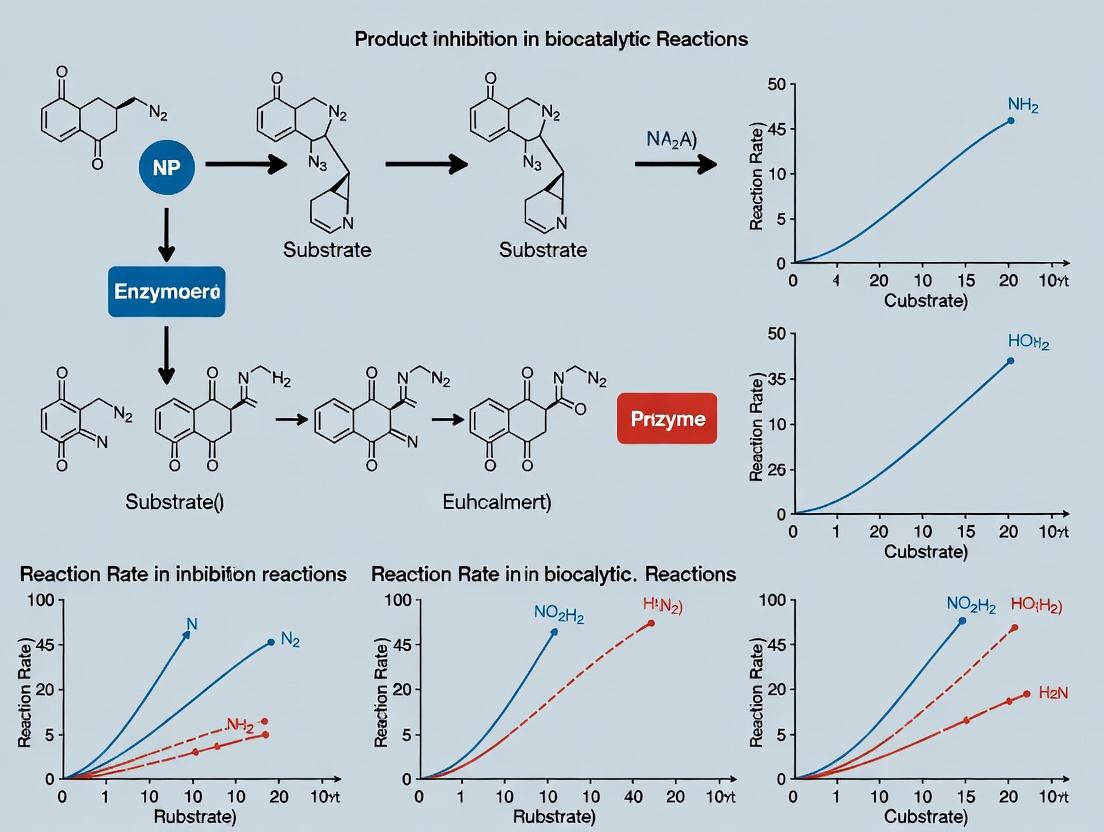
This comprehensive review examines the critical challenge of product inhibition in biocatalytic reactions, a major bottleneck in industrial and pharmaceutical applications.
Strategies for Product Inhibition in Biocatalysis: Research-Backed Solutions for Enzyme Efficiency and Process Scale-Up
Abstract
This comprehensive review examines the critical challenge of product inhibition in biocatalytic reactions, a major bottleneck in industrial and pharmaceutical applications. We explore the fundamental mechanisms of inhibition, including competitive, non-competitive, and uncompetitive models. Methodological approaches for mitigation are detailed, encompassing enzyme engineering, process design, and in-situ product removal (ISPR) techniques. The article provides a troubleshooting framework for optimizing reaction kinetics and yield, and validates solutions through comparative analysis of case studies from drug synthesis and fine chemical production. Aimed at researchers and process development scientists, this guide synthesizes current strategies to enhance biocatalyst performance and enable robust scalable processes.
Understanding Product Inhibition: The Core Challenge in Biocatalytic Efficiency
Troubleshooting Guides & FAQs
FAQ 1: Unexpected Decrease in Initial Reaction Rate
Q: My initial reaction velocity (V₀) is significantly lower than expected when I add a known concentration of product at the start of the reaction. What could be the cause? A: This is a classic symptom of product inhibition. However, the exact type can be determined by further analysis. First, verify your product concentration measurements are accurate via HPLC or a validated assay. Second, ensure the product you are adding is pure and not contaminated with a potent inhibitor from the synthesis process. Run a control experiment with a structurally similar but inert compound to rule out non-specific effects.
FAQ 2: Distinguishing Between Inhibition Types Experimentally
Q: How can I practically differentiate between competitive, non-competitive, and uncompetitive inhibition from my kinetic data?
A: Perform a series of initial rate experiments, varying the substrate concentration [S] at several fixed concentrations of the product inhibitor [I]. Plot the data in double-reciprocal (Lineweaver-Burk) form.
- Competitive: Lines intersect on the y-axis (1/V).
- Non-competitive: Lines intersect on the x-axis (-1/Kₘ).
- Uncompetitive: Parallel lines. See the diagnostic diagram below.
FAQ 3: Inconsistent Inhibition Constants
Q: My calculated inhibition constant (Kᵢ or Kᵢ') varies between experiments. What are the common sources of error? A: Inconsistency in Kᵢ often stems from:
- Non-steady state measurements: Ensure initial velocity measurements are taken in the linear phase of product formation (typically <5% substrate conversion).
- Shifts in pH or ionic strength: The product may alter the reaction microenvironment. Use a high-buffer-capacity system and monitor pH.
- Enzyme instability: Perform time-course controls to confirm enzyme activity is constant during the assay period.
- Data fitting errors: Use non-linear regression to fit data directly to the Michaelis-Menten equation with appropriate inhibition terms, rather than relying solely on linearized plots.
Table 1: Characteristic Parameters of Product Inhibition Mechanisms
| Mechanism | Binding Site (Relative to Substrate) | Effect on Apparent Kₘ | Effect on Apparent V_max | Diagnostic Plot (1/v vs 1/[S]) |
|---|---|---|---|---|
| Competitive | Same (active site) | Increases | Unchanged | Lines intersect on y-axis |
| Non-competitive | Different | Unchanged | Decreases | Lines intersect on x-axis |
| Uncompetitive | Only on ES complex | Decreases | Decreases | Parallel lines |
Table 2: Representative Inhibition Constants for Common Biocatalytic Systems
| Enzyme | Product Inhibitor | Inhibition Type | Reported Kᵢ (mM) | Conditions (pH, T) |
|---|---|---|---|---|
| β-Glucosidase | Glucose | Competitive | 5.2 - 7.8 | pH 5.0, 37°C |
| Lactate Dehydrogenase | Lactate | Non-competitive | 1.5 - 2.3 | pH 7.4, 25°C |
| Glucose-6-Phosphatase | Phosphate | Mixed-Type | ~0.8 (Kᵢ) | pH 6.5, 30°C |
| Alcohol Dehydrogenase | NADH | Uncompetitive (vs ethanol) | 0.02 - 0.05 | pH 7.0, 25°C |
Experimental Protocols
Protocol 1: Determining Product Inhibition Type and Constants
Objective: To characterize the kinetic mechanism of product inhibition and calculate Kᵢ (and Kᵢ' where applicable). Methodology:
- Prepare Reaction Mixtures: In a 96-well plate or cuvettes, prepare master mixes containing buffer, cofactors, and a fixed concentration of your enzyme.
- Vary Substrate & Inhibitor: Create a matrix where the substrate concentration
[S]is varied (e.g., 0.2, 0.5, 1, 2, 5 x Kₘ) across rows, and the product/inhibitor concentration[I]is varied (e.g., 0, 0.5, 1, 2 x suspected Kᵢ) across columns. Run in triplicate. - Initiate & Measure: Start reactions by adding enzyme or substrate. Monitor the initial linear decrease in substrate or increase in product signal (absorbance, fluorescence) for 1-5 minutes.
- Data Analysis:
- Plot initial velocity (v₀) vs.
[S]for each[I]. - Fit data globally using non-linear regression software (e.g., GraphPad Prism, KinTek Explorer) to the equations below to determine the best-fit model and constants.
- Competitive: v = (Vmax * [S]) / ( Kₘ * (1 + [I]/Kᵢ) + [S] )
- Non-competitive: v = (Vmax * [S]) / ( (Kₘ + [S]) * (1 + [I]/Kᵢ) )
- Uncompetitive: v = (V_max * [S]) / ( Kₘ + [S] * (1 + [I]/Kᵢ') )
- Plot initial velocity (v₀) vs.
Protocol 2: In-situ Product Removal (ISPR) Coupled Assay
Objective: To mitigate product inhibition during an enzyme activity assay to reveal true kinetic potential. Methodology:
- Select Coupling Enzyme: Choose an enzyme that quantitatively converts your inhibitory product into a non-inhibitory secondary product (e.g., glucose oxidase to convert inhibitory glucose to gluconate).
- Optimize Coupling System: Ensure the coupling enzyme is in excess, has compatible pH/ buffer conditions, and its substrates/cofactors do not interfere with the primary reaction.
- Run Comparative Kinetics: Perform the kinetic assay from Protocol 1 with and without the ISPR coupling system present.
- Analysis: Compare the apparent Vmax and Kₘ values. Effective ISPR will normalize Vmax and lower the apparent Kₘ in inhibited systems, indicating relief of inhibition.
The Scientist's Toolkit
Table 3: Essential Research Reagent Solutions for Product Inhibition Studies
| Item | Function in Inhibition Studies | Example/Note |
|---|---|---|
| High-Purity Product Standard | Serves as the definitive inhibitor for in vitro assays. Must be ≥98% pure (HPLC-grade) to avoid artifacts. | Synthetic glucose for glycosidase studies. |
| Coupled Enzyme System | For ISPR protocols or for continuous, real-time monitoring of reactions (e.g., NADH-linked assays). | Pyruvate kinase/lactate dehydrogenase (PK/LDH) for ATP-regeneration. |
| High-Capacity Buffer | Maintains constant pH despite potential release/acquisition of protons during reaction and inhibition. | 50-100 mM HEPES or phosphate buffer. |
| Stable Enzyme Preparation | Recombinant, purified enzyme with known specific activity. Lyophilized aliquots prevent activity drift. | His-tagged enzyme from E. coli expression. |
| Non-linear Regression Software | Essential for robust fitting of kinetic data to complex inhibition models. | GraphPad Prism, SigmaPlot, KinTek Explorer. |
| Rapid-Quench & Analysis Setup | For discontinuous assays where product must be measured at precise time points (e.g., HPLC, LC-MS). | Automated quench unit coupled to HPLC. |
Troubleshooting Guides & FAQs
FAQ 1: Why is my enzymatic reaction rate decreasing rapidly before all substrate is converted?
- Answer: This is a classic symptom of product inhibition. The product of the reaction, due to structural similarity to the substrate or allosteric effects, is binding to the enzyme's active site, competitively blocking substrate access. Check product concentration over time; a rapid initial rate followed by a sharp decline is indicative.
FAQ 2: How can I distinguish between competitive product inhibition and enzyme denaturation?
- Answer: Perform a dilution assay. Dilute the reaction mixture. If the rate recovers (on a per-enzyme basis), the issue is likely reversible product inhibition. If the rate remains low, irreversible denaturation or inactivation is probable. See Table 1 for diagnostic criteria.
FAQ 3: My product is a weak acid/base. Could pH shifts be causing the observed inhibition?
- Answer: Yes. Product accumulation can alter local pH, moving the enzyme away from its optimal pH range. Use a strong buffer with high capacity at your working pH. Monitor pH throughout the reaction. Consider if the protonated/deprotonated form of the product is the actual inhibitor.
FAQ 4: IC50 values for my product seem inconsistent between assay formats. Why?
- Answer: IC50 is highly dependent on substrate concentration in competitive inhibition. Always report IC50 alongside the substrate concentration used ([S]/Km ratio). For true comparison, determine the inhibition constant (Ki) through more detailed kinetics (see Protocol 1).
FAQ 5: What are the first steps to take when I suspect product inhibition in my biocatalytic process?
- Answer: 1) Monitor Kinetics: Use a real-time assay to plot velocity vs. time. A sharp decline is a signal. 2) Dose-Response: Add purified product at time zero. A dose-dependent decrease in initial velocity confirms inhibition. 3) Vary [S]: Perform Michaelis-Menten kinetics with and without product to determine inhibition mode (competitive, uncompetitive, mixed).
Data Presentation
Table 1: Diagnostic Features of Product Inhibition vs. Enzyme Denaturation
| Feature | Competitive Product Inhibition | Irreversible Denaturation |
|---|---|---|
| Reversibility | Reversible upon dilution/product removal | Irreversible |
| Time Dependence | Increases as [Product] increases | May increase over time independently of [Product] |
| Effect of Fresh Substrate | Rate remains low if product is present | No recovery |
| Dilution Assay Result | Specific activity recovers | Specific activity remains low |
| Thermodynamic Signature | ΔG of binding | Often involves aggregation or unfolding |
Table 2: Common Inhibition Constants for Representative Enzyme-Product Pairs
| Enzyme | Product | Apparent Ki (μM) | Inhibition Mode | Primary Binding Interaction |
|---|---|---|---|---|
| Acetylcholinesterase | Acetylcholine (hydrolyzed) | ~100 | Competitive | Cation-π, H-bonding to active site gorge |
| β-Lactamase | Hydrolyzed β-Lactam | 0.1 - 10 | Competitive (transition state analog) | Covalent acyl-enzyme intermediate |
| HIV-1 Protease | Peptide Products | 1 - 100 | Competitive | H-bonding to catalytic aspartates |
| Hexokinase | Glucose-6-Phosphate | ~500 | Mixed (allosteric) | Binding at regulatory site, inducing conformational change |
Experimental Protocols
Protocol 1: Determining Ki for Competitive Product Inhibition Objective: To calculate the inhibition constant (Ki) for a product acting as a competitive inhibitor. Materials: See "Research Reagent Solutions" below. Method:
- Prepare a concentrated stock solution of the purified reaction product.
- Set up a series of reaction mixtures with at least four different substrate concentrations (bracketing the known Km).
- For each substrate concentration, prepare tubes with at least four different product inhibitor concentrations (including zero).
- Initiate all reactions by adding a fixed, limiting amount of enzyme.
- Measure initial reaction velocities (v0) for each condition, ensuring less than 10% substrate conversion to minimize further product accumulation.
- For each inhibitor concentration, plot data on a Lineweaver-Burk (1/v vs. 1/[S]) plot.
- Observe if lines intersect on the y-axis (diagnostic for competitive inhibition).
- Re-plot slopes from the Lineweaver-Burk plots vs. inhibitor concentration [I]. The x-intercept equals -Ki. Analysis: A linear fit of slope vs. [I] confirms competitive inhibition. The Ki value quantifies the affinity of the product for the active site.
Protocol 2: Continuous Assay to Monitor Onset of Product Inhibition Objective: To visually capture the kinetic trajectory of an enzyme reaction under product inhibition. Method:
- Use a spectroscopic (UV-Vis, fluorescence) or coupled assay that allows continuous monitoring.
- In a cuvette, mix substrate and enzyme at desired concentrations in appropriate buffer.
- Start the recorder immediately upon mixing.
- Observe the progress curve. A healthy, uninhibited reaction shows a linear initial phase. A curve that rapidly bends toward the baseline indicates strong product inhibition.
- Fit the progress curve to the integrated form of the Michaelis-Menten equation with inhibition terms to extract kinetic parameters.
Visualizations
Title: Enzyme Catalysis Cycle with Competitive Product Inhibition
Title: Diagnostic Workflow for Suspected Product Inhibition
The Scientist's Toolkit: Research Reagent Solutions
| Item | Function in Product Inhibition Studies |
|---|---|
| High-Purity Synthetic Product | Used as an inhibitor standard in in vitro assays to confirm inhibition and determine Ki without running the full reaction. |
| High-Capacity Buffer (e.g., 50-100 mM HEPES, Tris) | Maintains constant pH despite accumulation of acidic/basic products, preventing pH-based artifacts. |
| Coupled Enzyme Systems (e.g., NADH/NAD+ linked) | Allows continuous, real-time monitoring of reaction progress, essential for observing kinetic curves indicative of inhibition. |
| Size-Exclusion Chromatography (Spin) Columns | For rapid buffer exchange or product removal in dilution/reactivation assays. |
| Stopped-Flow Spectrophotometer | Enables measurement of very early reaction kinetics before significant product accumulates, providing "true" initial velocity. |
| Isothermal Titration Calorimetry (ITC) Kit | To directly measure the binding thermodynamics (ΔH, ΔS, Kd) of product to enzyme. |
Technical Support Center: Troubleshooting Product Inhibition in Biocatalytic Reactions
Introduction: This support center provides targeted guidance for researchers addressing the common triad of process metric failures—reduced reaction rate, yield, and operational stability—in biocatalytic systems. The guidance is framed within the thesis that proactive management of product inhibition is critical for sustainable biocatalysis in pharmaceutical development.
Troubleshooting Guides & FAQs
FAQ 1: Why has my reaction rate declined sharply after reaching 40% conversion?
- Answer: This is a classic sign of progressive product inhibition. The accumulating product binds to the enzyme's active site or causes unfavorable conformational changes, reducing catalytic efficiency. Monitor reaction progress; a declining rate constant with increasing product concentration confirms this.
FAQ 2: My enzyme's yield plateaued at 65%. How can I push the conversion higher?
- Answer: Yield plateaus often result from thermodynamic equilibrium or severe inhibition. For reversible reactions, the product-to-substrate ratio may be limiting. Employ an in-situ product removal (ISPR) strategy to shift the equilibrium and alleviate inhibition.
FAQ 3: My immobilized enzyme loses 50% activity within 3 operational cycles. Is this due to product inhibition?
- Answer: While physical deactivation can occur, product inhibition significantly contributes to apparent instability. Inhibitory products can cause localized pH shifts, induce enzyme aggregation, or foster binding that accelerates inactivation. Analysis of used media vs. fresh media can differentiate causes.
FAQ 4: Which analytical methods best diagnose product inhibition versus substrate depletion or enzyme denaturation?
- Answer: A combination of initial rate kinetics at varying product concentrations and continuous reaction monitoring is key. Compare activity in fresh buffer versus spent reaction broth. Substrate depletion shows a sharp stop; denaturation is often time-dependent, not product-concentration-dependent.
FAQ 5: Can changing the buffer system improve metrics under product inhibition?
- Answer: Yes. Product inhibition can be pH-sensitive. A buffer that maintains optimal pH despite product accumulation (e.g., organic acids) can mitigate inhibition. Furthermore, high ionic strength buffers may weaken non-covalent product-enzyme interactions.
Experimental Protocols for Diagnosis & Mitigation
Protocol 1: Initial Rate Analysis to Quantify Inhibition Constant (Kᵢ)
- Prepare a master mix of your enzyme in optimal buffer.
- Set up reactions with a fixed, saturating substrate concentration.
- Spike reactions with product at 0%, 25%, 50%, 100%, and 200% of the expected final concentration.
- Initiate reactions and measure product formation within the first 5-10% of conversion (initial rate regime).
- Plot 1/Initial Rate vs. Product Concentration. The slope relates to the inhibition constant (Kᵢ).
Protocol 2: In-situ Product Removal (ISPR) via Selective Adsorption
- Material: Add a non-ionic polymeric adsorbent (e.g., XAD-4 resin) to your reaction vessel at 5% (w/v).
- Method: Pre-equilibrate the adsorbent in reaction buffer. Begin the biocatalytic reaction as usual.
- Monitoring: Sample the liquid phase periodically. The adsorbent will sequester the hydrophobic product, reducing its concentration in the aqueous phase.
- Analysis: Compare the time-to-target conversion and total yield with and without the adsorbent.
Protocol 3: Fed-Batch Operation to Manage Substrate-to-Product Ratio
- Start the reaction with only 50% of the total substrate load.
- Monitor product formation in real-time (e.g., via HPLC or spectrophotometry).
- When the reaction rate drops by 20%, initiate a controlled feed of the remaining substrate solution at a rate matching the estimated slowed reaction rate.
- This maintains a lower instantaneous product concentration, mitigating inhibition throughout the run.
Data Presentation
Table 1: Impact of Mitigation Strategies on Process Metrics
| Mitigation Strategy | Reaction Rate Improvement | Final Yield Improvement | Operational Half-life (Cycles) | Key Trade-off |
|---|---|---|---|---|
| Baseline (Batch) | 1.0 (ref) | 68% | 3 | N/A |
| Fed-Batch Substrate Addition | 1.4x | 82% | 5 | Increased process complexity |
| ISPR with Adsorbent | 2.1x | 95% | 8 | Additional separation step |
| Enzyme Engineering (Variant A) | 3.0x | 91% | 12 | High development time/cost |
| Buffer Optimization (High Ionic Strength) | 1.2x | 75% | 4 | May affect substrate solubility |
Table 2: Research Reagent Solutions Toolkit
| Reagent / Material | Function in Addressing Product Inhibition |
|---|---|
| Non-ionic Adsorbent Resins (XAD series) | Selective in-situ removal of hydrophobic inhibitory products from aqueous reaction media. |
| Dialysis Membranes (MWCO tailored) | Used in continuous-flow membrane reactors to separate product from enzyme compartment. |
| Cross-linked Enzyme Aggregates (CLEAs) | Immobilization format offering often improved stability against inhibitory products. |
| Chimeric Fusion Tags (e.g., ELP tags) | Enable enzyme precipitation and recovery via simple temperature/ionic strength shifts, allowing medium exchange. |
| Directed Evolution Kit (e.g., Mutagenesis Plasmid Lib.) | For engineering enzyme variants with reduced product binding affinity. |
Visualizations
Diagnosis: Product Inhibition Impact Pathway
Mitigation Strategy Selection Workflow
Common Biocatalytic Reactions Prone to Severe Product Inhibition
Welcome to the Technical Support Center for product inhibition in biocatalysis. This resource is framed within a thesis focused on developing novel strategies to overcome inhibition in industrial and pharmaceutical enzymatic processes. Below are troubleshooting guides and FAQs addressing common experimental challenges.
FAQs & Troubleshooting
Q1: My hydrolysis reaction (e.g., using lipases or cellulases) slows down drastically after ~30% conversion. Is this product inhibition, and how can I confirm it? A: Yes, this is a classic sign. For hydrolysis (A + H₂O → B + C), products B and C often inhibit the enzyme. To confirm:
- Perform initial rate experiments with varying product concentrations added at time zero.
- Plot initial velocity (v₀) vs. substrate concentration [S] with and without added product. A decrease in Vmax and/or an increase in apparent Km indicates competitive or mixed inhibition. A dedicated kinetic assay is required.
Q2: During a carbonyl reductase-catalyzed asymmetric synthesis of chiral alcohols, the reaction stops prematurely. The product is an alcohol. What are my immediate options? A: Alcohol products are common inhibitors for dehydrogenases/reductases. Immediate troubleshooting steps:
- In-situ Product Removal (ISPR): Consider adding a resin (e.g., hydrophobic adsorbent like XAD-4) to sequester the hydrophobic alcohol product from the aqueous phase.
- Cofactor Regeneration Check: Ensure your cofactor regeneration system (e.g., GDH/glucose for NADPH) is still active; inhibition can stress this system.
- Dilution Test: Dilute the reaction mixture 2-fold with buffer. If the rate increases significantly, product inhibition is likely.
Q3: I'm experiencing severe inhibition in a transaminase (ATA) reaction producing chiral amines. The by-product is ketone (e.g., pyruvate). What protocols are effective? A: Transaminases are highly prone to inhibition by the ketone co-product. Implement a "push-pull" strategy:
- Push: Use an excess of amine donor (e.g., isopropylamine) to drive equilibrium.
- Pull: Employ a ketone by-product removal system. The most robust protocol is coupling to a second enzyme:
- For Pyruvate: Use Lactate Dehydrogenase (LDH) with NADH to reduce pyruvate to lactate.
- For Acetophenone: Use an Alcohol Dehydrogenase (ADH) to reduce it to the secondary alcohol.
- This pulls the equilibrium forward and removes the inhibitor.
Q4: What are the best practices for selecting a reactor configuration to mitigate inhibition in continuous processes? A: For severe product inhibition, move from batch to continuous flow.
- Packed-Bed Reactor (PBR) with In-line Separation: Immobilize the enzyme on a solid support. As the reaction mixture flows through, product is continuously removed downstream via an in-line extractor or adsorbent column, preventing its re-circulation.
- Membrane Reactor: Use an ultrafiltration membrane to retain the enzyme while allowing the product to permeate out of the reaction zone.
| Biocatalytic Reaction Class | Typical Enzyme | Inhibitory Product(s) | Typical Inhibition Constant (Kᵢ) Range | Inhibition Type |
|---|---|---|---|---|
| Hydrolysis | Cellulase | Cellobiose, Glucose | 1 - 10 mM | Competitive / Mixed |
| Hydrolysis | Lipase (Triacylglycerol) | Long-chain Fatty Acids | 0.1 - 5 mM | Competitive |
| Reduction | Carbonyl Reductase | Chiral Alcohol Product | 0.5 - 20 mM | Mixed / Non-competitive |
| Amination | ω-Transaminase | Ketone Co-product (e.g., Pyruvate) | 0.1 - 2 mM | Competitive |
| Glycosylation | Glycosyltransferase | Nucleotide Diphosphate (e.g., UDP) | 0.01 - 0.5 mM | Competitive |
Detailed Experimental Protocols
Protocol 1: Determining Inhibition Constants (Kᵢ) for a Reductase
Objective: Characterize the type and strength of product inhibition. Materials: Purified enzyme, substrate (ketone), product (alcohol), cofactor (NAD(P)H), buffer (e.g., phosphate, pH 7.0), spectrophotometer. Method:
- Prepare 5 substrate concentrations ([S]) spanning 0.5Km to 5Km.
- For each [S], prepare 4 reaction mixtures with different fixed concentrations of the product inhibitor ([I] = 0, 0.5Kᵢ(est), 1Kᵢ(est), 2Kᵢ(est)).
- Start reactions by adding enzyme, and monitor the decrease in NAD(P)H absorbance at 340 nm (ε = 6220 M⁻¹cm⁻¹) for initial rates (v₀).
- Fit v₀ data globally to Michaelis-Menten equations modified for competitive, uncompetitive, or mixed inhibition using software (e.g., GraphPad Prism, DynaFit). The model with the best fit identifies the inhibition type, and the fit yields Kᵢ.
Protocol 2: Coupled Lactate Dehydrogenase (LDH) System for Transaminase Reactions
Objective: Drive equilibrium and remove ketone inhibitor in an ATA reaction. Materials: Transaminase, LDH, NADH, amine donor (e.g., isopropylamine), amino acceptor (prochiral ketone), pyruvate, buffer (pH 7.5). Method:
- In a single pot, combine: 50 mM prochiral ketone, 200 mM isopropylamine (amine donor), 1 mM NADH, 0.5 mg/mL ATA, and 5 U/mL LDH.
- The ATA reaction generates the desired chiral amine and pyruvate.
- LDH immediately converts pyruvate to lactate, consuming NADH. Monitor the reaction by the decrease in NADH absorbance at 340 nm or via HPLC for amine formation.
- NADH can be regenerated in situ by adding a formate dehydrogenase (FDH)/formate system if necessary.
Visualization: Strategies to Overcome Product Inhibition
Strategies to Overcome Product Inhibition
LDH Coupling for Transaminase Inhibition Relief
The Scientist's Toolkit: Key Research Reagent Solutions
| Reagent / Material | Primary Function in Addressing Inhibition |
|---|---|
| Hydrophobic Adsorbent Resins (XAD-4, XAD-7HP) | In-situ Product Removal (ISPR): Binds organic product molecules (e.g., alcohols, acids) from aqueous solution, lowering the free concentration inhibiting the enzyme. |
| Lactate Dehydrogenase (LDH) / NADH | Cofactor Recycling & Inhibitor Removal: Specifically couples to transaminase reactions to reduce the inhibitory ketone co-product (pyruvate) to lactate, recycling NADH to NAD⁺. |
| Immobilized Enzyme Carriers (e.g., EziG) | Process Intensification: Enzyme immobilization enables use in continuous packed-bed reactors, facilitating integration with downstream in-line product adsorption. |
| Directed Evolution Kit (e.g., Mutazyme II) | Enzyme Engineering: Provides a robust random mutagenesis method to evolve enzyme variants with altered active sites that are less susceptible to product binding (higher Kᵢ). |
| Cofactor Regeneration System (GDH/Glucose) | System Stability: Maintains reducing power (NAD(P)H) in reductase systems stressed by inhibition, ensuring the main reaction does not stall due to cofactor depletion. |
Economic and Scalability Implications for Industrial Biotechnology
Technical Support Center
FAQ & Troubleshooting: Addressing Product Inhibition in Biocatalytic Systems
Q1: Our pilot-scale reactor shows a rapid decline in reaction rate after 4 hours, despite initial high substrate conversion. What could be the cause and how can we diagnose it? A: This is a classic symptom of product inhibition. Accumulating product molecules bind to the enzyme's active site or alter its conformation, reducing catalytic efficiency. To diagnose:
- Assay Time Course: Take small-volume samples at regular intervals (e.g., every 30 min). Immediately quench the reaction (e.g., heat denaturation, acidification) and assay for both product and remaining substrate concentration.
- Plot Progress Curves: A non-linear, plateauing curve suggests inhibition. Compare the observed profile against a theoretical Michaelis-Menten curve.
- Dose-Response Test: In a separate bench-scale experiment, run the reaction with varying initial concentrations of the purified product added. A significant decrease in initial rate confirms product inhibition.
Q2: Which in-situ product removal (ISPR) technique is most cost-effective for scaling a hydrophobic product system? A: For hydrophobic products (e.g., alcohols, organic acids), a liquid-liquid extraction ISPR system often provides the best balance of scalability and cost. An immiscible organic solvent (e.g., dodecane, oleyl alcohol) continuously extracts the product from the aqueous reaction phase, reducing its inhibitory concentration. Key considerations are biocompatibility (solvent log P > 4 preferred to minimize enzyme inactivation) and integration with a continuous reactor setup.
Q3: We are experiencing microbial cell lysis in our continuous stirred-tank reactor (CSTR) when implementing an adsorptive resin for ISPR. How can we mitigate this? A: Cell lysis is often due to shear stress from resin bead collisions. Implement the following protocol:
- Protocol: Shear Stress Mitigation for Adsorptive ISPR
- Resin Selection & Preparation: Choose macroporous resins with a small, uniform bead size (e.g., 150-300 µm) and hydrophilic surface. Pre-swollen the resin in buffer.
- Impeller Optimization: Switch from a Rushton turbine (high shear) to a pitched-blade or marine-type impeller. Reduce the agitation speed to the minimum required for resin suspension (typically 100-150 rpm in a pilot CSTR).
- Containment: Employ a resin containment system. Fit the reactor outlet with a mesh filter (pore size < 100 µm) or a dedicated sieve plate to retain resin beads while allowing cells and broth to circulate.
- Monitoring: Check for cell viability (via plating or live/dead staining) and lactate dehydrogenase (LDH) release daily. A decrease in LDH release indicates reduced shear damage.
Q4: How do we perform a techno-economic analysis (TEA) to justify the capital expense for a membrane-based ISPR system? A: A simplified TEA compares the cost of inhibition against the ISPR investment. Use this framework:
- Table 1: Key Parameters for ISPR TEA Scoping
Parameter Without ISPR (Baseline) With Membrane ISPR (Proposed) Data Source Batch Cycle Time 48 hr (due to inhibition) Estimated 24 hr Lab/Pilot Data Volumetric Productivity (g/L/h) 1.2 Projected 2.5 Calculated from cycle time Product Concentration at Harvest 40 g/L 20 g/L (continuous removal) Target Setpoint Downstream Processing Cost High (dilute product) Lower (purified concentrate) Vendor Quotes / Models Capital Expenditure (CAPEX) $0 (baseline) +$250,000 Equipment Quote Key Metric: Annual Output ~10,500 kg ~21,900 kg (same reactor volume) Calculated
Conclusion: The 2.1x increase in annual output must offset the CAPEX amortization and membrane operating costs. A >20% reduction in unit cost ($/kg) typically justifies the investment.
Q5: What are the most effective enzyme engineering strategies to overcome product inhibition, and what is the experimental workflow? A: Focus on strategies to reduce product affinity for the active site.
Table 2: Enzyme Engineering Strategies Against Product Inhibition
Strategy Rationale Experimental Method Throughput Active Site Saturation Mutagenesis Alter residues coordinating the product to weaken binding. Site-directed mutagenesis of 3-5 key contact residues. Low Directed Evolution with Product Pressure Select variants that function in high product concentrations. Error-prone PCR followed by screening in media with inhibitory [Product]. High Computational Design (Alchemical Free Energy) Predict mutations that destabilize product binding. Use software like Rosetta or Schrodinger's FEP+ to calculate ΔΔG of binding. Medium Protocol: Directed Evolution Cycle for Product Inhibition Resistance
- Diversity Generation: Create mutant library via error-prone PCR or DNA shuffling of the target enzyme gene.
- High-Throughput Screening: Clone library into an expression host (e.g., E. coli). Use agar plate assays with a product-mimicking analog or a chromogenic substrate in the presence of a high, inhibitory concentration of the product (e.g., 2x the IC50).
- Hit Validation: Isulate colonies showing activity. Express purified enzyme variants and kinetically characterize them (determine Ki for the product and kcat).
- Iteration: Use beneficial mutations as templates for further rounds of evolution or recombination.
Visualizations
The Scientist's Toolkit: Research Reagent Solutions
Table 3: Essential Reagents for Product Inhibition Research
| Reagent / Material | Function in Experiments |
|---|---|
| Immobilized Enzyme (e.g., on ECR8309 resin) | Enables easy enzyme retention in CSTR with ISPR, improving operational stability and cost. |
| Macroporous Adsorptive Resin (e.g., HP20, XAD-7) | For in-situ product removal (ISPR); binds hydrophobic inhibitory products from the broth. |
| Dodecane or Oleyl Alcohol | Biocompatible, hydrophobic solvent for liquid-liquid extraction ISPR of inhibitory organic products. |
| Enzyme Activity Assay Kit (Fluorogenic/Chemogenic) | Allows rapid, high-throughput kinetic measurement of enzyme activity under inhibitory conditions. |
| IC50 Determination Kit | Standardized reagents to accurately determine the concentration of product that inhibits 50% of activity. |
| Site-Directed Mutagenesis Kit | For creating specific point mutations in enzyme active sites hypothesized to reduce product binding. |
| Dialysis Cassettes (10 kDa MWCO) | For rapid buffer exchange to remove natural product inhibitors during enzyme purification. |
| Continuous Stirred-Tank Reactor (CSTR) Mini-Bioreactor | Lab-scale system to mimic industrial conditions and test integrated ISPR strategies in real-time. |
Proven Strategies to Overcome Product Inhibition: From Enzyme Engineering to Process Design
Enzyme Engineering and Directed Evolution for Reduced Product Affinity
Technical Support Center
FAQs & Troubleshooting Guides
Q1: My directed evolution campaign for reduced product affinity is showing no improvement after 3 rounds of screening. What could be wrong? A: This is often due to an insufficiently sensitive or relevant screening assay. Ensure your high-throughput screen (HTS) correlates directly with the kinetic parameter you wish to improve (e.g., Ki for product inhibition). Verify that your assay window (signal-to-noise ratio) is >3. Common pitfalls include:
- Substrate depletion: Use initial rate conditions (<10% substrate conversion).
- Product interference: The product itself may quench fluorescence or absorbance. Run control wells with product-only.
- Library diversity: Your mutagenesis method (e.g., error-prone PCR) may have too low a mutation rate. Sequence random clones to confirm diversity. Consider switching to saturation mutagenesis at hot-spot residues identified from structural models.
Q2: During screening, I observe high hit rates, but the "improved" variants show no actual change in Ki when characterized kinetically. How do I resolve this? A: This indicates a false-positive screening assay. Your primary screen likely selects for increased activity (higher kcat or lower Km for substrate) rather than specifically for reduced product inhibition. Implement a counter-selection or a secondary screen:
- Perform the primary screen under low-product conditions to find active clones.
- Re-screen the active clones in parallel under high-product (inhibitory) and no-product conditions.
- Calculate a ratio (Activity+Product / Activity-Product). True positives with reduced inhibition will have a ratio closer to 1.0.
Q3: I have a variant with promisingly reduced product inhibition, but its thermal stability has drastically decreased. Can I fix this? A: Yes. Loss of stability is a common trade-off. The solution is to add a stability screening step to your evolution pipeline.
- Method: After identifying hits with reduced inhibition, subject them to a heat shock (e.g., 55°C for 10 minutes) or incubation with a denaturant (e.g., 1M guanidine HCl) prior to the activity assay. Only variants that retain activity after this challenge are selected for the next round.
- Alternative: Perform directed evolution for stability on your improved variant as a separate campaign, or use computational design tools (like FRESCO or FoldX) to suggest stabilizing mutations to introduce back into your variant.
Q4: What is the best strategy to choose residues for saturation mutagenesis when structural data is unavailable? A: Use an evolutionary conservation analysis.
- Collect a multiple sequence alignment (MSA) of homologous enzymes.
- Identify residues that are (a) near the active site (predicted via catalytic residue annotations) and (b) variable across the alignment. Conserved residues are likely essential for catalysis or folding.
- Focus on positions that are predicted to be in loops or flexible regions, as these are more tolerant to mutation and often involved in substrate/product binding dynamics.
- Use consensus design: introduce the amino acid found most frequently at that position in the MSA into your parent enzyme.
Detailed Experimental Protocols
Protocol 1: Error-Prone PCR for Generating Diversity Objective: To create a library of gene variants with random mutations. Materials: Target plasmid DNA, Taq polymerase, MnCl₂, unbalanced dNTP mix. Steps:
- Prepare 100 µL PCR reaction: 10 ng template DNA, 1x Taq buffer, 0.2 mM each dATP and dGTP, 1 mM each dCTP and dTTP, 0.5 mM MnCl₂, 0.5 µM forward and reverse primers (flanking the gene), 5 U Taq polymerase.
- Cycle: 95°C for 3 min; [95°C for 30 sec, 55°C for 30 sec, 72°C for 1 min/kb] for 30 cycles; 72°C for 5 min.
- Purify the PCR product using a spin column.
- Digest the product and vector with restriction enzymes, purify, and ligate to create the library. Note: Mn²⁺ and unbalanced dNTPs increase Taq misincorporation rate. Determine mutation rate by sequencing 10-20 random clones.
Protocol 2: High-Throughput Screening for Reduced Product Inhibition using Microplates Objective: To screen a library for clones maintaining activity under high product concentration. Materials: 96- or 384-well microplates, cell lysates or purified enzyme variants, substrate, purified product compound, detection reagents (e.g., for colorimetric/fluorimetric assay). Steps:
- Primary Screen for Activity: In a microplate, add 50 µL of assay buffer containing a low, non-inhibitory concentration of product (e.g., 0.1 x Ki) to each well. Initiate reaction by adding 50 µL of substrate solution. Measure initial rate (e.g., absorbance change over 5 minutes). Select top 10% active clones.
- Secondary Screen for Inhibition: Culture the selected hits in deep-well blocks. Prepare two assay plates per clone: Plate A (Control): Assay buffer with no product. Plate B (Challenge): Assay buffer with high product concentration (e.g., 5 x Ki).
- Add equal amounts of lysate from each clone to corresponding wells on both plates. Initiate reaction with substrate.
- Data Analysis: Calculate the Inhibition Ratio for each variant: IR = (Initial Rate on Plate B) / (Initial Rate on Plate A). Variants with an IR significantly higher than the wild-type (closer to 1.0) have reduced product affinity.
Data Presentation
Table 1: Common Mutagenesis Methods for Directed Evolution
| Method | Typical Mutation Rate | Library Size | Best For |
|---|---|---|---|
| Error-Prone PCR (epPCR) | 1-3 mutations/kb | 10⁴ - 10⁶ | Broad exploration, no structural data needed. |
| Saturation Mutagenesis | Single amino acid position | 10² - 10³ per position | Focused exploration of hot-spot residues. |
| DNA Shuffling | Recombination of segments | 10⁶ - 10¹² | Recombining beneficial mutations from different parents. |
| Oligonucleotide Mutagenesis | Defined mutations | 10¹ - 10⁴ per oligo | Introducing specific, designed mutations. |
Table 2: Kinetic Parameters of Model Enzyme Before and After Evolution
| Enzyme Variant | kcat (s⁻¹) | Km for Substrate (mM) | Ki for Product (mM) | Thermostability (Tm, °C) |
|---|---|---|---|---|
| Wild-Type | 45 ± 3 | 1.2 ± 0.2 | 0.05 ± 0.01 | 62.1 |
| Evolved Variant (Round 5) | 38 ± 2 | 1.5 ± 0.3 | 2.1 ± 0.3 | 58.5 |
| Evolved Variant (Round 10) | 52 ± 4 | 1.0 ± 0.2 | 5.8 ± 0.5 | 61.0 |
Mandatory Visualization
Directed Evolution Workflow for Reduced Inhibition
Mechanism of Competitive Product Inhibition in Biocatalysis
The Scientist's Toolkit: Research Reagent Solutions
| Item | Function in Experiment |
|---|---|
| Taq Polymerase (with Mn²⁺) | Enzyme for error-prone PCR to introduce random mutations into the target gene. |
| Unbalanced dNTP Mix | (e.g., high dCTP/dTTP, low dATP/dGTP) Increases nucleotide misincorporation rate during PCR. |
| 96/384-Well Microplates | Platform for high-throughput screening of enzyme variant libraries. |
| Chromogenic/Fluorogenic Substrate | Generates a measurable signal (color/fluorescence) proportional to enzyme activity. |
| Purified Product Compound | Used in secondary screening assays at high concentration to challenge and identify inhibition-resistant variants. |
| Thermocycler with Gradient | For performing precise PCR protocols and potentially screening for thermostability. |
| Microplate Spectrophotometer/Fluorimeter | Essential for rapidly reading absorbance/fluorescence signals from hundreds of screening assays. |
| Nickel-NTA Resin | For rapid purification of His-tagged enzyme variants for kinetic characterization. |
| Structure Prediction Software (e.g., AlphaFold2) | To generate a 3D model of your enzyme for identifying potential mutagenesis target residues near the active site. |
Technical Support Center: Troubleshooting Guides and FAQs
This technical support center addresses common challenges in implementing In-Situ Product Removal (ISPR) techniques for mitigating product inhibition in biocatalytic reactions. The guidance is framed within a thesis context focused on enhancing yield and productivity in research and drug development.
Frequently Asked Questions (FAQs)
Q1: My biocatalytic reaction yield has plateaued despite using an ISPR technique. What could be the cause? A: A yield plateau often indicates equilibrium re-establishment or a bottleneck in the ISPR unit itself. First, verify that the product removal rate matches or exceeds the production rate. For membrane-based ISPR, check for fouling or concentration polarization by measuring flux decline. For extraction-based systems, ensure the extraction phase is not saturated—periodically analyze the product concentration in the extracting solvent or adsorbent. Recalibrate online sensors (e.g., HPLC, in-line probes) to confirm data accuracy.
Q2: I am observing a significant drop in enzyme activity shortly after initiating ISPR in my continuous stirred-tank reactor (CSTR). How can I troubleshoot this? A: Rapid deactivation points to shear stress or interfacial denaturation. In systems with liquid-liquid extraction or two-phase membranes, the enzyme may be exposed to organic solvent interfaces. Troubleshooting Steps: 1) Measure activity in samples taken directly from the reaction phase (avoiding the extractant). 2) If using immobilized enzymes, check for carrier abrasion under stirring. 3) Consider adding a stabilizer (e.g., polyols) or switching to a more biocompatible extractant (e.g., ionic liquids, polymer-based phases). 4) Reduce agitation speed to the minimum required for adequate mixing.
Q3: My membrane ISPR setup is experiencing a rapid decline in permeate flux. What are the systematic checks to perform? A: Flux decline is typically due to membrane fouling or pore blockage.
- Immediate Action: Temporarily increase cross-flow velocity if using a tangential flow setup.
- Inspection: Check pre-filters upstream of the membrane module.
- Cleaning Protocol: Initiate a clean-in-place (CIP) cycle. For polymeric membranes, a sequence of rinsing with deionized water, followed by a 0.1M NaOH solution for 30-60 minutes, and a final rinse is standard. Always validate CIP compatibility with your membrane's material.
- Post-CIP Test: Measure the water flux with fresh DI water under standard pressure and temperature. Compare to the membrane's initial water flux to assess restoration.
Q4: How do I select the most appropriate ISPR technique for my specific biocatalytic reaction? A: Selection is based on product and reaction properties. Use the following decision framework:
- Volatile Products (e.g., alcohols, ketones): Prioritize Pervaporation or Gas Stripping.
- Non-Volatile, Hydrophobic Products: Consider Liquid-Liquid Extraction (select a biocompatible solvent) or Adsorption.
- Non-Volatile, Hydrophilic/Ionic Products: Electrodialysis or Crystallization (if solubility is low) are strong candidates.
- Whole-Cell Systems: Prefer Perstraction (membrane-protected extraction) or Adsorption to protect cells from solvent toxicity. Always conduct small-scale compatibility tests to assess the impact of the ISPR method on enzyme/cell viability and reaction kinetics.
Q5: I am implementing an adsorption-based ISPR. How do I determine the resin regeneration schedule? A: You must establish the adsorption capacity and breakthrough curve for your system.
- Experimental Protocol: In a small column or batch setup, load the reaction mixture onto the resin and analyze the effluent product concentration over time. The "breakthrough time" is when the effluent concentration reaches 5-10% of the influent concentration.
- Operation: In your reactor, schedule resin replacement or regeneration well before this predicted breakthrough time. For in-column regeneration, test cycles of elution (e.g., using methanol, pH shift) and re-equilibration (with buffer) to ensure consistent binding capacity over multiple uses.
Comparative Data on Common ISPR Techniques
Table 1: Comparison of Key ISPR Techniques for Biocatalysis
| Technique | Primary Driving Force | Typical Product Types | Key Advantage | Major Operational Challenge |
|---|---|---|---|---|
| Pervaporation | Vapor Pressure Gradient | Volatile (e.g., Ethanol) | High selectivity, energy efficient | Membrane fouling, scale-up cost |
| Liquid-Liquid Extraction | Partition Coefficient | Hydrophobic organics | Fast kinetics, high capacity | Solvent biocompatibility, emulsion formation |
| Adsorption | Affinity Binding | Acids, antibiotics, aromatics | Very high selectivity, product concentration | Resin saturation, regeneration downtime |
| Electrodialysis | Electric Potential | Ionic compounds (e.g., organic acids) | Excellent for charged products, continuous | Membrane fouling, energy consumption |
| Crystallization | Supersaturation | Low-solubility compounds | High purity product directly | Risk of fouling reactor surfaces, kinetics control |
Table 2: Troubleshooting Common Reactor-ISPR Integration Issues
| Symptom | Possible Cause | Diagnostic Experiment | Potential Solution |
|---|---|---|---|
| Reduced Overall Yield | Product degradation in ISPR loop | Analyze product stability under ISPR conditions (pH, T) in a side experiment | Modify ISPR conditions (e.g., temperature), shorten residence time in loop |
| Poor Mass Transfer | Inadequate mixing at interface | Vary agitation speed and measure initial reaction rate | Optimize impeller design/sped; Use static mixers in external loop |
| Enzyme Leakage | Membrane failure or adsorbent pore size too large | Analyze the extractant or permeate for protein content | Use a smaller MWCO membrane; Pre-treat enzyme with cross-linker; Check adsorbent specifications |
| System Instability (CSTR) | Fluctuations in feed or ISPR rate | Monitor and log pressure, flow rates, and level sensors | Implement automated feedback control (e.g., level controller, peristaltic pump with feedback) |
Experimental Protocols
Protocol 1: Small-Scale Screening for Solvent Biocompatibility in Extractive ISPR Objective: To select a solvent for liquid-liquid extraction that minimizes enzyme inactivation. Materials: Reaction buffer, enzyme, substrate, candidate solvents (e.g., dioctyl phthalate, n-decane, ionic liquids). Method:
- Prepare standard reaction mixture in buffer.
- In separate vials, mix reaction mixture with an equal volume of each candidate solvent.
- Agitate vigorously for 1 hour to simulate interfacial contact.
- Centrifuge to separate phases.
- Carefully sample the aqueous phase and assay for residual enzyme activity.
- Compare to the activity of an untreated control mixture. Analysis: Choose the solvent causing the smallest activity loss (<20% is typically acceptable). Also, measure the partition coefficient (K) of the product between the solvent and buffer.
Protocol 2: Determining Breakthrough Curve for Adsorbent Resin Objective: To characterize the dynamic binding capacity of an adsorbent for scheduling regeneration. Materials: Packed adsorption column, peristaltic pump, reaction mixture simulant (with known product concentration), fraction collector, analytical instrument (HPLC/UV). Method:
- Pack resin into a small column (e.g., 5 mL bed volume). Equilibrate with reaction buffer.
- Pump the simulant through the column at a controlled flow rate (e.g., 1 mL/min).
- Collect effluent fractions at regular time intervals.
- Analyze the product concentration in each fraction.
- Plot effluent concentration (C) / influent concentration (C₀) against time or volume. Analysis: The volume at which C/C₀ = 0.05 is the breakthrough point. The operational resin capacity should be used well before this point.
The Scientist's Toolkit: Research Reagent Solutions
Table 3: Essential Materials for ISPR Experimentation
| Item | Function in ISPR Experiments |
|---|---|
| Hollow Fiber Membrane Modules (e.g., Polypropylene, Polysulfone) | Provide a high surface-area interface for perstraction, pervaporation, or membrane extraction; separate phases while protecting the catalyst. |
| Macroporous Adsorbent Resins (e.g., XAD series, Lewatit) | Hydrophobic/ionic resins for in-situ adsorption of inhibitory products from aqueous reaction broths. |
| Biocompatible Solvents (e.g., Dioctyl Phthalate, n-Decane, Oleyl Alcohol) | Used in extractive ISPR; have low water solubility and high partition coefficients for the target product while being non-denaturing to enzymes. |
| Ionic Liquids (e.g., [BMIM][PF₆], [OMIM][Tf₂N]) | Advanced, tunable solvents for extraction with often superior biocompatibility and selectivity compared to traditional organic solvents. |
| In-line/At-line Analyzer (e.g., Micro-HPLC, FTIR Probe) | For real-time monitoring of product and substrate concentrations, essential for feedback control and determining ISPR efficiency. |
| Cross-flow Filtration Unit | Used to retain immobilized enzymes or whole cells in the reactor while allowing product-containing broth to pass to the ISPR unit. |
ISPR Reactor Configuration and Decision Workflow
Title: ISPR Technique Selection Decision Tree
Title: External ISPR Loop Configuration
Multi-Phase Reaction Systems and Extraction Protocols
Technical Support Center: Troubleshooting Guides and FAQs
Frequently Asked Questions
Q1: During a multi-phase biocatalytic conversion, my reaction rate slows dramatically after ~2 hours. What could be causing this, and how can I address it? A1: This is a classic symptom of in-situ product inhibition. The target product, accumulating in the aqueous or organic phase, is inhibiting the enzyme. To address this:
- Implement continuous in-situ product removal (ISPR) via liquid-liquid extraction. Design your second phase (e.g., octanol, isopropyl myristate) to have a high partition coefficient (Kp >10) for the product over the substrate.
- Consider pH control to shift the product into a form more extractable into the organic phase (e.g., for acids/bases).
- Increase the volume ratio of the extracting phase if possible, but be mindful of enzyme stability.
Q2: My enzyme loses all activity when I introduce an organic solvent for extraction. How do I choose a more compatible solvent? A2: Solvent choice is critical. Use the log P (partition coefficient in octanol/water) as a key predictor of biocompatibility. Generally, solvents with a log P > 4 are considered more hydrophobic and less likely to strip essential water from the enzyme. Refer to the table below for common solvents.
Q3: The product yield in my extraction phase is lower than calculated. What are potential sources of loss? A3: Key troubleshooting points:
- Emulsion Formation: Vigorous mixing can create stable emulsions, trapping product. Reduce agitation speed, use a different impeller, or introduce a demulsifier.
- Phase Separation Time: Allow adequate time for complete phase separation. Consider using a settling tank or a centrifugal separator.
- Product Degradation: Verify the product is stable in the extraction phase under process conditions (e.g., pH, light, temperature).
- Accurate Kp Measurement: Ensure your partition coefficient data is accurate for your specific system composition.
Q4: How can I quickly screen for effective extraction protocols to overcome product inhibition? A4: Employ a high-throughput microtiter plate method:
- Perform the biocatalytic reaction in a 96-deep well plate.
- At a fixed time point, add different pre-equilibrated organic solvents (varying log P, functionality).
- Seal, shake, and centrifuge the plate for rapid phase separation.
- Sample both phases analytically (e.g., HPLC, GC) to determine Kp and residual enzyme activity in the aqueous phase.
Key Data Tables
Table 1: Solvent Log P and Biocompatibility for Common Extractants
| Solvent | Log P | Recommended for Enzyme Stability? | Typical Use Case |
|---|---|---|---|
| n-Octane | 4.9 | Yes | Extraction of hydrophobic products. |
| Octanol | 3.0 | Moderate | Benchmark for log P; good for many aromatics. |
| Ethyl Acetate | 0.7 | No | Useful for ex-situ product recovery. |
| Isopropyl Myristate | >6 | Yes | Excellent biocompatibility for sensitive enzymes. |
| Toluene | 2.7 | Caution | Can denature some enzymes; screen carefully. |
| Dibutyl Ether | 2.9 | Moderate | Good for in-situ extraction with moderate log P. |
Table 2: Comparison of ISPR Techniques for Alleviating Product Inhibition
| Technique | Mechanism | Relative Cost | Complexity | Typical Yield Increase* |
|---|---|---|---|---|
| Liquid-Liquid Extraction | Product partitioning into 2nd immiscible phase | Low | Low | 40-60% |
| Adsorption | Product binding to a solid resin (e.g., polymer) | Medium | Medium | 50-80% |
| Pervaporation | Selective evaporation through a membrane | High | High | 60-90% |
| Crystallization | Product precipitation from solution | Medium | High | 70-95% |
*Compared to a batch reaction without ISPR, based on model systems from recent literature.
Experimental Protocols
Protocol 1: Determining Partition Coefficients (Kp) for Solvent Screening Objective: To measure the distribution of product (P) and substrate (S) between aqueous and organic phases.
- Prepare a standard solution of your product and substrate in your aqueous reaction buffer.
- In separate vials, combine equal volumes (e.g., 1 mL) of this aqueous solution and your candidate organic solvent.
- Vortex mix vigorously for 2 minutes.
- Centrifuge at 3000 rpm for 5 minutes for complete phase separation.
- Carefully sample from both the aqueous and organic layers using syringes with blunt needles.
- Analyze the concentration of P and S in each phase using your preferred analytical method (e.g., HPLC).
- Calculate: Kp (Product) = [P]organic / [P]aqueous. A high Kp (>10) is ideal for efficient extraction.
Protocol 2: Integrated Biocatalysis with In-Situ Liquid-Liquid Extraction Objective: To run a biocatalytic reaction with continuous product removal to mitigate inhibition.
- Setup: Use a stirred tank reactor equipped with a temperature and pH control. Add the aqueous phase containing buffer, enzyme, and substrate.
- Addition of Extractant: Add a pre-saturated (with buffer) organic solvent phase (e.g., 20-50% v/v) with a high log P and favorable product Kp.
- Reaction: Start agitation (sufficient for mixing, but avoid emulsification). Begin the reaction.
- Monitoring: Periodically sample the aqueous phase to monitor substrate depletion and enzyme activity. Sample the organic phase to monitor product accumulation.
- Termination & Separation: Stop agitation. Allow phases to separate or use a centrifuge. Recover the organic phase for downstream product isolation.
- Analysis: Calculate conversion, yield, and volumetric productivity. Compare to a control reaction without extraction.
Diagrams
Diagram 1: Product Inhibition and ISPR Solution Logic
Diagram 2: Basic ISPR Experimental Workflow
The Scientist's Toolkit: Research Reagent Solutions
| Item | Function in Multi-Phase/Extraction Systems |
|---|---|
| Immobilized Enzyme (e.g., on resin) | Enhances stability in biphasic systems, allows for easy recovery and reuse. |
| Hydrophobic Organic Solvent (Log P >4) | Acts as the extracting phase; minimizes enzyme deactivation (e.g., n-octane, isopropyl myristate). |
| Phase Separator (Centrifuge/Settling Tank) | Crucial for efficient separation of emulsion or fine dispersions post-reaction. |
| pH Stat/Titrator | Maintains optimal pH in the aqueous phase, which can critically affect enzyme activity and product partitioning. |
| HPLC/GC with Autosampler | For high-throughput analysis of substrate and product concentrations in both aqueous and organic phases. |
| Shaker Incubator (Temperature Controlled) | For parallel small-scale solvent and extraction protocol screening. |
| Hydrophobic Membrane | Used in advanced setups for in-situ extraction without direct phase mixing. |
| Silica Gel or Alumina | For quick ex-situ purification of the product from the organic extractant post-reaction. |
Troubleshooting Guides & FAQs
Q1: In my biocatalytic reaction for drug intermediate synthesis, I observe a rapid decrease in reaction rate after approximately 40% conversion, consistent with product inhibition. Which process parameter should I prioritize adjusting?
A1: Substrate feeding strategy should be your primary adjustment. Product inhibition occurs when the accumulating product binds to the enzyme's active site. A shift from batch to fed-batch or continuous feeding can maintain a low, constant substrate concentration ([S]), preventing a high reaction velocity that leads to rapid product ([P]) accumulation. This keeps [P] below the inhibition constant (Ki) for longer. Optimizing temperature and pH can improve inherent enzyme stability but does not directly address the root cause of product buildup.
Q2: When optimizing temperature to mitigate thermal deactivation during long-running, product-inhibited reactions, my activity profile still decays. What protocol can I use to distinguish between inhibition-driven and temperature-driven decay?
A2: Follow this differential analysis protocol:
- Run the reaction at your standard optimized temperature (e.g., 30°C). Record reaction rate over time.
- At the point where rate drops significantly (e.g., at 50% conversion), take an aliquot.
- Centrifuge the aliquot to remove all substrate and product (or use a rapid desalting column).
- Resuspend the enzyme/bio-catalyst in fresh buffer at the original [S].
- Immediately assay the initial reaction rate of this washed catalyst under identical conditions.
- Interpretation: If the initial rate is restored to >80% of its original value, the decay was primarily due to product inhibition (reversible). If the rate remains low, irreversible thermal deactivation is significant.
Q3: I am using a fed-batch strategy to control product inhibition, but I am unsure how to design the feeding profile. What are the standard approaches?
A3: The choice depends on your enzyme kinetics:
- Constant Rate Feeding: Simple. Best when substrate inhibition is absent. Risk of under/over-feeding.
- Exponential Feeding: Matches feed rate to growing cell density in whole-cell biocatalysis. Maintains a specific growth rate.
- Feedback-Control Feeding: Uses real-time sensors (e.g., pH, DO, off-gas) to trigger feeding. Most effective for countering variable inhibition.
Protocol for a Simple Stepwise Fed-Batch Test:
- Start in batch mode with 50% of the total substrate.
- Monitor the reaction rate (e.g., by calorimetry, periodic HPLC).
- When the rate drops by 30% (indicating building inhibition), initiate feeding.
- Feed the remaining 50% substrate via a syringe pump. Test different feeding rates (e.g., over 2, 4, or 8 hours).
- Compare final product titer, productivity, and catalyst longevity.
Q4: pH optimization often involves a trade-off between enzyme activity and stability. How should I frame this optimization when product inhibition is the major constraint?
A4: Prioritize pH for stability over peak activity. A reaction slowed by product inhibition spends a long time at high product concentrations. A pH that offers 80% of peak activity but dramatically extends operational stability (half-life) will yield higher overall productivity (Total Product = ∫ Activity dt). Run a pH Stability Challenge Protocol:
- Incubate your enzyme in the presence of the inhibitory product (at concentration near Ki) at different pH values (e.g., 6.0, 6.5, 7.0, 7.5, 8.0).
- Sample at intervals (0, 1, 2, 4, 8, 24 h).
- Dilute samples drastically into standard assay conditions to measure remaining activity.
- Calculate half-life at each pH. The pH with the longest half-life under inhibitory conditions is your optimal process pH.
Table 1: Impact of Process Parameters on Product Inhibition Mitigation
| Parameter | Optimization Goal | Mechanism for Reducing Product Inhibition | Typical Experimental Range | Key Metric to Measure |
|---|---|---|---|---|
| Temperature | Enhance catalyst stability | Lower temp slows thermal denaturation, extending operational lifespan to compensate for inhibition-slowed rates. | 4°C to 20°C below T_opt (activity) | Operational half-life (t₁/₂), Total Turnover Number (TTN) |
| pH | Favor enzyme-product complex dissociation | Shifts protonation state to reduce product binding affinity (increase apparent Ki). | pKa ± 1.5 of critical residues | Apparent Inhibition Constant (Ki_app), Stability t₁/₂ |
| Feeding Strategy | Maintain low [Product] | Controls reaction velocity to limit rate of product accumulation, keeping [P] < Ki. | Fed-batch, Continuous, Cyclic | Productivity (g/L/h), Final Titer (g/L), Yield (%) |
Table 2: Comparison of Substrate Feeding Strategies
| Strategy | Description | Pros | Cons | Best For |
|---|---|---|---|---|
| Batch | All substrate added initially. | Simple, easy to set up. | High [S] leads to rapid [P] buildup, severe inhibition. | Fast reactions with low Ki or where inhibition is minimal. |
| Fed-Batch | Substrate added incrementally. | Controls [S] and [P], extends reaction, high titer. | Requires optimization of feed rate/profile. | Most biocatalytic processes, esp. with substrate or product inhibition. |
| Continuous (CSTR) | Constant in/out flow. | Steady-state, constant [S] & [P], optimal for unstable enzymes. | Low product concentration in outflow, dilution. | Enzymes with very short half-lives; continuous manufacturing. |
| Pulsed/ Cyclic | Discrete substrate additions with catalyst recovery. | Can "reset" inhibition by separating product from catalyst. | Operationally complex, potential catalyst loss. | Strong product adsorption or where product can be easily removed. |
Experimental Protocols
Protocol 1: Determining the Apparent Ki (Product Inhibition Constant) Under Process Conditions
Objective: Quantify the strength of product inhibition at varied pH and temperature to inform feeding strategy. Materials: Purified enzyme, substrate stock, product standard, assay buffer, spectrophotometer/HPLC. Procedure:
- Prepare a master mix of enzyme in your reaction buffer at the target process pH and temperature.
- In a series of reaction vessels, set up fixed, sub-saturating substrate concentration ([S] ≈ 0.5 x Km).
- Add product standard to create a range of concentrations (e.g., 0, 0.5x, 1x, 2x, 5x the expected Ki).
- Start reactions simultaneously using a thermostatted block.
- Measure initial velocity (v) for each [P].
- Plot v (or 1/v) vs. [P]. Fit data to a competitive, non-competitive, or mixed inhibition model to extract Ki.
- Repeat at different pH/temperature setpoints to map their effect on Ki.
Protocol 2: Fed-Batch Operation with In-line Monitoring for Feedback
Objective: Implement a feedback-controlled feed to maintain reaction rate despite inhibition. Materials: Bioreactor or jacketed vessel, pH/DO probes, syringe or peristaltic pump, substrate feed stock, controller (software or PLC). Procedure:
- Begin reaction in batch mode with initial [S] = Km.
- Monitor reaction progress via a correlated parameter (e.g., base addition for acid production, DO drop for oxidative reactions, or in-line IR for carbonyl groups).
- Set a control loop: When the reaction rate (slope of the monitored signal) decreases by a set threshold (e.g., 20%), activate the substrate pump.
- Feed a concentrated substrate solution at a rate designed to restore the original reaction rate.
- Continue until the total substrate is consumed or the catalyst activity is depleted. Compare total output to batch control.
Diagrams
DOT Script: Parameter Optimization Decision Pathway
Title: Decision Pathway for Mitigating Product Inhibition
DOT Script: Fed-Batch Bioreactor Control Loop
Title: Feedback Control Loop for Fed-Batch Feeding
The Scientist's Toolkit: Research Reagent Solutions
| Item | Function in Optimization Experiments |
|---|---|
| Immobilized Enzyme Preparations | Enables easy catalyst recovery in pulsed/cyclic feeding strategies, improves stability against temp/pH shifts. |
| Enzyme Activity Assay Kits (Colorimetric/Fluorometric) | For rapid, high-throughput measurement of residual activity during stability and inhibition studies. |
| pH-Stable Buffer Systems (e.g., Bis-Tris, HEPES, Tris) | Maintains precise pH over long experiments, especially crucial for pH-optimum mapping. |
| Substrate Analogs (Non-inhibitory) | Used in control experiments to measure true thermal deactivation without inhibition interference. |
| In-line/At-line Analytics (FTIR, Micro-sampling HPLC) | Provides real-time data on [S] and [P] for dynamic feedback control of feeding pumps. |
| Thermostatted Microreactor Systems | Allows parallel, small-scale testing of multiple temperature/feeding regimes with excellent control. |
| Product Standard (High Purity) | Essential for creating calibration curves and for deliberate addition in Ki determination experiments. |
| Mathematical Modeling Software | Used to fit inhibition data, simulate feeding profiles, and predict optimal process parameters. |
Immobilization and Compartmentalization to Shield the Catalyst
Technical Support Center
Troubleshooting Guides & FAQs
Q1: My immobilized enzyme shows a rapid drop in activity within the first few reaction cycles, despite literature suggesting high stability. What could be the cause? A: This is often due to incorrect handling during the immobilization process. Ensure the coupling buffer does not contain any primary amines (e.g., Tris) if using glutaraldehyde or NHS-ester chemistries, as they compete with the enzyme. Excessive multi-point covalent binding can also distort the active site. Troubleshooting Step: Repeat the immobilization with a shorter coupling time (e.g., 2 hours instead of overnight) and a fresh, amine-free buffer like phosphate or HEPES at pH 7.5.
Q2: I am using enzyme-loaded coacervate droplets, but the conversion yield is lower than with free enzyme. Why? A: This typically indicates a mass transfer limitation. The substrate may not be partitioning efficiently into the coacervate phase. Troubleshooting Step: Measure the partition coefficient of your substrate. If it's low (<1), modify the hydrophobicity of the coacervate system (e.g., adjust the polyelectrolyte ratio or add small hydrophobic modifiers) or consider a different compartmentalization strategy.
Q3: My product inhibition studies show inconsistent results when comparing free and compartmentalized enzymes. What experimental variable am I likely missing? A: You are likely not accounting for local pH shifts within the microenvironment. Compartments like polyelectrolyte complexes or metal-organic frameworks (MOFs) can create a local pH that differs from the bulk solution, drastically altering inhibition constants (Ki). Troubleshooting Step: Use a fluorescent pH-sensitive probe (e.g., FITC-dextran) entrapped within the compartment to measure the local pH under reaction conditions.
Q4: The catalyst shielding effect fails when scaling my stirred-tank reactor from 10 mL to 1 L. Activity plummets. What's wrong? A: This is a classic shear stress problem. The mechanical forces in a large-scale stirred tank can disrupt delicate compartments (like lipid vesicles or soft polymer particles) or fracture brittle immobilized beads. Troubleshooting Step: Switch to a more robust support material (e.g., macroporous silica instead of agarose) or a compartment with covalent cross-linking. Monitor particle size distribution before and after stirring.
Q5: I suspect product inhibition is still occurring despite using a shielded catalyst. How can I definitively test this? A: Perform a progress curve analysis comparing free and shielded systems at high substrate conversion. For the shielded catalyst, if the reaction velocity decreases more sharply than predicted by substrate depletion alone, product inhibition within the compartment is occurring. Troubleshooting Step: Fit the progress curve data to the integrated form of the Michaelis-Menten equation with product inhibition. An increased apparent Ki' for the shielded system confirms effective protection.
Table 1: Comparison of Catalytic Performance Under Product Inhibition
| System | Free Enzyme Apparent Ki (mM) | Shielded Catalyst Apparent Ki' (mM) | Relative Activity at 50% Conversion (%) | Half-life (hours) |
|---|---|---|---|---|
| Free β-Glucosidase | 0.5 | 0.5 (reference) | 45 | 12 |
| Covalently Immobilized (CNBr) | 0.5 | 3.2 | 78 | 120 |
| Encapsulated (ALGINATE) | 0.5 | 1.8 | 65 | 48 |
| Compartmentalized (COACERVATE) | 0.5 | 5.7 | 85 | 36 |
| Entrapped (ZIF-8 MOF) | 0.5 | 12.4 | 92 | 240 |
Table 2: Partition Coefficients (P) of Inhibitors in Different Systems
| Inhibitor (Mw) | Aqueous Buffer (P=1) | PEG/DEX Coacervate | Pos. Charged Polymer | ZIF-8 MOF |
|---|---|---|---|---|
| Glucose (180 Da) | 1.0 | 0.8 | 1.1 | 0.05 |
| Cellobiose (342 Da) | 1.0 | 1.5 | 0.7 | 0.01 |
| Phenol (94 Da) | 1.0 | 25.0 | 15.0 | 120.0 |
Experimental Protocols
Protocol 1: Immobilization via Schiff Base Formation (Glutaraldehyde Method) Objective: Covalently immobilize an amine-containing enzyme onto amino-functionalized support.
- Activation: Wash 1g of amino-functionalized silica beads (e.g., aminopropyl silica) with 0.1 M phosphate buffer (pH 7.0). Incubate with 2.5% (v/v) glutaraldehyde in the same buffer for 1 hour at 25°C with gentle shaking.
- Washing: Thoroughly wash the activated beads with buffer to remove excess glutaraldehyde.
- Coupling: Add 10 mL of enzyme solution (2-5 mg/mL in 0.1 M phosphate buffer, pH 7.0) to the beads. Incubate for 4 hours at 4°C with mixing.
- Quenching & Washing: Block unreacted groups by adding 1 M glycine (pH 8.0) for 1 hour. Wash extensively with buffer, then with 1 M NaCl, and finally with reaction buffer.
- Storage: Store the immobilized enzyme at 4°C in storage buffer. Determine activity and protein loading.
Protocol 2: Preparation of Enzyme-Loaded Coacervate Droplets Objective: Create liquid-liquid phase separated compartments for enzyme encapsulation.
- Stock Solutions: Prepare 20% (w/v) solutions of cationic polymer (e.g., Poly-diallyldimethylammonium chloride, PDADMAC) and anionic polymer (e.g., Poly-sodium 4-styrenesulfonate, PSS) in 20 mM HEPES buffer, pH 7.4.
- Complex Coacervation: Mix the two polymer solutions at a 1:1 volume ratio. A turbid coacervate phase will form immediately.
- Enzyme Incorporation: Add your target enzyme (final concentration 1 mg/mL) to the polymer mixture before coacervation OR to the pre-formed coacervate phase.
- Equilibration: Allow the system to equilibrate for 30 minutes. The enzyme will partition into the dense coacervate phase.
- Separation: Gently centrifuge (500 x g, 5 min) to coalesce the coacervate droplets. Remove the dilute supernatant. Resuspend the coacervate phase in your reaction buffer.
Diagrams
Diagram 1: Shielding Mechanisms from Product Inhibition
Diagram 2: Experimental Workflow for Testing Shielded Catalysts
The Scientist's Toolkit: Research Reagent Solutions
| Item | Function & Rationale |
|---|---|
| Aminopropyl Functionalized Silica Beads | Robust, macroporous solid support for covalent immobilization. Provides a stable matrix with surface amines for activation. |
| Glutaraldehyde (25% Solution) | Homobifunctional crosslinker for Schiff base formation between support amines and enzyme lysines. Creates stable covalent linkages. |
| Polyethylenimine (PEI, Branched) | Cationic polymer for forming coacervates or coating surfaces. Creates a positive microenvironment and can act as a diffusional barrier. |
| Carboxymethyl Dextran (Na Salt) | Anionic polymer for coacervate formation with cationic partners. Helps create selective partitioning compartments. |
| ZIF-8 MOF Precursors (Zn(NO3)2 & 2-Methylimidazole) | Forms a zeolitic imidazolate framework (ZIF-8) for enzyme encapsulation. Excellent molecular sieving properties to exclude larger inhibitors. |
| FITC-Dextran (various MW) | Fluorescent probe for assessing compartment integrity, local pH (if pH-sensitive), and pore size/leakage. |
| Microfluidic Droplet Generator Chip | For creating uniform, monodisperse compartments (e.g., polymersomes, hydrogel beads) with high reproducibility. |
| Enzyme Activity Assay Kit (Fluorogenic) | Highly sensitive method to track real-time activity of encapsulated/immobilized enzymes without disruption. |
Diagnosing and Solving Inhibition: A Step-by-Step Optimization Framework
Welcome to the Technical Support Center for Kinetic Analysis. This resource, framed within a thesis on overcoming product inhibition in biocatalysis, provides troubleshooting guides and FAQs for researchers characterizing enzyme inhibition. Accurate identification of inhibition type (competitive, non-competitive, uncompetitive, mixed) is critical for developing strategies to mitigate inhibition in industrial and pharmaceutical biocatalysis.
Troubleshooting Guides & FAQs
Q1: My double-reciprocal (Lineweaver-Burk) plots show lines that intersect on the x-axis, but the intersect point is not perfectly aligned. Is this still competitive inhibition?
A: Likely yes, but with experimental error. A perfect intersect on the x-axis (1/[S] axis) indicates competitive inhibition, where inhibitor binds only to the free enzyme. Slight misalignment is common. Ensure:
- Substrate Concentration Range: You used at least 5 substrate concentrations, spanning 0.2-5 times the Km.
- Inhibitor Stability: The inhibitor was prepared fresh and is stable under assay conditions.
- Data Weighting: Lineweaver-Burk plots can distort error; consider re-plotting using weighted non-linear regression of the untransformed Michaelis-Menten data for more reliable analysis.
- Replicate Count: Perform assays with a minimum of n=3 replicates.
Q2: During progress curve analysis for time-dependent inhibition, the product formation curve plateaus prematurely. Could this be due to enzyme instability or product inhibition?
A: This is a common confounding factor. You must distinguish between:
- True Time-Dependent Inhibition: Irreversible or slow-binding inhibitor action.
- Enzyme Inactivation: Thermal denaturation or instability.
- Product Inhibition: Accumulating product inhibiting the enzyme. Diagnostic Assay: Run a control reaction with no inhibitor, but stop at the timepoint where your test reaction plateaus. Dilute an aliquot of this control reaction 10-fold into fresh substrate solution. If activity returns to near original levels, the cause is likely reversible product inhibition. If activity remains low, it suggests enzyme inactivation. True time-dependent inhibition will show a time- and concentration-dependent loss of activity not rescued by dilution.
Q3: For non-competitive inhibition, my Ki and Ki' values from Dixon plots are significantly different. What does this imply?
A: Classical non-competitive inhibition assumes Ki = Ki' (equal affinity for enzyme and enzyme-substrate complex). Significant differences indicate mixed inhibition. This is a crucial distinction for your biocatalysis thesis:
- Mixed Inhibition (Ki ≠ Ki'): Product binds to both free enzyme and enzyme-substrate complex with different affinities, affecting both Km and Vmax. This requires more complex engineering strategies (e.g., enzyme mutations to alter product release, coupled reactions).
- Pure Non-competitive Inhibition (Ki = Ki'): Rare; product binds with equal affinity to both forms, affecting only Vmax. Action: Use secondary plots of slopes (from Lineweaver-Burk) vs. [I] to obtain Kic (competitive component) and of intercepts vs. [I] to obtain Kiu (uncompetitive component).
Q4: When performing a "checkerboard" assay (varying [S] and [I]), the data is too noisy to reliably fit to models. How can I improve data quality?
A: Noisy data often stems from pipetting errors or inconsistent timing. Protocol Enhancement:
- Master Mixes: Prepare master mixes for each inhibitor concentration, containing buffer, cofactors, and enzyme. Aliquot these into plate wells.
- Substrate Initiation: Use a multi-channel pipette to start all reactions by adding substrate from a master mix plate. This synchronizes start times.
- Instrument Calibration: Calibrate your plate reader's temperature control and ensure consistent path length (use same plate type).
- Use Initial Rates: Only use data from the linear phase (typically <5% substrate conversion) to avoid product inhibition artifacts.
Table 1: Diagnostic Signatures of Reversible Inhibition Types
| Inhibition Type | Lineweaver-Burk Pattern | Effect on Apparent Km | Effect on Apparent Vmax | Diagnostic Plot for Ki Determination |
|---|---|---|---|---|
| Competitive | Lines intersect on y-axis | Increases | Unchanged | Dixon Plot (1/v vs. [I]) or Secondary plot of slopes vs. [I] |
| Non-Competitive | Lines intersect on x-axis | Unchanged | Decreases | Secondary plot of intercepts vs. [I] (Ki = Ki') |
| Uncompetitive | Parallel lines | Decreases | Decreases | Secondary plot of intercepts vs. [I] |
| Mixed | Lines intersect in left quadrant | Increases or Decreases | Decreases | Secondary plots of both slopes & intercepts vs. [I] (to get Kic & Kiu) |
Table 2: Key Kinetic Parameters from a Model Study on Product Inhibition of Cellulase
| Product Inhibitor (P) | Inhibition Type | Kic (mM) | Kiu (mM) | Recommended Mitigation Strategy |
|---|---|---|---|---|
| Glucose | Competitive | 2.5 ± 0.3 | N/A | Use enzyme with lower product affinity or implement continuous product removal |
| Cellobiose | Mixed | 0.8 ± 0.1 | 5.2 ± 0.7 | Coupled reaction with beta-glucosidase to hydrolyze cellobiose |
Experimental Protocols
Protocol 1: Checkerboard Assay for Initial Velocity Analysis
Objective: To collect initial rate data at varying substrate and inhibitor concentrations for diagnosis and Ki calculation. Methodology:
- Prepare a 96-well plate with inhibitor concentration varying horizontally (e.g., 0, 0.5xKi, 1xKi, 2xKi, 5xKi) and substrate concentration varying vertically (e.g., 0.2, 0.5, 1, 2, 5 x Km).
- In each well, add assay buffer, cofactors, and inhibitor solution to a final volume of 80 µL.
- Initiate reactions by adding 20 µL of enzyme solution. Use a plate shaker for 5s.
- Immediately monitor product formation (e.g., absorbance, fluorescence) for 10-15 minutes in a pre-heated plate reader.
- Calculate initial velocity (v) from the linear slope of the progress curve for each well.
- Fit the 3D dataset (v, [S], [I]) to competitive, non-competitive, uncompetitive, and mixed models using non-linear regression software (e.g., GraphPad Prism, SigmaPlot). The model with the lowest AICc (corrected Akaike Information Criterion) value indicates the best fit.
Protocol 2: Dixon Plot for Competitive Inhibition Constant (Kic)
Objective: A rapid graphical method to estimate Kic for competitive inhibitors. Methodology:
- Measure initial rates (v) at a single, saturating substrate concentration (e.g., [S] = 5*Km) across a range of inhibitor concentrations [I] (e.g., 0, 0.5, 1, 2, 4, 8 x estimated Ki).
- Plot 1/v on the y-axis against [I] on the x-axis.
- Repeat steps 1-2 using a different, lower substrate concentration (e.g., [S] = 1*Km).
- The x-coordinate of the intersection point of the two lines is equal to -Kic.
Mandatory Visualizations
The Scientist's Toolkit: Research Reagent Solutions
Table 3: Essential Materials for Inhibition Kinetics
| Item | Function in Analysis | Example/Note |
|---|---|---|
| High-Purity Enzyme | The biocatalyst under study; purity ensures observed effects are due to target enzyme. | Recombinant, >95% purity (SDS-PAGE). Aliquot and store at -80°C. |
| Authentic Inhibitor Standard | To serve as a known inhibitor for control experiments and validation. | Preferably >98% purity. Prepare fresh stock solutions in compatible solvent (e.g., DMSO, water). |
| Cofactors / Cofactor Regeneration System | Essential for activity of many enzymes (e.g., NADH, ATP, metal ions). | Ensures reaction rate is not limited by cofactor depletion. |
| Continuous Assay Detection Mix | Allows real-time monitoring of product formation for accurate initial rates. | e.g., NADH/NADPH (A340), paranitrophenol (A405), fluorescent derivatives (Ex/Em). |
| Non-Linear Regression Software | To fit complex kinetic data to inhibition models and calculate Ki values. | GraphPad Prism, SigmaPlot, KinTek Explorer. Essential for robust analysis beyond linear plots. |
| Temperature-Controlled Microplate Reader | For high-throughput acquisition of initial rate data from checkerboard assays. | Must have precise temperature control (±0.2°C) and kinetic reading capability. |
| 96-/384-Well Assay Plates (Low Bind) | To minimize surface adsorption of enzyme, substrate, or inhibitor. | Polypropylene or specific "low protein binding" treated polystyrene plates. |
Selecting the Right Mitigation Strategy Based on Reaction System
Troubleshooting Guides and FAQs
Q1: Our enzyme activity drops precipitously after a few hours. We suspect product inhibition but are unsure how to confirm it.
A: This is a classic symptom. To confirm product inhibition, perform a Progress Curve Analysis. Monitor the reaction over time. A plot of product formation will show a rapid initial rate that quickly plateaus or slows dramatically, even though substantial substrate remains. Compare this to a control where the suspected inhibitory product is added at the start; the initial rate will be lower. Quantitative analysis involves fitting the data to models like the Michaelis-Menten equation with competitive or non-competitive inhibition terms. Use the following protocol:
- Prepare Reaction Mixtures:
- Tube A: Standard reaction (Enzyme + Substrate).
- Tube B: Reaction with a known concentration of the suspected product added at time zero.
- Assay: Initiate reactions simultaneously and take aliquots at frequent, regular intervals (e.g., every 30 seconds for the first 5 minutes, then every 2-5 minutes).
- Analyze: Immediately quench aliquots and quantify product concentration via HPLC, spectrophotometry, or other relevant assays.
- Plot & Fit: Plot [Product] vs. Time for both curves. Fit the initial linear portion (typically first 10% of reaction) to determine initial velocity (v₀). A significantly lower v₀ in Tube B confirms inhibition.
Q2: We've identified strong product inhibition. What's the first strategic decision we should make?
A: The first decision is whether to modify the reaction system (batch vs. continuous) or the reaction medium (aqueous vs. multi-phase). For high-value products and strongly inhibiting products, moving from a simple batch system to a continuous process with in-situ product removal (ISPR) is often the most effective high-level strategy.
Q3: Our ISPR system using resin adsorption isn't performing as expected; product recovery is low. What could be wrong?
A: This is often a mismatch between the adsorbent's binding affinity and the reaction conditions. Follow this troubleshooting guide:
- Check 1: pH and Ionic Strength. The binding capacity of ion-exchange or affinity resins is highly sensitive to pH. Verify that your reaction's pH is within the optimal binding range for your product. High ionic strength can also elute the product prematurely.
- Check 2: Adsorbent Saturation. Calculate the total product capacity of the resin bed. If the reaction produces more product than the resin can bind, the excess will remain in solution and cause inhibition. Use more resin or implement a larger/regenerated bed.
- Check 3: Kinetic Competition. If binding is slow, product may still inhibit the enzyme before it is adsorbed. Consider using a stirred-tank reactor with the resin suspended directly in the reaction slurry for faster binding kinetics.
Q4: In a two-phase aqueous-organic system, we see enzyme denaturation at the interface. How can we stabilize it?
A: Interfacial denaturation is common. Your mitigation strategy should focus on enzyme immobilization or modification.
- Protocol: Covalent Immobilization on a Solid Support.
- Select a hydrophilic, macroporous support (e.g., Eupergit C, amino-functionalized silica).
- Activate the support: For amine coupling, wash the support with a coupling buffer (e.g., 0.1 M MES, pH 5.0-6.0).
- Add a crosslinker: Incubate the support with a 2-5% glutaraldehyde solution in coupling buffer for 1 hour. Wash thoroughly.
- Immobilize: Incubate your enzyme solution with the activated support for 2-24 hours at 4°C.
- Quench and Wash: Block remaining active sites with 1 M ethanolamine (pH 8.0) or 1 M glycine. Wash extensively with reaction buffer and store at 4°C.
- Alternative: Use commercially available immobilized enzymes (e.g., on acrylic resin, Immobeads) which are often optimized for interfacial stability.
Key Data and Methodologies
Table 1: Comparison of Major Product Inhibition Mitigation Strategies
| Strategy | Mechanism | Best For | Key Limitation | Typical Efficiency Gain (vᵢ/v₀)* |
|---|---|---|---|---|
| In-Situ Product Removal (ISPR) | Physically separates product from reaction phase. | Strong, non-volatile inhibitors; Scalable processes. | Can add complexity; may require product recovery step. | 2x - 10x |
| Enzyme Engineering | Mutates active site or access channels to reduce product affinity. | Specific, well-characterized enzyme systems. | Requires high-throughput screening; may affect activity. | 5x - 50x |
| Multi-Phase Systems | Product partitions into a second immiscible phase. | Hydrophobic inhibitory products. | Risk of enzyme denaturation at interface. | 3x - 15x |
| Cascade Reactions | Converts inhibitory product into a non-inhibitory compound. | Systems where a logical next enzymatic step exists. | Requires finding/compatible additional enzyme(s). | 4x - 20x |
| Process Engineering (CSTR) | Maintains low, steady-state product concentration. | Continuous manufacturing; stable enzymes. | Not suitable for batch processes; larger volumes. | 5x - 25x |
*vᵢ/v₀: Ratio of initial velocity in the presence of the mitigation strategy under inhibitory conditions to the uninhibited initial velocity. Values are illustrative ranges from current literature.
Table 2: Research Reagent Solutions Toolkit
| Item | Function | Example Product/Catalog Number |
|---|---|---|
| Macroporous Acrylic Resin | Support for enzyme immobilization; high surface area, hydrophilic. | ReliZyme HA403 (Resindion), Immobead 150P. |
| Amberlite XAD Resins | Hydrophobic adsorbents for ISPR of non-polar products. | Amberlite XAD-4, XAD-7HP (Sigma-Aldrich). |
| Crosslinking Reagents | For covalent enzyme immobilization or carrier-free cross-linked enzyme aggregates (CLEAs). | Glutaraldehyde, Genipin. |
| Aqueous-Organic Phase System Screen Kits | Pre-formulated mixtures to quickly identify optimal two-phase conditions. | "MISP" (Microbial In-situ Product Removal) Screen Kits (various suppliers). |
| Enzyme Activity & Inhibition Assay Kits | Fluorescent or colorimetric kits for rapid kinetic profiling. | QuantiChrom, EnzChek Assay Kits. |
| Continuous Stirred-Tank Reactor (Miniaturized) | Lab-scale CSTR for continuous process development. | Mettler Toledo OptiMax, AM Technology CoOp. |
Visualization: Strategy Selection Workflow
Title: Product Inhibition Mitigation Strategy Decision Tree
Experimental Protocol: ISPR Using In-Line Adsorption Column
Objective: To demonstrate continuous removal of an inhibitory product using an in-line adsorption column in a recirculating batch reactor.
Materials: Biocatalyst (free or immobilized), substrate solution, jacketed reactor, peristaltic pump, adsorption column (packed with appropriate resin, e.g., XAD-4 for hydrophobic products), tubing, fraction collector, analytical equipment (HPLC).
Methodology:
- Setup: Connect the jacketed reactor to the adsorption column via the peristaltic pump to create a closed loop. Ensure temperature control for the reactor.
- Packing & Equilibration: Pack the column with the selected adsorbent. Equilibrate with reaction buffer (without substrate or enzyme) by pumping for at least 10 column volumes.
- Reactor Charging: Fill the reactor with the substrate solution and pre-equilibrate to reaction temperature.
- Reaction Initiation: Add the biocatalyst to the reactor to start the reaction. Immediately start the peristaltic pump to circulate the reaction mixture through the adsorption column and back to the reactor.
- Sampling & Monitoring: Periodically collect samples from the reactor effluent (post-column) to measure residual substrate and product concentration. Monitor the column effluent for product breakthrough.
- Termination & Analysis: Stop the reaction once substrate is depleted or the rate becomes negligible. Elute the bound product from the adsorption column using an appropriate solvent (e.g., methanol, acetonitrile). Calculate total product yield, space-time yield, and compare reaction progress to a control batch reaction without ISPR.
Balancing Thermodynamics and Kinetics for Maximum Yield
Troubleshooting Guides & FAQs
This support center addresses common challenges in biocatalytic reaction optimization, specifically within a research thesis focused on mitigating product inhibition.
FAQ 1: My reaction reaches equilibrium with a low yield, despite a theoretically favorable equilibrium constant (Keq). What's the issue?
- Answer: This is a classic sign of severe product inhibition. The thermodynamics (Keq) may be favorable, but the kinetics have stalled because the accumulating product is tightly binding to the enzyme's active site, preventing further substrate conversion. Your observed yield is a kinetic, not thermodynamic, limit.
- Actionable Steps:
- Measure Initial Rates: Perform experiments at varying initial product concentrations. A sharp drop in initial rate with added product confirms inhibition.
- Identify Inhibition Type: Analyze Lineweaver-Burk or Michaelis-Menten plots with and without product.
- Competitive: Increased apparent Km, unchanged Vmax.
- Non-competitive/Uncompetitive: Decreased Vmax.
- Protocol - Initial Rate with Product Addition:
- Prepare a master mix of enzyme buffer.
- Set up 5 reactions with identical substrate concentration ([S] ≈ Km).
- Spike reactions with product at 0x, 0.5x, 1x, 2x, and 4x the expected final concentration.
- Initiate reactions with enzyme, measure early time points (≤5% conversion) to determine initial velocity (v₀).
- Plot v₀ vs. [Product] to visualize sensitivity.
FAQ 2: How can I differentiate between thermodynamic equilibrium and kinetically stalled reactions?
- Answer: Perform a reaction progress analysis.
- Actionable Steps:
- Monitor concentration of both substrate and product over extended time.
- If the reaction stops with significant substrate remaining, it is likely kinetically stalled.
- Diagnostic Test: Dilute the apparently "finished" reaction mixture 2-5 fold with buffer. If conversion resumes (more product forms), the halt was due to product inhibition (reversible binding), not thermodynamic equilibrium. Dilution reduces the product concentration, shifting the equilibrium and dissociating the enzyme-product complex.
FAQ 3: What are the most effective experimental strategies to overcome product inhibition for higher yield?
- Answer: Strategies target either kinetics (removing inhibition) or thermodynamics (shifting equilibrium).
Table 1: Strategies to Overcome Product Inhibition
| Strategy | Principle (Kinetics/Kinetics) | Method | Key Consideration |
|---|---|---|---|
| In Situ Product Removal (ISPR) | Kinetics & Thermodynamics | Couple reaction to a secondary process that continuously extracts or consumes the inhibitory product (e.g., adsorption, extraction, enzymatic conversion). | Must not deactivate the primary enzyme. Increases system complexity. |
| Continuous Flow Reactor | Kinetics | Product is continuously removed from the reaction zone as it forms, maintaining low [Product] in the catalyst bed. | Excellent for integrated ISPR. Requires engineering setup. |
| Enzyme Engineering | Kinetics | Mutate enzyme to reduce binding affinity for the product while maintaining activity for the substrate. | Requires high-throughput screening or rational design platforms. |
| Medium Engineering | Kinetics | Use co-solvents, ionic liquids, or additives that reduce the effective concentration or binding of the product. | Can negatively affect enzyme stability or substrate solubility. |
| Cascade Reactions | Thermodynamics | Couple the inhibited reaction to an energetically favorable downstream reaction that consumes the product. | The overall pathway must be kinetically and thermodynamically feasible. |
FAQ 4: I am designing a cascade reaction to drain the inhibitory product. How do I balance the kinetics of each step?
- Answer: The kinetic balance is critical. The rate of product consumption (Step 2) must exceed its rate of formation (Step 1) to keep its concentration below the inhibition threshold (Kᵢ).
- Protocol - Kinetic Matching for a Two-Enzyme Cascade:
- Determine the Kᵢ and Vmax for the inhibited first enzyme (E1).
- Characterize the second enzyme (E2) with the product of E1 as its substrate. Find its Km and Vmax.
- Rule of Thumb: The maximal rate (Vmax) of E2 should be ≥ 1.5-2x the Vmax of E1 under your planned conditions. This ensures E2 can "keep up."
- Experimentally titrate the ratio of E2:E1 activity in a coupled assay to find the minimum ratio that yields a linear progress curve for the final product.
The Scientist's Toolkit: Research Reagent Solutions
Table 2: Essential Materials for Product Inhibition Studies
| Item | Function in Context |
|---|---|
| High-Purity, Characterized Enzyme | Essential for accurate kinetic parameter determination (Km, Vmax, Kᵢ). Use recombinantly expressed, well-purified enzyme. |
| Analytical Standard (Product) | Used to create calibration curves for quantification and for spiking experiments to determine inhibition constants. |
| In-Line or At-Line Analyzer (e.g., HPLC, MS) | For precise, time-resolved monitoring of substrate and product concentrations without disturbing the reaction. |
| Immobilized Enzyme Carrier (e.g., Eupergit C, Octyl-Sepharose) | For testing ISPR strategies or creating packed-bed flow reactors. Can sometimes enhance stability. |
| Product-Scavenging Resin (e.g., XAD resin) | A common ISPR material for hydrophobic product adsorption. Must be tested for biocompatibility. |
| Cofactor Regeneration System | For oxidoreductases, prevents cofactor depletion from becoming a confounding limitation. |
| Enzyme Engineering Kit (e.g., site-directed mutagenesis kit) | For creating enzyme variants to test structure-function hypotheses related to product binding pockets. |
Experimental Visualizations
Diagram Title: Diagnostic Flow for Yield Stalling
Diagram Title: Enzyme Pathway with Product Inhibition Loop
Diagram Title: ISPR Strategy Logic for High Yield
Overcoming Co-Factor and Co-Product Inhibition in Complex Systems
Troubleshooting Guides & FAQs
Q1: Our multi-enzyme cascade for fine chemical synthesis is experiencing a severe slowdown after 30 minutes. NADH levels are initially high but plummet. What's the root cause and how can we fix it?
A: This is classic co-factor inhibition and depletion. The accumulating product (or a byproduct) is likely inhibiting a key enzyme, and the NADH is not being regenerated.
- Troubleshooting Steps:
- Assay each enzyme independently with the suspected inhibitory product to identify the most sensitive enzyme.
- Monitor reaction intermediates quantitatively (HPLC/LC-MS) to pinpoint where the cascade stalls.
- Solution: Implement a co-factor regeneration system. For NADH, use formate dehydrogenase (FDH) with sodium formate. It’s thermodynamically favorable and drives equilibrium toward product formation.
Q2: In our immobilized enzyme reactor, product yield plateaus at 60%. We suspect co-product inhibition. How can we confirm and mitigate this in a flow system?
A: Co-product buildup in packed-bed reactors is a common issue.
- Troubleshooting Steps:
- Confirm inhibition: Run the reactor at different flow rates. If yield increases significantly with faster flow (shorter residence time), co-product inhibition is likely.
- Solution: Employ continuous product removal. For volatile products, integrate in-situ pervaporation. For charged products, incorporate an ion-exchange resin downstream of the reactor bed. Alternatively, design a multi-stage reactor with inter-stage separation.
Q3: We are using a dehydrogenase and are limited by the high cost of the NAD+ co-factor. What are the most efficient and scalable regeneration strategies?
A: Efficient co-factor recycling is essential for industrial biocatalysis. The table below compares current methods.
| Regeneration Strategy | Enzyme/System | Co-Substrate | Total Turnover Number (TTN)* | Advantage | Disadvantage |
|---|---|---|---|---|---|
| Enzymatic (Formate-based) | Formate Dehydrogenase (FDH) | Sodium Formate | 10^5 - 10^6 | Irreversible, cheap substrate, high TTN | CO2 production may require management |
| Enzymatic (Glucose-based) | Glucose Dehydrogenase (GDH) | Glucose | 10^4 - 10^5 | Very high activity | Gluconolactone/acid can cause pH shift |
| Enzymatic (Alcohol-based) | Alcohol Dehydrogenase (ADH) | Isopropanol | 10^3 - 10^4 | Simple setup | Equilibrium can be less favorable, acetone volatile |
| Whole-Cell | Engineered Microbe | Glucose/Glycerol | 10^6 - 10^7 | Self-regenerating, very high TTN | By-product formation, downstream complexity |
| Electrochemical | Redox Mediator (e.g., Rh complex) | Direct Electron Input | 10^2 - 10^3 | No additional substrate | Low TTN, mediator stability and cost |
| Photochemical | Photosensitizer (e.g., Ru complex) | Light Energy | 10^1 - 10^2 | Clean energy input | Very low TTN, side reactions, scaling issues |
*TTN = moles product per mole co-factor. Ranges are approximate and system-dependent.
Q4: Our kinase assay is inhibited by accumulating ADP. What are robust experimental protocols to overcome this?
A: ADP inhibition is a major bottleneck in kinase-catalyzed phosphorylations.
Protocol 1: Coupled Enzyme System for ADP Removal
- Objective: Continuously convert inhibitory ADP back to ATP.
- Reagents: Target kinase, pyruvate kinase (PK), phosphoenolpyruvate (PEP), required substrates.
- Procedure:
- Set up the primary kinase reaction with its substrates and ATP.
- Add Pyruvate Kinase (PK, 5-10 U/mL) and Phosphoenolpyruvate (PEP, 2-5 mM excess over ATP).
- PK catalyzes: ADP + PEP → ATP + Pyruvate.
- Monitor primary product formation. The ATP/ADP ratio remains high, driving the kinase reaction forward.
- Validation: Compare initial rates and total yield with and without the PK/PEP system.
Protocol 2: Use of ATP Regenerating Systems with Immobilized Enzymes
- Objective: Create a robust, reusable system for preparative synthesis.
- Procedure:
- Co-immobilize your target kinase and pyruvate kinase onto the same solid support (e.g., epoxy-activated resin).
- Pack the immobilized enzyme mixture into a column reactor.
- Continuously feed a solution containing the kinase substrate, ATP (catalytic amount), and a stoichiometric excess of PEP.
- ADP is regenerated to ATP within the packed bed, and the inhibitory co-product is continuously removed in the flow-through.
- This setup significantly increases catalyst productivity (g product/g enzyme).
The Scientist's Toolkit: Key Research Reagent Solutions
| Item | Function & Rationale |
|---|---|
| Formate Dehydrogenase (FDH, from C. boidinii or recombinant) | The workhorse for NADH regeneration. Converts formate to CO2, reducing NAD+ to NADH. High stability and TTN. |
| Phosphoenolpyruvate (PEP) | High-energy phosphate donor for ATP regeneration via Pyruvate Kinase. Drives unfavorable phosphorylations. |
| Pyruvate Kinase (PK) | Coupling enzyme for ATP regeneration. Essential for overcoming ADP inhibition in kinase systems. |
| Ion-Exchange Resins (e.g., Dowex) | Packed in-line to adsorb anionic inhibitory co-products (e.g., phosphate, organic acids), shifting equilibrium. |
| Engineered Whole Cells (e.g., E. coli with synthetic pathways) | Provide self-replenishing co-factor pools and compartmentalization to isolate enzymes from inhibitors. |
| Epoxy-Activated Immobilization Resins | For creating stable, co-immobilized multi-enzyme reactors that facilitate substrate channeling and protect enzymes. |
| NAD(H) Analogs (e.g., phosphorylated, PEGylated) | Often exhibit altered binding kinetics and reduced inhibition by native co-product pools. Useful for mechanistic studies. |
Integrating Upstream and Downstream Processing for Holistic Solutions
Technical Support Center: Troubleshooting Product Inhibition in Biocatalytic Systems
This support center provides targeted guidance for addressing product inhibition, a major bottleneck in biocatalytic processes. By integrating upstream (biocatalyst engineering & reaction) and downstream (separation) strategies, holistic mitigation is possible.
FAQs & Troubleshooting Guides
Q1: My enzyme activity drops sharply after only a few percent conversion. Is this product inhibition and how can I confirm it? A: This is a classic sign. To confirm, perform initial rate kinetics assays at varying product concentrations. A decrease in reaction velocity (V₀) with increasing product concentration confirms inhibition. For a quick diagnostic, compare activity in a fresh reaction mixture versus one spiked with your expected product.
Experimental Protocol: Product Inhibition Kinetics Assay
- Prepare a standard reaction mix with saturating substrate concentration.
- Set up a series of reactions with identical conditions but spiked with purified product at concentrations from 0 to 10x the expected Ki.
- Initiate reactions with a fixed amount of enzyme.
- Measure the initial linear rate of product formation (e.g., spectrophotometrically) for each reaction.
- Plot V₀ vs. product concentration ([P]). A declining curve indicates inhibition. Fit data to a competitive or non-competitive inhibition model to estimate Ki.
Q2: I've identified strong product inhibition. What are my first-line upstream processing strategies? A: Focus on biocatalyst engineering and in-situ product removal (ISPR).
- Biocatalyst Engineering: Use directed evolution or rational design to mutate the enzyme's active site or access channels, reducing product binding affinity.
- In-Situ Product Removal (ISPR): Integrate a separation step directly into the bioreactor. Common methods include:
- Extractive Fermentation: Use a water-immiscible organic solvent or solid adsorbent (e.g., resin) to continuously pull the inhibitory product from the aqueous reaction phase.
- Pervaporation: For volatile inhibitors (e.g., alcohols), use a membrane to remove them from the broth.
Q3: How do I select a downstream processing method to alleviate inhibition? A: The choice depends on product properties. See the comparative table below.
Table 1: Downstream Processing Methods for Inhibitory Product Removal
| Method | Best For Product Properties | Key Advantage | Integration Challenge |
|---|---|---|---|
| Adsorption (Resins) | Hydrophobic, charged, or specific ligands | High selectivity, can be used in-situ | Resin fouling, need for separate elution/regeneration |
| Liquid-Liquid Extraction | Hydrophobic (log P > 2) | High capacity, continuous operation | Solvent toxicity to biocatalyst, emulsion formation |
| Pervaporation | Volatile (e.g., ethanol, butanol) | Energy-efficient, avoids biocatalyst exposure | Membrane cost and potential fouling |
| Crystallization | Low solubility at shifted pH/T | High purity, drives equilibrium | May require precise control and seeding |
Q4: Can you provide a workflow for developing an integrated solution? A: A systematic, iterative approach is required.
Diagram Title: Integrated Process Development Workflow
Q5: What are essential reagents for studying and mitigating product inhibition? A:
Table 2: Research Reagent Solutions for Product Inhibition Studies
| Reagent / Material | Function in Context |
|---|---|
| High-Purity Inhibitor (Product) Standard | Essential for kinetic assays to determine inhibition constants (Ki) and mode. |
| Immobilization Resins (e.g., Eupergit C, chitosan beads) | Enzyme immobilization can sometimes enhance stability and allow for easier integration with ISPR. |
| Solid-Phase Adsorption Resins (e.g., XAD series, ionic exchangers) | For in-situ capture of inhibitory products from the reaction broth. |
| Water-Immiscible Organic Solvents (e.g., n-decane, octanol) | For liquid-liquid extractive ISPR; used in solvent log P screening for biocompatibility. |
| Directed Evolution Kit (e.g., error-prone PCR, DNA shuffling) | For generating mutant libraries to evolve inhibition-resistant enzymes. |
| Analytical Standards & HPLC Columns | For accurate quantification of substrate, product, and byproducts in complex integrated systems. |
Case Studies and Comparative Analysis: Validating Inhibition Solutions in Practice
Technical Support Center
Troubleshooting Guides & FAQs
FAQ 1: In a transaminase-catalyzed chiral amine synthesis, my reaction stalls at ~40% conversion despite excess amine donor. What is the likely cause and how can I address it?
- Answer: This is a classic symptom of product inhibition, where the accumulating ketone by-product (e.g., acetone from isopropylamine) inhibits the enzyme. This aligns with core thesis research on overcoming thermodynamic and kinetic bottlenecks.
- Solution 1 (In-situ Removal): Implement an in-situ by-product removal strategy. For acetone, couple the reaction with an enzymatic cascade using an alcohol dehydrogenase (ADH) and a cofactor recycling system to reduce acetone to isopropanol, shifting the equilibrium.
- Solution 2 (Alternative Donor): Switch to a less inhibitory amine donor. L-alanine with a lactate dehydrogenase (LDH) system for pyruvate removal is often more effective than isopropylamine.
- Protocol: To test ADH coupling: In your reaction mixture containing API ketone precursor (50 mM), (S)-selective transaminase (5 mg/mL), PLP (0.1 mM), and isopropylamine (IPA, 200 mM) in pH 7.5 buffer, add ADH (2 mg/mL) from Rhodococcus ruber, NADH (0.5 mM), and glucose dehydrogenase (GDH, 1 mg/mL) with glucose (500 mM) for cofactor recycling. Monitor conversion via HPLC vs. a control without ADH/GDH.
FAQ 2: During a ketoreductase (KRED)-catalyzed ketone reduction to a chiral alcohol, my enantiomeric excess (e.e.) drops significantly at >80% conversion. Why?
- Answer: The decrease in e.e. is likely due to product inhibition of the KRED, slowing the desired reaction, and allowing background non-enzymatic reduction or the action of minor enzyme isoforms to become significant.
- Solution: Employ a fed-batch or continuous substrate feeding strategy to maintain a low, non-inhibitory concentration of the ketone substrate throughout the reaction. This keeps the enzyme fully active and selective.
- Protocol: Set up the KRED reaction (API ketone 100 mM, NADPH recycling system) at 30°C. Instead of adding all ketone initially, use a syringe pump to feed a concentrated ketone solution (e.g., 1 M in DMSO) at a rate of 10 mL/h per liter of reaction volume. Monitor ketone concentration via GC to keep it below 20 mM.
FAQ 3: My immobilized enzyme pellet used for a continuous flow reduction shows a 60% drop in activity after 5 batches. How can I diagnose and mitigate this?
- Answer: Activity loss can stem from enzyme leaching, physical degradation, or inhibition by strong adsorption of product/impurities. This is a key durability challenge in thesis research on scalable biocatalysis.
- Diagnosis: Assay the supernatant after immobilization for activity (leaching). Run a blank buffer wash through the used pellet and analyze for adsorbed product via LC-MS.
- Solution: Implement a periodic regenerative wash cycle. After each batch, wash the immobilized enzyme column sequentially with: 1) High-salt buffer (1 M NaCl) to remove electrostatically bound inhibitors, 2) a mild co-solvent (e.g., 10% isopropanol) to remove hydrophobic inhibitors, 3) equilibration buffer.
Table 1: Comparison of Amine Donors for Transaminase Reactions
| Amine Donor | By-Product | Equilibrium Constant (Keq) | Typical Conversion Without Removal | Conversion with In-situ Removal (Strategy) |
|---|---|---|---|---|
| Isopropylamine | Acetone | ~10⁻³ | 40-50% | >95% (ADH/GDH Cascade) |
| L-Alanine | Pyruvate | ~1 | 70-80% | >99% (LDH/GDH Cascade) |
| 2-Butylamine | 2-Butanone | ~10⁻² | 30-40% | >90% (Vacuum Stripping) |
Table 2: Performance of Common KRED Cofactor Recycling Systems
| Recycling System | Cofactor | Turnover Number (TON) | Typical Cost per kg API | Key Stability Consideration |
|---|---|---|---|---|
| Glucose/GDH | NADPH | 10,000 - 50,000 | Low | Robust, most common |
| Isopropanol/ADH | NADPH | 5,000 - 20,000 | Very Low | Volatile by-product, can inhibit |
| Phosphite/PDH | NADPH | >100,000 | Medium | High efficiency, phosphate buildup |
Experimental Protocols
Protocol: LDH-Coupled Transamination for High-Conversion Chiral Amine Synthesis This protocol addresses product inhibition by removing pyruvate.
- Prepare Reaction Mixture: In a 50 mL reaction vessel, combine: Sodium phosphate buffer (100 mM, pH 7.5) 20 mL, API ketone substrate (100 mM), L-alanine (300 mM), PLP (0.1 mM), (S)-selective transaminase (10 mg/mL), Lactate Dehydrogenase (LDH, 5 mg/mL), Glucose Dehydrogenase (GDH, 2 mg/mL), NAD+ (0.2 mM), D-Glucose (500 mM).
- Reaction Conditions: Stir at 30°C and pH 7.5 (controlled with 1 M NaOH via pH-stat).
- Monitoring: Take 100 µL aliquots at 0, 1, 2, 4, 8, 12, 24h. Quench with 100 µL acetonitrile, vortex, centrifuge, and analyze by chiral HPLC for substrate depletion and amine product formation.
- Work-up: After >99% conversion, adjust pH to >10 with NaOH, extract with ethyl acetate (3 x 30 mL), dry organic layer over Na₂SO₄, and concentrate.
Protocol: Fed-Batch KRED Reduction for High e.e. Chiral Alcohols This protocol maintains low substrate concentration to avoid inhibition.
- Initial Charge: In a 1 L bioreactor, charge with: Tris-HCl buffer (500 mM, pH 7.0) 500 mL, NADP+ (0.5 mM), Glucose (1.0 M), GDH (3 mg/mL), KRED enzyme (5 mg/mL), and 25 mM of the API ketone substrate.
- Feed Preparation: Dissolve 2.5 mol of the API ketone substrate in 500 mL of DMSO.
- Process Control: Begin reaction at 30°C. Start feeding ketone solution at a rate of 20 mL/h once the initial ketone concentration drops below 10 mM (monitored by inline IR or frequent GC). Maintain pH at 7.0.
- Completion: Stop feed after 24h. Stir an additional 2h to ensure complete conversion.
- Isolation: Heat to 60°C for 20 min to denature proteins, cool, filter, and extract product.
Visualizations
Title: Transaminase Inhibition & Mitigation Pathway
Title: KRED Fed-Batch Optimization Workflow
The Scientist's Toolkit: Research Reagent Solutions
Table 3: Essential Materials for Addressing Biocatalytic Inhibition
| Item | Function & Relevance to Inhibition |
|---|---|
| Immobilized Enzyme Carriers (e.g., EziG, Sepabeads) | Provides enzyme stabilization, facilitates reuse, and can sometimes reduce inhibition via partition effects. |
| Cofactor Recycling Enzymes (GDH, ADH, FDH, PDH) | Critical for making NAD(P)H/NAD(P)+ cycles cost-effective; choice impacts by-product profile and inhibition. |
| Engineered Transaminase/KRED Panels | Libraries of enzymes with mutated active sites often show reduced product inhibition and broader substrate scope. |
| Amine Donors (L-Alanine, IPA, 2-Butylamine) | Choice dictates thermodynamic equilibrium and by-product inhibition strength; central to thesis research. |
| In-situ Product Removal (ISPR) Materials (Resins, Membranes) | Selective adsorbents or extraction solvents for continuous removal of inhibitory products/by-products. |
| pH-stat or Automated Feed System | Essential for implementing fed-batch protocols to maintain low, non-inhibitory substrate concentrations. |
This technical support center addresses common experimental challenges when scaling biocatalytic processes from bench to pilot scale, specifically within research focused on overcoming product inhibition.
Troubleshooting Guides & FAQs
Q1: Our reaction yield drops significantly when moving from a 100 mL bench reactor to a 20 L pilot-scale reactor, despite controlling for pH, temperature, and agitation. What could be the cause? A: This is a classic scale-up issue often related to mixing efficiency and localized product accumulation. In bench-scale reactors, mixing is highly efficient, preventing pockets of high product concentration that inhibit the enzyme. In larger vessels, inadequate mixing can create these inhibitory microenvironments.
- Protocol to Diagnose: Conduct a tracer study in your pilot reactor. Use a non-reactive dye or electrolyte and measure the time to achieve homogeneity via probes at various locations (top, middle, bottom, near impeller, near walls). Compare the "blending time" to your bench reactor.
- Solution: Optimize impeller design (consider switching to axial flow impellers like hydrofoils for better bulk mixing) or implement a fed-batch strategy to control substrate feed rate and avoid product hotspots.
Q2: How do we accurately model and predict product inhibition parameters during scale-up? A: Kinetic models derived from bench-scale data often fail due to changing fluid dynamics. A two-step protocol is recommended.
- Protocol: Advanced Kinetic Parameter Determination
- Bench-Scale Gradient Experiments: In a well-mixed bench reactor, run experiments with deliberately added product at known concentrations (0%, 25%, 50%, 100% of theoretical max) from time zero. Measure initial reaction rates to fit inhibition constants (Ki) for competitive, non-competitive, or uncompetitive models.
- Pilot-Scale Validation with Sampling: In the pilot reactor, install multiple sampling ports at different locations. Run the reaction and take simultaneous samples from all ports at fixed intervals. Analyze for product concentration variance. This spatial data validates (or invalidates) the assumption of a well-mixed system and informs where the inhibition model must be coupled with computational fluid dynamics (CFD).
Q3: We observe increased enzyme deactivation at pilot scale, not accounted for by temperature. What are potential mechanical causes? A: Shear stress from different agitation and aeration systems is a primary culprit, especially for immobilized enzymes or whole cells.
- Protocol: Shear Stress Sensitivity Assessment
- At bench scale, simulate shear in a rotating disk or capillary shear device to establish a deactivation rate constant as a function of shear stress.
- Estimate the maximum shear stress (( \tau{max} )) in your pilot reactor using the formula: ( \tau{max} = k \cdot \rho \cdot (N \cdot Di)^2 ), where ( \rho ) is density, ( N ) is impeller speed, ( Di ) is impeller diameter, and ( k ) is an impeller-dependent constant (e.g., ~0.2 for Rushton turbines).
- Compare the pilot-scale ( \tau{max} ) to your bench-scale shear studies. If pilot stress is higher, reduce tip speed (( N \cdot Di )) or change impeller type (e.g., from Rushton to a pitched-blade turbine).
Q4: Our in situ product removal (ISPR) strategy works perfectly at bench scale but fails at pilot scale. Why? A: The interfacial area for product extraction is likely diminished. Bench-scale mixing creates fine emulsions or large surface areas that are not replicated.
- Protocol: Interfacial Area Measurement & Scaling:
- At bench scale, measure the Sauter mean diameter (d32) of your extraction phase (e.g., resin beads, solvent droplets) under operating conditions using image analysis.
- Scale-up based on constant power input per volume (( P/V )) as a first approximation to maintain similar d32.
- If performance still lags, scale based on constant impeller tip speed, which more directly affects droplet/bubble breakup. Monitor d32 at pilot scale and adjust agitation accordingly.
Table 1: Common Scale-Up Parameters & Their Impact on Product Inhibition
| Scale-Up Parameter | Bench-Scale Typical Value | Pilot-Scale Challenge | Impact on Product Inhibition | Mitigation Strategy |
|---|---|---|---|---|
| Mixing Time (θ) | 1-10 seconds | 30-100 seconds | Creates localized high [Product], increasing inhibition. | Use multiple impellers, baffles; consider fed-batch operation. |
| Power/Volume (P/V) | 0.5-2 kW/m³ | Often reduced to 0.1-1 kW/m³ | Reduces mass transfer, increases product gradient. | Scale on constant P/V or mass transfer coefficient (kLa). |
| Heat Transfer Area/Volume | High (~10 m²/m³) | Low (~1 m²/m³) | Can cause local overheating & enzyme denaturation. | Use external heat exchanger loop in addition to jacket. |
| Shear Stress (τ) | Low, uniform | High, heterogeneous near impeller. | Can cause enzyme stripping/denaturation. | Use lower-shear impellers (e.g., pitched blade). |
Table 2: Comparison of ISPR Techniques Across Scales
| ISPR Technique | Bench-Scale Efficiency | Pilot-Scale Translational Risk | Key Scaling Factor |
|---|---|---|---|
| Adsorption Resins | High (easy mixing) | Medium | Resin settling & abrasion; maintaining fluidization. |
| Liquid-Liquid Extraction | High (easy emulsion) | Low-Medium | Droplet coalescence; reduced interfacial area; emulsion breaking. |
| Pervaporation | Highly controllable | High | Membrane fouling; scaling membrane area/flow path. |
| Stripping/Gas Sparging | Efficient | Low-Medium | Gas hold-up & foaming; oxygen transfer interference. |
Experimental Workflow & Pathway Diagrams
Title: Workflow for Scaling Biocatalytic Processes with Product Inhibition
Title: Enzyme Inhibition Pathways by Product
The Scientist's Toolkit: Key Research Reagent Solutions
Table 3: Essential Materials for Studying Product Inhibition at Scale
| Item | Function in Context of Product Inhibition Research | Example/Note |
|---|---|---|
| Immobilized Enzyme Systems | Facilitates enzyme reuse and can sometimes shield enzyme from inhibitory product concentrations. Allows for packed-bed reactor configurations which simplify fluid dynamics. | Cross-linked enzyme aggregates (CLEAs), enzyme-coated magnetic nanoparticles. |
| Product-Selective Adsorbents | Key for in situ product removal (ISPR). Selectively bind the inhibitory product from the reaction mixture, driving equilibrium forward. | Polymeric resins (e.g., XAD series), molecularly imprinted polymers (MIPs). |
| Stable Isotope-Labeled Substrates | Enables precise tracking of reaction kinetics and product formation in complex, heterogeneous pilot-scale environments via MS or NMR. | ¹³C or ²H-labeled substrates for metabolic flux analysis. |
| Shear-Protectant Additives | Polymers (e.g., PEG, PVP) that can form a protective layer around enzymes or whole cells, reducing deactivation from fluid mechanical shear at high agitation/aeration. | Low concentrations (0.1-1% w/v) are typically used. |
| Fluorescent Tracer Dyes | Used in residence time distribution (RTD) and mixing studies to visualize flow patterns and identify dead zones in pilot reactors where product can accumulate. | Rhodamine WT, fluorescein. Non-reactive with biocatalyst. |
| Computational Fluid Dynamics (CFD) Software | Not a "reagent," but an essential tool. Models fluid flow, shear stress, and concentration gradients in large reactors to predict inhibition hotspots before costly pilot runs. | ANSYS Fluent, COMSOL Multiphysics. |
Cost-Benefit Analysis of Different Inhibition Mitigation Strategies
Troubleshooting Guides & FAQs
Q1: After implementing in situ product removal (ISPR) with resin adsorption, my overall yield has dropped significantly. What could be the cause?
A: A drop in yield often indicates resin competition for the substrate or enzyme adsorption. First, verify resin selectivity via a batch adsorption test with substrate alone. Use a control reaction without resin to confirm enzyme activity loss. Pre-equilibrating the resin with reaction buffer and using a resin with a larger pore size than your enzyme can mitigate non-specific binding. Ensure the resin's binding capacity for the product is not saturated; monitor resin capacity throughout the run.
Q2: My continuous stirred-tank reactor (CSTR) with membrane retention shows a rapid decline in conversion over time, despite fresh substrate feed. How should I troubleshoot?
A: This points to enzyme inactivation or membrane fouling. First, sample the reactor and assay enzyme activity in a batch system to differentiate. If activity is retained, inspect the membrane. Perform a clean-in-place (CIP) protocol with a validated cleaning agent (e.g., 0.1M NaOH for 30 minutes) and measure the restored flux. Implement pre-filtration of the substrate feed and periodic back-pulsing (if compatible with your membrane) to reduce fouling. Consider the shear stress in the CSTR; reduce impeller speed if it deactivates your enzyme.
Q3: When applying extractive ISPR with a two-phase aqueous-organic system, my enzyme precipitates at the interface. How can I prevent this?
A: Interfacial denaturation is common. Solutions include: (1) Additive Screening: Introduce non-ionic surfactants (e.g., 0.01% w/v Triton X-100) or polymers (PEG) to stabilize the interface. (2) Immobilization: Physically separate the enzyme by immobilizing it on a solid carrier before introducing the organic phase. (3) Solvent Optimization: Switch to a more biocompatible organic solvent (e.g., log P > 4, like decane or dibutyl ether). Test solvent biocompatibility in a small-scale emulsion shake flask first.
Q4: I am using a fed-batch strategy with substrate feeding to minimize inhibition, but I am seeing an accumulation of unmetabolized substrate. What's wrong?
A: This suggests your feeding rate exceeds the enzyme's instantaneous catalytic capacity, leading to substrate inhibition or simply accumulation. Implement an adaptive feeding strategy. Use an online monitor (e.g., pH stat, FTIR, or HPLC with auto-sampler) to track substrate concentration and program a feedback loop to control the feed pump. Start with a model-based feed profile (e.g., exponential feed matching expected growth or kinetics) and adjust based on data. Ensure the enzyme is not losing activity over time.
Research Reagent Solutions Toolkit
| Item | Function & Application |
|---|---|
| Macroporous Adsorption Resin (e.g., XAD-16) | Hydrophobic resin for in-situ removal of non-polar inhibitory products. High surface area and pore size prevent enzyme entrapment. |
| Hollow Fiber Ultrafiltration Membrane (MWCO 10 kDa) | For enzyme retention in continuous membrane reactors. Allows continuous product removal while retaining the biocatalyst. |
| Enzyme Immobilization Carrier (e.g., EziG-3) | Controlled porosity glass beads with functional groups for one-step enzyme immobilization, enhancing stability for ISPR. |
| Oxygen Probe (Fibox 4 trace) | Precisely monitors dissolved oxygen in aerobic biotransformations, critical for identifying inhibition-linked metabolic shifts. |
| Bio-Compatible Organic Solvent (Decane, log P=6.0) | For extractive ISPR in biphasic systems. High log P minimizes enzyme denaturation and phase toxicity. |
| Real-Time FTIR Probe (Mettler Toledo) | Enables real-time monitoring of substrate and product concentrations for dynamic feeding and inhibition control. |
| Stabilizing Polymer (Polyethyleneimine, PEI) | Added to reaction mix to coat and stabilize enzymes against interfacial denaturation at liquid-liquid or liquid-solid interfaces. |
Table 1: Cost & Performance Comparison of Key Strategies
| Strategy | Relative Yield Increase* | Relative Cost Index (Capital + Operational) | Key Technical Hurdle | Scalability (1-5) |
|---|---|---|---|---|
| Fed-Batch Operation | 1.5 - 3x | Low (1.0) | Optimal feeding profile design | 5 (Established) |
| In-Situ Adsorption (Resin) | 2 - 5x | Medium (1.5 - 2.5) | Resin selectivity & enzyme binding | 4 |
| Membrane-Based ISPR/Retention | 3 - 10x | High (3.0 - 5.0) | Membrane fouling & stability | 3 |
| Extractive ISPR (Aqueous-Organic) | 2 - 8x | Medium-High (2.0 - 3.5) | Solvent biocompatibility & emulsification | 3 |
| Enzyme Engineering (e.g., Mutagenesis) | 1.2 - 4x | Very High (6.0 - 10.0) | High R&D time/cost, screening throughput | 5 (Once developed) |
| Product Degradation Cascade | 3 - 15x | Medium (2.0 - 4.0) | Pathway balancing & co-factor recycling | 2-4 |
Compared to uninhibited batch baseline. *Index relative to standard batch reactor cost (1.0).
Detailed Experimental Protocols
Protocol 1: Evaluating Resin for In-Situ Product Removal (ISPR) Objective: To screen and characterize adsorption resins for selective product removal.
- Resin Pre-treatment: Suspend 1 g of dry macroporous resin (e.g., XAD-4, XAD-7, XAD-16) in 20 mL of methanol for 2 hrs. Wash 3x with deionized water, then equilibrate in your reaction buffer (e.g., 50 mM phosphate, pH 7.0).
- Batch Adsorption Test: In 2 mL microcentrifuge tubes, add 1 mL of buffer containing known concentrations of your product only (e.g., 10 mM). Add 100 mg of pre-treated wet resin. Incubate with shaking (250 rpm) at reaction temperature for 2 hrs.
- Analysis: Centrifuge, analyze supernatant via HPLC/GC to determine product concentration. Calculate binding capacity (mg product/g resin).
- Selectivity Test: Repeat step 2 with substrate only, and with a mixture of substrate and product. Calculate selectivity coefficient (K = (Qproduct / Cproduct) / (Qsubstrate / Csubstrate)).
- Enzyme Compatibility: Incubate free enzyme with resin in buffer (no substrates) for 24 hrs. Recover solution and assay residual activity vs. control.
Protocol 2: Establishing a Fed-Batch Reactor with Adaptive Substrate Feeding Objective: To maintain sub-inhibitory substrate concentration via feedback control.
- Base Reaction Setup: In a 1 L bioreactor, establish standard reaction conditions (pH, temperature, agitation) with initial substrate concentration below the known inhibition threshold (e.g., 0.2 * K_i).
- Analytical Calibration: Implement real-time monitoring (e.g., pH stat if acid/base is produced, or calibrated FTIR). For offline control, define a sampling schedule (every 15-30 min).
- Feedback Logic: Program pump controller with a simple proportional-integral (PI) algorithm. If using offline data: Define setpoint (e.g., 5 mM substrate). After each HPLC sample, calculate feed rate: Vfeed = Kp * (Cset - Cmeasured) + Ki * ∫(Cset - C_measured)dt.
- Feed Solution: Prepare concentrated substrate solution (10-50x of setpoint). Ensure addition does not dilute the reactor significantly or cause local high concentration zones.
- Validation: Run the fed-batch, comparing substrate concentration profile and final titer to a constant-feed and a batch control.
Visualizations
Title: Decision Workflow for Product Inhibition Mitigation Strategies
Title: Continuous Membrane Reactor for Product Removal
Emerging Technologies and High-Throughput Screening Platforms for Validation
Technical Support Center
Frequently Asked Questions & Troubleshooting Guides
Q1: Our high-throughput screening (HTS) run for identifying product-tolerant enzyme variants is showing high background fluorescence, drowning out the signal. What could be the cause? A: High background in fluorescence-based assays (e.g., using fluorescently-labeled substrates or pH-sensitive dyes) is common. Troubleshoot in this order:
- Plate Reader Calibration: Verify the photomultiplier tube (PMT) gain settings are not excessively high. Run a blank well (buffer only) to establish baseline.
- Reagent Purity: Fluorescent impurities in substrates or buffer components can accumulate. Perform a control with all reagents except the enzyme.
- Quenching/Inner Filter Effect: High product concentration can absorb excitation or emission light. Dilute the reaction mixture 2-5 fold and re-read. If signal scales with dilution, this is the cause. Consider switching to a ratiometric dye or a different detection method.
- Plate Issues: Ensure you are using black-walled, clear-bottom plates to prevent cross-talk between wells. Confirm the plate material is compatible with your detection wavelength.
Q2: When using a microfluidic droplet platform for single-cell screening, we observe a high rate of empty droplets. How can we optimize cell encapsulation? A: Empty droplets reduce screening efficiency. The key parameters are summarized below:
| Parameter | Typical Issue | Optimal Adjustment |
|---|---|---|
| Cell Density | Too low: many empties. Too high: multiple cells/droplet. | Titrate between 0.1 to 0.5 cells per droplet target (Poisson distribution). |
| Oil Flow Rate | Too high relative to aqueous phase: unstable jetting, inconsistent droplets. | Adjust oil-to-aqueous flow rate ratio (e.g., from 3:1 to 10:1) for stable droplet formation. |
| Surfactant Concentration | Too low: droplets coalesce. Too high: can inhibit biological activity. | Use manufacturer-recommended concentration (typically 0.5-2% for PEG-PFPE surfactants). |
| Nozzle/Chip Condition | Clogged or wetting: unstable flow. | Perform pre-run priming with buffer and surfactant-containing oil. Use filtered cell suspensions. |
Q3: Our online analytics (e.g., UHPLC-MS) coupled to a robotic bioreactor platform show significant lag time and data skew. How do we synchronize the data streams? A: This is a system integration issue.
- Physical Lag: Measure the dead volume from the reactor sampling probe to the detector inlet. Flush with a tracer dye to determine exact delay (t_lag).
- Software Synchronization: Use the platform’s scheduling software to timestamp both the sampling event and the analytical result. Apply the t_lag correction algorithmically during data processing.
- Sampling Frequency: Ensure the analytical method cycle time is shorter than the reaction dynamics you wish to capture (e.g., for product inhibition onset, sample every 30-60 seconds).
Q4: The enzyme activity signal in our nanoliter-scale solid-phase assay drops to zero after the first read, suggesting enzyme desiccation. How can we prevent this? A: Evaporation is a critical issue in nanoliter assays. Implement the following:
- Humidity Chamber: Perform all dispensing and incubation steps in a humidity-controlled environment (>80% RH).
- Sealing: Use a high-quality, optically clear, adhesive seal immediately after dispensing.
- Additive: Include low concentrations (0.01-0.1% w/v) of a non-reactive humectant like glycerol or polyethylene glycol (PEG 400) in the assay buffer to reduce vapor pressure.
Experimental Protocol: HTS for Product Inhibition Using a Cofactor Recycling Coupled Assay
Objective: To screen a library of oxidoreductase variants for retained activity under high concentrations of inhibitory alcohol product.
1. Reagent Preparation:
- Enzyme Library: Lysates of cells expressing variant enzymes in 96- or 384-well format.
- Master Mix (per well): 50 mM phosphate buffer (pH 7.5), 5 mM substrate (ketone), 2 mM NADPH, 10 mM inhibitory product (alcohol), 0.1 mg/mL lactate dehydrogenase (LDH), 10 mM sodium pyruvate.
- Detection: The assay couples NADPH consumption to lactate production, which is monitored via a secondary, robust colorimetric or fluorescent LDH assay kit.
2. Workflow:
- Dispense 45 µL of Master Mix (lacking NADPH) into assay plates.
- Add 5 µL of enzyme lysate (or buffer for negative controls) to each well using a liquid handler.
- Incubate for 10 minutes at 30°C to pre-expose enzymes to the inhibitory product.
- Initiate the reaction by injecting 5 µL of NADPH solution (final conc. 2 mM) via the plate reader's injector.
- Immediately begin kinetic measurement of NADPH absorbance at 340 nm (or fluorescence, ex=340nm/em=460nm) for 5-10 minutes.
- Calculate initial velocities. Variants showing >70% activity relative to a no-inhibitor control are selected for validation.
3. Data Analysis:
- Normalize rates to the positive (no inhibitor) and negative (no enzyme) controls.
- Calculate % Activity Retained = (Ratewithinhibitor / Ratenoinhibitor) * 100.
- Perform statistical hit selection (e.g., Z'-factor > 0.5, signal-to-background > 3).
Diagram 1: HTS Workflow for Product Inhibition Screening.
The Scientist's Toolkit: Key Research Reagent Solutions
| Reagent/Material | Function in Product Inhibition Research |
|---|---|
| pH-Sensitive Fluorescent Dyes (e.g., SNARF-5F) | Enable label-free, real-time monitoring of reactions that consume/produce protons, ideal for HTS in microplates or droplets. |
| Cofactor Recycling Enzymes (e.g., Glucose Dehydrogenase, Formate Dehydrogenase) | Regenerate expensive cofactors (NAD(P)H/NAD(P)+) in situ, allowing sustained reactions and accurate measurement of inhibition kinetics. |
| Engineered Surfactants (e.g., PEG-PFPE) | Stabilize water-in-oil emulsions for droplet microfluidics, preventing coalescence while maintaining enzyme compatibility. |
| Solid-Phase Capture Beads (e.g., Ni-NTA Agarose) | Used in solid-phase screening to immobilize His-tagged enzymes, allowing rapid washing and exchange of reaction buffers/inhibitors. |
| Quenched Fluorescent Substrates | Provide a "turn-on" signal upon enzymatic cleavage, offering high sensitivity and low background for inhibitor screening assays. |
| Immobilized Enzyme Reactors (IMERs) | Packed into microfluidic channels for continuous-flow biocatalysis, facilitating product removal and mitigating inhibition. |
Diagram 2: Enzyme Pathway with Competitive Product Inhibition.
Conclusion
Addressing product inhibition is not a one-size-fits-all endeavor but requires a strategic, multi-faceted approach informed by fundamental enzyme kinetics and practical process constraints. Successful mitigation hinges on correctly diagnosing the inhibition mechanism and then applying an integrated solution combining enzyme engineering, smart process design, and innovative in-situ product removal. The comparative analysis demonstrates that while enzyme engineering offers elegant, long-term solutions, process-level interventions like ISPR provide immediate, scalable relief for existing biocatalysts. The future lies in combining these approaches with AI-driven enzyme design and advanced continuous processing, promising to unlock the full potential of biocatalysis for sustainable drug development and the production of high-value chemicals, ultimately leading to more efficient and economically viable biomanufacturing pipelines.