Strategies to Prevent Enzyme Denaturation During Immobilization: A Guide for Bioprocess Researchers
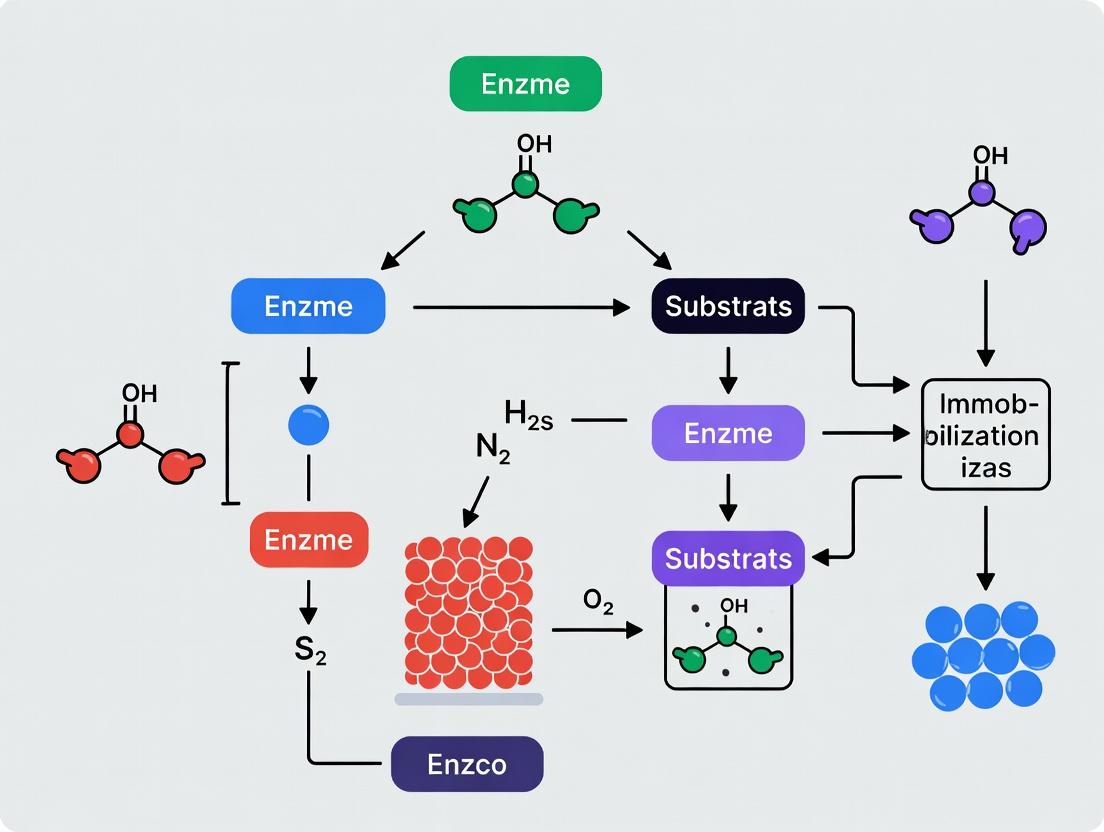
This article provides a comprehensive guide for researchers and drug development professionals on mitigating enzyme denaturation during immobilization.
Strategies to Prevent Enzyme Denaturation During Immobilization: A Guide for Bioprocess Researchers
Abstract
This article provides a comprehensive guide for researchers and drug development professionals on mitigating enzyme denaturation during immobilization. It explores the fundamental causes of denaturation under immobilization conditions, details current methodological approaches and applications, offers troubleshooting and optimization protocols, and presents validation techniques to compare immobilization outcomes. The goal is to equip scientists with the knowledge to preserve catalytic activity and stability in immobilized enzyme systems for biomedical and industrial applications.
Understanding Enzyme Denaturation: The Core Challenge in Immobilization
Technical Support Center
Welcome to the Technical Support Center for addressing enzyme denaturation during immobilization. This guide provides troubleshooting and FAQs for researchers working to optimize enzyme activity and stability in immobilized systems.
Frequently Asked Questions & Troubleshooting
Q1: After covalent immobilization on a resin, my enzyme shows <10% of its initial free activity. What are the primary causes? A: This severe activity loss typically indicates structural denaturation during the immobilization process. Key factors include:
- Chemical Denaturation: The coupling chemistry (e.g., using EDC/NHS for carboxyl-amine linking) can modify critical active site residues.
- Surface-Induced Denaturation: Multi-point attachment can force the enzyme into an unnatural, rigid conformation.
- Support Hydrophobicity: A highly hydrophobic support matrix can disrupt the enzyme's hydration shell, leading to structural collapse.
- Troubleshooting Steps:
- Switch to a milder immobilization strategy, such as affinity-based tagging (e.g., His-tag on metal-chelate supports) or physical encapsulation.
- Use a more hydrophilic spacer arm (e.g., PEG) to distance the enzyme from the support surface.
- Perform immobilization at a pH slightly away from the enzyme's pI but within its stable range to control orientation.
Q2: My immobilized enzyme loses activity rapidly over 5 operational cycles. Is this denaturation or just substrate fouling? A: While fouling is possible, a consistent >50% drop in activity over few cycles often points to operational denaturation.
- Differentiation Test: Run a batch with free enzyme under identical reaction conditions (pH, temperature, shear). If free enzyme is stable, the issue is immobilization-linked.
- Likely Culprits:
- Shear Stress: Aggressive stirring or pumping in a flow reactor creates interfacial forces that unfold the enzyme.
- Localized Heating: Exothermic reactions on the support surface create micro-environments hotter than the bulk solution.
- Troubleshooting: Reduce agitation speed, implement cooling jackets, or switch to a packed-bed reactor design to minimize mechanical shear.
Q3: How can I quantitatively distinguish between conformational denaturation and simple active site blocking? A: Use a combination of activity assays and spectroscopic techniques.
- Experimental Protocol:
- Activity Assay: Measure activity for both a large and a small substrate. A greater loss for the large substrate suggests steric blocking.
- Fluorescence Spectroscopy: Monitor intrinsic tryptophan fluorescence (excitation ~280 nm). A red shift (increase) in emission wavelength maximum indicates exposure of hydrophobic cores to solvent, confirming conformational unfolding.
- Circular Dichroism (CD): Perform far-UV CD scans (190-250 nm) on the immobilized enzyme (using a slurry in cuvette). A decrease in α-helix or β-sheet signal confirms loss of secondary structure.
Q4: What are the best practices to prevent denaturation during carrier-activated immobilization? A: Follow a controlled, stepwise protocol to minimize harsh conditions.
- Detailed Protocol for Controlled Covalent Immobilization:
- Support Activation: Activate your chosen resin (e.g., agarose with carboxyl groups) with a 10-20 mM solution of EDC and NHS in MES buffer (pH 5.0-6.0) for 30 minutes at 4°C.
- Rapid Buffer Exchange: Quickly wash the activated resin 3x with cold immobilization buffer (e.g., phosphate, pH 7.4) to quench activation and remove byproducts. Do not let the activated resin sit dry.
- Gentle Coupling: Add the enzyme solution to the resin. Rotate end-over-end gently (10-20 rpm) at 4°C for 2-4 hours. Avoid magnetic stirring.
- Quenching: Block any remaining active groups with 1M ethanolamine (pH 8.5) for 1 hour.
- Final Wash: Wash extensively with storage buffer containing mild stabilizers (e.g., 0.1-1 mM DTT, 0.1 mg/mL BSA, or 10% glycerol).
Data Presentation
Table 1: Comparative Analysis of Immobilization Methods and Associated Denaturation Risks
| Immobilization Method | Typical Activity Retention Range | Primary Denaturation Risk Factor | Mitigation Strategy |
|---|---|---|---|
| Covalent (EDC/NHS) | 30-70% | Chemical modification, multi-point attachment | Use spacer arms, optimize pH for oriented binding |
| Adsorption (Ionic) | 50-90% | Desorption, surface-induced unfolding | Use polyionic polymers, optimize ionic strength |
| Affinity (His-Tag/Metal) | 60-95% | Metal ion leaching, steric hindrance | Use chelators like IDA over Ni2+ alone, introduce flexible linkers |
| Encapsulation (Silica Sol-Gel) | 40-80% | Pore confinement, shrinkage stress | Add polyols (glycerol) to precursor, use larger pore templates |
Table 2: Diagnostic Tests for Denaturation Type in Immobilized Enzymes
| Diagnostic Method | What it Measures | Indicator of Denaturation | Sample Result Suggesting Denaturation |
|---|---|---|---|
| Kinetic Assay (Large vs. Small Substrate) | Accessible Active Sites | Steric vs. Conformational Loss | Large substrate activity loss >> small substrate loss |
| Intrinsic Fluorescence | Tertiary Structure Integrity | Unfolding/Structural Collapse | Red shift in λmax (>5 nm) & changed intensity |
| Circular Dichroism (Far-UV) | Secondary Structure Content | Loss of α-helix/β-sheet | Decreased signal at characteristic wavelengths (e.g., 208nm, 222nm for α-helix) |
| FTIR (Amide I Band) | Secondary Structure | Changes in protein backbone | Shift in peak from ~1650 cm⁻¹ (α-helix) to ~1620 cm⁻¹ (β-sheet aggregates) |
Visualizations
Title: Pathways to Enzyme Denaturation During Immobilization
Title: Diagnostic Workflow for Immobilized Enzyme Activity Loss
The Scientist's Toolkit: Research Reagent Solutions
| Reagent/Material | Primary Function in Mitigating Denaturation |
|---|---|
| Hydrophilic Spacer Arms (e.g., PEG-bis-amine) | Creates distance between enzyme and support, reducing surface-induced unfolding and steric hindrance. |
| EDC (1-Ethyl-3-(3-dimethylaminopropyl)carbodiimide) | Zero-length crosslinker for carboxyl-amine coupling; use at low concentrations (10-20mM) to minimize side reactions. |
| NHS (N-Hydroxysuccinimide) | Stabilizes the EDC-generated O-acylisourea intermediate, improving coupling efficiency and allowing milder pH conditions. |
| Polyionic Polymers (e.g., PEI, Chitosan) | Provides a pre-coated, hydrophilic surface for ion exchange adsorption, preventing direct enzyme-contact with hydrophobic carriers. |
| Silica Sol-Gel Precursors (e.g., TMOS) | Forms a biocompatible, porous inorganic matrix for encapsulation; adding glycerol to the mix reduces shrinkage stress. |
| Stabilizing Additives (Glycerol, Sucrose, BSA) | Preserves enzyme hydration shell and structural integrity during immobilization and storage steps. |
| Affinity Tags (His-Tag, Strep-Tag) | Enables gentle, oriented immobilization via specific, reversible interactions, minimizing random multi-point attachment. |
Technical Support Center
Troubleshooting Guide & FAQs
Q1: After covalently immobilizing my enzyme on an epoxy-activated resin, I observe >80% loss in specific activity. What are the primary chemical causes? A: The primary causes are multipoint covalent attachment leading to conformational rigidity and undesirable orientation. Epoxy groups react primarily with nucleophilic residues (e.g., Lys, Cys, Asp, Glu). If these residues are critical for catalytic function or located in flexible, active regions, the reaction locks the enzyme in a non-optimal conformation. Furthermore, high surface density increases the risk of intra- and inter-molecular cross-linking, exacerbating distortion.
Q2: My immobilized enzyme shows excellent initial activity but rapidly loses it during storage at 4°C. Native enzyme in solution is stable. What went wrong? A: This indicates incomplete quenching of the support's active groups post-immobilization. Residual reactive sites (e.g., unreacted epoxy, aldehyde, or NHS esters) slowly react with the enzyme over time, creating new, distorting covalent linkages that gradually denature the protein. Always ensure a rigorous quenching step with a small, inert nucleophile (e.g., ethanolamine, glycine).
Q3: How can I determine if activity loss is due to mass transfer limitations or true conformational denaturation? A: Perform the following diagnostic protocol:
- Assay Variation: Compare activity using a small substrate (e.g., p-nitrophenyl phosphate) vs. a large, polymeric substrate. A greater loss with the large substrate suggests mass transfer issues.
- Leakage Test: Incubate immobilized beads in assay buffer, remove them, and assay the supernatant for activity. Any activity indicates enzyme leakage, not just denaturation.
- Intrinsic Fluorescence Spectroscopy: Follow the protocol below.
Experimental Protocol: Intrinsic Fluorescence for Conformational Analysis Objective: Compare the tertiary structure of native vs. immobilized enzyme. Materials:
- Fluorimeter with cuvette and solid sample holder
- Enzyme in native buffer (control)
- Immobilized enzyme on beads
- Identical buffer for equilibration Method:
- Equilibrate both samples in the same non-absorbing buffer (e.g., 20 mM phosphate, pH 7.0).
- For the native enzyme, set excitation to 280 nm (for Trp/Tyr) and scan emission from 300-400 nm. Record peak maximum (λmax) and intensity.
- For the immobilized enzyme, use a solid sample holder. Ensure beads are uniformly packed and moist. Run an identical emission scan.
- Compare spectra. A red shift (e.g., from 340 nm to 355 nm) indicates unfolding and exposure of Trp residues to solvent. A significant decrease in intensity suggests quenching due to proximity to the support surface or energy transfer to the matrix. Interpretation: A red shift confirms conformational disruption due to immobilization chemistry.
Q4: I am using NHS-activated agarose. What is the optimal pH for coupling to minimize denaturation? A: NHS (N-hydroxysuccinimide) esters react preferentially with unprotonated α-amine groups (Lys side chains, N-terminus). The pKa of these groups is ~10.5, but coupling is typically done at pH 7.0-8.5 to balance reaction rate and enzyme stability. Coupling at pH >8.5 significantly increases the reaction rate but also risks:
- Denaturation of pH-sensitive enzymes.
- Increased multipoint attachment due to higher nucleophilicity of multiple Lys residues. Recommendation: Start at pH 7.5 for 2 hours at 4°C. Monitor activity retention versus coupling yield.
Quantitative Data Summary: Impact of Coupling Chemistry on Activity Retention
| Immobilization Chemistry | Target Residue | Typical Coupling pH | Avg. Activity Retention (%) | Primary Conformational Risk |
|---|---|---|---|---|
| Epoxy | Lys, Cys, Asp, Glu | 8.5-10.0 | 20-50% | High risk of multipoint attachment & forced distortion. |
| NHS Ester | Lys (α-amine) | 7.0-8.5 | 40-70% | Random orientation; active site blockage. |
| Glutaraldehyde | Lys | 7.0-8.0 | 15-40% | Extensive cross-linking & aggregation on support. |
| Reversible Schiff Base | Lys | 7.0-8.5 | 60-90%* | Milder, but can induce strain if linkage is short. |
| Site-Directed (e.g., His-Tag on Ni-NTA) | N/A (affinity) | 7.0-8.0 | 70-95% | Minimal, as orientation is controlled and chemistry is non-covalent. |
*Higher retention is achievable with optimized spacer arms.
Research Reagent Solutions Toolkit
| Reagent / Material | Function in Mitigating Denaturation |
|---|---|
| Functionalized Support (e.g., Glyoxyl Agarose) | Offers mild, reversible immobilization via Schiff base formation, allowing some conformational breathing. |
| Heterofunctional Support (e.g., Epoxy-Amino) | Combines initial physical adsorption (gentle) with subsequent covalent stabilization, improving orientation. |
| Long, Flexible Spacer Arm (e.g., 6-12 carbon chain) | Distances the enzyme from the support surface, reducing surface-induced distortion and steric hindrance. |
| Cross-linking Agent (e.g., Dextran Aldehyde) | Can be used post-adsorption to rigidify the enzyme's structure in its native conformation on the support. |
| Quenching Solution (1M Ethanolamine, pH 8.0) | Blocks unreacted groups post-coupling to prevent slow, denaturing reactions over time. |
| Activity-Preserving Storage Buffer (with 1% Trehalose) | Forms a protective hydroscopic matrix around the immobilized enzyme, stabilizing conformation during storage. |
Visualization: Immobilization Chemistry Pathways & Consequences
Title: Primary Pathways of Conformational Disruption During Immobilization
Title: Troubleshooting Workflow for Immobilized Enzyme Activity Loss
Technical Support Center: Troubleshooting Immobilization Efficiency
This support center provides targeted guidance for common experimental challenges in enzyme immobilization, framed within the thesis objective of mitigating enzyme denaturation through rational support matrix design.
Frequently Asked Questions (FAQs)
Q1: My immobilized enzyme shows high initial activity but rapid decay during batch cycling. What surface chemistry factors should I investigate? A: This typically indicates weak binding or surface-induced unfolding. Investigate:
- Binding Chemistry: For covalent attachment, ensure your coupling chemistry (e.g., EDC/NHS for carboxyl-amine) is appropriate for your enzyme's stable pH range. Spacer arms (e.g., PEG linkers) can reduce steric hindrance.
- Surface Hydrophobicity: Excessively hydrophobic surfaces can denature enzymes. Characterize water contact angle. Consider switching to or modifying with more hydrophilic matrices (e.g., polyethylene glycol, polysaccharides).
- Nonspecific Adsorption: Pre-block the matrix with inert proteins (e.g., BSA) or surfactants after immobilization to prevent unfolding at vacant sites.
Q2: I am observing low enzyme loading despite high initial enzyme concentration. Could topography be a factor? A: Yes. Low loading often relates to inaccessible surface area.
- Pore Size vs. Enzyme Size: Ensure the support's average pore diameter is at least 5-10 times the hydrodynamic diameter of your enzyme to allow for diffusion and interior surface attachment. Use Barrett-Joyner-Halenda (BJH) analysis from nitrogen adsorption to characterize mesopores (2-50 nm).
- Surface Roughness: Nanoscale roughness can increase effective surface area. Analyze via Atomic Force Microscopy (AFM). A root-mean-square (RMS) roughness increase from 2 nm to 20 nm can enhance loading capacity by 50-150% for certain globular proteins.
Q3: How can I differentiate between leaching and denaturation as the cause of activity loss? A: Perform a simple sequential assay and analysis protocol.
- Conduct an operational stability assay (e.g., 10 reaction cycles).
- Centrifuge the reaction mixture after each cycle and collect the supernatant.
- Assay supernatant for activity: Detectable activity indicates leaching.
- Measure supernatant protein concentration: Use a Bradford or BCA assay. High protein with low activity suggests leaching of denatured enzyme.
- If supernatant shows no activity/protein, but the immobilized preparation is inactive, perform SDS-PAGE on boiled resin samples. Absence of enzyme bands suggests denaturation and degradation on the matrix.
Experimental Protocol: Evaluating Topographical and Chemical Effects on Activity Retention
Title: Protocol for Correlating Support Properties with Immobilized Enzyme Performance.
Objective: To systematically test how support pore size and surface wettability impact immobilized enzyme activity and stability.
Materials:
- Enzyme of interest (e.g., Lysozyme, Lipase B).
- Support matrices variants: (A) Mesoporous silica with 10 nm pores, (B) Mesoporous silica with 50 nm pores, (C) 10 nm pore silica functionalized with aminopropyl groups, (D) 10 nm pore silica functionalized with octyl groups.
- Coupling buffers (e.g., 0.1 M MES, pH 5.5 for EDC/NHS).
- Activity assay reagents specific to enzyme.
- Microcentrifuge, spectrophotometer, shaking incubator.
Procedure:
- Characterization: Record BET surface area, BJH pore diameter, and water contact angle for each support (A-D).
- Immobilization: For each support, incubate 10 mg with 1 mL of enzyme solution (1 mg/mL in appropriate coupling buffer) for 2 hours with gentle mixing.
- Washing: Centrifuge, discard supernatant. Wash pellet 3x with 1 mL coupling buffer, then 3x with assay buffer to remove unbound enzyme.
- Initial Activity Assay: Resuspend each immobilized enzyme in 1 mL assay buffer. Perform activity assay (e.g., monitor absorbance change over 1 min). Calculate initial activity (U/mg support).
- Stability Test: Incubate each preparation in assay buffer at 30°C with shaking. Sample at 0, 2, 4, 8, 24 hours. Measure residual activity.
- Loading Quantification: Measure protein concentration in initial supernatant and pooled washes via Bradford assay. Calculate bound enzyme (mg protein / g support).
Data Presentation
Table 1: Comparative Analysis of Support Matrix Properties on Immobilization Outcomes
| Support ID | Avg. Pore Size (nm) | Water Contact Angle (°) | Enzyme Loading (mg/g) | Initial Activity (U/mg) | Residual Activity after 24h (%) |
|---|---|---|---|---|---|
| A | 10 | 25 (Hydrophilic) | 85 ± 5 | 120 ± 10 | 45 ± 5 |
| B | 50 | 25 (Hydrophilic) | 92 ± 4 | 145 ± 8 | 78 ± 4 |
| C | 10 (Amino-modified) | 40 | 105 ± 6 | 135 ± 9 | 65 ± 6 |
| D | 10 (Octyl-modified) | 110 (Hydrophobic) | 120 ± 8 | 95 ± 12 | 30 ± 7 |
The Scientist's Toolkit: Key Research Reagent Solutions
| Reagent/Material | Primary Function in Immobilization Research |
|---|---|
| EDC (1-Ethyl-3-(3-dimethylaminopropyl)carbodiimide) | Zero-length crosslinker for carboxyl-to-amine conjugation. Activates carboxyl groups for coupling. |
| NHS (N-Hydroxysuccinimide) | Used with EDC to form stable amine-reactive NHS esters, improving coupling efficiency. |
| (3-Aminopropyl)triethoxysilane (APTES) | Silane coupling agent to introduce primary amine groups onto silica surfaces for covalent attachment. |
| PEG-Based Spacer Arms (e.g., NHS-PEG-Maleimide) | Heterobifunctional linkers that reduce steric hindrance, offering mobility to the immobilized enzyme. |
| BSA (Bovine Serum Albumin) | Used as an inert blocking agent to passivate unreacted sites on the support, reducing nonspecific adsorption. |
| Mesoporous Silica SBA-15 | Well-characterized model support with tunable pore size (5-30 nm) and surface chemistry for topographical studies. |
Visualization: Decision Pathway for Support Matrix Selection
Support Matrix Selection Logic
Visualization: Enzyme Immobilization & Denaturation Pathways
Immobilization Outcomes from Matrix Properties
Technical Support & Troubleshooting Center
FAQ: pH-Related Issues
Q1: My immobilized enzyme loses all activity after coupling at the recommended pH. What went wrong? A: The optimal pH for covalent coupling is often different from the enzyme's optimal catalytic pH. Coupling at the catalytic optimum can modify residues essential for activity. Troubleshooting Step: Perform a coupling pH screen (e.g., pH 4.0, 6.0, 7.0, 8.0, 9.0) using a non-amine containing buffer (like phosphate or carbonate) to identify the pH that maximizes active-site preservation.
Q2: How do I accurately control pH during a coupling reaction that itself generates protons (e.g., EDC/NHS chemistry)? A: Use a high buffering capacity (50-100 mM) buffer at the optimal coupling pH. A two-component buffer system (e.g., MES for pH 5.5-6.5, HEPES for pH 7.0-8.0) is advised. Monitor pH with a micro-electrode and titrate with dilute NaOH to maintain stability.
Q3: Can the pH of the washing/storage buffer affect my final immobilized enzyme preparation? A: Yes. After coupling, a sudden shift in pH can induce conformational stress. Always equilibrate and wash the support with a mild, storage-compatible buffer (e.g., 20 mM Tris-HCl, pH 7.4) to gradually transition the enzyme to its final environment.
FAQ: Ionic Strength & Solvent Exposure
Q4: High ionic strength during coupling was supposed to reduce multipoint attachment, but it caused my enzyme to precipitate. How can I avoid this? A: You may be near the enzyme's salting-out concentration. Screen ionic strength incrementally using NaCl or KCl. See the table below for safe starting ranges.
Q5: I need to use an organic co-solvent (e.g., DMSO, ethanol) to dissolve my coupling reagent. How much can my enzyme tolerate? A: Tolerance is enzyme-specific. Always introduce the solvent gradually to the aqueous coupling solution while monitoring for precipitation. Pre-equilibrate the enzyme in the final solvent/water mixture before adding the activating agent.
Q6: My support agglomerates in the coupling buffer. Is this a problem? A: Yes. Agglomeration creates diffusion barriers and uneven coupling. Ensure your buffer ionic strength is sufficient to minimize nonspecific, charge-based interactions between support particles. Sonication or adding a mild non-ionic detergent (0.01% Tween-20) can help disperse particles.
Table 1: Effect of Coupling pH on Immobilization Yield and Activity Retention
| Coupling pH | Buffer System (100 mM) | Immobilization Yield (%) | Retained Activity (%) | Recommended For |
|---|---|---|---|---|
| 5.5 | Sodium Acetate | 85 ± 3 | 25 ± 5 | Stable enzymes, non-essential Lys |
| 7.0 | Sodium Phosphate | 75 ± 4 | 65 ± 7 | Neutral-pH sensitive enzymes |
| 8.5 | Tris-HCl | 90 ± 2 | 40 ± 6 | Alkaline-tolerant enzymes |
| 8.5 | Carbonate-Bicarbonate | 92 ± 3 | 75 ± 4 | General optimal range |
Table 2: Impact of Ionic Strength (NaCl) on Coupling Outcomes
| [NaCl] (mM) | Multipoint Attachment Index | Observed Enzyme Leaching (%) | Notes |
|---|---|---|---|
| 0 | High | <1 | High activity loss possible |
| 150 | Moderate | 1-2 | Standard physiological condition |
| 500 | Low | 5 ± 2 | Maximizes orientation, may reduce stability |
Detailed Experimental Protocols
Protocol 1: Systematic Screening of Coupling pH
Objective: To identify the coupling pH that maximizes activity retention for an amine-reactive immobilization.
- Activation: Divide activated resin (e.g., NHS-activated Sepharose) into 5 aliquots.
- Buffer Preparation: Prepare 5 coupling buffers (100 mM) at pH 4.0, 6.0, 7.0, 8.0, and 9.0. Use: Citrate (pH 4.0), MES (pH 6.0), Phosphate (pH 7.0), Tris (pH 8.0), Carbonate (pH 9.0).
- Equilibration: Wash each resin aliquot 3x with its respective pH buffer.
- Coupling: Add a standardized amount of enzyme solution (in the same buffer) to each resin. Incubate with end-over-end mixing for 2 hours at 4°C.
- Quenching & Washing: Block residual sites with 1M Tris-HCl, pH 8.0. Wash thoroughly with storage buffer.
- Analysis: Measure protein concentration (Bradford assay) in supernatant pre/post coupling to calculate yield. Assay each resin for enzymatic activity.
Protocol 2: Assessing Solvent Tolerance for Hydrophobic Reagent Coupling
Objective: To determine the maximum organic solvent concentration tolerable during coupling.
- Preparation: Prepare a stock enzyme solution in a stable aqueous buffer (e.g., 50 mM phosphate, pH 7.4).
- Solvent Titration: Create solvent/buffer mixtures (e.g., DMSO in buffer) at 1%, 5%, 10%, 15% v/v.
- Stability Test: Incubate enzyme in each mixture for 1 hour at coupling temperature. Centrifuge and assay supernatant for activity and protein concentration. Identify the highest concentration without precipitation or >10% activity loss.
- Coupling Application: Perform the coupling reaction using this predetermined solvent/buffer mixture to dissolve the coupling agent (e.g., a hydrophobic crosslinker).
Visualizations
Title: Optimization Workflow for Coupling Conditions
Title: How Coupling Factors Drive Outcomes Toward Optimization or Denaturation
The Scientist's Toolkit: Key Research Reagent Solutions
| Reagent/Material | Primary Function in Coupling Optimization |
|---|---|
| NHS-Activated Resin (e.g., NHS-Activated Sepharose 4 Fast Flow) | Ready-to-use support for amine coupling; allows direct screening of pH/buffer effects without separate activation steps. |
| Good's Buffers (MES, HEPES, MOPS) | Provide stable, non-interacting buffering capacity across a wide pH range (6.0-8.0) without containing primary amines. |
| EZ-Link NHS-PEGn-Biotin | A tool molecule; used in model studies to simulate enzyme coupling and assess the impact of conditions on ligand accessibility. |
| Micro pH Electrode (e.g., for 1.5 mL microcentrifuge tubes) | Enables precise, real-time pH monitoring in small-volume coupling reactions to detect proton release. |
| Piercent BCA Protein Assay Kit | Quantifies protein concentration in coupling supernatants and washes to calculate immobilization yield and leaching. |
| Hydrophobic Crosslinkers (e.g., DSP - Dithiobis(succinimidyl propionate)) | Used in organic solvent tolerance protocols; requires controlled solvent addition to maintain enzyme stability. |
| Tween-20 (Polysorbate 20) | Mild non-ionic detergent used at low concentration (0.01-0.1% v/v) to prevent support aggregation and reduce nonspecific binding. |
Thermodynamic and Kinetic Perspectives on Stability Under Immobilization Stress
Troubleshooting Guides & FAQs
FAQ 1: Why does my immobilized enzyme show a drastic drop in specific activity compared to the free enzyme?
- Answer: This is a common issue rooted in both thermodynamic and kinetic factors. Thermodynamically, the immobilization process can alter the enzyme's native, stable folded state, promoting non-productive conformations. Kinetically, mass transfer limitations (both external and internal diffusion) can severely reduce the substrate's access to the active site. Ensure your immobilization protocol uses a support with appropriate pore size and that your reaction mixture is adequately agitated.
FAQ 2: How can I determine if activity loss is due to enzyme denaturation or poor substrate diffusion?
- Answer: Perform a Weisz-Prater analysis for internal diffusion or a film diffusion test. A core experiment is to measure observed activity at different particle sizes (if possible) and stirring speeds. If increasing agitation significantly increases the reaction rate, external diffusion is limiting. If crushing the immobilized beads and measuring activity shows a large increase, internal diffusion is a key issue.
FAQ 3: My immobilized enzyme has high initial activity but loses it rapidly over cycles. What are the main causes?
- Answer: This typically points to kinetic instability under operational stress. The primary culprits are: 1) Leaching: Inadequate binding chemistry leads to enzyme detachment. 2) Structural Unfolding: Shear forces, interfacial denaturation at support surfaces, or incorrect microenvironment pH/polarity thermodynamically destabilize the enzyme. 3) Fouling/Inactivation: By-products or impurities in the substrate stream poison the active site.
FAQ 4: What is the best method to select an immobilization chemistry for maximum stability?
- Answer: There is no universal "best" method. The choice must balance thermodynamic stabilization (e.g., multi-point covalent attachment for rigidification) against kinetic performance needs (e.g., minimal diffusion barriers). A rational screen is recommended, comparing different chemistries (e.g., epoxy, glutaraldehyde, NHS-ester) using the stability metrics in Table 1.
Experimental Protocols
Protocol 1: Assessing Thermostability via Half-Life (t₁/₂) at Elevated Temperature
- Immobilize the enzyme onto your chosen support using your standard protocol.
- Prepare identical samples of the immobilized enzyme in a suitable non-reactive buffer (e.g., 50 mM phosphate, pH 7.0).
- Incubate samples in a thermostated water bath at a defined elevated temperature (e.g., 60°C).
- At regular time intervals (e.g., 0, 15, 30, 60, 120 min), remove a sample and immediately place it on ice.
- Measure the residual activity of each sample under standard, non-denaturing assay conditions.
- Plot the natural log of residual activity (%) versus time. The negative inverse of the slope is the deactivation rate constant (kd). Calculate t₁/₂ = ln(2) / kd.
Protocol 2: Testing for Enzyme Leaching
- After immobilization, thoroughly wash the immobilized enzyme preparation.
- Incubate the preparation in the reaction buffer (without substrate) under standard operational conditions (e.g., temperature, agitation) for a set period (e.g., 2-4 hours).
- Separate the solid support from the buffer via rapid centrifugation or filtration.
- Assay the supernatant for enzymatic activity. Any detected activity indicates leaching of non-covalently bound enzyme.
- Quantify leaching as a percentage of the total activity initially immobilized.
Data Presentation
Table 1: Comparative Stability Metrics of Differently Immobilized Lipase B
| Immobilization Method | Binding Type | Initial Activity (U/g support) | Thermostability t₁/₂ at 60°C (min) | Operational Stability (Cycles to 50% loss) | Leaching (%) |
|---|---|---|---|---|---|
| Physical Adsorption | Hydrophobic | 1250 ± 120 | 45 ± 5 | 8 ± 2 | 12.5 ± 3.1 |
| Covalent (Glutaraldehyde) | Single-point | 980 ± 85 | 180 ± 15 | 25 ± 4 | < 1 |
| Multi-point Covalent (Epoxy-Glyoxyl) | Multi-point | 750 ± 65 | 480 ± 40 | 45 ± 6 | < 1 |
| CLEA (Cross-Linked Enzyme Aggregate) | Covalent Cross-linking | 1550 ± 140 | 220 ± 20 | 15 ± 3 | < 1 |
The Scientist's Toolkit
Key Research Reagent Solutions for Immobilization Stability Studies
| Reagent/ Material | Primary Function in Stability Research |
|---|---|
| Epoxy-activated Supports (e.g., Eupergit C) | Enable stable, multi-point covalent attachment, enhancing thermodynamic rigidity. |
| Glyoxyl-activated Supports | Provide oriented immobilization via mild Schiff base formation, often leading to multi-point attachment after reduction. |
| Glutaraldehyde (2.5% v/v Solution) | Common crosslinker for aminated supports or enzymes; can create single or multi-point attachments. |
| Activity Assay Kit (Substrate-specific) | Provides standardized reagents for accurate, reproducible measurement of residual enzyme activity. |
| Thermostatic Water Bath | Allows precise incubation at elevated temperatures for accelerated stability (t₁/₂) testing. |
| Orbital Shaking Incubator | Provides controlled agitation for studying external diffusion limitations and operational stability over cycles. |
Visualization
Diagram 1: Stability Deconvolution Workflow
Diagram 2: Immobilization Stress & Enzyme State
Advanced Immobilization Techniques to Safeguard Enzyme Integrity
Technical Support Center: Troubleshooting Guides & FAQs
Frequently Asked Questions
Q1: My enzyme activity drops drastically after using a carbodiimide (EDC) crosslinker. What might be happening? A: This is a classic sign of denaturation or over-crosslinking. EDC activates carboxyl groups, but the reaction must be carefully controlled. Excessive EDC concentration or prolonged reaction time (especially >2 hours at room temperature) can lead to excessive intra-enzyme crosslinking, distorting the active site. Ensure the reaction is performed in a weak buffer (e.g., 0.1 M MES, pH 5.0) without primary amines. Immediately quench with a β-mercaptoethanol or glycine solution. Consider using a lower molar ratio of EDC/NHS to enzyme (start at 2:1).
Q2: During physical adsorption onto a polymeric support, my enzyme leaches significantly upon washing. How can I improve binding stability? A: Leaching indicates weak physical interactions. First, characterize the isoelectric point (pI) of your enzyme and the surface charge of your support at your working pH. Adjust the buffer pH to promote electrostatic attraction (e.g., for a cationic support, use a pH below the enzyme's pI). If using hydrophobic interaction, increase ionic strength cautiously. If leaching persists, consider a two-step method: adsorb first, then gently crosslink adsorbed molecules with a low-concentration, short-duration treatment of a homobifunctional crosslinker like glutaraldehyde (e.g., 0.1% for 30 min).
Q3: When attempting to use glycan-targeted immobilization (lectin or periodate oxidation), I see no increase in binding vs. control. What could be wrong? A: For lectin-based methods, confirm the lectin is properly immobilized and active. The glycosylation pattern of your enzyme may not match the lectin's specificity. For periodate oxidation, the key variable is the oxidation time. Over-oxidation can destroy the carbohydrate and create aldehyde groups that are themselves reactive and can denature the enzyme. Follow a precise, mild protocol (see Experimental Protocol 2 below). Always quantify the generated aldehydes using a method like the MBTH assay before proceeding to coupling.
Q4: My site-specific immobilization via His-Tag on Ni-NTA beads works initially, but activity decays rapidly in storage. Why? A: This suggests metal ion leaching or progressive denaturation at the interface. Imidazole used for elution can remain and slowly displace the His-tag. Ensure thorough washing after immobilization. The chelation stress on the enzyme's surface can be destabilizing. Add a low concentration of a stabilizing agent (e.g., 10% glycerol) to the storage buffer. For long-term stability, consider crosslinking the enzyme after site-specific attachment using a homobifunctional crosslinker at very low concentration to "lock" it in place without blocking the active site.
Experimental Protocols
Protocol 1: Mild EDC/NHS Coupling for Carboxylated Surfaces Objective: To covalently immobilize an amine-containing enzyme to a carboxyl-functionalized magnetic nanoparticle while minimizing activity loss.
- Activation: Wash 1 mL of carboxylated beads (10 mg/mL) twice with 0.1 M MES buffer (pH 5.0). Resuspend in 1 mL of the same buffer.
- Add Crosslinkers: To the bead suspension, add EDC and NHS from fresh stock solutions to final concentrations of 2 mM and 1 mM, respectively. Mix gently on a rotator for 20 minutes at 25°C.
- Wash: Magnetically separate beads. Wash twice quickly with 1 mL of cold coupling buffer (e.g., phosphate buffer, pH 7.4).
- Coupling: Immediately resuspend activated beads in 1 mL of enzyme solution (0.1-0.5 mg/mL in coupling buffer). Rotate for 1 hour at 4°C.
- Quenching: Add β-mercaptoethanol to a final concentration of 10 mM and incubate for 10 minutes. Separate and wash three times with storage buffer.
Protocol 2: Gentle Periodate Oxidation for Glycan-Directed Coupling Objective: To oxidize sialic acid or cis-diol groups on enzyme glycans for subsequent coupling to hydrazide beads.
- Preparation: Dialyze the glycoprotein enzyme into 0.1 M sodium acetate buffer, pH 5.5, at 4°C.
- Oxidation: Add sodium meta-periodate (NaIO₄) from a freshly prepared stock to the enzyme solution to a final concentration of 1 mM. Wrap the tube in foil and incubate on ice with gentle stirring for exactly 30 minutes.
- Termination: Stop the reaction by adding ethylene glycol to a final concentration of 10 mM. Incubate on ice for 10 minutes.
- Purification: Immediately desalt the enzyme using a pre-equilibrated Zeba spin column (7K MWCO) into a coupling buffer (e.g., 0.1 M phosphate, pH 6.0). Proceed to coupling with hydrazide-functionalized support within 2 hours.
Data Presentation
Table 1: Comparison of Coupling Method Efficiency & Activity Retention
| Method | Typical Immobilization Yield (%) | Reported Activity Retention (%)* | Key Gentle Parameter | Common Denaturation Risk |
|---|---|---|---|---|
| Physical Adsorption | 60-85 | 40-70 | Low ionic strength, pH tuning | Leaching, conformational change on surface |
| EDC/NHS Covalent | 70-95 | 50-80 | Low crosslinker ratio (2-5:1), short time (1-2h), 4°C | Over-crosslinking, hydrolysis side reactions |
| Epoxy-Activated | 80-98 | 30-60 | Long reaction (24-72h) at 4°C | High pH requirement (>8.0) during coupling |
| Bioaffinity (Avidin-Biotin) | 60-90 | 70-95 | Neutral pH, no chemical activation | Non-specific binding, cost |
| Site-Specific (His-Tag/NTA) | 85-99 | 75-95 | Avoidance of imidazole in coupling buffer | Metal-induced denaturation, leaching |
*Activity retention is highly enzyme-dependent. Ranges represent commonly reported values in recent literature for model enzymes like lysozyme or lipase.
The Scientist's Toolkit: Research Reagent Solutions
| Reagent / Material | Primary Function in Gentle Coupling |
|---|---|
| MES Buffer (2-(N-morpholino)ethanesulfonic acid) | A weak acidic buffer (pKa ~6.1) optimal for EDC-mediated carboxyl activation without causing acid denaturation. |
| Sulfo-NHS (N-hydroxysulfosuccinimide) | A water-soluble analog of NHS that stabilizes the amine-reactive O-acylisourea intermediate, allowing for milder, aqueous reaction conditions. |
| Heterobifunctional Crosslinker (e.g., SMCC) | Contains a NHS ester and a maleimide group, enabling controlled, two-step conjugation between amines and thiols, minimizing random crosslinking. |
| Hydrazide-Functionalized Agarose Beads | Provides a stable nucleophile for coupling with periodate-oxidized glycans via hydrazone bond formation, operable at neutral pH. |
| Polyhistidine-Tag (His-Tag) & NTA Agarose | Enables reversible, site-specific immobilization via chelation, avoiding direct chemical modification of the enzyme. |
| Zeba Spin Desalting Columns | Allows rapid buffer exchange to remove quenching agents or salts that could interfere with downstream coupling steps, minimizing processing time. |
| Trehalose or Glycerol | Protein stabilizers added to coupling or storage buffers to maintain enzyme conformation during immobilization processes. |
Diagrams
Title: Enzyme Immobilization Method Selection Flow
Title: EDC/NHS Mechanism: Optimal vs. Denaturation Pathway
Technical Support Center
Troubleshooting Guides & FAQs
FAQ 1: Low Enzyme Activity Recovery in CLEA Formation
- Q: Why is my recovered enzyme activity after CLEA preparation so low (<30%)?
- A: Low activity recovery is a common challenge linked to enzyme denaturation during the precipitation and cross-linking steps. Key factors include:
- Aggregation Agent: The precipitant (e.g., ammonium sulfate, tert-butanol) may be too harsh, causing irreversible conformational damage. Try a screening approach with different precipitants.
- Cross-linker Concentration/Time: Excessive glutaraldehyde concentration or prolonged cross-linking time can over-modify active site lysine residues and rigidify the enzyme in a non-optimal conformation. Optimize by testing a range (0.5-5.0% v/v) for shorter durations (10-120 min).
- pH during Cross-linking: Cross-linking must be performed at a pH that maintains enzyme stability, typically away from the isoelectric point (pI) to ensure solubility before aggregation. Perform cross-linking at the enzyme's optimal pH for stability.
FAQ 2: CLEA Fragmentation and Poor Mechanical Stability
- Q: My CLEAs are fragile, fragment easily in reactors, and leach enzyme. How can I improve their mechanical stability?
- A: Fragility indicates weak internal cross-linking or physical structure.
- Cross-linker Type: Glutaraldehyde may form Schiff bases that are reversible. Consider using more stable cross-linkers like dextran polyaldehyde or genipin.
- Additive Co-aggregation: Incorporate inert protein (e.g., BSA, gelatin) or polymers (e.g., polyethyleneimine) during precipitation. These provide additional amine groups for cross-linking, creating a more robust composite matrix. Protocol: Add BSA at a 1:1 to 1:4 mass ratio (BSA:Enzyme) before precipitation.
- Precipitation Speed: Very rapid precipitation can form small, weak aggregates. Control the rate of precipitant addition and mixing speed.
FAQ 3: High Diffusion Limitation and Reduced Apparent Activity in CLECs
- Q: My Cross-Linked Enzyme Crystals (CLECs) show high specific activity but very low apparent activity in bulk substrate assays. What is the cause?
- A: This is a classic sign of internal mass transfer (diffusion) limitation. Substrates cannot easily penetrate the dense crystalline lattice.
- Crystal Size: Large crystals (>50 µm) exacerbate diffusion problems. Optimize crystallization conditions to yield smaller crystals (5-20 µm) or consider fragmenting crystals post-cross-linking via controlled homogenization.
- Cross-linking Degree: Over-cross-linking can further reduce pore size. Reduce glutaraldehyde concentration or exposure time for CLECs compared to CLEAs.
- Assay Method: Verify by comparing activity in a stirred system versus a shaken system; a significant increase with vigorous stirring indicates external diffusion limitation.
FAQ 4: Loss of Enantioselectivity or Specificity Post-Immobilization
- Q: My immobilized enzyme shows good activity recovery but poor enantioselectivity (E value dropped) in chiral synthesis. Why?
- A: This points to selective denaturation or conformational distortion of the active site during carrier-free immobilization.
- Selective Precipitation: The precipitation step may selectively inactivate one enantiomer-binding conformation. Screen precipitants that are known to be "soft" and non-denaturing, like polyethyleneglycol (PEG).
- Cross-linking Induced Rigidification: Excessive rigidity may hinder the subtle conformational changes needed for enantiomer discrimination. Use a more flexible cross-linker (e.g., long-chain bis-epoxides) and add spacer arms.
FAQ 5: How to Scale-Up CLEA/CLEC Production from Bench to Bioreactor?
- Q: My lab-scale CLEAs work well, but performance drops dramatically when I scale up the production volume for a packed-bed reactor.
- A: Scale-up issues often relate to inconsistent mixing during the critical precipitation and cross-linking phases.
- Mixing Efficiency: Ensure homogeneous and instantaneous mixing of the precipitant/cross-linker with the enzyme solution to form uniform aggregates. Use a stirred-tank or static mixer with controlled addition rates.
- Heat Transfer: The cross-linking reaction can be exothermic. At large scale, poor heat dissipation can lead to local overheating and enzyme denaturation. Implement jacketed temperature-controlled vessels.
- Washing & Quenching: Efficient washing to remove unreacted cross-linker is critical. Scale your wash volumes proportionally and consider using a quenching agent (e.g., lysine solution) to stop the cross-linking reaction precisely.
Experimental Protocols
Protocol 1: Standard CLEA Preparation with Additives (Co-aggregation) Objective: To immobilize an enzyme as a CLEA with enhanced stability and activity recovery using BSA as a proteic feeder.
- Dissolution: Dissolve the target enzyme (50 mg) and BSA (50 mg) in 5 mL of appropriate buffer (e.g., 50 mM phosphate, pH 7.5).
- Precipitation: While stirring at 4°C, slowly add 25 mL of pre-chilled tert-butanol (or saturated ammonium sulfate solution) dropwise over 15 minutes. Continue stirring for 1 hour to form a fine suspension.
- Cross-linking: Add glutaraldehyde (25% solution) to the stirring suspension to a final concentration of 2.0% (v/v). Cross-link for 1 hour at 4°C under gentle agitation.
- Quenching: Add 1 mL of 1M glycine or lysine solution to quench unreacted aldehyde groups. Stir for 30 minutes.
- Separation & Washing: Recover the aggregates by centrifugation (5000 x g, 10 min). Wash the pellet sequentially with buffer (3x) and deionized water (2x) to remove residual reagents.
- Drying: Lyophilize the washed CLEAs or store as a wet paste at 4°C.
Protocol 2: CLEC Preparation via Cross-Linking of Microcrystals Objective: To produce catalytically active CLECs from enzyme microcrystals.
- Crystallization: Generate enzyme microcrystals using established vapor diffusion or batch methods. The goal is crystals of 5-30 µm. Example (Lysozyme Batch): Mix 100 mg/mL lysozyme in 50 mM sodium acetate buffer (pH 4.5) with an equal volume of 8% (w/v) NaCl. Incubate at 20°C for 24 hours.
- Harvesting: Harvest crystals by gentle centrifugation (1000 x g, 5 min).
- Cross-linking: Resuspend the crystal slurry in cold mother liquor. Add glutaraldehyde to a low final concentration (typically 0.1-0.5% v/v). Gently agitate for 2-12 hours at 4°C.
- Quenching & Washing: Add quenching agent. Wash extensively with cold buffer followed by a stabilizing storage buffer (e.g., with 2% sucrose).
- Storage: Store CLECs as a suspension at 4°C or after lyophilization if stability allows.
Table 1: Comparison of CLEAs vs. CLECs for Model Enzymes
| Parameter | Cross-Linked Enzyme Aggregates (CLEAs) | Cross-Linked Enzyme Crystals (CLECs) |
|---|---|---|
| Typical Activity Recovery | 40-70% (Highly variable; depends on optimization) | 50-90% (Often higher due to pre-organized stable structure) |
| Primary Stabilization Factor | Multi-point covalent attachment prevents dissociation & unfolding. | Rigid crystalline lattice immobilizes backbone, suppressing denaturation. |
| Mass Transfer Resistance | Moderate (Depends on aggregate size & porosity) | High (Dense crystalline structure can limit substrate diffusion) |
| Mechanical Stability | Moderate to Low (Can fragment under shear) | High (Crystalline matrix is mechanically robust) |
| Production Complexity | Relatively Simple (Precipitation & cross-linking) | Complex (Requires prior protein crystallization expertise) |
| Best Suited For | Crude enzyme preparations, multi-enzyme complexes, processes where cost is critical. | High-value enzymes, chiral synthesis requiring extreme rigidity, harsh organic solvents. |
Table 2: Troubleshooting: Effect of Cross-linking Conditions on CLEA Properties
| Condition | Low/Short Cross-linking | Optimal Cross-linking | High/Prolonged Cross-linking |
|---|---|---|---|
| Glutaraldehyde Conc. | 0.2% for 30 min | 2.0% for 60 min | 5.0% for 180 min |
| Activity Recovery | ~80% (but leaching high) | ~65% (stable) | <20% |
| Aggregate Hardness | Soft, easily dispersed | Firm, stable particles | Very hard, may be brittle |
| Leaching in Buffer | Significant (>15%) | Minimal (<2%) | Negligible |
| Probable Issue | Insufficient stabilization, leaching in reactor. | Target Condition | Over-modification, active site distortion, diffusion limits. |
Diagrams
Title: CLEA Synthesis Workflow & Denaturation Risks
Title: Research Strategies to Prevent Immobilization Denaturation
The Scientist's Toolkit: Key Research Reagent Solutions
| Item | Function in CLEA/CLEC Research |
|---|---|
| Glutaraldehyde (25% soln.) | The most common homobifunctional cross-linker; reacts with lysine amines to form intra- and intermolecular covalent bonds. |
| tert-Butanol | A "soft," non-denaturing precipitating agent; often yields CLEAs with higher activity recovery than salt precipitants. |
| Ammonium Sulfate | A classic salting-out agent for protein precipitation; used for initial CLEA screening but may be denaturing for some enzymes. |
| Polyethyleneimine (PEI) | A cationic polymer used as a co-aggregant; provides primary amines for cross-linking and can enhance stability and pH resistance. |
| Bovine Serum Albumin (BSA) | An inert, inexpensive protein used as a proteic feeder in co-aggregation to provide additional cross-linking points and reduce enzyme molecule distortion. |
| Genipin | A natural, biocompatible cross-linker alternative to glutaraldehyde; forms stable blue pigments and may be gentler on enzyme activity. |
| Microcrystallization Kits | Commercial sparse matrix screens (e.g., from Hampton Research) used to systematically identify conditions for CLEC formation. |
| Lysine/Glycine (Quenchers) | Used to terminate the cross-linking reaction by blocking unreacted aldehyde groups, preventing ongoing modification during storage. |
Technical Support Center
FAQs and Troubleshooting Guides
Q1: My enzyme activity recovery after site-directed immobilization is consistently below 20%. What could be the cause? A: Low activity recovery often indicates that the immobilization chemistry is interfering with the active site or causing conformational distortion. Key troubleshooting steps:
- Verify Ligand Density: Excessively high density of affinity ligands (e.g., Ni-NTA) on the support can lead to multipoint attachment, distorting the enzyme. Protocol: Quantify ligand density using colorimetric assays (e.g., Orange II for amines, imidazole titration for Ni-NTA). Aim for a moderate density (see Table 1).
- Check Tag Accessibility: Ensure the affinity tag (His-tag, Strep-tag) is positioned on the enzyme surface with a flexible linker. Protocol: Run an SDS-PAGE gel post-immobilization; significant unbound enzyme in supernatant suggests poor tag accessibility.
- Assess Coupling Chemistry: If using a covalent step after initial affinity capture, ensure the crosslinker is the correct length and specificity. A short, non-specific crosslinker can link to residues near the active site.
Q2: I observe high initial activity that rapidly decays during assay, suggesting leaching. How do I stabilize the attachment? A: This points to weak affinity binding or insufficient covalent stabilization.
- Optimize Affinity Conditions: For His-tag/Ni-NTA, add low concentrations of imidazole (10-50 mM) to reduce nonspecific binding, but include a secondary stabilization step. Protocol: Perform a leaching test by incubating the immobilized enzyme in assay buffer and measuring activity/protein content in the supernatant over time.
- Implement Secondary Crosslinking: After oriented capture, introduce a mild, homo-bifunctional crosslinker (e.g., glutaraldehyde, BS³) to create stabilizing inter-subunit or support-enzyme bonds without re-orienting the enzyme. Protocol: Use a low crosslinker concentration (0.01-0.1%) for a short time (15-30 min) followed by thorough quenching and washing.
Q3: My control (random immobilization) shows higher activity than my site-directed method. Why? A: This paradox usually occurs when the site-directed approach inadvertently blocks the active site or restricts necessary conformational dynamics.
- Re-evaluate Tag Placement: The chosen tag location might be on a surface involved in allosteric regulation or substrate channeling. Consult 3D structure databases (PDB). Protocol: Design and test constructs with tags on different termini or domains.
- Analyze Support Proximity Effects: The oriented enzyme might be forced too close to the support surface. Protocol: Introduce a longer molecular spacer (e.g., PEG-based linkers) between the support and the affinity ligand to increase the active site's freedom.
Q4: How do I quantify the orientation efficiency of my immobilized enzyme population? A: Direct quantification is challenging, but comparative functional assays provide strong evidence.
- Protocol - Kinetic Parameter Analysis: Compare the Michaelis constant (Km) and turnover number (kcat) of the site-directed immobilized enzyme vs. randomly immobilized and free enzyme. A Km similar to the free enzyme and a higher kcat than the random control suggest successful oriented attachment with preserved active site accessibility (see Table 1).
- Protocol - Inhibition Profile: Use a known, specific active-site inhibitor. A similar inhibition profile (IC50) between free and site-directed immobilized enzymes indicates the active site is unperturbed and accessible.
Table 1: Representative Quantitative Data from Site-Directed Immobilization Studies
| Enzyme & Tag | Support & Chemistry | Activity Recovery (%) | Apparent Km (mM) | Stabilization Factor (Half-life Increase) | Key Finding |
|---|---|---|---|---|---|
| Lipase B (C-term His) | Ni-NTA Agarose / Glutaraldehyde | 85 ± 5 | 0.12 (vs. 0.10 free) | 12x | High orientation efficiency. |
| Glucose Oxidase (Strep) | Strep-Tactin Magnetic Beads / None | 65 ± 7 | 25 (vs. 28 free) | 3x | Low leaching, but moderate stabilization. |
| HRP (N-term His) | Ni-NTA Silica Nanoparticles / BS³ | 40 ± 10 | 0.8 (vs. 0.5 free) | 8x | Possible partial active site blockage. |
| Random (Epoxy) | Agarose Beads | 30 ± 15 | 1.5 (vs. 0.5 free) | 15x | High stability but poor kinetics. |
Experimental Protocols
Protocol 1: Oriented Immobilization via His-Tag on Ni-NTA Resin with Secondary Stabilization
- Resin Preparation: Equilibrate 1 mL of Ni-NTA resin with 10 column volumes (CV) of Binding Buffer (20 mM phosphate, 300 mM NaCl, 10 mM imidazole, pH 7.4).
- Enzyme Loading: Incubate 5 mg of His-tagged enzyme in Binding Buffer with the resin for 1 hour at 4°C under gentle rotation.
- Washing: Wash with 10 CV of Binding Buffer to remove unbound protein.
- Secondary Crosslinking: Resuspend resin in 1 mL of Binding Buffer. Add glutaraldehyde to a final concentration of 0.05% (v/v). React for 20 minutes at room temperature.
- Quenching: Add sodium borohydride (final 1 mg/mL) or 100 mM glycine to quench the reaction. Incubate for 15 minutes.
- Final Wash: Wash sequentially with 5 CV of Binding Buffer, then 5 CV of Storage/Assay Buffer.
- Activity Assay: Perform standard activity assay directly on resin slurry or in a packed micro-column.
Protocol 2: Comparative Activity and Leaching Test
- Prepare Samples: Prepare identical activity assay mixtures. Add equal activity units (from assay) of free enzyme, site-directed immobilized, and randomly immobilized enzymes.
- Initial Activity: Measure initial reaction rate (V0).
- Continuous Assay: Monitor reaction progress over 30-60 minutes. Calculate residual activity.
- Leaching Test: In a parallel setup, incubate immobilized enzymes in assay buffer without substrates. Periodically centrifuge and measure supernatant for enzyme activity/protein (Bradford assay) over 24 hours.
- Analysis: Calculate % activity recovery: (V0, immob / V0, free) * 100. Calculate % leaching: (Activity in supernatant / Total activity loaded) * 100.
Visualizations
Title: Site-Directed Immobilization Workflow
Title: Troubleshooting Low Activity & Leaching
The Scientist's Toolkit: Research Reagent Solutions
| Item | Function & Rationale |
|---|---|
| Ni-NTA Agarose/Silica | The most common affinity support for capturing polyhistidine (His)-tagged enzymes. NTA chelates Ni²⁺ ions, which coordinate with the His-tag. |
| Strep-TactinXT Beads | Affinity resin for Strep-tag II. Provides high specificity and gentle elution conditions (biotin), minimizing denaturation. |
| Homo-bifunctional Crosslinkers (e.g., BS³, Glutaraldehyde) | Used for secondary stabilization after oriented capture. They form covalent bonds between nearby amines, locking the enzyme in place without reorientation. |
| Heterobifunctional Crosslinkers (e.g., SMCC, NHS-PEG-Maleimide) | For covalent site-directed immobilization. One end targets a specific enzyme residue (e.g., cysteine), the other targets the support, enabling controlled orientation. |
| Molecular Spacers (PEG Derivatives) | Polyethylene glycol (PEG) chains of varying lengths can be attached to the support to act as a tether, reducing steric hindrance between the enzyme and the support surface. |
| Competitive Eluents (Imidazole, Biotin) | Used to test binding strength and to elute proteins for diagnostic purposes. Low concentrations can reduce nonspecific binding during capture. |
| Activity & Leaching Assay Kits | Fluorogenic or chromogenic substrates specific to the enzyme (e.g., pNPP for phosphatases). Essential for quantifying activity recovery and leaching kinetics. |
| Ligand Density Quantification Kits | Colorimetric assays (e.g., Orange II, imidazole competition) to measure the density of active affinity ligands on the support, a critical optimization parameter. |
Technical Support Center
Frequently Asked Questions (FAQs) & Troubleshooting Guides
Q1: My enzyme loses all activity post-immobilization. What are the primary causes? A: This is a classic symptom of denaturation during the immobilization process. Common causes include:
- Chemical Denaturation: Harsh coupling chemistries (e.g., using cyanogen bromide, high-concentration glutaraldehyde) can modify critical active site residues.
- Conformational Rigidity: Multi-point attachment can overly rigidify the enzyme, preventing necessary conformational changes for catalysis.
- Support-Induced Denaturation: Hydrophobic or charged surfaces on the carrier can induce unfolding. Switch to a support with compatible surface chemistry (e.g., use a hydrophilic matrix for a hydrophobic patch on your enzyme).
- Mass Transfer Limitation: While not denaturation, poor substrate access to the active site can mimic activity loss. Perform a kinetics assay; if Vmax is low but Km is unaffected, suspect mass transfer issues.
Q2: How can I quickly screen for stabilized mutants for covalent immobilization? A: Implement a Thermal Shift Assay (TSA) coupled with a functional screen.
- Create a mutant library (e.g., via error-prone PCR targeting surface loops).
- Express and purify variants in a 96-well format.
- Perform TSA: Mix protein with a fluorescent dye (e.g., SYPRO Orange) and heat from 25°C to 95°C. Record melting temperature (Tm).
- Primary Screen: Select variants with a ΔTm > +5°C versus wild-type.
- Secondary Functional Screen: Immobilize these thermally stabilized candidates using your target protocol and measure residual specific activity. The most stable in solution are not always the best after immobilization.
Q3: My fusion tag (e.g., SpyTag/SpyCatcher) is not forming the immobilization linkage efficiently. What should I check? A:
- Check Stoichiometry: Ensure a molar excess of the partner immobilized on the support (aim for a 3-5x excess).
- Verify Folding: Use circular dichroism (CD) spectroscopy to confirm both the enzyme and the fusion tag domain are properly folded post-purification. An unfolded tag cannot react.
- Assess Accessibility: The fusion tag might be sterically blocked. Insert a longer, flexible linker (e.g., (GGGGS)n, where n=3-5) between the enzyme and the tag.
- Optimize Conditions: SpyTag/SpyCatcher works best at neutral to slightly basic pH. Incubate for 1-2 hours at 25°C or 4°C overnight.
Q4: After site-directed mutagenesis for creating a cysteine mutant for thiol-based coupling, my enzyme aggregates. Why? A: The introduced cysteine likely causes intermolecular disulfide bond formation or hydrophobic exposure.
- Solution: Always include a reducing agent (e.g., 1-5 mM DTT or TCEP) in all purification and storage buffers prior to immobilization. Remove the reductant immediately before coupling via buffer exchange into a degassed, reductant-free buffer.
- Prevention: Use computational tools to select surface-exposed, flexible residues away from the active site for mutation to cysteine to minimize aggregation risk.
Experimental Protocols
Protocol 1: Site-Specific Immobilization via Engineered Cysteine on a Maleimide Resin Objective: Covalently attach a stabilized enzyme mutant at a defined site to minimize activity loss. Materials: Purified enzyme (Cys-mutant), Maleimide-activated Sepharose 4B, L-Buffer (50 mM phosphate, 150 mM NaCl, pH 7.2), Elution Buffer (L-Buffer + 50 mM DTT), Reducing Agent (TCEP). Steps:
- Reduce: Incubate enzyme with 5 mM TCEP in L-Buffer for 1 hr at 4°C to reduce the engineered cysteine.
- Desalt: Use a PD-10 desalting column to remove TCEP, collecting the protein in degassed L-Buffer.
- Couple: Mix 5 mg of protein with 1 mL of swelled maleimide resin. Rotate gently for 4 hrs at 4°C.
- Quench: Block unreacted sites by adding 10 mM L-cysteine and rotating for 30 min.
- Wash: Wash resin extensively with L-Buffer (10 column volumes).
- Elute Control: To confirm covalent linkage, treat a small sample of resin with Elution Buffer to cleave the bond. Measure protein in the eluate.
- Assay: Perform activity assays on the immobilized resin slurry and compare to free enzyme.
Protocol 2: Creating a Thermostability Fusion for Support Binding Objective: Generate a fusion protein where a carbohydrate-binding module (CBM) directs immobilization to a cellulose support. Materials: Gene for target enzyme, Gene for CBM3 (from Clostridium thermocellum), Expression vector (e.g., pET series), Chitinase-treated microcrystalline cellulose, SEC column. Steps:
- Clone: Use Gibson assembly to fuse the CBM3 gene to the N- or C-terminus of your enzyme gene via a (GGGGS)3 linker in an expression vector.
- Express & Lyse: Transform into E. coli BL21(DE3). Induce with IPTG. Pellet and lyse cells.
- One-Step Immobilization/Purification: Incubate the crude cell lysate with microcrystalline cellulose beads for 1 hr at 4°C with gentle mixing.
- Wash: Pellet beads and wash 5x with binding buffer to remove unbound proteins.
- Assay: Perform activity assays directly on the cellulose-bound enzyme-complex.
- Optional Elution: Elute the fusion protein by incubating beads with 1% cellobiose or by boiling in SDS-PAGE buffer for analysis.
Data Presentation
Table 1: Comparison of Immobilization Strategies for a Model Lipase
| Strategy | Enzyme Form | Support | Coupling Method | Activity Recovery (%) | Operational Half-life (Cycles) | Key Advantage |
|---|---|---|---|---|---|---|
| Random Attachment | Wild-type | Aminopropyl silica | Glutaraldehyde | 25% | 12 | Simple, universal |
| Directed Attachment | Cys-mutant (A148C) | Maleimide agarose | Thio-ether | 78% | 45 | Defined orientation, high activity |
| Affinity Fusion | Enzyme-CBM3 fusion | Cellulose | Non-covalent adsorption | 92% | 30* | Mild, high recovery, reversible |
| Carrier-Free | Cross-Linked Enzyme Aggregate (CLEA) | Glutaraldehyde (crosslinker) | Physical aggregation & crosslinking | 65% | 60 | Very high stability & density |
*Half-life defined as cycles before 50% detachment from support.
Table 2: Stabilizing Mutations Identified for β-Glucosidase BglI
| Mutant | Position/Change | ΔTm (°C) vs. WT | Activity Post-GA Immobilization | Stabilizing Mechanism (Predicted) |
|---|---|---|---|---|
| WT | - | 0.0 | 100% (Baseline) | - |
| M1 | N223E, P242L | +4.2 | 210% | Improved surface charge, loop stabilization |
| M2 | Q284R, K370Q | +6.7 | 185% | New salt bridge network |
| M3 (Consensus) | A188S, V235I | +3.1 | 155% | Enhanced core packing |
| M4 | Cys-free (S108A) | -1.5 | 95% | Prevents spurious disulfide formation |
Diagrams
Title: Workflow for Developing Immobilized Stabilized Enzymes
Title: Cysteine Mutant Site-Specific Immobilization
The Scientist's Toolkit: Research Reagent Solutions
| Item | Function in Immobilization Engineering |
|---|---|
| Maleimide-Activated Resin (e.g., Agarose, Sepharose) | For site-specific, covalent thiol-based coupling to engineered cysteine mutants. |
| SYPRO Orange Dye | Fluorescent dye used in Thermal Shift Assays (TSA) to measure protein melting temperature (Tm) and identify stabilized mutants. |
| SpyTag/SpyCatcher System | Genetically encodable peptide/protein pair that forms an isopeptide bond spontaneously, enabling irreversible, specific enzyme fusion to functionalized surfaces. |
| Carbohydrate-Binding Module (CBM) | A fusion partner (e.g., CBM3) that binds specifically to polysaccharides like cellulose, enabling mild, affinity-based immobilization. |
| Crosslinker: Glutaraldehyde | A homobifunctional reagent for creating random multi-point covalent attachments or generating Cross-Linked Enzyme Aggregates (CLEAs). |
| Microcrystalline Cellulose | An inexpensive, robust support for immobilizing CBM-fusion enzymes via strong non-covalent adsorption. |
| TCEP (Tris(2-carboxyethyl)phosphine) | A reducing agent used to maintain engineered cysteines in a reduced state prior to immobilization, preventing disulfide dimerization. |
| His-Tag & Nickel-NTA Resin | While often for purification, can also be used for reversible immobilization to test enzyme performance on a surface before designing permanent attachment. |
Technical Support Center: Troubleshooting & FAQs
Context: This support center is designed to assist researchers in the application of innovative support materials for enzyme immobilization, specifically to mitigate enzyme denaturation—a core challenge in biocatalysis and therapeutic enzyme development.
Frequently Asked Questions (FAQs)
Q1: During immobilization on a thermoresponsive poly(N-isopropylacrylamide) (pNIPAM) hydrogel, my enzyme loses >80% activity. What could be the cause? A: This is a classic denaturation issue linked to the phase transition of pNIPAM. The sudden hydrophobic collapse of the polymer above its Lower Critical Solution Temperature (LCST) can mechanically shear and denature the enzyme's tertiary structure.
- Solution: Perform immobilization below the LCST (e.g., at 4°C). Gradually increase temperature post-immobilization to allow the enzyme to adapt to the microenvironment. Alternatively, copolymerize pNIPAM with hydrophilic monomers (e.g., poly(ethylene glycol)) to soften the phase transition.
Q2: My enzyme leaches from a positively charged nanostructured mesoporous silica carrier at pH 6.5, despite electrostatic attraction during loading. Why? A: Leaching is often due to a shift in enzyme net charge or carrier charge density. The enzyme’s isoelectric point (pI) may be near the operational pH, reducing electrostatic binding strength. Buffer ions can also shield charges.
- Solution: Determine the enzyme's exact pI. Immobilize at a pH at least 1 unit above or below the pI to ensure a strong net charge. Consider additional covalent tethering via silane-glutaraldehyde chemistry or reduce pore size to enhance physical confinement.
Q3: I am using an alginate-Ca2+ hydrogel for cell encapsulation with therapeutic enzymes, but observed a 60% burst release within the first 2 hours. How can I control release? A: Burst release indicates weak physical entrapment and macroporous hydrogel morphology.
- Solution: (1) Form a composite hydrogel by blending alginate with nano-clay or chitosan to increase crosslink density. (2) Use a layered approach: create an alginate core, then coat with poly-L-lysine followed by an outer alginate layer (APA membrane). (3) Optimize Ca2+ concentration and gelling time for a denser matrix.
Q4: The fluorescence signal from my pH-sensitive smart polymer reporting on local microenvironment shows inconsistent readings. What should I check? A: Inconsistency can stem from dye leaching, photobleaching, or interference from experimental components.
- Solution: Covalently conjugate the fluorescent dye (e.g., fluorescein isothiocyanate) to the polymer backbone. Include a control experiment without enzyme to check for component interference. Ensure consistent illumination intensity and use a fluorometer with a well-plate reader for standardized geometry.
Table 1: Comparison of Support Material Performance for α-Amylase Immobilization
| Support Material Type | Specific Material | Immobilization Yield (%) | Activity Retention (%) | Primary Stabilization Mechanism | Common Denaturation Risk Mitigated |
|---|---|---|---|---|---|
| Smart Polymer | pNIPAM-co-Acrylic Acid | 88 ± 5 | 70 ± 8 | Partitioning in hydrophilic domains | Thermal denaturation during heating cycles |
| Hydrogel | Chitosan-Gelatin Hybrid | 92 ± 3 | 85 ± 6 | Multi-point covalent attachment | Conformational rigidity loss |
| Nanostructured Carrier | Amino-functionalized SBA-15 | 95 ± 2 | 90 ± 5 | Confinement in uniform mesopores | Aggregation & shearing in solution |
| Nanostructured Carrier | Magnetic Fe3O4@SiO2 | 90 ± 4 | 75 ± 7 | Easy separation reducing process time | Repeated centrifugation stress |
Detailed Experimental Protocols
Protocol 1: Enzyme Immobilization on Amino-Functionalized Mesoporous Silica (SBA-15) Objective: To covalently immobilize enzymes while preserving tertiary structure.
- Activation: Suspend 100 mg of NH2-SBA-15 in 5 mL of 2.5% glutaraldehyde in 10 mM phosphate buffer (pH 7.0). Stir gently for 2 hours at 25°C.
- Washing: Centrifuge (5000 rpm, 5 min) and wash extensively with the same buffer to remove excess crosslinker.
- Immobilization: Incubate the activated carrier with 5 mL of enzyme solution (2 mg/mL in phosphate buffer, pH 7.0) for 12 hours at 4°C under gentle agitation.
- Quenching & Washing: Block unreacted aldehyde groups by adding 1 mL of 1M ethanolamine (pH 8.0) for 1 hour. Wash sequentially with buffer, 1M NaCl, and buffer again to remove physisorbed enzyme.
- Analysis: Measure protein concentration in supernatant and washes via Bradford assay to calculate immobilization yield. Assay activity of the immobilized enzyme versus free enzyme.
Protocol 2: Synthesis of a pH-Responsive Chitosan/Acrylic Acid Hydrogel for Controlled Release Objective: To create a hydrogel that swells at intestinal pH (∼7.5) to release an enzyme drug.
- Solution Preparation: Dissolve 2% (w/v) chitosan in 1% (v/v) acetic acid. Prepare a separate 10% (v/v) acrylic acid solution.
- Gelation: Mix 10 mL chitosan solution with 2 mL acrylic acid. Add 0.01 g of crosslinker (N,N'-methylenebisacrylamide) and 10 mg of initiator (ammonium persulfate).
- Polymerization: Degas with N2 for 10 min. Add 50 µL of accelerator (N,N,N',N'-tetramethylethylenediamine). Allow to polymerize at 60°C for 1 hour.
- Washing & Loading: Wash the formed hydrogel extensively with distilled water to neutral pH. Soak the hydrogel in a concentrated enzyme solution (5 mg/mL in pH 6.0 buffer) for 24 hours at 4°C to load via absorption.
- Release Study: Transfer loaded hydrogel to pH 7.4 phosphate buffer at 37°C. Collect aliquots at timed intervals and measure enzyme activity/concentration via UV-Vis spectroscopy.
Visualizations
Title: Enzyme Immobilization Optimization Workflow
Title: Smart Polymer Stimulus-Response Signaling Pathway
The Scientist's Toolkit: Research Reagent Solutions
Table 2: Essential Reagents for Enzyme Immobilization Research
| Item | Function & Rationale |
|---|---|
| N-Isopropylacrylamide (NIPAM) | Monomer for synthesizing thermoresponsive pNIPAM smart polymers. Enables temperature-controlled enzyme activity/release. |
| Tetraethyl orthosilicate (TEOS) | Precursor for sol-gel synthesis of silica-based nanostructured carriers (e.g., SBA-15, MCM-41). Creates tunable mesopores. |
| (3-Aminopropyl)triethoxysilane (APTES) | Silane coupling agent for introducing amine (-NH2) groups onto silica surfaces, enabling covalent enzyme attachment. |
| N-Hydroxysuccinimide (NHS) / 1-Ethyl-3-(3-dimethylaminopropyl)carbodiimide (EDC) | Zero-length crosslinkers for activating carboxyl groups to form stable amide bonds with enzyme amines, minimizing conformational distortion. |
| Glutaraldehyde (25% solution) | Homobifunctional crosslinker for reacting with amine groups on carriers and enzymes. Provides strong multipoint attachment but requires careful optimization to avoid over-crosslinking. |
| Polyethylene glycol diacrylate (PEGDA) | Biocompatible, hydrophilic crosslinker for forming hydrogels with low protein adsorption, reducing nonspecific binding and maintaining enzyme hydration shell. |
| Fluorescein isothiocyanate (FITC) | Fluorescent dye for covalent labeling of polymers or enzymes to visualize immobilization distribution and monitor microenvironmental pH changes. |
Diagnosing and Solving Denaturation: A Practical Troubleshooting Guide
Technical Support Center
Troubleshooting Guides & FAQs
Q1: After immobilizing my enzyme on a carrier resin, I observe a >80% drop in specific activity. What are the primary analytical steps to diagnose if this is due to denaturation versus other factors like mass transfer limitations?
A: Follow this diagnostic workflow:
- Assay Free Enzyme: First, re-assay the native, free enzyme under the exact same buffer, pH, and temperature conditions used for the immobilized enzyme assay. This establishes a valid baseline.
- Perform a Leakage Test: Incubate the immobilized enzyme preparation in the reaction buffer (without substrates). Remove the beads/carrier by filtration or centrifugation, and assay the supernatant for activity. Significant activity indicates simple leakage, not denaturation.
- Test for Diffusional Limitations: Perform the Weisz-Prater Criterion experiment. Compare the observed reaction rate at standard conditions to that under intense agitation. If the rate increases significantly with mixing, external diffusion is limiting. Next, grind or crush the carrier and assay the fragments. If the specific activity (per mg of enzyme) increases, internal diffusion is a major factor.
- Quantify Structural Denaturation: If leakage and diffusion are ruled out, proceed to structural analysis. Use Intrinsic Tryptophan Fluorescence to monitor the tertiary structure. A red shift (>5 nm) in the emission wavelength maximum indicates unfolding. Confirm with Circular Dichroism (CD) Spectroscopy to quantify secondary structure loss (e.g., decrease in α-helix content).
Q2: My Circular Dichroism (CD) spectra show a loss of α-helical signal upon immobilization. How do I quantitatively convert this spectral change into a percentage of denatured enzyme?
A: You must deconvolute the CD spectrum. Do not rely on single-wavelength measurements.
- Protocol: Record far-UV CD spectra (190-250 nm) for:
- Buffer blank.
- Native enzyme in solution (reference state).
- The carrier/resin alone (critical background).
- The immobilized enzyme on the carrier (suspend evenly in a quartz cuvette with a short path length).
- Analysis: Subtract the appropriate baselines. Use a validated deconvolution algorithm (e.g., SELCON3, CONTIN-LL, CDSSTR) available on platforms like DichroWeb. Input the spectrum of the immobilized sample.
- Quantification: The algorithm outputs the estimated fraction of secondary structure types (α-helix, β-sheet, etc.). Calculate the percentage loss of α-helix content relative to the native, free enzyme.
Q3: When using fluorescence spectroscopy, how do I differentiate between denaturation-induced quenching and quenching caused by the immobilization support itself?
A: This requires a controlled quenching experiment using an external, non-denaturing quencher like Acrylamide.
- Protocol (Stern-Volmer Plot):
- Prepare samples: Native enzyme, immobilized enzyme, and bare support.
- For each, prepare a series of tubes with increasing acrylamide concentration (0 to 0.5 M) in identical buffer.
- Record fluorescence intensity at the emission λ_max for each sample/quencher combination.
- Plot F₀/F vs. [Acrylamide] (Stern-Volmer plot), where F₀ is intensity with no quencher.
- Interpretation: A linear plot indicates dynamic quenching. The slope is the Stern-Volmer constant (KSV). Increased KSV for the immobilized enzyme vs. native indicates greater exposure of tryptophan residues to solvent, confirming denaturation. Quenching of the bare support signal should be negligible or non-linear.
Q4: What is the most direct calorimetric method to quantify the energy of denaturation during the immobilization process?
A: Isothermal Titration Calorimetry (ITC) is the most direct method to measure binding enthalpy and heat changes during the immobilization event itself.
- Protocol: Load the carrier resin (or a solution of the activating/functionalizing agent) into the ITC syringe. Fill the sample cell with the enzyme solution.
- Titration: Inject the carrier/agent into the enzyme solution while measuring the heat flow (µcal/sec).
- Analysis: The integrated heat peaks correspond to the enthalpy (ΔH) of binding/adsorption. A large, exothermic heat surge not accounted for by simple covalent coupling may indicate concurrent unfolding. Compare this ΔH to the known enthalpy of unfolding (ΔH_unfold) for your enzyme from a Differential Scanning Calorimetry (DSC) experiment. A significant fraction suggests denaturation is coupled to binding.
Title: Diagnostic Workflow for Immobilization Activity Loss
The Scientist's Toolkit: Research Reagent Solutions
Table 3: Essential Materials for Denaturation Assessment
| Item | Function in Analysis | Example(s) |
|---|---|---|
| Far-UV Quartz Cuvette | Holds sample for CD spectroscopy; short path length (0.1-1 mm) minimizes absorbance. | Starna Cells, Hellma Analytics. |
| Acrylamide (≥99%) | Neutral, water-soluble quencher for Stern-Volmer fluorescence experiments. | Sigma-Aldrich, Thermo Scientific. |
| DichroWeb Access | Online server for deconvoluting CD spectra into secondary structure percentages. | http://dichroweb.cryst.bbk.ac.uk |
| Functionalized Carrier Beads | Controlled supports for immobilization; allows comparison of different chemistries. | Cyanogen Bromide (CNBr)-activated Sepharose, EDC/NHS-functionalized silica. |
| ITC & DSC Buffers | High-purity, matched buffers with no significant ionization heat (for calorimetry). | Phosphate or PBS for ITC; same buffer + 3mM NaN₃ for DSC. |
| Site-Specific Fluorescent Probe | Labels specific residues (e.g., cysteine) to monitor local conformational changes. | N-(1-Pyrene)maleimide, IAANS. |
Title: Relationship Between Immobilization, Denaturation, and Measurable Signals
Technical Support Center
Troubleshooting Guides & FAQs
FAQ 1: Why is my immobilized enzyme activity <50% of the free enzyme, even with optimal pH control?
- Answer: This is a classic sign of enzyme denaturation during the immobilization chemistry. While pH is critical, the local chemical environment during covalent binding (e.g., to epoxy or NHS-activated supports) can be harsh. The reactive groups can attack not just the desired amino acid side chains (like Lysine), but also the enzyme's active site residues.
Troubleshooting Guide:
- Diagnose: Run an activity assay on the supernatant after the immobilization wash steps. If activity is low there too, it suggests bulk denaturation rather than just steric hindrance.
- Action - Additives: Include stabilizing additives during the coupling step. Common agents are listed in the Reagent Table below.
- Action - Protocol Shift: Switch from a one-step covalent coupling to a two-step method. First, immobilize in a mild, inert buffer with stabilizers. Second, after the enzyme is physically adsorbed and protected, carefully introduce the cross-linker at a low concentration to "fix" it in place.
FAQ 2: My enzyme leaches from the carrier over time, but increasing cross-linker concentration kills activity. What can I do?
- Answer: This indicates a trade-off between stability and activity. High cross-linker densities cause internal rigidification and denaturation. The solution is to use a multi-component buffer system that protects the enzyme's tertiary structure during cross-linking.
Experimental Protocol: Optimized Two-Step Stabilized Immobilization
- Objective: Immobilize Candida antarctica Lipase B (CALB) on epoxy-functionalized silica with >80% retained activity and minimal leaching.
- Materials: See "Research Reagent Solutions" table.
- Method:
- Stabilization & Adsorption: Prepare a 0.5 mg/mL solution of CALB in Immobilization Buffer A (see Table 1). Incubate the epoxy-support in this solution for 2 hours at 4°C under gentle agitation.
- Wash: Remove the supernatant and wash the support twice with Buffer A to remove unbound enzyme.
- Mild Cross-Linking: Resuspend the enzyme-support complex in a fresh, ice-cold solution of Buffer A containing 0.1% (v/v) glutaraldehyde. React for 1 hour at 4°C.
- Quenching & Final Wash: Quench the reaction by adding 1M Tris-HCl buffer (pH 8.0) to a final concentration of 50 mM. Agitate for 15 minutes. Wash extensively with your final assay buffer.
FAQ 3: How do I choose the right pH for my immobilization buffer? It seems to vary wildly in literature.
- Answer: The optimal pH is a balance between enzyme stability and carrier reactivity. For amine-reactive carriers (e.g., epoxy, NHS), the reaction requires deprotonated amine groups (ε-amino of Lysine), which favors a pH above the enzyme's pI. However, this pH may be outside the enzyme's stability window.
Troubleshooting Guide:
- Problem: Immobilization yield is low at the enzyme's stable pH (e.g., pH 6.0).
- Solution: Use a pH-gradient protocol. Start coupling at a stable, lower pH (e.g., pH 6.5) for 1 hour to allow initial adsorption. Then slowly titrate the suspension to a slightly higher pH (e.g., 7.5) over 30 minutes to enhance covalent bond formation, while the enzyme is already partially protected by being bound.
Table 1: Common Buffer Additives and Their Stabilizing Roles
| Additive/Stabilizer | Typical Concentration | Primary Function | Mechanism in Immobilization Context |
|---|---|---|---|
| Polyols (e.g., Glycerol, Sorbitol) | 10-30% (v/v) | Preferential Exclusion | Reduces water activity, stabilizes the native protein hydration shell, and minimizes structural fluctuations during coupling. |
| Substrate/Inhibitor Analog | 0.1-1 mM | Active Site Protection | Competitively binds the active site, shielding crucial residues from modification by the reactive support. |
| Low Ionic Strength Salts (e.g., KCl) | 50-150 mM | Electrostatic Shielding | Reduces non-specific, denaturing ionic interactions between the enzyme and the support surface. |
| Sucrose | 0.5-1.0 M | Preferential Exclusion | Similar to polyols, forms a protective layer, particularly effective during lyophilization or drying steps post-immobilization. |
| Divalent Cations (e.g., Ca²⁺ for proteases) | 1-5 mM | Structural Cofactor | Directly participates in maintaining the active tertiary structure; essential for some metalloenzymes. |
Research Reagent Solutions
| Item | Function in Experiment |
|---|---|
| Epoxy-Activated Silica Beads | The immobilization carrier; provides stable covalent attachment points via epoxy groups. |
| Candida antarctica Lipase B (CALB) | Model enzyme for immobilization studies. |
| Glycerol (Molecular Biology Grade) | Preferential exclusion agent to stabilize enzyme structure during coupling. |
| Glutaraldehyde (25% Solution) | Homobifunctional cross-linker to "fix" adsorbed enzyme and prevent leaching. |
| Tris-HCl Buffer (1M, pH 8.0) | Quenching agent to neutralize unreacted epoxy or aldehyde groups. |
| p-Nitrophenyl Butyrate (pNPB) | Chromogenic substrate for lipase activity assay (hydrolysis releases yellow p-nitrophenol). |
Diagram: Decision Pathway for Buffer Optimization
Title: Troubleshooting Buffer Optimization Decisions
Diagram: Two-Step Stabilized Immobilization Workflow
Title: Stabilized Two-Step Immobilization Protocol
Technical Support Center: Troubleshooting Enzyme Immobilization
This support center provides targeted guidance for common issues encountered while refining protocols to mitigate enzyme denaturation during immobilization. All content is framed within the ongoing research thesis: "Advanced Strategies for Maintaining Enzymatic Conformation and Activity During Surface Immobilization for Biocatalytic Drug Development."
Troubleshooting Guides & FAQs
FAQ 1: My immobilized enzyme shows >70% activity loss post-immobilization. What protocol parameters should I adjust first?
- Answer: Initial activity loss often points to denaturation during the coupling reaction. Prioritize refining these parameters in order:
- Temperature: Immediately reduce the coupling reaction temperature to 4°C. Many conjugation reactions (e.g., using EDC/NHS) proceed efficiently at cold temperatures, dramatically reducing kinetic denaturation.
- Reaction Time: Shorten the coupling reaction time. Perform a time-course experiment (see Protocol A below) to find the minimum time required for sufficient immobilization yield before activity loss accelerates.
- Reagent Concentration: Lower the concentration of chemical crosslinkers. High concentrations can lead to excessive multi-point binding or unfavorable enzyme orientation, stressing its native structure.
FAQ 2: After optimizing for initial activity, my immobilized enzyme has poor operational stability. How can I refine for long-term use?
- Answer: Poor operational stability suggests residual, sub-critical denaturation or unstable attachment. Adjust:
- Reagent Concentration (Additive): Introduce stabilizing reagents like polyols (e.g., 0.5 M sorbitol) or low concentrations of substrates/inhibitors during immobilization to lock the enzyme in its native conformation.
- Temperature (Post-Immobilization): Implement a gentle, step-wise washing and storage protocol. Avoid sudden temperature shifts. Store the immobilized enzyme in a buffer containing mild stabilizers.
- Reaction Time (Extended Analysis): Conduct a stability time-course assay (see Protocol B) to differentiate between immobilization-linked instability and inherent enzyme instability.
FAQ 3: How do I balance high immobilization yield with high retained activity when refining the protocol?
- Answer: This is a central optimization challenge. You must decouple yield from activity in your analysis.
- Use Protocol A to generate data for a trade-off table (Table 1). The goal is to find the "sweet spot" where sufficient enzyme is bound without compromising its folded state. Often, a moderate yield with very high specific activity is more valuable than a high yield of mostly denatured enzyme.
Summarized Quantitative Data
Table 1: Effect of Protocol Refinement on Model Enzyme (Glucose Oxidase) Immobilization
| Refinement Variable | Tested Range | Optimal Value | Immobilization Yield at Optimal | Retained Activity at Optimal | Key Finding |
|---|---|---|---|---|---|
| Coupling Temperature | 4°C to 25°C | 4°C | 78% | 92% | Activity retention inversely correlated with temperature. |
| Coupling Time | 30 min to 4 hrs | 1.5 hours | 70% | 95% | Yield plateaued after 2 hrs, but activity dropped sharply. |
| EDC Concentration | 10 mM to 100 mM | 20 mM | 65% | 90% | Higher concentrations increased yield but decreased activity. |
| Sorbitol Presence (0.5M) | Absent / Present | Present | 71% | 98% | Additive significantly protected activity with minimal yield impact. |
Table 2: Troubleshooting Outcomes for Common Problems
| Observed Problem | Primary Adjustment | Secondary Adjustment | Typical Outcome (Post-Adjustment) |
|---|---|---|---|
| Rapid initial deactivation | Lower Temp (→4°C) | Shorten Time | Activity Retention: +40-60% |
| Low enzyme loading on support | Increase Time | Slight increase in [Reagent] | Immobilization Yield: +25% |
| Good initial, poor long-term stability | Add Stabilizer (Sorbitol) | Optimize Wash Buffer pH | Half-life Increase: 2-3 fold |
| High yield, low activity | Lower [Crosslinker] | Change Coupling Buffer | Specific Activity: +70% |
Experimental Protocols
Protocol A: Time-Course for Coupling Optimization
- Objective: Determine the minimum reaction time for efficient immobilization before denaturation occurs.
- Method:
- Set up identical coupling reactions at your standard temperature (e.g., 4°C).
- Remove aliquots of the solid support at defined time points (e.g., 30, 60, 90, 120 min).
- Immediately quench by washing with cold quenching buffer (e.g., Tris-HCl, pH 7.4).
- Wash all samples thoroughly.
- Measure Immobilization Yield (via supernatant protein assay) and Retained Activity for each time point sample.
- Analysis: Plot both yield and activity vs. time. The optimal time is often just before the point where the activity curve begins a steep decline.
Protocol B: Operational Stability Assay
- Objective: Quantify the stability of the immobilized enzyme under application conditions.
- Method:
- Prepare a batch of immobilized enzyme using your refined protocol.
- Under operational conditions (e.g., in a reactor at 37°C, or with repeated batch cycles), measure the residual activity at regular intervals.
- Fit the activity decay curve to a first-order deactivation model:
ln(A/A0) = -k_d * t - Calculate the half-life:
t_(1/2) = ln(2) / k_d
- Analysis: Compare the half-life (
t_(1/2)) before and after protocol refinement to quantify improvement in stability.
Diagrams
Title: Protocol Refinement Logic for Enzyme Immobilization
Title: Enzyme States During Immobilization
The Scientist's Toolkit: Key Research Reagent Solutions
| Item | Primary Function in Refinement | Example / Note |
|---|---|---|
| Carbodiimide Crosslinker (e.g., EDC) | Activates carboxyl groups on supports/enzymes for amide bond formation. | Use: Start low (5-20 mM). Pre-activate the support when possible to minimize enzyme exposure. |
| N-hydroxysuccinimide (NHS/Sulfo-NHS) | Stabilizes the EDC-activated intermediate, improving coupling efficiency and yield. | Allows for lower EDC concentrations and shorter reaction times. |
| Polyol Stabilizers (e.g., Sorbitol, Glycerol) | Acts as a molecular chaperone during immobilization, preventing unfolding by stabilizing hydrogen-bond networks. | Typically used at 0.1 - 1.0 M in coupling buffer. |
| Activity Assay Kit (Enzyme-Specific) | Provides a rapid, quantitative measure of retained enzymatic function post-immobilization. | Essential for calculating retained activity (%) in optimization tables. |
| Bradford/Lowry Protein Assay Kit | Measures total protein concentration in supernatant to calculate immobilization yield. | Use before and after coupling to determine bound protein amount. |
| Epoxy-Activated or NHS-Agarose Beads | A common, well-characterized solid support with defined chemistry for covalent immobilization. | Ideal for systematic refinement studies due to commercial consistency. |
| Temperature-Controlled Microcentrifuge | Enables precise and rapid quenching of coupling reactions at low temperatures (4°C). | Critical for executing time-course experiments accurately. |
Technical Support Center
Troubleshooting Guides & FAQs
Q1: My immobilized enzyme shows >70% activity loss immediately after cross-linking with glutaraldehyde. What went wrong? A: This typically indicates over-cross-linking or aggressive reaction conditions. Key factors to check:
- Glutaraldehyde Concentration: Excess cross-linker (>2% v/v for most enzymes) creates dense, diffusion-limiting networks. Troubleshooting Step: Perform a concentration gradient (0.25%, 0.5%, 1.0%, 2.0%) using a short (1-hour) incubation at 4°C.
- pH of Reaction: Glutaraldehyde reacts optimally with amine groups at pH 7.0-9.0. Outside this range, efficacy drops, leading to longer, damaging incubations. Troubleshooting Step: Verify and adjust your buffer pH precisely before adding cross-linker.
- Presence of Stabilizing Agents: If your enzyme requires cofactors or specific ions, their absence during cross-linking accelerates denaturation. Troubleshooting Step: Include essential stabilizers (e.g., 1 mM Ca²⁺ for proteases, Mg²⁺ for kinases) in the cross-linking buffer.
Q2: Post-immobilization lyophilization results in irreversible aggregation. How can I prevent this? A: Aggregation suggests insufficient lyoprotection. The cryoprotectant may not be forming an adequate amorphous matrix. Solution Protocol: Implement a multi-component lyoprotectant system. For example:
- Pre-lyophilization: Incubate immobilized beads in a solution containing:
- 10% (w/v) Sucrose or Trehalose (forms a stabilizing glassy matrix).
- 1% (w/v) BSA (acts as a bulking agent and sacrificial protectant).
- 20 mM Histidine buffer (pH 6.5) (provides a stable ionic environment).
- Flash-freeze in liquid nitrogen.
- Lyophilize using a controlled ramp protocol: Primary drying at -40°C for 24h, secondary drying ramping to 25°C over 12h.
Q3: After cross-linking, my enzyme is stable but activity is too low for application. Is there a way to balance stability and activity? A: Yes, consider a two-step "soft" cross-linking strategy or spacer arms.
- Protocol for Two-Step Cross-Linking:
- Mild Cross-linking: Treat immobilized enzyme with a low concentration of a short cross-linker (e.g., 0.1% glutaraldehyde for 30 min at 4°C). This partially stabilizes the structure.
- Wash: Remove excess cross-linker.
- Substrate-Assisted Refolding: Incubate with a low concentration of natural substrate or a competitive inhibitor for 2 hours. This helps the enzyme adopt an active conformation.
- Final Stabilization: Apply a second, slightly higher concentration cross-linking step (e.g., 0.5% glutaraldehyde for 30 min) to lock in the active form.
Q4: The lyoprotectant I used (Polyethylene glycol, PEG 4000) appears to be leaching enzyme from the support after rehydration. Why? A: High molecular weight PEG can create osmotic pressure and compete for binding sites upon rehydration, causing desorption. Solution:
- Switch to a non-leaching sugar-based lyoprotectant like trehalose.
- If PEG is essential, use a lower MW (PEG 1000) and include a post-lyophilization cross-linking wash: After rehydration, briefly rinse the immobilized preparation with a very dilute (0.1%) cross-linker solution for 5 minutes to re-secure any loosened enzyme molecules.
Table 1: Efficacy of Common Cross-Linkers on β-Galactosidase Immobilization
| Cross-Linker | Optimal Conc. | Incubation Time (min) | Temp (°C) | Residual Activity (%) | Stability (Half-life at 60°C) |
|---|---|---|---|---|---|
| Glutaraldehyde | 0.5% (v/v) | 60 | 4 | 68% | 4.2 h |
| Genipin | 1.0 mM | 120 | 25 | 85% | 9.5 h |
| EDC/NHS | 2 mM / 1 mM | 90 | 4 | 72% | 3.8 h |
| Dextran Polyaldehyde | 1% (w/v) | 150 | 4 | 78% | 7.1 h |
Table 2: Performance of Lyoprotectants for Lyophilized Lipase-Based Biocatalysts
| Lyoprotectant Formulation | Residual Activity Post-Lyophilization | Recovery After 30-Day Storage at 4°C |
|---|---|---|
| None (Control) | <5% | 0% |
| 5% Sucrose | 45% | 38% |
| 10% Trehalose | 92% | 90% |
| 10% Trehalose + 1% BSA | 95% | 93% |
| 15% Mannitol | 60% | 55% |
Experimental Protocols
Protocol: Standardized Two-Step Cross-Linking for Enzyme Stabilization Objective: To enhance operational stability of amine-containing enzymes immobilized on mesoporous silica (SBA-15) with minimal activity loss.
- Immobilization: Incubate 10 mg of purified enzyme with 100 mg of amino-functionalized SBA-15 in 5 mL of 20 mM phosphate buffer (pH 7.5) for 2 hours at 25°C under gentle agitation.
- Wash: Recover beads via centrifugation (5000xg, 2 min) and wash 3x with 5 mL of cold 50 mM HEPES buffer (pH 8.0).
- Primary Cross-linking: Resuspend beads in 5 mL of HEPES buffer containing 0.25% (v/v) glutaraldehyde. React for 30 minutes at 4°C.
- Quenching & Wash: Stop reaction by adding 0.5 mL of 1M glycine (pH 8.0). Incubate 15 min. Wash 3x with assay buffer.
- Secondary Cross-linking: Resuspend beads in HEPES buffer with 0.5% (v/v) glutaraldehyde. React for 20 minutes at 4°C.
- Final Quenching & Storage: Quench with glycine, wash thoroughly, and store in storage buffer at 4°C.
Protocol: Lyophilization with Optimized Trehalose/BSA Matrix Objective: To produce stable, dry immobilized enzyme powders for long-term storage.
- Post-Immobilization Wash: Wash immobilized enzyme support (e.g., agarose beads) with 10 volumes of 10 mM potassium phosphate buffer (pH 7.0).
- Lyoprotectant Loading: Incubate the washed, wet immobilized enzyme with 5 volumes of "Lyoprotectant Solution" (10% w/v trehalose, 1% w/v Bovine Serum Albumin (BSA), in 10 mM potassium phosphate buffer pH 7.0) for 1 hour at 4°C.
- Freezing: Aliquot the slurry into sterile lyophilization vials. Flash-freeze by immersing vials in liquid nitrogen for 2 minutes.
- Lyophilization: Immediately transfer to a pre-cooled (-50°C) freeze-dryer. Conduct primary drying at -40°C and 0.1 mBar for 24 hours. Ramp temperature to 25°C over 12 hours for secondary drying.
- Storage: Seal vials under inert gas (Argon) and store desiccated at -20°C.
Visualizations
Workflow for Combined Stabilization Strategies
Mechanisms of Denaturation and Stabilization
The Scientist's Toolkit: Key Research Reagent Solutions
| Reagent/Material | Primary Function in Stabilization | Example Use-Case |
|---|---|---|
| Glutaraldehyde (25% solution) | Bifunctional cross-linker; forms Schiff bases with lysine amines to create intra-/inter-molecular covalent bonds. | Stabilizing amine-rich enzymes on chitosan or animated supports. |
| Genipin | Natural, biocompatible cross-linker; forms dark blue complexes; reacts with amines under milder conditions than glutaraldehyde. | Cross-linking sensitive enzymes or for in-vivo applicable biocatalysts. |
| Trehalose (Dihydrate) | Non-reducing disaccharide lyoprotectant; forms a glassy matrix, replaces water molecules via H-bonding, prevents dehydration-induced denaturation. | Lyophilization of immobilized oxidoreductases and lipases. |
| EDC (EDAC) & NHS | Carbodiimide cross-linking system; activates carboxyl groups for conjugation with amines without becoming part of the final link. | Creating stable amide bonds between enzyme carboxyls and support amines. |
| Bovine Serum Albumin (BSA) | Sacrificial protein and bulking agent; absorbs initial stress from cross-linkers or drying, protects the target enzyme. | Added to lyoprotectant mixes or pre-cross-linking solutions. |
| Amino-Functionalized Mesoporous Silica (e.g., SBA-15-NH₂) | High-surface-area support providing ample attachment points for covalent immobilization and subsequent cross-linking. | Used as a model support for studying pre-/post-treatments. |
| HEPES Buffer | Non-nucleophilic buffer for cross-linking reactions; prevents unwanted side reactions with glutaraldehyde. | The preferred buffer for glutaraldehyde-mediated cross-linking steps at pH 7.5-8.5. |
| Mannitol | Crystallizing lyoprotectant; provides structural integrity to the dried cake, but offers less direct protein stabilization than trehalose. | Used as a bulking agent in formulations for spray-drying immobilized enzymes. |
Technical Support & Troubleshooting Center
FAQ: General Denaturation During Immobilization
Q1: My enzyme loses >60% activity immediately after covalent binding to a resin. What is the primary cause? A: This is typically due to multipoint covalent attachment, which rigidifies the enzyme structure and can distort the active site. The density of reactive groups on your support is likely too high. Reduce the activation level of your carrier (e.g., lower glutaraldehyde concentration during functionalization) or use a spacer arm (e.g., 6-aminocaproic acid) to provide more conformational freedom.
Q2: How can I prevent leaching of non-covalently immobilized enzymes without causing denaturation? A: Focus on physical entrapment within 3D polymer networks (e.g., silica sol-gels, polyvinyl alcohol hydrogels) or metal-organic frameworks (MOFs). The key is to optimize the polymerization conditions to avoid hydrophobic interactions, local pH extremes, or exothermic reactions that denature during encapsulation.
Case Study 1: Proteases (e.g., Trypsin, Subtilisin)
Issue: Loss of specific activity post-immobilization due to autolysis or blockage of the active site. Troubleshooting Guide:
- Active Site Blockage: Immobilize via sites away from the catalytic triad. Use glyoxyl or epoxy supports at high pH (9.5) where the enzyme is animated via surface lysines, typically distal to the active site in many proteases.
- Autolysis Prevention: Immobilization itself solves autolysis. If activity is low, ensure the active site remains accessible by using a hydrophilic spacer arm (polyethylene glycol bis(epoxide)) on your resin.
Experimental Protocol: Epoxy-Agarose Immobilization of Subtilisin
- Support Activation: Suspend 1g of epoxy-agarose (e.g., Eupergit C) in 10 mL of 1M potassium phosphate buffer, pH 8.0.
- Enzyme Binding: Add 20 mg of subtilisin in the same buffer. Incubate at 25°C for 24 hours under gentle agitation.
- Blocking: Wash the resin with buffer. Add 1M glycine, pH 8.0, and incubate for 4 hours to block unreacted epoxy groups.
- Final Wash: Wash sequentially with buffer, 1M NaCl, and deionized water. Store at 4°C in a mild buffer.
Case Study 2: Oxidoreductases (e.g., Glucose Oxidase, Laccase)
Issue: Denaturation due to loss of essential cofactors (FAD in GOx) or disruption of electron transfer pathways during immobilization. Troubleshooting Guide:
- Cofactor Leaching: Use non-covalent but strong affinity-based immobilization. For flavoenzymes, consider affinity binding to boronate supports or immobilization within a redox-active polymer that also stabilizes the cofactor.
- Electron Transfer Disruption (for Laccase): Use conductive supports (e.g., functionalized carbon nanotubes) that facilitate direct electron transfer, avoiding the need for small molecule mediators that can be denaturing. Ensure the support's isoelectric point does not create unfavorable local pH.
Experimental Protocol: Affinity Immobilization of Glucose Oxidase on PBA-Support
- Support Preparation: Equilibrate 1 mL of phenylboronic acid (PBA) agarose in 0.1M HEPES buffer, pH 8.5.
- Enzyme Loading: Load 5 mg of glucose oxidase in 2 mL of the equilibration buffer onto the column/support. Incubate for 1 hour at 4°C.
- Washing: Wash with 10 column volumes of HEPES buffer, pH 8.5, to remove unbound protein.
- Stabilization (Crosslinking): Pass 5 mL of a mild crosslinker (e.g., 0.1% glutaraldehyde in the same buffer) through the support for 10 minutes. Immediately quench with 5 mL of 1M Tris buffer, pH 8.0.
Quantitative Data Summary: Immobilization Yield & Stability
Table 1: Comparison of Immobilization Strategies for Two Enzyme Classes
| Enzyme Class | Support Type | Immobilization Method | Immobilization Yield (%) | Retained Activity (%) | Operational Half-life (Cycles/Batch) |
|---|---|---|---|---|---|
| Subtilisin (Protease) | Epoxy-Agarose | Covalent (Multipoint) | 85-95 | 40-50 | ~50 cycles |
| Subtilisin (Protease) | Glyoxyl-Agarose | Covalent (Multipoint) | 80-90 | 60-70 | ~100 cycles |
| Glucose Oxidase (Oxidoreductase) | Glutaraldehyde-Activated Chitosan | Covalent (Random) | 90-95 | 20-30 | ~10 cycles |
| Glucose Oxidase (Oxidoreductase) | PBA-Agarose | Affinity + Mild Crosslinking | 70-80 | 80-90 | ~40 cycles |
| Laccase (Oxidoreductase) | Amino-Functionalized Magnetic Nanoparticles | Covalent | 85-92 | 50-60 | ~20 cycles |
| Laccase (Oxidoreductase) | CNT-Polyamide Composite | Adsorption + Entrapment | 60-70 | 75-85 | ~60 cycles |
The Scientist's Toolkit: Key Research Reagent Solutions
Table 2: Essential Materials for Mitigating Enzyme Denaturation
| Reagent/Material | Function in Immobilization | Key Consideration |
|---|---|---|
| Glyoxyl-Agarose | Activated support for multipoint covalent attachment via surface lysines. | High immobilization pH (9.5-10) required; excellent for protease stabilization. |
| Eupergit C (Epoxy-Acrylic) | Macroporous epoxy-activated carrier. | Low surface charge minimizes unwanted ionic interactions; good for industrial processes. |
| Phenylboronic Acid (PBA) Gel | Affinity support for glycoproteins/sugars. | Reversibly binds enzymes with carbohydrate moieties; allows oriented binding. |
| Aminopropyltriethoxysilane (APTES) | Silane coupling agent for functionalizing silica/metal oxides with amino groups. | Enables covalent grafting on inorganic supports; must control hydrolysis step. |
| Polyethylene Glycol Bis(epoxide) | Hydrophilic spacer arm. | Reduces steric hindrance and hydrophobic patches near the enzyme. |
| Silica Sol-Gel Precursors (TMOS) | For entrapment within an inorganic polymer matrix. | Alcohol byproduct is denaturing; must be removed via aging and washing. |
Experimental Workflow & Pathway Diagrams
Title: Protease Immobilization Strategy to Prevent Active Site Blockage
Title: Oxidoreductase Immobilization via Cofactor Protection Pathway
Title: General Workflow for Developing Denaturation-Resistant Immobilization
Benchmarking Immobilization Success: Metrics, Validation, and Comparative Analysis
This technical support center addresses critical troubleshooting and FAQs for researchers quantifying the key performance indicators (Activity Yield, Stability, and Reusability) of immobilized enzymes. The content supports the broader thesis on mitigating enzyme denaturation during immobilization, providing actionable protocols and data for scientists in drug development and biocatalysis.
Troubleshooting Guides & FAQs
FAQ 1: My immobilized enzyme shows a significantly lower Activity Yield than the free enzyme. What are the primary causes and solutions?
Answer: A low Activity Yield (the ratio of immobilized enzyme activity to initial free enzyme activity) typically indicates denaturation or improper orientation during immobilization.
- Potential Causes & Solutions:
- Harsh Coupling Conditions: The pH or ionic strength of the coupling buffer may be unsuitable.
- Fix: Systematically test coupling buffers across a range of pH (e.g., 6.0-8.0) and conduct immobilization at 4°C to minimize denaturation.
- Multipoint Covalent Attachment: Excessive bonds can induce conformational rigidity and loss of function.
- Fix: Reduce coupling time (e.g., from 24h to 2h) or use a spacer arm (e.g., 1,6-diaminohexane) to provide flexibility.
- Diffusion Limitation: Substrate cannot effectively reach the active site due to pore size or hydrogel density.
- Fix: Use a support with larger pore diameter (>50 nm) or reduce the enzyme loading density on the carrier.
- Harsh Coupling Conditions: The pH or ionic strength of the coupling buffer may be unsuitable.
FAQ 2: How can I distinguish between enzyme denaturation and mass transfer limitations when assessing operational Stability?
Answer: Operational Stability (the retained activity over time/cycles) loss can stem from true denaturation or physical barriers.
- Diagnostic Protocol:
- Crush Test: Gently crush a sample of your immobilized enzyme beads. Re-assay activity immediately.
- Interpretation: If the crushed sample shows significantly higher activity, your primary issue is internal mass transfer limitation. If activity remains low, the enzyme is likely denatured.
- Solution for Mass Transfer: Switch to a more porous support or use a finer particle size.
- Solution for Denaturation: Re-optimize immobilization chemistry (see FAQ 1) or add stabilizers (e.g., polyols, sucrose) to the reaction buffer.
FAQ 3: My enzyme shows good initial Activity Yield but poor Reusability (activity drop after first few cycles). What specific factors should I investigate?
Answer: Poor Reusability (the ability to be recovered and used repeatedly) often points to leaching or mechanical failure.
- Investigation Checklist:
- Leaching: Assay the supernatant after the first reaction cycle for protein or activity. If detected, your covalent bonds are insufficient.
- Fix: Ensure proper activation of your support (e.g., EDC/NHS for carboxyl groups). Increase coupling agent concentration or introduce a quenching step (e.g., ethanolamine).
- Mechanical Loss: Fine particles are lost during filtration/centrifugation.
- Fix: Use a magnetic or larger-sized support to facilitate gentler, complete recovery.
- Shear Stress: Magnetic stirring bars can damage beads.
- Fix: Use orbital shaking or overhead stirring.
- Leaching: Assay the supernatant after the first reaction cycle for protein or activity. If detected, your covalent bonds are insufficient.
Experimental Protocols
Protocol 1: Standardized Assay for Calculating Activity Yield & Reusability
Objective: To determine the initial Activity Yield and Reusability of an immobilized enzyme.
Materials: Immobilized enzyme, native enzyme, substrate, reaction buffer, spectrophotometer, centrifugation/filtration setup.
Method:
- Initial Activity Assay:
- Prepare identical reaction mixtures containing substrate in buffer.
- To one tube, add a known amount (e.g., 10 mg) of immobilized enzyme. To another, add an equivalent activity unit of free enzyme.
- Incubate under optimal conditions (e.g., 37°C, 5 min) with gentle agitation.
- Stop the reaction and measure product formation (e.g., by absorbance).
- Calculation: Activity Yield (%) = (Activity of immobilized enzyme / Activity of free enzyme used in immobilization) x 100.
- Reusability Cycle:
- Recover the immobilized enzyme by gentle centrifugation or filtration.
- Wash twice with reaction buffer.
- Re-introduce it to a fresh reaction mixture and repeat the activity assay.
- Repeat for 5-10 cycles.
- Data Presentation: Plot relative activity (%) versus cycle number.
Protocol 2: Accelerated Stability Test
Objective: To rapidly compare the thermal stability of different immobilized enzyme preparations.
Method:
- Incubate samples of free and immobilized enzymes in a suitable buffer at an elevated temperature (e.g., 50°C or 60°C).
- At regular time intervals (e.g., 0, 15, 30, 60, 120 min), withdraw aliquots.
- Immediately cool them on ice and assay for residual activity under standard conditions.
- Determine the half-life (t1/2) or deactivation constant (kd) by fitting the decay data to a first-order deactivation model.
Data Presentation
Table 1: Comparative Performance of Immobilization Methods on Model Enzyme (Lipase)
| Immobilization Method | Support Material | Activity Yield (%) | Operational Stability (t1/2 at 50°C) | Retained Activity After 10 Cycles (%) | Primary Denaturation Risk |
|---|---|---|---|---|---|
| Covalent (EDC/NHS) | Amino-functionalized Silica | 65 | 4.2 h | 85 | Multipoint over-attachment |
| Affinity (His-Tag) | Ni-NTA Agarose | 92 | 1.8 h | 40 | Metal ion leaching |
| Encapsulation | Alginate Gel Beads | 45 | 6.5 h | 92 | Diffusion limitation |
| Adsorption | Mesoporous Carbon | 78 | 2.1 h | 60 | Desorption/Leaching |
Table 2: Troubleshooting Matrix for Low KPI Values
| Symptom (Low KPI) | Likely Cause | Diagnostic Test | Recommended Solution |
|---|---|---|---|
| Low Activity Yield | Conformational change | Compare kinetics (Km, Vmax) | Use milder chemistry; add stabilizer |
| Low Stability | Leaching | Assay supernatant activity | Increase cross-linking; change chemistry |
| Low Reusability | Mechanical loss | Visual inspection; sieve analysis | Use more robust support (e.g., macroporous) |
Visualizations
Diagram Title: Enzyme Immobilization KPI Assessment Workflow
Diagram Title: Root Causes of Enzyme Denaturation During Immobilization
The Scientist's Toolkit: Research Reagent Solutions
| Item | Function in Immobilization/KPI Analysis |
|---|---|
| EDC (1-Ethyl-3-(3-dimethylaminopropyl)carbodiimide) | Zero-length crosslinker for carboxyl-to-amine coupling. Activates support or enzyme carboxyl groups. |
| NHS (N-Hydroxysuccinimide) | Used with EDC to form stable amine-reactive esters, increasing coupling efficiency and yield. |
| Amino-functionalized Silica Beads | Common porous support providing high surface area and reactive -NH2 groups for covalent attachment. |
| Glutaraldehyde | Homobifunctional crosslinker for amine-amine conjugation. Can cause over-rigidification. |
| Ni-NTA Agarose | Affinity resin for His-tagged enzymes. Enables gentle, oriented binding but may have stability issues. |
| Sodium Alginate | Polysaccharide for ionic gelation/encapsulation. Protects enzyme but introduces diffusion barriers. |
| PNPP (p-Nitrophenyl palmitate) | Chromogenic substrate for lipase activity assays. Hydrolysis releases p-nitrophenol, measurable at 410 nm. |
| Bradford Reagent | For rapid quantification of protein leaching by colorimetric assay (absorbance at 595 nm). |
This technical support center provides targeted guidance for researchers validating protein structural preservation during enzyme immobilization, a critical step in preventing denaturation.
Frequently Asked Questions (FAQs) & Troubleshooting
Q1: After covalent immobilization on a resin, my enzyme activity drops by >70%. My FTIR spectra show a broad amide I band shift from ~1655 cm⁻¹ to ~1640 cm⁻¹. What does this indicate? A: A shift of the amide I band to ~1640 cm⁻¹ strongly suggests a transition from native α-helix/β-sheet structures to random coil or disordered structures, indicative of significant denaturation. The activity loss correlates with this. Troubleshooting: 1) Review your coupling buffer pH—ensure it is not far from the enzyme’s optimal pH. 2) Reduce coupling reaction time to minimize over-activation of functional groups on the support. 3) Consider adding a low concentration (0.5 M) of a stabilizing solute (e.g., sucrose) to the coupling buffer.
Q2: My fluorescence microscopy shows uneven distribution of fluorophore-tagged enzyme on the carrier surface. How can I improve homogeneity? A: Uneven distribution often leads to misleading activity measurements and localized denaturation due to crowding. Troubleshooting: 1) Prior to immobilization, sonicate your carrier suspension for 5 minutes in a bath sonicator to ensure disaggregation. 2) Perform the immobilization under gentle, continuous agitation (e.g., 200 rpm on an orbital shaker). 3) Increase the volume of the reaction mixture to improve mixing dynamics.
Q3: I am using AFM to check carrier surface topography post-immobilization. The measured enzyme size appears 3-4x larger than its known hydrodynamic radius. Is this aggregation? A: This is a common artifact. AFM tip convolution can exaggerate lateral dimensions. Troubleshooting: 1) Use the height measurement from your AFM data, not the width, as height is less affected by convolution and is a more reliable indicator of single-protein layer attachment. 2) Ensure your sample is thoroughly rinsed and dried under a gentle nitrogen stream to avoid salt crystallization, which can mimic aggregates. 3) Cross-validate with Dynamic Light Scattering (DLS) of the carrier pre- and post-immobilization in liquid state.
Q4: Circular Dichroism (CD) spectra of my immobilized enzyme show excessive noise. How can I obtain a cleaner signal? A: High noise in CD of immobilized samples is typically due to light scattering. Troubleshooting: 1) Use a carrier with a smaller particle size (<50 μm) for CD cuvette measurements. 2) Pack the sample uniformly in a quartz demountable cell. 3) Increase the scanning time per wavelength step and apply a standard smoothing function (e.g., Savitzky-Golay) during data processing, ensuring you document this step.
Q5: In my confocal fluorescence recovery after photobleaching (FRAP) experiment, the immobilized enzyme shows no recovery. Does this confirm successful immobilization or protein denaturation? A: No recovery confirms successful immobilization (lack of diffusion), but it cannot distinguish between natively folded and denatured immobilized protein. You must correlate FRAP data with an activity assay or a structural spectroscopy technique (e.g., ATR-FTIR) on the same sample to confirm preserved structure.
Experimental Protocols for Key Validation Methods
Protocol 1: Attenuated Total Reflectance Fourier-Transform Infrared (ATR-FTIR) Spectroscopy for Secondary Structure Analysis
- Sample Prep: Immobilize enzyme on a flat, IR-compatible surface (e.g., germanium ATR crystal) or prepare a thin paste of carrier beads. For a control, deposit an equal amount of native enzyme solution and air-dry.
- Hydration: Place the ATR crystal in a humidity chamber with D₂O-saturated atmosphere for 30 min to minimize H₂O vapor bands.
- Data Acquisition: Mount the crystal in the ATR accessory. Collect 256 scans at 4 cm⁻¹ resolution under a constant N₂ purge.
- Processing: Subtract spectrum of bare carrier. Perform vector normalization on the amide I region (1600-1700 cm⁻¹). Use second-derivative transformation and peak deconvolution (Gaussian curves) to quantify secondary structure components.
Protocol 2: Confocal Microscopy for Immobilization Homogeneity & FRAP
- Labeling: Label purified enzyme with a FITC dye using standard amine-coupling chemistry. Remove free dye via gel filtration.
- Immobilization: Immobilize labeled enzyme onto your chosen carrier (e.g., agarose beads).
- Imaging: Pipette a bead slurry onto a glass slide. Image using a 60x oil immersion lens. Adjust laser power to avoid photobleaching.
- FRAP: Define a circular region of interest (ROI) on a uniformly bright bead. Bleach with 100% laser power for 2 seconds. Monitor fluorescence recovery in the ROI for 60 seconds at 500 ms intervals. Plot normalized intensity vs. time.
Table 1: Diagnostic Spectral Bands for Protein Structure Validation
| Technique | Region/Band | Native Structure Indicator | Denaturation Indicator |
|---|---|---|---|
| ATR-FTIR | Amide I (C=O stretch) | Sharp band at ~1655 cm⁻¹ (α-helix) or ~1630 cm⁻¹ (β-sheet) | Broad band centered at ~1640 cm⁻¹ (random coil) |
| Fluorescence | Tryptophan Emission Max | ~340 nm (buried, non-polar environment) | Red-shift to >350 nm (exposed, polar environment) |
| CD Spectroscopy | Far-UV (190-250 nm) | Distinct minima at 208 nm & 222 nm (α-helix) | Loss of characteristic minima, shifted curve (disordered) |
| Raman Spectroscopy | Amide III & S-S Stretch | Sharp bands 1230-1350 cm⁻¹; S-S gauche-gauche-gauche at ~510 cm⁻¹ | Band broadening & intensity loss; S-S bond disulfide scrambling |
Table 2: Common Immobilization Chemistry & Structural Risk Assessment
| Coupling Chemistry | Typical Functional Groups | Structural Preservation Risk | Recommended Validation Technique |
|---|---|---|---|
| Epoxy-Amine | Lysine, N-terminus | Medium-High (multi-point, can distort) | ATR-FTIR, Activity pH Profile |
| NHS Ester-Amine | Lysine, N-terminus | Low-Medium (controlled, single-point possible) | Fluorescence Spectroscopy, CD |
| Glutaraldehyde | Lysine (crosslinking) | High (excessive crosslinking denatures) | SDS-PAGE (check aggregates), FTIR |
| Site-Specific e.g., His-Tag / Ni-NTA | Histidine tag | Low (oriented, minimal interaction) | FRAP, X-ray Photoelectron Spect. |
Visualizations
Title: Enzyme Immobilization Validation Workflow
Title: Structural Diagnostic Decision Tree
The Scientist's Toolkit: Research Reagent Solutions
Table 3: Essential Materials for Structural Validation Experiments
| Item | Function in Validation | Key Consideration |
|---|---|---|
| Germanium ATR Crystal | Substrate for ATR-FTIR analysis of immobilized proteins. | Chemically inert, allows for precise background subtraction. Superior to diamond for protein spectra. |
| D₂O Buffer Salts | For hydrating samples in FTIR to minimize overlapping water absorption bands. | Use deuterated buffers (pD = pH read + 0.4) to maintain protein stability during measurement. |
| Size-Exclusion Spin Columns | For rapid desalting and removal of free fluorescent dye post-labeling. | Critical for clean FRAP data; choose a column with an appropriate molecular weight cutoff. |
| Quartz Demountable CD Cell | Holds slurry of immobilized enzyme particles for CD spectroscopy. | Pathlength (typically 0.1-1 mm) must be optimized to balance signal strength and light scattering. |
| Functionalized Carrier Beads (e.g., NHS-Activated Agarose) | The immobilization substrate itself. | For consistent results, choose beads with a small, uniform particle size (e.g., 50-100 μm). |
| Fluorophore NHS Ester (e.g., FITC, Alexa Fluor 488) | For covalent, site-specific labeling of enzymes for microscopy/FRAP. | Label at a low ratio (dye:protein ~ 1:5) to minimize activity loss and self-quenching. |
This technical support center is developed within the context of a thesis focused on mitigating enzyme denaturation—a major cause of lost activity and stability—during immobilization research. The goal is to provide researchers, scientists, and drug development professionals with practical troubleshooting resources for comparing common enzyme immobilization strategies.
Troubleshooting Guides & FAQs
FAQ: General Immobilization Issues
Q1: Why do I observe a drastic drop in enzyme activity immediately after immobilization? A: This is often due to denaturation during the immobilization process. Potential causes include: (1) Use of organic solvents or pH conditions far from the enzyme’s optimum during support activation or coupling. (2) Excessive multipoint attachment, distorting the enzyme's active site. (3) Poor diffusion of substrate into a dense matrix. Troubleshooting Step: Perform activity assay on the supernatant after immobilization to differentiate between activity loss from denaturation vs. successful binding.
Q2: My immobilized enzyme shows high initial activity but rapidly loses stability. What could be wrong? A: This typically indicates weak or improper attachment, leading to enzyme leaching. It can also stem from support-enzyme interactions that fail to stabilize the tertiary structure. Troubleshooting Step: Review your immobilization chemistry. For covalent methods, ensure the activation step was successful (e.g., confirm EDC/NHS reaction was performed at correct pH 4.5-7.2). Test for leaching by incubating the immobilized enzyme in buffer and assaying the supernatant for protein/activity.
Q3: How can I determine if my activity loss is due to mass transfer limitations vs. enzyme denaturation? A: Conduct a series of experiments under varying agitation speeds. If the observed reaction rate increases significantly with higher agitation, you are likely experiencing external diffusion limitations. For internal diffusion, compare activities using support particles of different sizes; smaller particles reduce internal diffusion. True denaturation is indicated by irreversible activity loss independent of mixing.
FAQ: Strategy-Specific Issues
Q4: For Adsorption, my enzyme desorbs easily. How can I improve binding? A: Adsorption is highly sensitive to ionic strength and pH. Solution: Optimize the buffer pH to be near the enzyme’s isoelectric point (pI) to maximize electrostatic interaction. Slightly increase ionic strength, but avoid high concentrations that promote desorption. Consider switching to a support with optimized surface chemistry (e.g., hydrophobic for lipases).
Q5: In Covalent Immobilization, how do I control multipoint attachment to minimize active site distortion? A: Control the density of reactive groups on the support. Protocol: Use a spacer arm (e.g., glutaraldehyde) to provide flexibility. Alternatively, perform immobilization at a high ionic strength; this promotes enzyme-support interaction primarily via the most reactive regions, which are often not in the active site.
Q6: My enzyme loses all activity when using Entrapment. How can I fix this? A: The entrapment matrix formation process (e.g., polymerization of alginate or silica) often creates harsh microenvironments. Solution: (1) Pre-mix the enzyme with a stabilizing agent like polyvinyl alcohol or bovine serum albumin before entrapment. (2) Use a slower, gentler gelation method (e.g., internal gelation for alginate with CaCO₃ and glucono-δ-lactone).
Data Presentation: Quantitative Comparison of Immobilization Strategies
Data sourced from recent comparative studies (2022-2024) on the immobilization of *Candida antarctica Lipase B (CALB).*
Table 1: Performance Metrics of CALB Immobilization Strategies
| Strategy | Support/Matrix | Immobilization Yield (%) | Expressed Activity (%) | Operational Half-life (cycles/batch) | Key Advantage | Major Risk for Denaturation |
|---|---|---|---|---|---|---|
| Physical Adsorption | Hydrophobic Resin (Octyl-Sepharose) | 85-95 | 70-80 | 8-12 | Simple, reversible | Desorption in aqueous media |
| Covalent Binding | Glyoxyl-Agarose | 70-85 | 40-60 | 50+ | Very stable, no leaching | Rigidification, active site distortion |
| Encapsulation | Silica Sol-Gel | 90+ | 30-50 | 15-20 | Protects from shear/microbes | Pore diffusion limits, harsh synthesis |
| Cross-Linked Enzyme Aggregates (CLEAs) | None (Glutaraldehyde crosslink) | 80-90 | 60-75 | 25-40 | High volumetric activity, no carrier | Over-crosslinking can denature |
Table 2: Recommended Applications Based on Stability & Activity Recovery
| Desired Outcome | Recommended Strategy | Critical Protocol Parameter to Control |
|---|---|---|
| Maximum long-term reusability | Covalent Binding (Multipoint) | Activation time & pH; Use spacer arms. |
| Highest initial activity recovery | Physical Adsorption | Optimize pH & ionic strength of binding buffer. |
| Harsh reaction conditions (organic solvents) | Entrapment or CLEAs | Polymer/glutaraldehyde concentration; additive use. |
| Minimizing mass transfer limitations | Covalent on pre-activated porous beads | Use smaller bead size (<100μm) and optimized pore diameter. |
Experimental Protocols
Protocol 1: Comparative Immobilization Yield & Activity Assay Objective: To uniformly assess the success of different immobilization strategies for the same enzyme batch.
- Prepare Enzyme Solution: Dialyze your purified enzyme into 10mM sodium phosphate buffer, pH 7.0. Determine exact concentration (mg/mL) via Bradford assay.
- Immobilization Procedures:
- Adsorption: Incubate 1 mL enzyme (1 mg/mL) with 100 mg of functionalized resin (e.g., Octyl-Agarose) for 2h at 4°C with gentle mixing.
- Covalent (EDC/NHS): Activate 100 mg of COOH-functionalized beads in 1 mL of 50mM MES buffer, pH 5.5, with 20mM EDC and 10mM NHS for 30 min. Wash, then add 1 mL enzyme solution (in 10mM phosphate, pH 7.5) for 4h at 4°C.
- Entrapment (Alginate): Mix 1 mL enzyme with 2 mL of 2% (w/v) sodium alginate. Dropwise add to 100mM CaCl₂ solution. Beads form instantly. Cure for 30 min.
- Calculate Immobilization Yield: Measure protein concentration in supernatant before and after immobilization. Yield % = [(Ci - Cf) / Ci] x 100, where C=concentration.
- Assay Expressed Activity: Perform standard activity assay for your enzyme (e.g., hydrolysis of p-NPP for lipase) using equal amounts of initial enzyme protein for both free and immobilized preparations. Expressed Activity % = (Activity immobilized / Activity free) x 100.
Protocol 2: Leaching Test for Adsorbed Enzymes Objective: To evaluate the stability of the enzyme-support interaction.
- After immobilization, wash the support 3x with the binding buffer.
- Incubate the immobilized enzyme in the standard reaction buffer (without substrate) at operational temperature with shaking for 24h.
- Separate the beads (via filtration/centrifugation) and assay the supernatant for both protein (A280/Bradford) and enzymatic activity.
- Significant activity in the supernatant indicates leaching and potential denaturation of the loosely bound enzyme during operation.
Mandatory Visualization
Title: Decision Tree for Selecting Enzyme Immobilization Strategy
Title: Pathways Linking Immobilization Stress to Enzyme Denaturation
The Scientist's Toolkit: Research Reagent Solutions
Table 3: Essential Materials for Comparative Immobilization Studies
| Item | Function & Rationale | Example Product/Chemical |
|---|---|---|
| Functionalized Supports | Provide the matrix for attachment. Choice defines chemistry. | Octyl-Sepharose (adsorption), Glyoxyl-Agarose (covalent), Chitosan beads (ionic). |
| Crosslinking Agents | Create covalent bonds between enzyme molecules or to support. | Glutaraldehyde (for CLEAs), EDC/NHS (carboxyl-amine coupling). |
| Entrapment Polymers | Form a protective gel matrix around the enzyme. | Sodium Alginate, κ-Carrageenan, Tetraethoxysilane (TEOS for silica). |
| Activity Assay Substrate | Quantitative measure of enzyme function before/after immobilization. | p-Nitrophenyl palmitate (p-NPP) for lipases, o-Dianisidine for peroxidases. |
| Stabilizing Additives | Protect enzyme during harsh immobilization steps. | Polyethyleneimine (PEI), Bovine Serum Albumin (BSA), Sucrose. |
| Spacer Arms | Provide flexibility in covalent attachment to reduce steric hindrance. | Hexamethylenediamine, Adipic dihydrazide. |
Technical Support Center
Troubleshooting Guides & FAQs
Q1: During my long-term thermal stability study of an immobilized enzyme, the activity decay does not follow a simple first-order kinetic model. How should I analyze this biphasic or concave decay curve? A: Biphasic decay, often characterized by a rapid initial activity loss followed by a slower decline, is common in immobilization. This suggests multiple denaturation pathways or a heterogeneous population of enzyme molecules. For analysis:
- Model Fitting: Fit your time-course data to a double exponential decay model:
Residual Activity (%) = A*exp(-k1*t) + B*exp(-k2*t), where A and B are the fractions of the two populations, and k1 & k2 are their respective deactivation rate constants. - Protocol: Take frequent activity measurements (e.g., every 2-4 hours for the first 24h, then daily) at your accelerated stability temperature (e.g., 50-60°C). Plot data and perform non-linear regression analysis using scientific software (e.g., GraphPad Prism, Origin).
- Interpretation: The fast phase (k1) often represents denaturation of poorly bound or superficially distorted enzyme molecules. The slow phase (k2) represents the stabilized core population. Report both half-lives (t1/2 = ln(2)/k).
Q2: My operational stability data (from repeated batch cycles or continuous flow) shows high variability between replicates. What are the key experimental controls to improve reproducibility? A: Variability often stems from inconsistencies in the immobilized biocatalyst preparation or reactor operation.
- Key Controls:
- Immobilization Batch Uniformity: Perform immobilization in a single, large batch, then split for all replicates. Characterize the parent batch for enzyme loading (e.g., Bradford assay of supernatant) and initial specific activity.
- Reactor Hydraulics: For packed-bed reactors, ensure consistent column packing height/diameter ratio (>5) and use sieve fractions to control particle size distribution. Measure and report back-pressure.
- Pre-conditioning: Subject all biocatalyst replicates to an identical "conditioning" run (e.g., 1-2 standard reaction cycles) before starting the formal stability assay to remove loosely bound enzyme.
- Protocol for Batch Operational Stability:
- Precisely weigh identical amounts of immobilized enzyme into separate reaction vessels.
- Perform reaction for a fixed time (e.g., 30 min).
- Recover biocatalyst via gentle vacuum filtration (for beads) or centrifugation. Do not let it dry.
- Wash with reaction buffer (pH and temperature controlled) twice.
- Immediately initiate the next cycle with fresh substrate solution.
- Record conversion per cycle (e.g., via HPLC, spectrophotometry).
Q3: How do I differentiate between true denaturation (loss of native structure) and simple enzyme leaching as the primary cause of activity loss in my stability experiment? A: You must directly assay for enzyme presence in the supernatant/substrate stream.
- Direct Leaching Test Protocol: After a set number of operational cycles or a period of thermal incubation, separate the immobilized enzyme from the reaction mixture. Take a sample of the clear supernatant or effluent.
- Perform a high-sensitivity protein assay (e.g., Micro BCA, NanoOrange) on the supernatant. Compare to a standard curve of the free enzyme.
- Alternatively/Additionally, incubate the supernatant with fresh substrate under optimal conditions to detect any catalytic activity. Any significant activity indicates leaching.
- Correlative Analysis: Plot residual immobilized activity vs. amount of protein leached. If activity drops without corresponding leaching, denaturation is the dominant mechanism.
Q4: When designing a thermal inactivation experiment, what are the recommended temperature ranges and sampling frequencies to generate meaningful thermodynamic parameters (e.g., Ea, ΔH‡, ΔG‡)? A: Meaningful parameters require data at multiple temperatures.
- Experimental Design:
- Temperatures: Choose at least 4 temperatures (e.g., 45°C, 50°C, 55°C, 60°C). Stay below the support material's thermal limit.
- Sampling: Sample frequently enough to capture the decay profile. At higher temps, sample every 15-30 min initially. At lower temps, sample hourly/daily.
- Data Analysis: Calculate deactivation rate constants (k_d) at each temperature from the slope of
ln(Activity) vs. time. Use the Arrhenius plotln(k_d) vs. 1/T (K^-1)to determine the activation energy (Ea).
Quantitative Data Summary
Table 1: Common Immobilization Methods and Their Typical Impact on Thermal Stability Parameters
| Immobilization Method | Typical Δ in Half-life (t1/2) at 50°C | Common Cause of Failure | Suggested Stabilization Mechanism |
|---|---|---|---|
| Covalent (Epoxy) | +200% to +500% | Multipoint attachment failure, support hydrophobicity | Rigidification, reduced unfolding entropy |
| Covalent (Cyanogen Bromide) | +50% to +200% | Chemical modification of active site | Moderate multipoint attachment |
| Ionic Adsorption | -20% to +100% | Leaching at high ionic strength | Stabilization of surface charges |
| Hydrophobic Adsorption | Variable (-50% to +150%) | Desorption at high temperature | Stabilization of hydrophobic core |
| CLEA/Cross-linked Enzymes | +300% to +1000% | Internal mass transfer limitations | Hyper-stabilization via cross-linking |
| Encapsulation (Sol-Gel) | +100% to +400% | Pore collapse, diffusional barriers | Confinement, micro-environment control |
Table 2: Key Thermodynamic Parameters for Deactivation from Model Studies
| Enzyme (Immobilized Form) | Ea (deactivation) (kJ/mol) | ΔH‡ (kJ/mol) at 50°C | ΔG‡ (kJ/mol) at 50°C | Reference Conditions |
|---|---|---|---|---|
| Lipase B (Covalent, epoxy) | 145 | 142 | 105 | pH 7.0, aqueous buffer |
| Lactase (Ionic, DEAE-cellulose) | 98 | 95 | 101 | pH 4.5, acetate buffer |
| Glucose Isomerase (Covalent, silica) | 210 | 207 | 102 | pH 7.0, 1M Mg2+ |
| Free Enzyme (Typical Range) | 80 - 150 | ~(Ea - RT) | 100 - 110 | Varies by enzyme |
Experimental Protocols
Protocol 1: Accelerated Thermal Stability Assay (Semi-Logarithmic) Objective: Determine the thermal deactivation rate constant (k_d) and half-life.
- Preparation: Equilibrate three identical batches of immobilized enzyme (e.g., 50 mg each in 1.5 mL microtubes) in assay buffer at the target temperature (e.g., 55°C) in a dry bath or incubator.
- Sampling: At predetermined time intervals (t=0, 0.5, 1, 2, 4, 8, 24, 48 h), remove one tube from the heat. Immediately cool it on ice for 5 minutes.
- Activity Assay: Wash the biocatalyst once with cold buffer. Perform your standard activity assay under optimal conditions (e.g., 30°C, pH 7.0). Measure initial reaction rate.
- Analysis: Express activity as a percentage of the t=0 sample. Plot
ln(Residual Activity %) vs. time. Fit a linear regression. The slope is-k_d. Calculate half-life:t1/2 = ln(2) / k_d.
Protocol 2: Operational Stability in a Packed-Bed Reactor (PBR) Objective: Assess stability under continuous flow conditions.
- Reactor Setup: Pack a jacketed column (e.g., 5 mL bed volume) with immobilized enzyme uniformly. Connect to a recirculating water bath for temperature control.
- Conditioning: Pump substrate solution (at reaction concentration and temperature) through the column at a low flow rate (e.g., 0.5 mL/min) for 1 hour to condition the bed.
- Continuous Operation: Switch to continuous operation mode at your chosen residence time. Collect effluent fractions at regular intervals (e.g., every 10 column volumes).
- Analysis: Measure substrate conversion in each fraction via appropriate analytical method. Plot
Conversion % vs. Total Processed Volume (or Time). The decay profile indicates operational stability.
Visualizations
Title: Workflow for Long-Term Stability Assessment
Title: Primary Pathways to Enzyme Denaturation & Leaching
The Scientist's Toolkit: Research Reagent Solutions
Table 3: Essential Materials for Stability Studies
| Item | Function in Stability Studies | Key Consideration |
|---|---|---|
| Epoxy-Activated Supports (e.g., EziG, Sepabeads) | Covalent, multipoint immobilization; reduces unfolding entropy. | Hydrophilicity/hydrophobicity affects enzyme orientation & stability. |
| Cross-Linking Reagents (e.g., Glutaraldehyde, DVS) | Stabilizes adsorbed enzymes or creates CLEAs; enhances rigidity. | Concentration and time must be optimized to avoid active site blockage. |
| Thermostable Enzyme Standards (e.g., from Thermophiles) | Positive controls for high-temperature experiments. | Provides benchmark for maximum achievable stability. |
| Protease/Phosphatase Inhibitor Cocktails | Prevents microbial/proteolytic degradation during long-term assays. | Essential for studies exceeding 24-48 hours in non-sterile conditions. |
| HPLC with Automated Sampler | Quantifies substrate conversion/product formation with high precision over time. | Enables unattended analysis of multiple time-points for kinetic modeling. |
| Micro BCA Protein Assay Kit | Quantifies trace protein leaching with high sensitivity. | More reliable than Bradford for supernatants with potential interferents. |
| Controlled-Temperature Circulating Bath | Provides precise thermal control for jacketed reactors or baths. | Uniform temperature is critical for reproducible rate constants. |
Technical Support Center: Troubleshooting & FAQs
FAQs
Q1: During covalent enzyme immobilization on our new resin, we observe a >50% loss in specific activity compared to the free enzyme. What are the primary causes and how can we diagnose them? A: This is a classic symptom of enzyme denaturation during immobilization. The primary causes are: 1) Harsh coupling chemistry damaging the active site, 2) Multipoint attachment inducing conformational strain, 3) Improper orientation blocking the active site, and 4) Microenvironmental changes (e.g., local pH shift). To diagnose, run a "Coupling Chemistry Screen" (see Protocol 1) comparing different linkers and a "Loading Density vs. Activity" assay. A non-linear drop in activity with increased loading often indicates crowding-induced denaturation.
Q2: Our immobilized enzyme performs well in lab buffer but loses >70% efficiency in simulated diagnostic assay buffer (containing surfactants and stabilizers). How can we improve stability under application conditions? A: This indicates failure in performance validation under simulated conditions. The surfactants may be stripping the enzyme from the support or disrupting its tertiary structure. Solutions include: 1) Switching from covalent to affinity-based immobilization (e.g., His-tag on metal-chelate supports) for a more native-like environment, 2) Post-immobilization Stabilization (see Protocol 2) using cross-linking agents like glutaraldehyde, and 3) Creating a protective hydrogel shell around the immobilized enzyme.
Q3: In a simulated packed-bed bioreactor, enzyme performance decays rapidly after 5 cycles. What are the key stability factors to test at the bench before scale-up? A: Rapid decay often stems from mechanical shear or leaching not apparent in batch tests. Prior to scale-up, validate: 1) Operational Stability under continuous flow in a microfluidic mimic, 2) Mechanical Stability via sonication stress tests, and 3) Leaching Assays (see Table 1). Implement a "Pre-Application Screening Cascade" (see Diagram 1).
Q4: How do we differentiate between true enzyme denaturation and simple mass transfer limitations in our immobilized system? A: Perform a "Weisz-Prater Criterion" analysis. Experimentally, measure activity at increasing agitation speeds. If activity plateaus at high speeds, internal diffusion is likely limiting. If activity remains low, denaturation is probable. Alternatively, compare the observed reaction rate to that of crushed beads—if crushing increases rate, diffusion is a key factor.
Troubleshooting Guides
Issue: Low Immobilization Yield (<30%)
- Check 1: Confirm the activation chemistry of your support is fresh. Re-activate NHS or epoxy groups if stored.
- Check 2: Optimize coupling pH to be above the enzyme's pI for amine coupling, ensuring positive charge attraction.
- Check 3: Incubate for a longer duration (e.g., 24h at 4°C) with gentle mixing to avoid shear.
- Solution: Use a spacer arm (e.g., 6-aminocaproic acid) to improve accessibility.
Issue: High Activity Loss in Presence of Process Co-solvents
- Check 1: Pre-equilibrate the immobilized enzyme in a gradient of solvent/buffer mixtures.
- Check 2: Assess if the support itself is adsorbing the solvent, creating a hostile local environment.
- Solution: Co-immobilize with a stabilizing agent like polyols (e.g., sorbitol) or use a hydrophobic support for organic solvents.
Issue: Excessive Leaching (>5% per cycle) in Flow System
- Check 1: Verify covalent bond formation. A common test is to boil the beads in SDS-PAGE sample buffer and run a gel.
- Check 2: Ensure the wash steps post-immobilization were stringent enough to remove adsorbed enzyme.
- Solution: Apply a mild cross-linking step after immobilization or switch to a support with higher ligand density.
Data Presentation
Table 1: Comparative Performance of Immobilization Strategies Under Simulated Conditions
| Immobilization Method | Support Material | Coupling Chemistry | Specific Activity Retention (Lab Buffer) | Specific Activity Retention (Simulated Diagnostic Buffer)* | Leaching After 10 Cycles | Operational Half-life (Cycles) |
|---|---|---|---|---|---|---|
| Covalent | Epoxy-Agarose | Epoxy-Amine | 45% | 15% | <1% | 12 |
| Covalent | NHS-Agarose | NHS-Amine | 65% | 22% | <1% | 18 |
| Affinity | Ni-NTA Agarose | His-Tag Coordination | 92% | 85% | 8% | 25 |
| Adsorption | Mesoporous Silica | Hydrophobic | 78% | 40% | 15% | 6 |
| Covalent + CL* | Glutaraldehyde-Activated Chitosan | Schiff Base + Cross-link | 58% | 55% | <0.5% | 45 |
*Buffer contains 0.1% Tween-20 and 0.5M Guanidine HCl. Leaching reduced to <2% with imidazole in storage buffer. *CL = Post-immobilization Cross-Linking.
Table 2: Diagnostic Tests for Immobilization-Induced Denaturation
| Test | Method | Positive Indicator of Denaturation | Typical Acceptable Range |
|---|---|---|---|
| Kinetic Parameter Shift | Compare Km (app) & Vmax of free vs. immobilized enzyme | >200% increase in Km (app); >60% decrease in Vmax | Km increase <150%; Vmax decrease <40% |
| Thermal Inactivation (ΔT50) | Incubate at increasing T, measure residual activity | ΔT50 (immobilized - free) < -5°C | ΔT50 ≥ -2°C |
| pH Profile Alteration | Measure activity across pH range | Shift in pH optimum >1.0 unit | Shift ≤ 0.5 unit |
| Fluorescence Spectroscopy | Intrinsic Trp fluorescence emission scan | Significant redshift (>10 nm) or quenching | Shift < 5 nm |
Experimental Protocols
Protocol 1: Coupling Chemistry Screen for Minimizing Denaturation
Objective: Systematically compare common covalent coupling methods to identify the one causing minimal activity loss for your enzyme.
Materials: Enzyme of interest, Buffers (Coupling Buffer: 0.1M NaHCO3, pH 8.3; 0.1M MES, pH 6.0; 0.1M Acetate, pH 4.5), Quenching Solution (1M Tris-HCl, pH 8.0), Activation/Blocking reagents (1-ethyl-3-(3-dimethylaminopropyl)carbodiimide (EDC), N-Hydroxysuccinimide (NHS), Glutaraldehyde (GA), Epoxy-activated support, NHS-activated support, Carboxylated support).
Method:
- Prepare Supports: Aliquot equal amounts (e.g., 0.5 mL settled gel) of epoxy, NHS, and carboxylated supports.
- Carboxylated Support Activation: For carboxylated support, activate with 10mM EDC/5mM NHS in MES buffer, pH 6.0, for 30 min. Wash.
- Enzyme Coupling: Add the same amount of enzyme (in appropriate coupling buffer: pH 8.3 for amine coupling, pH 7.0 for epoxy) to each activated support. Rotate for 2-24h at 4°C.
- Quenching: Block remaining active groups with 1M Tris-HCl (pH 8.0) for 2h. Wash extensively.
- Activity Assay: Measure the activity of each immobilized preparation and the supernatant. Calculate immobilization yield and efficiency.
Protocol 2: Post-Immobilization Stabilization via Cross-Linking
Objective: Enhance the rigidity and stability of already-immobilized enzymes to withstand simulated bioprocess conditions.
Materials: Immobilized enzyme preparation, Glutaraldehyde (GA) Solution (0.1-2.0% v/v in buffer), Stabilizing Buffer (e.g., phosphate buffer with 1M sorbitol), Sodium Borohydride (NaBH4) Solution (1mg/mL).
Method:
- Wash: Thoroughly wash the immobilized enzyme with Stabilizing Buffer.
- Cross-Linking: Incubate the beads with gentle agitation in 0.5% GA (optimize concentration) in Stabilizing Buffer for 1-2h at 25°C.
- Reduction (Optional): To reduce unstable Schiff bases, treat beads with NaBH4 solution for 30 min.
- Wash: Wash extensively to remove all traces of cross-linker.
- Validation: Test the cross-linked enzyme's activity and stability under simulated diagnostic/batch conditions compared to the non-cross-linked control.
Diagrams
Title: Pre-Application Screening Cascade for Immobilized Enzymes
Title: Root Causes of Immobilized Enzyme Failure
The Scientist's Toolkit: Research Reagent Solutions
| Item | Function in Immobilization & Validation |
|---|---|
| Epoxy-Activated Supports (e.g., Eupergit C, epoxy-agarose) | Stable, multi-functional support for covalent immobilization via amino, thiol, or hydroxyl groups under mild alkaline conditions. |
| NHS-Activated Supports | Enable efficient, oriented amine coupling at neutral to slightly alkaline pH, often resulting in higher initial activity retention. |
| Metal Chelate Supports (e.g., Ni-NTA, Co-NTA agarose) | For reversible, affinity-based immobilization of His-tagged enzymes, preserving native conformation but may leach. |
| Carbodiimide Cross-linkers (e.g., EDC) | Activates carboxyl groups on supports or enzymes for amide bond formation without becoming part of the linkage. |
| Glutaraldehyde | A homobifunctional cross-linker for post-immobilization stabilization or direct coupling to amine-bearing supports. |
| Spacer Arms (e.g., 6-aminocaproic acid, PEG-diamines) | Reduce steric hindrance by distancing the enzyme from the support matrix, improving activity towards large substrates. |
| Activity Probes/Assay Kits | Fluorogenic or chromogenic substrates (e.g., pNPP for phosphatases) for rapid, quantitative activity measurement pre- and post-immobilization. |
| Microfluidic Packed-Bed Mimic | Lab-scale flow system to simulate industrial bioreactor shear and continuous operation before scale-up. |
Conclusion
Effectively addressing enzyme denaturation during immobilization requires a holistic approach, integrating fundamental understanding of protein stability with advanced methodological care, systematic troubleshooting, and rigorous validation. By moving from harsh, non-specific adsorption to gentle, oriented coupling and carrier-free techniques, researchers can significantly preserve native enzyme structure and function. The future lies in the convergence of enzyme engineering with smart material science, creating bespoke immobilization platforms that actively counteract denaturation stresses. For biomedical research, this translates to more reliable biocatalysts for drug synthesis, biosensing, and therapeutic applications, ultimately enhancing reproducibility and efficacy in clinical translation. Continued innovation in real-time monitoring of immobilization processes will further refine these strategies, pushing the boundaries of enzyme technology.