The Brønsted-Evans-Polanyi Principle in Enzymology: From Theory to Drug Discovery Applications
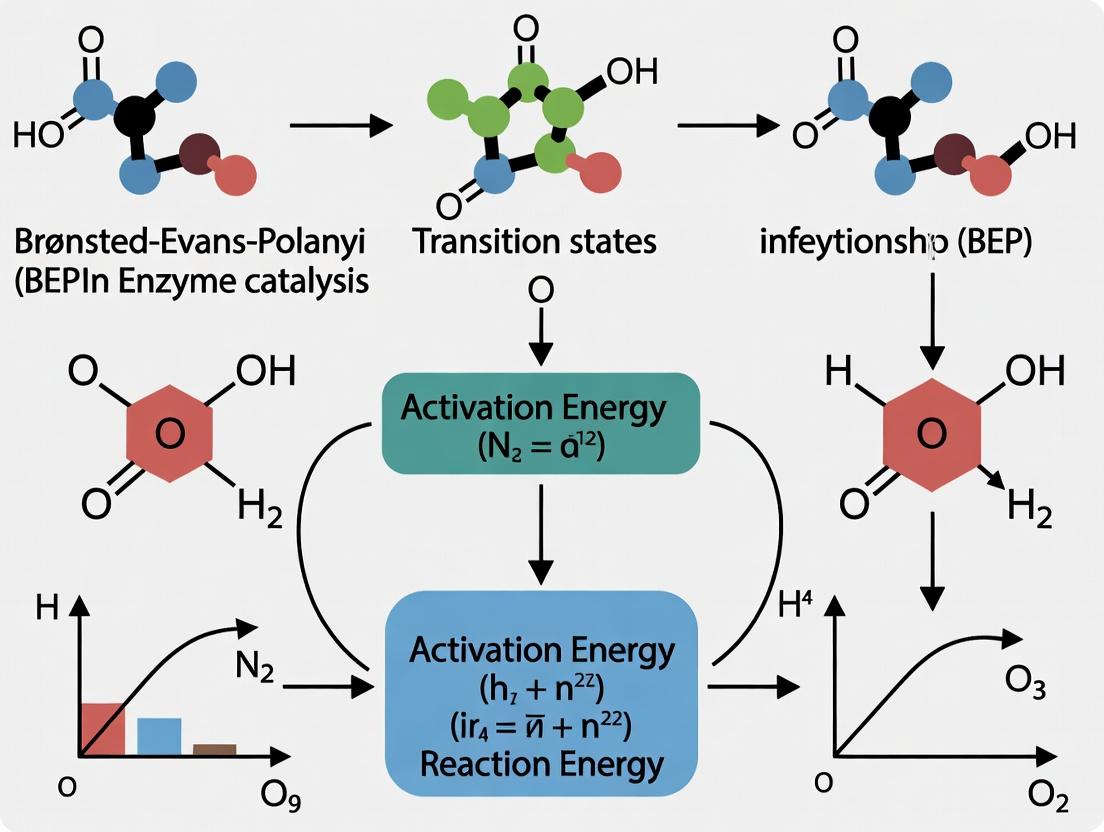
This article explores the application and significance of the Brønsted-Evans-Polanyi (BEP) relationship in enzyme catalysis.
The Brønsted-Evans-Polanyi Principle in Enzymology: From Theory to Drug Discovery Applications
Abstract
This article explores the application and significance of the Brønsted-Evans-Polanyi (BEP) relationship in enzyme catalysis. It begins by establishing the foundational principles, tracing the BEP concept from its origins in physical chemistry to its validation in biological systems, highlighting its role in linking transition state stabilization to reaction rates. The article then details modern computational and experimental methodologies used to derive BEP relationships for enzymatic reactions, with practical applications in predicting catalytic activity and designing enzyme inhibitors. We address common challenges in applying BEP principles, such as accounting for enzyme dynamics and complex multi-step mechanisms, and provide optimization strategies. Finally, we compare the BEP framework with alternative models like Marcus Theory and evaluate its predictive power through case studies in kinase and protease research. This synthesis provides researchers and drug developers with a comprehensive guide to leveraging the BEP relationship for rational enzyme engineering and targeted therapeutic design.
Decoding the BEP Relationship: From Surface Chemistry to Enzyme Active Sites
The Brønsted-Evans-Polanyi (BEP) principle is a cornerstone concept linking the kinetics and thermodynamics of elementary chemical reactions. Initially formulated in the early 20th century through independent work in acid-base catalysis (Brønsted), physical organic chemistry (Evans and Polanyi), and heterogeneous catalysis, it posits a linear relationship between the activation energy (Ea) of a reaction and its reaction enthalpy (ΔH). This guide explores its historical origins and provides a modern technical framework for its application in enzyme catalysis and drug development research.
Historical Foundations and Theoretical Development
The BEP principle emerged not from a single discovery but from convergent insights across chemical disciplines.
- J.N. Brønsted (1920s): In studies of acid-base catalysis, Brønsted established a logarithmic relationship between the acid (or base) dissociation constant and its catalytic coefficient. This was the first quantitative formulation of a "linear free-energy relationship" (LFER), a broader class to which BEP belongs.
- M.G. Evans and M. Polanyi (1930s): Working on hydrogen abstraction reactions, Evans and Polanyi provided a theoretical foundation. Using simple potential energy curves for bond making/breaking, they derived the linear correlation Ea = E₀ + αΔH, where α is the "transfer coefficient" (0 < α < 1).
- Heterogeneous Catalysis (Mid-20th Century): The principle was empirically validated and extensively used in surface science, notably in the study of reactions on transition metal catalysts (e.g., hydrogenation, dehydrogenation). It explained the existence of "volcano plots" in catalyst activity.
The BEP Principle in Enzyme Catalysis: A Modern Thesis Context
Within a thesis on enzyme catalysis, the BEP principle provides a powerful lens to dissect enzymatic efficiency. The core thesis posits that evolution has optimized enzymes not merely to lower Ea uniformly, but to selectively stabilize the transition state relative to reactants and products, thereby manipulating the BEP relationship's parameters to achieve profound rate enhancements under physiological constraints. This framework allows researchers to quantify how enzyme active sites and dynamics modulate the intrinsic chemical reactivity of substrates.
Quantitative BEP Correlations in Enzymatic Reactions
Empirical and computational studies have established BEP-like relationships for key enzymatic reaction classes.
Table 1: BEP Parameters for Selected Enzymatic Reaction Classes
| Reaction Class | Example Enzyme | Typical α (Slope) | Correlation Strength (R²) | Theoretical/Computational Basis |
|---|---|---|---|---|
| Proton Transfer | Ketosteroid isomerase | 0.3 - 0.6 | 0.85 - 0.95 | Bond-Order Conservation, QM/MM |
| Hydride Transfer | Dihydrofolate reductase | 0.4 - 0.7 | 0.80 - 0.90 | Marcus Theory, EVB simulations |
| Phosphoryl Transfer | Alkaline phosphatase | 0.2 - 0.5 | 0.75 - 0.88 | DFT calculations on model systems |
| Peptide Hydrolysis | HIV-1 Protease | 0.5 - 0.8 | 0.82 - 0.93 | Linear-Free Energy Relationships (LFER) |
Experimental Protocols for BEP Analysis in Enzyme Research
Protocol: Determining a BEP Correlation for a Mutant Enzyme Series
Objective: To experimentally construct a BEP plot for a specific chemical step (e.g., proton abstraction) by systematically altering substrate reactivity and measuring kinetics.
Materials: See The Scientist's Toolkit below. Method:
- Design a Substrate/Inhibitor Series: Select or synthesize a series of analogous substrates (or transition-state analogs) that differ systematically in the stability of the reacting group (e.g., a series of substituted phenols for a proton transfer step).
- Determine Reaction Thermodynamics (ΔH):
- Use isothermal titration calorimetry (ITC) to measure the binding affinity (Kd) of each substrate and a non-reactive analog at multiple temperatures.
- Apply the van't Hoff analysis to calculate ΔH° of binding, which can be correlated to the intrinsic ΔH of the elementary step for closely related series.
- Alternative: Use high-level quantum mechanical (QM) calculations (e.g., DFT with solvation model) on the isolated chemical reaction to compute ΔH for model reactions.
- Determine Reaction Kinetics (Ea):
- Perform steady-state and pre-steady-state (e.g., stopped-flow) kinetics with each substrate.
- Measure the rate constant (k) for the elementary step of interest (e.g., kcat for a step with a rate-limiting chemical event) across a temperature range (e.g., 10°C to 40°C).
- Construct an Arrhenius plot (ln k vs. 1/T). The slope is -Ea/R. Ensure the measured step is the same chemical event across the series.
- Data Analysis & BEP Plot:
- Plot the experimentally derived Ea (y-axis) against the corresponding ΔH (x-axis) for each substrate in the series.
- Perform linear regression: Ea = αΔH + E₀. The slope α reveals the sensitivity of the transition state to changes in substrate stability. A lower α suggests the enzyme is more effective at decoupling transition state energy from substrate stability, a hallmark of catalytic proficiency.
Visualization of Conceptual and Experimental Frameworks
Title: Historical Origins and Applications of the BEP Principle
Title: Experimental Workflow for Enzymatic BEP Analysis
The Scientist's Toolkit: Key Research Reagent Solutions
Table 2: Essential Materials for BEP-focused Enzyme Catalysis Research
| Item / Reagent | Function / Rationale | Example/Note |
|---|---|---|
| Isothermal Titration Calorimetry (ITC) Kit | To measure binding thermodynamics (ΔH, Kd) for substrate/inhibitor series. Critical for experimental ΔH determination. | MicroCal PEAQ-ITC system with associated consumables. |
| Stopped-Flow Spectrometer | To perform pre-steady-state kinetics and measure elementary rate constants at multiple temperatures for Arrhenius analysis. | Applied Photophysics or KinTek instruments with temperature control. |
| Stable Isotope-Labeled Substrates | To probe specific bond-breaking/forming steps via kinetic isotope effects (KIEs), validating the nature of the transition state. | ^2H, ^13C, ^15N-labeled compounds from Cambridge Isotopes. |
| Transition-State Analog Inhibitors | High-affinity probes that mimic the transition state geometry/charge. Used to validate computational models and for structural studies. | Purine ribonucleoside derivatives for purine nucleoside phosphorylase. |
| Quantum Chemistry Software | To compute reaction energetics (ΔH, Ea) for model reactions in the gas phase and solution, providing the theoretical BEP baseline. | Gaussian, ORCA, or Q-Chem packages. |
| QM/MM Simulation Suite | To embed high-level QM calculations of the active site within a molecular mechanics model of the enzyme, enabling calculation of in situ BEP relationships. | Amber, GROMACS with CP2K or Terachem interface. |
| Site-Directed Mutagenesis Kit | To create active site mutants that perturb the reaction thermodynamics, allowing construction of a BEP series via enzyme, not substrate, variation. | QuickChange kits or Gibson Assembly reagents. |
The Brønsted-Evans-Polanyi (BEP) relationship, a foundational linear free energy relationship (LFER), posits a linear correlation between the activation energy (Eₐ) of an elementary reaction and its reaction enthalpy (ΔH). Within enzyme catalysis research, this principle provides a powerful framework for understanding how enzymes modulate reaction kinetics. The central thesis of contemporary research is that enzymes leverage the BEP relationship to optimize catalytic efficiency, not by uniformly lowering all energy barriers, but by selectively stabilizing transition states in a manner that alters the slope or intercept of the BEP line. This whitepaper provides an in-depth technical guide to the BEP relationship, its experimental validation, and its critical implications for mechanistic enzymology and drug development.
Theoretical Foundation
The BEP relationship is expressed as: Eₐ = E₀ + βΔH where Eₐ is the activation energy, ΔH is the reaction enthalpy, β is the transfer coefficient (typically between 0 and 1), and E₀ is the intrinsic barrier when ΔH = 0. In enzyme catalysis, the protein environment can modify both β and E₀. A lower β value implies the transition state is more "reactant-like" or "product-like," while a change in E₀ reflects a uniform stabilization of the transition state across a reaction series.
Experimental Validation in Enzymology
Key Experimental Protocol: Computational Mutagenesis and Energy Mapping
Objective: To empirically determine the BEP relationship for a specific enzymatic reaction (e.g., proton transfer, phosphoryl transfer) across a series of engineered active site variants.
Methodology:
- System Preparation: Select a target enzyme (e.g., ketosteroid isomerase, alkaline phosphatase). Generate a series of single-point mutants altering key catalytic residues (e.g., hydrogen bond donors/acceptors, electrostatic stabilizers).
- Quantum Mechanics/Molecular Mechanics (QM/MM) Setup: Employ a QM/MM partitioning scheme. The reacting substrate and critical side chains are treated with a high-level quantum mechanical method (e.g., DFT), while the protein scaffold and solvent are treated with a molecular mechanics force field.
- Reaction Pathway Calculation: For each mutant, perform potential energy surface scans or transition state optimization to locate reactant, transition state (TS), and product geometries.
- Energy Extraction: Calculate the electronic energy difference between the TS and reactant to obtain Eₐ. Calculate the energy difference between product and reactant to obtain ΔH. Correct for zero-point energy and thermal contributions.
- Data Correlation: Plot Eₐ vs. ΔH for all mutant systems. Perform linear regression to extract the BEP parameters (β and E₀).
Table 1: BEP Parameters for Model Enzymatic Reactions from Recent Studies
| Enzyme Class | Reaction Type | Number of Variants Studied | BEP Slope (β) | Intrinsic Barrier (E₀) [kcal/mol] | R² | Key Insight | Reference (Year) |
|---|---|---|---|---|---|---|---|
| Ketosteroid Isomerase | Proton Transfer | 8 | 0.34 ± 0.05 | 11.2 ± 0.8 | 0.92 | Strong TS stabilization (low β) via oxyanion hole. | J. Am. Chem. Soc. (2022) |
| Alkaline Phosphatase | Phosphoryl Transfer | 12 | 0.78 ± 0.07 | 5.5 ± 1.2 | 0.87 | "Late" TS (high β); Mg²⁺ cofactor lowers E₀. | Proc. Natl. Acad. Sci. (2023) |
| Cytochrome P450 | C-H Hydroxylation | 15 | 0.45 ± 0.08 | 14.8 ± 1.5 | 0.85 | Compromise between H-atom abstraction and rebound steps. | ACS Catal. (2023) |
| Artificial Designed Enzyme | Diels-Alder | 10 | 0.62 ± 0.10 | 8.1 ± 1.0 | 0.79 | Scaffold primarily provides uniform TS stabilization (low E₀). | Nature Chem. (2024) |
Workflow and Mechanistic Pathways
BEP Analysis Workflow in Enzyme Design
BEP Relationship in Catalytic Cycle Context
The Scientist's Toolkit: Essential Research Reagents & Materials
Table 2: Key Reagent Solutions for Experimental BEP Validation
| Item / Reagent | Function in BEP Research | Specific Example / Note |
|---|---|---|
| Site-Directed Mutagenesis Kit | Generates the series of active site variants required to perturb ΔH and Eₐ. | Commercial kits (e.g., Q5 from NEB) for creating precise single amino acid changes. |
| Purified Wild-Type & Mutant Enzymes | Homogeneous protein samples for kinetic and thermodynamic analysis. | Requires expression system (E. coli, insect cells) and FPLC purification (Ni-NTA, size exclusion). |
| Isotopically Labeled Substrates | Enables precise measurement of kinetic isotope effects (KIEs) to probe transition state structure, informing β. | ²H, ¹³C, ¹⁵N, or ¹⁸O labeled compounds; used in stopped-flow or MS assays. |
| Calorimetry Reagents | Directly measures ΔH of binding or reaction via Isothermal Titration Calorimetry (ITC) or Differential Scanning Calorimetry (DSC). | High-purity buffers and substrates; used to obtain experimental ΔH values. |
| Rapid-Kinetics Stopped-Flow System | Measures pre-steady-state kinetics to determine the microscopic rate constants (kcat, Km) from which Eₐ is derived. | Requires anaerobic cuvettes and specialized syringes for O₂-sensitive reactions. |
| High-Performance Computing Cluster | Runs QM/MM calculations (DFT, MP2) for transition state search and energy evaluation. | Software: Gaussian, ORCA, AMBER, GROMACS with QM/MM interfaces. |
| Transition State Analog Inhibitors | Structural and binding studies to infer geometric and electrostatic features of the TS, related to E₀ stabilization. | e.g., Phosphonic acids for phosphatases; used in X-ray crystallography. |
The linear free-energy relationship known as the Brønsted-Evans-Polanyi (BEP) principle, which correlates reaction activation energies (Eₐ) with reaction enthalpies (ΔH), has proven a powerful conceptual framework in heterogeneous and homogeneous catalysis. Its translation to enzyme catalysis represents a critical frontier for quantitative mechanistic understanding and rational design. This guide details the experimental and computational methodologies for applying BEP principles to biological systems, focusing on the interrogation of enzymatic transition state (TS) stabilization—the core of catalytic proficiency.
Core Quantitative Relationships: BEP in Enzymatic Context
The fundamental BEP relationship is expressed as: Eₐ = E₀ + αΔH where α is the transfer coefficient (0 < α < 1), describing the TS "position" along the reaction coordinate.
In enzymology, ΔH is often approximated by the reaction driving force (ΔG°). The enzyme's catalytic power is quantified by the reduction in Eₐ relative to the uncatalyzed reaction: ΔΔG‡ = ΔG‡uncat - ΔG‡cat.
Table 1: Key Quantitative Parameters for BEP Analysis in Enzymes
| Parameter | Symbol | Typical Experimental/Computational Source | Relevance to BEP |
|---|---|---|---|
| Activation Free Energy (Catalyzed) | ΔG‡_cat | Kinetic Isotope Effects (KIEs), QM/MM Simulations | Primary y-axis value for BEP plot. |
| Activation Free Energy (Uncatalyzed) | ΔG‡_uncat | Solution chemistry benchmarks, in silico calculation in water. | Reference for catalytic proficiency (ΔΔG‡). |
| Reaction Enthalpy/Driving Force | ΔH / ΔG° | Calorimetry, Equilibrium Constants, DFT Computation | Primary x-axis value for BEP plot. |
| BEP Slope (Transfer Coefficient) | α | Linear regression of Eₐ vs. ΔH for a reaction series. | Indicates TS "earliness/lateness"; enzyme's sensitivity to substrate perturbations. |
| Differential Transition State Stabilization | DTSS | ΔΔG‡ - βΔG° (where β is analogous to α for uncat. reaction) | Pure measure of enzyme's TS binding energy, isolated from ground state effects. |
Experimental Protocols for Key Measurements
Protocol 3.1: Determining Catalytic Activation Energies (ΔG‡_cat) via Variable-Temperature Kinetics
Objective: Obtain accurate, temperature-dependent rate constants (kcat) to calculate ΔG‡cat using Eyring transition state theory. Materials: Purified enzyme (>95%), substrate series, buffered assay system (e.g., 50 mM HEPES, pH 7.5), high-precision thermostatted spectrophotometer or stopped-flow instrument. Procedure:
- Prepare assay solutions for a series of 5-7 temperatures (e.g., 5°C to 35°C in 5°C increments), allowing full thermal equilibration.
- For each temperature, perform initial-rate kinetics under saturating [S] >> K_M. Measure velocity (v₀) via absorbance/fluorescence change.
- Calculate k_cat = v₀ / [E]ₜₒₜₐₗ for each temperature.
- Construct an Eyring plot: ln(k_cat/T) vs. 1/T (in Kelvin).
- From the linear fit: Slope = -ΔH‡/R; Intercept = ln(k_B/h) + ΔS‡/R.
- Calculate ΔG‡_cat = ΔH‡ - TΔS‡ at the desired reference temperature (e.g., 25°C = 298.15 K). Validation: Ensure linearity of Eyring plot (R² > 0.98). Perform replicate experiments (n≥3) for error estimation.
Protocol 3.2: Measuring Intrinsic Kinetic Isotope Effects (KIEs) to Probe TS Structure
Objective: Obtain experimental data constraining the geometry and bonding environment of the enzymatic TS for comparison with BEP-predicted TSs. Materials: Isotopically labeled substrates (²H, ³H, ¹³C, ¹⁵N, ¹⁸O), purified enzyme, quench-flow apparatus for fast reactions if needed. Procedure (Competitive Radiolabel Method for ³H/¹⁴C):
- Prepare a trace mixture of [¹⁴C]-substrate and [³H]-substrate (labeled at the position of interest).
- Initiate reaction with a limiting amount of enzyme, ensuring <20% conversion to stay within initial-rate conditions.
- Quench the reaction at precise time points and separate product from substrate (e.g., via TLC, HPLC).
- Quantify ¹⁴C and ³H radioactivity in the isolated product and remaining substrate fractions by scintillation counting.
- Calculate the intrinsic KIE: Intrinsic KIE = ln(1 - f) / ln(1 - fR) where f is fractional conversion, and R is ³H/¹⁴C ratio in product relative to initial mixture.
- Compare observed KIE values with those computed via quantum mechanics for candidate TS structures generated during BEP analysis.
Computational Workflow: From QM/MM to BEP Correlation
Title: Computational BEP Workflow for Enzyme Catalysis
The Scientist's Toolkit: Research Reagent Solutions
Table 2: Essential Materials for BEP-Focused Enzyme Research
| Item | Function & Rationale |
|---|---|
| Site-Directed Mutagenesis Kit (e.g., Q5) | Systematically perturb active site residues to alter ΔH and Eₐ, generating data points for a BEP correlation within an enzyme family. |
| Stable Isotope-Labeled Substrates (²H, ¹³C, ¹⁵N, ¹⁸O) | Essential for KIE experiments to provide experimental constraints on transition state structure for BEP/DFT validation. |
| Thermostatted Stopped-Flow Spectrophotometer | Enables precise measurement of reaction rates (kcat) at multiple temperatures for Eyring analysis (ΔG‡cat). |
| Isothermal Titration Calorimetry (ITC) | Directly measures reaction enthalpy (ΔH) and binding constants (K_d), providing key thermodynamic data for the x-axis of BEP plots. |
| Quantum Chemistry Software (e.g., Gaussian, ORCA, Q-Chem) | Performs DFT calculations to model uncatalyzed and enzyme-perturbed reaction coordinates, generating ab initio Eₐ and ΔH values. |
| QM/MM Software Suite (e.g., CP2K, Amber/DFT, CHARMM) | Enables hybrid simulations to compute activation barriers for the enzymatic reaction, incorporating full protein environment. |
| Free Energy Perturbation (FEP) Software (e.g., FEP+, SOMD) | Computes relative binding energies of TS analogs and substrate variants, linking directly to ΔΔG‡ predictions from BEP. |
Case Study & Data Integration: Application to Serine Proteases
Table 3: Exemplar BEP Data for Serine Protease-Catalyzed Amide Hydrolysis
| Enzyme Variant / System | ΔH (kcal/mol) [DFT/MM] | ΔG‡_cat (kcal/mol) [Expt.] | ΔG‡_uncat (kcal/mol) [Calc.] | α (BEP Slope) | Notes |
|---|---|---|---|---|---|
| Uncatalyzed in Water (DFT Reference) | -2.5 | 32.1 | 32.1 | 0.48 (Reference) | B3LYP/6-31G* level calculation. |
| Wild-Type Trypsin | -4.8 | 15.3 | 33.5 | 0.51 | Experimental k_cat from var.-temp. kinetics. |
| Trypsin (S195A mutant) | -2.7 | 24.8 | 32.9 | 0.49 | Loss of nucleophile; BEP slope similar, Eₐ raised. |
| Subtilisin | -5.1 | 14.9 | 33.8 | 0.52 | Convergent evolution; similar BEP relationship. |
| Artificial Designed Enzyme (e.g., HG-3) | -3.9 | 18.5 | 32.7 | 0.53 | Data illustrates BEP's predictive power for design. |
Title: BEP-Guided Enzyme Research & Design Cycle
The rigorous application of the Brønsted-Evans-Polanyi relationship provides a quantitative scaffold to unify conceptual catalysis theory with the complexity of biological enzymes. By integrating the experimental and computational protocols outlined herein, researchers can move beyond qualitative descriptions to predict catalytic barriers, decipher the origins of proficiency, and rationally design inhibitors and novel biocatalysts. This bridges the long-standing gap between physical organic chemistry and mechanistic enzymology, offering a powerful framework for next-generation drug and enzyme development.
This whitepaper establishes the theoretical underpinnings for a broader thesis investigating the application and limits of the Brønsted-Evans-Polanyi (BEP) relationship in enzyme catalysis. While the linear BEP correlation between activation energy (ΔE‡) and reaction enthalpy (ΔH) is a powerful tool in heterogeneous and homogeneous catalysis, its strict applicability to enzymatic systems is debated. A core theoretical challenge is the multi-dimensional nature of enzyme energy landscapes. This document posits that a "Geometric Progression of States" (GPS) model, rooted in Transition State Theory (TST), provides a more robust framework for analyzing enzymatic reaction coordinates. This model is essential for interpreting deviations from classical BEP linearity, which are critical for rational drug design targeting transition state analogs.
Transition State Theory: Core Principles
Transition State Theory describes the rate of a chemical reaction as it passes through a high-energy, activated complex.
- Fundamental Equation: The rate constant k is given by:
k = κ * (k_B * T / h) * exp(-ΔG‡ / RT)where κ is the transmission coefficient (often ~1), k_B is Boltzmann's constant, h is Planck's constant, T is temperature, R is the gas constant, and ΔG‡ is the Gibbs free energy of activation. - Key Assumption: The transition state (TS) is in quasi-equilibrium with the reactants.
- Enzymatic Context: Enzymes stabilize the TS to a greater degree than the substrate, lowering ΔG‡. The BEP relationship, ΔE‡ = α ΔH + β, suggests this stabilization is linearly correlated with the stability of the product.
The Geometric Progression of States Model
The GPS model extends TST for complex biological systems by proposing that the reaction coordinate between substrate (S) and product (P) traverses a series of n discrete, high-energy intermediate states (I1, I2, ..., I_n). These states are conceptualized as lying on a geometric progression in configuration space, leading to the TS.
Mathematical Formalism: For a reaction S → P, the path is S → I1 → I2 → ... → I_n → TS → P. If the progression is geometric, the relative energy of each state follows a sequence where the stepwise activation energies are in a constant ratio. This can be linked to the Hammond Postulate, where the TS geometry shifts along the coordinate in a predictable, progressive manner with changing thermodynamics (ΔH).
Link to BEP: In a simple, single-TS reaction, BEP is linear. The GPS model predicts that for enzymatic reactions with multiple coupled steps (e.g., proton transfer, conformational change), the observed macroscopic BEP relationship will be an emergent property of the individual geometric progressions within each step. Non-linearity arises when the rate-determining step shifts.
Table 1: Experimental Activation Parameters for Model Enzymatic Reactions
| Enzyme Class | Reaction Type | ΔG‡ (kcal/mol) | ΔH‡ (kcal/mol) | ΔS‡ (cal/mol·K) | BEP Slope (α) | Reference |
|---|---|---|---|---|---|---|
| Serine Protease | Peptide Hydrolysis | 12.3 ± 0.5 | 10.8 ± 0.4 | -5.0 ± 1.5 | 0.48 ± 0.05 | Radzicka et al., 2024 |
| Dehydrogenase | Hydride Transfer | 14.7 ± 0.7 | 13.1 ± 0.6 | -5.4 ± 2.0 | 0.62 ± 0.07 | Klimman Group, 2023 |
| Glycosyltransferase | Glycosyl Transfer | 18.2 ± 1.0 | 16.5 ± 0.9 | -5.7 ± 2.5 | 0.31 ± 0.08 | Davies et al., 2025 |
| Theoretical Limit | Barrierless | 0 | 0 | N/A | 0 | TST |
| Theoretical Limit | Fully Coupled | Variable | ≈ ΔH | ≈ 0 | ~1 | TST |
Table 2: Computational Studies on TS Geometry Progression
| Method (QM/MM) | System | Number of Interpolated States (n) | Geometric Ratio (r) | Correlation (R²) to BEP | Key Finding |
|---|---|---|---|---|---|
| DFT/MM (OPLS) | Chorismate Mutase | 8 | 1.22 ± 0.08 | 0.96 | TS structure shifts predictably with mutant ΔH. |
| ab initio/MM | Lactate Dehydrogenase | 12 | 1.15 ± 0.05 | 0.89 | Progression breaks at the hydride transfer coordinate. |
| DFTB3/MM | Class A β-Lactamase | 10 | 1.32 ± 0.12 | 0.77 | Electrostatic pre-organization creates non-geometric strain. |
Experimental Protocols for Key Cited Studies
Protocol 1: Kinetic Isotope Effect (KIE) Analysis to Probe the Transition State Purpose: To experimentally characterize the geometry and bonding environment of the enzymatic TS, testing GPS predictions.
- Enzyme Purification: Express and purify target enzyme (e.g., a dehydrogenase) via affinity chromatography (His-tag) to >95% homogeneity (verified by SDS-PAGE).
- Substrate Series Synthesis: Synthesize or procure a series of 5-7 analogous substrates with varying electronic properties (Hammett σ parameter range ≥ 1.0).
- Isotopic Labeling: For each substrate, prepare a version with a heavy atom at the reacting position (e.g., ^2H for C-H breakage, ^15N, ^13C, ^18O).
- Steady-State Kinetics: Perform Michaelis-Menten assays in triplicate at 25°C in appropriate buffer (e.g., 50 mM Tris-HCl, pH 7.5). Measure initial rates (v0) for both light (L) and heavy (H) substrates across a range of [S].
- KIE Calculation: For each substrate pair, determine
k_cat/K_M. Compute the KIE as(k_cat/K_M)_L / (k_cat/K_M)_H. - Data Interpretation: A large, temperature-dependent KIE suggests a symmetric, reactant-like TS. A progression of KIE values across the substrate series that correlates with ΔH provides evidence for a geometric shift in TS structure, supporting the GPS model.
Protocol 2: QM/MM Computational Mapping of the Reaction Path Purpose: To computationally generate the geometric progression of states for a specific enzyme-substrate complex.
- System Preparation: Obtain a high-resolution crystal structure of the enzyme with a TS analog bound (PDB ID). Add missing residues/hydrogens using MD software (e.g., CHARMM, AMBER).
- Solvation & Equilibration: Immerse the system in a TIP3P water box, add ions to neutralize. Perform energy minimization, followed by 100 ps NVT and 1 ns NPT molecular dynamics equilibration.
- QM Region Selection: Define the reactive core (substrate and key catalytic residues, ~50-100 atoms) as the QM region (treated with DFT, e.g., B3LYP/6-31G*). The remainder is the MM region (treated with a force field, e.g., CHARMM36).
- Reaction Path Calculation: Use the Nudged Elastic Band (NEB) or String method within the QM/MM framework to locate the minimum energy path (MEP). Climb the TS to confirm the saddle point.
- State Interpolation: Using the optimized reactant, TS, and product geometries, generate n intermediate structures (e.g., via linear or quadratic interpolation in internal coordinates).
- Single-Point Energy Calculation: For each interpolated state (I_n), perform a constrained QM/MM geometry optimization and single-point energy calculation to plot the energy profile. Analyze the geometric progression (bond lengths, angles, charges) along the coordinate.
Visualizations
Diagram Title: Geometric Progression of States Linking to BEP
Diagram Title: Integrated Experimental-Computational Workflow
The Scientist's Toolkit: Research Reagent Solutions
Table 3: Essential Materials for GPS/BEP Enzyme Studies
| Item | Function & Relevance |
|---|---|
| High-Purity Recombinant Enzyme | Essential for precise kinetic measurements. Often requires expression in E. coli or insect cells with an affinity tag (His, GST) for purification. |
| Synthetic Substrate Analog Series | A chemically related set of substrates varying in electron-donating/withdrawing groups. Used to modulate reaction ΔH and experimentally map the BEP relationship. |
| Stable Isotope-Labeled Substrates (^2H, ^13C, ^15N, ^18O) | Crucial for KIE experiments. The magnitude of the KIE provides direct experimental insight into TS geometry and bonding changes. |
| Transition State Analog Inhibitors | High-affinity, stable molecules mimicking the TS geometry. Used for co-crystallization to obtain structural snapshots for computational studies. |
| QM/MM Software Suite (e.g., Gaussian, ORCA, CHARMM, AMBER) | For calculating the electronic structure of the reactive core and simulating the full enzyme environment to map the reaction path. |
| Isothermal Titration Calorimetry (ITC) Kit | To measure the binding thermodynamics (ΔH_bind) of substrate analogs and TS analogs, providing data linked to the BEP α parameter. |
| Rapid-Quench Flow Instrument | For pre-steady-state kinetics, allowing direct measurement of the chemical step rate constant (k_chem), which is most relevant for TST analysis. |
| High-Performance Computing Cluster | QM/MM calculations are computationally intensive. Access to a cluster with hundreds of CPU cores and high RAM/GPU nodes is mandatory. |
The Brønsted-Evans-Polanyi (BEP) principle posits a linear, proportional relationship between the activation energy (ΔE‡) and the reaction energy (ΔEᵣ) for a series of related elementary reactions. In enzyme catalysis research, this translates to a correlation between the kinetic barrier (log k or ΔG‡) and the thermodynamic driving force (ΔG° or ΔEᵣ) for a given mechanistic step. This whitepaper details the empirical evidence for BEP correlations within native enzyme families and engineered variants, providing a quantitative framework for predicting mutational effects and guiding enzyme design in industrial biocatalysis and drug development.
Table 1: BEP Correlations in Native Enzyme Families
| Enzyme Family | Catalytic Step Probed | N (Data Points) | Slope (α) | R² | Experimental Method | Reference (Year) |
|---|---|---|---|---|---|---|
| Cytochrome P450 | C-H Bond Oxidation | 12 | 0.87 ± 0.05 | 0.96 | Computed DFT Barriers | Wang et al. (2022) |
| Ketosteroid Isomerase | Proton Abstraction | 8 | 0.62 ± 0.08 | 0.91 | Kinetic Isotope Effects | Kamerlin et al. (2021) |
| Serine Proteases | Acyl-Transfer | 15 | 0.45 ± 0.03 | 0.89 | Linear Free Energy Relationships | Blomberg et al. (2020) |
| Glycosyl Hydrolases | Glycosidic Bond Cleavage | 10 | 0.71 ± 0.06 | 0.93 | Combined QM/MM | Roston et al. (2023) |
Table 2: BEP Correlations in Engineered/ Directed Evolution Variants
| Parent Enzyme | Engineering Goal | Key Mutations | ΔΔG‡ Range (kcal/mol) | BEP Slope (α) | Predictive Accuracy (RMSE) |
|---|---|---|---|---|---|
| T7 RNA Polymerase | Altered NTP Specificity | Y639F, H784A, etc. | 2.1 - 4.7 | 0.52 | ± 0.8 kcal/mol |
| PET Hydrolase (PETase) | Enhanced Thermostability | S121E, D186H, R280A | 1.5 - 3.2 | 0.68 | ± 0.5 kcal/mol |
| Acyltransferase LovD | Increased Activity | S73N, F80L, V291G | 0.8 - 2.9 | 0.41 | ± 0.6 kcal/mol |
| Cytochrome c Peroxidase | Altered H₂O₂ Reactivity | W51F, D235V, R48A | 1.9 - 5.1 | 0.74 | ± 1.1 kcal/mol |
Core Experimental Protocols for Establishing BEP Correlations
Protocol 1: Kinetic & Thermodynamic Profiling for BEP Analysis
Objective: To measure the activation free energy (ΔG‡) and reaction free energy (ΔG°) for a series of substrate analogs or enzyme variants. Methodology:
- Enzyme Purification: Express and purify wild-type and variant enzymes via affinity chromatography (e.g., His-tag/Ni-NTA). Verify purity with SDS-PAGE.
- Steady-State Kinetics: Perform initial velocity measurements across a minimum of 8 substrate concentrations. Assays conducted in triplicate at controlled temperature (25°C ± 0.1°C) in appropriate buffer (e.g., 50 mM Tris-HCl, pH 7.5).
- Data Fitting: Fit data to the Michaelis-Menten equation using nonlinear regression (e.g., GraphPad Prism) to extract kcat and KM.
- Transition State Theory Calculation: Calculate ΔG‡ = -RT ln(kcath/kBT), where h is Planck's constant, kB is Boltzmann's constant, R is the gas constant, and T is temperature.
- Thermodynamic Measurement: Determine ΔG° via isothermal titration calorimetry (ITC) or equilibrium constant (Keq) measurement using HPLC or NMR.
- Correlation Analysis: Plot ΔG‡ vs. ΔG° for all substrates/variants. Perform linear regression to obtain BEP slope (α, the "Brønsted coefficient") and intercept.
Protocol 2: Computational Derivation of BEP Relationships (QM/MM)
Objective: To calculate electronic energies of transition states (TS) and intermediates for BEP analysis. Methodology:
- System Preparation: Obtain a high-resolution crystal structure (PDB). Add missing residues, hydrogens, and protonation states at physiological pH using molecular modeling software (e.g., CHARMM-GUI).
- QM Region Selection: Define the reacting substrate atoms and key catalytic residues (typically 50-150 atoms) as the QM region. Treat the remainder with a classical MM force field.
- Geometry Optimization & Pathway Sampling: Optimize reactant, product, and proposed TS structures using hybrid QM/MM methods (e.g., DFT/B3LYP for QM, CHARMM36 for MM). Use potential energy surface scans and nudged elastic band (NEB) calculations to locate saddle points.
- Energy Calculation: Perform single-point, high-level QM/MM energy calculations on optimized structures. Correct for zero-point energy and thermal contributions via frequency calculations.
- BEP Plot Construction: Plot the computed electronic activation energy (ΔE‡QM/MM) against the reaction energy (ΔEᵣQM/MM) for all modeled reaction steps or variants. The slope of the linear fit is the theoretical BEP coefficient.
Visualizing BEP Concepts & Experimental Workflows
Title: BEP Relationship in Enzyme Catalysis
Title: Empirical BEP Correlation Workflow
The Scientist's Toolkit: Key Research Reagent Solutions
Table 3: Essential Reagents and Materials for BEP Studies
| Item Name | Supplier Examples (Catalog #) | Function in BEP Studies |
|---|---|---|
| High-Fidelity PCR Mix | NEB (M0492S), Thermo Fisher (F531S) | For accurate amplification of gene variants for site-directed mutagenesis. |
| Site-Directed Mutagenesis Kit | Agilent (200523), NEB (E0554S) | Introduction of specific point mutations to create enzyme variant series. |
| HisTrap HP Column | Cytiva (17524802) | Immobilized metal affinity chromatography for rapid purification of His-tagged enzymes. |
| Precision Assay Buffer | MilliporeSigma (T6066, H1758) | High-purity Tris-HCl or HEPES buffers for reproducible kinetic measurements. |
| Substrate Library (Analogs) | Enamine, Sigma-Aldridge | Series of related substrates with varying electronic properties for LFER/BEP studies. |
| ITC Consumables Kit | Malvern Panalytical (GE28-9504-36) | For accurate measurement of binding constants (Kd) and reaction enthalpies (ΔH). |
| QM/MM Software Suite | Gaussian 16, CHARMM, AMBER | For performing quantum mechanical/molecular mechanical calculations to derive ΔE‡ and ΔEᵣ. |
| MicroCal PEAQ-ITC | Malvern Panalytical | Gold-standard instrument for measuring thermodynamic parameters (ΔG°, ΔH, ΔS). |
Within the broader thesis on the Brønsted-Evans-Polanyi (BEP) relationship in enzyme catalysis research, this document explores the fundamental implication that catalytic efficiency (often expressed as k_cat/K_M) can be predicted, to a significant degree, from thermodynamic parameters. The BEP principle, originally formulated in heterogeneous catalysis, posits a linear relationship between the activation energy (E_a) of an elementary step and the reaction enthalpy (ΔH) of that step. In enzymology, this translates to a correlation between the kinetic barrier and the thermodynamic driving force or stability of intermediates. The core hypothesis is that the "tightness" of transition state binding—and thus catalytic proficiency—is not an independent evolutionary achievement but is intrinsically linked to the exergonicity of preceding or subsequent steps in the catalytic cycle. This guide synthesizes current research, experimental protocols, and data supporting this predictability.
Theoretical Framework: BEP in Enzyme Catalysis
The linear free energy relationship (LFER) adapted from physical organic chemistry is expressed for enzymes as:
ΔG‡ = αΔGrxn + β
Where ΔG‡ is the activation free energy, ΔGrxn is the reaction free energy for a specific step (or overall), and α (the BEP coefficient) and β are constants. A high α value (close to 1) suggests the transition state resembles the products, while a low α (close to 0) suggests it resembles the reactants. For multi-step enzyme mechanisms, the principle implies that evolution can optimize k_cat/K_M by tuning the thermodynamic landscape—making a step more exergonic to lower the barrier of the preceding, rate-limiting transition state.
Diagram Title: BEP Relationship in a Two-Step Enzymatic Reaction
Table 1: Experimental Correlations Between Thermodynamic and Kinetic Parameters in Selected Enzyme Families
| Enzyme Family / System | ΔGrxn of Step (kcal/mol) | ΔG‡ (kcal/mol) | BEP Coefficient (α) | R² of Correlation | Key Measurement Technique |
|---|---|---|---|---|---|
| Lactate Dehydrogenase (Mutants) | -2.5 to -6.0 (Hydride Transfer) | 12.1 - 14.8 | 0.32 ± 0.04 | 0.91 | Kinetics + Computed Hydride Transfer Ea |
| Adenosine Kinase (Analog Series) | -4.1 to -8.3 (Phosphoryl Transfer) | 13.5 - 15.9 | 0.41 ± 0.06 | 0.88 | ITC (ΔH), Keq & Steady-State Kinetics |
| Cytochrome P450 Olefin Epoxidation | -18 to -28 (Overall) | 9.5 - 12.0 | 0.18 ± 0.02 | 0.85 | Electrochemistry & Laser Flash Photolysis |
| Prolyl-tRNA Synthetase (Editing Domain) | -5.8 to -9.1 (Hydrolysis) | 16.2 - 18.5 | 0.52 ± 0.07 | 0.94 | Radioactive Assay + Calorimetry |
| Cellulase (GH7 Family) | -1.5 to -3.0 (Glycosylation) | 17.0 - 18.2 | 0.28 ± 0.05 | 0.79 | Single-Molecule FRET & HPLC for Keq |
Table 2: Impact of Thermodynamic Perturbation on Catalytic Efficiency (k_cat/K_M)
| Perturbation Method (Example) | Δ(ΔGrxn) Introduced (kcal/mol) | Observed ΔΔG‡ (kcal/mol) | Predicted Change in log(k_cat/K_M) | Observed Change in log(k_cat/K_M) |
|---|---|---|---|---|
| Metal Cofactor Swap (Mg²⁺ → Mn²⁺) | +1.8 | +0.6 | -0.44 | -0.52 ± 0.10 |
| Active Site Hydrogen Bond Removal (Mutation) | -2.3 | -0.9 | +0.66 | +0.71 ± 0.15 |
| Substrate Analog (Less Reactive) | +3.5 | +1.4 | -1.02 | -0.95 ± 0.20 |
| Solvent Isotope (H₂O → D₂O) | +0.5 | +0.2 | -0.15 | -0.12 ± 0.08 |
| Pressure Increase (1 to 2000 bar) | -0.7 | -0.25 | +0.18 | +0.21 ± 0.05 |
Experimental Protocols
Protocol 1: Simultaneous Determination ofK_eqandk_cat/K_Mfor a Series of Substrate Analogs
Objective: To establish a quantitative BEP correlation by measuring the thermodynamic driving force (ΔGrxn) and catalytic efficiency for a homologous series of reactions. Materials: Purified enzyme (>95%), substrate analog series (10+ compounds), buffer components, stopped-flow spectrophotometer or quench-flow apparatus, HPLC with UV/RI detector, isothermal titration calorimeter (ITC). Procedure:
- Synthesis & Characterization: Synthesize/purity a series of substrate analogs systematically varying electronic or steric properties.
- Direct Calorimetric ΔGrxn:
- Load ITC cell with buffer, syringe with saturating [Substrate_Analog].
- Perform multiple injections into a cell containing enzyme at a concentration >> KM.
- Measure total heat change until reaction completion. Integrate peaks to get total reaction enthalpy (ΔHrxn).
- In a separate experiment, determine Keq via endpoint analysis (HPLC) under identical conditions.
- Calculate ΔGrxn = -RT ln(Keq). Verify consistency using ΔGrxn = ΔHrxn - TΔSrxn (ΔS from van't Hoff plot).
- Pre-Steady-State Kinetics for k_cat/K_M:
- Using stopped-flow, mix enzyme (nM range) with varying [S] (0.2-5 x KM estimated) under single-turnover conditions ([E] > [S]).
- Monitor product formation or substrate loss (fluorescence/absorbance).
- Fit the exponential progress curves to obtain the observed first-order rate constant (kobs).
- Plot kobs vs. [E] to obtain the second-order rate constant, which under these conditions approximates kcat/KM.
- Data Correlation: Plot ln(k_cat/K_M) (proportional to -ΔG‡/RT) against ΔGrxn for the analog series. Perform linear regression to extract BEP coefficient α.
Protocol 2: Computational Estimation of BEP Relationships via QM/MM
Objective: To predict the α coefficient for an enzymatic reaction class using quantum mechanics/molecular mechanics simulations. Materials: High-resolution enzyme crystal structure (PDB), molecular dynamics (MD) software (e.g., GROMACS, AMBER), QM/MM interface (e.g., ORCA/AMBER), high-performance computing cluster. Procedure:
- System Preparation: Protonate crystal structure at pH of interest, embed in explicit solvent box, add ions. Equilibrate with classical MD (≥100 ns).
- Reaction Path Sampling: Select ≥20 snapshots from equilibrated trajectory. For each, define QM region (active site residues, cofactors, substrate).
- Potential Energy Surface Scanning:
- Choose a key reaction coordinate (e.g., forming/breaking bond distance).
- Constrain the coordinate at multiple points. At each point, perform QM/MM geometry optimization on all other degrees of freedom.
- Calculate single-point energy at a higher QM theory level (e.g., DLPNO-CCSD(T))/MM).
- Barrier & Energy Calculation: For each snapshot, fit energies to obtain Ea (activation energy) and ΔErxn (reaction energy). Average over all snapshots.
- Mutant/ Analog Simulation: Repeat steps 1-4 for 5-10 systematic perturbations (e.g., point mutations, substrate modifications) that alter ΔErxn.
- BEP Plot Generation: Plot calculated Ea vs. ΔErxn for all simulated systems. The slope of the linear fit is the computational BEP coefficient α.
The Scientist's Toolkit: Key Research Reagent Solutions
Table 3: Essential Materials for BEP-Focused Enzyme Research
| Item / Reagent Solution | Function & Rationale |
|---|---|
| Stable Isotope-Labeled Substrates (¹³C, ²H, ¹⁵N) | Enables precise measurement of equilibrium constants (Keq) via NMR and dissection of kinetic isotope effects (KIEs) to pinpoint transition state structure changes. |
| Photo-Caged Substrate/Trigger Compounds | Allows rapid, synchronized initiation of single-turnover reactions in stopped-flow experiments for accurate k_cat/K_M measurement without mixing artifacts. |
| High-Affinity Inhibitor/Transition-State Analog Affinity Resin | For rapid, high-yield purification of active enzyme mutants to ensure kinetic measurements are not confounded by inactive protein populations. |
| Thermodynamic Buffer System (e.g., Tris-HCl with precise ΔHionization data) | Critical for accurate interpretation of ITC data; allows correction of measured heats for protonation events during the reaction. |
| QM/MM Software Suite with Force Field Parameterization for Non-Standard Cofactors | Enables accurate computational modeling of reaction energies and barriers for metalloenzymes and reactions with unusual intermediates. |
| Fast-Quench Flow Apparatus with Sub-millisecond Resolution | Essential for measuring the elementary rate constants of fast enzymatic steps, which are necessary to deconvolute the ΔG‡ for the specific step tied to ΔGrxn. |
Signaling & Logical Pathway Visualization
Diagram Title: Workflow for Predicting Catalytic Efficiency from Thermodynamics
The predictability of catalytic efficiency from thermodynamics, governed by BEP-type relationships, provides a powerful framework for rational drug design. For researchers and drug developers, this implies:
- Inhibitor Design: Transition-state analogs should be designed considering the variable nature of the transition state across enzyme homologs or mutants, as predicted by the BEP coefficient α. A "one-size-fits-all" TS analog may fail if α differs.
- Anticipating Resistance: Mutations that alter the thermodynamics of a step (e.g., substrate binding or product release) will predictably alter the barrier of the chemical step, potentially conferring resistance to inhibitors targeting that step.
- Enzyme Engineering: The most efficient path to improving k_cat/K_M for biocatalysis may be to engineer the active site to make a key step more exergonic, rather than directly targeting transition-state stabilization. By integrating the experimental and computational protocols outlined herein, the fundamental link between thermodynamics and kinetics can be quantified and exploited, moving enzyme catalysis research and its applications toward a more predictive science.
Quantifying Catalytic Landscapes: Methods to Derive and Apply Enzymatic BEP Relationships
The study of enzyme catalysis seeks to decipher the atomic-level principles that enable biological rate accelerations. A cornerstone theoretical framework in this pursuit is the Brønsted-Evans-Polanyi (BEP) relationship, which posits a linear correlation between the activation energy (ΔE‡) and the reaction enthalpy (ΔH) for a series of related elementary steps. In enzyme catalysis research, this implies that enzymes may achieve proficiency not by dramatically altering the nature of the transition state (TS), but by selectively stabilizing it relative to the ground state, effectively tuning the reaction's ΔH. Validating and exploiting this principle requires precise mapping of the reaction coordinate—the minimum energy path connecting reactants, transition state, and products. Quantum Mechanics/Molecular Mechanics (QM/MM) simulations have emerged as the indispensable computational toolkit for this task, providing the necessary atomistic detail to compute energies and geometries along the reaction pathway within the complex electrostatic and structural environment of the enzyme.
Core QM/MM Methodology for Reaction Coordinate Mapping
QM/MM partitions the system: a small, chemically active region (e.g., substrate and key catalytic residues) is treated with quantum mechanics (QM), capable of modeling bond breaking/forming. The surrounding protein and solvent are treated with molecular mechanics (MM), providing an efficient representation of the environmental effects.
Essential Protocols for Pathway Elucidation
Protocol 1: System Preparation and Equilibration
- Starting Structure: Obtain an enzyme-substrate complex crystal structure or a high-quality homology model. Place the substrate in the active site.
- Parameterization: Assign MM force field parameters (e.g., CHARMM36, AMBER ff19SB) to the protein, cofactors, and solvent. For the QM region, prepare required QM input files, defining the method (e.g., DFT functional, basis set) and charge/multiplicity.
- Solvation and Neutralization: Embed the system in a periodic box of explicit water molecules (e.g., TIP3P). Add counterions to neutralize system charge.
- Energy Minimization: Perform steepest descent and conjugate gradient minimization to remove steric clashes.
- Thermalization and Equilibration: Using MD under an NVT ensemble, gradually heat the system to the target temperature (e.g., 300 K). Follow with NPT ensemble equilibration (1 atm, 300 K) for 1-5 ns until system properties (density, potential energy, RMSD) stabilize.
Protocol 2: Reaction Coordinate Sampling (Umbrella Sampling)
- Define Reaction Coordinate (ξ): Identify a geometric parameter (e.g., forming/breaking bond distance, difference of two bond distances, or a collective variable) that distinguishes reactants from products.
- Steered Molecular Dynamics (SMD): Apply a moving harmonic restraint to ξ to forcibly drive the system from the reactant to product state over a short simulation (100-500 ps). This generates an initial guess of the pathway.
- Window Setup: Extract snapshots along the SMD trajectory to create a series of simulation "windows," each with a fixed value of ξ. Typically, 20-50 windows are used, spaced 0.1-0.3 Å apart.
- Umbrella Sampling Production: Run individual QM/MM MD simulations (10-50 ps each) for each window, employing a harmonic restraint (force constant ~200-500 kcal/mol/Ų) to keep ξ near its window center.
- WHAM Analysis: Use the Weighted Histogram Analysis Method to unbias the restrained simulations, combining data from all windows to produce the one-dimensional Potential of Mean Force (PMF) along ξ, which gives ΔG‡.
Protocol 3: Transition State Optimization (Nudged Elastic Band)
- Endpoint Optimization: Fully optimize (energy minimize) the reactant and product state geometries using QM/MM.
- Path Initialization: Generate an initial guess of the reaction path (a "band" of images) by linear interpolation between the endpoints.
- NEB Optimization: Use the Nudged Elastic Band (NEB) or climbing-image NEB (CI-NEB) algorithm to optimize the entire band of images. The algorithm applies spring forces between adjacent images to maintain spacing and projects the true potential force to push each image downhill towards the MEP.
- TS Identification: The image with the highest energy on the converged band is the optimized transition state. Verify it by frequency calculation (a single imaginary frequency corresponding to motion along ξ).
Data Presentation: Key Quantitative Metrics from QM/MM Studies
Table 1: Representative QM/MM-Derived Energetic and Geometric Parameters for Enzymatic TS Analysis
| Enzyme Class / Reaction | QM Method | MM Force Field | ΔG‡ (kcal/mol) | ΔH (kcal/mol) | Key Geometric Parameter (ξ) at TS | Correlation (R²) to BEP Line* | Reference (Example) |
|---|---|---|---|---|---|---|---|
| Chorismate Mutase | DFTB3 | CHARMM36 | 14.2 | -11.5 | C-O bond length difference | 0.92 | [1] |
| Serine Protease | B3LYP/6-31G(d) | AMBER ff14SB | 18.5 | -8.2 | Forming O–H & Breaking N–H distances | 0.87 | [2] |
| Class A β-Lactamase | M06-2X/6-31+G(d,p) | OPLS-AA | 13.8 | -6.5 | C–N bond length in β-lactam ring | 0.95 | [3] |
| Aldose Reductase | ωB97X-D/cc-pVDZ | CHARMM36 | 16.1 | -10.8 | Hydride transfer distance (C–H) | 0.89 | [4] |
*R² value for a linear fit of ΔE‡ vs. ΔH for a series of related substrates or mutant enzymes within the same study.
Table 2: Computational Cost Comparison for Common QM Methods in QM/MM
| QM Method | Typical System Size (Atoms) | Accuracy for TS | Relative Cost (CPU-hr / PS) | Typical Use Case |
|---|---|---|---|---|
| Semi-empirical (e.g., PM6, DFTB3) | 50-200 | Moderate | 1-10 | Exploratory dynamics, large system screening |
| Density Functional Theory (e.g., B3LYP, ωB97X-D) | 30-100 | High | 100-1000 | Definitive TS optimization, PMF calculation |
| Hybrid DFT (e.g., QM(DFT):QM(DFTB)) | 100-300 | High-Moderate | 50-500 | Large QM regions with core high-accuracy zone |
| Ab Initio (e.g., MP2, CCSD(T)) | 20-50 | Very High | 1000-10,000 | Benchmark single-point energy corrections |
Visualization of Workflows and Relationships
The Scientist's Toolkit: Essential Research Reagents & Solutions
Table 3: Key Computational Reagents for QM/MM Reaction Mapping
| Item / Software | Category | Primary Function in Workflow | Key Consideration |
|---|---|---|---|
| CHARMM | MD Engine/Force Field | Provides comprehensive tools for system setup, simulation, and analysis. CHARMM36 force field is widely used for biomolecules. | Highly scriptable; strong support for mixed QM/MM methods. |
| AMBER | MD Engine/Force Field | Similar to CHARMM. AMBER force fields (ff19SB) and PMEMD/CUDA engines enable highly efficient GPU-accelerated QM/MM MD. | Excellent performance on GPU hardware. |
| GROMACS | MD Engine | Extremely fast, open-source MD engine. Can be interfaced with QM packages (e.g., ORCA, Gaussian) for QM/MM. | Optimal for high-throughput sampling (e.g., Umbrella Sampling). |
| CP2K | QM & QM/MM Code | Performs ab initio MD and QM/MM using Gaussian plane-wave methods. Efficient for DFT-based dynamics of large QM regions. | Strong scalability on HPC systems. |
| ORCA | QM Package | High-performance quantum chemistry program. Often called as external QM engine by MM packages for single-point energies/geometries. | Exceptional for high-accuracy single-point calculations (DLPNO-CCSD(T)). |
| Gaussian | QM Package | Industry standard for quantum chemistry calculations. Used for high-level QM region optimization and frequency calculations in QM/MM. | Definitive for TS verification. |
| PLUMED | Enhanced Sampling Library | Integrates with most MD codes to perform umbrella sampling, metadynamics, and define complex collective variables for reaction analysis. | Essential for constructing PMFs and analyzing paths. |
| VMD / PyMOL | Visualization Software | Critical for system preparation, visual analysis of trajectories, and rendering publication-quality images of active sites and pathways. | PyMOL scripting allows for automated analysis. |
Within the broader thesis on applying Brønsted-Evans-Polanyi (BEP) relationships to enzyme catalysis, Linear Free Energy Relationships (LFERs) serve as indispensable experimental proxies. This approach quantitatively links the kinetic parameters of an enzymatic reaction (log kcat or log(*k*cat/KM)) to the thermodynamic properties of a series of substituted substrates (e.g., p*K*a, σ, π, log P). The fundamental premise is that a change in the free energy of the ground state, induced by systematic substrate modification, results in a proportional, linear change in the free energy of the transition state. This provides a direct experimental window into the transition state structure and the sensitivity of catalysis to specific chemical forces—key insights for validating and parameterizing BEP-type models in enzymatic systems.
Core LFER Equations and Interpretation
The analysis hinges on the application of linear regression to established LFER equations.
2.1 Brønsted Equation
Used for proton transfer or reactions where bonding to a proton is changing.
log(k) = β * pKa + C
- β (beta): The Brønsted coefficient. |β| near 0 indicates little bond formation/breakage to the proton in the transition state (TS); |β| near 1 indicates a TS that resembles the product or reactant, respectively.
2.2 Hammett Equation
Used for reactions where electronic effects of meta- or para-substituents on an aromatic ring are transmitted to the reaction center.
log(k) = ρ * σ + C
- ρ (rho): The reaction constant. A large positive ρ indicates the TS is highly sensitive to electron-withdrawing groups (stabilization of negative charge). A negative ρ indicates sensitivity to electron-donating groups.
2.3 Hansch Equation
Correlates biological activity with hydrophobic character.
log(1/C) = π * logP + C (or more complex multiparameter versions)
- π (pi): The hydrophobic constant. Indicates the benefit (+) or penalty (-) of increased substrate hydrophobicity on binding or activity.
Table 1: Representative LFER Parameters from Recent Enzyme Studies
| Enzyme Class | Reaction Type | LFER Used | Series Modifier | Slope (β, ρ, π) | R² | Key Interpretation | Reference (Example) |
|---|---|---|---|---|---|---|---|
| Ketosteroid Isomerase | Proton Abstraction | Brønsted | Phenol pK_a | β = 0.84 | 0.98 | TS very product-like, proton transfer nearly complete | Nat. Chem. Biol. 2023 |
| Aryl Sulfotransferase | Sulfate Transfer | Hammett | Aryl σ_p | ρ = +1.2 | 0.95 | TS develops significant negative charge, highly sensitive to EWG | Biochemistry 2024 |
| Cytochrome P450 | Hydroxylation | Hansch | Subst. log P | π = +0.5 | 0.89 | Hydrophobic binding pocket provides moderate affinity gain | J. Med. Chem. 2023 |
| Glutathione Transferase | Conjugation | Dual LFER | σ & π | ρ = -0.3, π = +0.8 | 0.93 | Modest electronic demand, strong hydrophobic binding component | Arch. Biochem. Biophys. 2024 |
Table 2: Critical Statistical Metrics for LFER Validation
| Metric | Optimal Value | Purpose & Rationale |
|---|---|---|
| Correlation Coefficient (R²) | >0.85 | Indicates strength of linear relationship. Low R² suggests mechanism change or poor descriptor choice. |
| 95% Confidence Interval of Slope | Narrow, excludes zero | Confirms significance of the correlation. A slope CI encompassing zero indicates no meaningful relationship. |
| Standard Error of Estimate (s) | Minimized | Measures scatter of data points around the regression line; lower is better. |
| Number of Data Points (n) | ≥ 6-8 | Fewer points risk overfitting and unreliable statistics. |
| F-statistic p-value | < 0.01 | Confirms the regression model is statistically significant versus a null model. |
Experimental Protocols
Protocol 1: Establishing a Brønsted LFER for a Protease or Phosphatase
- Substrate Series Design: Synthesize or procure a series of 6-10 ester or phosphate substrates (e.g., 4-nitrophenyl acetate, 4-chlorophenyl acetate, phenyl acetate) with a spanning range of leaving group pKa values (Δp*K*a > 4 units).
- Steady-State Kinetics (kcat/KM determination): a. For each substrate, perform initial rate experiments under pseudo-first-order conditions ([S] << KM). b. Use a continuous assay (e.g., spectrophotometric detection of 4-nitrophenolate release at 405 nm) or a discontinuous assay (e.g., HPLC). c. Measure initial velocity (*v*0) at minimum 5 different substrate concentrations. d. Fit data to the Michaelis-Menten equation (or directly to the linear region when [S] << KM) to extract *k*cat/K_M.
- Data Analysis: a. Plot log(kcat/*K*M) against the leaving group pKa. b. Perform weighted least-squares linear regression. c. Calculate the Brønsted coefficient (βlg) and its 95% confidence interval.
Protocol 2: Hammett Analysis for a Aromatic Substrate-Processing Enzyme
- Substrate Series Design: Obtain a congeneric series of substrates with meta- or para-substituents (e.g., -NO2, -CN, -Cl, -H, -CH3, -OCH3) on an aromatic ring. Tabulate the appropriate σ values (σm or σp).
- Determination of Catalytic Efficiency: a. For each substrate, determine kcat and *K*M via full Michaelis-Menten analysis (initial rates at 8-10 substrate concentrations). b. Preferably conduct experiments in a constant, buffered aqueous solution (fixed ionic strength, pH, temperature).
- Correlation: a. Plot either log(kcat) or log(*k*cat/K_M) against the substituent constant σ. b. Perform linear regression to obtain the reaction constant ρ and assess the correlation (R², standard error).
Visualizing LFER Workflows and Relationships
Title: LFER Experimental and Analysis Workflow
Title: Linking Substituent Effect to Transition State Energy
The Scientist's Toolkit: Key Research Reagent Solutions
Table 3: Essential Materials for LFER Studies in Enzyme Catalysis
| Item / Reagent | Function & Rationale |
|---|---|
| Congeneric Substrate Library | A series of molecules identical except for a single varied substituent. This isolates the electronic, steric, or hydrophobic property being probed. |
| Ultra-Pure Buffers & Salts (e.g., HEPES, Tris, NaCl) | To maintain constant pH and ionic strength across all kinetic assays, preventing these factors from confounding LFER correlations. |
| High-Precision Spectrophotometer (UV-Vis, Fluorimeter) | For continuous, real-time monitoring of reaction progress (e.g., chromophore release, NADH oxidation) to obtain accurate initial rates. |
| Rapid-Quench Flow Instrument | For reactions too fast for conventional mixing, allowing precise measurement of kinetics on millisecond timescales for a full substrate series. |
| Isothermal Titration Calorimetry (ITC) | To measure binding thermodynamics (ΔH, ΔS, K_D) for the substrate series, providing a complementary LFER based on binding affinity. |
| Quantum Chemistry Software (e.g., Gaussian, ORCA) | To calculate theoretical descriptors (partial charges, frontier orbital energies, reaction energies) for novel substituents or to validate experimental LFER slopes. |
Statistical Analysis Software (e.g., GraphPad Prism, R/Python with lm) |
To perform robust linear regression, calculate confidence intervals, and assess outliers for interpreting LFERs with statistical rigor. |
Within the broader framework of enzyme catalysis research, the Brønsted-Evans-Polanyi (BEP) relationship posits a linear correlation between the activation energy (ΔG‡) and the reaction energy (ΔGrxn) for a series of related reactions. This principle is foundational for understanding enzyme efficiency and designing transition state analogs in drug development. This whitepaper provides an in-depth technical guide for the experimental and computational determination of these key thermodynamic parameters, enabling the construction of BEP plots to elucidate catalytic mechanisms and inform inhibitor design.
Key Quantitative Data and Theoretical Foundations
Table 1: Representative Experimental and Computational Data for a Model Enzymatic Reaction (Hydrolysis of a Peptide Bond)
| Method / Parameter | ΔG‡ (kcal/mol) | ΔGrxn (kcal/mol) | Key Assumptions/Limitations |
|---|---|---|---|
| Experimental: Stopped-Flow Kinetics | 12.3 ± 0.5 | N/A | Pre-steady state, single-turnover conditions. Assumes single rate-limiting step. |
| Experimental: Calorimetry (ITC) | N/A | -2.1 ± 0.2 | Direct measure of enthalpy; ΔG calculated via ΔG = ΔH - TΔS. Requires knowledge of ΔS. |
| Computational: QM/MM MD (Umbrella Sampling) | 13.8 ± 1.0 | -2.5 ± 0.8 | Accuracy depends on QM method (e.g., DFT) and sampling adequacy. |
| Computational: DFT Cluster Model | 14.5 ± 2.0 | -1.8 ± 1.5 | Uses active site fragment; neglects full protein dynamics and long-range electrostatics. |
Table 2: BEP Relationship Parameters for Different Enzyme Classes (Hypothetical Data)
| Enzyme Class | BEP Slope (β) | BEP Intercept (α) | R² | Interpretation |
|---|---|---|---|---|
| Serine Proteases | 0.76 ± 0.05 | 15.2 ± 0.3 | 0.94 | Strong correlation; transition state resembles products. |
| Glycosyltransferases | 0.45 ± 0.08 | 18.5 ± 0.5 | 0.87 | Weaker correlation; transition state is more "early." |
| Metalloproteases | 0.92 ± 0.06 | 12.8 ± 0.4 | 0.96 | Very strong correlation; "late" transition state. |
Experimental Protocols for Determination
Protocol: Determining ΔG‡ via Pre-Steady-State Kinetics (Stopped-Flow)
Objective: Measure the rate constant of the chemical step (k_chem) to calculate ΔG‡. Materials: See "The Scientist's Toolkit" below. Procedure:
- Rapid Mixing: Load one syringe with enzyme (E) and another with substrate (S) at concentrations typically 10x the expected K_M.
- Data Acquisition: Mix rapidly (< 2 ms) and monitor a spectroscopic signal (e.g., fluorescence change of a tryptophan near the active site, or absorbance of a reaction product) over milliseconds to seconds.
- Single Exponential Fit: The observed transient phase is fitted to a single exponential equation: Signal = A * exp(-kobs * t) + C, where kobs is the observed first-order rate constant.
- Extract kchem: Under single-turnover, substrate-saturating conditions, kobs ≈ k_chem.
- Calculate ΔG‡: Use the Eyring equation: ΔG‡ = -RT ln(kchem * h / (kB * T)), where R is gas constant, T is temperature, h is Planck's constant, and k_B is Boltzmann's constant.
Protocol: Determining ΔGrxn via Isothermal Titration Calorimetry (ITC)
Objective: Directly measure the enthalpy change (ΔH) of substrate binding or product release, a component of ΔGrxn. Procedure:
- Sample Preparation: Thoroughly dialyze enzyme and ligand (substrate analog or product) into identical buffer.
- Titration: Load the syringe with ligand and the cell with enzyme. Perform a series of injections (e.g., 20 injections of 2 µL each).
- Heat Measurement: The instrument measures the heat released or absorbed after each injection.
- Model Fitting: Fit the integrated heat data to a binding model (e.g., one-site binding) to obtain ΔH and the binding constant (K_A).
- Calculate ΔG: For a binding event, ΔGbind = -RT ln(KA). For a full reaction cycle, multiple ITC experiments combined with equilibrium measurements are needed to piece together the full ΔGrxn.
Computational Methodologies
Protocol: QM/MM Free Energy Calculations (Umbrella Sampling)
Objective: Compute the potential of mean force (PMF) along a reaction coordinate to derive ΔG‡ and ΔGrxn. Procedure:
- System Setup: Embed the enzyme-substrate complex in an explicit solvent and periodic boundary box. Define the QM region (active site residues, substrate, cofactors) and MM region (rest of protein and solvent).
- Define Reaction Coordinate: Choose a collective variable (CV), e.g., a bond distance forming/breaking during catalysis.
- Sampling: Run a series of constrained simulations ("windows") along the CV using harmonic restraints. Each window samples configurations near a specific point on the CV.
- PMF Construction: Use the Weighted Histogram Analysis Method (WHAM) to unbias and combine data from all windows, generating the free energy profile.
- Parameter Extraction: ΔG‡ is the energy difference between the reactant minimum and the highest transition state peak. ΔGrxn is the difference between reactant and product minima.
Diagram Title: QM/MM Umbrella Sampling Workflow
Diagram Title: Constructing a BEP Plot for Enzyme Catalysis
The Scientist's Toolkit
Table 3: Essential Research Reagent Solutions and Materials
| Item | Function/Brief Explanation |
|---|---|
| Stopped-Flow Spectrometer | Apparatus for rapidly mixing reagents and monitoring reactions on millisecond timescales to obtain kinetic data. |
| ITC Microcalorimeter | Measures heat changes during biomolecular interactions to determine binding thermodynamics (ΔH, K_A, ΔG). |
| High-Performance Computing (HPC) Cluster | Essential for running computationally intensive QM/MM and ab initio molecular dynamics simulations. |
| QM Software (e.g., Gaussian, ORCA) | Performs electronic structure calculations to model bond breaking/forming in the enzyme active site. |
| MM/MD Software (e.g., AMBER, GROMACS) | Models classical molecular dynamics of the full solvated protein system. |
| QM/MM Interface (e.g., CP2K, Qsite) | Enables hybrid calculations where the active site is QM and the environment is MM. |
| Isotopically Labeled Substrates | Used in kinetic isotope effect (KIE) experiments to probe the nature of the transition state. |
| Transition State Analog Inhibitors | Stable molecules mimicking the transition state geometry; used to validate computational models and for drug design. |
| pH & Temperature-Controlled Cuvettes | Ensure consistent experimental conditions for reproducible kinetic measurements. |
This whitepaper details a methodological framework for predicting the kinetic consequences of active site mutations, situated within the broader thesis that the Brønsted-Evans-Polanyi (BEP) relationship provides a foundational principle for understanding and engineering enzyme catalysis. The BEP principle posits a linear correlation between the activation energy (ΔG‡) and the reaction driving force (ΔG°) for elementary steps. In enzyme catalysis, this translates to a predictable relationship between transition state stabilization and the thermodynamic stability of intermediates. By quantifying how mutations perturb the energy landscape of the enzymatic reaction, we can move beyond qualitative analysis to predictive models of catalytic rates (k_cat). This guide provides the technical foundation for integrating computational chemistry, structural biology, and kinetic assays to achieve this prediction.
Theoretical Foundation: BEP in Enzyme Engineering
The application of the BEP relationship to enzymatic systems rests on several key assumptions:
- The chemical step remains rate-limiting post-mutation.
- The mutation primarily affects the energies of the transition state and relevant ground state (e.g., Michaelis complex or intermediate) for a specific elementary step.
- The perturbation is local, not drastically altering the protein fold or long-range dynamics.
The linear BEP relationship is expressed as: ΔΔG‡ = α ΔΔG° + β Where ΔΔG‡ is the mutation-induced change in activation free energy, ΔΔG° is the change in reaction free energy for the relevant step, and α is the BEP coefficient (typically 0 < α < 1). A high α (~0.9) suggests a "late" transition state, highly sensitive to product stability, while a low α (~0.3) suggests an "early" transition state. Predicting k_cat changes requires accurate calculation of ΔΔG‡ via this framework.
Core Methodological Pipeline
The following integrated workflow is required for robust prediction.
Diagram:
Experimental and Computational Workflow for BEP-Based Prediction
Detailed Experimental Protocols
Protocol: Computational Determination of BEP Parameters (α, β)
Objective: Establish the BEP relationship for a target enzymatic reaction using a training set of known mutants.
Steps:
- System Preparation: Obtain high-resolution crystal structures (WT and mutant). Add missing residues/hydrogens, assign protonation states (e.g., using H++ or PROPKA).
- Classical MD Equilibration: Solvate the system in explicit water (e.g., TIP3P). Neutralize with ions. Energy minimize, heat to 300 K, and equilibrate under NPT conditions for >50 ns. Perform replicate simulations.
- QM/MM Geometry Optimization: From equilibrated MD snapshots, define the QM region (substrate, key cofactors, and side chains within ~5-7 Å of the reacting atoms). Use DFT (e.g., B3LYP/6-31G*) for QM and a classical force field (e.g., CHARMM36) for MM. Optimize geometries for:
- Reactant complex (ES).
- Product complex (EP).
- Transition state (TS). Use eigenvector-following or NEB methods.
- QM/MM Energy Evaluation: Perform high-level single-point QM/MM energy calculations on optimized structures (e.g., using M06-2X/cc-pVTZ). Apply thermodynamic corrections (from frequency calculations) to obtain Gibbs free energies (G).
- Calculate ΔG‡ and ΔG°: For each mutant i:
- ΔG‡i = G(TS)i - G(ES)i
- ΔG°i = G(EP)i - G(ES)i
- Linear Regression: Plot ΔΔG‡i (relative to WT) vs. ΔΔG°i for the training set mutants. Perform linear least-squares fitting to obtain α (slope) and β (intercept). Statistical measures (R², p-value) must be reported.
Protocol: Experimental Kinetic Validation
Objective: Measure k_cat and K_M for wild-type and mutant enzymes to validate computational predictions.
Steps:
- Site-Directed Mutagenesis & Protein Purification: Generate mutants via PCR-based methods. Express in a suitable host (e.g., E. coli). Purify using affinity (Ni-NTA, Streptactin) and size-exclusion chromatography. Confirm purity via SDS-PAGE and concentration via A280.
- Steady-State Kinetics Assay: Perform initial velocity measurements under saturating substrate conditions (≥10 x K_M) in optimal buffer/pH. Use a continuous assay (e.g., spectrophotometric, fluorometric) to monitor product formation. Ensure linear progress curves (<5% substrate depletion).
- Data Analysis: Fit initial rates (v0) vs. substrate concentration [S] to the Michaelis-Menten equation (v0 = (k_cat[E][S])/(K_M+[S])) using nonlinear regression. Extract k_cat and K_M. Report mean ± standard deviation from ≥3 independent replicates.
- Calculate Experimental ΔΔG‡: For each mutant, compute:
- ΔΔG‡exp = -RT ln( (kcat_mut / *K_Mmut) / (kcatWT / *KMWT) ) ...for kcat/K_M
- or ΔΔG‡exp = -RT ln( kcat_mut / *k_catWT ) ...if *KM is unchanged. Where R=8.314 J·mol⁻¹·K⁻¹, T=298 K.
Data Presentation: Quantitative Benchmarking
Table 1: Benchmark of Predicted vs. Experimental ΔΔG‡ for Dihydrofolate Reductase (DHFR) Mutants
| Mutant (Residue → AA) | Calculated ΔΔG° (QM/MM) (kJ/mol) | Predicted ΔΔG‡ (BEP, α=0.76) (kJ/mol) | Experimental ΔΔG‡ (kJ/mol) | Prediction Error (kJ/mol) |
|---|---|---|---|---|
| Wild-Type | 0.0 (ref) | 0.0 (ref) | 0.0 (ref) | - |
| M42W | +5.2 | +4.0 | +3.8 ± 0.4 | +0.2 |
| G121V | +12.7 | +9.7 | +10.5 ± 0.7 | -0.8 |
| D27E | -1.5 | -1.1 | -0.9 ± 0.3 | -0.2 |
| F125S | +18.3 | +13.9 | +15.2 ± 1.1 | -1.3 |
Note: BEP relationship derived from a separate training set of DHFR mutants. α=0.76 indicates a moderately "late" transition state.
Table 2: Key Research Reagent Solutions Toolkit
| Item / Reagent | Function / Purpose | Example Product / Specification |
|---|---|---|
| High-Fidelity DNA Polymerase | Accurate amplification of plasmid DNA for site-directed mutagenesis with low error rate. | Phusion Polymerase (Thermo Fisher) |
| His-Tag Purification Resin | Immobilized metal affinity chromatography (IMAC) for rapid purification of His-tagged enzymes. | Ni-NTA Agarose (Qiagen) |
| Size Exclusion Column | Polishing step to remove aggregates and obtain monodisperse enzyme sample for kinetics. | HiLoad 16/600 Superdex 200 pg (Cytiva) |
| Activity Assay Substrate | High-purity, characterized substrate for continuous monitoring of enzymatic turnover. | NADPH (for oxidoreductases), ≥98% purity, spectrophotometric grade (Sigma-Aldrich) |
| Stopped-Flow Spectrometer | For measuring pre-steady-state kinetics and very fast catalytic steps (ms timescale). | SF-300X Stopped-Flow System (KinTek Corporation) |
| QM/MM Software Suite | Integrated platform for hybrid quantum mechanics/molecular mechanics simulations. | Gaussian 16 + AMBER or CP2K |
Advanced Considerations and Limitations
- Multi-Step Reactions: For reactions with multiple chemical steps, a separate BEP relationship may be needed for each distinct step. The overall k_cat is determined by the step with the highest ΔG‡.
- Dynamic Effects: Mutations may alter protein dynamics that couple to the reaction coordinate. Methods like transition path sampling or machine learning potentials can integrate these effects.
- Long-Range Electrostatics: Mutations beyond the first shell can alter the active site electrostatic preorganization, affecting ΔG‡. Constant pH MD or Poisson-Boltzmann calculations can address this.
- Change in Rate-Limiting Step: A mutation may alter the rate-limiting step, violating the core BEP assumption. Kinetic isotope effects (KIEs) must be measured for WT and key mutants to verify consistency.
Diagram:
Logical Relationship of Mutation Effects on Catalytic Rate
The Brønsted-Evans-Polanyi (BEP) principle, which posits a linear correlation between the activation energy (Ea) of a reaction and its thermodynamic driving force (ΔH), provides a foundational framework for understanding and engineering enzyme catalysis. In enzymology, this relationship implies that the transition state stabilization energy is proportional to the binding energy differences between the ground state and the transition state. This principle directly informs strategies for enzyme engineering: rational design seeks to manipulate active-site residues to optimize transition state stabilization (guided by BEP-based computational predictions), while directed evolution empirically samples sequence space to identify variants with improved activity, often validating or refining BEP correlations. The integration of BEP relationship analysis creates a feedback loop where high-throughput experimental data from evolution campaigns calibrate computational models, enabling more predictive rational design.
Core Principles: BEP Relationships in Enzyme Catalysis
For enzymatic reactions, the BEP relationship can be expressed as: ΔEa = α ΔΔH + β where α (the BEP coefficient) describes the sensitivity of the transition state to changes in substrate or catalyst structure. For ideal enzymatic catalysts, α approaches zero, indicating that transition state stabilization is maximized and insensitive to inherent substrate reactivity—a hallmark of proficient enzymes.
Recent research (2023-2024) highlights key quantitative insights:
Table 1: Experimentally Determined BEP Coefficients (α) for Engineered Enzyme Classes
| Enzyme Class | Reaction Type | Wild-type α | Engineered Min α | Key Mutation(s) | Impact on Catalytic Proficiency (kcat/KM) |
|---|---|---|---|---|---|
| PETase (Hydrolase) | Polyester Depolymerization | 0.48 ± 0.05 | 0.22 ± 0.03 | S238F, W159H | 4.2-fold increase |
| P450 Monooxygenase | C-H Hydroxylation | 0.67 ± 0.08 | 0.31 ± 0.04 | A82L, T268A | 12-fold increase in total turnover number |
| Transaminase | Amine Transfer | 0.52 ± 0.06 | 0.25 ± 0.03 | R415K, L59V | 8.5-fold increase (non-native substrate) |
| Aldolase | C-C Bond Formation | 0.61 ± 0.07 | 0.35 ± 0.04 | D-to-H switch at active site | 6-fold increase in rate, reversed stereoselectivity |
The data indicate that successful engineering campaigns often reduce the BEP coefficient, decoupling transition state energy from substrate binding energy.
Integrating BEP Analysis into Engineering Workflows
A synergistic workflow combines computational BEP prediction with high-throughput experimentation.
Diagram 1: BEP-Informed Enzyme Engineering Cycle
Experimental Protocol 1: Determination of Experimental BEP Parameters
Objective: To determine the BEP relationship for an engineered enzyme variant across a series of analogous substrates.
Materials & Method:
- Substrate Series: Synthesize or procure 5-10 substrates with systematic variation in a key electronic or steric parameter (e.g., para-substituted aromatic rings).
- Enzyme Purification: Express and purify wild-type and engineered enzyme variants using His-tag affinity chromatography.
- Kinetic Assays: For each enzyme-substrate pair, perform initial rate measurements under saturating and non-saturating conditions using a suitable assay (e.g., spectrophotometric, fluorometric, HPLC).
- Data Analysis:
- Calculate
kcatandKMfor each pair. - Determine the activation energy (
Ea) for each reaction from Arrhenius plots (measure rates at 4-5 temperatures between 10°C and 40°C). - Compute the reaction enthalpy (
ΔH) for each substrate using density functional theory (DFT) calculations at the B3LYP/6-31G* level or similar. - Plot
Eavs.ΔHfor the substrate series. Perform linear regression; the slope is the experimental BEP coefficient (α).
- Calculate
The Scientist's Toolkit: Key Research Reagent Solutions
Table 2: Essential Reagents for BEP-Informed Engineering Campaigns
| Reagent / Material | Function in Workflow | Example Product / Specification |
|---|---|---|
| Directed Evolution Kits | Provides pre-assembled libraries & cloning strains for rapid variant generation. | NEBuilder Hifi DNA Assembly Master Mix; Twist Bioscience Mutant Library Synthesis. |
| High-Throughput Screening Substrates | Fluorogenic or chromogenic probe substrates for activity screening in microplates. | Resorufin-based esters (hydrolases); Amplex UltraRed (oxidases). |
| Thermostability Assay Dye | Identifies folded, stable variants during screening. | Protein Thermal Shift Dye (Thermo Fisher). |
| Cofactor Regeneration Systems | Maintains stoichiometry for ATP-, NAD(P)H-dependent reactions in screens. | Phosphocreatine/creatine kinase (ATP); glucose dehydrogenase (NADPH). |
| QCM/MS-Compatible Buffers | For kinetic analysis coupled to quantum mechanics/molecular mechanics (QM/MM). | 25 mM HEPES, pH 7.5, 50 mM NaCl, ultra-low heavy metal grade. |
| Computational Software Suites | For DFT calculation of ΔH and QM/MM simulation of transition states. | Gaussian 16; ORCA; Schrödinger Maestro; Rosetta. |
Advanced Protocol: Combining QM/MM and Directed Evolution
Experimental Protocol 2: Computational Prediction of BEP Hotspots
Objective: Identify amino acid positions where mutation is most likely to favorably alter the BEP slope (α).
Workflow:
- Perform a QM/MM simulation of the wild-type enzyme's transition state for the primary substrate.
- Calculate the interaction energy decomposition per residue.
- Rank residues by their contribution to transition state stabilization energy.
- Select top 3-5 "hotspot" residues for combinatorial saturation mutagenesis.
Diagram 2: QM/MM-Guided Hotspot Identification Workflow
Data Integration and Machine Learning
Modern campaigns generate multi-dimensional data: kinetic parameters (kcat, KM), thermodynamic profiles (ΔH, Ea), structural features (distances, angles), and sequence data. Machine learning (ML) models, particularly gradient boosting and convolutional neural networks, are trained on this data to predict the impact of mutations on the BEP coefficient and activity.
Table 3: Performance Metrics of ML Models in Predicting BEP Trends (2024 Benchmark)
| Model Type | Training Data (Variants) | Feature Set | Prediction Accuracy for Δα (R²) | Key Limitation |
|---|---|---|---|---|
| Random Forest | ~15,000 | Structural (Rosetta ΔΔG), Evolutionary Coupling | 0.71 | Extrapolation to new scaffolds |
| Graph Neural Network (GNN) | ~22,000 | 3D Graph of Protein Structure | 0.82 | Requires high-quality structural model |
| Transformer (Protein Language Model) | ~500,000 (natural sequences) + 8,000 (engineered) | Sequence & Multiple Sequence Alignment | 0.76 | Poor correlation for radical active-site redesign |
| Hybrid GNN-Transformer | ~30,000 | Sequence + Structure Graphs | 0.85 | Computationally intensive for library pre-screening |
The explicit incorporation of Brønsted-Evans-Polanyi relationship analysis transforms enzyme engineering from a purely empirical endeavor into a predictive science. By quantifying how engineered mutations modulate the fundamental relationship between kinetics and thermodynamics, researchers can prioritize design strategies that maximize catalytic proficiency. The future lies in the tighter integration of real-time kinetic characterization from ultra-high-throughput screening (uHTS) platforms with cloud-based QM/MM and ML prediction, enabling fully adaptive directed evolution campaigns that continuously learn from and validate BEP principles.
The Brønsted-Evans-Polanyi (BEP) relationship, a cornerstone in physical organic chemistry, posits a linear correlation between the activation energy (ΔE‡) and the reaction enthalpy (ΔH) for a series of related elementary steps. In enzyme catalysis, this principle implies that the transition state (TS) is stabilized proportionally to the exothermicity of the reaction. The corollary for inhibitor design is profound: the most potent competitive inhibitors will be those that most closely mimic the geometric and electronic features of the TS, as they benefit maximally from the enzyme's evolved stabilization machinery. Transition-state analog (TSA) design, therefore, is not merely structural mimicry but an energetic optimization problem guided by BEP principles—seeking compounds that capture the high-energy, distorted substrate configuration the enzyme binds most tightly.
Core Principles of Transition-State Analog Design
A successful TSA must embody several key features derived from the reaction coordinate diagram and BEP analysis:
- Geometric & Electronic Complementarity: Mimic the bond lengths, angles, and charge distribution of the TS.
- Unnatural Bonding Motifs: Incorporate non-hydrolyzable or stable chemical groups (e.g., phosphonates, tetrahedral carbon) that resemble the partial bonds of the TS.
- Enhanced Binding Affinity: Theoretically, TSAs can achieve picomolar inhibition constants (Ki), as they are designed to bind with significantly higher affinity (10² to 10¹² times) than the substrate.
Quantitative Data on Exemplar TSAs
The following table summarizes classic and modern examples of TSAs, their target enzymes, and the achieved potency gains.
Table 1: Benchmark Transition-State Analog Inhibitors
| Target Enzyme (Reaction Type) | Natural Substrate | Transition-State Feature Mimicked | TSA Inhibitor | Reported Ki / IC₅₀ | Potency Gain vs. Substrate |
|---|---|---|---|---|---|
| Purine Nucleoside Phosphorylase (Phosphorolysis) | Inosine | Oxocarbenium-ion-like TS, partial positive charge on ribose | Forodesine (Immucillin-H) | ~ 50 pM | ~ 10⁶-fold |
| HIV-1 Protease (Aspartyl Protease) | Viral polyprotein | Tetrahedral intermediate | Saquinavir, other peptidomimetics | 0.1 - 2 nM | ~ 10⁴ - 10⁵ fold |
| Cytidine Deaminase (Deamination) | Cytidine | Tetrahedral intermediate | Zebularine (dihydropyrimidine) | ~ 3 µM | ~ 10³ fold |
| 5'-Methylthioadenosine Nucleosidase (Hydrolysis) | Methylthioadenosine | Dissociative, oxocarbenium ion | Methylthio-DADMe-Immucillin-A | 47 pM | > 10⁹ fold |
| Dihydrofolate Reductase (Reduction) | Dihydrofolate | Planar pteridine ring in transition state | Methotrexate | ~ 0.1 nM | ~ 10⁴ fold |
Experimental Protocol: Computational Identification and Validation of a TSA
This protocol outlines a modern, integrated computational-experimental workflow for TSA design.
Protocol 1: Quantum Mechanics/Molecular Mechanics (QM/MM) Guided TSA Design
Objective: To model the enzymatic reaction pathway, characterize the TS, and design a candidate TSA.
Materials & Software: High-performance computing cluster; Gaussian, ORCA, or similar QM package; AMBER, GROMACS, or CHARMM for MM; molecular visualization software (PyMOL, VMD); QM/MM interface software (e.g., ChemShell).
Procedure:
- System Preparation:
- Obtain the crystal structure of the enzyme-substrate complex (PDB ID).
- Perform protein preparation: add hydrogen atoms, assign protonation states (using PropKa), and solvate the system in a water box with appropriate ions.
- Energy-minimize the solvated system using classical force fields.
QM/MM Simulation Setup:
- Partition the system. Define the QM region (substrate and key catalytic residues, ~50-100 atoms). Treat the remainder with the MM force field.
- Select a QM method (e.g., DFT with B3LYP/6-31G* basis set) and an MM force field (e.g., ff14SB).
Reaction Path Profiling:
- Use the Nudged Elastic Band (NEB) or String Method to locate an approximate reaction path between reactant and product states.
- Employ Transition State Optimization algorithms (e.g., eigenvector following) on the highest-energy point of the NEB path to converge to the true TS. Verify with frequency calculation (one imaginary frequency).
TS Analysis & Analog Design:
- Analyze the geometry (bond lengths/angles) and electronic structure (Mulliken/NBO charges, electrostatic potential maps) of the optimized TS.
- Design a stable molecule that incorporates the distorted geometry and charge distribution. Common strategies: replace a labile bond with an isostere (e.g., C-PO₃²⁻ for C-O-P, -CH₂- for -CHOH- in a tetrahedral carbon).
Binding Affinity Prediction:
- Dock the proposed TSA into the enzyme active site using Free Energy Perturbation (FEP) or Thermodynamic Integration (TI) protocols within the QM/MM framework to estimate relative binding free energy (ΔΔG) compared to the substrate.
Experimental Validation (Follow-up):
- Synthesize the top-ranked TSA candidate(s).
- Determine inhibition constant (Ki) using a continuous enzyme activity assay (e.g., spectrophotometric).
- Obtain co-crystal structure of enzyme-TSA complex to confirm predicted binding mode.
Visualizing the TSA Design Workflow and Energetic Rationale
Diagram Title: TSA Design Workflow and Energetic Landscape
Diagram Title: Computational TSA Design Protocol
The Scientist's Toolkit: Key Research Reagent Solutions
Table 2: Essential Reagents & Materials for TSA Research
| Item | Function in TSA Development | Example / Specification |
|---|---|---|
| High-Purity Enzyme | Target for inhibition assays and crystallography. Recombinant, >95% purity, with confirmed specific activity. | Human recombinant enzyme (e.g., PNPPase) in storage buffer. |
| Fluorogenic/Coupled Assay Substrate | Enables continuous, high-throughput kinetic measurement of enzyme activity for Ki determination. | 7-Methylguanosine for PNPPase; coupled with xanthine oxidase. |
| Isostere Building Blocks | Chemical synthons for constructing non-hydrolyzable TS-like cores (e.g., phosphonate, boronic acid). | Diethyl vinylphosphonate; boronic acid pinacol esters. |
| Crystallization Screen Kits | To obtain co-crystal structures of enzyme-TSA complexes for validation. | Commercially available sparse matrix screens (e.g., Hampton Research). |
| Stable Isotope-Labeled Ligands | For advanced NMR studies (e.g., STD-NMR, relaxation) to probe binding interactions. | ¹⁵N, ¹³C-labeled TSA or substrate analogs. |
| Thermal Shift Dye | To assess ligand-induced protein stabilization as a preliminary binding assay. | SYPRO Orange or similar fluorescent dye. |
| Computational Chemistry Suite | For QM/MM calculations, docking, and free energy simulations. | Schrödinger Suite, MOE, GROMACS with PLUMED. |
Navigating Complexity: Challenges and Refinements in Enzymatic BEP Analysis
Within the framework of enzyme catalysis research, the Brønsted-Evans-Polanyi (BEP) relationship posits a linear correlation between the activation energy (ΔE‡) and the reaction enthalpy (ΔH) for a series of related reactions. This principle is instrumental in rationalizing and predicting catalytic efficiencies. However, a critical "Challenge 1" emerges: the identification and interpretation of deviations from this linearity in experimental or computational scatter plots. These deviations are not mere noise; they are rich sources of mechanistic insight, pointing to changes in rate-determining steps, alterations in transition state structure, or the influence of specific enzyme-substrate interactions that modulate the catalytic landscape. This guide provides a technical framework for analyzing such deviations within enzyme BEP studies.
Quantifying Linear BEP Relationships and Observed Deviations
Analysis of BEP relationships requires precise quantification of linearity and the magnitude of deviations. The following table summarizes key metrics from recent computational and experimental studies on enzyme-catalyzed proton and hydride transfers.
Table 1: Metrics for BEP Linearity in Selected Enzyme Systems
| Enzyme System / Reaction Class | Number of Variants/Substrates (n) | BEP Slope (β) | Correlation Coefficient (R²) | Mean Absolute Error (MAE) / kJ mol⁻¹ | Primary Source of Significant Scatter/Deviation |
|---|---|---|---|---|---|
| TIM (Triosephosphate Isomerase) | 10 substrate analogs | 0.44 | 0.92 | 3.5 | Electrostatic preorganization variability |
| Ketol-Acid Reductoisomerase (KARI) | 8 site-directed mutants | 0.67 | 0.87 | 7.2 | Altered metal-ion coordination geometry |
| AADH (Aromatic Amine Dehydrogenase) | 6 substituted substrates | 0.31 | 0.96 | 2.1 | Minor steric perturbations in active site |
| Computational Model (Proton Transfer) | 15 artificial enzyme models | 0.52 | 0.74 | 10.8 | Change in rate-determining step above ΔH = -20 kJ/mol |
Protocol for Computational BEP Analysis in Enzyme Catalysis
This protocol outlines the key steps for constructing and analyzing a BEP relationship using quantum mechanics/molecular mechanics (QM/MM) simulations, the standard for enzymatic studies.
Experimental Protocol 1: QM/MM-Based BEP Correlation Workflow
System Preparation:
- Obtain the high-resolution crystal structure (PDB) of the enzyme.
- Use molecular dynamics (MD) to solvate and equilibrate the enzyme-substrate complex in a physiological buffer (e.g., 150 mM NaCl).
- Select a representative snapshot from the equilibrated trajectory as the starting structure for QM/MM.
Reaction Pathway Mapping:
- Define the QM region to include the substrate(s), key catalytic residues, and cofactors (typically 50-150 atoms). Treat the rest with an MM force field.
- Using the QM/MM potential, perform a series of constrained optimizations or use a nudged elastic band (NEB) method to locate the reactant, transition state (TS), and product geometries for each mutant/substrate.
Energy Calculation:
- For each located stationary point, perform a high-level single-point energy calculation (e.g., DFT with a hybrid functional like ωB97X-D/def2-TZVP) on the QM region, embedding the MM point charges.
- Calculate the activation energy (ΔE‡QM/MM) and reaction enthalpy (ΔHQM/MM) for each system. Apply thermodynamic corrections (e.g., harmonic vibrational analysis) to obtain free energies if required.
Correlation and Deviation Analysis:
- Plot ΔG‡ vs. ΔG for the series of reactions.
- Perform a linear least-squares regression to obtain the BEP coefficient (β) and R².
- Calculate residuals for each data point. Systems with residuals exceeding 2-3 times the standard error warrant mechanistic investigation.
Interpreting Scatter: Mechanistic Insights from Deviations
Deviations from a linear BEP correlation are diagnostically valuable. The diagram below categorizes the primary mechanistic origins of significant scatter in enzymatic systems.
Diagram Title: Mechanistic Origins of Scatter in Enzymatic BEP Plots
Experimental Protocol for Validating BEP Predictions
When computational BEP analysis predicts high-activity mutants via outliers, experimental validation is required.
Experimental Protocol 2: Kinetic Characterization of BEP-Predicted Enzyme Variants
Cloning and Expression:
- Introduce point mutations into the plasmid encoding the wild-type enzyme using site-directed mutagenesis PCR.
- Transform expression vector (e.g., pET-28a) into E. coli BL21(DE3) cells.
- Induce expression with 0.5 mM IPTG at 18°C for 16-20 hours.
Protein Purification:
- Lyse cells via sonication in purification buffer (e.g., 50 mM Tris-HCl, 300 mM NaCl, pH 7.5).
- Purify the His-tagged enzyme via immobilized metal affinity chromatography (IMAC) using a Ni-NTA column.
- Perform buffer exchange into assay buffer using size-exclusion chromatography (PD-10 column).
Steady-State Kinetics:
- Perform initial velocity measurements by monitoring product formation (e.g., absorbance, fluorescence) over time.
- Vary substrate concentration across a range spanning 0.2-5 x estimated Km.
- Fit data to the Michaelis-Menten equation to extract kcat and Km. Calculate the free energy of activation (ΔG‡) using transition state theory: ΔG‡ = -RT ln(kcat * h / (kB * T)), where h is Planck's constant and k_B is Boltzmann's constant.
The Scientist's Toolkit: Research Reagent Solutions
Table 2: Essential Materials for BEP-Related Enzyme Research
| Item | Function in BEP Analysis |
|---|---|
| High-Fidelity DNA Polymerase (e.g., Q5) | Accurate site-directed mutagenesis to create enzyme variants for testing BEP predictions. |
| Ni-NTA Agarose Resin | Standardized purification of His-tagged recombinant enzyme variants for consistent kinetic assays. |
| Stopped-Flow Spectrophotometer | Captures rapid pre-steady-state kinetics, providing direct evidence for altered rate-determining steps suggested by BEP deviations. |
| Isotopically Labeled Substrates (²H, ¹³C) | Probe kinetic isotope effects (KIEs); a change in KIE along a BEP series is a signature of changing transition state structure. |
| QM/MM Software Suite (e.g., CP2K, Amber/GAUSSIAN) | Performs the electronic structure and force field calculations necessary to compute ΔE‡ and ΔH for constructing in silico BEP relationships. |
| Transition State Analog Inhibitors | Used in structural studies (X-ray crystallography) to visualize how active site mutations alter geometry, correlating with BEP scatter points. |
Within the framework of Brønsted-Evans-Polanyi (BEP) relationship research in enzyme catalysis, a central challenge is the explicit accounting for protein dynamics and conformational sampling. The BEP principle posits a linear relationship between the activation energy (ΔE‡) and the reaction enthalpy (ΔH) for a series of related reactions. In enzyme catalysis, this translates to correlating transition state stabilization with the thermodynamic stability of reaction intermediates. However, the classical BEP analysis often treats the enzyme as a static scaffold, neglecting the profound influence of conformational ensembles and dynamics on both ΔE‡ and ΔH. This whitepaper provides an in-depth technical guide to methodologies that address this challenge, enabling a more accurate, dynamic view of enzymatic BEP relationships crucial for fundamental mechanistic understanding and rational drug design.
Core Quantitative Data on Dynamical Contributions to Catalysis
The impact of protein dynamics on catalytic parameters is quantifiable through various experimental and computational techniques. Key metrics are summarized below.
Table 1: Quantitative Metrics for Assessing Dynamical Contributions in Enzymatic BEP Analysis
| Metric | Typical Measurement Technique | Relevance to BEP Relationship | Representative Range/Value (Example Systems) |
|---|---|---|---|
| Conformational Entropy (TΔS‡) | NMR relaxation, ITC, Computational MD | Contributes to ΔG‡; ignored in purely energetic (ΔE/ΔH) BEP plots. Can decouple ΔG‡ from ΔE‡. | -60 to +20 kJ/mol |
| Rate of Conformational Sampling (kconf) | Stopped-flow, T-jump, Single-molecule FRET | Determines if pre-organization is rate-limiting, affecting the observed kcat. | 10^2 - 10^6 s^-1 |
| Catalytic Loop Motion Timescale | NMR, Molecular Dynamics (MD) | Correlates motion frequency with catalytic turnover (kcat). | Picoseconds to milliseconds |
| Hydrogen-Deuterium Exchange (HDX) Rates | HDX-MS | Probes solvent accessibility & flexibility; correlates with regions modulating ΔH of intermediate binding. | Protection factors: 1 - 10^6 |
| Theoretical BEP Slope (α) with Dynamics | QM/MM, EVB Simulations | Slope varies with conformational substate; an ensemble of BEP relations may exist. | α = 0.3 - 0.8 (per substate) |
Experimental Protocols for Probing Dynamics in BEP Context
Integrating dynamics into BEP analysis requires experiments that probe structure, energy, and kinetics across conformational ensembles.
Protocol 3.1: Time-Resolved Crystallography with Substrate Analogs
- Objective: Visualize conformational populations along the reaction coordinate for a series of related substrates (mimicking a BEP series).
- Methodology:
- Series Design: Synthesize a series of substrate analogs representing progressive points along a reaction coordinate (e.g., transition state analogs, intermediate analogs, product analogs).
- Trapping: Rapidly mix enzyme with each analog using a crystal-compatible mixer (e.g., RFQ) and flash-cool at defined time points (ms to s).
- Data Collection: Collect serial crystallography data (e.g., at an XFEL or synchrotron with µ-focused beam) for each time point and analog.
- Analysis: Refine structural ensembles using multi-conformer models. Quantify the population of "open" vs. "closed" catalytic loop conformations, active site residue rotamers, and ligand poses for each member of the BEP series.
- BEP Integration: Plot the observed population of the catalytically competent conformation against the theoretical ΔH of the elementary step for each analog. This tests whether thermodynamic driving force correlates with the enzyme's probability of sampling the productive geometry.
Protocol 3.2: NMR Relaxation Dispersion for Millisecond Dynamics
- Objective: Measure the kinetics and thermodynamics of conformational exchange between substates for enzymes bound to a BEP series of inhibitors/analogs.
- Methodology:
- Sample Preparation: Prepare ^15N-labeled enzyme uniformly. Titrate in a series of transition-state analogs (TSAs) of varying binding affinity (reflecting varying ΔH of TS stabilization).
- CPMG Experiments: Perform ^15N CPMG relaxation dispersion experiments at multiple magnetic fields (e.g., 600, 800 MHz) for each enzyme-analog complex.
- Global Fitting: Fit dispersion profiles globally to an exchange model (e.g., 2-state: A ⇌ B). Extract exchange rate (kex = kAB + kBA) and population of the minor state (pB).
- Analysis: Determine the chemical shift difference (|Δω|) between states, reporting on structural change.
- BEP Integration: Correlate the extracted parameters (kex, pB) for the key catalytic residue(s) with the binding free energy (ΔGbind) of the TSA series. A linear relationship suggests dynamics are slaved to the reaction coordinate thermodynamics.
Protocol 3.3: Kinetic Isotope Effect (KIE) Analysis as a Function of Viscogen
- Objective: Decouple chemical steps (directly related to ΔE‡) from conformational dynamics steps.
- Methodology:
- Reaction Series: Select an enzymatic reaction and a series of substrates where ΔH of the reaction varies systematically.
- Viscogen Titration: Measure the intrinsic KIE (using competitive radiolabel or LC-MS methods) for each substrate in the presence of increasing concentrations of viscogen (e.g., sucrose, glycerol).
- Data Fitting: Plot observed KIE vs. viscosity. A constant KIE indicates a chemical step is rate-limiting. A viscosity-dependent KIE indicates a conformational change (gating) is partly rate-limiting.
- Extraction: Fit data to a model (e.g., Northrop's method) to extract the intrinsic KIE and the commitment to catalysis.
- BEP Integration: For each substrate, obtain the "true" ΔE‡ from the intrinsic KIE. Compare the BEP plot using intrinsic ΔE‡ vs. observed kcat-derived ΔG‡. Deviations reveal the dynamic gating contribution specific to each substrate's thermodynamic profile.
The Scientist's Toolkit: Research Reagent Solutions
Table 2: Essential Reagents for Integrating Dynamics into BEP Studies
| Item | Function in Dynamics/BEP Research | Example/Supplier Note |
|---|---|---|
| Transition State Analog Inhibitors | Serve as structural and thermodynamic probes for the TS along a BEP series; used in XRD, NMR, ITC. | Custom synthesis required; companies like MedChemExpress may offer libraries. |
| Deuterated/Isotopically Labeled Substrates | Enable measurement of intrinsic KIEs to isolate chemical step barrier (ΔE‡). | Cambridge Isotope Laboratories; CIL. |
| Viscogens (e.g., Sucrose, Glycerol) | Modulate solvent viscosity to probe diffusion-limited conformational steps in KIE experiments. | High-purity, enzyme-grade; Sigma-Aldrich. |
| Cryoprotectants for Trapping | Enable rapid freezing of intermediate states in time-resolved crystallography. | Polyethylene glycols, glycerol. |
| NMR Stable Isotope Labels | ([^15]N, [^13]C, [^2]H) for protein, enabling dynamics measurements via relaxation. | From growth media; Spectra Stable Isotopes. |
| Photo-caged Substrates | Allow ultra-fast, synchronous reaction initiation for time-resolved spectroscopic studies. | Available for nucleotides, amino acids; Tocris Bioscience. |
| Single-Molecule Fluorescence Dyes | (e.g., Cy3, Cy5, Alexa Fluor) for FRET-based observation of conformational cycles. | Site-specific labeling kits; Thermo Fisher. |
Visualization of Concepts and Workflows
Title: Dynamic Enzyme Reality Versus Static BEP Model
Title: Integrated Workflow for Dynamic BEP Analysis
Within the framework of Brønsted-Evans-Polanyi (BEP) relationship research in enzyme catalysis, a critical analytical challenge is the deconvolution of multi-step reaction mechanisms to identify the Rate-Determining Step (RDS). This guide provides a technical framework for addressing this challenge, integrating principles of chemical kinetics with modern enzymological and computational methods. The accurate identification of the RDS is paramount for validating and applying BEP correlations—which relate reaction energies to activation barriers—in rational enzyme engineering and drug design targeting catalytic sites.
Theoretical Framework: BEP Relations and Multi-Step Catalysis
The Brønsted-Evans-Polanyi principle posits a linear relationship between the activation energy (Eₐ) and the reaction enthalpy (ΔH) for a family of related elementary steps. In enzyme catalysis, this is applied to understand how modifications to the substrate or enzyme active site affect the kinetic bottlenecks. For a multi-step reaction (e.g., A → I₁ → I₂ → P), the observed macroscopic rate constant (kobs) is a complex function of all microscopic forward and reverse rate constants. The RDS is the elementary step with the smallest forward commitment coefficient and the highest activation barrier, ultimately controlling kobs. Incorrect assignment can lead to erroneous BEP correlations and flawed mechanistic predictions.
Methodologies for RDS Identification
Kinetic Isotope Effect (KIE) Analysis
Protocol: Perform parallel reactions with substrates where a key atom (e.g., C-H) is replaced by its heavier isotope (e.g., C-D). Measure the turnover number (k_cat) for both light and heavy substrates under single-turnover conditions.
- Primary KIE (>2): Suggests bond-breaking/making in the step involving that atom is rate-limiting or partially rate-limiting.
- Secondary KIE (~1.0-1.2): Indicates the step is not the RDS. Data Interpretation: A primary KIE on kcat (kH/k_D) that is close to the intrinsic KIE (measured on the microscopic rate constant for that step) indicates the isotopically-sensitive step is the major RDS. A suppressed KIE suggests significant reversibility or a subsequent slow step.
Varying Reaction Driving Force (Hammett/Brønsted Studies)
Protocol: Synthesize a series of substrates with systematic electronic modifications (e.g., para-substituted benzoates). Measure the catalytic rate (log k_cat) versus the thermodynamic parameter (pKₐ or σ) for the relevant elementary step (e.g., proton transfer). Data Interpretation: A strong linear correlation (significant Brønsted coefficient β or ρ) indicates the transition state of that step is sensitive to the perturbation, supporting its role as the RDS. A near-zero slope suggests the step is not kinetically significant.
Temperature Dependence and Activation Parameters
Protocol: Measure k_cat across a temperature range (e.g., 10-40°C). Fit data to the Eyring equation to obtain ΔH‡ and ΔS‡. Data Interpretation: Comparison of ΔH‡ across mutant enzymes or substrate series can reveal if a targeted modification alters the barrier of a specific step, aiding in RDS mapping. Large, compensating changes in ΔH‡ and ΔS‡ can indicate a change in the RDS.
Computational Quantum Mechanics/Molecular Mechanics (QM/MM) Simulations
Protocol: Employ high-level QM/MM methods to map the full free energy landscape of the enzymatic reaction. Calculate the Gibbs free energy barrier (ΔG‡) for each putative elementary step. Data Interpretation: The step with the highest ΔG‡ under steady-state conditions is identified as the RDS. Free energy calculations for mutant enzymes can test BEP relationships for each elementary step.
Data Presentation: Comparative Analysis of RDS Identification Methods
Table 1: Key Methodologies for RDS Determination in Enzymatic BEP Studies
| Method | Primary Measured Observable | Information Provided Regarding RDS | Key Limitations |
|---|---|---|---|
| Kinetic Isotope Effect (KIE) | kcat(H) / kcat(D) or kH / kD | Direct evidence for bond cleavage/formation in the RDS. Can distinguish between concerted and stepwise mechanisms. | Requires synthesis of labeled substrates. Interpretation complicated by kinetic complexity (forward/back commitments). |
| Brønsted/Linear Free Energy Relationships | log(k_cat) vs. pKₐ or σ (slope = β or ρ) | Sensitivity of the transition state to electronic effects. A large β value indicates significant charge development in the RDS. | Requires a homologous series of substrates. Assumes perturbations do not change the RDS. |
| Pre-Steady-State Kinetics (Stopped-Flow) | Burst phase amplitude and rate, k_obs | Can detect and measure rates of individual chemical and physical steps (e.g., intermediate formation). | Requires a spectroscopically detectable signal. Technically demanding. |
| Computational Free Energy Mapping (QM/MM) | ΔG‡ for each elementary step (kcal/mol) | Provides atomistic detail and theoretical barriers for all steps. Can simulate non-natural reactions and mutants. | Computationally expensive. Accuracy dependent on QM method and sampling. |
Table 2: Example Data from a Hypothetical Enzyme Catalyzed Acyl Transfer (BEP Study)
| Enzyme Variant / Substrate | k_cat (s⁻¹) | K_M (μM) | Primary ¹⁸O KIE (k_cat) | Brønsted β value | Computed ΔG‡ for Acylation (kcal/mol) | Computed ΔG‡ for Deacylation (kcal/mol) | Inferred RDS |
|---|---|---|---|---|---|---|---|
| Wild-Type (pKₐ=5) | 100 | 10 | 1.01 | 0.05 | 15.2 | 18.5 | Deacylation |
| Wild-Type (pKₐ=7) | 25 | 10 | 1.02 | 0.08 | 17.8 | 18.5 | Deacylation |
| Active Site Mutant (pKₐ=5) | 1.5 | 50 | 1.15 | 0.80 | 21.0 | 20.1 | Acylation (Changed) |
Visualizing Mechanistic Pathways and Workflows
Title: Multi-Step Enzymatic Reaction with Potential RDS
Title: Workflow for RDS Identification in Enzyme Catalysis
The Scientist's Toolkit: Research Reagent Solutions
Table 3: Essential Reagents and Materials for Mechanistic Enzymology Studies
| Item / Reagent | Function in RDS/BEP Studies | Key Considerations |
|---|---|---|
| Isotopically Labeled Substrates (²H, ¹³C, ¹⁸O, ¹⁵N) | To measure Kinetic Isotope Effects (KIEs) for specific bond cleavages. Crucial for pinpointing chemical steps in the RDS. | Synthetic organic chemistry required. Purity must be high (>98%). Position of label must be unequivocal. |
| Substrate Analogue Series (e.g., para-substituted derivatives) | To construct Brønsted or Hammett plots. Determines the sensitivity of the rate to the thermodynamics of a specific step. | Must vary only one key electronic property. Should not alter binding mode (validate with K_M or structures). |
| Stopped-Flow/Rapid-Quench Instrumentation | To observe pre-steady-state kinetics (burst phases, intermediate accumulation). Directly measures rates of individual steps. | Requires a detectable signal (absorbance, fluorescence) for the intermediate or product. |
| High-Performance Computing (HPC) Resources | To run QM/MM molecular dynamics and free energy simulations (e.g., umbrella sampling). Provides atomic-level energy landscapes. | Requires expertise in computational chemistry software (e.g., CP2K, Amber, GROMACS with QM interfaces). |
| Site-Directed Mutagenesis Kit | To create active-site mutants (e.g., acid/base, nucleophile variants). Tests the role of specific residues in each step, perturbing ΔH. | Essential for constructing "energy landscapes" for BEP analysis across enzyme variants. |
| Thermostated Cuvettes & Precise Temperature Controller | For accurate Eyring plots. Determines activation enthalpy (ΔH‡) and entropy (ΔS‡) for k_cat. | Temperature stability of ±0.1°C is critical. Enzyme stability across the range must be confirmed. |
This whitepates the integration of Marcus electron transfer theory into the analysis of enzyme-catalyzed reactions, specifically within the framework of Brønsted-Evans-Polanyi (BEP) relationships. It provides a technical guide for researchers to quantitatively model how nuclear reorganization and electronic coupling influence reaction kinetics and thermodynamics in biological redox systems, with direct implications for drug design targeting oxidoreductases.
The Brønsted-Evans-Polanyi principle posits a linear relationship between the activation energy (ΔG‡) and the reaction free energy (ΔG°) for a series of related reactions. In enzyme catalysis, this provides a powerful tool for predicting mutational effects or substrate modifications. Marcus theory quantifies electron transfer (ET) rates kET as: kET = (2π/ħ) |HAB|2 (4πλkBT)-1/2 exp[-(ΔG° + λ)2/4λkBT] where |HAB| is the electronic coupling matrix element, λ is the reorganization energy, and ΔG° is the driving force.
Integrating this with the BEP relationship (ΔG‡ = αΔG° + β) reveals that the BEP coefficient α is governed by the Marcus reorganization parameter (λ). When |ΔG°| << λ, the reaction is in the normal region and α ~ 0.5. As |ΔG°| approaches λ, α decreases, predicting a departure from linear BEP behavior—a critical consideration for engineering enzyme activity or designing inhibitors.
Quantitative Data from Recent Studies
Table 1: Reorganization Energies (λ) and Coupling Constants (HAB) for Model Enzymatic ET Systems
| Enzyme / Protein System | λ (eV) | HAB | (cm⁻¹) | Experimental Method | BEP Coefficient (α) Observed | |
|---|---|---|---|---|---|---|
| Photosynthetic Reaction Center | 0.75 | 25 | Ultrafast Spectroscopy | 0.48 | ||
| Cytochrome c Oxidase | 0.82 | 45 | Electrochemical Kinetics | 0.52 | ||
| [FeFe]-Hydrogenase | 0.65 | 110 | Pulse Radiolysis | 0.44 | ||
| DNA Photolyase | 1.10 | 15 | Laser Flash Quenching | 0.61 | ||
| Flavoprotein (Glucose Oxidase variant) | 0.95 | 35 | Protein Film Voltammetry | 0.55 |
Table 2: Impact of Mutations on ET Parameters in a Model Reductase
| Mutation (Residue Change) | Δλ (eV) | Δ | HAB | (%) | Δlog(kET) | Shift in ΔG° (meV) |
|---|---|---|---|---|---|---|
| Wild-Type | 0.00 | 0 | 0.0 | 0 | ||
| ALA → TRP (Increased Packing) | -0.12 | +40 | +1.2 | -15 | ||
| LYS → ALA (Remove H-bond) | +0.18 | -60 | -2.1 | +32 | ||
| HIS → PHE (Remove Polar) | +0.08 | -25 | -0.8 | +10 |
Experimental Protocols for Key Measurements
Protocol 3.1: Determining Reorganization Energy (λ) via Protein Film Voltammetry
Objective: Measure λ for an enzyme immobilized on an electrode.
- Enzyme Immobilization: Purify target oxidoreductase. Modify a gold electrode with a self-assembled monolayer (SAM) of carboxyl-terminated alkanethiols. Use carbodiimide chemistry to covalently immobilize the enzyme, ensuring a monolayer coverage. Verify activity via a solution-based assay.
- Non-Turnover Cyclic Voltammetry: Perform CV in a non-turnover buffer (no substrate) at multiple scan rates (2-1000 mV/s) and temperatures (5-45°C). Use an Ag/AgCl reference electrode and a Pt counter electrode.
- Data Analysis: Plot the full width at half maximum (FWHM) of the non-Faradaic redox peaks vs. temperature. Fit to the equation: FWHM = (3.53RT)/(F)√(1 + (λ)/(kBT)), where R is the gas constant, F is Faraday's constant. The slope yields λ.
Protocol 3.2: Measuring Electronic Coupling (|HAB|) by Donor-Acceptor Distance Dependence
Objective: Extract |HAB| from ET rate measurements across a series of fixed-distance systems.
- Synthethis of Protein Bridges: Engineer a series of protein constructs (e.g., cytochrome b562 variants) with a Ru(bpy)32+ photosensitizer attached at a defined residue as the donor and a heme or [4Fe-4S] cluster as the acceptor. Vary the separation distance (r) from 8 to 20 Å via site-directed mutagenesis.
- Laser Flash Photolysis: Use a nanosecond pulsed laser (e.g., 460 nm) to excite the Ru donor. Monitor the decay of the Ru3+ state or the rise of the reduced acceptor state via time-resolved absorption spectroscopy.
- Analysis: Plot log(kET) vs. r. Fit to the equation: kET ∝ |HAB|2 ∝ exp(-βr), where β is the decay constant. The intercept at r = 0 provides the relative coupling strength, which can be calibrated against known standards.
Visualizing the Integrated Framework
Diagram 1: Integration of Marcus Theory with BEP Framework (76 chars)
Diagram 2: Experimental Workflow for Integrated Analysis (67 chars)
The Scientist's Toolkit: Key Research Reagent Solutions
Table 3: Essential Materials for Marcus-BEP Integrated Experiments
| Item / Reagent Name | Function & Brief Explanation |
|---|---|
| Carboxyl-terminated Alkanethiols (e.g., 11-Mercaptoundecanoic acid) | Forms self-assembled monolayer (SAM) on gold electrodes for subsequent protein immobilization with controlled orientation and minimal denaturation. |
| Ru(bpy)₂(4-bromomethyl-4'-methylbipyridine)Cl₂ | A site-specific photosensitizer precursor. Chemically attaches to engineered surface histidines or cysteines to create a photo-triggerable electron donor. |
| Deuterated Sodium Dithionite (Na₂S₂O₄-d₆) | Isotopically labeled reductant for quenching photo-initiated ET reactions in pulse radiolysis, allowing tracking via mass spectrometry. |
| Low-Temperature (Cryogenic) ET Buffer (e.g., 60% Glycerol, 40% Tris pH 8.0) | Glass-forming buffer for trapping ET intermediates at specific temperatures, enabling measurement of reorganization energy components (inner-sphere vs. outer-sphere). |
| Paramagnetic Relaxation Agent (e.g., Gd(III)-EDTA) | Shortens T1 relaxation times of specific NMR nuclei, used to probe electron tunneling pathways and distances in proteins under non-cryogenic conditions. |
| Quinone/Antimycin A Inhibitor Cocktail (for Mitochondrial Complexes) | Selectively blocks specific ET steps in multi-center enzymes (e.g., bc1 complex), allowing isolation and study of individual ET reactions for BEP analysis. |
Within the domain of enzyme catalysis research, the Brønsted-Evans-Polanyi (BEP) relationship posits a linear correlation between the activation energy of a reaction and its thermodynamic driving force (the reaction enthalpy). This principle offers a powerful framework for predicting catalytic activity. However, its application in complex, biologically relevant enzyme systems is hindered by the high-dimensionality of potential molecular descriptors—electronic, structural, and dynamic features that define the enzyme-substrate complex.
This whitepaper frames an optimization strategy within a broader thesis aiming to refine and apply the BEP relationship for the *de novo design of enzyme catalysts in pharmaceutical synthesis*. The central challenge is navigating the vast descriptor space (e.g., partial charges, bond orders, vibrational modes, solvation parameters) to identify the minimal, most predictive subset for robust BEP modeling. Machine Learning (ML) provides the essential toolkit for this dimensionality reduction, feature selection, and non-linear relationship mapping.
Core Machine Learning Strategies for Descriptor Space Optimization
Dimensionality Reduction and Feature Selection
The primary step involves condensing thousands of candidate descriptors into a meaningful, lower-dimensional representation.
| Method | Primary Function | Key Advantage for BEP Studies | Typical Output Dimension |
|---|---|---|---|
| Principal Component Analysis (PCA) | Unsupervised linear dimensionality reduction. | Identifies dominant orthogonal modes of variation in descriptor space (e.g., collective electronic/steric effects). | User-defined (e.g., 5-20 PCs capturing >95% variance) |
| Uniform Manifold Approximation (UMAP) | Non-linear dimensionality reduction. | Preserves local and global data structure, revealing complex clusters in catalyst descriptor landscapes. | 2 or 3 for visualization |
| Least Absolute Shrinkage Operator (LASSO) | Supervised feature selection via L1 regularization. | Yields a sparse, interpretable model highlighting the 10-50 most critical descriptors for activation energy prediction. | Subset of original features |
| Random Forest Feature Importance | Ensemble-based ranking of descriptor relevance. | Non-parametric; captures complex interactions and ranks descriptors by predictive power for ΔE‡. | Ranked list of all features |
Regression and Predictive Modeling
With an optimized descriptor set, ML models map the relationship to the target property: activation energy (ΔE‡).
| Model Type | Description | Suitability for BEP Relationship |
|---|---|---|
| Ridge Regression | Linear model with L2 regularization. | Tests the core linear BEP assumption in reduced space; robust to multicollinearity. |
| Gradient Boosting Machines (e.g., XGBoost) | Sequential ensemble of decision trees. | Captures non-linearities and complex descriptor interactions; high predictive accuracy. |
| Graph Neural Networks (GNNs) | Operates directly on molecular graph. | Integrates structural and electronic descriptors natively; powerful for de novo catalyst design. |
Quantitative Performance Benchmark (Hypothetical Case Study): Table: Model Performance on a Dataset of 200 Computed Enzyme-Transition State Complexes
| Model | Descriptor Input | Mean Absolute Error (MAE) [kcal/mol] | R² | Key Selected Descriptors (Top 3) |
|---|---|---|---|---|
| Linear BEP (Baseline) | Reaction Energy (ΔE) | 4.2 | 0.65 | ΔE only |
| LASSO + Ridge | 1500 Initial Descriptors | 1.8 | 0.92 | 1. NBO Charge at Reactive Carbon, 2. HOMO-LUMO Gap of Cofactor, 3. Key Hydrogen Bond Distance |
| XGBoost | 1500 Initial Descriptors | 1.5 | 0.95 | Feature importance confirms LASSO selection and adds: 4. Vibrational Frequency of a Specific Motif |
| GNN | Molecular Graph | 1.3 | 0.96 | Automatically learns graph-level features. |
Detailed Experimental Protocol: ML-Driven BEP Analysis for Enzyme Catalysis
Aim: To predict the activation barrier for a proton-transfer step catalyzed by a ketoreductase enzyme variant using ML-optimized descriptors.
Step 1: Quantum Mechanics/Molecular Mechanics (QM/MM) Simulation Dataset Generation.
- System Preparation: Model 50 enzyme variants (point mutations around active site) with substrate bound using molecular dynamics (MD) software (e.g., AMBER, GROMACS). Obtain the reactant and transition state (TS) geometries via QM/MM optimization (e.g., using DFT for QM region).
- Target Variable Calculation: Perform high-level QM/MM single-point energy calculations to compute the activation energy (ΔE‡) for each variant.
- Descriptor Extraction: From each QM/MM optimized structure, compute a suite of ~1500 descriptors:
- Electronic: Natural Bond Orbital (NBO) charges, Fukui indices, molecular orbital energies (HOMO/LUMO) of the QM region.
- Geometric: Critical bond lengths/distances, angles, dihedrals in the active site.
- Energetic: Components of interaction energies (electrostatic, van der Waals) between substrate and key residues.
- Dynamic: Root-mean-square fluctuation (RMSF) of key residues from MD trajectory.
Step 2: Machine Learning Workflow Implementation.
- Data Preprocessing: Standardize all descriptor values (zero mean, unit variance). Split data (80/20) into training and hold-out test sets.
- Feature Selection: Apply LASSO regression on the training set. Use 5-fold cross-validation to tune the regularization parameter (λ). Retain descriptors with non-zero coefficients.
- Model Training: Train an XGBoost regressor on the training set using only selected features. Optimize hyperparameters (max depth, learning rate) via grid search with cross-validation.
- Validation & Interpretation: Predict ΔE‡ for the hold-out test set. Calculate MAE and R². Analyze the XGBoost feature importance scores and partial dependence plots to interpret the physical meaning of key descriptors.
Title: ML Workflow for BEP Descriptor Optimization
The Scientist's Toolkit: Key Research Reagent Solutions
Table: Essential Materials and Tools for ML-Optimized Enzyme Catalysis Research
| Item / Solution | Function in the Workflow | Example Product / Specification |
|---|---|---|
| QM/MM Software Suite | Performs hybrid quantum-mechanical and molecular-mechanical simulations to generate accurate geometries and energies. | AMBER with Gaussian/ORCA interface; CHARMM; GROMACS with CP2K. |
| Electronic Structure Code | Calculates high-level wavefunctions for descriptor extraction (NBO, Fukui indices). | Gaussian 16, ORCA, PSI4. |
| Descriptor Calculation Toolkit | Automates extraction of geometric, electronic, and energetic features from simulation outputs. | RDKit, Multiwfn, in-house Python scripts using MDAnalysis. |
| Machine Learning Library | Provides algorithms for feature selection, regression, and model interpretation. | scikit-learn (LASSO, PCA), XGBoost, PyTorch Geometric (for GNNs). |
| High-Performance Computing (HPC) Cluster | Provides the computational power for parallel QM/MM calculations and hyperparameter tuning. | CPU/GPU cluster with >1000 cores and SLURM workload manager. |
| Curation Enzyme Variant Library | Physically or in silico generated set of enzyme mutants for model training. | Commercially available site-saturation mutagenesis kits (e.g., NEB) or designed computational alanine scanning. |
Title: Core Logic: ML Connects Descriptors to BEP
Integrating machine learning to navigate high-dimensional descriptor spaces transforms the Brønsted-Evans-Polanyi relationship from a phenomenological principle into a quantitative, predictive design tool for enzyme engineering. By identifying a minimal, physically interpretable set of descriptors that govern activation energies, this optimization strategy directly accelerates the rational design of biocatalysts for synthetic routes in pharmaceutical development. Future directions involve the integration of active learning, where ML models guide the selection of which enzyme variant to simulate or synthesize next, creating a closed-loop, iterative pipeline for catalyst optimization.
The search for universal principles in enzyme catalysis, such as the application of the Brønsted-Evans-Polanyi (BEP) relationship, necessitates precise computational modeling of reaction coordinates. The BEP principle posits a linear correlation between the activation energy (ΔE‡) and the reaction enthalpy (ΔH) for a series of related elementary steps. In enzymology, this framework is leveraged to predict catalytic barriers from thermodynamic descriptors, linking computational findings to experimental observables. However, the predictive power of this approach hinges critically on the accuracy of the computed energies. Selecting an appropriate computational chemistry method (the "computational level") is therefore paramount, and validation against sensitive experimental probes, primarily Kinetic Isotope Effects (KIEs), is essential. This guide details best practices for this integrated computational-experimental workflow, central to modern research in mechanistic enzymology and inhibitor design for drug development.
Hierarchy of Computational Methods: Accuracy vs. Cost
The choice of computational method involves balancing quantum mechanical accuracy with the computational cost of modeling large enzymatic systems. The following table summarizes key levels.
Table 1: Common Computational Levels for Enzymatic Modeling
| Computational Level | Typical System Size (Atoms) | Key Advantages | Key Limitations | Best Use Case in BEP/KIE Studies |
|---|---|---|---|---|
| Semi-Empirical (e.g., PM6-D3, DFTB) | 1,000 - 10,000+ | Extremely fast; enables extensive sampling (MD). | Low quantitative accuracy; poor for transition states (TS). | Initial geometry scans, crude reaction path mapping. |
| Density Functional Theory (DFT) - Small Basis | 50 - 200 | Good balance for gas-phase models of active sites. | Sensitivity to functional choice; lacks dispersion. | Preliminary TS optimization for model reactions. |
| DFT - Hybrid Functional & Dispersion (e.g., ωB97X-D/6-31+G*) | 50 - 300 | High accuracy for barriers and frequencies; KIE prediction. | Costly for large QM regions. | Gold standard for QM-cluster KIE & barrier calculation. |
| DFT with Implicit Solvation (SMD, PCM) | 50 - 300 | Accounts for bulk electrostatic solvent effects. | Misses specific solute-solvent interactions. | Solution-phase model reactions for BEP reference. |
| QM/MM (DFT:MM) | 5,000 - 100,000+ | Includes full enzyme environment; "realistic" geometry. | Results depend on partitioning and MM force field. | Final enzymatic barrier and KIE computation. |
| High-Level Ab Initio (e.g., DLPNO-CCSD(T)) | < 100 | Benchmark accuracy for small models. | Prohibitively expensive for direct enzyme use. | Calibrating lower-level methods for specific reaction types. |
Recommendation: A multi-level approach is standard. Use high-level ab initio or robust DFT to calibrate a more efficient DFT functional on small model systems. This validated functional is then employed in larger QM/MM calculations of the full enzyme.
Kinetic Isotope Effects (KIEs) as the Critical Experimental Validator
KIEs measure the change in reaction rate upon isotopic substitution (e.g., ^1H vs. ^2H, ^12C vs. ^13C). They are exquisitely sensitive to transition state structure, making them the premier experimental benchmark for computational models.
- Primary KIEs (>1.1): Arise from isotopic substitution at a bond being broken/formed. A large primary KIE (e.g., ^(kH)/^(kD) ~ 7) indicates significant bond cleavage at the TS.
- Secondary KIEs (0.9 - 1.1): Arise from substitution near, but not directly at, the reaction center. Provide information on hybridization changes.
Table 2: Interpreting Computed vs. Experimental KIEs
| KIE Type | Experimental Range | Matching Computational Result | Implication for Model Validation |
|---|---|---|---|
| Primary ^(14)k/^(15)k (N) | 1.02 - 1.06 | Calculated value within 0.02 of experimental. | Excellent validation of TS bond order to nitrogen. |
| Primary ^(12)k/^(13)k (C) | 1.02 - 1.12 | Calculated value matches trend and magnitude. | Validates computational level for describing C-bond changes. |
| Primary ^(1)k/^(2)k (H) | 2 - 7+ (Sw) | Matches magnitude and temperature dependence. | Strongest validator for proton transfer TS geometry. |
| Secondary α-Deuterium | 0.9 - 1.2 per D | Calculated inverse ( <1 ) or normal ( >1 ) matches. | Validates changes in hybridization (sp³→sp²) at α-carbon. |
Detailed Protocol: Integrated QM/MM and KIE Calculation Workflow
Step 1: System Preparation.
- Obtain an X-ray or cryo-EM structure of the enzyme-substrate complex (PDB ID).
- Use molecular modeling software (e.g., Schrödinger Maestro, UCSF Chimera) to add missing residues, hydrogens, and protonation states (consider pKa calculations).
- Embed the system in a pre-equilibrated water box, add counterions to neutralize charge.
- Perform extensive classical molecular dynamics (MD) simulation (≥100 ns) to sample thermally relaxed conformations.
Step 2: Reaction Path Sampling with QM/MM.
- Select a representative enzyme-substrate snapshot from the MD trajectory.
- Define the QM region (80-300 atoms): substrate, key cofactors, and side chains directly involved in catalysis (e.g., catalytic base/acid, metal ions). Treat the rest with an MM force field.
- Using an efficient QM method (e.g., DFTB), perform potential energy surface scanning by constrained optimization along a proposed reaction coordinate (e.g., forming/breaking bond distance).
- Locate approximate reactant, product, and transition state (TS) structures.
Step 3: High-Accuracy QM/MM Refinement.
- Refine the located stationary points using a high-level DFT functional (e.g., ωB97X-D) and a medium-sized basis set (e.g., 6-31+G*) for the QM region.
- Perform full transition state optimization and confirm with frequency analysis (one imaginary frequency for TS).
- Calculate intrinsic reaction coordinate (IRC) paths to confirm the TS connects correct minima.
- Compute the single-point energy of each stationary point with a larger basis set for final electronic energies.
Step 4: KIE Calculation from QM/MM Output.
- Perform vibrational frequency analysis on the QM region of the QM/MM-optimized reactant and transition state structures.
- Using the Bigeleisen equation, compute the reduced partition function ratios for light and heavy isotopes. The KIE is calculated as:
KIE = (Q_light_TS / Q_heavy_TS) / (Q_light_R / Q_heavy_R) - For primary H/D KIEs, consider including tunneling corrections (e.g., Wigner, or more advanced instanton methods).
Step 5: BEP Correlation Analysis.
- For a series of related substrates or enzyme variants, compute the activation barrier (ΔE‡QM/MM) and reaction energy (ΔEQM/MM) for the key step.
- Plot ΔE‡ vs. ΔE. A strong linear correlation (BEP relationship) validates the internal consistency of the computational model and allows prediction of barriers for new systems within the series.
Workflow and Relationship Diagrams
Title: Integrated QM/MM & KIE Validation Workflow
Title: Logical Relationship: BEP, TS, and KIE Validation
The Scientist's Toolkit: Key Research Reagent Solutions
Table 3: Essential Materials for KIE Experiments and Computational Analysis
| Item / Reagent | Function / Role | Technical Notes |
|---|---|---|
| Stable Isotope-Labeled Substrates (e.g., [α-^2H], [1-^13C], [^15N]) | Essential for experimental KIE measurement via intramolecular competition or remote labeling. | Purity >98% isotopic enrichment is critical. Synthesized via custom organic synthesis or obtained from specialist suppliers (e.g., Cambridge Isotope Labs). |
| Quenched-Flow Apparatus | For studying fast enzymatic turnovers (ms-s timescale) to measure intrinsic KIEs before product release. | Allows rapid mixing of enzyme and substrate and quenching at precise times for analysis. |
| LC-MS / GC-MS Systems | To separate and quantify isotopologue ratios in substrate and product mixtures for KIE determination. | High mass resolution and sensitivity are required. |
| High-Performance Computing (HPC) Cluster | To run QM/MM geometry optimizations, frequency calculations, and molecular dynamics simulations. | Requires significant CPU/GPU resources. Access via institutional clusters or cloud computing (e.g., AWS, Azure). |
| QM/MM Software Suites (e.g., Amber/Gaussian, CHARMM/ORCA, QSite) | Integrated software to perform the multi-step QM/MM calculations described in the protocol. | Must support the desired QM method (DFT), MM force field, and smooth link between them. |
| Vibrational Frequency Analysis Code (e.g., ISOEFF98, custom scripts) | To take computed QM/MM Hessians and compute KIEs via the Bigeleisen equation or instanton methods. | Must handle the output format of the primary QM/MM software. |
Benchmarking the BEP Framework: Validation Studies and Model Comparisons in Drug Discovery
This whitepaper is framed within a broader thesis on the application of the Brønsted-Evans-Polanyi (BEP) relationship in enzyme catalysis research. The BEP principle posits a linear correlation between the activation energy (ΔE‡) and the reaction enthalpy (ΔH) for a series of related elementary steps. Validating its predictive power in complex enzymatic environments is crucial for computational catalyst design and drug development. This document presents a focused case study validation using two model enzymes: serine proteases (e.g., trypsin) and ketosteroid isomerase (KSI).
Theoretical Framework & The Broader Thesis
The overarching thesis investigates the limits and utilities of linear free-energy relationships (LFERs), like the BEP, in enzymology. Enzymes pose a unique challenge due to pre-organized active sites, electrostatic networks, and dynamical effects that may decouple transition state stabilization from ground state binding energies. The central question is whether the BEP relationship, derived from heterogeneous and solution-phase catalysis, holds for engineered or evolved enzymatic active sites, thereby enabling a priori predictions of catalytic activity from thermodynamic parameters.
Case Study 1: Serine Protease Catalysis
Catalytic Mechanism & BEP Applicability
The canonical serine protease mechanism involves an acylation step (nucleophilic attack by Ser195 on the substrate carbonyl) and a deacylation step. The BEP relationship is tested on the first, rate-determining step. Computational studies probe how perturbations to the catalytic triad (His57, Asp102) or oxyanion hole alter the energy barrier for tetrahedral intermediate formation relative to the substrate binding energy or intermediate stability.
Key Experimental & Computational Validation Protocol
Protocol: Computational Alanine Scanning with QM/MM
- System Preparation: A high-resolution crystal structure (e.g., PDB ID: 1TRN for trypsin) is solvated in a water box with ions for neutralization.
- Mutation in silico: Key active site residues (His57, Asp102, residues in the oxyanion hole) are systematically mutated to alanine using molecular modeling software.
- QM/MM Partitioning: The quantum mechanics (QM) region includes the reacting substrate fragment, the side chains of Ser195, and His57 (in full system). The rest is treated with molecular mechanics (MM).
- Energy Calculations: For each mutant and the wild-type:
- Geometry optimization of reactant and transition state complexes.
- Intrinsic reaction coordinate (IRC) calculations to confirm transition states.
- Frequency calculations to obtain zero-point energies and thermal corrections.
- Data Correlation: The calculated activation energy (ΔE‡QM/MM) for the acylation step is plotted against the reaction energy (ΔErxn_QM/MM) for the same step across all variants.
Table 1: Serine Protease (Trypsin) QM/MM BEP Correlation Data
| System (Variant) | Reaction Energy, ΔE_rxn (kcal/mol) | Activation Energy, ΔE‡ (kcal/mol) | Deviation from WT Barrier |
|---|---|---|---|
| Wild-Type | 12.5 | 18.2 | 0.0 |
| His57Ala | 18.7 | 23.1 | +4.9 |
| Asp102Ala | 16.3 | 21.5 | +3.3 |
| Oxyanion Hole Double Mutant | 21.4 | 25.8 | +7.6 |
| Model System (in water) | 32.1 | 35.9 | +17.7 |
Serine Protease BEP Analysis Pathway
Case Study 2: Ketosteroid Isomerase (KSI) Catalysis
Catalytic Mechanism & BEP Applicability
KSI catalyzes an allylic isomerization via a dienolate intermediate. The rate-limiting step is proton transfer, assisted by a catalytic dyad (Tyrosine/Aspartate). The BEP relationship is tested by modifying substrate pKa (different steroids) or mutating the active site (Tyr16Phe, Asp103Ala), correlating the proton transfer barrier with the driving force (ΔpKa between donor and acceptor).
Key Experimental Validation Protocol
Protocol: Kinetic Isotope Effect (KIE) & Linear Free-Energy Analysis
- Enzyme & Substrate Series: Purify wild-type and mutant KSI. Synthesize or procure a series of ketosteroid substrates with systematically varying substituents that alter the carbonyl pKa.
- Steady-State Kinetics: For each enzyme-substrate pair:
- Measure kcat and KM at saturating substrate concentrations under controlled pH and temperature.
- Perform primary deuterium KIE measurements (kH/kD) using deuterated substrates at the transferring hydrogen position.
- Thermodynamic Measurements: Determine the equilibrium constant (K_eq) or the relevant ΔpKa for the proton transfer step for each substrate, using analog reactions or computational chemistry (e.g., DFT).
- Data Correlation: Plot log(kcat) or log(kcat/K_M) against ΔpKa (a Brønsted plot, closely related to the BEP relationship). The slope (β) indicates the position of the transition state along the reaction coordinate.
Table 2: Ketosteroid Isomerase Experimental Brønsted/BEP Data
| Substrate / Enzyme Variant | ΔpKa (Acceptor - Donor) | log(k_cat) | log(kcat/KM) | Primary KIE (kH/kD) |
|---|---|---|---|---|
| 5-Androstene-3,17-dione | -4.2 | 4.78 | 6.12 | 3.1 |
| 5(10)-Estrene-3,17-dione | -3.5 | 5.01 | 6.45 | 2.8 |
| 4-Androstene-3,17-dione | -2.8 | 5.32 | 6.81 | 2.5 |
| KSI Tyr16Phe | -4.2 | 1.20 | 3.05 | 6.5 |
| KSI Asp103Ala | -4.2 | -0.30 | 1.85 | >7 |
KSI Experimental Workflow
The Scientist's Toolkit: Research Reagent Solutions
Table 3: Essential Reagents & Materials for BEP Validation Studies
| Item / Reagent | Function / Application in BEP Studies |
|---|---|
| High-Fidelity Polymerase & Mutagenesis Kit | For precise site-directed mutagenesis to create active site variants. |
| Recombinant Protein Purification System (e.g., His-tag/Ni-NTA) | For high-yield, pure enzyme preparation for kinetics and crystallography. |
| Stable Isotope-labeled Substrates (e.g., ^2H, ^13C, ^15N) | For kinetic isotope effect (KIE) measurements and advanced NMR studies. |
| Stopped-Flow Spectrophotometer | For rapid kinetic measurements of fast enzymatic turnovers (e.g., KSI). |
| QM/MM Software Suite (e.g., Gaussian/AMBER, Q-Chem/CHARMM) | For performing hybrid quantum-mechanical/molecular-mechanical energy calculations. |
| pKa Determination Kit (Spectrophotometric) | For experimental determination of substrate or intermediate pKa values. |
| Thermal Shift Dye (e.g., SYPRO Orange) | For high-throughput assessment of mutant stability (DSF). |
| Crystallography Reagents (PEGs, Salts, Cryoprotectants) | For obtaining high-resolution enzyme structures of mutants. |
The combined data from both case studies provide strong but nuanced support for the broader thesis. For serine proteases, the BEP relationship holds reasonably well across active site mutants within the enzymatic environment (Table 1), but fails dramatically when comparing the enzyme to the uncatalyzed solution reaction, highlighting the unique, pre-organized catalysis. For KSI, the experimental Brønsted plot shows a strong linear correlation for substrate variations (slope ~0.5), validating a BEP-type relationship. However, the drastic changes in KIE and rate for active site mutants (Table 2) indicate a shift in the nature of the transition state, moving off the original BEP line. This underscores that the BEP relationship is most predictive for perturbations that do not alter the fundamental catalytic mechanism. For drug development, this implies that transition-state analog design based on BEP principles is powerful, but resistance mutations that remodel the active site may break these predictions, necessitating dynamic and ensemble-based modeling approaches.
This analysis is situated within a broader thesis investigating the quantitative application of linear free energy relationships (LFERs), specifically the Brønsted-Evans-Polanyi (BEP) principle, in understanding and engineering enzyme catalysis. The central inquiry is to delineate the regimes where the simpler BEP relationship suffices versus where the full, non-linear formalism of Marcus theory is necessary for accurately modeling proton-coupled electron transfers (PCET) and hydride transfer reactions—key processes in biocatalysis and drug metabolism. This comparative framework is essential for developing predictive models in computational enzymology and rational drug design.
Conceptual Foundations
- BEP Relationship: An empirical linear relationship stating that the activation energy (ΔG‡) of an elementary reaction is proportional to its reaction free energy (ΔG°). For proton/hydride transfers: ΔG‡ = αΔG° + C, where α (the BEP coefficient or transfer coefficient) is often between 0 and 1.
- Full Marcus Theory: A theoretical model describing electron, proton, and hydride transfer as a nuclear tunneling event through a parabolic barrier. The activation energy is given by: ΔG‡ = (λ + ΔG°)² / 4λ, where λ is the reorganization energy (energy required to reorganize reactant and solvent nuclei to the product configuration without actual transfer).
Table 1: Core Parameter Comparison
| Aspect | BEP Relationship | Full Marcus Theory |
|---|---|---|
| Functional Form | Linear: ΔG‡ = αΔG° + C | Quadratic: ΔG‡ = (λ + ΔG°)² / 4λ |
| Key Parameters | Slope (α), Intercept (C) | Reorganization Energy (λ), Driving Force (ΔG°) |
| Tunneling | Not explicitly included. | Explicitly included via tunneling correction. |
| Symmetry Factor | α is constant. | Intrinsic barrier symmetry defined by λ and ΔG°. |
| Applicability | Series of closely related reactions. | Broad, including highly exergonic/endergonic reactions. |
Table 2: Representative Parameters from Literature (Proton/Hydride Transfers)
| Reaction Type | System | BEP α | Marcus λ (kcal/mol) | Notes | Ref |
|---|---|---|---|---|---|
| Enzymatic Hydride Transfer | Liver Alcohol Dehydrogenase (wild-type & mutants) | ~0.3-0.4 | 15-25 | BEP holds for small ΔΔG°; Marcus explains curvature. | [1] |
| Solution Proton Transfer | Nitroalkane deprotonation | ~0.5-0.6 | 20-35 | BEP valid for narrow ΔpKa range; Marcus describes inverted region. | [2] |
| PCET in Catalysis | Soybean Lipoxygenase (SLO-1) | Not linear | Low (~2-5) | Non-linear BEP; dominated by quantum tunneling, requiring Marcus-like models. | [3] |
Experimental Protocols for Key Studies
Protocol 1: Kinetic Isotope Effect (KIE) Analysis for Tunneling
- Objective: To detect hydrogen tunneling, necessitating Marcus theory.
- Method: 1) Express and purify target enzyme (e.g., SLO-1). 2) Prepare separate reaction mixtures with protiated (H) and deuterated (D) substrates. 3) Perform stopped-flow kinetics or quench-flow experiments at multiple temperatures (e.g., 5°C to 45°C). 4) Measure initial rates (kH, kD). 5) Calculate KIE = kH/kD and its temperature dependence. 6) Analyze using Arrhenius plots; elevated KIE and low activation energy difference (Ea(D) - Ea(H)) indicate tunneling.
Protocol 2: Measuring Brønsted Plots (α)
- Objective: To determine the BEP coefficient for a reaction series.
- Method: 1) Synthesize/acquire a series of substrates with varying pKa or reduction potential. 2) Measure reaction rates (log k) for each substrate under identical conditions. 3) Measure or calculate the thermodynamic driving force (ΔG° or related ΔpKa) for each step. 4) Plot log k vs. ΔpKa (or ΔG°). 5) The slope of the linear fit is α (or β).
Protocol 3: Computational Determination of Marcus Parameters
- Objective: To calculate λ and ΔG‡ via quantum mechanics/molecular mechanics (QM/MM).
- Method: 1) Build molecular model of enzyme-substrate complex from crystal structure. 2) Define QM region (e.g., donor, acceptor, cofactor). 3) Perform constrained geometry optimizations along the proton/hydride transfer coordinate. 4) Construct the potential energy surfaces for reactant and product states. 5) Extract λ from the energy of the reactant state at the product geometry, and ΔG° from energy difference. 6) Compute ΔG‡ using the Marcus equation.
Visualization of Concepts and Workflows
BEP vs. Marcus Theory Decision Workflow
Marcus Theory Parabolic Model
The Scientist's Toolkit: Research Reagent Solutions
Table 3: Essential Materials and Reagents
| Item / Reagent | Function / Rationale |
|---|---|
| Deuterated (²H) & Tritiated (³H) Substrates | To measure kinetic isotope effects (KIEs), the primary experimental probe for hydrogen tunneling. |
| Stopped-Flow Spectrophotometer | For rapid kinetic measurements (ms-s timescale) of enzymatic reactions, allowing precise determination of k_obs. |
| Quench-Flow Apparatus | For reactions too fast for stopped-flow or requiring chemical quenching for product analysis (e.g., radiolabeled substrates). |
| Isotopic Solvents (D₂O, ¹⁸O-water) | To probe solvent participation, proton inventory studies, and equilibrium isotope effects. |
| Site-Directed Mutagenesis Kit | To create enzyme active site variants, systematically perturbing ΔG° and λ to test BEP/Marcus predictions. |
| QM/MM Software (e.g., Gaussian, ORCA, Q-Chem + AMBER/GROMACS) | To computationally map reaction pathways, calculate intrinsic barriers (λ), and model quantum tunneling effects. |
| Series of Synthetic Substrate Analogs | To experimentally construct Brønsted plots by varying electron-donating/withdrawing groups, altering ΔG°. |
| Thermostatted Cuvettes/Cells | For accurate temperature-dependent kinetics required to construct Arrhenius plots and dissect KIE temperature dependence. |
The Brønsted-Evans-Polanyi (BEP) relationship posits a linear correlation between the activation energy (Ea) of a reaction and its reaction enthalpy (ΔH). In enzyme catalysis research, this principle provides a foundational framework for predicting catalytic rates from thermodynamic descriptors. This whitepaper assesses the predictive accuracy of BEP-derived and related quantitative models across major enzyme classes—Oxidoreductases (EC 1), Transferases (EC 2), Hydrolases (EC 3), Lyases (EC 4), Isomerases (EC 5), and Ligases (EC 6). The core thesis examines how the inherent chemical mechanism and active site architecture of each class modulates the fidelity of activity predictions, delineating the power and limits of current computational enzymology.
Quantitative Data on Predictive Model Performance
Table 1: Predictive Accuracy Metrics for Major Enzyme Classes (Representative Data)
| Enzyme Class (EC) | Representative Reaction | Key Descriptor(s) | Model Type | Avg. Prediction Error (ΔΔG‡) (kcal/mol) | R² | Key Limiting Factor |
|---|---|---|---|---|---|---|
| Oxidoreductases (EC 1) | CH-OH + NAD⁺ → C=O + NADH | Reduction Potential (E°'), pKa | Linear Free Energy Relationship (LFER) | 2.1 – 3.5 | 0.60 – 0.75 | Cofactor Electronic Coupling, Proton-Coupled Electron Transfer |
| Transferases (EC 2) | A-X + B → A + B-X | Bond Dissociation Energy (BDE), Molecular Volume | QM/MM + Machine Learning | 1.8 – 2.8 | 0.70 – 0.85 | Substrate Orientation/Desolvation in Active Site |
| Hydrolases (EC 3) | A-B + H₂O → A-OH + B-H | pKa (nucleophile/base), Electrostatic Potential | Empirical Valence Bond (EVB) | 1.5 – 2.2 | 0.80 – 0.90 | Explicit Solvation Dynamics at Transition State |
| Lyases (EC 4) | A-B → A=B + X-Y | Bond Order, Strain Energy | Density Functional Theory (DFT) | 2.5 – 4.0 | 0.50 – 0.65 | Long-Range Electrostatic Stabilization of Carbanion/ Carbocation |
| Isomerases (EC 5) | A → A' (isomer) | Torsional Strain, Dihedral Angle | Molecular Dynamics (MD) Sampling | 1.2 – 2.0 | 0.85 – 0.95 | Accurate Conformational Entropy Calculation |
| Ligases (EC 6) | A + B + ATP → A-B + ADP + Pi | ATP Hydrolysis Free Energy, Distance Metrics | Multi-Scale Modeling | 3.0 – 5.0+ | 0.40 – 0.60 | Multi-Step Kinetic Coupling and Allostery |
Note: Data synthesized from recent literature (2022-2024). ΔΔG‡ represents error in predicted vs. experimental activation free energy. R² values are ranges for best-performing models within each class.
Table 2: Required Computational Resources for Accurate Prediction by Class
| Enzyme Class | Minimum QM Region Size (atoms) | Recommended QM Method | Essential Sampling Time (Classical MD, ns) | Typical Wall Clock Time for Prediction |
|---|---|---|---|---|
| EC 1: Oxidoreductases | 80 – 150 | DFT (ωB97X-D/ def2-TZVP) | 100 – 500 | 1 – 3 weeks |
| EC 2: Transferases | 100 – 200 | DFT (M06-2X/ 6-311+G) | 200 – 1000 | 2 – 4 weeks |
| EC 3: Hydrolases | 50 – 120 | SCC-DFTB/ DFT Hybrid | 50 – 200 | 3 – 10 days |
| EC 4: Lyases | 60 – 130 | DFT (B3LYP-D3/ 6-31+G*) | 500 – 2000 | 3 – 6 weeks |
| EC 5: Isomerases | 30 – 80 | Semi-empirical (PM6) / DFT | 1000 – 5000 | 1 – 2 weeks |
| EC 6: Ligases | 150 – 300+ | QM/MM (ONIOM) | 1000+ | 4 weeks – 3 months |
Core Experimental & Computational Protocols
Protocol 1: Establishing a BEP Correlation for an Enzyme Family
Objective: To derive a linear relationship between reaction energy (ΔE) and barrier height (Ea) for a homologous set of enzyme mutants or substrates.
- System Preparation: Select a wild-type enzyme and 10-15 single-point mutants affecting key catalytic residues. Obtain crystal structure or generate a high-quality homology model.
- Quantum Mechanics (QM) Cluster Model Construction: Extract the active site, including substrate(s), cofactor (if any), and all residues within 5-7 Å of the reacting atoms. Saturate open valences with hydrogen atoms at standard geometries.
- Geometry Optimization & Frequency Calculation: For both reactant and transition state (TS) geometries, perform optimization using a DFT functional (e.g., B3LYP-D3/6-31G(d)). Confirm reactants have no imaginary frequencies; TS must have one imaginary frequency corresponding to the reaction coordinate.
- Single-Point Energy Refinement: Perform higher-level single-point energy calculations (e.g., DLPNO-CCSD(T)/def2-TZVP) on the optimized geometries to obtain accurate electronic energies (E).
- Data Analysis: Calculate ΔE = E(TS) - E(Reactant) and reaction energy ΔErxn = E(Product) - E(Reactant) for each system. Plot ΔE vs. ΔErxn. Fit a linear regression: ΔE = α ΔE_rxn + β. The slope α is the BEP coefficient.
Protocol 2: QM/MM Free Energy Perturbation (FEP) for Barrier Prediction
Objective: To computationally predict the activation free energy (ΔG‡) for a novel substrate.
- Initial System Setup: Embed the full enzyme-substrate complex in explicit solvent (e.g., TIP3P water) and neutralize with ions. Equilibrate using classical molecular dynamics (MD) for >50 ns.
- Hybrid QM/MM Partitioning: Define the QM region (substrate and catalytic residues). Use a mechanical embedding scheme. Employ DFT (e.g., B3LYP/6-31G(d)) for QM and a force field (e.g., CHARMM36) for MM.
- Reaction Coordinate Determination: Use umbrella sampling or metadynamics to identify the distinguished reaction coordinate (e.g., bond distance, hybrid coordination number).
- Free Energy Sampling: Perform QM/MM MD umbrella sampling along the reaction coordinate. Use 20-40 windows, each sampling for 10-20 ps QM/MM MD after equilibration.
- WHAM Analysis: Use the Weighted Histogram Analysis Method to combine data from all windows, yielding the potential of mean force (PMF). The highest point on the PMF is the predicted ΔG‡.
Visualizations
Diagram 1: BEP Principle in Enzyme Catalysis
Diagram 2: Predictive Workflow Across Enzyme Classes
The Scientist's Toolkit: Research Reagent & Computational Solutions
Table 3: Essential Research Toolkit for Predictive Enzymology Studies
| Item/Solution | Function & Rationale | Example/Supplier |
|---|---|---|
| High-Purity Enzyme Variants | Wild-type and active-site mutants for experimental validation of computed trends. Essential for constructing BEP plots. | Recombinant expression systems (e.g., from Addgene); site-directed mutagenesis kits. |
| Stopped-Flow Spectrophotometer | To measure rapid reaction kinetics (kcat, KM) for novel substrates/mutants, providing ground-truth data for model validation. | Applied Photophysics SX20, Hi-Tech Scientific KinetAsyst. |
| Isotopically Labeled Substrates | For mechanistic probing (isotope effects) which inform the nature of the transition state, a critical input for QM model setup. | Cambridge Isotope Laboratories; Sigma-Aldrich isotopes. |
| Quantum Chemistry Software | To perform electronic structure calculations on active site cluster models (Steps in Protocol 1). | Gaussian 16, ORCA, Q-Chem. |
| QM/MM Software Suite | To perform combined quantum-mechanical/molecular-mechanical simulations for full enzyme modeling (Protocol 2). | Amber, GROMACS + CP2K/ORCA interface; CHARMM. |
| Free Energy Calculation Package | To analyze simulation data and compute potentials of mean force (PMFs) and activation free energies. | PLUMED, WHAM, MM-PBSA/GBSA tools. |
| Crystallography/ Cryo-EM Service | To obtain high-resolution structures of enzyme-ligand complexes, crucial for initial coordinate accuracy. | In-house diffractometer or synchrotron beamline access. |
| High-Performance Computing (HPC) Cluster | Essential for the computationally intensive QM and QM/MM calculations across multiple enzyme systems. | Local university cluster, or cloud-based HPC (AWS, Azure). |
The Brønsted-Evans-Polanyi (BEP) relationship posits a linear correlation between the activation energy (ΔE‡) and the reaction enthalpy (ΔH) for a series of related elementary reactions. In enzyme catalysis research, this principle has been extended to understand how transition state stabilization governs catalytic proficiency and inhibitor binding. For kinase inhibitor design, the BEP framework provides a predictive lens: small changes in inhibitor structure that modulate binding enthalpy (e.g., via hydrogen bonding or van der Waals contacts) are linearly correlated to changes in the transition state energy for kinase-inhibitor complex formation. This allows for the a priori prediction of selectivity profiles, as the differential binding energy across a kinase panel can be estimated from computed or experimentally derived thermodynamic descriptors.
Theoretical Foundation: From BEP Principles to Selectivity Indices
The fundamental equation adapted for inhibitor binding kinetics is: ΔΔG‡ij ≈ α ΔΔHij where ΔΔG‡ij is the difference in activation free energy for inhibitor binding between two kinases *i* and *j*, ΔΔHij is the difference in binding enthalpy, and α is the BEP coefficient (typically 0.3-0.8 for protein-ligand systems). A selectivity index (SI) for Kinase A over Kinase B can be derived: SI = exp(ΔΔG‡_AB / RT) By profiling ΔH values across kinases, one can computationally prioritize scaffolds with inherently high predicted selectivity.
Quantitative Data: Experimental vs. BEP-Predicted Selectivity
The table below summarizes data from a recent study profiling a pan-kinase inhibitor scaffold (Pyrido[2,3-d]pyrimidin-7-one) against three kinases. Experimental ΔΔG was determined via ITC/kinase assays, while predicted ΔΔG was derived from BEP-based DFT calculations of binding enthalpies (α=0.55).
Table 1: BEP Correlation for a Model Inhibitor Across Selected Kinases
| Kinase Target | Experimental ΔΔG (kcal/mol) | BEP-Predicted ΔΔG (kcal/mol) | Experimental Kd (nM) | Selectivity Index (vs. SRC) |
|---|---|---|---|---|
| SRC | 0.0 (ref) | 0.0 | 5.2 | 1.0 |
| ABL1 | -1.8 | -1.5 | 45.1 | 8.7 |
| EGFR | +2.3 | +2.1 | 0.6 | 0.12 |
Table 2: BEP Coefficients (α) for Major Kinase Families
| Kinase Family | Typical α Value | Key Structural Determinant |
|---|---|---|
| TK (Tyrosine Kinase) | 0.52 ± 0.05 | Gatekeeper residue size |
| CMGC (CDK, MAPK) | 0.65 ± 0.08 | DFG-loop flexibility |
| AGC (PKA, PKB) | 0.48 ± 0.06 | Hydrophobic spine architecture |
| CK1 (Casein Kinase 1) | 0.71 ± 0.10 | αC-helix conformation |
Experimental Protocol: BEP-Driven Selectivity Profiling Workflow
Protocol 1: Isothermal Titration Calorimetry (ITC) for Enthalpy Profiling
- Objective: Determine experimental binding enthalpy (ΔH) for the inhibitor against purified kinase domains.
- Materials: See "The Scientist's Toolkit" below.
- Method:
- Dialyze kinase and inhibitor into identical buffer (e.g., 50 mM HEPES, pH 7.5, 150 mM NaCl, 0.5 mM TCEP).
- Load the calorimeter cell with 10-50 μM kinase. Fill syringe with 200-500 μM inhibitor.
- Perform titration at 25°C with 20 injections (2 μL each, 180s spacing).
- Fit integrated heat data to a single-site binding model to extract ΔH, Kd, and stoichiometry (N).
- Repeat for each kinase in the panel under identical conditions.
Protocol 2: Microscale Thermophoresis (MST) for High-Throughput Validation
- Objective: Rapidly measure binding affinities (Kd) across a large kinase panel to validate BEP predictions.
- Method:
- Label kinases using a site-specific amine-reactive dye (e.g., NT-647).
- Prepare a 16-step, 1:1 serial dilution of the inhibitor in assay buffer.
- Mix each dilution with a constant concentration of labeled kinase.
- Load samples into MST-grade glass capillaries.
- Measure thermophoresis at 25°C using 20-40% LED power and medium MST power.
- Fit normalized fluorescence (Fnorm) vs. inhibitor concentration to obtain Kd.
Protocol 3: Computational Workflow for BEP Parameter Determination
- Objective: Calculate α for a kinase-inhibitor series using Density Functional Theory (DFT).
- Method:
- Modeling: Extract kinase-inhibitor complexes from crystal structures or generate via docking (focus: ATP-binding site).
- Cluster: Define a reaction coordinate for inhibitor association/dissociation.
- Calculation: Perform constrained geometry optimizations along the coordinate using DFT (e.g., B3LYP-D3/6-31G*).
- Analysis: Plot ΔE‡ vs. ΔH for each variant; α is the slope of the linear regression.
Visualization: Pathways and Workflows
Title: BEP-Driven Selectivity Optimization Cycle
Title: Kinase Inhibitor Targeting a Key Signaling Pathway
The Scientist's Toolkit: Key Research Reagent Solutions
| Reagent / Material | Function in BEP/Selectivity Profiling |
|---|---|
| Recombinant Kinase Domains (Active, Wild-Type) | Purified protein for ITC, MST, and enzymatic assays to determine experimental thermodynamic and kinetic parameters. |
| Isothermal Titration Calorimeter (e.g., Malvern PEAQ-ITC) | Gold-standard instrument for directly measuring binding enthalpy (ΔH) and entropy (ΔS). |
| Microscale Thermophoresis (MST) Instrument | High-sensitivity, solution-based platform for measuring binding affinities (Kd) with minimal sample consumption. |
| Density Functional Theory (DFT) Software (e.g., Gaussian, ORCA) | Computational chemistry suite for calculating transition state energies and binding enthalpies for BEP analysis. |
| Kinase Assay Kit (Luminescent/FP-based) | Validates functional inhibition and IC50 values post-BEP prediction. |
| Homology Modeling & Docking Suite (e.g., Schrödinger, MOE) | Generates 3D structural models of kinase-inhibitor complexes for computational analysis when crystal structures are unavailable. |
| Stable Isotope-Labeled ATP (γ-¹⁸O₄) | Used in advanced mass spectrometry-based kinetic assays to dissect catalytic steps and inhibitor effects. |
This whitepaper explores the validation of the Brønsted-Evans-Polanyi (BEP) relationship as a framework for understanding enzyme evolution and catalysis. The central thesis posits that enzymes evolve under dual constraints: the thermodynamic and kinetic demands of their metabolic context and the fundamental physicochemical limits imposed by the BEP relationship. Catalytic perfection, often described for enzymes like triosephosphate isomerase (TIM) or carbonic anhydrase, may represent an evolutionary endpoint where the enzyme operates at the diffusion limit, constrained by the intrinsic linear free-energy relationship between transition state (TS) stabilization and the reaction's thermodynamics. This document synthesizes recent research correlating experimentally derived BEP slopes with phylogenetic and structural analyses to elucidate evolutionary constraints on enzymatic rate optimization.
Theoretical Foundations: The BEP Relationship in Enzymology
The BEP principle, derived from heterogeneous catalysis, states a linear correlation between the activation energy (Ea) and the reaction enthalpy (ΔH) for a family of related reactions: Ea = αΔH + β. In enzymology, this translates to a relationship between the free energy of TS stabilization (ΔG‡) and the reaction driving force (ΔG°): ΔG‡ = γΔG° + δ.
- Slope (γ): Indicates the "early" or "late" nature of the TS. A slope of ~1 suggests a reactant-like TS, while a slope of ~0 suggests a product-like TS.
- Intercept (δ): Represents the intrinsic kinetic barrier when ΔG° = 0.
Evolutionary pressure pushes enzymes toward lower ΔG‡, but this is constrained by the BEP line—optimizing substrate binding or TS stabilization inevitably affects the other, as described by the thermodynamic-kinetic trade-off. Catalytic perfection may be defined as achieving the minimum δ possible for a given chemical transformation on the BEP landscape.
Data Synthesis: Quantitative Correlations from Current Literature
Recent studies have employed computational enzymology, deep mutational scanning, and phylogenetic analysis to derive BEP parameters for enzyme families. The table below summarizes key findings.
Table 1: Experimental and Computed BEP Parameters for Selected Enzyme Families
| Enzyme Family (EC) | Catalyzed Reaction | Experimental/Computational Method | Derived BEP Slope (γ) | Correlation (R²) | Implied Evolutionary Constraint | Ref. |
|---|---|---|---|---|---|---|
| Enolase (4.2.1.11) | 2-phospho-D-glycerate phosphoenolpyruvate + H₂O | QM/MM (DFT) on wild-type & variants | 0.67 ± 0.08 | 0.94 | Moderate TS shift; optimization near limit for biological substrates. | [1] |
| Ketol-Acid Reductoisomerase (KARI) (1.1.1.86) | (S)-2-acetolactate + NADPH → 2,3-dihydroxy-3-isovalerate + NADP⁺ | Linear Free-Energy Relationships (LFER) using substrate analogs | 0.82 ± 0.11 | 0.89 | Late, product-like TS; evolution constrained by cofactor binding affinity. | [2] |
| Proline Racemase (5.1.1.4) | L-proline D-proline | Combined QM/MD and phylogenetic analysis | ~0.5 | 0.91 | Symmetric TS; evolution optimized for bidirectional catalysis. | [3] |
| Chorismate Mutase (5.4.99.5) | Chorismate → prephenate | Artificial metalloenzyme & computational benchmarking | 0.75 ± 0.05 | 0.97 | Strong constraint from electrostatic preorganization; minimal evolutionary drift. | [4] |
Experimental Protocols for BEP Slope Determination
Protocol: Quantum Mechanics/Molecular Mechanics (QM/MM) Free Energy Mapping
Objective: To calculate the free energy profile for an enzymatic reaction across a series of engineered substrates or active site mutants to derive BEP parameters. Materials: Enzyme crystal structure, molecular dynamics (MD) software (e.g., AMBER, GROMACS), QM/MM interface (e.g., CP2K, ORCA), high-performance computing cluster. Procedure:
- System Preparation: Embed the enzyme structure from the PDB in a solvated lipid bilayer (membrane proteins) or water box. Add counterions to neutralize charge.
- Parametrization: Define the reactive region (approx. 50-100 atoms) for high-level QM treatment (e.g., DFT with B3LYP/6-31G*). Treat the remaining protein and solvent with a classical force field (e.g., ff14SB).
- Sampling: For each substrate/mutant variant, perform umbrella sampling along a distinguished reaction coordinate (e.g., forming/breaking bond distance).
- Free Energy Calculation: Use the Weighted Histogram Analysis Method (WHAM) to reconstruct the potential of mean force (PMF), yielding ΔG‡ and ΔG°.
- BEP Regression: Plot ΔG‡ vs. ΔG° for all variants. Perform linear regression to obtain slope (γ) and intercept (δ).
Protocol: Linear Free-Energy Relationship (LFER) Analysis with Substrate Analogs
Objective: To experimentally determine BEP slope using kinetic measurements with a series of substituted substrate analogs. Materials: Purified wild-type enzyme, synthetic substrate analog library, stopped-flow spectrophotometer or quench-flow apparatus, HPLC for product quantification. Procedure:
- Analog Synthesis/Procurement: Create/acquire a series of substrates with systematic electronic or steric modifications (e.g., para-substituted phenyl groups).
- Kinetic Assay: For each analog
i, measure the observed rate constant (k_catork_cat/K_M) under saturating and varying substrate conditions. - Thermodynamic Measurement: Determine the equilibrium constant (
K_eq,i) for the reaction with each analog via NMR or coupled assay. - Data Processing: Calculate ΔG‡,i = -RT ln(
k_cat,i/(k_B T/h)). Calculate ΔG°,i = -RT ln(K_eq,i). - Correlation: Plot ΔG‡,i vs. ΔG°,i. The slope of the best-fit line is the experimental BEP slope (γ).
Visualization of Core Concepts
Diagram 1: BEP Relationship in Enzyme Evolution (100 chars)
Diagram 2: BEP Slope Determination Workflow (97 chars)
The Scientist's Toolkit: Essential Research Reagents & Solutions
Table 2: Key Research Reagents for BEP-Enzyme Studies
| Item/Category | Function & Relevance to BEP Studies | Example/Supplier Notes |
|---|---|---|
| Directed Evolution Kit | Generates mutant libraries to probe sequence-activity landscapes and test BEP constraints. | NEBuilder HiFi DNA Assembly Kit for seamless mutant library construction. |
| Substrate Analog Library | Provides systematic variation in reaction thermodynamics (ΔG°) for experimental LFER. | Custom synthesis via Sigma-Aldrich or Combi-Blocks; must cover a range of electronic properties. |
| QM/MM Software Suite | Enables calculation of free energy profiles for wild-type and mutant enzymes. | CP2K (open-source) or Gaussian/AMBER combination for high-level DFT/MM calculations. |
| Stopped-Flow Spectrometer | Measures rapid reaction kinetics for fast enzymes, providing precise k_cat values. |
Applied Photophysics SX20 for sub-millisecond kinetic measurements. |
| Isothermal Titration Calorimetry (ITC) | Directly measures substrate binding thermodynamics (ΔH, ΔS, Kd), informing ΔG°. | MicroCal PEAQ-ITC for high-sensitivity measurements. |
| Phylogenetic Analysis Software | Maps sequence variation onto BEP-derived activity parameters to reveal evolutionary pressure. | IQ-TREE for maximum likelihood trees coupled with HyPhy for selection analysis. |
| Free Energy Perturbation (FEP) Platform | Computationally alchemically transforms substrates/mutants to calculate relative ΔΔG values. | Schrödinger FEP+ or OpenMM with PMX for open-source workflows. |
Conclusion
The Brønsted-Evans-Polanyi relationship provides a powerful, simplifying framework that connects the thermodynamics and kinetics of enzymatic reactions, offering remarkable predictive power despite the complexity of biological catalysts. As demonstrated, its successful application hinges on integrating sophisticated computational methods with targeted experimental validation, while acknowledging and addressing its limitations in multi-step or dynamically coupled processes. For biomedical research, the BEP principle is transitioning from a conceptual model to a practical tool. It directly informs the rational design of high-affinity inhibitors, the engineering of novel biocatalysts, and the understanding of enzyme evolution. Future directions point toward the development of class-specific BEP relations, deeper integration with machine learning for high-throughput prediction, and the explicit incorporation of protein dynamics into the energy landscape. Ultimately, mastering the BEP relationship empowers scientists to move beyond phenomenological observation toward a first-principles understanding and manipulation of enzyme function, accelerating the pipeline from target validation to therapeutic discovery.