The Lyophilization Paradox
Lyophilization (freeze-drying) is the unsung hero of biotechnology, preserving vaccines, antibodies, and therapeutic proteins for global distribution. Yet this process harbors a molecular mystery: When we remove water, do proteins retain their intricate shapes or collapse into dysfunctional forms? This question became critical when lyophilized pharmaceuticals showed unpredictable stability, with some proteins aggregating into useless clumps upon rehydration 1 .
The Stability Challenge
Bovine Pancreatic Trypsin Inhibitor (BPTI), a small 58-residue protein, emerged as the ideal structural detective. Its stability in aqueous solutions and well-mapped hydrogen bonds made it a perfect candidate to investigate lyophilization's impact.
Investigative Tools
Using hydrogen isotope exchange coupled with nuclear magnetic resonance (NMR), scientists could peer into the protein's architectural integrity after drying 2 .
How Proteins "Remember" Their Shape
The Hydrogen Exchange Chronicle
Every protein's amide proton (NH) acts as a hydrogen bond sentinel. In folded proteins, these protons exchange slowly with solvent hydrogens; when bonds break or structures unravel, exchange accelerates. Measuring this rate reveals structural dynamics:
- EX2 limit: Slow structural reclosing allows equilibrium measurement (protection factor = kintrinsic/kobserved)
- EX1 limit: Fast exchange indicates irreversible unfolding 3 .
| State | Exchange Mechanism | Structural Insight |
|---|---|---|
| Native aqueous | EX2 (local fluctuations) | Stable H-bonds, slow exchange |
| Globally unfolded | EX1 (full exposure) | Rapid exchange, no protection |
| Partially unfolded | Mixed EX1/EX2 | Local unfolding or residual dynamics |
The Water Paradox
Water isn't just a solvent—it's a structural scaffold. By forming hydrogen bonds with surface residues, it stabilizes the protein's native fold. Remove water via lyophilization, and this scaffold collapses, potentially triggering:
Alpha-helix to beta-sheet shifts
Side-chain repositioning
Hydrophobic core exposure
The Decisive Experiment: BPTI Under the NMR Lens
Methodology: Tracing Invisible Structures
In a landmark 1994 study (J. Am. Chem. Soc.), researchers deployed hydrogen isotope exchange/NMR to probe lyophilized BPTI:
- Deuterium labeling: BPTI was lyophilized in D2O, replacing exchangeable NH protons with deuterons.
- Organic suspension: Deuterated BPTI powder was suspended in acetonitrile, THF, ethyl acetate, or butanol—each with 1% H2O.
- NMR snapshots: Over 24 hours, NMR tracked amide proton reappearance as buried protons exchanged with solvent hydrogens 2 .
| Solvent System | Key Observation | Structural Implication |
|---|---|---|
| Acetonitrile/1% H₂O | Partial exchange of buried protons | Moderate unfolding beyond lyophilized state |
| Dimethyl sulfoxide | Complete exchange within 24 hours | Severe denaturation |
| Glycerol | Minimal exchange | Near-native structure preserved |
| Lyophilized powder (control) | Baseline exchange | Intrinsic lyophilization damage |
The Shock Discovery
Contrary to expectations, organic solvents weren't the primary denaturants. BPTI suspended in acetonitrile showed exchange rates only marginally higher than in lyophilized powder itself. This revealed:
- Lyophilization itself causes partial unfolding.
- Organic solvents merely expose pre-existing structural damage.
- Glycerol's stabilization stems from its water-mimicking hydrogen bonds 2 .
The Scientist's Toolkit
| Reagent | Function | Key Insight |
|---|---|---|
| Deuterated water (D₂O) | Tracks proton exchange via NMR | Reveals H-bond breakage dynamics |
| Acetonitrile | Low-water organic suspending medium | Tests solvent-induced unfolding |
| Sugars (e.g., trehalose) | Lyoprotectant co-lyophilized with proteins | Mimics water's stabilizing H-bonds |
| Sodium chloride | Inorganic excipient | Tests ionic perturbation of structures |
| Dimethyl sulfoxide | Protein-dissolving solvent | Induces severe unfolding as denaturation control |
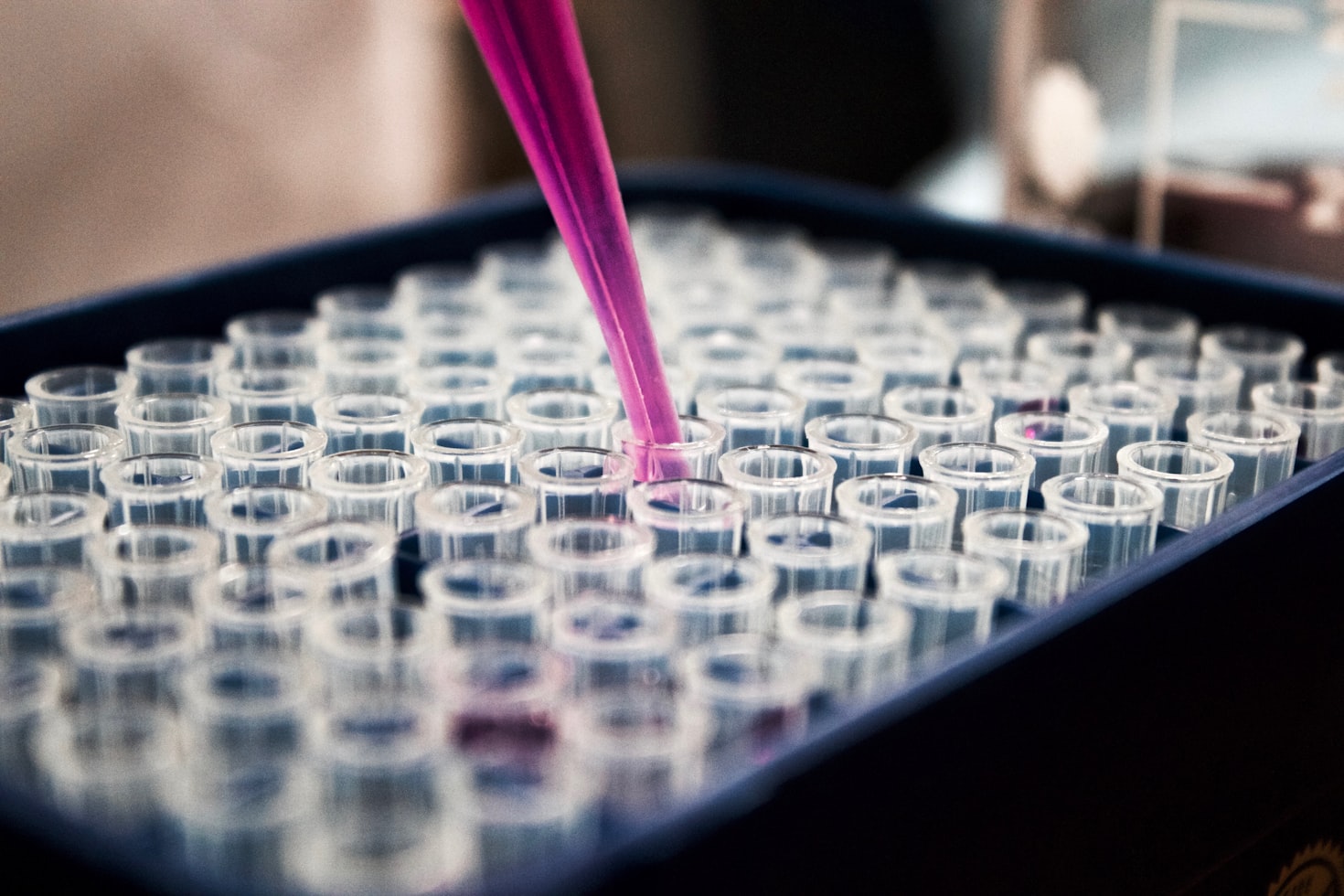
NMR Spectroscopy
The key tool for tracking hydrogen exchange dynamics in lyophilized proteins.

Lyophilization Setup
Essential for preparing protein samples in the dried state for stability studies.
Pharmaceutical Revelations: Beyond the Lab Bench
BPTI's story isn't academic—it's a blueprint for stabilizing real-world therapeutics:
Moisture Management
- At ~50 g/100 g protein, water triggers thiol-disulfide shuffling in albumin, causing 80% aggregation in 24 hours .
- Excipients like sucrose absorb this water, acting as "molecular sponges".
Excipient Selection
- Effective stabilizers (e.g., trehalose) have high hydration capacity.
- Sodium chloride accelerated aggregation due to ionic disruption .
Conclusion: The Delicate Dance of Drying
Lyophilized proteins exist in a metastable architectural limbo. As studies with BPTI revealed, the removal of water creates an inherent structural "injury" that solvents merely expose—not cause. This insight revolutionized protein formulation:
"Successful lyophilization isn't just about removing water—it's about replacing its molecular embrace."
Today, advanced excipients and controlled humidity environments owe their design to such hydrogen-exchange detective work. As biologic drugs dominate modern medicine, understanding these frozen architects remains central to delivering life-saving therapies to the world.
Key Takeaways
- Lyophilization inherently alters protein structure by removing water's stabilizing hydrogen bonds
- Hydrogen exchange NMR provides critical insights into structural changes
- Excipient selection is crucial for maintaining protein stability in dried formulations