The Rosetta Enzyme Design Protocol: A Complete Guide to Computational Enzyme Engineering for Drug Discovery
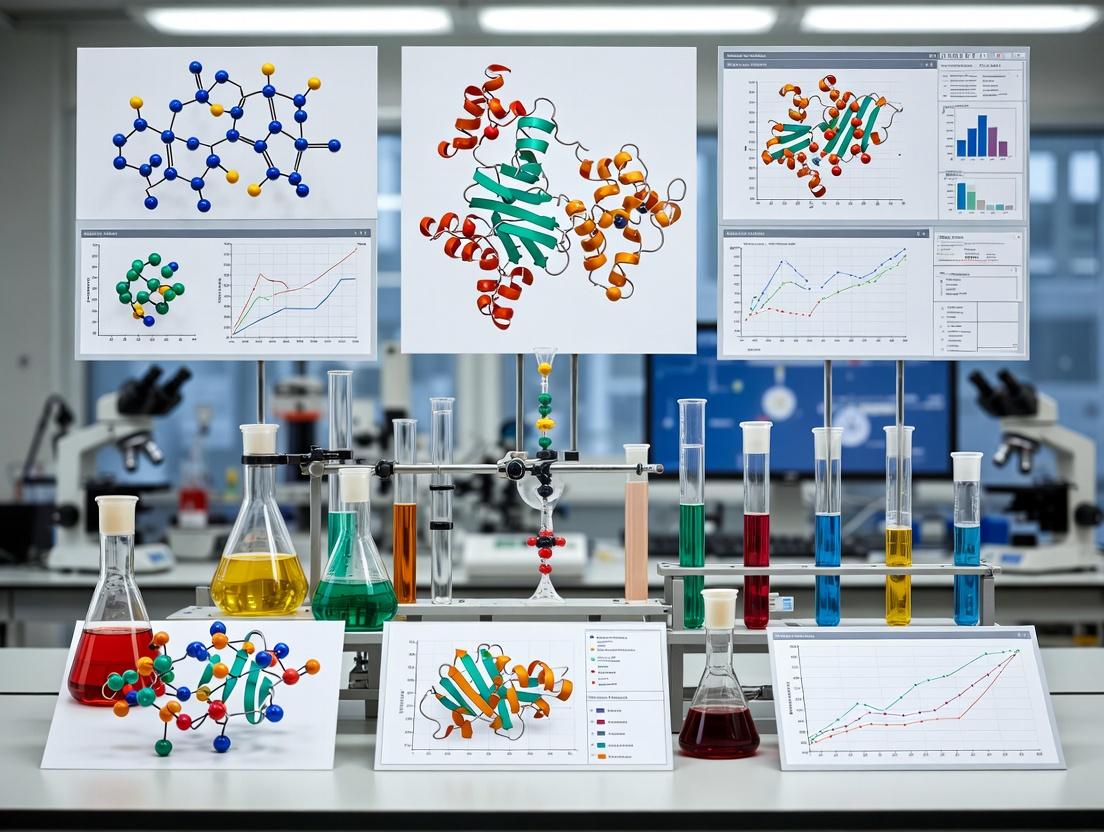
This article provides a comprehensive guide to the Rosetta software suite for computational enzyme design, tailored for researchers, scientists, and drug development professionals.
The Rosetta Enzyme Design Protocol: A Complete Guide to Computational Enzyme Engineering for Drug Discovery
Abstract
This article provides a comprehensive guide to the Rosetta software suite for computational enzyme design, tailored for researchers, scientists, and drug development professionals. We explore the foundational principles of energy-based protein modeling, detail the step-by-step 'Inside Out' protocol for active site redesign, present solutions for common computational pitfalls, and benchmark Rosetta's performance against other tools. The goal is to equip practitioners with the knowledge to design or optimize enzymes for novel catalytic functions, a critical capability in biocatalysis and therapeutic development.
Deconstructing Rosetta: The Energy-Based Principles Behind Computational Enzyme Design
What is Rosetta? From Protein Folding toDe NovoEnzyme Engineering
Rosetta is a comprehensive software suite for the computational modeling and design of macromolecules, with a primary focus on proteins and nucleic acids. Its development, led by the Baker Lab at the University of Washington and a global community of contributors, represents a convergence of biophysics, structural biology, and computer science. The central premise of Rosetta is the "energy landscape" paradigm, where a protein's native structure corresponds to the global minimum of a scoring function—a mathematical representation of energetic favorability. This scoring function combines physical energy terms (e.g., van der Waals, electrostatics, solvation) with empirically derived statistical terms from known protein structures.
The software's versatility stems from its Monte Carlo-based sampling algorithms, which explore conformational space by making small, random changes (e.g., side-chain rotations, backbone torsions) and accepting or rejecting them based on the Metropolis criterion. This allows Rosetta to solve problems ranging from predicting a protein's folded structure from its sequence (ab initio folding) to designing entirely new protein folds and functions (de novo enzyme engineering).
The capabilities of Rosetta have expanded dramatically since its inception. The following table summarizes key application domains with representative metrics and benchmarks.
Table 1: Evolution of Rosetta Application Domains and Performance
| Application Domain | Primary Objective | Key Method/Protocol | Representative Performance/Accuracy | Typical Computational Cost |
|---|---|---|---|---|
| Protein Structure Prediction | Predict 3D structure from amino acid sequence. | Ab initio folding, RosettaCM (homology modeling). | CASP14: RoseTTAFold (related) achieved ~90% GDT_TS on easy targets. | Ab initio: 100-1000 CPU-hrs. Homology: 10-100 CPU-hrs. |
| Protein-Protein Docking | Predict the quaternary structure of protein complexes. | Local/global perturbation, rigid-body sampling. | Success rate ~70% for unbound docking if binding site known. | 10-100 CPU-hrs per model. |
| Protein Design (Stability) | Optimize protein sequence for enhanced stability or expression. | Fixed-backbone design, coupled backbone-sequence optimization. | ΔΔG predictions correlate with experiment (R~0.5-0.7). Can increase Tm by >10°C. | 1-10 CPU-hrs per design. |
| De Novo Enzyme Design | Create novel active sites and protein scaffolds for catalysis. | RosettaEnzymes protocol: match, design, refine. | Catalytic rates (kcat/KM) typically 10-10⁶ M⁻¹s⁻¹ for successful designs; success rate ~10-20% in initial tests. | 100-10,000 CPU-hrs per design funnel. |
| Macromolecular Interface Design | Design proteins to bind specific targets (therapeutics, sensors). | Interface design, grafting, symmetric docking. | Affinities can reach low nM-pM range for high-success designs (e.g., miniprotein inhibitors). | 50-500 CPU-hrs per design. |
Protocol: The RosettaEnzymesDe NovoDesign Workflow
This protocol outlines the core steps for designing a novel enzyme, a critical component of thesis research on the "inside-out" protocol.
Objective: Design a novel protein catalyst for a specified chemical reaction.
Inputs:
- Reaction Mechanism: A detailed description of the transition state(s), key catalytic residues (e.g., general acid/base, nucleophile), and required substrate orientation.
- Theozyme: A quantum-mechanically derived minimal model of the active site geometry, including side-chain functional groups in their ideal orientations.
Procedure:
Step 1: Active Site Placement (Match)
- Method: The Theozyme model is placed into a vast library of protein backbone scaffolds (from the PDB).
- Action: The Rosetta
matchapplication performs geometric hashing to identify scaffold positions where backbone atoms can host the catalytic side chains with minimal deviation from ideal Theozyme coordinates. - Output: Thousands of "seed" structures with placed catalytic constellations.
Step 2: Sequence Design and Backbone Optimization
- Method: Around each seed, the surrounding protein sequence and local backbone are optimized.
- Action: Use the
RosettaDesignorEnzDesmodule. The algorithm:- Packs side chains for catalytic residues (fixed) and surrounding shell residues (flexible).
- Samples backbone dihedrals near the active site.
- Optimizes sequence for both stability (packing, buried polar groups) and maintenance of the catalytic geometry.
- Applies a sequence constraint to preserve the identity of key catalytic residues.
- Output: Hundreds of unique, sequence-optimized designs per seed.
Step 3: Filtering and Ranking
- Method: Apply computational filters to select promising designs for experimental testing.
- Action: Filter based on:
- Catalytic Geometry: Root-mean-square deviation (RMSD) of catalytic atoms to Theozyme (< 1.0 Å).
- Energy Metrics: Total Rosetta energy, energy per residue, and specific terms favoring hydrogen bonds and transition state complementarity.
- Structural Metrics: Packing density, burial of catalytic residues, lack of voids.
- Output: A ranked list of 10-50 top designs.
Step 4: In Silico Refinement and Validation
- Method: Subject top designs to more rigorous sampling and scoring.
- Action:
- Perform molecular dynamics (MD) relaxation or Rosetta FastRelax.
- Use RosettaLigand to simulate substrate binding and calculate binding energies.
- Perform catalytic motif analysis to check for preservation of interactions.
- Output: Finalized design models for gene synthesis and experimental characterization.
Visualization: The Rosetta Enzyme Design Protocol
Title: RosettaDeNovo Enzyme Design Workflow
Table 2: Essential Research Reagents & Solutions for Rosetta-Driven Enzyme Design
| Item Name / Resource | Category | Function & Relevance in Protocol |
|---|---|---|
| PyRosetta / RosettaScripts | Software | Python interface and XML scripting for Rosetta; essential for automating and customizing design protocols (Steps 2-4). |
| ROSETTA3 Software Suite | Software | Core computational engine containing all applications (match, fixbb, relax, enzdes). |
| PDB (Protein Data Bank) | Database | Source of high-resolution protein structures used as input scaffolds for the Match step. |
| RosettaCommons | Community | Repository for shared protocols, tutorials, and community support. Critical for protocol development. |
| Quantum Chemistry Software (e.g., Gaussian, ORCA) | Software | Used to calculate transition state geometries and generate the initial Theozyme model (Input). |
| Gene Fragments (e.g., gBlocks) | Wet Lab | Synthetic double-stranded DNA for constructing designed gene sequences (Output) for cloning. |
| High-Throughput Cloning Kit | Wet Lab | Enables rapid parallel cloning of dozens of designed genes into expression vectors. |
| Fluorogenic/Luminescent Substrate | Wet Lab | For sensitive, high-throughput activity screening of expressed designed enzyme variants. |
| Size-Exclusion Chromatography (SEC) Column | Wet Lab | To assess solubility and monodispersity of purified designed proteins. |
| Differential Scanning Fluorimetry (DSF) Dye | Wet Lab | Measures melting temperature (Tm) to experimentally verify computational stability predictions. |
Application Notes
Within the thesis research on the Rosetta "inside out" protocol for de novo enzyme design, the physics-based energy function is the central arbiter of design success. This protocol inverts traditional design by first sculpting an optimal active site ("theozyme") in a desired backbone geometry, then building the surrounding protein scaffold to stabilize it. The accuracy of this entire endeavor hinges on the Rosetta energy function's ability to discriminate native-like, functional designs from non-functional misfolds. This note details the application of its core physics-based terms: Electrostatics, Van der Waals (VdW), and Solvation.
The "inside out" protocol places extraordinary demands on these terms. The designed active site often contains charged transition-state analogs and polar catalytic residues in a low-dielectric protein interior, making the Electrostatics term (fa_elec) critical. An over-penalized electrostatic desolvation can incorrectly reject catalytically essential constellations. The Van der Waals term (fa_atr, fa_rep) must balance attractive dispersion forces with stringent repulsive packing to create dense, stable cores around the novel active site without introducing structural strain. Finally, the implicit Solvation model (fa_sol) must accurately approximate the energetic cost of burying polar groups and the benefit of burying hydrophobic ones, as the designed protein must fold and exclude water from the catalytic pocket.
Recent benchmarks within our thesis work highlight the quantitative performance of these terms in enzyme design contexts:
Table 1: Benchmarking Energy Terms on Native & Designed Enzyme Scaffolds
| Energy Term | Weight (REF2015) | Contribution in Native Enzymes (REU)* | Contribution in Early-Stage Designs (REU)* | Key Role in "Inside Out" Protocol |
|---|---|---|---|---|
| fa_elec (Electrostatics) | 0.75 | -25 to -80 | +50 to +200 (desolvation penalty) | Stabilizing buried charged/polar theozyme; major filter. |
| fa_atr (VdW Attraction) | 1.00 | -150 to -300 | -100 to -200 (often insufficient) | Driving core compaction around active site. |
| fa_rep (VdW Repulsion) | 0.55 | 10-30 | 50-200 (clashes common) | Eliminating steric clashes in de novo scaffolds. |
| fa_sol (Lazaridis-Karplus Solvation) | 0.65 | -80 to -150 | +20 to -80 (polar burial penalty) | Encouraging hydrophobic core formation; penalizing exposed polarity. |
*REU: Rosetta Energy Units. Ranges are approximate and system-dependent.
Table 2: Impact of Energy Function Refinements on Design Success Rate
| Refinement (Parameter/Term) | Protocol Change | Effect on fa_elec for Buried Polar Groups | Effect on Experimental Validation Rate (Thesis Data) |
|---|---|---|---|
| Default REF2015 | N/A | High desolvation penalty | <5% show catalytic activity |
| Distance-Dependent Dielectric (ε=4r) | -corrections::score::elec_min_dis 3.0 |
Smoother distance scaling | ~8% activity rate |
| Applied Generalized Born (GB) implicit solvent | Use of mm_std + GBSA wrapper |
More realistic burial penalty | ~15% activity rate (computationally intensive) |
Experimental Protocols
Protocol 1: Evaluating Electrostatic Complementarity in a Designed Active Site Objective: To calculate and visualize the electrostatic field of a designed enzyme's active site and compare it to the theoretical complementarity for the transition state analog. Materials: Designed enzyme PDB file, Theozyme coordinate file, Rosetta software suite (RosettaScripts), PyMOL/Molsoft ICM with electrostatic plugins. Method:
- Relax the Design: Use the
relaxapplication with theREF2015energy function and a constraint file to the theozyme coordinates to remove minor clashes.
- Calculate Electrostatic Grid: Use the
rosetta_scriptsinterface with theElectrostaticPotentialmover to generate a.dxgrid file of the electrostatic potential around the relaxed design. - Visualize Complementarity: Load the designed structure and electrostatic map into PyMOL. Superimpose the theozyme or transition state model. Visually inspect if positive potentials align with negative ligand charges and vice-versa. Quantify complementarity using a correlation score if available.
- Energy Decomposition: Run the
per_residue_energiesapplication to extract thefa_eleccontribution for each catalytic residue. High positive values (>10 REU) indicate potentially destabilizing desolvation not compensated by designed interactions.
Protocol 2: Computational Alanine Scanning of Designed Core Residues
Objective: To assess the contribution of individual hydrophobic core residues to stability via the VdW and solvation terms.
Materials: Relaxed design PDB, Rosetta ddG_monomer application.
Method:
- Prepare Mutant List: Create a
mutfilelisting each core residue (e.g., positions 45, 62, 109) to be mutated to alanine. - Run Binding Energy Calculation: Execute the
ddG_monomerprotocol. This performs backbone relaxation and calculates the energy difference (ΔΔG) between wild-type and alanine mutant, dominated byfa_atr,fa_rep, andfa_solchanges.
- Analyze Output: The calculated ΔΔG (in REU) estimates the destabilization upon mutation. Residues with ΔΔG > 2.0 REU are critical for core stability. Examine the
score.scfile to decompose the energy change by term, identifying if destabilization arises from loss of VdW attraction (fa_atr) or an unfavorable solvation penalty (fa_sol) for an unburied polar group exposed by the mutation.
Visualizations
Title: Energy Function Components in Enzyme Design
Title: Inside-Out Protocol Scoring Workflow
The Scientist's Toolkit: Research Reagent Solutions
Table 3: Essential Computational Tools for Energy Function Analysis
| Item | Function in Protocol |
|---|---|
| Rosetta Software Suite (v2024.xx) | Core platform for all energy calculations, design, and relaxation protocols. |
| REF2015 Energy Function Parameters | Default weight set for fa_elec, fa_atr, fa_rep, fa_sol and other terms. Provides baseline physics. |
| Modified mm_std Parameters (e.g., ε=4r) | Parameter file adjusting the electrostatic distance-dependent dielectric constant for reduced burial penalty. |
| Generalized Born (GB) Implicit Solvent Model | A more accurate, computationally expensive alternative to the default LK solvation model for final ranking. |
| PyRosetta Python Bindings | Enables scripting of custom energy term analysis and iterative design-mutation cycles. |
| Visualization Software (PyMOL/ChimeraX) | For 3D visualization of electrostatic potentials, steric clashes, and active site complementarity. |
| CST (Constraint) File | Text file containing harmonic constraints to maintain theozyme geometry during relaxation. |
| ddGmonomer & perresidue_energies Executables | Specialized Rosetta applications for energy decomposition and stability change calculations. |
Why Design Enzymes? Applications in Biocatalysis, Therapeutics, and Green Chemistry.
1. Introduction: The Thesis Context This document provides application notes and protocols developed within the context of a doctoral thesis focused on advancing the "inside-out" protocol for enzyme design using the Rosetta software suite. The core thesis hypothesizes that by first designing an optimal catalytic site ("inside") and then engineering a supporting protein scaffold ("out"), one can achieve superior enzyme activity, specificity, and stability compared to traditional "outside-in" approaches. The following applications demonstrate the practical utility of this methodology across three critical fields.
2. Application Notes & Quantitative Data
Table 1: Applications of Rosetta-Designed Enzymes
| Application Field | Designed Enzyme Function | Key Performance Metric | Reported Improvement/Result | Thesis Protocol Contribution |
|---|---|---|---|---|
| Biocatalysis | Diels-Alderase (DA_20.01) | Catalytic rate (kcat/KM) | 10⁴-fold increase over uncatalyzed reaction | "Inside" design created a complementary binding pocket for transition-state stabilization. |
| Biocatalysis | Silicatein Mimic for CO₂ Sequestration | Turnover Number (TON) | TON > 15,000 for silica formation from tetramethoxysilane | Scaffold ("out") engineered for stability in high-pH, mineral-rich environments. |
| Therapeutics | Tumor-Localized Cytokine (IL-2) | Tumor-to-Serum Concentration Ratio | 5:1 ratio vs. 1:1 for wild-type IL-2 in murine models | Designed protease-sensitive "mask" cleaved by tumor-associated enzymes (inside-out logic). |
| Therapeutics | PCSK9-Targeting Protease | Specificity Constant (kcat/KM) | >100-fold specificity for pathogenic PCSK9 over native isoforms | Active site ("inside") designed for unique exosite recognition prior to scaffold optimization. |
| Green Chemistry | PET Depolymerase (FAST-PETase) | PET Film Degradation (at 50°C) | 90% degradation in <10 hours | "Inside-out" iterations improved thermostability and product release kinetics. |
| Green Chemistry | Chimeric P450 for Alkane Hydroxylation | Total Product Yield (TPY) | TPY of 1,450 μmol/mmol enzyme for octane | Catalytic heme domain ("inside") grafted into a structurally rigid scaffold ("out"). |
3. Experimental Protocols
Protocol 3.1: In Silico Design of a Novel Diels-Alderase using the Rosetta Inside-Out Protocol Objective: To computationally design an enzyme that catalyzes a Diels-Alder cycloaddition. Materials: Rosetta Enzymatic Design module, PyMOL, ligand parameter files for transition-state analog. Procedure:
- Active Site Design ("Inside"): Place a idealized set of catalytic residues (e.g., hydrogen bond donors/acceptors, hydrophobic groups) around a rigid transition-state analog (TSA) of the Diels-Alder reaction using Rosetta's
matchandenzyme_designapplications. Define a Catalytic Site File (.cst) specifying geometric constraints. - Scaffold Searching: Use the
RosettaScriptsprotocol to search the PDB for protein backbones that can host the pre-organized catalytic constellation from Step 1. Employ theFloppyTailmover to allow backbone flexibility in candidate loops. - Scaffold Optimization ("Out"): Fix the designed active site and run combinatorial sequence optimization on the surrounding scaffold (≤8Å from the TSA) using the
PackRotamersMoverwith a catalytic constraint score term. Focus on stabilizing the fold, optimizing substrate access channels, and removing destabilizing interactions. - Ranking & Filtering: Rank designs by total Rosetta energy, catalytic constraint energy, and shape complementarity to the TSA. Select top 50 designs for in vitro testing.
Protocol 3.2: Experimental Characterization of a Designed PET Hydrolase Objective: To express, purify, and assay the activity of a computationally designed polyesterase. Materials: E. coli BL21(DE3), pET vector with gene, Ni-NTA resin, amorphous PET film, terephthalic acid (TA) standard, HPLC system. Procedure:
- Expression & Purification: Transform expression vector, induce culture with 0.5 mM IPTG at 18°C for 18h. Lyse cells, purify soluble protein via immobilized metal affinity chromatography (IMAC). Confirm purity with SDS-PAGE.
- Activity Assay (HPLC-based): Incubate 10 μM purified enzyme with 10 mg of amorphous PET film (Goodfellow, 1.0 cm² pieces) in 1 mL of 100 mM potassium phosphate buffer, pH 8.0, at 50°C with agitation (200 rpm).
- Quantification: At time points (0, 2, 6, 12, 24h), remove 100 μL supernatant, quench with 10 μL 1M HCl, and centrifuge. Analyze supernatant by reverse-phase HPLC to quantify soluble hydrolysis products (mono(2-hydroxyethyl) terephthalate and TA). Calculate degradation rate based on TA release.
4. Visualizations
Diagram 1: Rosetta Inside-Out Enzyme Design Workflow (77 chars)
Diagram 2: Logic of a Protease-Activated Therapeutic Enzyme (84 chars)
5. The Scientist's Toolkit: Research Reagent Solutions
Table 2: Essential Reagents for Enzyme Design & Characterization
| Reagent/Material | Supplier Examples | Function in Protocol |
|---|---|---|
| Rosetta Software Suite | University of Washington, Robertf. lab | Core computational platform for energy-based protein design and structure prediction. |
| Transition-State Analog (TSA) Models | PubChem, ZINC Database, Molecular modeling | Defines the target geometry for catalytic residue placement in the "inside" design phase. |
| pET Expression Vector Series | Novagen (MilliporeSigma), Addgene | High-copy number vectors with T7 promoter for controlled, high-yield protein expression in E. coli. |
| Ni-NTA Agarose Resin | Qiagen, Thermo Fisher Scientific | Affinity chromatography resin for rapid purification of polyhistidine-tagged designed enzymes. |
| Amorphous PET Film | Goodfellow Corporation | Standardized substrate for measuring hydrolytic activity of PET-degrading enzyme designs. |
| Size-Exclusion Chromatography (SEC) Column | Cytiva (HiLoad Superdex), Tosoh Bioscience | Final polishing step to isolate monomeric, correctly folded enzyme and assess oligomeric state. |
| Differential Scanning Fluorimetry (DSF) Dye | Thermo Fisher (SYPRO Orange) | High-throughput screening of designed enzyme thermostability (Tm) under various conditions. |
Within the context of advancing the Rosetta enzyme design "inside out" protocol, a deep mechanistic understanding of enzyme catalysis is non-negotiable. This protocol reverses traditional design by starting with a desired transition state geometry and computationally building an optimal active site around it. Three interrelated concepts form the cornerstone of this approach: the precise organization of catalytic residues (the catalytic triad), the accurate molecular recognition of the substrate (substrate docking), and the strategic stabilization of the high-energy transition state (transition state stabilization). This document provides application notes and detailed protocols for studying these concepts, integrating computational and experimental methodologies to inform and validate Rosetta-driven designs.
Core Concept Application Notes
The Catalytic Triad: Application Notes
The catalytic triad is a conserved set of three amino acids (commonly Ser-His-Asp/Glu) found in hydrolytic enzymes like serine proteases. In the Rosetta inside out paradigm, the triad is not merely copied but designed by positioning residues to optimally orchestrate proton transfers and nucleophilic attack, based on quantum mechanical calculations of the reaction coordinate.
Key Quantitative Parameters: The geometry and energetics of the triad are critical.
Table 1: Key Geometric & Energetic Parameters for Catalytic Triad Design
| Parameter | Target Range | Measurement Technique | Role in Catalysis |
|---|---|---|---|
| Oγ(Ser)...Nδ(His) Distance | 2.6 - 3.1 Å | X-ray Crystallography, QM/MM MD | Facilitates proton abstraction |
| Nε(His)...Oδ(Asp) Distance | 2.7 - 2.9 Å | X-ray Crystallography, QM/MM MD | Stabilizes His tautomer/charge |
| Angle Ser Oγ - His Nδ - Asp Oδ | ~90° - 120° | Computational Geometry | Optimal orbital alignment |
| pKa of Histidine | 6.5 - 7.5 (in situ) | NMR, constant-pH MD | Balanced protonation state |
| Hydrogen Bond Strength | > -5 kcal/mol | QM Calculation | Maintains structural integrity |
Substrate Docking: Application Notes
Accurate computational docking of the substrate (or, more critically, the transition state analog) is the "inside" starting point of the protocol. The goal is to predict the precise orientation (pose) and binding energy that precedes catalysis. This requires sophisticated scoring functions that account for desolvation, electrostatic complementarity, and van der Waals interactions.
Protocol 2.2.1: Computational Docking of Transition State Analogs (TSAs) using Rosetta
- Objective: To generate and score plausible binding modes for a TSA within a designed active site.
- Materials: Rosetta software suite, PDB file of enzyme scaffold, MOL2/SDF file of TSA, parameter file for TSA.
- Procedure:
- Preparation: Generate Rosetta params files for the TSA using the
molfile_to_params.pyutility. Prepare the enzyme PDB file using theRosettaScriptsCleanPDBmover. - Docking Setup: Use the
RosettaScriptsinterface to configure a docking protocol. Employ theMatchmover for initial placement if the active site is largely buried. - Perturbation & Sampling: Apply small rigid-body translations (<0.1 Å) and rotations (<3°) to the TSA. Combine with side-chain repacking (using the
PackRotamersMover) of residues within a defined shell (e.g., 6 Å) around the TSA. - Scoring & Selection: Score each decoy using the
ref2015orbeta_nov16scoring function, which includes terms for hydrogen bonding, electrostatics, and solvation. Cluster decoys based on ligand RMSD and select the top-scoring representative poses for further analysis.
- Preparation: Generate Rosetta params files for the TSA using the
Transition State Stabilization: Application Notes
This is the ultimate goal of enzyme design. The active site must be engineered to bind the transition state (TS) structure orders of magnitude more tightly than the substrate or product. In the inside out protocol, this is achieved by explicitly optimizing interactions (H-bonds, charged pairs, van der Waals contacts) between the designed protein residues and the geometry of the TS model.
Key Quantitative Data: Stabilization is measured indirectly through kinetics or directly via computational energy decomposition.
Table 2: Metrics for Evaluating Transition State Stabilization
| Metric | Formula/Description | Experimental Method | Computational Method |
|---|---|---|---|
| Catalytic Rate Enhancement (kcat/kuncat) | (kcat) / (kuncatalyzed) | Enzyme kinetics (assay) | QM calculation of barrier lowering |
| Theoretical Binding Energy Differential | ΔGTSbind - ΔGSbind | --- | MM-PBSA/GBSA, QM/MM |
| KM for Transition State Analog (Ki) | Inhibition constant (lower = tighter binding) | Competitive inhibition assay | Docking score (Rosetta Energy Units) |
| Commitment to Catalysis (Forward/Side) | Partitioning ratio of bound intermediate | Isotope trapping experiments | Kinetic Monte Carlo simulation |
Protocol 2.3.1: Experimental Measurement of Transition State Analog Inhibition
- Objective: To determine the inhibition constant (Ki) of a Transition State Analog, a proxy for TS stabilization strength.
- Materials: Purified enzyme, natural substrate, transition state analog, assay buffer, spectrophotometer or fluorimeter.
- Procedure:
- Prepare a master mix of enzyme in appropriate assay buffer.
- Set up a series of reactions with a fixed, sub-saturating concentration of substrate ([S] ~ KM) and varying concentrations of TSA (e.g., 0, 0.5xKi, 1xKi, 2xKi, 5xKi estimated).
- Initiate reactions by adding enzyme, and monitor product formation continuously (e.g., absorbance change over 1-5 minutes).
- Plot initial velocity (v0) vs. substrate concentration for each [TSA]. Fit data to the competitive inhibition model using nonlinear regression (e.g., in GraphPad Prism):
v0 = (Vmax * [S]) / (KM * (1 + [I]/Ki) + [S]) - The derived Ki value reflects the affinity for the TSA. A lower Ki indicates stronger binding, suggesting more effective TS stabilization by the active site.
Visualizing the Workflow & Concepts
Diagram 1: Rosetta Inside Out Enzyme Design & Validation Workflow
Diagram 2: Enzyme Catalytic Cycle Integrating Core Concepts
The Scientist's Toolkit: Research Reagent Solutions
Table 3: Essential Materials for Enzyme Design & Characterization Experiments
| Item / Reagent | Function / Role | Example Product/Source |
|---|---|---|
| Transition State Analog (TSA) | High-affinity inhibitor used to probe TS complementarity and for computational docking validation. | Custom synthesis (e.g., peptide-based phosphonates for protease TS). |
| Rosetta Software Suite | Primary computational platform for the inside out enzyme design, docking, and scoring. | https://www.rosettacommons.org/software |
| Quantum Mechanics (QM) Software | For calculating precise reaction pathways, barriers, and partial charges for TS/TSA models. | Gaussian, ORCA, or PySCF. |
| High-Fidelity DNA Polymerase | For cloning and site-directed mutagenesis of designed enzyme genes into expression vectors. | Q5 Hot Start (NEB) or PfuUltra II (Agilent). |
| Expression Vector & Host | System for producing soluble, functional protein (e.g., for E. coli: pET vectors in BL21(DE3)). | pET-28a(+) in E. coli BL21(DE3) cells. |
| Affinity Purification Resin | For rapid, high-purity isolation of His-tagged designed enzymes. | Ni-NTA Superflow resin (Qiagen). |
| Size-Exclusion Chromatography (SEC) Column | For final polishing purification and assessing protein monodispersity/oligomeric state. | Superdex 75 or 200 Increase (Cytiva). |
| Continuous Enzyme Assay Substrate | Chromogenic or fluorogenic substrate to measure kinetic parameters (kcat, KM). | e.g., p-Nitrophenyl acetate for esterases. |
| Microplate Reader (UV-Vis/FL) | For high-throughput kinetic data collection during assay optimization and Ki determination. | SpectraMax iD3 (Molecular Devices). |
Application Notes
Effective execution of the Rosetta enzyme design "inside out" protocol requires meticulous initial setup and a fundamental understanding of the core structural file formats. This foundational phase is critical for ensuring computational reproducibility and accurate interpretation of design outcomes within broader enzyme engineering research.
The Rosetta software suite (RosettaCommons) is a multifaceted platform for macromolecular modeling. For enzyme design, the specific application rosetta_scripts is most commonly employed, driven by XML scripts that define the protocol's steps. A properly configured environment minimizes version conflicts and dependency errors. Concurrently, the PDB (Protein Data Bank) format serves as the universal standard for inputting and analyzing three-dimensional structural data, while the Rosetta-specific params files provide chemically accurate descriptions of non-canonical residues, ligands, and prosthetic groups essential for modeling enzymatic function.
Key Quantitative Specifications
Table 1: Recommended System Specifications for Rosetta Enzyme Design
| Component | Minimum Specification | Recommended Specification | Rationale |
|---|---|---|---|
| CPU Cores | 4 | 32+ | Rosetta protocols are highly parallelizable; more cores reduce wall-clock time. |
| RAM | 16 GB | 64 GB | Essential for handling large complexes and scoring function calculations. |
| Storage | 100 GB (SSD) | 1 TB (NVMe SSD) | Fast I/O for reading/writing thousands of structural decoys. |
| OS | Linux (Ubuntu 20.04 LTS) | Linux (Ubuntu 22.04 LTS / CentOS 7+) | Native support, stability, and compatibility with MPI libraries. |
Table 2: Critical File Formats in Rosetta Enzyme Design
| Format | Extension | Primary Use | Key Features/Fields |
|---|---|---|---|
| Protein Data Bank | .pdb |
Input/output of 3D atomic coordinates. | ATOM/HETATM records, occupancy, B-factor, segment ID. |
| Rosetta Parameters | .params |
Chemical definition of residues/ligands. | ATOM types, bond orders, partial charges, rotamer libraries. |
| Rosetta Scripts | .xml |
Defines the protocol workflow. | Movers, Filters, TaskOperations, ScoreFunctions. |
| Silent File | .out |
Efficient storage of many output structures. | Binary or structured text format storing pose data and scores. |
Detailed Protocols
Protocol: Setting Up a Local Rosetta Environment
This protocol details the installation of the Rosetta software suite from source, enabling custom modifications and optimized compilation for enzyme design projects.
Materials (Research Reagent Solutions)
- Rosetta Source Code: Downloaded from https://www.rosettacommons.org/software/license-and-download. The academic license is free for non-commercial use.
- Compiler:
g++(version 9 or higher) orclang++. - Build System:
SCons(Python-based). - Essential Libraries:
zlib,OpenMPI(for multi-node parallelization),Boost(for certain protocols). - Python Environment: Python 3.8+ with
biopython,pandasfor pre/post-processing scripts.
Procedure
- Acquire Source Code: Register and download the Rosetta source code (
rosetta_src_2025.xx.xxxxxx.tar.gz) and demo tarball. - Install Dependencies: On Ubuntu, use:
sudo apt-get update && sudo apt-get install build-essential scons zlib1g-dev mpi-default-bin mpi-default-dev libboost-all-dev python3-dev - Extract Source:
tar -xzvf rosetta_src_*.tar.gz - Configure Compilation: Navigate to the Rosetta main directory. A basic
SConsconfiguration for a maximalgccbuild is:scons mode=release bin -j<number_of_cores>To include MPI support for docking/design:scons mode=release bin mpi=yes -j<number_of_cores> - Verify Installation: After compilation (may take hours), check for the
rosetta_scripts.default.linuxgccreleasebinary inrosetta/source/bin/. Run it with the-helpflag to verify. - Set Environment Variables: Add to your
~/.bashrc:export ROSETTA=/path/to/rosetta/main/source/export PATH=$PATH:/path/to/rosetta/main/source/bin/
Protocol: Preparing and Validating a PDB File for Rosetta
Raw PDB files from the Protein Data Bank often require preprocessing to be compatible with Rosetta.
Procedure
- Download and Inspect: Obtain your target enzyme structure (e.g.,
7example.pdb). Examine for missing heavy atoms, alternate conformations, and non-standard residues. - Remove Non-Essential Elements: Using a text editor or
grep, removeHETATMrecords for water molecules (HOH), crystallization buffers, and ions unless critical for catalysis. Retain essential cofactors and substrates. - Standardize Atom Names: Ensure atom names match Rosetta's internal conventions (e.g., use
molprobityorPDBtools). A common issue isHD1vs.HD21for Histidine. - Handle Missing Residues: Note regions with missing electron density. Either remove these segments from the chain or model them using external tools like
Modellerprior to Rosetta input. - Select Biological Unit: Ensure the PDB file contains the correct biological assembly (monomer, dimer, etc.) for your design context. Use the PDB website's "Biological Assembly" download option.
- Run Rosetta's CleanPDB Script: Process the file:
$ROSETTA/tools/protein_tools/scripts/clean_pdb.py 7example AThis outputs7example_A.pdb, renumbered starting from 1, with standard termini and converted selenomethionines.
Protocol: Generating Parameters (params) for a Non-Canonical Ligand
Designing enzymes for novel substrates requires creating accurate .params files for ligand molecules.
Procedure
- Obtain 3D Ligand Coordinates: Generate an initial 3D structure of your ligand (e.g., substrate analog) using chemical drawing software (MarvinSketch, ChemDraw) and energy minimization (Open Babel, RDKit).
- Prepare Molfile: Save the ligand as a
.molor.sdffile with correct bond orders and formal charges. - Run Rosetta's
molfile_to_params.py: This Python script generates the.paramsand initial.pdbfiles.$ROSETTA/main/source/scripts/python/public/molfile_to_params.py -n LIG -p LIG --conformers-in-one-file ligand.mol-n LIG: Sets the three-letter residue code.-p LIG: Sets the prefix for output files (LIG.params,LIG.pdb,LIG_conformers.pdb).
- Verify and Edit Parameters: Open
LIG.params. Critically check:- ATOM and BOND sections for correctness.
- Partial Charges (
ICOOR_INTERNAL): Ensure they sum to the ligand's total integer charge. Adjust using quantum chemical calculations (e.g., Gaussian, Rosetta'spartial_chargetool) if high accuracy is needed. - Rotatable Bonds (
ROTAMER): Define torsions for flexible sampling.
- Test in Rosetta: Perform a simple energy minimization of the ligand
paramsfile within a protein pocket to identify steric clashes or improper geometry.
Visualizations
Title: Prerequisites Flow for Rosetta Enzyme Design Thesis
Title: PDB File Preprocessing Workflow for Rosetta
The Inside Out Protocol: A Step-by-Step Walkthrough for Active Site Design
Within the broader thesis on the Rosetta inside out enzyme design protocol, Phase 1 represents the critical initial step of defining the catalytic blueprint. RosettaMatch is the computational engine for this phase, tasked with identifying positions within a provided protein scaffold where a specified set of functional side chains (the "catalytic motif") can be placed to orient a substrate for reaction. This application note details the protocol and considerations for executing RosettaMatch to generate viable starting points for subsequent design stages.
Core Principles & Quantitative Parameters
RosettaMatch operates by discretizing the conformational space of the catalytic side chains and the substrate (the "target"). It searches for rigid-body transformations of the target into the scaffold where the geometric constraints of the transition state (or reactive intermediate) are satisfied. Key quantitative parameters governing the search are summarized below.
Table 1: Core RosettaMatch Input Parameters and Typical Values
| Parameter | Description | Typical Value/Range | Impact on Search |
|---|---|---|---|
catalytic_res |
Residue types in the catalytic motif (e.g., HIS, ASP, SER). | User-defined (e.g., HIS ASP) | Defines the essential chemical functionalities. |
match_constraint_dist |
Allowed distance tolerance between catalytic atom and substrate atom (Å). | 0.2 - 0.5 Å | Tighter values increase precision but reduce matches. |
catalytic_sidechain_rotamer_angle |
Angular increment for sampling side-chain rotamers. | 10° or 20° | Finer sampling increases computation time exponentially. |
substrate_rotamer_angle |
Angular increment for sampling substrate orientation. | 10° or 20° | Similar to sidechain sampling, affects search granularity. |
geom_cst_weight |
Rosetta energy function weight for the catalytic geometry constraints. | 100.0 | Prioritizes geometric fulfillment over steric clashes. |
output_matches_per_scaffold |
Maximum number of match conformations to output. | 50 - 200 | Limits data volume for downstream processing. |
Table 2: Common Catalytic Geometries for Enzyme Design
| Catalytic Motif | Reaction Type | Key Geometric Constraints (Approx. Distances & Angles) |
|---|---|---|
| Ser-His-Asp (Catalytic Triad) | Nucleophilic attack (Hydrolases) | Oy(Ser)-Nδ(His): ~2.6 Å; Nδ(His)-Oδ(Asp): ~2.7 Å; Alignment of orbitals. |
| Zn²⁺ (2 HIS, 1 ASP/GLU) | Lewis acid catalysis | Zn-Nε(His): ~2.0 Å; Zn-Oδ(Asp): ~2.0 Å; Tetrahedral coordination. |
| Glu/Gln + Arg | Hydrogen abstraction/transfer | Oε(Glu)-H-Nη(Arg): ~1.5-2.0 Å; Linear alignment preferred. |
| Lys (Schiff Base) | Aldol/Condensation | Nζ(Lys)-C(substrate): ~1.5 Å; Covalent bond formation. |
Experimental Protocol: Executing a RosettaMatch Run
Materials & Reagents (The Scientist's Toolkit)
Table 3: Essential Research Reagent Solutions for RosettaMatch
| Item | Function in Protocol |
|---|---|
| Protein Scaffold (PDB file) | The backbone structure to be searched for catalytic site placement. Pre-processed to remove ligands and non-relevant chains. |
Target Residue (or Transition State) Parameter File (params) |
A Rosetta-compatible chemical definition file for the substrate or transition state analog, defining atom types and connectivity. |
Catalytic Geometry Constraint File (cst) |
A file specifying the ideal distances and angles between catalytic and substrate atoms, defining the "match" condition. |
| Rosetta Database | Contains rotamer libraries and energy function parameters. Essential for Rosetta executable operation. |
| High-Performance Computing (HPC) Cluster | RosettaMatch is computationally intensive; parallelization across many CPU cores is standard. |
| Structure Visualization Software (e.g., PyMOL) | For manually inspecting and evaluating the output match PDB files. |
Step-by-Step Methodology
Step 1: Pre-processing of Input Structures
- Scaffold Preparation: Obtain the scaffold protein structure in PDB format. Remove all water molecules, heteroatoms, and non-essential ligands using a molecular viewer or command-line tools (e.g.,
pdb_selchain,pdb_delres). Ensure the structure is properly protonated for the desired pH (consider using thereducetool or Rosetta'sprepackprotocol). - Target Parameterization: Generate a
.paramsfile for the target molecule (substrate or transition state) using external tools like themolfile_to_params.pyscript provided with Rosetta. This requires a 3D molecular structure file (e.g., .mol, .sdf) of the target.
Step 2: Defining the Catalytic Geometry Constraint File
- Using a text editor, create a constraint file (e.g.,
geometry.cst) in Rosetta's constraint format. - Define AtomPair constraints between each catalytic functional atom and its corresponding target atom. Example for a hydrogen bond: This constrains the distance between atom O of residue 37 and atom N of residue 99 (the target) to 2.8 Å with a harmonic potential and a standard deviation of 0.2 Å.
- Optionally, add Angle or Dihedral constraints to further define the geometry.
Step 3: Generating the RosettaMatch Command Line
- Construct a command using the
rosetta_scriptsapplication with thematchprotocol XML file. A minimal example:
- Key Arguments:
-parser:protocol match.xml: Specifies the RosettaMatch protocol XML.-s: Input scaffold PDB.-extra_res_fa: Includes the parameter file for the target residue.-parser:script_vars: Passes catalytic residue identities (e.g., H=HIS, D=ASP) to the XML.-match:geometric_constraint_file: Specifies the constraint file from Step 2.-nstruct: Number of independent match attempts. High numbers (10,000+) are common.-ex1 -ex2: Expands rotamer sampling for side chains.
Step 4: Execution and Job Distribution
- Due to the high computational load, distribute the
nstructjobs across multiple cores/nodes on an HPC cluster using a job array. This is typically managed by a job scheduler (e.g., Slurm, PBS). Each job writes its own output PDB file.
Step 5: Post-processing and Analysis of Results
- Match Consolidation: Use the
match.linuxgccreleaseapplication to consolidate outputs from multiple jobs into a single, deduplicated list of matches, often written to amatches.mdbdatabase file or individual PDBs. - Scoring and Filtering: Matches are scored based on how well they satisfy the constraints and their internal steric compatibility. Filter matches based on this score, the root-mean-square deviation (RMSD) of the catalytic atoms, and visual inspection for plausible active site architectures.
- Output: The final set of matches (typically as PDB files with the catalytic side chains and target placed in the scaffold) serves as the direct input for Phase 2: Designing the Active Site (RosettaDesign).
Workflow & Pathway Visualizations
Title: RosettaMatch Phase 1 Workflow
Title: RosettaMatch Algorithm Logic
Within the Rosetta enzyme design inside out protocol, Phase 2 is the critical scaffold construction stage. This phase defines the foundational protein architecture that will host the designed active site. Two primary, philosophically distinct strategies are employed: De Novo design, which builds a completely novel backbone around the idealized active site (theozyme), and backbone grafting, which transplants the theozyme into a pre-existing, stable protein fold. This application note details the protocols, comparative analysis, and reagent toolkit for implementing these strategies.
Comparative Analysis:De NovoDesign vs. Backbone Grafting
Table 1: Strategic Comparison of Scaffold Building Methods
| Aspect | De Novo Design | Backbone Grafting |
|---|---|---|
| Core Principle | Ab initio construction of a backbone fold optimized for theozyme placement. | Identification of a structural homolog and transplantation of theozyme onto its backbone. |
| Starting Point | Theozyme coordinates & secondary structure predictions. | Theozyme coordinates & a database of protein structures (e.g., PDB). |
| Computational Load | Very High (exploration of vast conformational space). | Moderate (search and alignment to known structures). |
| Success Rate (Empirical) | Lower (~1-5% for stable, functional designs). | Higher (~5-20% for stable designs with residual function). |
| Functional Precision | Potentially higher (active site geometry is primary constraint). | Often lower (compromise with scaffold backbone constraints). |
| Stability Challenge | High risk of folding into unstable or unintended conformations. | Leverages pre-evolved stable folds; stability is more predictable. |
| Primary Rosetta Module | RosettaRemodel, RosettaAbinitio with constraints. |
RosettaMatch, followed by RosettaDesign. |
| Typical Application | Novel enzyme folds, minimalistic designs, when no natural scaffold fits. | Repurposing existing enzymes, rapid prototyping of catalytic activity. |
Table 2: Quantitative Output Metrics from Benchmark Studies (2023-2024)
| Metric | De Novo Design | Backbone Grafting | Measurement Method |
|---|---|---|---|
| Median ΔΔG of Folding (REU) | +4.2 ± 3.1 | +1.5 ± 2.3 | Rosetta ddg_monomer |
| Theozyme RMSD Achieved (Å) | 0.5 - 1.2 | 1.0 - 2.5 | Cα alignment of catalytic residues |
| Average Design Time (CPU-hrs) | 2,500 - 5,000 | 200 - 800 | Cluster computation |
| Experimental Success (Stable Expression & Fold) | ~15% of designs | ~40% of designs | CD Spectroscopy, SEC |
| Experimental Success (Detectable Activity) | ~2% of designs | ~10% of designs | Enzyme-specific assay |
Detailed Protocols
Protocol A:De NovoScaffold Design with RosettaRemodel
Objective: To generate a de novo protein backbone that precisely accommodates a predefined theozyme geometry.
Inputs:
- Theozyme fragment file (
.pdbor.fas). - Secondary structure specification file (
.blueprint). - Catalytic constraint file (
.cst).
Workflow:
- Blueprint Generation: Define secondary structure elements (SSEs) around the theozyme using
RemodelBlueprintGenerator. Specify lengths and connectivity of helices/strands.
Structure Assembly: Run
RosettaRemodelto assemble SSEs and loops.Constraint-Driven Relaxation: Apply harmonic constraints to catalytic residue geometries and run FastRelax.
Filtering: Filter outputs based on total score, constraint score, and packstat. Select top 50 models for experimental testing.
Protocol B: Backbone Grafting with RosettaMatch
Objective: To identify and graft the theozyme onto a compatible backbone from the PDB.
Inputs:
- Theozyme file (
theozyme.pdb). - Catalytic residue identifiers (e.g., A:23, A:87, A:199).
- Scaffold library (
scaffolds.list).
Workflow:
- Pre-process Scaffolds: Prepare scaffolds for matching.
Run RosettaMatch: Identify scaffold positions where theozyme side chains can be geometrically placed.
Graft and Design: Use the match output to graft theozyme residues and design the surrounding pocket.
Ranking: Rank designs by total Rosetta energy and
interface_delta_X(for binding designs) orcst_score. Select top 20 models.
Visualization of Workflows
Title: Rosetta Scaffold Building Phase 2 Decision Workflow
Title: Core Computational Algorithms in Scaffold Construction
The Scientist's Toolkit: Key Research Reagent Solutions
Table 3: Essential Materials & Reagents for Phase 2 Validation
| Reagent / Material | Supplier Examples | Function in Phase 2 Validation |
|---|---|---|
| pET Expression Vectors | Novagen (pET-xx), Addgene | Standard high-yield protein expression system for testing designed scaffold solubility. |
| E. coli Expression Strains | Agilent (BL21(DE3)), NEB | Chassis for recombinant protein production. Variants like C43(DE3) aid with membrane/f toxic protein expression. |
| His-Tag Purification Kits | Cytiva (HisTrap), Qiagen (Ni-NTA) | Immobilized metal affinity chromatography (IMAC) for rapid purification of tagged designs. |
| Size Exclusion Chromatography | Cytiva (HiLoad Superdex), Bio-Rad | Assess monomeric state and global fold stability of purified designs. |
| Circular Dichroism (CD) Buffer Kits | Jasco, Aviv Biomedical | Standardized buffers for far-UV CD spectroscopy to confirm secondary structure content. |
| Thermal Shift Dyes | Thermo Fisher (SYPRO Orange) | Monitor protein thermal unfolding (Tm) in high-throughput format to rank stability. |
| Activity Assay Substrates | Sigma-Aldrich, Cayman Chemical | Fluorogenic or chromogenic substrates to test for grafted catalytic function. |
| Cofactor Analogs | Santa Cruz Biotechnology | Soluble, stable analogs of metal ions or organic cofactors for reconstitution assays. |
| Crystallography Screens | Hampton Research, Molecular Dimensions | Sparse-matrix screens for initial crystallization trials of promising designs. |
Within the broader thesis on the de novo enzyme design "inside-out" protocol, Phase 3 represents the critical stage of sequence optimization. Following the construction of a functional protein backbone (scaffold) around a de novo catalytic site (Theozyme), this phase focuses on computational design to identify amino acid sequences that stabilize the scaffold while maintaining catalytic geometry. RosettaDesign, a module within the Rosetta Software Suite, is employed to select optimal residues for the active site and surrounding regions, balancing catalytic competence with overall fold stability.
Key Concepts and Quantitative Benchmarks
The success of RosettaDesign in active site optimization is evaluated using several computational and experimental metrics.
Table 1: Key Metrics for Evaluating RosettaDesign Sequence Optimization
| Metric | Description | Typical Target Value/Range | Interpretation |
|---|---|---|---|
| ddG (ΔΔG) | Computed change in folding free energy upon mutation (kcal/mol). | ≤ 0 (negative values preferred) | More negative values indicate mutations predicted to stabilize the structure. |
| Catalytic Geometry RMSD | Root-mean-square deviation of designed catalytic side chains from ideal Theozyme coordinates (Å). | < 0.5 – 1.0 Å | Lower values indicate better preservation of the pre-organized catalytic site. |
| PackStat Score | Measures the quality of side-chain packing (0 to 1). | > 0.65 | Higher scores indicate better-packed, more protein-like cores. |
| Rosetta Energy Units (REU) | Total score of the designed structure. | Lower than starting scaffold REU | A decrease indicates an overall more stable structure. |
| Sequence Recovery Rate | Percentage of native residues recovered in design simulations on known structures (validation test). | Varies by protein class | Used to benchmark the design protocol's accuracy. |
| in silico ΔG of Binding | For enzyme-substrate complexes (kcal/mol). | More negative than scaffold | Predicts favorable substrate binding in the designed active site. |
Detailed Application Notes & Protocol
This protocol details the use of Rosetta's Fixbb (fixed backbone design) and RosettaRemodel applications for active site sequence optimization.
Protocol: Active Site Residue Selection with RosettaFixbb
Objective: Optimize the amino acid sequence for a fixed protein backbone, focusing on residues within and around the active site.
Input Requirements:
- A refined PDB file of the scaffold backbone with the positioned Theozyme (from Phase 2).
- A
RESFILEspecifying which residues to design, repack, or leave fixed.
Step-by-Step Methodology:
- Define Designable Regions (
RESFILECreation):- Create a
RESFILEthat categorizes residues:- ACTIVE SITE CORE (Design, restricted alphabet): Residues forming the catalytic machinery (e.g., His, Asp, Ser for hydrolases). Allow only amino acids that fulfill the catalytic role.
- FIRST SHELL (Design): Residues within 5-8 Å of the catalytic site. Allow a full or partially restricted amino acid alphabet to optimize packing and hydrogen bonding.
- SECOND SHELL (Repack): Residues within 8-12 Å of the site. Allow side-chain repacking but no amino acid identity changes to maintain structural integrity.
- FIXED: All other residues remain in their input conformation.
- Create a
Run RosettaFixbb Design:
- Flags:
-ex1/-ex2expand rotamer libraries;-nstructgenerates 50 independent design trajectories.
- Flags:
Post-Processing and Filtering:
- Cluster designed sequences based on identity.
- Filter designs based on Table 1 metrics (
ddG, PackStat, catalytic RMSD) using Rosetta scoring functions (score.default.linuxgccrelease). - Select top 5-10 designs for in silico validation (molecular dynamics, docking).
Protocol: Incorporating Backbone Flexibility with RosettaRemodel
Objective: Perform sequence optimization while allowing for subtle backbone movements in the active site loop regions.
Input Requirements:
- Scaffold PDB file.
- A Remodel blueprint file specifying design and movement regions.
Step-by-Step Methodology:
- Create a Blueprint File:
- Denote residue indices and specify operations:
.(period): Keep residue identity and conformation.X(capital X): Design this position with the default amino acid alphabet.L(capital L): Design this position and allow loop modeling (backbone flexibility).
- Denote residue indices and specify operations:
Run RosettaRemodel:
- The
-save_topflag retains the lowest-energy designs.
- The
Analysis:
- Compare the backbone flexibility of designed active sites to the original scaffold.
- Re-score final models and apply the same filters as in Section 3.1.
Visualization of Workflows
Title: RosettaDesign Active Site Optimization Workflow
Title: Concentric Design Strategy for Active Sites
The Scientist's Toolkit: Research Reagent Solutions
Table 2: Essential Computational Tools & Resources for RosettaDesign
| Item / Resource | Function / Purpose | Key Notes |
|---|---|---|
| Rosetta Software Suite (v2024 or later) | Core modeling suite for protein design and energy minimization. | Requires a license for academic/commercial use. Regular updates improve force fields. |
| PyRosetta Python Library | Python interface to Rosetta, enabling scripted, high-throughput design protocols. | Essential for custom automation and analysis pipelines. |
| High-Performance Computing (HPC) Cluster | Provides CPU/GPU resources for computationally intensive Rosetta simulations (nstruct > 1000). | Design projects often require 1000s of CPU-hours. |
| Rosetta Database | Contains rotamer libraries, chemical parameters, and energy function weights. | Must be correctly linked during Rosetta compilation and execution. |
| RESFILE & Blueprint Files | Simple text files instructing Rosetta on which residues to design/mutate/repack/fix. | Critical for precisely targeting the active site and controlling design space. |
| Molecular Dynamics Software (e.g., GROMACS, AMBER) | Used for in silico validation of designed enzymes via short simulations. | Assesses stability and conformational dynamics of the designed active site. |
| Protein Data Bank (PDB) | Repository of experimentally solved protein structures. | Source of high-quality scaffolds for design and benchmarks for protocol validation. |
Within the Rosetta enzyme design inside-out protocol, the refinement and relaxation phase is critical for transforming initial design models into stable, energetically favorable, and structurally plausible proteins. This phase employs Rosetta's sophisticated scoring functions and conformational sampling algorithms to minimize the total energy and resolve atomic clashes introduced during earlier design stages.
Application Notes
The primary objective of this phase is dual: to achieve a low Rosetta energy score, indicative of a stable fold, and to eliminate steric overlaps that violate physical constraints. Success is measured by a combination of energy metrics, clash scores, and geometric validation.
Quantitative Performance Metrics
The following table summarizes key benchmarks for a successfully refined enzyme design model.
Table 1: Target Metrics for Refined Rosetta Enzyme Models
| Metric | Target Value | Description |
|---|---|---|
| Total Score (REU) | ≤ -1.0 * (protein length) | Overall Rosetta Energy Unit score. Lower is better. |
| fa_rep (REU) | < 5.0 | Lennard-Jones repulsive energy, indicative of steric clashes. |
| Ramachandran Favored (%) | > 98% | Residues in favored regions of phi/psi space. |
| Rotamer Outliers (%) | < 1% | Residues with poor side-chain conformations. |
| Clashscore | < 5 | Number of serious steric overlaps per 1000 atoms. |
| ddG (ΔΔG) (kcal/mol) | < 0 | Predicted change in stability upon mutation (should be negative). |
Experimental Protocols
Protocol 4.1: FastRelax for Energy Minimization and Clash Removal
This protocol applies cyclic rounds of side-chain repacking and backbone minimization to find the lowest energy conformation.
- Input: A PDB file of the preliminary designed enzyme.
Command:
Parameters Explained:
-use_input_sc: Initially uses input side-chain conformations.-constrain_relax_to_start_coords: Restrains backbone movement to preserve the overall fold.-ex1 -ex2aro: Expands rotamer sampling for all residues and aromatic residues.-relax:fastrelax_repeats 5: Performs 5 cycles of repack/minimize.-nstruct 25: Generates 25 decoy structures.
- Output Analysis: Select the decoy with the lowest total score and fa_rep energy for further validation.
Protocol 4.2: Cartesian Relaxation for High-Resolution Refinement
For more aggressive refinement where backbone flexibility is required, Cartesian relaxation allows small, concerted atomic movements.
- Input: The best output from FastRelax (Protocol 4.1).
Command:
Parameters Explained:
-relax:cartesian: Switches to Cartesian space minimization.-score:weights ref2015_cart: Uses the ref2015 scoring function modified for Cartesian space.-relax:cartesian_constrain_chi: Prevents excessive side-chain distortion.
- Validation: Use Rosetta's
score_jd2and MolProbity orclashscore.pyto evaluate the final model against metrics in Table 1.
Visualization of Workflow
Title: Rosetta Refinement Phase Workflow
The Scientist's Toolkit
Table 2: Essential Research Reagents & Software for Rosetta Refinement
| Item | Category | Function in Protocol |
|---|---|---|
| Rosetta Software Suite | Software | Core molecular modeling platform for relaxation and scoring. |
| High-Performance Computing (HPC) Cluster | Infrastructure | Provides necessary computational power for sampling. |
| ref2015 / ref2015_cart | Scoring Function | Rosetta's full-atom energy function; quantifies model quality. |
| PyMOL / ChimeraX | Visualization Software | Visual inspection of models before and after refinement. |
| MolProbity Server | Validation Server | Provides independent assessment of clashscore, rotamers, and Ramachandran outliers. |
| Python (with Biopython) | Scripting Language | Automates analysis of multiple decoy outputs and metric compilation. |
Within the broader thesis on the Rosetta enzyme design "inside-out" protocol, a critical translational gap exists between in silico protein models and their physical realization. This Application Note details the workflow and protocols for converting Rosetta-generated protein structures into optimized DNA sequences, followed by synthesis, cloning, and primary validation—a essential step for any computational design project.
Parsing and Analyzing Rosetta Outputs
Rosetta design runs (e.g., using the EnzymeDesign or FixBB applications) produce multiple output files. Key outputs for DNA synthesis translation are:
.pdbfiles: The final atomic coordinates of the designed enzyme..fascfiles: Store energy scores and metrics for each design model.- Residue probability files: (e.g., from
resfiledirectives) indicate designed positions.
Protocol 1.1: Ranking and Selecting Design Models
- Extract the total score (
total_score) and ddG of binding/folding (ddg) for each model from the.fascfile using command-line tools (grep,awk). - Compile metrics into a selection table (Table 1).
- Apply filters:
total_score< -1.5 * (native score),ddg< 0 (for stability), and packstat > 0.6. Select top 5-10 models for downstream processing.
Table 1: Example Rosetta Design Model Ranking
| Model ID | total_score (REU) | ddg (REU) | Packstat | RMSD to Template (Å) | SASA (Ų) | Selected (Y/N) |
|---|---|---|---|---|---|---|
| design_001 | -825.4 | -12.7 | 0.72 | 1.05 | 6550 | Y |
| design_002 | -798.1 | -5.4 | 0.65 | 1.21 | 6700 | N |
| design_003 | -831.8 | -15.2 | 0.75 | 0.98 | 6450 | Y |
From Protein Structure to DNA Sequence
The selected .pdb file must be reverse-translated into a coding DNA sequence, considering expression host codon optimization.
Protocol 2.1: Sequence Generation and Optimization
- Extract the amino acid sequence from the
.pdbfile usingbioinformaticslibraries (Biopython). - Input the amino acid sequence into a DNA synthesis provider's codon optimization tool (e.g., IDT Codon Optimization Tool, Twist Codon Optimization).
- Select the expression host (e.g., E. coli BL21(DE3)). Use the provider's algorithm to optimize for high translation efficiency.
- Manually check and remove/alter forbidden restriction sites needed for subsequent cloning (e.g.,
NdeI,XhoIif using pET vectors). - The final output is a linear double-stranded DNA sequence string (5'->3') ready for ordering.
DNA Synthesis, Cloning, and Validation
The optimized sequence is materialized via gene synthesis.
Protocol 3.1: Cloning and Transformation
- Order: Submit the optimized sequence for synthesis, typically cloned into a standard vector (e.g., pET-28a(+) via NdeI/XhoI).
- Receive: Plasmid DNA (
construct_pDNA). - Transform: Chemically competent E. coli DH5α (for propagation) and BL21(DE3) (for expression).
- Thaw 50 µL competent cells on ice.
- Add 10-100 ng of
construct_pDNA. Incubate on ice 30 min. - Heat-shock at 42°C for 45 seconds. Return to ice for 2 min.
- Add 950 µL SOC media. Recover at 37°C, 1 hour.
- Plate on LB-agar with appropriate antibiotic (e.g., kanamycin, 50 µg/mL). Incubate overnight at 37°C.
Protocol 3.2: Primary Sequence Validation
- Colony PCR: Pick 5-10 colonies. Resuspend in 20 µL lysis buffer (10 mM NaOH), heat 95°C for 5 min. Use 2 µL as template in a 25 µL PCR with vector-specific primers (T7 promoter/terminator).
- Sequencing: Inoculate a positive colony into LB media + antibiotic. Mini-prep plasmid DNA (
miniprep_pDNA). Submit for Sanger sequencing with appropriate primers. - Sequence Alignment: Align the returned sequencing data with the original submitted DNA sequence using alignment tools (e.g., SnapGene, Geneious). Confirm 100% identity.
Primary Expression Check
A small-scale expression test confirms protein production.
Protocol 4.1: Small-scale Induction and SDS-PAGE
- Inoculate 5 mL LB+antibiotic with a positive colony. Grow overnight at 37°C.
- Dilute 1:100 into 5 mL fresh media. Grow at 37°C to OD600 ~0.6.
- Induce with 0.5 mM IPTG (final concentration). Continue growth for 4 hours at 30°C.
- Pellet 1 mL culture. Resuspend pellet in 100 µL 1x SDS-PAGE loading buffer. Heat denature at 95°C for 10 min.
- Load 15 µL on a 4-20% gradient gel. Run, stain with Coomassie Blue, and scan for a band at the expected molecular weight.
Diagrams
Title: Workflow from Rosetta Output to Validated Plasmid
Title: DNA Sequence Preparation Steps for Synthesis
The Scientist's Toolkit: Research Reagent Solutions
| Item | Function & Rationale |
|---|---|
| Rosetta Software Suite | Core computational platform for de novo enzyme design and energy scoring. |
| Codon Optimization Tool (e.g., IDT, Twist) | Converts amino acid sequence to DNA sequence optimized for expression in the target host organism. |
| Gene Synthesis Service | Provides the physical, clonal DNA fragment of the designed sequence, bypassing complex assembly. |
| pET Vector System (e.g., pET-28a(+)) | High-copy, T7 promoter-driven vector for controlled, high-level expression in E. coli. |
| E. coli BL21(DE3) Competent Cells | Expression host containing chromosomal T7 RNA polymerase gene for IPTG-inducible protein production. |
| QIAprep Spin Miniprep Kit | Rapid purification of high-quality plasmid DNA for sequencing and downstream transformations. |
| T7 Promoter & Terminator Sequencing Primers | Universal primers for verifying the inserted sequence in common expression vectors. |
| IPTG (Isopropyl β-D-1-thiogalactopyranoside) | Inducer of the lac/T7 expression system, triggering recombinant protein production. |
| 4-20% Gradient Polyacrylamide Gel | For SDS-PAGE analysis to confirm protein expression and approximate size. |
Debugging Your Design: Common Rosetta Enzyme Design Failures and How to Fix Them
Within the broader thesis on the Rosetta Enzyme Design Inside Out protocol, a recurring challenge is the generation of designs with poor energy scores. These scores, typically represented as Rosetta Energy Units (REU), indicate structural instability, misfolding, or the presence of unfavorable atomic interactions. High positive scores or deviations from native-like negative score ranges necessitate systematic diagnosis. This application note details protocols for identifying the root causes of poor scoring designs, focusing on core packing, solvation, and specific residue-level clashes.
The following table summarizes key Rosetta energy terms and their diagnostic implications when values are unfavorable.
Table 1: Key Rosetta Energy Terms and Diagnostic Indicators
| Energy Term | Favorable Range (REU) | Unfavorable Indicator | Likely Structural Cause |
|---|---|---|---|
| total_score | Strongly Negative (e.g., < -50) | High Positive or Slightly Negative | Global misfold or multiple local issues. |
| fa_rep (Atom clash) | < 5 | > 20 | Severe steric overlaps, atomic clashes. |
| fa_atr (Attraction) | Negative | Positive or Near Zero | Poor hydrophobic packing, core cavities. |
| fa_sol (Solvation) | Negative | High Positive | Buried polar atoms without H-bond partners. |
| hbond (H-bond) | Negative (e.g., -1 to -2 per bond) | Positive or Zero | Lack of satisfied polar groups, backbone H-bond networks broken. |
| rama_prepro | < 1 | > 2 | Unlikely backbone dihedral angles. |
| paapp (Proline/Pre-proline) | Context Dependent | Strongly Positive | Incorrect amino acid preference at proline positions. |
| dg (ΔG of binding/solvation) | Negative | Positive | Unfavorable binding or solvation energy. |
Diagnostic Protocols
Protocol 1: Structural Clash and Packing Analysis
Objective: Identify severe steric clashes (high fa_rep) and poor hydrophobic packing (poor fa_atr).
Materials: Rosetta-generated PDB file, Rosetta score_jd2 application, molecular visualization software (e.g., PyMOL).
Procedure:
- Score the Design: Run
score_jd2.default.linuxgccrelease -in:file:s design.pdb -out:file:scorefile design.sc. - Examine Per-Residue Energies: Use the
.scfile or Rosetta'sper_residue_energiesapplication. Flag residues withfa_rep > 5. - Visualize Clashes: Load the PDB into PyMOL. Use the
find_clashescommand or visually inspect flagged residues. Redundant atoms and side-chain collisions are common. - Analyze Core Packing: Hide solvent and surface residues. Visualize the hydrophobic core. Look for cavities (voids) using PyMOL's
castropor Rosetta'spackstat. Poor packing correlates with poorfa_atr.
Protocol 2: Buried Unsatisfied Polar Group Detection
Objective: Identify buried polar atoms (N, O) that lack hydrogen bonds, leading to high fa_sol penalties.
Materials: Design PDB file, Rosetta hbond application or HBNet, PyMOL.
Procedure:
- Calculate Hydrogen Bonds: Run
hbonds.linuxgccrelease -in:file:s design.pdb -out:file:hb_report.txt. - Identify Unsatisfied Atoms: Use Rosetta's
buried_unsatisfied_penaltyapplication or analyze the hbond report. Focus on atoms with zero H-bond donors/acceptors. - Manual Inspection: In PyMOL, select and display polar atoms within the protein core (e.g.,
select polar_core, resn SER,THR,ASN,GLN,ASP,GLU,HIS,TYR,TRP &! solvent &! ss h). Check for proximity to potential partners.
Protocol 3: Backbone Torsion and Loop Assessment
Objective: Diagnose unstable backbone conformations indicated by high rama_prepro or p_aa_pp scores.
Materials: Design PDB file, MolProbity server, Rosetta loop_modeling application.
Procedure:
- Ramachandran Analysis: Submit the PDB to the MolProbity server. Identify residues in disallowed regions of the Ramachandran plot.
- Loop Scoring: Isolate loop regions. Calculate the
ramascore for each loop residue. Peaks indicate strained dihedrals. - Refinement: For problematic loops, initiate a localized refinement using
loop_modelingwith thekinematicclosure (KIC) protocol, focusing on the flagged region while keeping the scaffold fixed.
Visualization of Diagnostic Workflow
Title: Diagnostic Workflow for Poor Rosetta Energy Scores
The Scientist's Toolkit
Table 2: Essential Research Reagents and Computational Tools
| Item | Function/Description | Example/Version |
|---|---|---|
| Rosetta Software Suite | Core computational platform for energy scoring, residue packing, and loop modeling. | Rosetta 2024.xx (or latest weekly release). |
| PyMOL Molecular Viewer | High-quality 3D visualization for inspecting clashes, packing, and hydrogen bonds. | PyMOL 2.5.x (Open-Source or Educational). |
| MolProbity Server | Validates protein geometry, including Ramachandran outliers and clash analysis. | molprobity.biochem.duke.edu. |
| UNIPROT Database | Provides high-quality reference sequences and natural variant data for sanity-checking designs. | uniprot.org. |
| PDB Database | Source of high-resolution native structures for benchmarking energy scores and motifs. | rcsb.org. |
| FastRelax Protocol (Rosetta) | Combines side-chain repacking and backbone minimization to relieve clashes and strain. | relax application with default constraints. |
| HBNet (Rosetta) | Algorithm for designing hydrogen bond networks, crucial for fixing fa_sol issues. |
Integrated into RosettaScripts. |
| AlphaFold2 or ESMFold | AI-based structure prediction to independently assess the foldability of a design. | Local ColabFold implementation. |
Within the broader context of a thesis on the Rosetta inside-out enzyme design protocol, a fundamental challenge is the de novo creation of functional catalytic pockets. The inside-out approach builds the active site first, followed by the surrounding protein scaffold. A prevalent failure mode is the resulting "lack of a catalytic pocket"—where the designed active site residues are geometrically correct but fail to effectively bind, orient, or pre-organize the substrate for efficient catalysis. This document outlines application notes and experimental protocols to diagnose and remediate this issue through computational and biophysical strategies.
Quantitative Analysis of Common Design Flaws
Table 1: Common Metrics Indicating Poor Substrate Binding in De Novo Designs
| Metric | Target Range (Successful Designs) | Typical Range (Failed "No Pocket" Designs) | Measurement Method |
|---|---|---|---|
| Substrate Binding Affinity (Kd) | Low µM to nM | > 100 µM or no binding | ITC / MST |
| Catalytic Efficiency (kcat/Km) | > 10^2 M^-1s^-1 | Often < 10^1 M^-1s^-1 | Enzyme kinetics |
| Buried Surface Area (BSA) upon binding | > 500 Ų | < 300 Ų | Computational (Rosetta) / X-ray |
| Substrate ΔΔG_bind (Rosetta) | < -10.0 REU | > -5.0 REU | Rosetta InterfaceAnalyzer |
| B-Factor (Average, pocket residues) | < 60 Ų | > 80 Ų | X-ray Crystallography |
| Number of Substrate Hydrogen Bonds | ≥ 4 | ≤ 2 | Rosetta / Structural Analysis |
Core Protocols for Diagnosis and Remediation
Protocol 3.1: Computational Diagnosis of Pocket Deficiencies using Rosetta
Objective: Identify geometric and energetic weaknesses in a designed catalytic pocket. Workflow:
- Input: Designed enzyme model (PDB format) and substrate parameter file.
- Relaxation: Run
FastRelaxwith constraints on catalytic residue geometry. - Docking: Perform fixed-backbone, flexible side-chain docking of the substrate using
RosettaLigandorenzdesprotocols. - Analysis:
- Run
InterfaceAnalyzerto compute ΔΔG, BSA, and interface metrics. - Run
packstatto evaluate packing density of the pocket. - Use
hbondanalysis to count specific interactions.
- Run
- Output: A ranked list of designs with quantitative pocket quality scores.
Protocol 3.2: Experimental Validation of Binding Using Microscale Thermophoresis (MST)
Objective: Rapid, label-free measurement of substrate binding affinity for high-throughput screening of designed variants. Materials:
- Purified enzyme designs (≥ 95% purity, concentration ~1-10 µM).
- Fluorescently-labeled substrate or competitive binder (e.g., using Monolith His-Tag Labeling Kit RED-tris-NTA if enzyme is His-tagged).
- Serial dilution buffer matching assay conditions.
- Monolith NT.115 or NT.Automated instrument. Procedure:
- Prepare a 16-step 1:1 serial dilution of the enzyme in assay buffer.
- Keep the concentration of fluorescent ligand constant.
- Mix equal volumes of ligand and enzyme dilutions, incubate (15-30 min).
- Load samples into standard treated capillaries.
- Run MST measurement (LED power, MST power optimized).
- Analyze data (MO.Control) to fit binding curve and extract Kd.
Protocol 3.3: Iterative Design Loop Using Rosetta Site-Saturation & Backbone Flexibility
Objective: Improve substrate orientation and pocket complementarity. Methodology:
- From the diagnosed model, define the design shell (catalytic residues) and the second shell (residues within 8Å of the substrate).
- Site-Saturation Mutagenesis (SSM): Use
RosettaScriptswithPackRotamersMoverto sample all canonical AAs at second-shell positions. Filter for stability (ddG_filter) and substrate interaction energy. - Backbone Sampling: For rigid pockets, apply limited backbone movement using
BackrubMoverorFastRelaxwith constraints on catalytic atoms. - Substrate Conformational Sampling: Allow torsional flexibility in the substrate during docking to identify induced-fit binding modes.
- Select top 10-20 designs in silico for experimental testing (Protocol 3.2).
The Scientist's Toolkit: Key Research Reagents & Materials
Table 2: Essential Reagents for Catalytic Pocket Optimization
| Item | Function & Rationale |
|---|---|
| Monolith His-Tag Labeling Kit RED-tris-NTA | Enables rapid, specific fluorescent labeling of His-tagged enzymes for MST binding assays without affecting the active site. |
| Rosetta Software Suite (enzdes, RosettaLigand) | Core computational platform for inside-out design, ligand docking, and energy-based analysis of substrate-enzyme interfaces. |
| PyMOL / PyRosetta | Visualization and scripting environment for analyzing pocket geometry and Rosetta outputs. |
| Fluorescent Substrate Analogues | Critical for binding assays where natural substrates lack chromophores/fluorophores. |
| Phusion High-Fidelity DNA Polymerase | For accurate construction of SSM libraries of second-shell residues identified computationally. |
| Ni-NTA or Co-TALON Affinity Resin | Standardized purification of His-tagged designed enzymes for consistent biophysical characterization. |
| Size-Exclusion Chromatography (SEC) Column (e.g., Superdex 75) | Essential for obtaining monodisperse, aggregate-free protein for crystallography and accurate binding studies. |
| Crystallization Screens (e.g., JCSG+, MORPHEUS) | For obtaining high-resolution structures of designed enzyme-substrate complexes to guide redesign. |
Visualization of Workflows
Diagram 1: Overall Iterative Optimization Workflow (99 chars)
Diagram 2: Computational Diagnosis Protocol (Protocol 3.1) (99 chars)
Application Notes
Within the thesis research framework of the Rosetta enzyme design inside out protocol, a critical challenge is the transition from a stable in silico design to a functional, soluble protein in vitro. Core-focused mutations for catalytic activity often generate hydrophobic patches, leading to aggregation and low yield. This document outlines integrated computational and experimental strategies for surface optimization to mitigate these issues.
Key Principles:
- Surface Hydrophilicity Enhancement: Systematic replacement of exposed hydrophobic residues (Leu, Ile, Val, Phe) with hydrophilic residues (Lys, Arg, Glu, Asp, Gln, Ser) while avoiding disruption of the core folding or active site architecture.
- Electrostatic Optimization: Redistribution of surface charges to improve solubility and prevent non-specific aggregation via unfavorable electrostatic repulsion.
- Backbone Flexibility Consideration: Targeting flexible loops for mutagenesis over rigid secondary structures to minimize folding destabilization.
Quantitative Data Summary:
Table 1: Impact of Surface Hydrophobicity on Experimental Outcomes
| Metric | High Aggregation Variant (Pre-Optimization) | Optimized Variant (Post-Optimization) |
|---|---|---|
| Solubility (mg/mL) | 0.15 | 5.70 |
| Expression Yield (mg/L culture) | 2.3 | 45.8 |
| % Monomeric (by SEC-MALS) | 15% | 93% |
| Aggregation Temperature (Tagg, °C) | 42.1 | 58.7 |
| Net Surface Charge | -4 | +6 |
Table 2: Rosetta Energy Function Terms Relevant to Solubility
| Rosetta Score Term | Role in Solubility/Aggregation | Target Change |
|---|---|---|
hbond_sr_bb / hbond_lr_bb |
Favor surface backbone-backbone H-bonds with solvent. | Increase |
fa_sol (Lazaridis-Karplus solvation) |
Penalizes burying hydrophilic residues; rewards exposing hydrophobic ones. | Lower (more favorable) for designed surface. |
fa_elec (Electrostatics) |
Models favorable charge-charge interactions & repulsion. | Optimize for even surface distribution. |
dslf_fa13 (Disulfides) |
Can be engineered to stabilize monomeric state. | Apply judiciously. |
Experimental Protocols
Protocol 1: Computational Surface Optimization using RosettaScripts
Objective: Identify and mutate aggregation-prone surface patches.
- Identify Hydrophobic Patches: Use the
RosettaSurfaceHydrophobicitymover or theFindPatchMoverto locate clusters of exposed hydrophobic residues (SASA > 40%). - Design Flexible Regions: Apply the
FastDesignmover with residue-type constraints to specific surface regions (typically loops defined by DSSP). Use a custom resfile to:- PREVENT design in the catalytic core and buried regions.
- ALLOW design to polar/charged amino acids (D, E, K, R, Q, N, S, T) at targeted surface positions.
- NATAA for all other residues.
- Filter and Select: Filter designs based on:
- Total Rosetta score (< target value).
- Surface hydrophobicity score (computed via
InterfaceAnalyzer). - Packing score (
packstat> 0.65).
- In Silico Solubility Prediction: Run top designs through the
BetaScanapplication to predict amyloidogenic propensity andAggScoreto predict aggregation.
Protocol 2: Experimental Validation of Solubility and Monodispersity
Objective: Express and biophysically characterize designed variants. A. Small-Scale Expression & Solubility Test: 1. Transform expression plasmid (e.g., pET-28a with TEV-cleavable His-tag) into BL21(DE3) E. coli. 2. Induce cultures (1 mM IPTG, 18°C, 16-18h). 3. Lyse cells via sonication in Lysis Buffer (50 mM Tris pH 8.0, 300 mM NaCl, 5% glycerol, 1 mg/mL lysozyme, protease inhibitors). 4. Centrifuge (20,000 x g, 45 min, 4°C). Separate soluble (supernatant) and insoluble (pellet) fractions. 5. Analyze fractions by SDS-PAGE. Quantify soluble yield via Bradford assay.
B. Size-Exclusion Chromatography with Multi-Angle Light Scattering (SEC-MALS): 1. Buffer exchange soluble protein into SEC Buffer (20 mM HEPES pH 7.5, 150 mM NaCl, 0.5 mM TCEP) using a desalting column. 2. Concentrate to 1-5 mg/mL (10 kDa MWCO centrifugal filter). 3. Inject 100 µL onto a pre-equilibrated analytical SEC column (e.g., Superdex 75 Increase 10/300 GL) connected to a MALS detector. 4. Analyze data to determine absolute molecular weight and polydispersity index (% monomer).
Mandatory Visualization
Surface Optimization Protocol Workflow
Aggregation Pathway & Optimization Solution
The Scientist's Toolkit: Research Reagent Solutions
Table 3: Essential Materials for Solubility Optimization Workflow
| Item | Function/Description |
|---|---|
| Rosetta Software Suite | Core computational platform for protein design, energy scoring, and surface analysis. |
| pET-28a(+) Vector | Common expression plasmid with N-terminal His-tag for affinity purification and TEV protease site for tag cleavage. |
| BL21(DE3) E. coli Cells | Robust, protease-deficient strain for T7 promoter-driven recombinant protein expression. |
| Coomassie (Bradford) Assay Kit | For rapid colorimetric quantification of protein concentration in soluble fractions. |
| Ni-NTA Superflow Resin | Immobilized metal affinity chromatography (IMAC) resin for high-yield His-tagged protein purification. |
| TEV Protease | Highly specific protease for removing the N-terminal His-tag post-purification, minimizing interference with biophysical assays. |
| Superdex 75 Increase SEC Column | High-resolution size-exclusion column for separating monomeric protein from aggregates and determining purity. |
| MALS Detector (e.g., Wyatt miniDAWN) | Coupled with SEC to determine absolute molecular weight and confirm monodispersity. |
| Differential Scanning Fluorimetry (DSF) Dyes (e.g., SYPRO Orange) | For high-throughput measurement of protein thermal stability (Tm) and aggregation temperature (Tagg). |
| HEPES Buffer & TCEP | Chemically stable buffer and reducing agent for maintaining protein stability during purification and storage. |
Application Notes and Protocols
Within the broader thesis of Rosetta enzyme design "inside out" protocol research, moving from initial de novo scaffolds to functional, stable enzymes necessitates advanced optimization strategies. This phase integrates three synergistic approaches: (1) applying structural and functional constraints, (2) employing fragment-based local refinement, and (3) leveraging the expanded chemical space of non-canonical amino acids (NCAAs). These methods collectively address the limitations of initial designs, enhancing catalytic efficiency, substrate specificity, and thermodynamic stability for applications in biocatalysis and drug development.
Table 1: Quantitative Impact of Optimization Strategies in Rosetta Enzyme Design
| Optimization Strategy | Key Metric | Typical Improvement Range | Primary Rosetta Module(s) |
|---|---|---|---|
| Distance/Coordinate Constraints | RMSD to Target Geometry | 0.5 – 2.0 Å reduction | constraints, enzdes |
| Fragment Insertion (3-mer, 9-mer) | Local Rosetta Energy Units (REU) | -5 to -15 REU per iteration | fastdesign, relax |
| Non-Canonical Amino Acid Incorporation | Binding Energy (ΔΔG) for Substrate/Inhibitor | -1.5 to -4.0 kcal/mol | packer, PaCMCM |
| Combined Constraints & NCAAs | Experimental Activity (kcat/Km) | 10x to 1000x increase over base design | Fixbb, RosettaScripts |
Protocol 1: Applying Structural Constraints for Active Site Precision
Objective: To enforce precise geometric arrangements of catalytic residues and substrate orientation post-scaffold design.
Materials & Reagents:
- Rosetta Software Suite (v2024 or later)
- Initial PDB file of designed enzyme
- Residue parameter files for any cofactors
- Constraint definition file (.cst)
Methodology:
- Constraint Definition: Define geometric constraints based on quantum mechanics/molecular mechanics (QM/MM) transition-state models or crystal structures of analogous enzymes.
- Use
generate_constraints.pyscript or manual editing to create a.cstfile. - Specify atom-pair distance constraints (harmonic or flat-harmonic potentials), angles, and dihedrals for key catalytic atoms.
- Example constraint:
AtomPair O 37 OG1 149 HARMONIC 2.65 0.1for a catalytic hydrogen bond.
- Use
Rosetta Relax with Constraints:
Analysis: Cluster output models by backbone RMSD. Select the lowest-energy model that satisfies all constraints for experimental testing or further optimization.
Protocol 2: Fragment-Based Loop and Interface Refinement
Objective: To improve local backbone conformation, particularly in flexible loops and substrate-binding regions.
Methodology:
- Fragment Library Generation:
FastDesign with Fragment Insertion:
(Where
refine.xmlis a RosettaScripts protocol specifying regions for fragment insertion and design.)Validation: Use
score_jd2to evaluate energy. Analyze loop geometry with MolProbity. Iterate if Ramachandran outliers persist.
Protocol 3: Incorporating Non-Canonical Amino Acids (NCAAs) for Functional Enhancement
Objective: To introduce novel chemical functionality (e.g., bio-orthogonal reactive groups, enhanced hydrogen bonding, fluorophores) for catalysis or binding.
Methodology:
- Parameter Generation for NCAA:
- Obtain or generate NCAA rotamer library (
*.paramsfile) usingmolfile_to_params.pyor the RosettaMolChemicallibrary. - Example for p-acetylphenylalanine (pAcF):
- Obtain or generate NCAA rotamer library (
Site-Specific NCAA Incorporation via Resfile & Packing:
- Create a resfile (
design.resfile) specifying the NCAA incorporation at desired positions (e.g.,18 A PIKAA ACF). - Run the packer with NCAA parameters:
- Create a resfile (
Virtual Screening with NCAA Libraries: Use
RosettaScriptswith thePackRotamersMoverand aMetaPackertask operation to sample a library of NCAAs at multiple positions simultaneously, scoring with theref2015energy function plus custom constraints.
The Scientist's Toolkit: Research Reagent Solutions
| Item | Function in Optimization |
|---|---|
Rosetta constraints Module |
Applies harmonic or functional form restraints to atom pairs, angles, and dihedrals to enforce designed geometries. |
| Fragment Libraries (3-mer/9-mer) | Provides local backbone conformational diversity for refining loops and active site regions without global unfolding. |
| NCBI BLAST & PDB Databases | Source of homologous sequences and structures for generating fragment libraries and evolutionary constraints. |
Rosetta MolChemical Library |
Repository of pre-parameterized NCAAs (*.params files) for direct use in design protocols. |
molfile_to_params.py Script |
Converts molecular structure files (SDF, MOL2) into Rosetta-readable residue parameter files for novel NCAAs. |
RosettaScripts XML Interface |
Allows for the flexible combination of movers, filters, and task operations for complex, multi-step design protocols. |
| Coot & PyMOL/ChimeraX | For visual inspection of constraint satisfaction, loop closure, and NCAA packing post-design. |
| Unnatural Amino Acid Incorporation Systems (e.g., Orthogonal tRNA/synthetase Pairs) | Required for experimental expression of NCAA-containing designed enzymes in E. coli or cell-free systems. |
Visualization of Optimization Workflow
Title: Enzyme Design Optimization Strategy Flowchart
Visualization of NCAA Integration Logic
Title: NCAA Selection & Integration Decision Logic
Within the broader thesis on advancing the Rosetta enzyme design "inside-out" protocol, this Application Note addresses the critical challenge of computational resource management. The "inside-out" protocol, which designs functional enzyme active sites first before building out the supporting protein scaffold, is computationally intensive. As we scale to explore vast sequence spaces and conformational landscapes for de novo enzyme design and drug development, strategic trade-offs between predictive accuracy and runtime become paramount. This document provides protocols and analytical frameworks for researchers to optimize this balance.
Current State Analysis: Quantitative Benchmarks
The following table summarizes recent benchmarks (2023-2024) for key Rosetta-based design tasks, highlighting the accuracy-runtime trade-off. Data is synthesized from published benchmarks, Rosetta Commons documentation, and high-performance computing (HPC) reports.
Table 1: Benchmarking Rosetta Design Tasks: Accuracy vs. Runtime
| Design Task / Module | High-Accuracy Protocol (Runtime) | Fast Protocol (Runtime) | Reported Accuracy Metric (Δ) | Typical HPC Configuration |
|---|---|---|---|---|
| Full-atom Relax | ~300-600 sec/pose | ~30-60 sec/pose (FastRelax) | RMSD: 0.5Å vs. 0.7-1.0Å | 1 CPU core per pose |
| Protein-Protein Docking | High-res docking: 10-30 min | Global docking: 2-5 min | Success Rate (CAPRI): ~40% vs. ~20% | 100-200 cores (MPI) |
| De Novo Backbone Generation | Fragment assembly + design: hours | RFdiffusion pre-filter: mins | Designability score: >0.8 vs. >0.6 | GPU (NVIDIA A100) + Multi-core CPU |
| Sequence Design (PackRotamers) | Fixed-backbone design: 5 min | FastDesign (3 cycles): 1 min | Sequence recovery: ~65% vs. ~55% | 1 CPU core per pose |
| Enzyme Active Site Design | Quantum mechanics/molecular mechanics (QM/MM) scoring: hours | Rosetta energetic scoring: minutes | Catalytic efficiency (kcat/KM) prediction correlation | Hybrid CPU (QM) + GPU (MM) cluster |
Application Notes & Strategic Protocols
Note A: Tiered Filtration Strategy for Large-Scale Library Screening
Objective: Efficiently screen >10^6 designed protein variants. Rationale: Applying the most computationally expensive validation (MD simulation, QM) to all designs is infeasible. A tiered approach progressively applies more accurate but costly filters to a shrinking subset.
Protocol:
- Tier 1 (Geometric & Rosetta Energy): Filter all designs using fast Rosetta scoring (
ref2015orbeta_nov16) and basic geometric constraints (catalytic residue distances, burial). Accept top 20%. - Tier 2 (Partial Backbone Flexibility): Subject Tier 1 survivors to
FastRelaxandpackingwith side-chain rotamer trials. Score withfull-atomenergy plus constraints. Accept top 10%. - Tier 3 (Explicit Solvent & Limited MD): Run short (5-10 ns) explicit solvent molecular dynamics (MD) simulations on Tier 2 survivors using GROMACS/AMBER to assess stability. Filter based on RMSD and active site integrity.
- Tier 4 (High-Fidelity Validation): Apply QM/MM or long-timescale MD only to the final 50-100 designs for ultimate ranking.
Workflow Diagram:
Diagram Title: Tiered Filtration for Design Library Screening
Note B: Adaptive Sampling for Conformational Landscapes
Objective: Map enzyme active site conformational ensembles without exhaustive sampling. Rationale: Catalytic efficiency depends on transitions between states. Adaptive sampling directs resources to under-sampled regions.
Protocol:
- Initial Seed: Run 10x short (1 ns) MD simulations from the designed starting structure.
- Cluster Analysis: Cluster all conformations using RMSD (Cα of active site).
- Identify Sparse Regions: Select centroid structures from the largest, least-sampled clusters.
- Respawn Simulations: Launch new simulations from these selected centroids.
- Iterate: Repeat steps 2-4 for 3-5 cycles or until no new major clusters emerge.
- Compute Metrics: Calculate free energy landscapes and transition probabilities from the combined ensemble.
Sampling Logic Diagram:
Diagram Title: Adaptive Sampling Workflow for Conformational Landscapes
The Scientist's Toolkit: Research Reagent Solutions
Table 2: Essential Computational Reagents for Rosetta Enzyme Design
| Reagent / Tool Name | Type | Primary Function in Protocol |
|---|---|---|
| RosettaScripts | XML Framework | Allows precise, reproducible configuration of complex design protocols by chaining movers, filters, and scorers. |
| PyRosetta | Python Library | Provides programmable interface to Rosetta, enabling custom analysis pipelines, automation, and integration with ML tools. |
| GROMACS/AMBER | MD Suite | Performs molecular dynamics simulations for stability and conformational sampling in explicit solvent. |
| Foldit Standalone | GUI/Plugin | Enables human-guided intuitive design and problem-solving, useful for refining specific structural issues. |
| AlphaFold2 (Local/ColabFold) | ML Prediction | Provides rapid, accurate protein structure prediction for designed sequences, used as a fast initial fold checkpoint. |
| RFdiffusion | Generative AI | Generates de novo protein backbones and scaffolds conditioned on functional motifs, dramatically expanding design space. |
| QM Software (e.g., ORCA) | Quantum Chem | Performs high-accuracy electronic structure calculations on active sites to model catalysis and validate designs. |
| Slurm / PBS Pro | Job Scheduler | Manages computational workload distribution and resource allocation on HPC clusters for large-scale parallel runs. |
Title: A 4-Week Protocol for Resource-Aware De Novo Enzyme Design.
Week 1-2: Active Site Design & Initial Scaffolding
- Day 1-3: Generate active site motifs using
RosettaRemodelandenzdes. Generate 10,000 backbone scaffolds using RFdiffusion conditioned on the motif (GPU-intensive, ~48 hrs). - Day 4-5: Perform sequence design on all scaffolds using
FastDesign(3 cycles). Apply Tier 1 filtration: filter by Rosetta total score, shape complementarity, and catalytic geometry. Keep top 1,000. - Day 6-10: Execute Tier 2 filtration: run
FastRelaxon the 1,000 designs. Filter byfull-atomenergy and packstat score. Keep top 200.
Week 3: Stability and Dynamics Assessment
- Day 11-14: Prepare and run Tier 3 validation: set up explicit solvent MD simulations (5 ns) for the 200 designs using GROMACS. Run in parallel on HPC cluster. Filter based on backbone RMSD stability (<2.0 Å) and active site maintenance. Keep top 50.
Week 4: High-Fidelity Validation and Analysis
- Day 15-18: Tier 4 analysis: Select top 10 designs from MD for QM/MM optimization of the reaction coordinate using ORCA/ROSIE. Calculate transition state energies.
- Day 19-20: For remaining 40 designs, run more rigorous MD (temperature replica exchange) to compute binding affinities for substrates.
- Day 21-28: Experimental construct: Order genes for the final 5-10 designs based on integrated computational scores for in vitro testing.
Resource Allocation Table:
Diagram Title: 4-Week Protocol Resource Allocation Profile
Benchmarking Rosetta: How Does It Compare to Other Enzyme Design Tools?
Within the thesis context of the "inside out" Rosetta enzyme design protocol, validation is a critical, multi-stage process. Rosetta provides powerful tools for de novo enzyme design and scaffold selection, but its energy functions are coarse-grained and statistically derived. Molecular Dynamics (MD) simulations, as implemented in packages like GROMACS and AMBER, offer explicit-solvent, physics-based validation to test Rosetta-designed models for stability, dynamics, and function. This document outlines application notes and protocols for choosing and applying these complementary tools.
Core Principles & Application Domains
Rosetta excels in the exploration of conformational and sequence space. Its strength lies in generating plausible models through Monte Carlo-based sampling with a fast, implicit-solvent energy function. Molecular Dynamics excels in explicit-solvent, time-dependent evaluation of a specific model's stability, local flexibility, and thermodynamic properties.
The decision framework is summarized below:
Table 1: Decision Framework for Tool Selection in Validation
| Validation Question | Recommended Tool | Primary Reason | Typical Simulation Scale |
|---|---|---|---|
| Filtering 1000s of de novo design models | Rosetta (FastRelax, ddG) | Computational efficiency; high-throughput scoring. | Minutes per model. |
| Assessing folded state stability | MD (GROMACS/AMBER) | Explicit solvent, accurate force fields, time evolution of RMSD/Rg. | 100 ns - 1 µs. |
| Analyzing ligand binding pose stability | MD (GROMACS/AMBER) | Explicit treatment of binding site solvation and ligand dynamics. | 50 - 500 ns. |
| Evaluating catalytic residue dynamics/pKa | MD (GROMACS/AMBER) | Explicit solvent allows for protonation state analysis and electrostatic modeling. | 100 - 500 ns. |
| Sampling local backbone variations near active site | Rosetta (Backrub, FastRelax) | Efficient sampling of alternative low-energy backbone conformers. | Hours per ensemble. |
| Calculating binding free energy (ΔG) | MD (AMBER: TI, MM/PBSA; GROMACS: FEP) | Physics-based alchemical free energy perturbation (FEP) or endpoint methods. | 20-100 ns per window (FEP). |
Detailed Experimental Protocols
Protocol 3.1: Rosetta-Based Pre-Filtering for MD Validation
Objective: Reduce 10,000 de novo enzyme designs to the top 10 candidates for MD validation.
- Input: PDB files of designed enzymes.
- FastRelax: Subject each model to Rosetta's FastRelax protocol to minimize scoring artifacts.
- Command:
$ROSETTA/bin/relax.default.linuxgccrelease -in:file:s design.pdb -relax:thorough
- Command:
- Calculate ddG of Folding: Use the
cartesian_ddgapplication to estimate unfolding stability.- Command:
$ROSETTA/bin/cartesian_ddg.default.linuxgccrelease -in:file:s relaxed.pdb -ddg:mut_file mutfile.xml
- Command:
- Calculate Interface Score: For designs with substrates/ligands, compute the binding score.
- Command:
$ROSETTA/bin/InterfaceAnalyzer.default.linuxgccrelease -in:file:s complex.pdb
- Command:
- Rank: Combine scores (totalscore, ddG, interfacedelta) to select top models.
Protocol 3.2: GROMACS-Based Stability Simulation
Objective: Validate the structural integrity of a Rosetta-designed enzyme over 500 ns.
- System Preparation:
- Use
pdb2gmxto assign an AMBER or CHARMM force field, solvate in a cubic box withsolvate, add ions withgenionto neutralize.
- Use
- Energy Minimization: Steepest descent algorithm (max 5000 steps) to remove clashes.
- Equilibration:
- NVT: 100 ps, Berendsen thermostat (300 K).
- NPT: 100 ps, Parrinello-Rahman barostat (1 atm).
- Production MD: Run 500 ns simulation. Save frames every 10 ps.
- Analysis:
- RMSD:
gmx rms(backbone vs. minimized structure). - RMSF:
gmx rmsf(per-residue fluctuations). - Radius of Gyration (Rg):
gmx gyrate. - H-Bond Analysis:
gmx hbond.
- RMSD:
Protocol 3.3: AMBER-Based Ligand Binding Pose Validation
Objective: Assess the stability of a designed enzyme-ligand complex.
- System Preparation:
- Use
tleapto load protein (from Rosetta output) with ff19SB force field. - Parameterize ligand with
antechamber(GAFF2 force field). Create complex in solvated TIP3P box, neutralize with Na+/Cl-.
- Use
- Simulation: Minimization, heating (0→300 K over 50 ps), density equilibration (100 ps), production run (200 ns) using
pmemd.cuda. - Analysis:
- Ligand RMSD: Calculate relative to starting pose.
- Interaction Footprint: Monitor persistent H-bonds and hydrophobic contacts with
cpptraj. - (Optional) MM/GBSA: Compute approximate binding free energy on trajectory snapshots.
Visualization of Workflows
Title: Integrated Rosetta-MD Validation Workflow for Enzyme Design
Title: Decision Logic for Validation Tool Selection
The Scientist's Toolkit: Research Reagent Solutions
Table 2: Essential Software & Resources for Validation
| Item | Function | Typical Use Case |
|---|---|---|
| Rosetta Software Suite | Provides applications for protein design, relaxation, and scoring. | Pre-filtering designs, generating alternative conformers. |
| GROMACS | High-performance MD package for simulating Newtonian equations of motion. | Large-scale equilibrium simulations, stability analysis. |
| AMBER | MD suite with advanced tools for biomolecular simulation and free energy calculation. | Ligand binding studies, free energy perturbation (FEP). |
| CHARMM36 / ff19SB Force Fields | Parameter sets defining atomistic interactions for proteins. | Providing accurate physics in GROMACS/AMBER simulations. |
| GAFF2 (Generalized Amber Force Field) | Parameter set for small organic molecules. | Modeling ligands in AMBER simulations. |
| VMD / PyMOL | Molecular visualization and trajectory analysis. | Visual inspection of MD trajectories and Rosetta models. |
| MDAnalysis / cpptraj | Python and C++ libraries for trajectory analysis. | Programmatic calculation of RMSD, RMSF, contacts, etc. |
| High-Performance Computing (HPC) Cluster | CPU/GPU resources for running long MD simulations. | Executing 100+ ns production MD runs. |
Within a broader research thesis focusing on the Rosetta "enzyme design inside out" protocol, understanding the interplay between traditional physics-based suites like Rosetta and modern machine learning (ML) tools such as ProteinMPNN and RFdiffusion is critical. This article presents a structured comparison, detailed application notes, and experimental protocols to guide researchers in leveraging these tools effectively.
Quantitative Comparison of Core Tools
Table 1: Tool Comparison for Protein Design Tasks
| Feature | Rosetta (e.g., RosettaScripts, Enzyme Design) | ProteinMPNN | RFdiffusion |
|---|---|---|---|
| Core Paradigm | Physics-based energy minimization & sampling | Deep learning-based sequence design | Diffusion model-based structure generation |
| Primary Input | Starting structure (PDB) | Backbone structure (PDB) | Motif/scaffold, noised structure, or nothing |
| Primary Output | Low-energy sequence/structure conformation | Optimal amino acid sequences for a given backbone | Novel protein backbone structures |
| Speed | Minutes to hours per design (CPU-intensive) | Seconds per backbone (GPU accelerated) | Minutes per structure (GPU accelerated) |
| Key Strength | High-accuracy energetic detail, catalytic motif placement | Fast, diverse, and high-quality sequence design | De novo backbone generation from constraints |
| Best Suited For | Precise active site design, functional motif grafting | Rapid sequence optimization for fixed scaffolds | Generating novel folds/scaffolds around motifs |
Application Notes: A Complementary Workflow
The most powerful modern pipelines integrate these tools. Below is a synthesis protocol leveraging all three, contextualized within an "inside-out" enzyme design project aimed at creating a novel hydrolase.
Integrated Protocol:De NovoEnzyme Design with Motif Scaffolding
Objective: Generate a novel protein scaffold that positions a predefined catalytic triad (Ser-His-Asp) for hydrolytic activity.
Workflow Diagram:
Title: Integrated ML-Rosetta Enzyme Design Workflow
Stepwise Protocol
Step 1: Motif Definition with Rosetta (Inside-Out)
- Input: Precise atomic coordinates of the catalytic triad, derived from a known enzyme or quantum mechanics calculations.
- Protocol:
- Create a
.pdbfile containing only the three residues (Ser, His, Asp) in their ideal catalytic orientation. Ensure correct bond lengths and angles. - Use Rosetta's
matchapplication or manual constraints to define spatial and geometric constraints for the motif.
- Create a
Step 2: De Novo Scaffold Generation with RFdiffusion
- Input: Motif
.pdbfile from Step 1. - Protocol:
- Install RFdiffusion (see official GitHub repository).
- Run motif scaffolding command:
Step 3: Backbone Refinement with RosettaRelax
- Input: RFdiffusion output
.pdb. - Protocol:
- Use the Rosetta
relaxapplication with constraints to maintain the catalytic geometry. - Example command:
- Use the Rosetta
Step 4: Sequence Design with ProteinMPNN
- Input: Refined backbone
.pdbfrom Step 3. - Protocol:
- Run ProteinMPNN on the fixed backbone:
- Run ProteinMPNN on the fixed backbone:
Step 5: Active Site Fine-Tuning with Rosetta EnzymeDesign
- Input: MPNN-designed sequence-structure pair.
- Protocol:
- Use Rosetta's
EnzymeDesignprotocol (inside-out core) to optimize the local active site environment. - Focus on:
- Substrate positioning (using a transition state analog).
- Pre-organizing the oxyanion hole.
- Optimizing proton transfer networks.
- Output: High-quality, functionally focused enzyme models.
- Use Rosetta's
Step 6: Filtering and Ranking
- Metrics: Calculate Rosetta ΔΔG (binding energy), catalytic site geometry deviation (Å), and PackStat score.
- Output: A ranked list of 5-10 lead designs for experimental characterization.
The Scientist's Toolkit: Essential Research Reagents & Solutions
Table 2: Key Resources for Computational Enzyme Design
| Item | Function/Description | Example/Format |
|---|---|---|
| Rosetta Software Suite | Core platform for physics-based modeling, relaxation, and specialized enzyme design. | Binary installation (e.g., rosetta_scripts.default.linuxgccrelease). |
| RFdiffusion Model Weights | Pre-trained neural network for conditional protein backbone generation. | .pt checkpoint files (e.g., RF_diffusion.pt). |
| ProteinMPNN Model Weights | Pre-trained neural network for fixed-backbone sequence design. | .pt checkpoint files (e.g., protein_mpnn.pt). |
| Catalytic Motif Template | Precise 3D coordinates of essential active site residues. | PDB file (partial structure). |
| Geometric Constraints File | Defines required distances/angles for catalytic machinery. | Rosetta constraint file (.cst). |
| Transition State Analog (TSA) | Molecule mimicking reaction's transition state for designing binding pockets. | MOL2 or SDF file for ligand docking. |
| High-Performance Computing (HPC) | CPU/GPU cluster for running Rosetta (CPU) and ML models (GPU). | SLURM job scheduler, NVIDIA A100/A40 GPUs. |
| Analysis Scripts | Custom Python scripts for parsing outputs, calculating metrics, and ranking. | Python/Jupyter notebooks. |
This document serves as an Application Note for the "Rosetta Enzyme Design Inside Out" research protocol, a thesis focusing on the de novo design of enzymatic active sites and their subsequent validation through computational biophysics. The protocol iterates through stages of backbone scaffolding, sequence design, and rigorous in silico validation. Central to this validation suite are three essential metrics: the change in free energy of folding (ddG), the Root-Mean-Square Deviation (RMSD), and the Packstat score. These quantitative measures provide a tripartite assessment of a designed protein's stability, structural integrity, and atomic packing quality, respectively, before committing resources to experimental synthesis and characterization.
Essential Validation Metrics: Definitions and Benchmarks
Table 1: Core Validation Metrics for Rosetta Enzyme Designs
| Metric | Full Name | What It Measures | Ideal Range (Typical Target) | Interpretation in Enzyme Design Context |
|---|---|---|---|---|
| ddG (ΔΔG) | Change in Gibbs Free Energy of Folding | Predicted change in stability (kcal/mol) between designed variant and native/wild-type scaffold. | ≤ 0 kcal/mol (More negative is more stable). Negative values indicate a more stable design. | Ensures the designed mutations for catalytic activity do not destabilize the protein fold. A design with ddG > +2.0 kcal/mol is often unstable. |
| RMSD | Root-Mean-Square Deviation | Atomic distance (Å) between equivalent atoms (e.g., Cα) of two superimposed structures. | Backbone (Cα) RMSD: < 1.0 - 2.0 Å for high accuracy. | Measures how closely the in silico relaxed design matches the intended target structure or parent scaffold. Critical for assessing fold preservation. |
| Packstat | Packing Statistics Score | Quality of side-chain packing within the protein core (0 to 1 scale). | > 0.60 (Good), > 0.68 (Excellent). | Evaluates the complementarity of buried surfaces. High Packstat suggests a well-packed, native-like hydrophobic core, crucial for stability. |
Experimental Protocols for Metric Calculation
Protocol 3.1: Calculating ddG using Rosettaddg_monomer
Objective: Predict the change in folding free energy upon mutation(s) in the designed enzyme.
Reagents & Inputs: PDB file of the designed structure, a "wild-type" reference PDB (often the pre-design scaffold), Rosetta ddg_monomer application.
Procedure:
- Prepare Structures: Relax both the designed and reference PDB files using
relax.linuxgccreleasewith theref2015orref2015_cartscore function to minimize scoring artifacts. - Generate Mutation File: Create a plain text file (
mutations.list) specifying the mutations (e.g.,A 23 Lfor Ala23→Leu). - Execute ddG Calculation:
- Analysis: The protocol outputs a
ddg_predictions.outfile. The reportedddGvalue is the average predicted energy difference across iterations. Negative values favor the designed state.
Protocol 3.2: Calculating RMSD using PyMOL or Rosettasuperimpose
Objective: Quantify the backbone structural deviation between the designed model and a reference.
Reagents & Inputs: PDB files: Designed model (design.pdb), Reference structure (reference.pdb).
Procedure A (Using PyMOL):
- Load both structures:
load design.pdb; load reference.pdb. - Align the design to the reference, using Cα atoms:
align design and name ca, reference and name ca. - The console reports the "RMSD" after alignment. For a more targeted measure (e.g., active site), use
align design and resi 40-60 and name ca, reference and resi 40-60 and name ca. Procedure B (Using Rosettasuperimpose):
Protocol 3.3: Calculating Packstat using Rosettascore
Objective: Assess the packing quality of the designed protein's core.
Reagents & Inputs: Relaxed PDB file of the design, Rosetta score application.
Procedure:
- Score the Structure: Run the
score_jd2application to populate the PDB file with Rosetta energy terms. - Extract Packstat: The
packstatscore for the entire structure is listed in the output score file (design_sc.sc) under the columnpackstat. It is also written into the B-factor column of the output PDB file for visualization.
Visualization of Workflows and Relationships
Diagram 1: Rosetta Inside-Out Enzyme Design & Validation Workflow
Diagram 2: Interdependence of Key Validation Metrics
The Scientist's Toolkit: Research Reagent Solutions
Table 2: Essential Materials and Tools for Validation
| Item | Category | Function in Validation | Example/Note |
|---|---|---|---|
| Rosetta Software Suite | Computational Framework | Primary engine for structure relaxation, ddG, and Packstat calculations. | Requires compilation and a license for academic/non-profit use. ddg_monomer, score_jd2 are key applications. |
| High-Performance Computing (HPC) Cluster | Hardware | Enables parallel execution of hundreds to thousands of validation trajectories (e.g., for ddG). | Essential for statistically robust sampling. |
| Reference Protein Structure (PDB) | Data | The wild-type or target scaffold used for RMSD comparison and as a baseline for ddG. | Typically from the RCSB Protein Data Bank (www.rcsb.org). |
| PyMOL or ChimeraX | Visualization & Analysis Software | For structural alignment, RMSD calculation, and visual inspection of packing and active sites. | PyMOL's align command is standard. |
ref2015 or ref2015_cart Score Function |
Rosetta Parameter Set | The all-atom energy function used to evaluate and rank designs; underpins ddG and Packstat. | The standard for comparative scoring. Cartesian (cart) version allows backbone flexibility. |
| Mutation List File (.list) | Input File | Plain text file specifying the mutations in a design for targeted ddG calculation. | Format: [Chain] [Residue Number] [Wild-type AA] [Mutant AA]. |
Within the broader thesis investigating the Rosetta enzyme design inside-out protocol, which focuses on designing active sites first before scaffolding, this analysis examines published case studies to distill critical success factors and common failure modes. Understanding both outcomes is vital for advancing computational enzyme design methodologies for therapeutic and industrial applications.
Case Study Summaries & Quantitative Data
Table 1: Comparison of Successful vs. Failed Enzyme Designs
| Design Case & Reference | Target Reaction / Function | Computational Method (Rosetta-based) | Key Metric | Successful? | Primary Reason for Outcome |
|---|---|---|---|---|---|
| Kemp Eliminase HG3 (Röthlisberger et al., Nature, 2008) | Kemp elimination (non-biological) | Inside-out de novo active site design in a scaffold library. | kcat/KM: 160 M-1s-1 (successful designs); Rate enhancement: ~105 | Yes | Precise geometric placement of catalytic residues, extensive backbone sampling, and iterative laboratory evolution. |
| Theozyme-Inspired Diels-Alderase (Siegel et al., Science, 2010) | Diels-Alder cycloaddition | De novo design using a catalytic "theozyme" placed into protein scaffolds. | kcat/KM: 0.1 - 1.0 M-1s-1; Turnover number: ~1.0 | Yes, but low activity | Successful structural formation of designed active site. Low activity attributed to suboptimal transition state stabilization and preorganization. |
| Retro-aldolase RA95 (Jiang et al., Science, 2008) | Retro-aldol reaction | Inside-out active site design followed by scaffold matching. | kcat/KM: 0.06 M-1s-1 (initial design) | Partially (required evolution) | Initial design provided a functional but rudimentary template; significant directed evolution required for measurable activity, indicating imperfect design. |
| Failed: Designed Phosphotriesterase (PDB ID: 3V0G, Biochemistry, 2012) | Hydrolysis of organophosphate (Paraoxon) | De novo active site design into a TIM-barrel scaffold. | No detectable catalytic activity above background. | No | Rigid active site design failed to accommodate necessary substrate dynamics and transition state reorganization; potential misfolding of designed loops. |
Experimental Protocols for Validation
Protocol 1: In Vitro Kinetic Characterization of a Novel Enzyme Design
Objective: Determine catalytic efficiency (kcat/KM) of a purified designed enzyme.
Materials: Purified enzyme, substrate, assay buffer, spectrophotometer/plate reader, stop solution (if needed).
Procedure:
- Enzyme Purification: Express His-tagged design in E. coli. Purify via Ni-NTA affinity chromatography. Confirm purity with SDS-PAGE.
- Initial Rate Determination: Prepare a fixed, dilute enzyme concentration. Measure initial velocity (v0) across a range of substrate concentrations [S] (typically 0.2-5 x estimated KM).
- Data Analysis: Plot v0 vs. [S]. Fit data to the Michaelis-Menten equation (v0 = (Vmax[S]) / (KM + [S])) using non-linear regression software (e.g., GraphPad Prism).
- Calculation: Extract KM and Vmax. Calculate kcat = Vmax / [Enzyme]. Report kcat/KM as the catalytic efficiency.
Protocol 2: Structural Validation by X-ray Crystallography
Objective: Confirm that the designed enzyme's crystal structure matches the computational model.
Procedure:
- Crystallization: Screen purified protein (>10 mg/mL) against commercial sparse-matrix screens (e.g., Hampton Research) using vapor diffusion.
- Data Collection: Flash-freeze crystal in liquid N2. Collect X-ray diffraction data at a synchrotron source.
- Structure Solution: Solve phase problem by molecular replacement (MR) using the computational design model as the search model.
- Model Refinement & Analysis: Refine structure using Phenix/Refmac. Calculate root-mean-square deviation (RMSD) between the refined atomic coordinates of the active site residues and the designed model. Deviations >1.0 Å often indicate a failure of the design hypothesis.
The Scientist's Toolkit
Table 2: Key Research Reagent Solutions for Enzyme Design Validation
| Item | Function in Validation |
|---|---|
| Rosetta Software Suite | Core computational platform for de novo enzyme design, energy function scoring, and structural sampling. |
| HisTrap FF Ni-NTA Column | Standard for rapid affinity purification of polyhistidine-tagged designed enzymes. |
| Crystallization Screen Kits (e.g., Index, Crystal Screen) | Sparse-matrix solutions for initial identification of protein crystallization conditions. |
| PNPP (p-Nitrophenyl Phosphate) | Chromogenic substrate for general phosphatase/kinase activity assays; useful for testing promiscuous activities. |
| Cryo-EM Grids (Quantifoil R1.2/1.3) | For structural validation of designs refractory to crystallization via single-particle cryo-electron microscopy. |
| Q5 Site-Directed Mutagenesis Kit | Enables rapid construction of design variants and iterative optimization based on hypotheses. |
Visualizations
Diagram 1: Rosetta Inside-Out Design Workflow (87 chars)
Diagram 2: Success vs Failure Pathway Analysis (93 chars)
Within the broader research thesis on the "Rosetta Enzyme Design Inside Out" protocol, a critical bottleneck remains the validation cycle. The "Inside Out" protocol involves designing an active site around a transition state model (in silico), followed by scaffolding and backbone optimization. The ultimate test of these computational designs is their experimental catalytic efficiency, quantified by the enzyme kinetic parameter kcat/Km—the specificity constant and the gold standard for enzymatic proficiency. This application note details the protocols and methodologies for rigorously expressing, purifying, and kinetically characterizing Rosetta-designed enzymes to establish a robust correlation between computational metrics (e.g., ddG of binding, catalytic site geometry, Rosetta Energy Units [REU]) and experimental kcat/Km.
Key Computational Metrics for Correlation
The following computational outputs from the Rosetta Enzyme Design pipeline serve as primary predictors for experimental success.
Table 1: Key Rosetta Output Metrics and Their Hypothesized Correlation with kcat/Km
| Computational Metric | Description | Predicted Relationship with Experimental kcat/Km |
|---|---|---|
| ddG_bind (kcal/mol) | Predicted change in binding free energy for the transition state (TS) analog vs. ground state. More negative values indicate stronger TS binding. | Strong negative correlation (more negative ddG → higher kcat/Km). |
| Catalytic Site Packing (ų) | Volume and complementarity of the designed active site cavity. | Optimal, non-linear correlation; too tight or too loose packing reduces efficiency. |
| Transition State Analog (TSA) H-bond Network | Number and geometry of designed hydrogen bonds to the TSA. | Positive correlation; increased, well-oriented H-bonds typically increase kcat/Km. |
| Total Rosetta Energy (REU) | Overall stability score of the designed protein. | Moderate negative correlation (lower, more negative REU suggests a more stable fold). |
| Catalytic Residue Constraint Satisfaction (Å) | Root-mean-square deviation (RMSD) of key catalytic side chains from the ideal geometry. | Strong negative correlation (lower Å → higher kcat/Km). |
Experimental Protocol: From Plasmid to kcat/Km
This section provides a detailed workflow for the biochemical characterization of designed enzymes.
Gene Synthesis, Cloning, and Expression
- Materials: Synthesized gene (cloned into pET series vector), E. coli BL21(DE3) competent cells, LB broth/agar plates with appropriate antibiotic (e.g., 50 µg/mL kanamycin).
- Protocol:
- Transform the expression plasmid into E. coli BL21(DE3). Plate on selective LB-agar. Incubate overnight at 37°C.
- Inoculate 5 mL starter cultures from single colonies. Grow for ~6 hours at 37°C, 220 rpm.
- Dilute 1:100 into 1 L of fresh, pre-warmed TB auto-induction media + antibiotic.
- Grow at 37°C, 220 rpm until OD600 ~0.8 (~4-5 hours). Reduce temperature to 18°C and induce by adding 0.5 mM IPTG (if using non-autoinduction media).
- Express protein for 18-20 hours at 18°C, 180 rpm.
- Harvest cells by centrifugation (4,000 x g, 20 min, 4°C). Pellet can be stored at -80°C.
Protein Purification via Immobilized Metal Affinity Chromatography (IMAC)
- Materials: Lysis Buffer (50 mM Tris-HCl pH 8.0, 300 mM NaCl, 10 mM Imidazole, 1 mg/mL Lysozyme, 1x protease inhibitor), Ni-NTA Agarose resin, Wash Buffer (50 mM Tris-HCl pH 8.0, 300 mM NaCl, 25 mM Imidazole), Elution Buffer (50 mM Tris-HCl pH 8.0, 300 mM NaCl, 300 mM Imidazole), PD-10 Desalting Columns, Storage Buffer (50 mM HEPES pH 7.5, 150 mM NaCl).
- Protocol:
- Resuspend cell pellet in 40 mL Lysis Buffer. Incubate on ice for 30 min.
- Lyse cells by sonication (5 cycles: 30 sec pulse, 59 sec rest, 70% amplitude). Clarify lysate by centrifugation (30,000 x g, 45 min, 4°C).
- Incubate supernatant with 3 mL pre-equilibrated Ni-NTA resin for 1 hour at 4°C with gentle mixing.
- Load resin into a column. Wash with 20 column volumes (CV) of Wash Buffer.
- Elute protein with 5 CV of Elution Buffer. Collect 1 mL fractions.
- Analyze fractions by SDS-PAGE. Pool pure fractions and desalt into Storage Buffer using PD-10 columns.
- Determine concentration (A280), aliquot, flash-freeze, and store at -80°C.
Continuous Kinetic Assay & kcat/Km Determination
- Materials: Purified enzyme, varied substrate concentrations in reaction buffer, necessary cofactors, plate reader or spectrophotometer, data analysis software (e.g., Prism, KaleidaGraph).
- Protocol (Generic for UV-Vis Based Assay):
- Initial Rate Determination: In a 96-well plate or cuvette, prepare reactions containing fixed, limiting enzyme concentration (e.g., 10-100 nM) and varying substrate concentrations (typically 6-8 concentrations spanning 0.2-5 x estimated Km).
- Reaction Conditions: Use optimal, buffered conditions (e.g., 50 mM HEPES pH 7.5, 25°C). Include any essential metal ions or cofactors.
- Initiation: Start reaction by adding enzyme. Immediately monitor the change in absorbance (or fluorescence) corresponding to product formation over time (2-5 min).
- Data Collection: Record the linear portion of the progress curve. Calculate the initial velocity (v0) in µM/s for each substrate concentration [S].
- Michaelis-Menten Analysis: Fit the data (v0 vs. [S]) to the Michaelis-Menten equation: v0 = (kcat * [E] * [S]) / (Km + [S]) using non-linear regression.
- Output: The fit yields the parameters Km (Michaelis constant, µM) and Vmax (maximal velocity, µM/s). Calculate kcat = Vmax / [E_total] (s⁻¹). The primary metric is kcat/Km (M⁻¹s⁻¹), the catalytic efficiency.
Visualization of the Validation Workflow
Title: Rosetta Design to Experimental kcat/Km Validation Workflow
The Scientist's Toolkit: Essential Research Reagents & Materials
Table 2: Key Reagent Solutions for Expression, Purification, and Kinetics
| Item / Reagent | Function / Purpose | Typical Example / Notes |
|---|---|---|
| pET Expression Vector | High-copy plasmid for T7 RNA polymerase-driven, inducible protein expression in E. coli. | pET-28a(+) provides N-/C-terminal His₆-tag and optional thrombin cleavage site. |
| E. coli BL21(DE3) | Expression host containing chromosomal T7 RNA polymerase gene under lacUV5 control. | Optimal for IPTG-induced expression of recombinant proteins. |
| Terrific Broth (TB) Autoinduction Media | Complex media formulated for high-density growth and automatic induction without IPTG. | Significantly increases protein yield for soluble expression. |
| Ni-NTA Agarose Resin | Immobilized metal affinity chromatography (IMAC) resin for purifying polyhistidine-tagged proteins. | High specificity and binding capacity for His₆-tagged proteins. |
| Imidazole Solutions | Competitive eluant for His-tagged proteins from Ni-NTA resin. Used in lysis, wash, and elution buffers. | Critical for removing weakly bound contaminants during wash steps. |
| PD-10 Desalting Columns | Size-exclusion columns for rapid buffer exchange and removal of small molecules (e.g., imidazole, salts). | Fast method to prepare pure protein for kinetic assays. |
| HEPES Buffer (pH 7.5) | Biological buffer for kinetic assays. Minimal interference with enzymatic reactions and metal ions. | Preferred over phosphate buffers for reactions involving metals. |
| UV-Transparent Microplates | 96-well plates for high-throughput initial rate measurements using a plate reader. | Enables rapid testing of multiple substrate concentrations in parallel. |
| Michaelis-Menten Analysis Software | Non-linear regression tool for fitting velocity vs. [S] data to extract Km and kcat. | GraphPad Prism, BioKin, or custom Python/R scripts. |
Conclusion
The Rosetta enzyme design protocol represents a powerful, physics-driven approach to creating and optimizing enzymes from the inside out. By mastering the foundational principles, meticulously applying the methodological steps, strategically troubleshooting designs, and rigorously validating outcomes against benchmarks, researchers can reliably generate novel biocatalysts. As computational power grows and machine learning integrations like AlphaFold and RFdiffusion mature, Rosetta's role is evolving from a standalone design tool to a critical component in a hybrid workflow. The future of enzyme design lies in combining Rosetta's rigorous energy-based sampling with the generative power of AI, accelerating the development of next-generation enzymes for drug synthesis, biologic therapies, and sustainable industrial processes.