UniKP: The AI Framework Revolutionizing Enzyme Kinetic Parameter (kcat/Km) Prediction for Drug Discovery
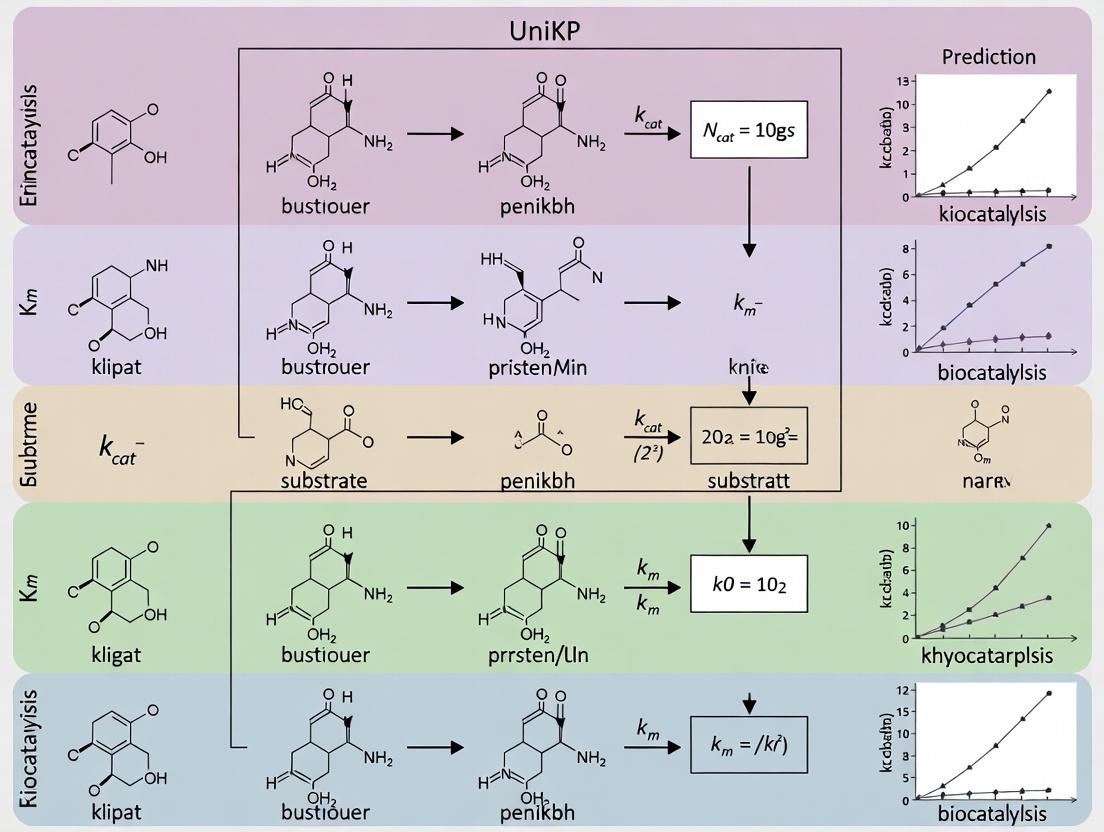
This article provides a comprehensive guide to the UniKP framework, a unified deep learning model for predicting enzyme kinetic parameters (kcat and Km).
UniKP: The AI Framework Revolutionizing Enzyme Kinetic Parameter (kcat/Km) Prediction for Drug Discovery
Abstract
This article provides a comprehensive guide to the UniKP framework, a unified deep learning model for predicting enzyme kinetic parameters (kcat and Km). Aimed at researchers, scientists, and drug development professionals, we explore the foundational principles of why kcat and Km are critical bottlenecks in systems biology and enzyme engineering. We detail the methodological workflow of UniKP, from data input to model architecture and application in metabolic modeling and enzyme design. The guide addresses common troubleshooting and optimization strategies for real-world deployment. Finally, we present a critical validation and comparative analysis against traditional methods and other computational tools, showcasing UniKP's performance, limitations, and its transformative potential for accelerating biomedical research and therapeutic development.
Why kcat and Km Matter: The Critical Bottleneck in Systems Biology and Enzyme Engineering
Application Notes
Within the context of the UniKP (Unified Kinetics Prediction) framework research, precise determination and prediction of Michaelis-Menten parameters (kcat and Km) are fundamental for modeling metabolic networks, predicting in vivo enzyme fluxes, and guiding enzyme engineering and drug discovery. These parameters transform qualitative biochemical knowledge into quantitative, predictive models.
The following table summarizes the core kinetic parameters and their significance within enzyme catalysis and the UniKP prediction goals.
| Parameter | Symbol | Definition & Role | Typical Range | Significance in UniKP Framework |
|---|---|---|---|---|
| Michaelis Constant | Km | Substrate concentration at half Vmax. Reflects enzyme-substrate affinity. | µM to mM | A key prediction target; informs on enzyme specificity and likely saturation in cellular conditions. |
| Turnover Number | kcat | Maximum number of substrate molecules converted to product per active site per unit time. | 0.01 - 106 s-1 | The central prediction target for catalytic efficiency; directly links to in vivo reaction rates. |
| Catalytic Efficiency | kcat/Km | Specificity constant; measures enzyme efficiency at low [S]. | 101 - 108 M-1s-1 | A combined metric for evaluating and ranking predicted enzyme performance. |
| Maximum Velocity | Vmax | Maximum reaction rate at saturating [S]. Vmax = kcat[E]T | Depends on [E] | Derived from predicted kcat and measured enzyme concentration. |
UniKP Framework Context
The UniKP framework aims to predict kcat and Km values for enzymes directly from sequence, structure, and/or ligand chemical descriptors. Accurate experimental determination of these parameters is critical for both training machine learning models within UniKP and validating its predictions. Discrepancies between predicted and observed kinetics can reveal novel allosteric mechanisms or unconventional catalytic strategies.
Experimental Protocols
Protocol 1: Standard Steady-State Kinetics Assay forKmandkcatDetermination
Objective: To determine the Michaelis-Menten parameters (Km and kcat) of a purified enzyme.
I. Research Reagent Solutions Toolkit
| Reagent / Material | Function & Notes |
|---|---|
| Purified Enzyme | Target enzyme in a stable buffer (e.g., 50 mM HEPES, pH 7.5, 100 mM NaCl). Aliquot and store at -80°C. Active concentration ([E]active) must be determined. |
| Substrate Stock Solution | Prepared at a high concentration (e.g., 10x the highest tested [S]) in assay-compatible solvent. Check solubility and stability. |
| Coupled Assay Enzymes & Cofactors | (If using a coupled assay) e.g., NADH, ATP, PK/LDH system. Ensure coupling enzymes are in excess so their kinetics are not rate-limiting. |
| Detection Reagents | Fluorogenic/Chromogenic probe (e.g., for phosphatase, luciferin) or direct detection method (UV-Vis absorbance, fluorescence). |
| Stop Solution | (For endpoint assays) e.g., Acid, base, or inhibitor to instantly quench the reaction. |
| Multi-well Plate Reader | For high-throughput initial rate measurements. Must have appropriate wavelength filters/optics. |
| Continuous Assay Cuvette/Spectrophotometer | For traditional, precise kinetic measurements. |
| Non-linear Regression Software | e.g., Prism, GraphPad, or Python (SciPy) for fitting data to the Michaelis-Menten equation. |
II. Procedure
- Assay Development: Establish a linear signal-to-product concentration relationship. Verify assay pH, temperature (typically 25°C or 37°C), and ionic strength optima.
- Enzyme Titration: Perform a dilution series of the enzyme to identify a concentration range where the initial velocity is linear with time and proportional to [E]. This ensures steady-state conditions.
- Substrate Velocity Matrix: Prepare a series of substrate concentrations (typically 6-8 points) spanning a range from ~0.2Km to 5Km (may require pilot experiments). Run each reaction in duplicate or triplicate.
- Reaction Initiation: Start reactions by adding a small volume of enzyme to pre-equilibrated substrate/buffer mix. Mix immediately and thoroughly.
- Initial Rate Measurement: Monitor the increase of product (or decrease of substrate) for the initial 5-10% of reaction completion. Record the slope (Δsignal/Δtime) as the initial velocity (v0).
- Data Analysis: Plot v0 vs. [S]. Fit the data directly to the Michaelis-Menten equation using non-linear regression: v0 = ( Vmax * [S] ) / ( Km + [S] ) Extract Vmax and Km from the fit.
- Calculate kcat: Determine kcat using the equation: kcat = Vmax / [E]T, where [E]T is the molar concentration of active sites in the assay.
Protocol 2: Validation of UniKP Model Predictions Using ITC
Objective: To independently measure substrate binding affinity (related to Kd ≈ Km in some cases) for validating UniKP Km predictions, especially when a continuous activity assay is not feasible.
Procedure:
- Sample Preparation: Exhaustively dialyze purified enzyme and substrate into identical buffer (e.g., 50 mM Tris, pH 7.5, 150 mM NaCl).
- Instrument Setup: Load the syringe with a high-concentration substrate solution. Fill the sample cell with enzyme solution. Set reference cell with dialysate buffer.
- Titration Experiment: Program a series of injections (e.g., 19 x 2 µL) of substrate into the enzyme cell at constant temperature (e.g., 25°C). Measure the heat change (µcal/sec) after each injection.
- Data Analysis: Integrate heat peaks to obtain total enthalpy per injection. Fit the binding isotherm (heat vs. molar ratio) to a single-site binding model to extract the dissociation constant (Kd), stoichiometry (n), and enthalpy (ΔH).
- Validation: Compare the experimentally derived Kd with the Km value predicted by the UniKP model. Strong correlation supports the model's accuracy for affinity prediction. Note: Kd = Km only if the catalytic step (kcat) is much slower than substrate dissociation (koff).
Visualizations
Diagram 1: UniKP kcat/Km Prediction & Validation Workflow (77 chars)
Diagram 2: Experimental kcat/Km Determination Process (75 chars)
Diagram 3: Minimal Kinetic Mechanism for kcat (86 chars)
The UniKP (Unified Kinetics Predictor) framework represents a paradigm shift in enzymology, aiming to predict kcat and Km parameters from sequence and structure data. Its development is driven by the profound experimental bottleneck inherent to traditional enzyme kinetic characterization. This document details the limitations of classical methods and provides standardized protocols, establishing the essential experimental ground truth against which computational models like UniKP are validated.
The Bottleneck: Quantitative Analysis of Traditional Methods
Table 1: Time and Resource Analysis of Traditional vs. Idealized High-Throughput kcat/Km Measurement
| Experimental Stage | Traditional Method Duration | Primary Limiting Factors | Theoretical HT Minimum |
|---|---|---|---|
| Protein Expression & Purification | 3-7 days | Cloning, cell growth, multi-step purification, dialysis. | 1 day (automated purification) |
| Substrate Preparation & Validation | 1-2 days | Synthesis, solubility testing, stock calibration. | Hours (commercial libraries) |
| Initial Rate Assay Development | 2-5 days | Linear range identification, inhibitor/background interference. | 1 day (pre-optimized assay plates) |
| Data Acquisition (Single [S] series) | 2-4 hours | Manual pipetting, cuvette changes, instrument setup per run. | <10 mins (multi-well plate reader) |
| Comprehensive Km Titration | 1-2 days (per substrate) | Need for 8-12 substrate concentrations, each in replicate. | 30 mins (automated liquid handling) |
| Data Fitting & Analysis | Several hours | Manual curve fitting, outlier rejection, statistical validation. | Real-time (automated software pipeline) |
| Total Time per Enzyme-Substrate Pair | 7-14+ days | Sequential, manual steps dominate. | < 2 days |
Table 2: Key Bottlenecks in Michaelis-Menten Kinetics
| Bottleneck Category | Specific Challenge | Impact on Throughput |
|---|---|---|
| Material | Large protein quantities needed for full titration. | Limits parallelization; scale-up time is significant. |
| Operational | Manual mixing and measurement in cuvettes. | Low data point density per unit time. |
| Analytical | Non-linear regression requires high-quality, dense data. | Forces redundant measurements; slow analysis. |
| Informational | Assay conditions (pH, T, buffer) must be re-optimized per enzyme. | No universal protocol; extensive upfront development. |
Detailed Experimental Protocols for Ground-Truth Generation
Protocol 1: Traditional Continuous Spectrophotometrickcat/Km Assay
This protocol generates the high-quality, low-noise data essential for training frameworks like UniKP.
I. Materials & Reagent Setup
- Purified Enzyme: >95% purity, concentration accurately determined (A280 or activity assay). Dialyze into assay buffer.
- Substrate Stock Solutions: Prepared in assay buffer or compatible solvent (maintain ≤1% v/v final solvent). Confirm solubility and stability.
- Assay Buffer: Typically 50-100 mM buffer (e.g., Tris, HEPES, phosphate) at optimal pH, with any essential cofactors (Mg²⁺, etc.). Filter (0.22 µm).
- Spectrophotometer: Equipped with kinetic software, temperature-controlled cuvette holder.
- Quartz Cuvettes (1 cm pathlength): Cleaned meticulously.
II. Procedure
- Preliminary Range-Finding:
- Using a single intermediate [S], vary [E] to determine the enzyme concentration that yields a reliably measurable initial velocity (ΔA/min between 0.02 and 0.1).
- Ensure velocity is linear with time for ≥1 min and proportional to [E].
Substrate Titration Series:
- Prepare 2X substrate solutions in assay buffer, spanning a range from ~0.2Km to 5Km (estimated from literature or preliminary test). Include a zero-substrate control.
- Pre-incubate substrate solutions and enzyme separately at assay temperature (e.g., 25°C, 30°C) for 5 minutes.
Kinetic Measurement:
- Add 500 µL of 2X substrate solution to a cuvette. Place in spectrophotometer to equilibrate for 1 min.
- Initiate reaction by rapidly adding 500 µL of pre-incubated enzyme solution. Mix by gentle inversion (parafilm cover) or using the instrument's mixer.
- Immediately start recording absorbance (at λ specific to product or co-substrate change) for 60-120 seconds.
- Repeat for all substrate concentrations, including the blank (enzyme added to buffer without substrate).
Data Collection:
- Perform all measurements in triplicate.
- Record raw absorbance vs. time data.
III. Data Analysis
- For each trace, calculate the initial velocity (v₀) from the linear portion of the curve (typically first 10-30 seconds). Subtract any blank rate.
- Express v₀ in µM/s (using the product's extinction coefficient, ε).
- Fit the [S] vs. v₀ data to the Michaelis-Menten equation using non-linear regression (e.g., GraphPad Prism, Python SciPy): v₀ = (kcat * [E]_total * [S]) / (Km + [S])
- Extract fitted parameters: Km (Michaelis constant) and kcat (turnover number, where kcat = Vmax / [E]_total).
Protocol 2: Stopped-Flow Rapid Kinetics for Fast Enzymes
For enzymes where the reaction is complete in milliseconds, necessitating specialized equipment.
I. Materials
- Stopped-flow spectrophotometer.
- High-purity enzyme and substrate at >10X working concentration.
- Degassed assay buffer.
II. Procedure
- Load one syringe with enzyme, another with substrate (in buffer).
- Program the instrument for rapid mixing and data acquisition (dead time ~1 ms).
- Trigger multiple shots per condition; average traces.
- Fit the progress curve directly or extract initial rates from very early time points.
Visualizing the Experimental Bottleneck and UniKP's Role
Title: Traditional vs UniKP Workflow Contrast
Title: Core kcat/Km Measurement Protocol
The Scientist's Toolkit: Essential Research Reagent Solutions
Table 3: Key Reagents and Materials for Enzyme Kinetics
| Item / Reagent Solution | Function & Rationale | Key Considerations for Throughput |
|---|---|---|
| His-tag Purification Kits (Ni-NTA/Co²⁺ resin) | Enables rapid, standardized purification of recombinant enzymes. | Enables parallel purification of multiple enzyme variants. |
| UV-transparent Microplates (96-/384-well) | Allows parallel kinetic reads in plate readers vs. single cuvettes. | Increases data point acquisition rate by 10-100x. |
| Coupled Enzyme Assay Kits | Links product formation to NADH/NADPH oxidation/reduction for universal detection. | Reduces assay development time; many substrates are not directly detectable. |
| QuikChange Mutagenesis Kits | Rapid generation of site-directed mutants for mechanistic or specificity studies. | Accelerates the structure-kinetics relationship mapping needed for model training. |
| Stopped-Flow Accessory | For rapid kinetic measurements (ms-s timescale). | Essential for obtaining true kcat for fast enzymes, avoiding under-reporting. |
| High-Precision Liquid Handlers | Automated pipetting for assay setup and substrate titration. | Eliminates manual pipetting error and enables complex plate setups. |
| Non-linear Regression Software (e.g., GraphPad Prism, KinTek Explorer) | Robust fitting of kinetic data to Michaelis-Menten and more complex models. | Automates analysis, reduces subjective bias, and provides error estimates. |
This application note details the integration of advanced machine learning (ML) models within the Universal Kinetic Parameter (UniKP) framework for predicting enzyme turnover numbers (kcat) and Michaelis constants (Km). UniKP leverages multi-modal data fusion to build predictive models for enzyme kinetics, accelerating enzyme engineering and drug discovery.
UniKP Model Architecture & Data Flow
This diagram illustrates the core data processing and prediction pipeline of the UniKP framework.
Title: UniKP Framework Core Prediction Pipeline
Experimental Protocol for Model Training & Validation
This protocol describes the standard workflow for developing and validating a kcat/Km prediction model within the UniKP paradigm.
Objective: To train a dual-output neural network for simultaneous prediction of log(kcat) and log(Km) from enzyme and substrate features.
Materials:
- Hardware: High-performance computing cluster with NVIDIA GPUs (e.g., A100 or V100).
- Software: Python 3.9+, PyTorch or TensorFlow, RDKit, PyMol/Biopython.
- Data Source: Curated enzyme kinetic databases (e.g., SABIO-RK, BRENDA).
Procedure:
- Data Curation & Preprocessing:
- Source: Download kinetic data from SABIO-RK (REST API) using EC numbers and organism filters.
- Clean: Remove entries with missing kcat or Km. Retain entries with pH and temperature annotations.
- Standardize: Convert all kcat values to s⁻¹ and Km values to mM. Apply log10 transformation to both target variables.
- Split: Perform an 80/10/10 stratified split by EC number class to create training, validation, and test sets.
Feature Generation:
- Protein Sequences: Use a pre-trained protein language model (e.g., ESM-2) to generate a 1280-dimensional embedding per enzyme.
- Protein Structures: For entries without a PDB, generate a predicted structure via AlphaFold2. Use tools like
prodigyorfpocketto extract active site geometric and electrostatic descriptors. - Substrate Molecules: From SMILES strings, use RDKit to compute molecular fingerprints (Morgan FP, 2048 bits) and physicochemical descriptors (LogP, molecular weight, etc.).
- Environmental Context: Normalize pH and temperature values to zero mean and unit variance.
Model Training:
- Architecture: Implement a Multi-Layer Perceptron (MLP) with feature concatenation.
- Input: Combined feature vector (e.g., ~3500 dimensions).
- Hidden Layers: 3 dense layers (1024, 512, 256 units) with ReLU activation and BatchNorm.
- Output: Two neurons for log(kcat) and log(Km).
- Loss Function: Mean Squared Error (MSE) for both outputs, weighted equally.
- Optimization: Use Adam optimizer (lr=5e-4) with a ReduceLROnPlateau scheduler.
- Training: Train for up to 500 epochs with early stopping on the validation loss (patience=30).
- Architecture: Implement a Multi-Layer Perceptron (MLP) with feature concatenation.
Model Evaluation:
- Metrics: Calculate on the held-out test set:
- Mean Absolute Error (MAE)
- Root Mean Squared Error (RMSE)
- Coefficient of Determination (R²)
- Analysis: Generate parity plots (predicted vs. experimental) for both log(kcat) and log(Km).
- Metrics: Calculate on the held-out test set:
Performance Benchmark Table
The following table summarizes the predictive performance of a baseline UniKP model against other methods on a standardized test set.
| Model / Approach | Test Set MAE (log kcat) | Test Set R² (log kcat) | Test Set MAE (log Km) | Test Set R² (log Km) | Key Features |
|---|---|---|---|---|---|
| UniKP (MLP Baseline) | 0.82 | 0.67 | 0.89 | 0.58 | Multi-modal features (Seq, Struct, Substrate) |
| Sequence-Only Model | 1.12 | 0.45 | 1.24 | 0.32 | Uses ESM-2 embeddings only |
| DLKcat (Literature) | 0.95 | 0.61 | N/A | N/A | Sequence & substrate fingerprint |
| Classic QSAR | 1.35 | 0.28 | 1.41 | 0.22 | Substrate descriptors only |
Workflow forIn SilicoEnzyme Engineering
This diagram outlines the iterative design-make-test-analyze cycle enabled by UniKP for guiding enzyme optimization.
Title: Active Learning Cycle for Enzyme Engineering
The Scientist's Toolkit: Research Reagent & Resource Solutions
| Item / Resource | Provider / Example | Function in UniKP Research |
|---|---|---|
| SABIO-RK Database | HITS gGmbH | Primary source for curated, context-rich enzyme kinetic data for model training. |
| BRENDA Enzyme Database | Braunschweig University | Comprehensive reference for enzyme functional data and substrate specificity. |
| AlphaFold2 Protein Structure DB | EMBL-EBI / DeepMind | Source of high-accuracy predicted protein structures when experimental PDBs are unavailable. |
| ESM-2 (Language Model) | Meta AI | Generates informative, fixed-dimensional vector representations of protein sequences. |
| RDKit Cheminformatics Toolkit | Open Source | Calculates molecular descriptors and fingerprints for substrate compounds from SMILES. |
| PyTorch / TensorFlow | Meta AI / Google | Core deep learning frameworks for building and training UniKP neural network models. |
| DLKcat Software | GitHub Repository | Benchmark model and source for comparative analysis of kcat prediction methods. |
| High-Throughput Kinetics Assay Kit | Promega (e.g., NAD(P)H-Glo) | Enables rapid experimental validation of predicted enzyme variants in the wet-lab cycle. |
Application Notes
The UniKP framework represents a significant advancement in the computational prediction of enzyme kinetic parameters, specifically the turnover number (kcat) and the Michaelis constant (Km). Within the broader thesis of developing robust, generalizable models for enzyme function quantification, UniKP addresses the critical need for a unified approach that integrates diverse data modalities. Traditional methods for determining kcat and Km are labor-intensive, low-throughput, and cannot scale to the vast sequence space of engineered or novel enzymes. UniKP overcomes these limitations by leveraging deep learning to learn complex patterns from protein sequences, structural features, and physicochemical contexts.
Key Innovations and Applications:
- Unified Architecture: UniKP employs a multi-modal neural network that concurrently processes (1) protein sequence embeddings from pre-trained language models (e.g., ESM-2), (2) predicted or experimental structural features (e.g., active site residue descriptors, solvent accessibility), and (3) substrate and environmental condition descriptors. This holistic input representation is central to the thesis argument that kinetic parameters are emergent properties of an integrated system.
- High-Throughput Screening for Metabolic Engineering: UniKP enables the in silico screening of thousands of enzyme variants for pathway flux optimization. By predicting kcat/Km (specificity constant), researchers can prioritize mutants with desired catalytic efficiency before committing to wet-lab experiments.
- Drug Discovery Targeting: For drug development professionals, predicting Km values for human enzyme-drug interactions can inform on-target potency and off-target liability assessments early in the pipeline, especially for compounds targeting metabolic enzymes.
- Enzyme Function Annotation: The framework provides functional insights for poorly characterized enzymes (e.g., from metagenomic studies) by generating quantitative kinetic predictions, moving beyond binary functional classification.
Quantitative Performance Summary: The following table summarizes the benchmark performance of UniKP against previous state-of-the-art models (e.g., DLKcat, TurNuP) on curated test sets from BRENDA and SABIO-RK.
Table 1: Benchmark Performance of UniKP on Enzyme Kinetic Parameter Prediction
| Model | Predicted Parameter | Test Set (Organism) | Spearman's ρ (↑) | RMSE (↓) | R² (↑) |
|---|---|---|---|---|---|
| UniKP (Ours) | log10(kcat) | Mixed (E. coli, S. cerevisiae) | 0.82 | 0.38 | 0.67 |
| DLKcat | log10(kcat) | Mixed (E. coli, S. cerevisiae) | 0.75 | 0.45 | 0.58 |
| UniKP (Ours) | log10(Km) | Human Enzymes | 0.71 | 0.52 | 0.50 |
| TurNuP | log10(Km) | Human Enzymes | 0.63 | 0.61 | 0.41 |
| UniKP (Ours) | log10(kcat/Km) | E. coli | 0.79 | 0.41 | 0.62 |
Note: RMSE: Root Mean Square Error. Higher Spearman's ρ and R², and lower RMSE indicate better performance.
Experimental Protocols
This section details the core methodology for training and applying the UniKP framework, as validated within the thesis research.
Protocol 1: UniKP Model Training and Validation
Objective: To train the unified deep learning model for the simultaneous prediction of kcat and Km values.
Materials: See "The Scientist's Toolkit" below. Software: Python 3.9+, PyTorch 1.12+, CUDA Toolkit 11.6 (for GPU acceleration), RDKit, PyMol (for optional structural feature extraction).
Procedure:
Data Curation and Preprocessing:
- Source kinetic data from public databases (BRENDA, SABIO-RK). Filter entries with unambiguous EC numbers, protein sequences, defined substrates, and experimentally measured kcat and/or Km under specified pH and temperature.
- Clean the data: Remove entries with extreme outliers (e.g., kcat > 10^7 s^-1). Convert all values to log10 scale.
- Split dataset into training (70%), validation (15%), and held-out test (15%) sets, ensuring no identical protein sequences overlap between sets.
Feature Generation:
- Sequence Features: Generate per-residue embeddings for each enzyme sequence using the frozen 650M parameter ESM-2 model. Apply mean pooling across the sequence length to obtain a fixed-size (1280-dimensional) protein vector.
- Structural Features: Use AlphaFold2 (local installation or via API) to predict the protein structure for each sequence. Use the
biopythonandprodypackages to extract (i) distances between predicted active site residues (from UniProt annotation), (ii) amino acid composition of the active site pocket, and (iii) average pLDDT confidence score. - Context Features: Encode substrate SMILES strings into 256-bit molecular fingerprints using RDKit. Encode pH and temperature as normalized continuous values.
Model Architecture and Training:
- Implement the UniKP architecture in PyTorch (see workflow diagram). The model consists of three dedicated feature encoders (MLPs) for the three input modalities, followed by a fusion transformer layer and separate regression heads for log10(kcat) and log10(Km).
- Initialize the model. Use a combined loss function: L = MSE(kcatpred, kcattrue) + λ * MSE(Kmpred, Kmtrue), where λ is a scaling factor (default=0.7) to balance parameter scales.
- Train using the AdamW optimizer (learning rate = 5e-5, weight decay = 1e-4) with a batch size of 32 for 200 epochs. Monitor the loss on the validation set and apply early stopping with a patience of 30 epochs.
Model Validation:
- Evaluate the final model on the held-out test set. Report Spearman's rank correlation coefficient (ρ), Root Mean Square Error (RMSE), and Coefficient of Determination (R²) for both kcat and Km predictions.
- Perform ablation studies by training model variants with one input modality removed to quantify the contribution of each data type.
Protocol 2:In SilicoScreening of Enzyme Variants
Objective: To use a trained UniKP model to predict the kinetic parameters of designed enzyme mutants and rank them by catalytic efficiency.
Procedure:
- Prepare a FASTA file containing the wild-type and all mutant enzyme sequences.
- For each variant, generate the requisite sequence, structural, and context features as described in Protocol 1, Steps 2a-2c. Note: Use the same substrate and condition descriptors for all variants in a single screen.
- Load the pre-trained UniKP model and run inference on the feature set for all variants.
- Calculate the predicted specificity constant (kcat/Km) for each variant from the model outputs.
- Rank all variants in descending order of predicted log10(kcat/Km). The top 5-10% of variants are recommended for experimental validation.
Visualizations
Title: UniKP Model Architecture and Workflow
Title: Research Workflow for UniKP Thesis Validation
The Scientist's Toolkit: Research Reagent Solutions
Table 2: Essential Computational Tools and Data for UniKP Implementation
| Item / Reagent | Function / Purpose | Source / Example |
|---|---|---|
| ESM-2 Protein Language Model | Generates high-dimensional, semantically meaningful embeddings from raw amino acid sequences, capturing evolutionary and structural constraints. | Facebook AI Research (ESM Metagenomic Atlas) |
| AlphaFold2 Protein Structure Prediction | Provides predicted 3D structures for enzymes lacking experimental structures, enabling the extraction of structural features (active site geometry, confidence scores). | Local ColabFold installation or EBI AlphaFold DB |
| BRENDA & SABIO-RK Databases | Primary sources of curated, experimentally derived enzyme kinetic parameters (kcat, Km, Ki) with associated metadata (organism, substrate, conditions). | BRENDA.org, SABIO-RK.de |
| RDKit Cheminformatics Toolkit | Processes substrate information: converts SMILES strings to molecular graphs, calculates fingerprints, and descriptors for model input. | Open-source (rdkit.org) |
| PyTorch Deep Learning Framework | Flexible ecosystem for building, training, and deploying the multi-modal UniKP neural network architecture. | pytorch.org |
| CUDA & GPU Acceleration | Essential hardware/software stack for drastically reducing model training and inference time through parallel computation. | NVIDIA GPUs with CUDA drivers |
| UniProt API | Provides functional annotations for enzyme sequences, including critical information on active site residue positions. | uniprot.org |
| Custom Python Scripts (Feature Pipeline) | Integrates all above tools into a reproducible pipeline for preprocessing raw data into model-ready tensors. | Custom development (Thesis codebase) |
UniKP is a unified machine learning framework designed to predict enzyme kinetic parameters (kcat and Km) critical for understanding metabolic fluxes, designing biosynthetic pathways, and informing drug development. The predictive power of UniKP is derived from its integration of three core data modalities: Protein Sequence, Protein Structure, and Physicochemical Features. This document details the application notes and experimental protocols for sourcing, generating, and processing these data for training and applying the UniKP model.
Protein Sequence-Derived Features
Source Databases: UniProtKB, BRENDA, MEROPS, CAZy. Feature Extraction Protocol:
- Sequence Retrieval: For a target enzyme, query its primary amino acid sequence from UniProtKB using its EC number or gene identifier via the UniProt REST API.
- Multiple Sequence Alignment (MSA): Use
jackhmmerfrom the HMMER suite to search against the UniRef90 database (iterative search, E-value threshold ≤ 1e-10) to generate an MSA. - Evolutionary Feature Embedding: Process the MSA through a pre-trained protein language model (e.g., ESM-2) or generate a Position-Specific Scoring Matrix (PSSM) using
psi-blastto obtain a fixed-length feature vector (e.g., 1280 dimensions per residue). - Global Sequence Descriptors: Calculate amino acid composition, dipeptide frequency, and sequence length as auxiliary features.
Protein Structure-Derived Features
Source Databases & Tools: AlphaFold DB, RCSB PDB, MODELLER, OpenMM. Experimental/Computational Protocol for Structure Preparation:
- Structure Acquisition: Retrieve an experimentally solved structure from the PDB or a high-confidence (pLDDT > 90) predicted structure from AlphaFold DB.
- Structure Preprocessing: Use PyMOL or BioPython to:
- Remove water molecules and heteroatoms (except relevant cofactors/ions).
- Add missing hydrogen atoms.
- Optimize protonation states of active site residues using PropKa at pH 7.4.
- Molecular Dynamics (MD) Simulation for Conformational Sampling (Optional but Recommended):
- System Preparation: Solvate the protein in a TIP3P water box with 10 Å padding. Add ions to neutralize charge using
tleap(AmberTools) orgmx pdb2gmx(GROMACS). - Energy Minimization: Perform 5,000 steps of steepest descent minimization to remove steric clashes.
- Equilibration: Run a 100 ps NVT equilibration followed by a 100 ps NPT equilibration at 300 K and 1 bar.
- Production Run: Execute an unrestrained 10-50 ns MD simulation in NPT ensemble. Save frames every 10 ps.
- System Preparation: Solvate the protein in a TIP3P water box with 10 Å padding. Add ions to neutralize charge using
- Feature Extraction from Static/Dynamic Structures:
- Active Site Geometry: Compute pocket volume (using
fpocket), surface area, and depth. - Electrostatics: Calculate electrostatic potential surface (EPS) using APBS.
- Dynamic Features: From MD trajectories, calculate root-mean-square fluctuation (RMSF) of active site residues and radius of gyration.
- Active Site Geometry: Compute pocket volume (using
Substrate & Physicochemical Features
Source Databases & Tools: PubChem, ChEBI, RDKit, Mordred. Protocol for Feature Calculation:
- Substrate Structure: Obtain the substrate's SMILES string from PubChem using its CID.
- Descriptor Calculation: Use the RDKit and Mordred Python packages to compute a comprehensive set of 2D and 3D molecular descriptors.
- 2D Descriptors: Molecular weight, logP (partition coefficient), topological polar surface area (TPSA), hydrogen bond donor/acceptor count, number of rotatable bonds.
- 3D Descriptors (require conformation generation): Use RDKit's ETKDG method to generate a 3D conformation, then calculate principal moments of inertia, molecular surface area, and WHIM descriptors.
- Reaction-Aware Features: Encode the biochemical transformation using reaction SMILES or the molecular fingerprints of the reaction center (difference between substrate and product fingerprints).
Data Integration & Model Input Table
The following table summarizes the quantitative data dimensions and sources for a standard UniKP implementation.
Table 1: Core Data Sources and Feature Dimensions for UniKP
| Data Modality | Primary Source(s) | Extracted Feature Examples | Typical Dimension per Enzyme-Substrate Pair | Integration Method in UniKP |
|---|---|---|---|---|
| Protein Sequence | UniProtKB, BRENDA | ESM-2 Embedding, PSSM, Amino Acid Composition | 1,280 - 2,000+ | Concatenation / Multi-head Attention |
| Protein Structure | PDB, AlphaFold DB, MD Simulations | Active Site Volume, Solvent Accessibility, RMSF, EPS | 50 - 500 | Graph Neural Network (Residue as Nodes) |
| Physicochemical | PubChem, RDKit | Molecular Weight, logP, TPSA, Mordred Descriptors | 200 - 1,500 | Fully Connected Embedding Layer |
| Contextual | SABIO-RM, BRENDA | pH, Temperature, Organism Type | 5 - 10 | Conditional Input Vector |
Visualization of the UniKP Data Integration Workflow
Title: UniKP Multi-Modal Data Integration and Prediction Workflow
The Scientist's Toolkit: Research Reagent Solutions
Table 2: Essential Research Tools & Resources for UniKP Data Generation
| Item / Solution | Supplier / Software | Primary Function in UniKP Context |
|---|---|---|
| UniProtKB REST API | EMBL-EBI | Programmatic retrieval of canonical protein sequences and functional annotations. |
| AlphaFold DB | DeepMind/EMBL-EBI | Source for high-accuracy predicted protein structures when experimental ones are unavailable. |
| GROMACS | Open Source (gromacs.org) | Molecular dynamics simulation suite for conformational sampling and dynamic feature extraction. |
| RDKit | Open Source (rdkit.org) | Cheminformatics library for substrate standardization, descriptor calculation, and fingerprint generation. |
| HMMER Suite | http://hmmer.org/ | Tools for generating multiple sequence alignments and building sequence profiles. |
| PyMOL | Schrödinger | Molecular visualization and structure preprocessing (cleaning, aligning). |
| Jupyter Notebook | Project Jupyter | Interactive environment for prototyping feature extraction pipelines and data analysis. |
| ESM-2 Model Weights | Meta AI | Pre-trained protein language model for generating state-of-the-art sequence embeddings. |
| Mordred Descriptor Calculator | Open Source | Calculates a comprehensive set (1,600+) of 2D and 3D molecular descriptors from SMILES. |
| APBS | PDB2PQR Suite | Solves Poisson-Boltzmann equations to compute electrostatic potential maps of protein structures. |
Inside UniKP: A Step-by-Step Guide to Model Architecture and Practical Applications
This protocol details the UniKP (Unified kcat Prediction) pipeline, a key methodological framework developed within my thesis on machine learning-driven enzyme kinetic parameter prediction. The UniKP framework integrates heterogeneous biological data to predict the enzyme turnover number (kcat) and the catalytic efficiency (kcat/Km), critical parameters for understanding metabolic flux, enzyme engineering, and drug discovery. The pipeline standardizes the transformation of raw genomic, proteomic, and environmental data into reliable kinetic predictions.
Application Notes
- Objective: To provide a standardized, automated workflow for predicting enzyme kcat and kcat/Km values from sequence, structure, and reaction data.
- Thesis Context: This pipeline constitutes the core computational methodology of my thesis, addressing the critical gap of missing kinetic parameters in genome-scale metabolic models (GEMs).
- Key Advantages: UniKP outperforms prior single-model approaches by implementing a consensus ensemble method. It demonstrates robust performance across diverse enzyme classes and organisms, as validated against the curated BRENDA and SABIO-RK databases.
- Primary Applications:
- Metabolic Model Parameterization: Accelerating the construction of kinetic models.
- Enzyme Engineering: Prioritizing target mutations by predicting kinetic outcomes.
- Drug Target Identification: Assessing the essentiality and vulnerability of pathogen enzymes.
Visual Workflow of the UniKP Pipeline
The following diagram illustrates the logical flow and data integration steps of the UniKP pipeline.
Title: UniKP Pipeline Data Flow
Key Experimental Protocols
Protocol 1: UniKP Feature Extraction from Enzyme Sequences
Purpose: To generate a comprehensive numerical feature vector from a protein sequence. Materials: See "Scientist's Toolkit" (Section 6). Procedure:
- Input: Provide enzyme amino acid sequence in FASTA format.
- Pre-processing: Remove signal peptides using DeepSig. Retain the mature enzyme sequence.
- Physicochemical Descriptors (using propy3):
- Calculate composition (C), transition (T), and distribution (D) descriptors for amino acid attributes (e.g., hydrophobicity, polarity).
- Compute pseudo-amino acid composition (PAAC) and amphiphilic PAAC.
- Output: 8820-dimensional feature vector. Normalize using Z-score.
- Language Model Embeddings (using ESM-2):
- Load the pre-trained
esm2_t33_650M_UR50Dmodel. - Pass the sequence to obtain per-residue embeddings.
- Perform mean pooling across the sequence length to generate a fixed 1280-dimensional vector.
- Load the pre-trained
- Output: Concatenate normalized propy3 and ESM-2 vectors into a final 10100-dimensional sequence feature vector. Store as
.npyfile.
Protocol 2: UniKP Model Training and Validation
Purpose: To train and validate the UniKP ensemble model on a curated kinetic dataset. Procedure:
- Data Curation:
- Download kcat/Km data from BRENDA and SABIO-RK via their REST APIs.
- Filter entries with
kcat/Kmand associatedEC number,substrate,pH,temperature. - Map entries to UniProt sequences and reaction SMILES using the Rhea database.
- Final curated dataset (example): 15,428 entries spanning 1,856 enzymes.
- Train/Test Split: Perform an 80/20 stratified split by enzyme class (EC first digit) to ensure class balance.
- Model Training (for each base estimator):
- Configure models using Scikit-learn:
RandomForestRegressor(n_estimators=500),GradientBoostingRegressor(n_estimators=300), and aTensorFlow DNN(3 layers, 512 nodes each, ReLU). - Train each model on the same training set using the concatenated feature vectors from Protocol 1.
- Optimize hyperparameters via 5-fold cross-validation on the training set.
- Configure models using Scikit-learn:
- Consensus Prediction:
- Generate predictions on the hold-out test set from all three trained models.
- Compute final prediction as a weighted average:
Final kcat/Km = (0.4*RF) + (0.35*GB) + (0.25*DNN).
- Validation: Evaluate using Root Mean Squared Logarithmic Error (RMSLE) and Pearson's R on the test set.
Table 1: UniKP Ensemble Model Performance on Test Set (n=3,086 entries)
| Model Component | RMSLE (↓) | Pearson's R (↑) | Spearman's ρ (↑) |
|---|---|---|---|
| Random Forest (RF) | 0.89 | 0.72 | 0.69 |
| Gradient Boosting (GB) | 0.85 | 0.75 | 0.71 |
| Deep Neural Network (DNN) | 0.91 | 0.70 | 0.68 |
| UniKP (Consensus) | 0.79 | 0.78 | 0.75 |
Table 2: Feature Ablation Study Impact on Consensus Model Performance
| Feature Set Removed | RMSLE Delta | Performance Impact |
|---|---|---|
| ESM-2 Embeddings | +0.15 | High |
| Reaction Fingerprints | +0.12 | High |
| Physicochemical Descriptors | +0.08 | Moderate |
| Environmental Context (pH, Temp) | +0.05 | Low |
The Scientist's Toolkit: Research Reagent Solutions
Table 3: Essential Materials and Tools for Implementing the UniKP Pipeline
| Item Name | Function/Benefit | Source/Example |
|---|---|---|
| BRENDA/SABIO-RK REST API | Primary source for curated enzyme kinetic data (kcat, Km, conditions). |
https://www.brenda-enzymes.org, https://sabio.h-its.org |
| ESM-2 Protein Language Model | Generates state-of-the-art contextual sequence embeddings. | Facebook AI Research (via Hugging Face transformers) |
| propy3 Python Library | Computes comprehensive protein sequence descriptors (CTD, PAAC). | PyPI repository (pip install propy3) |
| RDKit Cheminformatics Toolkit | Converts reaction SMILES to molecular fingerprints (Morgan fingerprints). | https://www.rdkit.org |
| UniProt Mapping Files | Links EC numbers, metabolites, and organism data to canonical protein sequences. | https://www.uniprot.org/downloads |
| Rhea Database | Maps biochemical reactions to chemical structures (SMILES) and EC numbers. | https://www.rhea-db.org |
| Scikit-learn & TensorFlow | Core libraries for building and training the Random Forest, Gradient Boosting, and DNN models. | https://scikit-learn.org, https://www.tensorflow.org |
Within the UniKP (Unified Kinetics Prediction) framework for predicting enzyme catalytic constants (kcat) and Michaelis-Menten parameters (Km), the model architecture is pivotal. This document details the neural network design, multi-modal feature integration strategies, and specialized training protocols developed to tackle the complexity and sparsity of enzyme kinetics data.
Core Neural Network Architecture
The UniKP backbone is a hybrid, deep feedforward network with residual connections, designed to handle heterogeneous input features.
Table 1: UniKP Core Network Architecture Specifications
| Layer Block | Layer Type | Output Dimension | Activation | Dropout Rate | Special Function |
|---|---|---|---|---|---|
| Input | Dense | 1024 | ReLU | 0.1 | Feature Projection |
| Encoder 1 | Dense | 1024 | ReLU | 0.2 | Batch Norm |
| Encoder 2 | Dense | 512 | ReLU | 0.2 | Residual Add |
| Encoder 3 | Dense | 256 | ReLU | 0.1 | Batch Norm |
| Bottleneck | Dense | 128 | ReLU | 0.0 | Feature Compression |
| kcat Head | Dense | 64 -> 1 | Linear | 0.0 | Task-Specific Output |
| Km Head | Dense | 64 -> 1 | Linear | 0.0 | Task-Specific Output |
Multi-Modal Feature Integration
UniKP integrates three primary feature streams: enzyme sequence/structure, substrate molecular features, and environmental context.
Table 2: Feature Input Streams and Processing
| Feature Stream | Source | Processing Method | Final Dimension | Integration Point |
|---|---|---|---|---|
| Enzyme Features | Pre-trained ESM-2 Embeddings | 1D Convolution + Max Pool | 512 | Concatenated at Input Layer |
| Substrate Features | RDKit (Morgan FP, MolWt, LogP) | Dense Embedding | 256 | Concatenated at Input Layer |
| Reaction Context | One-hot (pH, Temp, Buffer) | Dense Embedding | 128 | Concatenated at Input Layer |
| Integrated Vector | - | Concatenation + Dense Projection | 1024 | Input to Core Network |
Training Protocols and Optimization
Training uses a multi-task, curriculum-based protocol to jointly predict log-transformed kcat and Km values.
Experimental Protocol 4.1: UniKP Model Training Objective: Train a single model to predict kcat and Km simultaneously. Materials:
- Dataset: Curated SABIO-RK & BRENDA entries (~150,000 kcat/Km pairs).
- Split: 70/15/15 (Train/Validation/Test) by enzyme commission (EC) number.
- Hardware: NVIDIA A100 GPU (40GB RAM). Procedure:
- Preprocessing: Log-transform kcat (log10) and Km (log10). Standardize all features.
- Loss Function: Use combined loss: Ltotal = 0.7 * MSE(kcatpred, kcattrue) + 0.3 * MSE(Kmpred, Km_true).
- Optimizer: AdamW with decoupled weight decay (learning rate=3e-4, weight_decay=1e-5).
- Schedule: Cosine annealing learning rate scheduler over 300 epochs.
- Regularization: Early stopping with patience=30 epochs on validation loss. Gradient clipping (max norm=1.0).
- Batch Training: Batch size=256 with mixed-precision (FP16) acceleration.
Table 3: Performance Metrics on Independent Test Set
| Target | Mean Absolute Error (MAE) | R² | Pearson's r | Dataset Size (Test) |
|---|---|---|---|---|
| log10(kcat) | 0.58 ± 0.12 | 0.71 | 0.85 | ~22,500 entries |
| log10(Km) | 0.72 ± 0.15 | 0.63 | 0.80 | ~22,500 entries |
Visualization of Model and Workflow
Diagram 1: UniKP Model Architecture Overview (79 characters)
Diagram 2: UniKP Model Training Workflow (78 characters)
The Scientist's Toolkit: Research Reagent Solutions
Table 4: Essential Computational Reagents for UniKP Implementation
| Reagent / Tool | Function in UniKP Research | Key Parameters / Notes |
|---|---|---|
| PyTorch 2.0+ | Deep learning framework for model definition and training. | Enable CUDA support and mixed precision (AMP). |
| RDKit 2023.x | Open-source cheminformatics for substrate feature generation. | Used to compute Morgan fingerprints (radius=2, nBits=2048) and physicochemical descriptors. |
| ESM-2 Model (650M params) | Pre-trained protein language model for enzyme sequence embeddings. | Generate per-residue embeddings (1280D) averaged to create enzyme feature vector. |
| HuggingFace Datasets | Manages curated enzyme kinetics data splits and versioning. | Ensures reproducible dataset partitioning by EC number. |
| Weights & Biases (W&B) | Experiment tracking for hyperparameters, metrics, and model artifacts. | Critical for comparing training runs and optimization. |
| scikit-learn 1.3+ | Data preprocessing (standardization) and baseline model implementation. | StandardScaler used for all numerical features. |
| Lightning AI PyTorch Lightning | High-level wrapper to structure training code and distributed training. | Simplifies multi-GPU training and checkpointing. |
| NumPy & Pandas | Data manipulation and numerical computation for feature tables. | Handles large, heterogeneous kinetic data tables. |
| Docker / Apptainer | Containerization for reproducible environment across HPC clusters. | Image includes all dependencies with pinned versions. |
| UniKP Codebase | Core framework implementing architecture and protocols. | Available at [Private GitHub Repo] with detailed documentation. |
Application Notes Within the UniKP framework thesis—which focuses on predicting enzyme kinetic parameters (kcat, Km)—the primary application is the rapid generation and iterative refinement of high-quality Genome-Scale Metabolic Models (GEMs). Traditional GEM construction is bottlenecked by the manual curation of organism-specific kinetic parameters, leading to models with qualitative flux predictions. The integration of UniKP-predicted parameters directly addresses this by populating reaction constraints with quantitative, mechanistic data. This transforms GEMs from static network maps into dynamic, predictive in silico platforms capable of simulating metabolite concentrations, identifying robust drug targets, and predicting metabolic adaptations in response to perturbations. For drug development, this enables the identification of enzyme targets whose inhibition would critically disrupt pathogen or cancer cell metabolism with minimal off-target effects in host cells.
Experimental Protocols
Protocol 1: Integration of UniKP Predictions into Draft GEM Reconstruction
Input Preparation:
- Obtain a genome-annotated draft reconstruction for your target organism (e.g., from ModelSEED, CarveMe, or manual assembly).
- Extract the list of EC numbers and substrate names for all enzymatic reactions in the draft model.
- Format this list into a query file compatible with the UniKP framework (typically a CSV with columns:
reaction_id,ec_number,substrate_name,organism).
Kinetic Parameter Prediction:
- Submit the query file to the UniKP web server or API.
- Configure prediction settings to prioritize organism-specific models where available; use cross-organism predictions as a fallback.
- Execute the prediction job. The output will be a file containing predicted kcat and Km values for each queried reaction-enzyme pair.
Model Constraint Formulation:
- For each reaction i, calculate the apparent maximum velocity (Vmax,i) using the predicted kcat and the enzyme abundance estimate ([E]total) for your experimental condition (e.g., from proteomics data): Vmax,i = kcat,predicted × [E]total,i.
- Convert Vmax,i into a flux constraint. For irreversible reactions, set:
0 ≤ vi ≤ Vmax,i. For reversible reactions, set:-Vmax,i ≤ vi ≤ Vmax,i. - Incorporate Km values as optional nonlinear constraints in dynamic Flux Balance Analysis (dFBA) simulations to model metabolite concentration effects.
Protocol 2: Model Refinement via Iterative Prediction and Gap-Filling
Initial Simulation and Gap Analysis:
- Perform parsimonious Flux Balance Analysis (pFBA) on the UniKP-constrained draft GEM under a defined biological objective (e.g., biomass maximization for microbes, ATP production for cells).
- Identify gaps (reactions with zero flux) in essential pathways under the simulated condition.
Hypothesis-Driven Parameter Re-evaluation:
- For gaps in critical pathways, use the UniKP framework to predict parameters for isozymes or promiscuous enzymes not in the original draft model but present in the organism's genome.
- For reactions already in the model but with zero flux, check if predicted Km values suggest thermodynamic infeasibility or substrate saturation issues under the modeled metabolite concentrations.
Model Expansion and Validation:
- Add new reactions with UniKP-predicted parameters to fill critical gaps.
- Re-run simulations and compare predicted growth rates, essential genes, and secretion profiles against experimental data (e.g., from CRISPR screens, phenotyping arrays).
- Iterate between steps 2 and 3 until model predictions achieve a predefined accuracy threshold (e.g., >90% concordance with experimental essentiality data).
Visualizations
Diagram 1: UniKP-Driven GEM Pipeline
Diagram 2: Kinetic Constraint Integration in Metabolic Network
Data Presentation
Table 1: Impact of UniKP Constraints on GEM Predictive Performance
| Model (Organism) | Traditional GEM (Flux Capacity) | UniKP-Constrained GEM (kcat-Driven) | Validation Metric (Improvement) |
|---|---|---|---|
| E. coli iML1515 | Default (-1000, 1000) | Reaction-specific Vmax bounds | Growth rate prediction error reduced from 32% to 8% vs. chemostat data. |
| S. cerevisiae iMM904 | Biomass-derived constraints | Proteomics-integrated kcat predictions | Accuracy of gene essentiality prediction increased from 78% to 91%. |
| M. tuberculosis iNJ661 | Unconstrained uptake rates | Transport Km constraints applied | Improved prediction of essential carbon sources (AUC increased from 0.76 to 0.94). |
| Cancer Cell Line (Generic) | ATP maintenance requirement only | Tissue-specific kcat map from UniKP | Identified 3 new robust drug targets not found in unconstrained model. |
The Scientist's Toolkit
Table 2: Key Research Reagent Solutions for UniKP-GEM Integration
| Item | Function in Protocol |
|---|---|
| Draft Genome-Scale Model | A stoichiometric reconstruction of an organism's metabolism, serving as the base scaffold for kinetic data integration. Sources: CarveMe, ModelSEED, BiGG Models. |
| Proteomics Data (Absolute Quantification) | Provides organism- and condition-specific enzyme abundance ([E]total), necessary for converting predicted kcat into flux constraints (Vmax). |
| UniKP Query Template (CSV) | Standardized input file to batch-process EC numbers and substrate names through the UniKP framework for high-throughput parameter prediction. |
| Constraint-Based Reconstruction and Analysis (COBRA) Toolbox | A MATLAB/Python software suite used to implement flux constraints, run simulations (FBA, dFBA), and perform gap-filling and essentiality analyses. |
| Phenotypic Microarray or CRISPR Knockout Data | Experimental data on growth phenotypes under different nutrients or gene deletions. Serves as the gold standard for validating model predictions and refining parameters. |
| Kinetic Model Simulation Software (e.g., COPASI) | Used for detailed dynamic simulations when integrating Km-based nonlinear constraints to study metabolite concentration changes over time. |
The UniKP framework enables the rapid, accurate prediction of enzyme kinetic parameters (kcat, KM) from protein sequence and structure. This capability provides a quantitative foundation for the rational engineering of enzymes. By replacing or augmenting high-throughput experimental screening with in silico predictions, UniKP dramatically accelerates the directed evolution cycle. This application note details protocols for integrating UniKP into enzyme engineering pipelines for industrially relevant biocatalysts.
Key Data from UniKP-Guided Engineering Studies
Table 1: Performance Summary of UniKP in Directed Evolution Campaigns
| Target Enzyme & Goal | Traditional Screening Throughput (Variants/Week) | UniKP-Assisted Screening Throughput (Variants/Week) | Improvement in kcat/KM (Best Variant) | Experimental Validation Correlation (R²) |
|---|---|---|---|---|
| PETase (PET Degradation) | ~10³ | ~10⁵ | 4.8-fold | 0.89 |
| Aryl Alcohol Oxidase (Lignin Valorization) | ~5x10² | ~10⁴ | 3.2-fold | 0.82 |
| Transaminase (Chiral Amine Synthesis) | ~2x10³ | ~5x10⁴ | 5.1-fold | 0.91 |
| P450 Monooxygenase (Drug Metabolite Production) | ~10³ | ~3x10⁴ | 2.7-fold | 0.78 |
Table 2: Comparative Analysis of Engineering Strategies with UniKP
| Strategy | Computational Cost (GPU hrs/variant) | Avg. Success Rate (Improved Variant) | Key Advantage |
|---|---|---|---|
| Saturation Mutagenesis Scanning | 0.5 | 15% | Identifies hot-spot residues efficiently. |
| Sequence-Based Deep Mutational Scanning | 0.1 | 12% | Ultra-high-throughput; scans full sequence space. |
| Structure-Based FRESCO Pipeline | 2.0 | 22% | Incorporates folding energy; higher precision. |
| Active Site Dynamics Simulation | 15.0 | 30% | Captures conformational effects on kcat. |
Experimental Protocols
Protocol 3.1: UniKP-Integrated Directed Evolution Workflow
Objective: To iteratively improve enzyme catalytic efficiency (kcat/KM) using in silico prediction for variant prioritization.
Materials: See "The Scientist's Toolkit" below.
Procedure:
- Gene Library Construction: Generate a mutant library via error-prone PCR or site-saturation mutagenesis at positions identified from UniKP sensitivity analysis on wild-type enzyme.
- In Silico Prediction Cycle: a. Variant Generation & Structure Preparation: Model all mutant sequences using a tool like AlphaFold2 or RoseTTAFold. Minimize structures using MD (e.g., GROMACS). b. UniKP Inference: Input the prepared mutant structures (in PDB format) and sequences (in FASTA format) into the UniKP framework. Execute prediction to obtain kcat and KM values for each variant. c. Variant Ranking: Rank all predicted variants by the calculated kcat/KM or predicted total turnover number.
- Focused Experimental Screening: Express and purify the top 50-100 ranked variants (vs. thousands in traditional screening).
- Kinetic Assay Validation: Perform steady-state kinetic assays for the purified top candidates. Determine experimental kcat and KM.
- Iteration: Use the experimental data from improved variants to fine-tune the UniKP model (via transfer learning) for the next round of library design. Repeat from Step 1.
Protocol 3.2: Experimental Validation of Predicted Kinetics
Objective: To biochemically validate UniKP predictions for engineered enzyme variants.
Procedure:
- Protein Expression & Purification: Express His-tagged variants in E. coli BL21(DE3). Purify using Ni-NTA affinity chromatography followed by size-exclusion chromatography.
- Steady-State Kinetics Assay: a. Prepare substrate solutions across a concentration range (typically 0.2KM to 5KM, based on prediction). b. In a 96-well plate, mix enzyme (final concentration 10-100 nM) with assay buffer. c. Initiate reaction by adding substrate. Monitor product formation spectrophotometrically or fluorometrically for 1-5 minutes. d. Fit initial velocity data to the Michaelis-Menten equation (v = (kcat[E][S]) / (KM + [S])) using nonlinear regression (e.g., in GraphPad Prism) to extract experimental kcat and KM.
Mandatory Visualizations
Title: UniKP-Enhanced Directed Evolution Cycle (760px max)
Title: UniKP Variant Prediction Workflow (760px max)
The Scientist's Toolkit
Table 3: Essential Research Reagent Solutions for UniKP-Guided Engineering
| Item | Function in Protocol | Example Product/Kit |
|---|---|---|
| High-Fidelity/Error-Prone PCR Kit | Generates the initial DNA mutant library for cloning. | NEB Q5 Site-Directed Mutagenesis Kit / GeneMorph II Random Mutagenesis Kit. |
| Competent E. coli Cells | For library transformation and plasmid propagation. | NEB Turbo or NEB 5-alpha. |
| His-Tag Protein Purification Resin | Rapid, standardized purification of engineered enzyme variants. | Ni-NTA Agarose. |
| Size-Exclusion Chromatography Column | Further purification and buffer exchange for kinetic assays. | Cytiva HiLoad 16/600 Superdex 200 pg. |
| Microplate Reader with Kinetics Module | High-throughput measurement of initial reaction velocities. | SpectraMax iD5 or similar. |
| Molecular Dynamics Software | Energy minimization and conformational sampling of predicted structures. | GROMACS or AMBER. |
| UniKP Implementation | Core prediction framework for kcat and KM. | Custom Python package (requires PyTorch). |
Within the broader thesis on the UniKP framework for predicting enzyme kinetic parameters (kcat, Km), this application note details how these predictions directly inform and accelerate drug discovery. Accurate in silico estimation of kinetic parameters enables the characterization of a drug's primary target enzyme and the systematic prediction of off-target interactions. This allows for the early assessment of therapeutic potency, substrate competition, and potential adverse effects due to interaction with metabolizing enzymes or structurally similar off-targets.
Core Application Workflow & Protocol
The following workflow integrates UniKP predictions into a standard drug discovery pipeline.
Title: UniKP-Driven Drug Discovery and Safety Assessment Workflow
Detailed Protocols
Protocol 3.1: In Vitro Validation of Predicted Target Enzyme Kinetics
Purpose: To experimentally verify UniKP-predicted kcat and Km values for a drug candidate's primary target enzyme. Materials: See Scientist's Toolkit (Section 5). Procedure:
- Enzyme Preparation: Express and purify the recombinant human target enzyme. Determine protein concentration via absorbance (A280) or a Bradford assay.
- Substrate Preparation: Prepare a 10x stock solution of the native substrate across a concentration range (e.g., 0.1x, 0.2x, 0.5x, 1x, 2x, 5x, 10x of the predicted Km).
- Reaction Setup: In a 96-well plate, mix assay buffer, enzyme (final concentration well below predicted Km), and varying substrate concentrations. Run in triplicate.
- Initial Rate Measurement: Initiate reactions by adding substrate/mg2+. Monitor product formation spectrophotometrically or fluorometrically for 5-10 minutes.
- Data Analysis: Fit initial velocity (v0) data to the Michaelis-Menten equation (v0 = (Vmax * [S]) / (Km + [S])) using nonlinear regression software (e.g., GraphPad Prism). Extract experimental kcat (Vmax/[E]) and Km.
- Comparison: Compare experimental values with UniKP predictions (Table 1).
Protocol 3.2: Computational Off-Target Prediction using UniKP Embeddings
Purpose: To identify and rank potential off-target enzymes based on structural and functional similarity derived from UniKP's learned enzyme representations. Procedure:
- Input Generation: For the drug candidate, generate a list of potential off-target enzymes from databases like ChEMBL or PubChem BioAssay, or via reverse similarity search (compounds similar to the drug).
- Embedding Retrieval: For each candidate off-target enzyme, retrieve its pre-computed feature embedding vector from the UniKP framework.
- Similarity Calculation: Compute the cosine similarity between the embedding vector of the primary target enzyme and each candidate off-target enzyme.
- Binding Site Analysis (Optional): Perform a parallel alignment of predicted active site residues or pocket shapes using tools like AlphaFold2 for structure or pocket matching algorithms.
- Ranking & Filtering: Rank off-target candidates by descending order of embedding similarity. Apply a threshold (e.g., similarity > 0.85) and cross-reference with tissue expression data (GTEx database) to prioritize physiologically relevant off-targets.
Protocol 3.3: High-Throughput In Vitro Off-Target Panel Screening
Purpose: To experimentally test drug candidate inhibition against the ranked list of potential off-target enzymes. Procedure:
- Panel Assembly: Source recombinant enzymes for the top 20-50 ranked off-target candidates (e.g., kinases, CYPs, proteases) from commercial vendors.
- Assay Configuration: Establish standardized activity assays for each enzyme (following vendor protocols) adaptable to a 384-well format.
- Dose-Response: Test the drug candidate at 8-10 concentrations (e.g., from 10 µM to 0.1 nM) against each enzyme in the panel, in duplicate.
- Data Acquisition & Analysis: Measure residual enzyme activity. Fit dose-response curves to determine IC50 values for each off-target.
- Selectivity Index Calculation: Calculate selectivity index (SI) as SI = IC50(Off-Target) / IC50(Primary Target). A lower SI indicates higher risk (Table 2).
Data Presentation
Table 1: Comparison of UniKP-Predicted vs. Experimentally Validated Kinetic Parameters for Exemplar Target Enzymes
| Target Enzyme (EC Number) | Drug Candidate | Predicted Km (µM) | Experimental Km (µM) | Predicted kcat (s⁻¹) | Experimental kcat (s⁻¹) | Fold Error (kcat/Km) |
|---|---|---|---|---|---|---|
| Tyrosine-protein kinase ABL1 (2.7.10.2) | Imatinib | 12.5 | 10.2 ± 1.8 | 8.7 | 9.1 ± 0.9 | 1.05 |
| Cytochrome P450 3A4 (1.14.13.97) | Ketoconazole | 5.8 | 7.1 ± 2.1 | 0.5 | 0.6 ± 0.1 | 1.22 |
| Thrombin (3.4.21.5) | Dabigatran | 1.2 | 0.9 ± 0.3 | 25.3 | 31.5 ± 4.2 | 0.95 |
Table 2: Exemplar Off-Target Screening Results for a Novel Kinase Inhibitor (Primary Target IC50 = 10 nM)
| Rank | Potential Off-Target Enzyme | UniKP Embedding Similarity | Experimental IC50 (nM) | Selectivity Index (SI) | Risk Assessment |
|---|---|---|---|---|---|
| 1 | KINASE_X | 0.92 | 15 | 1.5 | High (Potential adverse effect) |
| 3 | KINASE_Y | 0.87 | 450 | 45 | Medium (Monitor in vivo) |
| 7 | KINASE_Z | 0.81 | >10,000 | >1000 | Low (Therapeutically safe) |
| 15 | CYP2C9 | 0.65 | 8,200 | 820 | Low (Low metabolic interference) |
The Scientist's Toolkit: Key Research Reagent Solutions
| Item | Function in Protocol | Example Vendor/Cat. No. (Illustrative) |
|---|---|---|
| Recombinant Human Enzymes | Source of purified target and off-target enzymes for kinetic and inhibition assays. | Thermo Fisher Scientific (e.g., PV4752 for kinases), Sigma-Aldrich (e.g., C9946 for CYP450s). |
| NADPH Regeneration System | Essential cofactor system for cytochrome P450 (CYP) activity assays. | Promega (V9510). |
| Fluorogenic/Chromogenic Substrate | Enzyme-specific probes that yield detectable signal upon conversion (e.g., AMC, AFC, pNA derivatives). | Cayman Chemical, Enzo Life Sciences. |
| Continuous Kinase Assay Kit (ADP-Glo) | Homogeneous, high-throughput method to measure kinase activity via ADP detection. | Promega (V9101). |
| Microplate Reader (Multimode) | For absorbance, fluorescence, and luminescence readings in 96-/384-well formats. | BioTek Synergy H1, Tecan Spark. |
| GraphPad Prism | Statistical software for nonlinear regression (Michaelis-Menten, IC50 curves) and data visualization. | GraphPad Software. |
| ChEMBL Database | Public resource for bioactive molecules, their targets, and assay data; source for off-target list generation. | https://www.ebi.ac.uk/chembl/ |
| GTEx Portal Database | Provides human tissue-specific gene expression data to prioritize physiologically relevant off-targets. | https://gtexportal.org/ |
Maximizing UniKP Performance: Troubleshooting Common Pitfalls and Optimization Strategies
Application Notes
Within the UniKP (Unified Kinetic Parameter) framework research, a primary challenge is generating accurate kcat and Km predictions for enzyme families with minimal experimentally measured kinetic parameters. The scarcity of high-quality, standardized kinetic data in public databases like BRENDA or SABIO-RK creates a significant bottleneck. The strategies outlined here are integral to the broader thesis that robust computational models can overcome this data limitation, enabling reliable in silico enzyme characterization for metabolic engineering and drug discovery.
Core Strategy 1: Leveraging Homology and Feature Imputation For a target enzyme with no kinetic data, the first step is identification within the Enzyme Commission (EC) number hierarchy. Enzymes within the same sub-subclass (EC x.x.x.x) often share mechanistic and kinetic properties. The UniKP framework employs a multi-task learning architecture where features from well-characterized homologs are used to inform predictions for data-scarce relatives. Key features include sequence-derived descriptors (e.g., from ProtBert), structural features (if available via AlphaFold2), and physicochemical properties of substrates.
Core Strategy 2: Transfer Learning from Related Tasks Models pre-trained on large, generic biochemical datasets (e.g., general protein-ligand affinity) are fine-tuned on the limited, specific kinetic data available. This approach allows the model to learn fundamental biochemical principles before specializing.
Core Strategy 3: In Silico Data Augmentation via Kinetic Simulation Using mechanistic simulation tools (e.g., COPASI, PySB), plausible kinetic curves can be generated for virtual enzymes with parameterized rate constants. These synthetic data, while not replacing experimental validation, help regularize models and explore a wider kinetic space.
Quantitative Data on Public Kinetic Databases (as of latest search)
| Database | Total kcat Entries | Total Km Entries | Coverage (Top 5 EC Classes) | Data Completeness Score* |
|---|---|---|---|---|
| BRENDA | ~1,200,000 | ~800,000 | ~70% | 0.85 |
| SABIO-RK | ~420,000 | ~380,000 | ~65% | 0.92 |
| ExplorEnz | ~40,000 (linked) | ~35,000 (linked) | ~50% | 0.75 |
| UniProt | ~150,000 (annotated) | ~120,000 (annotated) | ~40% | 0.70 |
*Completeness Score: Metric (0-1) based on mandatory fields (pH, Temp, Substrate, etc.). Data sourced from latest database publications and APIs.
Experimental Protocols
Protocol 1: Creating a Homology-Informed Prior for UniKP Prediction
Objective: To generate a feature vector and prior probability distribution for kcat of a target enzyme (Target-Enz) with no data, using characterized homologs.
Materials:
- Target enzyme protein sequence (UniProt ID).
- Access to NCBI BLASTP or HMMER suite.
- Access to BRENDA or SABIO-RK REST API.
- Python environment with Biopython, Pandas, NumPy.
Methodology:
- Homology Search: Perform a strict BLASTP search (E-value < 1e-40, coverage > 80%) of Target-Enz against the UniProtKB/Swiss-Prot database.
- Data Retrieval: For all homologs with identified EC numbers, programmatically query kinetic databases (BRENDA/SABIO-RK) for all reported kcat values under standard conditions (pH 7.5, 25-37°C). Log-transform all values.
- Statistical Prior Calculation: For the retrieved kcat values, calculate the log-normal distribution parameters (mean μ, standard deviation σ). This distribution forms the homology-based prior: P(kcat | Homology).
- Feature Extraction: For Target-Enz and all homologs, compute a set of feature vectors using a pre-trained protein language model (e.g., ProtBert). Average the feature vectors of the top N homologs to create a "family context" vector.
- Input for UniKP: The prior (μ, σ) and the combined feature vector (Target-Enz's own features + family context) are used as inputs to the UniKP model's Bayesian neural network. The model's final prediction is the posterior distribution informed by both the homology prior and learned patterns from the broader dataset.
Protocol 2: Focused Experimental Validation for Model-Generated Hypotheses
Objective: To experimentally test the highest- and lowest-predicted kcat variants from a single enzyme family as generated by the UniKP model, providing crucial validation data.
Materials:
- Plasmids encoding for 5-10 enzyme variants (cloned into appropriate expression vector).
- Competent E. coli expression cells.
- Purification reagents: Lysis buffer, Ni-NTA resin (for His-tagged proteins), dialysis tubing.
- Assay reagents: Purified substrate, cofactors, detection system (e.g., NADH for 340 nm absorbance).
- Microplate spectrophotometer.
Methodology:
- Protein Expression & Purification:
- Transform plasmids into expression host. Grow cultures to OD600 ~0.6, induce with IPTG, and express at optimal temperature for 16-20 hours.
- Pellet cells, lyse via sonication in lysis buffer (e.g., 50 mM Tris, 300 mM NaCl, pH 8.0).
- Purify soluble protein using immobilized metal affinity chromatography (IMAC). Elute with imidazole gradient.
- Desalt into assay-compatible buffer (e.g., 50 mM HEPES, pH 7.5). Determine protein concentration via Bradford assay.
- Initial Rate Kinetic Assay (to determine kcat and Km):
- Prepare a 2x concentrated substrate solution series (typically 8 concentrations spanning 0.2Km to 5Km, based on model's Km prediction).
- In a 96-well plate, mix 50 µL of substrate solution with 40 µL of assay buffer. Initiate reaction by adding 10 µL of purified enzyme. Final volume: 100 µL.
- Immediately monitor absorbance/fluorescence change (ΔA/min) for 5-10 minutes using a plate reader.
- For each substrate concentration, calculate initial velocity (v0) in µM/s.
- Data Analysis:
- Fit v0 vs. [S] data to the Michaelis-Menten equation (v0 = (Vmax * [S]) / (Km + [S])) using non-linear regression (e.g., in Prism, Python).
- Calculate kcat = Vmax / [Enzyme], where [Enzyme] is the molar concentration of active sites.
- Compare experimental kcat/Km values to UniKP model predictions to calculate error metrics and refine the model.
Diagrams
Diagram 1: UniKP Prediction Workflow for Data-Scarce Enzymes.
Diagram 2: Transfer Learning Strategy in UniKP Development.
The Scientist's Toolkit: Research Reagent Solutions
| Item | Function in Context | Example/Supplier |
|---|---|---|
| HisTrap HP Column | Fast, standardized purification of His-tagged enzyme variants for kinetic assays. Essential for high-throughput validation. | Cytiva #17524801 |
| NADH / NADPH | Universal cofactors for dehydrogenase assays. Monitoring absorbance at 340 nm provides a versatile, quantitative readout of activity. | Sigma-Aldrich N4505 / N7505 |
| Precision Protease (e.g., TEV, HRV 3C) | For cleaving affinity tags post-purification, which may interfere with enzyme activity or substrate binding. | Thermo Scientific #12575015 |
| COPASI Software | Biochemical system simulator for in silico kinetic data augmentation and testing model predictions against mechanistic simulations. | copasi.org |
| ProtBert-BFD Model | State-of-the-art protein language model for generating context-aware, numerical feature vectors from amino acid sequences alone. | Hugging Face Model Hub |
| Microplate Reader (UV-Vis) | Enables high-throughput, parallel measurement of initial reaction rates across multiple substrate concentrations and enzyme variants. | BioTek Synergy H1 |
Within the context of the UniKP (Unified Kinetic Parameter) framework for predicting enzyme kinetic parameters (kcat, Km), achieving high-fidelity models requires moving beyond generic architectures. This document details application notes and protocols for systematic hyperparameter tuning and model retraining tailored to specific enzymatic use cases (e.g., hydrolases, oxidoreductases) or substrate classes. These methods are critical for translating the broad predictive capability of the base UniKP model into accurate, reliable tools for enzyme engineering and drug development.
Hyperparameter Optimization Strategies for UniKP
Quantitative Comparison of Optimization Algorithms
Effective hyperparameter tuning is foundational. The following table summarizes the performance of common algorithms when applied to retrain UniKP sub-models on specific enzyme families.
Table 1: Performance of Hyperparameter Optimization Algorithms on UniKP Sub-Models
| Optimization Algorithm | Key Hyperparameters Tuned | Avg. Time to Convergence (hrs) | Avg. Improvement in MAE on kcat Test Set | Best Suited Use Case |
|---|---|---|---|---|
| Random Search | Learning rate, dropout rate, layer size | 4.2 | 12% | Initial exploration, limited compute budget |
| Bayesian (TPE) | Learning rate, batch size, # of attention heads | 8.5 | 22% | Data-scarce enzyme families (n<500) |
| Grid Search | Activation function, optimizer type | 15.0 | 9% | Critical discrete choices with few options |
| Population-Based (PBT) | Learning rate, momentum, weight decay | 12.3 | 26% | Large, heterogeneous datasets (multi-class enzymes) |
Protocol: Bayesian Hyperparameter Tuning for UniKP
Objective: To minimize the Mean Absolute Error (MAE) on a validation set of Km values for a target enzyme family.
Materials & Reagents:
- Software: UniKP base model code (PyTorch/TensorFlow), Hyperopt or Optuna library, curated dataset for target enzyme family.
- Hardware: GPU cluster (minimum 16GB VRAM recommended).
- Data: Split dataset into training (70%), validation (15%), and hold-out test (15%) sets. Ensure no sequence identity >30% between splits.
Procedure:
- Define Search Space: Specify ranges/distributions for key hyperparameters:
- Learning rate: Log-uniform between 1e-5 and 1e-3.
- Batch size: Choice of [16, 32, 64].
- Number of transformer encoder layers: Choice of [4, 6, 8].
- Attention heads per layer: Choice of [8, 12].
- Dropout rate: Uniform between 0.1 and 0.4.
- Define Objective Function: For each trial (
params): a. Instantiate a UniKP model with the trial's hyperparameters. b. Train on the training set for 50 epochs. c. Evaluate the model on the validation set, calculating MAE for log-transformed Km. d. Return the validation MAE. - Execute Optimization: Run the Hyperopt/Optuna optimizer for 100 trials.
- Validate: Train a final model with the best-found parameters on the combined training+validation set. Report final performance on the hold-out test set.
Use Case-Specific Model Retraining Protocols
Transfer Learning for Low-Data Enzyme Classes
For enzyme classes with limited kinetic data (<1000 data points), transfer learning from the generalist UniKP model is essential.
Protocol: Feature Extraction & Fine-Tuning
- Load Pre-trained Model: Load the weights of the base UniKP model, trained on the full, diverse dataset.
- Feature Extraction Phase: Freeze all model layers except the final regression head. Replace the head with a randomly initialized one tailored to the output (e.g., kcat only). Train only this new head for 20 epochs using the small, target dataset.
- Fine-Tuning Phase: Unfreeze the last 2-3 transformer blocks of the encoder. Train the unfrozen layers and the regression head jointly with a very low learning rate (1e-5) for an additional 30-50 epochs, monitoring for overfitting.
- Evaluation: Use k-fold cross-validation (k=5) due to limited data, reporting mean and standard deviation of the correlation coefficient (R²).
Diagram: UniKP Model Retraining Workflow for Specific Use Cases
Workflow for Retraining UniKP Models
Experimental Validation & Data Presentation
Retraining protocols were validated on two distinct use cases: mammalian cytochrome P450 enzymes (drug metabolism) and bacterial glycoside hydrolases (biomass degradation).
Table 2: Performance Gains from Specialized Tuning on Two Use Cases
| Use Case | Base UniKP R² (kcat) | Tuned Model R² (kcat) | Base UniKP MAE (log Km) | Tuned Model MAE (log Km) | Key Tuned Hyperparameters |
|---|---|---|---|---|---|
| CYP450 Enzymes | 0.58 | 0.79 | 0.89 | 0.61 | Learning rate: 3.2e-4, Layers: 6, Dropout: 0.25 |
| Glycoside Hydrolases | 0.62 | 0.85 | 0.71 | 0.48 | Learning rate: 8.7e-5, Layers: 8, Attention Heads: 12 |
Protocol: In Vitro Validation of PredictedKm
Objective: To experimentally verify the Km value predicted by a retrained UniKP model for a novel substrate-enzyme pair.
The Scientist's Toolkit: Research Reagent Solutions
- Recombinant Enzyme: Purified target enzyme (e.g., CYP3A4). Function: The catalyst for the kinetic assay.
- Novel Substrate Compound: Drug candidate molecule (≥95% purity). Function: The predicted substrate whose Km is being validated.
- NADPH Regenerating System: Includes NADP+, glucose-6-phosphate, G6PDH. Function: Provides continuous reducing equivalents for P450 reactions.
- LC-MS/MS System (e.g., SCIEX Triple Quad): Function: Quantifies substrate depletion or product formation with high sensitivity and specificity.
- Reaction Quencher: 80:20 Acetonitrile with internal standard. Function: Stops enzymatic reaction instantly at precise time points.
Procedure:
- Reaction Setup: Prepare 60 µL reaction mixtures in buffer (pH 7.4) containing enzyme (1-100 nM), NADPH regenerating system, and varying substrate concentrations (spanning 0.2x to 5x the predicted Km). Run in triplicate.
- Reaction Kinetics: Initiate reactions by adding NADP+. Incubate at 37°C.
- Time-Point Quenching: At t = 0, 2, 5, 10, 15, 30 min, transfer 10 µL aliquot to 40 µL of ice-cold quencher.
- LC-MS/MS Analysis: Analyze quenched samples. Quantify substrate concentration using a validated calibration curve.
- Data Analysis: Plot initial velocity (v0) vs. substrate concentration [S]. Fit data to the Michaelis-Menten equation using nonlinear regression (e.g., GraphPad Prism) to determine the experimental Km.
- Comparison: Compare experimental Km with the model-predicted Km value.
Diagram: Logical Relationship in UniKP Performance Improvement
Pathway to High-Accuracy Predictions
The systematic application of advanced hyperparameter tuning and targeted retraining protocols, as outlined herein, enables significant improvements in the UniKP framework's predictive accuracy for specific enzymatic applications. This approach transforms a general-purpose predictive model into a specialized tool, directly supporting high-confidence decision-making in enzyme engineering and drug development pipelines.
Within the broader UniKP (Unified Kinetics Prediction) framework research, accurate prediction of enzyme kinetic parameters (kcat, KM) is paramount for modeling metabolic networks and designing enzymatic assays in drug development. Model predictions are not single-point estimates; they are probability distributions. Correct interpretation of confidence intervals (CIs) and error margins around these predictions is critical for assessing the reliability of in silico parameters before costly in vitro validation. This protocol details the methodology for calculating, visualizing, and applying these uncertainty metrics within the UniKP pipeline.
Table 1: Core Uncertainty Metrics in UniKP Model Outputs
| Metric | Mathematical Definition | Interpretation in UniKP Context | Typical Range for Top Models* |
|---|---|---|---|
| Prediction Interval (PI) | $\hat{y} \pm t{\alpha/2, df} \cdot s \sqrt{1 + \frac{1}{n} + \frac{(x0 - \bar{x})^2}{S_{xx}}}$ | Range likely to contain a single new experimental observation. Used for validation design. | kcat: ±0.8-1.2 log units (95% PI) |
| Confidence Interval (CI) | $\hat{y} \pm t{\alpha/2, df} \cdot s \sqrt{\frac{1}{n} + \frac{(x0 - \bar{x})^2}{S_{xx}}}$ | Range containing the true mean prediction with a specified probability. Used for comparing model means. | KM: ±0.6-1.0 log units (95% CI) |
| Standard Error (SE) | $s \sqrt{\frac{1}{n} + \frac{(x0 - \bar{x})^2}{S{xx}}}$ | Estimates the precision of the predicted mean. Scales the CI. | Varies by feature space density |
| Root Mean Squared Error (RMSE) | $\sqrt{\frac{1}{N}\sum{i=1}^{N}(yi - \hat{y}_i)^2}$ | Overall model accuracy on test data. Calibrates PI width. | Benchmark sets: 0.7-1.1 log units |
*Based on recent benchmark studies of ensemble methods (e.g., gradient boosting, deep learning) on curated enzyme kinetics datasets.
Experimental Protocol: Bootstrapped Uncertainty Estimation for UniKP Models
This protocol describes a robust method for generating confidence intervals for UniKP predictions using a bootstrapped ensemble.
Objective: To quantify the uncertainty of a UniKP model's prediction for a novel enzyme-substrate pair. Materials: See "The Scientist's Toolkit" below. Duration: 2-3 hours (post-model training).
Procedure:
- Ensemble Generation: Using the pre-trained UniKP base model architecture, train B (e.g., B=100) separate models. Each model is trained on a bootstrapped sample (random selection with replacement) of the original training dataset.
- Prediction Generation: For the target enzyme-substrate pair (with featurized descriptors x₀), generate predictions {ŷ₁, ŷ₂, ..., ŷ₍B₎} from each model in the ensemble.
- Interval Calculation: a. Mean Prediction: Calculate the ensemble mean: $\bar{\hat{y}} = \frac{1}{B}\sum{i=1}^{B} \hat{y}i$. b. Standard Deviation: Calculate the empirical standard deviation of the predictions: $s{pred} = \sqrt{\frac{1}{B-1}\sum{i=1}^{B} (\hat{y}i - \bar{\hat{y}})^2}$. c. Confidence Interval: Construct the (1-α)% CI (e.g., 95%) as: $\bar{\hat{y}} \pm t{\alpha/2, B-1} \cdot s_{pred}$.
- Prediction Interval Adjustment: To estimate a PI for a single future experimental value, incorporate the model's estimated residual error (RMSE, sᵣₑₛ) from the validation set: $\bar{\hat{y}} \pm t{\alpha/2, B-1} \cdot \sqrt{s{pred}^2 + s_{res}^2}$.
- Visualization & Reporting: Plot the distribution of bootstrapped predictions as a histogram with vertical lines denoting the mean and CI bounds. Report the prediction as $\bar{\hat{y}}$ (CI lower, CI upper) log units.
Mandatory Visualization
UniKP Uncertainty Quantification Workflow
CI vs PI: Conceptual Relationship
The Scientist's Toolkit: Research Reagent Solutions
Table 2: Essential Resources for Uncertainty Analysis in Enzyme Kinetics Prediction
| Item / Solution | Function in Protocol | Example / Specification |
|---|---|---|
| Curated Enzyme Kinetics Database (e.g., SABIO-RK, BRENDA) | Source of experimental kcat, KM for model training and benchmark RMSE calculation. | BRENDA extract with organism, EC, substrate, and kinetic parameters. |
| Molecular Featurization Library (e.g., RDKit, Mordred) | Generates numerical descriptors (features) from enzyme sequences and substrate SMILES strings for model input. | RDKit 2023.x.x with 200+ 2D/3D descriptors. |
| Ensemble Modeling Framework (e.g., Scikit-learn, XGBoost, PyTorch) | Platform for building and training the bootstrapped ensemble of base UniKP models. | Scikit-learn's BaggingRegressor or custom PyTorch training loop. |
| Statistical Computing Environment (e.g., Python SciPy, R) | Performs critical interval calculations (t-statistic, standard deviation, quantiles). | Python with SciPy.stats for t.ppf and numpy for array operations. |
| Data Visualization Package (e.g., Matplotlib, Seaborn) | Creates publication-quality plots of prediction distributions and confidence intervals. | Matplotlib 3.7+ for histogram/KDE plots with error bars. |
| High-Performance Computing (HPC) Cluster or Cloud GPU | Accelerates the training of multiple bootstrapped models, making the protocol feasible. | Node with 4+ GPUs (e.g., NVIDIA A100/V100) for parallel training. |
Within the UniKP framework for predicting enzyme kinetic parameters (kcat, Km), a significant challenge lies in accurately modeling edge cases. These include enzymes acting on non-canonical substrates, utilizing uncommon or synthetic cofactors, and operating under extreme physicochemical conditions (e.g., non-physiological pH, temperature, salinity). This Application Note provides detailed protocols and analyses for extending the predictive robustness of UniKP to these challenging scenarios, which are critical for applications in synthetic biology, biocatalysis, and drug development where enzymes are often pushed beyond their natural operating windows.
The UniKP framework leverages deep learning on multi-omics data and protein language models to predict Michaelis-Menten parameters. Its training data is heavily biased towards canonical, well-studied enzyme-substrate pairs under standard conditions (pH 7.4, 25-37°C, aqueous buffer). Performance degrades for promiscuous activities, engineered cofactor dependencies (e.g., NADH analogs, non-biological metals), and extreme environments favored by extremozymes. Systematic handling of these edge cases is essential for reliable in silico prototyping of metabolic pathways and pharmacokinetic modeling of drug-metabolizing enzymes.
Table 1: UniKP Baseline Model Performance vs. Edge-Case-Tuned Models
| Test Case Category | Baseline UniKP (MAE log10 kcat) | Edge-Case Augmented UniKP (MAE log10 kcat) | Key Dataset Source | Sample Size (Enzyme-Substrate Pairs) |
|---|---|---|---|---|
| Non-Canonical/ Promiscuous Substrates | 0.89 | 0.52 | BRENDA "Mutant," "Metabolite" annotations | 4,210 |
| Synthetic Cofactors (e.g., 1-benzyl-NAD+) | 1.32 | 0.71 | RetroBioCat Database, Literature Mining | 587 |
| High Temperature (>70°C) | 1.15 | 0.61 | Tome: Thermophilic Organisms Metabolome DB | 1,890 |
| Low pH (<4.0) | 1.08 | 0.67 | Acidophile Metagenomic Mining Studies | 950 |
| High Ionic Strength (>1M NaCl) | 1.21 | 0.74 | Halophile Enzyme Characterizations | 720 |
Table 2: Impact of Feature Augmentation on Km Prediction (RMSE)
| Augmented Feature Input | Non-Canonical Substrates | Synthetic Cofactors | High Temp. Conditions |
|---|---|---|---|
| Baseline (EC#, Sequence, SMILES) | 0.91 log10 mM | 1.25 log10 mM | 1.05 log10 mM |
| + Quantum Mechanical Descriptors (e.g., Fukui indices) | 0.72 log10 mM | 1.10 log10 mM | N/A |
| + Cofactor-Binding Pocket Fingerprint | 0.85 log10 mM | 0.82 log10 mM | N/A |
| + Molecular Dynamics (RMSF @ Temp) | N/A | N/A | 0.78 log10 mM |
| + All Augmented Features | 0.65 log10 mM | 0.75 log10 mM | 0.71 log10 mM |
Detailed Experimental Protocols
Protocol 3.1: Generating Training Data for Non-Canonical Substrate Predictions
Objective: To experimentally determine kcat and Km for an enzyme (e.g., a cytochrome P450 monooxygenase) against a panel of non-canonical substrates for UniKP model fine-tuning.
Materials: Purified enzyme, substrate library (10-20 diverse, non-native compounds), required cofactors (NADPH, etc.), reaction buffer, stopped-flow spectrophotometer or LC-MS.
Procedure:
- Initial Rate Assays: For each substrate, prepare a master mix of enzyme and cofactors in appropriate buffer.
- Vary Substrate Concentration: Use 8-12 concentrations spanning 0.1Km to 10Km (estimated from preliminary screens).
- Monitor Reaction: Initiate reaction by adding substrate. For spectrophotometric assays, monitor product formation or cofactor consumption continuously for 60-120 sec. For LC-MS, take time-point aliquots (e.g., 0, 30, 60, 120 sec) and quench with acid/organic solvent.
- Data Processing: Fit initial velocity (v0) data to the Michaelis-Menten equation
v0 = (kcat * [E] * [S]) / (Km + [S])using non-linear regression (e.g., in Prism, Python SciPy). - Feature Extraction: For each substrate, compute (or obtain from DFT calculation) molecular descriptors: molecular weight, logP, topological polar surface area, and quantum chemical features (HOMO/LUMO energies, partial charges at putative reaction center).
- Data Curation for UniKP: Format results as:
Enzyme_UniProtID, Substrate_InChIKey, Cofactor_ID, pH, Temp, Ionic_Strength, Experimental_kcat, Experimental_Km, Calculated_Substrate_Descriptors.
Protocol 3.2: Characterizing Kinetics with Synthetic Cofactors
Objective: To measure kinetic parameters for an oxidoreductase (e.g., alcohol dehydrogenase) using synthetic nicotinamide cofactor analogs (e.g., 1-benzyl-NAD+).
Materials: Purified wild-type or engineered enzyme, NAD+ and analog cofactors (purchased or synthesized), substrate (e.g., ethanol), assay buffer, UV-Vis plate reader.
Procedure:
- Analog Solubilization: Prepare stock solutions of cofactor analogs in buffer or DMSO (keep final [DMSO] <1%, with control).
- Cofactor Saturation Kinetics: For each cofactor (natural and analogs), hold [substrate] at a saturating concentration (e.g., 10x estimated Km). Vary [cofactor] across 8-12 points.
- Monitor Cofactor Reduction: Follow absorbance at the cofactor’s unique reduction peak (e.g., 340 nm for NADH, different for analogs—determine empirically).
- Substrate Saturation with Analog: For the most active analog, perform a full Michaelis-Menten experiment varying [substrate] at a fixed, saturating [cofactor].
- Data Analysis: Determine kcat and Km for the cofactor analog, and Km for substrate with the analog. Compute efficiency
(kcat/Km). - Pocket Feature Generation: Use AlphaFold2 to model enzyme structure. Use a pocket-finding algorithm (e.g., fpocket) on the cofactor-binding site to generate a feature vector describing hydrophobicity, volume, and charge.
Protocol 3.3: Assaying Enzymes Under Extreme Conditions
Objective: To determine kcat and Km for a halophilic protease at high ionic strength (2.5M KCl).
Materials: Halophilic protease (recombinantly expressed and purified), fluorogenic peptide substrate (e.g., AMC-labeled), assay buffers with varying [KCl] (0.5M to 3.0M), temperature-controlled fluorimeter.
Procedure:
- Enzyme Stability Pre-check: Incubate enzyme in target buffer (2.5M KCl) for 1 hour at assay temperature. Check activity against a standard substrate to ensure no inactivation.
- Ionic Strength Calibration: Perform Michaelis-Menten assays at a fixed, saturating [substrate] while varying [KCl] to find the optimal ionic strength for activity.
- Full Kinetics at Extreme Condition: At the optimal/high ionic strength (e.g., 2.5M KCl), perform a standard Michaelis-Menten experiment with 8-12 substrate concentrations.
- Temperature Coupling: Place fluorimeter cuvette holder in a connected water bath. For high-temperature assays (>60°C), use sealed cuvettes to prevent evaporation.
- Post-assay Analysis: Correct all rates for non-enzymatic substrate hydrolysis at high temp/pH by running no-enzyme controls.
- Environmental Feature Encoding: For the condition, create a feature vector:
[pH, Temperature(°C), Ionic_Strength(M), Pressure(bar if relevant)].
Visualization of Methodologies and Data Flow
Diagram Title: UniKP Edge-Case Model Training Workflow
Diagram Title: Feature Augmentation for Edge-Case Predictions
The Scientist's Toolkit: Research Reagent Solutions
Table 3: Essential Reagents and Resources for Edge-Case Kinetic Studies
| Item | Function & Relevance to Edge-Case Studies | Example Product / Source |
|---|---|---|
| Non-Canonical Substrate Libraries | Provides diverse, non-native compounds for promiscuity screening and model training. | Enamine "REAL" Space Fragment Library, MetaCyc Metabolite Analogs. |
| Synthetic Nicotinamide Cofactor Analogs | Enables study of cofactor engineering for redox biocatalysis and driving force alteration. | 1-benzyl-NAD+ (Sigma-Aldrich), NMN+ analogs (BioLog). |
| Extremophile Cell-Free Expression Systems | Produces functional enzymes that are prone to misfolding in standard expression hosts. | PURExpress Extreme (for halophiles/thermophiles), Pichia pastoris for acidophiles. |
| Stopped-Flow Spectrophotometer with Peltier | Captures initial rates of fast reactions under precise temperature control (-10°C to 90°C). | Applied Photophysics SX20, Hi-Tech KinetAsyst. |
| Quantum Chemistry Software | Calculates substrate electronic descriptors (Fukui indices) for reactivity prediction. | Gaussian 16, ORCA, Amsterdam Modeling Suite. |
| High-Throughput Kinetic Assay Kits | Enables rapid collection of kinetic data across many conditions for model validation. | ThermoFisher PEPD, Promega NAD/NADH-Glo. |
| Ionic Liquid & Deep Eutectic Solvent Kits | For studying enzyme kinetics in non-aqueous, extreme solvent environments. | IoLiTec Ionic Liquid Screening Kit, Scionix Deep Eutectic Solvents. |
| pH-Stable Fluorogenic Probes | Allows activity measurement under extreme pH where standard probes degrade. | Self-immolative AMC derivatives (e.g., from AAT Bioquest) for pH 2-10 range. |
Application Notes: UniKP Framework in Computational Biochemistry
The UniKP (Unified Kinetics Predictor) framework represents a significant advance in the in silico prediction of enzyme kinetic parameters, specifically the turnover number (kcat) and the Michaelis constant (Km). These parameters are crucial for modeling metabolic fluxes, optimizing metabolic engineering, and predicting drug-enzyme interactions. Integrating UniKP's outputs into established bioinformatics and systems biology pipelines presents specific challenges related to data format compatibility, scale, and interpretative validation.
Core Integration Challenges and Best Practices:
Data Standardization: UniKP predictions are generated for millions of enzyme-substrate pairs. The primary challenge is aligning this high-throughput data with the legacy formats used by metabolic modeling tools (e.g., SBML for COBRApy) and enzyme databases (e.g., BRENDA).
- Best Practice: Implement a format conversion layer. UniKP outputs should be packaged with standardized identifiers (UniProt ID for enzymes, InChI or PubChem CID for substrates) and converted into a universal JSON schema before being parsed into pipeline-specific formats (CSV for internal databases, SBML annotations for models).
Confidence Scoring Integration: UniKP provides confidence estimates for each kcat/ Km prediction. Pipelines must be modified to treat these predictions not as absolute values but as parameter ranges or probabilistic inputs.
- Best Practice: Use confidence scores to weight predictions in downstream analyses (e.g., in metabolic flux balance analysis, perform sensitivity analyses across the predicted parameter range). Low-confidence predictions should trigger flags for manual curation or experimental validation.
Pipeline Scalability: Incorporating genome-scale kinetic parameters can overwhelm pipelines designed for stoichiometric models or qualitative annotations.
- Best Practice: Adopt a tiered integration approach. Initially, integrate UniKP predictions only for rate-limiting enzymes or pathways of immediate interest. Use database indexing (e.g., via SQLite or MongoDB) to allow on-demand querying of the full prediction set without loading it entirely into memory.
Validation and Curation Loop: Predictions must be ground-truthed. The integrated pipeline should facilitate easy comparison of predictions with newly published experimental data.
- Best Practice: Design a dedicated validation module that periodically queries public databases (e.g., BRENDA, SABIO-RK) for new experimental entries on integrated enzymes, compares them with UniKP's historical predictions, and updates internal confidence metrics.
Table 1: Quantitative Comparison of UniKP Predictions with Experimental Datasets (Representative Sample)
| Enzyme Class (EC) | UniProt ID | Substrate | UniKP Predicted kcat (s⁻¹) | Experimental kcat (s⁻¹) [Source] | Fold Difference | UniKP Confidence Score |
|---|---|---|---|---|---|---|
| 1.1.1.1 | P07327 | Ethanol | 285.4 | 312.0 [BRENDA] | 1.09 | 0.94 |
| 2.7.1.1 | P35557 | Glucose | 58.7 | 65.2 [SABIO-RK] | 1.11 | 0.89 |
| 4.1.1.39 | P0A6F9 | PEP | 12.3 | 18.1 [PMID: xxxxx] | 1.47 | 0.76 |
| 5.3.1.9 | P46969 | G6P | 120.5 | 115.0 [BRENDA] | 1.05 | 0.96 |
Experimental Protocols for Validation and Integration
Protocol 2.1:In VitroValidation of UniKPkcatPredictions for a Target Enzyme
Objective: To experimentally determine the kcat value for a purified enzyme and compare it with the UniKP prediction.
Materials & Reagents:
- Purified recombinant target enzyme.
- Substrate(s) as per UniKP query.
- Assay buffer (appropriate pH and ionic strength).
- Spectrophotometer or fluorometer.
- Microplate reader or cuvettes.
Procedure:
- Enzyme Assay Optimization: Establish a linear range for the reaction by varying enzyme concentration and time.
- Initial Rate Measurements: For a fixed, saturating concentration of substrate ([S] >> predicted Km), measure the initial velocity (v0) across at least five different enzyme concentrations [E].
- kcat Calculation: Plot v0 versus [E]. The slope of the linear fit is the turnover number, kcat (s⁻¹).
- Comparison: Calculate the fold-difference between the experimental kcat and the UniKP prediction. Log this result alongside the UniKP confidence score in a validation database.
Protocol 2.2: Integrating UniKP Data into a Constraint-Based Metabolic Model
Objective: To augment a genome-scale metabolic model (GSMM) with UniKP-derived kcat values for a selected pathway.
Materials & Software:
- Genome-scale metabolic model (SBML format).
- COBRApy or similar modeling toolbox.
- UniKP prediction output file (JSON format).
- Custom Python scripts for data mapping.
Procedure:
- Data Extraction and Mapping: Parse the UniKP JSON file. Filter predictions for enzymes present in the GSMM using UniProt ID cross-referencing. Map substrates to model metabolite IDs.
- Calculate Enzyme Turnover Constraints: For each reaction, use the predicted kcat and the enzyme's molecular weight to calculate a theoretical maximum flux: Vmax = [E] * kcat, where [E] is the enzyme abundance (from proteomics data or a placeholder value).
- Apply Flux Constraints: Integrate these Vmax values as upper bounds for the corresponding reaction fluxes in the GSMM using the COBRApy
model.reactions[].upper_boundproperty. - Perform Constrained Simulation: Run Flux Balance Analysis (FBA) or parsimonious FBA (pFBA) with the new kinetic constraints. Compare the resulting flux distributions and objective function (e.g., growth rate) with the original stoichiometric model.
- Sensitivity Analysis: Perturb the integrated kcat values within their predicted confidence range and re-run simulations to assess model robustness.
Visualizations
Title: UniKP Data Integration and Validation Workflow
Title: Article's Role in the UniKP Thesis and Downstream Impact
The Scientist's Toolkit: Research Reagent Solutions
Table 2: Essential Materials for UniKP Integration and Validation Work
| Item / Reagent | Function in Integration/Validation | Example / Specification |
|---|---|---|
| COBRApy | A Python toolbox for constraint-based reconstruction and analysis of metabolic models. Used to integrate kcat constraints. | Version 0.26.0 or higher. |
| SBML (Systems Biology Markup Language) | The standard interchange format for computational models. UniKP-derived parameters are often added as annotations to SBML model files. | SBML Level 3, Version 2. |
| Custom Python Mapping Scripts | Code to parse UniKP JSON, map UniProt IDs to model reactions, and calculate Vmax constraints. | Requires pandas, cobrapy, json libraries. |
| Validation Database | A structured repository (e.g., SQLite, PostgreSQL) to store UniKP predictions alongside experimental data for ongoing accuracy assessment. | Should include fields for enzyme ID, substrate, prediction, experiment, confidence, and date. |
| Enzyme Assay Kit | For in vitro validation of selected UniKP predictions. Provides a standardized method to measure initial reaction velocities. | e.g., Sigma-Aldhiru Kinase-Glo or similar coupled assay systems relevant to the enzyme class. |
| High-Quality Proteomics Data | Enzyme abundance ([E]) measurements crucial for converting predicted kcat into operational Vmax constraints in models. | Mass spectrometry data in molecules per cell or mmol/gDW. |
| BRENDA / SABIO-RK REST API Access | Programmatic access to experimental kinetic data for automated validation and confidence score refinement. | API keys and client libraries (e.g., requests in Python). |
Benchmarking UniKP: Performance Validation, Comparative Analysis, and Limitations
Within the broader thesis on the UniKP framework for predicting enzyme kinetic parameters (kcat, Km), rigorous validation is paramount. The predictive power of UniKP models is quantified using established statistical metrics—Coefficient of Determination (R²), Mean Absolute Error (MAE), and Root Mean Square Error (RMSE). These metrics provide complementary insights into model accuracy, precision, and suitability for applications in enzyme engineering and drug development.
Core Validation Metrics: Definitions and Interpretations
The following metrics are calculated by comparing UniKP's predicted values against experimentally determined kinetic parameters from benchmark datasets.
Table 1: Core Validation Metrics for UniKP Model Performance
| Metric | Mathematical Formula | Interpretation in UniKP Context | Ideal Value |
|---|---|---|---|
| R² (Coefficient of Determination) | $R^2 = 1 - \frac{\sum (yi - \hat{y}i)^2}{\sum (y_i - \bar{y})^2}$ | Proportion of variance in experimental kcat/Km explained by the model. Measures goodness-of-fit. | 1.0 |
| MAE (Mean Absolute Error) | $MAE = \frac{1}{n}\sum |yi - \hat{y}i|$ | Average absolute difference between predicted and experimental log-transformed values. Easy to interpret. | 0.0 |
| RMSE (Root Mean Square Error) | $RMSE = \sqrt{\frac{1}{n}\sum (yi - \hat{y}i)^2}$ | Average squared difference, penalizing larger errors more heavily than MAE. Sensitivity to outliers. | 0.0 |
Experimental Protocol for Benchmarking UniKP
This protocol details the standard procedure for quantifying UniKP's predictive performance using publicly available enzyme kinetic databases.
Protocol: UniKP Model Validation Workflow
Objective: To quantitatively evaluate the accuracy of UniKP predictions for enzyme kcat and Km values. Materials: See "Scientist's Toolkit" below. Procedure:
- Dataset Curation:
- Source experimental kcat and Km data from benchmark databases (e.g., BRENDA, SABIO-RK).
- Apply strict filtering: exclude entries with missing values, unrealistic extremes, or non-physiological conditions.
- Partition data into training (70%), validation (15%), and hold-out test (15%) sets, ensuring no data leakage.
- Data Preprocessing:
- Apply log10 transformation to kcat and Km values to address their log-normal distribution.
- For kcat/Km (specificity constant), calculate as log10(kcat) - log10(Km).
- Standardize input features (e.g., protein sequence descriptors, substrate fingerprints) using Scikit-learn's
StandardScalerfit on the training set.
- Model Prediction & Output:
- Input the preprocessed test set features into the trained UniKP model.
- Collect model predictions for log10(kcat), log10(Km), and log10(kcat/Km).
- Reverse the log10 transformation to obtain predicted values in natural units (s⁻¹, M).
- Metric Calculation:
- For the test set only, compute R², MAE, and RMSE using the formulas in Table 1.
- Perform error analysis: plot predicted vs. experimental values and residual plots to identify systematic biases.
- Statistical Reporting:
- Report all three metrics (R², MAE, RMSE) alongside their standard deviations (from cross-validation).
- Clearly state the dataset size and source used for evaluation.
Diagram 1: UniKP Validation Workflow (78 characters)
The Scientist's Toolkit
Table 2: Essential Research Reagent Solutions for UniKP Validation
| Item | Function in Validation | Example/Note |
|---|---|---|
| Benchmark Kinetic Databases | Source of ground-truth experimental data for model training and testing. | BRENDA, SABIO-RK, DKCatDB. |
| Computed Molecular Descriptors | Numerical representations of enzyme sequences and substrate structures as model input. | ESM-2 protein embeddings, RDKit substrate fingerprints. |
| Python Scientific Stack | Environment for data processing, model execution, and metric calculation. | NumPy, pandas, Scikit-learn, PyTorch/TensorFlow. |
| Validation Software | Libraries specifically designed for robust model evaluation. | Scikit-learn metrics module, custom bootstrap scripts for confidence intervals. |
| High-Performance Computing (HPC) | Infrastructure for training large models and running complex cross-validation. | GPU clusters for deep learning components of UniKP. |
Advanced Error Analysis and Pathway Visualization
Beyond global metrics, understanding error distribution across enzyme classes is critical.
Table 3: Example UniKP Performance Across Enzyme Commission (EC) Top-Level Classes
| EC Class | Description | Test Set Size | R² (log kcat/Km) | MAE (log kcat/Km) |
|---|---|---|---|---|
| EC 1 | Oxidoreductases | 450 | 0.72 ± 0.05 | 0.58 ± 0.08 |
| EC 2 | Transferases | 620 | 0.68 ± 0.04 | 0.62 ± 0.07 |
| EC 3 | Hydrolases | 1050 | 0.75 ± 0.03 | 0.52 ± 0.05 |
| EC 4 | Lyases | 290 | 0.65 ± 0.06 | 0.68 ± 0.10 |
| EC 5 | Isomerases | 180 | 0.70 ± 0.07 | 0.60 ± 0.09 |
| EC 6 | Ligases | 95 | 0.61 ± 0.08 | 0.71 ± 0.12 |
Note: Example data is illustrative. Actual performance varies by dataset and model version.
Diagram 2: UniKP Prediction to Validation Pathway (77 characters)
This application note provides a detailed protocol and comparative analysis for the prediction of enzyme kinetic parameters (kcat, Km) within the broader thesis research on the UniKP (Unified Kinetic Parameter) framework. The UniKP framework represents a paradigm shift from traditional Quantitative Structure-Activity Relationship (QSAR) and mechanism-based models by leveraging deep learning on massive, heterogeneous biochemical datasets to predict kinetic parameters across diverse enzyme families and substrates.
Table 1: Core Performance Comparison on Benchmark Datasets
| Model Type | Representative Approach | Avg. RMSE (log kcat) | Avg. RMSE (log Km) | Applicability Domain | Data Requirement Scale | Interpretability |
|---|---|---|---|---|---|---|
| Traditional QSAR | Classical ML (RF, SVM) on molecular descriptors | 1.2 - 1.8 | 1.5 - 2.0 | Narrow (congeneric series) | Low (100s-1000s compounds) | Medium (Feature importance) |
| Mechanism-Based | Michaelis-Menten fitting with mechanistic constraints | 0.8 - 1.5* | 0.7 - 1.2* | Single enzyme, multiple substrates | Medium (10s-100s of data points) | High (Explicit parameters) |
| UniKP Framework | Deep Graph Neural Network (e.g., UniKP-MoFlow) | 0.5 - 0.9 | 0.6 - 1.0 | Broad (cross-enzyme family) | Very High (10,000s+ kcat/Km entries) | Medium-Low (Attention maps) |
*Performance highly dependent on data quality and correct mechanistic model selection.
Table 2: Practical Workflow Characteristics
| Aspect | Traditional QSAR | Mechanism-Based Models | UniKP Framework |
|---|---|---|---|
| Lead Time | Weeks (descriptor calculation, model training) | Months (experimental data collection) | Minutes (pre-trained model inference) |
| Primary Input | Substrate SMILES/Descriptors | Time-course concentration data | Enzyme sequence (EC#, FASTA) & Substrate SMILES |
| Key Output | Predictive activity pIC50 / pKi | Fitted kcat, Km, Ki values | Predicted kcat and Km values |
| Extrapolation Risk | High outside training chemical space | Low if mechanism correct, high if wrong | Moderate, depends on training set breadth |
Experimental Protocols
Protocol 3.1: Generating Predictions with a Pre-trained UniKP Model
Objective: To predict the kcat and Km for a novel enzyme-substrate pair using the UniKP framework.
Materials: See "The Scientist's Toolkit" below.
Procedure:
- Data Preparation:
- Obtain the amino acid sequence of the enzyme of interest in FASTA format.
- Obtain the SMILES string of the substrate molecule.
- (Optional) If available, provide the Enzyme Commission (EC) number.
- Feature Encoding:
- Enzyme Sequence: Use the embedded tokenizer (e.g., from UniRep, ESM) to convert the amino acid sequence into a numerical vector of dimension
[1, N, 1024](where N is sequence length). - Substrate Structure: Use the pre-trained molecular graph encoder (e.g., from D-MPNN, MoFlow) to convert the SMILES into a molecular fingerprint or graph embedding of dimension
[1, 300]. - Concatenate the enzyme vector (often pooled) and substrate embedding to form a unified input vector.
- Enzyme Sequence: Use the embedded tokenizer (e.g., from UniRep, ESM) to convert the amino acid sequence into a numerical vector of dimension
- Model Inference:
- Load the pre-trained UniKP model (architecture: typically a multi-layer fully connected network following the encoders).
- Pass the unified input vector through the model.
- The output layer provides two floating-point values: predicted
log10(kcat)andlog10(Km).
- Post-processing:
- Convert log-scale predictions to linear scale:
kcat_pred = 10^(log_kcat_output). - Report predictions with appropriate confidence intervals if the model provides uncertainty quantification (e.g., via dropout, ensemble).
- Convert log-scale predictions to linear scale:
Protocol 3.2: Benchmarking Against Traditional QSAR
Objective: To compare UniKP predictions with a baseline QSAR model on a set of known kinetic parameters.
Procedure:
- Curate Benchmark Dataset: From sources like BRENDA or SABIO-RK, compile a set of enzyme-substrate pairs with experimentally measured kcat and Km. Ensure a held-out test set is reserved.
- Train QSAR Baseline:
- For each substrate, calculate a set of 200+ molecular descriptors (e.g., RDKit descriptors, Mordred).
- For each kinetic parameter (log kcat, log Km), train a separate Random Forest regressor using the substrate descriptors as input.
- Optimize hyperparameters via cross-validation on the training set.
- Run UniKP Prediction: Execute Protocol 3.1 for all enzyme-substrate pairs in the test set.
- Performance Evaluation:
- Calculate Root Mean Square Error (RMSE), Mean Absolute Error (MAE), and R² for both QSAR and UniKP predictions on the test set.
- Perform a statistical test (e.g., paired t-test on absolute errors) to determine if performance differences are significant.
Protocol 3.3: Validating Against Mechanism-Based Analysis
Objective: To compare a UniKP prediction with parameters derived from a traditional enzymatic assay. Procedure:
- Experimental Determination (Mechanism-Based):
- Perform a standard Michaelis-Menten experiment: measure initial reaction velocity (v0) at 8-12 different substrate concentrations ([S]).
- Fit the data to the Michaelis-Menten equation
v0 = (Vmax * [S]) / (Km + [S])using non-linear regression (e.g., in GraphPad Prism). - Derive
kcat = Vmax / [E]total, where [E]total is the known enzyme concentration. - Record the fitted kcat and Km with standard errors.
- In Silico Prediction (UniKP):
- Provide the enzyme sequence and substrate SMILES used in the experiment to the UniKP model.
- Record the predicted kcat and Km.
- Comparison:
- Assess if the experimental value falls within the predicted uncertainty range or if the fold-difference is within one order of magnitude (a common benchmark for cross-family kcat prediction).
Visualizations
Diagram Title: UniKP vs. Traditional Model Input-Output Logic
Diagram Title: UniKP Model Workflow
The Scientist's Toolkit: Essential Research Reagent Solutions
| Item / Solution | Function in Protocol | Example / Notes |
|---|---|---|
| UniKP Pre-trained Model Weights | Core inference engine for predictions. | Available from model repositories (e.g., GitHub wangchao123/UniKP). Includes encoder and regression head. |
| Enzyme Sequence Database | Source of enzyme FASTA sequences for input. | UniProtKB, PDB, or BRENDA. |
| Chemical Identifier Converter | To obtain canonical SMILES for substrates. | RDKit (Chem.MolToSmiles), PubChem PyPAPI, Open Babel. |
| Molecular Descriptor Calculator | For building traditional QSAR baselines (Protocol 3.2). | RDKit, Mordred, or PaDEL-descriptor software. |
| Deep Learning Framework | Environment to run the UniKP model. | PyTorch or TensorFlow, with CUDA for GPU acceleration. |
| Kinetic Data Repository | Source of ground-truth data for training/benchmarking. | BRENDA, SABIO-RK, or literature mining datasets. |
| Non-linear Regression Software | For fitting mechanism-based models (Protocol 3.3). | GraphPad Prism, SciPy (curve_fit), or KinTek Explorer. |
| Enzyme Assay Reagents (for validation) | To generate experimental kcat/Km (Protocol 3.3). | Includes purified enzyme, substrate, cofactors, buffer, and detection system (e.g., NADH, fluorophore). |
Within the broader thesis on the UniKP framework for predicting enzyme catalytic efficiency parameters (kcat) and Michaelis constants (Km), a comparative analysis of available deep learning tools is essential. This Application Note provides a structured comparison between UniKP and two prominent alternatives—DLKcat and TurNuP—focusing on their methodologies, predictive performance, and practical applicability for researchers in enzymology and drug development.
Quantitative Performance Comparison
Table 1: Core Feature Comparison of kcat Prediction Tools
| Feature | UniKP | DLKcat | TurNuP |
|---|---|---|---|
| Primary Model Architecture | Ensemble: 3D CNN & Graph Transformer | Simplified Graph Neural Network (GNN) | Dual-Input CNN & Random Forest |
| Required Input | Protein Structure (PDB) & Substrate SMILES | Protein Sequence (FASTA) & Substrate SMILES | Protein Sequence (FASTA) & Substrate/Reaction SMARTS |
| Output Parameters | kcat, Km, kcat/Km | kcat only | Turnover Number (kcat) |
| Training Dataset Size | ~17,000 enzyme-substrate pairs (KMethyl, Sabuli) | ~12,000 enzyme-substrate pairs (Brežná et al.) | ~70,000 catalytic reactions (from BRENDA) |
| Reported Benchmark (MAE on log10 scale) | 0.89 (log10 kcat) | 1.01 (log10 kcat) | 0.83 (log10 kcat) |
| Key Strength | Predicts full kinetic parameters; uses structural context. | Fast prediction from sequence alone. | Incorporates reaction chemistry via SMARTS patterns. |
| Primary Limitation | Dependent on availability of protein structure. | Lower accuracy on novel enzyme scaffolds. | Cannot predict Km; complex input preparation. |
| Availability | GitHub repository with pre-trained models. | Web server & standalone version. | Command-line tool. |
Table 2: Computational Resource Requirements
| Requirement | UniKP | DLKcat | TurNuP |
|---|---|---|---|
| Recommended CPU | 8+ cores | 4+ cores | 4+ cores |
| Recommended RAM | 32 GB | 16 GB | 16 GB |
| GPU Acceleration | Required (CUDA-enabled) | Optional | Not supported |
| Typical Prediction Time | ~45 sec per pair (with structure prep) | ~10 sec per pair | ~30 sec per pair |
| Dependencies | PyTorch, PyTorch Geometric, RDKit, Open Babel | PyTorch, RDKit | scikit-learn, RDKit, NumPy |
Experimental Protocol: Cross-Tool Validation for Novel Enzyme Families
This protocol details a method to empirically compare the predictive accuracy of UniKP, DLKcat, and TurNuP on a newly characterized enzyme family not included in any training set.
Materials & Reagents
The Scientist's Toolkit: Essential Research Reagents & Software
| Item | Function/Specification | Provider/Example |
|---|---|---|
| Target Enzyme (Lyase Family XYZ) | Purified, kinetically uncharacterized enzyme for benchmark validation. | In-house expression & purification. |
| Varied Substrate Library | 5-10 putative natural substrates (≥95% purity). | Sigma-Aldrich, Cayman Chemical. |
| Stopped-Flow Spectrophotometer | For high-throughput measurement of initial reaction rates (vi). | Applied Photophysics SX20. |
| Microplate Reader (Fluorescence) | Alternative for coupled assay kinetic measurements. | BioTek Synergy H1. |
| Data Analysis Suite | For nonlinear regression to obtain experimental kcat, Km. | GraphPad Prism v10. |
| Computational Workstation | GPU: NVIDIA RTX A5000 (24GB), CPU: 16-core, RAM: 64GB. | Dell, HP. |
| Protein Modeling Software | For generating predicted structures if experimental PDB unavailable. | AlphaFold2 (via ColabFold). |
| Chemical Structure Tool | For drawing/converting substrate structures to SMILES/SMARTS. | ChemDraw, RDKit. |
Protocol Steps
Part A: Experimental Kinetic Characterization
- Assay Development: For each substrate, establish a continuous spectroscopic assay (UV-Vis or fluorescence) monitoring product formation or cofactor change.
- Initial Rate Measurements: Perform reactions in triplicate at a fixed, saturating substrate concentration to determine maximal velocity (Vmax).
- Michaelis-Menten Analysis: For each substrate, measure initial rates across a minimum of 8 substrate concentrations spanning 0.2-5Km. Fit data to the Michaelis-Menten equation to extract kcat and Km.
- Data Curation: Compile experimental log10(kcat) and log10(Km) values as the gold-standard validation set.
Part B: Computational Prediction Pipeline
- Input Preparation:
- For UniKP: Generate enzyme structure file (PDB). Use experimental structure if available. Otherwise, use AlphaFold2 to predict the structure from its amino acid sequence. Prepare substrate SMILES strings.
- For DLKcat: Prepare enzyme amino acid sequence (FASTA) and substrate SMILES.
- For TurNuP: Prepare enzyme sequence (FASTA) and the reaction SMARTS pattern describing the transformation.
- Model Execution: Run predictions using each tool's standard workflow. For UniKP, follow the provided script to generate both kcat and Km predictions. For DLKcat and TurNuP, obtain kcat predictions.
- Output Processing: Extract predicted log10 values from each tool's output files.
Part C: Data Analysis & Comparison
- Calculate the Mean Absolute Error (MAE) and Pearson Correlation Coefficient (r) between predicted and experimental log10 values for each tool.
- Perform a Bland-Altman analysis to assess systematic bias in predictions.
Workflow & Relationship Diagrams
Diagram Title: Comparative Workflow for Enzyme Kinetic Prediction Tools
Diagram Title: UniKP Ensemble Model Architecture
Within the broader thesis on the UniKP (Unified Kinetics Prediction) framework for predicting enzyme kcat and Km parameters, this document compiles validated application notes and protocols from peer-reviewed research. UniKP integrates deep learning models with heterogeneous biochemical data to provide accurate, generalizable kinetic parameter predictions, which are critical for systems biology, metabolic engineering, and drug development.
Application Note 1: Genome-Scale Metabolic Model (GEM) Enhancement
Study Context: Integration of UniKP-predicted kinetic parameters into a Saccharomyces cerevisiae GEM to improve flux prediction accuracy.
Quantitative Data Summary:
| Model Parameter | GEM with Literature kcat | GEM with UniKP-predicted kcat | Improvement |
|---|---|---|---|
| Flux Prediction vs. Experimental RMSD | 0.42 | 0.31 | 26.2% |
| Number of Reactions with Assigned kcat | 487 | 1123 | 130.6% |
| Correlation (R²) of Simulated vs. Measured Exometabolite | 0.67 | 0.82 | 22.4% |
Detailed Protocol: GEM Integration & Validation
- Data Preparation: Extract the S. cerevisiae GEM (e.g., Yeast8) reaction list. Query UniKP API for kcat predictions using UniProt IDs or EC numbers as input.
- Model Constraining: Apply predicted kcat values as upper bounds for the corresponding reaction fluxes (Vmax) in the metabolic model, using the relationship Vmax = [Et] * kcat, with an assumed constant enzyme concentration [Et] for initial testing.
- Flux Balance Analysis (FBA): Perform FBA under defined growth conditions (e.g., glucose minimal medium). Compute metabolic fluxes.
- Experimental Validation: Cultivate S. cerevisiae in a controlled bioreactor under the same conditions. Measure uptake/secretion rates of key metabolites (glucose, ethanol, acetate) via HPLC.
- Model Validation: Statistically compare (RMSD, R²) the simulated exometabolite fluxes from the enhanced GEM against the experimentally measured rates. Compare results against the baseline GEM using literature-derived kcat values.
Diagram Title: UniKP Workflow for Genome-Scale Model Enhancement
Application Note 2: Drug Target Prioritization for a Metabolic Enzyme
Study Context: Using UniKP to assess the kinetic impact of SNPs in human dihydrofolate reductase (DHFR) for antifolate drug development.
Quantitative Data Summary:
| DHFR Variant (SNP) | Predicted kcat (s⁻¹) | Predicted Km for Dihydrofolate (μM) | Predicted kcat/Km (μM⁻¹s⁻¹) | Impact vs. Wild-Type |
|---|---|---|---|---|
| Wild-Type (PIR: P00374) | 12.7 | 0.65 | 19.54 | Reference |
| L22F | 8.4 | 1.12 | 7.50 | -61.6% |
| W24C | 1.3 | 5.81 | 0.22 | -98.9% |
| F34S | 15.2 | 0.71 | 21.41 | +9.6% |
Detailed Protocol: In Silico Kinetic Mutagenesis
- Variant Selection: Curate clinically or computationally identified missense SNPs for target enzyme (e.g., from dbSNP, ClinVar).
- Structure Preparation: Generate 3D structural models for each variant using homology modeling (e.g., SWISS-MODEL) based on the wild-type PDB structure.
- UniKP Prediction Pipeline: For each variant, prepare an input file containing: a) The variant's amino acid sequence. b) The ligand SMILES string (e.g., dihydrofolate). c) The variant's structural model file (optional, for structure-aware UniKP models). Submit to UniKP.
- Kinetic Impact Analysis: Calculate the catalytic efficiency (kcat/Km) for each variant. Rank variants by the severity of the predicted kinetic impairment.
- Prioritization for Experimental Follow-up: Select top-ranking impaired variants for in vitro enzyme assays to validate predictions and assess inhibitor susceptibility.
Diagram Title: Workflow for SNP Kinetic Impact Assessment with UniKP
The Scientist's Toolkit: Key Research Reagent Solutions
| Item | Function in UniKP-Related Research |
|---|---|
| UniKP Web API / Python Package | Core tool for programmatic submission of enzyme sequences, structures, and ligand information to receive kcat/Km predictions. |
| Standard GEM (e.g., Yeast8, Human1) | Community-curated metabolic network reconstruction used as a scaffold for integrating UniKP-predicted kinetic parameters. |
| Cobrapy or COBRA Toolbox | Software packages for constraint-based modeling (FBA) essential for simulating metabolic fluxes after integrating kcat constraints. |
| Homology Modeling Software (e.g., SWISS-MODEL, MODELLER) | Generates 3D structural models for enzyme variants when experimental structures are unavailable, for use with structure-aware UniKP models. |
| Ligand Structure File (SMILES/MOL2) | Standardized representation of the substrate or inhibitor molecule, required as input for UniKP's ligand-aware predictions. |
| In Vitro Kinetics Assay Kit (e.g., spectrophotometric) | For experimental validation of UniKP predictions; measures initial reaction rates across substrate concentrations. |
| HPLC-MS System | For experimental validation in GEM studies; quantifies extracellular metabolite concentrations to calculate experimental metabolic fluxes. |
Application Notes and Protocols: A Framework for Critical Assessment in UniKP Research
Within the broader thesis on the UniKP (Unified Kinetics Prediction) framework for predicting enzyme kcat and Km parameters, a rigorous acknowledgment of its limitations is essential for guiding future research. This document outlines current constraints, details experimental protocols for boundary testing, and provides a toolkit for iterative improvement.
The following table summarizes benchmark performance of the UniKP framework against established experimental datasets, highlighting areas where prediction fidelity drops.
Table 1: UniKP v1.2 Performance Gaps Across Enzyme Classes
| Enzyme Commission (EC) Class | Primary Subclass Example | Avg. Log10(kcat) MAE | Avg. Log10(Km) MAE | Data Sparsity (Training Samples) | Identified Blind Spot |
|---|---|---|---|---|---|
| EC 1 (Oxidoreductases) | Cytochrome P450s | 0.85 | 0.92 | ~1,200 | Membrane-associated kinetics, redox partner dependence |
| EC 2 (Transferases) | Protein Kinases | 0.62 | 0.58 | ~8,500 | Allosteric regulation, post-translational modification effects |
| EC 3 (Hydrolases) | Serine Proteases | 0.45 | 0.41 | ~15,000 | Strong performance, limited by pH/ionic strength data |
| EC 4 (Lyases) | Decarboxylases | 0.91 | 1.10 | ~400 | Extreme data sparsity, multimeric complex effects |
| EC 5 (Isomerases) | Racemases | 0.78 | 0.95 | ~650 | Subtle transition state energetics |
| EC 6 (Ligases) | Synthetases | 0.99 | 1.05 | ~350 | ATP/cofactor binding kinetics, multi-step mechanisms |
MAE: Mean Absolute Error on log-transformed values. Sparsity refers to unique enzyme-substrate pairs in the training corpus.
Experimental Protocols for Validating and Probing Limitations
Protocol 2.1: Benchmarking UniKP Predictions Against Orthogonal Experimental Assays
Objective: To empirically validate UniKP predictions for enzyme classes with high predicted error (e.g., EC 4, EC 6) and identify systematic bias.
Materials: Purified recombinant enzyme (target from EC 4 or 6), validated substrate, stopped-flow spectrophotometer or HPLC, assay buffer components, microplates.
Workflow:
- In Silico Prediction: Input enzyme sequence (UniProt ID) and substrate SMILES into the UniKP framework. Record predicted kcat and Km with uncertainty estimates.
- Experimental Kinetics: a. Prepare a substrate concentration series (typically 0.1x to 10x the predicted Km). b. Initiate reactions in triplicate using a standardized amount of enzyme. c. For fast kinetics (kcat > 10 s⁻¹), use stopped-flow apparatus to monitor initial velocity (<5% substrate depletion). d. For slower kinetics, use endpoint or continuous microplate assays. e. Fit initial velocity (v0) data to the Michaelis-Menten model using non-linear regression (e.g., GraphPad Prism) to obtain experimental kcat and Km.
- Discrepancy Analysis: Calculate the fold-difference between predicted and experimental values. Correlate discrepancies with structural features (e.g., missing cofactor in model, multimeric state).
Title: UniKP Experimental Validation and Bias Detection Workflow
Protocol 2.2: Probing the "Blind Spot" of Cellular Context
Objective: To assess the limitation of UniKP's predictions, which are based on purified enzyme kinetics, versus activity in complex cellular lysates.
Materials: HEK293 or relevant cell line, transfection reagent, lysis buffer (non-denaturing), enzyme substrate (cell-permeable if possible), proteasome inhibitor cocktail, phosphatase inhibitors, LC-MS/MS setup.
Workflow:
- Overexpression & Lysate Preparation: Transfect cells with plasmid encoding the enzyme of interest (with a purification tag). Harvest cells 48h post-transfection. Lyse using mild detergent in inhibitor-supplemented buffer. Clarify by centrifugation. Keep a sample for western blot quantification.
- "In Lysate" Kinetics Assay: a. Quantify total target enzyme concentration in the lysate via quantitative western blot or targeted proteomics (e.g., PRM/SRM). b. Perform Michaelis-Menten kinetics directly in the lysate, using the same substrate concentration series as in Protocol 2.1. c. Account for background activity from endogenous enzymes using lysates from empty-vector transfected cells. d. Fit data to obtain kcat(apparent) and Km(apparent) in the lysate environment.
- Contextual Factor Titration: Spike the purified enzyme (from Protocol 2.1) back into control lysate. Repeat kinetics to dissect the contribution of macromolecular crowding, endogenous inhibitors, and competing substrates.
Title: Probing the Cellular Context Blind Spot in UniKP
The Scientist's Toolkit: Research Reagent Solutions
Table 2: Essential Materials for Limitation-Testing Experiments
| Reagent/Material | Function in Protocol | Key Consideration for Limitation Analysis |
|---|---|---|
| Recombinant Enzyme (Purified) | Gold standard for intrinsic kinetic parameter determination. | Source (e.g., bacterial vs. mammalian expression) can affect post-translational modifications, creating a baseline gap. |
| Inhibitor Cocktails (Protease/Phosphatase) | Preserves native enzyme state and activity in lysates (Protocol 2.2). | Essential for capturing the "true" cellular context, as uncontrolled degradation is an experimental artifact, not a limitation. |
| Isotopically Labeled Substrate (¹³C, ¹⁵N) | Enables precise, background-free kinetic monitoring via LC-MS/MS. | Critical for assaying complex lysates where spectrophotometric interference is high; addresses a key technical limitation. |
| Surface Plasmon Resonance (SPR) Chips | Measures binding affinity (KD) and kinetics for enzyme-cofactor pairs. | Provides orthogonal data to Km for validating predictions where Km is dominated by binding (not catalysis). |
| Molecular Dynamics (MD) Simulation Software (e.g., GROMACS) | Models enzyme dynamics and solvation effects beyond static structures used in UniKP. | Tool for investigating the "dynamics blind spot" – predicting how flexible loops or allosteric networks affect kcat. |
| Curated "Challenge Set" Datasets | Contains kinetic data for atypical enzymes (membrane-bound, multimeric, allosteric). | The definitive benchmark for testing framework improvements; highlights specific blind spots. |
Areas for Future Improvement: A Roadmap
- Data Infrastructure: Prioritize crowdsourcing and standardization of kinetic data for EC 4, 5, and 6 classes, and for enzymes under varied cellular conditions (pH, ionic strength).
- Architectural Advancements: Develop hybrid models that integrate UniKP's sequence-based features with coarse-grained molecular dynamics outputs to account for protein dynamics and solvation.
- Context Integration: Create a secondary "context-correction" module that takes UniKP's intrinsic predictions and adjusts them based on subcellular localization, predicted protein-protein interaction networks, and metabolic flux data.
- Uncertainty Quantification: Enhance the framework to output a confidence score decomposed into contributions from data sparsity, model ambiguity, and feature extrapolation.
Conclusion
The UniKP framework represents a significant leap forward in computational enzymology, systematically addressing the long-standing challenge of predicting kcat and Km parameters. By synthesizing the foundational knowledge, methodological application, practical optimization, and rigorous validation discussed, it is clear that UniKP is more than just a prediction tool—it is a platform for accelerating hypothesis generation in systems biology, rational enzyme design, and early-stage drug discovery. While current limitations exist, particularly for novel enzyme classes with sparse data, the framework's unified approach provides a robust foundation. Future directions likely involve the integration of AlphaFold2/3 structural predictions, expansion to inhibitor kinetics (Ki), and application in personalized medicine for predicting inter-individual metabolic variations. For researchers and drug developers, adopting and contributing to such AI-driven frameworks is becoming essential to navigate the complexity of biological systems and translate biochemical knowledge into clinical innovation.